Discover the rich traditions, spiritual significance, and vibrant celebrations of Lebanon’s most beloved Maronite feast day—from the monasteries of Mount Lebanon to diaspora communities across the globe.
Every February 9th, something extraordinary happens across Lebanon and in Maronite communities worldwide. Streets fall quiet as government offices and businesses close their doors. Church bells ring out from ancient monasteries perched on mountainsides. Families gather around tables laden with traditional foods. This is Saint Maroun’s Day, a celebration that weaves together faith, history, and Lebanese identity in ways that touch both the deeply religious and the culturally curious.
Whether you are a Maronite Christian seeking to deepen your connection to this sacred feast, a traveler hoping to experience authentic Lebanese culture, or simply someone curious about this remarkable tradition, this guide will take you through everything you need to know about celebrating Saint Maroun’s Day in 2026.
Who Was Saint Maroun and Why Is His Feast Day Important
To understand the significance of Saint Maroun’s Day, we must first travel back nearly two millennia to the rugged mountains of what is now southern Turkey and northern Syria.
The Life of the Hermit Monk
Saint Maroun (also spelled Maron or Maro) was born in the middle of the 4th century in the region of Cyrrhus, near the ancient city of Antioch. He was a Syriac Christian hermit monk who chose a life of radical simplicity and spiritual devotion.
What made Maroun unique was his approach to asceticism. He lived completely in the open air, on a mountaintop where an ancient pagan temple once stood. He converted this temple into a Christian church. Rain, hail, snow, and scorching sun—he endured all of nature’s extremes as part of his spiritual practice.
Saint Theodoret of Cyrrhus, a 5th-century Christian writer who chronicled Maroun’s life, recorded these remarkable details. Theodoret wrote that this “new type of asceticism” quickly gained wide acceptance throughout Syria and Lebanon.
The Healer and Spiritual Father
Maroun was not merely a hermit seeking solitude. He became renowned for his gift of healing, both physical and spiritual ailments. People traveled from across the region seeking his counsel and prayers.
His friend and contemporary, Saint John Chrysostom—who would become Archbishop of Constantinople—wrote to Maroun around AD 405 expressing deep love and respect. The two are believed to have studied together at the great Christian learning center in Antioch, which at the time was the third largest city in the Roman Empire.
After Maroun’s death in approximately 410 AD, his followers continued his spiritual legacy. According to ucatholic.com, “over 800 monks adopted his way of life and became known as the Maronites.” This movement would eventually become the Maronite Church, now in full communion with the Catholic Church in Rome.
Why February 9th
The Maronite Church originally celebrated Saint Maroun’s feast on January 5th—the day the church of Kfarhay was consecrated in his honor. However, in the 17th century, the feast was transferred to February 9th.
Today, Lebanon has proclaimed Maroun as its patron saint. Pope Benedict XIV granted a plenary indulgence to everyone who visits a Maronite Church on February 9th, underscoring the day’s spiritual significance for Catholics worldwide.
What Makes Saint Maroun’s Day a National Holiday in Lebanon
Lebanon is a country of remarkable religious diversity, home to 18 officially recognized religious communities. Among these, the Maronites hold a special place in the nation’s history and political structure.
The Constitutional Connection
Under Lebanon’s unique confessional system, the presidency is constitutionally reserved for a Maronite Christian. This arrangement, established in the National Pact of 1943, reflects the community’s historical role in founding modern Lebanon alongside the Druze.
According to anydayguide.com, “about 37% of Christians and 17% of the total population belong to the Maronites.” This makes the Maronite Church the largest Christian denomination in the country.
A Day of National Unity
While Saint Maroun’s Day has deep religious roots, it has evolved into something broader—a celebration of Lebanese identity itself.
On this day:
- Government offices close across the country
- Banks and businesses suspend operations
- Schools remain closed for the public holiday
- Newspapers suspend publication
The holiday provides an opportunity for Lebanese citizens of all faiths to acknowledge the Maronite contribution to their nation’s heritage. It reflects Lebanon’s long tradition of religious coexistence and mutual respect.
The 2025 Celebration: A Historic Moment
The 2025 Saint Maroun’s Day celebration held special significance. According to The New Arab, Lebanon’s President Joseph Aoun, Parliament Speaker Nabih Berri, and Prime Minister Nawaf Salam all attended the feast mass at the Maronite Cathedral of St. George in downtown Beirut—marking the first such gathering after a two-year hiatus due to the presidential vacuum.
This annual presence of the country’s three highest officials at the celebration demonstrates how Saint Maroun’s Day transcends its religious origins to embody national unity.
Traditional Ways to Celebrate Saint Maroun’s Day in Lebanon
The celebration of Saint Maroun’s Day in Lebanon blends ancient liturgical traditions with warm Lebanese hospitality. From solemn masses to festive meals, the day unfolds with distinctive customs.
The Divine Liturgy and Religious Ceremonies
The heart of Saint Maroun’s Day is the Divine Liturgy celebrated in Maronite churches throughout Lebanon. This liturgy is distinctive, blending elements of both Eastern and Western Christian traditions.
The Maronite Liturgical Experience
The Maronite liturgy uses Syriac, a dialect of Aramaic—the language Jesus himself spoke. Prayers and hymns in this ancient tongue create a connection to Christianity’s earliest roots.
According to holidayscalendar.com, “St. Maron’s Day is observed with the Maronite Liturgy—a religious service that blends Catholicism with Arabic music and singing in a combination of Syrian and Aramaic.”
Key elements of the celebration include:
| Element | Description |
|---|---|
| Incense | Fragrant smoke representing prayers rising to heaven |
| Sacred music | Hymns in Syriac and Arabic |
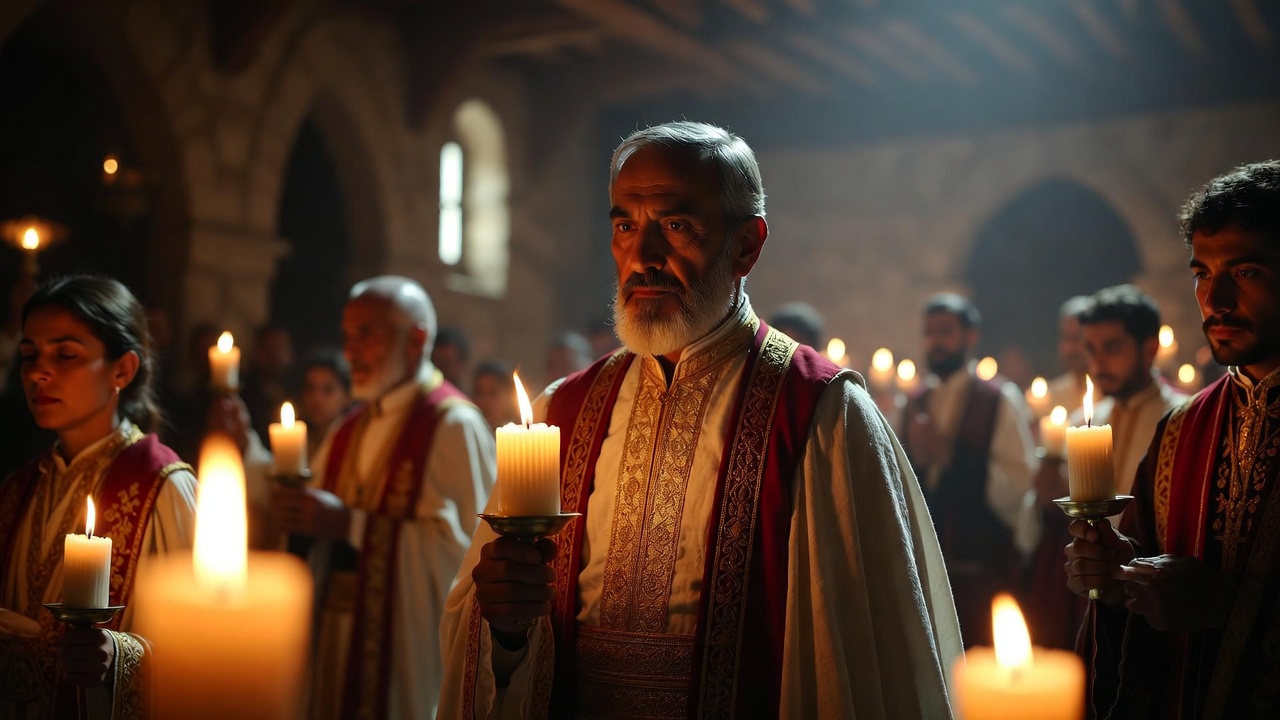
| Processions | Clergy and faithful carrying relics and icons |
| Candle lighting | Symbolic gesture before the saint’s image |
| Communion | The Eucharistic celebration at the liturgy’s heart |
The Main Mass at St. George Cathedral
The most prominent celebration takes place at St. George Maronite Cathedral in downtown Beirut. Here, the Maronite Patriarch leads a solemn mass attended by government officials, diplomatic figures, and thousands of faithful.
The cathedral fills with the sound of bells, the fragrance of incense, and the voices of the choir singing ancient hymns. The Patriarch delivers a homily addressing both spiritual and national concerns—a tradition that has made these annual addresses significant events in Lebanese public life.
Pilgrimage to Sacred Maronite Sites
For many Lebanese, Saint Maroun’s Day is a time for pilgrimage to the holy sites associated with the Maronite tradition.
The Monastery of Saint Maroun in Annaya
The Monastery of Saint Maroun in Annaya is perhaps the most significant pilgrimage destination. Located in the mountainous region of northern Lebanon, near the town of Byblos, this monastery holds profound spiritual significance.
According to Saintly Ways, the monastery “is a revered center of spiritual devotion and a place of significant historical importance within the Maronite Church.”
The site is particularly famous for being associated with Saint Charbel Makhlouf, a 19th-century Maronite monk who lived at the monastery and was canonized in 1977. Saint Charbel’s tomb attracts thousands of pilgrims seeking healing and spiritual renewal.
Practical information for pilgrims:
| Detail | Information |
|---|---|
| Location | Annaya, Mount Lebanon Governorate |
| Distance from Beirut | Approximately 1 hour by car |
| Best arrival time | Early morning to avoid crowds |
| Dress code | Modest attire required |
| Facilities | Basic pilgrim accommodations available |
Other Important Pilgrimage Sites
Beyond Annaya, pilgrims visit numerous other sacred sites:
- Our Lady of Lebanon Shrine in Harissa, overlooking Jounieh Bay
- The Qadisha Valley, a UNESCO World Heritage Site with ancient monasteries
- Bkerké, the seat of the Maronite Patriarchate
Family Gatherings and Traditional Lebanese Feasts
Saint Maroun’s Day is fundamentally a family celebration. After attending morning mass, families gather for elaborate meals that showcase the best of Lebanese cuisine.
The Tradition of Mezze
No Lebanese celebration is complete without mezze—an array of small dishes served before or alongside the main course. These dishes reflect centuries of culinary tradition influenced by Phoenician, Persian, Roman, and Ottoman cultures.
According to Samara Cuisine, “Religious events—whether big Islamic feasts, like Eid Al Adha or Christian festivals such as Easter Sunday or the feast day of Saint Maroun—each have their own special food to celebrate the day.”
Essential dishes for a Saint Maroun’s Day feast:
| Category | Traditional Dishes |
|---|---|
| Cold mezze | Hummus, baba ghanoush, tabbouleh, labneh, fattoush |
| Hot mezze | Kibbeh, sambousek, kafta, batata harra |
| Main dishes | Stuffed grape leaves, mujadara, roasted lamb |
| Breads | Pita bread, manakish with za’atar |
| Desserts | Baklava, ma’amoul, knafeh |
| Beverages | Mint tea, Arabic coffee, arak |
The meal is more than sustenance—it is an act of communion. Families share stories, elders pass down traditions to younger generations, and the bonds of community are strengthened.
Where to Find the Best Saint Maroun’s Day Celebrations in Lebanon
For travelers wishing to experience authentic Saint Maroun’s Day celebrations, several locations offer particularly memorable experiences.
Beirut: The Heart of National Celebrations
The capital city hosts the most prominent official celebrations. The St. George Maronite Cathedral in downtown Beirut is the focal point, where the Patriarch presides over mass with national leaders in attendance.
Beyond the official ceremony, Beirut’s Maronite neighborhoods come alive with smaller, more intimate celebrations. Churches in areas like Achrafieh and Gemmayzeh hold their own masses and community gatherings.
What to Expect in Beirut
The atmosphere in Beirut on Saint Maroun’s Day is festive yet reverent. Streets near churches fill with families dressed in their finest clothes. After mass, restaurants and homes buzz with celebration.
Recommended areas to experience the celebrations:
- Downtown Beirut – Official ceremony at St. George Cathedral
- Achrafieh – Historic Maronite neighborhood with multiple churches
- Gemmayzeh – Traditional area with local celebrations
Byblos (Jbeil): Ancient Christianity Meets Modern Celebration
Byblos, one of the oldest continuously inhabited cities in the world, offers a unique setting for Saint Maroun’s Day celebrations. The town’s Maronite churches hold services against the backdrop of Phoenician ruins and Crusader fortifications.
The proximity to Annaya makes Byblos an excellent base for pilgrims. Visitors can attend local mass in the morning and make the short journey to the Monastery of Saint Maroun in the afternoon.
The Mountain Villages of Mount Lebanon
For the most traditional celebrations, consider visiting the mountain villages that have been Maronite heartlands for centuries. Towns like Bsharri, Ehden, and Jounieh offer intimate experiences where ancient customs remain largely unchanged.
In these communities, you may witness:
- Processions through village streets
- Traditional folk music and dabke dancing
- Community meals prepared collectively
- Local traditions specific to each village
Qadisha Valley: The Sacred Valley
The Qadisha Valley, a UNESCO World Heritage Site, holds special significance for Maronites. Its name derives from the Aramaic word for “holy,” and for centuries it served as a refuge for Maronite monks fleeing persecution.
Monasteries carved into the valley’s cliffs still house religious communities. On Saint Maroun’s Day, some of these ancient sites hold services open to pilgrims.
How Maronite Communities Celebrate Saint Maroun’s Day Abroad
The Maronite diaspora—estimated at 7 to 12 million people worldwide—maintains strong connections to this sacred feast. From Sydney to São Paulo, Brooklyn to Buenos Aires, Lebanese communities gather to celebrate.
The Global Maronite Network
The Maronite Church maintains an extensive worldwide structure. According to Wikipedia, the diaspora significantly outnumbers Maronites living in their historic homelands in Lebanon, Syria, Cyprus, Israel, and Palestine.
Major Maronite eparchies (dioceses) around the world:
| Location | Membership (approx.) |
|---|---|
| Buenos Aires, Argentina | 750,000 |
| São Paulo, Brazil | 521,000 |
| Sydney, Australia | 161,370 |
| Mexico | 167,190 |
| Los Angeles, USA | 47,480 |
| Montreal, Canada | 94,300 |
| Brooklyn, USA | 33,000 |
Saint Maroun’s Day in Australia: Sydney and Beyond
Australia hosts one of the largest Maronite communities outside the Middle East. The history of Maronites in Australia stretches back to the 1880s, with significant waves of migration following the Lebanese Civil War (1975-1990).
St. Maroun’s Cathedral in Redfern, Sydney
The St. Maroun’s Cathedral in Redfern, Sydney, serves as the seat of the Maronite Eparchy of Australia, New Zealand, and Oceania. According to Wikipedia, the first Maronite priests arrived in Sydney in 1893, and the church was consecrated in 1897.
On Saint Maroun’s Day, the cathedral hosts a solemn Divine Liturgy led by the bishop. The celebration draws Maronites from across Sydney and beyond.
Our Lady of Lebanon Co-Cathedral in Harris Park
The Our Lady of Lebanon Co-Cathedral in Harris Park, Sydney, represents the largest Maronite parish in Australia. With over 160,000 Lebanese Maronite Catholics in Australia according to the Annuario Pontificio, the Harris Park community is particularly vibrant.
According to the Maronite Eparchy of Australia, the 2023 Golden Jubilee celebrations began on February 9th, the Feast of Saint Maroun, with a national tour of relics from Saint Maroun, Saint Charbel, Saint Rafqa, and Saint Nehmetallah.
Features of Australian celebrations:
- Divine Liturgy in Syriac, Arabic, and English
- Traditional Lebanese food at parish halls
- Folk dancing by youth groups
- Community gatherings with live music
- Special programs for children and families
Celebrating in the United States: Brooklyn to Los Angeles
The United States has two Maronite eparchies serving the faithful coast to coast.
Eparchy of Saint Maron of Brooklyn (East Coast)
The Eparchy of Saint Maron of Brooklyn covers the eastern United States. According to the eparchy’s website, the community traces its organized presence in America to the late 19th century.
The Our Lady of Lebanon Maronite Cathedral in Brooklyn Heights occupies a historic building originally constructed in 1846. The cathedral hosts the principal Saint Maroun’s Day celebration for the eastern region.
Churches throughout New York, New Jersey, Pennsylvania, Massachusetts, and other eastern states hold their own celebrations. Communities in cities like Philadelphia, Boston, and Washington D.C. maintain active Maronite parishes.
Eparchy of Our Lady of Lebanon of Los Angeles (West and Central)
The Eparchy of Our Lady of Lebanon of Los Angeles (now headquartered in St. Louis, Missouri) serves the western and central United States. Established in 1994, it covers 34 states.
Major celebrations take place in:
- Los Angeles, at Our Lady of Lebanon Cathedral
- Detroit, with its historic Lebanese community
- Houston, home to a significant Lebanese population
- St. Louis, the current eparchial seat
The Community Festival Tradition
Many American Maronite parishes host annual festivals featuring Lebanese culture, food, and music. The Saint Maron Lebanese and Syrian Food Festival in Independence, Ohio exemplifies this tradition: “Traditional Lebanese and Syrian family recipes are prepared by our own parishioners and served with the hospitality that is a trademark of our community.”
These festivals, often held in summer months, complement the February 9th liturgical celebration with larger community-oriented events.
The History of Maronite Migration: Why Communities Exist Worldwide
Understanding why Maronite communities exist across the globe adds depth to appreciating their Saint Maroun’s Day celebrations abroad.
Waves of Migration
The Maronite diaspora formed through several distinct migration waves:
First Wave (1880-1946): Economic opportunity and escape from Ottoman rule drove the earliest migrations. According to Catholic Weekly, “Many early Maronites who arrived could not speak English and possessed few skills. They became shop keepers, hawkers or self-employed entrepreneurs.”
Second Wave (1947-1974): Post-World War II migration brought families seeking economic advancement. Many settled in industrial areas and established businesses.
Third Wave (1975-1990): The Lebanese Civil War created a refugee crisis. According to historical records, “Between 1975 and 1977, over 10,000 Christian refugees of the Lebanese civil war settled in Sydney, many the relatives of earlier settlers.”
Contemporary Migration: Economic challenges and regional instability continue to drive emigration from Lebanon. The 2020 Beirut port explosion and ongoing economic crisis have accelerated this trend.
The Role of Chain Migration
Maronite migration patterns demonstrate the power of family networks. As Catholic Weekly notes, “The phenomena of chain migration, where families and individuals already in Australia would facilitate and sponsor the migration of their relatives and friends, was the widespread experience.”
This created tight-knit communities where Saint Maroun’s Day celebrations could flourish. Families who had left Lebanon brought their traditions with them, and those traditions provided a vital connection to their homeland.
Maintaining Identity Abroad
Maronite communities abroad have worked diligently to preserve their identity. According to surveys, “37 per cent of Lebanese still had their closest relatives in Lebanon, suggesting self-orientation to their country of origin through close family ties.”
Churches became crucial institutions. As Catholic Weekly explains, “Religion has contributed significantly to community cohesiveness, especially since Maronite churches were established in the 1960s. They became reassuring institutions for migrants because of the Lebanese atmosphere and meeting point for friends.”
Saint Maroun’s Day celebrations thus serve dual purposes: honoring the patron saint and maintaining cultural identity across generations.
South American Celebrations: Brazil and Argentina
South America hosts the largest Maronite diaspora communities outside the Middle East.
Brazil’s Vibrant Maronite Community
The Eparchy of Our Lady of Lebanon of São Paulo serves over 521,000 Maronites—one of the largest concentrations anywhere. Former Brazilian president Michel Temer, the son of two Maronite Catholic Lebanese immigrants, exemplifies the community’s integration into Brazilian society.
Saint Maroun’s Day celebrations in São Paulo blend Lebanese traditions with Brazilian warmth. Churches fill with families, and Lebanese restaurants throughout the city offer special menus.
Argentina’s Historic Community
The Eparchy of San Charbel in Buenos Aires, with approximately 750,000 members, represents one of the oldest and largest Maronite communities in the Americas. Lebanese immigration to Argentina began in the late 19th century, and the community has maintained strong cultural ties.
Celebrations in Buenos Aires feature elaborate masses, traditional music, and community meals that showcase both Lebanese culinary heritage and Argentine hospitality.
Canada and Beyond
The Eparchy of Saint Maron of Montreal serves Canadian Maronites, with significant communities in Montreal, Toronto, and other cities. European Maronite communities, while smaller, maintain active parishes in France, the United Kingdom, Germany, and other countries.
Traditional Lebanese Foods for Your Saint Maroun’s Day Celebration
Food is central to any Lebanese celebration. Preparing traditional dishes connects families to their heritage and creates opportunities for gathering and sharing.
The Art of Lebanese Cooking
Lebanese cuisine is renowned worldwide for its fresh ingredients, bold flavors, and healthy Mediterranean character. As The Matbakh notes, “Lebanese dishes use unique flavors like crushed garlic, sumac, pomegranate molasses, za’atar, tahini, and Lebanese seven spices.”
Essential Dishes for the Feast
Mezze Starters
Hummus – The iconic chickpea dip, enriched with tahini, lemon juice, and garlic, drizzled with olive oil and served with warm pita bread.
Baba Ghanoush – Smoky eggplant dip made from flame-grilled eggplant blended with tahini, garlic, and lemon.
Tabbouleh – A bright parsley salad with bulgur wheat, tomatoes, onions, mint, olive oil, and lemon juice.
Labneh – Strained yogurt cheese, often served with olive oil and za’atar, eaten with bread.
Fattoush – A colorful salad featuring crispy pita pieces, fresh vegetables, and sumac dressing.
Main Courses
Kibbeh – Often called the national dish of Lebanon, kibbeh consists of bulgur wheat combined with spiced minced meat, formed into various shapes and either fried, baked, or served raw.
Stuffed Grape Leaves (Warak Enab) – Tender grape leaves wrapped around a mixture of rice, minced meat, and aromatic spices, slow-cooked in lemon-garlic broth.
Mujadara – A humble but beloved dish of lentils, rice, and caramelized onions, often served with yogurt and salad.
Shish Tawook – Marinated chicken kebabs, grilled to perfection and served with garlic sauce (toum).
Kafta – Spiced ground meat mixed with onion and parsley, shaped onto skewers and grilled.
Desserts
Baklava – Layers of phyllo pastry filled with chopped nuts and sweetened with honey or syrup.
Ma’amoul – Butter cookies filled with dates, walnuts, or pistachios, often shaped using decorative molds.
Knafeh – A cheese pastry soaked in sweet syrup, topped with crushed pistachios.
Creating Your Own Saint Maroun’s Day Feast
Whether you are Lebanese or simply wish to honor this tradition, preparing a Saint Maroun’s Day meal can be a meaningful experience.
Planning tips:
- Start with cold mezze – These dishes can be prepared the day before
- Prepare hot dishes closer to serving time – Kibbeh and kafta are best served fresh
- Make desserts in advance – Baklava and ma’amoul keep well for days
- Set a generous table – Lebanese hospitality means abundance
- Include vegetarian options – Many traditional dishes are naturally plant-based
- Serve Arabic coffee – The traditional conclusion to any Lebanese meal
The Spiritual Significance of Saint Maroun’s Life for Modern Believers
Beyond the celebrations and traditions, Saint Maroun’s Day invites reflection on the saint’s spiritual legacy and its relevance today.
Lessons from an Ascetic Life
Saint Maroun’s choice to live in the open air, exposed to the elements, might seem extreme to modern sensibilities. Yet his example offers profound lessons.
Finding God in Nature
Maroun believed that God’s presence permeated all creation. By living among the elements—sun, rain, wind, and snow—he sought direct communion with the divine through nature.
This teaching resonates in an age when many feel disconnected from the natural world. Saint Maroun’s Day can be an occasion to appreciate creation and recognize the sacred in our environment.
Simplicity as Spiritual Practice
Maroun owned almost nothing. His life of radical simplicity challenges consumerist culture. On his feast day, many Maronites reflect on what truly matters—faith, family, and community—rather than material possessions.
Healing Through Faith
Saint Maroun was renowned as a healer. Theodoret recorded that “the Magnificent one gave in abundance the gift of healing with the result that Maron’s fame circulated everywhere.”
His healing ministry addressed both physical and spiritual ailments. On Saint Maroun’s Day, many pray for healing—of bodies, relationships, and communities.
The Maronite Contribution to Christian Spirituality
The Maronite tradition has enriched global Christianity in numerous ways.
Preservation of Syriac Heritage
The Maronite Church maintained the use of Syriac, a dialect of Aramaic, as its liturgical language. This connects worshippers directly to the linguistic world of Jesus Christ, who spoke Aramaic.
On Saint Maroun’s Day, when prayers are chanted in Syriac, listeners hear echoes of the earliest Christian communities.
The Marriage of East and West
The Maronite Church uniquely bridges Eastern and Western Christian traditions. Always in communion with Rome, yet thoroughly Eastern in liturgy and spirituality, the Maronites offer a model of unity in diversity.
According to the Catholics & Cultures website, “A long period of linkages to Rome introduced a number of Latin practices like the Rosary, and fostered a strong devotion to the Immaculate Conception. Since Vatican II, and particularly under Pope St. John Paul II, liturgical reforms have looked to recover important Maronite traditions that had been Latinized.”
Monastic Wisdom
The Maronite monastic tradition, formalized in 1695 and later divided into orders, continues to produce saints and spiritual teachers. The Lebanese Maronite Order and the Lebanese Mariamite Order embody Maroun’s original ascetic values through vows of poverty, chastity, obedience, and humility.
Visiting a Maronite monastery on Saint Maroun’s Day offers a glimpse into this living tradition.
Planning Your Trip to Lebanon for Saint Maroun’s Day 2026
For travelers wishing to experience Saint Maroun’s Day in Lebanon firsthand, careful planning will enhance your journey.
When to Go: February Weather in Lebanon
Saint Maroun’s Day falls on Monday, February 9, 2026. February is winter in Lebanon, but the climate varies dramatically between the coast and mountains.
February weather conditions:
| Location | Average High | Average Low | Rainfall |
|---|---|---|---|
| Beirut (coastal) | 16-17°C (61-63°F) | 8-11°C (46-52°F) | 120-133mm |
| Mountains | Variable | Below 0°C | Snow common |
According to Weather Atlas, “February’s onset in Beirut brings an average high-temperature of a still refreshing 17.5°C (63.5°F).” The weather is mild on the coast but can be cold and snowy in the mountains—perfect for combining pilgrimage with skiing.
What to Pack
Essential items for February travel:
- Layered clothing – Temperatures vary throughout the day
- Warm jacket – Essential for mountain visits
- Rain gear – February sees regular rainfall
- Comfortable walking shoes – For pilgrimage sites and historic areas
- Modest attire – Required for church visits
- Universal power adapter – Lebanon uses types A, B, C, and D outlets
Accommodation Options
Book accommodations well in advance, as Saint Maroun’s Day brings domestic travelers to major sites.
Recommended areas:
| Area | Best For | Notes |
|---|---|---|
| Central Beirut | Official celebrations | Close to St. George Cathedral |
| Byblos | Pilgrims | Near Annaya monastery |
| Jounieh | Scenic setting | Cable car to Harissa shrine |
| Faraya | Snow and mountains | Ski resort area |
Respectful Tourism
When visiting during Saint Maroun’s Day, remember that you are participating in a religious celebration meaningful to millions.
Etiquette guidelines:
- Dress modestly when visiting churches and monasteries
- Ask permission before photographing religious ceremonies
- Maintain silence during services
- Accept hospitality graciously – Lebanese people are famously welcoming
- Learn a few Arabic phrases – Greetings in Arabic are always appreciated
How to Celebrate Saint Maroun’s Day If You Cannot Travel
Not everyone can journey to Lebanon or attend a Maronite church on February 9th. Yet you can still participate meaningfully in this celebration from wherever you are.
Creating a Home Celebration
Transform your home into a place of celebration with these suggestions:
Set Up a Prayer Space
Create a small altar or prayer corner featuring:
- An icon or image of Saint Maroun (available online or from Maronite church bookstores)
- A lit candle representing the light of faith
- Fresh flowers honoring the saint
- A cross, preferably in the distinctive Maronite style with three crossbars
Read About Saint Maroun
Spend time learning about the saint whose feast you are honoring. Read Theodoret’s account of his life. Reflect on what his example might mean for your own spiritual journey.
Pray the Maronite Way
Many Maronite prayers are available in English translation. Consider praying:
- The Maronite form of the Our Father
- Traditional Maronite hymns (recordings available online)
- Prayers specifically honoring Saint Maroun
Watch a Live-Streamed Liturgy
Many Maronite churches now live-stream their services. On Saint Maroun’s Day, you can virtually attend the Divine Liturgy from churches around the world.
The Eparchy of Saint Maron of Brooklyn and the Maronite Eparchy of Australia often provide online access to major celebrations.
Preparing a Traditional Meal at Home
Even without Lebanese family recipes, you can prepare a meaningful feast.
Simple Dishes to Start
If you are new to Lebanese cooking, begin with accessible dishes:
- Hummus – Blend canned chickpeas with tahini, lemon juice, and garlic
- Tabbouleh – Fresh parsley, bulgur wheat, tomatoes, and lemon
- Grilled kebabs – Seasoned meat on skewers
- Pita bread – Available at most grocery stores
Online Resources
Numerous Lebanese cooking websites and YouTube channels offer step-by-step instructions. Feel Good Foodie and Maureen Abood provide authentic Lebanese recipes with clear instructions.
Connecting with the Global Community
Technology enables connection across distances.
Join Online Discussions
Social media groups dedicated to Maronite culture and Lebanese heritage provide spaces to share your celebration, ask questions, and connect with others.
Video Call Family and Friends
If you have Lebanese or Maronite friends and family, a video call on Saint Maroun’s Day can strengthen bonds and share the celebration.
Learn Some Arabic Phrases
Greeting someone in their language shows respect. Simple phrases for the occasion:
| Arabic | Transliteration | Meaning |
|---|---|---|
| عيد مار مارون سعيد | Eid Mar Maroun sa’id | Happy Saint Maroun’s Day |
| كيفك؟ | Kifak? (m) / Kifik? (f) | How are you? |
| شكراً | Shukran | Thank you |
| الله معك | Allah ma’ak | God be with you |
Supporting the Lebanese Community From Afar
Your celebration can include actions that help others.
Donate to Lebanese Causes
Many organizations support Lebanon during challenging times. Consider donating to:
- Catholic charities operating in Lebanon
- Organizations providing humanitarian aid
- Cultural preservation efforts
Buy Lebanese Products
Purchase Lebanese food products, wine, or crafts. This supports the Lebanese economy and brings authentic items to your celebration.
Advocate and Educate
Share information about Lebanon, its heritage, and its current challenges. Raising awareness supports the country and its people.
Understanding Maronite Traditions and Customs During the Celebration
To fully appreciate Saint Maroun’s Day, understanding the distinctive traditions of the Maronite Church enriches the experience.
The Maronite Liturgical Tradition
The Maronite Church follows the Antiochene liturgical tradition, one of the ancient rites of Christianity. According to the Eparchy of Saint Maron, the Church “dates back to the early Christians of Antioch where ‘they were called Christians for the first time’ (Acts 11:26).”
Key characteristics include:
- Use of Syriac – The liturgical language connects to Aramaic
- Standing for worship – Traditional posture reflects the resurrection
- Distinctive vestments – Clergy wear unique Maronite liturgical garments
- Chant traditions – Ancient melodic patterns preserved for centuries
Spiritual Practices for the Feast
Saint Maroun’s Day is an opportunity for spiritual renewal. Many Maronites observe the feast with specific practices:
Recommended spiritual observances:
- Attend Divine Liturgy – The central act of worship
- Receive the Eucharist – Communion connects believers to Christ
- Pray before relics – Many churches display relics of Saint Maroun
- Light candles – A traditional gesture of prayer and devotion
- Give to charity – Almsgiving honors the saint’s care for the poor
- Fast or abstain – Some observe partial fasting before the feast
The Role of Saints in Maronite Spirituality
The Maronite Church has produced numerous saints who continue to inspire the faithful. Understanding their stories enriches the Saint Maroun’s Day experience.
Significant Maronite saints:
| Saint | Dates | Significance |
|---|---|---|
| Saint Maroun | c. 350-410 AD | Founder of the Maronite tradition |
| Saint John Maron | c. 628-707 AD | First Maronite Patriarch |
| Saint Charbel Makhlouf | 1828-1898 | Canonized 1977, famous for miracles |
| Saint Rafqa | 1832-1914 | Canonized 2001, model of suffering |
| Saint Nehmetallah Hardini | 1808-1858 | Beatified 1998, monastic teacher |
According to Our Lady of Lebanon Church, “Saint Charbel, like St. Maron, is especially recognized for his ability to heal the sick, called upon to intervene numerous times since his death with reported success.”
Sharing Saint Maroun’s Day on Social Media and Building Community
In the digital age, celebrating Saint Maroun’s Day extends beyond physical gatherings. Social media connects the global Maronite community and spreads awareness of this beautiful tradition.
Hashtags and Online Communities
Connecting with fellow celebrants online enhances the experience:
Popular hashtags:
- #SaintMarounsDay
- #MarMaroun
- #Maronite
- #LebanonNationalDay
- #Feb9
- #MaroniteChurch
Sharing Your Experience
If you are celebrating Saint Maroun’s Day, consider sharing:
- Photos of church services (with appropriate permission)
- Traditional foods you have prepared
- Family gatherings honoring the tradition
- Information about Saint Maroun to educate others
- Personal reflections on what the day means to you
Supporting the Lebanese Community
Saint Maroun’s Day is also an opportunity to support Lebanon and its people. The country has faced significant challenges in recent years, and diaspora support remains vital.
Ways to give back:
- Donate to Maronite charities working in Lebanon
- Support Lebanese businesses and restaurants in your area
- Sponsor pilgrims who wish to visit the homeland
- Preserve and share Lebanese cultural traditions
- Advocate for peace in the Middle East
Frequently Asked Questions About Celebrating Saint Maroun’s Day
Is Saint Maroun’s Day only for Christians?
While Saint Maroun’s Day is a Christian feast, the national holiday in Lebanon is observed by people of all faiths as a day of rest and cultural appreciation. Non-Christians are welcome to learn about and respectfully participate in cultural aspects of the celebration.
Can non-Maronites attend church services?
Yes. Maronite churches welcome visitors of all backgrounds to observe the Divine Liturgy. Catholics of any rite may receive communion at Maronite churches. Non-Catholics are welcome to attend and observe.
What should I wear to a Saint Maroun’s Day celebration?
Modest attire is appropriate for church services. For women, covering shoulders and wearing knee-length or longer skirts or dresses is recommended. Men should avoid shorts and sleeveless shirts. In social gatherings afterward, smart casual attire is typical.
Are there special foods associated with Saint Maroun’s Day?
While no single dish is specific to Saint Maroun’s Day, the celebration traditionally features the best of Lebanese cuisine—extensive mezze, grilled meats, traditional desserts, and Arabic coffee. The emphasis is on abundance and hospitality.
How do I find a Maronite church near me?
In the United States, contact the Eparchy of Saint Maron of Brooklyn for East Coast parishes or the Eparchy of Our Lady of Lebanon for western states. In Australia, the Maronite Eparchy website lists all parishes. Similar resources exist for other countries.
Is Lebanon safe to visit for Saint Maroun’s Day?
Security conditions in Lebanon can change. Always check current travel advisories from your government before planning a trip. That said, many travelers visit Lebanon safely, and the Lebanese are renowned for their hospitality. Focus on established tourist areas and follow local guidance.
Conclusion: The Enduring Legacy of Saint Maroun
As you prepare to celebrate Saint Maroun’s Day in 2026—whether in the ancient churches of Lebanon, the vibrant parishes of the diaspora, or simply in your own home—you participate in a tradition stretching back over sixteen centuries.
Saint Maroun himself was a man of profound simplicity. He sought God in the open air, under sun and stars, through prayer and healing. The movement he inspired has grown into a global community of millions, yet his core message remains unchanged: find the sacred in all things, serve those in need, and live with radical devotion.
On February 9th, when Maronites around the world gather for the Divine Liturgy, when families share traditional meals, when pilgrims climb the slopes of Mount Lebanon to visit ancient monasteries, they continue a living tradition that connects past, present, and future.
Whether you are a Maronite by birth, a Christian of another tradition, or simply a curious traveler, Saint Maroun’s Day offers an opportunity to encounter something beautiful—the intersection of faith, culture, and community that makes Lebanon and its people so remarkable.
May your Saint Maroun’s Day celebration be filled with blessings, good food, and the warmth of community. Eid Mar Maroun sa’id—Happy Saint Maroun’s Day!
Last updated: February 2026
Note: This guide is intended for informational purposes. Always verify current travel conditions and event schedules before planning your visit to Lebanon or attending specific celebrations.