Every winter, as frost settles over the streets of Yerevan and the scent of toasted sesame fills Armenian kitchens from Glendale to Beirut, a beloved holiday approaches. Saint Sarkis Day — the Armenian celebration of love and youth — is a feast day unlike any other. It blends ancient Christian devotion with folk magic, salty cookies with sweet halva, and heartfelt prayers with playful dreams of future spouses.
If you have ever wondered how Armenians celebrate their own version of Valentine’s Day, you have come to the right place. This guide covers everything you need to know about Saint Sarkis Day in 2026: its history, its customs, its recipes, and how you can take part — whether you are Armenian or simply a lover of world traditions.
What Is Saint Sarkis Day and Why Do Armenians Celebrate It?
Saint Sarkis Day (Armenian: Սուրբ Սարգիս, Surb Sarkis) is one of the most cherished holidays on the Armenian Apostolic Church liturgical calendar. It honors Saint Sarkis the Warrior (also spelled Sargis), a fourth-century Christian martyr who is revered as the patron saint of love, youth, and warriors in Armenian tradition.
The holiday is often called the Armenian Valentine’s Day. But calling it that does not tell the full story. Saint Sarkis Day is older than Valentine’s Day. It is rooted in nearly 1,700 years of Christian faith, military legend, and folk tradition. Where Valentine’s Day revolves around greeting cards and chocolates, Saint Sarkis Day centers on salty cookies, prophetic dreams, flour on rooftops, and blessed halva. It is a holiday that asks you to go to bed thirsty — and trust that love will find you in your sleep.
The feast is a moveable celebration. It always falls on a Saturday, exactly 63 days before Easter. This means it can land anywhere between mid-January and mid-February. In 2026, Saint Sarkis Day falls on Saturday, January 31, according to the Armenian Church liturgical calendar.
| Year | Date of Saint Sarkis Day |
|---|---|
| 2024 | January 27 |
| 2025 | February 15 |
| 2026 | January 31 |
| 2027 | February 20 |
The week before the feast is marked by the Fast of the Catechumens (Dasaknordi Bahk), a five-day period of fasting from Monday through Friday. Though this fast was originally established by Saint Gregory the Illuminator as a period of repentance and baptismal preparation, it has become closely linked to Saint Sarkis and is widely known today as the “Fast of Saint Sarkis.”
Who Was Saint Sarkis the Warrior? The History Behind the Armenian Feast Day
To understand the holiday, you need to understand the man behind it.
Sarkis was a Greek from Caesarea in Cappadocia — modern-day central Turkey. He lived during the fourth century and served as a Roman army officer under Emperor Constantine the Great (around 337 AD). His courage, faith, and skill in battle earned him the rank of general. But Sarkis was not only a soldier. He used his power to spread Christianity. He traveled from town to town, tearing down pagan idols, preaching the Gospel, and building churches where temples once stood.
When Constantine died, the new emperor — Julian the Apostate — launched a brutal campaign against Christians. Churches were destroyed. Believers were persecuted. According to Armenian tradition, Jesus appeared to Sarkis in prayer and told him to leave his homeland, just as Abraham had done.
Sarkis gave up his title, his wealth, and his rank. He fled with his son, Mardiros (also spelled Martiros), to Armenia, where King Tiran — a grandson of King Tiridates — welcomed them. But the danger followed. King Tiran urged Sarkis and Mardiros to seek safety in Persia.
The Persian king, Shapur II, heard of Sarkis’s legendary bravery and appointed him commander of the Persian military. Sarkis won battles against Roman forces, but he gave all credit to God. He also continued to preach Christianity, converting many Persian soldiers.
This enraged the Persian authorities. When Sarkis refused to offer sacrifices to pagan gods at a royal feast, Shapur II had him and his son executed for their faith. Fourteen of Sarkis’s loyal soldiers tried to give their general a proper burial — and they, too, were killed.
Centuries later, in the fifth century, Saint Mesrop Mashtots — the creator of the Armenian alphabet — brought Sarkis’s relics back to Armenia. They were placed in the village of Ushi in Aragatsotn province, where Saint Sarkis Monastery was built over them. The relics were later uncovered during an archaeological excavation in 1999 and are now held in the museums of the Mother See of Holy Etchmiadzin.
How Saint Sarkis Became the Patron Saint of Love and Youth
But how did a warrior saint become the symbol of romantic love?
The answer lies in Armenian legend. One of the most famous tales tells of a young woman sent to kill Sarkis while he slept. Enchanted by his beauty, she could not do it. Instead of striking him, she kissed him. Sarkis awoke, placed her on his legendary white horse, and rode through the palace gates as a violent snowstorm raged behind them.
This story gave birth to an enduring image in Armenian culture: a rider on a white horse, racing through a storm, as a symbol of love’s power. Since then, Sarkis has been revered not only as a courageous soldier but as a saint who fulfills the dreams of lovers and protects the young.
The Armenian Church formalized this connection. By order of His Holiness Karekin II, Supreme Patriarch and Catholicos of All Armenians, the Feast of Saint Sarkis was proclaimed a day of blessing of the youth. At the end of the Divine Liturgy on this day, young people are invited to approach the altar and receive a special benediction.
When Is Saint Sarkis Day 2026 and How Is the Date Calculated?
Saint Sarkis Day is a moveable feast on the Armenian liturgical calendar. Its date depends on the date of Easter, which shifts each year. The rule is simple: Saint Sarkis Day falls on the Saturday that is exactly 63 days before Easter Sunday.
In 2026, Easter in the Armenian Apostolic Church falls on April 5. Counting back 63 days from April 5 lands on Saturday, January 31, 2026.
Here is a practical timeline for the 2026 celebration:
| Event | 2026 Date |
|---|---|
| Fast of the Catechumens begins (Monday) | January 26 |
| Fast of the Catechumens ends (Friday) | January 30 |
| Eve of Saint Sarkis — Aghablit is eaten | Friday night, January 30 |
| Feast of Saint Sarkis — Divine Liturgy and celebrations | Saturday, January 31 |
The fast preceding the holiday lasts five days. During this period, the faithful abstain from meat, dairy, and fish. Some young Armenians — especially young women — observe a stricter personal fast of up to three consecutive days without food and water, a practice known as the Fast of Saint Sarkis (Surb Sarksi Tsom).
How to Celebrate Saint Sarkis Day: The Complete Guide to Armenian Love Traditions
The beauty of Saint Sarkis Day lies in the way it weaves together church rituals, folk customs, and family traditions into a single, joyful celebration. Here is a step-by-step guide to observing the holiday, from the fast to the feast.
Step 1: Observe the Five-Day Fast of the Catechumens Before Saint Sarkis Day
The holiday does not begin on Saturday. It begins the Monday before, with the start of the Fast of the Catechumens (Dasaknordi Bahk). This five-day fast — Monday through Friday — was originally established by Saint Gregory the Illuminator as a time for new converts (catechumens) to prepare for baptism.
During this fast, believers abstain from:
- Meat (red meat, poultry)
- Dairy (milk, cheese, butter, yogurt)
- Fish
- Eggs
The diet during these days is plant-based, or what Armenians call Lenten fare (bahki). This means meals of beans, lentils, rice, vegetables, bread, and fruit. The fast is a period of spiritual cleansing. It prepares the heart — and, according to tradition, opens it to receive love.
Step 2: Bake and Eat Aghablit — The Salty Cookie That Reveals Your Future Spouse
The most famous folk tradition of Saint Sarkis Day happens on the eve of the feast — Friday night. This is when unmarried young people eat a special salty cookie called aghablit (Armenian: Աղաdelays, aghi blit, meaning “salty cookie” or “salty wafer”).
Aghablit is not meant to be delicious. It is meant to make you incredibly thirsty. The cookie is made from just three ingredients: flour, salt, and water. The salt content is so high that many who eat it describe the experience as almost unbearable.
Here is how the tradition works:
- Bake the aghablit on Friday evening.
- Eat a piece before going to bed.
- Do not drink any water or eat anything else after consuming it.
- Go to sleep thirsty, and pray to Saint Sarkis.
- Dream. According to tradition, in your dream, a person will appear and offer you water or lead you to a water source. That person is your future spouse.
The details of the dream matter, too. According to folk beliefs documented in the Ecokayan cultural project, the type of cup in which the water is offered reveals the wealth of your future partner:
| Cup Material | Meaning |
|---|---|
| Gold cup | A wealthy spouse |
| Silver cup | Average wealth |
| Copper or clay cup | A modest life |
The volume of water in the cup is also significant. A full cup suggests a long and happy union. A nearly empty one suggests a shorter relationship.
This tradition is practiced by both men and women, though it has historically been especially popular among young women. As one account in the USC Digital Folklore Archives notes, the aghablit custom reflects deep Armenian values about family, marriage, and community. It is practiced every year, and many participants swear by the accuracy of their dreams.
Step 3: Place Flour on Your Rooftop or Balcony to Find the Hoofprint of Saint Sarkis’s Horse
Another beloved tradition involves placing a tray of flour (or porridge) on the rooftop, balcony, or doorstep of your home on the eve of the feast. According to legend, Saint Sarkis rides his white horse through the night skies on the eve of his feast day, visiting the homes of the faithful.
If you wake up in the morning and find a horseshoe print pressed into the flour, it means Saint Sarkis has visited your home. This is considered a powerful blessing — a sign that your dreams of love will come true, and that good fortune will follow your family for the entire year.
This tradition connects back to the central image of the Saint Sarkis legend: the brave warrior on his white horse, riding through storms to protect the innocent and fulfill the prayers of lovers.
Step 4: Feed the Birds and Watch Their Flight Direction
A lesser-known but equally charming custom involves feeding bread crumbs to birds on the morning of Saint Sarkis Day. According to Armenia Travel, the direction in which the birds fly after eating is believed to indicate the direction from which your future spouse will come.
If the birds fly east, your future partner may come from the east. If they fly south, look in that direction. It is a simple, gentle custom — one that connects the human hope for love with the natural world.
Step 5: Attend the Divine Liturgy and Receive the Blessing of the Youth
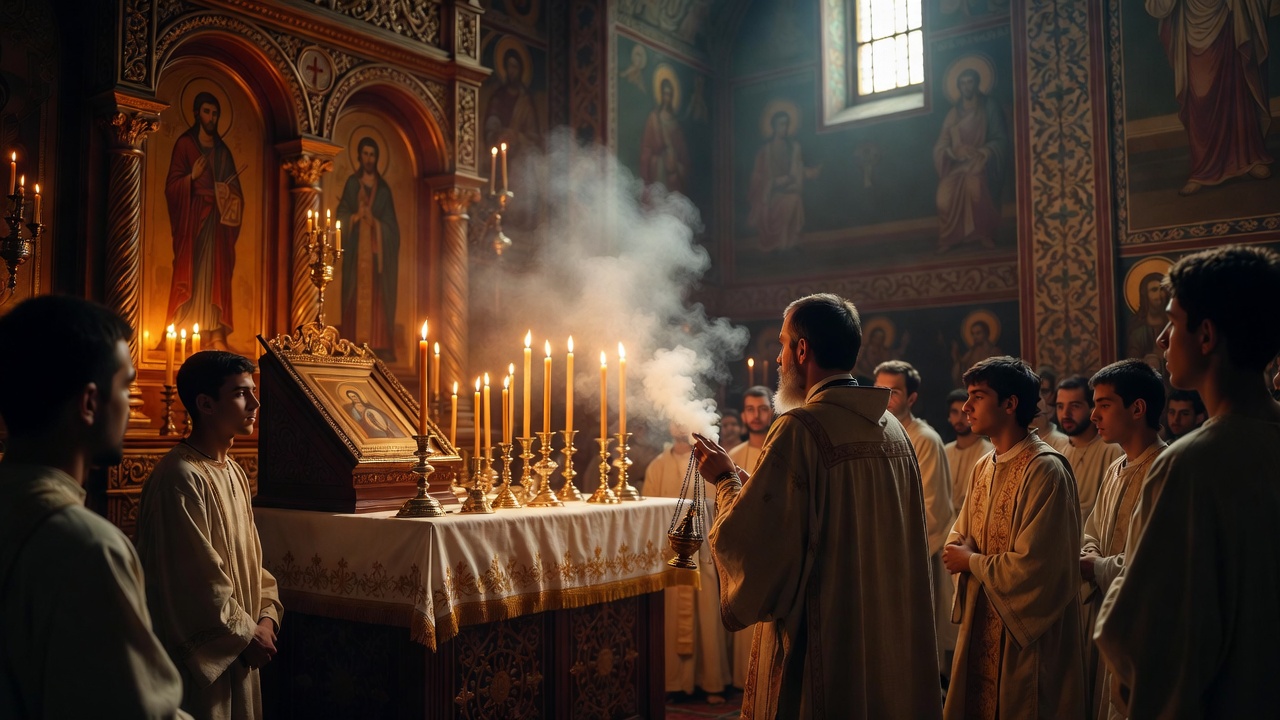
The religious heart of Saint Sarkis Day is the Divine Liturgy (Surb Badarak) celebrated in Armenian Apostolic churches around the world on Saturday morning. In every church named after Saint Sarkis — and there are many, from Yerevan’s Saint Sarkis Cathedral to parishes in Los Angeles, Beirut, Tehran, and Sydney — the liturgy takes on special significance.
The most distinctive element of the church service is the Blessing of the Youth. By order of Catholicos Karekin II, young people are invited to approach the altar at the end of the liturgy. A special prayer is recited over them, asking for guidance in love, courage, and spiritual growth. This blessing has become one of the most anticipated moments of the Armenian liturgical year for young Armenians.
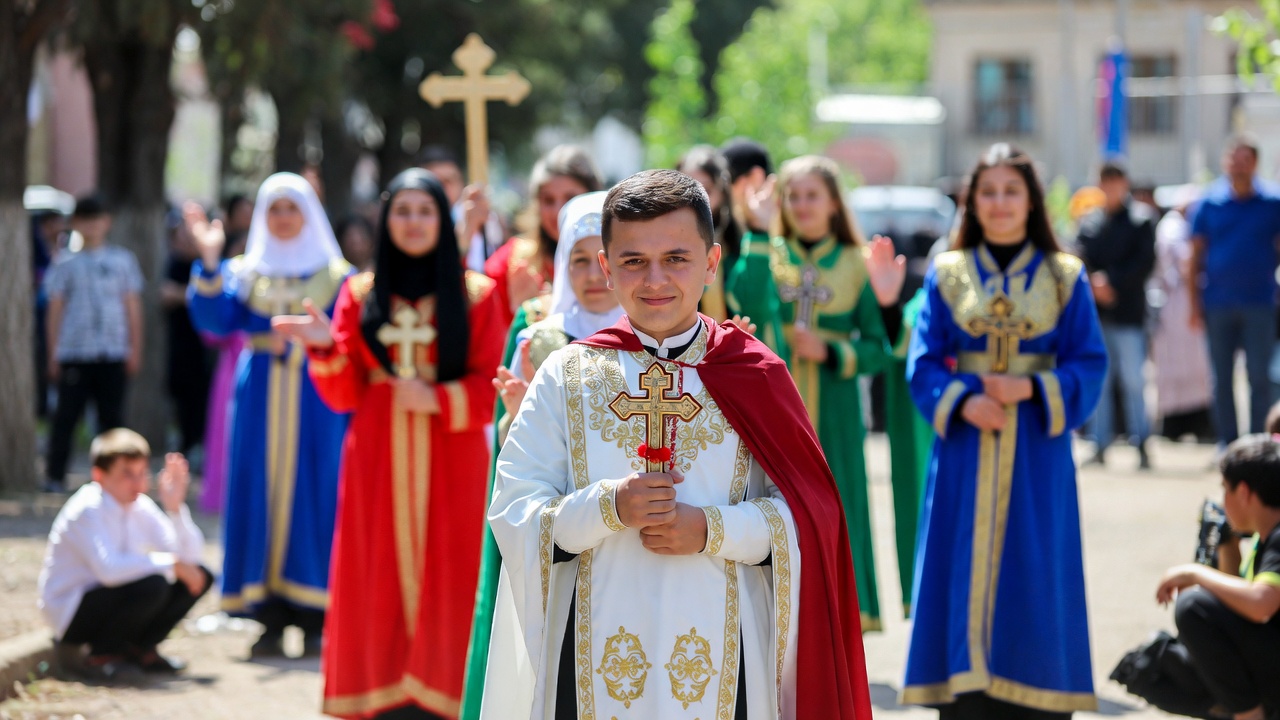
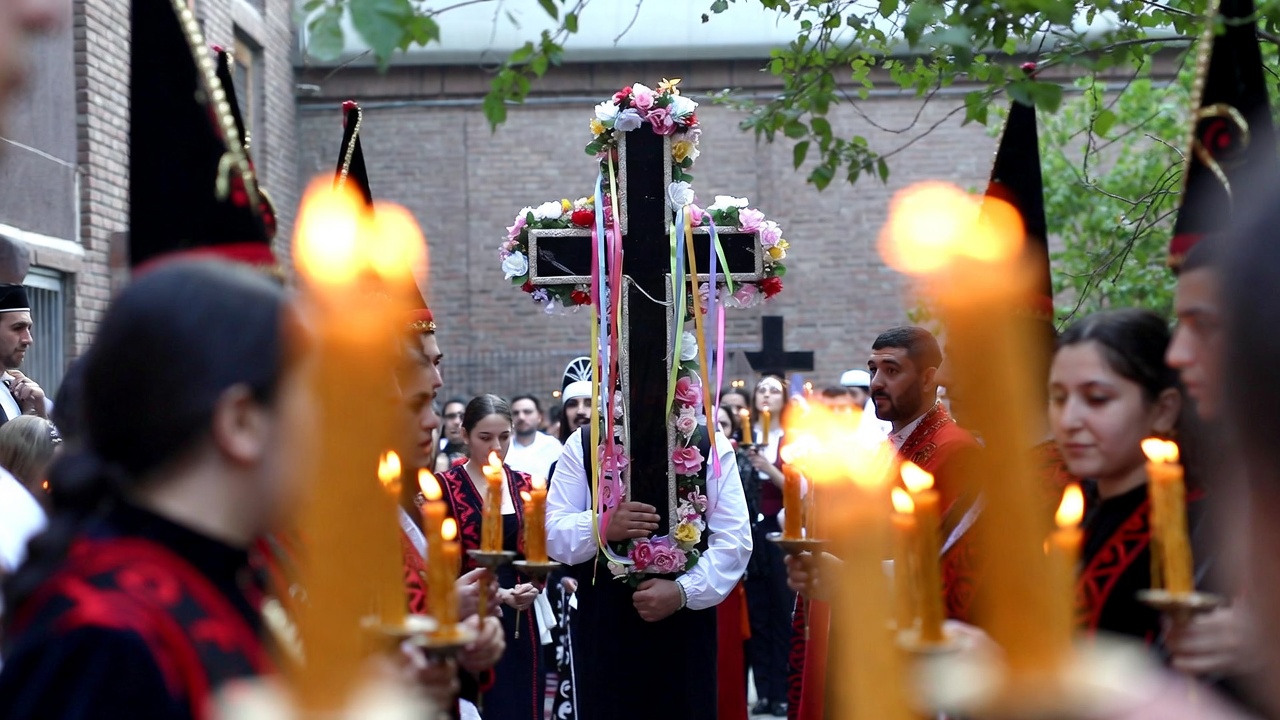
In Yerevan, the celebration also includes a solemn procession in which a relic of Saint Sarkis is carried from the Mother See of Holy Etchmiadzin to Saint Sarkis Church in the capital. This procession has been a feature of the celebration for over a decade and draws large crowds.
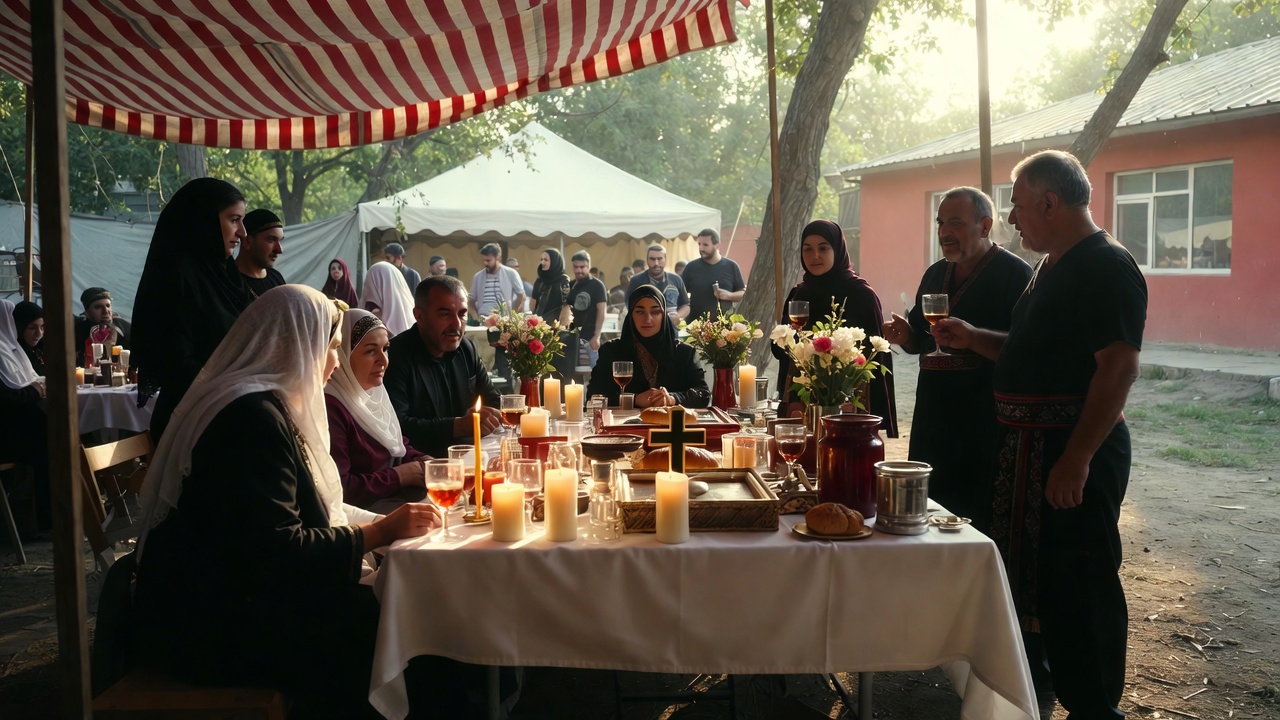
Following the liturgy, many communities host cultural events: concerts, exhibitions, traditional folk performances, and social gatherings designed to bring young people together.
Step 6: Prepare and Share Saint Sarkis Halva — The Sweet Reward After the Fast
If the aghablit represents the trial of love — the willingness to endure discomfort in pursuit of a dream — then Saint Sarkis Halva represents the reward.
This beloved Armenian confection is the centerpiece of the feast day table. It is a chewy, white, sesame-coated sweet that is traditionally prepared on Saint Sarkis Day morning and shared among family and friends after the liturgy.
Saint Sarkis Halva is unlike any halva you may have tried before. It is not the tahini-based block halva common in Middle Eastern shops. It is a marshmallow-based confection rolled in toasted sesame seeds and stuffed with walnuts, pistachios, or chickpeas. The result is a sweet, nutty, slightly chewy treat that pairs perfectly with Armenian coffee.
The traditional method calls for soapwort root (shelish in Arabic, natife in some traditions) — a plant whose boiled and whipped root produces a natural marshmallow-like foam. Today, most home cooks and bakeries use marshmallow cream as a convenient substitute. The flavoring typically comes from orange blossom water or rose water, giving the halva a floral aroma that fills the kitchen.
How to Make Aghablit: The Famous Salty Cookie Recipe for Saint Sarkis Day
Making aghablit at home is simple. You need only three ingredients. The challenge is in the eating, not the baking.
Aghablit (Salty Wafer) — Traditional Armenian Recipe
Ingredients:
- 1¼ cups all-purpose flour
- 2–3 tablespoons salt (yes, this is correct)
- Enough water to form a dough (approximately ½ cup)
Instructions:
- Preheat your oven to 350°F (180°C).
- In a bowl, combine the flour and salt. Stir well.
- Gradually add water and mix until a firm dough forms.
- Place the dough on a lightly floured surface and cover with a cloth. Let it rest for about one hour.
- Roll the dough out to about ¼-inch thickness.
- Cut into small shapes using cookie cutters or a glass.
- Place on a baking sheet lined with parchment paper.
- Bake for 15–25 minutes (depending on the size) or until golden brown.
That is it. No sugar. No butter. No eggs. Just flour, salt, and water. The result is a cracker-like wafer that is, by all accounts, extremely salty. As one food writer at The Armenian Kitchen put it after testing the recipe: she was glad she was already married, because the experience was not pleasant.
But that is exactly the point. The discomfort of the salty cookie is the price of admission to the dream world where love waits.
How to Make Saint Sarkis Halva: The Traditional Armenian Sweet Recipe
Saint Sarkis Halva is the sweet counterpart to aghablit. Where the cookie is a test, the halva is a celebration. Here is a recipe adapted from several traditional Armenian sources, including the version shared by Lena Tashjian in The Vegan Armenian Kitchen Cookbook.
Saint Sarkis Halva — Traditional Marshmallow and Sesame Recipe
Ingredients:
- 3 cups white granulated sugar
- 4 tablespoons water
- 1 tablespoon lemon juice
- 1 tablespoon orange blossom water (or rose water)
- 1 jar (7 oz) marshmallow cream
- 2 pounds sesame seeds (divided into ⅓ and ⅔ portions)
- 1 cup walnut halves or pistachios for filling
Instructions:
- Toast the sesame seeds in a dry skillet over medium heat until lightly golden. Stir constantly to prevent burning. Transfer to a bowl and refrigerate until completely cool.
- In a medium pot, combine the sugar, water, lemon juice, and orange blossom water. Bring to a boil over high heat.
- Continue to boil until the mixture turns a light golden color. Do not let it turn dark brown.
- Remove from heat. Stir in the marshmallow cream until the mixture is completely smooth.
- Spread ⅔ of the cooled sesame seeds on a large tray or baking sheet in a thick layer.
- While the marshmallow mixture is still hot, scoop tablespoons of it onto the sesame seeds, spacing them apart.
- Let each scoop cool for about 45 seconds to 1 minute — just enough so you can handle it without burning yourself.
- Place a walnut half or a few pistachios in the center of each scoop.
- Fold the sides over the filling and roll gently, pressing the remaining sesame seeds onto the outside.
- Let the halva cool completely before serving. Store in an airtight container.
Tips:
- If the marshmallow mixture hardens too quickly, gently reheat it on low.
- A pinch of ground ginger added to the sugar mixture elevates the flavor beautifully.
- For the most authentic version, seek out soapwort root (natife) at a Middle Eastern grocery store and use the whipped root extract instead of marshmallow cream.
The finished halva should be a white, chewy log, generously coated in golden sesame seeds with a surprise of nuts in every bite. In Armenian bakeries like Sarkis Pastry in Pasadena, California, you can find four varieties: pistachio, walnut, chickpea, and plain.
Other Traditional Foods Served on Saint Sarkis Day in Armenia
Aghablit and halva are the two most iconic foods of the holiday. But they are not the only ones. Several other traditional dishes are associated with the feast, especially in different Armenian communities around the world.
Kumba Cake — The Musa Dagh Specialty
Kumba is a dense, spiced cake that comes from the Musa Dagh region of historic Armenia (now in Turkey’s Hatay Province). It is a Lenten recipe, meaning it contains no eggs and no dairy. The cake is flavored with mahlab (a spice made from ground cherry pits), cinnamon, cloves, honey, and sesame seeds.
A special tradition surrounds the Kumba cake: a coin wrapped in wax paper is hidden inside the dough before baking. Whoever finds the coin in their slice is said to be blessed with good luck for the year. This custom echoes similar coin-in-the-cake traditions found in Greek, Russian, and other Mediterranean cultures.
Khashil Don — The Wheat Pudding
Khashil (խաdelays) is a traditional pudding made from roasted and ground wheat, cooked slowly with water until it reaches a creamy consistency. It is seasoned with salt and served with matsun (Armenian yogurt) poured around the edges and a dollop of melted butter or fried onion in the center.
In some regions of Armenia, Saint Sarkis Day is known as Khashili Don — literally “the day of khashil” — because this pudding was historically the main dish served during the celebration. The dish is humble, hearty, and deeply comforting — a perfect reflection of the holiday’s spirit.
Klontrak — A Rustic Halva of Pearled Wheat
Klontrak is a type of rustic halva made from toasted pearled wheat, ground in a coffee grinder, then mixed with melted butter and mulberry syrup (or honey). The mixture is kneaded by hand and formed into small balls. It is a simple sweet that speaks to the agricultural roots of Armenian cuisine.
How Armenian Diaspora Communities Around the World Celebrate Saint Sarkis Day
Armenia’s population of roughly three million is matched — and surpassed — by the estimated seven to ten million Armenians living in diaspora communities around the world. Saint Sarkis Day is one of the traditions that binds these scattered communities together.
Los Angeles and Glendale, California
The greater Los Angeles area is home to one of the largest Armenian diaspora populations outside Armenia itself. In Glendale, where Armenian businesses line Brand Boulevard, Saint Sarkis Day is celebrated with special church services, cultural events, and — of course — a run on halva at local Armenian bakeries. Shops like Sarkis Pastry in nearby Pasadena produce thousands of halva rolls in the days before the feast.
Beirut, Lebanon
Lebanon’s Armenian community has maintained Saint Sarkis traditions for over a century. The holiday is known as Khashili Don in the Lebanese-Armenian dialect. Families gather after church to share halva, and the aghablit tradition remains popular among young people. Lebanese-Armenian bakers often use mastic gum — a resin from the mastic tree — instead of marshmallow in their halva recipes, giving it a distinctive flavor.
Tehran, Iran
Iran is home to a vibrant Armenian community, and Saint Sarkis Church in Tehran — a striking Armenian Apostolic church built in the 1970s — serves as a major center of worship and cultural life. The feast is observed with the full range of traditions, from the liturgy and youth blessing to the preparation of halva and aghablit.
Sydney, Australia
Armenian communities in Sydney celebrate Saint Sarkis Day at the Armenian Apostolic Church of Holy Resurrection. The church holds special liturgies, and community organizations host evening celebrations that bring together couples, newlyweds, and singles for an evening of music, food, and fellowship.
Fresno, California
Fresno has one of the oldest Armenian communities in the United States. The aghablit tradition is alive and well here. As one young Armenian-American from Fresno wrote in the Armenian Weekly, she distributed saltine crackers at a church retreat to willing and unwilling participants alike — keeping the spirit of the tradition alive with a modern twist.
The Meaning of Saint Sarkis Day: Why This Armenian Holiday Matters in 2026
Saint Sarkis Day is more than a charming folk holiday. It is a window into the Armenian soul — a culture shaped by faith, resilience, and an unshakeable belief in the power of love.
A Holiday That Survived Empires and Genocide
The Armenian people have endured centuries of foreign domination, persecution, and displacement. The Armenian Genocide of 1915 destroyed entire communities. The Soviet period suppressed religious practice. Yet through it all, traditions like Saint Sarkis Day survived — carried in the memories of grandmothers, the recipes of diaspora kitchens, and the prayers of small parish churches.
To celebrate Saint Sarkis Day in 2026 is to participate in an act of cultural continuity. Every aghablit baked, every tray of flour placed on a balcony, every halva shared after church — these are small acts of resistance against forgetting.
A Celebration That Connects Generations
One of the most beautiful aspects of Saint Sarkis Day is its ability to bridge generations. Grandmothers teach granddaughters how to make halva. Teenagers groan at the taste of aghablit but eat it anyway, eager to see what their dreams will reveal. Parents tell the story of the warrior on the white horse. Children listen, wide-eyed.
In diaspora communities, where cultural identity can erode over generations, holidays like Saint Sarkis Day serve as anchors. They provide a reason to gather, to cook together, to speak Armenian, and to remember where you come from.
A Tradition That Welcomes Everyone
You do not have to be Armenian to celebrate Saint Sarkis Day. The holiday’s themes — love, courage, faith, and hope — are universal. If you have Armenian friends, ask them about the aghablit tradition. Try a piece of halva from a local Armenian bakery. Attend a church service if you are invited. Learn the story of the warrior who gave up everything for his faith and became the patron saint of love.
The Armenian community is famously hospitable. You will be welcomed.
Where to Experience Saint Sarkis Day Celebrations in Armenia
If you plan to visit Armenia around the time of Saint Sarkis Day, several destinations offer particularly memorable experiences.
Yerevan — The Capital Celebration
The largest and most vibrant celebrations take place in Yerevan, Armenia’s capital. The Saint Sarkis Cathedral in central Yerevan is the primary site for the Divine Liturgy. A solemn procession carries the saint’s relic from Holy Etchmiadzin to the cathedral. After the service, concerts, exhibitions, and folk events fill the city’s cultural venues.
Young couples stroll along the Northern Avenue and through Republic Square, exchanging flowers and sweets. Bakeries and cafes throughout the city offer special Saint Sarkis Halva in the days leading up to the feast.
Ushi Village, Aragatsotn Province — The Saint’s Resting Place
For a more spiritual experience, visit the village of Ushi in Aragatsotn Province, about an hour’s drive from Yerevan. This is where Saint Sarkis Monastery was built over the relics of the saint, brought here by Saint Mesrop Mashtots in the fifth century. Pilgrims visit the monastery on the feast day to pay homage and pray for blessings in love.
Holy Etchmiadzin — The Mother See
The Mother See of Holy Etchmiadzin, the spiritual center of the Armenian Apostolic Church, plays a central role in the Saint Sarkis Day celebrations. The procession of the saint’s relic begins here, and the cathedral hosts special services and blessings.
Frequently Asked Questions About Saint Sarkis Day Customs and Traditions
Is Saint Sarkis Day a public holiday in Armenia? No, it is not an official public holiday with a day off from work. However, it is widely celebrated as a cultural and religious observance. Many workplaces and schools acknowledge the holiday informally, and celebrations often continue into the evening.
Can non-Armenians participate in Saint Sarkis Day traditions? Yes. The traditions — especially the aghablit custom and the sharing of halva — are open to anyone who wishes to participate with respect and genuine interest. Armenian communities are known for their hospitality and warmth.
What is the difference between Saint Sarkis Day and Valentine’s Day? While both holidays celebrate love, they differ in origin and practice. Valentine’s Day is a Western secular-commercial holiday rooted in Catholic tradition. Saint Sarkis Day is a religious feast of the Armenian Apostolic Church with deep folk traditions. It emphasizes prophetic dreams, fasting, church blessings, and communal celebration rather than commercial gift-giving.
Do married people also celebrate Saint Sarkis Day? Yes. While the aghablit and dream traditions are mainly for unmarried young people, the holiday is celebrated by everyone. Married couples exchange flowers and sweets. Families share halva. The youth blessing at church is also open to all young people, regardless of marital status.
What happens if you do not dream of anyone after eating aghablit? According to folk tradition, this could mean your marriage is not imminent. But most Armenians today treat the custom with lighthearted humor. The dream is part of the fun, not a binding prophecy.
Who is Saint Sarkis and what church is he associated with? Saint Sarkis the Warrior (Sargis the General) was a fourth-century Cappadocian Greek general who was martyred in Persia for his Christian faith. He is venerated primarily by the Armenian Apostolic Church and also recognized by the Assyrian Church of the East.
The Cultural Significance of Saint Sarkis Day in Modern Armenian Identity
Holidays shape identity. They tell a people who they are, what they value, and what they hope for. For Armenians in 2026 — whether living in Yerevan, Los Angeles, Beirut, Moscow, or Paris — Saint Sarkis Day carries layers of meaning that go far beyond romance.
It is a celebration of endurance. The fact that a 1,700-year-old tradition continues to thrive, across continents and through centuries of upheaval, speaks to the extraordinary resilience of Armenian culture.
It is a celebration of faith. The story of Sarkis — a man who chose martyrdom over compromise — resonates with a people who have repeatedly chosen to preserve their Christian identity despite enormous pressure to assimilate or convert.
It is a celebration of youth. By blessing young people at the altar and encouraging them to dream of love, the holiday invests in the future. It tells the next generation that their hopes matter, that tradition is not a burden but a gift, and that belonging to the Armenian community is something worth cherishing.
It is a celebration of food. Like so many Armenian holidays, Saint Sarkis Day is inseparable from the kitchen. The recipes — aghablit, halva, kumba, khashil — are not just food. They are edible history. Each one carries the memory of a grandmother’s hands, a village recipe, a community’s taste. To make and share these dishes is to keep those memories alive.
Tips for Hosting Your Own Saint Sarkis Day Celebration at Home
Want to celebrate Saint Sarkis Day at home? Here is a practical checklist to help you plan a meaningful and authentic gathering.
The Week Before (Monday–Friday):
- Observe the Fast of the Catechumens if you choose. Eat a plant-based diet.
- Purchase ingredients for aghablit and halva.
- Read the story of Saint Sarkis to your family. Share it with children.
Friday Evening (Eve of the Feast):
- Bake the aghablit together as a family. Let everyone try a piece.
- Place a tray of flour on your balcony, rooftop, or doorstep.
- Eat the aghablit before bed. Do not drink water afterward.
- Go to sleep and see who visits your dreams.
Saturday Morning (The Feast Day):
- Check the flour tray for horseshoe prints.
- Share your dreams with family and friends over breakfast.
- Prepare or purchase Saint Sarkis Halva.
- Attend the Divine Liturgy at your local Armenian church, if possible.
- Exchange flowers, cards, or small gifts with loved ones.
- Share halva and other traditional foods with neighbors and friends.
Throughout the Day:
- Feed birds and observe the direction of their flight.
- Play Armenian music. Share Armenian stories.
- Call or video-chat with Armenian friends and family members who may be celebrating elsewhere.
A Final Word: Celebrating Love the Armenian Way
There is something deeply moving about a holiday that asks you to go to bed hungry and thirsty — and trust that love will meet you in your dreams. In a world saturated with commercialized romance, Saint Sarkis Day offers a different kind of love story. It is older, quieter, and more honest. It asks for patience. It requires faith. And it rewards both with sweetness.
Whether you are Armenian by birth, by marriage, or simply by admiration, Saint Sarkis Day is an invitation. An invitation to bake something impossibly salty, eat it anyway, leave flour on your balcony for a saint’s horse, and wake up believing that good things are coming.
Surb Sarkis Ton Shnorhavor — Happy Feast of Saint Sarkis.