Your ultimate guide to experiencing Korean Lunar New Year traditions, festivals, and cultural celebrations
What Is Seollal and Why Should You Visit Korea During Lunar New Year 2026?
Seollal (설날) is one of the most significant traditional holidays in South Korea. It marks the first day of the Korean lunar calendar. For Koreans, this holiday represents far more than a simple date change. It is a time of family reunion, ancestral worship, and cultural celebration.
In 2026, Seollal falls on Tuesday, February 17. The official three-day public holiday runs from Monday, February 16 to Wednesday, February 18. This creates a perfect window for travelers to experience authentic Korean traditions.
Unlike New Year’s Day on January 1st, which focuses on countdown parties and fireworks, Seollal centers on family bonds and honoring ancestors. Millions of Koreans travel to their hometowns during this period. Cities like Seoul become surprisingly quiet. Major tourist attractions remain open with special events and free admission at many cultural sites.
2026 marks the Year of the Fire Horse in the Chinese zodiac, which Korea also follows. This energetic animal sign promises a year of action, progress, and bold transformation. The Fire Horse year arrives only once every 60 years, making Seollal 2026 particularly special.
For international travelers, visiting Korea during Seollal offers:
- Free entry to royal palaces and cultural heritage sites
- Special performances and traditional ceremonies
- Quieter streets in major cities for unhurried exploration
- Authentic cultural experiences unavailable at other times
- Festive atmosphere with decorations and holiday spirit
When Is Seollal 2026? Important Dates for Planning Your Korean Lunar New Year Trip
Planning your trip around the exact dates is essential. Here are the key dates for Seollal 2026:
| Date | Day | Significance |
|---|---|---|
| February 16, 2026 | Monday | Eve of Seollal (설날 전날) |
| February 17, 2026 | Tuesday | Seollal Day (설날) |
| February 18, 2026 | Wednesday | Day after Seollal (설날 다음날) |
Important travel considerations:
- Pre-holiday rush: February 13-15 sees heavy travel as Koreans head to hometowns
- Return traffic: February 18-19 brings equally congested transportation
- Train ticket blackout: KTX train tickets have restricted booking periods for foreigners
- Flight prices: Domestic and regional flights increase significantly during this period
For future planning:
- Seollal 2027: Sunday, February 7
- Seollal 2028: Thursday, January 27
The holiday date shifts annually because it follows the lunar calendar, typically falling between late January and mid-February.
How to Book Transportation During Seollal 2026: KTX Train Tickets and Travel Tips
Traveling during Seollal presents unique challenges. Understanding the Korean transportation system during major holidays helps you plan effectively.
KTX and Korail Train Booking for Foreigners During Seollal
The Korea Railroad Corporation (Korail) operates the high-speed KTX train network. During Seollal, they implement a priority booking system that favors Korean citizens.
2026 Seollal Train Booking Timeline:
| Booking Group | Sale Date | Time |
|---|---|---|
| Special needs passengers | January 15, 2026 | TBD |
| Korean citizens | January 19, 2026 | TBD |
| Foreign travelers | January 21, 2026 | 3:00 PM KST |
The Seollal travel period for trains runs from February 13-18, 2026. Mark your calendar for January 21st if you need intercity train travel.
How to book KTX tickets as a foreigner:
- Visit the official Korail website
- Create an account using your passport information
- Log in precisely at 3:00 PM KST on January 21, 2026
- Select your route and preferred time
- Complete payment immediately—seats sell out within minutes
Alternative Transportation: SRT High-Speed Rail
The privately operated SRT (Super Rapid Train) connects Seoul’s Suseo Station to Busan. It follows similar booking restrictions during Seollal.
Pro tip: Book SRT tickets as a backup. If you successfully secure KTX seats later, you can cancel SRT reservations for a refund.
Korail Pass for Foreign Travelers
The Korail Pass offers unlimited travel on most trains, including KTX. However, during Seollal, seat reservations may be unavailable. Pass holders can still board as standees, but this means standing for potentially 2-3 hour journeys.
Korail Pass pricing (2026 estimates):
| Pass Type | Duration | Price |
|---|---|---|
| Consecutive | 2 days | ~118,000 KRW |
| Consecutive | 3 days | ~138,000 KRW |
| Flexible | 2 days within 10 | ~158,000 KRW |
| Flexible | 4 days within 10 | ~224,000 KRW |
Domestic Flights During Seollal
Unlike trains, domestic flight bookings have no restrictions for foreigners. Airlines like Korean Air, Asiana, and budget carriers Jin Air and Jeju Air operate normally. However, expect higher prices and limited availability for popular routes, especially to Jeju Island.
Expressway Toll-Free Driving
The Korean government waives expressway tolls during Seollal. If you plan to rent a car, this provides cost savings. However, expect severe traffic congestion, particularly on the Seoul-Busan Gyeongbu Expressway.
Best Places to Experience Traditional Korean Lunar New Year Celebrations in 2026
Different destinations offer unique Seollal experiences. Choose based on your interests and preferred atmosphere.
Seoul: Cultural Events and Royal Palace Celebrations
The capital city transforms during Seollal. While many residents leave, major tourist attractions host special programs.
Why celebrate Seollal in Seoul:
- Free admission to all four Grand Palaces
- Special events at Namsangol Hanok Village
- Easy access to museums and cultural centers
- Most restaurants and cafes in tourist areas remain open
Must-visit locations:
Gyeongbokgung Palace Seoul’s largest and most iconic palace hosts extensive Seollal programming. Visitors can receive “Sehwa”—traditional New Year charms featuring auspicious animals. The Royal Guard Changing Ceremony continues during the holiday, adding historical atmosphere.
Changdeokgung Palace This UNESCO World Heritage Site offers a more intimate palace experience. The famous Secret Garden requires separate tickets, but the main palace grounds are free during Seollal.
Namsangol Hanok Village Located at the base of Namsan Mountain, this village becomes a Seollal celebration hub. Activities run from 10 AM to 5 PM during the holiday period. Expect:
- Traditional folk games like yutnori
- Craft workshops including kite making and hanji mirror creation
- Cultural performances featuring traditional music and dance
- Photo opportunities in hanbok with N Seoul Tower backdrop
National Folk Museum of Korea Situated within Gyeongbokgung Palace grounds, this museum presents special exhibits on the Year of the Horse. The outdoor courtyard hosts folk game festivals with activities suitable for all ages.
Jeonju Hanok Village: Traditional Atmosphere and Culinary Delights
Jeonju Hanok Village contains hundreds of preserved traditional Korean houses. During Seollal, the village offers an intensely festive atmosphere with locals and visitors in hanbok everywhere.
Why choose Jeonju:
- Over 700 traditional hanok buildings
- Famous for bibimbap and traditional Korean cuisine
- Numerous hanbok rental shops
- Walking access to restaurants, cafes, and craft shops
- Free admission to the village year-round
Korean Folk Village: Living History Experience
Located in Yongin, about an hour from Seoul, the Korean Folk Village recreates Joseon Dynasty daily life. During Seollal, it becomes one of Korea’s busiest destinations for comprehensive traditional experiences.
Seollal activities at Korean Folk Village:
- Traditional wedding demonstrations
- Tightrope walking performances
- Folk game competitions
- Rice cake pounding activities
- Fortune telling sessions
- Sledding (weather permitting)
Jeju Island: Natural Attractions and Peaceful Escape
If you prefer nature over crowds, Jeju Island offers a different Seollal experience. Most natural attractions remain open, and the island’s unique volcanic landscapes provide stunning winter scenery.
Seollal activities on Jeju:
- Sunrise viewing at Seongsan Ilchulbong Peak
- Hiking Hallasan Mountain
- Visiting traditional villages
- Exploring lava tubes and caves
- Enjoying fresh seafood
Traditional Seollal Food: What to Eat During Korean Lunar New Year
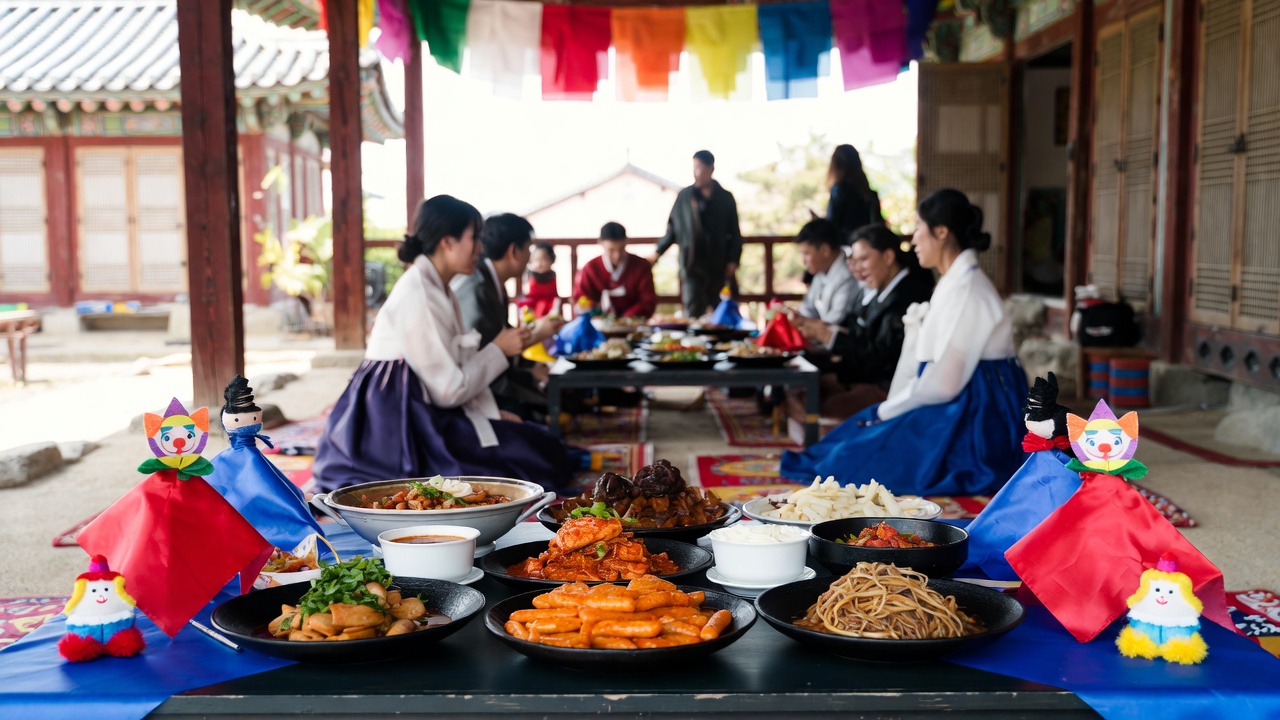
Food plays a central role in Seollal celebrations. Understanding traditional dishes enhances your cultural experience.
Tteokguk: The Essential Korean New Year Rice Cake Soup
Tteokguk (떡국) is the most important Seollal food. This rice cake soup appears on virtually every Korean table during Lunar New Year.
Cultural significance:
- Eating tteokguk symbolizes gaining one year of age
- The white soup represents a fresh, clean start to the new year
- Coin-shaped rice cakes symbolize wealth and prosperity
- Tradition says you must eat tteokguk to complete your birthday
What’s in tteokguk:
- Sliced garaetteok (long rice cakes) in thin ovals
- Clear beef or anchovy broth
- Egg garnish (julienned or swirled)
- Gim (dried seaweed) strips
- Green onions
- Sesame oil drizzle
Historical records from the 19th century Dongguksesigi (동국세시기) describe tteokguk as a traditional morning meal for Seollal. Koreans still ask each other, “How many bowls of tteokguk have you eaten?” as a playful way to inquire about age.
Regional variations:
- Tteokmanduguk: Rice cake and dumpling soup (popular nationwide)
- Joraengi tteokguk: Kaesong-style with twisted cocoon-shaped rice cakes
- Gon tteokguk: Jeju Island version with different rice cake preparation
Other Must-Try Seollal Foods
| Dish | Description | Significance |
|---|---|---|
| Jeon | Savory pancakes with vegetables, seafood, or meat | Festive abundance |
| Japchae | Sweet potato glass noodles with vegetables | Celebration dish |
| Galbijjim | Braised beef short ribs | Honoring guests |
| Mandu | Korean dumplings (steamed, boiled, or fried) | Shaped like lucky pouches |
| Hangwa | Traditional Korean sweets and cookies | Offerings and gifts |
| Sikhye | Sweet rice drink | Digestion and refreshment |
Where to Find Seollal Food During Your Trip
Many family-run restaurants close during the holiday. However, you can still find Seollal dishes at:
- Gwangjang Market: Seoul’s famous traditional market stays partially open
- Hotel restaurants: Major hotels serve special holiday menus
- Chain restaurants: Korean BBQ chains and family restaurants operate normally
- Hanok villages: Special Seollal meal programs during the holiday
- Convenience stores: Open 24/7 with pre-made options
Free tteokguk opportunities: Some Hanok villages, museums, and local government programs offer complimentary rice cake soup to visitors during Seollal.
Traditional Seollal Customs and Rituals: Understanding Korean Lunar New Year Traditions
Understanding Seollal traditions helps you appreciate the cultural depth of what you’re witnessing.
Charye: Ancestral Memorial Rites
Charye (차례) is the ancestral worship ceremony performed on Seollal morning. Families set an elaborate table with food offerings for deceased ancestors.
Components of charye:
- Ancestral tablets displayed behind the offering table
- Food arranged according to specific rules and positions
- Family members dressed in hanbok performing deep bows
- Prayers for ancestral blessings in the new year
As a visitor, you won’t participate in private charye ceremonies. However, cultural sites like the Korean Folk Village demonstrate these rituals for educational purposes.
Sebae: The Traditional New Year’s Bow
Sebae (세배) involves younger family members performing deep, formal bows to elders. This tradition demonstrates respect and receives blessings in return.
The sebae process:
- Younger person kneels and bows deeply to the ground
- Forehead touches the floor or nearly touches
- Elder offers words of blessing for the new year
- Elder gives sebaetdon (세뱃돈)—New Year’s gift money
Important cultural note: One deep bow is for living elders. Two deep bows are reserved for deceased ancestors. If you participate in any formal bow, remember this distinction.
The New Year Greeting: Saehae Bok Mani Badeuseyo
Learn to say “Saehae bok mani badeuseyo” (새해 복 많이 받으세요). This phrase means “Wishing you lots of luck in the New Year.”
You’ll hear this greeting everywhere during Seollal. Using it with shopkeepers, hotel staff, and people you meet demonstrates cultural awareness and brings smiles.
Wearing Hanbok: Traditional Korean Clothing
Many Koreans wear hanbok (한복), traditional Korean attire, during Seollal. The colorful garments add visual splendor to the holiday.
Benefits of wearing hanbok as a tourist:
- Free palace admission: Wearing hanbok grants free entry to royal palaces year-round
- Photo opportunities: Hanbok photographs beautifully against traditional architecture
- Cultural participation: Joining in the tradition enhances your experience
- Respect: Koreans appreciate foreign visitors embracing their culture
Hanbok rental locations near Gyeongbokgung:
- Numerous shops line the streets around the palace
- Prices typically range from 15,000-30,000 KRW for 2-4 hours
- Hair accessories and bags often included
- Winter hanbok comes with warm layers
Traditional Korean Games Played During Seollal: Activities You Can Join
Seollal features numerous traditional games that families play together. Many cultural sites offer opportunities for visitors to participate.
Yutnori: The Classic Korean Board Game
Yutnori (윷놀이) is the most popular traditional game during Seollal. Teams throw four wooden sticks and move tokens around a board.
How to play:
- Players divide into two teams
- One person throws four yut sticks
- The combination determines how many spaces to move
- Goal: Be the first team to move all tokens around the board
Possible throws:
- Do (도): 1 space (one flat side up)
- Gae (개): 2 spaces (two flat sides up)
- Geol (걸): 3 spaces (three flat sides up)
- Yut (윷): 4 spaces (all flat sides up)—throw again!
- Mo (모): 5 spaces (all round sides up)—throw again!
The shouts of excitement when someone throws yut or mo are part of the communal celebration.
Jegichagi: Korean Hacky Sack
Jegichagi (제기차기) involves kicking a shuttlecock-like object to keep it airborne. It’s similar to Western hacky sack but with distinctly Korean characteristics.
About the jegi:
- Traditionally made from a coin wrapped in paper or cloth
- Modern versions use colorful plastic and paper
- The weighted coin provides stability in flight
How to play:
- Kick the jegi using the inside of your foot
- Count consecutive kicks without dropping
- Compete to see who achieves the highest count
Neolttwigi: Korean Seesaw Jumping
Neolttwigi (널뛰기) looks like a seesaw but is played standing up. Two people stand on opposite ends of a plank balanced on a fulcrum. When one jumps down, the other is propelled into the air.
Historically, this game was particularly popular among women during the Joseon Dynasty, when social restrictions limited their movement outside the home. Neolttwigi allowed them to see over walls briefly.
Other Traditional Games
| Game | Description | Where to Try |
|---|---|---|
| Tuho | Throwing arrows into a jar | Palaces, folk villages |
| Gonggi | Korean jacks with small stones | Anywhere (easy to learn) |
| Ddakji | Flipping paper tiles (featured in Squid Game) | Cultural programs |
| Yeonnalligi | Traditional kite flying | Open areas, beaches |
What’s Open and Closed During Seollal 2026: Planning Your Itinerary
Understanding business closures helps you plan realistic itineraries.
What Stays Open During Seollal
Definitely open:
- Major tourist attractions (palaces, museums, theme parks)
- Convenience stores (open 24/7)
- Franchise cafes (Starbucks, Megacoffee, Holly’s)
- Chain restaurants
- Major department stores and shopping malls
- Hotels and accommodations
- Airports and public transportation (reduced schedules)
- Lotte World and Everland theme parks
Usually open:
- Popular restaurants in tourist areas (Myeongdong, Hongdae, Itaewon)
- Tourist-oriented shops
- Traditional markets (partial operation)
What Typically Closes During Seollal
Likely closed:
- Small family-run restaurants
- Local neighborhood shops
- Government offices
- Banks
- Some smaller museums and galleries
- Many businesses in residential areas
Closure patterns:
- Seollal Eve: Some businesses close early
- Seollal Day: Highest closure rate; plan alternatives
- Day after Seollal: Many businesses reopen
Free Admission Opportunities During Seollal 2026
Take advantage of complimentary entry to cultural sites:
Royal Palaces (all free during Seollal):
- Gyeongbokgung Palace
- Changdeokgung Palace
- Changgyeonggung Palace
- Deoksugung Palace
Other free sites:
- Jongmyo Shrine (normally reservation-only; walk-in during Seollal)
- Joseon Royal Tombs
- National Museum of Korea
- National Folk Museum of Korea
Where to Stay During Seollal 2026: Best Areas and Accommodation Tips
Strategic accommodation choices enhance your Seollal experience.
Best Neighborhoods for Seollal Visitors
Myeongdong
- Walking distance to Namsangol Hanok Village
- Many restaurants and shops remain open
- Easy subway access to palaces
- Abundant dining options for the holiday
Insadong/Jongno
- Near Gyeongbokgung and Changdeokgung Palaces
- Traditional atmosphere with hanok stays available
- Art galleries and traditional craft shops
- Cultural programs during Seollal
Hongdae
- Vibrant atmosphere even during holidays
- Many young people celebrate here instead of going home
- Abundant cafes and restaurants
- Good nightlife options
Accommodation Booking Tips
- Book early: Domestic travelers also seek city accommodations
- Expect higher prices: 10-30% increase during Seollal period
- Check cancellation policies: Flexible booking recommended
- Consider hanok stays: Traditional house accommodations enhance the experience
- Verify opening status: Contact hotels to confirm restaurant and facility hours
Recommended Hotel Types
| Budget | Mid-Range | Luxury |
|---|---|---|
| Guesthouses | Business hotels | 5-star international chains |
| Hostels | Boutique hotels | Traditional hanok luxury stays |
| Capsule hotels | Serviced apartments | Palace-view properties |
What to Pack for Visiting Korea During Seollal 2026: Winter Weather Essentials
February weather in Korea requires serious winter preparation.
Weather Conditions During Seollal
| Metric | Seoul | Busan | Jeju |
|---|---|---|---|
| Average High | 4°C (39°F) | 9°C (48°F) | 9°C (48°F) |
| Average Low | -4°C (25°F) | 2°C (36°F) | 4°C (39°F) |
| Precipitation | Low | Low | Moderate |
| Snow chance | Possible | Rare | Very rare |
Essential Packing List
Clothing:
- Heavy winter coat (down or wool)
- Layered thermal underwear
- Thick socks (bring extras)
- Warm hat and gloves
- Scarf or neck warmer
- Anti-slip shoes (essential for icy conditions)
Accessories:
- Heat patches (available at convenience stores, but bring extras)
- Moisturizing cream (winter air is very dry)
- Lip balm
- Sunglasses (snow glare and bright winter sun)
- Glasses defogger (if applicable)
- Portable phone charger (cold drains batteries faster)
Staying Warm at Outdoor Events
Seollal events at palaces and hanok villages occur outdoors. Plan for extended time outside by:
- Wearing multiple thin layers rather than one thick layer
- Keeping heat patches in pockets and inside shoes
- Taking warming breaks at cafes or heated tents
- Carrying a thermos with hot drinks
2026 Year of the Fire Horse: What the Korean Zodiac Means for Your Visit
2026 brings the Year of the Fire Horse (병오년), the first Fire Horse year since 1966.
Understanding the Fire Horse Year
In Korean and Chinese astrology, each year combines one of 12 zodiac animals with one of five elements. The Fire Horse appears only every 60 years, making 2026 particularly significant.
Horse year characteristics:
- Energy and dynamism
- Freedom and independence
- Speed and progress
- Optimism and adventure
Fire element additions:
- Passion and intensity
- Bold action
- Transformation
- Leadership
Lucky Elements for 2026
Lucky colors: Red, purple, pink, orange Lucky numbers: 2, 3, 7 Lucky directions: South, Southeast
Industries favored in Fire Horse years: Technology, entertainment, sports, energy
Zodiac Compatibility in 2026
| Sign | 2026 Outlook |
|---|---|
| Tiger | Positive progress; expanding opportunities |
| Goat | Calm year with ease in completing tasks |
| Dog | Positive progress expected |
| Rat | Conflict year; extra vigilance needed |
| Horse | Your zodiac year; amplified energy |
Sample Seollal 2026 Itineraries: Making the Most of Your Korean Lunar New Year Trip
3-Day Seoul Seollal Itinerary
Day 1: February 16 (Seollal Eve)
- Morning: Arrive in Seoul; settle into accommodation
- Afternoon: Explore Insadong’s traditional shops (most still open)
- Evening: Watch locals preparing for the holiday; festive atmosphere building
Day 2: February 17 (Seollal Day)
- Morning: Visit Gyeongbokgung Palace (free admission); receive Sehwa charm
- Midday: Tteokguk lunch at a hotel restaurant or Gwangjang Market
- Afternoon: Namsangol Hanok Village cultural programs
- Evening: N Seoul Tower for city views
Day 3: February 18 (Day After Seollal)
- Morning: National Folk Museum of Korea
- Afternoon: Bukchon Hanok Village walking tour
- Evening: Departure or extend your stay
5-Day Cultural Immersion Itinerary
Day 1-2: Seoul As above, focusing on palace visits and cultural sites
Day 3: Day Trip to Korean Folk Village
- Take the shuttle bus from Seoul
- Spend full day experiencing traditional life
- Participate in folk games and watch performances
Day 4: Jeonju Hanok Village
- Morning: KTX or SRT to Jeonju (if booked successfully)
- Afternoon: Explore hanbok villages; try famous Jeonju bibimbap
- Evening: Traditional market exploration
Day 5: Return and Departure
- Morning: Additional Jeonju exploration
- Afternoon: Return to Seoul
- Evening: Departure
Practical Tips for First-Time Visitors During Korean Lunar New Year
Money and Payments
- Cash: Still useful for markets and small vendors
- Credit cards: Widely accepted; Visa and Mastercard preferred
- T-money card: Rechargeable transportation card; works in convenience stores too
- ATMs: Available at convenience stores; 7-Eleven and CU are reliable
Communication
- WiFi: Excellent coverage throughout Korea
- Pocket WiFi/SIM: Rent at the airport or pre-order online
- Language: English signage common in tourist areas
- Translation apps: Papago (Korean-made) and Google Translate both work well
Cultural Etiquette
- Bowing: A slight bow shows respect
- Shoes off: Remove shoes when entering traditional spaces
- Two hands: Give and receive items with both hands to show respect
- Elder respect: Let older people sit first; don’t start eating before elders
Safety Considerations
Korea is exceptionally safe for tourists. However, during Seollal:
- Plan meals in advance: Restaurant closures can surprise you
- Carry snacks: Convenience stores are reliable backup options
- Check transportation schedules: Reduced services on Seollal Day
- Have accommodation contact info: In case you need assistance
Beyond Seoul: Lesser-Known Seollal Destinations Worth Exploring
Gyeongju: Ancient Capital of Silla
Korea’s outdoor museum features UNESCO World Heritage sites. The ancient Silla kingdom capital offers:
- Bulguksa Temple
- Seokguram Grotto
- Royal tomb complexes
- Anapji Pond
- Traditional hanok accommodations
Andong: Home of Korean Confucianism
Experience Hahoe Folk Village, a UNESCO World Heritage Site where traditional ways of life continue. During Seollal:
- Traditional mask dance performances
- Authentic yangban (aristocratic) culture
- Well-preserved Joseon Dynasty architecture
- Andong jjimdak (braised chicken) culinary specialty
Busan: Coastal Celebrations
Korea’s second-largest city offers:
- Haedong Yonggungsa Temple for sunrise prayers
- Jagalchi Fish Market (partially open)
- Beach walks in winter scenery
- Hot springs at Hurshimchung Spa
Conclusion: Your Unforgettable Korean Lunar New Year Experience Awaits
Celebrating Seollal in Korea during 2026 offers an exceptional travel experience. The Year of the Fire Horse promises energy, transformation, and memorable adventures.
Whether you explore Seoul’s royal palaces, immerse yourself in Jeonju’s traditional village, or escape to Jeju’s natural beauty, Seollal provides authentic cultural connections impossible at other times.
Key takeaways for your 2026 Seollal trip:
- Book early: Transportation and accommodation fill quickly
- Plan around closures: Research which venues remain open
- Embrace traditions: Wear hanbok, try tteokguk, learn the greeting
- Be flexible: The quiet holiday atmosphere is part of the charm
- Dress warmly: February weather demands serious winter clothing
Start planning your Korean Lunar New Year 2026 adventure today. Mark February 17, 2026 on your calendar and begin creating memories that will last a lifetime.
새해 복 많이 받으세요! — Wishing you abundant blessings in the New Year!
Understanding Korean Age System: Why Tteokguk Makes You One Year Older
One fascinating aspect of Seollal involves the Korean age system. Traditionally, Koreans calculated age differently from Western countries.
How Traditional Korean Age Worked
In the traditional system:
- At birth: You were already 1 year old
- On Seollal: Everyone gained one year simultaneously
- Birthday: Did not affect your age count
This meant a baby born on December 31st would become “2 years old” the very next day when Seollal arrived. The traditional saying goes: “You must eat tteokguk to become one year older.”
Modern Changes to Korean Age
In June 2023, South Korea officially shifted to the international age system for legal and administrative purposes. However, cultural traditions around Seollal age-gaining persist.
The question “How many bowls of tteokguk have you eaten?” (떡국 몇 그릇 먹었어?) remains a playful way Koreans ask about age. Some children enthusiastically request multiple bowls, jokingly hoping to age faster.
What This Means for Visitors
As a tourist, you might encounter:
- Koreans joking about becoming older after eating tteokguk
- Questions about your age using traditional counting
- Cultural programs explaining the age system
- Menu items labeled as “aging” foods
Embrace the cultural humor. If someone asks your age, you can playfully add one or two years using the traditional method!
Seollal Gift-Giving Culture: What Koreans Exchange During Lunar New Year
Gift-giving represents an important social tradition during Seollal. Understanding this custom provides cultural insight.
Common Seollal Gifts in Korea
| Gift Category | Examples | Recipient |
|---|---|---|
| Food sets | Hanwoo beef, fruit sets, traditional snacks | Parents, in-laws |
| Health products | Red ginseng, vitamins, health supplements | Elderly relatives |
| Spam sets | Yes, really! Premium canned meat gift boxes | Family, colleagues |
| Personal care | Skincare sets, toiletries | Various relationships |
| Cash | Sebaetdon (New Year’s money) | Children, younger relatives |
The Famous Korean Spam Gift Sets
International visitors often find it amusing that Spam gift sets rank among Korea’s most popular holiday presents. This tradition dates back to post-Korean War era when canned meat represented luxury and abundance.
Today, department stores display elaborate Spam gift set towers during Seollal season. Premium sets include gourmet variations and beautifully packaged presentations.
Sebaetdon: New Year’s Money Tradition
Sebaetdon (세뱃돈) is money given to children and younger relatives after they perform sebae bows. The amounts vary by relationship and economic status.
Typical sebaetdon amounts:
- Grandparents to grandchildren: 50,000-100,000 KRW
- Parents to children: 30,000-100,000 KRW
- Aunts/Uncles to nieces/nephews: 20,000-50,000 KRW
- To young adult relatives: 50,000-100,000 KRW
The money traditionally comes in crisp, new bills placed in decorated envelopes called bokjumeoni (복주머니), meaning “luck pouches.”
Gift-Giving Etiquette for Visitors
As a tourist, you’re not expected to participate in gift exchanges. However, if you’re visiting Korean friends or attending a homestay:
- Bring small gifts from your home country
- High-quality food items are always appreciated
- Present gifts with both hands
- Don’t open gifts immediately in front of the giver
Korean Lunar New Year Television: Seollal Entertainment Programming
Television plays a significant role in Korean Seollal celebrations. Understanding the programming provides cultural context.
Seollal Special Programming
Korean networks broadcast extensive holiday specials including:
- Idol Star Athletics Championships: K-pop idols compete in track and field events
- Family variety shows: Special episodes featuring celebrity families
- Traditional music performances: Gugak (Korean traditional music) concerts
- Historical dramas: Special airings of popular sageuks (period dramas)
- Comedy specials: Humor programming for family viewing
Award Shows and Year-End Programming
While technically occurring before Seollal, the end-of-year music awards and drama awards often repeat during the holiday period. K-pop fans particularly enjoy this timing.
Where to Watch Korean Seollal Programming
If you’re in Korea during Seollal:
- Hotel televisions: Most have major Korean channels
- Streaming services: Wavve, Tving, and Netflix Korea
- Public viewing: Some cafes keep TVs on
- K-pop cafes: Fan-run establishments often show idol content
Photography Tips for Capturing Korean Lunar New Year Celebrations
Seollal provides exceptional photography opportunities. Plan your shots for memorable souvenirs.
Best Photography Locations During Seollal
Royal Palaces
- Golden hour shots of palace gates
- Hanbok-clad visitors against traditional architecture
- Royal Guard Changing Ceremony
- Snow scenes (if weather permits)
Namsangol Hanok Village
- Traditional games in action
- N Seoul Tower backdrop with hanok foregrounds
- Cultural performances
- Craft activities
Traditional Markets
- Colorful food stalls
- Market vendors in traditional dress
- Seollal decorations and displays
- Local people shopping for holiday ingredients
Camera Settings Recommendations
| Situation | Aperture | ISO | Notes |
|---|---|---|---|
| Palace exteriors | f/8-11 | 100-400 | Tripod recommended |
| Action shots (games) | f/2.8-4 | 400-800 | Fast shutter speed |
| Indoor ceremonies | f/2.8-4 | 800-1600 | No flash in sacred spaces |
| Portraits in hanbok | f/2.8-4 | 200-400 | Soft backgrounds |
Photography Etiquette
- Ask permission before photographing individuals closely
- No flash photography inside palace buildings or museums
- Respect religious ceremonies at temples
- Avoid photographing charye ceremonies unless explicitly invited
- Be mindful of crowds at popular spots
Learning Basic Korean for Seollal: Essential Phrases for Visitors
A few Korean phrases enhance your Seollal experience significantly.
Seollal-Specific Greetings
| Korean | Romanization | Meaning |
|---|---|---|
| 새해 복 많이 받으세요 | Saehae bok mani badeuseyo | Happy New Year (formal) |
| 새해 복 많이 받아 | Saehae bok mani bada | Happy New Year (informal) |
| 건강하세요 | Geonganghaseyo | Stay healthy |
| 올해도 잘 부탁드립니다 | Olhaedo jal butakdeurimnida | Please take care of me this year |
Useful Food-Related Phrases
| Korean | Romanization | Meaning |
|---|---|---|
| 떡국 주세요 | Tteokguk juseyo | Rice cake soup, please |
| 맛있어요 | Masisseoyo | It’s delicious |
| 잘 먹겠습니다 | Jal meokgesseumnida | I will eat well (before eating) |
| 잘 먹었습니다 | Jal meogeosseumnida | I ate well (after eating) |
| 얼마예요? | Eolmayeyo? | How much is it? |
General Helpful Phrases
| Korean | Romanization | Meaning |
|---|---|---|
| 감사합니다 | Gamsahamnida | Thank you |
| 죄송합니다 | Joesonghamnida | I’m sorry / Excuse me |
| 화장실 어디예요? | Hwajangsil eodiyeyo? | Where is the bathroom? |
| 도와주세요 | Dowajuseyo | Please help me |
| 사진 찍어 주세요 | Sajin jjigeo juseyo | Please take a photo |
Pronunciation Tips
Korean pronunciation follows consistent rules. For Seollal vocabulary:
- Seollal (설날): Say “Sol-lal” (the double L is pronounced like a light L)
- Tteokguk (떡국): Say “Tok-guk” (the double T is unaspirated)
- Sebae (세배): Say “Seh-beh” (short vowels)
- Hanbok (한복): Say “Han-bok” (rhymes with “rock”)
Temple Visits During Seollal: Buddhist New Year Traditions
Many Koreans visit Buddhist temples during Seollal for prayers and blessings.
Why Koreans Visit Temples at New Year
Temple visits during Seollal serve to:
- Pray for blessings in the coming year
- Honor ancestors through Buddhist ceremonies
- Find peace during the busy holiday
- Make offerings for family health and prosperity
Recommended Temples for Seollal Visits
Bongeunsa Temple (Seoul) Located in the heart of Gangnam, this accessible temple offers:
- Bell-ringing ceremonies
- Lotus lantern decorations
- Buddhist chanting services
- Temple food offerings
Jogyesa Temple (Seoul) Korea’s chief Buddhist temple features:
- Special New Year services
- Ancient trees in the courtyard
- Accessible location in Insadong area
- Buddhist art and artifacts
Haedong Yonggungsa Temple (Busan) This oceanside temple provides:
- Stunning sunrise views
- Cliff-side location
- New Year blessing ceremonies
- Unique seaside atmosphere
Temple Etiquette for Foreign Visitors
- Dress modestly: Cover shoulders and knees
- Remove shoes: When entering buildings
- Bow respectfully: At Buddha statues (optional for non-Buddhists)
- Maintain silence: Inside worship halls
- No photography: During active ceremonies
- Walk quietly: The temple is a place of contemplation
Temple Stay Programs During Seollal
Some temples offer special Seollal temple stay programs. These include:
- Traditional Buddhist meals
- Meditation sessions
- Tea ceremonies
- Making lotus lanterns
- Learning Buddhist chants
- Early morning services
Book through the official Temple Stay Korea website. Programs fill quickly during holiday periods.
Seollal Shopping: What to Buy as Souvenirs During Korean Lunar New Year
Seollal provides unique shopping opportunities for authentic Korean souvenirs.
Best Seollal Souvenirs to Bring Home
Traditional Items
- Hanji products: Traditional Korean paper crafts
- Bojagi: Traditional wrapping cloths
- Yut game sets: The traditional board game
- Jegi: Shuttlecock for jegichagi game
- Korean fans: Decorative or functional
- Norigae: Decorative hanbok accessories
Food Souvenirs
- Hangwa: Traditional Korean sweets (boxed for travel)
- Korean tea: Green tea, citrus tea, barley tea
- Dried persimmons: Traditional winter treat
- Sesame oil: High-quality Korean varieties
- Gochugaru: Korean red pepper flakes
Modern Korean Products
- K-beauty items: Skincare and cosmetics
- Soju glasses: Traditional drinking vessels
- Celadon pottery: Traditional ceramic pieces
- Korean snacks: Popular convenience store items
Where to Shop for Seollal Souvenirs
| Location | Specialty | Price Range |
|---|---|---|
| Insadong | Traditional crafts, tea, art | Mid-high |
| Namdaemun Market | Variety, bargaining possible | Low-mid |
| Lotte Department Store | Premium gifts, tax-free | High |
| Gwangjang Market | Food items, fabric | Low-mid |
| Bukchon Hanok Village | Artisan crafts | Mid-high |
Shopping Tips During Seollal
- Check hours: Many small shops close during the holiday
- Markets partially operate: Main markets stay open but with reduced vendors
- Tax refunds: Keep receipts for duty-free refunds at the airport
- Shipping: Major stores offer international shipping
- Bargaining: Acceptable at markets but not department stores
Day Trips from Seoul During Seollal 2026: Escaping the Quiet City
If Seoul feels too quiet during Seollal, several day trip destinations remain active.
Nami Island and Garden of Morning Calm
This popular combination tour operates during Seollal:
- Nami Island: Winter scenery, tree-lined paths
- Garden of Morning Calm: Winter lighting festival continues
- Transportation: Book through tour companies like Klook or Viator
DMZ and JSA Tours
Demilitarized Zone tours typically operate during Seollal, though schedules may adjust:
- Advance booking essential
- Passport required
- Dress code applies (no flip-flops, torn jeans)
- Some tours may cancel on Seollal Day itself
Ski Resorts Near Seoul
Winter sports enthusiasts can enjoy:
- Vivaldi Park: Family-friendly, night skiing
- Yongpyong Resort: 2018 Olympics venue
- Alpensia Resort: Premium facilities
- Phoenix Park: Good intermediate terrain
Ski resorts are busier than usual during Seollal as many Koreans choose vacation travel over traditional hometown visits.
Suwon Hwaseong Fortress
This UNESCO World Heritage Site offers:
- Free admission during Seollal
- Traditional fortress walls
- Archery experiences
- Less crowded than Seoul palaces
Seollal for Families: Kid-Friendly Activities During Korean Lunar New Year
Traveling with children during Seollal requires specific planning.
Best Activities for Children During Seollal
Theme Parks
- Lotte World: Indoor park unaffected by weather; special Seollal parades
- Everland: Korea’s largest theme park with winter festivities
- Both parks offer zodiac-themed discounts for those born in certain years
Educational Experiences
- National Children’s Museum: Interactive exhibits
- COEX Aquarium: Always engaging for kids
- Trick Eye Museum: Fun photo opportunities
- Folk village activities: Traditional games perfect for children
Outdoor Activities
- Sledding: Available at folk villages and parks
- Ice skating: Outdoor rinks in Seoul plazas
- Kite flying: Traditional Seollal activity
Child-Friendly Seollal Foods
Many traditional foods appeal to children:
- Tteokguk: Mild flavor, fun chewy rice cakes
- Mandu: Korean dumplings kids love
- Hangwa: Sweet traditional cookies
- Sikhye: Sweet rice drink (non-alcoholic)
Practical Tips for Families
- Strollers: Seoul has improving accessibility but still challenging
- Diaper changing: Available at major attractions and department stores
- High chairs: Common in chain restaurants, rare in traditional spots
- Kid menus: Korean restaurants often offer smaller portions on request
- Warmth: Extra layers essential for children at outdoor events
Budget Travel Tips for Seollal 2026: Experiencing Korean New Year Affordably
Seollal can be experienced on any budget with proper planning.
Free Seollal Activities
Absolutely Free:
- Palace visits during Seollal period
- Namsangol Hanok Village grounds
- National Museum of Korea
- Traditional market browsing
- Temple visits (donations appreciated)
- Walking tours of Bukchon and Insadong
- Watching street performances
Budget Accommodation Options
| Type | Price Range (per night) | Notes |
|---|---|---|
| Hostels | 15,000-30,000 KRW | Shared rooms, social atmosphere |
| Guesthouses | 30,000-50,000 KRW | Private rooms, local experience |
| Capsule hotels | 25,000-40,000 KRW | Compact but private |
| Budget hotels | 50,000-80,000 KRW | Basic private rooms |
Affordable Dining During Seollal
Cheapest Options:
- Convenience stores: Surprisingly good prepared foods
- Kimbap restaurants: Korean “fast food” chains like Kimbap Cheonguk
- Market food: Street food at traditional markets
- Fast food: Korean fried chicken chains
Budget-Friendly Traditional Food:
- Look for “baekban” (백반) restaurants serving set meals
- University area restaurants near Hongdae, Sinchon
- Food courts in department store basements
Money-Saving Transportation Tips
- T-money card: Discounted fares compared to cash
- Airport limousine bus: Cheaper than AREX for some routes
- Walking: Seoul’s most interesting areas are walkable
- Subway transfers: Free within 30 minutes
- Toll-free highways: If renting a car during Seollal
Conclusion: Your Unforgettable Korean Lunar New Year Experience Awaits
Celebrating Seollal in Korea during 2026 offers an exceptional travel experience. The Year of the Fire Horse promises energy, transformation, and memorable adventures.
Whether you explore Seoul’s royal palaces, immerse yourself in Jeonju’s traditional village, or escape to Jeju’s natural beauty, Seollal provides authentic cultural connections impossible at other times.
Key takeaways for your 2026 Seollal trip:
- Book early: Transportation and accommodation fill quickly
- Plan around closures: Research which venues remain open
- Embrace traditions: Wear hanbok, try tteokguk, learn the greeting
- Be flexible: The quiet holiday atmosphere is part of the charm
- Dress warmly: February weather demands serious winter clothing
Final checklist before your trip:
- [ ] Passport valid for at least 6 months
- [ ] K-ETA approval (check current requirements)
- [ ] Transportation booked (mark January 21 for train tickets!)
- [ ] Accommodation confirmed
- [ ] Winter clothing packed
- [ ] T-money card ordered or plan to buy on arrival
- [ ] Key phrases learned
- [ ] Camera charged and ready
Start planning your Korean Lunar New Year 2026 adventure today. Mark February 17, 2026 on your calendar and begin creating memories that will last a lifetime.
새해 복 많이 받으세요! — Wishing you abundant blessings in the New Year!
Frequently Asked Questions About Seollal 2026
What date is Seollal in 2026?
Seollal 2026 falls on Tuesday, February 17, 2026. The three-day official holiday period runs from February 16-18, 2026.
Is everything closed during Seollal in Korea?
No, not everything closes. Major tourist attractions, convenience stores, chain restaurants, and hotels remain open. Small family-run businesses are most likely to close.
Can foreigners buy train tickets during Seollal?
Yes, but with restrictions. Foreign travelers can purchase KTX train tickets starting January 21, 2026, at 3:00 PM KST. Korean citizens receive priority booking earlier.
What food do Koreans eat during Seollal?
Tteokguk (rice cake soup) is essential. Other common foods include jeon (savory pancakes), japchae (glass noodles), mandu (dumplings), and traditional sweets.
Should I visit Korea during Seollal?
Yes, for cultural experiences. Seollal offers unique opportunities including free palace admission, traditional performances, and a quieter atmosphere in major cities.
What is the Year of the Horse 2026?
2026 is the Year of the Fire Horse in the Chinese/Korean zodiac. This combination occurs every 60 years and symbolizes energy, action, and transformation.