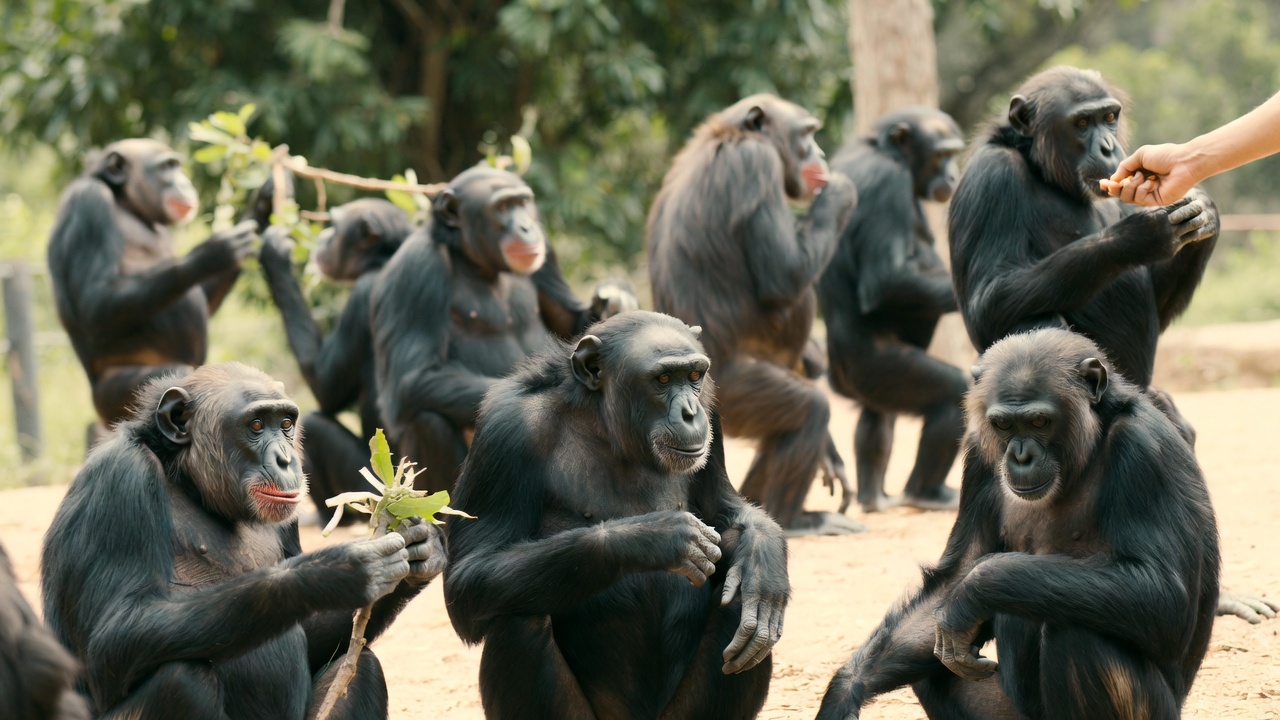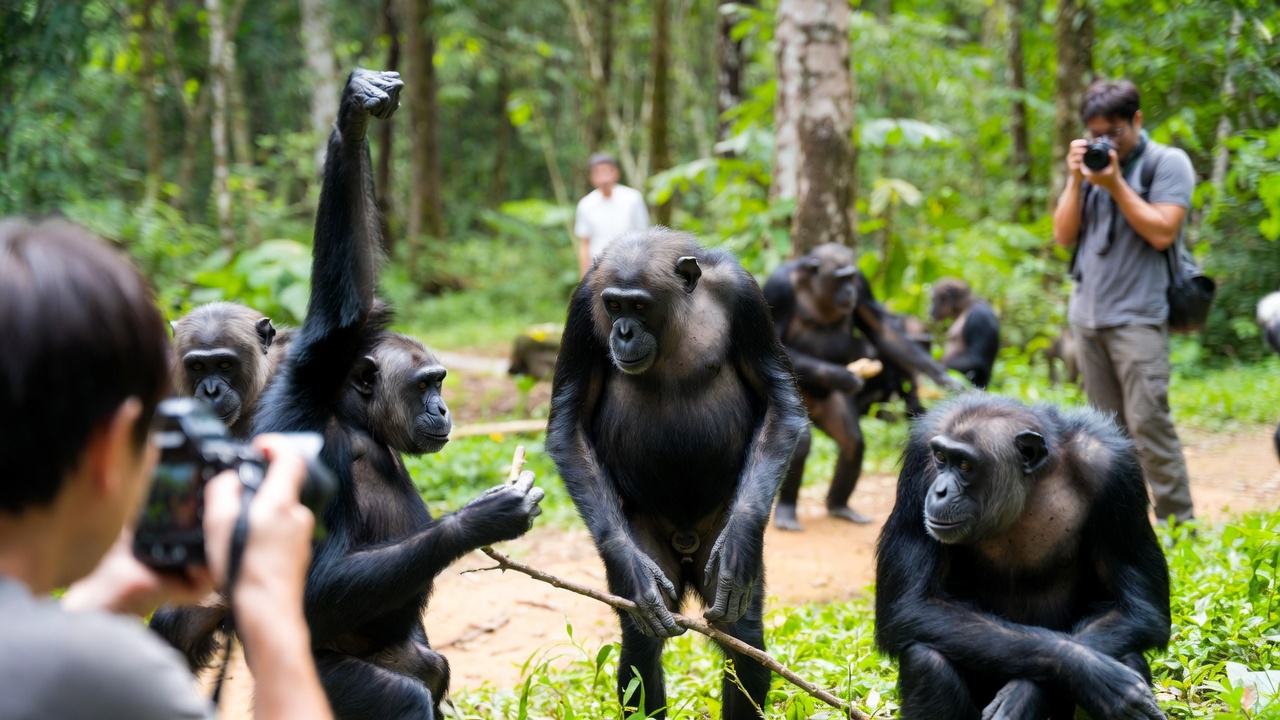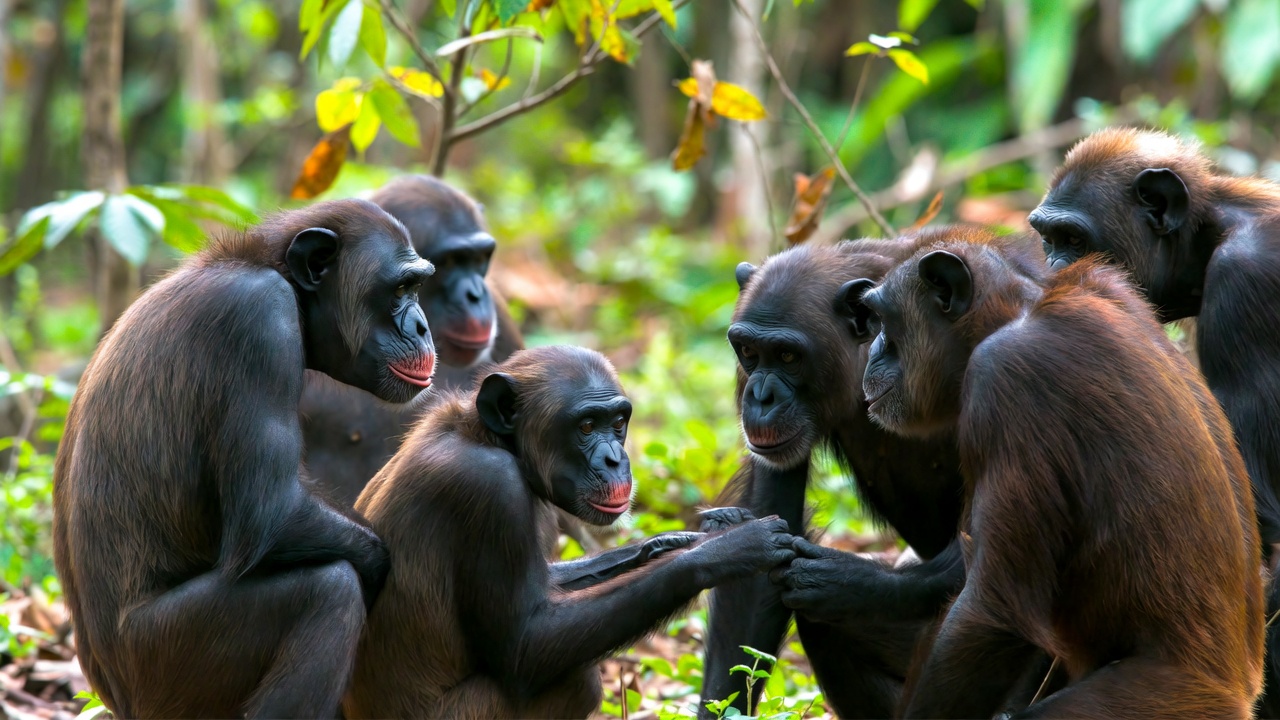
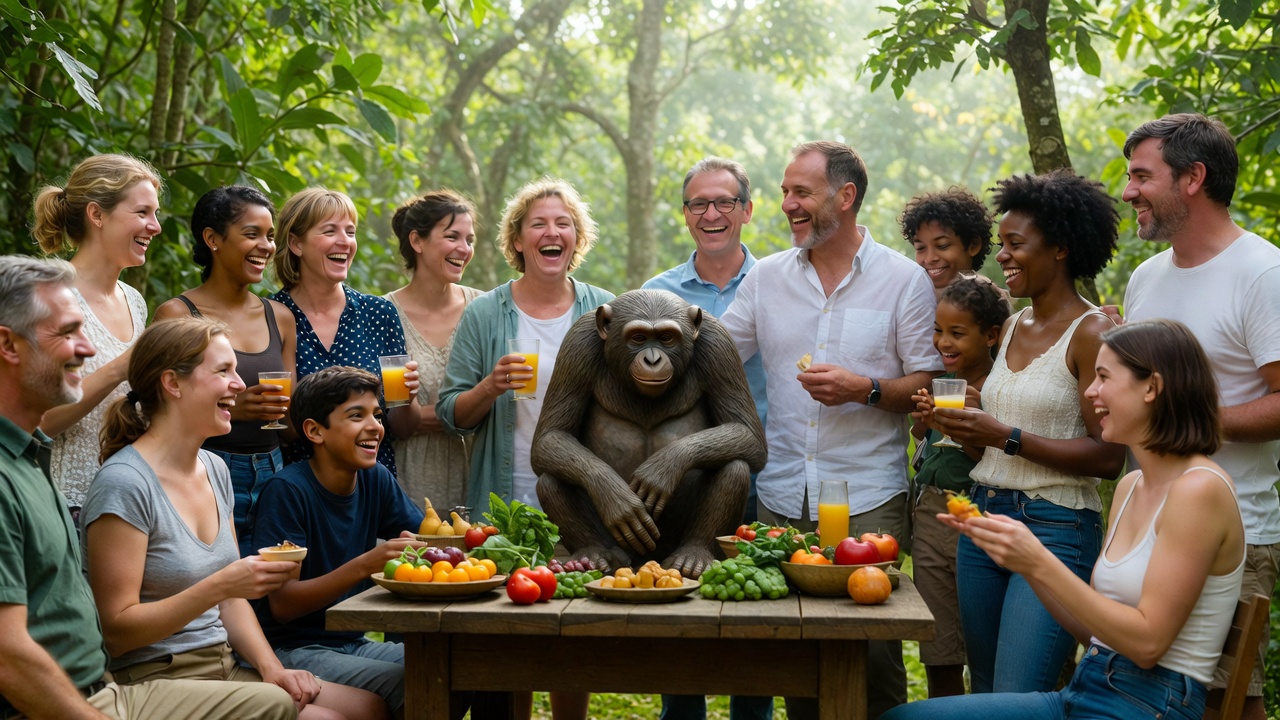
Every February 14, while the world exchanges Valentine’s cards and chocolate hearts, another celebration quietly unfolds — one dedicated to the most loving apes on Earth. World Bonobo Day falls on Valentine’s Day for a reason. Bonobos settle conflicts through affection, not aggression. They hug, they kiss, and they share food with strangers. If any animal deserves to share the day of love, it is the bonobo.
Yet most people have never heard of them. Bonobos are the least known of all the great apes. They live in only one country on the planet — the Democratic Republic of the Congo (DRC). Their population is small, fragmented, and shrinking. Scientists estimate that only 15,000 to 20,000 bonobos remain in the wild, making them one of the most endangered primates alive today.
World Bonobo Day was founded in 2017 by the Bonobo Conservation Initiative (BCI), a Washington, D.C.-based nonprofit and the only international organization solely dedicated to protecting wild bonobos and their rainforest habitat. The day is also supported by groups like Friends of Bonobos, the International Primate Protection League, and the African Wildlife Foundation.
This guide walks you through meaningful, practical, and fun ways to celebrate World Bonobo Day 2026 — whether you are a parent planning a family activity at home or a teacher looking for classroom-ready ideas.
What Is World Bonobo Day and Why Does It Matter in 2026?
World Bonobo Day is a global awareness event held every February 14 to spotlight bonobos and the urgent need to protect them. The day serves three purposes: educate the public, raise conservation funds, and inspire action.
Why does this matter more than ever in 2026? The threats facing bonobos have not slowed down. Habitat loss from logging, mining, and agricultural expansion continues to shrink their forest home. Poaching for bushmeat remains a serious danger, driven by extreme poverty in the DRC. Young bonobos are still captured for the illegal wildlife trade, usually after their mothers have been killed.
The African Wildlife Foundation has also noted that 99.2% of the bonobo’s range is suitable for palm oil production, creating a looming future threat. Political instability in the DRC further complicates conservation work on the ground.
Here is a quick snapshot of the bonobo:
| Fact | Detail |
|---|---|
| Scientific name | Pan paniscus |
| Common nicknames | Pygmy chimpanzee, hippie chimp |
| DNA shared with humans | 98.7% |
| Found in the wild | Democratic Republic of the Congo only |
| Estimated wild population | 15,000–20,000 |
| Conservation status | Endangered (IUCN Red List) |
| Social structure | Matriarchal (female-led) |
| Conflict resolution | Social bonding, grooming, affection |
| World Bonobo Day | February 14, annually since 2017 |
Understanding these basics is the first step toward celebrating the day with purpose.
Why Bonobos Are Called the “Hippie Chimps” — Fun Facts for Kids and Families
Before diving into celebration ideas, it helps to know what makes bonobos so special. These facts are perfect for family dinner conversations or classroom warm-ups.
Bonobos are our closest living relatives. Together with chimpanzees, they share the genus Pan. But bonobos and chimps are very different. Where chimps can be aggressive and territorial, bonobos choose peace. They resolve disputes through grooming, play, and physical closeness rather than fighting. This is why researchers have nicknamed them the “hippie chimps” or the “make love, not war” apes.
Females lead bonobo society. In a bonobo group, mothers hold the highest social rank. Males rank below all females in the group. This matriarchal structure creates a calmer, more cooperative community. The bond between a bonobo mother and her son is especially strong — mothers even help their adult sons find mates.
Bonobos laugh, smile, and play. Like humans, bonobos put on a “play face” during friendly roughhousing. They tickle each other. They laugh. When two bonobo groups meet in the forest, they often play together rather than fight — a behavior almost unheard of in the primate world.
They are clever self-healers. Bonobos have been observed combining certain plants to create remedies. They also eat specific leaves with medicinal properties, a behavior scientists call zoopharmacognosy.
They were the last great ape species to be discovered. German anatomist Ernst Schwarz did not officially classify bonobos as a separate species from chimpanzees until 1933. Even today, bonobos remain far less studied than gorillas, orangutans, or chimps.
These facts make bonobos a compelling subject for kids. They are relatable, lovable, and in need of help — the perfect combination for building empathy and environmental awareness.
Creative World Bonobo Day Activities for Families at Home
You do not need to travel to the Congo to make a difference. Some of the most meaningful celebrations happen right at the kitchen table. Here are family-friendly ideas for February 14, 2026.
Host a Bonobo-Themed Family Movie Night
Gather the family and watch “Bonobos: Back to the Wild” (2015), a family-friendly documentary following Beni, an orphaned baby bonobo rescued by Claudine André and the team at Lola ya Bonobo sanctuary. The film features voice talent from Luke Evans and Rebecca Hall. It is available on Amazon Prime and Tubi. Reviewers on IMDB describe it as “a lovely movie for children” that focuses on the nurturing bonds between bonobos.
For older family members, “The Bonobo Connection” (2012), narrated by Ashley Judd, offers a more in-depth look at the threats bonobos face from habitat destruction, political conflict, and poaching.
After the film, hold a short family discussion. Ask your kids: What surprised you most about bonobos? How are bonobos similar to our family?
Throw a Bonobo Love Party
Since World Bonobo Day falls on Valentine’s Day, merge the two celebrations. Decorate with printable bonobo images and facts (the Friends of Bonobos Kids’ Activities page offers free downloads). Serve fruit platters — bananas, mangoes, and berries — because bonobos are primarily frugivores. Make “98.7% Bonobo” name tags for each guest.
Play a bonobo trivia game using the facts in this article. Award small prizes for correct answers. The goal is to make conservation feel joyful rather than heavy.
Symbolically Adopt a Bonobo
Several organizations offer symbolic bonobo adoption programs that make excellent Valentine’s Day gifts. When you adopt, your donation goes toward habitat protection, sanctuary care, and community development in the DRC. In return, you typically receive a certificate, a photo, and regular updates about your bonobo.
Organizations offering adoption programs include:
- Friends of Bonobos — Supports Lola ya Bonobo, the world’s only bonobo sanctuary
- Bonobo Conservation Initiative — Funds the Bonobo Peace Forest in the DRC
- African Wildlife Foundation — Supports ranger training and habitat reserves
This is a particularly powerful activity for children. It makes conservation personal. Instead of an abstract concept, protection becomes about their bonobo.
Recycle Old Electronics as a Family
Here is a simple action most families overlook. Coltan — a mineral found in smartphone batteries, laptops, and tablets — is mined extensively in the DRC, often in bonobo habitat. The ECOcalendar notes that recycling electronics keeps coltan in circulation and reduces the demand for new mining.
On World Bonobo Day, collect old phones, tablets, and laptops from around the house and drop them off at an electronics recycling center. Explain to your kids the direct link between their devices and the rainforest. It is a concrete, tangible lesson in how everyday choices affect animals thousands of miles away.
World Bonobo Day Lesson Plans and Classroom Activities for Schools
Teachers have a unique opportunity on February 14. While students are buzzing about Valentine’s Day, redirect that energy toward learning about love in the animal kingdom. Below are structured ideas organized by age group.
Elementary School Activities (Ages 5–10)
1. “6 Ways to Be Like a Bonobo” Classroom Challenge
The Friends of Bonobos Kids’ page offers an interactive feature called “6 Ways to Be Like a Bonobo,” which teaches children values like sharing, kindness, and cooperation. Print and post these in the classroom. Challenge students to practice one bonobo behavior each day for a week.
2. Bonobo Coloring and Art Station
Download the free bonobo coloring book from Friends of Bonobos. Set up an art station where students draw their own bonobos or create “Save the Bonobos” posters. Display the best artwork in the hallway.
3. Read-Aloud Session
Use age-appropriate books about bonobos or great apes. For older elementary students, the novel Endangered by Eliot Schrefer — a National Book Award finalist — tells the story of a girl caring for a bonobo during civil war in the DRC. It is a gripping introduction to both bonobos and the challenges facing the Congolese people.
4. Fruit Tasting Party
Bring in tropical fruits that bonobos eat — bananas, papayas, figs, and pineapples. As students taste each fruit, share a bonobo fact. This multisensory approach helps younger children remember what they learn.
Middle School and High School Activities (Ages 11–18)
1. DNA Comparison Research Project
Bonobos share 98.7% of their DNA with humans. Assign students to research what that remaining 1.3% difference means. How does bonobo DNA compare to chimpanzees? To gorillas? Students can present their findings as posters, slides, or short videos.
2. Debate: Should Great Apes Have Legal Rights?
This topic has real-world relevance. Some countries have begun granting limited legal protections to great apes. Divide the class into teams and hold a structured debate. This exercise builds critical thinking while deepening understanding of animal welfare and ethics.
3. Geography and Ecology of the Congo Basin
Use World Bonobo Day as a gateway into studying the Congo Basin — the second-largest tropical rainforest on Earth. Students can map bonobo habitat, trace the Congo River, and research how deforestation, mining, and conflict affect both wildlife and human communities. This ties into geography, environmental science, and social studies curricula.
4. Kindness Club Inspired by Lola ya Bonobo
At Lola ya Bonobo sanctuary near Kinshasa, education staff have helped create over 40 Kindness Clubs in local schools. These clubs teach children about wildlife conservation, biodiversity, and threats like poaching and climate change. Start your own school Kindness Club on World Bonobo Day. Students can plan conservation activities, organize fundraisers, and share what they learn on social media.
How to Support Bonobo Conservation Organizations on February 14
Celebration without action is just a party. Here are the most impactful organizations working to protect bonobos, along with specific ways to help.
Bonobo Conservation Initiative (BCI)
Website: bonobo.org
BCI is building the Bonobo Peace Forest — a connected network of community-based reserves in the DRC. They have helped protect over nine million acres of officially recognized habitat. BCI employs more than 200 local trackers and eco-guards who monitor bonobos and patrol the forest daily. They also operate the Djolu Technical College, providing education in conservation management and sustainable agriculture to local residents.
How to help: Donate directly, sponsor an eco-guard, or share BCI’s content on social media.
Friends of Bonobos / Lola ya Bonobo
Website: bonobos.org
Lola ya Bonobo — meaning “paradise for bonobos” in Lingala — is the world’s only bonobo sanctuary. Founded in 1994 by Claudine André, it is home to about 60 bonobos living in 30 hectares of primary forest near Kinshasa. The sanctuary rescues orphaned bonobos from the illegal bushmeat trade, rehabilitates them, and when possible, releases them back into the wild at the Ekolo ya Bonobo Community Reserve. Each year, up to 30,000 people visit the sanctuary.
How to help: Adopt a bonobo, make a one-time donation, or shop their online store for bonobo-themed apparel and merchandise.
African Wildlife Foundation (AWF)
Website: awf.org
AWF takes a community-driven approach, establishing reserves in the DRC and training rangers to manage protected areas. Their work generates tourism revenue and creates local jobs.
How to help: Donate, fundraise, or advocate for wildlife-friendly policies.
Ape Initiative
Website: apeinitiative.org
Based in Des Moines, Iowa, Ape Initiative is the only research center in the world dedicated exclusively to the study and conservation of bonobos. They run STEM-focused education programs for students of all ages, including elementary school class visits.
How to help: Support their education programs, follow their research updates, or plan a school field trip (for Iowa-area schools).
| Organization | Focus | Best For |
|---|---|---|
| Bonobo Conservation Initiative | Wild habitat protection, community development | Donors, advocates |
| Friends of Bonobos / Lola ya Bonobo | Sanctuary care, rewilding, education | Families, symbolic adoptions |
| African Wildlife Foundation | Ranger training, reserves, policy | Advocates, fundraisers |
| Ape Initiative | Research, STEM education | Schools, educators |
How to Use Social Media to Spread Bonobo Awareness on World Bonobo Day
Social media campaigns amplify impact far beyond your living room or classroom. The Friends of Bonobos website offers a World Bonobo Day Social Media Toolkit with ready-made messages, images, and artwork.
Here are practical tips:
- Use the hashtag #WorldBonoboDay and #BonoboLove in every post.
- Share one bonobo fact per hour on February 14. Facts with numbers — like “98.7% DNA match” or “fewer than 20,000 left” — tend to get the most engagement.
- Post a family photo wearing bonobo-themed shirts or holding handmade signs.
- Tag conservation organizations so they can amplify your posts.
- Create a short video explaining why you celebrate World Bonobo Day. Authentic, personal stories outperform polished content.
Teachers can turn this into a class project. Have students design social media posts (even mockups for younger students) that spread awareness. This teaches digital literacy, persuasive writing, and conservation advocacy all at once.
World Bonobo Day and Valentine’s Day: How to Combine Both Celebrations
Since both days share the calendar, many families and schools combine them. Here are a few ideas:
Make “Bonobo Valentines.” Instead of standard Valentine’s cards, have kids create cards featuring bonobo facts. Write messages like “You’re 98.7% amazing!” or “Be kind like a bonobo.” These stand out in any classroom card exchange.
Give a conservation gift instead of candy. Symbolic bonobo adoptions, donations in someone’s name, or bonobo-themed merchandise all make thoughtful Valentine’s gifts that support a real cause.
Host a “Love Is…” discussion. Ask your family or students: What does love look like in the animal kingdom? How do bonobos show love? How is that similar to how humans show care? This sparks meaningful reflection and connects the holiday to deeper themes of empathy and cooperation.
Frequently Asked Questions About World Bonobo Day 2026
When is World Bonobo Day 2026? World Bonobo Day 2026 falls on Saturday, February 14, 2026 — the same date every year.
Who started World Bonobo Day? The Bonobo Conservation Initiative (BCI) founded World Bonobo Day in 2017 to raise global awareness about bonobos and their conservation needs.
Why is World Bonobo Day on Valentine’s Day? Bonobos are known as the “make love, not war” apes. They resolve conflict through affection, grooming, and social bonding. February 14 is a natural fit.
Are bonobos endangered? Yes. Bonobos are listed as Endangered on the IUCN Red List. Threats include habitat loss, poaching, the bushmeat trade, and political instability in the DRC.
How many bonobos are left in the wild? Estimates range from 15,000 to 20,000 individuals, though exact numbers are difficult to determine due to the remote and conflict-affected regions where they live.
What is the difference between bonobos and chimpanzees? Bonobos are slightly smaller, have pink lips, and live in matriarchal (female-led) societies. They are far less aggressive than chimpanzees and resolve conflicts through social bonding rather than fighting.
Where can I donate to help bonobos? The most trusted organizations include Friends of Bonobos, the Bonobo Conservation Initiative, the African Wildlife Foundation, and Ape Initiative.
Making World Bonobo Day a Tradition Worth Keeping
World Bonobo Day is still young — not yet a decade old. It does not have the commercial machinery of Valentine’s Day or the long traditions of older holidays. But that is part of its charm. It is a day built on sincerity, not sales.
For families, it is a chance to teach children that love extends beyond our species. That a creature living thousands of miles away in the Congo rainforest deserves care and protection. That everyday actions — recycling a phone, choosing sustainably sourced products, sharing a fact on social media — add up.
For schools, it is an opportunity to weave conservation into the curriculum in a way that feels fresh and relevant. Bonobos are scientifically fascinating, ethically important, and emotionally compelling. Students remember them.
The bonobos of the DRC cannot speak for themselves. But on February 14, we can speak for them. Whether you host a fruit-filled party, screen a documentary, start a Kindness Club, or simply share a bonobo fact with a friend — every act of awareness moves the needle.
Bonobos taught us that peace is possible. The least we can do is help them survive.
Interested in staying connected? Follow Friends of Bonobos and the Bonobo Conservation Initiative for year-round updates. And if this article helped you plan your celebration, share it with another family or teacher. The bonobos will thank you — probably with a hug.