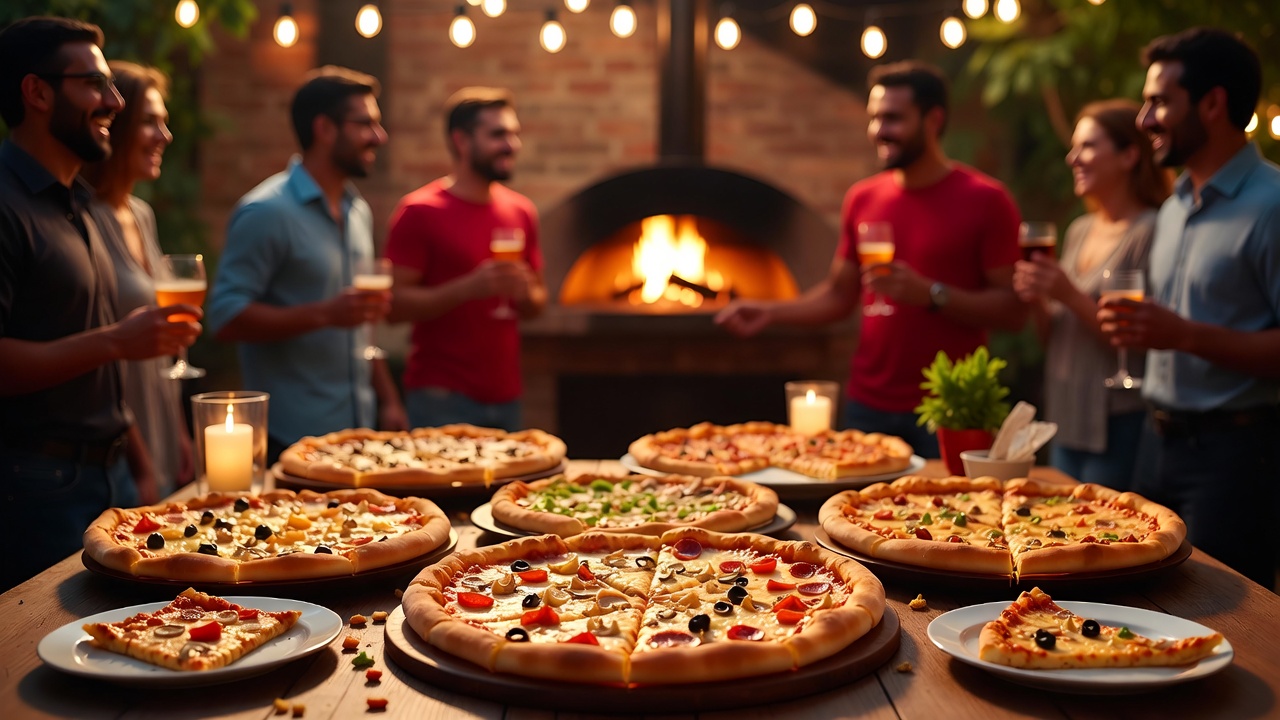
Every year on February 9, millions of Americans celebrate National Pizza Day — one of the most beloved unofficial food holidays in the United States. In 2026, that date falls on a Monday, giving pizza lovers the perfect excuse to kick off the week with a homemade pie. But instead of reaching for the phone to order delivery, why not mark this year’s National Pizza Day by learning to make authentic Neapolitan pizza at home?
This is not just another recipe article. This is a deep dive into the centuries-old craft that UNESCO recognized in 2017 as an Intangible Cultural Heritage of Humanity. We will walk through the history, the strict standards that govern this iconic dish, and every practical step you need to recreate it in your own American kitchen. Let us begin.
What Is National Pizza Day and Why Should You Celebrate It in 2026?
National Pizza Day is observed every year on February 9 in the United States. While its exact origins are unclear — no one can pinpoint precisely who started it — records of the celebration trace back to the early 2000s. The holiday gives Americans a dedicated day to honor what has become one of the country’s most consumed foods.
The numbers tell the story. According to the National Day Calendar, Americans eat an average of 23 pounds of pizza per person each year. About 350 slices of pizza are consumed every second across the country. Over 3 billion pizzas are sold in the United States annually, with another billion in frozen pizzas on top of that. In fact, 17% of all restaurants in America are pizzerias. Only hamburgers rank higher than pizza among America’s favorite fast foods.
National Pizza Day in 2026 carries a special energy. The artisan pizza movement continues to grow in cities from Portland to Atlanta. Portable pizza ovens have become backyard staples. And more Americans than ever are curious about what authentic pizza — the original Neapolitan kind — actually tastes like.
This February 9, instead of settling for the usual delivery, try something different. Make authentic Neapolitan pizza at home. It is simpler than you think, and the result will be unlike any pizza you have ordered before.
The History of Neapolitan Pizza: How Italy’s Street Food Conquered America
To truly honor National Pizza Day, you need to understand the origins of the food itself. Pizza did not start in New York or Chicago. It started in the narrow, bustling streets of Naples in the 18th century — and its journey to American tables is one of the great culinary stories of the modern era.
A Humble Beginning in Naples
Pizza in its earliest form was poor people’s food. Flatbreads topped with garlic, lard, and salt were sold by street vendors to workers who needed something cheap, fast, and filling. Tomatoes — originally brought to Europe from the Americas by Spanish colonizers — were slow to gain acceptance. Many Europeans thought them poisonous. But the Neapolitans, always resourceful, started spreading them on their flatbreads in the early 1700s.
By the late 18th century, fiordilatte (cow’s milk mozzarella from the Agerola region) and mozzarella di bufala (buffalo mozzarella) found their way onto these tomato-topped flatbreads. The modern pizza was born.
The first known pizzeria, Antica Pizzeria, opened in Naples in 1738. For over a century, pizza remained a regional Neapolitan specialty — virtually unknown outside of southern Italy.
The Margherita Legend
The most famous chapter of pizza history is the story of Queen Margherita’s visit to Naples in 1889. As the tale goes, pizzaiolo Raffaele Esposito prepared three pizzas for King Umberto I and Queen Margherita. The queen favored the simplest one — topped with tomato, mozzarella, and basil — whose colors mirrored the Italian flag. The pizza was named Margherita in her honor.
Whether every detail of this story is historically precise remains debated among food historians. What is certain is that the name stuck and the Margherita became the world’s most iconic pizza.
How Pizza Came to America
Pizza arrived in the United States with Italian immigrants in the late 19th century. The first American pizzeria, Gennaro Lombardi’s, opened on Spring Street in New York City’s Little Italy neighborhood in 1905. For decades, pizza remained largely confined to Italian-American communities on the East Coast.
Everything changed after World War II. American soldiers stationed in Italy developed a taste for the local pizza. When they returned home, they brought that craving with them. Demand exploded. Pizzerias spread across the country. National chains like Pizza Hut (founded in Wichita, Kansas, in 1958), Domino’s, Little Caesars, and Papa John’s turned pizza into a mass-market American staple.
But along the way, something was lost. American pizza evolved into its own distinct category — thicker crusts, sweeter sauces, heavier toppings, lower oven temperatures. The original Neapolitan style, with its radical simplicity and 60-second bake, faded from American consciousness.
That is finally changing. Since the early 2000s, a new generation of American pizzaioli has rediscovered authentic Neapolitan pizza. And National Pizza Day is the perfect occasion to join them.
The UNESCO Milestone
On December 7, 2017, the Intergovernmental Committee for the Safeguarding of the Intangible Cultural Heritage, meeting on Jeju Island in South Korea, officially inscribed the Art of Neapolitan Pizzaiuolo on UNESCO’s Representative List. The decision acknowledged that the craft involves far more than cooking. It encompasses gestures, songs, storytelling, and the transmission of knowledge from master to apprentice.
Two million Italians had signed a petition supporting the application. When the news broke, Neapolitan pizza makers took to the streets and handed out free slices to celebrate.
It is important to note a distinction often lost in translation. UNESCO recognized the art of the pizza maker, not the pizza itself. The craft — the hand movements, the oven techniques, the cultural rituals surrounding the bottega (pizza shop) — is what earned the designation. Pizza Napoletana as a product already holds a separate Traditional Speciality Guaranteed (TSG) status from the European Union, which took effect in 2010.
What Makes Neapolitan Pizza Different from American Pizza Styles
Before you fire up your oven this National Pizza Day, you should know exactly what sets Neapolitan pizza apart. This is not New York-style, it is not Chicago deep-dish, and it is certainly not a frozen supermarket pie.
Key Characteristics of Authentic Neapolitan Pizza
The Associazione Verace Pizza Napoletana (AVPN), founded in 1984, has codified the rules of authentic Neapolitan pizza. These standards are not suggestions. They are specific, measurable criteria that certified pizzerias around the world must follow.
Here is what distinguishes a true Neapolitan pizza:
| Feature | AVPN Standard |
|---|---|
| Shape | Round, maximum 35 cm (about 14 inches) in diameter |
| Cornicione (crust edge) | Raised 1–2 cm, golden, with minimal charring |
| Center thickness | No more than 3 mm (about 0.12 inches) |
| Dough ingredients | Only flour, water, salt, and yeast |
| Flour type | Tipo “00” or Tipo “0” |
| Hydration | 58–65% |
| Fermentation | Minimum 8 hours, up to 24 hours or longer |
| Oven type | Wood-fired, dome-shaped |
| Oven temperature | 430–480°C (800–900°F) |
| Cooking time | 60–90 seconds |
| Texture | Soft, pliable, fragrant — never crispy or cracker-like |
Notice what is not on the ingredient list: sugar, oil, eggs, or milk. Authentic Neapolitan dough is radically simple. The flavor comes from long fermentation, quality flour, and extreme heat.
Neapolitan vs. Neo-Neapolitan vs. New York Style
The American pizza world is full of styles inspired by Naples but not bound by its rules. As pizza expert Roberto Caporuscio, owner of Kesté Pizza & Vino in New York, has explained, Neo-Neapolitan pizza takes the Neapolitan foundation and modifies it — perhaps with different flours, longer bake times, or additional toppings. It can be excellent, but as Caporuscio told Pizza Today, it is something different.
New York-style pizza uses a higher-gluten bread flour, a longer bake at lower temperatures, and produces a foldable slice with a chewier, crisper crust. Chicago deep-dish is practically a different food category — a thick, buttery crust filled with cheese and chunky tomato sauce. Detroit-style pizza features a rectangular shape and crispy, cheesy edges baked in a blue steel pan.
All of these styles are delicious. They are all part of what makes American pizza culture so rich. But none of them are Neapolitan. And on this National Pizza Day, going back to the source is worth the effort.
Essential Ingredients for Making Authentic Neapolitan Pizza Dough at Home
The beauty of Neapolitan pizza lies in its simplicity. You need exactly four ingredients for the dough. The challenge is in the quality and technique.
Tipo “00” Flour: The Foundation of Great Neapolitan Dough
Tipo “00” refers to the fineness of the milling, not the protein content. It is the finest grade in the Italian flour classification system. This ultra-fine grind produces a silky, extensible dough that stretches easily without tearing.
The most widely recommended brand among professional pizzaioli is Caputo, a Naples-based mill that has been producing flour for over a century. Their “Pizzeria” and “Chef’s Flour” varieties are especially popular. In the United States, you can find Caputo flour at Whole Foods, specialty Italian markets, and online retailers like Amazon. Other excellent options include Molino Grassi and Le 5 Stagioni.
If you cannot find Tipo “00” flour, you can substitute with bread flour or all-purpose flour. King Arthur Baking Company offers its own “00” Pizza Flour milled from 100% American-grown wheat to match Italian “00” standards. The texture will be slightly different from imported Italian flour, but it works well for home ovens. Some experienced American home bakers actually prefer bread flour because its higher protein content (around 12–13%) produces better oven spring and browning at the lower temperatures of a domestic oven.
Water: Clean and Room Temperature
Water should be clean, free of strong mineral flavors, and at room temperature (around 68–72°F). Cold water slows yeast activity, and warm water can kill it. Room temperature is the sweet spot that gives you the most control over fermentation. If your tap water has a strong chlorine taste, filtered water is a smart choice.
Salt: Sea Salt Is Traditional
The AVPN specifies sea salt, preferably coarse. Salt strengthens the gluten network, controls yeast activity, and adds flavor. It also contributes to the golden color of the finished crust.
A standard ratio is about 2.5–3% of the flour weight. For 500 grams of flour, that means roughly 12–15 grams of salt.
Yeast: Fresh or Dry, Use It Sparingly
Traditional Neapolitan pizza uses fresh compressed yeast (also called cake yeast). It has a mild flavor and produces consistent results. However, instant dry yeast and active dry yeast — both widely available at any American grocery store — work well for home baking.
The critical point is to use very little yeast and allow a long, slow fermentation. This is the single most important technique in Neapolitan pizza making. A typical recipe for a 20–24 hour room-temperature fermentation calls for as little as 0.1–0.3 grams of dry yeast per 500 grams of flour. That is a tiny amount — barely a pinch.
Why so little? Because long fermentation does three things: it develops complex flavors, it makes the dough more digestible, and it creates the airy, bubbly structure that defines the Neapolitan cornicione.
Step-by-Step Neapolitan Pizza Dough Recipe for Home Bakers
This recipe makes enough dough for four individual pizzas, each about 250 grams — the traditional weight for a single Neapolitan pizza.
Ingredients
| Ingredient | Weight | Baker’s Percentage |
|---|---|---|
| Tipo “00” flour (or bread flour) | 500 g (about 4 cups) | 100% |
| Water (room temperature) | 325 ml (about 1⅓ cups) | 65% |
| Fine sea salt | 15 g (about 2½ teaspoons) | 3% |
| Instant dry yeast | 0.5 g (about ⅛ teaspoon) | 0.1% |
Note: This recipe uses 65% hydration. If you are baking in a standard American home oven (which typically maxes out around 480–550°F), this slightly higher hydration helps the dough retain moisture during the longer bake time. If you have a dedicated pizza oven that reaches 800°F or above, you can reduce the hydration to 58–62%.
Instructions
1. Dissolve the salt and yeast in water.
Pour the room-temperature water into a large mixing bowl. Add the salt and stir until it dissolves. Then add the yeast and stir gently. Let it sit for two minutes.
2. Add the flour gradually.
Add about 70% of the flour to the water and mix with your hand or a wooden spoon until it forms a shaggy mass. Then add the remaining flour a little at a time, incorporating it fully before adding more.
3. Knead the dough.
Turn the dough out onto a clean, unfloured surface. Knead for 10–15 minutes using the push-fold-turn method. The dough should become smooth, elastic, and slightly tacky but not sticky. If it sticks badly to your hands, wet your hands rather than adding flour.
Alternatively, use a stand mixer with a dough hook on the lowest setting for 8–10 minutes.
4. First rise (bulk fermentation).
Shape the dough into a ball, place it in a lightly oiled bowl, and cover tightly with plastic wrap or a damp kitchen towel. Let it rest at room temperature (around 68–72°F) for 2 hours.
5. Divide and shape into dough balls.
After the bulk rise, turn the dough out onto a lightly floured surface. Divide it into four equal pieces (about 250 grams each). Shape each piece into a tight, smooth ball by tucking the edges underneath and rolling it on the surface with cupped hands.
6. Second rise (ball proofing).
Place each ball into a lightly floured proofing box, container, or on a baking tray. Cover with a damp cloth or plastic wrap. Let the balls proof at room temperature for 6–8 hours (or up to 24 hours for maximum flavor development).
For a cold fermentation option, place the covered dough balls in the refrigerator for 24–72 hours. Remove them 2–3 hours before shaping to let them return to room temperature.
7. Test the dough.
Your dough is ready when it has roughly doubled in size and feels pillowy and airy. Press it gently with a finger — if the indentation springs back slowly, it is perfectly proofed.
How to Make Authentic Neapolitan Pizza Sauce Without Cooking
One of the most surprising things about Neapolitan pizza sauce — especially for Americans used to thick, seasoned tomato sauces — is that it is not cooked. This is a crucial distinction from most American pizza sauce. In Naples, the sauce is simply crushed tomatoes seasoned with salt — nothing more. The heat of the oven does all the cooking.
Why San Marzano Tomatoes Are the Gold Standard for Pizza Sauce
The tomato variety matters enormously. San Marzano tomatoes, grown in the volcanic soil near Mount Vesuvius in the Campania region, are considered the finest tomatoes for pizza. They have a naturally sweet flavor, low acidity, thick flesh, and fewer seeds than other varieties.
When buying canned San Marzano tomatoes at your local grocery store, look for the DOP label (Denominazione di Origine Protetta, or Protected Designation of Origin). This certification guarantees that the tomatoes were grown and packaged in the designated region near Naples, following strict quality controls. Many cans labeled “San Marzano” or “San Marzano style” on American grocery shelves are not actually DOP-certified — they may use San Marzano seeds but are grown elsewhere, often in California or other regions.
Where to find authentic DOP San Marzano tomatoes in the U.S.: Whole Foods, Trader Joe’s (check labels carefully), specialty Italian markets, and online retailers. Trusted DOP brands include Cento (with DOP label), Strianese, La Valle, and DeLallo.
Simple No-Cook Pizza Sauce Recipe
| Ingredient | Amount |
|---|---|
| Canned whole peeled San Marzano tomatoes (DOP) | 1 can (28 oz) |
| Fine sea salt | ½ teaspoon |
| Fresh basil leaves (optional) | 4–5 leaves |
Instructions:
- Open the can and drain the tomatoes from their juice. Reserve the juice for another use (pasta sauce, soup, etc.).
- Place the drained tomatoes in a bowl.
- Crush them by hand. Do not use a blender or food processor. Blending ruptures the seeds, which release bitter compounds into the sauce. Hand-crushing preserves the natural sweetness of the tomatoes.
- Add the salt and torn basil leaves. Stir gently.
- The sauce is ready to use immediately.
That is it. No garlic, no oregano, no sugar, no olive oil in the sauce itself. If you are used to jar sauces from the supermarket, this simplicity might feel strange. But the philosophy of Neapolitan pizza is absolute respect for the quality of each ingredient. When your tomatoes are this good, they do not need help.
Best Cheese for Neapolitan Pizza: Mozzarella di Bufala vs. Fior di Latte
Cheese selection is another area where Neapolitan pizza differs sharply from the American norm. Forget the pre-shredded bag from the dairy aisle.
Mozzarella di Bufala Campana DOP
This is mozzarella made from the milk of water buffalo raised in the Campania region. It has a rich, tangy flavor, a creamy interior, and a delicate outer skin. It is the traditional choice for a classic Margherita pizza. In the U.S., you can find imported buffalo mozzarella at Whole Foods, specialty cheese shops, and Italian delis.
The challenge for home bakers: Buffalo mozzarella contains a lot of moisture. On pizza, it can release water and make the center soggy. To manage this, slice or tear the mozzarella and place it on a paper towel for 15–20 minutes before topping your pizza. Some pizzaioli even add the mozzarella after the pizza comes out of the oven, letting the residual heat melt it gently.
Fior di Latte
This is cow’s milk mozzarella, traditionally from the Agerola area on the Amalfi Coast. It has a milder flavor, a slightly firmer texture, and releases less moisture than buffalo mozzarella. For American home ovens with longer bake times, fior di latte is often the more practical choice. Look for fresh mozzarella balls sold in water at your grocery store — these are close to fior di latte in style.
Both cheeses are acceptable under AVPN standards. The key is freshness. Mozzarella should be consumed within a day or two of purchase for the best taste and texture. Avoid low-moisture, pre-shredded mozzarella — it melts differently and lacks the delicate flavor profile that defines Neapolitan pizza.
How to Shape Neapolitan Pizza Dough by Hand Like a Pizzaiolo
Shaping is where many American home bakers feel intimidated. But with practice, it becomes intuitive. The goal is to create a thin center while preserving the air in the cornicione (the puffy outer rim).
The Traditional Hand-Stretching Technique
- Flour your work surface lightly. Use Tipo “00” flour or fine semolina.
- Place the dough ball on the surface. Press gently from the center outward with your fingertips, leaving about 1 inch of untouched dough around the edge. This untouched rim becomes the cornicione.
- Flip and repeat. Turn the dough over and press again from the center outward. The disk should start to expand.
- Lift and stretch. Pick up the dough and drape it over your knuckles (not fingertips). Let gravity pull it down while you gently rotate and stretch it. The dough should be thin enough that you can almost see light through the center.
- Work quickly. The entire shaping process should take 30–60 seconds. Overhandling the dough warms it up and deflates the air pockets.
What to Avoid
- Never use a rolling pin. Rolling pins crush the air bubbles that make the cornicione light and puffy.
- Never toss the dough in the air. Contrary to popular belief and every movie about Italian restaurants, authentic Neapolitan pizzaioli do not throw their dough. That is a showmanship technique, not a shaping technique.
- Do not stretch the dough too thin at the edges. The center should be thin (about 0.12 inches), but the rim should remain thick and airy.
How to Bake Neapolitan Pizza in a Regular American Home Oven
Here is the honest truth: a standard American home oven cannot perfectly replicate a Neapolitan wood-fired oven. Professional Neapolitan ovens reach 800–900°F and cook a pizza in 60–90 seconds. Most home ovens top out at 480–550°F.
But you can still make excellent Neapolitan-style pizza at home with the right approach.
Essential Equipment for Home Pizza Baking
| Equipment | Purpose | Estimated Cost |
|---|---|---|
| Pizza stone | Retains heat, crisps the bottom | $25–50 |
| Pizza steel | Conducts heat faster than stone, better browning | $60–100 |
| Pizza peel (wooden or metal) | Transfers pizza to and from the oven | $15–30 |
| Infrared thermometer (optional) | Checks stone/steel surface temperature | $15–25 |
A pizza steel is the single best upgrade for home oven pizza. Steel conducts heat roughly 20 times more efficiently than a ceramic stone, producing a crispier bottom in less time. The Baking Steel brand, created in Massachusetts, is a popular choice among American home pizza enthusiasts.
The Broiler Method: Best Results in a Home Oven
This technique combines bottom heat from the preheated steel with top heat from the broiler to simulate the intense, dual-direction heat of a wood-fired oven.
Step-by-step:
- Place your pizza steel or stone on the upper-middle rack of your oven, about 6–8 inches below the broiler element.
- Preheat the oven to its maximum temperature (usually 480–550°F) for at least 45–60 minutes. The steel needs time to fully saturate with heat.
- When you are ready to bake, switch the oven to the broiler setting (high heat).
- Quickly assemble your pizza on a floured peel. Work fast — the longer the dough sits on the peel, the more it sticks.
- Slide the pizza onto the hot steel and close the oven door.
- Bake for 3–5 minutes, watching closely. The crust should puff up, develop char spots (called leopard spotting), and the cheese should melt and bubble.
- Rotate the pizza halfway through using a metal peel or tongs for even cooking.
- Remove, slice, and serve immediately.
Tips for Success in a Home Oven
- Less is more with toppings. Overloading the pizza weighs down the dough and prevents proper baking. A Margherita uses about 3 tablespoons of sauce, 3–4 ounces of mozzarella, a few basil leaves, and a drizzle of extra virgin olive oil. That is all.
- Pre-dry your mozzarella. As mentioned above, patting it with paper towels prevents a soggy center.
- Use parchment paper if needed. If you struggle with the peel-to-steel transfer, you can assemble the pizza on a piece of parchment paper and slide the whole thing onto the steel. Remove the parchment after 1–2 minutes once the bottom has set.
- Keep the oven door closed. Opening it drops the temperature significantly.
Should You Invest in a Portable Pizza Oven for National Pizza Day?
The rise of portable, high-temperature pizza ovens has been one of the most exciting developments for American home pizza enthusiasts in recent years. Brands like Ooni, Roccbox, and Solo Stove offer compact ovens that reach 930°F — hot enough for a true 60-second Neapolitan bake. You can find them at Williams Sonoma, Sur La Table, Home Depot, and Amazon.
Pros and Cons of Portable Pizza Ovens
| Pros | Cons |
|---|---|
| Reaches authentic Neapolitan temperatures | Requires outdoor space (patio, deck, or yard) |
| Cooks pizza in 60–90 seconds | Learning curve for fire management |
| Produces genuine leopard-spotted char | Typically cooks one pizza at a time |
| Versatile fuel options (wood, gas, propane) | Initial investment ($300–600 for quality models) |
| Great for backyard entertaining | Weather-dependent (tricky in winter) |
If you are serious about Neapolitan pizza and have outdoor space, a portable pizza oven is a worthwhile investment. The results are dramatically closer to an authentic Neapolitan pizzeria than anything a home oven can produce.
If you go this route, remember to adjust your dough hydration downward (to 58–62%) since the extreme heat means the pizza spends less time in the oven and retains more moisture.
Classic Neapolitan Pizza Toppings: Margherita and Marinara Recipes
The AVPN recognizes two primary traditional pizzas. Everything else is a variation.
Pizza Margherita
| Ingredient | Amount per pizza |
|---|---|
| Tomato sauce (no-cook, as above) | 3 tablespoons (about 70–80 g) |
| Fior di latte or mozzarella di bufala | 3–4 oz (80–100 g) |
| Fresh basil leaves | 4–5 leaves |
| Extra virgin olive oil | 1 drizzle |
| Salt | A pinch |
Assembly: Spread the sauce with a circular motion from the center outward, leaving the cornicione bare. Tear or slice the mozzarella and distribute evenly. Add the basil leaves — traditionally placed before baking so they infuse the pizza with their aroma. Drizzle olive oil in a thin spiral.
Pizza Marinara
| Ingredient | Amount per pizza |
|---|---|
| Tomato sauce (no-cook) | 3 tablespoons (about 70–80 g) |
| Garlic | 1 clove, thinly sliced |
| Dried oregano | A pinch |
| Extra virgin olive oil | 1 generous drizzle |
Assembly: Spread the sauce as above. Scatter the garlic slices evenly. Sprinkle oregano lightly. Drizzle olive oil generously.
The Marinara is the older of the two pizzas. It contains no cheese at all. Named for the fishermen’s wives (marinare) who supposedly made it for their husbands returning from the sea, it is a testament to how good pizza can be with just a few perfect ingredients. For many Americans accustomed to cheese-heavy pies, this can be a revelation.
Common Mistakes Americans Make When Trying Neapolitan Pizza at Home
Even experienced home cooks trip up on these points. Learning from common errors will save you time, ingredients, and frustration.
1. Not letting the dough ferment long enough. Rushing fermentation is the single biggest mistake. Short-fermented dough lacks flavor, has a tight crumb structure, and is harder to digest. Plan ahead. Start your dough the night before — or even two days in advance if using cold fermentation.
2. Adding sugar or oil to the dough. These are common in American pizza recipes but have no place in Neapolitan dough. Sugar speeds up browning, which is unnecessary when baking at high heat. Oil softens the crumb, which works against the characteristic chew of Neapolitan pizza.
3. Using pre-shredded, low-moisture mozzarella. This type of cheese melts differently and tastes fundamentally different from fresh mozzarella. It produces a greasy, rubbery result that bears no resemblance to an authentic Neapolitan pizza.
4. Cooking the sauce. Neapolitan pizza sauce is raw. The oven does the cooking. Pre-cooking the sauce makes it thicker and sweeter — qualities suited to American pizza styles, not Neapolitan.
5. Overloading the toppings. This might be the hardest habit for Americans to break. Neapolitan pizza is minimalist by design. The center of the pizza is thin and delicate. Too much weight causes it to become soggy and prevents even cooking.
6. Not preheating the oven (and stone/steel) long enough. A pizza stone or steel needs at least 45–60 minutes at maximum temperature to fully absorb heat. Placing a pizza on an insufficiently heated surface produces a pale, underdone bottom.
7. Using a rolling pin. This is worth repeating. Rolling pins destroy the air structure. Always shape by hand.
How to Host a Neapolitan Pizza Party for National Pizza Day
What better way to celebrate National Pizza Day on February 9 than by hosting a pizza-making party? In Naples, pizza has always been a social food. The AVPN itself notes that the pizzaiuolo tradition fosters social gatherings and intergenerational exchange. Bring that spirit into your American home.
Planning Your National Pizza Day Party
Prepare the dough in advance. Make the dough on the morning of February 8 (or the night of February 7) and let it proof at room temperature. Divide it into individual balls so each guest can shape their own pizza.
Set up a topping station. In addition to the classic Margherita and Marinara ingredients, offer a selection of toppings that respect the Neapolitan philosophy of simplicity and quality:
- Roasted red peppers
- Sautéed mushrooms
- Prosciutto crudo (added after baking)
- Arugula (added after baking)
- Cherry tomatoes
- Olives
- Capers
- Anchovies
- Pepperoni or spicy salami (for a Diavola-style pizza)
- Ricotta
- Fresh figs (in season) or caramelized onions
Teach the technique. Show your guests the hand-stretching method. Let them practice. Laugh together when the first attempts come out oddly shaped. That is part of the fun.
Keep the oven running. If using a home oven, you will need to let the steel or stone reheat for 5–10 minutes between pizzas. If using a portable pizza oven in the backyard, the turnaround is much faster.
Pair it right. Serve your Neapolitan pizzas with Italian beverages: a crisp Peroni Nastro Azzurro, a glass of Montepulciano d’Abruzzo, or a classic Negroni Sbagliato for the cocktail lovers. Sparkling water with lemon keeps things refreshing between slices.
How Neapolitan Pizza Shaped America’s Pizza Culture
Making Neapolitan pizza at home is about more than following a recipe. It is about connecting with the roots of a food that has become deeply woven into American life.
In Naples, the pizzeria is more than a restaurant. It is a community gathering place, a family institution, a rite of passage. Young Neapolitans grow up watching their parents and grandparents make pizza at home. Many aspire to become pizzaioli, apprenticing in the bottega (workshop) of a master.
That same spirit crossed the Atlantic. In New York, New Haven, and Philadelphia, Italian immigrant families built pizzerias that became neighborhood landmarks. The AVPN now counts over 1,000 affiliated pizzerias in 58 countries and more than 1,560 registered pizzaioli worldwide — many of them in the United States.
Today, cities across America are home to AVPN-certified pizzerias. From Kesté on Bleecker Street in New York to Pupatella in Arlington, Virginia, to Pizzeria Bianco in Phoenix, the authentic Neapolitan tradition is thriving on American soil.
When you shape a ball of dough by hand on National Pizza Day, spread raw crushed tomatoes across its surface, and slide it into a blazing oven, you are not simply making dinner. You are connecting with a tradition that two million Italians felt strongly enough about to petition UNESCO. You are keeping alive the knowledge that the AVPN has worked to codify and protect since 1984. And you are participating in a culinary exchange that has enriched American life for over a century.
Frequently Asked Questions About Making Neapolitan Pizza at Home
Can I make Neapolitan pizza without a pizza stone or steel?
Yes, though the results will not be as good. A preheated cast-iron skillet turned upside down works as a substitute. You can also use a heavy baking sheet preheated in the oven.
How long does Neapolitan pizza dough last in the fridge?
Properly wrapped, dough balls can be refrigerated for up to 3 days. After that, the dough becomes over-fermented, developing a sour taste and a slack texture. You can also freeze dough balls for up to 3 months — thaw them in the refrigerator overnight before use.
Can I make Neapolitan pizza on a backyard grill?
Grilling produces a different result — typically crisper and smokier. It is not Neapolitan in the traditional sense, but it can be delicious. Use high, direct heat and work quickly. A pizza stone on the grill grate helps simulate oven conditions.
What is the best flour substitute if I cannot find Tipo “00”?
Bread flour is your best substitute. King Arthur bread flour is widely available and works well. All-purpose flour produces a slightly softer, less structured crust. Avoid whole wheat flour for a Neapolitan-style pizza — its higher fiber content and different gluten characteristics change the texture significantly.
Why does my pizza stick to the peel?
The dough is either too wet, has been sitting on the peel too long, or the peel was not sufficiently floured. Work quickly. Use a wooden peel dusted with flour or semolina, and give it a shake before attempting to slide the pizza off.
How do I get the characteristic char spots (leopard spotting)?
Leopard spotting comes from high heat and long fermentation. The natural sugars developed during fermentation caramelize rapidly at high temperatures, creating those dark blisters on the crust. If your home oven cannot achieve this, the broiler method described above gets you the closest result.
Are there National Pizza Day deals I can take advantage of?
Absolutely. Every February 9, major chains like Domino’s, Pizza Hut, Papa John’s, and local pizzerias across America offer special deals, discounts, and freebies. Check your favorite spots’ social media pages and apps in the days leading up to National Pizza Day. But if you are reading this article, we encourage you to skip the deals and make your own — the satisfaction is worth it.
Final Thoughts: Celebrate National Pizza Day 2026 by Honoring Tradition
National Pizza Day is not just an excuse to order delivery — though there is nothing wrong with that. It is an invitation to slow down, learn something, and connect with one of the world’s most beloved food traditions right in your own kitchen.
Making authentic Neapolitan pizza at home is not difficult. It requires just four ingredients, patience, and a willingness to practice. The dough wants time, not skill. The sauce wants quality, not complexity. The oven wants heat, not gadgets.
Start with the Margherita. Master the dough. Learn the hand-stretch. Feel the weight of the raw dough as it yields and expands between your knuckles. Watch the cornicione puff and blister in the heat. Taste the bright sweetness of hand-crushed San Marzano tomatoes against creamy, melting mozzarella.
This is the art that Naples gave the world — and that America embraced, adapted, and made its own. This February 9, bring it into your kitchen and celebrate National Pizza Day the way it deserves.
Buon appetito, America.