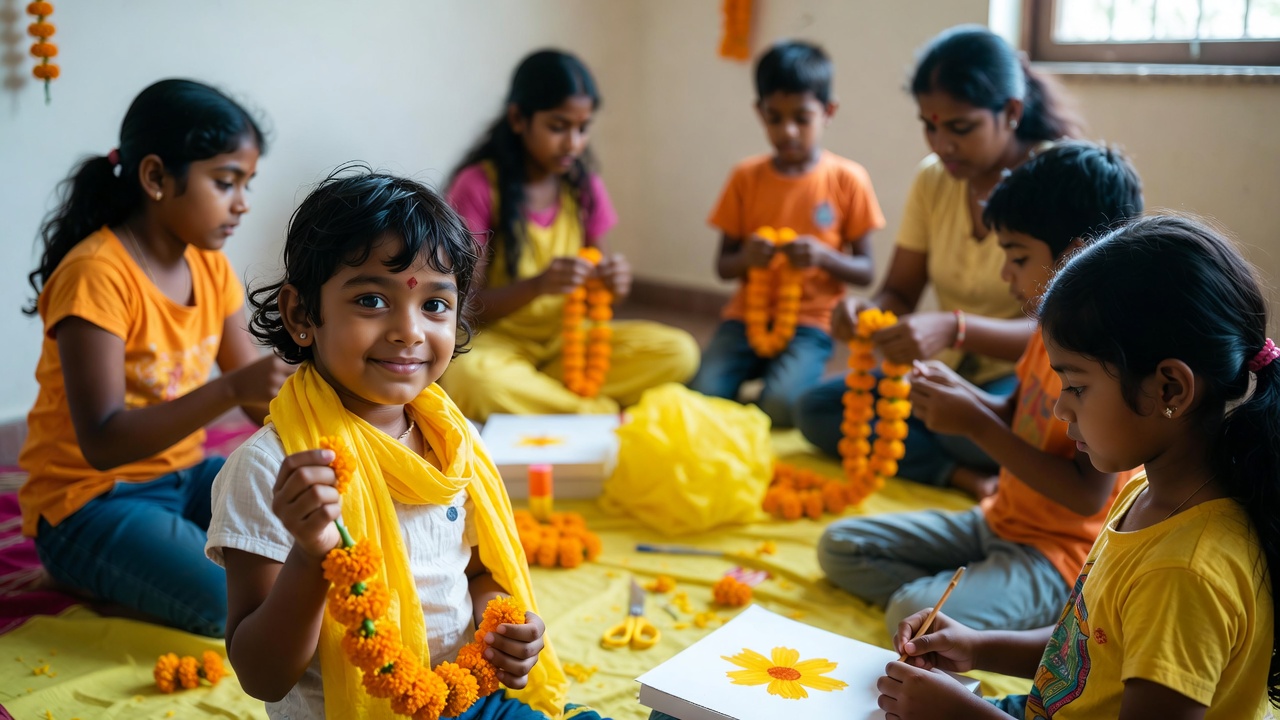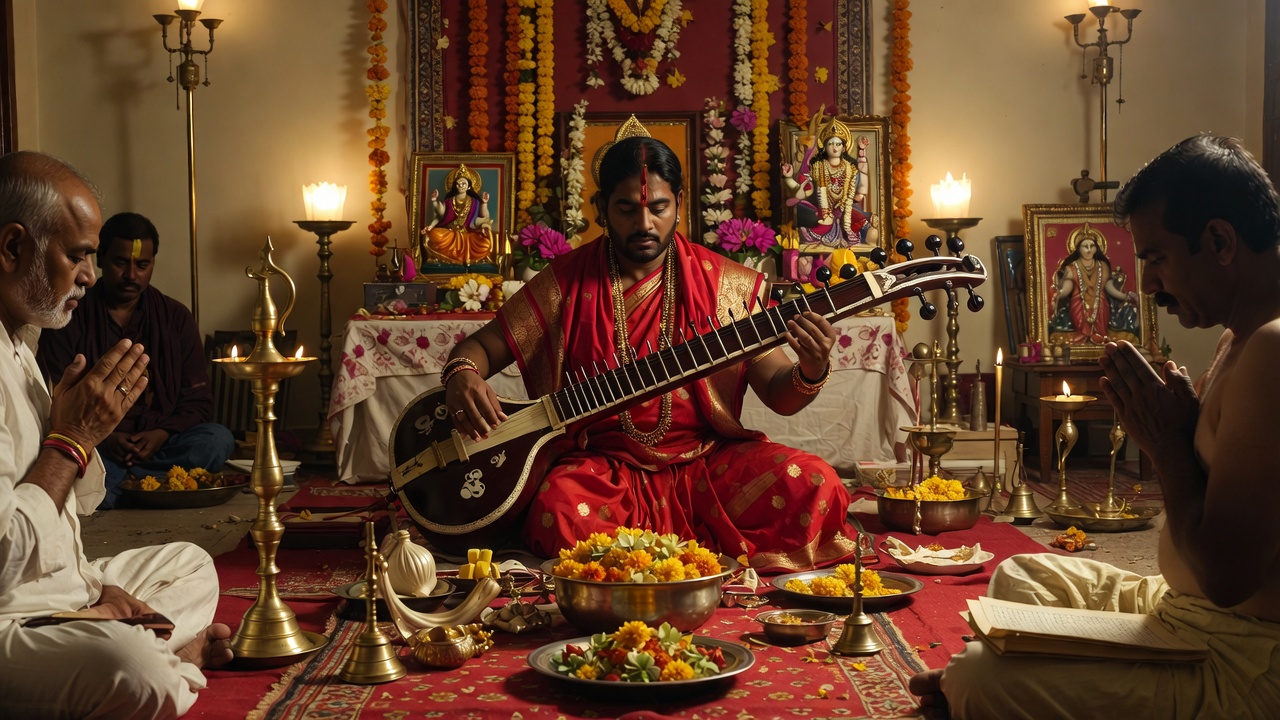
When the mustard fields of North India burst into golden bloom and the winter chill begins to loosen its grip, you know that Vasant Panchami has arrived. This is the day that welcomes spring — the season the ancient Sanskrit texts call Rituraj, the king of all seasons. More importantly, this is the day India worships Maa Saraswati, the Goddess of knowledge, wisdom, music, and the arts.
In 2026, Vasant Panchami falls on Friday, January 23. The Panchami Tithi begins at 2:28 AM on January 23 and ends at 1:46 AM on January 24. Whether you are a student hoping for success in exams, a musician seeking creative inspiration, or a parent wishing to start your child’s education on a blessed day, this guide will walk you through every step of performing Saraswati Puja at home — with reverence, accuracy, and heart.
What Is Vasant Panchami and Why Is Saraswati Puja Celebrated on This Day?
Vasant Panchami is a Hindu festival observed on the fifth day (Panchami) of the bright fortnight (Shukla Paksha) of the month of Magha in the Hindu lunar calendar. The word Vasant means spring. The word Panchami refers to the fifth lunar day. Together, they mark the beginning of the 40-day countdown to Holi, the great festival of colours.
But why is Goddess Saraswati the centre of this celebration?
According to Hindu mythology, after Lord Brahma created the universe, he found it silent and lifeless. He sprinkled sacred water from his Kamandalu (water vessel). A divine figure appeared — radiant in white, holding a Veena (stringed instrument), a book, and a rosary. She played the Veena, and sound, speech, and wisdom filled the universe. Brahma named her Saraswati, the Goddess of Speech and Knowledge. Since she appeared on this day, devotees perform Saraswati Puja to seek her blessings for intelligence, creativity, and learning.
Beyond the mythology, this festival also honours Kamadeva, the Hindu God of Love. Legend says that Kamadeva shot a flower arrow at Lord Shiva to awaken him from deep meditation — and this happened on Vasant Panchami. This is why the festival carries a secondary theme of love and renewal, especially in West Bengal, where it is fondly called the “Bengali Valentine’s Day.”
Vasant Panchami 2026 Date, Muhurat, and Auspicious Puja Timings
Getting the timing right matters deeply in Hindu worship. The concept of muhurat — an auspicious time window — ensures that rituals align with favourable cosmic energies. Here are the key timings for Saraswati Puja 2026:
| Detail | Timing (IST, New Delhi) |
|---|---|
| Vasant Panchami Date | Friday, January 23, 2026 |
| Panchami Tithi Begins | 2:28 AM, January 23, 2026 |
| Panchami Tithi Ends | 1:46 AM, January 24, 2026 |
| Saraswati Puja Muhurat | 7:13 AM to 12:33 PM |
| Madhyahna Muhurat (Midday) | Around 12:50 PM |
Important note: Vasant Panchami is considered an Abujha Muhurat day. This means the entire day is auspicious for performing rituals, starting new ventures, weddings, and house-warming ceremonies — no separate muhurat consultation is needed. However, the morning to midday window (Purvahna Kala) remains the most preferred time for Saraswati Puja across most Indian households, schools, and colleges.
Tip: Lunar tithis and muhurats can vary slightly by city. Always cross-check with your local panchang (Hindu almanac) or consult a family priest before setting your puja schedule. Websites like DrikPanchang.com offer location-specific timings.
Complete Saraswati Puja Samagri List: Items You Need for the Ritual
Preparation is half the prayer. Before beginning the puja, gather all the required items so you can perform the ritual without interruption. In Hindu worship, these items are collectively called Puja Samagri.
Essential Puja Items
| Category | Items |
|---|---|
| Deity | Idol or framed image of Goddess Saraswati (seated on a lotus, holding a Veena) |
| Cloth | Yellow or white cloth for the altar platform |
| Flowers | Yellow marigolds, chrysanthemums, white jasmine, lotus (if available) |
| Lamp & Incense | Ghee or mustard oil diya (earthen lamp), incense sticks (agarbatti), camphor |
| Sacred Items | Kalash (sacred pot) filled with water, mango leaves, and a coconut; sandalwood paste (chandan); kumkum (vermillion); turmeric (haldi); sacred thread (mauli); Akshat (unbroken rice grains) |
| Offerings | Fresh fruits (bananas, apples); yellow sweets like boondi laddoo, kesari halwa, or sweet saffron rice; Panchamrit (a mixture of milk, curd, honey, ghee, and sugar) |
| Books & Instruments | Textbooks, notebooks, pens, musical instruments, or any tools of your trade — these are placed near the Goddess for blessing |
Why Yellow? The Colour of Knowledge and Spring
Yellow is not just a decorative choice on Vasant Panchami — it is deeply symbolic. The colour represents the blooming mustard fields that carpet the Indo-Gangetic plains during this season. It stands for prosperity, wisdom, positive energy, and the vibrancy of new beginnings. Devotees wear yellow clothes, offer yellow flowers, cook yellow-tinted food, and even decorate their homes in shades of gold and saffron.
How to Perform Saraswati Puja at Home: Step-by-Step Ritual Guide
You do not need a temple or a priest to worship Maa Saraswati. The puja can be performed at home with sincerity and basic materials. Here is a detailed, step-by-step guide based on the traditional Shodashopachara (16-step) puja format, simplified for home practice.
Step 1: Prepare Yourself and Your Home
- Wake up during Brahma Muhurta (approximately 4:00–5:30 AM, before sunrise).
- Take a ritual bath. Some traditions recommend applying a paste of turmeric and mustard oil before bathing, as it is believed to please Goddess Saraswati.
- Wear fresh, clean clothes — preferably yellow or white.
- Clean the puja area thoroughly. Remove clutter and ensure it feels calm and sacred.
Step 2: Set Up the Puja Altar
- Place a wooden platform or chowki in a clean corner of your home. According to Vastu Shastra, the north or northeast direction is ideal for placing the deity.
- Spread a yellow or white cloth over the platform.
- Place the idol or image of Goddess Saraswati at the centre. Choose an image where the Goddess is seated on a lotus — the traditional posture for Vasant Panchami.
- Place an idol or image of Lord Ganesha to the right side. In Hindu tradition, Ganesha is always worshipped first to remove obstacles.
- Arrange your books, pens, notebooks, musical instruments, or any learning tools near the deity.
- Set up the Puja Kalash (sacred pot) filled with water, topped with mango leaves and a coconut, in front of the idol.
Step 3: Light the Lamp and Incense
- Light the ghee or oil diya and place it on the altar. The flame represents knowledge dispelling darkness.
- Light the incense sticks (agarbatti). The fragrance purifies the atmosphere and signals the beginning of worship.
Step 4: Invoke Lord Ganesha (Ganesh Vandana)
Begin by offering a short prayer to Lord Ganesha. Chant:
“Om Gan Ganapataye Namah”
Offer a flower and a pinch of Akshat (rice grains) to Ganesha. This clears the path for a smooth and obstacle-free puja.
Step 5: Dhyana — Meditation on Goddess Saraswati
Close your eyes and meditate on the divine form of Maa Saraswati. Visualise her seated on a white lotus, dressed in white, holding the Veena. While meditating, chant the most revered Saraswati Shloka:
“Ya Kundendu Tusharahara Dhavala, Ya Shubhra Vastra Avrita, Ya Veena Vara Danda Manditakara, Ya Shveta Padmasana. Ya Brahmachyuta Shankara Prabhritibhir Devaih Sada Vandita, Sa Mam Pattu Saraswati Bhagavati Nihshesha Jadyapaha.”
Meaning: “May that Goddess Saraswati — who is as fair as the jasmine flower, the moon, and a garland of snow; who is dressed in white; whose hands are adorned by the Veena; who sits on a white lotus; and who is always worshipped by Brahma, Vishnu, and Shiva — protect me and remove my ignorance completely.”
Step 6: Avahana — Invoking the Goddess
With folded palms (Anjali Mudra), invite the Goddess to accept your worship. Chant:
“Agachchha Deva-Deveshi, Tejomayi Saraswati, Kriyamanam Maya Pujam, Grihana Sura-Vandite.”
Meaning: “O Goddess of the Gods, radiant Saraswati, please come and accept the worship I am offering.”
Step 7: Asana — Offer a Seat
Take five flowers in your joined palms and place them before the idol. This symbolically offers the Goddess a seat. Chant:
“Om Shri Saraswati-Devyai Namah, Asanam Samarpayami.”
Step 8: Offerings — The Heart of the Puja
Now offer the following items to the Goddess, one by one, while chanting the corresponding mantras:
| Offering | Sanskrit Term | Mantra Ending |
|---|---|---|
| Water for feet | Padya | “Padyam Samarpayami” |
| Water for head | Arghya | “Arghyam Samarpayami” |
| Sandalwood paste & rice | Gandha-Akshata | “Gandhakshatam Samarpayami” |
| Flowers | Pushpa | “Pushpam Samarpayami” |
| Incense | Dhupa | “Dhupam Ghrapayami” |
| Lamp | Dipa | “Dipam Darshayami” |
| Food (Naivedya) | Naivedya | “Naivedyam Samarpayami” |
| Betel leaf | Tambula | “Tambulam Samarpayami” |
Each offering is preceded by “Om Shri Saraswati-Devyai Namah” — a salutation to Goddess Saraswati.
Step 9: Mantra Japa — Chant the Saraswati Mantra
After the offerings, sit quietly and chant any of the following mantras 108 times using a mala (prayer beads), or as many times as you can:
- Beej Mantra: “Om Aim Saraswatyai Namah”
- Simple Mantra: “Om Saraswatyai Namah”
- Saraswati Gayatri Mantra: “Om Saraswatyai Cha Vidmahe, Brahmaputryai Cha Dhimahi, Tanno Devi Prachodayat”
The syllable “Aim” is the seed (beej) sound of Goddess Saraswati. It is believed to sharpen the intellect and improve speech.
Step 10: Aarti — Waving the Sacred Flame
This is the most joyful part of the puja. Light a camphor tablet or a small ghee lamp on a plate. Wave it clockwise in front of the Goddess while singing the Saraswati Aarti:
“Om Jai Saraswati Mata, Maiya Jai Saraswati Mata, Sadaguna Vaibhava Shalini, Tribhuvana Vikhyata…”
Ring a small bell with your left hand while waving the lamp with the right. The sound of the bell and the warmth of the flame together create a powerful devotional atmosphere.
Step 11: Prasad Distribution
After the aarti, the puja is complete. Offer the Naivedya (food offering) formally to the Goddess and then distribute this blessed food as Prasad among family members, neighbours, and friends. Common prasad items include kesari halwa, boondi laddoo, sweet saffron rice, fruits, and seasonal treats.
Saraswati Puja Mantras and Shlokas You Should Know in 2026
Mantras are sacred sound vibrations. They help focus the mind and channel devotional energy. Here are the most important mantras for Saraswati Puja, along with when to use them:
| Mantra | When to Chant | Purpose |
|---|---|---|
| Om Aim Saraswatyai Namah | During Japa (repetition) | Sharpens intellect, improves speech |
| Ya Kundendu Tusharahara Dhavala… | During Dhyana (meditation) | Invokes the Goddess’s divine form |
| Saraswati Namastubhyam, Varade Kamarupini, Vidyarambham Karishyami, Siddhir Bhavatu Me Sada | Before starting studies | Seeks blessings for new learning |
| Ya Devi Sarvabhuteshu Vidyarupena Samsthita, Namastasyai Namastasyai Namastasyai Namo Namah | During puja or prayer | Salutes the Goddess in all beings |
For students: The mantra “Saraswati Namastubhyam…” is especially powerful. It translates to: “O Saraswati, I bow to you, the giver of boons. I am beginning my studies — may success always be with me.” This is the traditional verse chanted during Vidyarambham, the ceremony of initiating a child’s education.
Vidyarambham: How to Start Your Child’s Education on Vasant Panchami
One of the most cherished traditions of Vasant Panchami is Vidyarambham (also called Akshar-Abhyasam or Hate Khori in Bengal). This is the ceremony of introducing a child to formal learning for the first time. Parents across India consider this the most auspicious day to begin a child’s education.
How it works:
- After the main puja, seat the child on your lap or beside the deity.
- Place a slate, chalk, or a notebook and pen before the child.
- Hold the child’s hand and help them write their first letters — typically “Om” in Hindi, or the first letter of the regional alphabet.
- In Bengal, the ceremony is called Hate Khori (“chalk in hand”), and toddlers write Bengali alphabets on a slate.
- In South India, children trace letters in rice grains spread on a plate.
- Chant the mantra: “Saraswati Namastubhyam, Varade Kamarupini, Vidyarambham Karishyami, Siddhir Bhavatu Me Sada.”
This ritual signifies that the child’s learning journey begins under the direct blessing of Goddess Saraswati. It is believed that children who start their education on this day grow up to be intelligent, creative, and knowledgeable.
How Different Regions of India Celebrate Saraswati Puja on Basant Panchami
India’s cultural diversity means that Vasant Panchami is celebrated in many different ways across the country. Here is how the festival unfolds in key regions:
West Bengal and Kolkata: Pandals, Alpana, and the Bengali Valentine’s Day
In West Bengal, Saraswati Puja is arguably the most grand and community-driven celebration in the country. Schools, colleges, and neighbourhood clubs erect pandals (decorated temporary structures) housing beautiful clay idols of the Goddess.
- Homes and pandals are decorated with alpana — intricate floor patterns drawn with rice paste.
- Traditional offerings include naru (coconut-jaggery sweets), moya (popped rice sweets), and kooler chutney (Indian plum chutney).
- The bhog (community meal) features khichuri (a comforting rice-and-lentil dish), labra (mixed vegetable stew), and fried items.
- Students place their books and pens near the Goddess and avoid studying until the rituals conclude — touching books during the puja is considered disrespectful to the Goddess.
- Young people dress in yellow sarees and kurtas and spend the day pandal hopping with friends, earning the festival the nickname “Bengali Valentine’s Day.”
- The idol is later taken for Visarjan (immersion) in a river or water body, accompanied by processions, drumbeats (dhak), and dancing.
North India: Yellow, Kites, and Mustard Fields
In Punjab, Haryana, Uttar Pradesh, and Rajasthan, the festival is a celebration of spring itself.
- People wear yellow clothes and cook yellow rice (meethe chawal/zarda pulao), sarson ka saag with makke ki roti, and kesar kheer.
- In Punjab and parts of Haryana, kite flying is a major tradition, filling the skies with colour and friendly competition.
- Schools and universities hold Saraswati Puja ceremonies in the morning.
- In Vrindavan, the Shah Bihari Temple opens its special Vasanti room, and priests begin early Holi celebrations by tossing abeer and gulal (coloured powders).
- The famous site of Bhojshala in Dhar, Madhya Pradesh — believed to house an ancient Saraswati temple — sees special worship on this day.
South India: Navratri Connection and Ayudha Puja
In Kerala, Tamil Nadu, Karnataka, and Andhra Pradesh, the primary Saraswati Puja is observed during Sharada Navratri (in September–October), not on Vasant Panchami. On Navami (the ninth day of Navratri), books, instruments, and tools are placed before the Goddess, and education begins on Vijayadashami.
However, Vasant Panchami is still observed in parts of the South as a day of scholarly importance. Key practices include:
- Offering white jasmine garlands to the Goddess.
- Preparing sweets like Suyyam (Suzhiyan) and Sundal (spiced chickpeas).
- In Kerala, the tradition of Vidyarambham — where toddlers trace letters in rice — is a major cultural event linked to Saraswati’s blessings.
- Students are sometimes given a day off from studies, as reading or writing during puja hours is discouraged.
Eastern India: Assam, Bihar, and Odisha
- In Assam, the Kamakhya Debutter Board in Guwahati organises elaborate Saraswati Puja celebrations with traditional Assamese motifs and cultural performances.
- In Bihar, educational institutions hold morning prayers and students dress in yellow.
- In Odisha, devotees offer fresh yellow flowers to Goddess Saraswati in temples. The festival is also known as Sri Panchami here.
Things to Do and Avoid During Saraswati Puja: Dos and Don’ts
Every sacred ritual has guidelines for what enhances its spiritual power and what diminishes it. Here are the important dos and don’ts:
✅ Dos
- Wear yellow or white clothing to honour the Goddess and the season.
- Begin the day with a bath and fresh clothes before touching any puja items.
- Place books, instruments, and tools of your trade near the Goddess for blessings.
- Chant Saraswati mantras with focus and sincerity.
- Offer yellow flowers and yellow-tinted food as Naivedya.
- Perform Vidyarambham if you have young children ready to begin learning.
- Distribute Prasad generously to family, friends, and neighbours.
- Listen to or perform devotional music and classical arts — the Goddess is the patron of music and creativity.
❌ Don’ts
- Do not study or read books during the puja hours. This may sound surprising, but the tradition holds that books are “resting” under the Goddess’s care and should not be disturbed until the ritual ends.
- Do not eat non-vegetarian food on this day. Saraswati Puja is traditionally observed as a strictly vegetarian occasion.
- Avoid tamasic food — heavy, stale, or processed foods are discouraged.
- Do not wear dark or dull colours. Bright and light shades are preferred.
- Avoid harsh speech or negative words — the Goddess governs speech and language.
- Do not keep the puja area dirty or cluttered. Cleanliness is fundamental.
Traditional Saraswati Puja Food Recipes: What to Cook on Vasant Panchami
Food is devotion made tangible. The Vasant Panchami table is dominated by yellow-hued dishes that reflect the season’s energy. Here are the most beloved recipes across regions:
North Indian Favourites
- Kesari Halwa (Sooji Halwa): Semolina roasted in ghee, cooked with sugar and saffron, garnished with almonds and raisins. The golden colour makes it perfect for Saraswati Puja.
- Meethe Chawal (Sweet Yellow Rice / Zarda Pulao): Basmati rice cooked with sugar, saffron, cardamom, and dry fruits.
- Boondi Laddoo: Round, golden sweets made from fried chickpea flour drops, soaked in sugar syrup.
- Kesar Kheer: Rice pudding infused with saffron, slow-cooked in milk and sweetened with sugar.
- Khichdi: A warming, simple dish of rice and yellow moong dal, seasoned with turmeric, cumin, and ghee.
Bengali Specialities
- Khichuri: Bengal’s beloved khichdi — fragrant rice and moong dal with subtle spices, served with fried vegetables and beguni (fried eggplant).
- Naru (Coconut Laddoo): Fresh grated coconut mixed with nolen gur (date palm jaggery), shaped into balls.
- Moya: Popped Kanakchur rice bound with date palm jaggery.
- Kooler Chutney: Tangy-sweet chutney made from kul (Indian plum), a seasonal fruit deeply associated with Saraswati Puja in Bengal.
South Indian Offerings
- Suyyam / Suzhiyan: Sweet dumplings made from urad dal and jaggery, deep-fried to golden perfection.
- Sundal: Spiced chickpeas or lentils, tempered with mustard seeds, curry leaves, and grated coconut.
Eco-Friendly Saraswati Puja: How to Celebrate Responsibly in 2026
As environmental awareness grows across India, many devotees and community organisations are embracing eco-friendly puja practices. Here are ways to celebrate responsibly:
- Choose clay idols over plaster-of-Paris (PoP) ones. Clay idols dissolve naturally during Visarjan and do not pollute water bodies.
- Use natural colours and dyes for decorating the idol and the altar.
- Opt for fresh flowers instead of plastic or synthetic garlands.
- Immerse the idol in a bucket or tub at home and use the dissolved clay for your garden — several municipalities now encourage this.
- Reduce single-use plastics in pandal decorations and food distribution.
- Use LED lights instead of incandescent bulbs for pandal lighting.
Many schools and colleges in Kolkata and other cities have started holding “Green Saraswati Puja” initiatives, using recycled materials for pandal decorations and composting leftover flowers and food waste.
Frequently Asked Questions About Saraswati Puja on Vasant Panchami 2026
Q: What is the exact date of Saraswati Puja in 2026? A: Saraswati Puja 2026 falls on Friday, January 23, 2026.
Q: What is the best time to perform Saraswati Puja in 2026? A: The most auspicious puja time is from 7:13 AM to 12:33 PM IST. However, since Vasant Panchami is an Abujha Muhurat day, the entire day is considered auspicious.
Q: Can I perform Saraswati Puja at home without a priest? A: Yes. Saraswati Puja can be performed at home with basic puja items, sincere devotion, and the mantras outlined in this guide. No priest is mandatory.
Q: Why should we not study on Saraswati Puja day? A: The tradition holds that books and learning tools are placed before the Goddess for her blessings. They are considered to be in her sacred care during puja hours. Studying during this time is seen as disrespectful. You may resume after the puja concludes.
Q: Is Vasant Panchami good for starting new ventures? A: Absolutely. Vasant Panchami is considered one of the most auspicious days of the Hindu calendar for new beginnings — including education, music training, business ventures, marriages, and house-warming ceremonies.
Q: What food is offered during Saraswati Puja? A: Yellow-coloured foods are traditional: kesari halwa, sweet saffron rice, boondi laddoo, khichdi, kesar kheer, and fruits. In Bengal, khichuri, naru, moya, and kooler chutney are the classic offerings.
Q: Which direction should the Saraswati idol face? A: According to Vastu Shastra, the idol should ideally be placed in the north or northeast direction of the home.
Final Thoughts: Embracing Knowledge, Creativity, and New Beginnings
Vasant Panchami is more than a date on the calendar. It is a philosophy of renewal — a day that tells us to shake off the lethargy of winter, open our minds, and pursue learning with fresh energy. Whether you perform an elaborate Shodashopachara puja with sixteen offerings or a simple prayer with a lamp and a flower, what matters most is your sincerity.
Maa Saraswati does not favour the scholarly over the simple. She blesses anyone who approaches knowledge with humility and curiosity. On January 23, 2026, as the mustard fields glow gold and spring stirs in the earth, take a moment to honour that pursuit. Light a lamp. Open a book. Teach a child their first letter. Sing a song.
That is Saraswati Puja in its truest form.
Did you find this guide helpful? Share it with friends and family who are preparing for Vasant Panchami 2026. May Maa Saraswati bless you with wisdom, creativity, and the joy of lifelong learning.