On February 14, 1912, President William Howard Taft put pen to paper. With that stroke, Arizona became the 48th state and the final piece of the contiguous United States. It was Valentine’s Day — fitting for a state that has inspired deep love and fierce devotion ever since. Over a century later, Arizona’s entry into the Union continues to shape the nation’s politics, culture, water policy, and identity.
This is not a story about a desert waiting for civilization. It is a story about layers — ancient Indigenous cultures, Spanish missionaries, Mexican rancheros, frontier prospectors, and modern-day migrants — all overlapping on the same sun-scorched landscape. Arizona’s statehood did not just add a star to the flag. It forced America to reckon with questions about democracy, race, natural resources, and the meaning of the West itself.
Why Did Arizona Take So Long to Become a State in the United States?
Arizona holds the record for the longest path to statehood among all contiguous U.S. states. The territory existed for 49 years before Congress granted it full admission. The reasons for this delay reveal deep tensions in American politics.
The land that became Arizona entered U.S. control through two events: the Treaty of Guadalupe Hidalgo in 1848 (ending the Mexican-American War) and the Gadsden Purchase of 1853. But settlement was slow. The Sonoran Desert was brutal. Apache resistance, led by warriors like Cochise and Geronimo, kept settlers on edge for decades. As the Arizona Historical Society noted, Arizona’s path was “complex” because of the multiple layers of colonialism — Spanish, Mexican, and Anglo-American — that all had to be sorted out.
Congress also wrestled with political calculations. Eastern and Midwestern representatives questioned whether this arid land could sustain a viable state. At one point, lawmakers proposed merging Arizona and New Mexico into a single state. New Mexico accepted the idea. Arizona firmly rejected it — partly out of cultural pride, and partly, as historian John Southard explained, because some Arizonans “didn’t want to associate with the Hispanic culture and people of New Mexico.”
Even when Arizona drafted a constitution, President Taft vetoed the statehood resolution in August 1911. His objection? The constitution included a provision allowing voters to recall judges. Taft believed this would compromise judicial independence. Arizona reluctantly removed the provision. On February 14, 1912, Taft finally signed the proclamation. Then, in a move that became legendary in Arizona lore, the state’s residents immediately voted the recall provision back into the constitution before the first year of statehood ended.
How Arizona Statehood Completed the Map of the Continental United States
Arizona’s admission was not just another star on the flag. It was the final star in the contiguous 48 states. After February 14, 1912, the mainland map of the United States was complete. It would be another 48 years before Alaska and Hawaii joined the Union.
President Taft understood the historic weight of that moment. At the signing ceremony in Washington, D.C., surrounded by whirring moving-picture cameras, Taft looked up, smiled, and said simply: “There you are.”
| Key Fact | Detail |
|---|---|
| Date of Statehood | February 14, 1912 |
| State Number | 48th (last contiguous state) |
| President Who Signed | William Howard Taft |
| Territorial Period | 49 years (1863–1912) |
| First Governor | George W.P. Hunt |
| Population at Statehood | Approximately 200,000 |
| Population in 2025 | Approximately 7.8 million |
The completion of the contiguous map mattered for national psychology. The frontier era was over. Frederick Jackson Turner had already declared the frontier “closed” in 1893. Arizona’s statehood made that abstract idea concrete. Every square mile of land between the Atlantic and Pacific now belonged to a state. America was no longer “becoming.” It simply was.
The Progressive Era Roots of Arizona’s State Constitution
Arizona entered the Union during the Progressive Era, and its founding documents bear that era’s fingerprints. The state constitution was one of the most progressive in the country at the time. It included initiative, referendum, and recall — tools that gave ordinary citizens direct power over legislation and elected officials.
Women gained the right to vote in Arizona within months of statehood, well before the 19th Amendment was ratified nationally in 1920. This made Arizona one of the earliest states to embrace women’s suffrage. Labor protections were also embedded in the constitution, reflecting the influence of Arizona’s powerful mining unions.
The recall provision for judges — the one that caused Taft’s veto — became a symbol of Arizona’s independent streak. As EBSCO Research noted, “the last word on judges came from the people of Arizona, who restored the controversial provision to the state constitution before their first year of statehood had ended.” This early defiance of federal authority set the tone for Arizona’s political culture for generations to come.
These progressive roots may surprise people who think of Arizona as a conservative stronghold. But the state’s political DNA has always contained both strands. The early 20th century saw Arizona as a champion of direct democracy and workers’ rights. The post-World War II era brought a conservative shift driven by suburban growth and the influence of figures like Barry Goldwater, the Arizona senator who reshaped the Republican Party.
How Arizona’s Five Cs Built the State’s Economy After Statehood
Once Arizona gained statehood, it marketed itself as the land of the “Five Cs”: copper, cattle, cotton, citrus, and climate. These five industries built the foundation of Arizona’s modern economy and attracted waves of newcomers.
Copper was king. By the time Arizona became a state, nearly 1,700 miles of railroad track had been built to service the mines scattered across the territory. The Bisbee mine, discovered in 1877, became one of the richest copper deposits in the world. Arizona still produces roughly two-thirds of all copper mined in the United States, according to Britannica.
Cattle ranching dominated from the 1860s through World War II. Cotton boomed during the first World War, when the military needed long-staple fiber. But the bust was brutal: cotton prices crashed from an expected $1.50 per pound to about $0.28 per pound in 1920, bankrupting farmers across the state.
Climate became Arizona’s secret weapon. Health seekers discovered that the dry desert air helped treat respiratory ailments. By the 1920s, dude ranches, motor courts, and winter resorts began appearing. Tourism laid the groundwork for the massive retirement and lifestyle migration that would transform Arizona in the second half of the century.
| Industry | Peak Era | Legacy Today |
|---|---|---|
| Copper | 1880s–1950s | Still produces ~66% of U.S. copper |
| Cattle | 1860s–1940s | Feedlot operations, smaller share of economy |
| Cotton | 1910s–1920s | Reduced acreage, water concerns |
| Citrus | 1920s–1960s | Largely replaced by urban development |
| Climate | 1920s–present | Drives tourism, retirement, and migration |
The Role of Native American Tribes in Shaping Arizona’s Cultural Identity
No conversation about Arizona’s cultural identity is complete without recognizing its 22 federally recognized Native American tribes. These nations — including the Navajo Nation, the Hopi Tribe, the Tohono O’odham Nation, and the San Carlos Apache Tribe — have inhabited this land for over 12,000 years. Their influence predates not only statehood but European contact itself.
Tribal reservations cover more than one-quarter of Arizona’s total land area. The Navajo Nation alone spans over 27,000 square miles across Arizona, New Mexico, and Utah, with more than 300,000 enrolled members. It is the largest reservation in the United States. Arizona also has the third-largest Native American population of any state, according to Wikipedia’s article on Indigenous peoples of Arizona.
Statehood brought mixed consequences for these communities. On one hand, the state’s growth fueled demand for land, water, and resources — often at the expense of Native peoples. The Phoenix Indian School, founded in 1891 and operating until 1990, was part of the federal boarding school system designed to forcibly assimilate Indigenous children. Students were separated from their families, forbidden from speaking their languages, and stripped of traditional clothing.
On the other hand, the 20th and 21st centuries have seen significant movements toward tribal sovereignty and self-governance. The Indian Gaming Regulatory Act of 1988 opened the door for casino operations on tribal lands. In Arizona, 16 of the 22 recognized tribes now operate gaming facilities, generating revenue that funds education, healthcare, and infrastructure.
Cultural tourism on tribal lands has become a vital economic force. Visitors can explore Monument Valley, attend the annual Heard Museum Native Fair & Market in Phoenix, or visit the Hopi Cultural Center on the ancient mesas of northeastern Arizona. These experiences offer something no theme park can replicate: a living connection to traditions that stretch back millennia.
Yet challenges persist. In the Navajo Nation, 36% of residents live below the poverty line, and 35% lack running water. The 2023 U.S. Supreme Court ruling in Arizona v. Navajo Nation held that the federal government has no obligation to supply water to the Navajo under the Treaty of Bosque Redondo — a decision that deepened existing inequities.
Why Arizona Became a Key Swing State in U.S. Presidential Elections
For most of its post-statehood history, Arizona was reliably Republican. Barry Goldwater and John McCain both called Arizona home. The state voted for the Republican presidential candidate in every election from 1952 to 2016, with the sole exception of Bill Clinton in 1996.
Then came 2020. Joe Biden flipped Arizona by roughly 10,000 votes — the first Democratic presidential victory in the state since Clinton’s narrow win. The shift was driven by several factors: suburban growth in Maricopa County, the expanding Latino electorate, and discontent with Donald Trump among traditionally Republican voters.
By 2024, Arizona was firmly established as one of the nation’s most important swing states. The 2024 election saw Donald Trump win Arizona back with a 5.5-percentage-point margin, his largest among the seven swing states. Interestingly, Democrat Ruben Gallego won the U.S. Senate race in Arizona in that same election, reflecting a notable pattern of ticket-splitting among Arizona voters.
Arizona’s swing-state status matters for several reasons:
- Immigration policy is a front-burner issue in this border state, influencing national debate.
- Maricopa County, home to Phoenix and over 60% of the state’s voters, is one of the most closely watched counties in the country.
- Ballot propositions on abortion rights and border security directly shaped voter turnout in recent cycles.
- Arizona’s 11 electoral votes can tip the balance in close national elections.
As Brookings Institution scholar Barbara Norrander observed, the state’s changing demographics — especially growth in college-educated suburban voters and the Latino population — have transformed Arizona from a reliable red state into a genuine battleground.
Arizona’s Water Crisis and Its Impact on the Future of the American West
Water has always defined Arizona. The Hohokam people built a sophisticated canal system along the Salt and Gila Rivers over a thousand years ago. Modern Phoenix literally sits on top of those ancient waterways. But today, Arizona’s relationship with water has become a national crisis that affects the entire American West.
The numbers are stark. Arizona’s population has surged past 7.5 million — triple what it was just three decades ago. Agriculture consumes roughly 70% of the state’s water supply. The Colorado River, which provides nearly 40% of Arizona’s water, is being drawn down faster than nature can replenish it. Scientists have confirmed that the current megadrought is the worst in 1,200 years, with climate change responsible for at least 40% of the decline in Colorado River flows.
In response, Arizona lawmakers enacted a groundbreaking bipartisan water law in 2025. The legislation requires enforceable water budgets for municipalities, farms, and industrial users. New housing developments must prove access to a sustainable water supply before receiving permits. Farmers are being incentivized to adopt high-efficiency irrigation and shift away from water-intensive crops.
In January 2025, Governor Katie Hobbs announced a $60.3 million investment to protect the state’s water supply, focusing on conservation technology and infrastructure improvements. Still, experts warn that policy alone cannot solve the problem if population growth continues unchecked.
The stakes extend far beyond Arizona’s borders. Seven states depend on the Colorado River. Negotiations to establish new water allocation terms before the current agreement expires in 2026 are ongoing. The outcome of these talks will affect over 40 million people across the American West.
Arizona’s water story is, in many ways, a preview of the challenges the entire country will face as climate change intensifies. The state’s ability — or inability — to balance growth with sustainability will serve as a model or a cautionary tale for the rest of the nation.
How Hispanic and Mexican Heritage Shaped Arizona’s Culture and Traditions
Arizona’s cultural landscape is inseparable from its Hispanic and Mexican roots. People of Hispanic ancestry account for approximately 30% of Arizona’s population today. This is not a recent development. The Spanish presence in Arizona dates back to 1539, when Franciscan friar Marcos de Niza became the first European known to set foot in the region.
Spanish missionaries, including the legendary Father Eusebio Kino, established missions across southern Arizona in the late 1600s and early 1700s. The San Xavier del Bac Mission, completed near Tucson in 1797, remains one of the finest examples of Spanish colonial architecture in the United States. After Mexican independence in 1821, Arizona was governed from Mexico City until the Mexican-American War transferred the region to the United States.
Even after statehood, the proximity of the U.S.-Mexico border ensured that Mexican culture continued to flow into Arizona’s daily life. Mexican and Mexican-American communities contributed to mining, ranching, agriculture, and railroad construction. They shaped the food, music, language, and architecture of the state.
Today, this heritage is visible everywhere. Tucson was designated a UNESCO City of Gastronomy in 2015 — the first city in the United States to receive this honor — in large part because of its centuries-old culinary traditions blending Indigenous and Mexican foodways. The annual Día de los Muertos celebrations in Phoenix and Tucson draw tens of thousands of participants. Mariachi music, folklorico dance, and traditional arts are not relics of the past. They are living traditions that anchor community identity across the state.
At the same time, Arizona’s border location has made it a flashpoint for national immigration debates. From SB 1070 (the controversial 2010 “show me your papers” law) to the 2024 ballot measures on border crossings, immigration policy remains deeply personal in Arizona. These debates are not abstract here. They involve neighbors, coworkers, and family members on both sides of the line.
Arizona Statehood Day: How the Grand Canyon State Celebrates Its Birthday
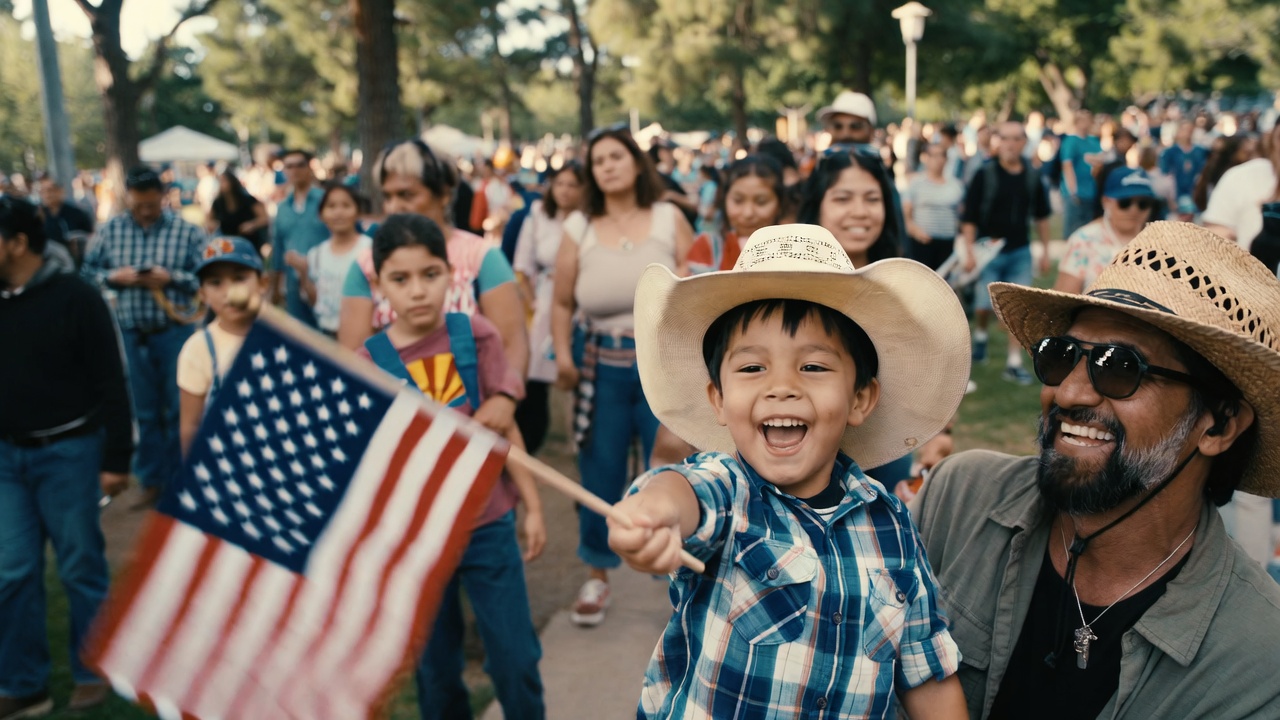
Every year on February 14, Arizonans celebrate Statehood Day alongside Valentine’s Day. The dual celebration gives the day a uniquely warm character. Schools hold history lessons. The state capitol in Phoenix hosts ceremonial events. Local communities organize parades, exhibitions, and reenactments.
In 2022, on the state’s 110th birthday, then-Governor Doug Ducey issued a proclamation calling on citizens to celebrate “our pioneer spirit, immense diversity, and cherished traditions.” The proclamation noted that for over a century, people have been drawn to Arizona by “its striking landscapes, rich history and proud heritage, unlimited opportunities, warm hospitality, and the chance to be part of a prosperous and dynamic state.”
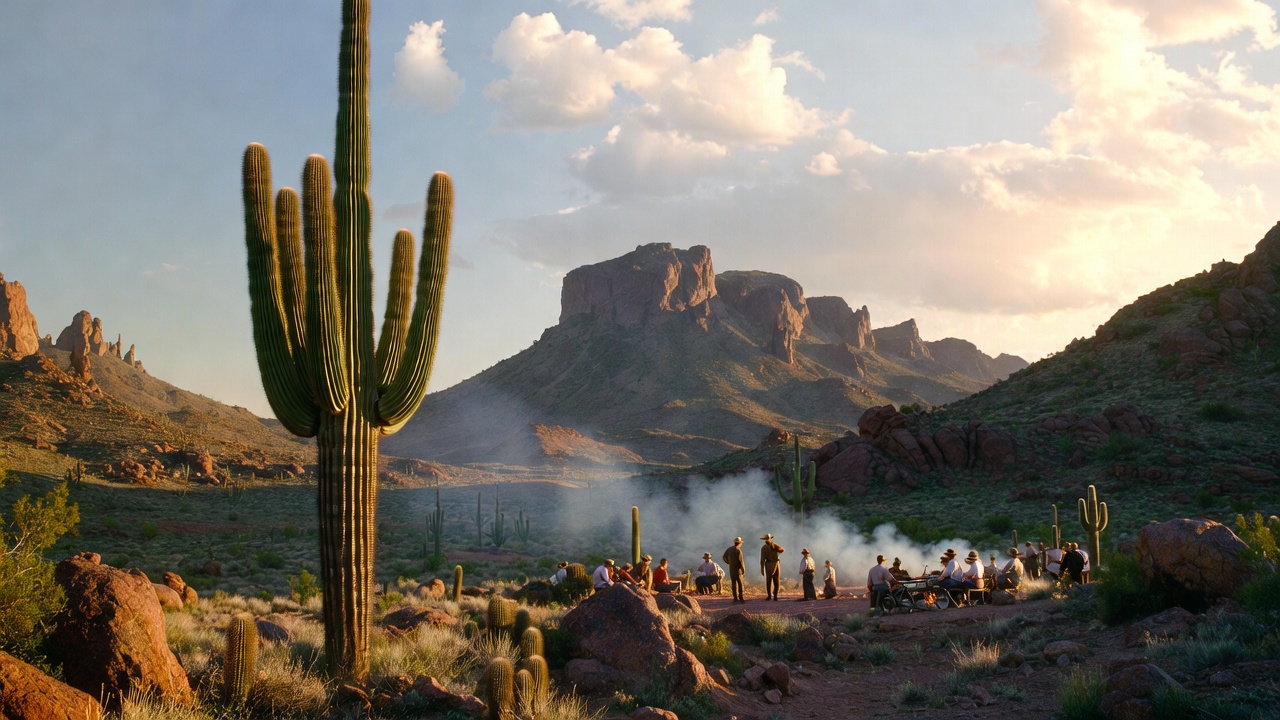
The Grand Canyon, of course, is the state’s most iconic landmark — one of the Seven Natural Wonders of the World. But Arizona’s identity goes far beyond the canyon. The Sonoran Desert, with its towering saguaro cacti, is a landscape unlike any other in the country. Sedona’s red rock formations attract artists and spiritual seekers. The Petrified Forest and Painted Desert offer eerie, otherworldly beauty.
Arizona is also home to one of the country’s quirkiest distinctions: it is one of only two states (along with Hawaii) that does not observe Daylight Saving Time. The exception within the exception? The Navajo Nation, which does observe DST, creating a time zone patchwork within the state’s own borders.
What Arizona’s Statehood Means for the Future of American Democracy
Arizona’s entry into the Union in 1912 was not the end of a story. It was the beginning of a new chapter — one that continues to unfold in 2026. The state embodies many of the tensions and possibilities that define 21st-century America.
Rapid population growth has made Arizona a test case for sustainable development. The state is projected to add 2.6 million residents between 2025 and 2055, according to the University of Arizona’s Economic and Business Research Center. That growth will outpace the national average but fall well short of the breakneck pace of previous decades. Eventually, net migration will be the sole source of population gain, as births fall below deaths sometime in the mid-2040s.
Water scarcity will determine whether that growth is possible at all. Political polarization will test whether a state with such diverse communities can govern itself effectively. Tribal sovereignty questions will continue to challenge assumptions about who truly owns the land and its resources.
But Arizona has always been a place that defies easy categories. It is a red state that sometimes votes blue. It is a desert that sustains millions of people. It is ancient Indigenous homeland, Spanish mission territory, Mexican frontier, and American boomtown — all at once.
What Arizona’s statehood has shown, across more than a century, is that the story of America is never finished. Every generation adds new layers to the landscape. And in Arizona, those layers are visible everywhere — in the ruins of Hohokam canals, in the adobe walls of Spanish missions, in the copper-starred state flag, and in the faces of the people who continue to build their lives under a relentless and beautiful sun.
Key Takeaways: Arizona Statehood Impact on American History
| Area of Impact | How Arizona Shaped the Nation |
|---|---|
| Completing the Map | Last contiguous state admitted (1912) |
| Progressive Democracy | Pioneered initiative, referendum, and recall provisions |
| Women’s Suffrage | Granted women the vote before the 19th Amendment |
| Mining & Industry | Supplied the majority of U.S. copper for over a century |
| Native American Sovereignty | Home to 22 federally recognized tribes on 25%+ of state land |
| Immigration Debate | Border location made it central to national policy discussions |
| Swing State Politics | Flipped between parties in 2020 and 2024, influencing presidential outcomes |
| Water Policy | Colorado River crisis drives national conversation on sustainability |
| Cultural Heritage | Blends Indigenous, Hispanic, and Anglo traditions into a unique identity |
Arizona did not just join the United States. It changed it. And as the state approaches the middle of its second century, its influence on American life shows no signs of fading.