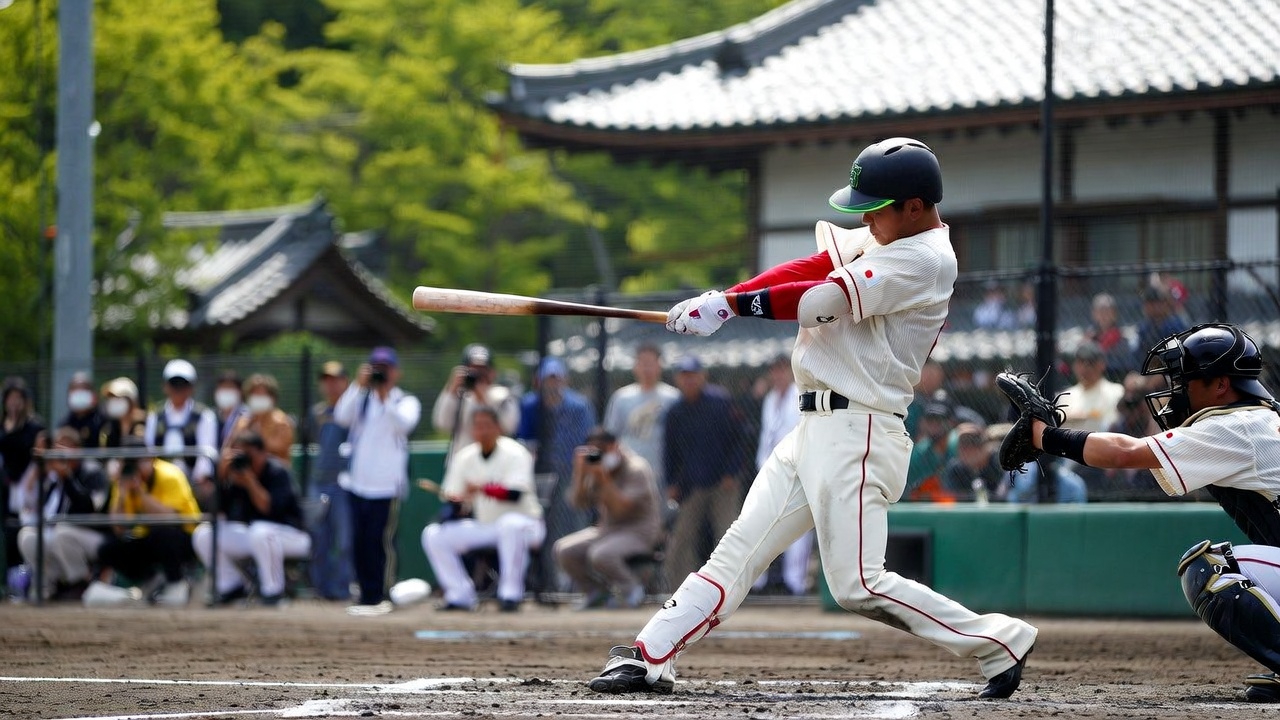
Baseball arrived in Japan over 150 years ago. What started as a foreign import has grown into something entirely its own — a sport so deeply woven into daily life that it shapes how millions of Japanese people think about community, discipline, and joy. If you have only watched baseball in North America, stepping into a Japanese ballpark will feel like visiting another planet. The cheering never stops. Every batter has his own fight song. Young women carry kegs of cold beer on their backs through the bleachers. And at the end of a high school tournament, teenage boys weep openly, scooping dirt from the field as a lifelong keepsake.
This is not just a sport. This is Japanese baseball culture — a living, breathing tradition that draws millions of visitors every year and ranks among the most electrifying spectator experiences on Earth.
In this guide, I will walk you through every layer of that culture. Whether you are planning a trip to Japan during baseball season, studying East Asian customs, or simply curious about how the same game can feel so different across the Pacific, this article covers it all. From the thundering ōendan cheering squads to the sacred dirt of Koshien Stadium, from stadium bento boxes to the rise of Japanese superstars in Major League Baseball — let’s step up to the plate.
How Baseball Became Japan’s Most Popular Sport: A Brief History
The Meiji Era Roots
Baseball first touched Japanese soil in 1872, when an American teacher named Horace Wilson introduced the game to his students at Kaisei Gakko (now the University of Tokyo). The timing was significant. Japan was in the middle of the Meiji Restoration, a period when the nation eagerly absorbed Western ideas in science, industry, and culture. Baseball fit perfectly into this era of modernization.
By the 1890s, the sport had spread through schools and universities. The first significant intercollegiate rivalry — between Waseda University and Keio University — took hold in the early 1900s and still burns today. In 1905, Waseda’s baseball team even toured the West Coast of the United States, playing against Stanford, Oregon, and USC. That tour introduced ideas that would become permanent features of the Japanese game, from spiked shoes to breaking-ball pitching techniques.
Corporate Sponsorship and the Birth of Professional Leagues
Professional baseball in Japan began in 1936 with the founding of the Japanese Baseball League. After World War II, the occupation brought a fresh wave of American influence, and exhibition games featuring legends like Babe Ruth, Joe DiMaggio, and Lou Gehrig further cemented the sport’s hold on the national imagination.
In 1950, the league reorganized into its current form: Nippon Professional Baseball (NPB), composed of two six-team leagues — the Central League and the Pacific League. Unlike American franchises, NPB teams are typically owned and named after major corporations. The Yomiuri Giants, for example, belong to the Yomiuri media conglomerate. The Fukuoka SoftBank Hawks are backed by the telecom giant SoftBank. This corporate structure gives the teams enormous financial stability and ties them deeply into Japan’s business culture.
Key Milestones in Japanese Baseball History
| Year | Milestone |
|---|---|
| 1872 | Horace Wilson introduces baseball to students in Tokyo |
| 1905 | Waseda University tours American West Coast |
| 1915 | First National High School Baseball Championship (Summer Koshien) |
| 1936 | Professional baseball begins in Japan |
| 1950 | NPB founded with Central and Pacific Leagues |
| 1995 | Hideo Nomo becomes first modern Japanese player to join MLB |
| 2006 | Japan wins inaugural World Baseball Classic |
| 2023 | Japan wins third WBC title; Shohei Ohtani named MVP |
| 2025 | MLB opens season in Tokyo with Dodgers vs. Cubs |
Understanding Nippon Professional Baseball (NPB): Teams, Rules, and Season Structure
The 12 NPB Teams and Their Home Stadiums
NPB consists of 12 professional teams split equally between two leagues. Each team plays around 143 regular-season games, running from late March through early October. Here is a complete overview:
Central League:
| Team | Home Stadium | City |
|---|---|---|
| Yomiuri Giants | Tokyo Dome | Tokyo |
| Tokyo Yakult Swallows | Meiji Jingu Stadium | Tokyo |
| Yokohama DeNA BayStars | Yokohama Stadium | Yokohama |
| Chunichi Dragons | Vantelin Dome Nagoya | Nagoya |
| Hanshin Tigers | Koshien Stadium | Nishinomiya |
| Hiroshima Toyo Carp | Mazda Zoom-Zoom Stadium | Hiroshima |
Pacific League:
| Team | Home Stadium | City |
|---|---|---|
| Fukuoka SoftBank Hawks | PayPay Dome | Fukuoka |
| Orix Buffaloes | Kyocera Dome Osaka | Osaka |
| Saitama Seibu Lions | Belluna Dome | Tokorozawa |
| Tohoku Rakuten Golden Eagles | Rakuten Mobile Park Miyagi | Sendai |
| Hokkaido Nippon-Ham Fighters | ES CON Field Hokkaido | Hokkaido |
| Chiba Lotte Marines | ZoZo Marine Stadium | Chiba |
How NPB Rules Differ from MLB
The basic rules of NPB are nearly identical to Major League Baseball, but a few key differences shape the game:
- Tie games are allowed. If the score is level after 12 innings, the game ends in a draw. This is one of the biggest cultural surprises for American fans.
- A slightly smaller strike zone is used, and the official NPB baseball is marginally smaller and lighter than the MLB ball.
- Each team may carry a limited number of foreign players — typically four on the active roster. This rule keeps the league’s identity distinctly Japanese while still attracting international talent.
- The playing fields are slightly smaller than many MLB parks, which can lead to different offensive dynamics.
The 2025 NPB Season at a Glance
The 2025 NPB season delivered compelling drama. In the Central League, the Hanshin Tigers captured their second pennant in three years. In the Pacific League, the Fukuoka SoftBank Hawks won their seventh pennant in 15 seasons. The two powerhouses met in the Japan Series, where the Hawks ultimately emerged as champions.
Several historic milestones were reached: former MLB star pitcher Masahiro Tanaka recorded his 200th career win, and veteran slugger Hideto Asamura collected his 2,000th career hit. The Sawamura Award — Japan’s equivalent of the Cy Young — went to Hiromi Itoh of the Nippon-Ham Fighters, who led the Pacific League in both wins and strikeouts.
The Ōendan Cheering Experience: Why Japanese Baseball Fans Are Like No Other
If there is one thing that separates Japanese baseball from every other version of the sport on Earth, it is the ōendan (応援団) — the organized cheering squads that turn every game into a coordinated symphony of noise, rhythm, and emotion.
What Is an Ōendan and How Does It Work?
The word ōendan translates literally to “cheering squad” or “support group.” Each NPB team has a dedicated ōendan section, usually located in the outfield bleachers. These are not casual spectators. They are organized groups led by cheer captains who direct the crowd through an endless rotation of team songs, player-specific chants, and rhythmic clapping patterns.
The instruments are simple but powerful: taiko drums, brass trumpets, plastic megaphones, and whistles. Fans wave team towels, banners, and plastic bats in unison. The effect is overwhelming. From the first pitch to the final out, the ōendan section never falls silent when its team is batting.
Here is the key rule that surprises many visitors: only the fans of the batting team cheer. When the home team takes the field to play defense, the home crowd goes quiet, and the visiting team’s fans take over. This back-and-forth creates a fascinating rhythm — waves of deafening noise alternating with respectful silence.
Every Player Has His Own Fight Song
One of the most remarkable aspects of the ōendan tradition is that each player has a unique chant. Fans memorize these songs for every member of the roster, including rookies. When a batter steps to the plate, the entire cheering section launches into his personal anthem. The lyrics often reference the player’s strengths, hometown, or personality. If a new player joins the team, a new chant is composed and distributed to fans within days.
Team-Specific Cheering Traditions That Define Japanese Baseball
Beyond the standard ōendan format, individual teams have developed signature traditions that make each ballpark a unique experience:
- Tokyo Yakult Swallows — The Umbrella Dance: When the Swallows score a run, fans in the outfield bleachers open miniature vinyl umbrellas and wave them while singing “Tokyo Ondo,” a traditional festival song. It is one of the most photographed moments in Japanese baseball.
- Hanshin Tigers — Jet Balloons: During the seventh-inning stretch at Koshien Stadium, Tigers fans inflate and release colorful jet balloons into the sky, creating a breathtaking visual display. This tradition has spread to other teams, but it originated — and remains most spectacular — at Koshien.
- Hiroshima Toyo Carp — The Carp Squat: Carp fans perform a distinctive squatting celebration after runs. The Hiroshima Carp are also famous for their passionate fan base, which remained fiercely loyal even during decades without a championship.
- Hokkaido Nippon-Ham Fighters — The Inaba Jump: When fan favorite Atsunori Inaba played for the Fighters (2005–2014), supporters would jump in unison after big plays, creating vibrations so powerful that some stadiums banned the practice. Fans then adapted to the “Inaba Squat” instead.
The Cultural Meaning Behind the Noise
Robert Whiting, the American author who has written extensively about Japanese culture and baseball, captured the phenomenon perfectly. The Japanese workplace demands quiet politeness and restraint. The baseball stadium becomes an outlet — a place where these social norms temporarily dissolve. A salaryman who bows silently to colleagues all week transforms into a passionate, screaming fan on Saturday night. The ōendan provides a structured release for emotions that everyday life keeps tightly contained.
At the same time, there is a deep respect for opponents. You will rarely hear Japanese fans booing the other team. Questionable calls are met not with jeers but with polite silence. Errors do not provoke insults. As one American player observed during an exhibition series, the fans “stay positive and cheer” no matter what happens on the field.
Koshien: Japan’s Sacred High School Baseball Tournament
Ask any Japanese person about the most emotionally powerful sporting event in their country, and there is a strong chance they will not mention the professional leagues. They will say Koshien.
What Makes the Summer Koshien Tournament So Special?
The National High School Baseball Championship, universally known as “Summer Koshien” after the stadium where it is held, has been running since 1915. It is the largest amateur sporting event in Japan, and its cultural weight is extraordinary. Imagine combining the emotional intensity of the NCAA March Madness basketball tournament with the national unity of the Super Bowl — and staging it all in a single, legendary stadium under the scorching August sun.
Here is how it works: more than 4,000 high school teams across Japan compete in prefectural qualifying tournaments during the summer. From those thousands, exactly 49 schools earn the right to travel to Hanshin Koshien Stadium in Nishinomiya, Hyōgo Prefecture, for a two-week, single-elimination tournament. Each of Japan’s 47 prefectures sends one representative (with Tokyo and Hokkaido each sending two).
The tournament is broadcast nationally on NHK, and viewership routinely rivals that of professional baseball. During the tournament, it is common to see entire offices and classrooms tuned in. Strangers in restaurants will cheer together for their prefecture’s team. The tournament has such gravity that even the Hanshin Tigers, whose home is Koshien Stadium, are forced to play all their August home games on the road — a road trip traditionally nicknamed the “shi no rōdo” (Road Trip of Death).
Tears, Dirt, and Dreams: Koshien’s Most Iconic Traditions
Several traditions give Koshien its profound emotional resonance:
The Opening March: All 49 teams parade around the stadium in a ceremony reminiscent of the Olympics. It marks the official start of the tournament and reinforces its status as a national event.
The Ceremonial Bow: Before and after every game, both teams line up along the baselines and bow to each other, to the umpires, and to the crowd. Pitchers tip their caps if they accidentally hit a batter. The ritual embodies values of respect, gratitude, and sportsmanship.
Scooping the Sacred Dirt: This is perhaps Koshien’s most heart-wrenching image. After a team is eliminated, the losing players kneel on the infield and scoop handfuls of Koshien’s dirt into bags — a lifelong memento of their moment on sacred ground. Third-year students (seniors) who will never return collect the dirt as a final keepsake. Sometimes younger players refuse to accept the shared soil, vowing to earn their own trip back to Koshien in future years.
One remarkable story from 1958 illustrates the depth of this tradition. That year, a team from Okinawa — then still under American occupation — participated in Koshien for the first time. After their loss, the players collected the infield dirt. But when they returned home, customs officials would not allow them to bring “foreign soil” into Okinawa. Volunteer flight attendants from Japan Airlines learned of the situation and arranged for the dirt to be preserved.
School Bands and Cheerleaders: Each team brings its school’s marching band and cheer squad, who perform throughout the game. The music and cheering add a festival-like atmosphere that is unique to the tournament.
Koshien as a Launching Pad for Future Stars
Nearly every major Japanese baseball star has passed through Koshien on his way to the professional leagues. The tournament’s alumni list reads like a hall of fame: Sadaharu Oh, Hideki Matsui, Daisuke Matsuzaka, Yu Darvish, Masahiro Tanaka, and Shohei Ohtani all competed at Koshien before becoming household names.
Matsuzaka’s 1998 Koshien performance remains legendary. The 17-year-old threw over 250 pitches in a 17-inning quarterfinal, followed by a complete-game no-hitter in the championship — all in the space of a few days. These heroics made him a national sensation, though they also sparked ongoing debates about pitcher workload and youth arm health in Japanese baseball.
Reforms and the Future of High School Baseball in Japan
In recent years, Koshien has begun to evolve. Critics, including prominent stars like Yu Darvish, have pushed for reforms to protect young players’ health. Additional rest days have been added between games. The once-mandatory practice of players shaving their heads has become less common. Pitch counts are receiving more attention, though the tournament still does not enforce strict limits the way American high school leagues do.
The tradition of extreme training regimens — once compared to military drills — is also softening. As fewer Japanese children choose baseball over other sports, the culture around youth baseball has had to adapt to attract and retain young players.
What to Eat at a Japanese Baseball Stadium: A Guide to Stadium Food Culture
Forget hot dogs and Cracker Jacks. Japanese stadium food is a culinary adventure that rivals the game itself. Many foreign visitors who attend NPB games report that the food and drink experience was one of the highlights of their entire trip to Japan.
Bento Boxes, Regional Specialties, and Japanese Fast Food at the Ballpark
Every NPB stadium offers a wide range of food options. The staples you will find at virtually every park include:
- Bento boxes (弁当): Beautifully arranged boxed meals that may contain rice, grilled fish, pickled vegetables, egg, and seasonal ingredients. Many stadiums sell team-themed bento boxes and special collaborations with famous local restaurants.
- Yakitori (焼き鳥): Grilled chicken skewers, a classic Japanese bar snack.
- Yakisoba (焼きそば): Stir-fried noodles with vegetables and sauce — a fixture at Japanese festivals and ballparks alike.
- Takoyaki (たこ焼き): Crispy dough balls filled with octopus, topped with Worcestershire sauce, mayonnaise, dried bonito flakes, and green seaweed. Originally from Osaka, they are now available everywhere.
- Karaage (唐揚げ): Japanese-style fried chicken, seasoned and incredibly crispy.
- Curry rice (カレーライス): Japan’s beloved comfort food, served steaming hot.
- Edamame (枝豆): Steamed and salted soybeans — Japan’s answer to peanuts at the park.
- Onigiri (おにぎり): Rice balls filled with salmon, pickled plum, or other fillings, wrapped in seaweed.
What makes Japanese stadium food culture truly special is the regional variation. Each stadium celebrates the culinary identity of its home city:
| Stadium | City | Local Specialty |
|---|---|---|
| Mazda Zoom-Zoom Stadium | Hiroshima | Okonomiyaki (savory pancakes), koune (beef shoulder) |
| Koshien Stadium | Nishinomiya/Osaka | Kushikatsu (deep-fried skewers) |
| PayPay Dome | Fukuoka | Hakata ramen, mentaiko (spicy cod roe) |
| Tokyo Dome | Tokyo | Wide variety, including Shake Shack |
| Meiji Jingu Stadium | Tokyo | Omu-rice bento, gyoza |
At Meiji Jingu Stadium — Tokyo’s beloved open-air park — fans are allowed to bring their own food and drinks from outside, a rarity at professional sports venues worldwide.
Beer Girls: The Iconic Uriko of Japanese Baseball
No discussion of Japanese stadium culture is complete without mentioning the biiru no uriko (ビールの売り子) — the beer vendors known in English as “beer girls.”
These young women — mostly college students working part-time — carry portable kegs weighing over 13 kilograms (30 pounds) strapped to their backs. They climb up and down the bleacher stairs throughout the game, pouring fresh draft beer directly into fans’ cups. The uriko wear colorful uniforms branded by the beer companies they represent, not the home team. Major brewers like Kirin, Asahi, Suntory, and Yebisu all have their own uriko squads at each stadium.
A cup of beer at an NPB game typically costs between ¥700 and ¥900 (roughly $5–$7 USD), significantly cheaper than comparable drinks at American stadiums. Beyond beer, uriko also serve chuhai (shochu highballs), soft drinks, and even ice cream.
The uriko have become beloved cultural figures in their own right. Some have gone on to become television personalities. Fans sometimes ask to take photos with them. While the role has drawn criticism for its gendered nature and physical demands, the uriko remain an inseparable part of the Japanese baseball experience.
The Uguisu-jō: The Warbler Ladies of the Stadium
Another uniquely Japanese feature is the uguisu-jō (うぐいす嬢), or “warbler lady” — the female public address announcer. At nearly every NPB stadium, a woman with a calm, melodic voice announces player names, substitutions, and safety information. The contrast between the thunderous ōendan cheering and the gentle voice of the uguisu-jō creates a distinctive auditory signature that defines the Japanese ballpark atmosphere.
How Japanese Baseball Players Conquered Major League Baseball
The story of Japanese players in MLB is one of the most compelling narratives in modern sports. It began with a single act of courage in 1995 and has since reshaped both leagues.
The Pioneers: From Nomo to Ichiro
Hideo Nomo broke the barrier in 1995 when he left the Kintetsu Buffaloes to sign with the Los Angeles Dodgers. His unique “tornado” windup captivated American audiences, and his success opened the door for every Japanese player who followed. Nomo was named NL Rookie of the Year and proved that NPB talent could compete — and dominate — at the MLB level.
In 2001, Ichiro Suzuki made his MLB debut with the Seattle Mariners after a legendary career with the Orix BlueWave. He won both the Rookie of the Year and Most Valuable Player awards in his first season, collected 262 hits in 2004 (a single-season record that still stands), and finished his career with over 3,000 MLB hits plus more than 1,200 in NPB. Ichiro’s farewell games at the 2019 Tokyo Series remain one of the most emotional moments in the history of the sport. He was inducted into the Baseball Hall of Fame in 2025.
The Shohei Ohtani Phenomenon
No player has captured global imagination quite like Shohei Ohtani. After starring for the Hokkaido Nippon-Ham Fighters, Ohtani joined the Los Angeles Angels in 2018 as a “two-way player” — both a dominant pitcher and an elite hitter. The concept was considered nearly impossible in modern baseball. Ohtani made it look routine.
In 2024, now with the Los Angeles Dodgers, Ohtani achieved something no player in MLB history had ever done: a 50-home run, 50-stolen base season, earning him his third Most Valuable Player Award. The Dodgers went on to win the 2024 World Series, cementing Ohtani’s status as arguably the greatest active baseball player on the planet.
Ohtani’s influence extends far beyond the diamond. In Japan, he is a cultural icon whose face appears on billboards, vending machines, and television screens everywhere. His favorite drink — Oi Ocha unsweetened green tea, made by Ito En — saw a surge in sales both domestically and internationally after he became its brand ambassador.
The 2025 Tokyo Series: A Homecoming for Japan’s MLB Stars
The 2025 MLB Tokyo Series was a landmark event. The Dodgers and the Chicago Cubs opened the MLB season at Tokyo Dome on March 18–19, 2025, marking the sixth time MLB had started a season in Japan and the 25th anniversary of the very first Tokyo games in 2000.
The series featured an unprecedented five Japanese players on MLB rosters: Ohtani, Yoshinobu Yamamoto, and rookie Roki Sasaki for the Dodgers, and Shota Imanaga and Seiya Suzuki for the Cubs. Game 1 made history as the first all-Japanese pitching matchup on an MLB Opening Day, with Yamamoto facing Imanaga.
The cultural impact was enormous. All exhibition games against the Yomiuri Giants and Hanshin Tigers drew capacity crowds of roughly 42,000. The series averaged over 25 million viewers across platforms globally. Merchandise and trading card sales hit $40 million, shattering previous records by over 320%.
A new documentary, “Homecoming: The Tokyo Series,” premiered in early 2026 at the Egyptian Theatre in Hollywood. The film explored how baseball serves as a bridge between Japanese and American culture — from the grandmother who coaches youth baseball in rural Japan to the artisans who handcraft gloves and bats with painstaking care.
A Growing Pipeline of Talent
The flow of talent from NPB to MLB continues to accelerate. After the 2025 season, several prominent Japanese players signed MLB contracts, continuing a pipeline that includes stars like Yu Darvish, Masahiro Tanaka, Kenta Maeda, and Masataka Yoshida. At the same time, international competitions like the World Baseball Classic — which Japan has won three times (2006, 2009, 2023) — keep demonstrating the depth and quality of Japanese baseball to a global audience.
How to Watch a Japanese Baseball Game as a Tourist: Tickets, Etiquette, and Tips
If you are planning a trip to Japan between late March and October, attending an NPB game should be near the top of your itinerary. Here is everything you need to know.
When and Where to See a Game
The NPB regular season runs from late March through early October, with preseason games beginning in February. Games are played almost every day except most Mondays. Weeknight games typically start at 6:00 p.m., while weekend and holiday games often begin at 2:00 p.m.
For first-time visitors to Tokyo, the two most accessible options are:
- Tokyo Dome (Yomiuri Giants) — A massive, modern indoor stadium near central Tokyo. Completely cashless as of recent years. Located next to Tokyo Dome City, a mini entertainment complex with rides, restaurants, and the Japanese Baseball Hall of Fame and Museum.
- Meiji Jingu Stadium (Tokyo Yakult Swallows) — A historic open-air stadium built in 1926, located on the grounds of a revered Shinto shrine. Known for its intimate atmosphere and the famous Swallows umbrella dance.
How to Buy Tickets for Japanese Baseball
Tickets for most NPB games are available at the stadium box office on game day. However, high-demand games — especially those involving the Yomiuri Giants, Hanshin Tigers, or any weekend matchup — can sell out. For these, advance purchase is recommended.
Options for buying tickets in advance:
| Method | Details |
|---|---|
| Team official websites | Primarily in Japanese; some teams offer English ticket pages (e.g., Yomiuri Giants) |
| Convenience stores | Tickets can be purchased and printed at Seven-Eleven, Lawson, and FamilyMart kiosks |
| Online platforms | Ticket Pia and Lawson Ticket offer English interfaces for select games |
| Third-party services | Platforms like Klook and Japan Sports Ticket cater to tourists |
Ticket prices range widely:
- Non-reserved outfield bleacher seats: ~¥1,000–¥2,000 ($7–$14 USD)
- Reserved infield seats: ~¥4,000–¥8,000 ($28–$56 USD)
- Premium field-level seats: ¥10,000–¥15,000+ ($70–$105+ USD)
Pro tip: If you want the full ōendan experience, buy tickets in or near the home team’s outfield cheering section. This is where the organized chanting happens, and it is the most exhilarating seat in the house.
Stadium Etiquette: How to Be a Respectful Fan
Japanese baseball fans follow a set of unwritten rules that reflect broader cultural values:
- Stay seated during play. Do not walk around the stands while the ball is in play.
- Cheer only when your team is batting. When the opposing team bats, the home crowd goes quiet.
- Never boo. Japanese fans do not jeer opposing players, umpires, or even controversial calls.
- Clean up after yourself. Fans take their trash with them or dispose of it in designated bins. Most stadiums are remarkably clean.
- Do not leave early. Unlike American stadiums, which often empty out by the eighth inning, Japanese fans stay until the final out — and often linger for a post-game ceremony.
What to Bring and What to Know
- Bring a credit card or IC card (Suica, Pasmo) for cashless stadiums like Tokyo Dome.
- Small umbrellas are essential at Swallows games for the umbrella dance.
- Rain gear for open-air stadiums like Meiji Jingu and Koshien.
- Learn a few chants for the home team — the fans around you will appreciate the effort, and they are usually happy to teach visitors.
- Arrive early to watch batting practice, explore concession stands, and soak in the pre-game atmosphere.
The Role of Mascots in Japanese Professional Baseball
Japanese baseball teams take their mascots seriously — far more seriously than most Western sports franchises. Mascots in NPB are not mere sideshows. They are beloved cultural figures with dedicated fan followings, elaborate backstories, and active social media presences.
Famous NPB Mascots
- Truckman and Rintaro (Yomiuri Giants) — A rabbit duo that entertains fans at Tokyo Dome.
- Tsubakurō (Tokyo Yakult Swallows) — A swallow mascot based on the team’s name and the old Japan National Railways train.
- Slyly (Hokkaido Nippon-Ham Fighters) — A tall, multicolored character that has become an icon of Hokkaido baseball.
- D.B. Starman (Yokohama DeNA BayStars) — A rotund, hamster-like figure adored by fans of all ages.
- Slash and Toricky (Hiroshima Carp) — Characters that embody the Carp’s fighting spirit.
Mascots appear not only at games but in television commercials, merchandise lines, and community events. Children interact with them before and during games, and it is not unusual to see adult fans collecting mascot-themed goods with the same enthusiasm they bring to player memorabilia.
Japanese Baseball in Popular Culture: Manga, Anime, and Film
Baseball’s influence extends deep into Japanese media and storytelling. Some of the most beloved manga and anime series in Japanese history revolve around the sport — particularly the dream of reaching Koshien.
Iconic Baseball Manga and Anime
- “Touch” (タッチ) by Mitsuru Adachi — A classic romance and baseball story centered on twin brothers and their journey to Koshien. It remains one of the best-selling manga series ever.
- “Major” (メジャー) by Takuya Mitsuda — Follows the life of a baseball player from childhood through the professional leagues. It ran for 78 volumes and spawned multiple anime seasons.
- “Ace of Diamond” (ダイヤのA) by Yūji Terajima — A modern series focusing on a high school pitcher’s quest for Koshien glory.
- “Cross Game” (クロスゲーム) by Mitsuru Adachi — Another Adachi masterpiece blending baseball with themes of loss and perseverance.
These series do more than entertain. They teach younger generations about the values embedded in Japanese baseball: perseverance (ganbaru), the spirit of endurance (gaman), teamwork, and respect for opponents. For many Japanese children, their first emotional connection to baseball comes not from watching a live game but from reading manga.
Film and Documentary
The 2014 Taiwanese film Kano told the true story of a multiethnic high school team from colonial-era Taiwan that reached the Koshien finals in 1931. The film became a cross-cultural hit, reminding audiences of baseball’s power to bridge divides.
More recently, the documentary “Homecoming: The Tokyo Series” (2026), directed by Jason Sterman, explored how the 2025 Tokyo Series celebrated the journey of Japanese ballplayers who had become MLB stars. As Sterman noted in a post-screening Q&A, the goal was for viewers to arrive curious about baseball and leave with a deeper understanding of Japanese culture itself.
How Japanese Baseball Culture Differs from American Baseball Culture
While the two countries share a passion for the same sport, the cultures surrounding the game are strikingly different. Here is a side-by-side comparison:
| Aspect | Japan (NPB) | United States (MLB) |
|---|---|---|
| Fan cheering | Organized, synchronized, continuous chanting led by ōendan | Spontaneous, individual cheering and occasional chants |
| Booing | Almost never; considered disrespectful | Common, especially toward opposing players and umpires |
| Game length | Tie games allowed after 12 innings | Extra innings continue until a winner is determined |
| Stadium food | Bento boxes, yakitori, takoyaki, regional specialties | Hot dogs, nachos, Cracker Jacks, craft beer |
| Beer service | Uriko (beer girls) with portable kegs | Vendors with trays of canned or bottled beer |
| Player behavior | Ceremonial bowing, restraint in celebrations | Bat flips, dugout celebrations common |
| Visiting fans | Large, organized away-fan sections are standard | Visiting fans are a small minority in most stadiums |
| Post-game | Fans stay for ceremonies; clean up their area | Many fans leave early; cleanup handled by staff |
| Youth culture | Koshien = national obsession; school bands accompany teams | College World Series has a following but less cultural weight |
| Training philosophy | Emphasizes discipline, repetition, and mental toughness | Emphasizes analytics, rest, and injury prevention |
These differences are not random. They reflect deeper cultural values. Japanese baseball’s emphasis on group harmony (wa), discipline, and respect maps directly onto broader societal norms. American baseball’s celebration of individual expression and statistical innovation reflects its own cultural DNA.
Planning Your Japanese Baseball Trip in 2026: Practical Travel Advice
Best Time to Visit Japan for Baseball
The ideal window is April through September. April combines baseball season with cherry blossom (sakura) season, making it a particularly magical time. August offers the intense drama of Summer Koshien, though temperatures can be extreme.
| Month | What’s Happening | Weather |
|---|---|---|
| Late March | NPB Opening Day; preseason wrapping up | Cool, cherry blossoms beginning |
| April | Early season, sakura in full bloom | Mild, pleasant |
| May–June | Interleague play begins | Warming, some rain (tsuyu rainy season starts in June) |
| July | NPB All-Star Series; Summer Koshien qualifiers | Hot and humid |
| August | Summer Koshien tournament at its peak | Very hot and humid |
| September–October | Pennant races, Climax Series, Japan Series | Cooler, autumn colors |
Combining Baseball with Cultural Sightseeing
One of the great advantages of attending NPB games is that every stadium is located in a major city with excellent public transportation. You can easily combine a game with sightseeing:
- Tokyo: Visit Senso-ji Temple in Asakusa, explore Shibuya and Harajuku, and catch a Giants game at Tokyo Dome — all in the same day.
- Osaka/Nishinomiya: See Osaka Castle, eat street food in Dotonbori, then head to Koshien for a Tigers game.
- Hiroshima: Visit the Peace Memorial Park and Museum, then walk to Mazda Zoom-Zoom Stadium for a Carp game. The stadium is so central that you can see the city skyline from the upper deck.
- Fukuoka: Explore the Hakata district’s famous yatai (street food stalls), then watch the Hawks at PayPay Dome.
The Baseball Hall of Fame and Museum
Located inside Tokyo Dome City, the Japanese Baseball Hall of Fame and Museum is a must-visit for any fan. It houses artifacts, uniforms, and memorabilia spanning over a century of Japanese baseball history. The museum is accessible even on non-game days and provides excellent English-language information.
The Future of Japanese Baseball Culture: Trends to Watch in 2026 and Beyond
Growing International Tourism
Since the post-pandemic travel boom, foreign tourists at NPB games have increased dramatically. Many stadiums have responded by adding English-language signage, expanding online ticket options, and training staff to assist international visitors. Services like Japan Sports Ticket have emerged specifically to help tourists navigate the ticket-buying process, which has traditionally been challenging for non-Japanese speakers.
The MLB-NPB Connection Deepens
The success of the 2025 Tokyo Series, and the documentary it inspired, signals that the relationship between MLB and NPB will only grow closer. More Japanese players are crossing the Pacific. More American fans are discovering NPB. And events like the World Baseball Classic continue to showcase Japan as a global baseball superpower.
Youth Participation Challenges
Despite baseball’s deep cultural roots, Japan faces a challenge familiar to many developed nations: declining youth participation. Fewer children are choosing baseball over soccer, basketball, and other sports. The rigorous training culture — while it produces elite athletes — can discourage casual participation. NPB and Japanese baseball organizations are actively working to make the sport more accessible and enjoyable for younger players, including reducing practice intensity and promoting fun-first youth leagues.
Women in Japanese Baseball
Women’s baseball has a growing presence in Japan. The country’s women’s national team has consistently dominated international competition, winning gold at the 2025 Asian Championship and the 2025 Women’s Baseball Asian Cup. While women’s professional baseball remains smaller in scale than the men’s game, its growth reflects a broader shift in Japanese society toward greater gender inclusion in sports.
Final Thoughts: Why Every Traveler Should Experience Japanese Baseball
Japanese baseball is not just a sport. It is a window into the soul of a culture — a place where discipline meets joy, where ancient values of respect and endurance are expressed through a modern game, and where an entire nation can unite behind a teenager scooping dirt from a field or a slugger launching a home run into the Tokyo night.
Whether you sit in the roaring ōendan section, savor a perfectly arranged bento box, watch a grandmother teach her grandson to cheer, or simply stand in awe as thousands of jet balloons rise into the sky above Koshien — you will understand why this game means so much to so many.
Baseball in Japan is not something you watch. It is something you feel.
So the next time you plan a trip to Japan, pack a team towel, learn a chant or two, and head to the nearest ballpark. I promise you: it will be unlike any sporting event you have ever attended.
Have you attended a Japanese baseball game? Share your experience in the comments below. And if you found this guide useful, subscribe for more deep dives into the world’s most fascinating cultural traditions.