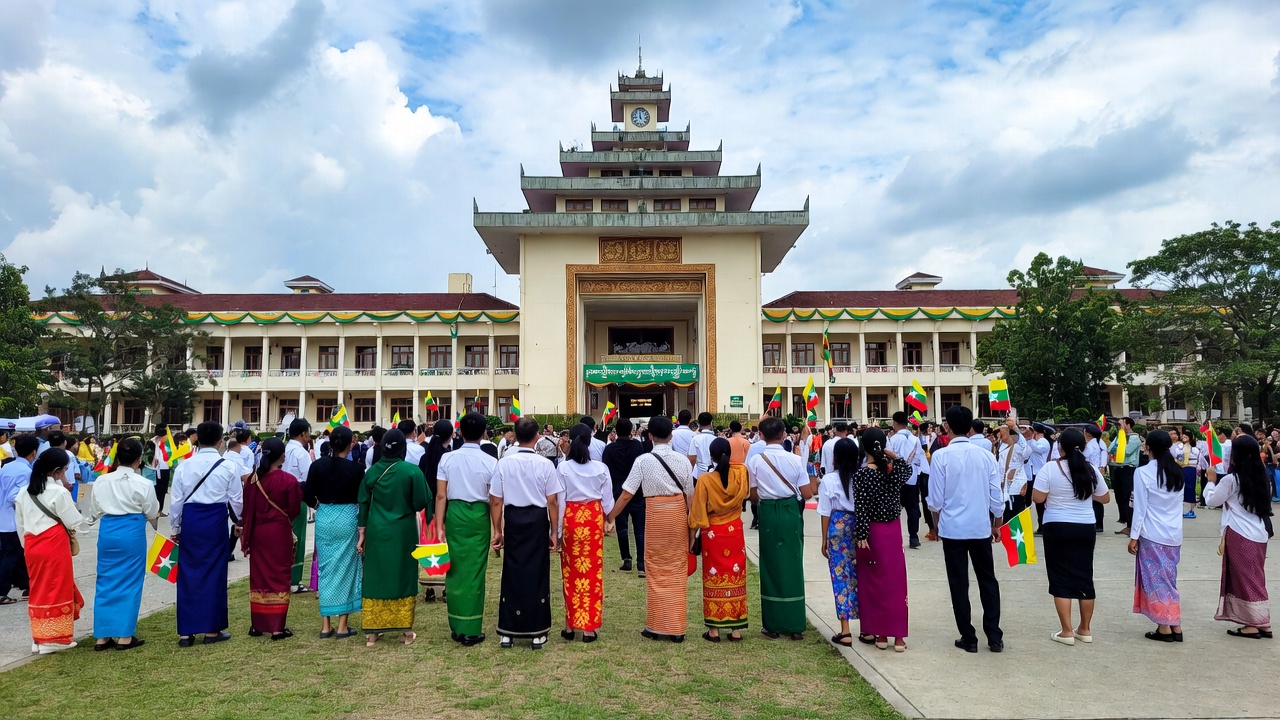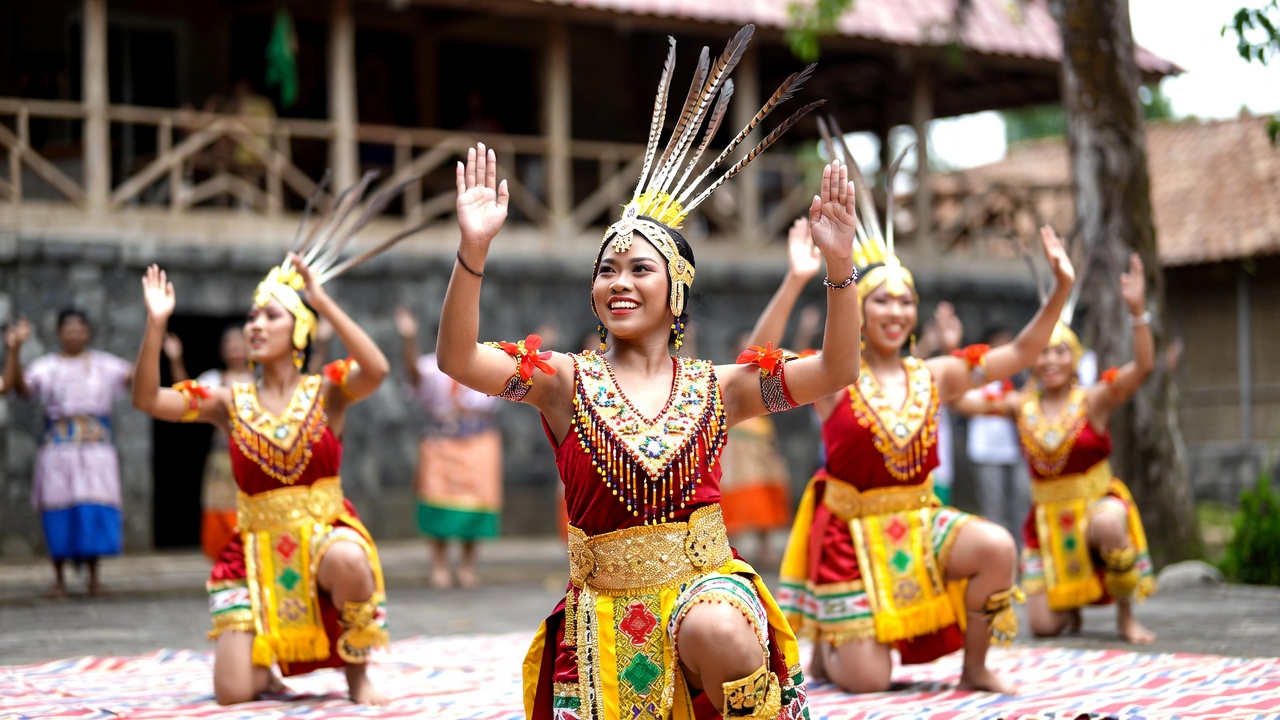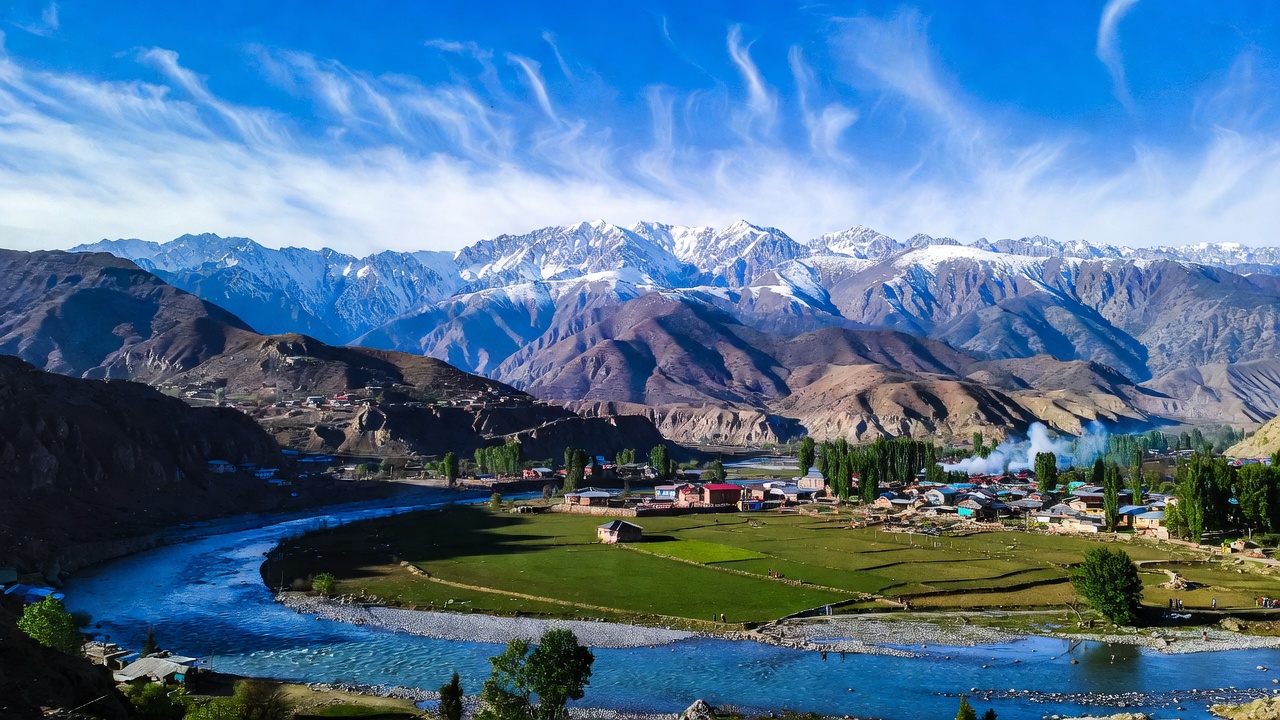
Every year on February 5, Pakistan comes to a standstill. Schools close. Markets shutter. Government offices empty out. From Karachi’s sun-drenched coastline to Islamabad’s wide boulevards, millions of people step outside — not to celebrate, but to stand in solidarity. This is Kashmir Solidarity Day (Urdu: یوم یکجہتی کشمیر, Youm-e-Yakhjehti-e-Kashmir), one of the most politically charged national holidays in South Asia.
In 2026, Kashmir Day arrives at a moment of extraordinary gravity. Less than a year has passed since India and Pakistan stood at the edge of full-scale war. The May 2025 military crisis — triggered by the deadly Pahalgam attack that killed 26 tourists in Indian-administered Kashmir — brought the two nuclear-armed rivals closer to open conflict than at any point since 1999. Operation Sindoor, cross-border missile strikes, drone warfare, and a fragile ceasefire have all sharpened the urgency of this annual observance.
This guide explores the deep roots of Kashmir Day, what it means in 2026, how it is observed across Pakistan and beyond, and why the Kashmir question remains one of the world’s most enduring geopolitical disputes.
What Is Kashmir Solidarity Day and When Is It Observed in Pakistan?
Kashmir Solidarity Day is a gazetted public holiday held in Pakistan on February 5 each year. The day is dedicated to expressing Pakistan’s unity with the people of Indian-administered Jammu and Kashmir. It is also a day to honor those who have lost their lives in the decades-long struggle over the region’s future.
In 2026, the federal government officially declared February 5 a nationwide public holiday. The Cabinet Division issued a notification confirming that all public and private offices would remain closed. The government also directed that a one-minute silence be observed at 10:00 a.m. across the country in remembrance of Kashmiri martyrs.
Here is a quick reference for this year’s observance:
| Detail | Information |
|---|---|
| Official Name | Kashmir Solidarity Day (Youm-e-Yakhjehti-e-Kashmir) |
| Date in 2026 | Thursday, February 5 |
| Type | Gazetted Public Holiday |
| Observed In | Pakistan and Azad Jammu & Kashmir (AJK) |
| Key Activities | Rallies, prayer services, human chains, seminars, one-minute silence at 10 a.m. |
| First Observed | 1990 |
| Offices Closed | Federal, provincial, banks, educational institutions |
The Sindh government also issued a separate notification ensuring all government offices, autonomous bodies, and local councils in the province would close. In Punjab, provincial authorities announced that the Kashmir Day holiday on February 5 would be followed by additional holidays on February 6 and 7 for Basant celebrations, giving many Pakistanis a long weekend.
The Origin Story: How Kashmir Day Started in 1990
Kashmir Solidarity Day did not emerge from a government committee room. It was born in the streets, during one of the most violent chapters of the Kashmir insurgency.
In 1989, Indian-administered Kashmir erupted into a full-scale armed uprising against New Delhi’s rule. Thousands of Kashmiris took to the streets demanding self-determination. The Indian government responded with a massive military deployment. Reports of extrajudicial killings, arbitrary arrests, and disappearances flooded out of the Kashmir Valley.
Qazi Hussain Ahmad, the leader of the Jamaat-e-Islami Pakistan, first proposed the idea of a national day of solidarity with Kashmir in 1990. The call was quickly supported by Nawaz Sharif, who was then the Chief Minister of Punjab and a major opposition leader. Sharif appealed for a nationwide strike — a complete shutdown of business and daily life — to protest India’s military actions in Kashmir and to pray for the success of the Kashmiri freedom movement.
The response was massive. Shops closed. Traffic stopped. Mosques overflowed with worshippers offering prayers for Kashmir. The strike sent a powerful message: the people of Pakistan viewed Kashmir not as a distant foreign issue, but as a deeply personal cause.
The Pakistan People’s Party (PPP), then in power under Prime Minister Benazir Bhutto, formalized the observance. February 5 was declared a public holiday, and Kashmir Day has been observed every year since.
The modern form of the observance — with organized government-backed rallies, state media programming, and coordinated diplomatic messaging — was structured by the Pakistani minister for Kashmir Affairs and Northern Areas in 2004. Since then, the day has grown into a fixture of Pakistan’s national calendar.
The Kashmir Conflict Explained: A Brief History From 1947 to Present
To understand why Pakistan observes Kashmir Day, you must understand the dispute that created it. The story begins in 1947, at the bloody dawn of South Asian independence.
The Partition and the First Kashmir War (1947–1949)
When British India was partitioned in August 1947, the newly created states of India and Pakistan each absorbed hundreds of princely states. Most decisions were straightforward. Hindu-majority states joined India. Muslim-majority states joined Pakistan.
Jammu and Kashmir was the exception. The region was majority-Muslim, but it was ruled by Maharaja Hari Singh, a Hindu king. Singh wanted to remain independent. He stalled on making a decision.
In October 1947, tribal fighters from Pakistan’s northwest entered Kashmir. Fearing conquest, Maharaja Hari Singh signed the Instrument of Accession on October 26, 1947, formally joining India in exchange for military protection. Pakistan has consistently disputed the legitimacy of this document.
The result was the First Kashmir War (1947–1949). India airlifted troops into Srinagar. Fighting raged across the mountains. On January 1, 1948, India brought the matter to the United Nations Security Council under Article 35 of the UN Charter.
United Nations Resolutions and the Promise of a Plebiscite
The Security Council passed Resolution 47 on April 21, 1948. This landmark resolution called for three steps:
- Pakistan was to withdraw all nationals who had entered Kashmir for fighting.
- India was to reduce its forces to the minimum needed for law and order.
- A free and impartial plebiscite would be conducted under UN auspices so the people of Kashmir could decide their own future.
The UN Commission for India and Pakistan (UNCIP) reinforced these principles with resolutions on August 13, 1948, and January 5, 1949. Both India and Pakistan accepted the framework. A ceasefire took effect on January 1, 1949, dividing Kashmir along what is now called the Line of Control (LoC).
The plebiscite, however, never happened. India and Pakistan could not agree on the conditions for demilitarization. Over the following decades, the promise of a vote faded into diplomatic stalemate.
As the Pakistan Mission to the UN in Geneva notes, the UN Security Council has passed more than a dozen resolutions on the Kashmir dispute since 1948. All affirm the principle that the region’s final status should be decided through the democratic will of the Kashmiri people.
Subsequent Wars and the Line of Control
India and Pakistan have fought three additional wars involving Kashmir:
- 1965 War: Pakistan launched Operation Gibraltar, sending fighters into Indian-administered Kashmir. A full-scale war followed, ending in a UN-mandated ceasefire.
- 1971 War: Primarily fought over East Pakistan (now Bangladesh), the conflict also included fighting along the Kashmir front. The Simla Agreement of 1972 redesignated the ceasefire line as the Line of Control.
- 1999 Kargil War: Pakistani soldiers and militants occupied positions on the Indian side of the LoC near Kargil. India launched a major offensive to reclaim the territory. International pressure forced Pakistan to withdraw.
Each war deepened the bitterness. Each ceasefire left the fundamental question unanswered: Who does Kashmir belong to?
The Current Division of Kashmir
Today, Kashmir remains divided among three countries:
| Controlled By | Territory | Approximate Share |
|---|---|---|
| India | Jammu and Kashmir, Ladakh | ~55% |
| Pakistan | Azad Jammu & Kashmir, Gilgit-Baltistan | ~30% |
| China | Aksai Chin | ~15% |
India and Pakistan each claim the entirety of the former princely state. The Line of Control is not an international border — it is a heavily militarized ceasefire line, patrolled by hundreds of thousands of soldiers on both sides.
Why Pakistan Observes Kashmir Day: Self-Determination and Solidarity
Pakistan’s observance of Kashmir Day rests on several interlocking principles.
The Right to Self-Determination Under International Law
Pakistan’s core argument is that the people of Jammu and Kashmir have a right to self-determination under international law. This right was explicitly recognized in the UN Security Council resolutions of 1948 and 1949, which called for a plebiscite.
The Ministry of Foreign Affairs of Pakistan maintains that the Jammu and Kashmir dispute is one of the longest-pending items on the UN Security Council’s agenda. Pakistan’s official position calls on India to implement the UNSC resolutions and hold the promised plebiscite.
India, for its part, considers Kashmir an integral part of the Indian Union and rejects the applicability of the UN resolutions, arguing that conditions for their implementation no longer exist.
Solidarity With Kashmiri Muslims
Kashmir holds a deep emotional resonance in Pakistan’s national identity. The two-nation theory — the founding ideology behind Pakistan’s creation — held that the Muslims of the Indian subcontinent constituted a separate nation deserving their own state. Kashmir, as a Muslim-majority region, was seen as a natural part of Pakistan.
For many Pakistanis, supporting Kashmir is not merely a foreign policy position. It is an expression of shared religious, cultural, and historical bonds. The slogan “Kashmir banega Pakistan” (Kashmir will become Pakistan) has been a rallying cry at political gatherings for decades.
Human Rights Concerns in Indian-Administered Kashmir
Pakistan also frames Kashmir Day as a response to human rights concerns. International human rights organizations have extensively documented reports of abuses in Indian-administered Kashmir.
Human Rights Watch reported in 2024 that India had not restored freedom of speech and association to Jammu and Kashmir five years after revoking the region’s autonomous status. The organization documented ongoing reports of arbitrary detention, extrajudicial killings, and restrictions on press freedom.
In November 2025, UN human rights experts expressed alarm about violations following the Pahalgam attack, including the detention of roughly 2,800 individuals, communication blackouts, and punitive home demolitions.
Freedom House’s 2025 report on Indian Kashmir described the territory as “Not Free,” noting that many civil liberties have been curtailed since the revocation of Article 370 in 2019.
It is important to note, however, that human rights concerns exist on both sides of the Line of Control. The International Commission of Jurists has noted that in Pakistani-administered Kashmir, there have also been reports of restrictions on freedom of expression and the misuse of anti-terrorism legislation against protesters. Amnesty International has called on Pakistani authorities to protect the right to peaceful protest after a crackdown in October 2025 on demonstrators in Azad Kashmir who were demanding civil liberties and political rights.
The Revocation of Article 370 and Its Impact on Kashmir Day
No event in recent years has reshaped the Kashmir debate more than India’s revocation of Article 370 on August 5, 2019.
What Article 370 Meant for Kashmir
Article 370 of the Indian Constitution granted Jammu and Kashmir a degree of autonomy that no other Indian state enjoyed. Under this provision, the state had its own constitution, its own flag, and significant legislative independence. Article 35A, a related provision, barred non-residents from buying property or holding government jobs in the state.
The ruling Bharatiya Janata Party (BJP) under Prime Minister Narendra Modi had long advocated for revoking Article 370. The party argued that the special status prevented Kashmir’s full integration into India, stunted economic development, and nurtured separatism.
The August 2019 Decision
On August 5, 2019, the Indian government took several dramatic steps simultaneously. It revoked Article 370 by presidential order. It scrapped Article 35A. And it bifurcated the state of Jammu and Kashmir into two union territories — Jammu and Kashmir (with a legislature) and Ladakh (without one) — both under direct control from New Delhi.
The decision was accompanied by a severe security crackdown. Communication lines in the Kashmir Valley were cut for months. Thousands of additional troops were deployed. Prominent Kashmiri politicians were detained, including former chief ministers.
In December 2023, the Supreme Court of India upheld the revocation, ruling that Article 370 had been a “temporary provision” and that its removal was constitutionally valid.
Pakistan’s Response and the Rise of Youm-e-Istehsal
Pakistan condemned the revocation as a violation of UN Security Council resolutions and international law. The government announced it would observe August 5 as “Youm-e-Istehsal” (Day of Exploitation) annually, in addition to the existing Kashmir Day on February 5.
Pakistan also renamed Islamabad’s Kashmir Highway to Srinagar Highway as a symbolic gesture. The move added a second annual flashpoint to Pakistan’s political calendar and intensified the emotional weight of Kashmir Solidarity Day.
For Pakistan, the 2019 revocation confirmed its long-standing argument that India has no intention of implementing the UN resolutions. For India, the revocation was a necessary step to integrate the region and spur development. These two incompatible narratives continue to define the dispute.
Kashmir Day 2026 After the India-Pakistan Military Crisis of 2025
The 2026 observance of Kashmir Day takes place in the shadow of the most dangerous India-Pakistan confrontation in decades.
The Pahalgam Attack (April 22, 2025)
On April 22, 2025, gunmen attacked tourists near Pahalgam in the Anantnag district of Indian-administered Kashmir. Twenty-six civilians were killed — most of them Hindu tourists. It was the deadliest attack on civilians in India since the 2008 Mumbai attacks.
The Resistance Front (TRF), a group that Indian intelligence links to the Pakistan-based Lashkar-e-Taiba, initially claimed responsibility. TRF later denied involvement, claiming its social media accounts had been hacked. India blamed Pakistan for harboring the militants. Pakistan denied any role and offered to cooperate with an international investigation.
Operation Sindoor and the May 2025 Conflict
Tensions escalated rapidly. India suspended the Indus Waters Treaty — a water-sharing agreement that had survived three previous wars. Both countries expelled diplomats, revoked visas, and closed borders.
On May 7, 2025, India launched Operation Sindoor, a series of missile strikes targeting what it described as terrorist infrastructure in Pakistan and Pakistan-administered Kashmir. Pakistan responded with its own strikes. According to the UK House of Commons Library, the fighting over the following three days was the worst between the two countries in decades.
Cross-border drone strikes, artillery exchanges, and missile attacks hit cities on both sides of the border. Both countries claimed to have inflicted heavy damage on the other. Civilian casualties were reported in multiple locations.
A ceasefire was announced on May 10, 2025. U.S. President Donald Trump claimed credit for brokering the agreement. Pakistan acknowledged American involvement. India insisted the ceasefire was a bilateral decision.
What the 2025 Crisis Means for Kashmir Day 2026
The May 2025 conflict has intensified the political and emotional significance of Kashmir Day in 2026. Several factors are shaping this year’s observance:
- Heightened nationalism: The military exchange galvanized nationalist sentiment in both countries. Pakistanis are likely to turn out in larger numbers for rallies and processions.
- Fragile ceasefire: Although the ceasefire has held, neither country has reversed its punitive measures. The Indus Waters Treaty remains suspended. Trade is still restricted. The atmosphere remains tense.
- Humanitarian concerns: Communities along the Line of Control on both sides suffered during the shelling. Displaced families and damaged infrastructure have deepened the human cost of the conflict.
- Global attention: The nuclear dimension of the crisis — both countries possess nuclear weapons — brought unprecedented international scrutiny to the Kashmir issue.
How Pakistan Observes Kashmir Solidarity Day: Traditions and Activities
Kashmir Day is more than a date on the calendar. It is a day of organized, passionate public activity across Pakistan and Azad Jammu & Kashmir.
Public Rallies and Political Processions
The most visible feature of Kashmir Day is the massive public processions that fill streets across Pakistan. Political parties, religious organizations, and civic groups organize rallies in every major city. Leaders deliver speeches in support of the Kashmiri freedom movement and call for a peaceful resolution of the dispute.
In Islamabad, Lahore, Karachi, and Peshawar, these rallies often draw thousands of participants. Banners, flags, and placards bearing messages of solidarity are carried through the streets. Slogans demanding Kashmiri self-determination echo through loudspeakers.
The Iconic Human Chain
One of the most striking Kashmir Day traditions is the formation of a human chain along all major routes connecting Pakistan to Azad Jammu & Kashmir. People stand in rows with clasped hands along highways and border crossings, forming an unbroken line that symbolizes unity with the Kashmiri people.
The human chain at Kohala Bridge — a key crossing point between Punjab and Azad Kashmir — is particularly famous. Thousands of people gather at this site every year.
One-Minute Silence for Kashmiri Martyrs
At 10:00 a.m. sharp, the entire country observes a one-minute silence. Traffic stops. Offices fall quiet. Radio and television broadcasts pause. The silence is a moment of collective remembrance for those who have died in the Kashmir conflict.
Special Prayers in Mosques
Mosques across Pakistan hold special prayers (dua) for the liberation of Kashmir and for the well-being of the Kashmiri people. Friday sermons in the days leading up to February 5 often focus on the Kashmir issue.
Seminars, Conferences, and Academic Forums
Universities, think tanks, and policy organizations host seminars and conferences on the Kashmir dispute. Topics range from the legal dimensions of UN resolutions to the humanitarian situation in Indian-administered Kashmir. Students participate in debate competitions where they present ideas for resolving the conflict.
Media Programming and Cultural Events
Pakistan’s television and radio networks air special programming throughout the day. Talk shows, documentaries, and panel discussions focus on Kashmir’s history, culture, and the ongoing struggle. Kashmiri music, poetry, and art are featured in cultural programs.
Radio Pakistan broadcasts a marathon transmission each year, with programming dedicated to different aspects of the Kashmir dispute.
The Pakistan Stock Exchange Closure
The Pakistan Stock Exchange (PSX) also remains closed on Kashmir Day. This shutdown of financial markets — alongside the closure of banks — is a measure of how deeply embedded the observance is in Pakistan’s institutional fabric.
Kashmir Day Observance Beyond Pakistan: The Global Kashmiri Diaspora
Kashmir Solidarity Day is not confined to Pakistan’s borders. It has grown into an international observance.
United Kingdom
The British Mirpuri community — a large diaspora population originating from the Mirpur district of Azad Kashmir — organizes rallies and marches in cities across the UK. London, Birmingham, and Manchester regularly see Kashmir Day demonstrations.
United States
In 2021, the New York State Assembly passed a resolution recognizing February 5 as Kashmir American Day. The resolution acknowledged New York’s Kashmiri community and championed human rights, including freedom of religion.
Diplomatic Missions Worldwide
Pakistan’s embassies and consulates around the world host Kashmir Day events, including documentary screenings, panel discussions, and solidarity gatherings. The Ministry of Foreign Affairs coordinates these international observances.
The Kashmir Dispute in 2026: Where Things Stand Today
As Pakistan marks Kashmir Day in 2026, the geopolitical landscape around Kashmir is more volatile than at any point in recent memory.
The Ceasefire Holds — But Tensions Remain
The May 2025 ceasefire between India and Pakistan continues to hold as of early 2026. However, neither country has reversed the punitive measures imposed during the crisis. India’s suspension of the Indus Waters Treaty — which governs the sharing of river water between the two countries — remains a source of deep concern, particularly in Pakistan and Pakistan-administered Kashmir, where communities depend on these water resources.
Trade between the two countries remains suspended. Diplomatic ties are severely strained. The Attari-Wagah border ceremony — once a symbol of cautious coexistence — has been scaled back.
Indian-Administered Kashmir After Pahalgam
In the aftermath of the Pahalgam attack, Indian authorities launched sweeping security operations across Jammu and Kashmir. According to multiple reports, thousands of people were detained. UN human rights experts documented communication blackouts, social media account suspensions, and punitive home demolitions.
The 2024 elections in Jammu and Kashmir — the first since the revocation of Article 370 — saw a 58.46 percent voter turnout, the highest in 35 years. The Jammu and Kashmir National Conference (JKNC) won a plurality of seats. However, the territory remains a union territory under significant central government control, not a full state.
Pakistan-Administered Kashmir: Internal Challenges
Pakistan-administered Kashmir has faced its own significant challenges. In October 2025, mass protests erupted in Azad Jammu and Kashmir, organized by the Jammu Kashmir Joint Awami Action Committee (JKJAAC). Demonstrators demanded civil liberties, better governance, access to quality healthcare and education, and an end to special privileges for government officials.
Pakistani authorities responded with security operations and a communication blackout. Amnesty International called on Pakistan to protect protesters’ rights and lift the internet shutdown.
These internal tensions have complicated Pakistan’s moral positioning on Kashmir Day. Critics argue that it is difficult to champion Kashmiri self-determination in Indian-administered Kashmir while restricting political freedoms in Pakistan-administered Kashmir.
The International Community’s Response
The broader international community remains cautious. Most Western governments have called for restraint and dialogue between India and Pakistan. The United Nations continues to maintain the UN Military Observer Group in India and Pakistan (UNMOGIP) along the Line of Control, though its mandate has been limited.
The May 2025 crisis drew fresh attention to the nuclear dimensions of the dispute. Both India and Pakistan possess nuclear weapons, and the rapid escalation from terrorist attack to cross-border missile strikes alarmed governments worldwide.
Is Kashmir Day a Public Holiday? What Travelers Should Know
For travelers planning a visit to Pakistan in early February, Kashmir Day has practical implications.
Office and Business Closures
All government offices — federal and provincial — are closed on February 5. Banks, educational institutions, and most private businesses also shut down. Some multinational companies may operate, but this varies.
Transportation and Traffic Disruptions
Public transport continues to run on Kashmir Day, but travelers should expect significant traffic disruptions in major cities. Rallies, processions, and road closures are common, particularly in Islamabad, Lahore, Rawalpindi, and Karachi. Routes near Kohala Bridge and other crossings into Azad Kashmir will be particularly congested due to the human chain.
Long Weekend in 2026
In 2026, Kashmir Day falls on a Thursday. Combined with additional provincial holidays — such as Punjab’s Basant celebrations on February 6–7 and Sindh’s Shab-e-Barat holiday on February 4 — many Pakistanis will enjoy a four-day weekend. Hotels and tourist destinations may see increased bookings.
Cultural Engagement Opportunities
Visitors who wish to engage with the observance can attend cultural festivals showcasing Kashmiri heritage, watch special television programming, or attend academic seminars. However, it is wise to approach the day with sensitivity and respect for the deeply held emotions it represents.
Understanding Both Sides: The Indian Perspective on Kashmir
A responsible discussion of Kashmir Day requires acknowledging that the dispute has two sides — and that both hold their positions with deep conviction.
India’s position rests on several key arguments:
- Legal accession: India maintains that Maharaja Hari Singh’s signing of the Instrument of Accession in 1947 was legal and binding, making Jammu and Kashmir an integral part of India.
- Constitutional integration: India argues that the revocation of Article 370 was a necessary step to bring Jammu and Kashmir in line with the rest of the country, remove barriers to development, and end separatist violence.
- Democratic elections: India points to the 2024 elections — with high voter turnout — as evidence that the people of Jammu and Kashmir are participating in Indian democracy.
- Economic development: According to Indian government data, the region’s GDP growth has increased significantly since the revocation, infrastructure projects have advanced, and tourism has surged.
- Cross-border terrorism: India consistently accuses Pakistan of supporting militant groups operating in Kashmir. The Pahalgam attack of 2025 reinforced this narrative in the eyes of Indian policymakers and much of the Indian public.
Pakistan’s position is equally firmly held:
- Disputed territory: Pakistan maintains that Kashmir is internationally recognized as a disputed territory, not an integral part of India, and that the UN resolutions calling for a plebiscite remain valid.
- Self-determination: Pakistan argues that the Kashmiri people have never been given the opportunity to freely decide their own future, as promised by the UN.
- Human rights: Pakistan points to reports from international organizations documenting abuses in Indian-administered Kashmir as evidence that India’s rule lacks legitimacy.
- Illegality of the 2019 revocation: Pakistan considers the revocation of Article 370 a violation of international law and the UN Security Council resolutions.
This article, consistent with the principles of responsible travel writing, presents both perspectives without taking a political stance.
Key Dates in the Kashmir Conflict: A Timeline
| Year | Event |
|---|---|
| 1846 | Treaty of Amritsar creates the princely state of Jammu and Kashmir |
| 1947 | Partition of British India; Maharaja Hari Singh signs the Instrument of Accession to India |
| 1947–49 | First Kashmir War between India and Pakistan |
| 1948 | UN Security Council Resolution 47 calls for a plebiscite |
| 1949 | Ceasefire takes effect along the Line of Control |
| 1965 | Second India-Pakistan War |
| 1971 | Third India-Pakistan War; Simla Agreement signed in 1972 |
| 1989 | Armed insurgency begins in Indian-administered Kashmir |
| 1990 | First Kashmir Solidarity Day observed in Pakistan |
| 1999 | Kargil War between India and Pakistan |
| 2004 | Kashmir Day formalized by Pakistan’s Ministry of Kashmir Affairs |
| 2019 | India revokes Article 370; Kashmir’s special status abolished |
| 2021 | New York State Assembly recognizes Kashmir American Day |
| 2023 | Indian Supreme Court upholds the revocation of Article 370 |
| 2024 | First elections held in Jammu and Kashmir since Article 370 revocation |
| 2025 | Pahalgam attack (April); India-Pakistan military conflict (May); ceasefire (May 10) |
| 2026 | Kashmir Solidarity Day observed on February 5 amid post-conflict tensions |
Kashmir Solidarity Day 2026: What to Expect This Year
Based on official announcements and past patterns, here is what to expect across Pakistan on February 5, 2026:
- Nationwide public holiday: All government and private offices closed.
- One-minute silence at 10:00 a.m.: Observed across all provinces and territories.
- Major rallies in cities: Islamabad, Lahore, Karachi, Peshawar, Quetta, and Muzaffarabad will see organized processions.
- Human chains: Formed along major routes to Azad Kashmir, especially at Kohala Bridge.
- Seminars and academic events: Universities and think tanks will host discussions on the Kashmir dispute.
- Special media programming: Television, radio, and online platforms will broadcast Kashmir-focused content throughout the day.
- Pakistan Stock Exchange closed: No trading will take place.
- Diplomatic events worldwide: Pakistani embassies and consulates will host solidarity gatherings.
Given the aftermath of the 2025 military crisis, this year’s observance is expected to carry a more intense emotional charge than in recent years. Speeches will likely reference the Pahalgam attack, the Indian military strikes, and the ongoing suspension of key bilateral agreements.
The Future of the Kashmir Dispute: Can Peace Be Achieved?
The Kashmir conflict has endured for nearly eight decades. It has survived four wars, countless diplomatic initiatives, and the rise and fall of governments on both sides. The question of whether a lasting peace is achievable remains one of the most difficult in international relations.
Several factors make resolution challenging:
- Entrenched positions: Neither India nor Pakistan has shown willingness to compromise on sovereignty claims. India rejects international mediation. Pakistan insists on it.
- Nuclear deterrence: The possession of nuclear weapons by both countries raises the stakes of any military escalation, as the world witnessed in May 2025.
- Domestic politics: In both India and Pakistan, the Kashmir issue is deeply tied to national identity and political legitimacy. Leaders who appear to “give ground” on Kashmir face severe domestic backlash.
- The voices of Kashmiris: Kashmiris themselves — on both sides of the Line of Control — often feel their voices are drowned out by the rivalry between two much larger states.
Yet there are also glimmers of possibility. The 2003 ceasefire along the LoC — which was reaffirmed in 2021 and largely held until 2025 — demonstrated that India and Pakistan can agree to reduce violence. People-to-people contacts, track-two diplomacy, and trade were slowly building bridges before the 2019 crisis and the 2025 conflict disrupted them.
Kashmir Day, at its best, can serve as a reminder that behind the geopolitics, there are real people — farmers, shopkeepers, students, families — living in one of the most beautiful and contested landscapes on earth. Their desire for peace, dignity, and self-determination is something that transcends borders and political affiliations.
Frequently Asked Questions About Kashmir Solidarity Day 2026
Is February 5 a public holiday in Pakistan in 2026? Yes. The federal government has officially declared February 5, 2026, a gazetted public holiday for Kashmir Solidarity Day. All government and private offices will remain closed.
When was the first Kashmir Day observed? The first Kashmir Day was observed in 1990, following a call by Qazi Hussain Ahmad and Nawaz Sharif for a nationwide strike in solidarity with Kashmir.
What happens during Kashmir Day in Pakistan? The day includes public rallies, political speeches, a one-minute silence at 10:00 a.m., special mosque prayers, human chains along routes to Azad Kashmir, seminars, and dedicated media programming.
Is Kashmir Day observed outside Pakistan? Yes. The Kashmiri diaspora in the UK, the United States, and other countries organizes events. In 2021, the New York State Assembly passed a resolution recognizing the day.
Why did India revoke Article 370? India’s ruling BJP argued that Article 370 prevented Kashmir’s full integration with India and hindered economic development. The Indian Supreme Court upheld the revocation in December 2023.
What happened between India and Pakistan in May 2025? Following the Pahalgam terrorist attack on April 22, 2025, which killed 26 civilians, India launched military strikes on Pakistan under Operation Sindoor on May 7. Pakistan retaliated. A ceasefire was announced on May 10, 2025.
Is it safe to travel to Pakistan during Kashmir Day? Pakistan is generally safe for tourists during Kashmir Day, but travelers should expect road closures and large gatherings in major cities. The day is a public holiday, so many services will be unavailable.
Final Thoughts: Why Kashmir Day Matters in 2026
Kashmir Day is not just a holiday. It is a mirror reflecting one of the world’s most complex and enduring disputes. In 2026, that mirror shows images of a region still scarred by conflict, a ceasefire still fragile after the worst military exchange in decades, and two nuclear-armed nations still unable to resolve a question that was first put to the United Nations almost 80 years ago.
For the people of Pakistan, February 5 is a day to reaffirm their solidarity with Kashmir. For the people of India, it is a reminder of the deep divisions that partition left behind. And for the people of Kashmir themselves — living on both sides of the Line of Control — it is yet another day spent in the shadow of a dispute they did not create but whose consequences they bear most heavily.
As the world watches, the hope endures that dialogue, not conflict, will eventually write the final chapter of the Kashmir story.