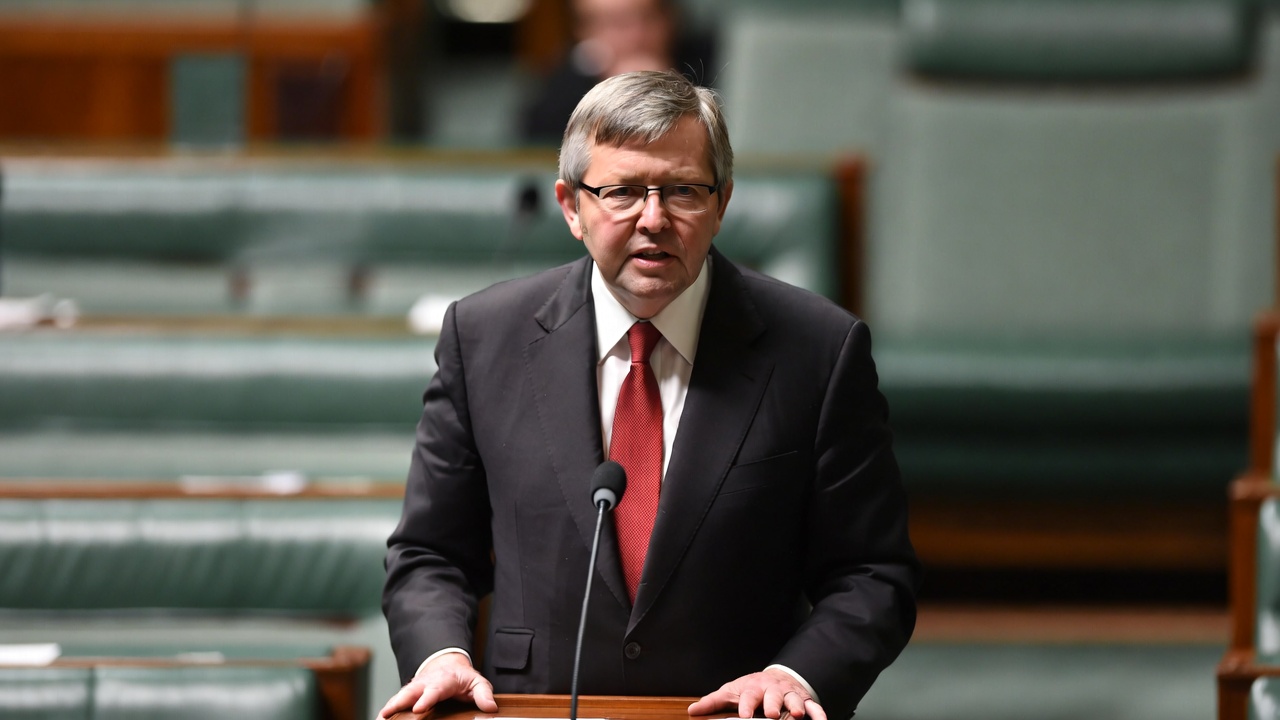
On 13 February 2008, something happened in Canberra that had never happened before. A sitting Australian Prime Minister stood in Parliament and said “sorry” to the country’s First Nations peoples. Kevin Rudd’s voice echoed through the House of Representatives, across the packed public galleries, and out through giant screens to thousands of Aboriginal and Torres Strait Islander people gathered on the lawns of Federation Mall. That single word — sorry — carried more than two centuries of colonial grief.
But almost eighteen years later, a question lingers over the red dust of the Australian outback and the sandstone corridors of Parliament House alike: Was the Apology a genuine turning point for Indigenous rights, or was it a symbolic gesture that left the hardest work undone?
This is the story of how one speech changed a nation’s conversation — and why the conversation is still painfully unfinished.
What Was the National Apology to the Stolen Generations in 2008?
On the morning of 13 February 2008, Prime Minister Kevin Rudd rose in the House of Representatives to deliver what is now simply called “The Apology.” It was the very first item of government business following Labor’s November 2007 election victory. Rudd had promised it during the campaign, and he delivered it on the earliest possible date.
The Apology was directed at all Indigenous Australians, but especially at the Stolen Generations — the Aboriginal and Torres Strait Islander children who were forcibly removed from their families by government agencies throughout much of the twentieth century. These removals were carried out under official assimilation policies designed to absorb Indigenous children into white Australian society.
Rudd’s words were direct and unflinching:
“We apologise for the laws and policies of successive Parliaments and governments that have inflicted profound grief, suffering and loss on these our fellow Australians. We apologise especially for the removal of Aboriginal and Torres Strait Islander children from their families, their communities and their country.” (Rudd, Kevin. “Apology to Australia’s Indigenous Peoples.” Commonwealth of Australia Parliamentary Debates, House of Representatives, 13 Feb. 2008.)
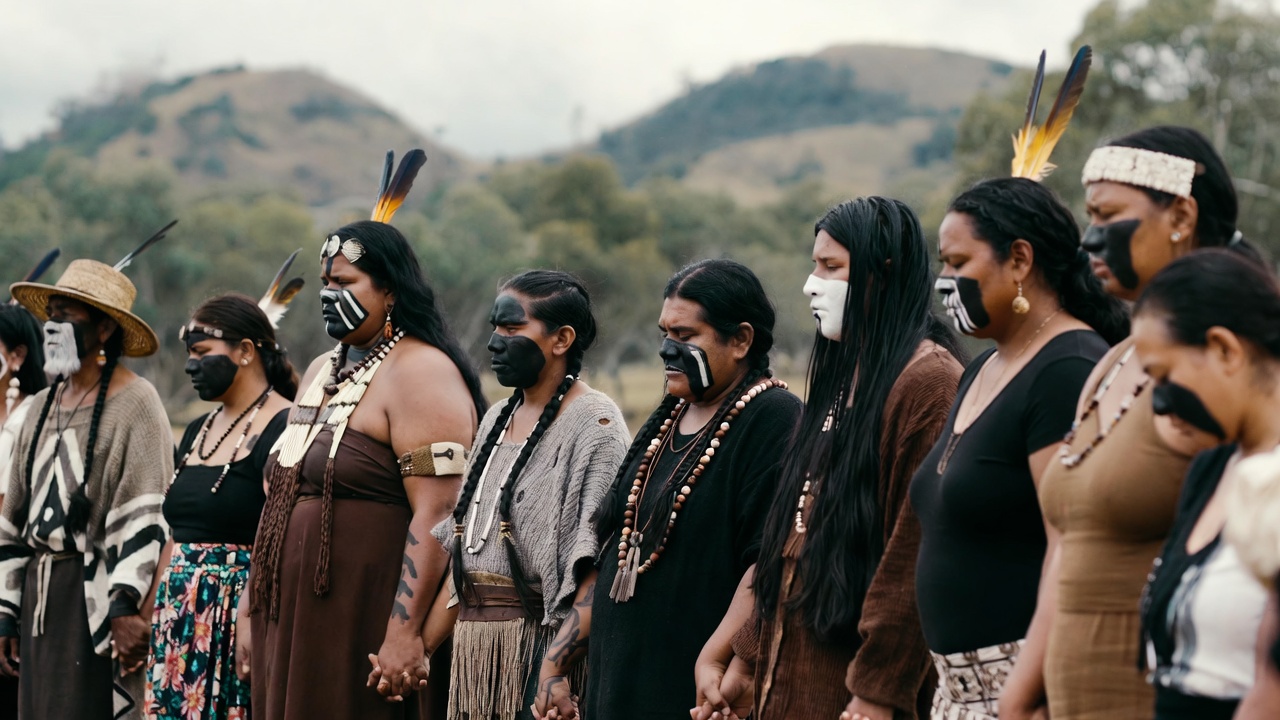
For the first time in Australian federal history, a Welcome to Country ceremony was held at the opening of Parliament. Aunty Matilda House, a Ngambri Elder, welcomed visitors to her Country. Dancers from Aboriginal and Torres Strait Islander communities performed. A traditional message stick was presented to the Prime Minister by Aunty Matilda’s grandchildren — a symbol of communication used by First Nations peoples for thousands of years.
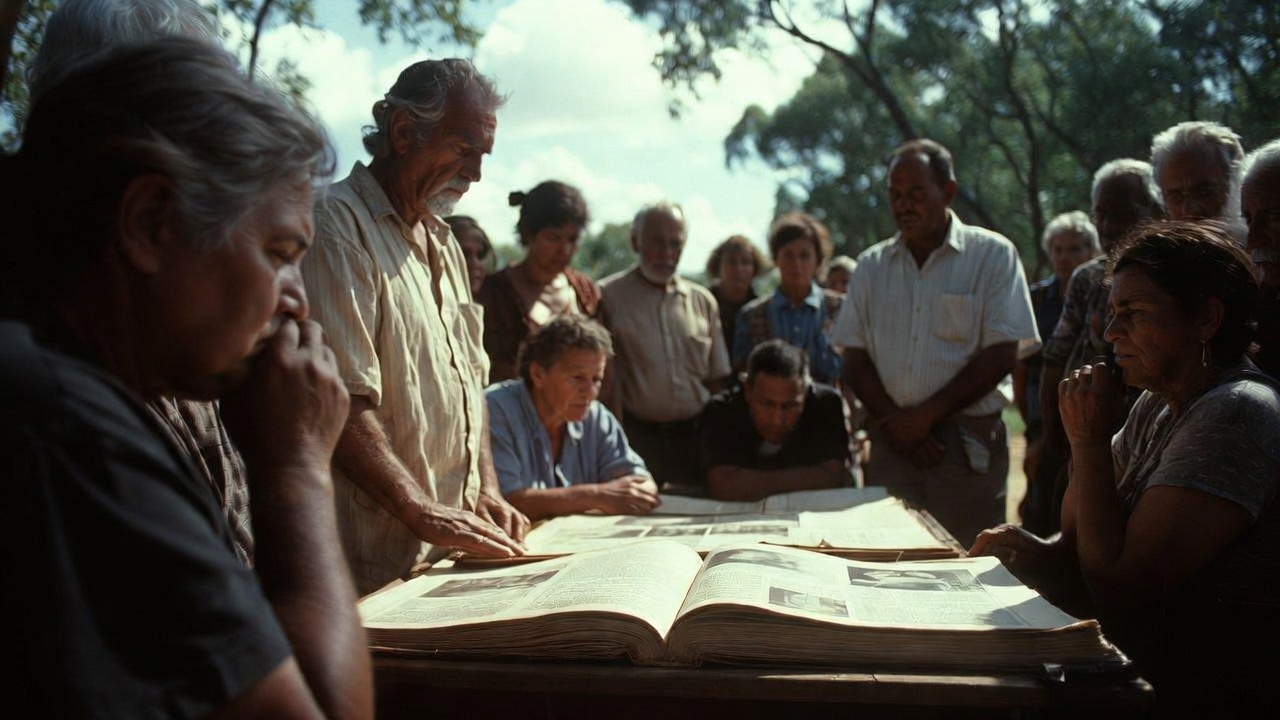
The emotional weight of the moment cannot be overstated. Photographic and video records show tears streaming down the faces of Stolen Generations survivors in the public galleries. Across the country, Australians watched on big screens in city squares. In Melbourne’s Federation Square, crowds wept openly. In remote Indigenous communities, families gathered around televisions to hear words their grandparents had never expected to hear.
Dr Tom Calma, then Aboriginal and Torres Strait Islander Social Justice Commissioner, responded formally on behalf of the Stolen Generations:
“Through one direct act, the parliament has acknowledged the existence and the impacts of past policies and practices of forcibly removing Indigenous children from their families.” (Calma, Tom. “Response to the National Apology.” Australian Human Rights Commission, 13 Feb. 2008.)
The Apology passed the House with bipartisan support. Liberal Opposition Leader Brendan Nelson offered his party’s backing, though his accompanying speech — which discussed issues like domestic violence and child abuse in Indigenous communities — drew criticism from some who felt it diluted the moment. Outside Parliament, some audience members turned their backs during Nelson’s address.
Why Was the Apology to Aboriginal Australians So Significant?
To understand why a single word carried such enormous power, you must first understand what the Australian government did to Indigenous families over the course of nearly a century.
The Stolen Generations: A Century of Forced Child Removals
From the late 1800s through the 1970s, Australian federal and state governments implemented policies that forcibly removed Aboriginal and Torres Strait Islander children from their families. The children were placed in government or church-run institutions, fostered out to non-Indigenous families, or adopted — often with no record kept of their origins. Many were sent interstate or even overseas.
The scale of removal was staggering. According to the Australian Institute of Aboriginal and Torres Strait Islander Studies (AIATSIS), thousands of children were taken. The exact number will likely never be known, but the impact touched virtually every Indigenous family in Australia. In some families, children across three or more generations were removed.
The stated purpose of these policies was “assimilation.” The unstated purpose, as documented by the Human Rights and Equal Opportunity Commission, was to eliminate Indigenous cultures as distinct entities. The Commission’s landmark 1997 report concluded that the policies could, in legal terms, be described as genocidal — a finding that remains deeply contested in mainstream Australian politics but is accepted by many legal scholars and human rights bodies.
Children removed under these policies were frequently:
- Denied contact with their parents, siblings, and extended families
- Forbidden from speaking their traditional languages
- Stripped of their cultural identity and given European names
- Subjected to physical, emotional, and sexual abuse in institutions
- Used as unpaid domestic and farm labour — girls were trained as servants, boys as stockmen
The trauma of removal did not end with childhood. Survivors carried lifelong psychological scars. Many struggled with addiction, mental illness, relationship difficulties, and a profound sense of disconnection from identity and Country. The trauma passed through generations. Children of survivors — who never experienced removal themselves — nonetheless inherited patterns of grief, dislocation, and disadvantage.
The Bringing Them Home Report and the Push for a National Apology
In 1995, the Keating Labor Government commissioned a national inquiry into the forced separation of Indigenous children. The resulting Bringing Them Home report, published on 26 May 1997, was a watershed moment. Over 500 individuals shared their testimonies with the Human Rights and Equal Opportunity Commission.
The report contained 54 recommendations, including a call for formal government apologies at the federal, state, and territory levels, and the establishment of reparation schemes for survivors.
However, the Prime Minister who received the report was not Paul Keating. The 1996 election had brought in John Howard’s Liberal government. Howard refused to issue an apology. He argued that the current generation of Australians should not be required to accept guilt for the actions of past governments. In 1999, he passed a Parliamentary “Motion of Reconciliation” expressing “deep and sincere regret” — but deliberately avoided the word “sorry.”
Howard’s refusal became one of the most polarising political positions in modern Australian history. Each year, as National Sorry Day was observed on 26 May (the anniversary of the Bringing Them Home report being tabled in Parliament), pressure for an official apology grew.
The 2000 Harbour Bridge Walk for Reconciliation — in which more than 250,000 people, Indigenous and non-Indigenous, walked across the Sydney Harbour Bridge — demonstrated the depth of public feeling. On that same day, a skywriter spelled out the word “SORRY” above the bridge.
When Kevin Rudd won office in November 2007, he immediately announced the government would deliver an apology. The question was never if — it was how soon.
How Did the Stolen Generations Apology Impact Indigenous Communities?
The emotional impact of the Apology was immediate and profound. But measuring its long-term effects on the lives of Indigenous Australians requires a more complex accounting.
Symbolic Healing and National Acknowledgement
For many Stolen Generations survivors, the Apology represented something they had waited a lifetime to hear. Some survivors were in their seventies and eighties by 2008. Many did not live to see it.
The Apology gave official recognition to experiences that had been denied, minimised, or ignored for decades. For people whose childhoods had been erased by government policy — whose very existence within their families had been treated as a problem to be solved — hearing a Prime Minister say “we are sorry” carried a weight that transcended politics.
Aunty Glendra Stubbs, an Elder who was instrumental in the advocacy that led to the Apology, later reflected that she had not expected a National Apology to happen in her lifetime. Her words carried the bittersweet recognition that acknowledgement, however late, still mattered.
Across Australia, 13 February became known as National Apology Day, a distinct observance from National Sorry Day (26 May). Both dates now anchor Australia’s calendar of reconciliation commemorations.
The Limits of Words Without Policy Change
Yet even as tears were shed and embraces exchanged, many Indigenous leaders and community members pointed out that the Apology contained no commitment to compensation. The text did not mention reparations. It did not establish new funding for Indigenous services. It did not address the structural causes of disadvantage.
Uncle Cecil Bowden, a Stolen Generations survivor, captured this tension in words that have been widely quoted since: “It’s not what he said… it’s what he didn’t do. He hasn’t done a thing. No good saying sorry if you don’t do anything about it.”
The Healing Foundation’s 2017 review, Bringing Them Home 20 Years On, found that the majority of the original report’s 54 recommendations had still not been implemented two decades after publication. The effects of forced removal were still being felt across generations — in health outcomes, educational attainment, employment, housing, and contact with the criminal justice system.
Perhaps most troublingly, the rate of Indigenous child removal had actually increased since the Apology. According to data compiled by the Australian Institute of Health and Welfare, the number of Indigenous children in out-of-home care rose from approximately 9,070 in 2008 to about 18,900 by 2022. By 2024, First Nations children were 11.5 times more likely to be placed in out-of-home care than non-Indigenous children.
For many Aboriginal families, the modern child protection system felt like a continuation of the same policies the Apology was supposed to address — just under a different name.
What Is the Closing the Gap Strategy and Has It Worked?
One of the most concrete policy legacies connected to the Apology era is the Closing the Gap framework. Launched in 2008 — the same year as the Apology — it represented the Australian government’s commitment to reducing the disparity between Indigenous and non-Indigenous Australians across key indicators of health, education, and economic opportunity.
The Original Targets and Early Failures
The original Closing the Gap framework set seven specific targets, including:
| Target Area | Goal |
|---|---|
| Life expectancy | Close the gap within a generation |
| Child mortality | Halve the gap by 2018 |
| Early childhood education | 95% enrollment by 2025 |
| Literacy and numeracy | Halve the gap by 2018 |
| Year 12 attainment | Halve the gap by 2020 |
| Employment | Halve the gap by 2018 |
By 2019, only two of the seven targets were on track — early childhood education and Year 12 attainment. The life expectancy gap, child mortality gap, literacy gap, and employment gap all remained stubbornly wide.
The 2020 Refresh: New Targets, New Approach
In July 2020, all Australian governments signed a refreshed National Agreement on Closing the Gap with the Coalition of Aboriginal and Torres Strait Islander Peaks. The new agreement expanded the framework to 19 socio-economic targets across 17 outcome areas, including justice, family safety, digital inclusion, and connection to land and culture.
Critically, the 2020 agreement introduced four Priority Reforms designed to shift the way governments work with Indigenous peoples:
- Shared decision-making — formal partnerships between governments and Aboriginal community-controlled organisations
- Building the community-controlled sector — strengthening Indigenous-led services
- Transforming government organisations — eliminating institutional racism
- Shared access to data — giving Indigenous communities access to the data that affects them
These reforms represented a philosophical shift. Rather than governments designing programs for Indigenous people, the new framework aimed to support Indigenous people designing solutions for themselves.
Where Does Closing the Gap Stand in 2025–2026?
The picture entering 2026 is, frankly, sobering.
The Productivity Commission’s first statutory review, released in February 2024, found that progress on the priority reforms had been limited and urged “fundamental changes” to how governments work with Aboriginal and Torres Strait Islander peoples. The review called for genuine power-sharing and structural reform.
The Australian Institute of Health and Welfare’s 2025 analysis of 14 of the 17 national targets showed only a handful trending in the right direction. Many targets were either not on track or actively worsening — particularly in justice, child protection, and youth engagement.
The Close the Gap Campaign’s 2025 annual report was blunt. It described progress as “inconsistent, disjointed, and slow,” and noted that very little meaningful reform had been implemented. Divisive state and territory policies were found to be in direct contradiction to the National Agreement’s principles.
Life expectancy remains a stark marker of inequality. According to the AIHW, First Nations males born between 2020 and 2022 had a life expectancy of 71.9 years, compared with 80.5 years for non-Indigenous males — a gap of 8.6 years. For First Nations females, life expectancy was 75.6 years, compared with 83.8 years for non-Indigenous females — a gap of 8.1 years. If First Nations people had experienced the same mortality rates as non-Indigenous Australians between 2017 and 2021, there would have been approximately 9,200 fewer deaths.
There are, however, points of light. A landmark $4 billion, 10-year housing program jointly funded by the Commonwealth and Northern Territory governments aims to halve overcrowding and build up to 2,700 homes in remote communities. Ministerial updates throughout 2025 reported that new housing stock was beginning to reduce overcrowding pressures. And community-controlled organisations — where Indigenous people design and deliver their own services — continue to demonstrate the best outcomes.
The central question for 2026 is whether governments will embed shared decision-making and redirect funding to the community-controlled sector at the scale required to shift the national indicators.
How the 2023 Voice Referendum Failed and What It Means for Reconciliation
If the 2008 Apology represented the high-water mark of government action on reconciliation, the 2023 Voice to Parliament referendum may represent its lowest ebb in the modern era.
The Uluru Statement from the Heart
In May 2017, more than 250 Aboriginal and Torres Strait Islander leaders gathered at Uluru in Central Australia. After months of regional dialogues across the country, they produced the Uluru Statement from the Heart — a 439-word document that called for three things:
- Voice — a constitutionally enshrined advisory body to Parliament
- Treaty — a formal agreement between the Australian government and First Nations peoples
- Truth — a national truth-telling process about the history of colonisation
The Statement was addressed to the Australian people. It described Aboriginal and Torres Strait Islander peoples as holders of “the oldest continuing cultures in human history” and called for a “Makarrata Commission” to oversee treaty negotiations and truth-telling.
The Turnbull Government rejected the proposal almost immediately. Malcolm Turnbull argued that a constitutionally enshrined Voice would be seen as a “third chamber” of Parliament.
The Referendum and Its Defeat
When Anthony Albanese’s Labor government took office in May 2022, the new Prime Minister committed to holding a referendum on the Voice in his first term. The question put to voters on 14 October 2023 asked whether the Constitution should be altered to recognise Indigenous Australians through an advisory body called the Aboriginal and Torres Strait Islander Voice.
The result was decisive. Only 39.9% of voters supported the change. The proposal failed in every state. Only the Australian Capital Territory recorded a majority “Yes” vote. The defeat stood in stark contrast to the 1967 referendum — which gave the Commonwealth power to legislate for Indigenous peoples and was carried with a record 90.8% majority.
Analysis by the Australian National University found that the main reasons Australians voted “No” included scepticism about rights for some Australians that are not held by others, lack of trust in politicians and media, and weaker perceptions of the discrimination faced by Aboriginal people. Critically, the study also found that 87% of voters believed it was important for First Nations peoples to have a say in matters that affect them — and that around eight in ten Australians supported reconciliation.
The absence of bipartisan support was widely identified as the decisive factor. The Liberal Party under Peter Dutton opposed the Voice. Research published in the Australian Journal of Political Science concluded that without bipartisan agreement, voters prioritised the perceived risks of constitutional change over the prospect of better outcomes for Indigenous people. When political leaders disagree on a complex referendum question, voters tend to opt for safety over change — a pattern consistent with the defeat of the 1999 republic referendum.
The Aftermath: Grief, Silence, and Recalibration
The referendum’s defeat sent shockwaves through Indigenous communities. On the night of the result, Indigenous leaders who had supported the Voice called for “a Week of Silence” to grieve and reflect.
Professor Marcia Langton, a prominent Aboriginal academic and Voice advocate, said that the result made it “very clear that Reconciliation is dead.”
Katie Kiss, the Aboriginal and Torres Strait Islander Social Justice Commissioner, wrote on the one-year anniversary that the failed referendum had “left a trail of hurt and confusion” and that many First Nations Australians felt “more disillusioned than ever and rejected in their own lands.”
Yet the defeat did not extinguish all progress. Despite the national rejection, the state of South Australia had already established its own Indigenous Voice to Parliament through state legislation passed in March 2023. In 2024, 46 members were elected to the South Australian First Nations Voice. As one Indigenous advocate noted: “The case of South Australia shows that the world doesn’t fall apart when you give us a Voice.”
The two remaining pillars of the Uluru Statement — Treaty and Truth — continue to advance at the state level. Victoria’s Yoorrook Justice Commission has been conducting truth-telling hearings since 2022. In May 2025, the Commission organised a 400-kilometre Walk for Truth from Gunditjmara Country to the Victorian Parliament. These state-based initiatives offer models for what national action could look like — if the political will emerges.
Why Are Indigenous Australians Still Over-Represented in the Criminal Justice System?
One of the starkest measures of the distance between the Apology’s promise and present reality is found in Australia’s prison system.
The Numbers Tell a Devastating Story
According to the Australian Bureau of Statistics, there were 17,432 Aboriginal and Torres Strait Islander prisoners in Australia as of 30 June 2025 — an increase of 10% (1,561 people) from the previous year. Indigenous prisoners now account for 37% of the total prison population, despite Aboriginal and Torres Strait Islander people comprising roughly 4% of Australia’s total population.
The imprisonment rate for Indigenous adults stands at approximately 2,600 per 100,000 Aboriginal and Torres Strait Islander adult population. For Indigenous males, the rate is 4,717 per 100,000. These figures are not just statistics — they represent a systemic failure of epic proportions.
| Indicator | Indigenous | Non-Indigenous | Ratio |
|---|---|---|---|
| Share of total population | ~4% | ~96% | — |
| Share of prison population (2025) | 37% | 63% | ~12x over-representation |
| Imprisonment rate per 100,000 adults | ~2,600 | ~170 | ~15x |
| Children in out-of-home care (2024) | 43% of total | 57% of total | ~11.5x over-representation |
Deaths in Custody: A Crisis Deepening in 2025
The situation in custody has worsened. The Australian Institute of Criminology reported that in the 2024–25 financial year, 113 people died in custody across Australia. Of these, 33 were Aboriginal and Torres Strait Islander people — the highest number in over 45 years, since 1979–80. The total number of Indigenous deaths in custody since the 1991 Royal Commission into Aboriginal Deaths in Custody has now reached at least 617.
In New South Wales alone, the State Coroner confirmed that 12 First Nations people died in custody in 2025 — the highest number ever recorded in a single year in that state. The number of Aboriginal people in NSW custody had risen by nearly 19% over the previous five years.
These deaths are not inevitable. A Guardian Australia investigation found that 20 deaths by hanging in NSW prisons were linked to known ligature points that had not been removed — despite explicit recommendations from the 1991 Royal Commission to eliminate such hazards. Similar circumstances were reported in South Australia and Western Australia.
Independent Senator Lidia Thorpe called the 2025 death toll “a shocking indictment” of a country that claims to be Closing the Gap. “In these horrific figures, I see violent colonialism perpetrated by hollow politicians desperate for votes and power,” she said.
The Royal Commission into Aboriginal Deaths in Custody delivered 339 recommendations in 1991. More than three decades later, the persistence and escalation of deaths in custody represents what many Indigenous leaders describe as a fundamental failure of political will.
What Reparations and Redress Schemes Exist for Stolen Generations Survivors?
While the 2008 Apology did not include compensation, subsequent years have seen a patchwork of state and territory redress schemes emerge — though progress has been painfully slow.
State and Territory Redress Schemes: A Jurisdiction-by-Jurisdiction Picture
| Jurisdiction | Scheme Status (as of early 2026) | Payment Amount |
|---|---|---|
| New South Wales | Closed to new applications | $75,000 |
| Victoria | Open until March 2027 | $100,000 |
| South Australia | Closed to new applications | $50,000 |
| Tasmania | Scheme completed | $58,333 |
| Northern Territory / ACT | Open until August 2027 (Commonwealth scheme) | $75,000 + healing assistance |
| Western Australia | Opened November 2025 | $85,000 |
| Queensland | No redress scheme established | — |
The most recent development came in May 2025, when Western Australian Premier Roger Cook announced a Stolen Generations Redress Scheme at the Reconciliation Week Breakfast in Boorloo/Perth. The scheme offers $85,000 per person to Aboriginal people removed from their families before 1 July 1972. Applications opened in November 2025.
Human Rights Watch noted that Western Australia had the highest rate of child removals in Australia during the Stolen Generations era, making it the second-to-last state to offer reparations. Queensland remains the only state without any redress scheme.
The Territories Stolen Generations Redress Scheme, administered by the National Indigenous Australians Agency, covers survivors removed in the Northern Territory, ACT, and Jervis Bay Territory before self-government. It provides financial payments and access to healing and wellbeing services and remains open until 31 August 2027.
A significant legal milestone was reached through class action litigation. The Northern Territory Stolen Generations class action, brought by Shine Lawyers, resulted in a settlement with final distribution payments made to eligible members in September 2025.
The Urgency of Time
A devastating reality underlies all of these schemes: Stolen Generations survivors are aging and dying. Many were already elderly when the Apology was delivered in 2008. By 2025, an estimated 3,000 survivors were still alive in Western Australia alone — out of an original population that numbered in the tens of thousands. Each year of delay means fewer survivors live to receive acknowledgement or compensation.
As Professor Bronwyn Carlson has noted, many members of the Stolen Generations have died before being compensated, and in most jurisdictions, compensation cannot be forwarded to their families. The window for restorative justice is closing.
What Is National Sorry Day and Why Does Australia Observe It Every Year?
Every year on 26 May, Australians observe National Sorry Day — officially known as the National Day of Healing. The date marks the anniversary of the tabling of the Bringing Them Home report in Parliament in 1997.
The first National Sorry Day was held on 26 May 1998, organised by a coalition of community groups. It was a grassroots response to the Howard government’s refusal to issue a formal apology. Communities held concerts, marches, flag-raising ceremonies, and public readings of testimonies from the Bringing Them Home report. Australians signed “Sorry Books” to record their personal commitment to reconciliation.
National Sorry Day 2025: Twenty-Eight Years of Remembrance
In 2025, Australia marked the 28th anniversary of the Bringing Them Home report. Events were held across the country:
- In Wagga Wagga, Wiradjuri/Wiradyuri Elders, young people, and community members gathered at the Sorry Rock in the Wollundry Precinct for a ceremony focused on youth presentations of poems, songs, and dance
- In Ballarat, community craft and yarning circles were held at the local library, led by Yawuru, Noongar, and Wadawurrung women
- In the Northern Territory, the Katherine Stolen Generations Group held a community movie screening followed by reflection and discussion
- In Perth, the announcement of the WA Redress Scheme the day before gave the 2025 observance particular significance
National Sorry Day falls the day before National Reconciliation Week (27 May – 3 June), which runs from the anniversary of the 1967 referendum to Mabo Day on 3 June — commemorating the 1992 High Court decision that recognised native title and overturned the legal fiction of terra nullius.
For travellers visiting Australia during late May and early June, these commemorations offer a profound window into the country’s ongoing reckoning with its colonial past. Events are generally open to all Australians and visitors. They range from solemn ceremonies to community gatherings with food, music, and storytelling. Many local councils, libraries, and cultural centres host educational events.
A note for respectful participation: If you attend a Sorry Day or Reconciliation Week event, follow the lead of local Elders and organisers. Listen more than you speak. Ask permission before photographing ceremonies. And understand that these are not celebrations — they are acts of remembrance, truth-telling, and collective healing.
How Does Australia’s Apology Compare to Other National Apologies for Indigenous Peoples?
Australia’s 2008 Apology did not occur in isolation. It belongs to a broader global pattern of settler-colonial nations grappling with the legacies of dispossession, forced assimilation, and cultural destruction.
Canada’s Residential Schools Apology (2008)
In a striking coincidence of timing, Canadian Prime Minister Stephen Harper also delivered a formal apology in June 2008 — just four months after Rudd’s — to survivors of the Indian Residential Schools system. Canada’s residential schools, like Australia’s removal policies, were designed to assimilate Indigenous children by severing them from their families, languages, and cultures.
Canada’s apology was accompanied by a Truth and Reconciliation Commission and a negotiated compensation settlement that provided payments to all former residential school students. The subsequent discovery of unmarked graves at former residential school sites beginning in 2021 reignited national grief and demands for further action.
New Zealand’s Treaty-Based Approach
New Zealand has taken a different path. The Treaty of Waitangi, signed in 1840 between the British Crown and Māori chiefs, provides a constitutional foundation for Indigenous rights that Australia lacks. The Waitangi Tribunal has operated since 1975, hearing claims about Crown breaches of Treaty principles and recommending settlements.
New Zealand has not delivered a single, sweeping “national apology” in the Australian or Canadian mould. Instead, it has pursued Treaty settlements with individual iwi (tribal groups), each including an apology, financial redress, and the return of culturally significant lands.
The United States: Quiet Apologies, Loud Gaps
The United States Congress passed a formal resolution of apology to Native Americans in 2009, signed by President Barack Obama. However, the resolution was buried within a defence spending bill and included a disclaimer that it could not be used to support legal claims. It received minimal public attention — no ceremony, no speech, no prime-time broadcast. Many Native Americans remain unaware it exists.
What Sets Australia Apart
What distinguishes Australia’s experience is the sheer emotional intensity of the 2008 Apology and the breadth of public engagement it generated — combined with the absence of a treaty, constitutional recognition, or comprehensive reparation framework. Australia remains the only major settler-colonial nation that has never signed a treaty with its Indigenous peoples.
The 2023 referendum failure has, for now, closed the door on constitutional recognition at the national level. This leaves Australia in a unique and uncomfortable position: a nation that said sorry but has not yet fully addressed what it is sorry for.
What Are the Key Dates and Events for Indigenous Rights in Australia?
For anyone wanting to engage with Australia’s Indigenous rights landscape — whether as a resident, a scholar, or a visitor — the following dates anchor the annual calendar:
| Date | Observance | Significance |
|---|---|---|
| 13 February | National Apology Day | Anniversary of Kevin Rudd’s 2008 Apology |
| 26 May | National Sorry Day / National Day of Healing | Anniversary of the Bringing Them Home report (1997) |
| 27 May – 3 June | National Reconciliation Week | From the 1967 referendum anniversary to Mabo Day |
| 3 June | Mabo Day | Anniversary of the 1992 High Court native title decision |
| 1 July | Coming of the Light | Torres Strait Islander celebration of the arrival of Christianity |
| First week of July | NAIDOC Week | Celebrates Aboriginal and Torres Strait Islander cultures |
| 4 August | National Aboriginal and Torres Strait Islander Children’s Day | Celebrates Indigenous children and their rights |
| 26 January | Australia Day / Invasion Day / Survival Day | Contested national day; date of 1788 British arrival |
Each of these dates carries layers of meaning. Some are widely observed across Australian society. Others are primarily commemorated within Indigenous communities. All of them offer entry points for understanding the ongoing story of Indigenous rights in Australia.
Will Australia Ever Achieve a Treaty With Its First Nations Peoples?
The question of a treaty — or treaties — between the Australian government and Aboriginal and Torres Strait Islander peoples is perhaps the most consequential unresolved issue in the country’s political life.
Australia is the only major former British colony that has never entered into a treaty with its Indigenous peoples. The United States, Canada, and New Zealand all have treaty frameworks (however imperfect) that provide a legal foundation for Indigenous rights and self-determination.
State-Level Treaty Processes
In the absence of national leadership, several Australian states have begun their own treaty processes:
- Victoria is the most advanced. The First Peoples’ Assembly of Victoria was established in 2019 as the democratic body representing Aboriginal Victorians in treaty negotiations. The Yoorrook Justice Commission — Australia’s first formal truth-telling body — has been gathering evidence of historical and ongoing injustices since 2022. In 2025, the Commission’s Walk for Truth traversed 400 kilometres from Gunditjmara Country to the Victorian Parliament.
- Queensland has established a Path to Treaty framework, though it has progressed more slowly and has not yet established a redress scheme for Stolen Generations survivors — the only state without one.
- South Australia passed legislation in 2023 creating a First Nations Voice to the state parliament, with 46 members elected in 2024.
- Northern Territory negotiations continue through the Barkly Regional Deal and other place-based frameworks.
The National Question
At the federal level, the 2023 referendum failure has effectively stalled progress on the first pillar of the Uluru Statement (Voice). The second and third pillars — Treaty and Truth — remain aspirations without concrete national mechanisms.
The Australian Human Rights Commission has called for the establishment of a national truth-telling body. A 2024 survey by UNSW and Reconciliation Australia found that 94% of non-Indigenous Australians were motivated to participate in truth-telling processes about the ongoing impacts of colonisation.
The gap between public goodwill and political action remains the defining tension of Indigenous policy in Australia.
What Can Travellers Learn From Australia’s Indigenous Rights Journey?
If you visit Australia — whether for its world-famous landscapes, its wildlife, its food and wine, or its cities — you are walking on the oldest continuously inhabited land on Earth. Aboriginal Australians have maintained their connection to Country for at least 65,000 years. Their cultures are not relics of the past. They are living, evolving, and deeply present in contemporary Australian life.
Engaging Respectfully With Indigenous Culture
Here are some ways to engage meaningfully with Indigenous culture and history during your visit:
Visit cultural centres and museums. The National Museum of Australia in Canberra houses significant collections relating to the Stolen Generations and the Apology. The Australian Institute of Aboriginal and Torres Strait Islander Studies (AIATSIS), also in Canberra, is the world’s premier institution for Indigenous Australian research and collections. In Melbourne, the Koorie Heritage Trust offers exhibitions, walking tours, and cultural programs.
Attend Sorry Day or Reconciliation Week events. If your visit coincides with late May or early June, look for local events. These are typically welcoming of visitors and provide profound insights into Australia’s ongoing reconciliation process.
Support Indigenous-owned businesses and tourism operators. From art galleries and cultural tours to eco-lodges and restaurants, Indigenous-owned enterprises offer authentic experiences and direct economic benefits to communities. Look for businesses affiliated with Welcome to Country accreditation or local Land Council endorsement.
Listen to Indigenous voices. Seek out books, podcasts, and films by Aboriginal and Torres Strait Islander creators. Authors such as Bruce Pascoe (Dark Emu), Alexis Wright (Carpentaria), and Stan Grant (Talking to My Country) offer essential perspectives. Podcasts like Curtain and Bowraville explore Indigenous stories with depth and sensitivity.
Understand Welcome to Country and Acknowledgement of Country. At the beginning of many public events in Australia, you will hear a “Welcome to Country” delivered by an Elder of the local Aboriginal nation, or an “Acknowledgement of Country” by a non-Indigenous speaker. These are not empty formalities. They are living expressions of the deep connection between Aboriginal peoples and their ancestral lands.
Is the Apology Still Relevant in 2026? The Unfinished Business of Reconciliation
In February 2026, Australia marked the 18th anniversary of Kevin Rudd’s Apology. The occasion was observed in communities, schools, and institutions across the country. But the mood was more complex than commemorative.
The 2025 Close the Gap Campaign report had described government progress as stagnant. Record Indigenous deaths in custody had been documented. The referendum failure continued to cast a long shadow. And yet, community-controlled organisations were demonstrating real results where government programs had faltered.
The Apology matters because it established a moral baseline. It said, on the record, that what happened to the Stolen Generations was wrong. That the policies of past governments caused profound harm. That the nation acknowledged this harm and committed to a different future.
But a moral baseline is not the same as justice. Justice requires action. It requires resources. It requires the transfer of power and decision-making to the people most affected. It requires listening — not just on the day of the Apology, but every day afterward.
The Apology was a turning point. It changed the national conversation. It validated decades of Indigenous advocacy. It opened doors that had been locked for generations. But turning points only matter if you keep moving in the new direction. And for too many Indigenous Australians, the nation turned — and then stopped.
The work of reconciliation is not finished. It has barely begun. And it will not be completed by speeches, however powerful, but by the slow, difficult, unglamorous work of structural change, resource allocation, and genuine power-sharing.
As the Uluru Statement from the Heart says: “We seek a Makarrata Commission to supervise a process of agreement-making between governments and First Nations and truth-telling about our history. In 1967 we were counted, in 2017 we seek to be heard.”
In 2026, they are still seeking to be heard.
Frequently Asked Questions About Kevin Rudd’s Apology and Indigenous Rights
When did Kevin Rudd apologise to the Stolen Generations? On 13 February 2008, in the first sitting of the new Parliament following Labor’s election victory.
What are the Stolen Generations? Aboriginal and Torres Strait Islander children who were forcibly removed from their families by government agencies from the late 1800s through the 1970s under assimilation policies.
Did the Apology include compensation? No. The Apology text did not mention compensation. Separate redress schemes have been established by individual states and territories over subsequent years.
What is National Sorry Day? An annual observance on 26 May, marking the anniversary of the 1997 Bringing Them Home report. It is distinct from National Apology Day (13 February).
What happened with the Voice to Parliament referendum? On 14 October 2023, the proposal to enshrine an Aboriginal and Torres Strait Islander Voice in the Constitution was rejected by 60.1% of voters. It failed in every state.
Is Australia’s Closing the Gap strategy working? Progress has been mixed. A 2025 review found most targets not on track or worsening, particularly in justice and child protection. Housing investments and community-controlled services show more promise.
Does Australia have a treaty with Indigenous peoples? No. Australia is the only major former British colony without a treaty. Several states have begun their own treaty processes, with Victoria the most advanced.