Every year on February 11, a small but extraordinary sovereign state pauses to celebrate its birthday. Vatican City — all 44 hectares of it — marks Lateran Treaty Day, the anniversary of the 1929 agreement that made it the smallest independent country on Earth. In 2026, that celebration falls on a Wednesday, and this year carries special weight. A new pope sits on the throne of Saint Peter. A Franciscan Jubilee Year has just begun. And the afterglow of the Jubilee of Hope, which drew millions of pilgrims to Rome through early January, still lingers over the Eternal City.
If you have ever wanted to visit Rome’s sacred heart, 2026 is your year. This guide walks you through the history behind Lateran Treaty Day, the must-see Vatican sites that make the trip unforgettable, and the practical details — from Sistine Chapel restoration schedules to new European travel requirements — that will keep your visit smooth.
What Is the Lateran Treaty and Why Does It Matter in 2026?
The Lateran Treaty is the diplomatic agreement that created Vatican City as a sovereign state. It was signed on February 11, 1929, at the Lateran Palace in Rome. The signatories were Cardinal Secretary of State Pietro Gasparri, representing Pope Pius XI, and Benito Mussolini, representing King Victor Emmanuel III of Italy.
The treaty resolved what historians call the “Roman Question” — a six-decade standoff between the papacy and the Italian state. When Italy unified in 1870, the new government absorbed the Papal States. The pope lost his temporal territory. Pius IX declared himself a “prisoner of the Vatican” and refused to recognize the Italian government. Every pope after him did the same for nearly sixty years.
The Lateran Treaty ended that impasse. Italy recognized the Holy See’s full sovereignty over Vatican City. In return, the Vatican recognized Rome as the capital of Italy. A financial settlement compensated the papacy for its lost territories. A separate concordat regulated the role of Catholicism in Italian public life.
In 2026, we mark the 97th anniversary of that treaty. While it is not a round-number milestone, this year is remarkable for other reasons. Pope Leo XIV, elected on May 8, 2025, is guiding the Church through its first full calendar year under his leadership. He closed the Holy Door of St. Peter’s Basilica on January 6, 2026, formally ending the Jubilee of Hope. Days later, on January 10, he inaugurated a special Franciscan Jubilee Year in Assisi, commemorating the 800th anniversary of the death of Saint Francis.
The Lateran Treaty remains the legal backbone of everything visitors experience when they cross into Vatican City. Without it, there would be no sovereign papal state, no independent Vatican Museums administration, and no internationally recognized Holy See conducting diplomacy with nearly 200 nations. It is the founding document of every sacred site described in this guide.
How Lateran Treaty Day Is Celebrated in Vatican City
Lateran Treaty Day is a public holiday in Vatican City, observed every February 11 regardless of the day of the week. In 2026, it falls on a Wednesday. Here is what typically happens — and what you can expect this year.
The day is primarily a civic observance rather than a large public festival. Vatican offices close. The small resident community — about 800 people — treats it much as any nation treats its founding day: with official recognition, quiet pride, and a moment of historical reflection.
There is no parade or fireworks display. Vatican City celebrates differently. The day often coincides with liturgical observances at St. Peter’s Basilica, where a Mass or prayer service may take place. The Vatican’s own newspaper, L’Osservatore Romano, typically publishes commemorative reflections on the treaty’s significance.
For travelers, Lateran Treaty Day has a few practical implications:
| Detail | What to Know |
|---|---|
| Date in 2026 | Wednesday, February 11 |
| Vatican Museums | May have modified hours; check the official website before visiting |
| St. Peter’s Basilica | Open to visitors, but Wednesday mornings are reserved for the Papal Audience |
| Papal Audience | Pope Leo XIV holds his weekly general audience on Wednesday mornings in the Paul VI Hall |
| Atmosphere | Quieter than peak tourist season; February is low season in Rome |
If you plan to be in Rome on February 11, attending the Wednesday Papal Audience is a powerful way to mark the occasion. Pope Leo XIV has been delivering a catechesis series on the documents of the Second Vatican Council, drawing thousands of listeners each week to the Paul VI Audience Hall.
St. Peter’s Basilica: The Crown Jewel of Vatican City
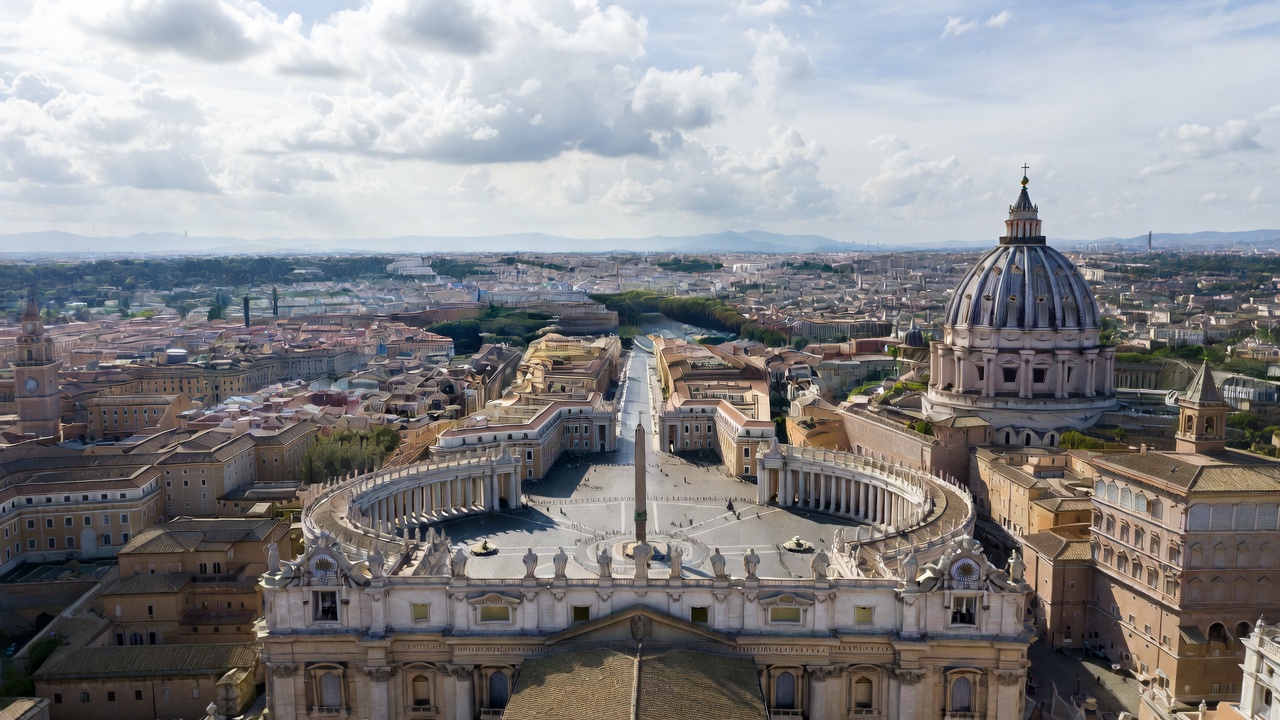
No visit to Vatican City is complete without stepping inside St. Peter’s Basilica (Basilica di San Pietro). It is the largest church in the world, the spiritual center of Catholicism, and one of the most visited landmarks on the planet.
A Brief History of St. Peter’s
The basilica stands over the traditional burial site of Saint Peter, the apostle whom Catholics regard as the first pope. Emperor Constantine built the original basilica here in the 4th century. The present structure was begun in 1506 under Pope Julius II and took over a century to complete. Its architects read like a roll call of Renaissance genius: Bramante, Raphael, Michelangelo, Maderno, and Bernini all contributed to its design.
The building stretches 218 meters in length. Its dome, designed by Michelangelo, rises 136 meters above the basilica floor. The interior covers approximately 15,160 square meters — enough space to hold several football fields.
What to See Inside St. Peter’s Basilica in 2026
Michelangelo’s Pietà. This marble sculpture of the Virgin Mary cradling the body of Christ sits in the first chapel on the right as you enter. Carved when Michelangelo was just 24, it is shielded behind glass after a 1972 attack damaged it. The detail is breathtaking even from behind the barrier.
Bernini’s Baldachin. The towering bronze canopy over the papal altar stands nearly 29 meters tall. Bernini built it between 1623 and 1634 using bronze stripped from the Pantheon’s portico — a decision that inspired the famous Roman quip: “What the barbarians didn’t do, the Barberini did.”
The Dome Climb. Visitors can ascend to the top of Michelangelo’s dome for a panoramic view of Rome. The climb involves 551 steps (or 320 if you take the elevator partway). The narrow spiral staircase near the top is not for the claustrophobic, but the view from the lantern is worth every step.
The Vatican Grottoes. Beneath the basilica floor lie the tombs of numerous popes, including John Paul II and Benedict XVI. The grottoes are free to enter and provide a moving encounter with centuries of papal history.
Practical Tips for Visiting St. Peter’s in 2026
The basilica is free to enter. It opens daily at 7:00 AM and closes at 7:00 PM in summer, 6:30 PM in winter. Security screening is required, and lines can stretch for an hour or more during peak periods.
Dress code matters. Both men and women must cover their shoulders and knees. Shorts, sleeveless tops, and miniskirts will get you turned away at the door. Bring a light scarf or cardigan if you are visiting in warm weather.
One smart strategy: if you take a guided tour of the Vatican Museums, many tour operators use a shortcut passageway from the Sistine Chapel directly into St. Peter’s Basilica. This saves you the long walk back to St. Peter’s Square and the separate security line.
Vatican Museums and Sistine Chapel: Planning Your Visit During the 2026 Restoration
The Vatican Museums house one of the world’s most extraordinary art collections. The route through them stretches over 7 kilometers, passing through galleries of ancient sculpture, Renaissance painting, tapestries, maps, and much more.
The Sistine Chapel Last Judgment Restoration: January to March 2026
The biggest news for Vatican Museums visitors in early 2026 is the extraordinary conservation work on Michelangelo’s “Last Judgment” fresco. According to Vatican Museums officials, scaffolding will cover the entire altar wall of the Sistine Chapel from approximately January 12 to March 31, 2026.
Paolo Violini, director of the Vatican Museums’ Paintings and Woodwork Restoration Laboratory, explained that the high volume of visitors has begun to affect the fresco’s conservation. He told Vatican Media that the team aims to complete the work before Holy Week so the wall will be clear for Easter celebrations.
The Sistine Chapel will remain open during the restoration. Visitors can still admire Michelangelo’s ceiling — including the iconic “Creation of Adam” — and the beautiful wall frescoes by Botticelli, Perugino, and Ghirlandaio. Only the “Last Judgment” wall behind the altar will be obscured by scaffolding.
There is a silver lining to visiting during the restoration period. The Raphael Rooms, which were freshly restored in 2025, will be in pristine condition. Raphael’s “School of Athens” and other masterpieces in these four rooms are every bit as impressive as the Sistine Chapel ceiling, and they are often less crowded.
Vatican Museums Hours, Tickets, and Prices in 2026
Here is a quick reference for planning your visit:
| Detail | Information |
|---|---|
| Opening Hours (Mon–Thu) | 8:00 AM – 7:00 PM |
| Opening Hours (Fri–Sat) | 8:00 AM – 8:00 PM |
| Last Sunday of the Month | 9:00 AM – 2:00 PM (free entry) |
| Closed | Most Sundays, religious holidays |
| Full-Price Ticket | €20 + €5 online booking fee |
| Reduced Ticket (ages 7–18) | €10 + €5 online booking fee |
| Children Under 7 | Free |
| Photo Policy | Allowed throughout, except inside the Sistine Chapel |
| Nearest Metro | Ottaviano (Line A), ~10-minute walk |
Book your tickets online well in advance. During high season and near religious holidays, tickets sell out months ahead. The official Vatican Museums website is the most reliable source for purchasing.
Insider Tips for Beating the Crowds
Go on Wednesday mornings. When the pope holds his weekly audience, a portion of the usual Vatican crowd is drawn to the Paul VI Hall or St. Peter’s Square. This can temporarily reduce congestion in the museums.
Try the late afternoon. Most large tour groups finish by mid-afternoon. If you arrive around 2:00 PM to 3:00 PM, you will often find the Raphael Rooms and Gallery of Maps noticeably less packed.
Consider an early-morning tour. Several accredited tour operators offer access before the museums open to the general public. These tours let you experience the Sistine Chapel with only a handful of other visitors — a dramatically different atmosphere from the shoulder-to-shoulder crowds later in the day.
What not to bring: Bags larger than 40 × 35 × 15 cm, tripods, large umbrellas, and selfie sticks are all prohibited. Leave these at your hotel or check them at the museum cloakroom near the entrance. Keep in mind that if you exit through the Sistine Chapel shortcut to St. Peter’s, you will need to walk 15–20 minutes back to the museum entrance to retrieve checked items.
Basilica of St. John Lateran: The Birthplace of the Lateran Treaty
If the Lateran Treaty has a home, it is the Basilica of St. John Lateran (Basilica di San Giovanni in Laterano). This is where the treaty was signed in 1929, and the basilica’s history is inextricable from the broader story of the papacy’s relationship with Rome.
Why St. John Lateran Is the Most Important Church in Catholicism
Many visitors assume that St. Peter’s Basilica is the pope’s primary church. They are wrong. St. John Lateran is the cathedral of Rome. It is the pope’s church in his role as Bishop of Rome. An inscription on its facade reads: “Omnium Urbis et Orbis Ecclesiarum Mater et Caput” — “Mother and head of all churches in the city and the world.”
The basilica was founded in 324 by Pope Sylvester I on land donated by Emperor Constantine. For the next thousand years, it served as the papal residence. Popes lived here, were crowned here, and governed the Church from here. The basilica hosted all five Lateran Councils, some of the most consequential gatherings in Catholic history.
When the papacy returned from exile in Avignon in the 14th century, the basilica was in ruins after two devastating fires. The popes relocated to the Vatican, where they remain today. But St. John Lateran never lost its status as Rome’s cathedral.
What to See at St. John Lateran
The Facade. Completed in 1735 under Pope Clement XII, the facade features fifteen colossal statues crowning its roofline — Christ, John the Baptist, John the Evangelist, and twelve Doctors of the Church. At 7 meters tall, the Christ figure dominates the Roman skyline from the east.
The Bronze Doors. The basilica’s central doors originally hung in the Curia Julia, the ancient Roman Senate House in the Forum. They are among the oldest surviving bronze doors in Rome.
The Cosmatesque Cloister. Built in the 13th century by the Vassalletto family, this cloister is a masterpiece of medieval craftsmanship. Its twisted columns and mosaic inlays are considered among the finest examples of Cosmatesque art in Italy. Entry requires a small separate fee.
The Scala Santa (Holy Stairs). Located adjacent to the basilica, these 28 marble steps are said to be the stairs Jesus climbed in Pontius Pilate’s palace in Jerusalem. Tradition holds that Saint Helena brought them to Rome in the 4th century. Pilgrims ascend them on their knees.
The Lateran Obelisk. Standing in the piazza in front of the palace, this is the largest standing ancient Egyptian obelisk in the world. Originally from the Temple of Amun in Karnak, it was brought to Rome by Emperor Constantius II in 357 AD.
Getting to St. John Lateran
The basilica sits about 4 kilometers southeast of Vatican City, just inside Rome’s ancient Aurelian Walls. It is easy to reach by public transit:
- Metro: San Giovanni station (Line C) or Manzoni (Line A), both within walking distance
- Tram: Line 3 to Porta San Giovanni
- Bus: Lines 16, 81, 85, 87, 117, 665, and 792
The basilica is free to enter and is open daily from 7:00 AM to 6:30 PM. The medieval cloister opens at 9:00 AM. Remember to dress modestly — the same rules apply here as at St. Peter’s.
The Franciscan Jubilee Year 2026: A Special Reason to Visit Rome and Assisi
One of the most significant spiritual events of 2026 is the Franciscan Jubilee Year, proclaimed by Pope Leo XIV. Running from January 10, 2026 to January 10, 2027, it marks the 800th anniversary of the death of Saint Francis of Assisi.
Saint Francis died on October 3, 1226, at the Porziuncola, a tiny chapel near Assisi that now sits within the grand Basilica of St. Mary of the Angels. His radical embrace of poverty, his love for creation, and his message of peace have made him one of the most universally beloved saints in history.
How the Franciscan Jubilee Connects to the Vatican
The Apostolic Penitentiary has declared that during the Franciscan Jubilee Year, the faithful may obtain a plenary indulgence by making a pilgrimage to any Franciscan church or place of worship dedicated to Saint Francis anywhere in the world. The conditions include sacramental confession, Eucharistic communion, and prayer for the pope’s intentions.
In Rome itself, several important Franciscan sites stand ready to welcome pilgrims. These include the Basilica of Santa Maria in Aracoeli on the Capitoline Hill, where Franciscan friars have served since the 13th century, and the various Franciscan conventual churches scattered across the city.
The connection between Saint Francis and the Lateran is deeply symbolic. According to tradition, Pope Innocent III dreamed of Saint Francis holding up the Lateran Basilica — a vision that convinced him to approve the Franciscan Order in 1209. That image, painted by Giotto in the Upper Basilica of Assisi, is one of the most famous scenes in Italian art.
Visiting Assisi from Rome in 2026
Assisi is about 175 kilometers north of Rome, reachable by train in roughly 2 to 2.5 hours via Foligno or Santa Maria degli Angeli station. Several tour operators offer day trips, though spending at least one night in Assisi is strongly recommended. The town’s pink stone walls glow at sunset, and the atmosphere after the tour buses leave is profoundly peaceful.
A highlight of the Franciscan Jubilee Year will be the first public display of Saint Francis’ body, which has been granted by Pope Leo XIV. This is an extraordinary and unprecedented event. The display at the Basilica of Saint Francis of Assisi is expected to draw enormous crowds.
Vatican Gardens and Lesser-Known Vatican Sites Worth Exploring
Beyond the major basilicas and museums, Vatican City holds several lesser-known treasures that reward the curious traveler.
The Vatican Gardens
Covering more than half of Vatican City’s territory, the Vatican Gardens are a lush expanse of Renaissance and Baroque landscaping. They include medieval fortifications, shrines, grottos, fountains, and a helipad. Access is by guided tour only, booked through the Vatican Museums. Tours run most mornings and last approximately two hours.
The gardens offer something rare in Rome: silence. Away from the tourist crush of St. Peter’s Square, you can walk beneath umbrella pines and hear little more than birdsong and the splash of water. The views of St. Peter’s dome from the gardens are among the best anywhere.
The Scavi: Excavations Beneath St. Peter’s Basilica
Deep beneath the basilica floor, below even the Vatican Grottoes, lies the Scavi — the necropolis excavated in the 1940s that revealed what many believe to be the tomb of Saint Peter himself. The tour is limited to small groups and must be reserved well in advance through the Vatican’s Excavations Office. It is one of the most moving experiences available in Rome.
The Pontifical Villas at Castel Gandolfo
Although technically outside Vatican City, the papal summer residence at Castel Gandolfo — about 25 kilometers south of Rome in the Alban Hills — has been open to visitors since Pope Francis decided not to use it as a retreat. The Barberini Gardens here are gorgeous, and the papal palace contains a small museum. It is an excellent half-day excursion from Rome.
The Bramante Staircase
Located at the exit of the Vatican Museums, the modern Bramante Staircase is a stunning double-helix ramp designed by Giuseppe Momo in 1932. Inspired by the original 16th-century staircase built by Donato Bramante, it is one of the most photographed architectural features in the Vatican. Arrive early in the morning on a tour to capture it without crowds.
What Is New at the Vatican in 2026 Under Pope Leo XIV?
The election of Pope Leo XIV on May 8, 2025, has ushered in a new era for the Vatican. Born Robert Francis Prevost, the American-born Augustinian friar is the first pope from the United States and the first to take the name Leo since 1903.
The Post-Jubilee Vatican
The Jubilee of Hope concluded on January 6, 2026, when Pope Leo closed the Holy Door at St. Peter’s Basilica. During the jubilee year, an estimated 30 million pilgrims visited Rome to pass through the Holy Doors at the city’s four major basilicas.
With the jubilee over, the massive crowds have subsided. This makes early 2026 an attractive time to visit Vatican City. Hotel prices are lower than during the jubilee, museum lines are shorter, and the city’s infrastructure improvements — including upgraded metro lines and refurbished public spaces — remain in place.
Pope Leo XIV’s Priorities for 2026
According to Catholic News Agency, several major events are on the Vatican calendar for 2026:
- Extraordinary Consistory of Cardinals — held in January 2026, the first under Leo’s papacy
- Catechesis on Vatican II — Pope Leo has begun a weekly series on the documents of the Second Vatican Council
- Conservation of the Last Judgment — January through March in the Sistine Chapel
- Franciscan Jubilee Year — running through January 2027
- World Children’s Day — scheduled for Rome, September 25–27, 2026
- Possible papal trips — destinations under consideration include Spain, Algeria, Argentina, Uruguay, Peru, and Mexico
For visitors, the practical takeaway is this: 2026 is a year of spiritual renewal at the Vatican, without the extreme crowding of the jubilee year. It is an ideal window for travelers who want a meaningful experience without the longest lines.
Complete Guide to Rome’s Four Major Papal Basilicas
The Lateran Treaty recognized not only Vatican City but also the extraterritorial status of several properties of the Holy See within Rome. Among the most important are the four Major Papal Basilicas. Visiting all four is a traditional Roman pilgrimage, and 2026 is an excellent year to do it.
1. St. Peter’s Basilica (Vatican City)
The world’s largest church and spiritual heart of Catholicism. See the detailed section above. Free entry.
2. Basilica of St. John Lateran
The cathedral of Rome and the pope’s church as Bishop of Rome. Where the Lateran Treaty was signed. See the detailed section above. Free entry.
3. Basilica of St. Paul Outside the Walls
Located on the Via Ostiense in southern Rome, this basilica marks the traditional site of Saint Paul’s burial. Originally built by Constantine in the 4th century, it was almost entirely destroyed by fire in 1823 and rebuilt in its current neoclassical form. Its most striking feature is the series of mosaic portraits of every pope in history, running in a frieze around the interior walls. When a pope dies, his portrait is lit to mark the transition. The basilica’s cloister, with its paired columns and Cosmatesque mosaics, rivals that of St. John Lateran.
How to get there: Metro Line B to Basilica San Paolo station. Free entry.
4. Basilica of St. Mary Major
Perched on the Esquiline Hill, Santa Maria Maggiore is the largest church in Rome dedicated to the Virgin Mary. Legend holds that Pope Liberius built it in the 4th century on a spot where snow miraculously fell in August — an event re-enacted each year with white flower petals dropped from the ceiling. Its 5th-century mosaics are among the oldest Christian artworks in Rome. The basilica’s coffered ceiling is said to be gilded with the first gold brought to Europe from the Americas by Columbus.
How to get there: Metro Line A or B to Termini station, then a 5-minute walk. Free entry.
Pilgrimage Route Connecting All Four Basilicas
The traditional Seven Churches Pilgrimage route connects all four major basilicas plus three additional churches. Walking the full circuit takes most of a day and covers roughly 25 kilometers. Many pilgrims begin at St. Peter’s, proceed to St. Paul Outside the Walls, continue to St. John Lateran, then to Santa Maria Maggiore, and finish at the remaining churches.
During the Franciscan Jubilee Year, this pilgrimage route has special resonance. Saint Francis himself walked Rome’s streets, and his followers have maintained a presence in the city for over 800 years.
Essential Travel Tips for Visiting Vatican City in 2026
New European Entry Requirements: ETIAS and the Entry/Exit System
If you are traveling to Europe from the United States, Canada, Australia, or other visa-exempt countries, be aware of changes in 2026.
The Entry/Exit System (EES) began rolling out in October 2025 and will be fully implemented by April 10, 2026. Under this system, your fingerprints and facial image are captured at the border. No advance action is needed — the scanning happens at passport control.
The European Travel Information and Authorization System (ETIAS) is expected to launch in late 2026, likely in the last quarter. Once operational, visa-exempt travelers will need to apply for pre-travel authorization online. The fee is €7 (free for travelers under 18 or over 70). Most applications are processed within minutes, and the authorization is valid for three years.
As of early February 2026, ETIAS is not yet required. The U.S. State Department confirms that Americans do not currently need an electronic travel authorization to visit the Schengen Area. However, if you are planning a trip for late 2026 or early 2027, monitor the official ETIAS website for launch announcements.
Vatican City is not formally part of the Schengen Area, but since it is completely surrounded by Italy and has no independent border control, reaching it requires passing through Italian territory first.
Best Time to Visit the Vatican in 2026
| Season | Pros | Cons |
|---|---|---|
| January–February | Smallest crowds, low hotel prices | Cold weather (5–12°C), shorter daylight hours, Last Judgment under scaffolding |
| March–April | Easter celebrations, pleasant weather | Holy Week brings large crowds; book far ahead |
| May–June | Warm weather, long days, post-Easter calm | Rising tourist numbers, higher prices |
| September–October | World Children’s Day (Sept), warm weather | Crowds rebuild after summer; possible papal travel affecting schedules |
| November–December | Advent atmosphere, fewer tourists | Shorter days, Christmas closures |
February is a hidden gem for Vatican visits. The winter light in Rome is soft and golden. Hotel rates are among the lowest of the year. The Vatican Museums, while still busy, are far less packed than in summer. And being in the city for Lateran Treaty Day on February 11 adds a layer of historical awareness that few travelers experience.
What to Wear and What to Bring
The Vatican enforces a strict dress code at all its religious sites. Here is what you need to know:
- Shoulders must be covered. No tank tops, halter tops, or off-the-shoulder shirts.
- Knees must be covered. No shorts or short skirts for anyone.
- Hats should be removed inside churches as a sign of respect.
- Comfortable walking shoes are essential. The Vatican Museums alone involve several kilometers of walking, much of it on marble floors.
Bring a refillable water bottle — Rome’s public drinking fountains (nasoni) dispense fresh, clean water throughout the city. A portable phone charger is also wise, especially if you are using your phone for navigation and photos.
Getting Around Rome: Transit Options Near the Vatican
| Transport | Stop | Walking Time to Vatican |
|---|---|---|
| Metro Line A | Ottaviano | ~10 minutes |
| Metro Line A | Cipro | ~12 minutes |
| Bus | Routes 40, 64 | Stop near St. Peter’s Square |
| Tram | Line 19 | To Piazza del Risorgimento |
| On foot from Trastevere | Via della Lungaretta to Ponte Sisto | ~25 minutes |
Rome’s metro system is small but efficient for reaching the Vatican. The Roma Pass (€36.50 for 48 hours, €58.50 for 72 hours) includes unlimited public transit and discounted entry to some attractions. However, it does not cover the Vatican Museums, which are administered separately.
Where to Eat and Stay Near the Vatican in 2026
Neighborhood Guide: Prati and Borgo
The neighborhoods closest to the Vatican — Prati to the north and Borgo to the east — offer an excellent range of dining and accommodation.
Prati is a residential quarter with tree-lined streets and a more local feel than the tourist-heavy areas near the Colosseum. Its main commercial street, Via Cola di Rienzo, is lined with shops and restaurants. This is where Roman families eat on Sunday afternoons, and the quality of food reflects it.
Borgo is the historic district between Castel Sant’Angelo and St. Peter’s Square. The main thoroughfare here is the Via della Conciliazione, the broad avenue that Mussolini commissioned after the signing of the Lateran Treaty to symbolically link the Vatican to the rest of Rome. The street offers stunning views of St. Peter’s dome but tends to be more tourist-oriented (and pricier) than Prati.
Hotel Tips for Budget-Conscious Travelers
If Vatican-adjacent hotels are fully booked or too expensive, consider staying in these well-connected neighborhoods:
- San Giovanni — near St. John Lateran, with excellent metro access
- Ostiense — near St. Paul Outside the Walls, an up-and-coming area with good restaurants
- Monti — near St. Mary Major, one of Rome’s most charming districts
- Trastevere — across the river, walkable to the Vatican in 25 minutes
In the post-jubilee period of early 2026, hotel availability should be better than it was during the peak pilgrimage months of 2025. Still, booking several weeks in advance is wise, especially around religious holidays.
Understanding the Spiritual Significance of the Lateran Treaty for Modern Travelers
The Lateran Treaty is often treated as a footnote in Roman history — a bureaucratic agreement that resolved an old diplomatic quarrel. But for travelers willing to look deeper, it reveals something profound about the relationship between spiritual authority and the physical world.
Before 1929, the pope’s status was legally ambiguous. He claimed universal spiritual jurisdiction but had no recognized territory. He could not receive ambassadors or sign treaties. He was, as Pius IX put it, a prisoner in his own palace.
The Lateran Treaty changed that by giving the spiritual a physical address. It said, in effect, that the work of the Church requires a place — a sovereign space, however small, where the pope can operate freely. That 44 hectares of territory, smaller than most golf courses, is enough. It supports the administration of a global institution with 1.3 billion members across every continent.
When you walk through St. Peter’s Square, you are crossing an international border. When you buy a postcard at the Vatican post office (which many Romans prefer for its reliability over Italy’s postal service), you are using the mail system of a sovereign state. When you admire the Swiss Guard at the gates, you are looking at the smallest and oldest standing army in the world, serving under a treaty signed nearly a century ago.
Understanding this transforms the visit. The Vatican is not just a museum or a church. It is a country — one whose entire existence rests on a single diplomatic agreement made in the Lateran Palace on a winter day in 1929.
Frequently Asked Questions About Visiting Vatican City in 2026
Is the Sistine Chapel open during the Last Judgment restoration? Yes. The chapel remains open from January 12 to March 31, 2026. The ceiling frescoes and side wall paintings are fully visible. Only the “Last Judgment” altar wall is covered by scaffolding.
Do I need a visa to visit Vatican City? No separate visa is needed for Vatican City. If you can legally enter Italy, you can enter the Vatican. As of early 2026, U.S. citizens can visit Italy visa-free for up to 90 days. The ETIAS system is expected later in the year.
Can I attend a Papal Audience? Yes. Pope Leo XIV holds a general audience most Wednesdays. Tickets are free and can be requested through the Prefecture of the Papal Household. Arrive early for the best seats.
Is the Franciscan Jubilee Year only for Catholics? The spiritual elements (such as plenary indulgences) are specific to Catholic practice. However, the cultural events, church visits, and public celebrations in Assisi and Rome are open to all visitors.
What is the best guided tour of the Vatican? Look for tours operated by companies accredited by the Vatican Museums. These operators have official ticketing agreements and can use the Sistine Chapel–to–St. Peter’s shortcut. Group sizes of 20 or fewer offer the best experience.
How long should I spend at the Vatican? Plan at least half a day for the Vatican Museums and Sistine Chapel, plus 1–2 hours for St. Peter’s Basilica and the dome climb. If you want to visit the Vatican Gardens or the Scavi, add another half day.
Final Thoughts: Why Lateran Treaty Day 2026 Deserves Your Attention
The Lateran Treaty is not just a piece of diplomatic history. It is the foundation stone of everything that makes Vatican City a place worth visiting — the museums, the basilicas, the gardens, the spiritual life that pulses through its ancient walls.
In 2026, with a new pope at the helm, a Franciscan Jubilee in full swing, and the afterglow of the Jubilee of Hope still warming the stones of Rome, the Vatican is entering a moment of renewal. The restoration of the “Last Judgment” is itself a symbol: preserving the treasures of the past so that future generations can encounter them with fresh eyes.
Whether you come as a pilgrim, an art lover, a history enthusiast, or simply a curious traveler, the Vatican in 2026 has something waiting for you. Plan carefully, arrive with an open mind, and let the Eternal City do what it has done for millennia — take your breath away.
Buon viaggio.
Disclosure: This article contains links to third-party websites for reader reference. The author has no commercial relationship with any tour operator, hotel, or booking service mentioned. All factual claims are sourced from official Vatican communications, major news outlets, and recognized historical references. Prices and schedules were accurate as of February 2026 and are subject to change.