By a fellow wanderer who has walked the cobblestones of Rome more times than they can count — and who believes the best travel starts with knowing the story beneath your feet.
Planning a trip to Rome in 2026? You will almost certainly visit Vatican City. Millions of travelers do each year. But here is what most guidebooks skip: the tiny nation you are about to enter only exists because of a single document signed in 1929. That document is the Lateran Treaty. It created the world’s smallest independent state, ended a six-decade standoff between the Catholic Church and Italy, and shaped every rule you will follow as a visitor today — from the dress code at St. Peter’s Basilica to the passport-free border crossing you barely notice.
This guide breaks down the Lateran Treaty in plain language. It explains what the treaty says, why it matters to travelers, and how its legacy touches every corner of the Vatican experience in 2026. Whether you are a history lover, a first-time pilgrim, or someone who simply wants to understand why Vatican City is its own country, this article is for you.
What Is the Lateran Treaty and Why Was It Signed in 1929?
The Lateran Treaty is an agreement between the Kingdom of Italy and the Holy See. It was signed on February 11, 1929, inside the Lateran Palace in Rome. Cardinal Pietro Gasparri signed on behalf of Pope Pius XI. Italian Prime Minister Benito Mussolini signed on behalf of King Victor Emmanuel III. The Italian Parliament ratified the agreement on June 7, 1929.
The treaty resolved what historians call the “Roman Question” — a bitter, six-decade dispute over the pope’s political authority in a unified Italy. To understand the treaty, you first need to understand that conflict.
Before 1870, the pope ruled a large swath of central Italy known as the Papal States. These territories stretched across much of the Italian peninsula for more than a thousand years. When Italian nationalists unified the peninsula into one country in the 1860s, they gradually absorbed the Papal States. In 1870, Italian troops marched into Rome itself, claiming it as the new capital.
Pope Pius IX was furious. He refused to recognize the Italian state. He declared himself a “prisoner of the Vatican” and retreated behind the Vatican walls. Every pope after him did the same for nearly sixty years. Italy passed the Law of Guarantees in 1871, offering the pope use of the Vatican and Lateran Palaces along with a yearly income of 3.25 million lire. The Holy See rejected the offer entirely. Without sovereignty, the pope argued, he could never be truly free from political pressure.
This stalemate continued for decades. Then, in 1926, secret negotiations began between the Vatican and Mussolini’s fascist government. The pope selected Francesco Pacelli (brother of the future Pope Pius XII) as his envoy. Mussolini sent diplomat Domenico Barone. Three years of talks led to the Lateran Pacts — a collection of three documents that changed the map of Europe forever.
What Are the Three Parts of the Lateran Pacts Explained Simply?
The Lateran Pacts are often called the “Lateran Treaty” as a shorthand, but they actually consist of three separate documents. Each one solved a different piece of the puzzle. Here is what travelers should know about each part.
The Treaty of Conciliation (27 Articles)
This is the core political agreement. It formally established Vatican City as an independent and sovereign state under the authority of the Holy See. Key provisions include:
- Italy recognized Vatican City as a new, independent nation — the smallest in the world.
- The pope received full sovereign jurisdiction within Vatican City’s borders.
- The Holy See recognized Italy as a legitimate state with Rome as its capital, finally ending the “prisoner in the Vatican” standoff.
- The pope pledged to remain neutral in international disputes, unless all parties specifically asked him to mediate.
- Aircraft were prohibited from flying over Vatican City — a rule that remains in force today.
- Italy granted extraterritorial status to several Church-owned buildings across Rome that sit outside Vatican City’s walls.
The Financial Convention (3 Articles)
This short but significant document settled the Church’s financial claims against Italy. The Kingdom of Italy agreed to pay the Holy See:
- A lump sum of 750 million lire in cash
- Government bonds worth 1 billion lire at a coupon rate of 5%
This payment compensated the Vatican for the loss of the Papal States in 1870. The total was actually less than what Italy had originally offered in 1871 under the rejected Law of Guarantees. Still, the settlement closed the books on over half a century of financial grievance.
The Concordat (45 Articles)
The concordat defined the ongoing relationship between the Catholic Church and the Italian state. It covered everything from religious education in schools to the legal recognition of Catholic marriages. Most notably, it declared Catholicism the official state religion of Italy — a provision that would remain in place for another 55 years.
| Document | Articles | Purpose |
|---|---|---|
| Treaty of Conciliation | 27 | Created Vatican City as a sovereign state |
| Financial Convention | 3 | Settled financial claims from 1870 |
| Concordat | 45 | Defined Church-state relations in Italy |
For travelers, the first document — the Treaty of Conciliation — matters most. It is the reason Vatican City exists as a place you can actually visit today.
How Big Is Vatican City According to the Lateran Treaty?
One of the most common questions travelers ask is: just how small is Vatican City? The answer surprises most people.
The Lateran Treaty established Vatican City as a territory of approximately 44 hectares (109 acres). That makes it roughly the size of a large city park. To put this in perspective, it is about one-eighth the size of New York’s Central Park. You can walk from one end to the other in under 20 minutes.
But here is something most visitors do not realize: the treaty also gave the Holy See control or special privileges over dozens of properties outside Vatican City’s walls. These extraterritorial sites are scattered across Rome and even beyond the city. They include:
- The Archbasilica of Saint John Lateran — technically the pope’s cathedral church, not St. Peter’s
- The Basilica of Saint Mary Major
- The Basilica of Saint Paul Outside the Walls
- The Lateran Palace — where the treaty itself was signed
- The Papal Palace at Castel Gandolfo — the pope’s traditional summer residence, located 25 kilometers southeast of Rome
According to Wikipedia’s article on the extraterritorial properties of the Holy See, the total area of these extraterritorial possessions significantly exceeds the area of Vatican City itself. The Castel Gandolfo complex alone covers roughly 55 hectares — larger than Vatican City by about 11 hectares.
These sites enjoy immunity similar to foreign embassies. They are exempt from Italian taxes and cannot be seized by the Italian government. However — and this is important for travelers — Italian immigration rules still apply. You follow Italian visa requirements when visiting these properties, even though they technically belong to the Holy See.
How the 1984 Revision Changed the Lateran Treaty for Modern Italy
The original 1929 agreement was a product of its time. It was negotiated with a fascist government and reflected a very different Italy. By the 1980s, Italian society had changed dramatically. Divorce became legal in 1970. Abortion was legalized in 1978. The country was increasingly secular.
On February 18, 1984, Italian Prime Minister Bettino Craxi and Vatican Secretary of State Cardinal Agostino Casaroli signed a revised concordat at the Villa Madama in Rome. This updated agreement made several crucial changes:
Catholicism was no longer the sole state religion of Italy. This was the single most significant revision. It acknowledged that Italy had become a pluralistic society where multiple faiths coexisted.
The “otto per mille” tax system was introduced. Under this new arrangement, Italian taxpayers could direct 0.8 percent (eight per thousand) of their income tax to the Catholic Church or to other recognized religious organizations. This replaced the old system of direct state funding and opened the door for other faith groups to receive financial support.
Religious education in schools became optional. Catholic instruction was still offered but was no longer mandatory. By 2022, roughly 14 percent of Italian students were opting out.
The state stopped automatically recognizing papal knighthoods and titles of nobility. Church marriages still carried civil legal force, but Church-issued declarations of marriage nullity now required approval from an Italian civil court.
Pope John Paul II called the revised concordat “an instrument of harmony and collaboration,” noting that it was designed for a society characterized by pluralism and open competition of ideas.
For travelers, the 1984 revision matters because it explains the modern character of Rome. The city you visit in 2026 is not a theocracy. It is a vibrant, secular capital that happens to contain the world’s smallest sovereign state within its borders. The Lateran Treaty created Vatican City. The 1984 revision ensured that its relationship with Italy would evolve with the times.
Why Vatican City Has No Passport Control: Lateran Treaty Border Rules
Here is a fact that catches many first-time visitors off guard: there is no passport control between Italy and Vatican City. You can walk from a Roman sidewalk into a sovereign nation without showing a single document. No checkpoint. No stamp. No line.
This open border exists because of the Lateran Treaty’s unique provisions. The treaty established Vatican City as independent but also deeply intertwined with the Italian state in practical terms. According to Wikipedia’s article on Vatican City, “there are no passport controls for visitors entering Vatican City from the surrounding Italian territory.”
St. Peter’s Square and the Basilica are freely accessible to the public. The square itself, up to the steps of the basilica, is normally patrolled by Italian police, not Vatican gendarmes. Once you pass through security screening to enter the basilica or the Vatican Museums, you are technically crossing into another country — but it happens so seamlessly that most visitors barely notice.
That said, Vatican City does have its own borders, its own laws, and its own police force. It even has a jail — though it is rarely used. The Vatican Gendarmerie handles internal security. The famous Pontifical Swiss Guard, founded in 1506 by Pope Julius II, provides personal security for the pope.
Practical tips for travelers in 2026:
- You do not need a separate visa for Vatican City. Your Italian Schengen visa covers you.
- Carry a form of ID at all times. While the Vatican does not check passports at the border, Italy requires you to carry identification by law. A photocopy of your passport on your phone is a good backup.
- Since August 2024, all Vatican Museum tickets must be issued in the purchaser’s name. You will need to show a government-issued ID when entering. This was introduced to combat ticket scalping, particularly during the Jubilee Year.
- St. Peter’s Basilica is free to enter but you will pass through a security screening similar to an airport check.
Lateran Treaty Extraterritorial Sites Every Traveler Should Visit in Rome
The Lateran Treaty did not just create Vatican City. It also granted the Holy See ownership or special status over a network of churches, palaces, and properties across Rome. Many of these are open to visitors and rank among the city’s most spectacular sites. Yet most tourists walk right past them, focused entirely on St. Peter’s.
Here are the key extraterritorial sites you should add to your itinerary.
The Archbasilica of Saint John Lateran
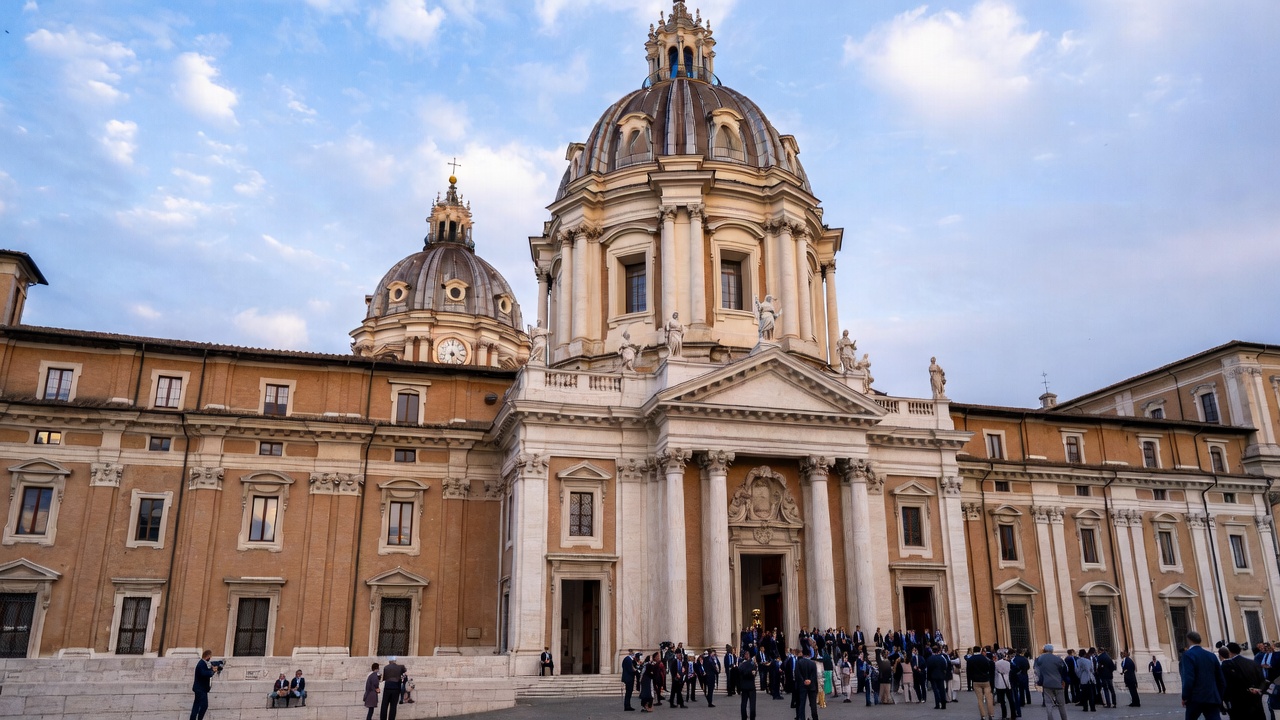
This is the cathedral church of Rome — not St. Peter’s, as many people assume. It holds the title of “mother church” of all Catholic churches worldwide. The Lateran Treaty was signed in the adjacent Lateran Palace, which served as the primary papal residence from the 4th century until the 14th century. The massive baroque facade, the towering statues of Christ and the Apostles along the roofline, and the ancient bronze doors (brought from the Roman Senate house) make this one of Rome’s most awe-inspiring churches.
Getting there: Metro Line A, San Giovanni stop. Free entry.
The Basilica of Saint Mary Major
One of Rome’s four papal basilicas, Saint Mary Major sits on the Esquiline Hill. It is famous for its stunning 5th-century mosaics that depict scenes from the Old Testament and the life of the Virgin Mary. The coffered ceiling was allegedly gilded with the first gold brought back from the Americas by Christopher Columbus.
Getting there: A short walk from Termini station. Free entry.
The Basilica of Saint Paul Outside the Walls
Located south of the city center along the ancient Via Ostiense, this enormous basilica marks the traditional burial site of the Apostle Paul. The original church, built by Emperor Constantine in the 4th century, was largely destroyed by fire in 1823 and then rebuilt. The stunning cloister, with its mosaic-encrusted columns, is one of Rome’s hidden treasures.
Getting there: Metro Line B, Basilica San Paolo stop. Free entry; small fee for the cloister.
The Lateran Palace and the Scala Sancta
The Lateran Palace now houses the Vatican’s Rome offices. Nearby, the Scala Sancta (Holy Stairs) are 28 marble steps that, according to tradition, once stood in Pontius Pilate’s palace in Jerusalem. Pilgrims climb them on their knees. At the top sits the Sancta Sanctorum, the former private chapel of the popes, decorated with breathtaking medieval frescoes and mosaics.
Getting there: Adjacent to the Archbasilica of Saint John Lateran. The stairs are free; a small fee applies for the Sancta Sanctorum.
The Papal Palace at Castel Gandolfo
This 55-hectare estate perched above Lake Albano, about 25 kilometers southeast of Rome, has served as the pope’s summer retreat since the 17th century. The Lateran Treaty confirmed the Holy See’s ownership and granted the property extraterritorial status. Under Pope Francis (2013–2025), the palace was opened to the public as a museum for the first time. In 2025, the new Pope Leo XIV revived the tradition of spending part of the summer there, staying at Villa Barberini rather than the main palace.
The palace and gardens are currently open for tours. During World War II, Pope Pius XII sheltered an estimated 12,000 refugees on the grounds — protected by its extraterritorial status.
Getting there: Take the Rome-Albano Laziale regional train from Roma Termini. The journey takes about 40 minutes.
| Site | Location | Status Under Lateran Treaty | Entry |
|---|---|---|---|
| Archbasilica of St. John Lateran | Piazza San Giovanni, Rome | Extraterritorial — Holy See ownership | Free |
| Basilica of St. Mary Major | Piazza di Santa Maria Maggiore, Rome | Extraterritorial — Holy See ownership | Free |
| Basilica of St. Paul Outside the Walls | Via Ostiense, Rome | Extraterritorial — Holy See ownership | Free (cloister fee applies) |
| Lateran Palace & Scala Sancta | Piazza San Giovanni, Rome | Extraterritorial — Holy See ownership | Free / small fee |
| Papal Palace, Castel Gandolfo | Castel Gandolfo, Lazio | Extraterritorial — Holy See ownership | Ticketed tours |
How to Visit Vatican City in 2026: Rules Shaped by the Lateran Treaty
The Lateran Treaty gave the Holy See complete sovereignty over Vatican City. That means the Vatican sets its own rules for visitors — rules that are stricter than what you will encounter almost anywhere else in Italy.
Dress Code Requirements at Vatican City
The Vatican enforces a year-round dress code in all public areas, including the Vatican Museums, the Sistine Chapel, St. Peter’s Basilica, and the Vatican Gardens. This applies to everyone, regardless of weather, religion, or nationality.
What you must wear:
- Shoulders must be covered at all times. No sleeveless tops, tank tops, or spaghetti straps.
- Knees must be covered. No shorts above the knee, no miniskirts.
- Hats must be removed inside the Museums and the Sistine Chapel.
- No clothing with offensive imagery or slogans. The Vatican specifically prohibits anything that may offend Catholic morality or “common decency.” This extends to visible tattoos and jewelry with objectionable symbols.
What is allowed:
- Sandals are fine. Flip-flops are technically permitted but not recommended.
- Small cameras and smartphones are welcome everywhere except the Sistine Chapel.
- Lightweight fabrics and breathable clothing are fine — just keep those shoulders and knees covered, even in Rome’s sweltering July heat.
Pro tip: Carry a light scarf or shawl in your day bag. If you forget the dress code, vendors near the Vatican sell emergency cover-ups — but they are overpriced and poor quality.
Vatican Museums and Sistine Chapel Tickets in 2026
The Vatican Museums are among the most visited museums on Earth. More than 5 million people pass through the galleries each year. The museum route extends over 7 kilometers of corridors, galleries, and chapels.
Key booking information for 2026:
- Standard adult ticket: €20 at the ticket office (if you dare brave the line) or €25 when booked online (includes a €5 booking fee)
- Reduced ticket (ages 6–18, students under 25 with valid ID): €8 plus €5 online booking fee
- Children under 6: Free
- Opening hours: Monday–Saturday, 8:00 AM to 7:00 PM (last entry at 5:00 PM)
- Closed: Sundays (except the last Sunday of the month, when entry is free but crowds are extreme)
Book at least 60 to 90 days in advance during peak season (April–October). Popular morning slots sell out fast. The official Vatican website (www.museivaticani.va) is the best place to buy tickets directly.
Important note: Since August 2024, all tickets must be in the purchaser’s name. Government-issued ID is required at the door. This was introduced to prevent scalping, especially in the wake of massive crowds during the 2025 Jubilee Year.
The Sistine Chapel Restoration in 2025–2026
Visitors to the Vatican Museums in early 2026 should be aware that restoration work was underway on Michelangelo’s frescoes in the Sistine Chapel through approximately March 2026. The chapel remains open during the restoration, but The Last Judgment wall may not be fully visible at all times due to scaffolding. The ceiling frescoes are largely accessible.
Photography is strictly prohibited inside the Sistine Chapel. Silence is also requested. Both rules are actively enforced.
The Jubilee Year 2025 and Its Impact on Vatican Travel in 2026
The Catholic Church celebrated a Jubilee Year from December 24, 2024, through January 6, 2026. Jubilees typically occur every 25 years. They are major pilgrimage events that bring vast numbers of the faithful to Rome.
The late Pope Francis opened the Jubilee’s Holy Door at St. Peter’s Basilica on Christmas Eve 2024. Following his death on April 21, 2025, and the election of Pope Leo XIV on May 8, 2025, the new pope carried on the Jubilee celebrations. Pope Leo XIV formally closed the Holy Door on January 6, 2026 (the Feast of the Epiphany), bringing the Jubilee to its official end.
During the Jubilee Year, the Vatican estimated that close to 3 million people attended audiences, liturgies, or meetings with Pope Leo XIV at the Vatican between his election in May and December 2025. A youth-focused Jubilee event in August 2025 alone drew more than 1 million people to Rome.
What this means for travelers visiting in 2026:
Though the Jubilee has officially concluded, its ripple effects will linger well into 2026. Infrastructure improvements made for the Jubilee — including enhanced crowd management at St. Peter’s Square and improved digital ticketing systems — remain in place. However, crowds may take months to fully normalize. The spring and fall shoulder seasons remain your best bet for a manageable experience.
Via della Conciliazione: The Road Built to Celebrate the Lateran Treaty
One of Rome’s most iconic avenues exists because of the Lateran Treaty. Via della Conciliazione — the “Road of Reconciliation” — is the wide boulevard that leads from Castel Sant’Angelo directly to St. Peter’s Square. Mussolini commissioned it to symbolize the newfound peace between the Italian state and the Vatican.
The road was designed by architect Marcello Piacentini and was roughly 500 meters long. Its construction required the demolition of an entire neighborhood — a tangle of medieval and Renaissance buildings known as the spina di Borgo. Residents were displaced. Historic structures were lost. At the time, the project was deeply controversial. Critics argued that the grand, colonnaded street actually diminished St. Peter’s impact by removing the element of surprise: in the old neighborhood, visitors would emerge from narrow lanes to find the basilica’s dome suddenly towering above them.
Today, the debate has faded. Via della Conciliazione is the primary approach to St. Peter’s for millions of visitors each year. As you walk its length, you are literally walking on a piece of Lateran Treaty history.
Practical note: The road is lined with souvenir shops, cafés, and gelaterias of highly variable quality. For better food, duck into the side streets of the Prati neighborhood just to the north.
What Does the Lateran Treaty Mean for Vatican City’s Sovereignty Today?
For travelers, one of the most fascinating aspects of the Lateran Treaty is that it created a country within a city — and that country operates by its own rules to this day.
Vatican City has its own:
- Legal system — based on canon law and supplemented by Vatican-specific statutes. In 2008, the Vatican announced it would no longer automatically adopt all Italian laws, citing conflicts over bioethics.
- Currency — the Vatican mints its own euro coins (with papal imagery), though Italian and other eurozone coins circulate freely.
- Postal service — Vatican stamps are prized by collectors. Many travelers send postcards from the Vatican post office, which has a reputation for faster delivery than the Italian postal system.
- License plates — beginning with “SCV” (Stato della Città del Vaticano).
- Police force — the Vatican Gendarmerie, separate from the Pontifical Swiss Guard.
- Diplomatic service — the Holy See maintains full diplomatic relations with 183 of the 193 UN member states, according to the Permanent Observer Mission of the Holy See to the United Nations.
The Lateran Treaty also declared Vatican City as permanently neutral and inviolable territory. This neutrality proved critical during World War II, when the Vatican served as a refuge and communication hub while Rome itself became a theater of war.
For everyday visitors, sovereignty means that Vatican City can set policies that differ sharply from Italian law. The dress code, photography restrictions, alcohol prohibition in museum galleries, and the ban on drones, selfie sticks, and professional filming equipment all stem from Vatican law — not Italian law.
Pope Leo XIV and the Lateran Treaty Legacy in 2026
The election of Pope Leo XIV on May 8, 2025, opened a new chapter in Vatican history — and a new chapter in the life of the institution that the Lateran Treaty created.
Born Robert Francis Prevost on September 14, 1955, in Chicago, Illinois, Pope Leo XIV is the first American-born pope in history. He is also the first Augustinian pope. He chose the name Leo in honor of Pope Leo XIII, who championed workers’ rights during the Industrial Revolution. His papacy has been marked by calls for peace, attention to migrants’ rights, and a plan to make Vatican City the world’s first carbon-neutral state.
For travelers, the change in papacy has brought several practical updates:
- Papal audiences have resumed their regular schedule. General audiences are held on Wednesdays (except in July and August) in St. Peter’s Square or in the Paul VI Audience Hall. Free tickets can be obtained through the Prefecture of the Papal Household.
- Castel Gandolfo is once again an active papal retreat. Pope Leo XIV spent part of the summer of 2025 at Villa Barberini within the Castel Gandolfo complex. This revived a tradition that had been dormant since Pope Benedict XVI left in 2013. The grounds and museums remain open to visitors, though access may be restricted during papal visits.
- The Jubilee Holy Doors are now closed. Pope Leo XIV closed the Holy Door of St. Peter’s on January 6, 2026, marking the end of the 2025 Jubilee Year. The doors of the other three papal basilicas — Saint John Lateran, Saint Mary Major, and Saint Paul Outside the Walls — were closed in the preceding days.
Is Vatican City a Country? What Travelers Need to Know About Statehood
This is a question that comes up constantly in travel forums: Is Vatican City really a country? The short answer is yes. The longer answer involves the Lateran Treaty.
The Treaty of Conciliation — the first of the three Lateran Pacts — explicitly recognized the “full sovereignty of the Holy See in the State of Vatican City.” This means Vatican City is not merely a religious campus or a gated community. It is a sovereign state under international law, with all the attributes that implies: its own government, its own territory, its own laws, and its own diplomatic relationships.
Vatican City is a member or observer of several international organizations. The Holy See holds Permanent Observer status at the United Nations. It is a signatory to numerous international conventions. The Vienna Convention on Diplomatic Relations (1961) formally recognized the longstanding practice of granting the Holy See’s representative special precedence within the diplomatic corps — a privilege that predates the Lateran Treaty by centuries.
That said, Vatican City is unique among nations. Its citizenship is not based on birth or bloodline but on appointment. Only people who work or reside in Vatican City hold Vatican citizenship, and they typically hold dual citizenship with their country of origin. The population hovers around 800 residents, including clergy, Swiss Guards, and lay workers.
For travelers, the practical takeaway is straightforward: you are entering a real country with real laws. Respect the rules, and your visit will be smooth and deeply rewarding.
Best Time to Visit Vatican City and Lateran Treaty Sites in 2026
Timing your visit wisely can make the difference between a transcendent experience and an exhausting one. Here is a seasonal breakdown for 2026.
| Season | Crowds | Weather | Notes |
|---|---|---|---|
| January–February | Low to moderate | Cool, 5–12°C (41–54°F) | Post-Jubilee wind-down; quieter than usual |
| March–April | Growing; peaks at Easter | Mild, 12–18°C (54–64°F) | Easter brings massive crowds to St. Peter’s |
| May–June | High | Warm, 20–28°C (68–82°F) | Peak season begins; book well in advance |
| July–August | Very high | Hot, 28–35°C (82–95°F) | Papal audiences paused; Castel Gandolfo may be restricted |
| September–October | Moderate to high | Pleasant, 18–25°C (64–77°F) | Excellent shoulder season; best balance of weather and crowds |
| November–December | Low to moderate | Cool, 8–15°C (46–59°F) | Christmas preparations; St. Peter’s is beautifully decorated |
The best overall months for visiting are January, February, and late October through November. The post-Jubilee period of early 2026 should see somewhat reduced crowds compared to the intense visitor numbers of 2025, though the Vatican Museums remain busy year-round.
Daily timing tips:
- Arrive at the Vatican Museums when they open at 8:00 AM for the smallest crowds.
- Visit St. Peter’s Basilica early (it opens at 7:00 AM) or in the early evening — the line shrinks in the final hours before closing at 7:10 PM.
- Avoid Wednesdays for the Museums if you want to skip the extra crowds that papal audiences bring to the area.
- The last Sunday of each month offers free entry to the Vatican Museums — but the crowds are staggering. Avoid this unless budget is a serious concern.
How the Lateran Treaty Shaped Church-State Relations Around the World
The Lateran Treaty did not just settle an Italian dispute. It became a model for Church-state agreements worldwide. The concept of a concordat — a formal treaty between a national government and the Holy See — has been replicated in dozens of countries across Europe, Latin America, Africa, and Asia.
The treaty established a template: the Church gets institutional independence and recognition; the state gets religious stability and the cessation of political conflict. This approach influenced agreements in Spain, Portugal, Germany, Poland, and many Latin American nations throughout the 20th century.
The 1984 revision of the Lateran concordat was equally influential. It showed that a Church-state agreement could be modernized without being abandoned entirely. The shift from “Catholicism as state religion” to a pluralistic model with voluntary tax allocation (the otto per mille system) has been studied and sometimes emulated by countries grappling with their own secular transitions.
For the culturally curious traveler, understanding this broader context enriches the experience of visiting Rome. The churches, palaces, and institutions you encounter are not just beautiful buildings. They are physical expressions of a centuries-long negotiation between spiritual authority and political power — a negotiation that the Lateran Treaty brought to its most definitive resolution.
Lateran Palace History: Where the Famous Treaty Was Signed
If you are the kind of traveler who likes to stand on the exact spot where history happened, the Lateran Palace (Palazzo Lateranense) deserves a place on your itinerary.
The palace sits in Piazza San Giovanni in Laterano, adjacent to the Archbasilica of Saint John Lateran. It was the main papal residence from the 4th century until the 14th century — a span of roughly a thousand years. Popes only moved to the Vatican complex after returning from the “Avignon Captivity” (1309–1377) in France.
The current building was designed by Domenico Fontana for Pope Sixtus V in the late 16th century. Today, it houses the offices of the Vicariate of Rome, which administers the Diocese of Rome on the pope’s behalf.
The Lateran Palace is not generally open for public tours in the same way that the Vatican Museums are. However, you can visit the square, admire the façade, explore the adjacent basilica, and climb the Scala Sancta nearby. The area is also home to an Egyptian obelisk — the tallest in Rome, standing at about 32 meters — which was brought from the Temple of Amun at Thebes and erected in the square in 1588.
The simple act of standing in this piazza, knowing that this is where Gasparri and Mussolini put pen to paper on February 11, 1929, adds a layer of meaning that no audio guide can match.
Common Myths About the Lateran Treaty That Travelers Get Wrong
There are several persistent myths about the Lateran Treaty and Vatican City that circulate in travel forums and social media. Let us set the record straight.
Myth 1: “Mussolini gave the pope his own country.” Not exactly. The treaty was a negotiated compromise. Both sides made concessions. The pope gave up all claims to the former Papal States — a vastly larger territory. In exchange, he received sovereignty over a tiny enclave and a financial settlement. Mussolini did not “give” anything out of generosity. He wanted the political legitimacy that Vatican support provided.
Myth 2: “The Vatican is part of Italy.” No. Vatican City is an independent state. It has been since the Lateran Treaty took effect in 1929. It has its own government, legal system, currency, and diplomatic service. The fact that it is surrounded by Rome does not make it Italian, just as Lesotho is not part of South Africa.
Myth 3: “You need a passport to enter Vatican City.” You do not. There are no passport controls at the border. You simply walk in. However, you should carry ID, as it is required for entry to the Vatican Museums and is a legal requirement in Italy.
Myth 4: “The Lateran Treaty has never been changed.” The concordat portion was significantly revised in 1984. The treaty establishing Vatican City’s sovereignty and the financial convention remain largely unchanged, but the concordat was updated to reflect modern Italian society.
Myth 5: “The pope owns all the churches in Rome.” The Lateran Treaty transferred ownership of specific basilicas and properties to the Holy See, not every church in the city. Most Roman Catholic churches in Rome are under the administration of the Diocese of Rome or religious orders, but they sit on Italian soil and under Italian jurisdiction.
Practical Travel Tips for Vatican City Based on Treaty Provisions
Here is a quick-reference checklist for your 2026 visit, grounded in the realities that the Lateran Treaty established.
Before you go:
- Book Vatican Museum tickets online at least 60 days in advance. Use the official site to avoid markups.
- Pack appropriate clothing. Shoulders and knees covered. A light scarf or cardigan will save you.
- Download the official Vatican Museums map from the museum’s website. The galleries span 7 kilometers — you will want a plan.
On the day:
- Arrive early. The Museums open at 8:00 AM. St. Peter’s opens at 7:00 AM.
- Bring a water bottle (plastic only). No glass containers allowed.
- Leave large bags at your hotel. Backpacks larger than a daypack will need to be checked. The cloakroom is free.
- No drones, selfie sticks, tripods, professional cameras, knives, or scissors. These are prohibited and must be stored.
- Budget your time. Allow at least 3–4 hours for the Museums and Sistine Chapel. Add another hour for St. Peter’s Basilica.
Cultural etiquette:
- Silence is expected in the Sistine Chapel. No talking, no photos.
- Remove your hat inside churches and chapels.
- Do not touch the artworks. The Museums are equipped with advanced alarm and surveillance systems.
- Be respectful to staff and fellow visitors. Remember, you are in both a museum and a sacred space.
Money and mail:
- Vatican euro coins are legal tender throughout the eurozone but are rare and collectible. Check your change.
- The Vatican post office is a beloved stop for travelers who want to send postcards with Vatican stamps. It is located near St. Peter’s Square.
Final Thoughts: Why the Lateran Treaty Matters to Every Traveler
The Lateran Treaty is not the kind of thing most travelers think about when they book a trip to Rome. But it is the invisible framework that shapes every moment of your Vatican visit. It is the reason the pope has his own country. It is the reason you cross an international border without a passport. It is the reason the dress code, the photography rules, and the security screening exist in their current form.
Understanding the treaty does not just add depth to your visit — it transforms it. The next time you walk down Via della Conciliazione toward St. Peter’s dome, you will know why that road exists. When you stand in the Piazza San Giovanni in Laterano, you will know that the treaty was signed steps away. When you admire the extraterritorial basilicas that most tourists skip, you will understand the legal framework that protects them.
Rome is a city that rewards curiosity. The Lateran Treaty is one of its great, often-overlooked stories. Now you know it. And your trip to the Eternal City will be richer for it.
Have you visited Vatican City or any of the Lateran Treaty’s extraterritorial sites? Share your experience in the comments below. And if you are planning your 2026 trip, bookmark this guide — you will want it when you are packing that all-important shoulder-covering scarf.
Disclaimer: This article is for informational purposes only. Travel regulations, ticket prices, and opening hours may change. Always verify current information through official Vatican channels (www.museivaticani.va) and consult the Italian Ministry of Foreign Affairs for visa requirements before your trip.