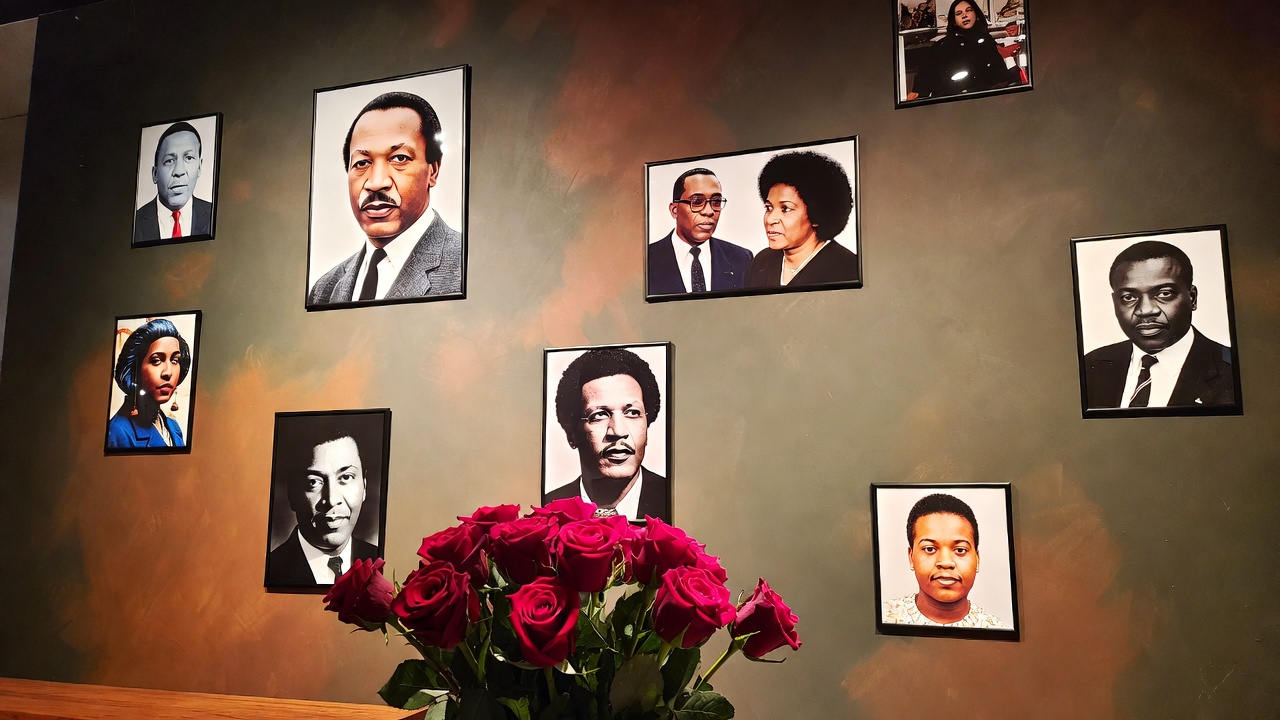
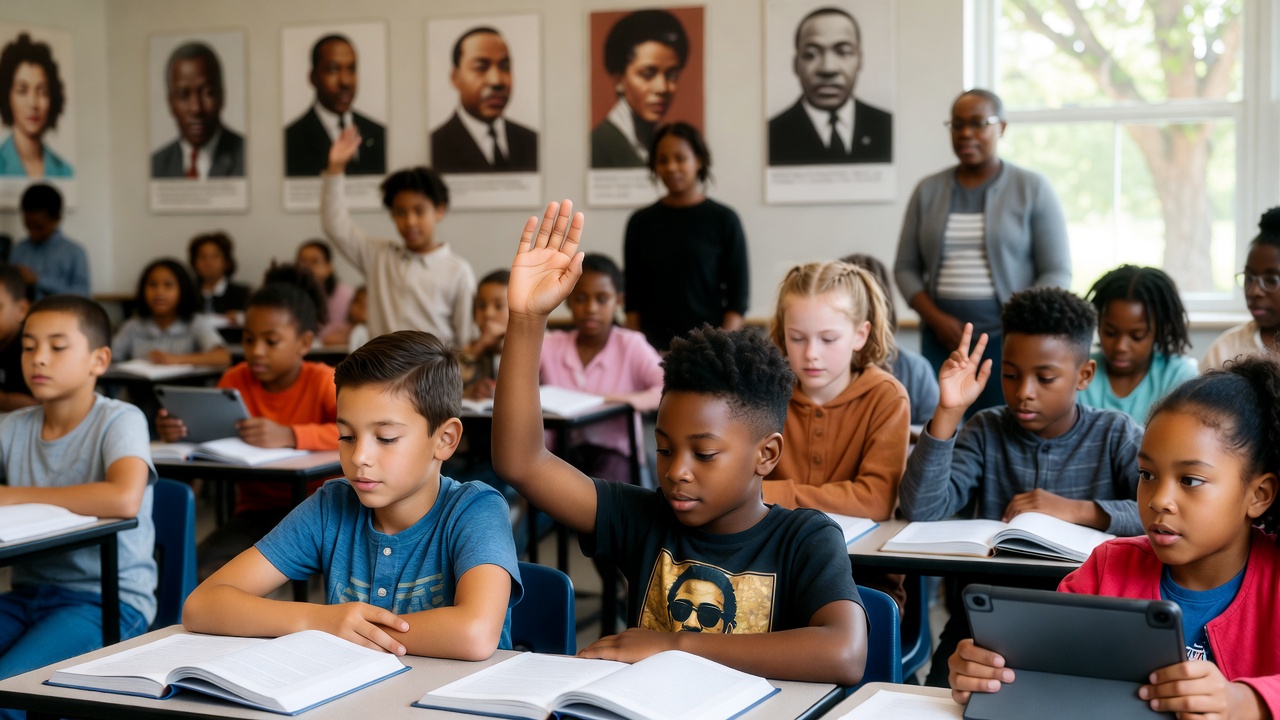
Discover the remarkable stories of African American pioneers whose courage, intellect, and perseverance transformed our nation—yet remain largely absent from our history books.
Every February, schools across America celebrate Black History Month. Students learn about Rosa Parks, Martin Luther King Jr., and Harriet Tubman. These figures deserve every bit of recognition they receive. However, countless other African American trailblazers helped build our nation. Their stories remain hidden from most history curricula. This guide introduces children to these unsung heroes. Their courage and achievements shaped the world we live in today.
Learning about these lesser-known figures does more than expand historical knowledge. It teaches children that ordinary people can accomplish extraordinary things. It shows that heroes come from every background. Most importantly, it demonstrates that every person has the power to change the world.
Who Was Bass Reeves? The Real Lone Ranger and First Black Deputy US Marshal
Bass Reeves stands as one of the most remarkable figures in American frontier history. Born into slavery in 1838 in Crawford County, Arkansas, he became the first Black deputy US marshal west of the Mississippi River. His life reads like an adventure novel. Yet few Americans know his name.
During the Civil War, Reeves escaped slavery and fled to Indian Territory. There, he lived among the Cherokee, Creek, and Seminole nations. He learned their languages and customs. He also developed exceptional tracking skills. These abilities would later make him legendary.
In 1875, Judge Isaac C. Parker—known as “the Hanging Judge”—established the Federal Western District Court at Fort Smith, Arkansas. Parker needed deputy marshals to bring law and order to Indian Territory. This region had become a haven for outlaws. When US Marshal James Fagan heard about Reeves’s knowledge of the territory and his ability to speak multiple Native American languages, he recruited him immediately.
The Legendary Career of Deputy Marshal Bass Reeves
Reeves served as a federal peace officer for 32 years. During this time, he made approximately 3,000 arrests. He brought in some of the most dangerous criminals of his era. According to the Oklahoma Historical Society, “No story of the conflict of government’s officers with those outlaws…can be complete without mention of the Negro who died yesterday.”
Biographer Art Burton described Reeves as “the Michael Jordan of frontier lawmen.” Standing 6’2″ and weighing 180 pounds, Reeves cut an imposing figure. He always rode a large white or gray horse. He dressed impeccably, with polished boots gleaming in the sun. He wore two Colt pistols, butt forward for a fast draw.
What made Reeves extraordinary:
| Achievement | Details |
|---|---|
| Arrests | Approximately 3,000 over 32 years |
| Criminals killed in self-defense | 14 confirmed |
| Years of service | 1875-1907 |
| Territory covered | Over 75,000 square miles |
| Languages spoken | English plus Cherokee, Creek, Choctaw, Chickasaw, and Seminole |
Reeves became a master of disguises. He would dress as a farmer, an outlaw, or a drifter. He would spend days earning criminals’ trust before revealing his badge and making arrests. His tracking skills became legendary throughout the territory.
Bass Reeves and the Devotion to Justice
Perhaps the most remarkable testament to Reeves’s character came when he received a warrant for his own son. Benjamin “Bennie” Reeves had been charged with murdering his wife. Many lawmen would have refused such an assignment. Bass Reeves did not hesitate. He tracked down his son and brought him to justice. This act demonstrated his unwavering commitment to the law.
Some historians believe Reeves inspired the fictional character of the Lone Ranger. The parallels are striking: a masked lawman who rides a large white horse, accompanied by a Native American companion, fighting outlaws in the American West. While this connection remains unconfirmed, Reeves’s real-life adventures needed no fictional embellishment.
The Paramount+ series “Lawmen: Bass Reeves,” starring David Oyelowo, introduced this American hero to new generations. In 2024, Reeves became the first African American to have an official portrait displayed at the Arkansas State Capitol.
How Did Garrett Morgan’s Inventions Save Countless Lives? The Story of the Traffic Light and Gas Mask Inventor
Garrett Augustus Morgan (1877-1963) called himself “the Black Edison.” His inventions continue to save lives more than a century later. Yet most Americans have never heard his name.
Morgan was born in Paris, Kentucky. His parents had been enslaved before the Civil War. He left home at age 14 with only a sixth-grade education. He moved to Cincinnati, Ohio, seeking better opportunities. There, he hired a tutor while working as a handyman. His curiosity and determination would change the world.
The Safety Hood: A Forerunner of the Modern Gas Mask
In 1914, Morgan patented what he called a “safety hood and smoke protector.” This device allowed firefighters to breathe in smoke-filled buildings. The design was brilliant in its simplicity. A long tube reached down to the floor, where cleaner air collected. Morgan reportedly drew inspiration from watching elephants at the circus stick their trunks out of tents to get fresh air.
Morgan faced a painful obstacle: racism. Fire departments in the South refused to buy equipment from a Black inventor. Morgan had to hire white actors to pose as the inventor during sales demonstrations. Sometimes he disguised himself as “Big Chief Mason,” pretending to be a Native American assistant.
The Lake Erie Tunnel Disaster changed everything.
On July 25, 1916, an explosion trapped workers in a tunnel being constructed under Lake Erie in Cleveland. Rescue parties rushed in to help. The gas and smoke killed 11 of the 18 rescuers. Desperate officials turned to Morgan.
According to Scientific American, Morgan and his brother Frank grabbed safety hoods from their home in the middle of the night. Still in pajamas, they drove to the lakefront. Morgan descended into the tunnel and saved several workers.
The rescue made national news. Fire departments across the country ordered Morgan’s safety hoods. The US Army later adapted his design for gas masks during World War I.
The Three-Position Traffic Signal: Morgan’s Traffic Light Patent
Morgan witnessed a terrible accident in the early 1920s. An automobile collided with a horse-drawn carriage carrying a young child. At that time, traffic signals had only two positions: stop and go. Drivers had no warning before signals changed. Collisions happened constantly.
Morgan invented a solution: a three-position traffic signal. His T-shaped device had arms that directed traffic to stop, go, or stop in all directions. This third position—what we know today as the yellow light—gave vehicles time to clear intersections before cross traffic began moving.
Morgan’s traffic signal innovation:
- Patented on November 20, 1923
- First to include a warning position (now the yellow light)
- Reduced collisions between vehicles
- Protected pedestrians crossing streets
- Sold to General Electric for $40,000 (approximately $610,000 today)
The Federal Highway Administration honors Morgan’s contribution to road safety. Shortly before his death in 1963, the US government awarded him a citation for inventing the traffic signal. Today, the Garrett A. Morgan Transportation Technology Education Program helps students pursue careers in transportation.
Who Was Mary Richards (Mary Bowser)? The Courageous Union Spy in the Confederate White House
During the Civil War, Mary Jane Richards—often called Mary Bowser—performed one of the most dangerous espionage missions in American history. She gathered intelligence from inside the Confederate White House itself.
Richards was born around 1840 in Richmond, Virginia. She was enslaved by the Van Lew family. Elizabeth Van Lew, the family’s daughter, held strong abolitionist beliefs. She arranged for Mary to receive an education in Philadelphia—extraordinary for any enslaved person at that time. Mary even traveled to Liberia as a missionary before returning to Virginia.
Infiltrating Jefferson Davis’s Household
When the Civil War began in 1861, Elizabeth Van Lew organized a pro-Union spy network in Richmond. The Confederate capital held vital military secrets. Van Lew needed someone inside the highest levels of Confederate government. Mary Richards agreed to take this dangerous assignment.
Richards posed as an illiterate servant. She worked in the household of Confederate President Jefferson Davis. The white officials around her assumed she could not read or understand their conversations. They spoke freely about troop movements, military strategy, and government plans.
They were wrong.
Richards had an exceptional memory. According to the American Battlefield Trust, she could recall detailed information from documents on Jefferson Davis’s desk. She reported this intelligence to Van Lew’s network. The information then traveled to Union commanders.
Elizabeth Van Lew wrote in her diary: “When I open my eyes in the morning, I say to the servant, ‘What news, Mary?’ and my caterer never fails! Most generally our reliable news is gathered from negroes, and they certainly show wisdom, discretion and prudence, which is wonderful.”
Mary Richards’ Lasting Legacy in American Intelligence History
By early 1865, suspicion fell on Richards. She fled Richmond just before the Confederacy collapsed. Her last act as a spy was reportedly an unsuccessful attempt to burn down the Confederate White House.
After the war, Richards worked as a teacher with the Freedmen’s Bureau. She taught formerly enslaved people in Virginia, Florida, and Georgia. She also gave lectures in New York about her wartime experiences, using various names including “Richmonia Richards.”
In 1995, the US Army’s Military Intelligence Corps inducted “Mary Elizabeth Bowser” into its Hall of Fame. The citation stated: “Ms. Bowser succeeded in a highly dangerous mission to the great benefit of the Union effort. She was one of the highest placed and most productive espionage agents of the Civil War.”
Key facts about Mary Richards:
| Aspect | Details |
|---|---|
| Location of espionage | Confederate White House, Richmond, VA |
| Cover identity | Domestic servant named “Ellen Bond” |
| Handler | Elizabeth Van Lew |
| Duration | Approximately 1863-1865 |
| Recognition | Military Intelligence Hall of Fame, 1995 |
Historians continue to research Richards’s life. Many details remain uncertain because of the secretive nature of her work and the destruction of records. What remains clear is her extraordinary courage. She risked her life daily for the cause of freedom.
Dr. Daniel Hale Williams: The African American Surgeon Who Performed the First Successful Open Heart Surgery
On July 10, 1893, Dr. Daniel Hale Williams made medical history. A young man named James Cornish arrived at Provident Hospital in Chicago with a severe stab wound to his chest. Cornish was dying. The knife had pierced his pericardium—the protective sac surrounding the heart.
At that time, operating on the heart was considered impossible. Medical wisdom held that the heart could not be touched without killing the patient. Williams had other ideas.
From Barber’s Apprentice to Medical Pioneer
Williams was born in 1856 in Hollidaysburg, Pennsylvania. His father died when Daniel was young. The family scattered. Williams worked as a shoemaker’s apprentice, then in a barbershop. He eventually decided to pursue education.
Williams studied with Dr. Henry Palmer, a prominent surgeon in Wisconsin. He graduated from Chicago Medical College in 1883. At that time, only three other Black physicians practiced in Chicago.
Columbia University’s Department of Surgery describes what happened next: “Williams — who was called Dr. Dan by patients — adopted sterilization procedures for his office informed by the recent findings on germ transmission and prevention from Louis Pasteur and Joseph Lister.”
Williams faced a painful reality. Black patients could not receive care at most hospitals. Black doctors could not practice at these institutions. Williams decided to change this.
Founding Provident Hospital: America’s First Black-Owned Hospital
In 1891, Williams founded Provident Hospital and Training School for Nurses in Chicago. It was the nation’s first Black-owned and operated hospital. It was also one of the first interracial hospitals, treating patients of all backgrounds. Famous abolitionist Frederick Douglass publicly praised the facility.
Provident also established one of the first nursing programs that trained Black women. This created opportunities that had never existed before.
The Historic Heart Surgery of 1893
When James Cornish arrived at Provident Hospital on July 9, 1893, his condition was critical. The knife wound had caused continued bleeding. He showed signs of shock. Williams decided to operate the next morning.
Without X-rays. Without blood transfusion. Without antibiotics. Without the surgical tools we take for granted today.
Williams made a small incision in Cornish’s chest. He found a severed artery and a tear in the pericardium. He carefully sutured both wounds. The procedure lasted less than an hour.
Cornish survived. He lived another 20 years.
Williams’s achievement was not widely reported until 1897. Some historians note that a similar pericardial repair was performed by Dr. Henry Dalton in St. Louis in 1891. Nevertheless, Williams’s surgery at Provident represented a breakthrough that proved the heart could be surgically treated.
Dr. Daniel Hale Williams’ Medical Legacy and Impact
Williams continued making history. In 1893, President Grover Cleveland appointed him surgeon-in-chief of Freedmen’s Hospital in Washington, DC. This facility served formerly enslaved African Americans. Williams modernized the hospital, improved surgical procedures, and launched ambulance services.
In 1895, Williams co-founded the National Medical Association. This organization served Black medical professionals who were barred from joining the American Medical Association.
In 1913, Williams became the only African American charter member of the American College of Surgeons.
The American Heart Association notes: “Williams’ legacy as a mentor and trainer of physicians had a ripple effect, creating greater opportunities for aspiring Black medical professionals and helping improve the quality of care and reduce death rates for Black patients.”
Williams died on August 4, 1931. Today, a “code blue” emergency at Howard University Hospital is called “Dr. Dan” in his honor.
Lewis Latimer and the Light Bulb: The Black Inventor Who Made Electric Lighting Affordable for Everyone
When people think about the light bulb, they think of Thomas Edison. However, the light bulb that actually worked in homes across America—the practical, affordable, long-lasting version—owed its existence largely to Lewis Howard Latimer.
Latimer (1848-1928) improved the light bulb’s filament in ways that transformed electric lighting from a curiosity into a practical reality. His contributions helped bring light into ordinary homes.
A Remarkable Journey From Slavery to Science
Latimer’s story began with his parents’ escape from slavery. George and Rebecca Latimer fled from Virginia to Boston in 1842. George’s arrest under the Fugitive Slave Act became a famous abolitionist cause. The community eventually purchased his freedom.
Lewis was born in 1848 in Chelsea, Massachusetts. His early life was difficult. Following the Dred Scott decision in 1857, his father fled Massachusetts for fear of being returned to slavery. The family separated. Young Lewis was sent to a state farm school.
At age 16, Latimer enlisted in the US Navy during the Civil War. He served aboard the USS Massasoit. After receiving an honorable discharge in 1865, he found work as an office boy at a patent law firm. His starting salary: $3 per week.
Teaching Himself to Change the World
Latimer taught himself mechanical drawing by observing the draftsmen at his firm. He learned to use triangular scales, compasses, and other technical tools. His talent was undeniable. Within seven years, he was promoted to head draftsman. His salary jumped to $20 per week.
In 1876, Latimer met Alexander Graham Bell. Bell needed patent drawings for his new invention: the telephone. Latimer executed these drawings. The telephone patent was granted on February 14, 1876.
But Latimer’s most important work was still to come.
Making Electric Light Practical: Latimer’s Carbon Filament Innovation
Thomas Edison invented the incandescent light bulb in 1879. However, Edison’s early bulbs had a serious problem: the filament burned out quickly. Some bulbs lasted only 15 hours. This made electric lighting impractical and expensive.
In 1880, Latimer began working for the US Electric Lighting Company. This company was owned by Hiram Maxim, one of Edison’s main competitors. According to the National Inventors Hall of Fame, “Latimer’s design produced a carbon filament that was more durable and longer lasting than earlier filaments.”
In 1881, Latimer received a patent for an improved method of bonding carbon filaments for light bulbs. In 1882, he patented a “Process of Manufacturing Carbons” that reduced breakages during production. His method involved wrapping filaments in cardboard envelopes during the carbonization process.
Latimer’s contributions to electric lighting:
| Innovation | Year | Impact |
|---|---|---|
| Carbon filament bonding method | 1881 | Made bulbs last longer |
| Carbon filament manufacturing process | 1882 | Reduced production costs and breakages |
| Book: “Incandescent Electric Lighting” | 1890 | First comprehensive guide to electric lighting |
Because of Latimer’s improvements, incandescent light bulbs became affordable for ordinary families. As the US Patent and Trademark Office notes, his work helped transform electric lighting from a luxury into a necessity.
Working With Edison and Beyond
Edison recognized Latimer’s genius. In 1884, Edison hired him as a draftsman and expert witness for patent litigation. Latimer became a trusted member of Edison’s team.
In 1890, Latimer wrote “Incandescent Electric Lighting: A Practical Description of the Edison System.” This was the first comprehensive book explaining how electric lighting worked.
In 1918, Latimer became a founding member of the Edison Pioneers—an elite group of scientists who had worked closely with Edison during the early years of electric innovation. Latimer was the only Black member.
Latimer also invented other devices, including an improved toilet system for railroad cars and an early form of air conditioning. He was a poet, painter, and civil rights advocate. He taught English and drawing to recent immigrants.
Latimer died on December 11, 1928, in Flushing, New York. His former home is now the Lewis H. Latimer House Museum.
Katherine Johnson: The NASA Mathematician Whose Calculations Sent Americans to Space
When astronaut John Glenn prepared to become the first American to orbit Earth in 1962, he made an unusual request. NASA’s new electronic computers had calculated his flight path. Glenn didn’t completely trust them. He asked engineers to “get the girl” to check the numbers by hand.
“The girl” was Katherine Johnson, a brilliant mathematician whose calculations were critical to the success of the American space program. Her work helped send astronauts to the Moon. Yet for decades, almost no one knew her name.
A Mathematical Prodigy in Segregated West Virginia
Katherine Coleman was born on August 26, 1918, in White Sulphur Springs, West Virginia. She showed extraordinary mathematical ability from an early age. She completed eighth grade by age 10. She graduated high school at 13.
Her hometown had no high school for Black students. Her parents moved the family 120 miles so their children could attend school on the campus of West Virginia State College, a historically Black institution.
Katherine entered the college at age 15. She excelled in every mathematics course available. Professor W.W. Schieffelin Claytor—only the third African American to earn a PhD in mathematics—recognized her exceptional talent. He created a special geometry class just for her.
Katherine graduated summa cum laude at age 18 with degrees in mathematics and French. In 1939, she became one of the first three African American students to integrate West Virginia University’s graduate program.
Becoming a “Human Computer” at NASA
In 1952, Katherine learned that the National Advisory Committee for Aeronautics (NACA)—NASA’s predecessor—was hiring Black women mathematicians. These women would work as “computers,” performing complex calculations by hand for engineers.
Katherine applied immediately. She was hired in 1953 and assigned to the West Area Computing section. This unit consisted entirely of African American women. They worked in segregated facilities with separate bathrooms and dining areas.
Two weeks after Katherine arrived, she was temporarily assigned to work with a flight research group. The assignment became permanent. She would never return to the computing pool.
Katherine Johnson’s Groundbreaking Contributions to Space Flight
Katherine’s work transformed the space program. She analyzed data from flight tests. She calculated launch windows. She plotted emergency return paths.
NASA’s biography of Johnson describes her approach: “She asked questions; she asked to be included in editorial meetings where no women were allowed before. She simply persisted.”
In 1961, Katherine calculated the trajectory for Alan Shepard’s Freedom 7 mission—the first American spaceflight. A year later, she checked the computer calculations for John Glenn’s orbital flight by hand.
“If she says they’re good, then I’m ready to go,” Glenn reportedly said.
Glenn’s flight was successful. Katherine Johnson’s calculations were perfect.
Katherine Johnson’s major contributions:
| Mission | Year | Johnson’s Role |
|---|---|---|
| Freedom 7 (Alan Shepard) | 1961 | Trajectory analysis |
| Friendship 7 (John Glenn) | 1962 | Manual verification of computer calculations |
| Apollo 11 (Moon landing) | 1969 | Trajectory calculations |
| Apollo 13 | 1970 | Emergency return path calculations |
| Space Shuttle | 1980s | Early trajectory work |
Katherine worked on the Apollo Lunar Module’s rendezvous with the Command and Service Module during Moon missions. She authored or co-authored 26 research reports during her 33-year career.
From Hidden Figure to American Icon
For decades, Katherine Johnson’s contributions remained largely unknown. That changed in 2016 with the publication of Margot Lee Shetterly’s book “Hidden Figures” and the Oscar-nominated film of the same name.
In 2015, President Barack Obama awarded Katherine Johnson the Presidential Medal of Freedom. In 2016, NASA named a building after her: the Katherine G. Johnson Computational Research Facility at the Langley Research Center.
Katherine Johnson died on February 24, 2020, at age 101. NASA Administrator James Bridenstine said: “Our NASA family is sad to learn the news that Katherine Johnson passed away this morning at 101 years old. She was an American hero and her pioneering legacy will never be forgotten.”
When asked for advice to NASA employees, Johnson simply said: “Like what you do and then you will do your best.”
Robert Smalls: The Enslaved Man Who Stole a Confederate Ship and Became a US Congressman
On May 13, 1862, at 3 AM, Robert Smalls did something that seemed impossible. The 23-year-old enslaved man commandeered a Confederate military ship and sailed it past heavily armed fortifications to freedom. He took his wife, his children, and the families of his crew with him. His daring escape made him an instant national hero.
But Robert Smalls was just getting started.
From Enslaved to Pilot
Robert Smalls was born into slavery on April 5, 1839, in Beaufort, South Carolina. His mother, Lydia Polite, was enslaved by the McKee family. To ensure her son understood the horrors of slavery, she showed him the whippings that field hands endured. The lessons shaped Robert’s determination to be free.
At age 12, Smalls was sent to Charleston and hired out for various jobs. He worked on the docks. He learned to sail. He became an expert pilot who knew every channel, sandbar, and current in Charleston Harbor.
In 1856, Smalls married Hannah Jones, an enslaved woman. When he tried to purchase his wife’s freedom, her owner demanded $800—an impossible sum. Smalls promised Hannah they would escape someday.
The Civil War provided that opportunity.
The Daring Escape That Changed History
By 1861, Smalls was forced to work as a pilot on the CSS Planter, a Confederate transport ship. The vessel carried guns, ammunition, and dispatches for the Confederate army. Smalls piloted the Planter throughout Charleston Harbor, studying every detail—the checkpoints, the signals, the movements of Union blockade ships seven miles away.
Smalls developed a plan. He shared it with his enslaved crewmates. They would steal the ship.
On the night of May 12, 1862, the Planter’s white officers went ashore to sleep. This was their routine. At 3 AM, Smalls and his crew fired up the boilers. They sailed to a nearby wharf and picked up their waiting families—nine men, five women, and three children in total.
Smalls put on the captain’s wide-brimmed hat. He knew the signals. He gave the proper codes as they passed Confederate checkpoints at Fort Sumter and Fort Moultrie. He steered the ship through the darkness toward the Union fleet.
As dawn broke, Smalls raised a white flag. He surrendered the Planter and its cargo of military supplies to the Union Navy.
The US House of Representatives history records: “A Civil War hero who had led a dramatic escape from slavery in 1862, Robert Smalls served part of five terms in the U.S. House of Representatives from a district along South Carolina.”
Robert Smalls’ Impact on the Civil War and American Politics
Rear Admiral Samuel Francis Du Pont was astonished by Smalls’s intelligence and bravery. He wrote that Smalls was “superior to any who have come into our lines — intelligent as many of them have been.”
Congress awarded Smalls and his crew half the value of the captured ship as prize money. Smalls personally received $1,500—enough to later purchase his former enslaver’s house in Beaufort.
Robert Smalls’ achievements:
| Achievement | Year | Significance |
|---|---|---|
| Escaped slavery with CSS Planter | 1862 | Delivered Confederate ship to Union |
| Met with President Lincoln | 1862 | Helped convince Lincoln to allow Black soldiers |
| Became first Black Navy pilot | 1862 | Commanded ships in 17 military engagements |
| Led streetcar desegregation boycott | 1864-1867 | Desegregated Philadelphia transit |
| Elected to South Carolina House | 1868 | Advocated for public education |
| Elected to US Congress | 1874 | Served five terms |
Smalls traveled to Washington and met with President Lincoln. He helped convince Lincoln to allow Black men to serve in the Union Army. Secretary of War Edwin Stanton soon ordered 5,000 formerly enslaved men to enlist.
During the war, Smalls served as a civilian pilot, then as an Army captain. He commanded the Planter—now a Union vessel—in 17 military engagements.
In 1864, while in Philadelphia, Smalls was removed from a streetcar because he was Black. He organized one of America’s first mass transit boycotts. Philadelphia desegregated its streetcars in 1867.
From War Hero to Congressman
After the war, Smalls entered politics. He served in the South Carolina House of Representatives and Senate. He advocated for public education, helping write it into the state constitution.
In 1874, the citizens of Beaufort elected Robert Smalls to the US Congress. He served five terms, fighting for civil rights and education funding. He argued against removing federal troops from South Carolina, warning that violence would follow. He was right.
When asked about his race, Smalls responded: “My race needs no special defense, for the past history of them in this country proves them to be equal of any people anywhere. All they need is an equal chance in the battle of life.”
Smalls died on February 23, 1915, in Beaufort—in the same house where he had been born a slave 75 years earlier. A statue of Smalls now stands in the National Museum of African American History and Culture.
Benjamin Banneker: The Self-Taught Astronomer Who Helped Design Washington DC
Benjamin Banneker (1731-1806) was a mathematician, astronomer, surveyor, and almanac author. He helped establish the boundaries of our nation’s capital. He corresponded with Thomas Jefferson about slavery and racial equality. He achieved all of this through self-education.
A Free Black Man in Colonial America
Benjamin Banneker was born on November 9, 1731, in Baltimore County, Maryland. His grandmother was an English indentured servant who married a formerly enslaved man. His mother was free, making Benjamin free as well. The family owned a 100-acre tobacco farm.
Banneker received some formal education at a small Quaker school that accepted both Black and white students. But most of his learning came from books. He taught himself astronomy, mathematics, and mechanical engineering.
Around age 22, Banneker examined a pocket watch owned by a traveling merchant. The merchant gave him the watch. Banneker disassembled it completely. He made detailed drawings of each component. Then he carved larger versions from wood and built a working clock.
This wooden clock kept accurate time for more than 50 years.
Surveying the Nation’s Capital
In 1788, George Ellicott, a Quaker neighbor and amateur astronomer, loaned Banneker books on astronomy and mathematical instruments. Banneker quickly mastered the material. He began making astronomical calculations, accurately predicting a solar eclipse in 1789.
In early 1791, President George Washington needed surveyors to establish the boundaries of the new federal district along the Potomac River. Secretary of State Thomas Jefferson recommended Banneker for the job. Major Andrew Ellicott, George’s cousin, hired Banneker as an assistant.
The Library of Congress describes Banneker’s work: “From February to April 1791, Banneker made the astronomical observations and calculations needed to establish the south corner of the square in Jones Point.”
Banneker worked in the observatory tent. He used astronomical instruments to track the positions of stars. His observations helped determine the exact locations of the district’s boundary markers.
Banneker’s compensation: $2 per day—less than Ellicott’s $5, but standard pay for assistant surveyors.
A Georgetown newspaper reported: “Ellicott is attended by Benjamin Banniker, an Ethiopian, whose abilities, as a surveyor, and an astronomer, clearly prove that Mr. Jefferson’s concluding that race of men were void of mental endowments, was without foundation.”
The Almanacs and the Letter to Jefferson
After completing his survey work, Banneker focused on producing almanacs. These annual publications contained astronomical data, tide tables, medical information, and weather predictions. They were essential resources for farmers and sailors.
Banneker’s almanacs were commercially successful. They were published annually from 1792 to 1797. Abolitionist groups promoted them as proof of African American intellectual capability.
In August 1791, Banneker sent a copy of his almanac to Thomas Jefferson. He included a 12-page letter challenging Jefferson’s published statements that Black people were intellectually inferior to whites.
Banneker wrote: “I suppose it is a truth too well attested to you, to need a proof here, that we are a race of beings, who have long labored under the abuse and censure of the world…and have long been looked upon with an eye of contempt.”
Jefferson responded politely, though historians debate his sincerity. He sent a copy of Banneker’s almanac to the French Academy of Sciences.
The White House Historical Association notes that while some aspects of Banneker’s story have been mythologized over time, his documented achievements remain extraordinary: “He assisted with the initial survey of Washington, D.C., published abolitionist material south of the Mason-Dixon Line, and engaged with some of the country’s founders in a way no black man had before.”
Banneker died on October 19, 1806. A fire on the day of his funeral destroyed his home, his famous wooden clock, and most of his papers. But his legacy endures.
Claudette Colvin: The Teenager Who Refused to Give Up Her Bus Seat Before Rosa Parks
On March 2, 1955—nine months before Rosa Parks—a 15-year-old girl named Claudette Colvin refused to give up her seat on a segregated bus in Montgomery, Alabama. Police dragged her from the bus in handcuffs. She was the first person arrested for resisting bus segregation in Montgomery.
Few Americans know her name.
A Student of Black History
Claudette Colvin was born in 1939 in Montgomery. She attended Booker T. Washington High School, where she studied Black history—including the stories of Harriet Tubman, Sojourner Truth, and other freedom fighters.
In her segregated school, teachers encouraged students to discuss injustice. The students talked about the Jim Crow laws they faced every day. They questioned why they had to give up their seats to white passengers.
On that March afternoon in 1955, Colvin was riding the bus home from school. The bus filled up. The driver ordered Colvin and three other Black passengers to give up their seats for a white woman.
Colvin refused.
“I felt like Sojourner Truth was pushing down on one shoulder and Harriet Tubman was pushing down on the other,” Colvin later said.
Why the Movement Chose Rosa Parks Instead
Colvin was arrested and charged with disorderly conduct, violating the segregation law, and assault. Civil rights leaders, including a young minister named Martin Luther King Jr., took notice.
The NAACP considered using Colvin’s case to challenge bus segregation in court. But there were concerns. Colvin was only 15. She became pregnant that summer by an older married man. Leaders worried that segregationists would use these facts to discredit the movement.
Nine months later, Rosa Parks—an established adult with an impeccable reputation—refused to give up her seat. The Montgomery Bus Boycott began.
Colvin did play a crucial role. She was one of four plaintiffs in Browder v. Gayle, the federal court case that ultimately declared Montgomery’s bus segregation unconstitutional. The Supreme Court upheld this decision in 1956.
Claudette Colvin’s Recognition in History
For decades, Colvin lived in relative obscurity in New York City. She worked as a nurse’s aide. Few people knew about her role in the civil rights movement.
In recent years, historians and journalists have worked to recognize Colvin’s contribution. She has received numerous honors. Her story appears in history curricula across the country.
In 2021, a judge expunged Colvin’s juvenile record. She was 85 years old.
“I feel very happy that it’s off my record,” Colvin said. “I’m no longer a juvenile delinquent.”
Why Teaching Children About Unsung Black History Heroes Matters: Building a Complete Picture of American History
The figures in this article—Bass Reeves, Garrett Morgan, Mary Richards, Dr. Daniel Hale Williams, Lewis Latimer, Katherine Johnson, Robert Smalls, Benjamin Banneker, Claudette Colvin—represent just a fraction of the African Americans who shaped our nation.
Their stories matter for several reasons.
They complete our understanding of history. American history is not just the story of famous leaders. It is the story of ordinary people who accomplished extraordinary things. These individuals invented life-saving devices. They escaped slavery through courage and cunning. They calculated the paths that sent humans to space.
They challenge assumptions. These stories demolish stereotypes. They show that intelligence, courage, and achievement have never been limited by race. Benjamin Banneker corresponded with Thomas Jefferson about equality while producing astronomical calculations of the highest accuracy. Katherine Johnson’s mathematics put Americans on the Moon.
They inspire future generations. When children see people who look like them achieving great things, they understand that they too can accomplish anything. Dr. Daniel Hale Williams showed that Black surgeons could reach the highest levels of medical excellence. His students and proteges went on to improve healthcare across the nation.
They reveal the full cost of discrimination. Many of these individuals faced enormous obstacles because of racism. Garrett Morgan had to hire white actors to sell his inventions. Lewis Latimer faced workers who refused to learn from a Black man. Their achievements become even more remarkable in this context.
How Parents and Teachers Can Celebrate Black History Year-Round
Black History Month provides an important opportunity to focus on African American achievements. However, these stories deserve attention throughout the year.
Practical suggestions:
- Read biographies together. Many excellent books tell these stories at various reading levels.
- Visit museums. The National Museum of African American History and Culture in Washington, DC, offers extensive exhibits. Many local museums also feature African American history.
- Watch documentaries and films. “Hidden Figures” brings Katherine Johnson’s story to life. The Paramount+ series “Lawmen: Bass Reeves” dramatizes the marshal’s adventures.
- Explore local history. Every community has African American history worth discovering.
- Connect past to present. Discuss how these historical figures’ contributions affect our lives today. Every time we stop at a yellow traffic light, we benefit from Garrett Morgan’s innovation.
- Encourage research projects. Let children choose a lesser-known figure to study and present to family or classmates.
Conclusion: Honoring the Hidden Figures Who Built America
American history contains thousands of stories waiting to be discovered. The individuals highlighted in this article overcame slavery, discrimination, and violence to achieve remarkable things. They saved lives with their inventions. They risked everything for freedom. They calculated the paths to the stars.
Their names may not appear in every history book. But their contributions surround us every day.
The next time you stop at a traffic light, think of Garrett Morgan. When you turn on a light bulb, remember Lewis Latimer. When you look up at the Moon, honor Katherine Johnson. When you see the Washington Monument, recall Benjamin Banneker.
These hidden figures deserve to be hidden no more. By teaching their stories to our children, we honor their memory. We also inspire the next generation of inventors, mathematicians, doctors, and heroes.
Black history is American history. These stories belong to all of us.