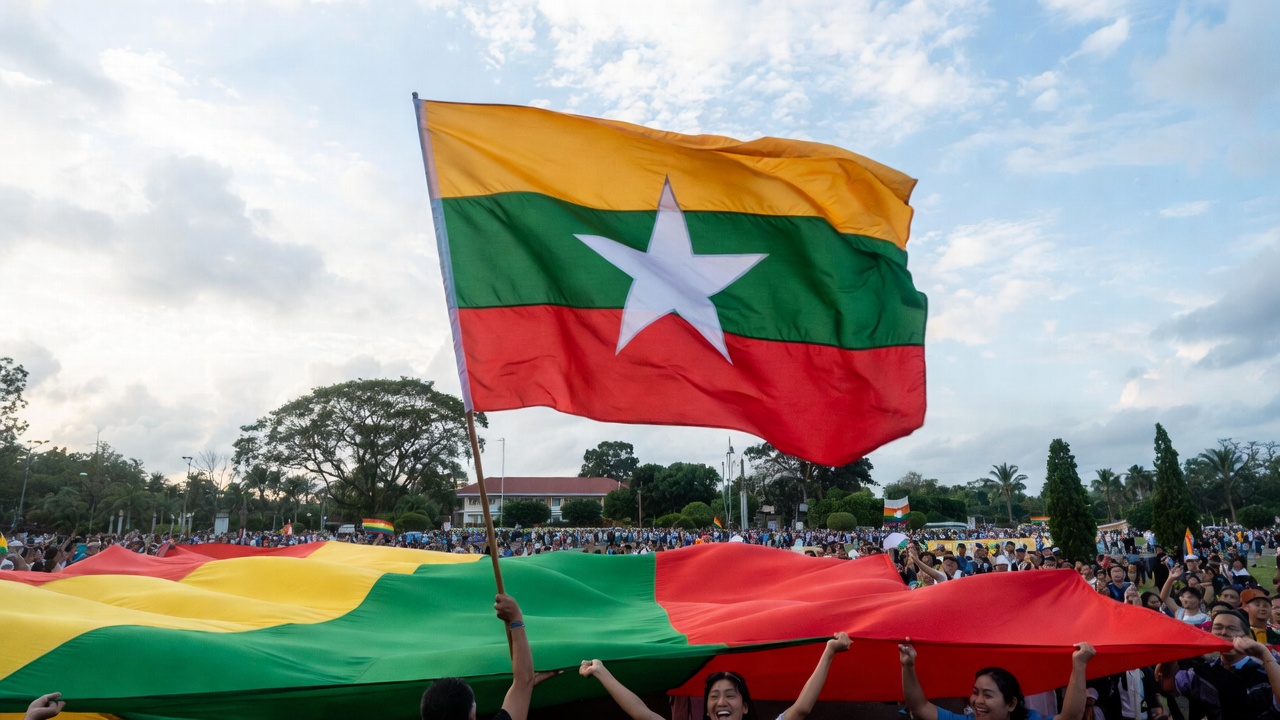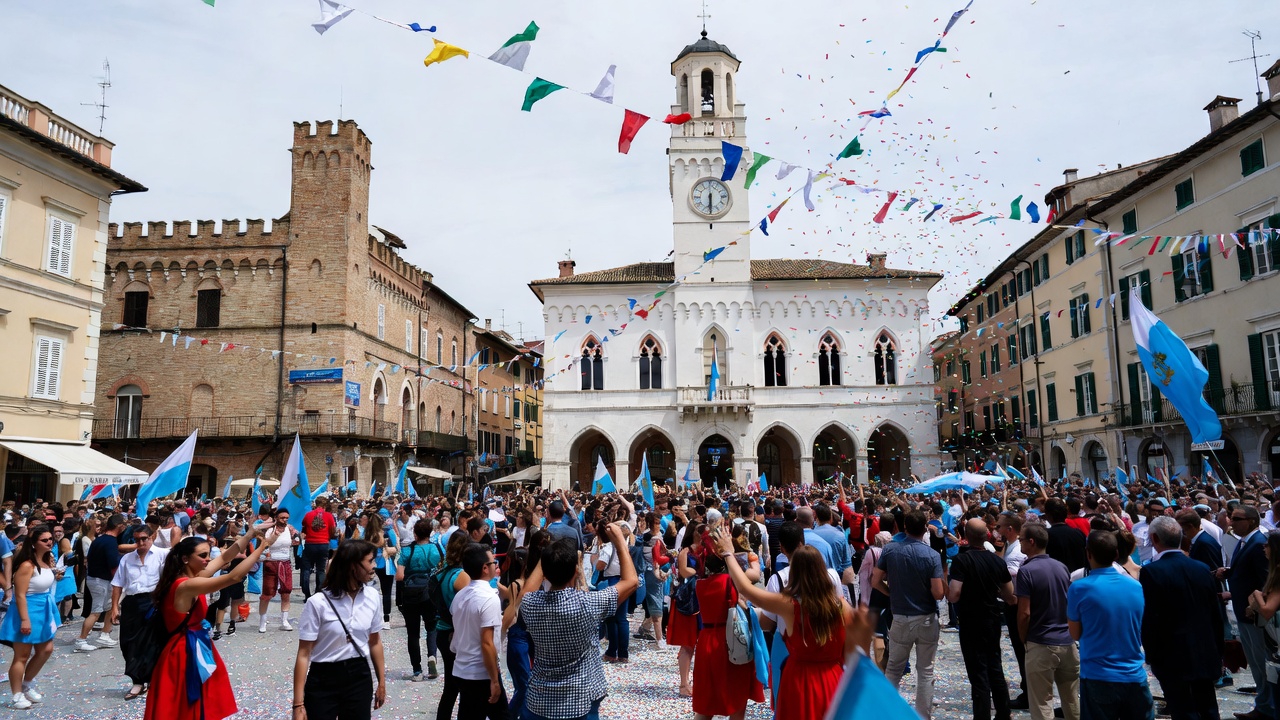
Every year on February 5, the Republic of San Marino transforms into a living stage for one of Europe’s most intimate and stirring national celebrations. Liberation Day — or, as the Sammarinese formally call it, the Anniversary of the Liberation of the Republic from Alberonian Occupation (1740) and the Feast of St. Agata — is a day when history, religion, and fierce national pride come together on the slopes of Monte Titano. In 2026, that date falls on a Thursday, giving travelers a wonderful excuse to build a long winter weekend around one of the continent’s most underrated cultural experiences.
This is not a festival of fireworks and theme-park pageantry. It is something rarer: an authentic public holiday in the world’s oldest surviving republic, celebrated by a population of just over 34,000 people who take their independence very, very personally. If you are looking for a destination where the locals genuinely care about the story behind the ceremony, San Marino on February 5 is the place to be.
In this guide, I will walk you through everything you need to know — the history behind the holiday, the processions and rituals you will witness, the food you should eat, and the practical tips that will make your visit seamless. Whether you are a history enthusiast, a collector of passport stamps, or simply a curious traveler with a love of old Europe, this article will prepare you for one of the most memorable days the tiny republic has to offer.
What Is Liberation Day in San Marino and Why Is It Celebrated on February 5?
Liberation Day is a national public holiday in the Republic of San Marino. It commemorates two events that share the same calendar date.
The first is a political milestone. On February 5, 1740, Pope Clement XII officially restored the sovereignty of San Marino after it had been occupied by Cardinal Giulio Alberoni, the Papal Governor of Ravenna. The occupation had lasted roughly three and a half months, beginning on October 17, 1739. Alberoni had marched troops into the republic, dismissed its elected Captains Regent, replaced its governing council with papal appointees, and imposed a new constitution — all in an effort to absorb the microstate into the Papal States.
The second event is religious. February 5 is the Feast of Saint Agatha (Sant’Agata in Italian), a third-century Christian martyr from Sicily who is venerated as the co-patron saint of San Marino alongside the republic’s founder, Saint Marinus. Because the liberation happened to coincide with her feast day, the Sammarinese proclaimed Agatha a co-patron of their nation — a permanent reminder that freedom and faith arrived on the same date.
The full official name of the holiday reflects this dual identity: it is both a civic celebration of hard-won independence and a solemn religious tribute to a beloved saint. For the Sammarinese, there is no contradiction between the two. The story of their liberation is, at its core, a story about a small community that refused to surrender its identity — much like Agatha herself, who refused to abandon her beliefs under threat of death.
The History Behind San Marino Liberation Day: How a Tiny Republic Defeated a Cardinal
To understand why Liberation Day matters so deeply to the Sammarinese, you need to know the story of the Alberoni Occupation. It is a tale that would be difficult to believe if it were fiction.
The Oldest Republic in the World
San Marino traces its founding to 301 AD, when a Christian stonemason named Marinus fled Roman persecution on the Dalmatian coast and established a small monastic community atop Monte Titano. Over the centuries, that community grew into a self-governing republic. By the 13th century, the Sammarinese had established their distinctive system of dual heads of state — the Captains Regent (Capitani Reggenti) — who serve six-month terms and are still elected to this day. The earliest surviving statutes of the republic date to 1263.
Despite its tiny size — just 61 square kilometers — San Marino managed to resist conquest through a combination of mountainous geography, careful diplomacy, and a reputation as a symbol of republican liberty. The Papal States formally confirmed its independence in 1631.
Cardinal Alberoni’s Invasion of 1739
By 1739, San Marino’s internal politics were turbulent. An oligarchy of powerful families controlled the government, and some wealthy citizens who had been excluded from power were agitating for reform. Cardinal Giulio Alberoni, the 75-year-old Papal Legate of Romagna, saw an opportunity. Using the pretext of restoring social order — and specifically, the pursuit of two alleged outlaws — Alberoni marched troops into San Marino on October 17, 1739.
He acted swiftly and ruthlessly. He dismissed the sitting Captains Regent. He replaced the republic’s governing council with officials loyal to the Church. He imposed a new constitution designed to bring San Marino under permanent papal control. For the first time in living memory, the world’s oldest republic had lost its freedom.
Civil Disobedience and the Appeal to Rome
The Sammarinese did not take this quietly. What followed was an extraordinary campaign of civil disobedience. Citizens refused to cooperate with Alberoni’s regime. Secret letters were smuggled out of the republic and delivered to Pope Clement XII, appealing for justice. The Sammarinese also reached out to other European heads of state, arguing that their sovereignty was being illegally trampled.
The campaign worked. The Pope, recognizing that Alberoni had overstepped his authority, sent a new delegate — Monsignor Enrico Enriquez — to investigate. On February 5, 1740, Enriquez arrived and formally restored the republic’s independence. The occupation had lasted just over three months.
The fact that this liberation fell on the Feast of Saint Agatha was seen by the Sammarinese as a sign of divine favor. They declared Agatha a co-patron of the republic, and her image was placed on the façade of the Palazzo Pubblico, the seat of government, where it remains today — positioned between the figures of San Marino (Saint Marinus) and San Leo.
Who Is Saint Agatha and Why Is She the Co-Patron Saint of San Marino?
You cannot fully appreciate Liberation Day without understanding the figure of Saint Agatha (Sant’Agata). Her story is one of the most famous martyrdom narratives in Christian history, and her presence in Sammarinese culture goes far beyond a symbolic name on a calendar.
The Life and Martyrdom of Saint Agatha
Agatha was born in Catania, Sicily, around 231 AD. During the persecutions ordered by Emperor Decius (250–253 AD), she was arrested for her Christian faith. The Roman governor of Sicily, Quintianus, subjected her to imprisonment and torture. According to tradition, Agatha endured extraordinary suffering rather than renounce her beliefs, and she died in prison around 251 AD.
She became one of the most widely venerated saints in the early Church. Her name is one of only seven women listed in the Canon of the Mass. Over the centuries, she became associated with protection against fire, earthquakes, and volcanic eruptions — a connection rooted in the tradition that her veil was used to halt an eruption of Mount Etna just one year after her death.
The Connection to San Marino
The veneration of Saint Agatha in San Marino stretches back to the medieval period, when February 5 was already dedicated to her feast. When liberation from the Alberoni occupation fell on the same date, the connection became permanent. The Sammarinese saw the coincidence as deeply meaningful: Agatha, who had refused to submit to tyranny, became the spiritual patron of a republic that had done the same.
Today, the Equestrian Order of Saint Agatha, established by the Grand and General Council in 1923, is one of San Marino’s highest state honors. It is awarded to foreign nationals who have made significant contributions to the republic. Past recipients have included prominent European political figures.
On Liberation Day, the religious and civic dimensions of the holiday are inseparable. The procession, the Mass, and the state ceremony all honor both the saint and the historical event. For the Sammarinese, Agatha is not merely a religious figure — she is a symbol of the national character.
What Happens During the Liberation Day Celebrations in San Marino?
If you visit San Marino on February 5, you will witness a day that unfolds with solemn ritual and heartfelt ceremony. This is not a carnival. It is a day of national reflection, public procession, and quiet pride. Here is what to expect.
The Procession from Borgo Maggiore to the Basilica
The centerpiece of Liberation Day is a public procession that travels from the town of Borgo Maggiore up to the historic center of the capital, Città di San Marino. During this procession, a painting of Saint Agatha is carried on the shoulders of the faithful from the Sanctuary of Borgo Maggiore to the Parish Church in the old city.
This tradition is taken seriously. According to local legend, one year the procession was canceled because of heavy snowfall. The following morning, the footprints of the saint were found in the snow — as if she had walked the route herself. Since then, the procession has taken place in every kind of weather, without exception. Rain, wind, fog, or frost — it does not matter. The painting goes up the mountain.
The Institutional Ceremony at the Palazzo Pubblico
The day also includes a formal civic ceremony led by the two sitting Captains Regent, who are the joint heads of state. The Captains Regent wear their traditional ceremonial dress and lead an institutional procession that departs from the Palazzo Pubblico in Piazza della Libertà. This procession follows a strict and solemn protocol. It is accompanied by the republic’s honor guards in their distinctive blue, white, and gold uniforms — some of the most recognizable ceremonial soldiers in Europe.
The Mass at the Basilica di San Marino
A solemn Mass is held at the Basilica di San Marino, the republic’s most sacred church. The service honors both Saint Agatha and the memory of the liberation. It is attended by government officials, members of the Grand and General Council, and members of the public.
The Atmosphere Throughout the Day
The overall tone of the day is one of dignified celebration. Streets are quieter than usual — this is a public holiday, and most businesses are closed. Flags are displayed. Families gather. The air on Monte Titano in early February is cold and sharp, and the medieval streets of the old city have a stark, almost cinematic beauty against a winter sky.
There are no parades with floats or marching bands in the modern sense. This is an older, more European kind of public holiday — one rooted in ceremony rather than spectacle. For travelers who appreciate authenticity over entertainment, that is precisely the appeal.
Traditional Sammarinese Food to Try on Liberation Day in February
One of the great pleasures of visiting San Marino during any public holiday is the food. Sammarinese cuisine shares deep roots with the Emilia-Romagna and Marche regions of Italy, but it has its own character and its own signature dishes. February, being the heart of winter, is the perfect time for the republic’s rich, warming specialties.
Here are the dishes you should seek out during your Liberation Day visit:
| Dish | Description |
|---|---|
| Fagioli con le cotiche | A hearty bean and bacon rind soup. This is a traditional winter and holiday dish, often served at Christmas but available throughout the cold months. |
| Pasta e ceci | A thick chickpea and noodle soup flavored with garlic and rosemary. Simple, warming, and deeply satisfying on a cold February day. |
| Nidi di rondine | Literally “swallow’s nests.” Rolls of pasta filled with smoked ham, beef, and cheese, covered in tomato sauce and béchamel, then baked until golden. This is one of San Marino’s most beloved dishes. |
| Coniglio con finocchio | Roast rabbit with fennel — a classic Sammarinese main course, often served with polenta. |
| Passatelli in brodo | Pasta made from breadcrumbs, Parmesan cheese, eggs, and nutmeg, served in a rich chicken broth. A staple of the Romagna region. |
| Erbazzone | A savory spinach pie with cheese and onions. |
| Piada | A flatbread from Borgo Maggiore, similar to the piadina of Emilia-Romagna, filled with cheese, cured meats, or vegetables. Grab one from a street vendor. |
| Torta Tre Monti | San Marino’s most iconic dessert — a layered wafer cake covered in chocolate, inspired by the republic’s famous Three Towers. |
| Torta Titano | A layered dessert with biscuit, hazelnuts, chocolate, cream, and coffee, named after Monte Titano. |
What to Drink
San Marino produces its own wines, regulated by the San Marino Wine Association. Look for Brugneto and Tessano (cask-aged reds) and Biancale and Roncale (still whites). For something stronger, try Mistrà, an anise-flavored liqueur that is a local favorite, or Tilus, a unique truffle-flavored liqueur that you will not find anywhere else in the world.
On a cold February evening, after the processions have ended and the crowds have thinned, sitting in a small restaurant overlooking the Romagna countryside with a bowl of passatelli and a glass of Brugneto is about as good as life gets.
How to Get to San Marino for Liberation Day in 2026
San Marino has no airport and no active railway station. A historic rail line once connected the republic to Rimini, but it was destroyed during World War II and never rebuilt. Today, reaching San Marino means going through Italy first.
By Bus from Rimini
The most common route for visitors is the Bonelli Bus from the city of Rimini, which lies about 20 kilometers from the San Marino border on the Adriatic coast. The bus departs from a stop directly across from Rimini Central Train Station, near the Napoleon Hotel.
Key details:
- Travel time: Approximately 50–60 minutes
- Cost: Around €5–6 each way (prices may vary in 2026)
- Frequency: Several departures daily, with reduced service on Sundays and public holidays
Important note for Liberation Day travelers: February 5 is a public holiday in San Marino, which may mean a reduced bus schedule. Check the timetable in advance and plan accordingly. The last bus back to Rimini in the evening is not always late — missing it would leave you stranded.
By Car from Bologna, Florence, or Venice
If you prefer to drive, San Marino is easily reachable by car from several major Italian cities:
| Starting City | Approximate Drive Time |
|---|---|
| Rimini | 30–40 minutes |
| Bologna | 1.5–2 hours |
| Florence | 2.5–3 hours |
| Venice | 3–3.5 hours |
From the A14 motorway, take the exit toward Rimini and then follow the SS72 highway directly into San Marino. There are no border checkpoints — you will simply drive across. Parking is available at several lots as you climb toward the historic center. If you prefer not to drive the winding road up to the old city, park in Borgo Maggiore and ride the funivia (cable car) up to the capital.
Nearest Airports
- Bologna Guglielmo Marconi Airport (BLQ): About 130 km from San Marino. The most practical option for international flights.
- Rimini Federico Fellini Airport (RMI): Closer at about 27 km, but operates mainly seasonal flights during the summer months. Check availability for February travel.
Where to Stay in San Marino During Liberation Day Festivities
San Marino is small, and accommodation in the historic center is limited. If you plan to attend Liberation Day, book early. February is not peak tourist season, so rooms may be more affordable than in summer — but the holiday itself draws visitors, and the best-located hotels fill up.
Staying in the Old City
For the most immersive experience, stay inside the walls of the Città di San Marino (the historic capital). This puts you within walking distance of the Palazzo Pubblico, the Basilica, and the procession route. Hotels like Hotel Titano offer comfortable rooms and views over the surrounding countryside.
Be prepared for a trade-off: the old city sits atop Monte Titano, and the streets are steep and cobblestoned. Walking uphill after dinner can be a workout — but waking up inside the medieval walls of the world’s oldest republic is worth every step.
Staying in Borgo Maggiore or Serravalle
If you prefer easier access or lower prices, consider staying in Borgo Maggiore (connected to the old city by cable car) or Serravalle (San Marino’s largest settlement, located in the flatlands). Both offer good accommodation options and are well connected to the capital.
Staying in Rimini
Many visitors use Rimini as a base. The Italian coastal city has a much larger selection of hotels, restaurants, and nightlife, and the bus to San Marino is quick and easy. This is a good option if you want to combine your Liberation Day visit with exploration of the wider Emilia-Romagna region.
What to Wear and Pack for San Marino in Early February
February in San Marino is winter. The capital city sits at an altitude of approximately 739 meters (2,425 feet), and the weather on Monte Titano can be significantly colder and windier than in the coastal lowlands around Rimini.
Average temperatures in the City of San Marino in February:
| Metric | Value |
|---|---|
| Average high | 7–8°C (45–46°F) |
| Average low | 1–2°C (34–36°F) |
| Rainfall | About 50–55 mm over 7–11 rainy days |
| Snowfall | Possible, especially at higher elevations |
Packing Essentials
- Warm layers: A thermal base layer, a wool or fleece mid-layer, and a solid winter coat are essential. Wind on the mountain can make it feel much colder than the thermometer suggests.
- A hat, scarf, and gloves: Non-negotiable. Your ears and fingers will thank you.
- Waterproof shoes with good grip: The cobblestone streets can be slippery when wet or icy. Leave the fashion sneakers at home.
- A rain jacket or umbrella: February weather is unpredictable, and showers are common.
- Camera: The winter light on Monte Titano can be extraordinary — especially in the early morning, when mist sometimes clings to the Three Towers.
Top Things to See and Do in San Marino Around Liberation Day
While Liberation Day itself is the main event, the republic offers plenty to explore before and after the ceremonies. Spending two or three days in San Marino allows you to experience the holiday and still have time for the country’s other attractions.
The Three Towers of San Marino
The Three Towers (Tre Torri) are the defining symbols of San Marino, depicted on the national flag and coat of arms. They sit on the three peaks of Monte Titano and are connected by a scenic walking path along the mountain ridge.
- Guaita (First Tower): The oldest and most iconic. Built in the 11th century, it served as a fortress and prison. The views from the battlements are breathtaking.
- Cesta (Second Tower): Houses the Museum of Ancient Weapons, with a collection of swords, crossbows, and armor dating back to the medieval period.
- Montale (Third Tower): The smallest of the three. It is not open to visitors but is a lovely destination for a walk along the ridge.
The Palazzo Pubblico and Liberty Square
The Palazzo Pubblico is San Marino’s town hall and government building, located on Piazza della Libertà (Liberty Square). This is the heart of the civic ceremonies on Liberation Day. Even on ordinary days, you may catch the changing of the guard performed by the republic’s honor guard in their blue and gold uniforms.
The Basilica di San Marino
The republic’s most sacred church, the Basilica houses the relics of Saint Marinus, the nation’s founder. The neoclassical façade features imposing Corinthian columns. On Liberation Day, this is where the solemn Mass is celebrated.
Get Your Passport Stamped
San Marino is not part of the European Union or the Schengen Area, but there is no formal border control between it and Italy. However, you can get a tourist stamp in your passport at the San Marino tourism office for €5 (cash only). It is a fun souvenir and a badge of honor for country counters.
Museums Worth Visiting
San Marino has a surprising number of museums for its size. Consider the TuttoSanMarino card, available at the tourism office for about €10, which grants access to all state museums and discounts at participating businesses. Notable museums include:
- Museo di Stato (State Museum): Artifacts from the Neolithic Age through Roman, Greek, and Egyptian civilizations.
- Museum of Curiosities: An eccentric but entertaining collection of oddities.
- Stamp and Coin Museum: San Marino’s postage stamps and coins are prized by collectors worldwide.
San Marino Liberation Day vs. Italy Liberation Day: Understanding the Difference
Travelers sometimes confuse San Marino’s Liberation Day with Italy’s. They are entirely different holidays with different dates, histories, and meanings.
| Feature | San Marino Liberation Day | Italy Liberation Day |
|---|---|---|
| Date | February 5 | April 25 |
| What it commemorates | Liberation from the Alberoni occupation (1740) and the Feast of Saint Agatha | Liberation from Nazi-fascist occupation at the end of World War II (1945) |
| Official name | Anniversary of the Liberation from Alberonian Occupation and Feast of St. Agata | Festa della Liberazione |
| Character | Religious procession and civic ceremony | Parades, political rallies, music concerts, and public gatherings |
| Scale | Intimate, local, ceremonial | Nationwide, large-scale |
San Marino also has a separate holiday called Liberation from Fascism Day, observed on July 28, which commemorates the fall of the fascist government in 1943. This is distinct from the February 5 celebration.
Understanding these differences matters. If someone tells you they are going to San Marino for “Liberation Day,” make sure you know which one they mean.
The Cultural Significance of Liberation Day for the Sammarinese People
For the roughly 34,000 citizens of San Marino, Liberation Day is not just a day off work. It is a keystone of national identity. This is a country that has survived more than 1,700 years as an independent entity — a record unmatched by any other nation on Earth. The Alberoni occupation of 1739–1740 is one of only two instances in San Marino’s entire history when foreign military forces successfully occupied the republic. (The other was Cesare Borgia’s brief occupation in 1503.)
The fact that the Sammarinese resisted the occupation not through military force but through civil disobedience and diplomatic appeals makes the story even more meaningful to them. They did not fight a war. They wrote letters. They protested peacefully. They appealed to higher authorities and to the conscience of Europe. And they won.
This narrative of peaceful resistance and principled independence runs through the entire fabric of Sammarinese culture. It is reflected in the republic’s relationship with Napoleon, who was so impressed by San Marino’s commitment to liberty that he offered to expand its territory — an offer the Sammarinese politely declined, fearing that accepting more land would invite future conflicts. It is reflected in Abraham Lincoln’s admiration for the republic, expressed in a letter to the Captains Regent in which the American president acknowledged that San Marino’s survival proved that republican government could endure.
Liberation Day, then, is a celebration of something larger than a single historical event. It is a celebration of an idea — the idea that a community of people, no matter how small, can govern itself with dignity and survive against all odds.
Practical Tips for Visiting San Marino on Liberation Day in February 2026
Here are some final practical considerations for planning your trip:
1. February 5, 2026, is a Thursday. This means you may be able to extend your visit into a long weekend. The Italians have a tradition called fare il ponte (“making the bridge”), where they take Friday off to create a four-day weekend when a holiday falls on a Thursday. Consider doing the same.
2. Public services will be limited. Banks, post offices, and government offices in San Marino will be closed on February 5. Many shops and some restaurants may also close or operate on reduced hours. Plan meals and cash needs accordingly.
3. Notify your bank. San Marino is a separate country from Italy, and some banks may flag transactions there as unusual. Let your credit card company know you will be traveling to San Marino to avoid having your card blocked.
4. The Euro is the currency. Although San Marino is not part of the European Union, it uses the Euro through a monetary agreement. Credit cards are widely accepted, but carry some cash for small purchases, the passport stamp, and market vendors.
5. The official language is Italian. Some residents also speak Romagnolo, a regional dialect. English is not universally spoken, particularly outside tourist areas. A few basic Italian phrases will go a long way.
6. Check the bus schedule early. Because February 5 is a public holiday, bus services between Rimini and San Marino may run on a reduced timetable. Confirm departure and return times in advance. If in doubt, consider renting a car.
7. Arrive early for the procession. The procession from Borgo Maggiore to the capital is the highlight of the day. Position yourself along the route early to get a good vantage point. The streets of the old city are narrow, and space fills up quickly.
8. Respect the ceremony. This is a solemn occasion, not a party. Dress respectfully (no shorts or beachwear — not that you would want to in February). Keep noise to a minimum during the religious and civic ceremonies. The Sammarinese appreciate visitors who show genuine interest and respect for their traditions.
Is San Marino Worth Visiting in Winter for Liberation Day?
This is a question I am asked often, and my answer is always the same: absolutely yes.
San Marino in winter is a different experience from San Marino in summer. In July and August, the old city can be crowded with day-trippers from the Rimini beach resorts. The streets fill with souvenir shoppers, and the atmosphere, while pleasant, can feel a bit touristy.
In February, the republic is quieter. The crowds thin out. The winter light gives Monte Titano a stark, dramatic beauty that photographs do not do justice. On a clear February morning, you can stand on the ramparts of the Guaita Tower and see all the way to the Adriatic Sea, with the snow-dusted Apennine foothills rolling away to the south and west.
And on Liberation Day itself, you witness something that most travelers never see: a real community celebrating its real history. There are no performances staged for tourists. The procession is not a show. The Sammarinese are marking a moment that defines who they are — and you are invited to watch.
Few places in Europe offer this combination of deep history, genuine cultural practice, dramatic landscape, and ease of access at such a small and human scale. San Marino on Liberation Day is one of those rare travel experiences that stays with you long after you have gone home.
A Complete San Marino Liberation Day Itinerary for 2026
For travelers who want to make the most of their visit, here is a suggested three-day itinerary built around the February 5 celebration.
Day 1 — Wednesday, February 4: Arrival and Exploration
- Arrive in San Marino by bus or car from Rimini or Bologna.
- Check into your hotel in the Città di San Marino or Borgo Maggiore.
- Walk the Passo delle Streghe (Witches’ Path) between the First and Second Towers for stunning views of the winter landscape.
- Visit the Museo di Stato to orient yourself to Sammarinese history before the celebrations.
- Dinner at a local restaurant. Try passatelli in brodo and a glass of Tessano red wine.
Day 2 — Thursday, February 5: Liberation Day
- Morning: Position yourself along the procession route between Borgo Maggiore and the Basilica. Dress warmly.
- Watch the religious procession carrying the painting of Saint Agatha up the mountain.
- Attend or observe the civic ceremony at the Palazzo Pubblico in Piazza della Libertà.
- If the Basilica is accessible, observe the solemn Mass.
- Lunch: Find a restaurant serving holiday dishes. Order nidi di rondine and fagioli con le cotiche.
- Afternoon: Walk through the quiet streets of the old city. Visit the Guaita Tower — crowds will be light.
- Evening: Warm up with a glass of Mistrà at a local café and reflect on the day.
Day 3 — Friday, February 6: Deeper Exploration
- Morning: Ride the cable car (funivia) between Borgo Maggiore and the capital for panoramic views.
- Visit the Second Tower (Cesta) and its Museum of Ancient Weapons.
- Get your passport stamped at the tourism office.
- Browse the shops for locally made ceramics, stamps, coins, and a box of Torta Tre Monti to take home.
- Afternoon: Depart for Rimini, Bologna, or your next Italian destination.
Frequently Asked Questions About San Marino Liberation Day
Q: Is Liberation Day a public holiday in San Marino? A: Yes. It is one of San Marino’s 18 official public holidays. Government offices, banks, and many businesses are closed.
Q: Do I need a visa to visit San Marino? A: San Marino has no independent visa policy. If you can legally enter Italy, you can enter San Marino. There are no border checkpoints.
Q: Can I visit San Marino as a day trip from Rimini on Liberation Day? A: Yes, but check the bus schedule carefully. Services may be reduced on public holidays. Consider arriving early and departing before the last bus.
Q: Is Liberation Day a good time to visit San Marino with children? A: It can be, but keep in mind the cold weather and the solemn nature of the ceremonies. Older children with an interest in history will find it fascinating.
Q: Are there fireworks on Liberation Day? A: No. Fireworks are associated with San Marino’s National Day on September 3 (the Feast of Saint Marinus). Liberation Day is a quieter, more ceremonial affair.
Q: How long should I spend in San Marino? A: For Liberation Day, plan at least two nights — one before and one after the holiday. This gives you time to explore the old city, attend the ceremonies, and enjoy the local food without feeling rushed.
Why Liberation Day in San Marino Deserves a Place on Your Travel Bucket List
I have attended national celebrations across six continents, from Carnival in Rio de Janeiro to the Naadam Festival in Mongolia. Some are spectacles of staggering scale. Others are quiet, almost private affairs that reveal more about a culture in a single afternoon than a week of museum visits ever could.
San Marino’s Liberation Day belongs firmly in the second category. It is small. It is solemn. It is deeply, unapologetically local. And it is precisely those qualities that make it unforgettable.
When you stand on the cobblestones of Piazza della Libertà on a cold February morning and watch the Captains Regent lead their procession through streets that have been continuously inhabited for more than seventeen centuries, you are not watching a performance. You are watching a community affirm its existence. You are watching the world’s oldest republic say, as it has said every year since 1740: we are still here.
For a traveler who cares about the real stories behind the places they visit, there is no better reason to go.