
A comprehensive guide to witnessing the sacred masked dances, monastery celebrations, and ancient rituals that transform the Himalayan world during Losar
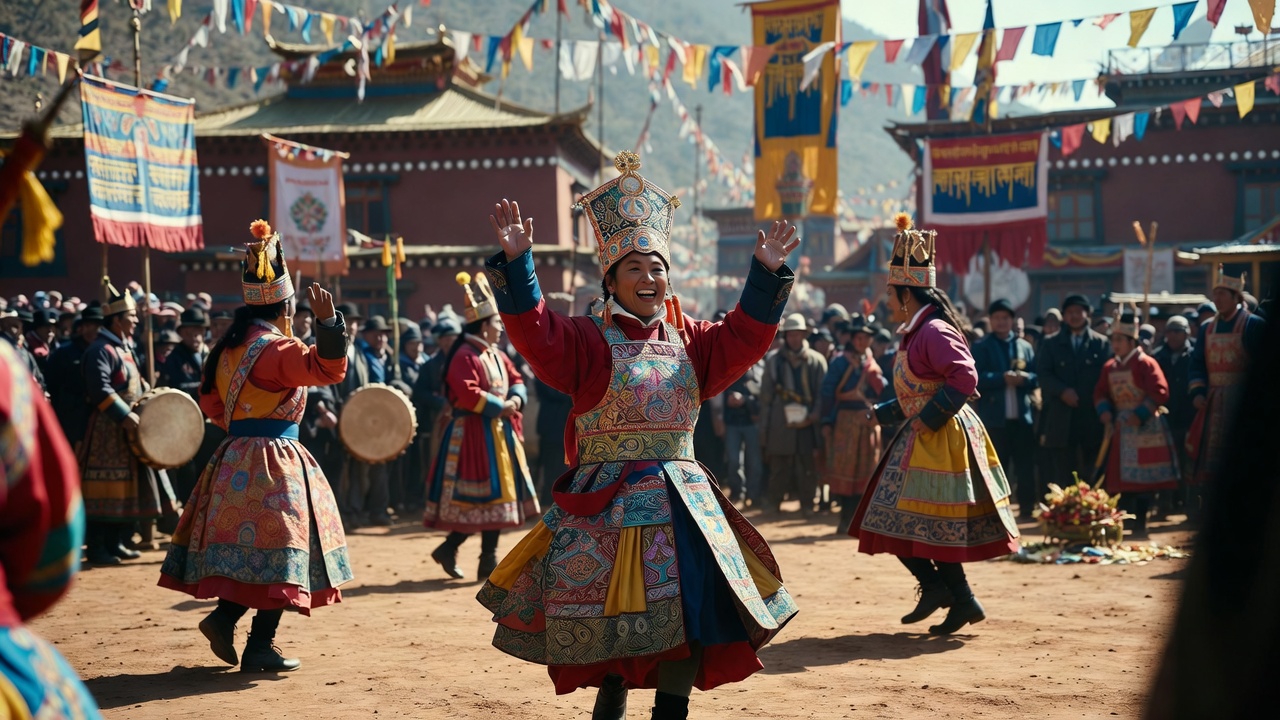
The monastery courtyard falls silent. Hundreds of pilgrims wrapped in heavy woolen chubas press forward, their breath forming clouds in the crystalline mountain air. Then come the drums—deep, resonant, primal—rolling across the ancient flagstones like thunder from another world. A figure emerges from the temple shadows, transformed by an elaborate mask depicting a wrathful deity, silk robes cascading in crimson and gold. The Cham dance has begun.
This is Losar, the Tibetan New Year, and there is nothing else like it on Earth.
For travelers seeking authentic cultural immersion beyond the superficial, Losar offers something rare: a window into living spiritual traditions that have survived centuries of change. The masked dances, the monastery festivals, the community gatherings—these aren’t performances staged for tourists. They are acts of profound religious devotion, cultural preservation, and communal renewal that happen to welcome respectful witnesses.
In this comprehensive guide, we’ll journey deep into the heart of Tibetan New Year celebrations, exploring the sacred Cham dances, the vibrant Gumpa (monastery) festivals, and the practical knowledge you need to experience them authentically. Whether you’re planning a pilgrimage to Ladakh, Bhutan, Nepal, or the Tibetan regions of China, this is your roadmap to one of Asia’s most spiritually powerful celebrations.
What is Losar? Understanding the Tibetan New Year Festival
Losar (Tibetan: ལོ་གསར་, pronounced “Lo-sar”) translates directly as “New Year” in Tibetan—lo meaning “year” and sar meaning “new.” But reducing Losar to a simple calendar observance misses its profound significance. This is the most important festival in the Tibetan Buddhist calendar, a time when the veil between the spiritual and physical worlds grows thin, and communities come together to purify the past and invite auspicious energies for the year ahead.
The Three Types of Losar Celebrations Across Himalayan Cultures
Understanding that Losar isn’t monolithic is crucial for travelers. Different communities observe the new year according to their own traditions:
| Type of Losar | Communities | Typical Timing | Key Characteristics |
|---|---|---|---|
| Tibetan Losar | Tibetans in Tibet, India, Nepal | February-March (1st Tibetan month) | Most widely celebrated; elaborate monastery festivals |
| Gyalpo Losar | Sherpa communities in Nepal | Same as Tibetan Losar | Strong emphasis on family gatherings and Everest region traditions |
| Sonam Losar | Tamang communities in Nepal | January-February (11th Tibetan month) | Distinct agricultural roots; unique dance forms |
| Tamu Losar | Gurung communities in Nepal | December-January | Ancient Bon influences; distinct from Buddhist Losar |
The date of Losar shifts annually according to the Tibetan lunisolar calendar, typically falling between late January and early March. The calculations are complex, based on cycles of sixty years combining twelve animals with five elements—a system that predates Buddhism’s arrival in Tibet.
Historical Origins of Losar: From Bon Traditions to Buddhist Practice
Long before Buddhism reached the Tibetan plateau in the 7th century, the indigenous Bon religion celebrated the winter solstice with rituals to ward off evil spirits. Farmers burned juniper incense (sang) to purify their fields. Families gathered to honor ancestors. The transition from old year to new was considered spiritually dangerous—a liminal time requiring protective rituals.
When Buddhism became Tibet’s dominant religion under King Trisong Detsen, these ancient practices didn’t disappear. Instead, they merged with Buddhist philosophy, creating the syncretic celebration we witness today. The Cham dances themselves emerged from this fusion, combining pre-Buddhist shamanic traditions with tantric Buddhist visualization practices.
According to Tibet Heritage Fund research, the earliest documented Losar celebrations date to the reign of the ninth Tibetan king, Pude Gungyal, around the 2nd century BCE—making this festival potentially over two thousand years old.
The Sacred Cham Dance: Ritual Masked Performances of Tibetan Buddhism
If you witness only one element of Losar, let it be Cham. These sacred masked dances represent the pinnacle of Tibetan Buddhist performing arts—a form of meditation-in-motion that transforms monastery courtyards into portals between realms.
What is Cham Dance? Origins and Spiritual Significance
Cham (Tibetan: འཆམ་) refers to a category of ritual dances performed by monks or trained laypeople wearing elaborate masks and costumes representing deities, demons, protectors, and symbolic figures. Unlike secular dance, Cham is fundamentally a religious practice—each movement precisely choreographed according to tantric texts, each gesture carrying specific spiritual meaning.
The origins of Cham are attributed to Padmasambhava (Guru Rinpoche), the 8th-century Indian master who brought Vajrayana Buddhism to Tibet. Legend holds that he performed the first Cham to subdue local spirits and consecrate the ground for Samye Monastery, Tibet’s first Buddhist monastery. The dance served a dual purpose: spiritual transformation and practical conversion.
Key spiritual functions of Cham dance include:
- Dispelling negative energies accumulated during the past year
- Invoking protective deities (dharmapalas) for the community
- Teaching Buddhist philosophy through dramatic narrative
- Generating merit for performers and observers alike
- Maintaining lineage transmission of esoteric practices
Types of Cham Dances Performed During Losar Celebrations
Not all Cham dances are identical. Across Tibetan Buddhist traditions, distinct schools have developed characteristic styles, costumes, and choreography. Understanding these variations enriches the viewing experience:
Gelug Tradition Cham Dances
The Gelug school (the “Yellow Hat” tradition of the Dalai Lama) performs Cham with particular emphasis on the Black Hat dance (Shanag). This dramatic performance depicts tantric sorcerers subduing enemies of Buddhism. The dancers wear distinctive black hats topped with skulls and peacock feathers, their movements deliberate and hypnotic.
Notable Gelug Cham locations during Losar:
- Drepung Monastery, Lhasa
- Tashilhunpo Monastery, Shigatse
- Sera Monastery, Lhasa
- Labrang Monastery, Gansu Province
Nyingma Tradition Cham Dances
The Nyingma school (the “Ancient Ones,” Tibet’s oldest Buddhist lineage) emphasizes Cham depicting Padmasambhava’s eight manifestations. These dances often feature more wrathful deities and elaborate transformation sequences.
Notable Nyingma Cham locations:
- Hemis Monastery, Ladakh (famous for its annual festival)
- Mindrolling Monastery, Dehradun
- Shechen Monastery, Boudhanath
Kagyu Tradition Cham Dances
The Kagyu school incorporates distinctive Mahakala dances, honoring this fierce protector deity central to their lineage. The choreography often includes acrobatic elements and rapid spinning.
Notable Kagyu Cham locations:
- Tsurphu Monastery, Tibet (seat of the Karmapas)
- Rumtek Monastery, Sikkim
- Various Drukpa Kagyu monasteries in Bhutan and Ladakh
Sakya Tradition Cham Dances
The Sakya school performs Cham with unique deer dances and distinctive deity representations. Their style tends toward more measured, elegant movements.
Notable Sakya Cham locations:
- Sakya Monastery, Tibet
- Ngor Monastery reconstructions in exile
Understanding Cham Dance Costumes and Sacred Masks
The visual splendor of Cham derives largely from its extraordinary costumes and masks. These aren’t theatrical props—they are consecrated ritual objects treated with profound reverence.
The Sacred Masks of Cham Dance
Cham masks are typically carved from wood (often apricot or willow), then painstakingly painted and decorated over months of work. Before use, they undergo elaborate consecration ceremonies (rabne) that transform them from objects into vessels capable of embodying deities.
Common mask categories include:
| Mask Type | Representation | Visual Characteristics |
|---|---|---|
| Peaceful Deities | Buddhas, Bodhisattvas | Serene expressions, gold or white coloring |
| Wrathful Protectors | Dharmapalas like Mahakala | Bulging eyes, bared fangs, flame crowns |
| Animal Masks | Deer, snow lions, garudas | Realistic animal features with sacred symbolism |
| Skeleton Masks | Lords of the Charnel Ground | Skull faces representing impermanence |
| Hat Dances | Black Hat sorcerers | Elaborate headdresses rather than face masks |
According to research by the Rubin Museum of Art, many historic Cham masks were created as terma (hidden treasures), believed to have been concealed by Padmasambhava himself and later discovered by treasure-revealers.
Brocade Costumes and Ritual Implements
Beyond masks, Cham costumes involve layers of silk brocade robes weighing up to 30 kilograms. Dancers also carry ritual implements: dorjes (thunderbolt scepters), phurbas (ritual daggers), kartrikas (curved knives), and kapalas (skull cups). Each object holds specific tantric significance.
The physical demands are immense. Dancers may perform for hours while wearing these heavy costumes, maintaining precise choreography despite restricted vision through mask eye-holes. This difficulty is itself considered part of the spiritual practice—an offering of physical hardship.
Experiencing Gumpa Festivals: Where Monasteries Come Alive
While Cham dances form the spectacular centerpiece, Gumpa festivals (monastery celebrations) encompass the entire ecosystem of Losar observance. These multi-day events transform austere monastic compounds into vibrant community gathering spaces.
What Happens at a Tibetan Monastery During Losar
The atmosphere at a Gumpa during Losar defies easy description. Imagine centuries-old stone buildings draped in fresh brocade hangings. Imagine the air thick with juniper smoke and butter lamp glow. Imagine the entire surrounding community—farmers, herders, merchants, officials—converging for a celebration that is simultaneously spiritual retreat, social reunion, and county fair.
A typical Losar Gumpa festival includes:
- Pre-dawn prayer sessions with all resident monks
- Butter sculpture displays (torma) depicting deities and auspicious symbols
- Ceremonial unfurling of giant thangkas (religious paintings on silk)
- Cham dance performances across multiple days
- Community feasting with traditional Losar foods
- Merit-making activities like circumambulation and prostrations
- Divination and blessing ceremonies conducted by senior lamas
Famous Monastery Festivals to Experience During Tibetan New Year
Not all monastery festivals are created equal. Some have achieved legendary status for their scale, authenticity, and spectacular Cham performances:
Hemis Festival in Ladakh: The Most Accessible Major Cham Celebration
Hemis Monastery in Ladakh, India, hosts what many consider the most magnificent Cham performances accessible to international travelers. While the main Hemis Festival occurs in June-July (celebrating Padmasambhava’s birth anniversary), the monastery also holds significant Losar celebrations with Cham performances.
Why Hemis stands out:
- Relatively easy access via Leh airport
- Well-organized for visitors while maintaining authenticity
- Spectacular high-altitude setting (3,600 meters)
- Combination of Drukpa Kagyu and Nyingma traditions
Tawang Monastery Festival in Arunachal Pradesh
Tawang Monastery, the largest monastery in India and second-largest in the world after Lhasa’s Potala Palace, celebrates Losar with three days of Cham performances. The remote location in Arunachal Pradesh requires special permits but rewards visitors with unspoiled authenticity.
Festival highlights:
- Monpa tribal culture influences
- Less crowded than Ladakh alternatives
- Spectacular mountain scenery
- Ancient masks and costumes in the monastery collection
Thiksey Monastery Gustor Festival
Thiksey Monastery near Leh celebrates Gustor (a festival closely related to Losar) with two days of Cham dances. The monastery’s architecture, resembling a miniature Potala Palace, provides a stunning backdrop.
Losar Celebrations in Dharamsala: The Tibetan Government-in-Exile
Dharamsala and the nearby McLeod Ganj serve as headquarters for the Tibetan government-in-exile and residence of His Holiness the Dalai Lama. Losar here carries particular poignancy—exile communities maintaining traditions far from their homeland.
Key Dharamsala Losar events:
- Official ceremonies at the Tsuglagkhang (main temple)
- Public teachings by the Dalai Lama (when scheduled)
- Tibetan Institute of Performing Arts presentations
- Community celebrations throughout the Tibetan settlement
Losar Festival Experiences in Nepal’s Buddhist Communities
Nepal’s diverse Buddhist communities—Sherpa, Tamang, Gurung, Tibetan refugees—each celebrate Losar with distinctive regional flavors.
Boudhanath Stupa: Losar in the Heart of Kathmandu
The great stupa at Boudhanath becomes the epicenter of Losar celebrations in Kathmandu Valley. Surrounding monasteries host Cham performances, while the stupa plaza fills with pilgrims performing kora (circumambulation), monks conducting ceremonies, and families gathering in traditional dress.
What to expect at Boudhanath during Losar:
- Thousands of butter lamps illuminating the stupa at dawn
- Cham performances at Shechen Monastery, Kopan Monastery, and others
- Traditional Tibetan food stalls
- Prayer flag raising ceremonies
- Spontaneous cultural performances
Tengboche Monastery: Losar in the Shadow of Everest
For the adventurous, Tengboche Monastery in the Khumbu region offers Losar celebrations with the world’s highest peaks as backdrop. The Mani Rimdu festival (held in autumn) is more famous, but Losar celebrations here carry profound significance for Sherpa communities.
Considerations for Tengboche:
- Requires multi-day trek from Lukla
- Altitude acclimatization essential (3,867 meters)
- Accommodations limited—book far ahead
- Weather can be unpredictable
Traditional Losar Foods and Feasting Customs
No festival is complete without food, and Losar brings distinctive culinary traditions that travelers should embrace. Understanding these foods deepens cultural appreciation and provides opportunities for meaningful interaction with local families.
Essential Losar Foods You Must Try
Guthuk: The New Year’s Eve Soup Tradition
Guthuk (or guthug) is the special soup prepared on the 29th day of the 12th Tibetan month—New Year’s Eve. This hearty soup contains nine ingredients and serves a divination function unique in world cuisine.
The Guthuk ritual works like this:
Hidden within some dumplings (momos) are small objects or papers with symbolic meanings. Whoever finds these items receives a “fortune” for the coming year:
| Hidden Object | Meaning |
|---|---|
| Wool | Gentle, kind-hearted nature |
| Charcoal | Black heart; needs purification |
| Chili | Sharp tongue; tendency to gossip |
| Salt | Lazy disposition |
| Glass/Crystal | Pure heart and intentions |
| Sun or Moon symbol | Auspicious; great fortune |
The laughter and teasing when someone discovers “charcoal” in their dumpling creates moments of genuine community bonding that tourists privileged to witness never forget.
Khapse: Fried Dough for Prosperity
Khapse (or kapse) are deep-fried pastries prepared in elaborate shapes symbolizing prosperity and auspiciousness. Families spend days before Losar creating these delicate treats, which are then stacked in ornate arrangements as altar offerings.
Traditional khapse shapes include:
- Donkey ears (bugyal) – elongated twisted strips
- Lotus flowers – intricate layered designs
- Lucky knots – endless knot patterns
- Bird shapes – symbols of freedom and aspiration
Every household displays khapse towers during the fifteen days of Losar celebrations, and guests receive pieces as symbols of shared blessing.
Chang and Butter Tea: Traditional Losar Beverages
Chang, Tibetan barley beer, flows freely during Losar celebrations. This mildly alcoholic beverage (typically 5-8% alcohol) has a cloudy, milky appearance and slightly sour taste. Visitors should accept at least a sip when offered—refusing hospitality is considered impolite.
Po cha (butter tea) is the Tibetan staple beverage, made by churning black tea with yak butter and salt. The taste surprises many first-timers—savory rather than sweet, almost like a thin soup. During Losar, families serve butter tea continuously to visitors, and learning to appreciate it (or at least politely accept it) is essential cultural etiquette.
Planning Your Losar Festival Trip: Practical Travel Guide
Transforming festival dreams into reality requires careful planning. Losar celebrations occur in remote high-altitude regions with challenging logistics. Here’s your comprehensive planning guide.
Best Destinations to Experience Losar Dances and Festivals
Choosing your destination involves balancing accessibility, authenticity, and personal interests:
| Destination | Accessibility | Authenticity | Festival Scale | Best For |
|---|---|---|---|---|
| Ladakh, India | Moderate (flights to Leh) | High | Large | First-time visitors seeking accessible authenticity |
| Dharamsala, India | Easy (domestic flights) | High | Medium | Those interested in exile Tibetan culture |
| Sikkim, India | Moderate (permits required) | Very High | Medium | Experienced travelers seeking less tourism |
| Boudhanath, Nepal | Easy (international flights to KTM) | High | Large | Combined cultural/temple experience |
| Bhutan | Difficult (expensive visas) | Highest | Large | Serious practitioners; unlimited budgets |
| Tibet, China | Difficult (permits, restrictions) | Complicated | Largest | Those prepared for political sensitivities |
When to Travel for Losar Festival Celebrations
Losar timing shifts annually. Here are upcoming dates based on the Tibetan calendar:
| Year | Losar Date | Tibetan Year |
|---|---|---|
| 2025 | February 28 | Wood Snake 2152 |
| 2026 | February 17 | Fire Horse 2153 |
| 2027 | February 6 | Fire Sheep 2154 |
Timing tips for travelers:
- Arrive 2-3 days before Losar to witness preparation activities
- Main Cham performances typically occur on specific days determined by each monastery
- The full celebration lasts 15 days, but major activities concentrate in the first week
- Book accommodations 3-6 months ahead—lodging fills completely
- Consider the three days preceding Losar for purification rituals and the atmospheric Guthuk ceremony
Permits and Visa Requirements for Losar Festival Regions
Bureaucratic requirements vary significantly by destination:
India (Ladakh, Sikkim, Arunachal Pradesh)
- Ladakh: Indian e-visa sufficient; no special permits for most areas
- Sikkim: Inner Line Permit (ILP) required; obtainable at borders or in Kolkata/Delhi
- Arunachal Pradesh: Protected Area Permit (PAP) required; apply through registered tour operators
Nepal
- Standard tourist visa on arrival sufficient for Kathmandu and most Buddhist sites
- TIMS card and national park permits required for trekking regions like Khumbu
Bhutan
- Daily tariff system ($200-$250+ per day) covers visa, guide, and basic arrangements
- Must book through licensed Bhutanese tour operator
- Advance planning essential—festival periods book 6-12 months ahead
Tibet (China)
- Chinese visa plus Tibet Travel Permit mandatory
- Must travel with government-approved tour group
- Additional permits required for many monastery areas
- Political restrictions may limit access during Losar period—check current conditions
Altitude Acclimatization for High-Altitude Losar Festivals
Many Losar celebration sites sit above 3,000 meters (10,000 feet). Acute Mountain Sickness (AMS) poses genuine risks for lowland visitors.
Essential acclimatization strategies:
- Gain altitude gradually—ideally no more than 500 meters per day above 3,000 meters
- Plan rest days—spend 2-3 days acclimatizing before festival activities
- Stay hydrated—drink 3-4 liters of water daily
- Avoid alcohol initially—despite festival temptations, alcohol worsens AMS
- Recognize symptoms—headache, nausea, fatigue, shortness of breath
- Descend if symptoms worsen—AMS can become life-threatening
For Ladakh specifically, consider flying into Delhi and taking a two-day road journey via Manali, allowing natural acclimatization. Alternatively, spend 2-3 full rest days in Leh before undertaking any monastery visits.
Cultural Etiquette for Attending Cham Dances and Monastery Festivals
Witnessing sacred ceremonies carries responsibilities. Respectful behavior honors the traditions and ensures continued welcome for future travelers.
Dress Code and Appearance at Tibetan Buddhist Festivals
Appropriate dress demonstrates respect:
- Cover shoulders and knees—even if locals dress casually
- Remove hats inside temples—and often in monastery courtyards during ceremonies
- Avoid revealing or tight clothing—modest dress shows respect
- Dress warmly in layers—festivals involve hours outdoors in cold conditions
- Wear practical footwear—you’ll stand for extended periods on uneven surfaces
Local tip: Wearing something red or gold during Losar aligns with auspicious colors and may earn appreciative nods from local attendees.
Photography Guidelines at Cham Dance Performances
Photography policies vary by monastery and moment:
Generally acceptable:
- Wide shots of outdoor Cham performances
- General festival atmosphere
- Food stalls and community gatherings
Often prohibited or restricted:
- Flash photography during performances
- Close-ups of monks’ faces without permission
- Interior temple photography
- Images of specific high lamas without explicit permission
Best practices:
- Ask before photographing individuals
- Observe what locals do and follow their lead
- Put cameras away during particularly sacred moments
- Consider leaving cameras in your bag occasionally and simply being present
Many travelers report that their most meaningful festival memories come from moments when they weren’t photographing but simply witnessing.
Offering and Merit-Making Etiquette
Visitors can participate in merit-making activities that support the monastery while deepening cultural engagement:
Appropriate offerings include:
- Kata (white silk scarves)—offered to lamas, statues, and at sacred sites
- Butter lamp donations—monasteries often have stations for purchasing and lighting lamps
- Cash donations—typically placed in offering boxes rather than handed directly
- Incense—purchased on-site and offered at designated incense burners
Participation etiquette:
- Circumambulate clockwise—always keep sacred objects on your right
- Don’t point feet at altars or sacred objects
- Accept blessings graciously—even if you don’t share the faith
- Remove shoes when entering temples
- Don’t step on thresholds—step over them
The Symbolism and Meaning Behind Losar Rituals
Understanding the “why” behind ceremonies transforms sightseeing into profound cultural encounter.
Purification Rituals: Cleansing the Old Year
The days preceding Losar focus intensively on purification—removing negative karma, obstacles, and spiritual pollution accumulated during the previous year.
Gutor: The Ceremony of the Scapegoat
On the 29th day of the 12th month, monasteries perform Gutor (dgu gtor), a dramatic ritual to expel negativity. Central to this ceremony is the torma—a ritual cake made from roasted barley flour and butter, sculpted into an elaborate form.
The Gutor torma serves as a vessel, absorbing the community’s accumulated negative energies. Through mantras, visualizations, and ritual actions, monks transfer obstacles into the torma. Finally, in a climactic moment, the torma is carried outside and destroyed—burned, thrown away, or shattered—symbolically expelling all negativity.
The atmosphere during Gutor is electric. Drums thunder. Horns blast. Monks in wrathful deity costumes dance frantically. The entire performance builds to the moment of expulsion, after which palpable relief and joy pervade the crowd.
House Cleansing and Fumigation
Parallel to monastic Gutor, families conduct household purification. Homes are swept thoroughly, with special attention to corners where negativity accumulates. Families burn juniper branches (sang), filling rooms with aromatic smoke believed to purify spaces and invite positive energies.
Many families whitewash their homes’ exterior walls immediately before Losar—a practice both practical (fresh paint for the new year) and symbolic (purity, new beginnings).
The First Morning of Losar: Dawn Rituals and Offerings
The actual New Year begins with rituals conducted in the pre-dawn darkness:
- First water drawing—families send someone (traditionally a daughter-in-law) to collect the first water of the new year before sunrise. This “golden water” is considered especially pure and auspicious.
- Altar offerings—families arrange elaborate offerings on household altars: fresh khapse, fruits, grains, flowers, and the ceremonial chemar box (wooden box with roasted barley flour and tsampa, decorated with butter sculptures and barley seedlings).
- First words—families carefully choose their first words of the new year, ensuring they are auspicious. “Tashi Delek!” (Blessings and good luck!) rings out everywhere.
- Breakfast traditions—families share special Losar breakfast featuring dresil (sweet rice with butter and dried fruits) and butter tea.
Understanding Auspicious Symbols in Losar Celebrations
Visual symbols pervade Losar celebrations. Recognizing them enriches festival experience:
| Symbol | Name | Meaning |
|---|---|---|
| Endless Knot | Patra | Infinite wisdom; interconnection of all phenomena |
| White Conch Shell | Dung Kar | Buddha’s teaching spreading in all directions |
| Victory Banner | Gyaltsen | Victory of enlightenment over ignorance |
| Lotus Flower | Pema | Purity rising from muddy waters of samsara |
| Dharma Wheel | Khorlo | Buddha’s teachings; the path to enlightenment |
| Golden Fish Pair | Sernya | Freedom from suffering; conjugal fidelity |
| Treasure Vase | Bumpa | Spiritual abundance; inexhaustible treasures |
| Umbrella/Parasol | Dug | Protection from suffering and obstacles |
These eight symbols—the Ashtamangala—appear everywhere during Losar: painted on monastery walls, sculpted in butter, woven into textiles, drawn on the ground with colored powder.
The Living Tradition: How Tibetan Communities Maintain Losar Today
Losar survives not as a museum piece but as a living tradition—adapting to contemporary circumstances while maintaining essential spiritual core.
Losar in Exile: Tibetan Refugee Communities Worldwide
Since the 1959 uprising and subsequent exile, Tibetan refugee communities have established Losar celebrations across the globe—from Dharamsala to New York, from Zurich to Sydney. These diaspora celebrations carry particular emotional weight: acts of cultural preservation in the face of displacement.
Notable exile Losar celebrations:
- Dharamsala, India—the spiritual and political center of exile Tibet
- Kathmandu, Nepal—large refugee community around Boudhanath
- New York City—especially in Jackson Heights, Queens
- Toronto, Canada—vibrant Tibetan community celebrations
- Zurich, Switzerland—European Tibetan cultural center
Exile communities often add elements of cultural advocacy to their celebrations, combining spiritual observance with awareness-raising about conditions in Tibet.
The Question of Losar in Contemporary Tibet
The situation of Losar celebrations within Tibet itself (the Tibet Autonomous Region and Tibetan areas of China) remains complicated and politically sensitive. Since 2008, some Tibetan activists have called for foregoing Losar celebrations as protest against Chinese policies—a painful sacrifice that underscores how deeply this festival connects to Tibetan identity.
For travelers considering visiting Tibet during Losar, careful research into current conditions is essential. Restrictions may apply, and the atmosphere may differ significantly from celebrations in free Tibetan communities.
Youth and the Future of Losar Traditions
Across Tibetan communities, a generational conversation unfolds about tradition and modernity. Young Tibetans—whether in Lhasa, Dharamsala, or Brooklyn—navigate between inherited practices and contemporary global culture.
Encouragingly, many young Tibetans have embraced cultural preservation with renewed vigor. Social media spreads Losar greetings worldwide. Young monks learn Cham choreography. Tibetan language schools teach festival significance. The tradition adapts and endures.
Capturing Losar: Photography and Ethical Documentation
For many travelers, documenting festival experiences forms a crucial part of their journey. Doing so ethically requires thoughtfulness.
Best Practices for Photographing Cham Dances
Technical considerations:
- Fast shutter speeds (1/500s or faster) freeze dancing movements
- High ISO capability essential for indoor performances
- Telephoto lenses allow respectful distance
- Wide-angle lenses capture environmental context
- Turn off flash—it disturbs performers and audience alike
Ethical considerations:
- Prioritize experience over documentation—don’t watch the entire festival through a viewfinder
- Be mindful of your position—don’t block views of Tibetan pilgrims who traveled far to witness ceremonies
- Seek permission for portraits—especially of monks and elders
- Consider offering prints—returning with photographs for subjects creates meaningful exchanges
Sharing Losar Experiences Responsibly
When sharing festival photographs and experiences online or in publications, consider:
- Accuracy in descriptions—misrepresenting traditions causes harm
- Crediting communities—acknowledge the living tradition you witnessed
- Avoiding exoticization—present Tibetans as contemporary people, not timeless stereotypes
- Political sensitivity—be aware that content may affect people’s safety in Tibet
Beyond Losar: Related Tibetan Buddhist Festivals Worth Experiencing
If Losar captures your imagination, consider these related festivals that offer similar or complementary experiences:
Saga Dawa: Buddha’s Birth, Enlightenment, and Parinirvana
Saga Dawa (fourth Tibetan month, typically May-June) commemorates the three major events of Buddha’s life. Mount Kailash pilgrimage peaks during this period, and monasteries hold special ceremonies.
Monlam: The Great Prayer Festival
Monlam (or Chotrul Duchen) follows Losar, typically in the first Tibetan month. This period commemorates Buddha’s miracle displays and involves intensive collective prayer sessions. Large monasteries hold particularly significant observances.
Shoton Festival: The Yogurt Festival of Lhasa
Shoton (seventh Tibetan month, typically August) originated as a time to offer yogurt to monks completing retreat. Today it features opera performances and the famous unfurling of giant thangkas at Drepung Monastery.
Regional Festival Calendar
| Festival | Timing | Location Highlights |
|---|---|---|
| Hemis Festival | June-July | Hemis Monastery, Ladakh |
| Mani Rimdu | October-November | Tengboche, Nepal; Thame, Nepal |
| Tiji Festival | May | Lo Manthang, Upper Mustang, Nepal |
| Paro Tsechu | March-April | Paro, Bhutan |
| Thimphu Tsechu | September-October | Thimphu, Bhutan |
Essential Resources for Losar Festival Travelers
Recommended Reading
Deepening your understanding before travel enhances every aspect of the experience:
- “The Tibetan Book of Living and Dying” by Sogyal Rinpoche—accessible introduction to Tibetan Buddhist philosophy
- “Magic Dance: The Display of the Self-Nature of the Five Wisdom Dakinis” by Thinley Norbu—authoritative text on sacred dance
- “Oracles and Demons of Tibet” by René de Nebesky-Wojkowitz—comprehensive study of Tibetan protective deities
- “A History of Modern Tibet” by Melvyn Goldstein—essential political and cultural context
Online Resources
- Tibetan Buddhist Resource Center—extensive digital library
- Treasury of Lives—biographical encyclopedia of Tibet
- Himalayan Art Resources—comprehensive visual database including Cham costumes and masks
Responsible Tour Operators
Working with ethical operators supports local communities while ensuring meaningful access:
For Ladakh:
- Hidden North—community-focused treks and cultural tours
- Ladakh Art Palace—locally owned with deep cultural connections
For Nepal:
- Above the Clouds Trekking—Sherpa-owned, community-responsible
- Himalayan Glacier—long-established with Buddhist circuit expertise
For Bhutan:
- Yangphel Adventure Travel—sustainable tourism pioneer
- Bhutan Spirit Sanctuary—combines wellness with cultural immersion
Conclusion: The Transformative Power of Witnessing Losar
There is a moment during Cham performances—perhaps when the Oracle dancer spins in trance, or when the masked embodiment of Padmasambhava processes slowly through prostrating crowds—when the modern traveler’s skepticism dissolves. Rational categories slip away. Something ancient and powerful moves through the mountain air.
This is why people journey to witness Losar. Not merely to check an item off a bucket list. Not merely to collect photographs for social media. But to touch something older than nations, something that connects contemporary humanity to millennia of spiritual aspiration.
The Cham dances of Losar are not entertainment. They are living prayers. The monastery festivals are not cultural shows. They are community renewal made manifest. And the invitation to witness—extended to respectful travelers from around the world—reflects a generosity of spirit that defines Tibetan Buddhist culture.
Whether you find yourself on a frosty monastery courtyard in Ladakh, pressed among crowds at Boudhanath’s great stupa, or exploring the remote valleys of Bhutan, remember: you are not merely observing. You are participating, however peripherally, in humanity’s ongoing conversation with the sacred.
Tashi Delek—may the blessings of Losar follow you home.
Have you experienced Losar celebrations or witnessed Cham dances? Share your stories in the comments below. For more guides to the world’s most meaningful festivals and spiritual traditions, subscribe to our newsletter and follow our journey across the planet’s sacred landscapes.
Frequently Asked Questions About Losar and Cham Dance Festivals
What is the difference between Cham and other Tibetan dances?
Cham is specifically a sacred ritual dance performed by monks or trained practitioners, involving consecrated masks and costumes representing deities. Other Tibetan dances—such as Gorshey (circle dances), Toeshey (folk dances), or Achi Lhamo (opera performances)—are secular or semi-secular forms without the same ritual requirements or spiritual significance. Cham is fundamentally a religious practice; other dance forms are cultural expressions.
Can non-Buddhists attend Cham dance performances?
Yes, absolutely. Tibetan Buddhist communities generally welcome respectful observers regardless of their personal faith. The traditional view holds that witnessing Cham plants positive karmic seeds regardless of the observer’s beliefs. However, visitors should maintain respectful behavior, follow monastery guidelines, and approach the experience with genuine openness rather than mere curiosity.
How long do Cham performances typically last?
Individual Cham dances range from 15 minutes to over an hour. Complete festival programs involving multiple dances may span 4-8 hours per day across multiple days. Come prepared for extended periods of standing or sitting on cold ground. Bring cushions if possible, dress in warm layers, and consider arriving early to secure good viewing positions.
What should I bring to a monastery festival?
Essential items include:
- Warm, layered clothing
- Sun protection (high altitude means intense UV)
- Refillable water bottle
- Snacks (festival food may not suit all tastes)
- Cash in small denominations (for donations and purchases)
- Camera with telephoto lens
- Cushion or small mat for sitting
- Kata (white silk scarf) for offerings
- Small flashlight (monasteries have dark interiors)
Is it appropriate to give gifts to monks?
Monetary donations to monasteries are appropriate and appreciated—use donation boxes or offer to the monastery office rather than individual monks. Offering kata (white silk scarves) to respected teachers is traditional. Gifts to individual monks should be modest (fruit, tea) and offered with both hands, never directly to their hands if you’re of opposite gender. Always approach with humility rather than as a transaction.
How can I learn more about Cham dance before my trip?
Beyond reading, several documentaries and video resources exist:
- “The Yogis of Tibet”—includes ritual dance context
- YouTube has numerous videos of actual Cham performances
- Rubin Museum of Art in New York sometimes hosts Cham demonstrations
- Some Tibetan cultural centers offer pre-trip orientation programs