
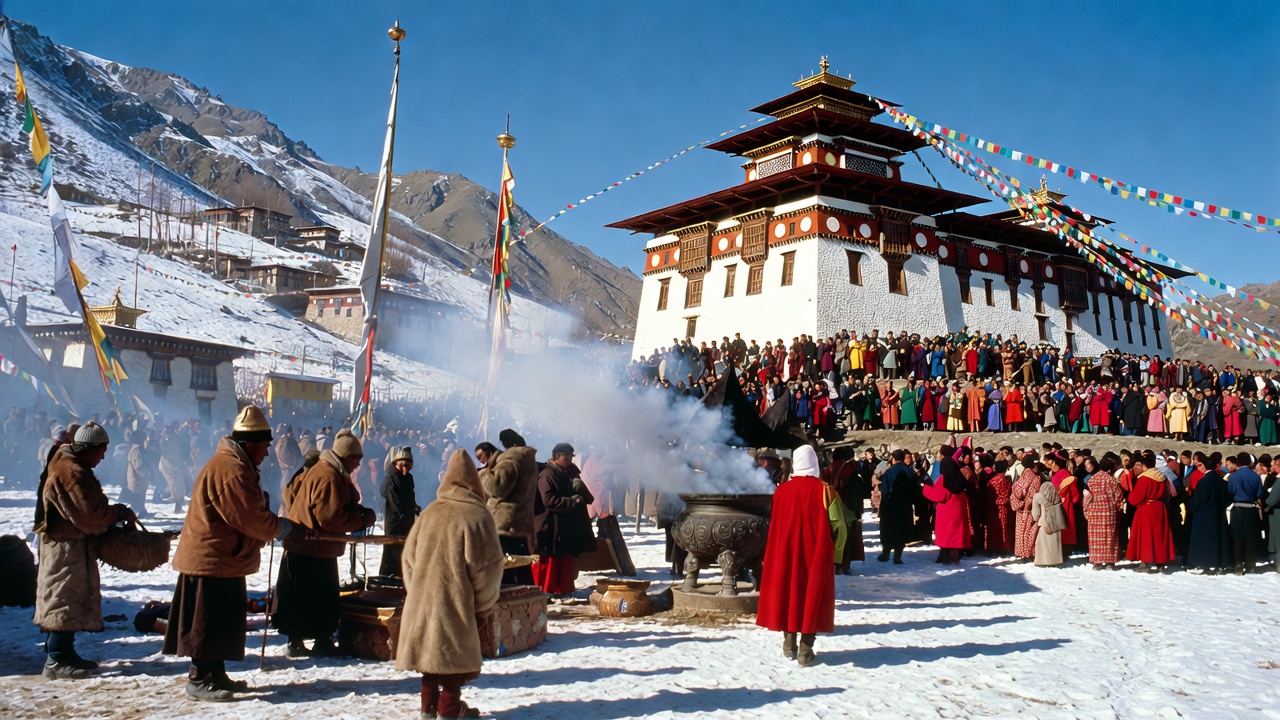
A Journey Through Ancient Traditions, Sacred Rituals, and Festive Customs Across the Himalayas
When the first winter winds sweep across the high Himalayan plateau, a quiet anticipation settles over households from Lhasa to Thimphu. Losar, the Tibetan New Year, stands as one of the most significant festivals in Buddhist tradition—a celebration that predates Buddhism itself and continues to unite communities across borders and generations. Yet while the word “Losar” translates simply to “new year” (from the Tibetan lo meaning “year” and sar meaning “new”), the ways this ancient festival unfolds in Tibet and Bhutan reveal fascinating differences that speak to each region’s unique cultural identity.
Having spent years documenting festival traditions across the Himalayan region, I can tell you that witnessing Losar in both countries offers travelers an extraordinary window into Buddhist spirituality, culinary heritage, and the enduring power of community bonds. In this comprehensive guide, we’ll explore everything you need to know about celebrating Tibetan New Year—from the pre-dawn rituals in Lhasa monasteries to the archery competitions echoing through Bhutanese valleys.
What is Losar and When Does Tibetan New Year Take Place?
Losar marks the beginning of the lunisolar Tibetan calendar year, typically falling between late January and early March on the Gregorian calendar. The festival celebrations span 15 days, though the most intensive festivities occur during the first three days. According to the Tibetan Nuns Project, the holiday traces its origins to the pre-Buddhist Bon religion, when communities performed winter incense-burning ceremonies to appease local spirits and deities.
Upcoming Losar Dates:
| Year | Gregorian Date | Tibetan Year | Animal Sign |
|---|---|---|---|
| 2025 | February 28 | 2152 | Wood Snake |
| 2026 | February 18 | 2153 | Fire Horse |
| 2027 | March 8 | 2154 | Fire Sheep |
The timing of Losar deserves special attention. While it shares roots with the Chinese lunar calendar through historical Uyghur and Mongolian influences, Tibetan New Year often falls on different dates than Chinese New Year. In 2025, for instance, Chinese New Year occurred on January 29, while Losar began on February 28—a full month later. This distinction matters both culturally and practically for travelers planning their visits.
Interestingly, even within Tibet itself, communities celebrate New Year at different times. The agricultural regions around Shigatse celebrate one month earlier than Lhasa, while the Kongpo region in eastern Tibet holds their celebrations three months ahead. These variations reflect local farming calendars and climate conditions that have shaped regional traditions over centuries.
Understanding the Historical Origins of Losar Festival Traditions
The story of Losar stretches back over 2,500 years, long before Buddhism arrived on the Tibetan plateau. According to traditional accounts, during the reign of Pude Gungyal, the ninth Tibetan king (approximately 317-398 CE), an ancient winter incense-burning custom merged with agricultural harvest celebrations to form the predecessor of modern Losar.
The Pre-Buddhist Roots of Tibetan New Year
In the Bon religious tradition, which dominated Tibet before Buddhism’s arrival, winter marked a critical time for appeasing the nagas (water spirits) and local territorial deities. Communities would burn aromatic juniper, cedar, and rhododendron branches as smoke offerings (sangsol), believing the fragrant smoke carried prayers and gratitude to the spirit realm.
The Rubin Museum of Art notes that these pre-Buddhist practices remain deeply embedded in contemporary Losar celebrations. Even today, many Tibetan families begin their New Year observances by visiting local springs to make offerings to nagas—a practice that Buddhist master Tenzin Wangyal Rinpoche describes as a “ritual of gratitude” acknowledging humanity’s connection to the natural world.
How Buddhism Transformed Losar Celebrations
When Buddhism spread throughout Tibet during the 7th and 8th centuries, Losar underwent significant transformation while retaining its essential character as a time of purification and renewal. The legendary Indian Buddhist master Padmasambhava (Guru Rinpoche) played a crucial role in this synthesis, reportedly performing the first Cham dance at the consecration of Samye Monastery around 779 CE.
This blending of indigenous and Buddhist traditions created the Losar we recognize today—a festival that simultaneously honors ancient spirits, celebrates Buddhist teachings, and strengthens family bonds. The result is what anthropologists call a “living fossil” of religious syncretism, where pre-Buddhist and Buddhist elements coexist harmoniously.
How Tibetans Celebrate Losar: Traditional Customs and Rituals in Tibet
For Tibetan families, Losar preparations begin weeks before the actual New Year. The celebration unfolds in two distinct phases: first, bidding farewell to the old year and its negativities; second, welcoming the new year with auspicious activities and prayers.
Pre-Losar House Cleaning and Spiritual Purification
The concept of spring cleaning takes on profound spiritual dimensions during Losar preparations. Families undertake thorough cleaning of their homes, particularly the kitchen, symbolically sweeping away the misfortunes and negative energies of the past year. This isn’t merely physical tidying—it represents a psychological and spiritual clearing that prepares space for fresh blessings.
According to YoWangdu Experience Tibet, a trusted resource for Tibetan cultural practices, families also:
- Settle all debts before the New Year (carrying debt into the new year is considered highly inauspicious)
- Resolve quarrels and mend broken relationships
- Acquire new clothes for family members to wear during celebrations
- Fill all food and water containers to overflowing, symbolizing abundance in the coming year
- Decorate walls with auspicious symbols painted in flour, including suns, moons, and reversed swastikas (an ancient Buddhist symbol of good fortune)
The Sacred Chemar Bo: Tibetan New Year Altar Decorations
Central to any Tibetan Losar celebration is the chemar bo (also spelled chhemar), an ornately carved wooden box divided into two vertical compartments. One side holds tsampa (roasted barley flour), while the other contains whole barley seeds. The box is decorated with butter sculptures, colored barley ears, and special flowers called Losar metok.
Additional altar elements include:
| Item | Tibetan Name | Symbolism |
|---|---|---|
| Butter sheep’s head | Luog-go | Auspiciousness (sounds similar to “beginning of year” in Tibetan) |
| Wheat sprouts | Lophu | Growth and renewal |
| Khapse pastry tower | Derkha | Abundance and celebration |
| Chang (barley beer) | Chang | Joy and communal sharing |
| Butter lamps | Choemey | Wisdom dispelling ignorance |
The five-grain bucket (phyemar) represents wishes for a bountiful harvest, while towers of khapse (deep-fried pastries) demonstrate the family’s prosperity and generosity toward guests.
Nyi Shu Gu: The Eve of New Year’s Eve Rituals
Perhaps the most distinctly Tibetan aspect of Losar occurs on Nyi Shu Gu—the 29th day of the 12th Tibetan month, or the “eve of New Year’s Eve.” This evening centers on eating guthuk, a special noodle soup consumed only once annually.
Guthuk takes its name from gu (nine) and thuk (noodle soup), referring both to the 29th day and the tradition of including nine different ingredients. But guthuk is more than ordinary soup—hidden within the dough balls are symbolic objects wrapped in paper that reveal each person’s fortune and character:
- Chili pepper: Indicates a talkative person
- Salt or rice: Reveals a kind-hearted nature
- Wool: Suggests a gentle, patient character
- Coal: Implies negativity or a “black heart” (though this is taken lightheartedly)
- Sun or moon symbol: Predicts prosperity and good fortune
After the guthuk meal, families perform the lue ritual, creating an effigy from leftover dough that symbolically absorbs all the household’s negativities. This effigy is then carried outside along with torches made of straw and tsampa, accompanied by shouts of “dhong sho ma” (“Go away! Leave the house!”). Firecrackers are lit to drive away evil spirits, completing the old year’s closure.
Traditional Tibetan New Year Foods: What to Eat During Losar Celebrations
Food plays an absolutely central role in Tibetan Losar celebrations. The Smithsonian Folklife Festival documentation on Himalayan traditions emphasizes that the preparation, presentation, and consumption of Losar foods constitute “highly important traditional rituals that serve to reinforce community ties.”
Khapse: The Beloved Tibetan New Year Pastries
No Losar celebration is complete without khapse (also spelled khapsay or khabsey)—deep-fried pastries that Tibetans collectively call “mouth-eat” foods. The diversity of khapse shapes reflects regional traditions and family preferences:
Common Khapse Varieties:
| Type | Description | Purpose |
|---|---|---|
| Bhungu amchoe | Large “donkey ear” shaped hollow tubes | Shrine decoration and offering |
| Mukdung | Large braided pastries | Shrine display |
| Bulug | Crispy circular spirals with sugar | Eating and decoration |
| Nyapsha | Small twisted rectangles | Everyday eating during festivities |
| Kaptog | Various small shapes | Guests and family snacking |
The preparation of khapse begins days before Losar, with families deep-frying batch after batch in mustard oil or butter. The distinctive shapes carry meaning—the large decorative khapse represent ancient traditions of placing actual sheep bones and offerings on shrines, transformed over time into edible flour and butter creations.
Changkol: The First Dish of the New Year
On the morning of Losar, many Tibetan families serve changkol (also called kunden) as the first food of the new year—a warm, sweet soup combining:
- Chang (barley beer)
- Small amounts of tsampa
- Dried yak cheese
- Butter
- Broken pieces of khapse
- Sugar
Served in bed at the impossibly early hour of 3:30 AM, changkol represents the mingling of sweetness and nourishment that families wish for the coming year. Some families alternatively serve drothuk, a savory porridge made with yak meat.
Dresil: Tibetan Sweet Rice for Special Occasions
Dresil (also called droma deysi) is a sweet rice dish reserved for Losar and other significant celebrations. This beloved dessert combines:
- Cooked rice
- Butter (traditionally from dri, the female yak)
- Golden raisins
- Droma (a small, sweet root vegetable native to the Tibetan plateau)
- Sugar
The gleaming, golden appearance of dresil symbolizes prosperity, while its sweetness represents the hope for pleasant experiences throughout the new year.
Why Momos Are NOT Served on the First Day of Losar
Interestingly, momos—the famous Tibetan dumplings beloved worldwide—are typically not eaten on the first day of Losar. Their closed, wrapped shape is considered inauspicious for a day dedicated to openness and new beginnings. However, momos feature prominently in Losar celebrations on subsequent days and at community gatherings.
Cham Dance Performances: Sacred Mask Dances of Tibetan Buddhism
One of the most visually spectacular elements of Tibetan Losar celebrations is the Cham dance—a masked ritual performance that has captivated visitors for centuries. Early Western travelers mistakenly called these performances “devil dances” due to the fierce appearance of the masks, but Cham actually represents the triumph of Buddhist teachings over ignorance and evil.
The Spiritual Meaning Behind Tibetan Mask Dancing
Cham is not entertainment in the conventional sense—it is meditation in motion, a spiritual offering that brings merit to both performers and witnesses. According to Buddha Weekly, the dance represents “the victory over the four inner impediments or defects: anger, pride, delusion, and envy.”
Monks who perform Cham undergo weeks of rigorous preparation, including:
- Extended meditation retreats
- Fasting and prayer
- Memorization of complex choreography
- Visualization practices to embody the deities they represent
When a monk dons the mask of a deity like Mahakala or Padmasambhava, he is understood to temporarily become that divine presence, channeling spiritual power for the benefit of all beings.
The Black Hat Dance: Commemorating Buddhist History
One particularly significant Cham performance, the Black Hat dance, commemorates a pivotal moment in Tibetan Buddhist history. In 841 CE, the anti-Buddhist king Langdarma threatened to destroy Buddhism in Tibet. A monk named Lhalung Pelgyi Dorje dressed in black robes and performed an elaborate dance outside the palace until granted an audience—whereupon he assassinated the tyrant king.
This dance, performed on the eve of Losar at monasteries like Kumbum, symbolizes the ultimate victory of Buddhist dharma over forces of destruction. The dramatic black-clad dancers move with deliberate precision, their movements telling the story of spiritual courage overcoming temporal power.
Where to See Cham Dances During Tibetan New Year
For travelers hoping to witness authentic Cham performances, several monasteries are renowned for their Losar celebrations:
| Monastery | Location | Cham Date (Tibetan Calendar) |
|---|---|---|
| Tsurphu Monastery | 50 km from Lhasa | December 29 (eve of Losar) |
| Kumbum Monastery | Qinghai Province | December 29 |
| Samye Monastery | Shannan Prefecture | 15th day of 5th month |
| Tashilunpo Monastery | Shigatse | 15th day of 5th month |
| Drepung Monastery | Near Lhasa | Various dates |
Losar Celebrations in Bhutan: How the Dragon Kingdom Celebrates New Year
While sharing common roots with Tibetan Losar, Bhutanese New Year celebrations have developed distinctive characteristics that reflect the kingdom’s unique history and cultural identity. Modern Losar observance in Bhutan traces to a specific historical moment: the completion of Punakha Dzong in 1637.
The Historical Origin of Bhutanese Losar Traditions
When Zhabdrung Ngawang Namgyal (1594-1651), the Buddhist leader who unified Bhutan, completed the magnificent Punakha Dzong, he commemorated the achievement with an inaugural Losar celebration. According to the Smithsonian Folklife Festival, “Bhutanese came from all over the country to bring offerings of produce from their various regions, a tradition that is still reflected in the wide variety of foods consumed during the ritual Losar meals.”
This founding event established Losar as not merely a religious observance but also a celebration of Bhutanese national identity. The Traditional Day of Offering (Buelwa Phuewi Nyim) commemorates this moment when representatives from across Bhutan pledged loyalty to the Zhabdrung, making it both a spiritual and patriotic occasion.
Bhutan’s Multiple New Year Celebrations
Unlike Tibet, where Losar is the singular New Year celebration, Bhutan observes several different New Year festivals depending on region and ethnic tradition:
| Festival | Timing | Region | Key Features |
|---|---|---|---|
| Losar | February-March | Nationwide | Buddhist rituals, family gatherings |
| Chunyipai Losar | 1st day of 12th month | Central/Eastern Bhutan | Traditional Day of Offering |
| Lomba | Late autumn (harvest) | Paro and Haa valleys | Two-day harvest celebration |
| Blessed Rainy Day (Thruebab) | After summer monsoon | Eastern Bhutan | Ritual bathing, new year observance |
This multiplicity of celebrations reflects Bhutan’s geographic and ethnic diversity. The western valleys, central districts, and eastern regions each maintain distinct traditions while sharing the broader Bhutanese Buddhist cultural framework.
Traditional Bhutanese New Year Food and Customs
Bhutanese Losar cuisine shares some similarities with Tibetan traditions but incorporates distinctive local ingredients and preparations that reflect the kingdom’s agricultural bounty and culinary preferences.
Khabzey and Khuley: Bhutanese New Year Pastries
Like their Tibetan cousins, Bhutanese families prepare khabzey (deep-fried cookies similar to khapse) in abundance before Losar. These crispy treats are offered to deities, shared with guests, and enjoyed throughout the celebration period.
Khuley, a traditional pancake, accompanies khabzey on Bhutanese New Year altars and breakfast tables. Both items are prepared early on Losar morning and placed on family altars as offerings before being consumed.
The Significance of Thuep: Bhutanese New Year Porridge
Thuep holds a special place in Bhutanese Losar celebrations, according to the Trans-Bhutan Trail food documentation. This rice porridge, typically made with beef bones (or paneer for vegetarians), is eaten in small quantities before breakfast on Losar morning. The rich, ginger-infused preparation warms the body on cold February mornings while symbolizing prosperity and good health.
Auspicious Foods for Bhutanese New Year
Certain foods carry special significance during Bhutanese Losar:
- Sugarcane: Considered highly auspicious; its sweetness predicts a pleasant year
- Green bananas: Symbol of growth and future prosperity
- Ema datshi: Bhutan’s fiery national dish of chilies and cheese, served at every celebratory meal
- Red rice: The distinctive Bhutanese grain accompanying all meals
- Suja: Tibetan-style butter tea, essential for celebrations and religious events
- Ara: Traditional distilled alcohol consumed freely during festivities
- Shudre: Special sweets prepared for the occasion
The presence of sugarcane and green bananas on the Losar table is believed to ensure good fortune throughout the coming year—a tradition unique to Bhutanese celebrations.
Archery and Traditional Games: How Bhutanese Celebrate Losar Differently
One striking difference between Tibetan and Bhutanese Losar celebrations involves the prominence of traditional sports and games in Bhutan. While Tibetans focus primarily on religious observances and family meals during the first days of Losar, Bhutanese families eagerly head outdoors for competitive games and communal activities.
Archery: Bhutan’s National Sport and Losar Tradition
Archery (dha) holds a special place in Bhutanese culture as the national sport, and Losar provides the perfect occasion for competitions. Villages organize tournaments where teams compete using traditional bamboo bows or modern compound bows, accompanied by elaborate rituals of celebration and good-natured taunting.
According to visitors who’ve witnessed Losar archery in Bhutan, the competitions feature:
- Traditional songs and dances performed when a team scores
- Colorful traditional dress worn by participants
- Communal feasting between rounds
- Good-humored teasing of opponents
- Significant betting and prizes
The archery field becomes a social gathering point where communities reconnect, friendships are reinforced, and rivalries are playfully expressed.
Degor and Khuru: Traditional Bhutanese Games
Beyond archery, Bhutanese Losar celebrations include other traditional games:
Degor involves throwing flat, round stones at a grounded target—similar to horseshoes. Players demonstrate precision and skill while spectators cheer and commentate.
Khuru (dart-throwing) features heavy, metal-tipped darts thrown at small wooden targets from considerable distances. The game requires remarkable accuracy and has been a Bhutanese tradition for centuries.
Family Picnics and Outdoor Celebrations
Unlike the more home-centered Tibetan observances, Bhutanese Losar often moves outdoors for family picnics and community gatherings. Families dress in their finest traditional clothes—men in ghos (robes) and women in kiras (dresses)—and gather at scenic locations for elaborate outdoor meals.
This emphasis on outdoor celebration reflects both Bhutan’s generally milder climate compared to the Tibetan plateau and the cultural importance placed on communal activities and social bonding.
Key Differences Between Tibetan and Bhutanese Losar Celebrations
Understanding the distinctions between Tibetan and Bhutanese Losar helps travelers appreciate each tradition’s unique character. The following comparison highlights the most significant differences:
Comparative Overview of Losar Traditions
| Aspect | Tibet | Bhutan |
|---|---|---|
| Historical origin | Pre-Buddhist Bon rituals (2,500+ years) | 1637 Punakha Dzong ceremony |
| Primary greeting | “Losar Tashi Delek” | “Lo Sel La” or “Losar Tashi Delek” |
| Duration | 15 days, first 3 most important | Up to 14 days, first 3 most important |
| Pre-dawn rituals | Changkol soup served at 3:30 AM | Thuep porridge at sunrise |
| Key pastry | Khapse | Khabzey |
| Main beverage | Chang (barley beer) | Ara (distilled liquor) and suja |
| Signature soup | Guthuk (noodle soup with fortune objects) | Paneer thukpa (cheese noodle soup) |
| Sports/games | Minimal emphasis | Central to celebration (archery, darts) |
| Outdoor activities | Temple visits primarily | Picnics, archery tournaments |
| Flour throwing | Not prominent | Monastery tradition (tsampa flour battles) |
| Religious authority | Dalai Lama’s blessing (in exile) | Je Khenpo and Dratshang ceremonies |
| Auspicious foods | Dresil, khapse, momos (not first day) | Sugarcane, green bananas, ema datshi |
Religious Ceremonies: Tibet vs. Bhutan
The religious dimensions of Losar differ significantly between the two cultures:
In Tibet, prior to 1950, Losar began with morning ceremonies at Namgyal Monastery led by the Dalai Lama, honoring the dharma protector Palden Lhamo. Since the Dalai Lama’s exile, these ceremonies continue in Dharamsala, India, where thousands of Tibetan Buddhists queue to receive his blessings. Inside Tibet, monastic Losar observances continue but under governmental restrictions.
In Bhutan, Losar ceremonies involve the Je Khenpo (chief abbot) and the Dratshang (central monastic body). The celebrations at Punakha Dzong hold particular significance, connecting contemporary observances to the founding moment of Bhutanese nationhood in 1637.
Cultural Identity and National Significance
Perhaps the most profound difference lies in what Losar represents culturally:
For Tibetans, Losar has become an expression of cultural resilience and identity preservation, particularly meaningful given decades of political challenges. Tibetan communities worldwide—from Dharamsala to New York City—use Losar to maintain cultural continuity and pass traditions to younger generations.
For Bhutanese, Losar intertwines with national identity in a different way, celebrating the kingdom’s unification under Zhabdrung Ngawang Namgyal and the distinctive Bhutanese expression of Vajrayana Buddhism. The festival affirms Bhutan’s unique position as an independent Buddhist kingdom.
The 15 Days of Losar: Understanding the Full Celebration Calendar
Both Tibetan and Bhutanese traditions recognize Losar as a 15-day celebration, though the most intensive observances occur during the first three days. Understanding the full calendar helps visitors plan their experiences and appreciate the festival’s rhythms.
Days 1-3: The Heart of Losar Celebrations
Day 1 (Lama Losar) is dedicated to religious observances. Families rise before dawn, offer prayers, and visit monasteries. The day focuses on spiritual renewal and receiving blessings.
Day 2 (Gyalpo Losar/King’s Losar) historically celebrated the Tibetan king and government. Today, it remains a day for honoring leadership and community bonds.
Day 3 (Choekhor Losar) is dedicated to dharma and spiritual teachers, with continued monastery visits and offerings.
Days 4-15: Extended Celebrations and Chötrul Düchen
The remaining days involve continued family visiting, feasting, and religious observances. The 15th day coincides with Chötrul Düchen (the Festival of Miracles), commemorating the period when Buddha performed 15 consecutive miracles to increase devotion among his followers.
During this festival period, the karmic effects of positive and negative actions are believed to be multiplied millions of times, making it particularly important to engage in virtuous activities, prayers, and acts of generosity.
The Butter Lamp Festival: Closing Losar Celebrations
On the 15th day, both Tibetan and Bhutanese communities celebrate the Butter Lamp Festival (Chunga Choepa). Monasteries and homes display elaborate butter sculptures depicting flowers, animals, deities, and auspicious symbols. These sculptures, created using colored butter worked with bare hands in cold temperatures, represent offerings of light dispelling the darkness of ignorance.
The tradition of butter sculpture dates back over 400 years and requires remarkable artistic skill. At monasteries like Dolma Ling Nunnery in India, nuns spend weeks creating intricate sculptures that will melt away within days—a profound reminder of impermanence that lies at the heart of Buddhist teaching.
Planning Your Trip: Best Places to Experience Losar in Tibet and Bhutan
For travelers seeking authentic Losar experiences, both Tibet and Bhutan offer remarkable opportunities—though each requires different planning considerations.
Experiencing Losar in Tibet: Practical Considerations
Visiting Tibet during Losar requires advance planning due to permit requirements and the complexity of traveling in the region:
Documentation needed:
- Chinese visa
- Tibet Travel Permit (arranged through authorized tour operator)
- Additional permits for areas outside Lhasa
Best locations for Losar in Tibet:
- Lhasa: The spiritual heart of Tibet offers the most comprehensive Losar experience
- Visit Jokhang Temple for prayers and offerings
- Explore the Barkhor circuit with pilgrims and celebrants
- Witness ceremonies at Potala Palace grounds
- Monasteries near Lhasa:
- Tsurphu Monastery for Cham dances on Losar eve
- Drepung Monastery for monastic celebrations
- Sera Monastery for traditional debates and ceremonies
- Shigatse: For those interested in regional variations, Shigatse celebrates New Year one month earlier than Lhasa
Important note: Book your Tibet Losar tour well in advance—at least 2-3 months before your travel dates—to allow time for permit processing.
Experiencing Losar in Bhutan: Practical Considerations
Bhutan’s tourism system requires all visitors to book through licensed tour operators and pay a Sustainable Development Fee (currently $100 USD per day). While this makes Bhutan more expensive than neighboring countries, it ensures high-quality experiences and contributes to conservation and cultural preservation.
Best locations for Losar in Bhutan:
- Punakha: The historic seat of Bhutanese Losar celebrations
- Witness ceremonies at Punakha Dzong
- Experience the convergence of the Mo Chhu and Pho Chhu rivers
- Participate in community festivities
- Thimphu: The capital offers accessible celebrations
- Visit Tashichho Dzong for official ceremonies
- Explore markets selling traditional Losar foods
- Witness archery competitions in local grounds
- Paro: Gateway to Bhutan with vibrant celebrations
- Experience family-style hospitality
- Participate in outdoor picnics and games
- Visit Rinpung Dzong (Paro Dzong) for ceremonies
- Bumthang: For travelers seeking off-the-beaten-path experiences
- Witness the flour-throwing traditions at local monasteries
- Experience more traditional, rural celebrations
- Engage with authentic village customs
How to Greet Someone During Tibetan and Bhutanese New Year
Learning appropriate greetings demonstrates respect for local culture and opens doors to meaningful interactions with local people.
Tibetan New Year Greetings
The most common Tibetan New Year greeting is:
“Losar Tashi Delek” (བཀྲ་ཤིས་བདེ་ལེགས)
This translates approximately to “Good fortune and auspicious blessings for the New Year.” The phrase combines:
- Losar: New Year
- Tashi: Auspiciousness, good fortune
- Delek: Happiness, well-being
When offering this greeting, Tibetans traditionally:
- Make eye contact and smile gently
- Clasp hands at heart level or perform a slight bow
- Speak clearly and with warmth
- Expect a similar response in return
Bhutanese New Year Greetings
In Bhutan, while “Losar Tashi Delek” is understood and used, the specifically Bhutanese greeting is:
“Lo Sel La”
This Dzongkha phrase directly wishes the recipient well for the New Year. After receiving this greeting, the appropriate response is:
“Thukje che” (Thank you, with gratitude)
When greeting Bhutanese during Losar:
- Offer khapse or other treats if visiting homes
- Present white khatak (ceremonial scarves) as signs of respect
- Accept offered foods and drinks graciously
- Participate in toasts with ara (local alcohol) if comfortable
Understanding the Tibetan Zodiac: What Year Is It According to the Tibetan Calendar?
The Tibetan calendar combines 12 animal signs with 5 elements in a 60-year cycle, creating rich astrological significance for each New Year.
The 12 Animals of the Tibetan Zodiac
| Animal | Tibetan Name | Characteristics |
|---|---|---|
| Rat | Chiwa | Clever, resourceful |
| Ox | Lang | Hardworking, dependable |
| Tiger | Tag | Brave, confident |
| Hare | Yos | Gentle, compassionate |
| Dragon | Druk | Powerful, auspicious |
| Snake | Drul | Wise, intuitive |
| Horse | Ta | Energetic, independent |
| Sheep | Lug | Peaceful, artistic |
| Monkey | Trel | Playful, intelligent |
| Bird | Ja | Observant, honest |
| Dog | Khi | Loyal, protective |
| Pig | Phag | Generous, sincere |
The Five Elements
The elements cycle in pairs:
- Wood (shing)
- Fire (me)
- Earth (sa)
- Iron (lcags)
- Water (chu)
Additionally, each year carries either male or female energy, creating combinations like “Female Wood Snake” (2025) or “Fire Horse” (2026).
Astrological Considerations During Losar
Many Tibetan and Bhutanese families consult the astrological calendar during Losar to identify auspicious times for:
- Beginning new projects
- Making major purchases
- Starting journeys
- Performing important rituals
The practice of consulting oracles, particularly the Nechung Oracle for matters of state importance, has been part of Tibetan New Year traditions for centuries.
Preserving Losar Traditions: The Global Tibetan Diaspora
Since 1959, when the 14th Dalai Lama and thousands of Tibetans fled into exile, Losar has taken on additional significance as a practice of cultural preservation. Communities worldwide—from Dharamsala to New York, from Switzerland to Nepal—maintain Losar traditions as living connections to Tibetan identity.
Losar Celebrations in Dharamsala, India
Dharamsala in Himachal Pradesh hosts the largest Tibetan exile community and serves as the headquarters of the Central Tibetan Administration. Losar celebrations here carry particular emotional weight:
- The Dalai Lama offers blessings at his temple, with thousands queuing for his presence
- Tibetan Children’s Village schools perform cultural programs
- Monasteries hold elaborate ceremonies maintaining pre-1959 traditions
- Community gatherings unite Tibetans from various backgrounds
For travelers, attending Losar in Dharamsala offers profound opportunities to witness both the resilience of Tibetan culture and the ongoing work of cultural preservation.
Losar in Nepal: The Sherpa Connection
Nepal’s Sherpa community maintains strong connections to Tibetan Buddhist traditions, celebrating Gyalpo Losar (King’s Losar) with enthusiasm. Key celebration locations include:
- Boudhanath Stupa in Kathmandu—a major pilgrimage site
- Namche Bazaar in the Khumbu region
- Tibetan settlements throughout the Kathmandu Valley
The Sherpa celebration emphasizes the nine ingredients of guthuk, khapse preparation, and monastery visits, maintaining traditions despite geographic separation from Tibet.
Losar Around the World
Tibetan communities worldwide adapt Losar traditions to their new environments while maintaining essential practices:
- New York City: The largest Tibetan community in North America holds public celebrations
- Switzerland: Home to significant Tibetan exile population
- Minnesota: Strong community celebrations in Minneapolis-St. Paul area
- Toronto, Vancouver: Canadian Tibetan communities maintain active traditions
- European capitals: Communities in Brussels, Paris, London organize annual celebrations
The Spiritual Heart of Losar: Buddhist Teachings and New Year Meaning
Beyond the festivities, foods, and cultural practices, Losar carries profound spiritual significance rooted in Buddhist philosophy. Understanding these deeper dimensions enriches any experience of the festival.
Impermanence and Renewal
Buddhist teaching emphasizes anicca (impermanence)—the understanding that all phenomena are constantly changing. Losar embodies this teaching through:
- Deep cleaning: Releasing attachment to the old year
- Butter sculptures: Beautiful creations that will inevitably melt
- New clothes: Symbolic of transformation and fresh beginnings
- Resolution of conflicts: Recognition that relationships require ongoing renewal
The transition from old year to new provides an annual opportunity to contemplate impermanence and recommit to spiritual practice.
Merit and Karmic Amplification
During the 15 days of Losar, particularly during Chötrul Düchen, positive and negative actions are believed to have multiplied karmic effects. This belief motivates:
- Increased generosity: Offerings to monasteries and the poor
- Intensive practice: Extended prayers and meditation
- Ethical mindfulness: Heightened attention to speech and action
- Acts of kindness: Extra efforts toward compassion
Tibetan Buddhist nuns at institutions like Dolma Ling Nunnery use this period for intensive spiritual practice, understanding that merit accumulated benefits all sentient beings.
Community and Interdependence
Losar reinforces the Buddhist understanding of interdependence—that all beings are connected and that individual well-being cannot be separated from collective flourishing. The emphasis on:
- Family gatherings
- Sharing food with visitors
- Settling debts and resolving conflicts
- Making offerings for all beings
…reflects this understanding that genuine happiness arises through caring for others.
Frequently Asked Questions About Losar Celebrations
Is Losar the same as Chinese New Year?
While both festivals follow lunar calendars and sometimes fall on the same date, Losar and Chinese New Year are distinct celebrations with different origins, traditions, and cultural meanings. In 2025, for example, Chinese New Year fell on January 29, while Losar began on February 28—a full month apart. The traditions of Losar predate both Chinese and Indian influences on Tibetan culture.
Can tourists participate in Losar celebrations?
Yes, tourists are generally welcome to observe and participate in public Losar celebrations in both Tibet and Bhutan. However, access to Tibet requires proper permits arranged through authorized tour operators, and Bhutan requires booking through licensed agents. In both countries, respectful behavior and cultural sensitivity are essential.
What should I wear to Losar celebrations?
Dress warmly and modestly. If invited to private homes or ceremonies, neat, conservative clothing is appropriate. Many visitors choose to wear locally-purchased traditional clothing, which locals generally appreciate when worn respectfully.
Are Losar celebrations the same throughout Tibet?
No, regional variations exist. Shigatse celebrates one month earlier than Lhasa, while Kongpo celebrates three months earlier. Different monasteries also have varying traditions and ceremonial schedules.
What gifts are appropriate to bring when visiting Bhutanese or Tibetan homes during Losar?
Traditional gifts include:
- White ceremonial scarves (khatak)
- Fruits and sweets
- Tea or other food items
- Small monetary gifts in red envelopes (for children)
Avoid giving items in odd numbers (even numbers are considered auspicious) or anything associated with death or misfortune.
Conclusion: Why Experiencing Losar Should Be on Every Traveler’s Bucket List
Losar offers far more than a colorful festival to photograph—it provides a window into some of humanity’s oldest continuous spiritual traditions and the remarkable resilience of Himalayan cultures. Whether you witness the pre-dawn rituals in a Tibetan farmhouse, join an archery competition in a Bhutanese valley, or receive blessings from monks at an ancient monastery, Losar invites participation in something profound.
The differences between Tibetan and Bhutanese celebrations remind us that cultural traditions are living, evolving practices that adapt to their environments while maintaining essential meanings. The guthuk soup of Tibet and the thuep porridge of Bhutan, the chang of the plateau and the ara of the valleys, the home-centered Tibetan observances and the outdoor Bhutanese games—all represent variations on shared themes of purification, renewal, community, and hope.
For travelers fortunate enough to experience Losar, the memories extend far beyond the spectacle. The warmth of a family sharing their holiday meal with a stranger, the haunting sounds of monastery horns echoing through mountain valleys, the smile of a child receiving New Year’s blessings—these moments connect us to something timeless and universal.
As Tibetans and Bhutanese would say: Losar Tashi Delek—may the New Year bring you auspicious blessings, good fortune, and the wisdom to appreciate life’s precious moments.
Have you experienced Losar celebrations in Tibet or Bhutan? Share your stories and tips in the comments below. Planning a trip to witness these remarkable traditions? Feel free to reach out with questions—I’m always happy to help fellow travelers discover the magic of Himalayan festivals.