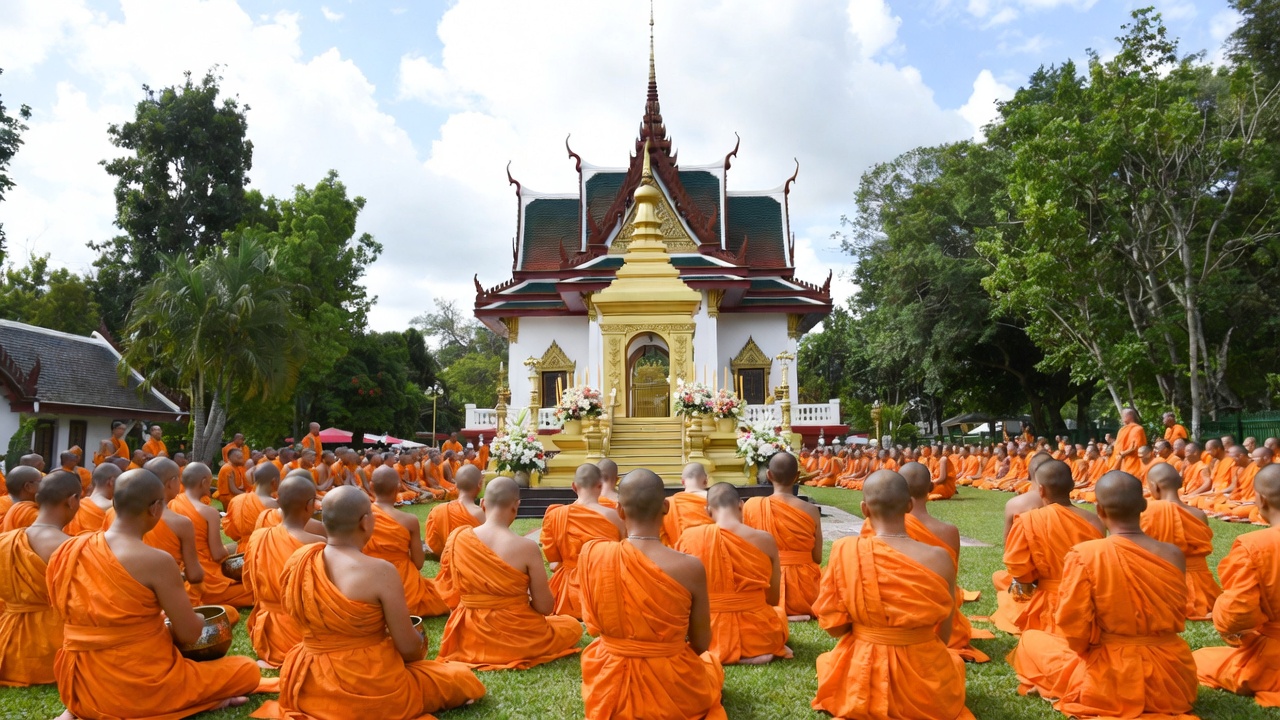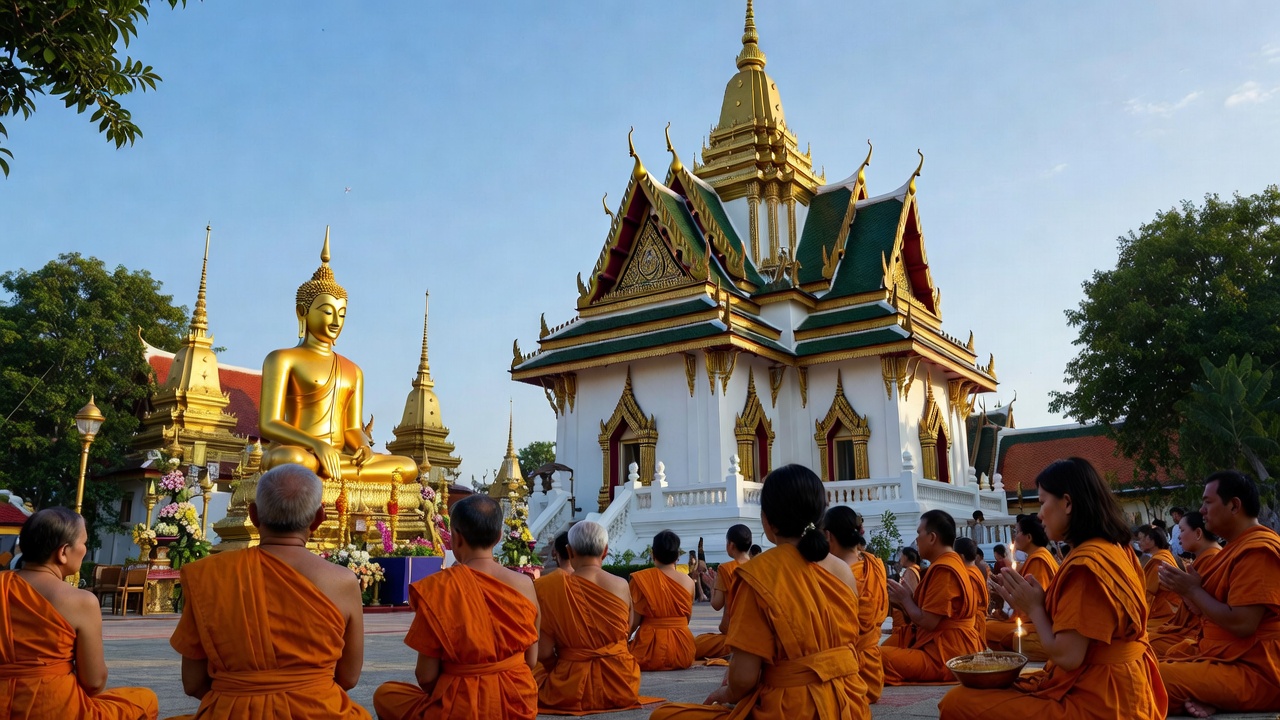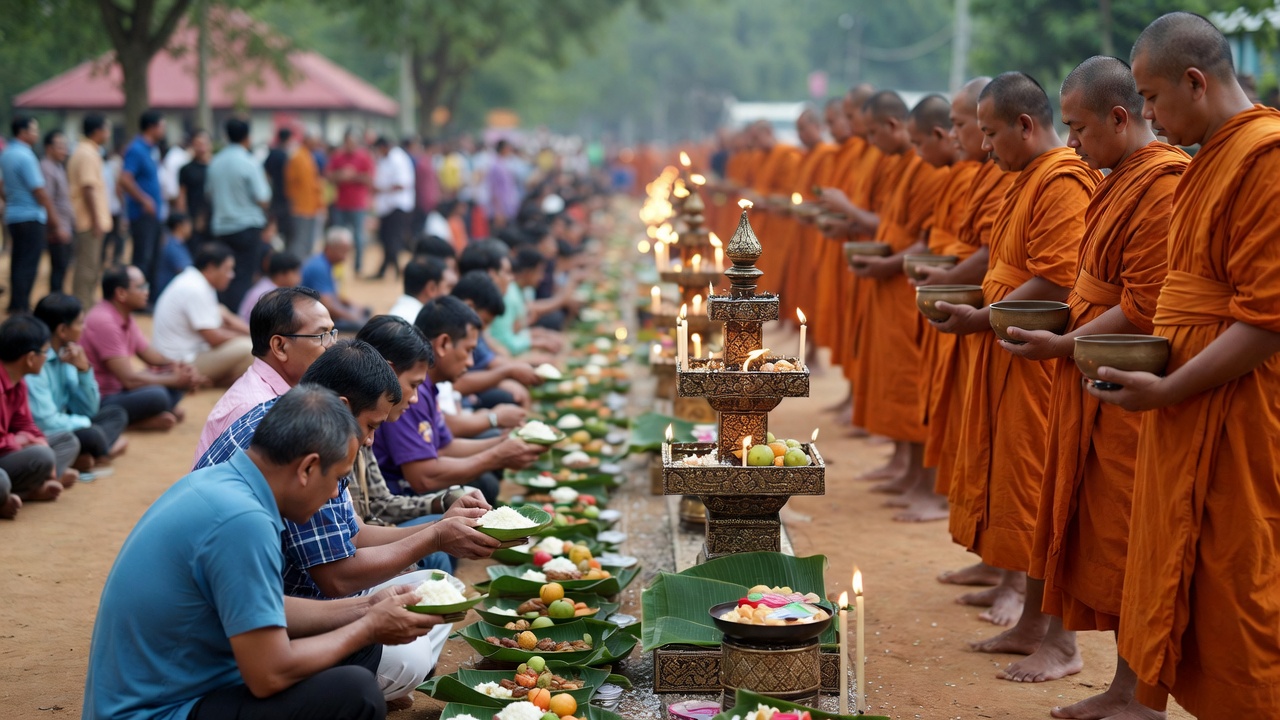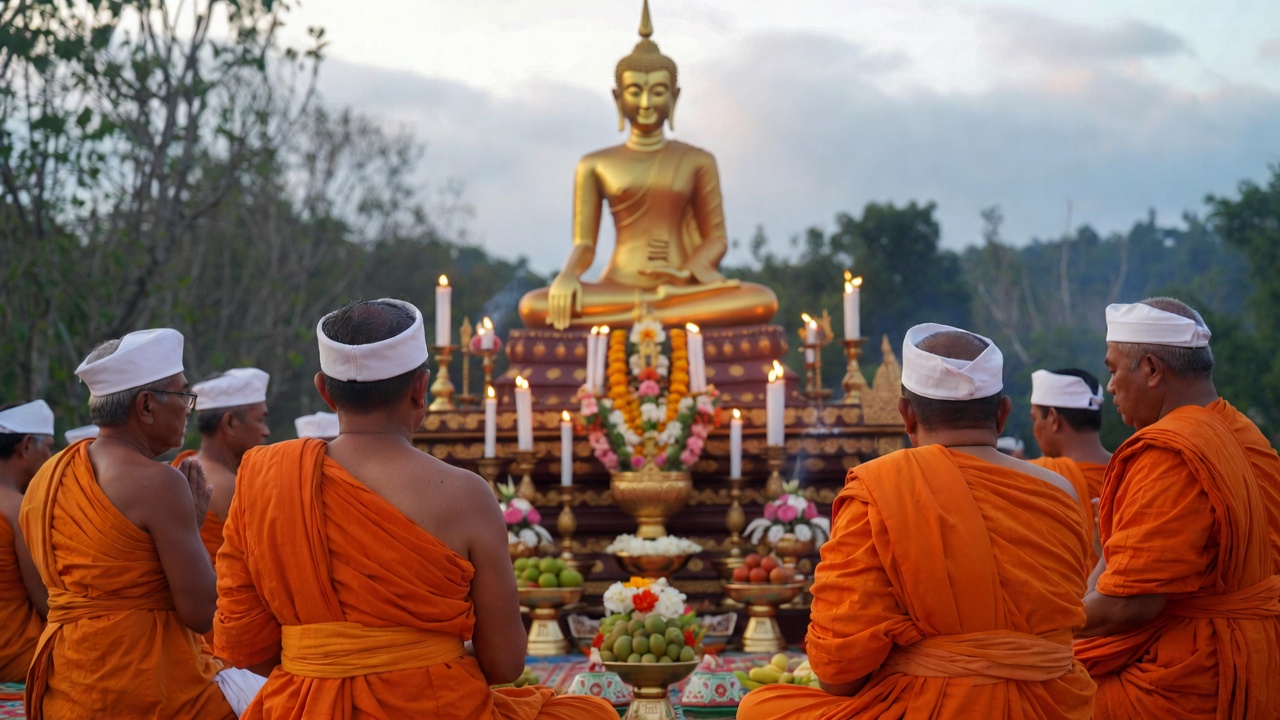
Every year, under the glow of a full moon, millions of Buddhists across Southeast Asia come together to honor one of the faith’s most sacred occasions. Candles flicker in the hands of monks, families, and solo travelers alike. Incense smoke curls upward in the still night air. Bare feet shuffle along ancient temple grounds in a rhythm that has not changed for centuries.
This is Makha Bucha Day — known also as Magha Puja — and its centerpiece, the breathtaking Wien Thian candlelight procession, remains one of the most visually moving and spiritually meaningful rituals in Theravada Buddhism.
In 2026, Makha Bucha Day falls on Tuesday, March 3 (some sources list March 4 depending on local lunar calendar interpretations). Whether you are a devout Buddhist, a curious traveler, or a student of world culture, this guide covers everything you need to know: the history, the rituals, the candlelight processions, the regional variations, and the practical travel tips for attending ceremonies across Thailand and beyond.
What Is Makha Bucha Day and Why Is It Celebrated?
Makha Bucha is the second most important Buddhist holiday after Vesak (Visakha Bucha). It is observed on the full moon day of the third lunar month, which usually falls in February or March on the Gregorian calendar. The word makha comes from the Pali word “Magha,” referring to the third lunar month. The word bucha derives from the Pali “Puja,” meaning “to venerate” or “to honor.”
Together, the name translates roughly to “worship on the full moon of the third lunar month.”
This holiday commemorates a remarkable event that took place 2,500 years ago at a bamboo grove called Veluvana (the Bamboo Grove monastery) near Rajagaha in northern India. Nine months after the Buddha attained enlightenment, 1,250 monks arrived spontaneously — without any prior arrangement — to hear him teach.
This gathering is exceptional in Buddhist tradition because of four miraculous coincidences, known collectively as the “Fourfold Assembly” (จาตุรงคสันนิบาต, Caturangasannibat):
- All 1,250 monks came of their own accord. There was no scheduled meeting or invitation.
- All of them were Arahants — fully enlightened beings who had overcome all defilements.
- All had been ordained directly by the Buddha himself through the Ehi Bhikkhu ordination.
- The gathering happened on the full moon day of the month of Magha.
On this day, the Buddha delivered what is known as the Ovadhapatimokha (โอวาทปาติโมกข์) — the fundamental teaching that summarizes the heart of Buddhism in three principles:
- Cease from all evil (Sabba papassa akaranam)
- Do only good (Kusalassa upasampada)
- Purify the mind (Sacitta pariyodapanam)
These three tenets became the moral foundation of Buddhist life. They are still recited in temples across Thailand, Cambodia, Laos, Myanmar, and Sri Lanka every Makha Bucha Day.
The History of Makha Bucha Day in Thailand: From Royal Courts to National Holiday
The observance of Makha Bucha Day in Thailand has a surprisingly recent formal history, even though the event it commemorates is thousands of years old.
King Rama IV (King Mongkut), who reigned from 1851 to 1868, is credited with establishing the first formal Makha Bucha celebration in Thailand. A deeply scholarly king who spent 27 years as a Buddhist monk before ascending the throne, Rama IV recognized the spiritual importance of the Fourfold Assembly. He initiated the first ceremonies within the Temple of the Emerald Buddha (Wat Phra Kaew) in Bangkok. At this time, only members of the royal court participated.
His successor, King Rama V (King Chulalongkorn), expanded the practice beyond the palace walls. In 1913, he officially declared Makha Bucha a public holiday, opening the celebration to the general population and organizing ceremonies at temples throughout the kingdom.
By the 1930s, the holiday was widely observed. However, by the 1950s, public enthusiasm had waned. The future Supreme Patriarch Plod Kittisobhano played a key role in reviving the celebration. His efforts helped restore Makha Bucha to its rightful place in the Thai Buddhist calendar.
In 2006, the Thai government added another layer of meaning to the holiday. It officially designated Makha Bucha as Thailand’s “National Day of Gratitude” — a cultural alternative to Valentine’s Day, which the government felt was encouraging inappropriate behavior among Thai youth. The initiative promoted the idea that true love is rooted in compassion, moral duty, and spiritual reflection rather than commercial romance.
Today, Makha Bucha is one of five major Buddhist holidays in Thailand on which the sale of alcohol is strictly regulated. Since 2015, Thailand has enforced a nationwide 24-hour alcohol sales ban on these days. Violations can result in fines of up to 10,000 Thai Baht or imprisonment of up to six months.
However, starting in 2025, the Thai government introduced limited exemptions for tourism-related venues. According to Khaosod English, alcohol may now be sold at international airports, registered hotels, licensed entertainment venues, and designated event locations. Most roadside restaurants, convenience stores, and supermarkets remain subject to the ban.
What Is a Wien Thian Candlelight Procession on Makha Bucha?
The Wien Thian (เวียนเทียน) is the ritual heart of the Makha Bucha evening celebration. It is a candlelight procession in which both monks and laypeople walk three times clockwise around the main chapel of a Buddhist temple, known as the Ubosot (ordination hall).
The name is straightforward. “Wien” (เวียน) means “to circle around.” “Thian” (เทียน) means “candle.” Together, the phrase describes the act of circling a sacred space while holding a lit candle.
Each participant carries three items:
| Item | Symbolism |
|---|---|
| A lit candle | Represents the light of the Buddha’s wisdom, dispelling the darkness of ignorance |
| Three sticks of incense | Represent the Triple Gem — the Buddha, the Dhamma (teachings), and the Sangha (monastic community) |
| A lotus flower or other offering | Symbolizes purity arising from the mud of worldly suffering |
The three clockwise circuits around the Ubosot also carry deep meaning. Each circuit honors one element of the Triple Gem:
- First circuit: Honors the Buddha (the teacher)
- Second circuit: Honors the Dhamma (the teachings)
- Third circuit: Honors the Sangha (the monastic community)
During the procession, participants walk in silence or softly chant prayers. The atmosphere is one of deep calm. Hundreds — sometimes thousands — of flickering candles create a golden river of light against the night sky. For many visitors, it is one of the most visually striking and emotionally stirring experiences in all of Southeast Asian spirituality.
How to Participate in a Makha Bucha Candle Procession as a Traveler
One of the most beautiful things about Makha Bucha Day is that everyone is welcome. You do not need to be Buddhist to participate in a Wien Thian procession. Temples across Thailand openly welcome foreign visitors, and many monks speak enough English to help guide you through the process.
Here is a step-by-step guide to joining the procession respectfully:
Before the procession:
- Dress modestly. Cover your shoulders and knees. White clothing is preferred by those observing the Eight Precepts, but it is not required for casual participants. Avoid loud colors, shorts, or tank tops.
- Remove your shoes before entering any temple building. Leave them at the designated area near the entrance.
- Purchase your candle, incense, and flower at stalls that line the temple grounds on the evening of Makha Bucha. These stalls typically open around 5:00 PM and cost only 20–50 Thai Baht for a complete set.
- Arrive early. Popular temples get crowded after sunset. Arriving by 6:00 PM gives you time to settle in.
During the procession:
- Follow the monks and other worshippers clockwise around the Ubosot. Stay in the flow of the procession.
- Hold your candle, incense, and flower at chest height. Be mindful of the flame and the people around you.
- Walk slowly. The procession is meditative, not hurried.
- Do not take selfies during the walk itself. Photography is generally acceptable from a respectful distance before or after the ceremony.
After the procession:
- Place your candle, incense, and flower at the designated offering area near the Ubosot.
- You may sit on the temple grounds to listen to a Dhamma sermon delivered by a senior monk.
- Some temples offer vegetarian food, sweet rice, and herbal drinks.
Important etiquette reminders:
- Do not point your feet toward any Buddha image or monk. When seated on the ground, tuck your feet behind you.
- Women should not touch monks or hand items directly to them. Place offerings on a cloth or tray instead.
- Keep your voice low and your phone on silent throughout the ceremony.
Best Temples in Bangkok to Experience Makha Bucha Candlelight Ceremonies
Bangkok, as the capital and spiritual center of Thailand, offers some of the most spectacular Makha Bucha celebrations in the country. Here are the temples that stand out for the depth and beauty of their ceremonies.
Wat Phra Kaew (Temple of the Emerald Buddha)
As the most sacred temple in Thailand, Wat Phra Kaew holds a royal ceremony on Makha Bucha Day. The King or his representative presides over the event. This is where King Rama IV first established the modern celebration of Makha Bucha in 1851. The ceremony includes the lighting of 1,250 candles — one for each of the monks who gathered at the Fourfold Assembly. Access is sometimes restricted for the royal ceremony, but the surrounding Grand Palace area buzzes with spiritual energy.
Wat Phra Dhammakaya (Dhammakaya Temple)
Located in Pathum Thani province, north of Bangkok, Wat Phra Dhammakaya is famous for hosting what many consider the most visually grand Makha Bucha celebration on earth. In recent years, the temple has drawn as many as 5,000 monks and 35,000 lay devotees to its annual ceremony, with participants holding lanterns that create a breathtaking sea of light around the temple’s massive, UFO-shaped cetiya (stupa). According to NBC News, the temple used approximately one million lanterns during its 2024 celebration. The temple grounds span over 1,000 acres, and the scale of the event must be seen to be believed.
Wat Saket (The Golden Mount)
Perched atop an artificial hill in Bangkok’s old town, the Golden Mount offers a more intimate but equally atmospheric Wien Thian procession. The candlelight walk up the winding staircase to the golden chedi at the summit is an unforgettable experience. The temple is also less crowded than Dhammakaya, making it a good choice for travelers who prefer a quieter, more personal ceremony.
Buddhamonthon
This vast Buddhist park in Nakhon Pathom province, just west of Bangkok, features a towering bronze Buddha statue over 15 meters tall. It is a royal-recognized landmark, and its Makha Bucha procession draws large crowds from the surrounding metro area. The open grounds provide a wide, comfortable space for the Wien Thian.
Makha Bucha Candle Processions in Chiang Mai and Northern Thailand
Northern Thailand brings its own flavor to Makha Bucha celebrations, deeply influenced by the Lanna cultural tradition. While Makha Bucha was only formally introduced to Northern Thailand in the 1960s by a monk named Paññananda Bhikkhu, the region has since embraced it with enthusiasm.
Wat Phra Singh
The most revered temple in Chiang Mai’s Old City, Wat Phra Singh hosts a large Wien Thian procession that draws both locals and tourists. The temple’s elegant Lanna-style architecture provides a magnificent backdrop for the candlelit walk.
Wat Chedi Luang
Home to the famous ruined chedi that once housed the Emerald Buddha, Wat Chedi Luang’s Makha Bucha ceremony has a palpable sense of ancient history. The procession around the massive, partially collapsed stupa under moonlight is hauntingly beautiful.
Wat Umong
Tucked in a forested area at the base of Doi Suthep mountain, Wat Umong is known for its tunnel-like meditation chambers and its relaxed, nature-immersed atmosphere. The Makha Bucha candlelight walk here feels more secluded and peaceful — perfect for those seeking genuine contemplation.
Wat Ched Yot (Wat Chet Yot)
This temple, modeled after the Mahabodhi Temple in Bodh Gaya, India, has seven spires and stunning stucco reliefs. Its Makha Bucha celebration is smaller but deeply authentic, attracting mostly local devotees rather than tourists.
The World’s Only Candlelight Procession on Water: Phayao Lake’s Wien Thian
If you want an experience that exists nowhere else on the planet, head to Phayao province in northern Thailand. Here, on the tranquil waters of Kwan Phayao (Phayao Lake), devotees perform the Wien Thian ceremony aboard boats that circle a sunken temple.
Wat Tilok Aram is a 600-year-old Lanna-era temple that was established on dry land during the reign of King Tilokkarat. In the 1930s, when the Ing River was dammed to create the lake, the temple and surrounding farmland were submerged. Today, Wat Tilok Aram sits on a small island at the center of Thailand’s largest freshwater lake in the north.
Three times each year — on Makha Bucha, Visakha Bucha, and Asalha Bucha — local organizers stage the “Wian Thian Klang Nam” (Candlelight Procession on Water). According to the Tourism Authority of Thailand, this event has been held annually since 2008 and has now become a cherished tradition.
How the ceremony unfolds:
The day begins at dawn with devotees offering alms to monks. Throughout the afternoon, cultural performances and food stalls line the lakeshore. As evening falls, more than 70 vessels — decorated boats carrying devotees with lit candles — set out across the lake. The boats paddle slowly around Wat Tilok Aram three times, in the same clockwise pattern as a traditional Wien Thian on land. Worshippers then disembark on the island to pray at the foot of Luang Pho Sila, a revered stone Buddha image.
The sight of dozens of candle-lit boats gliding silently across the dark water, with the full moon reflected on the lake’s surface, is described by many visitors as one of the most profoundly moving spiritual experiences of their lives. As Fah Thai Magazine puts it, the ceremony offers a rare kind of tranquility that comes not just from silence but from a shared spiritual intention.
Practical tips for visiting:
- Boat seats must be reserved in advance through the local cultural office or temple website. Spaces fill up quickly.
- Boats typically depart from Wat Tilok Aram pier around 6:00 PM. Arrive by 3:00 PM to collect tickets.
- Bring a light jacket. Evenings on the lake can be cool.
- Phayao is roughly a 3-hour drive north of Chiang Mai or a 1-hour flight from Bangkok to nearby Chiang Rai, followed by a drive.
Makha Bucha Day Celebrations in Northeastern Thailand (Isan)
The Isan region brings its own unique traditions to Makha Bucha, blending Buddhist ritual with the rich folk culture of northeastern Thailand.
Kalasin Province: The Phrathat Yakhu Celebration
The ancient town of Fa Daet Song Yong in Kalasin is home to Phrathat Yakhu, the largest ancient chedi in the area. This site hosts one of the most distinctive Makha Bucha celebrations in all of Thailand. Activities span several days and include not just Wien Thian processions but also cultural performances, merit-making ceremonies, and light-and-sound shows.
Yasothon Province: The Garland Procession
At Ban Fa Yat village in Yasothon, Makha Bucha takes on a more festive character. The day before Makha Bucha, villagers create stunning garlands of popped rice and flowers (Mali Khao Tok) as offerings to the Buddha. These garlands are paraded through the village in a colorful procession accompanied by traditional music and dance. This unique tradition blends merit-making with the warmth of Isan community life.
Nakhon Si Thammarat: Wrapping the Sacred Cloth
In the south of Thailand, the ancient city of Nakhon Si Thammarat celebrates Makha Bucha at Wat Phra Mahathat, the region’s most important temple. The highlight here is a solemn procession in which devotees wrap a long piece of sacred yellow cloth around the base of the temple’s stupa — a powerful symbol of collective devotion and the preservation of the Dhamma.
How Is Makha Bucha (Magha Puja) Celebrated in Other Buddhist Countries?
While Thailand holds the most prominent celebrations, Makha Bucha — known by different names — is observed across the Theravada Buddhist world.
| Country | Local Name | Key Traditions |
|---|---|---|
| Thailand | Makha Bucha (มาฆบูชา) | Wien Thian candlelight processions, merit-making, alcohol ban, white-robed meditation retreats |
| Cambodia | Meak Bochea (មាឃបូជា) | Alms offerings, temple ceremonies, merit-making; observed at Preah Reach Trop Mountain and Oudong Hill |
| Laos | Makha Busa (ມາຄະບູຊາ) | Temple visits, candlelight processions, offerings to monks |
| Myanmar | Tabaung Festival | Shwedagon Pagoda Festival, sand pagodas, thousands of candles lit around Kyaiktiyo Pagoda (Golden Rock) |
| Sri Lanka | Navam Poya | National holiday, Gangarama Navam Perahera procession with elephants and approximately 5,000 participants |
Cambodia
In Cambodia, ceremonies at Preah Reach Trop Mountain draw 30,000 to 50,000 people. Alms offerings on Oudong Hill attract thousands more. Since the late 2010s, the holiday has grown more popular among Cambodian youth. Government leaders, including former Prime Minister Hun Sen, have promoted educational activities tied to the occasion. However, it is worth noting that the Cambodian government removed Meak Bochea from the list of national holidays in 2019 to reduce the total number of public holidays.
Myanmar
Myanmar celebrates the period of the full moon of Tabaung with elaborate pagoda festivals. The Shwedagon Pagoda Festival begins fifteen days before the full moon with offerings to the 28 Buddhas. Devotees make merits, meditate, and in Mandalay and the North, build sand pagodas in honor of the Buddha. Thousands of candles are lit around the Kyaiktiyo Pagoda (Golden Rock), creating a spectacular golden glow on the mountainside boulder.
Sri Lanka
On what is called Navam Poya, Sri Lankans observe uposatha (a day of moral discipline called sil in Sinhala). The highlight is the Gangarama Navam Perahera in Colombo — a grand procession featuring decorated elephants, traditional dancers, drummers, and fire performers.
What Are the Five Precepts Observed on Makha Bucha Day?
On Makha Bucha Day, devout Buddhists recommit to the Five Precepts (ศีลห้า, Sin Ha), which form the basic ethical code of Buddhist lay life. These are:
- Abstain from killing any living being (ปาณาติปาตา เวรมณี)
- Abstain from stealing or taking what is not given (อทินนาทานา เวรมณี)
- Abstain from sexual misconduct and remain faithful to one’s partner (กาเมสุมิจฉาจารา เวรมณี)
- Abstain from false speech — no lying, no gossip, no harsh words (มุสาวาทา เวรมณี)
- Abstain from intoxicants that cloud the mind, including alcohol and drugs (สุราเมรยมัชชปมาทัฏฐานา เวรมณี)
Some devotees go further and observe the Eight Precepts for the entire day. These add three more restrictions:
- Abstain from eating after midday
- Abstain from entertainment, music, dancing, and wearing perfume or ornaments
- Abstain from using a luxurious or high bed
Buddhists observing the Eight Precepts typically wear all white and spend the day — and often the entire night — at the temple. They meditate, listen to Dhamma sermons, and practice mindfulness. Many temples organize special overnight meditation retreats for this purpose.
Makha Bucha Day 2026: Dates, Schedule, and What to Expect
Here is a practical overview for travelers planning to attend Makha Bucha celebrations in 2026:
| Detail | Information |
|---|---|
| Date | Tuesday, March 3, 2026 (some sources say March 4; confirm locally) |
| Buddhist Era year | 2569 B.E. |
| Public holiday | Yes — banks, government offices, and many businesses are closed |
| Alcohol ban | 24-hour ban from midnight to midnight at most venues; exceptions for international airports, registered hotels, and licensed entertainment venues |
| Morning activities | Alms-giving to monks (ตักบาตร, Tak Bat), typically from 6:00–7:00 AM |
| Afternoon activities | Temple visits, merit-making, meditation, Dhamma sermons |
| Evening highlight | Wien Thian candlelight procession, usually beginning around 7:00–8:00 PM |
| Countries celebrating | Thailand, Cambodia, Laos, Myanmar, Sri Lanka |
What to bring:
- Sunscreen and a hat for daytime temple visits
- A white or modest long-sleeved shirt and long pants or skirt for evening ceremonies
- Cash in small denominations for temple offerings and food stalls
- A camera with no flash (for respectful photography before and after the procession)
- Insect repellent — outdoor evening ceremonies attract mosquitoes
What Does the Alcohol Ban on Makha Bucha Day Mean for Tourists?
The alcohol ban is one of the most frequently asked questions among travelers visiting Thailand during Makha Bucha. Here is what you need to know for 2026.
Since 2015, the sale of alcohol has been prohibited nationwide on five major Buddhist holidays, including Makha Bucha. The ban runs for a full 24 hours from midnight to midnight. It applies to convenience stores, supermarkets, restaurants, bars, pubs, and street vendors.
Starting in 2025, the Thai government eased restrictions in limited categories. As reported by the Bangkok Post, alcohol may now be sold on Buddhist holidays at:
- Restaurants and cafes inside international airports
- Registered hotels
- Licensed entertainment venues
- Venues hosting national or international events
However, the vast majority of Thailand’s approximately 580,000 registered alcohol-selling venues remain subject to the ban. Only about 3% fall under the exemption categories.
Practical advice for travelers:
- If you want to drink, stock up the day before.
- Hotel minibars and room service at registered hotels may still serve alcohol.
- Do not expect bars or nightlife venues to operate normally, even in tourist areas like Khao San Road or Bangkok’s Sukhumvit strip.
- Respect the spirit of the day. The alcohol ban exists to create space for spiritual reflection — not to inconvenience tourists.
The Spiritual Meaning Behind the Candle, Incense, and Lotus in the Procession
Every element of the Wien Thian procession carries layers of symbolism rooted in Buddhist philosophy. Understanding these meanings deepens the experience for any participant, whether Buddhist or not.
The candle is the most central symbol. Fire in Buddhist tradition represents wisdom (ปัญญา, Panya). Just as a single candle pushes back the surrounding darkness, the Buddha’s teachings illuminate the path out of ignorance and suffering. The act of carrying a candle is a personal pledge to cultivate wisdom in one’s own life.
Incense represents moral virtue (ศีล, Sila). As incense burns, its fragrance spreads in all directions without discrimination. In the same way, a person who lives virtuously radiates goodness to everyone around them — without preference or favoritism. The three sticks specifically represent devotion to the Three Jewels of Buddhism: the Buddha, the Dhamma, and the Sangha.
The lotus (or another offered flower) symbolizes meditation and mental purity (สมาธิ, Samadhi). The lotus is perhaps the most universal Buddhist symbol. It grows in muddy water yet rises above the surface to bloom in pristine beauty. It represents the possibility that any human being, regardless of their circumstances, can achieve spiritual awakening.
Together, these three items correspond to the three pillars of the Buddhist path: Sila (morality), Samadhi (concentration), and Panya (wisdom). Carrying them during the Wien Thian is not merely a ritual gesture. It is a moving meditation — a physical expression of one’s commitment to walk the Buddhist path.
Tips for Photographing Makha Bucha Candle Processions Respectfully
For photographers and content creators, Makha Bucha offers extraordinary visual opportunities. The interplay of candlelight, moonlight, temple architecture, and human devotion creates images of rare beauty. But it is essential to approach the occasion with sensitivity.
Do:
- Shoot from a respectful distance. Use a telephoto lens to capture close-up details without invading anyone’s personal space.
- Use available light. The magic of the Wien Thian lies in the natural warmth of candlelight. Flash photography destroys this atmosphere and is considered disrespectful in most temples.
- Ask permission before photographing individual monks or worshippers up close.
- Capture the wider scene. Wide-angle or elevated shots that show the river of candlelight encircling the temple are the most powerful images from these events.
- Share your images thoughtfully. Include context about the holiday when posting on social media. Avoid captions that trivialize the spiritual significance of the event.
Don’t:
- Do not use flash during the procession.
- Do not climb on temple structures to get a better angle.
- Do not photograph people without their awareness, especially during moments of private prayer.
- Do not use drone photography without explicit permission from temple authorities. Many temples prohibit drones.
- Do not prioritize content creation over the experience itself. Put the camera down for at least one circuit and simply walk with the candle.
Makha Bucha Day FAQs: Common Questions Answered
Is Makha Bucha Day a public holiday in Thailand?
Yes. It is a national public holiday. Government offices, banks, and many businesses close. Schools are also closed.
Can non-Buddhists join the Wien Thian procession?
Absolutely. Temples in Thailand welcome visitors of all faiths. There is no admission fee. Simply purchase a candle, incense, and flower set from the temple stalls and follow the procession.
What time does the Wien Thian procession start?
It typically begins around 7:00–8:00 PM, after a Dhamma sermon delivered by a senior monk. The exact time varies by temple.
Is it safe for solo travelers to attend?
Very safe. Makha Bucha ceremonies are peaceful, family-oriented events. Thai Buddhists are among the most hospitable people on earth, and solo travelers are always welcome.
What should I wear?
Modest clothing that covers shoulders and knees. White is traditional but not required for visitors. Avoid black — it is associated with funerals in Thai culture.
Are temple ceremonies free?
Yes, all religious ceremonies are free. You may choose to make a small donation (ทำบุญ, Tam Bun) at the merit-making stations, but this is entirely voluntary.
Will there be food available at the temple?
Most large temples have food stalls selling affordable Thai dishes, sweets, fruit, and drinks. Some temples offer free vegetarian meals to devotees.
What Food Is Served During Makha Bucha Day Temple Celebrations?
Food plays a quiet but important role in Makha Bucha Day. While this is not a “food festival” in the way Songkran or Loy Krathong might be, the act of preparing and sharing food is deeply woven into the merit-making traditions of the day.
Morning alms-giving (ตักบาตร, Tak Bat) is one of the first rituals of the day. Devotees prepare sticky rice, curries, fresh fruit, and sweet treats to place into the alms bowls of monks walking their morning route. This act of generosity — known as dana — is considered one of the highest forms of merit. For both the giver and the receiver, the exchange is sacred. The monk accepts the food without choosing or refusing. The giver offers without expectation of return.
At the temples themselves, several food traditions stand out:
- Khao Tom Mat (ข้าวต้มมัด) — sticky rice steamed in banana leaves with banana or taro filling. This is a classic temple-fair treat found across Thailand.
- Kanom Jeen (ขนมจีน) — thin rice noodles served with a variety of curries. Temple versions are often vegetarian-friendly.
- Nam Panch (น้ำปานะ) — traditional herbal drinks made from pandan, chrysanthemum, roselle, or butterfly pea flower. These are distributed free at many temples as a form of merit.
- Khao Poon (ข้าวปุ้น) — fermented rice noodles popular at Isan temple celebrations, often served with a rich coconut-based curry.
At the Nakhon Si Thammarat celebrations, the traditional making of “Yacoo” (ยาคู) — a warm, sweetened rice milk drink — is an important local ritual. Preparing yacoo together is an act of communal merit-making, and the drink is shared freely among devotees.
For travelers with dietary restrictions, Makha Bucha is a good time to visit temples. Many devotees observe vegetarian precepts on this day, so jay (เจ) or vegetarian food is widely available. Look for yellow flags or signs with the word เจ — these indicate vegetarian vendors.
The food culture of Makha Bucha reminds us that in Buddhism, nourishing the body and nourishing the spirit are not separate activities. Every meal offered, every bowl received, every shared cup of herbal tea becomes a small act of mindfulness and generosity.
Why Makha Bucha Day Matters in the Modern World
In a world increasingly defined by speed, noise, and distraction, Makha Bucha Day offers something countercultural. It asks participants to slow down. To walk, not run. To hold a candle instead of a screen. To circle a sacred space three times in silence and think about what it means to live a good life.
The Ovadhapatimokha — the teaching delivered by the Buddha to those 1,250 monks in the Bamboo Grove — is remarkable in its simplicity. Cease from evil. Do good. Purify your mind. These three principles require no theological sophistication. They cross every cultural and religious boundary. They are as relevant in Bangkok in 2026 as they were in northern India 2,500 years ago.
For the traveler, Makha Bucha is an opportunity to witness Buddhism not as a museum exhibit or a philosophical abstraction, but as a living, breathing tradition practiced by millions of people who find genuine peace and meaning in it. The Wien Thian procession — that river of golden light circling a temple under the full moon — is not a performance staged for tourists. It is a community’s sincere expression of faith.
And when you walk among them, candle in hand, incense smoke rising, the sound of chanting soft in your ears, you begin to understand why this tradition has endured for millennia. Not because it is spectacular — though it is. But because it is true.
Plan Your Makha Bucha Day 2026 Trip: Quick Reference
| Aspect | Details |
|---|---|
| Date | March 3, 2026 (Tuesday) |
| Best cities | Bangkok, Chiang Mai, Phayao, Kalasin, Nakhon Si Thammarat |
| Must-see venue | Wat Phra Dhammakaya (for scale), Phayao Lake (for uniqueness), Wat Phra Singh (for authenticity) |
| Accommodation | Book early — hotels near major temples fill up fast during Buddhist holidays |
| Transportation | BTS/MRT in Bangkok; songthaew or Grab in Chiang Mai; rental car for Phayao |
| Budget | Temple visits are free; candle/incense sets cost 20–50 THB; budget 500–1,000 THB for food and transport |
| Weather | Late dry season — warm days (28–34°C) and cooler evenings (20–25°C) |
Makha Bucha Day is more than a holiday. It is a living link between the modern world and the ancient wisdom of the Buddha. Whether you join the candlelight procession in a grand Bangkok temple or on a quiet boat crossing a northern Thai lake, the experience stays with you — a small flame of awareness that, once lit, does not easily go out.
Sadhū. Sadhū. Sadhū. 🙏