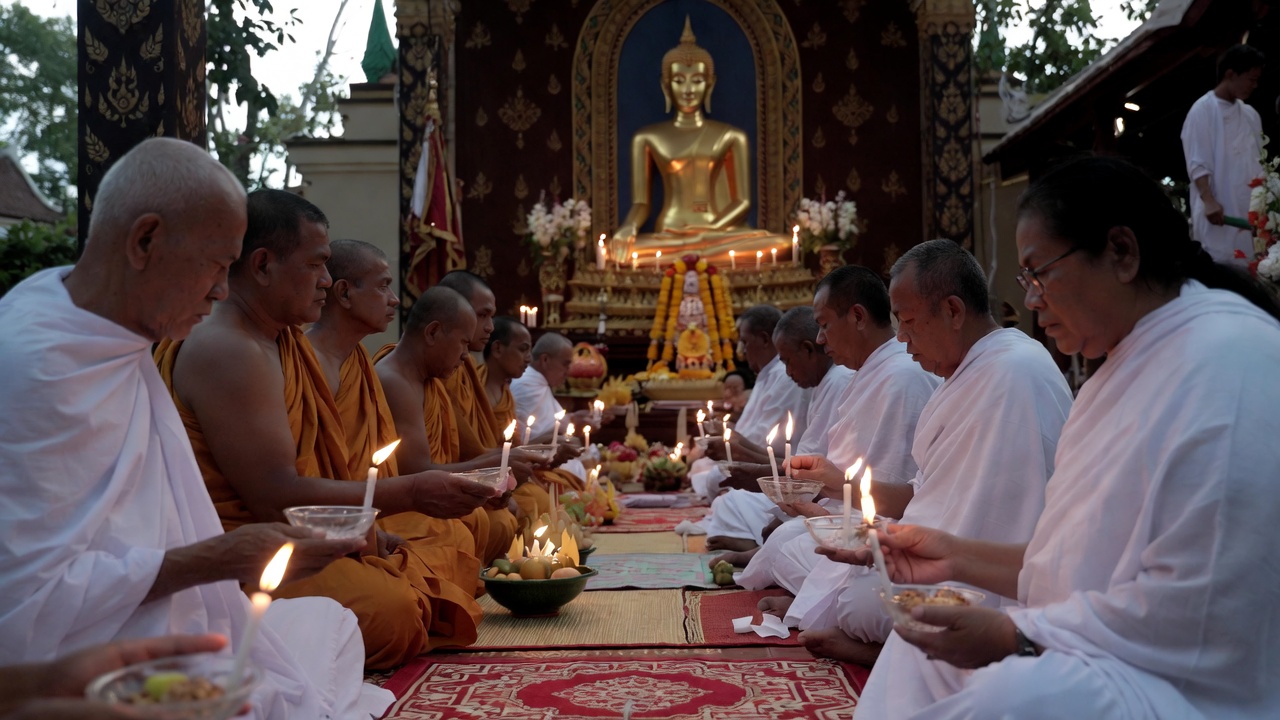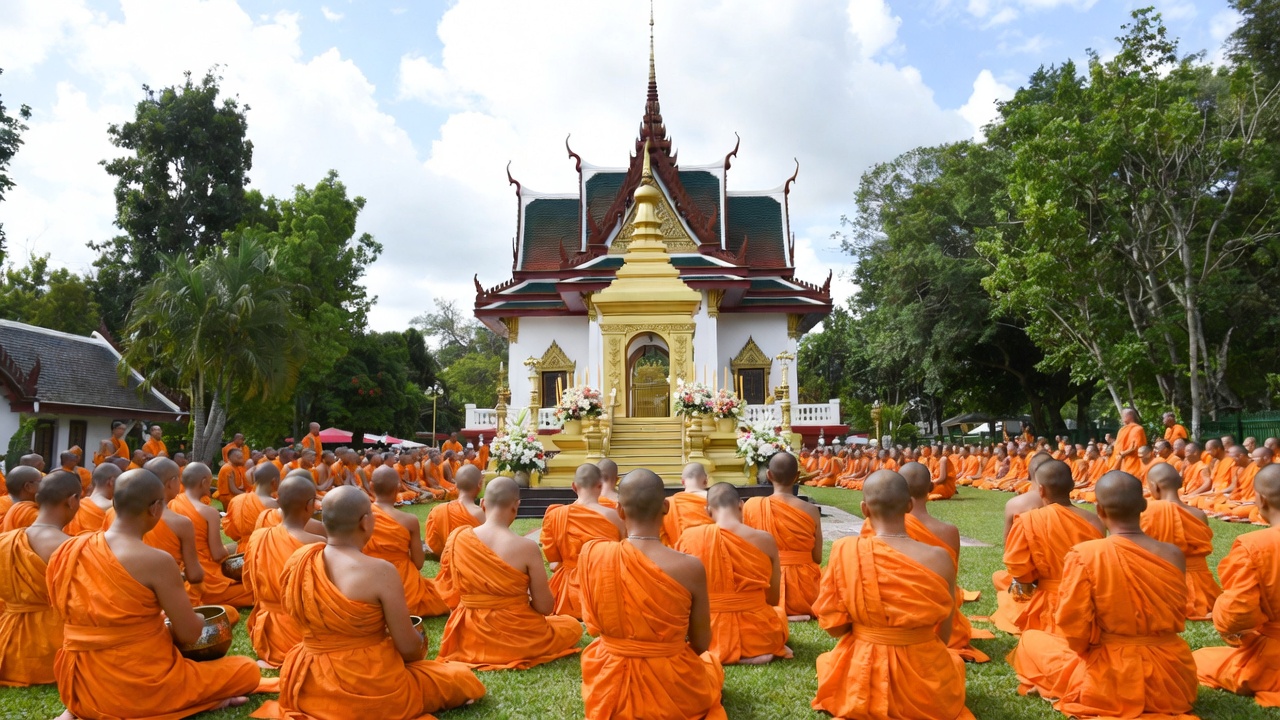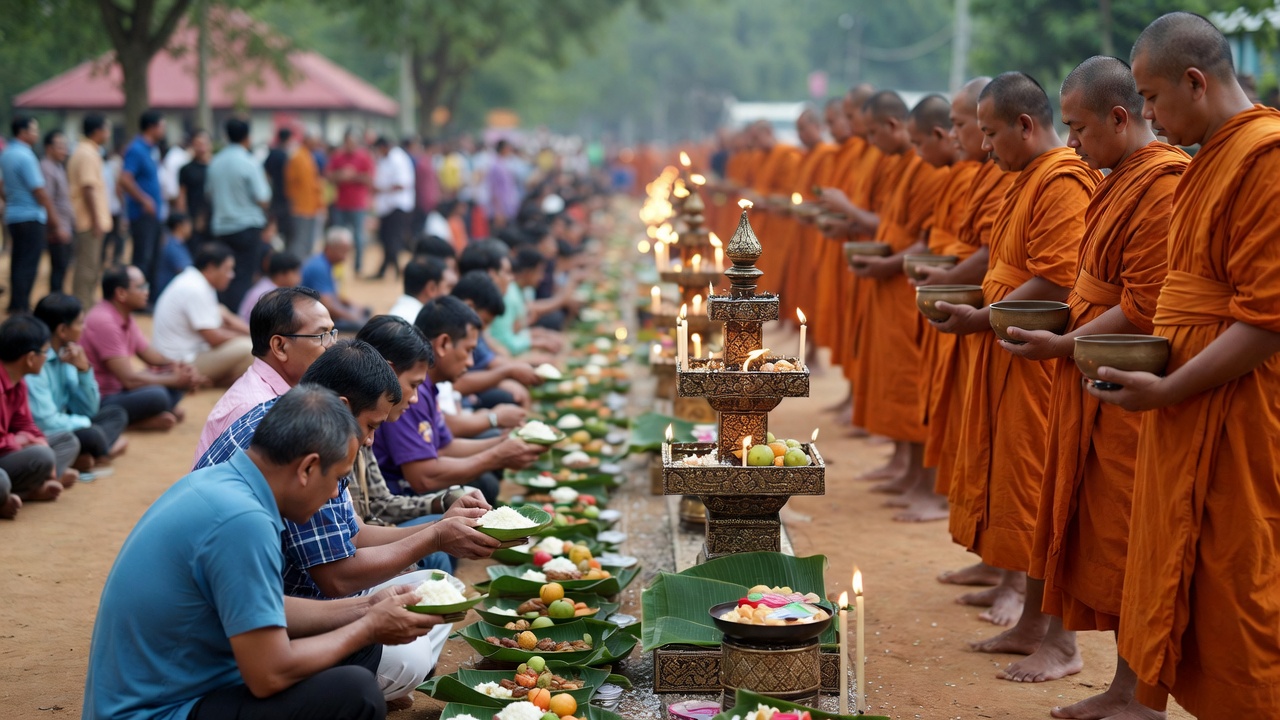
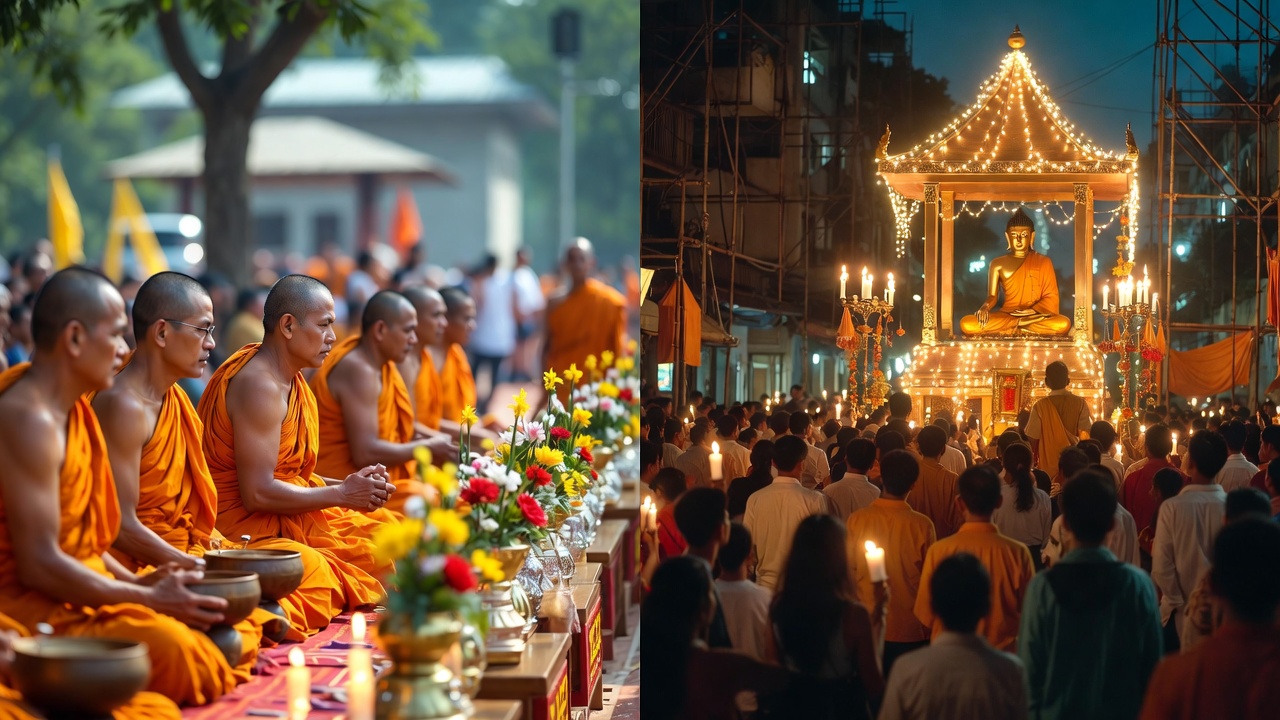
Thailand’s temple courtyards glow with candlelight twice each year. First in the cool-season month of February or March, then again under the warm May sky. The first occasion is Makha Bucha Day. The second is Vesak, known locally as Visakha Bucha Day. Both are national holidays. Both draw millions of Buddhists to their local wats (temples). And both feature the stunning Wian Tian candlelight procession that circles the main chapel three times.
Yet these two holidays honor very different moments in the life of Siddhartha Gautama, the historical Buddha. Confusing them is a common mistake among first-time visitors to Southeast Asia. This guide breaks down every meaningful distinction—historical roots, spiritual significance, rituals, dates, and practical travel tips—so you can experience each celebration on its own terms.
Buddhism remains one of the world’s great spiritual traditions. According to Pew Research Center data published in 2025, roughly 324 million people formally identified as Buddhist worldwide as of 2020. The faith’s heartland stretches from Sri Lanka to Japan, and these two holidays anchor the Theravada Buddhist calendar across Thailand, Cambodia, Laos, and Myanmar.
Let us walk through the differences—and the surprising similarities—step by step.
What Is Makha Bucha Day and Why Is It Celebrated?
Makha Bucha Day (Thai: วันมาฆบูชา, pronounced wan maa-khá-buu-chaa) is the second most sacred holiday on the Thai Buddhist calendar. The name breaks down simply. “Makha” refers to the third lunar month in the traditional Thai calendar. “Bucha” means to honor or worship. Put together, the phrase means “to pay homage during the month of Makha.”
The holiday marks a single extraordinary event that took place about 2,500 years ago at the Veḷuvana Bamboo Grove near the ancient city of Rajagaha (modern-day Rajgir, Bihar, India). This event occurred roughly nine months after the Buddha attained Enlightenment.
On that full-moon evening, 1,250 monks arrived at the grove—every one of them without any prior arrangement. No letters were sent. No messengers were dispatched. The monks simply appeared, drawn by their devotion to the Buddha. This spontaneous gathering is called the Fourfold Assembly (จาตุรงคสันนิบาต, Jaturongkhasannibat) because four remarkable conditions were met at the same time:
- It was a full-moon night in the month of Makha.
- All 1,250 monks arrived without prior appointment.
- Every monk present was an Arahant—a fully enlightened being.
- Every monk had been personally ordained by the Buddha himself.
Facing this extraordinary assembly, the Buddha delivered the Ovadha Patimokkha (โอวาทปาติโมกข์), a sermon that many scholars regard as the essential summary of Buddhist ethics. The teaching is brief but profound. It can be condensed into three principles: cease from all evil, do what is good, and purify one’s mind.
Buddhists also believe that the Buddha, 45 years later, chose the same full-moon day in Makha to announce that he would pass into final Nibbana within three months. This second historical layer adds a solemn undertone to the celebration.
What Is Vesak Day and What Does It Commemorate?
Vesak (also spelled Wesak, Visakha, or Waisak depending on the country) is the single most important day on the Buddhist calendar worldwide. The name comes from the Pali word Vesākha and the Sanskrit Vaiśākha, referring to the Indian lunar month that typically falls in May.
While Makha Bucha marks a specific event involving the Sangha (monastic community), Vesak honors the three pivotal moments in the Buddha’s personal life story:
- Birth: Prince Siddhartha Gautama was born in Lumbini (present-day Nepal) around the 6th century BCE.
- Enlightenment (Nibbana): At the age of 35, meditating beneath a Bodhi tree in Bodh Gaya, India, the prince attained full awakening.
- Passing (Parinibbana): At the age of 80, the Buddha departed the human world in Kusinara, India.
According to Theravada tradition, all three events happened on the same lunar date—the full moon of Visakha. This triple significance is what elevates Vesak above every other Buddhist observance.
The formal decision to celebrate Vesak universally as the Buddha’s Day was made at the first conference of the World Fellowship of Buddhists in Sri Lanka in 1950. In 1999, the United Nations officially recognized the Day of Vesak, acknowledging Buddhism’s contribution to humanity over more than 2,500 years.
In Thailand, the holiday is known as Visakha Bucha Day (วันวิสาขบูชา). In Indonesia, it is called Waisak Day. In Malaysia, it goes by Wesak Day. In Myanmar, it is the Full Moon Day of Kason. The names differ, but the essence remains the same across borders.
Makha Bucha Day 2026 Date and Vesak 2026 Date: When Do They Fall?
One of the most practical questions travelers ask is: when exactly are these holidays in 2026? Because both follow the lunar calendar, dates shift every year on the Gregorian (Western) calendar.
Here are the confirmed dates for 2026:
| Holiday | 2026 Date | Day of the Week | Lunar Basis |
|---|---|---|---|
| Makha Bucha Day | March 3, 2026 | Tuesday | Full moon, 3rd lunar month |
| Visakha Bucha Day (Vesak) | May 31, 2026 | Sunday (substitute Monday, June 1) | Full moon, 6th lunar month |
Sources: PublicHolidays.asia and Wikipedia: 2026 in Thailand.
A few things to note about these dates:
Makha Bucha always lands on the full moon of the third lunar month. On the Gregorian calendar, this usually falls in late February or early March. In 2025, it was February 12. In 2026, it shifts to March 3. In 2027, it will likely return to late February.
Vesak is tied to the full moon of the fourth or sixth lunar month, depending on the specific tradition and country. In Thailand, Laos, Singapore, and Indonesia, Vesak follows the fourth month of the Chinese lunar calendar. This typically translates to a date in May or early June. When the holiday falls on a weekend in Thailand, the following Monday becomes a substitute public holiday.
Important note for travelers: Some countries celebrate Vesak on slightly different dates. Sri Lanka, Cambodia, and Malaysia celebrate it on the first full moon in May. Thailand and Singapore use the second full moon when two full moons occur in May. Always check the specific country’s official calendar before booking flights.
Historical Origins of Makha Bucha vs Vesak: Two Different Chapters in Buddhist History
Understanding the difference between Makha Bucha and Vesak requires understanding where each holiday sits in the timeline of the Buddha’s life. They belong to entirely different chapters.
The Makha Bucha Story: A Spontaneous Assembly of the Sangha
The Makha Bucha event occurred very early in the Buddha’s teaching career. By most accounts, it happened during the first year after his Enlightenment—approximately nine months after he began sharing the Dhamma.
The setting was the Veḷuvana Bamboo Grove, a monastery donated to the Buddha by King Bimbisara of Magadha. The grove sat near Rajagaha, the capital of the ancient Magadha kingdom. It was one of the first fixed monastic residences in Buddhist history.
On this full-moon evening, 1,250 monks converged from their wanderings across the Indian subcontinent. The spontaneous nature of their arrival is what made the event so extraordinary. In a world without telegraphs, phones, or social media, 1,250 individuals arrived at the same place on the same night, purely through the pull of spiritual devotion.
The Buddha seized the moment to deliver the Ovadha Patimokkha. This was not just another sermon. It was a code of conduct for the entire monastic community, a blueprint for how the Sangha should live and spread the teachings. The three core principles—abandon evil, cultivate good, purify the mind—remain the ethical backbone of Buddhism to this day.
The Vesak Story: Birth, Awakening, and Final Release
Vesak, by contrast, spans the entire arc of the Buddha’s earthly existence.
The birth narrative tells of Queen Maya, wife of King Suddhodana of the Shakya clan, who dreamed of a white elephant entering her womb. She gave birth to Prince Siddhartha in the Lumbini garden while grasping the branch of a sal tree. According to tradition, the newborn took seven steps and declared that this would be his final rebirth.
The enlightenment narrative takes place roughly 35 years later. After six years of ascetic practice and spiritual searching, Siddhartha sat beneath a Bodhi tree in Bodh Gaya and vowed not to rise until he found the truth. During one long night of meditation, he achieved complete awakening, understanding the nature of suffering, its cause, its end, and the path to that end—the Four Noble Truths.
The death narrative unfolds 45 years after Enlightenment. At the age of 80, weakened by illness, the Buddha lay down between two sal trees in Kusinara. He offered final teachings to his disciples, then passed into Parinibbana—the complete cessation of the cycle of birth and death.
The fact that all three events are believed to have occurred on the same lunar date makes Vesak the most emotionally resonant holiday for Buddhists. It is simultaneously a birthday party, an anniversary of the greatest spiritual achievement in Buddhist belief, and a memorial service.
What Is the Spiritual Significance of Makha Bucha Day in Buddhism?
Makha Bucha is sometimes called Sangha Day in English. The name points to its core meaning. While Vesak celebrates the Buddha as an individual, Makha Bucha celebrates the community (Sangha) that carries his teachings forward.
The Sangha is one of the Three Jewels (Triple Gem) of Buddhism, alongside the Buddha and the Dhamma (teachings). When Buddhists “take refuge,” they recite:
Buddhaṃ saraṇaṃ gacchāmi (I take refuge in the Buddha) Dhammaṃ saraṇaṃ gacchāmi (I take refuge in the Dhamma) Saṅghaṃ saraṇaṃ gacchāmi (I take refuge in the Sangha)
Makha Bucha is the day that honors the third line of that refuge. Without the Sangha—without those 1,250 Arahants who gathered spontaneously and then dispersed across the ancient world to teach—Buddhism might have remained a local philosophy rather than a global faith.
The Ovadha Patimokkha delivered on this day is also significant because it provided a universal ethical framework. The Buddha did not speak in complex philosophical terms. He gave three direct commands: stop doing evil, do good things, keep your mind clean. This simplicity made the message accessible to farmers, merchants, kings, and wandering ascetics alike.
For modern Thai Buddhists, Makha Bucha also carries an additional layer of meaning. In 2006, the Thai government designated it the “Day of Pure Love and Gratitude” (วันแห่งความรักอันบริสุทธิ์). This cultural initiative was partly intended to offer Thai youth a spiritually meaningful alternative to Valentine’s Day, which falls in the same month. The campaign encouraged young people to express love through acts of kindness, merit-making, and service rather than commercialism.
What Is the Spiritual Significance of Vesak for Buddhists Worldwide?
Vesak carries a weight that no other Buddhist holiday can match. It touches the three most transformative moments in the faith’s founding narrative.
The birth represents hope and the potential for awakening that exists within every human being. In Mahayana traditions, the bathing of a baby Buddha statue symbolizes the washing away of greed, hatred, and ignorance.
The enlightenment represents the central promise of Buddhism: that suffering can end, and that a clear path to liberation exists. For practicing Buddhists, the anniversary of the Enlightenment is a reminder that the Dhamma is not abstract philosophy. It is a tested, proven path that one historical person actually walked to its end.
The passing into Parinibbana is not treated as a tragedy. In Theravada understanding, it represents the ultimate achievement: permanent release from the cycle of rebirth. The Buddha’s death proves that the path works. He did not merely teach the end of suffering—he demonstrated it.
This triple significance is why Vesak is observed not just in Theravada countries but across all Buddhist traditions. The United Nations resolution recognizing Vesak specifically acknowledged that Buddhism has contributed to human well-being for over 2,500 years. Thailand has hosted the International Vesak Summit 11 times, making it one of the primary global gathering points for Buddhist leaders and scholars.
How Is Makha Bucha Day Celebrated in Thailand? Rituals and Traditions Explained
The rituals of Makha Bucha Day in Thailand follow a pattern shared with other major Buddhist holidays, but with specific elements tied to the holiday’s unique meaning.
Morning: Alms-Giving and Temple Visits
The day begins before dawn. Devout Buddhists rise early to prepare food and offerings for monks who walk their morning alms rounds (binthabat). Rice, curries, fruit, and sweets are placed in the monks’ bowls. This act of giving—called dana in Pali—is believed to generate spiritual merit for the giver.
After alms-giving, many families travel to their local temple. They bring additional offerings: flowers (particularly lotus blossoms), incense, and candles. Some devotees commit to observing the Five Precepts for the full day: no killing, no stealing, no sexual misconduct, no lying, and no intoxicants. The most devout may take on the stricter Eight Precepts, which add restrictions on eating after noon, entertainment, and sleeping on luxurious beds.
Afternoon: Sermons and Meditation
Throughout the day, temples host Dhamma talks and group meditation sessions. Monks deliver sermons focused on the Ovadha Patimokkha and its three principles. These talks are open to all visitors, including foreigners. Sitting quietly at the back of a viharn (sermon hall) and listening to a monk speak in Thai—even without understanding every word—can be a profound experience.
Evening: The Wian Tian Candlelight Procession
The emotional peak of Makha Bucha comes after sunset. This is the Wian Tian (เวียนเทียน), or candlelight circumambulation ceremony. Devotees gather in the temple courtyard, each holding three items: a lit candle, three incense sticks, and a lotus flower. They walk slowly clockwise around the main ordination hall (Ubosot) three times.
Each circuit represents one of the Three Jewels:
- First round: the Buddha
- Second round: the Dhamma
- Third round: the Sangha
The sight of hundreds—sometimes thousands—of flickering candles moving in silent procession under the full moon is one of the most visually striking rituals in Southeast Asia.
Alcohol Ban
Thai law prohibits the sale of alcohol on Makha Bucha Day. This applies to convenience stores, supermarkets, restaurants, and bars. The ban typically runs from midnight to midnight. Travelers should plan accordingly and purchase any desired beverages the day before.
How Is Vesak Celebrated in Thailand and Other Buddhist Countries?
Vesak celebrations share some rituals with Makha Bucha but differ in scale, emotion, and certain specific practices.
Thailand: Visakha Bucha Day Traditions
In Thailand, Visakha Bucha Day follows a similar morning-to-evening rhythm as Makha Bucha. Early morning alms-giving, temple visits, Dhamma talks, and the evening Wian Tian procession all take place. However, a few elements are unique to Vesak:
Planting of Bodhi trees: Many temples organize the planting of a Bodhi tree (Ficus religiosa) on Visakha Bucha Day. This tree species holds sacred status because the Buddha is believed to have attained Enlightenment while sitting beneath one. Some temple Bodhi trees in Thailand are several hundred years old with trunks measuring up to six meters in diameter.
Pilgrimage to Doi Suthep (Chiang Mai): In Chiang Mai, one of northern Thailand’s most beloved traditions unfolds on Visakha Bucha Day. Thousands of devotees walk the 11-kilometer route from the Kru Ba Srivichai shrine at the foot of Doi Suthep mountain to the Wat Phrathat Doi Suthep temple at the summit. Many begin their trek after midnight, arriving at the temple as the sun rises. According to Chiang Mai Travel Hub, nearly 10,000 people make this climb in a typical year.
Alcohol ban: As with Makha Bucha, Thailand bans the sale of alcoholic beverages on Visakha Bucha Day.
Sri Lanka: A National Festival of Lights
In Sri Lanka, Vesak is a two-day public holiday. The island transforms into a sea of light. Homes, streets, and temples are decorated with colorful Vesak lanterns (known as kudu) and pandals—enormous illuminated panels depicting scenes from the Buddha’s life. Free food stalls called dansalas line the streets, offering meals and drinks to anyone who passes by, regardless of faith.
Indonesia: The Borobudur Ceremony
In Indonesia, the most famous Vesak celebration takes place at Borobudur Temple in Central Java, the largest Buddhist temple in the world. Thousands of monks and lay practitioners gather to walk the temple’s terraces in a ritual called Pradaksina, circling the monument while chanting mantras. Monks carry holy water and flames symbolizing humility and enlightenment.
Malaysia: The Kuala Lumpur Procession
In Malaysia, Wesak Day celebrations culminate in a grand float procession through the streets of Kuala Lumpur. Decorated floats carry large Buddha statues while devotees walk alongside holding candles and flowers. At the Malaysian Buddhist Association building, devotees line up to pour water over a statue of the baby Buddha—a ritual symbolizing the cleansing of the soul.
Makha Bucha vs Vesak: A Side-by-Side Comparison Table
For quick reference, here is a comprehensive comparison of the two holidays:
| Feature | Makha Bucha Day | Vesak (Visakha Bucha Day) |
|---|---|---|
| Also known as | Magha Puja, Sangha Day, Fourfold Assembly Day | Wesak, Waisak, Buddha Purnima, Buddha Day |
| 2026 date (Thailand) | March 3 | May 31 (substitute holiday: June 1) |
| Lunar timing | Full moon, 3rd lunar month | Full moon, 6th lunar month (4th in some traditions) |
| Typical Gregorian months | February–March | May–June |
| Event commemorated | Spontaneous gathering of 1,250 Arahants; delivery of Ovadha Patimokkha | Birth, Enlightenment, and Parinibbana of the Buddha |
| Focus | The Sangha (monastic community) | The Buddha as an individual |
| Core teaching | Cease from evil, do good, purify the mind | The Four Noble Truths; the Middle Way |
| Importance ranking | 2nd most important Buddhist holiday in Thailand | Most important Buddhist holiday in all traditions |
| Global recognition | Observed mainly in Theravada countries (Thailand, Cambodia, Laos, Myanmar) | Recognized by the United Nations; observed worldwide |
| Wian Tian procession | Yes | Yes |
| Alcohol ban (Thailand) | Yes | Yes |
| Tree-planting tradition | No | Yes (Bodhi tree) |
| UN recognition | No | Yes (since 1999) |
| Thai cultural designation | “Day of Pure Love and Gratitude” (since 2006) | No special cultural designation |
Which Buddhist Countries Celebrate Makha Bucha Day vs Vesak?
The geographic reach of these two holidays differs significantly.
Makha Bucha Day: A Theravada Observance
Makha Bucha is primarily celebrated in countries where Theravada Buddhism is the dominant tradition. These include:
- Thailand: National public holiday. The most elaborate celebrations.
- Cambodia: Observed as Meak Bochea. A public holiday.
- Laos: Known as Boun Makha Busa.
- Myanmar: Observed as Tabaung Full Moon Day.
- Sri Lanka: Recognized on the religious calendar, though less prominently than Vesak.
The holiday is not widely observed in East Asian countries like China, Japan, South Korea, or Vietnam, where Mahayana Buddhism predominates. This is because the Fourfold Assembly event holds particular importance within the Theravada canon, and the Mahayana tradition organizes its calendar around different milestone events.
Vesak: A Truly Global Buddhist Holiday
Vesak transcends sectarian lines. It is observed across virtually every Buddhist tradition and country:
- Theravada countries: Thailand, Sri Lanka, Cambodia, Myanmar, Laos
- Mahayana countries: China, South Korea, Vietnam, Japan (though Japan celebrates on April 8 using the Gregorian calendar)
- Vajrayana countries: Tibet, Mongolia, Bhutan
- Southeast Asian diversity: Indonesia (Waisak), Malaysia (Wesak), Singapore
- Western nations: Buddhist communities in the United States, United Kingdom, Australia, France, Germany, and Canada hold Vesak celebrations
The United Nations observes the Day of Vesak annually at its headquarters and offices worldwide, making it the only Buddhist holiday with formal international institutional recognition.
What Should Travelers Know About Visiting Thailand on Makha Bucha Day?
Planning a trip around Makha Bucha requires some preparation. Here is what you need to know.
Closures: Government offices, banks, and many businesses close for the day. Post offices and some tourist attractions may also be shut. However, major shopping centers in Bangkok, Chiang Mai, and Phuket typically remain open.
Alcohol restriction: No bars, restaurants, or stores may sell alcohol for 24 hours. Hotel minibars are usually locked or emptied. This is the single most impactful rule for tourists who are unaware of it. Purchase any desired beverages the day before.
Dress code for temples: If you plan to visit a temple, dress modestly. Cover your shoulders and knees. Remove shoes before entering any building. Women should not touch monks or hand objects directly to them.
Noise and behavior: Makha Bucha is a day of reflection, not revelry. Keep your voice low around temple grounds. Do not point your feet at Buddha images or monks. Do not climb on sacred structures for photographs.
Best temples to visit in Bangkok: PublicHolidays.asia recommends three standout Bangkok temples for Buddhist holidays. Wat Pho is the oldest Buddhist temple in Bangkok, dating back to the 7th century and rebuilt by King Rama I in 1801. It houses the famous Reclining Buddha. Wat Benchamabophit (the Marble Temple) hosts a particularly beautiful candlelight procession. Wat Saket (the Golden Mount) features a monk-led procession up its hilltop pagoda.
Best experience outside Bangkok: In Chiang Mai, visit Wat Phra Singh, Wat Chedi Luang, or Wat Umong for a more intimate northern Thai celebration.
What Should Travelers Know About Visiting Thailand During Vesak?
Vesak travel tips overlap with Makha Bucha advice but come with a few additions.
Weather: Vesak falls in late May or early June, which is the beginning of Thailand’s rainy season. Expect hot, humid weather with afternoon thundershowers. Carry an umbrella and stay hydrated.
Doi Suthep pilgrimage (Chiang Mai): If you visit Chiang Mai on Visakha Bucha Day, consider joining—or at least observing—the overnight trek up Doi Suthep. The procession typically begins with an opening ceremony at the Kru Ba Srivichai Monument at 6:30 PM, a religious ceremony with monks at 7:19 PM, and the uphill procession starting at 7:59 PM. Participants arrive at Wat Phrathat Doi Suthep around 1:00 AM for a final religious ceremony.
Borobudur (Indonesia): If you are in Java, the Waisak ceremony at Borobudur is one of the most spectacular Buddhist events anywhere in the world. Arrive early and book accommodation in nearby Magelang or Yogyakarta well in advance.
Multiple countries, multiple dates: Remember that Vesak dates can vary by one or even several days across countries. In 2026, the Thai observance is May 31, but Malaysia, Sri Lanka, and others may celebrate on a different full-moon date. Always confirm with official sources before planning cross-border itineraries.
How Makha Bucha and Vesak Reflect Different Aspects of Buddhism
One way to appreciate the difference between these holidays is to see them as honoring different pillars of the Buddhist faith.
Makha Bucha says: The Sangha matters. Community matters. The teachings must be carried forward by disciplined, ethical people who organize themselves around shared principles. It is a holiday about collective spiritual effort.
Vesak says: The Buddha’s personal journey matters. His birth gave the world a teacher. His enlightenment proved the path works. His passing demonstrated that liberation is real. It is a holiday about individual spiritual achievement and its implications for all beings.
Together, these two holidays cover two of the Three Jewels. The third jewel—the Dhamma itself—is honored most directly on Asahna Bucha Day (Asalha Puja), which falls in July and marks the Buddha’s first sermon at Deer Park in Sarnath. Travelers who experience all three holidays gain a complete picture of how the Buddhist calendar maps onto the Triple Gem.
This structural elegance is no accident. The Thai Buddhist calendar was shaped by centuries of monastic scholarship. Each major holiday illuminates a different facet of the faith, ensuring that practitioners cycle through all three refuges over the course of each year.
Frequently Asked Questions About Makha Bucha Day and Vesak
Is Makha Bucha the same as Vesak?
No. Makha Bucha and Vesak are two separate holidays that honor different events. Makha Bucha commemorates the gathering of 1,250 Arahants and the delivery of the Ovadha Patimokkha. Vesak commemorates the birth, enlightenment, and death of the Buddha. They fall on different dates, in different months, and carry different spiritual emphases.
Which is more important, Makha Bucha or Vesak?
In terms of ranking within the Buddhist calendar, Vesak is the most important Buddhist holiday globally. It holds UN recognition and is observed across all Buddhist traditions. Makha Bucha is the second most important Buddhist holiday in Theravada countries like Thailand, but it is not widely observed in Mahayana or Vajrayana traditions.
Can non-Buddhists attend Makha Bucha and Vesak ceremonies?
Yes. Thai temples are generally welcoming to visitors of all faiths during both holidays. You are welcome to observe the Wian Tian candlelight procession and sit in on Dhamma talks. Dress modestly, behave respectfully, and follow the lead of local devotees.
Is alcohol banned on both Makha Bucha and Vesak in Thailand?
Yes. Thai law prohibits the sale of alcohol on both Makha Bucha Day and Visakha Bucha Day. The ban applies nationwide to all retail outlets, bars, restaurants, and entertainment venues. Violating the ban can result in fines. Hotels typically lock minibars or remove alcohol from rooms.
What is the Wian Tian ceremony?
The Wian Tian (เวียนเทียน) is a candlelight circumambulation ceremony. Devotees hold a lit candle, three incense sticks, and a lotus flower. They walk clockwise around the main ordination hall of a temple three times. Each circuit pays tribute to one of the Three Jewels: the Buddha, the Dhamma, and the Sangha. This ritual takes place on both Makha Bucha and Vesak evenings.
When is Makha Bucha Day 2026?
Makha Bucha Day 2026 falls on Tuesday, March 3, 2026 in Thailand.
When is Vesak 2026 in Thailand?
Visakha Bucha Day 2026 falls on Sunday, May 31, 2026 in Thailand, with Monday, June 1 as a substitute public holiday.
The Role of Makha Bucha and Vesak in Modern Thai Society
Beyond their religious roots, both holidays play an active role in contemporary Thai culture and national identity.
Thailand’s population is approximately 93–95% Buddhist. The faith is woven into daily life in ways that go far beyond holiday observance. Monks walk morning alms rounds every day. Every Thai male is traditionally expected to spend at least a few weeks in monastic robes during his lifetime. Buddhist values of compassion, generosity, and mindfulness shape social norms around hospitality, conflict resolution, and community support.
Makha Bucha and Vesak serve as annual anchors that pull modern, urbanized Thais back to their spiritual roots. In Bangkok, where neon signs and skyscrapers dominate the skyline, these holidays create pockets of stillness. Office workers who spend their weekdays in air-conditioned towers find themselves sitting cross-legged on temple floors, listening to monks recite Pali verses. Young people who communicate through smartphones and social media light physical candles and walk in silence around centuries-old chapels.
The Thai government actively supports these observances. Public transportation to major temples is often expanded on both holidays. Television and radio stations broadcast live from important temple ceremonies. Schools assign projects about the historical events the holidays commemorate.
There is also a tourism dimension. The Tourism Authority of Thailand promotes both holidays as cultural experiences for international visitors. Makha Bucha and Visakha Bucha ceremonies at iconic temples like Wat Phra Kaew (Temple of the Emerald Buddha) and Wat Arun (Temple of Dawn) attract photographers, documentarians, and spiritual travelers from around the world.
Planning Your 2026 Trip: Should You Visit Thailand for Makha Bucha or Vesak?
Both holidays offer unforgettable experiences, but they suit different types of travelers.
Choose Makha Bucha Day (March 3, 2026) if you:
- Prefer cooler, drier weather. March is still part of Thailand’s dry season.
- Want a more intimate, less tourist-heavy experience. Makha Bucha attracts fewer international visitors than Vesak.
- Are particularly interested in the monastic tradition and the concept of Sangha.
- Plan to combine your visit with other northern Thailand activities, as Chiang Mai’s celebrations are particularly atmospheric in March.
Choose Vesak / Visakha Bucha Day (May 31, 2026) if you:
- Want to experience the most sacred day on the Buddhist calendar.
- Are interested in the Doi Suthep overnight pilgrimage in Chiang Mai.
- Plan to combine Thailand with another Southeast Asian country. Vesak celebrations in Indonesia (Borobudur), Malaysia (Kuala Lumpur), and Sri Lanka are all worth seeing.
- Are comfortable with hot, humid weather and occasional rain.
Choose both if you:
- Are spending an extended period in Southeast Asia.
- Want the fullest possible understanding of Thai Buddhist culture.
- Are a photographer or writer seeking to document the Buddhist calendar.
Final Thoughts: Respecting Two Sacred Traditions
Makha Bucha Day and Vesak are not competing holidays. They are complementary chapters in a single spiritual narrative that has sustained hundreds of millions of people for over 2,500 years.
Makha Bucha looks outward—toward community, discipline, and the collective effort of keeping the Dhamma alive across generations. Vesak looks inward—toward the possibility of individual awakening and the inspiring example of one human being who found a way through suffering.
Whether you witness the candlelit procession on a cool March evening or beneath the warm May moon, the experience speaks the same truth. The candles are small. The temple is old. The monks chant in a language that predates most of the world’s modern nations. And somehow, in that flickering light, the teachings that the Buddha delivered to 1,250 monks in a bamboo grove feel as immediate and relevant as ever.
If you visit Thailand during either celebration, approach with open eyes, a quiet voice, and a respectful heart. You will receive far more than you give.
Have you attended a Makha Bucha or Vesak celebration? Share your experience in the comments below. For more guides to Buddhist festivals and Southeast Asian travel, explore our other articles on this site.