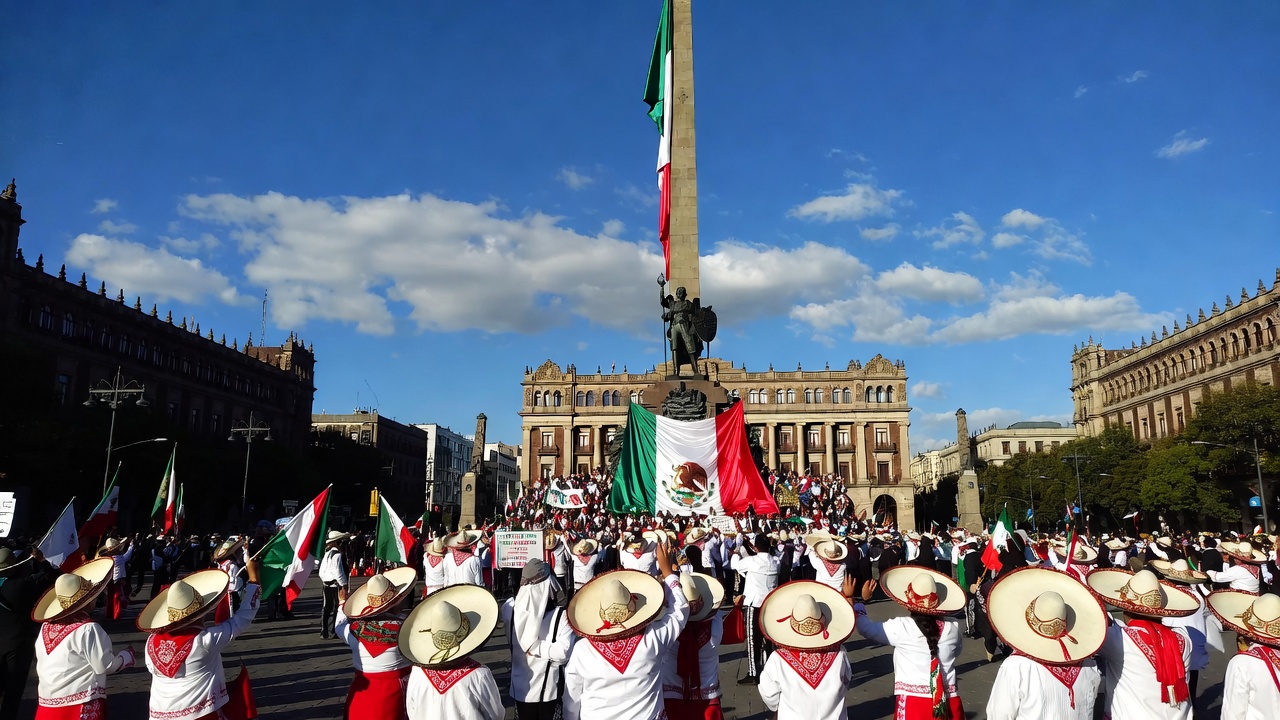
Every February, Mexico pauses to honor one of the most important documents in Latin American history. Día de la Constitución — Constitution Day — marks the anniversary of the 1917 Mexican Constitution, a groundbreaking charter that reshaped the nation’s social, political, and economic foundations. For locals, it is a day of civic pride and a welcome three-day weekend. For visitors, it means certain closures, adjusted schedules, and a rare chance to see Mexico’s patriotic spirit in action.
If you are planning to be in Mexico in early February 2026, this guide covers everything you need to know. We will walk through the exact dates, explain what opens and what closes, break down the labor law behind holiday pay, explore the rich history behind the celebration, and share practical travel tips for making the most of the long weekend.
When Is Mexico Constitution Day in 2026? Exact Date and Official Observance
Here is the short answer: the official holiday falls on Monday, February 2, 2026.
The historical anniversary of the constitution is February 5 — the day the document was officially promulgated in the city of Querétaro back in 1917. In 2026, February 5 falls on a Thursday. But the government-mandated day off is not on February 5. It is on the first Monday of February, which this year is February 2.
This distinction matters for anyone planning travel, banking, or business in Mexico.
| Detail | Date |
|---|---|
| Official Public Holiday (Day Off) | Monday, February 2, 2026 |
| Historical Anniversary | Thursday, February 5, 2026 |
| Day of the Week (Holiday) | Monday |
| Long Weekend | Saturday, Jan 31 – Monday, Feb 2 |
The reason for the Monday observance is a federal labor law rule that shifts certain holidays to create long weekends. Mexico calls these extended breaks puentes — a word that literally means “bridges.” The idea is to bridge the weekend and the holiday into a single block of time off, giving workers and families a chance to rest, travel, or celebrate together.
Three Mexican federal holidays follow this Monday-shift rule: Constitution Day (first Monday of February), Benito Juárez’s Birthday (third Monday of March), and Revolution Day (third Monday of November). These movable holidays are defined in Article 74 of Mexico’s Federal Labor Law, which lists every mandatory rest day in the country.
Is Mexico Constitution Day a Public Holiday? What the Law Says
Yes. Constitution Day is a statutory federal public holiday in Mexico. It is not optional. It is not a “cultural holiday” or an unofficial observance. Under Mexican law, it carries the same legal weight as New Year’s Day, Independence Day, or Labor Day.
Mexico recognizes three types of holidays, and understanding the difference helps you plan:
| Type | Description | Day Off Required? |
|---|---|---|
| Statutory Holiday (Día de Descanso Obligatorio) | Defined by the Federal Labor Law. Employers must give workers the day off with full pay. | Yes |
| Civic Holiday (Día Cívico) | Nationwide observance, but no mandatory day off. Schools may remain open. | No |
| Festivity (Festividad) | Cultural or religious celebrations like Día de los Muertos, Valentine’s Day, or Carnival. | No |
Constitution Day falls into the first category. It is a statutory holiday. That means every formal employee in Mexico — whether working in an office, a factory, or remotely — is entitled to the day off with regular pay. Schools, banks, and government buildings close. Most private businesses follow suit.
This is not a suggestion. It is a legal requirement backed by Mexico’s Federal Labor Law.
What Closes on Mexico Constitution Day 2026? Banks, Schools, Government, and More
One of the most common questions travelers and residents ask is: What exactly shuts down? The answer depends on the type of institution.
Banks and Financial Institutions Closed on Constitution Day
Most bank branches across Mexico will be closed on Monday, February 2, 2026. This includes major banks like BBVA México, Banorte, Citibanamex, Santander México, HSBC México, and Scotiabank. If you need to complete an in-person banking transaction — depositing a check, opening an account, or resolving a dispute — you must do so before the weekend or after the holiday.
However, ATMs will continue to operate normally. You can withdraw cash, check balances, and make transfers through ATMs and online banking platforms throughout the holiday weekend. Mobile banking apps also remain fully functional.
Tip for travelers: If you are arriving in Mexico around this time, make sure you have enough cash on hand before the long weekend. While ATMs work, some may run low on cash in busy tourist areas during a puente.
Government Offices Closed on Día de la Constitución
All federal, state, and municipal government offices will be closed on February 2, 2026. This includes:
- Immigration offices (INM) — No visa processing, no residency appointments
- Tax offices (SAT) — No in-person tax services
- Civil registry offices — No birth certificate or marriage license processing
- Municipal offices — No permits, no utility payments at government counters
- Embassies and consulates — Most foreign diplomatic missions in Mexico also close on Mexican federal holidays
- Courts and legal offices — No hearings or filings
If you have any government appointment or deadline, reschedule before or after the holiday. Online government portals may still be accessible, but do not expect responses from staff until Tuesday, February 3 at the earliest.
Schools Closed for Constitution Day 2026
All public schools — from preschools through universities — suspend classes on Constitution Day. This is mandated at the federal level and applies across all 32 states.
Most private schools also close, though some international schools may follow a different calendar. If your children attend a private or international institution, check directly with the school administration.
Many schools use the week around Constitution Day for educational activities about the constitution. Students may participate in essay contests, flag-raising ceremonies, or presentations about Mexico’s constitutional history in the days before the holiday.
Businesses: What Opens and What Closes on Mexico Constitution Day
Here is where things get a bit more nuanced:
| Business Type | Open or Closed? |
|---|---|
| Large retail stores and malls | Mostly open (some with reduced hours) |
| Supermarkets (Walmart, Soriana, Chedraui) | Usually open |
| Restaurants and cafés | Mostly open, especially in tourist areas |
| Small shops and family businesses | Varies — many choose to close |
| Corporate offices | Mostly closed |
| Factories and manufacturing plants | Mostly closed (unless paying holiday premium) |
| Hotels and resorts | Open — it is a peak domestic travel weekend |
| Museums | Varies — many close on Mondays regardless of holidays |
An important note about museums: In Mexico, many museums close on Mondays as their regular weekly rest day. Since Constitution Day in 2026 falls on a Monday, do not expect most museums to be open. If visiting a specific museum is part of your plans, check its schedule directly before heading out.
Retail and hospitality businesses tend to stay open because the long weekend drives consumer spending and domestic tourism. However, employees who work on the holiday are legally entitled to premium pay — which we explain next.
Mexico Constitution Day and Labor Law: Do Workers Get Triple Pay?
Yes. If a formal employee is required to work on Constitution Day, the employer must pay triple the regular daily wage.
This is not a generous company policy. It is a legal requirement under Mexico’s Federal Labor Law. Here is how it breaks down:
- Component 1: The employee’s regular daily salary (paid regardless of whether they work or not)
- Component 2: Double the regular daily salary as a premium for working on a mandatory rest day
In practice, the employee receives three times their normal daily pay for that single day. This rule applies to all workers under a formal employment contract — full-time, part-time, and even remote employees working under Mexican labor law.
Employers who fail to provide holiday pay face real consequences. Non-compliance can result in fines from the federal labor inspectorate (PROFEDET) and potential lawsuits from employees. During labor audits, holiday pay compliance is one of the items inspectors routinely check.
For business owners and HR managers operating in Mexico, tracking these mandatory holidays is essential. The complete list of mandatory rest days is defined in Article 74 of the Federal Labor Law, and only these days trigger the triple-pay obligation.
The History Behind Día de la Constitución: Why February 5, 1917 Changed Mexico Forever
Constitution Day is not just a bureaucratic holiday. It marks one of the most transformative moments in Mexico’s history — and, arguably, in the history of constitutional law worldwide.
The Mexican Revolution and the Road to a New Constitution
The story begins in 1910 with the Mexican Revolution, a massive armed conflict that would last roughly a decade and reshape the country from top to bottom.
For over 30 years, General Porfirio Díaz had ruled Mexico with an iron fist. His regime — known as the Porfiriato — brought economic modernization and foreign investment, but at a terrible cost. Wealth concentrated in the hands of a small elite and foreign companies. Indigenous communities lost their ancestral lands. Workers endured brutal conditions with no legal protections. The press was muzzled. Elections were staged.
In 1910, a young idealist named Francisco Madero challenged Díaz in the presidential election. When Díaz had Madero arrested and declared himself the winner, the country erupted. Madero called for revolution, and millions answered.
What followed was a chaotic, bloody, and deeply complex civil war. Madero took power but was assassinated in 1913. Rival factions — led by figures like Emiliano Zapata, Pancho Villa, Venustiano Carranza, and Álvaro Obregón — fought both against the old regime and against each other. Zapata championed land reform for peasants in the south. Villa built a powerful army in the north. Carranza, a moderate constitutionalist, eventually gained the upper hand with support from the United States.
By 1916, Carranza controlled most of the country. It was time to put the revolution’s ideals into law.
The Constitutional Congress in Querétaro (1916–1917)
In November 1916, Carranza convened a Constitutional Congress in the city of Santiago de Querétaro, a quiet colonial capital in central Mexico. He chose Querétaro partly because it was where Emperor Maximilian had been executed in 1867 — a symbolic location marking the end of foreign intervention. Another reason: Mexico City was considered too conservative and politically complicated for such a sensitive task.
The delegates were a diverse group — lawyers, professors, journalists, military officers, and revolutionary leaders from across the country. According to the Library of Congress, about half held professional degrees, and only about 30% had actually fought in the revolution. They were young, ambitious, and reform-minded.
Carranza had expected the congress to produce a modest update to the previous Constitution of 1857. Instead, the delegates went much further. Over several months of intense debate, they drafted an entirely new document — one that would become a model for progressive constitutions around the world.
On February 5, 1917, the new Constitution was officially promulgated.
Why the 1917 Mexican Constitution Was Revolutionary
The Constitution of 1917 was not just a legal document. It was a statement of social purpose. It was, in fact, the first constitution in world history to enshrine social rights — predating both the Russian Constitution of 1918 and the Weimar Constitution of 1919.
Three articles stand out as especially groundbreaking:
Article 3 — The Right to Education. This article established the foundation for free, mandatory, and secular public education in Mexico. It removed the Catholic Church’s control over schools and guaranteed that every child, regardless of background, had the right to learn. At a time when literacy rates in Mexico were devastatingly low, this was a radical promise.
Article 27 — Land Reform and National Sovereignty. Article 27 declared that Mexico’s land, water, and subsoil resources belonged to the nation — not to private landowners or foreign corporations. It laid the groundwork for massive land redistribution, breaking up the enormous estates (haciendas) that had concentrated wealth for centuries and distributing parcels to peasant communities (ejidos). It also asserted Mexican sovereignty over oil and minerals, a provision that would later justify the nationalization of the petroleum industry in 1938.
Article 123 — Workers’ Rights. Often called the “Magna Carta of Labor,” Article 123 established an eight-hour workday, a six-day workweek, a minimum wage, equal pay for equal work, the right to organize unions, and the right to strike. It also created a comprehensive framework for social security, including protections for pregnant workers, regulations on child labor, and compensation for workplace injuries. According to Encyclopaedia Britannica, this article gave labor social status and rejected the idea of workers as mere economic commodities.
These three articles — on education, land, and labor — transformed Mexico’s political landscape. They did not solve all of the country’s problems overnight, but they established a legal and moral framework that continues to shape Mexican society more than a century later.
As Dr. William Beezley, a prominent historian of Mexico at the University of Arizona, noted: the Mexican Constitution established workers’ rights in law two decades before the United States did so through the New Deal of the 1930s. It was, by any measure, ahead of its time.
The Global Influence of the 1917 Mexican Constitution on World Law
The significance of the Mexican Constitution extends far beyond Mexico’s borders. When the delegates in Querétaro finished drafting their charter in early 1917, they probably did not realize they were setting a precedent for the entire world.
The 1917 Constitution was the first national constitution to guarantee social rights. Before Mexico did it, no country had written protections for workers, peasants, and students directly into its founding legal document. The idea that a constitution should not only limit government power but also obligate the state to actively improve the lives of its citizens was genuinely new.
This idea traveled fast. The Weimar Constitution of 1919 — the document that governed Germany’s interwar republic — drew direct inspiration from Mexico’s model when it included provisions on social welfare and labor rights. The Russian Soviet Constitution of 1918 echoed similar themes. In the decades that followed, newly independent nations across Latin America, Africa, and Asia looked to Mexico’s example when writing their own constitutions.
As scholars at the University of Arizona have noted, the Mexican Constitution established workers’ rights in law a full two decades before the United States did through the New Deal legislation of the 1930s. The eight-hour workday, the right to strike, the minimum wage, and protections for pregnant workers — all of these appeared in Mexico’s constitution years before they became standard in the world’s wealthiest nations.
Today, constitutional scholars continue to study the 1917 document as a landmark in the global history of human rights. It is a reminder that transformative legal ideas do not always come from the most powerful countries. Sometimes, they emerge from nations that have fought hardest for justice.
Understanding this global context adds a layer of meaning to Constitution Day. When Mexicans celebrate on February 2, they are not just honoring a domestic legal text. They are honoring a document that changed the way the world thinks about the relationship between governments and their people.
The Puente Culture: Why Mexico’s Long Weekends Are More Than Just Days Off
Before we discuss how Constitution Day is celebrated, it is worth understanding Mexico’s puente culture — because it shapes how the holiday is actually experienced by most people.
The word puente means “bridge.” In the context of Mexican holidays, it refers to the practice of linking a public holiday to the nearest weekend to create an extended break. Before the current labor law formalized this practice, puentes were an informal tradition. If a holiday fell on a Tuesday, many workers would take Monday off to “bridge” to the weekend. If it fell on a Thursday, Friday became the unofficial day off.
In 2006, Mexico formalized three of these puentes by shifting Constitution Day, Benito Juárez’s Birthday, and Revolution Day to fixed Monday observances. The result is three guaranteed long weekends per year, regardless of how the calendar falls.
These puentes have a measurable economic impact. They stimulate domestic tourism, boost spending at restaurants and hotels, and give colonial towns and beach communities a regular influx of visitors. Cities within a few hours of Mexico City — places like Puebla, Cuernavaca, Valle de Bravo, Tepoztlán, and Querétaro — benefit enormously. As the travel website Mexperience has observed, the puente system has been a boon for these destinations, as chilangos (Mexico City residents) use the long weekends to escape the capital for fresh air, good food, and a change of scenery.
For travelers, understanding the puente is practical knowledge. It explains why roads out of Mexico City get congested on Friday afternoons before a long weekend. It explains why beach resort prices spike. And it explains why, on the holiday Monday itself, you will find a relaxed, almost lazy atmosphere in most parts of the country — because the whole nation is, in a very real sense, taking a collective deep breath.
How Is Constitution Day Celebrated Across Mexico in 2026?
Constitution Day is not a flashy holiday in the way that Independence Day (September 16) or Día de los Muertos (November 1–2) might be. There are no fireworks, no massive street parties, no elaborate altars. Instead, the celebrations tend to be civic, educational, and family-oriented.
Official Ceremonies and Presidential Events
The President of Mexico typically leads a formal ceremony, either at the National Palace in Mexico City or in Querétaro, the city where the constitution was signed. These events feature speeches about the rule of law, democracy, and the enduring relevance of the constitution. Government officials, military representatives, and civic leaders attend. State governors and municipal presidents may hold similar ceremonies in their own jurisdictions.
Parades, Flag Ceremonies, and Community Events
Across the country, smaller communities mark the day with local parades. These are not elaborate spectacles — they are communal, modest, and heartfelt. You might see schoolchildren marching in uniform, local marching bands, and municipal officials reading passages from the constitution aloud. Flag-raising ceremonies are common at public plazas. In some towns, civic groups organize forums or panel discussions about current constitutional issues.
Querétaro: The Heart of Constitution Day Celebrations
Naturally, the most elaborate celebrations take place in Santiago de Querétaro — the birthplace of the constitution. The city hosts cultural events, concerts, theatrical reenactments, and exhibitions throughout the week. The Museo Regional de Querétaro, housed in a stunning former convent, often features special exhibitions related to the constitutional congress.
If you happen to be in Querétaro during early February, this is one of the best times to visit. The city is beautiful, with well-preserved colonial architecture, excellent cuisine, and a growing wine region nearby. Constitution Day adds a layer of civic energy that you will not find at any other time of year.
The Puente: How Most Mexicans Actually Spend the Long Weekend
Let us be honest: for millions of ordinary Mexicans, Constitution Day is less about parades and more about the puente — the three-day weekend.
The long weekend triggers a surge in domestic tourism. Popular beach destinations like Cancún, Puerto Vallarta, Los Cabos, and Playa del Carmen see a noticeable increase in visitors. Families from Mexico City and other large urban centers also flock to Pueblos Mágicos — the government-designated “Magic Towns” known for their charm, history, and natural beauty. Colonial cities within driving distance of the capital, like San Miguel de Allende, Oaxaca, Taxco, and Guanajuato, are especially popular.
Others stay closer to home. Families gather for meals, head to local parks for picnics, visit museums (those that are open), or simply enjoy a day of rest. The atmosphere is relaxed and communal — a welcome pause in the middle of winter.
What Stays Open on Mexico Constitution Day 2026? A Practical Guide for Travelers
If you are visiting Mexico during the Constitution Day weekend, here is what you can generally count on being open:
- Hotels and resorts — Fully operational. This is a peak domestic travel weekend, so expect full occupancy at popular destinations.
- Restaurants and bars — The vast majority remain open, especially in tourist zones. In fact, many restaurants see higher-than-usual traffic during the puente.
- Supermarkets and convenience stores — Major chains like Walmart, Soriana, La Comer, Chedraui, and OXXO convenience stores typically stay open, though hours may be slightly reduced.
- Shopping malls — Most malls open as usual, sometimes with abbreviated hours.
- Airports and airlines — Fully operational. Expect heavier-than-normal traffic at airports, especially on the Friday or Saturday before the holiday and on Monday evening or Tuesday as people return home.
- Public transportation — Buses, the metro (in Mexico City), and ride-hailing apps continue to run. However, schedules may be modified on the holiday itself. Long-distance bus services are typically busier, and tickets may sell out. Book in advance.
- Pharmacies — Major pharmacy chains like Farmacias del Ahorro, Farmacias Guadalajara, and Farmacia San Pablo usually remain open.
- Gas stations — Open as usual.
- Hospitals and emergency services — Fully operational. Public hospitals maintain emergency rooms, and private hospitals continue normal services.
What to watch out for:
- Small, independent businesses — Many family-owned shops, mechanic shops, laundromats, and local service providers may close for the day.
- Museums — As mentioned, many museums in Mexico close on Mondays. Constitution Day in 2026 falls on a Monday, so plan museum visits for another day.
- Government services — Completely unavailable. No immigration, no tax offices, no civil registry.
- Banks — Branches closed. ATMs and online banking available.
Mexico Constitution Day 2026 and the Full List of Federal Holidays
Constitution Day is just one of several mandatory rest days in Mexico. If you are living in Mexico, managing a team, or planning an extended visit, it helps to know the complete holiday calendar for 2026.
Here is the full list of statutory holidays (días de descanso obligatorio) as defined by Article 74 of the Federal Labor Law:
| # | Holiday | 2026 Date | Fixed or Movable? |
|---|---|---|---|
| 1 | New Year’s Day | Thursday, January 1 | Fixed |
| 2 | Constitution Day | Monday, February 2 | Movable (1st Monday of February) |
| 3 | Benito Juárez’s Birthday | Monday, March 16 | Movable (3rd Monday of March) |
| 4 | Labor Day | Friday, May 1 | Fixed |
| 5 | Independence Day | Wednesday, September 16 | Fixed |
| 6 | Revolution Day | Monday, November 16 | Movable (3rd Monday of November) |
| 7 | Christmas Day | Friday, December 25 | Fixed |
A few things to note:
- December 1 is a statutory holiday only when it corresponds to the transfer of presidential power, which happens every six years. The most recent presidential transition was on October 1, 2024, so December 1 is not a statutory holiday in 2026.
- Election days are also statutory holidays when designated by federal or local electoral law.
- Semana Santa (Holy Week), Día de los Muertos, and other widely celebrated occasions are not statutory holidays under federal labor law, even though many businesses close during those periods.
This complete calendar is essential for payroll compliance, travel planning, and understanding Mexico’s rhythm of work and rest.
Travel Tips for Visiting Mexico During the Constitution Day Long Weekend in 2026
The Constitution Day puente creates both opportunities and challenges for travelers. Here is how to make the most of it:
Book Accommodations and Transportation Early
Domestic tourism surges during every puente. Beach resorts in Cancún, the Riviera Maya, Puerto Vallarta, and Los Cabos fill up quickly. Flights and long-distance bus tickets sell out, especially on the Friday and Saturday before the holiday. Book at least two to three weeks in advance if you plan to travel during this period.
Expect Higher Prices at Popular Destinations
Hotel rates and flight prices tend to rise during long weekends. If you are flexible on destination, consider visiting a less-trafficked colonial city or a smaller Pueblo Mágico instead of the big beach resorts. Places like Pátzcuaro, Tlaxcala, Real de Catorce, or Bacalar offer extraordinary experiences without the crowds and price hikes.
Carry Enough Cash for the Weekend
With bank branches closed on Monday and some areas having limited ATM availability, it is wise to withdraw enough pesos before the weekend begins. Major tourist areas will have working ATMs, but rural towns and smaller cities may have fewer options.
Check Museum and Attraction Schedules
Do not assume everything is open. Many museums close on Mondays, and government-run cultural sites may have special holiday hours. Check the official website or social media pages of any museum or archaeological site you plan to visit.
Respect the Civic Spirit of the Day
While Constitution Day may feel like “just another day off” to visitors, it carries real meaning for many Mexicans. If you find yourself near a parade, a flag ceremony, or a civic event, take a moment to observe. Asking locals about the day’s significance can lead to wonderful conversations and a deeper understanding of Mexican culture.
Use the Puente to Explore Querétaro
If you are in central Mexico, the Constitution Day weekend is a perfect excuse to visit Querétaro. The city is about two hours north of Mexico City by car or bus. Its historic center is a UNESCO World Heritage Site, filled with stunning baroque churches, quiet plazas, and excellent restaurants. The surrounding wine region in the Tequisquiapan and Bernal areas has grown into one of Mexico’s most exciting culinary destinations. Visiting Querétaro during Constitution Day connects you directly to the place where the constitution was born.
How the Mexican Constitution Has Shaped Modern Mexico: A Living Document
The Constitution of 1917 is not a museum piece. It is a living, evolving document that continues to shape Mexican law and daily life.
Since its original drafting, the constitution has been amended hundreds of times to reflect changing social realities. Major revisions have addressed everything from religious freedom and indigenous rights to energy reform and digital privacy. In 1992, significant changes under President Carlos Salinas de Gortari modified Article 27 to strengthen private property rights, allow the privatization of communal lands (ejidos), and ease restrictions on the Catholic Church. A 2011 reform elevated international human rights treaties to constitutional status, strengthening civil liberties protections.
In 2013, sweeping energy reforms opened Mexico’s oil and gas sector to private and foreign investment for the first time since the 1938 nationalization — a direct modification of the principles laid out in Article 27. More recently, constitutional debates have focused on issues like judicial reform, National Guard powers, indigenous representation, and labor rights in the gig economy.
The fact that the constitution is regularly amended is not a weakness. It reflects Mexico’s commitment to adapting its legal framework to new challenges while preserving the core principles of social justice, democratic governance, and national sovereignty that inspired the original document.
Constitution Day is, at its heart, a reminder that these rights and principles are not permanent gifts. They require active defense, ongoing reform, and continued public engagement.
Frequently Asked Questions About Mexico Constitution Day 2026
Is Constitution Day on February 2 or February 5 in 2026? The official public holiday is on Monday, February 2, 2026. The historical anniversary of the constitution’s promulgation is February 5, but the legal day off has been moved to the first Monday of February to create a long weekend.
Do all workers in Mexico get the day off? All formal employees are entitled to a paid day off. If they are required to work, they must receive triple their regular daily wage — their normal salary plus double pay for working on a mandatory rest day.
Are stores and restaurants open on Constitution Day? Most retail stores, supermarkets, restaurants, and hospitality businesses remain open. Small, family-owned businesses may close. Shopping malls usually operate with slightly reduced hours.
Will ATMs work on Constitution Day? Yes. ATMs operate normally throughout the holiday. Online and mobile banking are also available. Only physical bank branches close.
Is mail delivered on Constitution Day? No. The Mexican Postal Service (Correos de México) does not operate on federal holidays. Private courier services like DHL, FedEx, and UPS may have limited service.
Can I visit archaeological sites like Teotihuacán or Chichén Itzá on Constitution Day? Many INAH (National Institute of Anthropology and History) archaeological sites remain open on federal holidays, but hours may vary. Always check the specific site’s schedule before visiting, especially since the holiday falls on a Monday.
Is Constitution Day a good time to visit Mexico? Absolutely. February is part of Mexico’s dry season. Weather is pleasant across most of the country. The puente adds a festive domestic travel atmosphere. Just be prepared for busier airports, higher hotel rates at popular destinations, and some government closures.
Final Thoughts: Why Mexico Constitution Day Matters Beyond the Day Off
It is easy to think of Constitution Day as just another holiday on the calendar — a welcome Monday off that creates a three-day weekend. And for many people, that is exactly what it is: a chance to sleep in, take a trip, or catch up with family.
But beneath the leisure lies something deeper. The 1917 Constitution was born from one of the most violent and transformative conflicts in Latin American history. Millions fought and died in the Mexican Revolution for the ideals that this document enshrines: the right to education, the right to fair work, the right to own land, and the right to live in a society governed by law rather than by dictators.
When schoolchildren in Querétaro march in their uniforms on Constitution Day, they are not just going through the motions. They are participating in a tradition that says: these rights matter, and they were earned at great cost.
Whether you are a traveler passing through, an expat living in Mexico, or a Mexican citizen reflecting on your country’s journey, February 2, 2026 is a day worth understanding. Know what closes. Plan around it. But also take a moment to appreciate what the day represents.
The constitution is not just a legal text. It is the promise Mexico made to itself — and it is still being kept.
Planning a trip to Mexico? Check back for more guides on Mexican holidays, festivals, and cultural events throughout 2026.