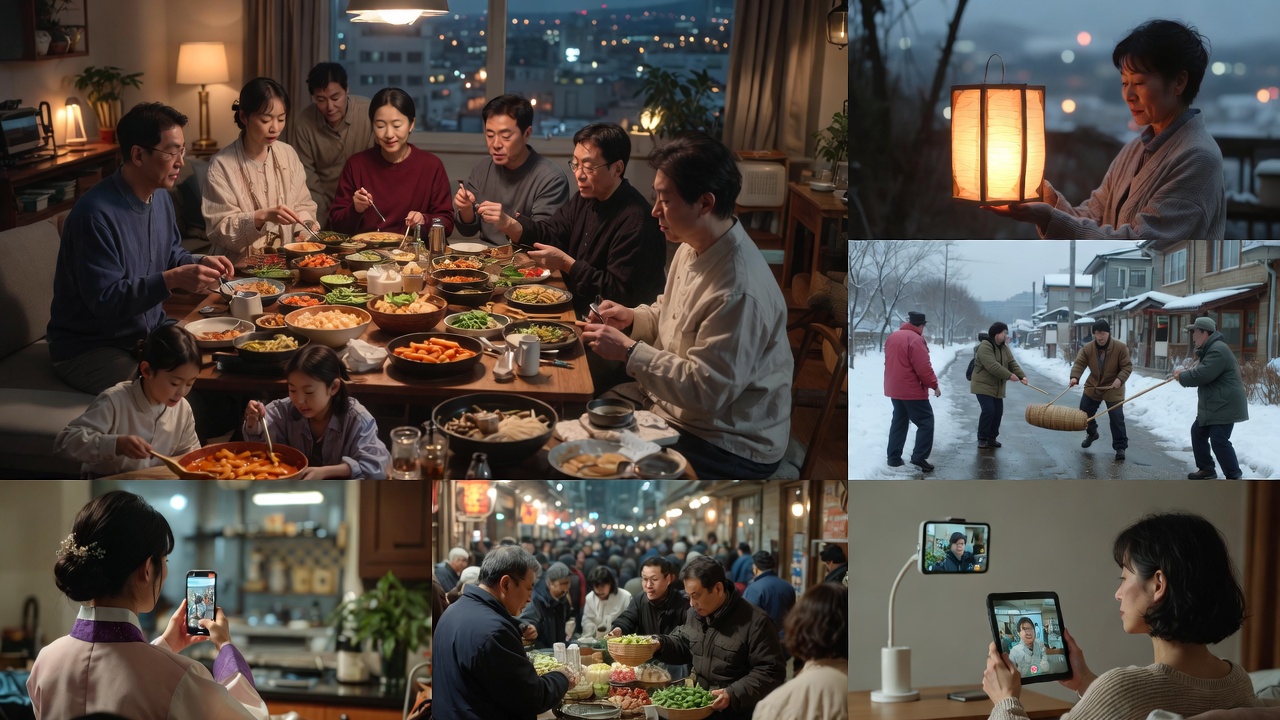
The aroma of tteokguk simmering on the stove. The rustle of hanbok fabric as family members gather. The gentle thud of yut sticks hitting the floor. These sensory memories define Seollal (설날) for millions of Koreans worldwide. Yet today’s celebration looks remarkably different from what our grandparents knew.
Seollal, the Korean Lunar New Year, stands as one of the most significant cultural celebrations in the Korean calendar. But in our interconnected age, this ancient festival has transcended borders, morphing into a global celebration of Korean heritage that blends centuries-old customs with modern innovations.
Whether you’re a member of the Korean diaspora seeking to maintain cultural connections, a K-pop enthusiast curious about authentic Korean traditions, or a traveler planning a trip to Seoul, this comprehensive guide will illuminate the many ways people celebrate Korean Lunar New Year in the 21st century.
What Is Seollal and Why Is Korean Lunar New Year Important?
Seollal marks the first day of the Korean lunisolar calendar, typically falling between late January and mid-February on the Gregorian calendar. Unlike the Western New Year celebrated on January 1st, this three-day Korean holiday centers on family unity, ancestral reverence, and hopes for prosperity in the coming year.
The word “Seol” (설) in Middle Korean means “year of age,” reflecting the traditional belief that everyone grows one year older upon eating tteokguk on this day. The suffix “nal” (날) simply means “day” in Korean. Together, they create a term that encapsulates renewal, aging, and the passage of time.
Historical Significance of Korean New Year Celebration
The roots of Seollal traditions stretch back over 2,000 years. Historical records first appear in the 7th-century Chinese texts Book of Sui and Old Book of Tang, documenting how the ancient Korean kingdom of Silla celebrated the lunar new year with national rituals and festivals.
During the Joseon Dynasty (1392-1897), Confucian influences formalized many of the customs we recognize today, including the charye ancestral rites and sebae bowing ceremonies. The holiday became so integral to Korean identity that when Japanese colonial rulers banned its celebration in 1907, Koreans continued observing it privately.
After Korea’s liberation in 1945, there was significant public sentiment to restore Seollal as a national holiday. By the 1980s, South Korea officially reinstated Seollal as a major public holiday, reclaiming this piece of cultural heritage that had survived decades of suppression.
Seollal 2026 Date and Upcoming Korean New Year Dates
Planning your celebration? Here’s a quick reference for upcoming Seollal dates:
| Year | Seollal Date | Zodiac Animal | Public Holiday Period |
|---|---|---|---|
| 2025 | January 29 | Wood Snake | January 28-30 |
| 2026 | February 17 | Fire Horse | February 16-18 |
| 2027 | February 6 | Fire Sheep | February 5-7 |
| 2028 | January 26 | Earth Monkey | January 25-27 |
The three-day holiday includes the day before Seollal (for travel and preparation), Seollal itself, and the day after (for rest and continued celebrations).
Traditional Seollal Customs and Rituals That Continue Today
Before exploring modern adaptations, understanding the core Seollal traditions helps appreciate how these practices have evolved. Many families worldwide continue these rituals, adapting them to contemporary circumstances while preserving their essential meaning.
Charye: The Sacred Korean Ancestral Rite Ceremony
Charye (차례) forms the spiritual heart of Seollal celebrations. This Korean ancestral memorial service honors the spirits of deceased family members, typically spanning four generations.
The ceremony involves:
- Setting the jesa table with specific foods arranged according to precise rules
- The eldest son traditionally leading the rite (though modern families often share this role)
- Offerings of food and drink to ancestral spirits
- Deep bows (큰절, keunjeol) performed in sequence by family members
- Burning of incense and prayers for ancestral blessings
The arrangement of food follows the principle of “hongdong baekseo” (紅東白西), meaning red foods go to the east and white foods to the west. Fish heads point eastward, and fruits are arranged by type and color.
Sebae: The Traditional Korean New Year Bow
Sebae (세배) represents perhaps the most recognizable Seollal tradition. This deep bow, performed by younger family members to their elders, symbolizes respect and gratitude while asking for blessings in the new year.
The proper sebae involves:
- Kneeling on the ground with hands placed palm-down
- Bowing deeply until the forehead nearly touches the hands
- Reciting the greeting: “새해 복 많이 받으세요” (Saehae bok mani badeuseyo – “May you receive many blessings in the new year”)
- Rising and standing respectfully
In return, elders share words of wisdom and present sebaetdon (세뱃돈) – New Year’s money given in colorful envelopes. This monetary gift remains a beloved tradition, with children particularly excited about accumulating their Seollal earnings.
Traditional Korean New Year Food: What to Eat During Seollal
Food occupies a central place in Korean Lunar New Year celebrations. The preparation often begins days in advance, with family members (traditionally women, though this is changing) spending long hours creating elaborate spreads.
Essential Seollal dishes include:
Tteokguk (떡국) – The quintessential Korean rice cake soup symbolizes prosperity and new beginnings. The white rice cakes represent purity, while their oval shape resembles traditional Korean coins (yeopjeon), signifying wealth. Koreans believe eating tteokguk adds one year to your age—an especially exciting prospect for children.
Jeon (전) – Savory Korean pancakes come in numerous varieties:
- Haemulpajeon (seafood and green onion pancakes)
- Gimchijeon (kimchi pancakes)
- Dongtaejeon (pollock fish pancakes)
- Yukjeon (meat pancakes)
Japchae (잡채) – Stir-fried glass noodles with vegetables and beef, dressed in sesame oil and soy sauce, appear at virtually every Seollal gathering.
Mandu (만두) – Korean dumplings filled with pork, vegetables, and tofu often accompany tteokguk or stand alone as a beloved side dish.
Galbi-jjim (갈비찜) – Braised short ribs represent celebration and abundance, appearing at special occasions throughout the year.
| Food Item | Korean Name | Symbolic Meaning | Serving Style |
|---|---|---|---|
| Rice Cake Soup | Tteokguk | Prosperity, aging, purity | Main dish |
| Savory Pancakes | Jeon | Celebration, gathering | Appetizer/side |
| Glass Noodles | Japchae | Longevity | Side dish |
| Dumplings | Mandu | Wealth, fortune | Side/addition to soup |
| Braised Ribs | Galbi-jjim | Abundance | Main dish |
How Korean Diaspora Communities Celebrate Seollal Abroad
With approximately seven million Koreans living outside the Korean peninsula, Seollal celebrations have spread across every continent. These communities have developed unique ways to honor tradition while adapting to their local contexts.
Korean American Seollal Celebrations in Major US Cities
The Korean American community, numbering over two million, represents one of the largest diaspora populations. Cities like Los Angeles, New York, and Chicago host vibrant Seollal events that blend Korean traditions with American sensibilities.
Los Angeles, home to the largest Koreatown outside Korea, transforms during the Lunar New Year period. The city’s Korean cultural institutions, restaurants, and community organizations collaborate to create multi-day celebrations featuring:
- Traditional music and dance performances at venues like the Korean Cultural Center
- Hanbok fashion shows showcasing traditional and modern Korean dress
- Temple visits at Korean Buddhist temples throughout Southern California
- Pop-up markets featuring Korean artisans, food vendors, and craftspeople
New York City recognized Lunar New Year as a public school holiday, reflecting the growing appreciation for Asian cultural celebrations in diverse urban centers. Korean cultural centers throughout the city organize events including tteok-making workshops, sebae demonstrations, and traditional game tournaments.
European Korean Communities and Lunar New Year Events
Korean communities in Europe face unique challenges celebrating Seollal far from extended family. However, strong community networks have developed to maintain connections to Korean heritage.
In London, the Korean Cultural Centre UK hosts annual Seollal events featuring traditional music, games, and food sampling. Frankfurt, Paris, and Berlin all maintain active Korean cultural communities that organize holiday gatherings, often combining resources to create larger, more elaborate celebrations.
European celebrations often emphasize community building among second and third-generation Koreans who may not speak Korean fluently but wish to connect with their heritage. These events frequently include language lessons, cultural education workshops, and opportunities for younger Koreans to learn about traditions they might not experience at home.
Australian and Asian Pacific Seollal Festivities
Australia’s Korean community, concentrated primarily in Sydney and Melbourne, celebrates Seollal with events that often coincide with Chinese New Year festivities, creating pan-Asian Lunar New Year celebrations that draw diverse crowds.
In Japan, the Korean community navigates a complex cultural landscape, as Japan celebrates New Year on January 1st according to the Gregorian calendar. Korean residents and Zainichi Koreans (ethnic Koreans in Japan) often maintain private Seollal observances while participating in Japanese New Year activities publicly.
Modern Technology and Virtual Seollal Celebrations
The digital revolution has transformed how families separated by oceans maintain Seollal traditions. What began as a necessity during the COVID-19 pandemic has become an established part of modern celebrations.
How to Celebrate Korean New Year Online with Family
Virtual Seollal gatherings have become increasingly sophisticated, moving beyond simple video calls to create meaningful shared experiences:
Video Call Platforms for Family Sebae Families now conduct virtual sebae ceremonies via Zoom, FaceTime, or KakaoTalk video calls. Parents and grandparents in Korea watch as their children and grandchildren abroad perform the traditional bow, receive blessings, and even receive digital sebaetdon through mobile payment apps.
Shared Cooking Experiences Some families coordinate synchronized cooking sessions, preparing tteokguk or jeon together while connected online. This allows overseas family members to learn recipes directly from elders while maintaining the communal spirit of Seollal food preparation.
Digital Game Nights Traditional games like Yutnori (윷놀이) have found digital homes in mobile apps and online platforms. Families can now play together across continents, maintaining the competitive spirit of this beloved Seollal tradition.
Social Media and Seollal: Sharing Korean New Year Traditions Globally
Social media platforms have become powerful tools for both preserving and spreading Seollal traditions:
- Instagram fills with hashtags like #Seollal, #KoreanNewYear, and #설날 featuring photos of families in hanbok, elaborate food spreads, and sebae ceremonies
- TikTok hosts viral videos of Seollal cooking tutorials, hanbok fashion showcases, and traditional game demonstrations
- YouTube channels dedicated to Korean culture see viewership spikes during the holiday period, with cooking tutorials and cultural explanations drawing millions of views
This digital documentation serves an important cultural preservation function, allowing younger generations to learn traditions that might otherwise be lost and enabling non-Koreans to develop deeper appreciation for Korean culture.
Korean Streaming Services and Seollal Special Programming
Korean television networks and streaming services create extensive Seollal programming:
- KBS, MBC, and SBS produce special holiday variety shows, often featuring major K-pop groups and beloved comedians
- Netflix Korea highlights Korean content during the holiday period
- Streaming platforms worldwide see increased viewership of K-dramas and Korean films as diaspora communities seek cultural connections
These programs often feature celebrity sebae performances, traditional game competitions, and nostalgic content that resonates with Koreans regardless of where they live.
The Hallyu Effect: How K-pop and K-dramas Influence Global Seollal Interest
The Korean Wave (Hallyu, 한류) has fundamentally changed how the world engages with Korean culture, including traditional celebrations like Seollal. The global popularity of K-pop, K-dramas, and Korean cinema has created unprecedented international interest in Korean traditions.
K-pop Idols and Korean New Year Content
K-pop entertainment agencies recognize Seollal’s significance to their fanbase:
- Groups release special Seollal greeting videos featuring members in hanbok
- Fan club events often include Seollal-themed content, games, and live streams
- Social media accounts of major artists share Seollal wishes and behind-the-scenes holiday content
For international fans, these glimpses into how their favorite artists celebrate create educational opportunities and emotional connections to Korean culture. A BTS Seollal greeting video or BLACKPINK members’ holiday photos can inspire millions of non-Korean fans to learn more about the holiday’s traditions.
K-dramas Featuring Seollal Scenes and Traditions
Korean dramas frequently feature Seollal scenes, exposing international viewers to traditions they might not otherwise encounter:
- Family gathering tensions (a common K-drama trope) during Seollal meals
- Sebae ceremonies between characters of different generations
- Traditional game competitions as plot devices
- Hanbok fashion showcased in holiday episodes
These dramatic representations, while sometimes dramatized for entertainment, provide international viewers with context for understanding Korean family dynamics and cultural values.
How Global Hallyu Fans Celebrate Korean Lunar New Year
The influence of the Korean Wave has created a new category of Seollal celebrants: international Hallyu fans who, despite having no Korean heritage, choose to observe Korean traditions:
- Fan community events organized around Seollal, including potlucks featuring Korean food
- Hanbok rental services seeing international bookings for Seollal photos
- Korean language learners using the holiday as motivation to practice Korean greetings
- Cultural tourism to Korea timed around the Seollal period
This phenomenon represents a significant shift in how traditional cultural practices spread and evolve in the age of global media.
Where to Experience Authentic Seollal Celebrations in Korea
For those able to travel, experiencing Seollal in Korea offers unparalleled cultural immersion. However, visitors should understand that this is primarily a family holiday, meaning many businesses close and cities become quieter than usual.
Seoul Seollal Events and Activities for Tourists
Seoul offers numerous opportunities for tourists to experience Seollal:
Palace Programs The five grand palaces of Seoul—Gyeongbokgung, Changdeokgung, Deoksugung, Changgyeonggung, and Gyeonghuigung—offer free admission during the Seollal holiday period. Special programs include:
- Traditional game zones where visitors can try yutnori, jegichagi (shuttlecock kicking), and neolttwigi (see-saw jumping)
- Hanbok rental opportunities for palace exploration
- Traditional music performances
- Charye demonstration events
National Folk Museum of Korea Located on the grounds of Gyeongbokgung Palace, this museum hosts extensive Seollal programs including:
- Hands-on traditional craft workshops
- Traditional game demonstrations
- Folk performance schedules
- Special Seollal exhibitions
Namsangol Hanok Village This recreated traditional village in central Seoul offers immersive Seollal experience programs:
- Tteokguk making workshops
- Traditional game tournaments
- Folk music and dance performances
- Sebae practice sessions
Traditional Korean Markets During Lunar New Year
Traditional markets (전통시장, jeongtong shijang) buzz with activity in the days leading up to Seollal as families stock up on ingredients and gifts:
Gwangjang Market – Seoul’s oldest market features vendors selling ready-made jeon, tteok, and other Seollal essentials
Namdaemun Market – Offers everything from food ingredients to hanbok accessories
Noryangjin Fish Market – Supplies fresh seafood for Seollal feasts
Note that these markets may have reduced hours or closures during the actual holiday days, so planning is essential.
Regional Seollal Traditions Across South Korea
Different regions maintain unique Seollal customs:
Jeju Island features shaman-led rituals reflecting the island’s distinct spiritual traditions
Jeolla Province is known for spicier variations of traditional foods and elaborate charye preparations
Gangwon Province mountain communities maintain traditional snow-related games and activities
Coastal regions incorporate more seafood into ancestral offerings and celebratory meals
Modern Seollal Gift Ideas: What to Give for Korean New Year
Gift-giving remains an essential Seollal tradition, though the nature of gifts has evolved significantly. Understanding modern gifting etiquette helps both Koreans and non-Koreans navigate this custom appropriately.
Popular Korean New Year Gifts for Family and Friends
Contemporary Seollal gifts balance tradition with practicality:
For Parents and Elders:
- Health supplements (ginseng, honey, vitamins)
- Massage devices or spa certificates
- High-quality food items (hanwoo beef, fresh fruit sets)
- Cash in decorative envelopes (increasingly common and appreciated)
- Department store gift cards
For Extended Family:
- Gift sets (toiletries, cooking oil, tuna, spam)
- Traditional sweets (hangwa, yakgwa)
- Dried goods sets (seaweed, dried fish)
- Fruit baskets with premium seasonal selections
For Children:
- Sebaetdon (New Year’s money) – amounts vary by relationship and means
- Educational materials or books
- Electronics or tech gadgets
Seollal Gift Etiquette and Modern Considerations
Gift-giving guidelines help navigate this tradition:
| Recipient | Appropriate Gifts | Amount/Value | Presentation |
|---|---|---|---|
| Parents | Premium items, cash | Significant | Wrapped, presented formally |
| Parents-in-law | Health products, food | Significant | Wrapped, presented first |
| Siblings | Gift sets, food | Moderate | Casual exchange |
| Nieces/Nephews | Cash (sebaetdon) | Age-appropriate | Decorative envelope |
| Colleagues | Small gift sets | Modest | Professional packaging |
Modern trends include:
- Digital gift cards and mobile payment transfers
- Experience gifts (travel vouchers, concert tickets)
- Subscription services (streaming, meal kits)
- Charitable donations in the recipient’s name
Seollal Food Recipes: How to Make Traditional Korean New Year Dishes
For those celebrating far from Korea or without access to Korean relatives’ kitchens, learning to prepare Seollal dishes provides a meaningful way to participate in the tradition.
Easy Tteokguk Recipe for Korean Rice Cake Soup
Tteokguk (떡국) – Korean Rice Cake Soup
Ingredients:
- 2 cups sliced rice cakes (tteok)
- 6 cups beef broth (or anchovy/kelp broth for pescatarian version)
- 200g beef brisket, thinly sliced
- 2 eggs
- 2 cloves garlic, minced
- 2 tablespoons soy sauce
- Salt and pepper to taste
- 2 sheets dried seaweed (gim), cut into strips
- 2 green onions, chopped
Instructions:
- Soak rice cakes in cold water for 30 minutes if using dried tteok
- Prepare the broth by simmering beef bones or combining prepared broth with garlic
- Cook the beef slices in the broth until tender
- Add rice cakes and simmer until soft but not mushy (about 10 minutes)
- Beat eggs and drizzle into the hot soup, stirring gently
- Season with soy sauce, salt, and pepper
- Garnish with seaweed strips and green onions before serving
Tips for success:
- Fresh rice cakes yield the best texture
- Don’t overcook the tteok—they should be chewy, not mushy
- The broth should be clear and light, not heavy
Homemade Jeon Recipe: Korean Savory Pancakes
Pajeon (파전) – Green Onion Pancakes
Ingredients:
- 1 cup all-purpose flour
- 1/2 cup rice flour
- 1 egg
- 1 cup cold water
- 1/2 teaspoon salt
- 1 bunch green onions, cut into 3-inch lengths
- 1/2 cup seafood (optional: shrimp, squid)
- Vegetable oil for frying
Dipping Sauce:
- 2 tablespoons soy sauce
- 1 tablespoon rice vinegar
- 1/2 teaspoon gochugaru (Korean red pepper flakes)
- 1/2 teaspoon sesame seeds
Instructions:
- Mix flours, egg, water, and salt until smooth (some lumps are okay)
- Heat oil in a large non-stick pan over medium-high heat
- Pour batter to form a thin layer, immediately top with green onions and seafood
- Cook until golden (3-4 minutes), then flip
- Cook second side until crispy and cooked through
- Cut into pieces and serve with dipping sauce
Traditional Korean Games to Play During Seollal
Traditional games (민속놀이, minsok nori) provide entertainment during the holiday and help transmit cultural knowledge to younger generations. These games remain popular during modern Seollal celebrations.
How to Play Yutnori: The Classic Korean Board Game
Yutnori (윷놀이) stands as the most popular Seollal game, combining strategy with luck in a format suitable for all ages.
Equipment needed:
- 4 wooden sticks (yut) – flat on one side, rounded on the other
- Game board with stations
- Team tokens (4 per team, traditionally called mal – horses)
Basic rules:
- Divide into two teams
- Take turns throwing the four sticks
- Move tokens based on how sticks land:
- Do (도) – 1 step (1 flat side up)
- Gae (개) – 2 steps (2 flat sides up)
- Geol (걸) – 3 steps (3 flat sides up)
- Yut (윷) – 4 steps (4 flat sides up) + extra turn
- Mo (모) – 5 steps (all rounded sides up) + extra turn
- Capture opponent tokens by landing on the same space
- Complete the circuit to “win” each token home
- First team to bring all tokens home wins
Strategy tips:
- Grouping tokens provides protection but increases risk
- Corner shortcuts speed up gameplay
- Capturing opponent pieces sends them back to start
Other Fun Korean Traditional Games for Families
Jegichagi (제기차기) – Shuttlecock Kicking Similar to hacky sack, players keep a weighted shuttlecock (jegi) in the air using only their feet. Competitions involve counting consecutive kicks.
Neolttwigi (널뛰기) – See-Saw Jumping Two players stand on opposite ends of a wooden plank placed over a fulcrum. As one jumps down, the other flies up, creating an aerial acrobatic display. Traditionally played by women in hanbok.
Tuho (투호) – Arrow Throwing Players attempt to throw arrows into a narrow-necked pot from a set distance. Points are scored based on accuracy and difficulty.
Yeon Nalligi (연날리기) – Kite Flying Flying kites on Seollal morning traditionally symbolizes releasing bad luck and welcoming good fortune. Some traditions involve writing wishes on kites and releasing them.
Paengi Chigi (팽이치기) – Top Spinning Competitors spin wooden tops and attempt to keep them spinning longest through skillful whipping techniques.
Seollal Fashion: Traditional Hanbok and Modern Korean New Year Style
Hanbok (한복) remains central to Seollal celebrations, though contemporary approaches to traditional dress have evolved significantly.
Traditional Hanbok Styles for Korean New Year
Women’s Seollal Hanbok traditionally features:
- Jeogori (저고리) – short jacket with curved neckline
- Chima (치마) – high-waisted wrap skirt
- Goreum (고름) – decorative tie ribbons
- Bright, celebratory colors (reds, pinks, yellows common for younger women)
- Subtle, elegant colors (blues, greens, grays preferred by older women)
Men’s Seollal Hanbok includes:
- Jeogori – jacket similar to women’s but with straight cut
- Baji (바지) – loose trousers
- Jokki (조끼) – optional vest
- Durumagi (두루마기) – long overcoat for formal occasions
Children’s Hanbok often features:
- Brighter colors than adult versions
- Simpler construction for easier movement
- Saekdong (색동) – rainbow-striped sleeves symbolizing good fortune
Modern Hanbok Trends and Where to Rent Hanbok
Contemporary hanbok design has experienced a renaissance, with designers creating:
- Daily wear hanbok with simplified construction and modern fabrics
- Fusion hanbok incorporating Western elements (shorter skirts, fitted silhouettes)
- Wedding hanbok with contemporary twists on traditional designs
- Children’s hanbok featuring popular characters or modern patterns
Hanbok rental services have proliferated both in Korea and internationally:
In Korea:
- Services near major palaces offer rentals starting around ₩15,000-30,000
- Higher-end options with photography packages available
- Free palace admission often included with hanbok rental
International options:
- Korean cultural centers sometimes offer hanbok borrowing programs
- Online rental services ship worldwide
- Purchase options available through Korean clothing retailers
Planning Your Seollal Celebration: A Complete Checklist
Whether celebrating in Korea or abroad, preparation ensures a meaningful Seollal experience. This comprehensive checklist covers both traditional and modern considerations.
Two Weeks Before Korean New Year
Shopping and Supplies:
- [ ] Purchase or order tteok (rice cakes) for tteokguk
- [ ] Stock up on jeon ingredients
- [ ] Buy hanbok or arrange rental
- [ ] Purchase sebaetdon envelopes
- [ ] Select and order gifts for family members
- [ ] Acquire traditional game sets if needed
Logistics:
- [ ] Confirm travel arrangements (book early—transportation sells out quickly)
- [ ] Coordinate with extended family about gathering plans
- [ ] Schedule video calls with family members who can’t attend in person
- [ ] Plan meal assignments if multiple households contribute dishes
One Week Before Korean Lunar New Year
Food Preparation:
- [ ] Begin preparing labor-intensive dishes that store well
- [ ] Prep ingredients for jeon (vegetables chopped, batter ingredients ready)
- [ ] Purchase fresh produce and proteins
- [ ] Confirm dietary requirements of all guests
Household:
- [ ] Deep clean the home (traditional practice for fresh start)
- [ ] Prepare charye table setup if observing ancestral rites
- [ ] Arrange seating and dining accommodations
Seollal Day Activities Timeline
Morning:
- [ ] Dress in hanbok or nice clothes
- [ ] Perform charye (ancestral rites) if family tradition
- [ ] Complete sebae ceremonies with elders present
- [ ] Enjoy tteokguk for breakfast (officially becoming one year older)
Afternoon:
- [ ] Prepare and enjoy Seollal feast with extended family
- [ ] Connect via video call with family members abroad
- [ ] Play traditional games (yutnori, etc.)
Evening:
- [ ] Continue family gathering and conversation
- [ ] Watch Seollal TV specials together
- [ ] Rest and prepare for remaining holiday days
Navigating Seollal Challenges: Modern Solutions for Common Issues
Contemporary life presents challenges to traditional Seollal observance. Understanding these issues and their solutions helps families maintain meaningful celebrations.
Work and Travel Constraints During Korean New Year
For Korean diaspora members:
- Limited vacation time in non-Korean workplaces requires strategic planning
- Time zone differences complicate live family connections
- Lack of local Korean grocery options may require online ordering or ingredient substitutions
Solutions:
- Request time off well in advance, explaining cultural significance
- Record video sebae messages if real-time calls aren’t possible
- Identify Asian grocery stores or online sources for specialty ingredients
- Simplify charye rituals while maintaining core symbolic elements
Balancing Tradition and Modernity for Younger Generations
Many younger Koreans find traditional Seollal observance challenging:
- Long ceremonies may feel tedious
- Gender-based role divisions (women cooking, men leading rites) conflict with modern values
- Pressure around life achievements (career, marriage, children) during family gatherings
Modern adaptations:
- Shortened ceremonies focusing on core meaningful elements
- Shared cooking responsibilities across genders
- Agreed-upon topics to avoid at family gatherings
- Incorporation of modern elements (games, activities) appealing to younger family members
Celebrating Seollal Alone or in Small Gatherings
Not everyone has access to large family gatherings:
For solo celebrants:
- Prepare a small version of traditional foods (even single-serving tteokguk counts)
- Watch Korean Seollal programming to feel connected
- Participate in community events at Korean cultural centers
- Connect with online Korean communities celebrating together virtually
For small households:
- Scale recipes appropriately while maintaining symbolic foods
- Create new traditions meaningful to your specific family unit
- Include non-Korean friends interested in experiencing the holiday
The Future of Seollal: How Korean Lunar New Year Continues to Evolve
As Korean culture gains global prominence and societal values shift, Seollal celebrations continue to adapt. Understanding these trends helps predict how future generations might observe this important holiday.
Emerging Seollal Trends and Innovations
Technology integration:
- Virtual reality experiences allowing remote participation in family gatherings
- AI-assisted cooking apps helping novices prepare traditional dishes
- Digital sebaetdon through mobile payment platforms
- Online marketplaces for traditional goods reaching global consumers
Sustainability focus:
- Eco-friendly gift packaging replacing excessive plastic
- Plant-based jeon and other traditional foods
- Reduced food waste through better planning and smaller gatherings
- Charitable giving as alternative to material gifts
Cultural fusion:
- Multicultural families creating hybrid celebrations
- International adoptees reclaiming Korean heritage through Seollal observance
- Non-Korean participants in Hallyu fan communities adopting traditions
- Pan-Asian Lunar New Year celebrations combining multiple cultures
Preserving Korean New Year Traditions for Future Generations
Key preservation strategies:
- Documentation of family-specific customs and recipes
- Active teaching of traditions to children and grandchildren
- Community programs at Korean cultural centers worldwide
- Academic research preserving historical and contemporary practices
- Digital archives of Seollal customs and variations
The enduring appeal of Seollal lies in its core values—family connection, respect for elders and ancestors, hope for prosperity, and celebration of Korean identity. As long as these values resonate, the holiday will continue to thrive, adapting its forms while maintaining its essential meaning.
Conclusion: Embracing Seollal in the Modern World
Seollal represents far more than a date on the calendar. It embodies centuries of Korean history, the bonds between generations, and the ongoing evolution of cultural identity in an interconnected world.
Whether you celebrate with elaborate charye ceremonies and three days of family feasting, or with a simple bowl of tteokguk eaten while video-calling relatives across the ocean, the spirit of Seollal endures. The holiday invites us to pause, honor those who came before us, connect with those we love, and look forward with hope to the year ahead.
As the Korean Wave continues spreading Korean culture worldwide, Seollal’s reach expands with it. New celebrants join established traditions, bringing fresh perspectives while learning ancient customs. This dynamic tension between preservation and innovation ensures that Korean Lunar New Year remains vital and meaningful for each new generation.
새해 복 많이 받으세요! (Saehae bok mani badeuseyo!) – May you receive many blessings in the new year!
Frequently Asked Questions About Seollal and Korean Lunar New Year
What is the difference between Seollal and Chinese New Year?
While both follow the lunar calendar and often fall on the same date, Seollal features distinctly Korean customs. Koreans give money in sebaetdon pouches rather than Chinese red envelopes (hongbao). The symbolic food is tteokguk (rice cake soup), not Chinese jiaozi dumplings. Charye ancestral rites follow Korean Confucian traditions, and sebae bowing has specific Korean forms. Fireworks and lion dances, common in Chinese celebrations, are rare in Korean observance.
How do you say “Happy New Year” in Korean?
The formal greeting is “새해 복 많이 받으세요” (Saehae bok mani badeuseyo), meaning “May you receive many blessings in the new year.” Among close friends or younger people, the casual form “새해 복 많이 받아” (Saehae bok mani bada) is appropriate.
Do Koreans celebrate both January 1st and Seollal?
Yes, most South Koreans observe both holidays. January 1st (Sinjeong) is a public holiday with Western-style celebrations, while Seollal (the lunar new year) is the more significant cultural celebration focused on family traditions. The two serve different social functions.
Is it appropriate for non-Koreans to celebrate Seollal?
Absolutely. Many Koreans appreciate when non-Koreans show interest in their cultural traditions. Participating respectfully—whether by trying traditional foods, attending public events, or learning about customs—is generally welcomed. The spread of Korean culture through Hallyu has created many opportunities for cross-cultural celebration.
What should I wear to a Seollal celebration?
Hanbok is traditional and always appropriate, but not required. If not wearing hanbok, neat, respectful attire is fine. Avoid overly casual clothing (ripped jeans, athletic wear) if attending a formal family gathering. When in doubt, ask your hosts about expected dress code.
Additional Resources for Learning About Korean Culture
Official Sources:
- Korea.net – Official website of the Republic of Korea
- Visit Korea – Korean Tourism Organization
- Korean Cultural Center – Cultural centers worldwide offer programs and resources
Language Learning:
- Korean language apps and courses to learn Seollal greetings and vocabulary
- Community college Korean classes often cover cultural topics
Community Connections:
- Local Korean churches and temples often host Seollal events open to the community
- Korean student associations at universities
- Korean cultural organizations and meetup groups
This guide was compiled using information from the Korea Tourism Organization, Asia Society, and various Korean cultural institutions. For the most current Seollal event information, check local Korean cultural centers and tourism offices.