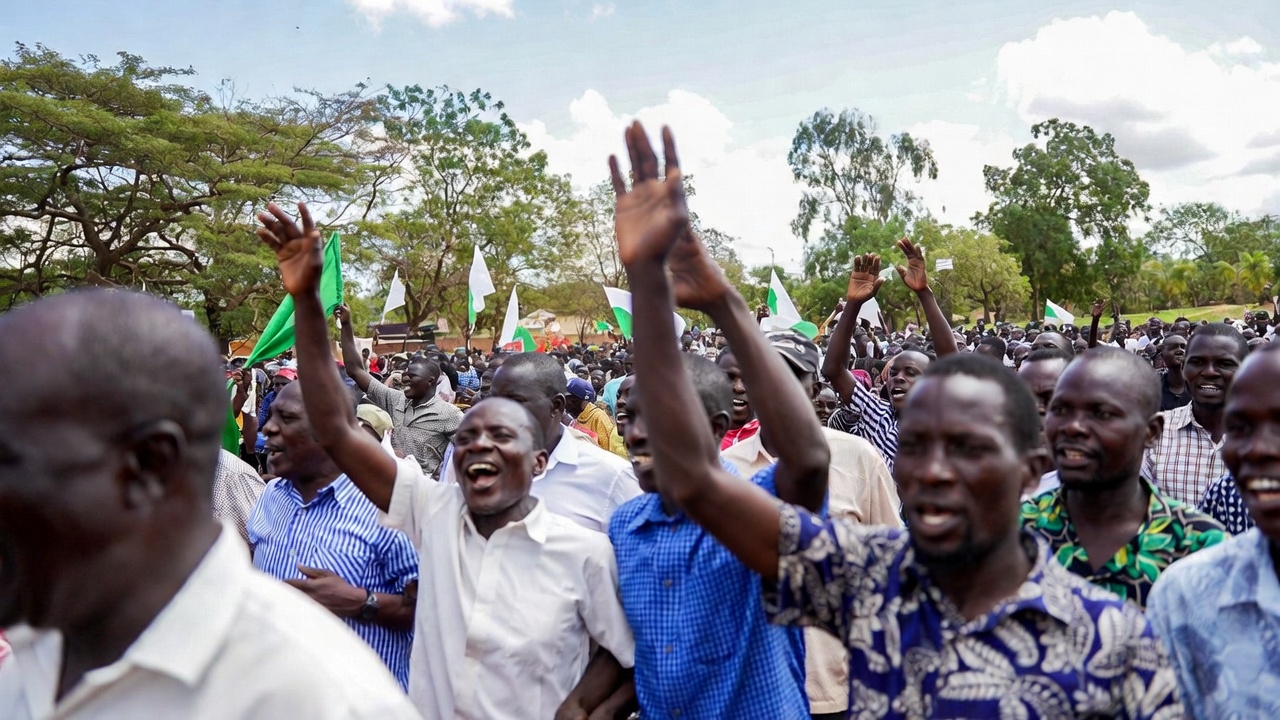
Every February 3, the Republic of Mozambique pauses. Schools close. Government offices go quiet. Families gather around shared plates of xima and piri-piri chicken. At the star-shaped monument in Maputo’s Praça dos Heróis Moçambicanos, wreaths are laid over the remains of fallen liberation fighters. Political leaders deliver speeches. Soldiers march in formation. And an entire nation remembers how it won its freedom.
Heroes’ Day — or Dia dos Heróis Moçambicanos — is far more than a day off work. It is the anniversary of one man’s death that gave life to a nation’s resolve. It is a reckoning with nearly five centuries of colonial rule. And it is a living reminder that the price of independence was measured in blood.
In 2026, Heroes’ Day falls on Tuesday, February 3. It marks 57 years since the assassination of Eduardo Mondlane, the founding president of the Mozambique Liberation Front (FRELIMO). His killing did not end the fight. It deepened it. Within six years of his death, Mozambique was free.
This article traces the full arc of that struggle — from the arrival of the first Portuguese ships to the modern commemorations in Maputo’s streets. Whether you are a student of African history, a traveler planning a visit to Mozambique, or someone who simply wants to understand one of the continent’s most important liberation stories, this guide will give you everything you need to know.
What Is Heroes’ Day in Mozambique and Why Is It Celebrated on February 3
Heroes’ Day is a national public holiday in the Republic of Mozambique. It is observed every year on February 3. The day honors all Mozambicans who sacrificed their lives during the struggle for independence from Portuguese colonial rule.
The date is not random. February 3, 1969, is the day Eduardo Chivambo Mondlane was killed by a bomb hidden inside a book. That book was delivered to FRELIMO’s headquarters in Dar es Salaam, Tanzania. When Mondlane opened the parcel, the explosive device detonated. He died instantly.
After Mozambique gained independence on June 25, 1975, the new FRELIMO-led government declared February 3 a permanent national holiday. The intent was clear: to ensure that no Mozambican would ever forget the cost of freedom.
Key facts about Heroes’ Day in Mozambique:
| Detail | Information |
|---|---|
| Official Name | Dia dos Heróis Moçambicanos |
| Date | February 3 (annually) |
| Type | Public holiday |
| Origin | Assassination of Eduardo Mondlane (1969) |
| 2026 Date | Tuesday, February 3, 2026 |
| Activities | Wreath-laying, parades, speeches, cultural performances |
| Key Location | Praça dos Heróis Moçambicanos, Maputo |
On this day, businesses and schools across Mozambique close. In the capital, Maputo, the ceremony centers on the Praça dos Heróis Moçambicanos (Heroes’ Square). This star-shaped monument, designed by Mozambican architect José Forjaz, serves as a national pantheon. The remains of Eduardo Mondlane, first president Samora Machel, and more than 200 other liberation figures rest beneath its grounds. A striking 95-meter mural wrapping around the monument tells the visual story of the independence struggle.
But Heroes’ Day is not only a Maputo affair. Across the country — from Cabo Delgado in the north to Inhambane in the south — families celebrate with traditional meals, community gatherings, and storytelling. It is a day when grandparents tell their grandchildren what life was like under colonial rule. It is a day when the phrase “A Luta Continua” (“The Struggle Continues”), the famous FRELIMO rallying cry, echoes not as a war call but as a promise.
The History of Portuguese Colonial Rule in Mozambique: Nearly 500 Years of Occupation
To understand Heroes’ Day, you must first understand what Mozambicans were fighting against. The colonial history of Mozambique is one of the longest in Africa.
Portuguese explorers first reached Mozambique’s coast in 1498, when Vasco da Gama’s fleet sailed along the East African shoreline on its way to India. By the early 1500s, Portugal had established trading posts along the coast. By 1530, it had consolidated effective control over the region’s maritime trade routes.
For the next four and a half centuries, Mozambique existed as a Portuguese overseas territory. The colonial administration classified the vast majority of indigenous Mozambicans as indígenas (natives), denying them political rights, economic opportunity, and access to education. By 1950, only 4,353 Mozambicans out of a population of 5,733,000 had been granted voting rights by the colonial government — a staggering exclusion rate of more than 99.9%.
The economic exploitation was brutal and systematic. The Portuguese government forced Black Mozambican farmers to grow cash crops — cotton and rice — for export. These farmers received minimal compensation, often not enough to feed their own families. Meanwhile, more than 250,000 Mozambican workers were funneled into coal and gold mines in neighboring South Africa and Rhodesia (now Zimbabwe), where they comprised over 30% of the underground mining workforce. Conditions in these mines were dangerous. Deaths were common.
Portugal’s colonial model in Mozambique differed from the British and French approaches in a crucial way. Britain and France gradually moved toward negotiated decolonization in many of their African territories during the 1950s and 1960s. Portugal, under the authoritarian Estado Novo regime led first by António de Oliveira Salazar and later by Marcello Caetano, refused any such transition. The regime classified its African territories not as colonies but as “overseas provinces” — an integral part of Portugal itself. Independence was not open for discussion.
This intransigence pushed Mozambican nationalists toward a conclusion that other African liberation leaders had already reached: freedom would not come through negotiation. It would come through armed struggle.
Who Was Eduardo Mondlane: The Father of Mozambican Independence
The story of Mozambican independence begins with one man. Eduardo Chivambo Mondlane was born on June 20, 1920, in the village of N’wajahani, in the Gaza Province of southern Mozambique. He was the son of a Tsonga chief. He was one of 16 siblings. He worked as a shepherd until the age of 12.
None of these facts suggested that Mondlane would become a revolutionary leader. But his mother, by all accounts, was determined that her son would receive an education. She succeeded.
Mondlane’s educational journey was extraordinary by any measure. He attended Swiss-Presbyterian mission schools in Mozambique. He then moved to South Africa, where he enrolled at the University of the Witwatersrand in Johannesburg — the first Mozambican ever to attend a South African university. But the new apartheid-era Nationalist government in South Africa forced him to withdraw after just one year.
Undeterred, Mondlane traveled to Portugal to study at the University of Lisbon. He encountered racial discrimination there as well. Protestant missionaries eventually helped him secure a scholarship to study in the United States. He completed his bachelor’s degree at Oberlin College in Ohio. He earned a master’s degree and then a PhD in sociology from Northwestern University in Illinois. He later joined Syracuse University as a professor of anthropology, helping to build the institution’s East African Studies Program.
But Mondlane’s heart was never in American academia. It was always in Mozambique.
In 1957, he took a position as a research officer at the United Nations Trusteeship Department. This role allowed him to travel to Africa and observe the growing independence movements firsthand. During a visit to Mozambique in 1961, thousands of people turned out to greet him. They saw in him the leader they needed.
That same year, Mondlane resigned from the UN (which prohibited direct political activism by its staff) and began planning the liberation of his country.
The Founding of FRELIMO: How Three Movements Became One
In June 1962, Mondlane traveled to Dar es Salaam, Tanzania. There, he helped bring together three separate exile nationalist organizations:
- UDENAMO (National Democratic Union of Mozambique), founded in Southern Rhodesia in 1960
- MANU (Mozambican African National Union), created in Kenya and Tanzania in 1961
- UNAMI (National African Union of Independent Mozambique), formed by exiles in Malawi in 1961
Under pressure from influential African leaders like Julius Nyerere of Tanzania and Kwame Nkrumah of Ghana, these groups agreed to merge. The result was the Frente de Libertação de Moçambique — FRELIMO. Mondlane was elected its first president.
FRELIMO established its headquarters in Dar es Salaam. Mondlane resigned from Syracuse University in early 1963 and moved his family to Tanzania. He declared, as the Dictionary of African Christian Biography records: “Although I loved university life above all, I decided to devote the rest of my life to the war of liberation of my country, until it receives independence!”
He would never see that independence. But he set everything in motion.
How the Mozambican War of Independence Started in 1964
For two years, FRELIMO tried political channels. It petitioned. It negotiated. It appealed to international bodies. The Portuguese government refused to engage. In fact, it escalated repression. Dissidents were arrested, imprisoned, and killed. The Portuguese secret police, known as PIDE (Polícia Internacional e de Defesa do Estado), created a surveillance state designed to crush any organized resistance.
There was also a historical wound that still bled. On June 16, 1960, Makonde nationalists in the town of Mueda, in the far northern province of Cabo Delgado, had organized a peaceful demonstration. They came to present grievances about taxes and living conditions to the Portuguese district administrator. When the administrator ordered the arrest of the protest leaders, the crowd erupted in anger. Portuguese troops opened fire. Hundreds of unarmed civilians were killed. The exact number remains disputed — estimates range from dozens to as many as 600 — but the event’s significance was beyond question. The Mueda Massacre, as it became known, radicalized a generation and became a foundational moment in Mozambican national identity.
By 1964, Mondlane had concluded that Portugal would never voluntarily relinquish control. FRELIMO began sending volunteers for military training in Algeria and Egypt. By September 1964, Mondlane had assembled a cadre of roughly 250 trained fighters.
On September 25, 1964, FRELIMO launched its first guerrilla attacks against Portuguese military outposts in the northern provinces of Cabo Delgado and Niassa. The Mozambican War of Independence had begun.
Timeline of the Mozambican War of Independence (1964–1975)
| Year | Key Event |
|---|---|
| 1960 | Mueda Massacre; hundreds of protesters killed by Portuguese troops |
| 1962 | FRELIMO founded in Dar es Salaam; Eduardo Mondlane elected president |
| 1964 | Armed struggle begins on September 25 in northern Mozambique |
| 1965–67 | FRELIMO expands operations; Portugal increases troop strength to 24,000 |
| 1968 | FRELIMO opens new military front in Tete Province; second FRELIMO Congress held |
| 1969 | Eduardo Mondlane assassinated on February 3; Samora Machel rises to leadership |
| 1970 | Samora Machel formally elected president of FRELIMO |
| 1970–71 | Portugal launches Operation Gordian Knot; FRELIMO adapts and disperses |
| 1972 | Wiriyamu Massacre by Portuguese troops shocks international community |
| 1974 | Carnation Revolution in Lisbon (April 25); ceasefire signed (September 7) |
| 1975 | Mozambique gains independence on June 25; Samora Machel becomes first president |
The Assassination of Eduardo Mondlane: The Event Behind Heroes’ Day
By early 1969, FRELIMO was making significant military progress. Its guerrillas operated with relative freedom across the northern provinces. It had opened a new front in Tete Province. International support was growing.
But FRELIMO was not without internal divisions. Rivalries between ethnic groups, ideological disagreements between moderates and radicals, and personal ambitions all created fault lines. The Portuguese government exploited these divisions through PIDE, planting informants and sowing distrust.
On February 3, 1969, Mondlane received a package at FRELIMO headquarters in Dar es Salaam. It appeared to contain a book. He took it to the home of an American friend, Betty King. When he opened the parcel, a bomb detonated. Eduardo Mondlane was killed instantly. He was 48 years old.
Who killed him? The question has never been definitively answered. Multiple parties have been accused:
- The Portuguese secret police (PIDE): A former PIDE agent named Oscar Cardoso later claimed that PIDE operative Casimiro Monteiro planted the bomb. Monteiro allegedly crossed into Tanzania from Mozambique to deliver the parcel.
- Rivals within FRELIMO: Internal dissidents, including some who had broken with FRELIMO’s leadership, were also suspected.
- Tanzanian political actors: Some theories implicated local politicians.
- Aginter Press: A shadowy Portuguese intelligence front organization based in Lisbon was also linked to the plot.
As Face2Face Africa has documented, the assassination remains officially unsolved more than five decades later. But for most Mozambicans, the evidence points overwhelmingly toward Portuguese intelligence.
Mondlane’s death was a devastating blow. But it did not break FRELIMO. Instead, it forged a new resolve. As Mondlane himself had once predicted: “I may be killed any day, but there will be victory.”
How Samora Machel Led FRELIMO to Victory After Mondlane’s Death
After Mondlane’s assassination, FRELIMO faced a critical leadership crisis. The movement’s vice president, Uria Simango, was a moderate who might have been the natural successor. But the FRELIMO Central Committee, after intense internal debate, instead created a temporary three-person leadership council. Samora Moisés Machel, the movement’s military commander, quickly emerged as the dominant figure.
In May 1970, the Central Committee officially elected Machel as president of FRELIMO.
Samora Machel was born on September 29, 1933, in the village of Chilembene, in Gaza Province. Unlike the university-educated Mondlane, Machel came from a farming family. His parents had been forced by the Portuguese to grow cotton for export instead of food for their own consumption. In the 1950s, their farmland was seized and given to Portuguese settlers. Machel’s brother died in a mining accident in South Africa.
These experiences radicalized him. He trained as a nurse in Maputo (then called Lourenço Marques) — one of the few professions open to Black Mozambicans — and witnessed firsthand the racial discrimination in the colonial healthcare system. Black nurses were paid less than their white counterparts for the same work. In 1962, Machel abandoned nursing and crossed into Tanzania to join FRELIMO. He was sent to Algeria for guerrilla training. He returned as a soldier.
By 1969, Machel was FRELIMO’s Commander-in-Chief. Under his leadership, the movement fully embraced Marxist-Leninist ideology and intensified its military campaign. Machel reorganized guerrilla tactics, emphasizing mobility and flexibility. When Portugal launched Operation Gordian Knot in 1970 — a massive military offensive designed to crush FRELIMO in the north — Machel responded by shifting operations to other provinces, including Manica and Sofala, stretching Portuguese forces thin.
The Portuguese deployed approximately 60,000 troops in Mozambique by the early 1970s. They used napalm. They created fortified villages to control the rural population. They committed atrocities. In December 1972, Portuguese soldiers massacred civilians in the village of Wiriyamu, near Tete. When a Spanish missionary reported the killings to the international press, the story shocked the world and further eroded Portugal’s already declining credibility.
By 1974, FRELIMO guerrillas could move across most of northern Mozambique with relative freedom. They had infiltrated central Mozambique. The Portuguese held the cities, the south, and the coastal areas — but the military situation was clearly unsustainable.
The Carnation Revolution and the End of Portuguese Colonial Rule in Africa
The decisive moment in the Mozambican War of Independence did not happen on a Mozambican battlefield. It happened in Lisbon.
On April 25, 1974, a group of young Portuguese military officers calling themselves the Movimento das Forças Armadas (Armed Forces Movement) overthrew the authoritarian government of Prime Minister Marcello Caetano. The soldiers placed red carnations in their rifle barrels as a symbol of peaceful change. The event became known as the Carnation Revolution.
The revolution was driven in large part by exhaustion from the colonial wars. Portugal had been fighting simultaneous guerrilla conflicts in Mozambique, Angola, and Guinea-Bissau for over a decade. The wars consumed an enormous share of the national budget. Thousands of young Portuguese men had been killed or maimed. Morale within the military had collapsed.
The new government in Lisbon immediately signaled its willingness to negotiate with the African liberation movements. For FRELIMO, this was the moment of leverage it had fought for.
Negotiations between the Portuguese government and FRELIMO resulted in the Lusaka Accord, signed on September 7, 1974, in Zambia. The agreement established a framework for transition. FRELIMO would assume governmental power without elections — a decision that reflected its dominant military and political position.
On June 25, 1975, Mozambique formally declared independence. Samora Machel became the country’s first president. The date — June 25 — was chosen deliberately: it was the 13th anniversary of FRELIMO’s founding.
After nearly 470 years, Portuguese colonial rule in Mozambique was over.
The Heroes Honored on Dia dos Heróis Moçambicanos: Key Figures of the Liberation Struggle
While Heroes’ Day is tied to the date of Eduardo Mondlane’s assassination, the holiday honors a much broader group of liberation figures. Here are the key individuals whose sacrifices shaped modern Mozambique:
Eduardo Mondlane (1920–1969)
Founder and first president of FRELIMO. An anthropologist, UN official, and university professor who traded academic life for armed revolution. He unified three rival nationalist movements and launched the independence struggle. Assassinated by a letter bomb in Dar es Salaam at age 48. Often called the “Father of the Mozambican Nation.”
Samora Machel (1933–1986)
FRELIMO’s military commander and Mozambique’s first president. Born to a farming family dispossessed by the Portuguese, Machel became a nurse before joining the liberation fight. He led FRELIMO from 1970 until independence and served as president from 1975 until his death in a suspicious plane crash in South Africa in 1986. He was 53 years old.
Filipe Samuel Magaia (1937–1966)
FRELIMO’s first military commander. He organized and led the initial guerrilla campaign against Portuguese forces. Magaia was murdered under suspicious circumstances in 1966 — possibly by internal rivals — at just 29 years of age.
Josina Machel (1945–1971)
A leading figure in FRELIMO’s women’s detachment and the first wife of Samora Machel. She organized women’s participation in the liberation struggle and became a symbol of gender equality within the movement. She died of illness at the age of 25. Her legacy is honored each year on April 7, Mozambican Women’s Day.
José Craveirinha (1922–2003)
Mozambique’s most celebrated poet. His work gave literary voice to the anti-colonial struggle and the dream of a free Mozambique. He won the prestigious Camões Prize in 1991 — the highest literary award in the Portuguese-speaking world. His remains rest alongside Mondlane and Machel at the Praça dos Heróis.
How Heroes’ Day Is Celebrated Across Mozambique in 2026
Heroes’ Day celebrations in 2026 carry the weight of both pride and complexity. Mozambique has entered a new political chapter. Daniel Chapo, inaugurated as president on January 15, 2025, is the country’s first leader born after independence — a generational milestone. His presidency began amid significant political tension following a disputed October 2024 election, post-election protests, and calls for national dialogue.
Against this backdrop, Heroes’ Day 2026 takes on additional resonance. Here is how the day is typically observed:
In Maputo: The National Ceremony
The main national observance takes place at the Praça dos Heróis Moçambicanos. The president lays a wreath at the monument. Military parades proceed along the Avenida Acordos de Lusaka. Political speeches recall the sacrifices of the liberation generation. Cultural performances — traditional dances, songs, and theatrical presentations — enliven the ceremony.
The Praça dos Heróis is normally accessible to the public only on select national holidays, including Heroes’ Day and Independence Day (June 25). Visitors must obtain permission through the Bureau de Informação Pública (Public Information Bureau), and photography inside the monument is typically restricted.
Across the Country: Community Observances
Outside Maputo, Heroes’ Day is a more intimate affair. Families gather for meals built around traditional Mozambican dishes:
- Xima — a thick maize porridge that serves as a staple across the country
- Piri-piri chicken — grilled chicken marinated in fiery piri-piri peppers, a dish with deep Portuguese-Mozambican roots
- Matapa — a stew made from cassava leaves, ground peanuts, and coconut milk
- Pão — fresh bread, a reminder of the Portuguese culinary influence
Community elders share stories of the liberation struggle with younger generations. In schools, the week leading up to Heroes’ Day often includes history lessons, essay competitions, and art projects focused on national heroes. Local government offices hold commemorative events.
The Flag and Its Symbolism
On Heroes’ Day, the Mozambican flag is raised on government buildings, schools, embassies, and military installations nationwide. Mozambique’s flag is unique in the world: it is the only national flag that features a modern firearm — an AK-47 rifle with a bayonet, crossed with a hoe and overlaid on an open book, all set against a yellow star. The three symbols represent FRELIMO’s original motto: “Education, Work, and Vigilance.”
The red triangle on the flag’s hoist side represents the blood shed during the independence struggle — a symbolism that resonates powerfully on Heroes’ Day.
The Legacy of the Mozambican War of Independence: What the Struggle Means Today
The Mozambican War of Independence lasted a decade. An estimated 10,000 Mozambicans died in the fighting. Thousands more were displaced. The Portuguese deployed tens of thousands of soldiers and used brutal counterinsurgency tactics. But the independence fighters prevailed.
The war’s legacy, however, extends far beyond military victory. It reshaped Mozambican society in ways that are still being felt in 2026.
A New National Identity
Before the war, “Mozambique” was a Portuguese administrative construct. Its borders had been drawn by European powers at the Berlin Conference of 1884–85. The people within those borders spoke dozens of different languages and belonged to many distinct ethnic groups — Makonde, Makhuwa, Tsonga, Sena, Shona, and others.
FRELIMO’s liberation struggle forged a shared national identity across these divisions. Eduardo Mondlane, with his cosmopolitan background and inclusive vision, insisted that the movement transcend ethnic lines. Samora Machel continued this emphasis. The phrase “Mozambicano” — Mozambican — took on new meaning. It was no longer a colonial label. It was a badge of shared sacrifice.
Education as Liberation
Both Mondlane and Machel viewed education as inseparable from liberation. Mondlane founded the Mozambique Institute in Dar es Salaam to provide primary and secondary education to Mozambican refugees and fighters. FRELIMO established schools in the “liberated zones” of northern Mozambique during the war itself. After independence, the new government nationalized the education system, abolished private schools, and launched mass literacy campaigns.
Today, the country’s flagship university — Eduardo Mondlane University in Maputo — bears the founder’s name. It was originally established by the Portuguese as the University of Lourenço Marques. It was renamed in 1975 as one of the first acts of the independent government.
The Unfinished Struggle
Independence did not bring peace. Within two years, the country was engulfed in a devastating civil war (1977–1992) between FRELIMO and the Mozambican National Resistance (RENAMO), an insurgent group backed first by Rhodesia and then by apartheid South Africa. More than one million Mozambicans died in the civil conflict. Five million more were displaced. The infrastructure built during both the colonial and early independence eras was systematically destroyed.
A peace agreement was signed in Rome in October 1992, and multiparty elections were held in 1994. FRELIMO has won every presidential election since — a dominance that, as of 2025, has become a source of significant political tension.
Understanding the Political Context of Heroes’ Day in 2026: Mozambique’s New Chapter
Heroes’ Day 2026 arrives at a moment of profound political transition for Mozambique.
Daniel Chapo, who assumed the presidency on January 15, 2025, represents a new generation. Born in 1977 — two years after independence — he is the first Mozambican president who did not fight in the war of liberation. He previously served as governor of Inhambane Province and studied law at Eduardo Mondlane University.
However, his path to the presidency was contested. The October 2024 election was marred by allegations of widespread fraud. Opposition candidate Venâncio Mondlane — no direct relation to Eduardo Mondlane — disputed the results, claiming he had won with 53% of the vote. Protests erupted across the country. According to civil society monitoring groups, more than 300 people were killed in post-election violence, mostly demonstrators shot by police and military forces.
Chapo was inaugurated amid tight security in Maputo. He pledged to pursue national dialogue, reduce the size of government, and tackle youth unemployment. In September 2025, he launched a two-year “inclusive national dialogue” initiative, bringing together civil society groups, political parties, religious leaders, and youth organizations.
For many young Mozambicans born long after the war of independence, Heroes’ Day prompts complex questions. They honor the sacrifices of the liberation generation. But they also ask whether FRELIMO — the party that won independence — has fulfilled the promises of freedom, equality, and opportunity that Mondlane and Machel fought for. Poverty remains widespread. Unemployment, particularly among youth, is high. A jihadist insurgency in the northern province of Cabo Delgado has killed thousands and displaced millions since 2017.
Heroes’ Day in 2026 is therefore both a commemoration and a conversation — about what was won, what has been lost, and what remains to be built.
How to Visit Mozambique’s Heroes’ Day Monuments and Historical Sites
For travelers interested in the history of the Mozambican liberation struggle, the country offers several important sites. Planning a visit around Heroes’ Day (February 3) or Independence Day (June 25) allows you to witness national commemorations firsthand.
Praça dos Heróis Moçambicanos, Maputo
The most important site in Mozambique for understanding the liberation struggle. This star-shaped monument on the Avenida Acordos de Lusaka serves as the national pantheon. It was designed by architect José Forjaz and inaugurated on February 3, 1977. The remains of Mondlane, Machel, Craveirinha, and more than 200 other national heroes are interred here. A 95-meter mural tells the story of the revolution. The site is open to the public on Heroes’ Day and a few other national holidays. Visitors should apply for access through the Bureau de Informação Pública.
Getting there: Take a chapa (minibus) heading along Avenida Acordos de Lusaka. The monument is located near the Hospital da Mavalane and the Ministry of Agriculture.
Praça da Independência, Maputo
The central square of Maputo, flanked by the neoclassical Conselho Municipal (City Hall) and the Catedral de Nossa Senhora da Conceição. This was the site of Mozambique’s formal independence declaration. The Samora Machel Statue stands as a prominent landmark.
Mueda, Cabo Delgado Province
The site of the 1960 Mueda Massacre, which is widely considered the catalyst for the armed liberation struggle. A commemorative monument marks the location. Each year, residents of Mueda perform a theatrical reenactment of the massacre — a tradition that began as early as 1968 during the war itself. The Brazilian filmmaker Ruy Guerra documented this reenactment in his landmark 1979 documentary Mueda, Memória e Massacre.
Eduardo Mondlane University, Maputo
Originally the University of Lourenço Marques, this institution was renamed after Mondlane following independence. The university remains the country’s most important center of higher learning and a living memorial to the man who believed education was the path to true liberation.
Practical Travel Tips for Heroes’ Day
| Tip | Details |
|---|---|
| Best time to visit | Late January through early February for Heroes’ Day celebrations |
| Language | Portuguese is the official language; English is limited outside tourist areas |
| Currency | Mozambican Metical (MZN) |
| Visa | Many nationalities can obtain a visa on arrival; check current requirements |
| Climate in February | Hot and humid; rainy season. Pack light clothing and rain gear |
| Cultural etiquette | Show respect at monuments and memorials. Ask before photographing people or ceremonies |
| Safety | Check travel advisories for Cabo Delgado Province due to the ongoing insurgency |
The Meaning of “A Luta Continua”: Why the Mozambican Independence Struggle Still Resonates
Eduardo Mondlane is widely credited with popularizing the phrase “A Luta Continua” — “The Struggle Continues.” It became FRELIMO’s battle cry during the war of independence. It appeared on posters, banners, and radio broadcasts. Samora Machel used it in his speeches. FRELIMO soldiers chanted it before battles.
The phrase has since traveled far beyond Mozambique. It has been adopted by liberation movements, labor organizers, student activists, and social justice campaigns around the world. It is one of the most recognized slogans of the global decolonization era, standing alongside Tanzania’s “Uhuru” (Freedom) and South Africa’s “Amandla!” (Power).
But in Mozambique itself, “A Luta Continua” carries a particular weight in 2026. For older Mozambicans who lived through the war, the phrase is a reminder of the blood price of freedom. For younger Mozambicans — many of whom participated in the 2024 post-election protests — it has taken on new meaning: a call for the democratic freedoms, economic opportunity, and government accountability that they believe were promised at independence but not yet fully delivered.
On Heroes’ Day, the phrase bridges these generations. It says that the work of building a just Mozambique did not end in 1975. It says that the heroes being honored would expect more. It says that a nation’s story is never finished.
Frequently Asked Questions About Heroes’ Day and the Mozambican War of Independence
What is Heroes’ Day in Mozambique? Heroes’ Day (Dia dos Heróis Moçambicanos) is a national public holiday observed on February 3. It commemorates all those who died fighting for Mozambique’s independence from Portuguese colonial rule. The date marks the 1969 assassination of Eduardo Mondlane, the founding president of FRELIMO.
When is Heroes’ Day in 2026? Heroes’ Day 2026 falls on Tuesday, February 3, 2026.
Who was Eduardo Mondlane? Eduardo Chivambo Mondlane (1920–1969) was a Mozambican revolutionary, anthropologist, and the founder and first president of FRELIMO (Mozambique Liberation Front). He unified three rival nationalist movements and launched the armed struggle for independence in 1964. He was assassinated by a letter bomb in Dar es Salaam, Tanzania, on February 3, 1969.
How long did the Mozambican War of Independence last? The war officially began on September 25, 1964, and ended with a ceasefire on September 8, 1974 — lasting approximately 10 years. Mozambique formally achieved independence on June 25, 1975.
Who was Mozambique’s first president? Samora Machel became Mozambique’s first president upon independence on June 25, 1975. He served until his death in a plane crash on October 19, 1986.
What is the Praça dos Heróis Moçambicanos? It is a star-shaped national monument and pantheon in Maputo, designed by architect José Forjaz. It was inaugurated on February 3, 1977, and serves as the burial site for more than 200 national heroes, including Eduardo Mondlane and Samora Machel.
Is Heroes’ Day a public holiday? Yes. Schools, government offices, and most businesses are closed throughout Mozambique on Heroes’ Day.
What does “A Luta Continua” mean? It translates from Portuguese as “The Struggle Continues.” The phrase originated as FRELIMO’s rallying cry during the war of independence and has since been adopted by social justice movements worldwide.
Final Reflections: Why the World Should Know the Story of Mozambique’s Independence
The Mozambican War of Independence is not as widely known outside Africa as the struggles of South Africa, Algeria, or Kenya. It should be.
It is a story of a people colonized for nearly five centuries who refused to accept subjugation as permanent. It is a story of a shepherd’s son who became a university professor and then a revolutionary leader. It is a story of a letter bomb that killed one man but could not kill a movement. It is a story of young soldiers trained in Algerian camps who fought the army of a European NATO member state — and won.
Heroes’ Day on February 3 is Mozambique’s way of saying: we remember. We honor. And we continue.
For travelers, students, and anyone interested in the powerful intersections of history, culture, and human determination, Heroes’ Day offers a window into the soul of a nation still writing its story. If you visit Maputo on this date, you will hear the drums. You will see the flags. You will taste the piri-piri. And you will understand, perhaps for the first time, why the people of Mozambique call February 3 the day of their heroes.
Because it is.
A Luta Continua.
Related Resources: