Every year on February 3, the people of Mozambique pause to remember the men and women who gave everything for their country’s freedom. Mozambique Heroes’ Day 2026 — known locally as Dia dos Heróis Moçambicanos — falls on a Tuesday, marking the 57th anniversary of a pivotal event that changed the course of Southeast African history: the assassination of Eduardo Mondlane, the founder and first president of the Mozambique Liberation Front (FRELIMO).
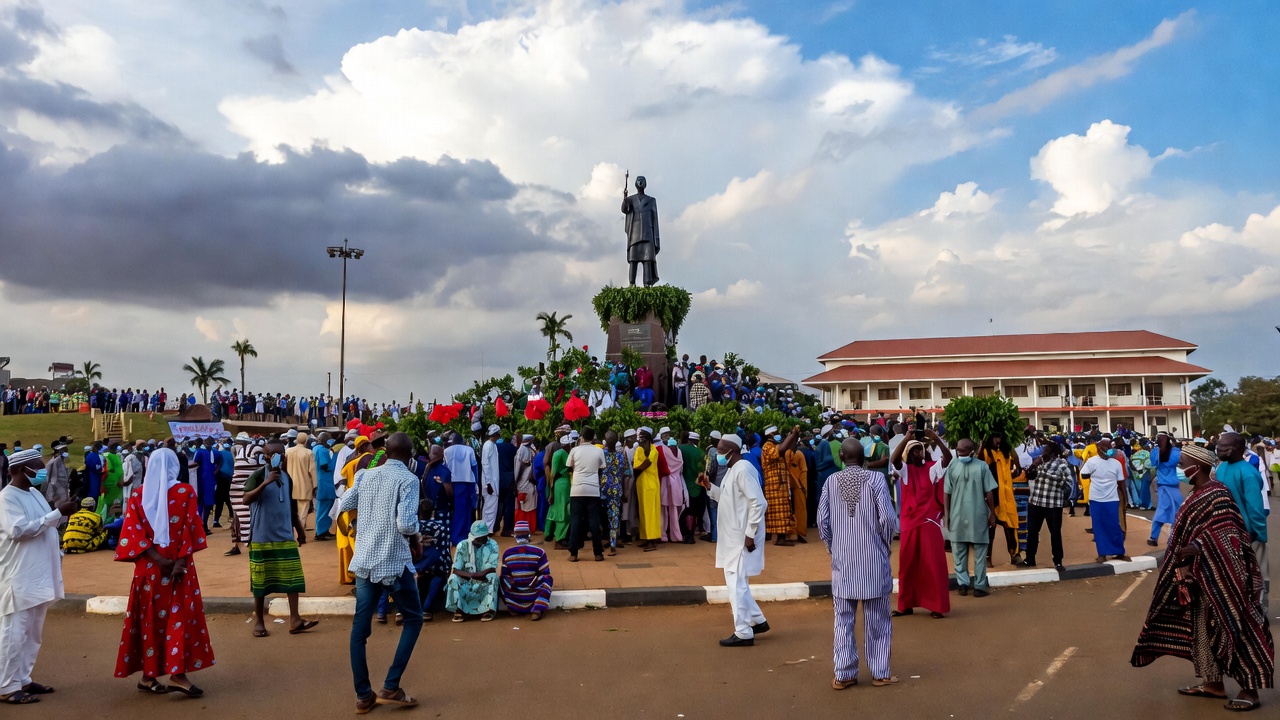
This is not just another public holiday. It is Mozambique’s day of collective memory. Schools close. Offices go dark. Families gather. In the capital city of Maputo, thousands converge on the star-shaped Praça dos Heróis Moçambicanos — Heroes’ Square — to lay wreaths, listen to speeches, and pay tribute to those who sacrificed their lives during almost five centuries of Portuguese colonial rule and the bitter civil war that followed independence.
For travelers, history enthusiasts, and anyone curious about African heritage, understanding Mozambique Heroes’ Day offers a rare window into the soul of a resilient nation. In this guide, we cover everything — from the holiday’s origins and the story of Eduardo Mondlane, to practical travel tips for visiting Mozambique in February 2026.
What Is Mozambique Heroes’ Day and When Is It Celebrated in 2026?
Mozambique Heroes’ Day is a national public holiday observed every year on February 3. It is a day off for the entire population. Schools, government offices, and most businesses are closed. The holiday honors all Mozambicans — soldiers, civilians, political leaders, and ordinary people — who fought and died during the country’s long struggle for independence from Portugal.
In 2026, the holiday falls on Tuesday, February 3. This means many Mozambican workers and families will enjoy a short midweek break. Some choose to bridge the gap with Monday, creating a long weekend for travel and family visits.
| Detail | Information |
|---|---|
| Holiday name | Dia dos Heróis Moçambicanos (Mozambican Heroes’ Day) |
| Date in 2026 | Tuesday, February 3 |
| Type | National public holiday |
| First observed | 1975 (year of independence) |
| Main observance site | Praça dos Heróis Moçambicanos, Maputo |
| Key figure honored | Eduardo Chivambo Mondlane (1920–1969) |
| Anniversary in 2026 | 57th anniversary of Mondlane’s assassination |
The date itself is not random. February 3, 1969, is the day Eduardo Mondlane was killed by a parcel bomb at FRELIMO headquarters in Dar es Salaam, Tanzania. Choosing this date ensured that Mozambique’s most painful loss became its most powerful reminder: freedom has a price, and the heroes who paid it must never be forgotten.
The History Behind Mozambique Heroes’ Day: Why February 3 Matters
To understand why February 3 carries such weight in Mozambique, you must go back to the late 1960s. The country was still under Portuguese colonial rule — a rule that had lasted, in one form or another, since the explorer Vasco da Gama first set foot on Mozambican soil in 1498.
By the mid-20th century, Mozambique was one of Portugal’s largest overseas territories. The colonial administration, operating under the authoritarian Estado Novo regime of António de Oliveira Salazar, treated Mozambique as a source of cheap labor and raw materials. Black Mozambicans had almost no access to education, skilled jobs, or political representation. According to colonial records, by 1950 only 4,353 Mozambicans out of a population of 5.7 million had been granted the right to vote.
Resistance simmered for decades. Then, in 1962, several exile groups merged in Dar es Salaam, Tanzania, to form the Mozambique Liberation Front — FRELIMO. Its elected president was a soft-spoken anthropologist and former United Nations researcher named Eduardo Mondlane.
Under Mondlane’s leadership, FRELIMO launched its first armed guerrilla operations against Portuguese targets in northern Mozambique on September 25, 1964. What followed was a brutal decade-long war. Portugal deployed approximately 60,000 troops to defend its colony. FRELIMO, with support from the Soviet Union, China, Tanzania, Algeria, and the Organization of African Unity, fought back with a force that grew to several thousand guerrillas.
Then, on the morning of February 3, 1969, a package arrived at FRELIMO headquarters in Dar es Salaam. It was disguised as a book. When Eduardo Mondlane opened it, the bomb inside exploded and killed him instantly. He was 48 years old.
The identity of his killers has been debated for decades. Evidence points in several directions — Portuguese secret police (PIDE), internal FRELIMO rivals, and even Tanzanian political actors. Former PIDE agent Oscar Cardoso later claimed that a PIDE operative named Casimiro Monteiro planted the device. Regardless of who was directly responsible, Mondlane’s death was a devastating blow to the liberation movement.
But FRELIMO did not collapse. Mondlane’s successor, Samora Machel, carried the struggle forward. And when Mozambique finally gained independence on June 25, 1975, the new government chose February 3 as the national day to honor all who had fallen — with Eduardo Mondlane at the center of that remembrance.
Who Was Eduardo Mondlane, the Father of Mozambican Independence?
Eduardo Chivambo Mondlane is widely regarded as the father of Mozambican independence. His journey from a rural shepherd boy to the leader of a continental liberation movement is one of the most remarkable stories in modern African history.
Early Life and Education
Mondlane was born on June 20, 1920, in the village of N’wajahani, in the Gaza Province of what was then Portuguese East Africa. He was the fourth of sixteen sons of a Tsonga chief. His childhood was defined by rural poverty. He worked as a shepherd until the age of 12.
Education became his path out. He attended a series of Swiss Presbyterian mission schools before eventually enrolling at Witwatersrand University in Johannesburg, South Africa. However, the rise of the apartheid-era Nationalist Party government forced him to leave after just one year.
Mondlane then studied at the University of Lisbon in Portugal. He later transferred to Oberlin College in Ohio, United States, where he earned a Bachelor of Arts degree in sociology and anthropology. He completed his PhD at Northwestern University in Illinois. He married Janet Rae Johnson, an American woman of Swedish descent, who would later serve in various Mozambican government roles after independence.
Career at the United Nations and Syracuse University
In 1957, Mondlane joined the United Nations as a research officer in the Trusteeship Department. The position took him across Africa, deepening his understanding of colonial politics. However, UN employees were forbidden from engaging in political activism. In 1961, Mondlane resigned and took a teaching position at Syracuse University, where he helped develop the East African Studies Program.
Founding FRELIMO
In June 1962, Mondlane flew to Dar es Salaam, Tanzania. There, he united three competing nationalist exile groups — UDENAMO, MANU, and UNAMI — into a single movement: the Frente de Libertação de Moçambique, or FRELIMO. He was elected its first president at a congress held that September.
Mondlane resigned from Syracuse in early 1963 and moved his family to Dar es Salaam. From there, he spent the next six years building FRELIMO into a formidable organization. He raised funds across the globe. He secured military training for guerrilla fighters in Algeria, Egypt, and Tanzania. He also made education one of FRELIMO’s core priorities — creating scholarship programs for young Mozambicans.
By 1964, Mondlane had assembled a cadre of about 250 trained fighters. On September 25, 1964, guerrilla operations began in the northern provinces of Cabo Delgado and Niassa. By 1969, several thousand FRELIMO guerrillas were operating across northern Mozambique. Mondlane had also opened a new front in the Tete district of northwest Mozambique in 1968.
Assassination and Legacy
Mondlane was killed on February 3, 1969, by a book bomb at FRELIMO headquarters in Dar es Salaam. He was in the house of an American friend, Betty King, when the package exploded.
His legacy is immense. He is the only leader who managed to unite Mozambique’s fractured nationalist movements into a single effective force. His cosmopolitanism — shaped by education in Africa, Europe, and America — gave him the ability to build alliances worldwide. His marriage to a white American woman, unusual for the era, reflected his commitment to a non-racial, inclusive vision for Mozambique.
Today, Mondlane’s face appears on Mozambican banknotes. The country’s largest university, Universidade Eduardo Mondlane in Maputo, bears his name. And every year on February 3, the nation pauses to honor him.
The Mozambican War of Independence: From Colonial Rule to Freedom
The story of Heroes’ Day cannot be separated from the broader struggle for Mozambican independence. That struggle stretched over centuries, but its most intense chapter unfolded between 1964 and 1974.
Nearly 500 Years of Portuguese Colonial Rule
Portugal’s presence in Mozambique began in 1498 with the arrival of Vasco da Gama. Over the following centuries, the Portuguese established trading posts, forts, and colonial settlements along the coast. By the early 20th century, Portugal controlled the entire territory, using a system of concessionaire companies — many of them British-owned — to exploit the land, minerals, and labor of the indigenous population.
Under the Estado Novo regime (1933–1974), colonial rule became even more repressive. The government’s official policy was assimilation — the idea that Africans could become Portuguese citizens by adopting Portuguese culture, language, and religion. In practice, fewer than one percent of Mozambicans ever achieved this status. The vast majority were classified as indígenas (natives) and subjected to forced labor, heavy taxation, and land expropriation.
The Armed Struggle (1964–1974)
FRELIMO’s guerrilla war began in September 1964 with about 250 fighters in northern Mozambique. Portugal responded with massive military force. At its peak, Portugal had roughly 60,000 soldiers deployed in Mozambique — fighting simultaneously in Angola and Guinea-Bissau as well.
The war was brutal. A United Nations commission of inquiry later found evidence that Portuguese troops had massacred approximately 1,000 individuals between 1971 and 1974. Estimates suggest that as many as 10,000 Mozambicans died during the conflict.
Despite being vastly outnumbered, FRELIMO made steady gains. By the early 1970s, it controlled much of northern Mozambique and had infiltrated the central provinces. The Portuguese military launched Operation Gordian Knot in 1970 — a massive seven-month offensive involving 35,000 troops — but failed to crush the guerrilla movement.
The Carnation Revolution and Independence
The turning point came not on Mozambican soil, but in Lisbon. On April 25, 1974, a group of left-leaning Portuguese military officers staged a peaceful coup known as the Carnation Revolution. They overthrew the Estado Novo regime, largely because of exhaustion and frustration with the colonial wars in Africa.
The new Portuguese government immediately opened negotiations with FRELIMO. The Lusaka Accord, signed on September 7, 1974, provided for a complete handover of power. On June 25, 1975, Mozambique officially became an independent nation, with Samora Machel as its first president.
How Samora Machel Carried the Torch After Eduardo Mondlane
After Mondlane’s assassination in 1969, FRELIMO faced a dangerous moment. The movement could have fractured. Instead, Samora Moïsés Machel — a former nurse turned guerrilla commander — emerged as the new leader.
Machel was born on September 29, 1933, in the village of Chilembene, Gaza Province. His parents were farmers who were forced to grow cotton for the Portuguese instead of food for their own family. In the 1950s, their land was seized and given to Portuguese settlers. These experiences radicalized Machel early.
He trained as a nurse in Maputo (then Lourenço Marques), where he witnessed firsthand the racial discrimination in the colonial healthcare system. In 1962, he left nursing and joined FRELIMO. He received guerrilla training in Algeria and quickly rose through the ranks. By 1969, he was commander-in-chief of FRELIMO’s army. In May 1970, the FRELIMO Central Committee elected him president of the movement.
Under Machel’s leadership, FRELIMO consolidated its military gains and expanded operations into central Mozambique. After independence in 1975, Machel became the country’s first president. He pursued a Marxist-Leninist agenda — nationalizing industries, redistributing urban housing, and expanding access to education and healthcare. He also allowed liberation movements from Rhodesia (now Zimbabwe) and South Africa to operate from Mozambican territory.
Machel’s presidency was cut short on October 19, 1986, when his presidential aircraft crashed in the Lebombo Mountains near Mbuzini, South Africa. Suspicion of South African government involvement persists to this day, though it was never conclusively proven. Machel was 53 years old.
Today, both Mondlane and Machel are buried at the Praça dos Heróis Moçambicanos in Maputo — side by side, two leaders forever united in their nation’s memory.
How Mozambique Celebrates Heroes’ Day: Traditions and Customs
Heroes’ Day is one of the most solemn occasions on the Mozambican national calendar. It combines civic ceremony with cultural expression. The day is marked by a mix of official events and community gatherings across the country.
Official Ceremonies in Maputo
The centerpiece of the day is the official state ceremony at Heroes’ Square in Maputo. The President of Mozambique delivers a national address, usually reflecting on the country’s past struggles, current challenges, and future aspirations. Government officials, military commanders, diplomats, and opposition leaders attend. Wreaths are laid at the monuments. The national anthem is sung.
In 2025, newly inaugurated President Daniel Chapo gave his first Heroes’ Day speech at the square. He spoke about the need for national unity, dialogue, and economic independence. He honored Eduardo Mondlane and called for a rejection of corruption, nepotism, and what he described as damaging social practices.
Military Parades and Cultural Performances
The armed forces play a visible role on Heroes’ Day. Military parades take place in Maputo and other major cities. Soldiers march in formation past reviewing stands. Equipment is displayed. It is both a tribute to the armed struggle and a display of national sovereignty.
Cultural performances accompany the military formalities. Traditional dances, drum circles, and choral groups perform throughout the day. Music is central to the celebrations. Traditional instruments like the marimba, mbira, and various percussive drums create rhythms that have defined Mozambican cultural identity for generations.
Community Observances Across the Country
Beyond Maputo, Heroes’ Day is observed in cities, towns, and villages throughout the country. In major cities like Beira, Nampula, and Inhambane, local governments organize their own ceremonies. In rural areas, communities gather to share stories of the liberation struggle, often passed down by elders who lived through the war.
Families use the day as an opportunity to come together. Traditional meals are prepared. Stories of sacrifice and resilience are told to younger generations — a living oral tradition that keeps the memory of the independence struggle alive.
Praça dos Heróis Moçambicanos: The Heart of Heroes’ Day Celebrations in Maputo
No discussion of Mozambique Heroes’ Day is complete without mentioning the Praça dos Heróis Moçambicanos — the Square of Mozambican Heroes. Located along Avenida Acordos de Lusaka in Maputo, this is the spiritual and ceremonial heart of the holiday.
Design and Architecture
The square was designed by renowned Mozambican architect José Forjaz (also referred to as António Forjaz in some sources). Construction began in November 1976, just over a year after independence. Fifty workers from three Mozambican construction companies built the monument. The square was inaugurated on February 3, 1977 — the eighth anniversary of Mondlane’s death — making it the first Heroes’ Day celebrated at the site.
The monument takes the shape of a star (pentagram), symbolizing the revolutionary spirit. At its center lies a national pantheon — a crypt where Mozambique’s most distinguished heroes are laid to rest. A striking 95-meter-long mural runs alongside the square, depicting the history of Mozambique’s liberation struggle through vivid imagery.
Who Is Buried at Heroes’ Square?
Over 200 individuals are now interred in the pantheon beneath Heroes’ Square. Among the most prominent are:
- Eduardo Mondlane — founder of FRELIMO
- Samora Machel — first president of independent Mozambique
- José Craveirinha — Mozambique’s most celebrated poet, winner of the Camões Prize
- Justino Chemane — renowned Mozambican composer
The inclusion of cultural figures like Craveirinha and Chemane alongside military and political leaders reflects a broad understanding of heroism in Mozambican society. Heroes are not only those who carried weapons. They also include those who carried the nation’s spirit through art, literature, and music.
Visiting Heroes’ Square
Public access to the crypt is restricted. Visits are generally permitted only on significant national holidays such as Heroes’ Day (February 3) and Independence Day (June 25). Photography inside the site is typically prohibited. Visitors who wish to access the interior must arrange permission through the Bureau de Informação Pública (Public Information Bureau).
However, the exterior of the square is open year-round. The surrounding gardens, the mural, and the star-shaped structure can be appreciated from the outside at any time. It is a serene place — surrounded by green grass and shaded by trees — that offers a moment of reflection in the busy capital.
Heroes’ Day 2026: What to Expect in the 57th Anniversary Year
The 2026 Heroes’ Day marks the 57th anniversary of Eduardo Mondlane’s assassination. It also takes place in a Mozambique that is navigating significant political, economic, and social transitions.
A Nation Under New Leadership
Daniel Francisco Chapo became the president of Mozambique on January 15, 2025, succeeding Filipe Nyusi. Born on January 6, 1977, in Inhaminga, Sofala Province, Chapo is notably the first FRELIMO president born after independence. He studied law at Universidade Eduardo Mondlane and previously served as governor of Inhambane Province from 2016 to 2024.
Chapo’s presidency began against a backdrop of post-election protests following the disputed October 2024 elections. Opposition leader Venâncio Mondlane (no relation to Eduardo Mondlane) contested the official results, and protests erupted across the country. By the time of Chapo’s inauguration, the situation had begun to stabilize, but tensions remained.
At the 2025 Heroes’ Day ceremony, Chapo used his address to call for national unity and inclusive dialogue. He announced plans for a broad national conversation that would involve not just political parties, but also civil society, academia, religious groups, and the private sector. His message was clear: Mozambique’s future must be built collectively.
Approaching the 51st Anniversary of Independence
With June 25, 2025, Mozambique celebrated 50 years of independence — half a century of sovereignty. Heroes’ Day 2026 builds on that milestone. The nation is in a reflective mood, looking both backward at the sacrifices of the liberation generation and forward at the challenges that remain.
Those challenges include:
- Jihadist insurgency in Cabo Delgado Province, where an ISIL-affiliated armed group has killed thousands and displaced over two million people since 2017
- Economic recovery following years of debt scandal, pandemic disruption, and post-election unrest
- Youth unemployment — a pressing issue in a country where the majority of the population is under 25
- Climate vulnerability — Mozambique ranks among the countries most affected by tropical cyclones, flooding, and droughts
Heroes’ Day 2026 will likely see President Chapo address many of these issues in his national speech, framing them through the lens of the liberation struggle: just as the heroes of the past overcame colonial oppression, Mozambicans today must confront the challenges of poverty, insecurity, and inequality.
Other National Heroes Honored on Mozambique Heroes’ Day
While Eduardo Mondlane is the central figure of Heroes’ Day, the holiday honors a wide constellation of individuals who contributed to Mozambique’s independence and development.
Josina Machel (1945–1971)
Born Josina Abiatar Muthemba, she was a freedom fighter and the first wife of Samora Machel. She was active in FRELIMO’s women’s division and fought in the armed struggle. She died on April 7, 1971, at the age of 25, reportedly from illness during the war. Her death is commemorated on Mozambican Women’s Day (April 7).
Filipe Samuel Magaia (1937–1966)
Magaia was FRELIMO’s first military commander. He organized the initial guerrilla training programs and led the movement’s first armed operations. He was killed in 1966 under circumstances that remain disputed — some accounts suggest internal betrayal.
José Craveirinha (1922–2003)
Mozambique’s greatest poet and the first African writer to win the Camões Prize (1991), the most prestigious award in Portuguese-language literature. His poetry gave voice to the suffering and hope of the Mozambican people. He is buried at Heroes’ Square.
Alberto Chissano (1935–1994)
One of Mozambique’s most famous sculptors, known for his powerful works in wood, stone, and iron. His family home in Matola now serves as a gallery.
These and many others form the collective memory that Heroes’ Day honors. The day reminds Mozambicans that heroism takes many forms — from the battlefield to the hospital ward, from the classroom to the artist’s studio.
Mozambique Public Holidays 2026: Complete Calendar and Travel Guide
Mozambique observes several national public holidays throughout the year. If you are planning a trip, knowing these dates is important — both for experiencing cultural events and for managing logistics, since many services close on holidays.
| Date | Holiday | Notes |
|---|---|---|
| January 1 | New Year’s Day | National celebration |
| February 3 | Heroes’ Day | Honoring Eduardo Mondlane and liberation heroes |
| April 7 | Mozambican Women’s Day | Honoring Josina Machel |
| May 1 | Workers’ Day | International Labor Day |
| June 25 | Independence Day | 1975 independence from Portugal |
| September 7 | Victory Day | Lusaka Accord anniversary |
| September 25 | Armed Forces Day / Revolution Day | Start of the armed struggle in 1964 |
| October 4 | Day of Peace and Reconciliation | End of the civil war |
| December 25 | Family Day / Christmas Day | National celebration |
Travel tip: February in Mozambique is the middle of the wet season. Expect warm, humid weather with afternoon thunderstorms, especially in coastal areas. Temperatures in Maputo typically range from 22°C to 31°C (72°F to 88°F). The rainy season also means lush green landscapes and fewer tourists — making it a good time for those who prefer a quieter experience.
Best Places to Visit in Mozambique During Heroes’ Day Weekend 2026
If you are considering a trip to Mozambique around Heroes’ Day, here are some places worth visiting.
1. Maputo — The Capital City
Mozambique’s capital is the cultural and political heart of the country. On Heroes’ Day, the main events take place at Praça dos Heróis Moçambicanos and the surrounding areas. Beyond the celebrations, Maputo offers:
- Maputo Central Train Station — a stunning example of neoclassical architecture, often listed among the world’s most beautiful train stations
- Fortaleza de Maputo — an 18th-century fortress overlooking the Indian Ocean
- Mercado Central (Central Market) — a vibrant marketplace selling tropical fruits, spices, cashews, and capulanas (traditional printed cloths)
- Museu Nacional de Arte — showcasing Mozambique’s finest contemporary artists
- Tunduru Botanical Gardens — a peaceful green space in the city center
2. Inhambane — Colonial Charm and Coastal Beauty
Located about 470 km north of Maputo, Inhambane is one of the oldest settlements in East Africa. The town features colonial-era churches, coconut palms, and a relaxed seaside atmosphere. Nearby Tofo Beach is famous for whale sharks, manta rays, and excellent diving.
3. Vilanculos and the Bazaruto Archipelago
Vilanculos is the gateway to the Bazaruto Marine National Park — a chain of islands with turquoise lagoons, coral reefs, and pristine white-sand beaches. Snorkeling, kayaking, and dhow sailing are popular activities.
4. Gorongosa National Park
Located in central Mozambique, Gorongosa is one of Africa’s great wildlife restoration success stories. The park is home to elephants, lions, hippos, crocodiles, and a stunning diversity of bird species.
5. Ilha de Moçambique (Island of Mozambique)
A UNESCO World Heritage Site in northern Mozambique, this tiny island was the capital of Portuguese East Africa for nearly 400 years. Its architecture reflects a unique blend of Arab, Indian, and Portuguese influences.
Traditional Mozambican Food and Music During Heroes’ Day Celebrations
Food
Heroes’ Day is a time for families to gather around the table. Some of the dishes you might encounter include:
- Matapa — a traditional stew made from cassava leaves, ground peanuts, garlic, and coconut milk, often served with prawns or clams
- Peri-peri prawns — giant prawns grilled with the fiery piri-piri chili pepper sauce that Mozambique is famous for
- Xima (also called ncima or posho) — a thick maize porridge that serves as a staple accompaniment to most meals
- Mu-kwane — a dish combining coconut and cassava leaves
- Galinha à Zambeziana — chicken cooked in a rich coconut and peanut sauce, named after the Zambézia Province
Street vendors across Maputo and other cities sell freshly grilled seafood, badjias (bean fritters with a South Asian influence), and freshly squeezed tropical juices.
Music
Music is inseparable from Mozambican identity. On Heroes’ Day, you will hear a range of sounds:
- Marrabenta — Mozambique’s most popular urban music genre, blending traditional rhythms with Portuguese guitar styles
- Timbila — the orchestral xylophone music of the Chopi people, recognized by UNESCO as an intangible cultural heritage
- Traditional songs praising national heroes, performed with drums, marimbas, and mbiras (thumb pianos)
Live performances take place at cultural venues, public squares, and community gatherings throughout the country.
The Role of FRELIMO in Modern Mozambique: From Liberation Movement to Ruling Party
Understanding Heroes’ Day also means understanding the organization at the heart of the story: FRELIMO. Founded as a liberation movement in 1962, FRELIMO has governed Mozambique continuously since independence in 1975 — making it one of the longest-ruling parties in Africa.
After independence, FRELIMO transformed itself from a guerrilla movement into a formal political party. Under Samora Machel, it embraced Marxism-Leninism and established a single-party state. The constitution was revised in 1990 to allow multiparty elections, and the first democratic elections took place in 1994 — two years after the end of the civil war.
FRELIMO has won every presidential and parliamentary election since then. Its successive leaders — Joaquim Chissano (1986–2005), Armando Guebuza (2005–2015), Filipe Nyusi (2015–2025), and now Daniel Chapo (2025–present) — have each shaped the country in different ways.
The party’s dominance has brought stability, but it has also attracted criticism. Opponents point to issues of corruption, electoral irregularities, and economic mismanagement. The hidden debt scandal of 2016 — in which government officials secretly borrowed over $2 billion without parliamentary approval — severely damaged the country’s international credibility and led to a suspension of foreign aid.
Despite these challenges, FRELIMO’s role in the liberation struggle gives it powerful symbolic capital. Heroes’ Day reinforces this connection. The party’s history and the national history are deeply intertwined. For many Mozambicans, especially older generations who lived through the war, FRELIMO remains the party that brought freedom.
For younger Mozambicans, however, the picture is more complex. Many feel disconnected from the liberation narrative. They face high unemployment, limited economic opportunities, and frustration with what they see as a political elite that has failed to deliver on the promises of independence. The post-election protests of late 2024, driven largely by young people, reflected these tensions.
Heroes’ Day 2026 exists at this intersection — a day that unites the nation in honoring its past, even as it highlights the unfinished work of building a just and prosperous future.
How Mozambique Heroes’ Day Compares to Similar Holidays in Africa
Mozambique is not alone in dedicating a national holiday to its liberation heroes. Across the African continent, countries that achieved independence through armed struggle maintain similar days of remembrance. Understanding these parallels helps place Mozambique Heroes’ Day in its broader continental context.
| Country | Holiday | Date | What It Commemorates |
|---|---|---|---|
| Mozambique | Heroes’ Day | February 3 | Assassination of Eduardo Mondlane; honor to all liberation heroes |
| Zimbabwe | Heroes’ Day | Second Monday of August | Heroes of the Chimurenga wars for independence |
| Namibia | Heroes’ Day | August 26 | Start of the armed liberation struggle in 1966 |
| South Africa | Human Rights Day | March 21 | Sharpeville massacre of 1960 |
| Angola | National Heroes’ Day | September 17 | Birthday of Agostinho Neto, first president |
| Tanzania | Nyerere Day | October 14 | Honors Julius Nyerere, founding father |
What makes Mozambique’s Heroes’ Day distinctive is its connection to a specific tragic event — the assassination of a founding leader. While most countries celebrate the beginning or end of their liberation wars, Mozambique chose to mark the day of its greatest loss. This gives the holiday a uniquely somber and reflective character.
It also reflects a broader philosophy: that remembering sacrifice is as important as celebrating victory. Mozambique gained its independence on June 25, 1975, and that date is celebrated with great joy on Independence Day. Heroes’ Day, by contrast, asks Mozambicans to sit with the grief and gravity of what independence cost.
Practical Travel Tips for Visitors to Mozambique in February 2026
If you are planning to visit Mozambique around Heroes’ Day 2026, here are some practical considerations to keep in mind.
Entry Requirements
Most foreign visitors need a visa to enter Mozambique. Some nationalities can obtain a visa on arrival at Maputo International Airport, but it is generally recommended to arrange your visa in advance through a Mozambican embassy or consulate. Check with your country’s foreign affairs department for the most current requirements.
Getting Around
Maputo International Airport (MPM) is the main international gateway. From Maputo, domestic flights connect to Vilanculos, Beira, Nampula, and other cities. Overland travel by bus is possible but can be time-consuming due to long distances and variable road conditions.
Within Maputo, chapas (minibuses) are the most common form of public transport. Taxis and ride-hailing apps are also available. Car rental is an option, but driving conditions outside major cities can be challenging.
Health and Safety
- Malaria is present throughout Mozambique. Consult your doctor about prophylaxis before traveling.
- Tap water is generally not safe to drink. Use bottled or treated water.
- Travel advisories from several governments caution against travel to parts of Cabo Delgado Province and select districts in Nampula and Niassa provinces due to ongoing security concerns.
- For the latest advice, check your government’s travel advisory page. The UK FCDO and the US State Department both maintain up-to-date information.
Cultural Etiquette
- Portuguese is the official language. Learning a few basic phrases will be appreciated.
- Mozambicans are generally warm and hospitable. A greeting (Bom dia — good morning; Boa tarde — good afternoon) goes a long way.
- When visiting historical sites like Heroes’ Square, dress modestly and behave respectfully. This is hallowed ground for many Mozambicans.
- Tipping of around 10% is appreciated in upmarket restaurants. In local eateries, it is discretionary but always welcome.
Frequently Asked Questions About Mozambique Heroes’ Day 2026
Is Heroes’ Day a public holiday in Mozambique?
Yes. Heroes’ Day is an official national public holiday. It is a day off for the general population, and schools and most businesses are closed.
What date is Mozambique Heroes’ Day in 2026?
Heroes’ Day in 2026 falls on Tuesday, February 3.
Why is Heroes’ Day on February 3?
The date commemorates the assassination of Eduardo Mondlane, the founder and first president of FRELIMO, who was killed by a parcel bomb on February 3, 1969, in Dar es Salaam, Tanzania.
Who is the current president of Mozambique?
As of 2026, the president of Mozambique is Daniel Chapo, who was inaugurated on January 15, 2025. He is the country’s fifth president and the first born after independence.
Can tourists visit Praça dos Heróis Moçambicanos?
The exterior of the square is open to the public year-round. However, the interior crypt — where national heroes are buried — is only accessible on select national holidays, including Heroes’ Day and Independence Day. Permission must be arranged through the Bureau de Informação Pública. Photography inside the crypt is generally not allowed.
What is the weather like in Maputo in February?
February is part of Mozambique’s wet season. Expect warm temperatures between 22°C and 31°C (72°F–88°F), high humidity, and afternoon rain showers. Despite the rain, the city remains vibrant and welcoming.
What language is spoken in Mozambique?
The official language is Portuguese. However, approximately 60 Bantu languages and dialects are spoken across the country. In major hotels and tourist areas, English is commonly understood.
What currency does Mozambique use?
Mozambique uses the metical (MZN). Many hotels accept US dollars, and ATMs are available in Maputo and larger cities. Credit card acceptance is growing but remains unreliable in remote areas.
A Living Memory: Why Mozambique Heroes’ Day Still Matters in 2026
More than half a century after independence, Mozambique continues to grapple with the legacies of colonialism, civil war, and political upheaval. The country faces real challenges — from the insurgency in Cabo Delgado to persistent poverty and inequality. And yet, every February 3, the nation comes together to remember where it has been and to reaffirm where it wants to go.
Heroes’ Day is not about glorifying war. It is about acknowledging sacrifice. It is about recognizing that the freedoms Mozambicans enjoy today — the right to vote, to speak, to learn, to move freely — were not granted. They were earned, at great cost, by people who believed that a better future was possible.
Eduardo Mondlane once made a choice that defined his life. He could have stayed in the comfort of American academia. He could have remained at the United Nations. Instead, he went back to fight for his country. He paid for that choice with his life. But his vision survived. FRELIMO carried on. Mozambique became free.
In 2026, as President Daniel Chapo addresses the nation at Heroes’ Square, and as families gather around tables laden with matapa and peri-peri prawns, and as the drums and marimbas sound across the land, Mozambique’s message to the world is clear: We remember. We honor. We continue.
A Luta Continua — the struggle continues.