Every year on February 3, the people of Mozambique pause to remember. Schools close. Businesses shut their doors. Families gather around steaming plates of xima and piri-piri chicken. Speeches echo through public squares from Maputo to Pemba. This is Dia dos Heróis Moçambicanos — Mozambican Heroes’ Day — and in 2026, it carries a meaning deeper than ever.
What Is Mozambique Heroes’ Day and Why Is It Celebrated on February 3?
Mozambican Heroes’ Day is a national public holiday observed every year on February 3. It honors all the men and women who sacrificed their lives in the long struggle for independence from Portuguese colonial rule. The date is not random. It marks the anniversary of the assassination of Eduardo Mondlane, the founder and first president of FRELIMO (Frente de Libertação de Moçambique), who was killed by a letter bomb on February 3, 1969, in Dar es Salaam, Tanzania.
But the holiday does not belong to Mondlane alone. It belongs to every Mozambican who took up arms, who sheltered fighters, who organized communities, who lost their lives during nearly five centuries of colonial occupation and a decade of armed rebellion. It belongs to the guerrilla soldiers who fought in the forests of Cabo Delgado. It belongs to the women who trained at Nachingwea. It belongs to the ordinary citizens whose names were never recorded in any history book.
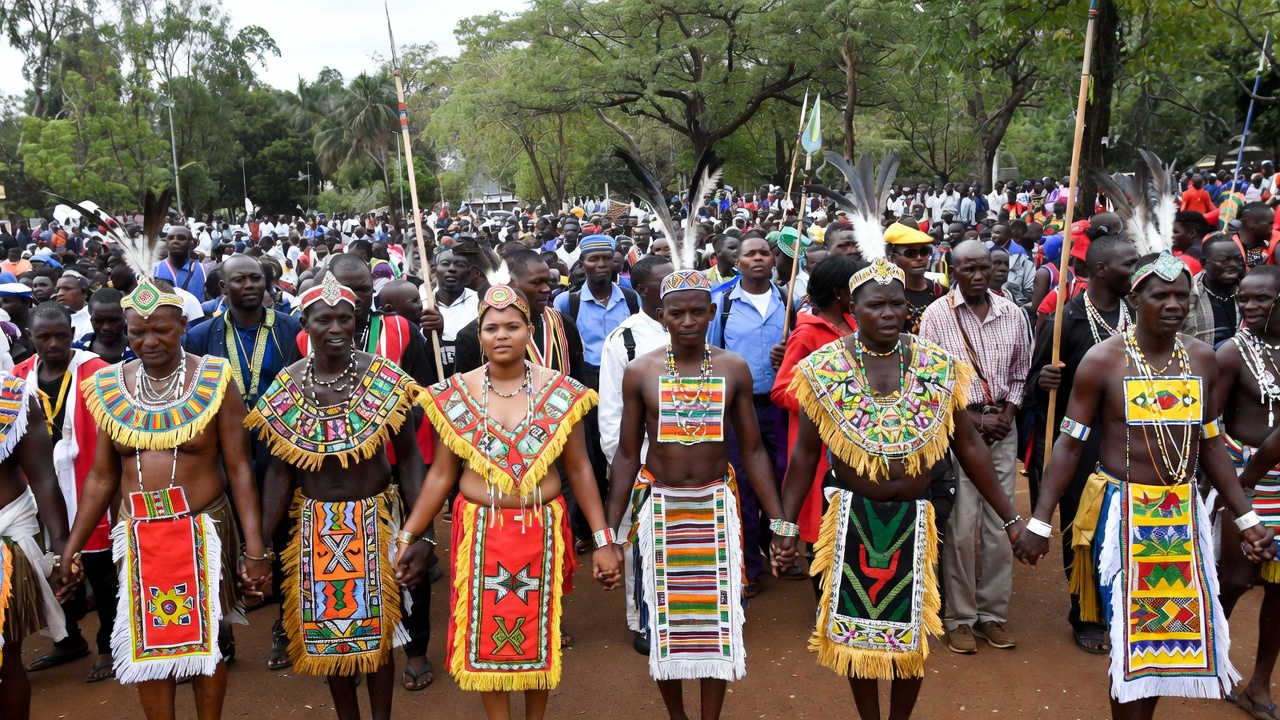
In 2026, Heroes’ Day falls on Tuesday, February 3. Across the country, the day is marked by political speeches, memorial services, parades, cultural performances, and family gatherings. For visitors traveling through Mozambique during this time, it offers a rare window into the nation’s soul — its deep pride, its painful history, and its stubborn hope for a better future.
The History of Portuguese Colonial Rule in Mozambique: 500 Years of Occupation
To understand Heroes’ Day, you must first understand what the heroes were fighting against. The story begins more than five hundred years ago.
Portuguese explorers first arrived on the coast of Mozambique during the voyages of Vasco da Gama at the end of the fifteenth century. By the 1530s, Portugal had established a strong colonial presence, controlling the sea routes and trade networks along the Indian Ocean coast. What followed was nearly 470 years of colonial rule — one of the longest colonial occupations in African history.
Under the Estado Novo regime established in Portugal in 1926, conditions in Mozambique grew harsher. The colonial administration classified the overwhelming majority of Black Mozambicans as indígenas (natives), denying them full citizenship. Less than one percent of Black Mozambicans qualified as full citizens under strict criteria designed to exclude them. Forced labor was common. Farmers were compelled to grow cash crops like cotton at the expense of their own food supplies. Wages for Black workers were a fraction of what white settlers earned for the same jobs.
The words “Aqui é Portugal” — “Here is Portugal” — were laid into the black and white mosaic pavement outside the city hall in Lourenço Marques (today’s Maputo). The message was clear. Portugal considered Mozambique an overseas province, not a colony. And it had no intention of ever letting go.
| Period | Key Event |
|---|---|
| 1498 | Vasco da Gama arrives on Mozambique’s coast |
| 1530s | Portugal establishes colonial control |
| 1926 | Estado Novo regime intensifies colonial policies |
| 1962 | FRELIMO is founded in Dar es Salaam |
| 1964 | Armed struggle begins on September 25 |
| 1969 | Eduardo Mondlane assassinated on February 3 |
| 1974 | Carnation Revolution in Lisbon; ceasefire signed |
| 1975 | Mozambique gains independence on June 25 |
This was the world that gave birth to the heroes Mozambique remembers each February 3.
Who Was Eduardo Mondlane? The Father of Mozambican Independence
No conversation about Mozambican heroes begins without Eduardo Chivambo Mondlane. Born on June 20, 1920, in the village of N’wajahani in the Mandlakazi district of Gaza Province, he was the fourth of sixteen sons of a Tsonga chief. He worked as a shepherd until the age of twelve. He was the only one of his siblings to receive even a primary education.
Mondlane’s early schooling took place in Swiss-Presbyterian mission schools. He completed his secondary education at Lemana College in the Transvaal, South Africa. He then enrolled at Witwatersrand University in Johannesburg, but was expelled after just one year because his political views clashed with South Africa’s new apartheid government.
He went on to study in Lisbon before transferring to Oberlin College in Ohio, where he graduated in 1953. He later earned advanced degrees and became a professor of history and sociology at Syracuse University in New York. He also served as a research officer in the Trusteeship Department of the United Nations.
From Scholar to Revolutionary Leader
During a visit to Mozambique in 1961, Mondlane was greeted by thousands of citizens who saw in him the leadership their country desperately needed. He resigned from his UN post and returned to East Africa. In June 1962, he helped unite three separate exile movements — UDENAMO, MANU, and UNAMI — into a single organization: the Mozambique Liberation Front, known as FRELIMO. Mondlane was elected its first president.
From FRELIMO’s headquarters in Dar es Salaam, Tanzania, Mondlane built the organization into one of Africa’s most effective liberation movements. His vision was not only political independence. He wanted a fundamental transformation of Mozambican society — a new nation built on education, equality, and self-determination.
Under his leadership, FRELIMO launched its first guerrilla attacks against Portuguese targets in northern Mozambique on September 25, 1964. The fighters attacked the administrative post at Chai in Cabo Delgado province. The armed struggle had begun.
The Assassination That Shook a Nation
On the morning of February 3, 1969, Mondlane collected his mail from FRELIMO’s offices on Nkrumah Street in Dar es Salaam. He drove to the beachfront villa of an American friend, Betty King, in the suburb of Oyster Bay. He sat down with coffee and began opening a parcel that bore stamps from Moscow. Inside was what appeared to be a rare French translation of a work by the Russian Marxist Georgi Plekhanov. When Mondlane opened the book, it exploded.
Eduardo Mondlane was killed instantly. He was 48 years old.
The assassination sent shockwaves through the liberation movement. Multiple parties have been implicated over the decades — rival factions within FRELIMO, Tanzanian politicians, and most credibly, the Portuguese secret police (PIDE). A former PIDE agent later claimed that a Portuguese intelligence officer named Casimiro Monteiro planted the bomb. More than fifty years later, the full truth remains unclear.
At Mondlane’s funeral, his Oberlin classmate Reverend Edward Hawley said he had “laid down his life for the truth that man was made for dignity and self-determination.”
Mondlane’s death did not destroy FRELIMO. It strengthened the movement’s resolve. As his successor Samora Machel later declared: “Still it is Mondlane leading us, his vision of free Mozambique… his ideas of revolution.”
Samora Machel: The First President and Revolutionary Icon of Mozambique
If Mondlane was the architect of the liberation movement, Samora Moisés Machel was the soldier who carried it to victory.
Born on September 29, 1933, in the village of Chilembene in Gaza Province, Machel came from a family of farmers. His grandfather had fought against the Portuguese in the nineteenth century. His parents were forced to grow cotton for the colonial administration and were eventually displaced from their land in the 1950s to make room for Portuguese settlers.
Machel attended Catholic mission schools and then trained as a nurse in Lourenço Marques — one of the few professions open to Black Mozambicans at the time. Working at the Miguel Bombarda Hospital, he witnessed firsthand the inequality that defined colonial Mozambique. Black nurses were paid far less than white nurses doing the same work. As he once told a reporter: the rich man’s dog received better medical care than the workers upon whose labor the rich man’s wealth was built.
From Nurse to Guerrilla Commander
In 1962, Machel abandoned nursing and joined FRELIMO. He received military training in Algeria. In 1964, he led FRELIMO’s first guerrilla attack against the Portuguese in northern Mozambique. He spent most of his time in the field with his men, sharing their dangers and hardships. By 1970, he had risen to become commander-in-chief of FRELIMO’s army.
After Mondlane’s assassination, Machel was elected to a three-man presidential council that assumed leadership of FRELIMO. In May 1970, he was elected president of the movement.
Machel’s military successes were extraordinary. Despite being outnumbered by Portuguese forces — roughly 7,000 FRELIMO guerrillas against 60,000 Portuguese troops — the liberation fighters gradually gained control of much of central and northern Mozambique. The Portuguese military could hold the cities and the coastline, but FRELIMO controlled the countryside.
Independence and the Presidency
The decisive moment came not on the battlefield in Mozambique, but in Lisbon. On April 25, 1974, young military officers overthrew the Portuguese government in what became known as the Carnation Revolution — named for the flowers soldiers placed in their rifle barrels. The coup was driven largely by frustration with Portugal’s unwinnable colonial wars in Mozambique, Angola, and Guinea-Bissau.
The new Portuguese government opened negotiations with FRELIMO. The Lusaka Accord was signed on September 7, 1974, establishing a framework for the transfer of power. On June 25, 1975, Samora Machel proclaimed Mozambique’s independence at the Machava Stadium in Maputo. He became the country’s first president.
Machel’s presidency was transformative but turbulent. He nationalized land, healthcare, and education. He established public schools and health clinics. He abolished private schools and redistributed urban housing to Black Mozambicans. But he also faced devastating challenges: the RENAMO insurgency, economic collapse, natural disasters, and the hostility of apartheid South Africa and Rhodesia.
A Hero’s Death in the Lebombo Mountains
On October 19, 1986, Machel was returning from a meeting in Zambia when his presidential Tupolev Tu-134 aircraft crashed in the Lebombo Mountains near Mbuzini, South Africa. Machel and twenty-four others were killed. Nine passengers survived.
Many Mozambicans believed — and still believe — that the apartheid South African government was responsible for the crash. South Africa denied involvement. A memorial at the crash site was inaugurated in January 1999 by Nelson Mandela and his wife Graça — who had previously been married to Samora Machel, making her the only woman to have been first lady of two different countries.
Machel remains one of the most revered figures in Mozambican history. Streets, bridges, schools, and institutions across Southern Africa bear his name. His legacy is complicated — he was authoritarian as well as visionary, popular as well as controversial — but his place among Mozambique’s national heroes is beyond dispute.
Josina Machel: The Heroine Who Never Saw Independence
The story of Mozambique’s heroes is not only a story of men. Among the most beloved figures in the national memory is Josina Abiathar Muthemba Machel — a revolutionary fighter, women’s rights champion, and heroine who died at the age of 25 without ever seeing her dream of a free Mozambique become reality.
Born on August 10, 1945, in Vilanculos, Inhambane Province, Josina came from a politically active family. Her grandfather, a Presbyterian lay preacher, spoke out against Portuguese colonialism. Her father, two sisters, and two uncles were all jailed at various points for their participation in clandestine opposition to colonial rule.
As a teenager in Lourenço Marques, Josina became politically active through the student organization NESAM (Núcleo dos Estudantes Secundários Africanos de Moçambique). In 1964, at the age of eighteen, she and a group of fellow students — including Armando Guebuza, who would later become president of Mozambique — attempted to flee the country to join FRELIMO in Tanzania. They were arrested in Rhodesia and sent back to Mozambique, where Josina spent six months in prison.
After her release, she tried again. She succeeded in reaching Tanzania, where she immediately threw herself into the liberation struggle. She turned down a scholarship to study in Switzerland, choosing instead to stay and fight.
Pioneer of Women’s Military Participation
Josina was one of the first 25 young women to undergo military training at the FRELIMO camp in Nachingwea, southern Tanzania. She played a central role in the establishment of the Destacamento Feminino (Women’s Detachment) in 1967 — a pioneering unit that gave women political and military training and integrated them fully into the liberation struggle.
This was revolutionary. In a society where traditional gender roles were deeply entrenched, the idea of women bearing arms and participating in political leadership was radical. Josina fought for it with the same determination she brought to the battlefield.
She rose quickly through FRELIMO’s ranks. At 24, she was appointed head of FRELIMO’s Department of Social Affairs, where she developed childcare and educational centers in northern Mozambique and advocated for sending girls to school. She traveled internationally to speak about women’s rights and the role of women in national development.
In 1969, she married Samora Machel at FRELIMO’s educational center in Tunduru, Tanzania. Their son was born later that year.
A Light Extinguished Too Soon
Josina’s health deteriorated during a mission in the field. On April 7, 1971, she died in a hospital in Dar es Salaam after a serious illness. She was twenty-five years old. Her son was only sixteen months old.
One year after her death, FRELIMO declared April 7 as Mozambican Women’s Day — a national holiday celebrated to this day in her honor. The principal secondary school in Maputo bears her name. She remains an icon of women’s emancipation in Mozambique and across Africa.
Samora Machel wrote a poem in her memory titled “Where to Find You?” — a tribute that wove Josina’s life story into the symbols of the Mozambican nation itself. Her legacy endures in every woman who picks up a book, enters a classroom, or stands for public office in Mozambique.
The Women Who Fought: The Destacamento Feminino and Its Lasting Impact
Josina’s story is inseparable from the broader story of women in the Mozambican liberation struggle. The Destacamento Feminino — the Women’s Detachment — was established in 1967 and represented something extraordinary for its time. In a society where women were traditionally expected to serve their husbands and care for the home, FRELIMO created a military unit that trained women in combat, political education, and leadership.
The women of the Destacamento Feminino did not only carry weapons. They served as medics and educators. They ran orphanages for children displaced by the war. They organized communities in the liberated zones of northern Mozambique, explaining FRELIMO’s goals and building support among the civilian population. They provided first aid to wounded fighters and guarded supply lines behind the front.
Their contribution was indispensable. By freeing additional male fighters for direct combat, the women’s units helped FRELIMO sustain its guerrilla campaign against a far larger Portuguese military force. But their impact went beyond the battlefield. They challenged centuries of patriarchal custom and demonstrated that women could serve as full participants in the political and military life of the nation.
Today, Mozambique has one of the highest rates of women’s representation in parliament in Africa. The percentage of women in the Mozambican parliament rose from 25.2 percent in 1997 to over 40 percent in recent years. While the country still faces significant challenges in gender equality — particularly in access to education, healthcare, and economic opportunity — the foundation laid by Josina Machel and the Destacamento Feminino continues to shape the nation’s trajectory.
How Mozambicans Celebrate Heroes’ Day: Traditions, Food, and Remembrance
Heroes’ Day in Mozambique is not a somber occasion alone. It is a day of remembrance, pride, and community. The celebrations blend the political with the personal, the ceremonial with the domestic.
Public Ceremonies and Speeches
In the capital, Maputo, and across the country’s provinces, government officials deliver speeches at public gatherings. These speeches honor the sacrifices of the independence fighters and reflect on the nation’s progress and challenges. Military parades and cultural performances often accompany the ceremonies.
Family Gatherings and Traditional Food
For many Mozambicans, Heroes’ Day is also a family holiday. Schools and most businesses close. Families come together for shared meals featuring the country’s most beloved dishes:
- Xima (pronounced “shima”) — a stiff maize porridge that is the backbone of Mozambican cuisine. It is eaten with the hands and used to scoop up sauces and stews.
- Piri-piri chicken — flame-grilled chicken marinated in Mozambique’s famous chili sauce, made from the fiery African bird’s-eye chili. This sauce inspired the globally popular Nando’s restaurant chain.
- Matapa — a rich stew made from pounded cassava leaves cooked in coconut milk with ground peanuts, often served with crab, prawns, or fish.
- Pão — Portuguese-style wood-fired bread rolls, a legacy of four centuries of colonial influence.
- Galinha à Zambeziana — chicken marinated overnight in coconut milk, garlic, and lemon, then grilled over charcoal. A specialty of the Zambezia region.
| Traditional Dish | Main Ingredients | Region |
|---|---|---|
| Xima | Maize flour | Nationwide |
| Piri-piri chicken | Chicken, bird’s-eye chili, garlic | Nationwide |
| Matapa | Cassava leaves, coconut milk, peanuts | Coastal regions |
| Galinha à Zambeziana | Chicken, coconut milk, lemon | Zambezia |
| Rissóis de camarão | Shrimp, dough, piri-piri | Maputo, coastal cities |
| Bolo Polana | Cashew nuts, potato, citrus | Maputo |
Music, Dance, and Cultural Identity
Music plays a vital role in Mozambican life, and Heroes’ Day is no exception. Traditional marrabenta music — a rhythmic genre born in the suburbs of Maputo that blends African and Portuguese influences — often fills the air. In rural areas, traditional drumming, singing, and dancing connect communities to their ancestral heritage.
Educational Reflection
Many Mozambicans use the day to learn more about their country’s history. Parents share stories with their children about the liberation struggle. Schools in the days leading up to February 3 hold special lessons about FRELIMO, the independence war, and the meaning of sacrifice. Documentaries and historical programs air on national television.
The Mozambican Independence War: A Timeline of Sacrifice and Courage
The armed struggle for Mozambican independence lasted a full decade, from 1964 to 1974. It was a guerrilla war fought in dense forests, remote villages, and mountainous terrain — a conflict that shaped the nation’s identity and produced the heroes remembered every February 3.
September 25, 1964 — FRELIMO launches its first attack on the Portuguese administrative post at Chai in Cabo Delgado province. Roughly 250 fighters participate.
1964–1968 — The war spreads from Cabo Delgado to Niassa and Tete provinces. FRELIMO fighters operate in small groups of ten to fifteen, using ambushes, sabotage, and hit-and-run tactics. The Portuguese respond with increased military force, deploying up to 60,000 troops.
February 3, 1969 — Eduardo Mondlane is assassinated by a letter bomb in Dar es Salaam.
1970 — Samora Machel becomes commander-in-chief of FRELIMO’s army. Portugal launches Operation Gordian Knot, a massive military offensive aimed at crushing the guerrilla movement. The operation fails.
1971–1973 — FRELIMO’s forces push south into Manica and Sofala provinces. The Portuguese resort to increasingly brutal tactics, including civilian massacres and the use of napalm.
April 25, 1974 — The Carnation Revolution topples the Portuguese government. The new military leadership in Lisbon begins negotiations to end the colonial wars.
September 7, 1974 — The Lusaka Accord is signed, providing for a transition to independence.
June 25, 1975 — Mozambique declares independence. Samora Machel becomes president.
An estimated 10,000 Mozambicans lost their lives during the decade-long war. Many more were displaced, tortured, or permanently scarred by the violence.
The Carnation Revolution and Its Ripple Effect Across Africa
The Carnation Revolution of April 1974 deserves special attention in any account of Mozambican history. The coup in Lisbon was not primarily about Mozambique — it was about Portugal’s future. But its consequences for Mozambique were transformative.
By 1974, Portugal was spending nearly half its national budget on its colonial wars in Africa. Young Portuguese soldiers were dying in conflicts that seemed unwinnable. Discontent within the military reached a breaking point. When young officers of the Armed Forces Movement (Movimento das Forças Armadas) seized power, they placed red carnations in their rifle barrels as a symbol of peaceful change. The old regime collapsed almost overnight.
For Mozambique, the revolution meant that the Portuguese colonial army — 60,000 troops strong — essentially stopped fighting. Many soldiers refused to go on patrol, staying in their barracks instead. Within months, negotiations began. The speed of the transition caught many people off guard. Within a year of the coup, most of the Portuguese settler population had left Mozambique, taking with them much of the country’s professional expertise and administrative capacity. Over 90 percent of the remaining population was illiterate. The new nation faced the challenge of building a government, an economy, and a society essentially from scratch.
This context is essential for understanding why Heroes’ Day matters so deeply. The heroes of the independence struggle did not simply win a war. They laid the groundwork for a nation that had to be constructed from the ruins of colonialism.
Mozambique in 2026: What Heroes’ Day Means for a Nation at a Crossroads
In 2026, Mozambique observes Heroes’ Day at a moment of deep national introspection. The country’s recent history has been marked by political upheaval, economic hardship, and ongoing security challenges.
A New President and Political Tensions
In January 2025, Daniel Chapo was sworn in as Mozambique’s fifth president following the contested October 2024 elections. Chapo, a 48-year-old lawyer and former governor of Inhambane Province, is the first FRELIMO leader born after independence. His election was disputed by opposition figure Venâncio Mondlane (no direct relation to Eduardo Mondlane), who claimed the results were fraudulent. Widespread protests erupted, and civil society organizations reported that over 300 people were killed in the ensuing security crackdown.
By early 2025, Chapo and Venâncio Mondlane met and committed to ending the violence. Chapo launched a two-year “inclusive national dialogue” in September 2025, aiming to address long-standing grievances and build a more inclusive political system. As of early 2026, the process remains ongoing, and political tensions — while reduced — have not fully subsided.
The Cabo Delgado Insurgency
Since 2017, an ISIS-affiliated armed group locally known as Mashababos or Al-Shabab has been operating in Mozambique’s northern province of Cabo Delgado. The insurgency has killed thousands and displaced nearly one million people. Mozambican armed forces, supported by troops from Rwanda, Tanzania, and the Southern African Development Community (SADC), continue counterinsurgency operations.
The ongoing conflict adds a layer of urgency to Heroes’ Day observances in 2026. Many Mozambicans draw a direct line from the sacrifices of the independence era to the challenges of today — seeing the struggle for a peaceful, unified nation as an unfinished project.
Economic Challenges and Hope
Mozambique remains one of the poorest countries in the world, despite possessing vast reserves of natural gas, coal, and other resources. The World Bank has outlined a new Country Partnership Framework for 2026–2031, focused on inclusive growth, resilience, and job creation.
President Chapo has spoken of Mozambique’s richness in agriculture, tourism, energy, and mineral resources as the foundation for future prosperity. He has framed his presidency around economic and social inclusion — a theme that resonates powerfully with the ideals of the heroes commemorated on February 3.
Why Heroes’ Day Matters Beyond Mozambique: Lessons for Global Travelers
For international travelers, Mozambique’s Heroes’ Day offers something rare: an authentic encounter with a nation’s living history. This is not a holiday packaged for tourists. It is a deeply personal observance rooted in real pain and real pride.
What Travelers Should Know Before Visiting
- Respect the solemnity. Heroes’ Day is a public holiday. Expect closures of schools, government offices, and many businesses.
- Attend public events. Memorial services and cultural performances are often open to the public. They offer a window into Mozambican culture that no guidebook can replicate.
- Try the food. A shared meal of xima, piri-piri chicken, and matapa is one of the best ways to connect with Mozambican culture. Food in Mozambique is communal, generous, and deeply social.
- Learn the history. Before you go, read about Eduardo Mondlane, Samora Machel, and Josina Machel. Understanding their stories will transform your experience of the holiday.
- Be sensitive to the present. Mozambique has faced political turmoil in recent years. Visitors should stay informed about local conditions and exercise standard travel precautions.
Connecting with the Culture
Mozambique’s culture is a remarkable blend of African, Portuguese, and Indian influences. The official language is Portuguese, but dozens of indigenous languages — including Makua, Tsonga, Sena, and Shangaan — are spoken across the country. The cuisine reflects centuries of cultural exchange: African staples like cassava and maize merge with Portuguese garlic, olive oil, and wine, and Indian spices brought by traders from Goa.
For visitors who take the time to engage with this rich cultural landscape, Heroes’ Day is not just a historical commemoration. It is an invitation to understand what it means to be Mozambican — to carry the weight of five hundred years of colonialism and fifty years of independence, and to keep fighting for something better.
Other National Heroes and Key Figures in Mozambican History
While Mondlane, Machel, and Josina Machel are the most celebrated heroes, the pantheon of Mozambican national figures includes many others.
Filipe Samuel Magaia (1937–1966)
Magaia was FRELIMO’s first military commander. He organized and trained the initial wave of guerrilla fighters who launched the armed struggle in 1964. He was killed in combat in 1966, becoming one of the first major martyrs of the independence war.
Joaquim Chissano
After Samora Machel’s death in 1986, Joaquim Chissano became Mozambique’s second president. He served from 1986 to 2005 and is credited with guiding the country through the end of the civil war. The General Peace Accords, signed in Rome on October 4, 1992, ended the devastating conflict between FRELIMO and RENAMO. Chissano later publicly apologized for human rights abuses committed during the early years of independence.
Armando Guebuza
Guebuza served as Mozambique’s third president from 2005 to 2015. A veteran of the liberation struggle — he was part of the group that attempted to flee Mozambique with Josina Machel in 1964 — Guebuza is a complex figure in Mozambican politics, associated with both the independence movement and later controversies over corruption.
Gungunhana: The Proto-Nationalist Hero
Long before FRELIMO, there was Ngungunyane (also known as Gungunhana), the last emperor of the Gaza Empire. He resisted Portuguese occupation in the late nineteenth century before being defeated in 1895 and deported to Portugal, where he died in 1906. Samora Machel’s own grandfather had connections to Gungunhana’s resistance, creating a direct thread between pre-colonial resistance and the twentieth-century independence struggle.
Key Dates and Public Holidays in Mozambique Every Traveler Should Know
If you are planning a trip to Mozambique, understanding the national holiday calendar will help you engage more deeply with local culture.
| Date | Holiday | Significance |
|---|---|---|
| January 1 | New Year’s Day | Universal celebration |
| February 3 | Heroes’ Day | Honors independence fighters; anniversary of Mondlane’s assassination |
| April 7 | Mozambican Women’s Day | Honors Josina Machel and women’s contributions |
| May 1 | Workers’ Day | International labor holiday |
| June 25 | Independence Day | Celebrates independence from Portugal (1975) |
| September 7 | Victory Day | Marks the Lusaka Accord (1974) |
| September 25 | Armed Forces Day | Anniversary of the start of the armed struggle (1964) |
| October 4 | Peace Day | Celebrates the 1992 General Peace Accords |
| December 25 | Family Day | Mozambique’s secular version of Christmas |
Each of these holidays is a chapter in the story that Heroes’ Day opens. Together, they trace the arc of a nation’s journey from colonialism through revolution, civil war, peace, and the ongoing search for justice and prosperity.
How to Experience Heroes’ Day in Mozambique: A Travel Guide for 2026
Getting There
Mozambique’s main international gateway is Maputo International Airport (MPM). Direct flights connect Maputo to Johannesburg, Nairobi, Addis Ababa, Lisbon, and several other cities. Internal flights serve Beira, Nampula, Pemba, and Vilanculos.
Where to Stay
Maputo offers accommodation ranging from boutique guesthouses in the historic Polana district to budget hostels in the city center. For a more immersive experience, consider staying in Inhambane or Vilanculos, where the pace of life is slower and cultural traditions are more visible.
What to Do on February 3
- Visit the Eduardo Mondlane University campus in Maputo, named after the national hero.
- Attend public commemorations at Independence Square (Praça da Independência) in Maputo.
- Explore the Fortaleza de Maputo (Maputo Fortress), which houses a museum of Mozambican history.
- Walk the streets of the Chamanculo neighborhood, where Josina Machel grew up and where nationalism took root among young Mozambicans.
- Sample local cuisine at a family-run restaurant or street stall.
Cultural Etiquette
- Greet people warmly. Mozambicans value politeness and personal connection. A handshake and a smile go a long way.
- Dress modestly when attending public ceremonies.
- Ask permission before photographing people or events.
- Learn a few words of Portuguese. Even basic greetings — Bom dia (good morning), Obrigado/Obrigada (thank you) — show respect and are deeply appreciated.
The Unfinished Story: Why Mozambique’s Heroes Still Matter in 2026
In a country where the first FRELIMO leader born after independence now sits in the presidential palace, Heroes’ Day is more than a backward glance. It is a living conversation between past and present.
President Daniel Chapo has spoken of understanding Mozambique’s present through the lens of its long history — 500 years of colonization followed by only 50 years of independence, sixteen of which were consumed by civil war. The heroes of February 3 did not fight for a perfect nation. They fought for the possibility of one.
In 2026, that possibility remains both inspiring and unfinished. The insurgency in Cabo Delgado continues. Political divisions persist. Millions of Mozambicans live in poverty. But the spirit that drove Eduardo Mondlane to leave a comfortable academic career in America, that compelled Samora Machel to trade a nurse’s uniform for a guerrilla’s rifle, that moved Josina Machel to refuse a scholarship in Switzerland and pick up a pistol instead — that spirit is still alive.
It is alive in the students at Eduardo Mondlane University. It is alive in the women who march on April 7. It is alive in the families who gather on February 3 to share a plate of xima and tell the stories of their grandparents. It is alive in every Mozambican who believes that their country’s best days are still ahead.
Dia dos Heróis Moçambicanos is not just a holiday. It is a promise — a promise that the sacrifices of the past will not be forgotten, and that the struggle for a just and peaceful Mozambique will continue.
Have you traveled to Mozambique during Heroes’ Day? Share your experiences in the comments below. And if this article helped you plan your visit, consider sharing it with fellow travelers who want to explore Africa’s most underrated cultural celebrations.