Every February 14, while most of America reaches for chocolates and roses, Arizonans celebrate something different. They mark the birthday of their beloved state. Arizona Statehood Day falls on Valentine’s Day — and it has done so since 1912. But this day carries more myths, half-truths, and misunderstandings than almost any other state holiday in the country.
In 2026, Arizona turns 114 years old. The Arizona Historical Society is hosting a free open house at the Arizona History Museum in Tucson to mark the occasion. With America’s 250th birthday celebrations ramping up, it is the perfect time to set the record straight about what really happened on that winter day in 1912.
Let’s dig into the most stubborn myths about Arizona Statehood Day — and debunk them with facts.
Was Arizona Statehood Day on Valentine’s Day Chosen on Purpose?
This is probably the most widespread myth about Arizona’s birthday. Many people assume that February 14 was picked as a romantic gesture. Some even believe the state chose the date to symbolize love for the Union. The truth is far more mundane.
The Valentine’s Day date was an accident of scheduling.
President William Howard Taft had planned to sign Arizona’s statehood papers around February 12, which was Abraham Lincoln’s birthday. However, Taft was delayed by a meeting in New York. According to Desert Vibe, his advisors had assumed the signing would only take five minutes. Taft returned late. February 13 was then skipped because many considered the number unlucky. So the signing was pushed to February 14.
As the Days of the Year calendar notes, “This timing was coincidental. The choice wasn’t symbolic but rather a matter of scheduling.”
The coincidence did not go unnoticed at the time. For years after 1912, Arizona was widely known as “The Valentine State.” Other early nicknames included “The Copper State,” “The Apache State,” and “The Sunset State.” But by 1919, when Grand Canyon National Park was established, “The Grand Canyon State” had won out and remains the official nickname today.
Did Arizona Become the Last State to Join the United States?
This is one of the most common factual errors people make about Arizona. Many assume that because Arizona was the 48th state, it was the last state admitted to the Union. It was not.
Arizona was the last of the 48 contiguous states — meaning the last state connected to the mainland United States by land. However, two more states followed:
| State | Date of Admission | Order |
|---|---|---|
| Arizona | February 14, 1912 | 48th |
| Alaska | January 3, 1959 | 49th |
| Hawaii | August 21, 1959 | 50th |
Alaska and Hawaii joined the Union nearly 47 years after Arizona did. So while Arizona completed the contiguous Lower 48, it was not the final star added to the American flag.
The Library of Congress describes Arizona as “the last contiguous state to join the United States.” That word — contiguous — matters.
Did Arizona Have a Smooth and Simple Path to Statehood?
Far from it. Arizona’s road to statehood was one of the longest and most contentious in American history. The myth that statehood was a simple formality ignores decades of political battles, vetoes, and cultural clashes.
Here is a condensed timeline of the struggle:
- 1848: The Treaty of Guadalupe Hidalgo ended the Mexican-American War. The U.S. acquired most of present-day Arizona, which became part of the New Mexico Territory.
- 1853: The Gadsden Purchase added southern Arizona below the Gila River.
- 1863: President Lincoln signed legislation creating the Arizona Territory, splitting it from New Mexico.
- 1891: Arizona held its first constitutional convention. Congress rejected the proposed constitution.
- 1901–1906: Multiple statehood bills were introduced and denied.
- 1906: Congress proposed combining Arizona and New Mexico into a single state. Arizonans rejected this by a vote of 16,265 to 3,141 in a November 1906 referendum.
- 1910: A new Arizona constitutional convention met and drafted a progressive constitution.
- 1911: President Taft vetoed statehood because the constitution included a provision allowing voters to recall judges.
- 1912: Arizona removed the judge-recall clause. Taft signed the statehood proclamation on February 14.
As Jaynie Adams, curator for education at the Arizona Historical Society, explained: “You have to look at national and international context to really understand why statehood is not a straight shot.”
The path took nearly 50 years from the creation of the Arizona Territory to statehood. That’s not simple at all.
Why Did President Taft Veto Arizona Statehood the First Time?
There is a widespread belief that Taft blocked Arizona purely out of political spite or because he thought the territory was too wild. The reality is more specific and more interesting.
Taft vetoed Arizona statehood on August 15, 1911, because of a single provision in the state constitution: the right of citizens to recall judges.
Taft was a former federal circuit judge. He had deep respect for judicial independence. He went on to become Chief Justice of the Supreme Court after his presidency — the only person in American history to hold both offices. For Taft, the recall provision was a direct threat to the courts.
According to the Center for American Civics at ASU, Taft called the judicial recall provision “legalized terrorism” against judges in his veto message. He believed elected judges plus impeachment were enough to keep the judiciary accountable.
Arizona grudgingly removed the clause. Taft signed the statehood bill. But here is the twist that most people miss: Arizona immediately put the recall provision back into its constitution during the very first session of its new state legislature. One of the first bills introduced was even titled as a direct rebuke of Taft by name.
As the Goldwater Institute noted in 2025, “In true Arizona fashion, the ‘Valentine State’ seized its opportunity and changed the Constitution back to its original form that very same year.”
Taft himself predicted this would happen. He acknowledged he could not stop it once statehood was granted. But he felt obligated to make his case anyway.
Was Arizona Always a Conservative “Red State” Before Statehood?
This myth cuts both ways. Some assume early Arizona was a bastion of rugged conservative cowboys. Others think it was a lawless frontier with no political identity at all. Neither picture is accurate.
The truth is that early Arizona was remarkably progressive — even radical by the standards of the early 1900s.
Arizona’s 1910 constitutional convention was dominated by progressive delegates. Their constitution included provisions for:
- The initiative (citizens could propose laws directly)
- The referendum (citizens could vote to approve or reject legislation)
- The recall (citizens could remove elected officials, including judges)
- Direct election of U.S. Senators (before the 17th Amendment made this national policy)
- Women’s suffrage (narrowly rejected at the 1891 convention but championed early)
According to 12 News in Phoenix, “While most of the state’s early political leaders were Confederates or Confederate sympathizers, the then-territory was paradoxically ahead of the time with progressive policies.”
This paradox — a territory with Confederate sympathies that also championed direct democracy and nearly adopted women’s suffrage decades before the 19th Amendment — is one of the most fascinating contradictions in Arizona’s history.
Did Arizona Have Confederate Ties During the Civil War?
Many Arizonans are surprised to learn this, but yes, parts of what is now Arizona were aligned with the Confederacy during the Civil War. The myth here is not that it happened — it’s that most people have never heard about it.
Here is what actually took place:
Before the Civil War, present-day Arizona was part of the vast New Mexico Territory. The southern portion of this territory had strong ties to the South. Many Anglo settlers there had come from southern states.
In March 1861, a convention in Mesilla (now in southern New Mexico) voted to secede from the Union. In August 1861, Confederate Colonel John R. Baylor conquered the area and proclaimed the Confederate Territory of Arizona, with Mesilla as its capital and himself as governor.
On February 14, 1862 — exactly 50 years before statehood — President Jefferson Davis formally admitted Arizona into the Confederate States of America. This is a striking historical coincidence that few Arizonans know about.
The Battle of Picacho Pass in April 1862, fought between Union cavalry from California and Confederate pickets near Tucson, is often called the westernmost battle of the Civil War to involve fatalities.
By mid-1862, Union forces from California (the “California Column”) had driven the Confederates back to Texas. In February 1863, the U.S. Congress created its own Arizona Territory — but deliberately drew the border running north-south instead of east-west. This was done to avoid any appearance of recognizing the Confederate territory’s boundaries.
Was Arizona Just a Barren Desert with No Population Before Statehood?
This is one of the most damaging myths about Arizona. It erases thousands of years of human history and reinforces the false idea that the land was “empty” before Anglo-American settlement.
Arizona has been continuously inhabited for at least 10,000 years.
The Library of Congress notes that “Arizona’s history extends back to 10,000 BCE with the prehistoric residents of the land mass.” Major pre-colonial civilizations in Arizona included:
| Civilization | Approximate Era | Notable Features |
|---|---|---|
| Hohokam | 300 – 1450 CE | Built extensive canal irrigation systems in the Phoenix Basin |
| Ancestral Puebloans (Anasazi) | 1200 BCE – 1300 CE | Cliff dwellings at Canyon de Chelly and other sites |
| Mogollon | 200 – 1450 CE | Pottery and pit-house villages in the mountains |
| Sinagua | 500 – 1425 CE | Multi-story dwellings like Montezuma Castle |
The Hopi village of Oraibi, established around 1150 CE, is considered one of the oldest continuously inhabited communities in North America.
At the time of statehood in 1912, Arizona had about 200,000 residents, according to Arizona Highways. But as 12 News reported, the federal government at the time was primarily counting Anglo-Americans. “There were densely populated Indigenous communities and Mexican nationals,” curator Jaynie Adams noted, “but the federal government at the time was only interested in counting Anglo-Americans as part of the core population.”
Today, 22 Indigenous sovereign nations maintain their communities in Arizona. The state’s population has exploded to over 7.4 million people as of recent estimates. The desert was never empty.
Was Arizona Almost Combined with New Mexico into One Giant State?
This one is actually true — and it came closer to happening than most people realize.
In the early 1900s, Arizona’s population was considered too small to justify its own state government. Congress proposed merging Arizona and New Mexico into a single state called, simply, “Arizona” (though some proposals used other names).
The idea was called “jointure.” It would have created one massive Southwestern state stretching from the Texas border to the edge of California.
New Mexico residents were largely open to the idea. Arizonans were not.
In a November 1906 referendum, Arizona voters overwhelmingly rejected jointure by a margin of roughly five to one — 16,265 against and 3,141 in favor, according to the Library of Congress.
Arizonans felt strongly that their territory had a distinct identity. They resented the idea of being absorbed by New Mexico. Their fierce opposition delayed statehood by several more years, but it preserved Arizona as a separate, independent state.
Where Does the Name “Arizona” Actually Come From?
There is a common belief that “Arizona” is a Spanish word. Others assume it’s an English invention. Neither is entirely correct, and the true origin remains a subject of scholarly debate.
The two leading theories are:
- O’odham origin: The name likely derives from the Tohono O’odham phrase “Alĭ ṣonak” (or a similar variant), meaning “place of the small spring.” This refers to a specific location near the present-day border area.
- Basque origin: Some scholars have suggested the name comes from the Basque word “aritz onak,” meaning “the good oaks.” Basque missionaries and explorers were active in the region during the Spanish colonial period.
The Days of the Year states that “The name ‘Arizona’ likely derives from the O’odham word ‘Ali Ṣonak,’ meaning ‘small spring.’ This reflects the region’s indigenous heritage.”
Arizona Historical Society historian Jaynie Adams offered a thoughtful perspective on the debate to KGUN 9 News: “History is based on interpretations, based on the lived experience of the storyteller. There is no such thing as complete history.”
What is clear is that the name has deep roots in the indigenous and colonial history of the Southwest. It is not a modern American invention.
Does Arizona Actually Have Two Official Statehood Days?
This is one of the strangest and least-known facts about Arizona — and it sounds like a myth. But it’s true.
In 1959, President Dwight D. Eisenhower signed a document stating that Arizona was officially admitted as a state on December 24, 1911 — not February 14, 1912. As KWCD Country Radio reported, this effectively created a second “statehood day” for Arizona on Christmas Eve.
Why December 24? That date has real significance. It was the day Arizona voters approved the modified constitution (the one without the judge-recall provision) that satisfied President Taft’s requirements. Some legal scholars interpret this voter approval as the functional moment of statehood, even though Taft did not sign the formal proclamation until February 14, 1912.
The result? Arizona is technically the only state with two separate dates connected to its statehood. But February 14 remains the universally celebrated anniversary. Almost no one marks December 24 as a statehood milestone.
How Arizona Statehood Day Is Celebrated in 2026
Arizona Statehood Day is observed every year on February 14. It is not a federal public holiday, but it is recognized as a state occasion. Schools, museums, and government offices across Arizona host special events.
In 2026, celebrations coincide with the larger national lead-up to America’s 250th anniversary (America250) in July 2026. The Arizona Secretary of State’s Office, which hosted a major ceremony at the State Historic Capitol Rotunda in 2025, is expected to continue these traditions. The Arizona Historical Society’s free open house at the Arizona History Museum in Tucson runs from 10:00 AM to 3:00 PM on February 14, 2026.
Here are some popular ways Arizonans celebrate:
- Visit historical sites. The State Historic Capitol in Phoenix and the Arizona History Museum in Tucson both offer special programming.
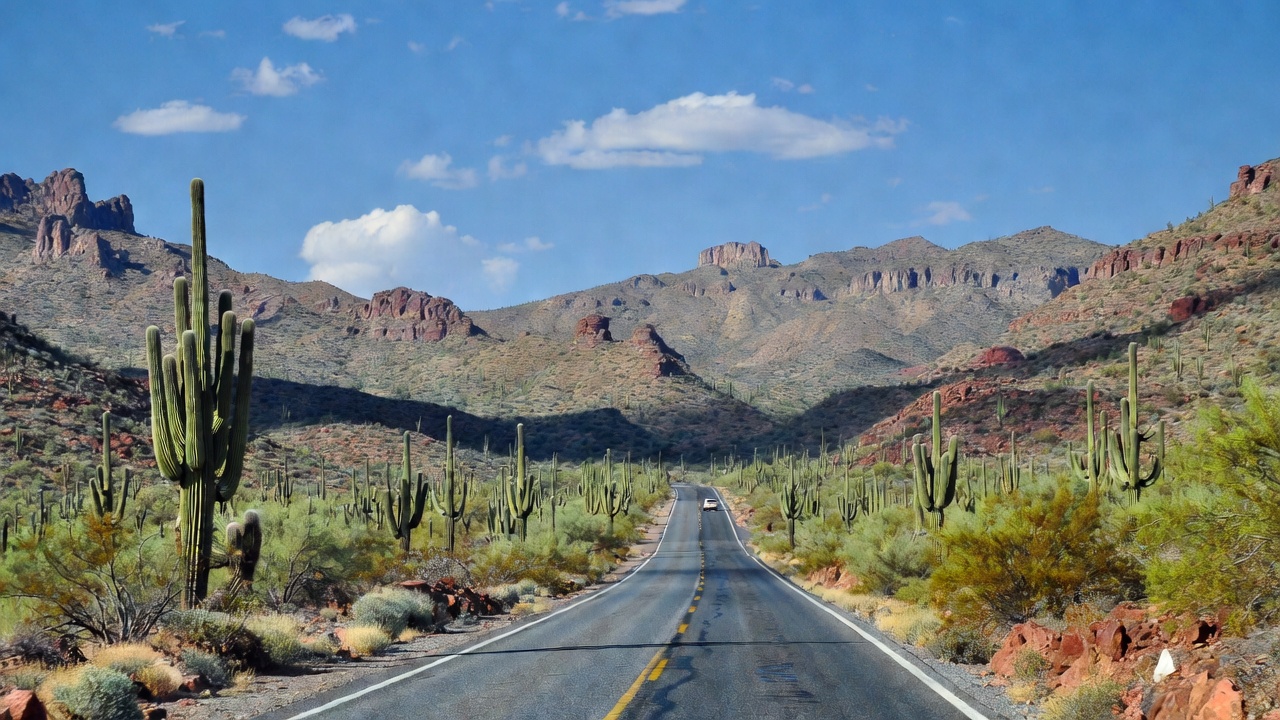
- Hike Arizona’s trails. From the Grand Canyon to the Sonoran Desert, the state’s landscapes are central to its identity.
- Attend community events. Many towns host parades, fairs, and cultural showcases.
- Learn the real history. Libraries, including the Pima County Public Library, curate reading lists and resources on Arizona’s statehood journey.
- Enjoy local cuisine. Sonoran hot dogs, chimichangas (which were actually invented in Arizona, not Mexico), and prickly pear treats are staples.
Quick Reference: Common Arizona Statehood Myths vs. Facts
| Myth | Fact |
|---|---|
| Arizona chose Valentine’s Day on purpose | The date was a scheduling accident caused by delays and superstition about the 13th |
| Arizona was the last state admitted to the U.S. | It was the 48th state and last contiguous state; Alaska (49th) and Hawaii (50th) followed in 1959 |
| Statehood was quick and easy | Arizona struggled for nearly 50 years as a territory before being admitted |
| Taft blocked statehood for political spite | He vetoed it specifically because of the judge-recall clause in Arizona’s constitution |
| Early Arizona was politically conservative | The 1910 constitution was remarkably progressive, including initiative, referendum, and recall provisions |
| Arizona had no Confederate ties | The southern part of the territory was formally admitted to the Confederacy on Feb. 14, 1862 |
| The land was empty before Anglo settlement | Indigenous peoples inhabited Arizona for at least 10,000 years; 22 sovereign nations remain today |
| “Arizona” is a Spanish word | The name most likely comes from the O’odham language, meaning “place of the small spring” |
| Arizona has one statehood day | A 1959 Eisenhower document created a second technical statehood date of December 24, 1911 |
Why Getting Arizona Statehood History Right Matters
Arizona’s path to statehood is not just a dusty chapter in a textbook. It is a story of Indigenous resilience, colonial conflict, political courage, and stubborn independence. When we repeat myths — that the date was romantic, that the land was empty, that statehood was easy — we flatten a rich and complicated history into a greeting-card version of reality.
In 2026, as Arizona celebrates its 114th birthday and the nation prepares for its 250th, there has never been a better time to look past the myths. Visit a museum. Read a primary source. Talk to an elder from one of Arizona’s 22 Indigenous nations. The real story is always more interesting than the legend.
Happy Statehood Day, Arizona. Here’s to getting the facts right — even when the myths are more fun.
Sources consulted include the Library of Congress, Arizona Memory Project, Arizona Historical Society, Arizona Secretary of State’s Office, Arizona PBS, 12 News (KPNX), FOX 10 Phoenix, KGUN 9, the Center for American Civics at ASU, and the Goldwater Institute. All historical claims are drawn from documented public records and published scholarly sources.