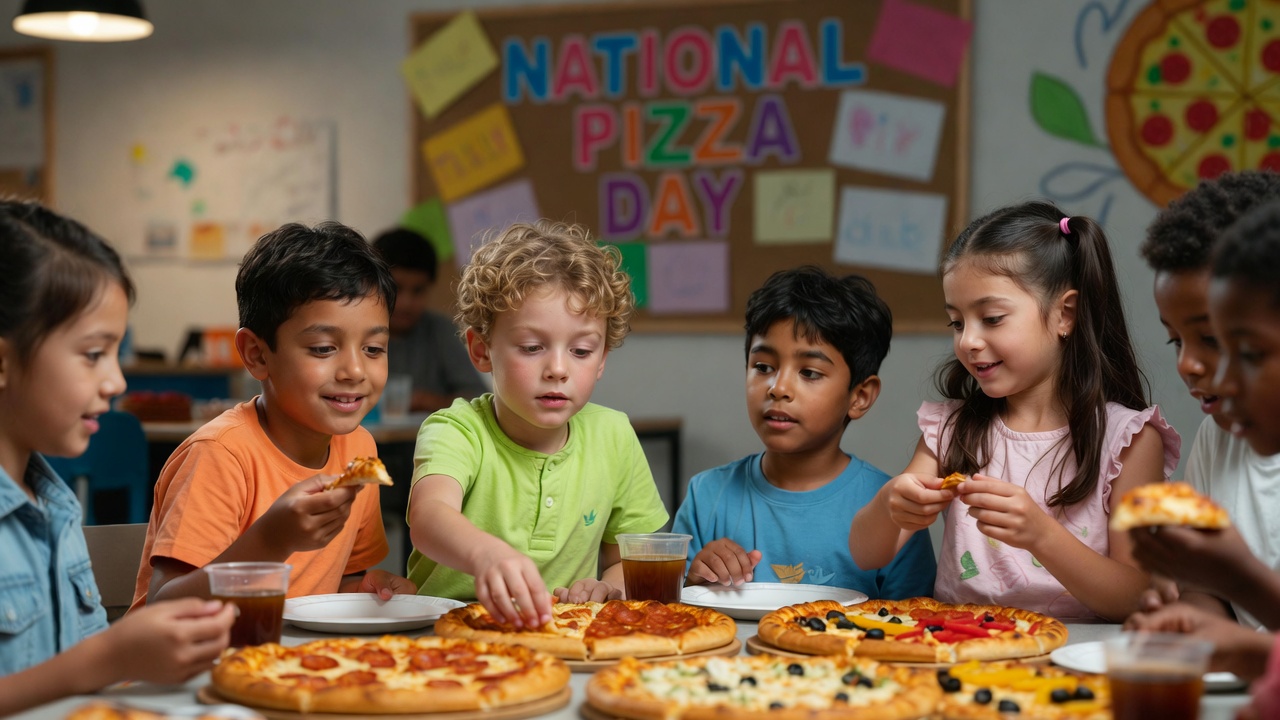
National Pizza Day falls on Monday, February 9, 2026, and it is one of the most beloved food holidays in America. For parents, teachers, and caregivers, this day offers the perfect excuse to combine fun with learning. From hands-on cooking projects to STEM experiments and geography lessons, pizza-themed activities can engage children of all ages. Whether you are planning a classroom celebration, a homeschool lesson, or a family pizza night, this guide covers everything you need to make National Pizza Day 2026 both memorable and educational for kids.
Americans consume roughly 3 billion pizzas every year, according to industry statistics from Gitnux. That works out to about 350 slices eaten every single second across the country. Children aged 6 to 19 are the highest consumers of pizza by age group. With pizza already such a central part of American family life, National Pizza Day is a natural opportunity to channel that enthusiasm into creative, skill-building activities.
This article walks through dozens of kid-friendly ideas organized by category. You will find cooking activities, art projects, math and science experiments, geography and history lessons, book recommendations, party-planning tips, and much more. Every activity is designed to be practical, age-appropriate, and rooted in real educational value.
What Is National Pizza Day and Why Do Kids Love It?
National Pizza Day is an unofficial American holiday celebrated on February 9 each year. The holiday honors one of the most popular foods in the world. Its exact origins are unclear, but records of the celebration date back to the early 2000s, according to the National Day Archives. The day has grown steadily through social media, restaurant promotions, and school celebrations.
Kids love National Pizza Day for the same reasons adults do: pizza is delicious, customizable, and fun to eat. But for children, pizza also holds a special cultural significance. It is the food of birthday parties, school cafeterias, Friday night family dinners, and special rewards. The phrase “pizza party” is practically a universal signal of celebration for American kids.
What makes this holiday especially valuable for parents and educators is its flexibility. Pizza connects to subjects ranging from math and science to geography, history, and art. A single pizza-making session can teach fractions, chemistry, nutrition, cultural studies, and fine motor skills all at once. That makes February 9 one of the most versatile teaching moments on the calendar.
The Fascinating History of Pizza: A Story Kids Can Explore
Before jumping into activities, it helps to give children some context. The story of pizza is a real-world history lesson that spans centuries and continents.
From Ancient Flatbreads to Modern Pizza
The concept of topping flatbread with ingredients dates back thousands of years. Ancient Greeks, Romans, and Egyptians all ate variations of flatbread with olive oil, herbs, and simple toppings. The Romans called their version panis focacius, which is the ancestor of modern focaccia bread.
The word “pizza” was first written down in 997 AD in the town of Gaeta, in southern Italy, according to Wikipedia’s history of pizza. But pizza as we know it today — with tomato sauce and cheese — did not appear until centuries later.
Naples: The Birthplace of Modern Pizza
Modern pizza was born in Naples, Italy, during the late 18th century. At the time, Naples was a bustling port city with a large working-class population. Street vendors sold inexpensive flatbreads topped with tomatoes, garlic, oil, and cheese. These early pizzas were fast, cheap, and filling — the original street food.
The tomato was key to this evolution. Brought to Europe from the Americas by Spanish explorers, the tomato was initially feared as poisonous because it belongs to the nightshade family. But by the late 1700s, the people of Naples had embraced it as a topping for their flatbreads.
The Legend of Pizza Margherita
One of the most famous pizza stories involves Queen Margherita of Savoy. In 1889, the queen visited Naples with King Umberto I. A local pizza maker named Raffaele Esposito reportedly prepared three different pizzas for the royal visit. The queen’s favorite was topped with tomatoes, mozzarella, and fresh basil — ingredients that mirrored the red, white, and green of the Italian flag. This pizza was named Pizza Margherita in her honor.
Whether the story is entirely accurate is debated by historians. Some evidence suggests that similar pizzas already existed before 1889. But the legend has become a beloved part of pizza culture, and it is a wonderful story to share with children.
Pizza Comes to America
Pizza arrived in the United States with Italian immigrants in the late 19th and early 20th centuries. The first American pizzerias appeared in cities like New York, Boston, Chicago, and Philadelphia. Lombardi’s, which opened in New York City in 1905, is often cited as one of the earliest pizzerias in the country.
Pizza remained a niche food within Italian-American communities until after World War II. American soldiers stationed in Italy during the war developed a taste for pizza and brought their appetite home. That sparked a nationwide pizza boom that has never slowed down.
Activity idea: Create a simple timeline with kids. Use index cards or a long piece of butcher paper. Mark key dates: 997 AD (first written record), the 1700s (Naples street food), 1889 (Pizza Margherita), 1905 (Lombardi’s opens), and the post-WWII pizza boom. Kids can illustrate each era with drawings.
How to Make Pizza with Kids: Easy Homemade Pizza Recipe for Families
Making pizza from scratch is one of the best National Pizza Day activities for kids. It combines cooking skills, creativity, and hands-on learning in a single project.
Ingredients You Will Need
Here is a basic shopping list for a family pizza-making session:
| Category | Ingredients |
|---|---|
| Dough | 2¼ tsp active dry yeast, 1 cup warm water, 3 cups all-purpose flour, 1 tbsp olive oil, 1 tsp salt, 1 tsp sugar |
| Sauce | 1 can (15 oz) crushed tomatoes, 1 clove garlic (minced), 1 tsp dried oregano, 1 tsp dried basil, salt to taste |
| Toppings | Shredded mozzarella cheese, pepperoni, bell peppers, mushrooms, olives, fresh basil, or any favorites |
Step-by-Step Instructions for Kids
Step 1: Activate the yeast. Pour the warm water into a bowl. The water should be about 110°F — warm to the touch but not hot. Sprinkle in the yeast and sugar. Let it sit for 5 to 10 minutes until it becomes foamy. This is a great moment to explain to kids what is happening. Yeast is a living microorganism. It eats sugar and produces carbon dioxide gas, which makes the dough rise.
Step 2: Mix the dough. Add the flour, olive oil, and salt to the yeast mixture. Stir until a rough dough forms. Turn it out onto a floured surface and let kids knead it for about 8 to 10 minutes. Kneading develops the gluten, which gives the dough its stretchy texture. This is an excellent sensory activity for younger children.
Step 3: Let it rise. Place the dough in an oiled bowl, cover with a towel, and let it rise for about one hour. The dough should roughly double in size. Use this waiting time for other activities — reading a pizza-themed book, doing a craft, or playing a fraction game.
Step 4: Prepare the sauce. While the dough rises, combine the crushed tomatoes, garlic, oregano, basil, and salt in a bowl. Kids can measure ingredients and stir. If you prefer a smoother sauce, blend it briefly.
Step 5: Shape and top the pizza. Preheat the oven to 450°F. Divide the dough into individual portions so each child can make their own personal pizza. Let them roll or stretch their dough on a floured surface, then spread sauce, sprinkle cheese, and add toppings.
Step 6: Bake and enjoy. Place the pizzas on a baking sheet or pizza stone. Bake for 10 to 15 minutes until the crust is golden and the cheese is bubbly.
Safety tip: Always supervise children around the oven. Younger kids should focus on dough preparation and topping, while adults handle the hot oven.
Pizza Science Experiments for Kids on National Pizza Day
Pizza-making is full of real science. Here are several experiments you can run alongside your cooking session.
The Yeast Experiment: Watching Carbon Dioxide in Action
This is one of the most popular and easy kitchen science activities for children. You need three clear cups or jars, warm water, sugar, and yeast.
Setup:
- Cup 1: Warm water + yeast + sugar
- Cup 2: Warm water + yeast (no sugar)
- Cup 3: Cold water + yeast + sugar
Cover each cup with a balloon. Over the next 15 to 20 minutes, the balloon on Cup 1 will inflate as the yeast produces carbon dioxide gas. Cup 2 will show minimal activity because the yeast has no food. Cup 3 will also lag because the cold water slows down the yeast’s metabolism.
What kids learn: This experiment teaches basic biology (living organisms), chemistry (fermentation and gas production), and the scientific method (variables, observation, comparison).
The Cheese Melt Test
Gather several types of cheese: mozzarella, cheddar, parmesan, and Swiss. Place a small amount of each on separate pieces of bread or dough. Bake them at the same temperature. Observe which cheese melts fastest, which gets the stretchiest, and which browns first.
What kids learn: Different cheeses have different fat contents, moisture levels, and protein structures. This affects how they behave when heated. It is a simple introduction to food science and material properties.
Measuring and Mixing: Kitchen Chemistry Basics
Have children measure ingredients precisely using measuring cups and spoons. Then ask: What happens if we use too much flour? Too little water? Let them experiment with small batches of dough using different ratios. They will quickly discover that baking is chemistry — precise proportions matter.
Pizza Math Activities: Teaching Fractions with Pizza Slices
Pizza is one of the most natural tools for teaching fractions. The connection between slicing a circular pizza into equal parts and understanding fractional values is immediately intuitive for children.
How to Teach Fractions Using Real or Paper Pizza
According to educators at WeAreTeachers, pizza is an ideal hands-on manipulative for introducing fraction concepts. Here is a structured activity:
- Start with a whole pizza. Show that one uncut pizza = 1 whole.
- Cut it in half. Each piece is 1/2.
- Cut those halves in half again. Now you have 4 pieces. Each is 1/4.
- Try thirds. Cut a new pizza into 3 equal slices. Each piece is 1/3.
- Compare the fractions. Which is bigger, 1/2 or 1/3? Let kids hold the slices side by side. The visual comparison makes the concept click.
This works beautifully with real pizza. It also works with paper plates that children decorate as pizzas and then cut into fractional parts.
Pizza Fraction Games for the Classroom
| Activity | Age Group | Skills Practiced |
|---|---|---|
| Paper plate pizza fractions | Ages 5–8 | Recognizing halves, thirds, quarters |
| Pizza topping fraction chart | Ages 7–10 | Creating fractions based on topping coverage |
| Equivalent fraction pizza match | Ages 8–12 | Matching 1/2 = 2/4 = 4/8 using pizza visuals |
| Pizza order word problems | Ages 9–12 | Adding and subtracting fractions in context |
| Design a menu with prices | Ages 10+ | Decimals, percentages, and multiplication |
Counting and Sorting with Toppings
For younger children (ages 3–6), skip the fractions and focus on counting. Give each child a paper pizza and a bowl of topping pieces cut from construction paper. Ask them to put exactly 5 pepperoni slices on their pizza. Or sort the toppings by color. Or create a pattern: one mushroom, one olive, one mushroom, one olive.
Pizza Art Projects and Crafts for National Pizza Day
Creative projects keep kids engaged and give them something tangible to take home or display.
Paper Plate Pizza Craft
This classic craft works for all ages. You need paper plates, construction paper, scissors, glue, and markers.
Instructions:
- Use a paper plate as the pizza base (the crust).
- Cut a slightly smaller circle from red paper for the sauce. Glue it on.
- Tear or cut strips of yellow paper for cheese. Glue them over the sauce.
- Cut out topping shapes from colored paper: green circles for olives, red circles for pepperoni, small rectangles for peppers, and brown shapes for mushrooms.
- Glue the toppings onto the pizza.
Bonus: After the craft, use the pizza for the fraction activities described above. Cut it into slices and label each piece.
Play Dough Pizza Station
Set up a play dough station where kids can shape their own pizzas. Provide brown play dough for the crust, red for sauce, yellow for cheese, and various colors for toppings. Add real dried herbs like oregano or basil for an authentic sensory experience. The smell makes the play feel more real and engages multiple senses.
Pizza Box Decoration
Collect clean pizza boxes (or buy blank ones from a craft store). Let kids decorate the outside with their own pizzeria name and logo. They can design a menu, write a slogan, and illustrate their creation. This combines art with writing skills and entrepreneurial thinking.
Felt Pizza Set
For a more lasting craft, help kids cut pizza components from felt fabric. Make a tan circle for the crust, a red circle for the sauce, yellow shreds for cheese, and various felt toppings. These pieces can be stored in a bag and used for imaginative play over and over again.
Pizza Geography Lesson: How Different Countries Enjoy Pizza
One of the most enriching National Pizza Day activities is exploring how pizza varies around the world. This teaches kids about cultural diversity, geography, and global food traditions.
Pizza Styles Around the World
| Country | Pizza Style | Distinctive Feature |
|---|---|---|
| Italy (Naples) | Neapolitan | Soft, chewy crust; simple toppings; baked in wood-fired oven at 800°F |
| Italy (Rome) | Pizza al Taglio | Rectangular; sold by weight; crispy thin crust |
| United States (New York) | New York-style | Large, thin, foldable slices; sold by the slice |
| United States (Chicago) | Deep-dish | Thick buttery crust; layers of cheese and chunky tomato sauce |
| United States (Detroit) | Detroit-style | Rectangular; thick and airy; cheese goes to the edges |
| Japan | Japanese pizza | Mayo-based sauce; toppings like squid, corn, and eel |
| Brazil | Brazilian pizza | Green peas, hard-boiled eggs, and corn as toppings |
| Sweden | Swedish pizza | Curry powder, bananas, and peanuts |
| India | Indian pizza | Paneer, tandoori chicken, and spicy chutneys |
| Australia | Aussie pizza | Topped with bacon, egg, and sometimes kangaroo meat |
Map Activity: Pin the Pizza on the Country
Print or draw a large world map. Give kids small paper pizza cutouts. As you discuss each country’s pizza style, have them place a pizza on the correct location on the map. This reinforces geography skills and makes the lesson interactive.
Cultural Discussion Points
Use this activity to talk about why different countries have different toppings. The answer ties into local agriculture, cultural food preferences, and historical trade routes. For instance, Japanese pizza features seafood because Japan is an island nation with a strong fishing tradition. Brazilian pizza includes corn because corn is a staple crop across Latin America.
This kind of discussion builds cultural respect and global awareness in children. It shows that there is no single “right” way to make pizza — just as there is no single “right” culture.
Pizza-Themed Books for Kids to Read on National Pizza Day
Reading a pizza-themed book before or after a cooking activity strengthens the connection between the hands-on experience and literacy. Here are some popular options organized by age group.
Picture Books (Ages 3–7)
- “Pete the Cat and His Four Groovy Buttons” by James Dean — While not exclusively about pizza, Pete’s adventures include pizza-related fun.
- “Pizza at Sally’s” by Monica Wellington — Follows Sally as she makes pizza from scratch in her restaurant. Great for teaching the sequence of pizza-making steps.
- “Hi, Pizza Man!” by Virginia Walter — A toddler waits for the pizza delivery person and imagines different animals bringing her pizza.
- “Little Pea” by Amy Krouse Rosenthal — A funny story about a little pea who hates eating candy for dinner but loves pizza.
Early Readers (Ages 6–9)
- “Curious George and the Pizza Party” — The beloved monkey helps make pizza with predictably messy results.
- “The Pizza That We Made” by Joan Holub — A rhyming step-by-step account of making pizza.
Chapter Books and Nonfiction (Ages 8–12)
- “Pizza, Love, and Other Stuff That Made Me Famous” by Kathryn Williams — A young adult novel set during a teen cooking competition.
- “A Slice of the World: A History of Pizza” — Various nonfiction resources available at libraries can help older kids explore pizza history in depth.
Activity idea: After reading, have kids write or draw their own pizza story. What would happen if they opened their own pizzeria? What toppings would they invent? Who would be their first customer?
STEM Pizza Activities: Science, Technology, Engineering, and Math with Pizza
The STEM learning potential of pizza extends well beyond basic fractions and yeast experiments. Here are structured activities that target specific STEM skills.
Engineering Challenge: Build the Strongest Pizza Box
Give kids cardboard, tape, scissors, and rulers. Challenge them to design a pizza box that can hold a real pizza (or a paper plate pizza) without collapsing, even when stacked. They must consider structural support, hinges, and ventilation holes to prevent the pizza from getting soggy.
What kids learn: Basic engineering principles like load-bearing structures, material strength, and functional design.
Technology: Create a Digital Pizza Menu
Older kids (ages 9 and up) can use basic design tools to create a digital menu for their imaginary pizzeria. Free tools like Canva or Google Slides work well. They need to choose fonts, colors, layout, and pricing. This introduces basic graphic design and digital literacy skills.
Math: Running a Pizza Business
Set up a pretend pizza business in the classroom or at home. Assign prices to ingredients. Give kids a budget and have them figure out how to make the most pizzas at the lowest cost. Introduce concepts like profit, cost per unit, and budgeting.
Sample scenario: You have $20 to spend. Dough costs $2 per pizza. Sauce costs $1. Each topping costs $0.50. Each pizza sells for $5. How many pizzas can you make? What is your total profit?
| Expense | Cost per Pizza |
|---|---|
| Dough | $2.00 |
| Sauce | $1.00 |
| Cheese | $1.00 |
| One topping | $0.50 |
| Total cost | $4.50 |
| Selling price | $5.00 |
| Profit per pizza | $0.50 |
This kind of practical math engages kids who might not enjoy abstract textbook problems.
Science: The pH of Pizza Sauce
For older kids interested in chemistry, test the pH of pizza sauce using litmus paper or red cabbage juice indicator. Tomato sauce is acidic, typically with a pH around 4.0 to 4.5. Compare it to water (neutral, pH 7) and baking soda dissolved in water (basic, pH around 8 to 9). This teaches the acid-base spectrum in a memorable, food-related context.
Healthy Pizza Ideas for Kids: Making Nutritious Choices Fun
National Pizza Day is also a chance to talk about nutrition in a positive, non-restrictive way. The goal is not to make kids feel guilty about eating pizza. Instead, it is about showing them that healthy choices can be just as tasty.
Nutritional Building Blocks of Pizza
Pizza actually contains all the major food groups in a single dish:
| Food Group | Pizza Component |
|---|---|
| Grains | Crust (flour-based dough) |
| Vegetables | Tomato sauce, peppers, mushrooms, onions |
| Dairy | Mozzarella cheese |
| Protein | Pepperoni, sausage, chicken, or beans |
| Fats | Olive oil, cheese |
According to USDA research published in November 2024, pizza provides about 27% of total energy intake for American children on days they eat it. It also contributes approximately 25% of their protein and 20% of their calcium on those days. The challenge is that pizza can also be high in saturated fat and sodium.
Fun Ways to Make Pizza Healthier
- Whole wheat crust: Swap all-purpose flour for whole wheat flour to add fiber.
- Veggie-loaded toppings: Let kids choose at least two vegetables for their pizza. Spinach, roasted red peppers, zucchini, and cherry tomatoes all work well.
- Lighter cheese: Use part-skim mozzarella instead of full-fat.
- Fruit pizza for dessert: Spread cream cheese or yogurt on a sugar cookie crust, then top with sliced strawberries, blueberries, kiwi, and banana for a “dessert pizza” that doubles as a fruit serving.
- Cauliflower crust: For adventurous families, try a cauliflower-based crust as an alternative.
The “Rainbow Pizza” Challenge
Challenge kids to build a pizza that includes as many colors as possible. Red tomatoes, orange peppers, yellow corn, green spinach, purple onions, and white mozzarella. This turns nutrition into a game and encourages trying new vegetables.
How to Plan a National Pizza Day Party for Kids
Whether you are a parent hosting a small gathering or a teacher organizing a classroom event, a pizza party is one of the easiest celebrations to pull off.
Planning Checklist for a National Pizza Day Kids’ Party
| Task | Timeline |
|---|---|
| Set the date (February 9, 2026) | 2–3 weeks before |
| Send invitations (pizza-themed designs) | 2 weeks before |
| Plan menu (dough, sauce, toppings, drinks) | 1 week before |
| Gather craft supplies (paper plates, construction paper, markers) | 1 week before |
| Prepare dough (can be made the night before) | Day before |
| Set up stations: cooking, crafts, games | Day of party |
| Bake and eat | Party time |
Station Ideas for a Pizza Party
Station 1: Make Your Own Pizza — Each child gets a ball of dough and access to sauce and toppings. Adults bake the pizzas in batches.
Station 2: Pizza Craft Table — Paper plate pizzas, pizza box decoration, or felt pizza making.
Station 3: Pizza Trivia Game — Prepare 15 to 20 trivia questions about pizza history, world pizza styles, and fun facts. Award small prizes for correct answers.
Station 4: Pizza Fraction Challenge — Use paper pizza cutouts to practice math concepts.
Station 5: Free Play — Pizza-themed coloring pages, word searches, or a pizza-themed Bingo game.
Pizza Party Favor Ideas
Send guests home with a small treat bag that includes a mini rolling pin, a small packet of Italian seasoning, a pizza-themed sticker sheet, and a printed recipe card for the dough you made together.
National Pizza Day Activities for Toddlers and Preschoolers
Very young children (ages 2–5) need simpler, more sensory-focused activities. Here are ideas tailored for the youngest pizza fans.
Sensory Play: Pizza Dough Exploration
Give toddlers a ball of real pizza dough to squeeze, poke, stretch, and flatten. This is a fantastic tactile experience. The dough is safe if a small piece ends up in a mouth (though uncooked dough is not ideal for eating). Alternatively, use homemade play dough scented with oregano or basil for an authentic pizza-shop feel.
Color and Shape Sorting with Toppings
Cut construction paper into simple shapes: circles for pepperoni, triangles for cheese wedges, squares for peppers, and rectangles for bacon strips. Have children sort the shapes by color or type, then glue them onto a paper plate pizza.
Pizza Delivery Dramatic Play
Set up a play kitchen with a toy phone, paper pizza boxes, and play money. Children can take turns being the pizza chef, the delivery driver, and the customer. Dramatic play develops language skills, social skills, and imaginative thinking.
Finger Painting Pizza
Let toddlers finger-paint a large circular piece of paper. Use red paint for sauce, yellow for cheese, and let them add handprints or dots for toppings. It is messy, but that is part of the fun.
National Pizza Day Classroom Activities for Teachers
Teachers can use National Pizza Day to reinforce curriculum standards in creative ways. Here are ideas organized by subject.
Language Arts
- Writing prompt: “If I opened a pizzeria, I would call it ______ because ______.” Students write a persuasive paragraph about their restaurant concept.
- Vocabulary building: Introduce pizza-related vocabulary words: dough, knead, ferment, yeast, crust, marinara, mozzarella, pepperoni, oregano, basil. Students write definitions and use each word in a sentence.
- Sequencing activity: Give students sentence strips describing the steps of making pizza. They arrange the strips in the correct order.
Social Studies
- Cultural exploration: Assign each student or group a country. They research that country’s pizza traditions and present their findings to the class.
- Immigration history: Discuss how Italian immigrants brought pizza to America. Connect it to broader themes of immigration and cultural exchange.
- Economics: Study the pizza industry as a case study in supply and demand. Use the fact that there are over 75,000 pizzerias across the United States as a starting point.
Science
- States of matter: Observe how pizza ingredients change state during cooking. Solid cheese becomes liquid (melts). Liquid sauce thickens. Soft dough becomes a rigid crust.
- Nutrition labels: Bring in a frozen pizza box. Have students read the nutrition label and calculate percentages of daily values.
Physical Education
- Pizza relay race: Divide kids into teams. Each team member must run to a station, pick up a “topping” (beanbag), and place it on a “pizza” (hula hoop). The first team to assemble their pizza wins.
Fun Pizza Facts Kids Will Love to Share
Kids enjoy learning surprising trivia. Here are facts you can share during any National Pizza Day activity:
- Americans eat about 3 billion pizzas per year. That comes out to approximately 46 slices per person annually, according to Gitnux’s 2026 pizza consumption statistics report.
- Pepperoni is the most popular topping in the United States. It appears on about 36% of all pizza orders.
- The world’s longest pizza measured over 6,333 feet. It was made in Naples, Italy, in May 2016 by a team of more than 250 pizza makers.
- The most expensive pizza ever sold cost $12,000. Called the “Louis XIII Pizza,” it was topped with caviar, lobster, and edible gold.
- Saturday night is the most popular time to eat pizza in America.
- Super Bowl Sunday is the biggest pizza delivery day of the year. About 12.5 million pizzas are sold during Super Bowl weekend alone.
- UNESCO recognized the art of Neapolitan pizza-making as an Intangible Cultural Heritage in December 2017. This means it is considered a cultural tradition worthy of preservation.
- The first online purchase ever was a Pizza Hut pizza ordered over the internet in 1994.
Pizza-Themed Games and Printable Activities for Kids
Games keep the energy high during a National Pizza Day celebration. Here are some popular options.
Pizza Bingo
Create Bingo cards with pizza-related images: a slice of pizza, a rolling pin, a chef’s hat, a tomato, mozzarella, an oven, a pizza box, pepperoni, basil, mushrooms, olives, and more. Call out the items and let kids mark their cards. First to get five in a row wins.
Pizza Topping Memory Match
Make pairs of cards featuring pizza toppings. Place them face-down on a table. Players take turns flipping two cards at a time, trying to find matching pairs. This classic memory game improves concentration and visual recall.
“What’s on My Pizza?” Guessing Game
One child secretly picks three toppings for their imaginary pizza. Other children ask yes-or-no questions to figure out the toppings. (“Is it a vegetable?” “Is it red?” “Does it come from an animal?”) This builds logical reasoning and deductive thinking skills.
Pizza Word Search and Crossword Puzzles
Create or print pizza-themed word searches and crossword puzzles. Include vocabulary words like mozzarella, pepperoni, dough, oregano, Naples, Margherita, crust, yeast, ferment, and slice. Many free printable options are available from educational websites.
How to Celebrate National Pizza Day on a Budget
You do not need to spend a lot of money to make National Pizza Day special for kids. Here are budget-friendly tips:
- Make dough from scratch. The ingredients — flour, water, yeast, salt, and oil — cost very little. One batch of dough can make four to six personal-sized pizzas for just a few dollars.
- Use basic toppings. Mozzarella cheese and canned tomato sauce are affordable staples. Add whatever vegetables you already have in the refrigerator.
- Paper plate crafts cost pennies. A stack of paper plates, some construction paper, and a glue stick provide hours of creative play.
- Print free activities. Many teachers and educational bloggers share free pizza-themed worksheets, coloring pages, and games online.
- Visit the library. Borrow pizza-themed picture books instead of buying them.
- Take advantage of restaurant deals. Many pizzerias offer National Pizza Day promotions, discounts, and buy-one-get-one deals on February 9.
National Pizza Day Activities for Different Age Groups: A Quick Reference
Here is a summary table to help you choose the right activities for each age group:
| Age Group | Best Activities |
|---|---|
| Toddlers (1–3) | Sensory dough play, finger painting pizza, shape sorting, dramatic play |
| Preschool (3–5) | Paper plate pizza craft, counting toppings, play dough pizza, storytime |
| Early Elementary (5–8) | Making real pizza, basic fractions, yeast experiment, pizza Bingo |
| Upper Elementary (8–12) | World pizza geography, pizza business math, engineering challenges, writing prompts |
| Middle School (12+) | Nutrition label analysis, pH testing, digital menu design, cultural research project |
Making National Pizza Day 2026 a Family Tradition
The beauty of National Pizza Day is that it can become an annual tradition that grows with your children. A three-year-old who finger-paints a pizza this year might be rolling out real dough by age five, experimenting with unusual toppings by age eight, and researching Neapolitan pizza-making traditions by age twelve.
Here are a few ways to build a lasting tradition:
- Start a pizza journal. Each year on February 9, have your child draw or write about the pizza they made. Over time, this becomes a wonderful record of their growth and changing tastes.
- Try a new pizza style each year. In 2026, make a classic Margherita. In 2027, try Chicago deep-dish. In 2028, experiment with Japanese-style pizza. Use the world pizza styles table in this article as your guide.
- Take a family photo with your creation. A simple snapshot each year becomes a cherished collection.
- Invite a new friend each year. Pizza is a food that brings people together. Expanding the guest list teaches kids about hospitality and generosity.
Conclusion: Why National Pizza Day Is More Than Just Pizza
National Pizza Day 2026 on February 9 is far more than an excuse to eat an extra slice. For kids, it is a gateway to learning about history, geography, science, math, art, nutrition, and culture — all wrapped up in one of their favorite foods. The activities in this guide are designed to be practical, affordable, and adaptable for any setting, from a busy classroom to a cozy kitchen table.
Pizza connects us across generations and cultures. It started as a humble street food in Naples, traveled the world through immigration and trade, and became one of the most universally loved dishes on the planet. Sharing that story with children — while they knead dough, sprinkle cheese, and learn about fractions — is one of the most rewarding things a parent or teacher can do.
So mark your calendar. Gather your ingredients. Roll up your sleeves. And make February 9, 2026, a day your kids will remember — one delicious slice at a time.
Happy National Pizza Day 2026! 🍕