A Complete Guide to Celebrating the Ancient Festival of Spring and Renewal
Spring arrives with the scent of hyacinths and the promise of new beginnings. For over 300 million people around the world, this seasonal transition marks far more than warmer weather. It signals the arrival of Nowruz 2026—the ancient Persian New Year celebration that has united families, communities, and nations for more than three millennia.
If you have been searching for the exact Nowruz 2026 date, planning your celebration, or simply curious about this remarkable festival, you have come to the right place. This guide covers everything you need to know about the Persian New Year 2026, from precise timing to cherished traditions that have endured across centuries and continents.
What is Nowruz and Why Do Millions Celebrate the Persian New Year?
Nowruz (also spelled Novruz, Navruz, Nooruz, or Nevruz) translates to “New Day” in Persian. The word combines two elements: now meaning “new” and ruz meaning “day” or “light.” This ancient celebration marks the first day of spring in the Northern Hemisphere and the beginning of the Iranian calendar year.
The roots of Nowruz stretch back to Zoroastrianism, one of the world’s oldest monotheistic religions. Zoroastrian teachings emphasized reverence for nature’s four sacred elements: fire, water, earth, and air. The spring equinox represented the perfect moment to celebrate the triumph of light over darkness, warmth over cold, and renewal over stagnation.
Today, Nowruz transcends religious boundaries. People of diverse faiths—including Muslims, Christians, Jews, Bahá’ís, and those who are non-religious—participate in the festivities. The celebration has become a secular cultural holiday that emphasizes universal values:
- Renewal and fresh beginnings
- Family unity and community bonds
- Harmony with nature and seasonal cycles
- Peace, reconciliation, and hope for the future
According to UNESCO’s Intangible Cultural Heritage program, Nowruz brings together communities across vast regions of Asia, Southeast Europe, and beyond.
When is Nowruz 2026? The Exact Date and Time of the Persian New Year
The question on every celebrant’s mind is straightforward: When is Nowruz 2026?
Nowruz 2026 Falls on Friday, March 20, 2026
Unlike fixed calendar holidays, Nowruz occurs at the precise moment of the vernal equinox—when the Sun crosses the celestial equator from south to north. This astronomical event marks the exact instant winter ends and spring begins.
| Detail | Information |
|---|---|
| Date | Friday, March 20, 2026 |
| Exact Time (UTC) | 14:46 UTC |
| Eastern Time (USA) | 10:46 AM EDT |
| Tehran Time (Iran) | 6:16 PM IRST |
| Iranian Calendar Year | 1405 (Sal-e 1405) |
| Duration of Festivities | 13 days |
The moment of the New Year is called Sal Tahvil (literally “year transition”). Families traditionally gather around their ceremonial Haft-Sin tables, counting down the seconds until this exact instant arrives.
Why Does the Nowruz Date Change Each Year?
Nowruz would fall on the same date every year if Earth completed its orbit around the Sun in exactly 365 days. However, the actual orbital period is approximately 365.25 days. This discrepancy causes the equinox to shift by about six hours annually.
According to TimeandDate.com, each March equinox occurs roughly six hours later than the previous year. Leap years compensate by shifting the equinox approximately 18 hours earlier. This astronomical precision explains why Nowruz can fall on March 19, 20, or 21 depending on the year.
Countries That Celebrate Nowruz: A Global Festival of Spring
Nowruz is not confined to any single nation. This celebration unites diverse cultures across multiple continents. The United Nations recognizes Nowruz as a festival celebrated by over 300 million people worldwide.
The 12 Countries That Inscribed Nowruz with UNESCO
In 2009, Nowruz was inscribed on UNESCO’s Representative List of the Intangible Cultural Heritage of Humanity. Twelve countries jointly submitted this inscription:
| Country | Local Name | Special Traditions |
|---|---|---|
| Iran | Nowruz | Haft-Sin table, 13-day celebration |
| Afghanistan | Nawroz | Guli Surkh (Red Flower Festival) in Mazar-i-Sharif |
| Azerbaijan | Novruz | Four Wednesdays of fire rituals |
| Tajikistan | Navro’z | Sumalak preparation, communal feasts |
| Uzbekistan | Navruz | Baxshi epic storytelling competitions |
| Kazakhstan | Nauryz | Yurt building, nauryz koje soup |
| Kyrgyzstan | Nooruz | Water rituals, wrestling competitions |
| Turkmenistan | Novruz | Horse racing, traditional games |
| Turkey | Nevruz | Kurdish celebrations, bonfire rituals |
| Iraq | Newroz | Kurdish freedom celebrations |
| Pakistan | Nawruz | Parsi and Kalash community celebrations |
| India | Navroz | Parsi community observances |
Additional Regions Celebrating the Persian New Year
Beyond these twelve countries, Nowruz traditions extend to:
- Kurdish communities in Syria and diaspora populations
- Albanian communities in the Balkans (Dita e Verës)
- Uyghur populations in China
- Lezgins and Tatars in southern Russia
- Iranian diaspora communities throughout Europe, North America, and Australia
The largest diaspora celebrations occur in major cities like Los Angeles, London, Toronto, and Sydney, where vibrant Iranian-American and Persian communities have established annual festivals.
Chaharshanbe Suri 2026: The Fire Festival Before Nowruz
The Nowruz celebration officially begins several days before the New Year itself. Chaharshanbe Suri (also spelled Charshanbeh Suri) marks the first major festivity of the season.
When is Chaharshanbe Suri 2026?
Chaharshanbe Suri 2026 falls on Tuesday, March 17, 2026.
Despite the name meaning “Wednesday Feast,” the celebration actually takes place on the eve of the last Wednesday before Nowruz—which means Tuesday evening.
The Ancient Fire Jumping Tradition
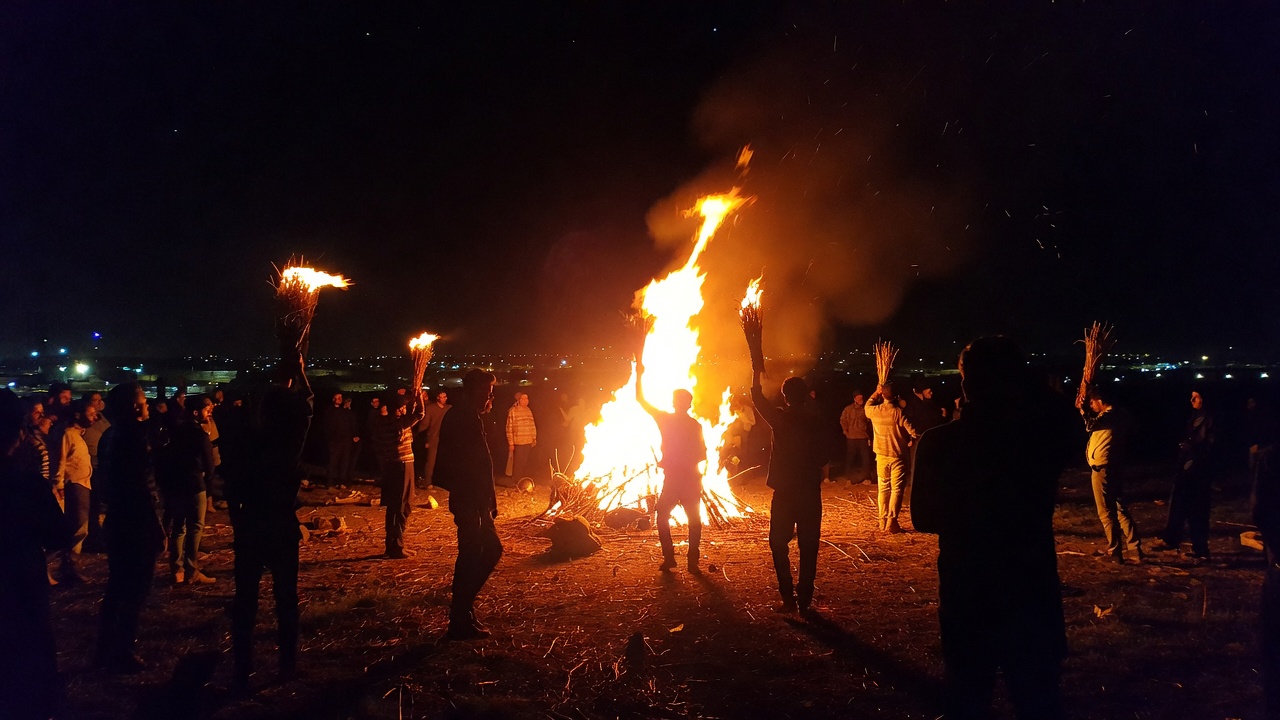
Chaharshanbe Suri centers on bonfires and fire-jumping rituals. As darkness falls, communities build multiple fires in streets, courtyards, and open spaces. Participants then leap over the flames while chanting:
“Zardi-ye man az to, sorkhi-ye to az man” “Give me your red color, and take back my sickly pallor”
This ritual symbolizes:
- Purification from the old year’s negativity
- Transfer of fire’s warmth and energy to the jumper
- Cleansing of illness, weakness, and misfortune
- Embracing vitality, health, and strength for the coming year
Additional Chaharshanbe Suri Customs
The Fire Festival includes several other beloved traditions:
Qashoq Zani (Spoon Banging) Children don disguises and go door-to-door, banging spoons against pots and pans. Neighbors place sweets, nuts, and treats in their bowls. This tradition resembles Halloween’s trick-or-treating and represents warding off evil spirits through noise.
Kuze Shekani (Pot Smashing) Families fill old earthenware pots with items symbolizing negative elements: salt (evil eye), charcoal (illness), and a coin (poverty). The pot is then thrown from the rooftop, smashing on the street below. The breaking pot represents casting away the previous year’s misfortunes.
Ajil-e Chaharshanbe Suri A special mixture of nuts and dried fruits is prepared and consumed throughout the evening. This tasty combination typically includes pistachios, almonds, hazelnuts, chickpeas, raisins, dried apricots, and prunes. Tradition holds that eating this ajil makes wishes come true.
Fal-Gush (Eavesdropping Fortune) Young people, particularly unmarried women, make a wish and then eavesdrop on conversations happening behind walls or in the streets. The first words overheard are interpreted as omens for the coming year.
Haft-Sin Table Guide: The Seven Symbolic Items for Nowruz 2026
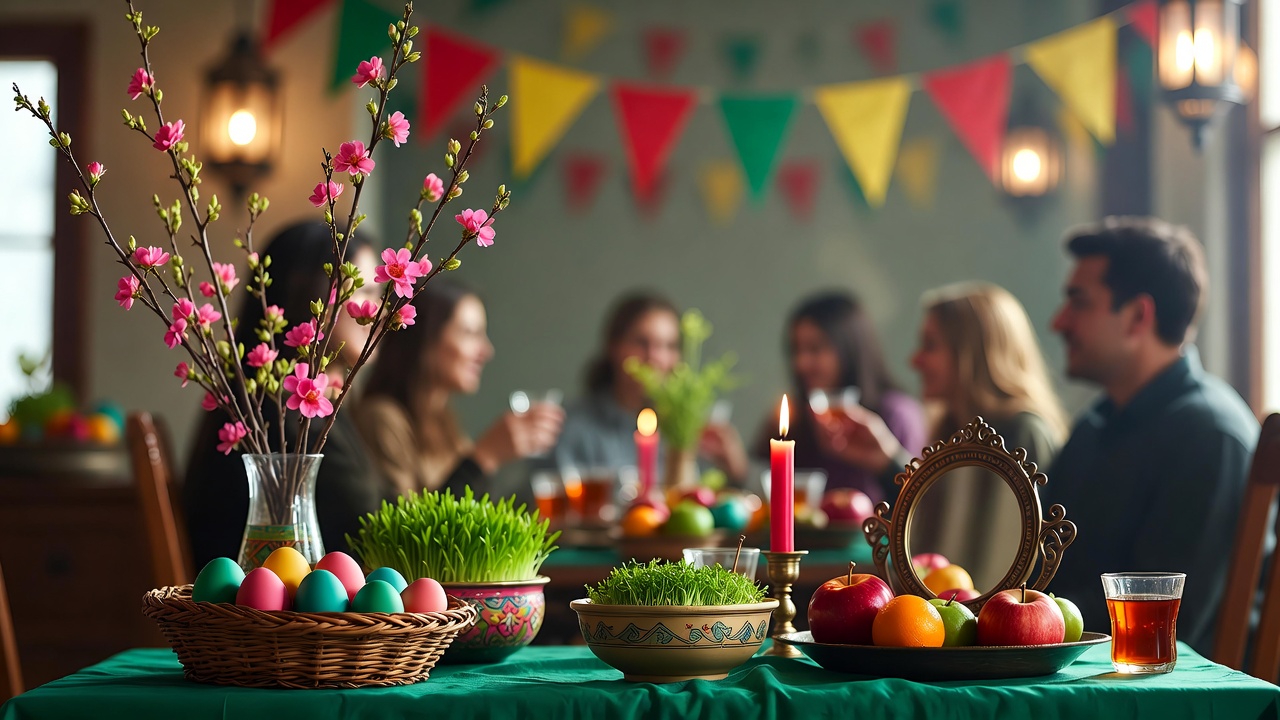
No Nowruz celebration is complete without the Haft-Sin (هفتسین), an arrangement of seven symbolic items displayed on a special table or cloth. “Haft” means “seven” in Persian, and “Sin” refers to the Persian letter “س” (S).
What Are the Seven Items of Haft-Sin?
Each item begins with the Persian letter S and carries deep symbolic meaning for the new year:
| Persian Name | English | Symbolism |
|---|---|---|
| Sabzeh (سبزه) | Sprouts (wheat, barley, or lentil) | Rebirth, renewal, new growth |
| Samanu (سمنو) | Sweet wheat pudding | Power, strength, affluence |
| Senjed (سنجد) | Dried oleaster fruit | Love, wisdom, affection |
| Sir (سیر) | Garlic | Health, medicine, protection |
| Sib (سیب) | Apple | Beauty, health, well-being |
| Somāq (سماق) | Sumac berries | Sunrise, patience, victory of light |
| Serkeh (سرکه) | Vinegar | Age, patience, acceptance |
Additional Items on the Haft-Sin Table
Many families enhance their Haft-Sin with additional meaningful objects:
Mirror (Ayneh) Symbolizes self-reflection, truth, and clarity. Often placed at the table’s center, encouraging honest assessment of the past year.
Candles (Sham) Represent enlightenment, light, and hope. Traditionally, one candle is lit for each child in the family.
Goldfish (Mahi) Symbolize life, movement, and good fortune. Swimming fish represent the dynamic energy of the new year. (Many families now use decorative fish figurines for ethical reasons.)
Painted Eggs (Tokhm-e Morgh) Represent fertility, new life, and family continuity. Similar to Easter egg traditions, these decorated eggs add color to the display.
Coins (Sekke) Symbolize wealth, prosperity, and financial blessings for the coming year.
Hyacinth Flowers (Sonbol) Represent the fragrance of spring and the beauty of the natural world awakening.
Holy Book or Poetry Many families include the Quran, the Avesta (Zoroastrian sacred text), or works by beloved Persian poets like Hafez or Rumi. The Divān of Hafez is particularly popular for bibliomancy—opening randomly to receive wisdom for the new year.
How to Set Up Your Haft-Sin Table for Nowruz 2026
Step 1: Choose Your Location Select a prominent space in your home where family can gather. Traditional setups use a beautiful tablecloth spread on the floor or a dedicated table.
Step 2: Begin Preparations Early Start growing your sabzeh (sprouts) approximately two weeks before Nowruz. Soak wheat, barley, or lentil seeds overnight, then spread them on a shallow dish lined with damp cotton. Keep them moist and in indirect light.
Step 3: Assemble the Seven S Items Arrange the seven primary items in an aesthetically pleasing manner. Use decorative bowls, plates, and vessels that reflect your personal style.
Step 4: Add Complementary Items Place the mirror, candles, flowers, goldfish, and other items around the seven S elements. Balance and symmetry are valued in traditional arrangements.
Step 5: Include Family Touches Add photographs, heirloom items, or personal mementos that make the display meaningful to your family.
The Haft-Sin table is typically set up a few days before Nowruz and remains in place for the entire 13-day celebration period.
Traditional Persian New Year Foods: What to Eat During Nowruz 2026
Food plays a central role in Nowruz celebrations. Traditional dishes carry symbolic meanings connected to themes of prosperity, health, and renewal.
Sabzi Polo ba Mahi: The Essential Nowruz Dish
Sabzi Polo ba Mahi (herbed rice with fish) is the quintessential Persian New Year meal. This fragrant dish combines:
- Sabzi Polo: Fluffy basmati rice mixed with fresh herbs including dill, parsley, cilantro, and chives
- Mahi: Pan-fried or baked white fish (traditionally from the Caspian Sea, though salmon is now common)
The green herbs symbolize rebirth and renewal, while the fish represents life and abundance. Together, they create a perfect representation of Nowruz themes.
Other Traditional Nowruz Foods
Kuku Sabzi (Herb Frittata) A rich egg-based dish packed with fresh herbs, walnuts, and sometimes barberries. The round shape represents the cycle of life, and the abundant greens signify health and new beginnings.
Ash Reshteh (Noodle Soup) A hearty soup containing beans, lentils, herbs, and noodles. The intertwined noodles symbolize the twists and turns of life’s journey. This dish is often prepared before Nowruz and on Chaharshanbe Suri.
Reshteh Polo (Rice with Noodles) Rice layered with toasted noodles, symbolizing taking control of one’s destiny in the new year.
Baghali Polo (Rice with Fava Beans) Fragrant rice with dill and fresh fava beans, traditionally served with lamb shanks (mahicheh) for special occasions.
Samanu The sweet wheat pudding that appears on the Haft-Sin table is also served as a dessert. Making samanu is a communal activity, often involving women stirring the mixture while singing traditional songs.
Nowruz Sweets and Desserts
Persian confections are essential for the visiting traditions that follow New Year’s Day:
- Shirini Nokhodchi: Chickpea flour cookies scented with cardamom and rosewater
- Nan-e Berenji: Delicate rice flour cookies with poppy seeds
- Baklava: Layers of phyllo with walnuts, pistachios, and sweet syrup
- Qottab: Walnut-filled pastries from Yazd
- Sohan: Saffron and pistachio brittle
Guests visiting homes during Nowruz are always offered tea and an assortment of these sweet treats.
Sizdah Bedar 2026: The Thirteenth Day Picnic Tradition
The Nowruz celebration concludes on the thirteenth day with Sizdah Bedar (literally “getting rid of thirteen”). This joyful outdoor festival marks the official end of the New Year holidays.
When is Sizdah Bedar 2026?
Sizdah Bedar 2026 falls on Thursday, April 2, 2026.
Why Do Persians Leave Home on the Thirteenth Day?
The number thirteen is considered unlucky in Persian culture, similar to Western superstitions. By spending the entire day outdoors in nature, families believe they can:
- Escape any bad luck associated with the number
- Return the cycle of life to nature through the sabzeh ritual
- Enjoy the beauty of spring at its fullest expression
- Strengthen family bonds through communal activities
Sizdah Bedar Traditions and Activities
Releasing the Sabzeh The green sprouts that adorned the Haft-Sin table are carried outdoors and released into flowing water—a stream, river, or fountain. This ritual symbolizes:
- Returning the essence of life to nature
- Casting away the troubles of the past year
- Allowing the sprouts to carry away accumulated negative energy
Knotting the Sabzeh Before releasing the sabzeh, unmarried young people (especially women) tie knots in the grass blades while making wishes for finding a spouse in the coming year. This romantic tradition connects personal hopes with nature’s fertility.
Picnicking in Parks and Gardens Families pack elaborate picnic spreads and head to parks, gardens, mountains, or riverside areas. Traditional foods include:
- Grilled kebabs (joojeh kabab, koobideh)
- Fresh salads (shirazi salad)
- Rice dishes
- Fresh fruits
- Sweets and tea
Games and Sports Outdoor activities are central to Sizdah Bedar celebrations:
- Traditional wrestling matches
- Horse riding (in rural areas)
- Tug-of-war competitions
- Backgammon and card games
- Dancing and music
- Kite flying
Sizdah Bedar Pranks A tradition similar to April Fool’s Day involves playing lighthearted pranks and jokes on family and friends. This playful atmosphere helps release any remaining tension before returning to regular life.
How to Wish Someone a Happy Nowruz: Persian New Year Greetings
When greeting friends and family during Nowruz, several traditional phrases are commonly used:
Essential Nowruz Greetings
| Persian Phrase | Pronunciation | Meaning |
|---|---|---|
| نوروز مبارک | Nowruz Mobarak | Happy Nowruz |
| سال نو مبارک | Sal-e No Mobarak | Happy New Year |
| عید شما مبارک | Eid-e Shoma Mobarak | Happy holidays to you |
| سال نو پیروز | Sal-e No Pirouz | Victorious New Year |
Regional Variations
Different communities express these wishes in their own languages:
- Kurdish: Newroza te pîroz be
- Azerbaijani: Novruz bayramınız mübarək
- Dari (Afghanistan): Nawroz Mubarak
- Tajik: Navruz muborak
When meeting elders during Nowruz visits, younger people typically use more formal expressions of respect and receive blessings and sometimes monetary gifts (Eidi) in return.
International Nowruz Day: UN and UNESCO Recognition
The global significance of Nowruz has been formally recognized by major international organizations.
UNESCO Intangible Cultural Heritage
In 2009, UNESCO inscribed Nowruz on the Representative List of the Intangible Cultural Heritage of Humanity. The inscription was initially submitted by six countries and later expanded to twelve in 2016.
UNESCO’s recognition highlights Nowruz as:
- A 3,000-year-old tradition that has survived changing regimes and religions
- A celebration promoting peace, solidarity, and reconciliation
- An example of shared cultural heritage along the historic Silk Roads
- A practice fostering intergenerational transmission of knowledge and values
United Nations International Day of Nowruz
On February 23, 2010, the United Nations General Assembly adopted Resolution 64/253, officially recognizing March 21 as the International Day of Nowruz.
The resolution acknowledged that Nowruz:
- Has been celebrated for over 3,000 years
- Is observed by more than 300 million people
- Promotes values of peace and solidarity between generations and families
- Encourages cultural diversity and friendship among peoples
Tehran, Iran, was designated the “Secretariat of Nowruz” following the first global Nowruz celebration held there on March 27, 2010.
Nowruz 2026 Calendar: Key Dates and Timeline
Planning your Nowruz celebration is easier with a complete timeline of all important dates:
| Event | Date 2026 | Description |
|---|---|---|
| Begin growing Sabzeh | ~March 6 | Start sprouting wheat/barley/lentils |
| Khane Tekani (Spring Cleaning) | Early March | Deep cleaning and decluttering homes |
| Set up Haft-Sin table | March 17-19 | Arrange the ceremonial display |
| Chaharshanbe Suri | March 17 (Tuesday evening) | Fire jumping festival |
| Buy new clothes | Before March 20 | Traditional practice for fresh starts |
| Nowruz (Sal Tahvil) | March 20, 10:46 AM EDT | Exact moment of the New Year |
| Days 1-4: Public holidays (Iran) | March 20-23 | Official holidays, family visits |
| Days 5-12: Extended celebrations | March 24-31 | Continued visiting, feasting |
| Sizdah Bedar | April 2 (Thursday) | Outdoor picnic day, end of Nowruz |
Celebrating Nowruz 2026 in the Iranian Diaspora
For the millions of Iranians and Persian-heritage families living abroad, Nowruz maintains profound importance as a connection to cultural roots.
Major Diaspora Celebrations
United States The largest Iranian-American communities reside in Los Angeles (often called “Tehrangeles”), Washington D.C., New York, and San Francisco. Public Nowruz celebrations include:
- Street festivals with traditional music and dance
- Fire jumping ceremonies in community centers
- Cultural exhibitions at museums and universities
- Nowruz bazaars selling traditional items
United Kingdom London’s substantial Persian community hosts celebrations at venues like Trafalgar Square, with performances, food stalls, and family activities.
Canada Toronto and Vancouver have vibrant Nowruz celebrations, including community festivals in North York and large-scale public events.
Australia Sydney and Melbourne host annual Nowruz festivals bringing together Persian, Afghan, and Kurdish communities.
Bringing Nowruz Traditions to New Generations
Diaspora families face the challenge of maintaining traditions while adapting to new environments. Common approaches include:
- Teaching children the meanings behind Haft-Sin items
- Preparing traditional foods together as family activities
- Connecting with extended family via video calls during Sal Tahvil
- Participating in community celebrations to build cultural connections
- Reading Persian poetry and sharing stories of Nowruz memories
The Spiritual and Philosophical Meaning of Nowruz
Beyond the festive activities, Nowruz carries deep philosophical significance rooted in ancient Iranian wisdom.
Zoroastrian Foundations
Zoroastrianism, founded by the prophet Zoroaster (Zarathustra), emphasized:
- Good thoughts, good words, good deeds as life’s guiding principles
- Reverence for nature and its elements
- The eternal struggle between light (Ahura Mazda) and darkness
- Fire as a symbol of divine wisdom and purity
The spring equinox, when day and night achieve perfect balance before light begins to dominate, represented the triumph of good over evil.
Nowruz as a Philosophy of Renewal
The Nowruz tradition embodies several philosophical principles:
Cyclical Time Rather than viewing time as purely linear, Nowruz celebrates the eternal return of spring—a reminder that renewal is always possible regardless of past difficulties.
Connection to Nature By aligning the New Year with an astronomical event, Nowruz maintains humanity’s connection to natural rhythms and cosmic cycles.
Hope and Optimism The emphasis on new beginnings, fresh starts, and leaving behind the old year’s troubles reflects a fundamentally optimistic worldview.
Community and Reconciliation The visiting traditions, gift exchanges, and emphasis on family unity reinforce social bonds and forgiveness.
The Enduring Relevance of Nowruz
In an increasingly fragmented world, Nowruz offers timeless wisdom:
- Take time to reflect on the past while embracing new possibilities
- Strengthen family and community bonds through shared traditions
- Appreciate nature’s beauty and our connection to the earth
- Release negativity and approach life with renewed energy
- Celebrate cultural heritage while remaining open to others
Frequently Asked Questions About Nowruz 2026
Is Nowruz a Religious Holiday?
While Nowruz has Zoroastrian origins, it is now primarily a secular cultural celebration. People of all faiths—and no faith—participate in Nowruz traditions. The holiday emphasizes universal themes of renewal, family, and nature rather than religious doctrine.
How Long Does Nowruz Last?
The official Nowruz celebration spans 13 days, from the first day of the new year through Sizdah Bedar. In Iran, the first four days are public holidays. However, preparations begin weeks earlier with spring cleaning and growing sabzeh.
What Year is 2026 in the Persian Calendar?
March 20, 2026 marks the beginning of the Iranian year 1405 (Sal-e 1405) in the Solar Hijri calendar. This calendar was reformed by the famous mathematician and poet Omar Khayyam in the 11th century.
Can Non-Persians Celebrate Nowruz?
Absolutely! Nowruz welcomes all who wish to embrace its values of renewal, hope, and community. Many non-Persian families set up Haft-Sin tables, prepare traditional foods, or simply take the opportunity to spring clean and reflect on fresh beginnings.
What Do You Say to Someone Celebrating Nowruz?
The most common greeting is “Nowruz Mobarak” (Happy Nowruz) or “Sal-e No Mobarak” (Happy New Year). These wishes are appreciated by anyone celebrating the Persian New Year.
Conclusion: Embracing Nowruz 2026 and the Promise of Spring
As March 20, 2026 approaches, millions around the world will prepare their Haft-Sin tables, clean their homes, and gather with loved ones to welcome the new year. At exactly 10:46 AM Eastern Time, the moment of Sal Tahvil will arrive, and the ancient cycle will begin anew.
Whether you are a lifelong celebrant of this 3,000-year-old tradition or newly discovering the beauty of Persian culture, Nowruz offers something universal: the promise of renewal, the warmth of community, and the hope that accompanies every new beginning.
From the fire-jumping of Chaharshanbe Suri to the outdoor picnics of Sizdah Bedar, from the symbolic items of the Haft-Sin to the fragrant herbed rice of Sabzi Polo, Nowruz 2026 invites us all to pause, reflect, and celebrate the eternal return of spring.
Nowruz Mobarak! Sal-e No Mobarak!
May your new year be filled with health, happiness, and abundant blessings.
The Rich History of Nowruz: 3,000 Years of Celebration
Understanding Nowruz requires exploring its remarkable historical journey. This ancient festival has survived empires, invasions, religious transformations, and political upheavals—a testament to its profound cultural significance.
Origins in the Achaemenid Empire
The earliest historical records of Nowruz celebrations date to the Achaemenid Empire (550–330 BCE), one of the greatest empires in human history. The magnificent palace complex at Persepolis appears to have served as a ceremonial center for New Year celebrations.
Archaeological evidence suggests that:
- Tribute bearers from across the empire gathered at Persepolis during spring
- Elaborate feasts and ceremonies honored the king and celebrated renewal
- The festival reinforced political unity while celebrating cultural traditions
The legendary King Jamshid features prominently in Persian mythology surrounding Nowruz. According to the Shahnameh (the Book of Kings) by the 10th-century poet Ferdowsi, Jamshid was carried through the air on a jeweled throne. His amazed subjects established a festival to commemorate this event—the origin story of Nowruz.
Survival Through the Islamic Conquest
When Arab armies conquered the Sasanian Persian Empire in the 7th century CE, many expected ancient Persian traditions to disappear. However, Nowruz proved remarkably resilient. Several factors contributed to its survival:
Cultural Adaptation Nowruz transformed from a purely Zoroastrian religious observance to a secular cultural celebration. By separating the festival from religious doctrine, it became accessible to converts to Islam.
Administrative Practicality The Persian solar calendar, with Nowruz marking its beginning, remained useful for agricultural planning and tax collection. Practical necessity helped preserve the tradition.
Literary Preservation Persian poets and scholars continued celebrating Nowruz in their works, ensuring knowledge of traditions passed to new generations.
Popular Devotion Despite official discouragement at various periods, ordinary people maintained Nowruz traditions within their families and communities.
Nowruz Through the Centuries
Abbasid Caliphate (750–1258 CE) Persian cultural influence peaked during this period. The Abbasid caliphs, ruling from Baghdad, absorbed many Persian administrative practices and festivals. Nowruz celebrations occurred even in the caliph’s court.
Mongol Period (13th–14th centuries) The Mongol invasion devastated much of Persia, yet Nowruz persisted. The Ilkhanid rulers eventually adopted Persian culture, including New Year celebrations.
Safavid Empire (1501–1736) Under the Safavid dynasty, which established Shia Islam as Iran’s official religion, Nowruz gained renewed prestige as a marker of Persian national identity distinct from Ottoman Turkish culture.
Qajar Dynasty (1789–1925) The Qajar period saw elaborate court celebrations of Nowruz, with European visitors recording detailed descriptions of the festivities.
Pahlavi Era (1925–1979) The Pahlavi shahs promoted Nowruz as part of Iranian national identity, emphasizing its pre-Islamic Persian heritage.
Islamic Republic (1979–present) Following the 1979 revolution, some elements within the government attempted to suppress Nowruz as a pre-Islamic practice. However, the festival’s deep popular roots ensured its survival. Today, Nowruz remains Iran’s most important holiday, with significant government resources devoted to celebrations.
How Different Countries Celebrate Nowruz: Regional Traditions and Customs
While core themes unite Nowruz celebrations worldwide, each country and region has developed unique traditions reflecting local culture and history.
Iran: The Heart of Nowruz
As the birthplace of Nowruz, Iran hosts the most elaborate and extensive celebrations. The festival involves the entire nation in a shared cultural experience.
Pre-Nowruz Preparations
- Khane Tekani (house cleaning): Families deep-clean every corner of their homes, symbolically removing the old year’s negativity
- Shopping: Bazaars overflow with shoppers purchasing new clothes, Haft-Sin items, sweets, and gifts
- Growing sabzeh: Households sprout wheat or lentils in decorative dishes
Chaharshanbe Suri Traditions
The fire-jumping festival reaches its most dramatic expression in Iran. Entire neighborhoods participate, with multiple bonfires lighting up streets and courtyards. Fireworks have become increasingly popular despite safety concerns.
Nowruz Day Rituals
At the moment of Sal Tahvil, families gather around the Haft-Sin table. Traditional practices include:
- Reading passages from the Quran or Hafez
- Eating special sweets and fruits
- Exchanging gifts and Eidi (New Year’s money)
Visiting Traditions
The days following Nowruz involve structured visiting patterns. Younger family members visit elders first, showing respect. Elders then return visits. This pattern extends to neighbors, friends, and colleagues.
Sizdah Bedar
Iranian parks and countryside become packed on the thirteenth day. Families spread elaborate picnics, play games, and enjoy the spring weather before returning to regular routines.
Afghanistan: Guli Surkh and Haft Mewa
Afghan Nowruz celebrations feature distinctive traditions, particularly in northern cities.
Guli Surkh (Red Flower Festival)
The most famous Afghan Nowruz celebration occurs in Mazar-i-Sharif, where the Guli Surkh festival coincides with the legendary raising of the flag at the Blue Mosque (Shrine of Hazrat Ali). Thousands gather for:
- Traditional music and poetry recitals
- Buzkashi (traditional horse-mounted game)
- Food stalls and carnival atmosphere
- The ceremonial flag-raising ceremony
Haft Mewa
Rather than the Iranian Haft-Sin, many Afghan families prepare Haft Mewa (seven fruits)—a sweet compote of dried fruits and nuts including raisins, walnuts, pistachios, almonds, apricots, and more. This delicious treat is shared throughout the holiday.
Samanak
Women gather to prepare this wheat-based pudding, stirring the mixture throughout the night while singing traditional songs. The communal preparation strengthens social bonds.
Azerbaijan: Four Wednesdays and Novruz Bayram
Azerbaijani Nowruz celebrations extend over four Tuesdays (known as the Four Wednesdays) before the New Year, each dedicated to different natural elements.
The Four Wednesdays
- Su Chershenbesi (Water Wednesday): Water rituals for purification
- Odlar Bayramı (Fire Wednesday): Fire-jumping celebrations
- Yel Chershenbesi (Wind Wednesday): Honoring the air element
- Torpaq Chershenbesi (Earth Wednesday): Celebrating the earth’s renewal
Khoncha
Azerbaijanis prepare a khoncha—a large decorative tray filled with sweets, nuts, fruits, and symbolic items displayed in homes during Novruz.
Traditional Foods
Azerbaijani Novruz features distinctive dishes:
- Shekerbura: Crescent-shaped pastries filled with nuts
- Pakhlava: Diamond-shaped baklava
- Gogal: Savory pastries with herb filling
Central Asia: Nauryz, Navro’z, and Nooruz
The Central Asian nations of Kazakhstan, Kyrgyzstan, Tajikistan, Turkmenistan, and Uzbekistan share common traditions with regional variations.
Soviet Suppression and Revival
During the Soviet era, Nowruz celebrations were officially discouraged or banned. Families continued observing traditions secretly. Following independence in the 1990s, these nations enthusiastically revived public Nowruz celebrations as expressions of national identity.
Kazakhstan
Kazakh Nauryz celebrations emphasize yurt culture and nomadic heritage:
- Building and decorating traditional felt yurts
- Preparing nauryz koje, a hearty soup with seven ingredients
- Wrestling, horse racing, and other traditional sports
- Kokpar (similar to buzkashi)
Kyrgyzstan
Kyrgyz traditions include:
- Filling vessels with water on Nowruz eve to ensure abundance
- Akyn competitions featuring improvised epic poetry
- Traditional games and sports
- Communal feasting
Tajikistan
Tajik celebrations closely mirror Iranian traditions due to shared language and culture:
- Haft-Sin tables
- Sumalak preparation (similar to samanu)
- Poetry recitals, especially from Hafez and Rumi
- Traditional music and dance
Uzbekistan
Uzbek Navruz features:
- Baxshi (traditional bard) performances
- Public concerts and festivals
- Traditional sports
- Elaborate communal meals
Kurdish Communities: Newroz as Resistance and Identity
For the approximately 30 million Kurds spread across Turkey, Iraq, Syria, and Iran, Newroz carries additional significance as a symbol of cultural survival and resistance.
Historical Context
Kurdish Newroz celebrations were long suppressed in Turkey, where displaying Kurdish cultural identity faced severe restrictions. Celebrations became acts of political expression as well as cultural observance.
The Legend of Kawa the Blacksmith
Kurdish Newroz traditions emphasize the legend of Kawa, a blacksmith who led a rebellion against the tyrannical Assyrian king Zahhak. According to legend, Kawa’s victory—achieved by lighting fires on mountaintops—inspired the Newroz bonfire tradition.
Contemporary Celebrations
Today, Kurdish communities hold massive Newroz gatherings featuring:
- Enormous bonfires, often on hilltops
- Traditional dancing in colorful costumes
- Political speeches and cultural programs
- Music performances
Planning Your Nowruz 2026 Shopping List: What You Need
Preparing for Nowruz requires gathering specific items. This comprehensive shopping list will help you prepare for a meaningful celebration.
Haft-Sin Essentials
| Item | Where to Find | Tips |
|---|---|---|
| Sabzeh seeds | Garden centers, Persian grocery stores | Start 2 weeks early |
| Samanu | Persian bakeries, make at home | Can be challenging to find ready-made |
| Senjed | Persian/Middle Eastern grocery stores | Dried oleaster fruit |
| Sir (garlic) | Any grocery store | Choose attractive bulbs |
| Sib (apples) | Any grocery store | Select red, unblemished apples |
| Somaq (sumac) | Middle Eastern stores, spice shops | Get ground or whole berries |
| Serkeh (vinegar) | Any grocery store | Consider decorative bottles |
Table Decorations
- Beautiful tablecloth (traditional Persian designs preferred)
- Mirror
- Candlesticks and candles
- Decorative bowls and plates
- Goldfish bowl or decorative fish figurine
- Vase for hyacinths or tulips
- Painted eggs
- Coins (gold-colored)
- Copy of Hafez, Rumi, or religious text
Food Shopping
For Chaharshanbe Suri:
- Nuts: pistachios, almonds, hazelnuts, walnuts
- Dried fruits: raisins, apricots, prunes, mulberries
- Salt-roasted chickpeas
For Nowruz meals:
- Fresh herbs: dill, parsley, cilantro, chives, fenugreek
- Basmati rice
- White fish (or salmon)
- Lamb shanks or chicken
- Fava beans (fresh or frozen)
- Saffron
- Barberries
Sweets:
- Baklava
- Gaz (Persian nougat)
- Sohan
- Nan-e nokhodchi (chickpea cookies)
- Nan-e berenji (rice cookies)
New Clothes
Tradition calls for wearing new clothes on Nowruz. This symbolizes fresh beginnings and leaving the old behind. Many families coordinate outfits for the New Year’s Day family photograph.
Nowruz 2026 Travel Guide: Where to Experience the Best Celebrations
For travelers seeking authentic Nowruz experiences, several destinations offer unforgettable celebrations.
Iran
Best locations:
- Tehran: Modern celebrations, major public events, bazaar atmosphere
- Isfahan: Historic architecture as backdrop, traditional celebrations
- Shiraz: Poetry and gardens, Hafez’s tomb ceremonies
- Yazd: Zoroastrian heritage, ancient traditions
Travel considerations:
- Book accommodation early; Nowruz is peak travel season
- Internal flights and intercity buses book up quickly
- Many businesses close during the first days
- Iranians travel extensively, creating traffic and crowds
Uzbekistan
Samarkand and Bukhara offer spectacular settings for Navruz celebrations amid stunning Islamic architecture. Public festivals feature traditional music, dance, and food.
Azerbaijan
Baku hosts impressive public celebrations with concerts, performances, and elaborate decorations. The old city provides atmospheric backdrop for traditional observances.
Afghanistan (conditions permitting)
Mazar-i-Sharif’s Guli Surkh festival remains one of the most distinctive Nowruz celebrations, though travelers should carefully assess current security conditions.
Diaspora Cities
For those unable to travel to traditional Nowruz countries:
- Los Angeles, California: Largest Iranian diaspora community; major festivals in Westwood and elsewhere
- London, United Kingdom: Trafalgar Square celebrations
- Toronto, Canada: North York festivals
- Washington D.C.: Significant Persian community events
Nowruz in the Digital Age: Modern Celebrations and Technology
While maintaining ancient traditions, contemporary Nowruz celebrations have embraced modern technology in creative ways.
Virtual Gatherings
The COVID-19 pandemic accelerated adoption of video calling for Nowruz celebrations. Families separated by geography now commonly:
- Share the Sal Tahvil moment via video calls
- Display their Haft-Sin tables through virtual tours
- Cook traditional foods together while video conferencing
- Send digital Nowruz greeting cards
Social Media Traditions
Instagram, TikTok, and other platforms have become spaces for:
- Sharing elaborately decorated Haft-Sin tables
- Posting fire-jumping videos from Chaharshanbe Suri
- Exchanging digital Nowruz greetings
- Connecting diaspora communities worldwide
Online Shopping
Persian grocery stores and specialty shops now offer online ordering and delivery for:
- Pre-grown sabzeh
- Ready-made Haft-Sin kits
- Traditional sweets and foods
- Decorative items and gifts
Digital Resources
Numerous websites and apps help celebrants:
- Track the exact moment of Sal Tahvil in any timezone
- Learn traditional recipes through video tutorials
- Understand the symbolism behind traditions
- Connect with communities celebrating Nowruz
Teaching Children About Nowruz: Activities and Educational Ideas
For families raising children with Persian heritage—or anyone wanting to share Nowruz traditions—educational activities can make the celebration meaningful for younger generations.
Hands-On Activities
Growing Sabzeh Together Children love watching seeds sprout. Turn sabzeh growing into a science lesson about plant life cycles while teaching cultural significance.
Setting the Haft-Sin Table Have children help arrange the table, explaining each item’s meaning. Create labels or cards describing the symbolism.
Decorating Eggs Similar to Easter egg decorating, painted eggs for Nowruz offer a fun craft activity.
Making Traditional Sweets Age-appropriate baking activities teach traditional recipes while creating delicious treats.
Storytelling
Share these stories with children:
- The legend of King Jamshid
- The story of Kawa the Blacksmith
- Persian myths about spring and renewal
- Family stories about past Nowruz celebrations
Books About Nowruz
Several children’s books introduce Nowruz traditions:
- Picture books explaining Haft-Sin symbolism
- Stories featuring characters celebrating Nowruz
- Cultural primers with activities and crafts
Educational Videos
Age-appropriate videos can help children:
- See how Nowruz is celebrated in different countries
- Learn traditional songs and dances
- Understand the historical background
- Connect with the global Nowruz community
Nowruz and Environmental Awareness: Celebrating Sustainably
The deep connection between Nowruz and nature makes environmental consciousness a natural fit for modern celebrations.
Eco-Friendly Alternatives
Goldfish Considerations The traditional goldfish in Haft-Sin raises animal welfare concerns. Many families now use:
- Decorative glass or ceramic fish figurines
- Images or representations of fish
- Water features without live animals
Sustainable Decorations
- Reuse decorative items year after year
- Choose natural materials over plastic
- Compost sabzeh after Sizdah Bedar rather than just disposing
Chaharshanbe Suri Safety
- Use designated safe areas for fires
- Follow local fire safety regulations
- Avoid excessive fireworks that create pollution
Sizdah Bedar Environmental Actions
Some communities have added environmental elements to Sizdah Bedar:
- Park cleanup activities
- Tree planting ceremonies
- Environmental education programs
- Sustainable picnic practices (reusable containers, minimal waste)
Conclusion: Embracing Nowruz 2026 and the Promise of Spring
As March 20, 2026 approaches, millions around the world will prepare their Haft-Sin tables, clean their homes, and gather with loved ones to welcome the new year. At exactly 10:46 AM Eastern Time, the moment of Sal Tahvil will arrive, and the ancient cycle will begin anew.
Whether you are a lifelong celebrant of this 3,000-year-old tradition or newly discovering the beauty of Persian culture, Nowruz offers something universal: the promise of renewal, the warmth of community, and the hope that accompanies every new beginning.
From the fire-jumping of Chaharshanbe Suri to the outdoor picnics of Sizdah Bedar, from the symbolic items of the Haft-Sin to the fragrant herbed rice of Sabzi Polo, Nowruz 2026 invites us all to pause, reflect, and celebrate the eternal return of spring.
The festival’s survival through three millennia—across changing empires, religions, and political systems—testifies to the enduring human need for celebrations that connect us to nature, family, and hope. As the earth tilts toward the sun and the days lengthen in the Northern Hemisphere, Nowruz reminds us that darkness always yields to light, winter gives way to spring, and every ending contains the seeds of a new beginning.
Nowruz Mobarak! Sal-e No Mobarak!
May your new year be filled with health, happiness, and abundant blessings.