A complete travel guide to celebrating the 3,000-year-old festival of spring across Iran’s most enchanting destinations
The air in Iran changes as winter loosens its grip. Streets fill with the fragrance of hyacinths. Bazaars overflow with goldfish, sprouted greens, and painted eggs. Families scrub their homes from floor to ceiling. Children peer out windows for the first signs of Haji Firuz, the beloved herald of the new year dressed in red, dancing and singing through the streets.
This is Nowruz—the Persian New Year—a celebration that has endured for over 3,000 years. It begins at the exact moment of the spring equinox, typically on March 20 or 21, and marks the first day of the Iranian calendar. For the next thirteen days, Iran transforms into a nation of celebration, family reunions, and profound cultural observance.
If you have ever wondered where to experience Nowruz in its most authentic form, this guide will take you through the best destinations in Iran to witness this UNESCO-recognized Intangible Cultural Heritage. You will learn about the traditions that define each phase of the celebration, from the fire-jumping rituals of Chaharshanbe Suri to the outdoor picnics of Sizdah Bedar.
What Is Nowruz and Why Does It Matter to Iranians?
Nowruz (also spelled Norooz, Norouz, or Noruz) translates to “New Day” in Persian. It marks the astronomical beginning of spring in the Northern Hemisphere, occurring at the vernal equinox when day and night are nearly equal in length.
The celebration has its roots in Zoroastrianism, one of the world’s oldest monotheistic religions, which was the dominant faith in ancient Persia. Fire, water, earth, and air were considered sacred elements. Spring represented the triumph of light over darkness and the renewal of life after winter’s dormancy.
Today, Nowruz transcends religious boundaries. It is celebrated by over 300 million people across Iran, Afghanistan, Azerbaijan, Tajikistan, Uzbekistan, Kazakhstan, Kyrgyzstan, Kurdistan, and parts of India, Pakistan, and the Balkans. The United Nations General Assembly officially recognized March 21 as International Nowruz Day in 2010, acknowledging the festival’s role in promoting peace and cultural understanding.
In Iran specifically, Nowruz is the most important celebration of the year. It is a time when families reunite, debts are settled, disagreements are forgiven, and hope for the future is renewed. The Iranian government declares a two-week public holiday, with the first four days of Farvardin (the first month of the Iranian calendar) being official days off.
How Iranians Celebrate Nowruz: Key Traditions and Customs
Understanding the customs and rituals of Nowruz enriches any visitor’s experience. The celebration unfolds in distinct phases, each with its own significance.
Khane Tekani: The Persian Spring Cleaning Ritual
Weeks before Nowruz, Iranian families engage in khane tekani, which literally means “shaking the house.” This thorough spring cleaning involves washing carpets, scrubbing walls, dusting furniture, and organizing every corner of the home.
The practice symbolizes removing the old year’s stagnant energy and making space for fresh beginnings. Many families also purchase new clothes to wear on the first day of the new year, representing personal renewal alongside the household transformation.
The Haft-Sin Table: Seven Symbolic Items for Nowruz
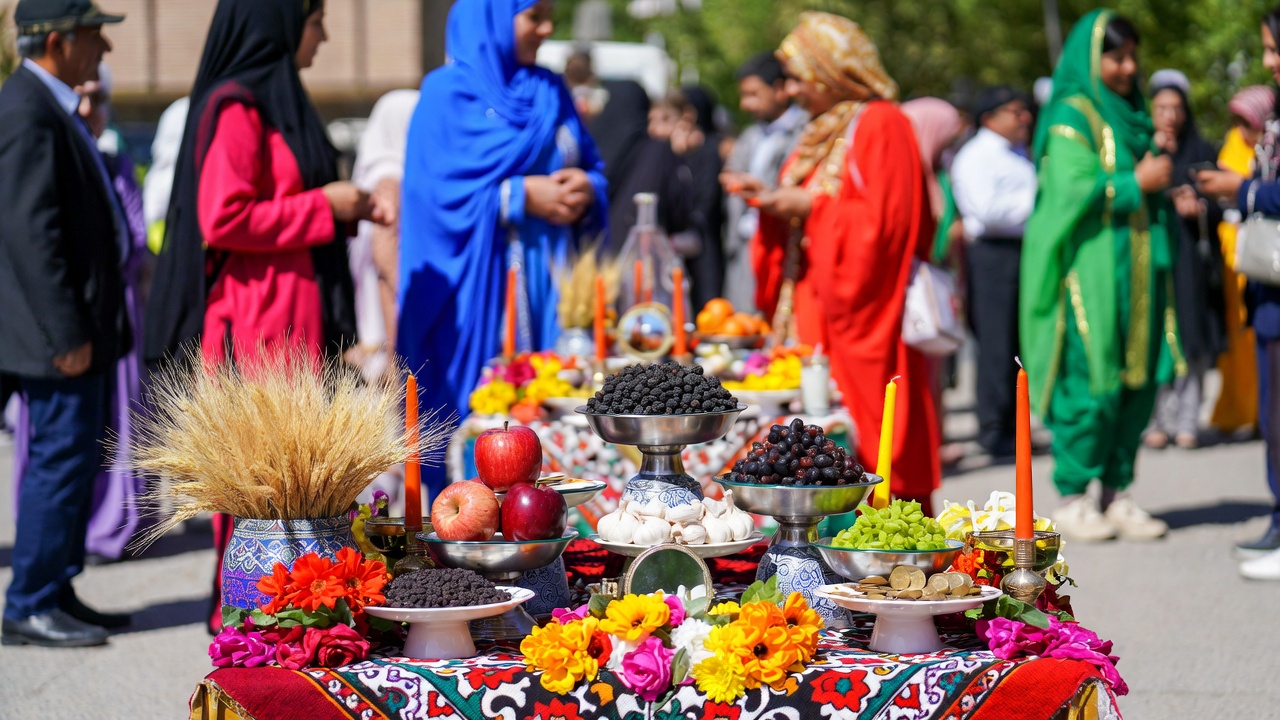
At the heart of every Iranian home during Nowruz sits the Haft-Sin (also spelled Haft-Seen), a ceremonial table displaying seven items that begin with the Persian letter “sin” (س). Each element carries symbolic meaning:
| Persian Name | English Translation | Symbolic Meaning |
|---|---|---|
| Sabzeh | Sprouted wheat, lentils, or barley | Rebirth and renewal |
| Samanu | Sweet wheat pudding | Patience, strength, and abundance |
| Senjed | Dried oleaster fruit | Love and wisdom |
| Seer | Garlic | Health and protection |
| Seeb | Apple | Beauty and good health |
| Serkeh | Vinegar | Age, patience, and wisdom |
| Somaq | Sumac | The victory of light over darkness |
Beyond these seven items, families often add a mirror (for reflection on the past year), goldfish (representing life), painted eggs (symbolizing fertility), candles (representing light), and either a Quran or a volume of poetry by Hafez, the beloved 14th-century Persian poet.
The Haft-Sin table remains assembled throughout the thirteen-day celebration. Families gather around it at the precise moment of the equinox—calculated to the exact second by astronomers—to welcome the new year together.
Traditional Nowruz Foods: What Iranians Eat During the Persian New Year
Food plays a central role in Nowruz celebrations. Several dishes appear on tables across Iran during this period.
Sabzi Polo ba Mahi (herbed rice with fish) is the quintessential Nowruz meal, traditionally served on New Year’s Eve or the first day. The green herbs represent spring and rebirth, while fish symbolizes life. This dish has become the national Nowruz food, though regional variations existed historically depending on local ingredients.
Kookoo Sabzi is a dense herb frittata made with parsley, coriander, dill, spinach, and eggs. Its vibrant green color connects to the spring theme. The dish is often enriched with walnuts and barberries.
Ash Reshteh is a thick noodle soup packed with legumes, herbs, and kashk (a fermented whey product). The long noodles are said to symbolize the unraveling of life’s complexities and clearing the path for the year ahead.
Reshteh Polo (rice with noodles) carries similar symbolism. Many families believe the noodles represent the threads of fate, and eating them helps ensure good fortune.
Sweets and nuts are constantly available during Nowruz visits. Ajil, a mix of dried fruits and nuts, is believed to bring luck. Traditional cookies like nan-e nokhodchi (chickpea cookies) and baklava accompany countless cups of Persian tea shared among guests.
Chaharshanbe Suri: The Fire Festival Before Nowruz
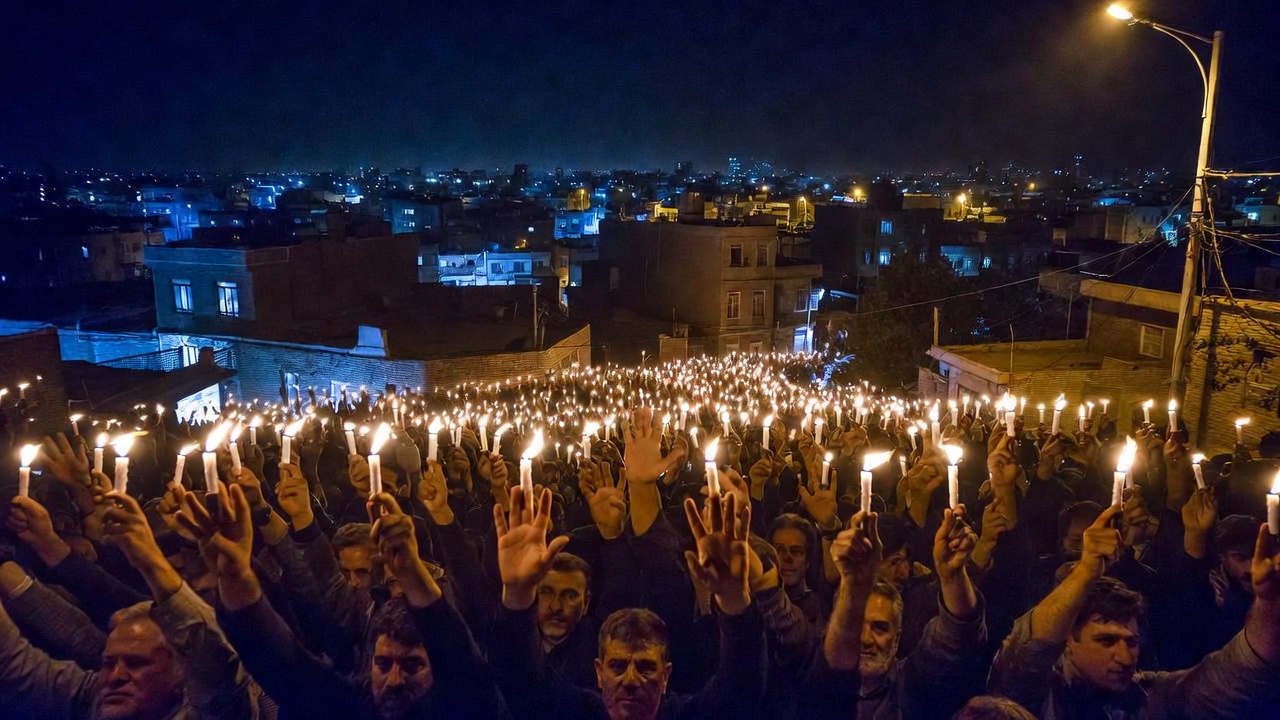
The celebration technically begins before the new year with Chaharshanbe Suri, held on the eve of the last Wednesday of the Iranian calendar year. The name combines chaharshanbe (Wednesday) and suri, which can mean either “festive” or “scarlet”—a reference to fire.
Jumping Over Fire: The Ancient Cleansing Ritual
The most iconic tradition of Chaharshanbe Suri involves building bonfires and leaping over the flames. As people jump, they chant:
“Sorkhi-ye to az man, zardi-ye man az to”
This translates to: “Your fiery red is mine; my sickly yellow is yours.” The ritual symbolizes transferring one’s paleness, illness, and misfortune to the fire while absorbing its warmth, energy, and vitality.
The tradition has ancient roots in Zoroastrian veneration of fire as a purifying element, though scholars debate the exact historical connections. The legend of Siavash—a mythological prince from Ferdowsi’s Shahnameh (Book of Kings) who rode through fire to prove his innocence—is often cited as one origin story.
Spoon Banging and Other Chaharshanbe Suri Customs
Children and young adults participate in qashog zani (spoon banging), a tradition similar to Halloween trick-or-treating. Disguised participants go door-to-door banging spoons on pots and bowls, and neighbors fill their vessels with sweets, nuts, and chocolates.
Other regional customs include:
- Kuze shekani (pot smashing): Families fill old clay pots with salt, charcoal, and coins, then throw them from rooftops to symbolically destroy the past year’s misfortunes
- Fal gush (eavesdropping): Young single women stand behind doors or windows, listening to strangers’ conversations for omens about their future marriage
- Eating ash: Many families prepare hearty soups on this night, with recipes varying by region
The night sky fills with fireworks and the air crackles with energy. In major cities like Tehran, Isfahan, and Shiraz, the atmosphere becomes electric with music, dancing, and joyful chaos.
Best Places to Celebrate Nowruz in Iran: Top Destinations
While Nowruz is celebrated throughout Iran, certain destinations offer particularly memorable experiences due to their historical significance, natural beauty, or cultural traditions.
Persepolis: Celebrating Nowruz at the Ancient Ceremonial Capital
No location connects more directly to Nowruz’s ancient origins than Persepolis (Takht-e Jamshid in Persian), located near Shiraz in Fars Province. This UNESCO World Heritage Site was the ceremonial capital of the Achaemenid Empire (550–330 BC) and is believed to have been built specifically for Nowruz celebrations.
Historical evidence, including accounts by the Greek historian Xenophon, describes elaborate New Year festivities at Persepolis where representatives from across the empire presented tributes to the king. The famous bas-reliefs carved into the palace walls depict delegations from 23 subject nations bearing gifts—scenes likely associated with Nowruz ceremonies.
According to Wikipedia, archaeologist Ernst Herzfeld believed the site’s primary purpose was to celebrate special events, most importantly Nowruz.
Today, thousands of Iranians gather at Persepolis each year to welcome the new year amid these ancient ruins. In 2024, approximately 10,000 people were present at Persepolis when the new year arrived. Special events include Shahnameh recitation festivals and cultural performances.
Practical tips for visiting Persepolis during Nowruz:
- Arrive early in the morning to avoid crowds
- Book accommodation in Shiraz well in advance (hotels fill quickly)
- Plan at least half a day to explore the site properly
- Bring water, sun protection, and comfortable walking shoes
- Photography is allowed, but tripods may require permission
Shiraz: The City of Poetry, Gardens, and Orange Blossoms
Shiraz serves as the gateway to Persepolis and offers its own rich Nowruz traditions. Known as the city of poets, wine, and gardens, Shiraz blooms spectacularly in spring. The fragrance of orange blossoms perfumes the air, earning it the nickname “City of Orange Blossoms.”
Key Nowruz attractions in Shiraz include:
Hafezieh (Tomb of Hafez): Each year, enormous crowds gather at the memorial site of Hafez, the 14th-century poet whose verses are woven into Iranian culture. Families visit to read poetry at his tomb and seek guidance by opening his Divan (collected works) at random—a form of fortune-telling called fal-e Hafez.
Saadi’s Tomb: The burial site of Saadi Shirazi, another beloved poet known for his works Bustan (The Orchard) and Golestan (The Rose Garden), attracts visitors seeking connection with Persian literary heritage.
Eram Garden: A UNESCO World Heritage Site representing the pinnacle of Persian garden design, Eram becomes especially vibrant during Nowruz when its cypress trees, flowering plants, and reflecting pools create a paradise-like atmosphere.
Vakil Bazaar: This covered market dates to the 18th-century Zand dynasty and offers opportunities to purchase Nowruz gifts, Shirazi sweets like masghati (a citrus-flavored confection), and local handicrafts.
Isfahan: Half the World in Spring
The Persian proverb “Esfahan nesf-e jahan” (Isfahan is half the world) speaks to this city’s extraordinary richness. As the former capital of the Safavid Empire (1501–1736), Isfahan contains some of the finest examples of Islamic architecture anywhere.
Naqsh-e Jahan Square (Imam Square), a UNESCO World Heritage Site, historically served as the venue for royal Nowruz celebrations. The Safavid king Shah Abbas I would watch festivities from the balcony of Ali Qapu Palace while polo matches were played below.
Today, the square remains a gathering place during Nowruz, surrounded by:
- Shah (Imam) Mosque: A masterpiece of Persian architecture with stunning blue tilework
- Sheikh Lotfollah Mosque: Known for its cream-colored dome that appears to change color throughout the day
- Qeisariye Bazaar: One of the oldest and largest bazaars in the Middle East
Si-o-Se Pol (Bridge of 33 Arches) spans the Zayandeh River and has served as a gathering place for Isfahan residents for centuries. During the Safavid era, Nowruz celebrations were held at this bridge, with festivities lasting three to seven days. Today, locals still gather here on spring evenings to recite poetry, sing songs, and enjoy the riverside atmosphere.
Khaju Bridge, another architectural gem, features teahouses in its lower arches where visitors can sip Persian tea while watching the river flow beneath.
Vank Cathedral in the Armenian quarter of Jolfa reflects Isfahan’s cosmopolitan history and offers a perspective on how different communities have coexisted and celebrated together for centuries.
Yazd: Zoroastrian Heritage and the Eternal Flame
For travelers interested in Nowruz’s Zoroastrian origins, Yazd offers unparalleled insights. This ancient desert city has been continuously inhabited for over 5,000 years and maintains Iran’s largest Zoroastrian community.
The Zoroastrian Fire Temple (Atash Behram) houses a sacred flame that has burned continuously for over 1,500 years, originally lit around 470 AD during the Sassanid era. During Nowruz, Zoroastrian worshippers visit to pray and offer fragrant wood to the fire. Non-Zoroastrians can observe the flame through a glass enclosure and explore the museum exhibits explaining Zoroastrian beliefs and customs.
The Towers of Silence (Dakhma) stand as haunting reminders of traditional Zoroastrian funerary practices. While no longer in use, these circular structures on hilltops outside the city illuminate the faith’s relationship with nature and the elements.
Yazd’s UNESCO-listed historic city center features distinctive wind towers (badgirs) that naturally cool buildings, winding adobe alleyways, and traditional houses that seem frozen in time. Walking through these neighborhoods during Nowruz offers an atmospheric experience unlike anywhere else.
The Chak Chak shrine, located in the mountains outside Yazd, becomes a pilgrimage destination during Zoroastrian festivals, though the main pilgrimage occurs in June rather than at Nowruz.
Tehran: The Modern Capital Embraces Ancient Traditions
Iran’s bustling capital transforms during Nowruz. The normally traffic-clogged streets empty as residents leave for family visits or travel destinations, creating a rare opportunity to explore the city at a relaxed pace.
Golestan Palace, a UNESCO World Heritage Site and former seat of the Qajar dynasty (1789–1925), showcases the opulence of Persian royal life. Its ornate halls and gardens provide context for understanding how rulers celebrated Nowruz in centuries past.
The National Museum of Iran houses artifacts spanning millennia of Persian civilization, including objects from Persepolis and the Achaemenid era that connect directly to Nowruz’s origins.
Sa’dabad Palace Complex in the Alborz mountain foothills served as the summer residence of the last Shah and now contains multiple museums. Its gardens are particularly pleasant during spring.
Tajrish Bazaar in northern Tehran maintains a traditional atmosphere amid the modern city. During Nowruz, it overflows with goldfish vendors, Haft-Sin supplies, new clothes, and seasonal treats.
For nature lovers, the Alborz Mountains north of Tehran offer hiking and skiing (earlier in March) and the opportunity to see the capital from above.
Kashan: Rose Water, Historic Houses, and Desert Oasis Charm
This small city in Isfahan Province has become increasingly popular with travelers seeking authentic Persian experiences without overwhelming crowds. Its historic mansions, traditional bazaar, and nearby rose fields create a magical Nowruz atmosphere.
Fin Garden, a UNESCO World Heritage Site and one of the oldest surviving Persian gardens, dates to the Safavid era. Its turquoise-tiled pools, ancient cypress trees, and spring-fed waterways exemplify the Persian concept of pairidaeza (paradise)—the origin of our word “paradise.”
Historic houses like Khan-e Tabatabaei, Khan-e Borujerdi, and Khan-e Abbasian showcase the refined domestic architecture of wealthy 19th-century merchants. Their central courtyards, stained glass windows, and intricate stucco work transport visitors to another era.
Kashan is famous for its rose water and rose oil production, though the rose harvest typically occurs in May rather than during Nowruz. However, spring brings the surrounding desert to life with wildflowers and pleasant temperatures.
The Abyaneh village, located about 70 kilometers from Kashan, offers another fascinating Nowruz experience. This ancient hillside settlement features distinctive red mud-brick houses and residents who still wear traditional clothing. The village’s isolation has preserved customs that have disappeared elsewhere, making it a living museum of Persian rural life.
Maranjab Desert near Kashan provides opportunities for those seeking adventure during the Nowruz holidays. The salt lake, sand dunes, and historic caravanserai offer dramatic landscapes and excellent stargazing conditions. Many tour operators organize overnight desert camps during the holiday period.
Tabriz and Northwestern Iran: Azeri Nowruz Traditions
The northwestern city of Tabriz, Azerbaijan Province’s capital, showcases the distinctive Nowruz customs of Iran’s Azerbaijani Turkish-speaking population. The region’s traditions include unique elements reflecting both Persian and Turkic cultural influences.
The Tabriz Historic Bazaar Complex, a UNESCO World Heritage Site, stands as one of the largest covered bazaars in the world. Dating back over a millennium, it becomes particularly vibrant during the pre-Nowruz shopping season, with vendors displaying saffron, dried fruits, nuts, and handwoven carpets.
In Tabriz and surrounding Azeri regions, families often jump over springs and streams on the morning after Chaharshanbe Suri, believing this brings health for the new year. The tradition connects to the Zoroastrian reverence for water as a purifying element.
El Goli Park (Shah Goli) provides a picturesque setting for Nowruz celebrations in Tabriz. This historic garden features a large pool with a pavilion and surrounding gardens where families gather during the holiday period.
The Caspian Coast: Green Nowruz in Gilan and Mazandaran
Iran’s northern provinces along the Caspian Sea offer a dramatically different landscape and climate for Nowruz celebrations. The lush, subtropical forests of Gilan and Mazandaran provinces burst with spring growth during this period.
The regional capital Rasht is known as Iran’s culinary capital, and Nowruz brings special dishes unique to the region. Mirza Ghasemi (smoked eggplant with tomatoes and eggs) and Baghali Ghatogh (fava beans with dill and eggs) feature prominently on holiday tables.
The Hyrcanian Forests, a UNESCO World Heritage Site stretching along the Caspian coast, offer spectacular hiking opportunities during spring. Ancient trees, diverse wildlife, and cascading waterfalls create a magical environment for nature enthusiasts.
Coastal towns like Bandar Anzali, Lahijan, and Ramsar attract domestic tourists seeking the mild Caspian climate and seafood-focused cuisine. The tea plantations around Lahijan become especially beautiful as spring arrives.
The Persian Gulf Islands: A Different Nowruz Experience
For travelers seeking an alternative Nowruz experience, the islands of Qeshm, Hormuz, and Kish in the Persian Gulf offer warm weather, unique landscapes, and coastal culture.
Qeshm Island, Iran’s largest, features dramatic geological formations like the Valley of Stars (Chahkooh) and the Hara Sea Forests (mangrove ecosystems). Its Bandari culture includes distinctive music, cuisine, and traditions.
Hormuz Island has gained popularity for its striking red beaches, colorful soil, and emerging artist community. The island’s “rainbow mountains” create surreal landscapes perfect for photography.
These destinations attract domestic tourists escaping cooler northern climates, creating a festive atmosphere while offering respite from crowded city centers.
Sizdah Bedar: The Thirteenth Day Nature Celebration
The Nowruz holiday concludes on the thirteenth day of Farvardin (usually April 1 or 2) with Sizdah Bedar, also known as Nature Day. The name combines “sizdah” (thirteen) and “bedar” (toward the outdoors or getting rid of).
Why Iranians Spend Sizdah Bedar Outdoors
In Persian culture, thirteen is considered unlucky. By spending the entire thirteenth day outdoors in nature, Iranians believe they can avoid the misfortune associated with the number. More practically, after nearly two weeks of visiting family and hosting guests, the day offers a welcome excuse to escape to parks and countryside.
The philosophical dimension runs deeper. Sizdah Bedar represents harmony between humans and nature, reconnecting people with the natural world after days spent indoors. It embodies the festival’s core themes of renewal and the triumph of spring.
Traditions of Nature Day in Iran
Outdoor picnics define Sizdah Bedar. Families pack elaborate spreads including kebabs, rice dishes, ash reshteh, sekanjabin (a sweet and sour mint syrup drink), and leftover Nowruz sweets. Parks, riversides, mountainsides, and anywhere with green space fill with families spreading blankets and setting up portable grills.
Throwing away the sabzeh is a essential ritual. The sprouted greens from the Haft-Sin table—which by now have grown tall and somewhat shaggy—are brought outdoors and released into running water, such as streams or rivers. This act symbolizes returning absorbed misfortunes to nature and allowing the coming year’s crops to flourish.
Knotting the sabzeh is particularly important for unmarried young people, especially women. Tradition holds that knotting the green stems while making a wish will help that wish come true, particularly wishes related to finding a spouse.
Playing games fills the day. Traditional games like haft sang (seven stones) and toop zani (ball games) bring children and adults together. Music, dancing, and joke-telling are encouraged—Iranians believe that laughter on Sizdah Bedar wards off evil for the entire year.
Dorugh-e Sizdah (the lie of the thirteenth) is Iran’s version of April Fools’ Day, which often coincides with Sizdah Bedar. Pranks and harmless deceptions are expected and enjoyed.
Regional Variations of Sizdah Bedar Celebrations
Different regions of Iran maintain distinctive Sizdah Bedar customs that reflect local cultures and environments.
In Gilan Province along the Caspian coast, families often include various types of halva on their picnic spreads. The lush forests and rice paddies of this region provide particularly beautiful settings for outdoor gatherings.
In Fars Province and around Shiraz, tradition holds that families should bring 13 boiled eggs and 13 walnuts to their picnics, consuming them as part of the meal. Rice dishes with eggs and walnuts feature prominently.
Kurdish communities in western Iran celebrate with distinctive music and traditional dances that continue throughout the day. The mountainous landscape of Kurdistan Province offers dramatic backdrops for these celebrations.
In Borujerd and other western cities, the Sizdah Bedar spread often includes specific regional foods that differ from those eaten in Tehran or Isfahan.
Azerbaijani communities in northwestern Iran incorporate their own musical traditions and culinary specialties into the celebrations, reflecting the cultural diversity within Iran’s borders.
The universality of spending the day outdoors unites all these regional variations. From the mountains of Kurdistan to the beaches of Qeshm, Iranians share the essential experience of concluding Nowruz in nature’s embrace.
Practical Travel Tips for Visiting Iran During Nowruz
Planning a trip to Iran during Nowruz requires careful preparation. The holiday brings both unique opportunities and logistical challenges.
When Exactly Does Nowruz Occur?
Nowruz begins at the precise moment of the spring equinox, determined by astronomical calculations. In 2025, this occurred on Thursday, March 20, at 12:31:30 PM Iran Standard Time. The date typically falls between March 19 and 21, with slight variations each year.
The official holidays extend from the first through fourth days of Farvardin (approximately March 21–24), but many businesses and government offices remain closed for the full thirteen days. The celebration concludes on Sizdah Bedar, usually April 1 or 2.
Booking Accommodations and Transportation
Book everything far in advance. Hotels in popular destinations like Shiraz, Isfahan, and Yazd fill up weeks before Nowruz. Prices increase significantly during this period, often reaching their annual peak.
Domestic flights and long-distance bus tickets also sell out quickly. Train travel between major cities provides an atmospheric alternative, but reservations are essential.
Consider hiring a private driver or joining organized tours during Nowruz. Public transportation runs reduced schedules, and the freedom of private transport makes navigating crowded destinations easier.
What to Expect During Nowruz Travel
Crowds at major attractions: Persepolis, Isfahan’s Naqsh-e Jahan Square, and popular gardens see their highest visitor numbers of the year. Arriving early in the morning helps avoid the worst congestion.
Changed business hours: Many shops, restaurants, and services operate reduced hours or close entirely during the first days of Nowruz. Large hotels generally maintain restaurants, and some tourist-oriented establishments stay open.
Heavy traffic: Millions of Iranians travel during this period, creating significant highway congestion, particularly when leaving major cities on the first days and returning before Sizdah Bedar.
Warm Iranian hospitality: Despite the challenges, visitors during Nowruz often experience remarkable generosity. Iranians may invite strangers to join family celebrations, share food, or offer assistance navigating unfamiliar situations.
Cultural Etiquette for Nowruz Visitors
Dress appropriately: Iran requires modest dress for all visitors. Women must cover their hair with a scarf and wear loose-fitting clothing that covers arms and legs. Men should avoid shorts in public.
Accept hospitality graciously: When offered tea, sweets, or food, accepting at least a small portion shows respect. Iranians practice taarof, an elaborate system of politeness and social grace.
Bring small gifts: If invited to someone’s home, bringing pastries, flowers, or chocolate demonstrates thoughtfulness. Avoid alcohol (prohibited in Iran) and pork products.
Remove shoes: When entering homes, removing shoes at the door is customary.
Respect sacred sites: When visiting mosques, fire temples, or other religious places, follow posted guidelines and maintain respectful behavior.
Understanding Iranian Persian Phrases for Nowruz
Learning a few Persian phrases enhances the Nowruz experience and demonstrates respect for Iranian culture.
| Persian Phrase | Pronunciation | Meaning |
|---|---|---|
| Nowruz Mubarak | noh-ROOZ moo-BAH-rak | Happy Nowruz |
| Eid Mubarak | eyd moo-BAH-rak | Happy holiday |
| Sal-e no mubarak | SAL-eh noh moo-BAH-rak | Happy New Year |
| Har ruzetan Nowruz | har ROO-zeh-tan noh-ROOZ | May every day be Nowruz |
| Nowruzetan piruz | noh-ROO-zeh-tan pee-ROOZ | May your Nowruz be victorious |
| Mamnun | mam-NOON | Thank you |
| Khosh amadid | khosh ah-mah-DEED | Welcome |
| Befarmaid | be-far-MAH-eed | Please (invitation) |
Iranians deeply appreciate when visitors attempt their language, even imperfectly. A simple “Nowruz Mubarak” can open doors and spark conversations.
Photography During Nowruz
The visual richness of Nowruz provides endless photography opportunities. However, certain considerations apply.
Ask permission before photographing people, especially in intimate family settings. Most Iranians are happy to pose once asked, but respect privacy.
Be sensitive at religious sites. Photography may be restricted in certain areas of mosques and shrines. When in doubt, ask.
Capture the details: The intricately decorated Haft-Sin tables, the colorful markets, the faces of children with their goldfish bowls—these details tell the Nowruz story more effectively than panoramic shots alone.
Night photography during Chaharshanbe Suri offers dramatic possibilities but requires caution around active bonfires and fireworks.
Respect requests: If someone asks not to be photographed, comply immediately and without argument.
Experiencing Authentic Nowruz: Beyond the Tourist Sites
While famous attractions offer one dimension of Nowruz, the most meaningful experiences often occur in less expected places.
Visiting Iranian Families During Nowruz
The heart of Nowruz lies in eid didani (holiday visiting). Families spend the thirteen days moving between relatives’ homes, starting with elders and grandparents. If you receive an invitation to join an Iranian family’s celebration, accept it—these experiences provide insights no guidebook can offer.
Expect to be offered chai (tea), ajil (nuts and dried fruits), and shirini (sweets) at every visit. Conversations range from casual to philosophical. Family photo albums emerge. Children receive eidi (New Year’s money) from elders.
Shopping in Traditional Bazaars
Iran’s historic bazaars transform before Nowruz. Vendors display their finest wares, and the atmosphere crackles with anticipation.
Recommended bazaars for Nowruz shopping:
- Tehran Grand Bazaar: One of the largest covered markets in the world
- Isfahan’s Qeisariye Bazaar: Connected to Naqsh-e Jahan Square
- Vakil Bazaar in Shiraz: Beautiful architecture and Shirazi specialties
- Tabriz Bazaar: UNESCO World Heritage Site, one of the oldest in the Middle East
- Kashan Bazaar: Intimate atmosphere and quality handicrafts
Purchase Haft-Sin items, including hand-painted eggs, decorative mirrors, and sprouted greens. Traditional sweets make excellent gifts. Carpets, textiles, and handicrafts benefit from pre-holiday price negotiations.
Attending Nowruz Cultural Events
Many cities organize special Nowruzgah events featuring traditional music, dance, theater, and exhibitions. Check with local tourist offices or hotels for schedules.
Poetry readings honoring Hafez, Rumi, Ferdowsi, and other Persian literary masters occur throughout the holiday. Even without understanding Persian, the emotional resonance of these gatherings transcends language.
The Deeper Meaning of Nowruz: Renewal, Hope, and Continuity
Beyond the festivities, Nowruz embodies profound values that have sustained it for millennia.
Renewal and rebirth: The alignment with the spring equinox connects humanity to cosmic cycles. As nature reawakens, people are reminded that they too can begin again.
Family and community: In an increasingly fragmented world, Nowruz demands that people reconnect. Arguments are set aside. Distances are bridged. The social fabric is rewoven.
Memory and identity: For Iranians dispersed across the globe—and for the many cultures that share Nowruz traditions—the festival anchors identity across generations. It connects the present to a past stretching back three millennia.
Hope: The Haft-Sin table, with its symbols of health, beauty, patience, wisdom, and renewal, expresses hope for the year ahead. Nowruz insists that spring always returns, that light conquers darkness, that life persists.
The Global Spread of Nowruz Traditions
While Iran remains the heartland of Nowruz celebrations, the festival has spread far beyond Persian-speaking lands over three millennia.
Afghanistan celebrates Nowruz as Nawroz with its own distinctive traditions, including the raising of the janda (green flag) at the Shrine of Hazrat Ali in Mazar-i-Sharif. The ceremony draws hundreds of thousands of pilgrims annually.
Central Asian republics—Uzbekistan, Tajikistan, Kazakhstan, Kyrgyzstan, and Turkmenistan—observe Nowruz with traditions blending Persian, Turkic, and Soviet-era influences. Sumalak (a sweet wheat pudding similar to samanu) features prominently in Uzbek and Tajik celebrations.
Azerbaijan celebrates Novruz (their spelling) with four Tuesdays before the main holiday, each dedicated to a different element: water, fire, earth, and wind. The country was recognized alongside Iran and other nations when UNESCO inscribed Nowruz on its Intangible Cultural Heritage list in 2009.
Kurdish communities across Iran, Iraq, Turkey, and Syria observe Newroz with special significance. For Kurds, the holiday commemorates the legendary blacksmith Kawa’s victory over the tyrant Zahhak, making it both a cultural and political symbol of resistance and national identity.
The Iranian diaspora maintains Nowruz traditions in Los Angeles (home to the largest Iranian community outside Iran), London, Toronto, Dubai, and cities worldwide. These celebrations help preserve cultural identity across generations born far from their ancestral homeland.
South Asian Zoroastrians (Parsis) in India and Pakistan celebrate Nowruz (which they call Navroz or Jamshedi Navroz) according to different calendar calculations, resulting in celebrations on different dates than in Iran.
The Resilience of Nowruz Through History
Nowruz has survived despite attempts to suppress or minimize it across different eras.
Arab conquest (7th century CE): When Islamic armies conquered Persia, some religious authorities initially discouraged Nowruz as a pre-Islamic tradition. However, the celebration proved too deeply embedded in Persian identity to eliminate, and it eventually coexisted with Islamic practices.
Mongol invasion (13th century): Despite devastating much of Persian civilization, Mongol rulers eventually adopted and patronized Nowruz celebrations, integrating them into their court rituals.
Soviet suppression: In Central Asia, Soviet authorities banned or restricted Nowruz for decades as religious and nationalist sentiment. Following independence in 1991, the newly sovereign states rapidly restored the holiday to its central cultural position.
Post-1979 Iran: Following the Islamic Revolution, some revolutionary figures initially viewed Nowruz skeptically as a distraction from Islamic holidays. However, the holiday’s deep roots in Iranian identity ensured its survival, and it remains Iran’s most widely celebrated festival.
This resilience testifies to Nowruz’s fundamental role in Persian cultural identity—a role that transcends any particular regime, religion, or political system.
Conclusion: Why You Should Experience Nowruz in Iran
There are few places where ancient traditions remain so vibrantly alive as in Iran during Nowruz. The festival offers travelers a rare opportunity to witness a civilization celebrating continuity—not as a museum piece, but as a living practice embraced by millions.
Whether you stand amid the ruins of Persepolis as the new year arrives, share tea with strangers who become friends, leap over flames on Chaharshanbe Suri, or spread a blanket in some green valley on Sizdah Bedar, you will participate in something extraordinary.
Nowruz reminds us that some human experiences transcend boundaries of time, religion, and politics. The desire to mark new beginnings, to gather with loved ones, to celebrate the return of light and warmth—these impulses connect us to our ancestors and to each other.
Iran during Nowruz is not always easy to navigate. Crowds are real. Logistics require planning. But for those willing to embrace the complexity, the rewards are immeasurable.
Nowruz Mubarak—Happy Nowruz. May your new year bring renewal, connection, and joy.
Frequently Asked Questions About Nowruz in Iran
What is the best time to visit Iran for Nowruz?
Arrive a few days before the equinox (around March 17–18) to experience Chaharshanbe Suri preparations and the fire festival itself. Stay through the first week of Nowruz to witness family visiting traditions and explore attractions when the initial rush subsides.
Is it safe to travel to Iran during Nowruz?
Iran is generally safe for tourists, and Nowruz is a particularly welcoming time. Standard travel precautions apply. Check current travel advisories from your government and register with your embassy if recommended.
Do I need a visa to visit Iran?
Most nationalities require a visa. Many can obtain a visa on arrival at major airports, though pre-arranged e-visas or embassy applications are recommended. U.S., UK, and Canadian citizens must travel with organized tours with approved agencies. Verify current requirements before booking.
What should I pack for a Nowruz trip to Iran?
Modest clothing (long sleeves, long pants/skirts, headscarves for women), comfortable walking shoes, layers for variable spring weather, sunscreen, a reusable water bottle, and an open mind. Power adapters for European-style outlets may be needed.
Can non-Muslims participate in Nowruz celebrations?
Absolutely. Nowruz is a cultural celebration, not a religious one. People of all faiths and backgrounds are welcome to participate in public festivities and, if invited, family gatherings. Your interest in Iranian culture will be warmly received.
How much does a Nowruz trip to Iran cost?
Budget travelers can manage on $50–80 USD per day including accommodation, food, and local transportation. Mid-range travelers should budget $100–150 USD daily. Luxury options exist in major cities. Prices increase during Nowruz, so plan accordingly.