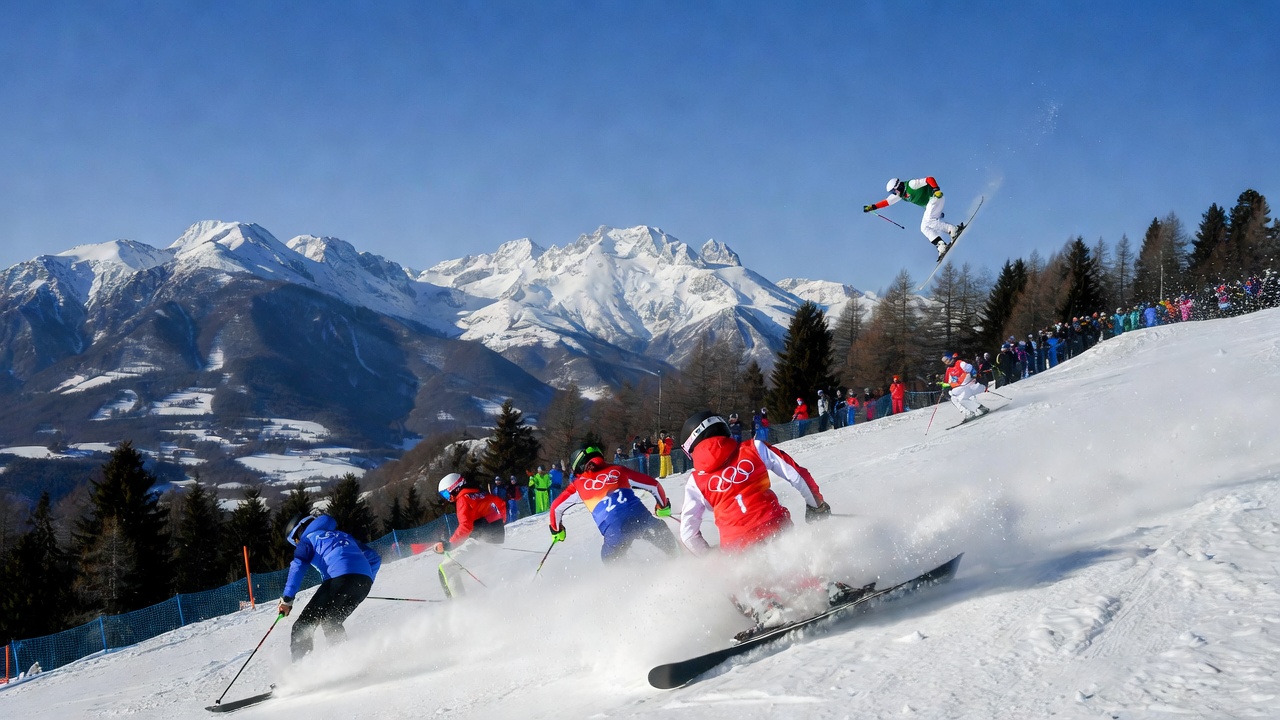
There is something undeniably magical about an Olympic Opening Ceremony. It represents the culmination of years of preparation, the dreams of thousands of athletes, and the hopes of millions of spectators around the globe. On February 6, 2026, the world will turn its eyes to northern Italy as the XXV Olympic Winter Games officially commence with what promises to be one of the most spectacular and innovative opening ceremonies in Olympic history.
The Milano Cortina 2026 Winter Olympics Opening Ceremony will unfold at the legendary San Siro Stadium in Milan, weaving together Italian artistry, musical excellence, and groundbreaking theatrical production. This celebration marks Italy’s triumphant return to hosting the Winter Games, following the beloved Torino 2006 edition and the historic Cortina d’Ampezzo 1956 Games—the first Winter Olympics ever broadcast on live television.
What makes this ceremony truly unprecedented is its multi-centered approach. For the first time in Olympic history, the opening celebration will simultaneously take place across four different locations, stretching from Milan’s urban heart to the snow-capped peaks of the Dolomites. This innovative format perfectly encapsulates the Games’ central theme: Armonia—the Italian word for harmony.
When Does the Milan Cortina 2026 Opening Ceremony Start and Where to Watch It Live
Understanding the logistics of the 2026 Winter Olympics Opening Ceremony broadcast schedule is essential for viewers worldwide who wish to witness this historic event in real-time.
Key Details at a Glance
| Event Detail | Information |
|---|---|
| Date | Friday, February 6, 2026 |
| Start Time (Local) | 8:00 PM CET (Central European Time) |
| Start Time (US Eastern) | 2:00 PM ET |
| Start Time (US Pacific) | 11:00 AM PT |
| Duration | Approximately 3 hours |
| Main Venue | Milano San Siro Olympic Stadium |
| Additional Venues | Cortina d’Ampezzo, Predazzo, Livigno |
| Expected Attendance | 60,000+ spectators at San Siro |
| Global Viewership | Estimated 2 billion viewers |
Broadcasting Networks Worldwide
NBC and Peacock will serve as the exclusive broadcasters for United States audiences. Live coverage begins at 2:00 PM ET, with an enhanced primetime encore presentation airing at 8:00 PM ET. The primetime edition will feature additional focus on Team USA athletes alongside the ceremony’s most memorable moments.
In Europe, Discovery Sports holds broadcasting rights across 49 territories through Eurosport and Discovery+. Italy’s national broadcaster RAI (Radiotelevisione Italiana) will provide comprehensive free-to-air coverage, marking a homecoming celebration for Italian viewers.
Additional streaming options include NBCOlympics.com, NBC.com, the NBC Sports app, and the NBC app, ensuring accessibility for viewers across multiple platforms.
Armonia Theme Meaning and Cultural Significance at Milano Cortina 2026 Olympics
The organizers of Milano Cortina 2026 have selected “Armonia” (Harmony) as the ceremonial theme—a choice that resonates deeply with both Italian cultural identity and the current state of global affairs.
The Philosophy Behind the Theme
Marco Balich, the legendary Creative Lead of the Opening Ceremony and Chairman of Balich Wonder Studio, explained the profound meaning behind this selection during a press conference at San Siro Stadium:
“The word harmony comes from ancient Greek. It means ‘bringing together’ in musical terms, different elements. Because there are two cities, Milan and Cortina, city and mountain, the harmony between man and nature, between cultures, people and different ways of thinking… it is very meaningful and beautiful.”
This theme serves multiple symbolic purposes:
Geographic Harmony — The Games span two distinct landscapes: Milan’s sophisticated urban environment and Cortina’s majestic Alpine terrain. Armonia celebrates this duality rather than treating it as a logistical challenge.
Cultural Harmony — Italy’s rich tapestry of regional traditions, from the industrial north to the artistic heritage of Tuscany and beyond, finds expression in a unified Olympic vision.
Global Harmony — In an era marked by international tensions, the Opening Ceremony aims to deliver a message of peace, unity, and dialogue that transcends political boundaries.
Maria Laura Iascone, Director of Ceremonies at Fondazione Milano Cortina 2026, offered additional insight: “Armonia is a simple yet powerful word. It is the key that allows us to intertwine different languages—artistic, visual, and human—and transform them into a collective experience.”
Visual and Artistic Elements
The ceremony will present what organizers describe as “a journey through art and innovation, nature and city, tradition and future.” Audiences can expect visual tributes to:
- Leonardo da Vinci and the great Italian inventors
- Italian design and aesthetic excellence
- Musical heritage from opera to contemporary pop
- Fashion and sartorial elegance
- The natural beauty of the Alpine landscapes
San Siro Stadium History and Why It Was Chosen for the 2026 Winter Olympics Opening
The selection of Stadio Giuseppe Meazza—universally known as San Siro—as the venue for the Opening Ceremony carries profound significance. This architectural icon celebrates its 100th anniversary in 2026, making it the perfect stage for such a momentous occasion.
A Century of Sporting Excellence
Inaugurated on September 19, 1926, San Siro has witnessed countless historic moments across football, rugby, and entertainment. The stadium serves as the shared home of two of Italy’s most illustrious football clubs: AC Milan and Inter Milan (Internazionale).
San Siro by the Numbers:
| Statistic | Detail |
|---|---|
| Opening Year | 1926 |
| Seating Capacity | 76,000 (reduced to approximately 60,000 for Opening Ceremony) |
| FIFA World Cup Matches Hosted | 9 (1934 and 1990 tournaments) |
| UEFA Champions League Finals | 4 (1965, 1970, 2001, 2016) |
| Nickname | “La Scala del Calcio” (The Cathedral of Football) |
Architectural Significance
The stadium’s distinctive spiral towers, added during a major renovation ahead of the 1990 FIFA World Cup, have become iconic symbols of Milan itself. These architectural features, adorning the exterior of the stadium’s four towers, represent the dynamic energy and passion that has pulsated through this venue for nearly a century.
San Siro’s transformation for the Opening Ceremony will represent a remarkable feat of event production. The legendary football pitch will be converted into a massive theatrical stage capable of hosting over 1,200 volunteer performers, elaborate light shows, and spectacular pyrotechnics.
A Bittersweet Farewell
For many, this Opening Ceremony holds additional emotional weight. San Siro is slated for partial demolition following the construction of a new 71,500-seat stadium for AC Milan and Inter Milan, expected to be completed around 2030. The Olympic ceremony may represent one of the final major international events at this beloved venue, lending an air of poignant celebration to the proceedings.
Giovanni Malagò, President of Fondazione Milano Cortina 2026, captured this sentiment: “Everything that San Siro represents is unique. It’s an icon of the city. When will something like this happen again?”
Star-Studded Musical Performances at the Milano Cortina 2026 Opening Ceremony
The organizers have assembled an extraordinary roster of performers that seamlessly blends international superstardom with Italian artistic excellence. This lineup promises to deliver musical moments that will resonate in Olympic memory for decades to come.
Mariah Carey Headlines Opening Ceremony Entertainment
Mariah Carey, the five-time Grammy Award-winning American singer, will serve as the headline performer for the ceremony. Known globally for iconic hits including “We Belong Together,” “When You Believe,” and the perennial holiday classic “All I Want for Christmas Is You,” Carey’s powerful vocals will add an unmistakable layer of glamour to the proceedings.
Her participation continues a tradition of major international stars gracing Olympic ceremonies, following memorable performances by Céline Dion and Lady Gaga at the Paris 2024 Summer Olympics.
Andrea Bocelli Returns to the Olympic Stage After 20 Years
Perhaps no performer embodies the Italian spirit more completely than Andrea Bocelli, the world-renowned tenor whose voice has moved millions across the globe. His participation holds special significance—exactly 20 years ago, Bocelli performed at the Torino 2006 Olympic ceremonies, creating moments of transcendent beauty.
Bocelli expressed deep gratitude for this opportunity: “I believe that singing at an Olympic Opening Ceremony is a great honour and a deeply moving experience, especially for someone like me who has always loved sport.”
His repertoire of emotionally stirring masterpieces, including “Time to Say Goodbye,” “The Prayer,” and “Because We Believe,” makes him the perfect choice to deliver what organizers promise will be “one of the most memorable highlights of the event.”
Complete List of Confirmed Performers
| Performer | Country | Notable Achievements |
|---|---|---|
| Mariah Carey | United States | 5 Grammy Awards, best-selling female artist |
| Andrea Bocelli | Italy | World’s most successful classical crossover artist |
| Laura Pausini | Italy | Grammy Award winner, 70+ million records sold |
| Lang Lang | China | World-renowned classical pianist |
| Cecilia Bartoli | Italy | Acclaimed mezzo-soprano |
| Pierfrancesco Favino | Italy | Golden Globe-winning actor |
| Sabrina Impacciatore | Italy | Emmy-nominated actress (The White Lotus) |
| Matilda De Angelis | Italy | Rising star actress, ceremony narrator |
| Ghali | Italy | Popular Italian rapper and singer |
Laura Pausini and Italian Musical Excellence
Laura Pausini stands as Italy’s most internationally successful female artist, the only Italian musician to have received a Grammy Award. Her ability to transcend generational and cultural boundaries through music makes her an ideal representative of the Armonia theme.
The organizers stated: “Laura Pausini authentically embodies the concept of Armonia. Her music, capable of spanning generations, cultures and languages, represents a meeting point between tradition and contemporaneity, between Italian roots and an international outlook.”
Historic Dual Olympic Cauldron Lighting Ceremony at Arco della Pace and Cortina
The 2026 Winter Olympics will make history with an unprecedented innovation: for the first time in Olympic history, the sacred flame will burn simultaneously in two different cities throughout the Games.
Two Flames, One Olympic Spirit
The dual cauldron concept perfectly embodies the multi-centered nature of these Games and the theme of Armonia. The locations chosen hold deep symbolic resonance:
Milan Cauldron Location: Arco della Pace
The Arco della Pace (“Arch of Peace”) stands as one of Milan’s most iconic landmarks, situated at the northwestern edge of the magnificent Parco Sempione. This neoclassical triumphal arch, commissioned by Napoleon Bonaparte and completed in 1838, serves as a powerful symbol of peace and reconciliation—values central to the Olympic movement.
Cortina Cauldron Location: Piazza Angelo Dibona
In Cortina d’Ampezzo, the cauldron will illuminate Piazza Dibona, the beating heart of this legendary Alpine resort town. This location honors Cortina’s rich Olympic heritage, having hosted the 1956 Winter Games that pioneered live television broadcasting of the Olympics.
The Innovative Cauldron Design
The cauldrons themselves represent a masterpiece of Italian engineering and artistry. Designed by Marco Balich, Lida Castelli, and Paolo Fantin, and crafted by the renowned Italian shipbuilding company Fincantieri, these structures draw inspiration from Leonardo da Vinci’s famous “Knots”—geometric interlacings that symbolize the harmony between nature and human ingenuity.
Technical Specifications:
- Material: Aeronautical aluminum (among the lightest and most resistant materials available)
- Mechanism: Dynamic structures that generate opening and closing movements
- Inspiration: Leonardo da Vinci’s Knots and the sun as a source of life and renewal
- Symbolism: The continuity of time and the natural alternation between day and night
The organizers describe the design philosophy: “The Cauldrons pay homage to the sun as the primary source of life, energy and renewal. For centuries a universal emblem of continuity and rebirth, the Flame now becomes the heart of a creation designed for the future.”
Remarkably, from February 7 through the conclusion of the Games, the Milan cauldron will host a daily show, bringing the Olympic spirit to life through movement and specially composed music.
Multi-Location Parade of Nations: Athletes March in Four Italian Cities
The Parade of Nations at Milano Cortina 2026 introduces a revolutionary format never before attempted in Olympic history. Rather than confining the athlete parade to a single venue, the celebration will unfold simultaneously across four distinct locations.
Understanding the Four-Venue Concept
1. Milano San Siro Olympic Stadium
- Primary ceremony location
- Expected attendance: 60,000+ spectators
- Athletes competing in Milan-based events (figure skating, hockey, short track, speed skating)
2. Cortina d’Ampezzo
- Athletes from: biathlon, bobsled, curling, luge, skeleton, women’s Alpine skiing
- Location: Piazza Dibona
- Historical significance: Site of 1956 Winter Olympics
3. Livigno (Valtellina Cluster)
- Athletes from: snowboarding, freestyle skiing, ski mountaineering
- Distance from Milan: approximately 145 km
- Allows athletes to remain near their competition venues
4. Predazzo (Val di Fiemme)
- Athletes from: cross-country skiing, Nordic combined, ski jumping
- Distance from Milan: approximately 200 km
- Hosts the renovated Predazzo Ski Jumping Stadium
Flagbearer Innovation
Each participating nation may designate two flagbearers, with the flexibility to position them at different venues. This arrangement ensures that national representation spans the geographic breadth of the Games.
As the host nation, Italy will have four flagbearers—two men and two women—representing the unity of the entire Olympic territory.
Traditional Elements Preserved
Despite the multi-venue innovation, the ceremony maintains sacred Olympic traditions:
- Greece enters first, honoring the ancient origins of the Olympic Games
- Italy enters last as the host nation
- France enters penultimate as host of the 2030 French Alps Winter Olympics
- United States enters antepenultimate as host of the 2034 Salt Lake City Winter Olympics
- Remaining nations proceed in Italian alphabetical order
Fantasia Italiana Official Soundtrack by Dardust Composer and Musical Heritage
Every Olympic Games requires a musical identity, and Milano Cortina 2026 has found its voice through “Fantasia Italiana”—an original composition by the acclaimed Italian pianist and producer Dardust (born Dario Faini).
About the Composer
Dardust represents the pinnacle of contemporary Italian musical production. His credentials speak to an artist capable of moving seamlessly between worlds:
- Super Bowl performance experience
- NBA All-Star Game musical contributions
- Collaborations with Stromae, Lana Del Rey, and Dua Lipa
- Composer of “Soldi” for Mahmood (2019 Eurovision Song Contest runner-up)
- Multiple Sanremo Music Festival contributions
The Musical Vision
“Fantasia Italiana” represents a contemporary rhapsody that translates the contrasting soundscapes of Milan’s urban dynamism and Cortina’s Alpine majesty into a cohesive musical journey.
The composition pays homage to Italy’s extraordinary musical heritage through deliberate references:
- Ennio Morricone — The legendary film composer whose scores defined Italian cinema
- Giorgio Moroder — The pioneering electronic music producer
- Salento Pizzica — The energetic folk dance tradition of southern Italy
- Alpine Choirs — The harmonic tradition of northern Italian mountain communities
- Rossini and Verdi — The titans of Italian operatic tradition
Dardust reflected on the enormous responsibility: “Working on the Anthem was an enormous responsibility: engaging with such a powerful symbol means entering a sacred place of collective memory. I wanted to respect its strength while updating the sound with a contemporary light. My goal was to leave a lasting emotion, a note that, ten years from now, will bring to mind the start of a race, a victory, an applause.”
Technical Approach
The soundtrack features:
- Piano melodies balanced with electronic synthesis
- Digital and analog elements representing Milan’s modernity
- Orchestral arrangements and choir elements representing Alpine tradition
- A vocal contribution from Susanna Rigacci, soprano singer who collaborated with Morricone during the final 20 years of his career
Olympic Torch Relay Route Through All Italian Regions Before Milan Ceremony
The 2026 Winter Olympics Torch Relay represents one of the most ambitious flame journeys in Olympic history, traversing every corner of Italy before its dramatic arrival at San Siro Stadium.
Journey Statistics
| Metric | Detail |
|---|---|
| Total Distance | 12,000 kilometers |
| Duration | 63 days |
| Municipalities Visited | 300+ |
| Italian Provinces Covered | All 110 |
| City Celebrations | 60 |
| Torchbearers | 10,001 |
The Route Narrative
November 26, 2025 — Olympia, Greece
Following ancient tradition, the flame was lit at the Temple of Hera in Olympia using the rays of the sun. Olympic bronze medalist Petros Gkaidatzis served as the first torchbearer.
December 4, 2025 — Athens to Rome
The flame was formally handed over to Italian officials at the Panathenaic Stadium, site of the first modern Olympics in 1896. Italian Olympic champions Jasmine Paolini (tennis) and Filippo Ganna (cycling) received the flame and accompanied it to Rome.
December 6, 2025 — Rome Launch
The Italian leg officially began at the historic Stadio dei Marmi, with 164 torchbearers carrying the flame past iconic Roman landmarks including Castel Sant’Angelo, the Pantheon, and the Trevi Fountain.
Key Milestones Along the Route
| Date | Location | Significance |
|---|---|---|
| December 25, 2025 | Naples | Christmas celebration |
| December 31, 2025 | Bari | New Year’s Eve celebration |
| January 26, 2026 | Cortina d’Ampezzo | 70th anniversary of 1956 Winter Olympics |
| February 6, 2026 | Milan San Siro | Opening Ceremony conclusion |
Notable Torchbearers
The relay features an extraordinary roster of Italian luminaries:
- Giuseppe Tornatore — Oscar-winning film director
- Francesco “Pecco” Bagnaia — MotoGP double world champion
- Flavia Pennetta — 2015 US Open tennis champion
- Achille Lauro — Popular Italian singer and performer
- Monica De Gennaro — Olympic volleyball champion (Paris 2024)
The Torch Design
Named “Essential,” the Olympic torch was designed by Studio Carlo Ratti Associati and produced by Cavagna Group. Key features include:
- Light blue coloring representing ice and winter sports
- Flute-shaped silhouette
- Weight: 1,060 grams
- Material: Recycled aluminum
- Fuel: Renewable liquefied petroleum gas made primarily from waste
- Refillable and sustainable design
The torch was unveiled simultaneously in Milan’s Triennale museum and at the Italian pavilion at Expo 2025 in Osaka, Japan—a symbolic connection between the twin cities.
Tribute to Fashion Icon Giorgio Armani at the Opening Ceremony
The Milano Cortina 2026 Opening Ceremony will include a special tribute to Giorgio Armani, the legendary fashion designer who passed away on September 4, 2025, at the age of 91.
Armani’s Olympic Legacy
Giorgio Armani’s connection to Italian Olympic sport spans over a decade. Through his EA7 Emporio Armani label, he designed the official uniforms for the Italian Olympic and Paralympic teams beginning with the London 2012 Summer Games.
His relationship with Italian sport included:
- Official Outfitter for CONI (Italian National Olympic Committee)
- Designer of ceremonial attire for Turin 2006, Beijing 2022
- Sponsor of EA7 Emporio Armani Milano basketball team
- Personal friend of Giovanni Malagò, former CONI President and current President of Fondazione Milano Cortina 2026
The Milano Cortina 2026 Italian Team Uniforms
In one of his final major projects, Armani created the official uniforms for the Italian delegation—a collection that represents his design philosophy of elegance through simplicity.
Design Philosophy:
Armani chose a distinctive milky white color palette, departing from the traditional Azzurro blue associated with Italian national teams. This choice reflects:
- Harmony with the snow-covered Alpine peaks
- Purity and respect as core sporting values
- Simplicity and clarity in design
“I chose a single colour—white—to evoke harmony with the snow-covered peaks,” Armani explained before his passing. “Among sport’s values, respect is perhaps the most important, and I have distilled it into a vision of simplicity, clarity and purity.”
Uniform Components:
| Item | Technical Details |
|---|---|
| Down Jacket | Premium insulation for ceremony |
| Ski Jacket & Trousers | Protectum7 waterproof technical fabric |
| Bomber Jacket | Oversized fit with all-over “Italia” print |
| Ski Suit | Competition-ready technical specifications |
| Accessories | Gloves, hats, bags, technical footwear |
The Ceremony Tribute
Giovanni Malagò confirmed: “The ceremony speaks of harmony, it speaks of beauty, it speaks of design, it speaks of Italian style. There will be a moment of emotion, and even a standing ovation, in gratitude, for Giorgio Armani.”
This tribute represents not merely recognition of a fashion icon but acknowledgment of Armani’s broader contribution to Italian cultural identity on the world stage.
Meet Tina and Milo Mascots for Milano Cortina 2026 Winter Olympics and Paralympics
Every Olympic Games introduces mascots that capture the spirit of the host nation and the joy of athletic competition. Tina and Milo, a pair of sibling stoats (also known as ermines), serve as the official mascots for Milano Cortina 2026.
Origins and Design Process
What makes Tina and Milo unique is their origin story. Rather than commissioning professional designers, the Milano Cortina 2026 Organising Committee collaborated with the Italian Ministry of Education to invite primary and secondary school students across Italy to submit mascot designs.
Competition Statistics:
- Total submissions: 1,600+ creative ideas
- Participating classes: 681
- Schools involved: 82
- Winner: Istituto Comprensivo of Taverna, Calabria
- Age range of participants: 6-14 years old
The winning stoat design was unveiled at the Sanremo Music Festival 2024, Italy’s most prestigious music event, underscoring the mascots’ cultural significance.
Character Profiles
Tina — Olympic Mascot
| Attribute | Detail |
|---|---|
| Species | Stoat (Ermine) |
| Fur Color | Light/white |
| Birthplace | Italian mountains (now lives in the city) |
| Personality | Creative, reflective dreamer |
| Motto | “Dream big!” |
| Values | Beauty’s power to transform, appreciation of differences |
Milo — Paralympic Mascot
| Attribute | Detail |
|---|---|
| Species | Stoat (Ermine) |
| Fur Color | Dark brown |
| Unique Feature | Born without a paw; learned to walk using his tail |
| Personality | Playful, mischievous, inventive |
| Motto | “Obstacles are trampolines!” |
| Hobbies | Playing in snow, inventing musical instruments |
Symbolic Significance
The student designers from Calabria explained their choice: stoats are symbols of innocence and purity, while the siblings’ contrasting coat colors represent duality and diversity. In nature, stoats change fur color with the seasons—brown-and-white in summer, entirely white in winter—making them perfect ambassadors for the Winter Games.
The Organising Committee proudly describes Tina and Milo as the “first openly Gen Z mascots,” characterized by:
- Active, proactive character
- Ingenious and inventive attitude
- Vital and resilient spirit
- Innate problem-solving skills
- Confidence and optimism facing challenges
The Flo Companions
Tina and Milo are accompanied by The Flo, six anthropomorphic snowdrop flowers designed by students from the Istituto Comprensivo Sabin of Segrate in Lombardy (the runner-up designs). Snowdrops blossom from winter snow, symbolizing hopefulness and resilience—perfect companions for the Paralympic celebration of human determination.
Balich Wonder Studio Production Team Behind the Olympic Opening Ceremony
The creative vision for Milano Cortina 2026 rests in the hands of Balich Wonder Studio (Banijay Live), led by the incomparable Marco Balich—perhaps the most experienced Olympic ceremony producer in history.
Marco Balich’s Olympic Pedigree
Balich’s Olympic career spans an unprecedented 16 ceremonies, beginning with the Salt Lake City 2002 flag handover. His work includes:
- Turin 2006 — Full Olympic ceremonies (Emmy Award winner)
- Multiple handover ceremonies and creative direction roles
- Compasso d’Oro 2017 — Italy’s prestigious design award
His philosophy for Milano Cortina 2026 centers on humanity over spectacle: “The Opening Ceremony is not about technology or spectacle alone. It is about people, emotion and humanity. In a complex world, we want to offer a message of harmony, beauty and peace that can be understood by everyone.”
The Creative Team
| Role | Person |
|---|---|
| Creative Lead | Marco Balich |
| Deputy Creative Lead | Simone Ferrari |
| Director of Ceremonies | Maria Laura Iascone |
| Production Company | Balich Wonder Studio (Banijay Live) |
| Cauldron Designers | Marco Balich, Lida Castelli, Paolo Fantin |
| Cauldron Manufacturer | Fincantieri |
Production Scale
The Opening Ceremony production involves:
- 1,200+ volunteer performers
- Contemporary symphonic compositions
- Costumes inspired by Italy’s artistic heritage
- Innovative stage design connecting with all Olympic territories
- Real-time broadcast integration across four ceremony locations
Balich emphasized the ceremony’s deeper purpose: “Beauty is not only about aesthetics, but about values, kindness, generosity and true beauty within.”
How to Buy Tickets for Milano Cortina 2026 Opening Ceremony at San Siro
Experiencing the Opening Ceremony in person represents a once-in-a-lifetime opportunity. Tickets remain available through official channels, though demand is exceptionally high.
Official Ticket Information
Pricing Structure:
| Category | Price Range (EUR) | Approximate USD |
|---|---|---|
| Category A (Premium) | €2,026 | ~$2,427 |
| Category B | €1,200 | ~$1,440 |
| Category C | €520 | ~$624 |
| Category D | €260 | ~$311 |
Where to Purchase:
Tickets are available exclusively through the official Milano Cortina 2026 ticketing platform at tickets.milanocortina2026.org.
Promo26 Youth Initiative
Fondazione Milano Cortina 2026 launched Promo26, a special initiative offering young people up to 26 years old two tickets for the price of one (valid for Category D tickets). This program ensures that younger generations can participate in this historic moment.
Practical Considerations
Transportation to San Siro:
Parking near the venue will be extremely limited. Recommended access methods:
- Metro Line M5: San Siro Stadio stop
- Metro Line M1: Lotto stop (connecting to M5)
- Tram Line 16: San Siro Stadio M5 stop
- Public transport hours extended until 2:00 AM throughout the Games
Essential Downloads:
- Milano Cortina 2026 Official App — Real-time updates, venue information, digital tickets
- Tickets MilanoCortina2026 App — Access digital tickets (activate before arrival for offline access)
Why Milano Cortina 2026 Will Be the Most Geographically Spread Winter Olympics Ever
The 2026 Winter Games represent a historic departure from traditional Olympic formats, spreading competition across four distinct clusters spanning more than 8,000 square miles of northern Italy.
Geographic Scope
Cluster Distribution:
| Cluster | Location | Sports |
|---|---|---|
| Milan | Lombardy Region | Figure skating, ice hockey, short track, speed skating |
| Cortina d’Ampezzo | Veneto Region | Women’s Alpine skiing, curling, biathlon, sliding sports |
| Valtellina | Lombardy Region | Men’s Alpine skiing, freestyle skiing, snowboarding, ski mountaineering |
| Val di Fiemme | Trentino Region | Cross-country skiing, ski jumping, Nordic combined |
Olympic Villages
Athletes will reside in six Olympic Villages distributed across the competition territory:
- Milan Olympic Village
- Cortina d’Ampezzo Olympic Village
- Anterselva Village
- Bormio Village
- Livigno Village
- Predazzo Village
Historic Firsts
Milano Cortina 2026 will be:
- First Olympic Games officially co-hosted by two cities (Milan and Cortina d’Ampezzo)
- First Winter Olympics with simultaneous Opening Ceremony events across multiple locations
- First Games featuring dual Olympic cauldrons burning in different cities
- First Winter Olympics under IOC President Ki Tong Moon
New Olympic Events
The Games will feature 116 medal events across 16 sports, including the debut of ski mountaineering (skimo) as an Olympic discipline. Athletes will race up and down mountainous terrain, alternating between skiing and climbing.
Additional new events include:
- Women’s Doubles in luge
- Women’s Large Hill in ski jumping
- Mixed Team event in skeleton
- Men’s and Women’s Dual Moguls in freestyle skiing
- Team Combined in Alpine skiing
Italian Cultural Heritage Celebrated in the 2026 Winter Olympics Opening Ceremony
The Opening Ceremony serves as Italy’s love letter to the world, showcasing the cultural richness that has shaped Western civilization for millennia.
Leonardo da Vinci’s Enduring Influence
The ceremony will feature explicit tributes to Leonardo da Vinci, the quintessential Renaissance polymath whose genius still resonates five centuries later. His connection to Milan runs deep—the city houses his masterpiece The Last Supper and served as his home during the most productive years of his career.
The Olympic cauldrons’ design, inspired by Leonardo’s famous “Knots” (geometric interlacing patterns), represents the harmony between nature and human ingenuity that defined his work.
Musical Heritage
Italy’s musical legacy will permeate every aspect of the ceremony:
Opera Tradition:
- References to Verdi and Rossini, titans of Italian opera
- Performance by Cecilia Bartoli, acclaimed mezzo-soprano
Contemporary Excellence:
- Laura Pausini representing Italy’s global pop success
- Andrea Bocelli bridging classical and popular traditions
- Ghali representing Italian urban and hip-hop culture
Regional Traditions:
- Salento pizzica folk influences in the official soundtrack
- Alpine choir traditions woven into musical arrangements
Fashion and Design
Italy’s position as the global capital of fashion and design receives prominent celebration:
- Giorgio Armani tribute honoring Milan’s fashion heritage
- “Made in Italy” excellence in ceremony production
- Contemporary Italian design in cauldron and torch creation
The Closing Ceremony Preview
While focus remains on the Opening Ceremony, it’s worth noting that the Closing Ceremony on February 22, 2026, will take place at the Verona Arena—the third-largest surviving Roman amphitheater in Europe, built in A.D. 30. This 2,000-year-old venue will host world-renowned ballet dancer Roberto Bolle, principal dancer at La Scala Theatre Ballet.
What Makes the Milano Cortina 2026 Opening Ceremony Different from Past Olympics
The February 6, 2026 Opening Ceremony introduces several groundbreaking innovations that set it apart from all previous Olympic celebrations.
Key Innovations
1. Multi-Centered Format
For the first time, the Opening Ceremony embraces a geographically distributed model, with simultaneous celebrations in four locations rather than a single venue.
2. Dual Cauldron System
The flames burning simultaneously in Milan and Cortina represent an unprecedented approach to the Olympic fire tradition. Both cauldrons will feature daily shows throughout the Games.
3. Athlete-Centric Design
The distributed format ensures that athletes can participate in opening celebrations without traveling hours from their competition venues, prioritizing their preparation and experience.
4. Centenarian Venue
San Siro’s 100th anniversary adds historical weight to an already momentous occasion.
5. Sustainability Focus
From recycled materials in torch and cauldron design to renewable fuel sources, environmental consciousness permeates the ceremony’s production.
Comparison with Recent Ceremonies
| Element | Milano Cortina 2026 | Paris 2024 | Beijing 2022 |
|---|---|---|---|
| Venue Type | Stadium + 3 satellite locations | Seine River parade | National Stadium |
| Cauldrons | 2 (Milan + Cortina) | 1 (Tuileries Garden) | 1 (National Stadium) |
| Format | Multi-location simultaneous | River processional | Traditional stadium |
| Theme | Armonia (Harmony) | Love | One World, One Family |
Final Thoughts: Witnessing Olympic History at Milano Cortina 2026
As February 6, 2026 approaches, anticipation builds for what promises to be one of the most innovative and emotionally resonant Olympic Opening Ceremonies in history. The convergence of Italian artistic excellence, groundbreaking production innovations, and deep cultural significance creates the conditions for an unforgettable global celebration.
What to Expect
Emotional Moments:
- The tribute to Giorgio Armani
- Andrea Bocelli’s return to the Olympic stage after 20 years
- The simultaneous lighting of two Olympic cauldrons
- Athletes parading across four stunning Italian locations
Spectacular Entertainment:
- Mariah Carey’s headline performance
- Laura Pausini representing Italian musical excellence
- Lang Lang’s piano mastery
- Over 1,200 performers in choreographed sequences
Historic Firsts:
- The most geographically distributed Opening Ceremony ever
- Dual cauldrons burning in separate cities
- San Siro’s centennial celebration
The Legacy Begins
“On 6 February 2026, Milano Cortina 2026 will invite the world to discover that Armonia is not only what you see or hear, but what unites, inspires and builds the future,” the organizers declare.
In these challenging global times, the message of harmony—of bringing together different elements, cultures, and peoples—feels particularly urgent and necessary. As athletes from around the world march under their national flags across Italy’s magnificent landscape, they carry with them not just Olympic dreams but humanity’s enduring hope for unity through sport.
Whether watching from San Siro Stadium, the piazzas of Cortina, or living rooms around the world, billions of viewers will share a moment of collective wonder. That is the magic of the Olympic Opening Ceremony—and Milano Cortina 2026 promises to deliver that magic in unprecedented fashion.
Benvenuti a Milano Cortina 2026. Let the Games begin.