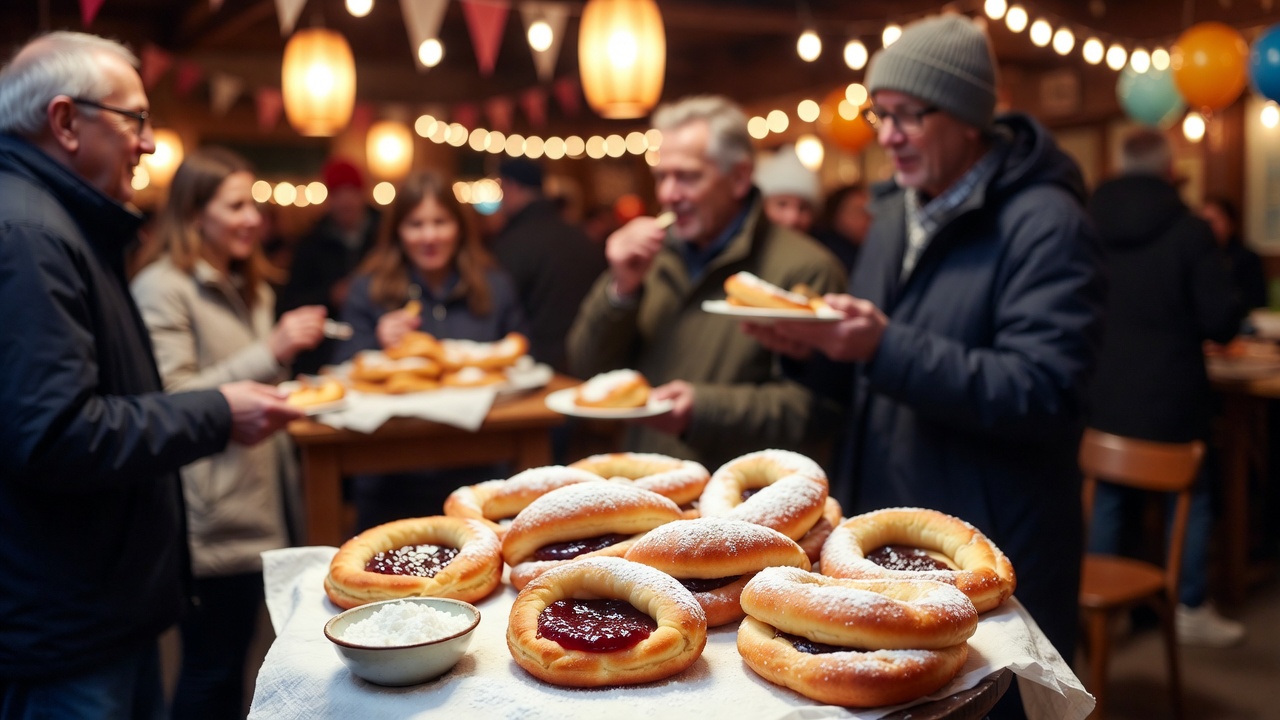
Every year, as February approaches, bakeries across the Midwest burst with activity. Lines wrap around city blocks before dawn. The air fills with the sweet aroma of fried dough and fruit preserves. This is Paczki Day—a beloved celebration that transforms ordinary donuts into cultural treasures.
If you have never experienced a paczek (the singular form of paczki), you are missing one of the world’s most indulgent pastries. These are not your average jelly donuts. They are richer, denser, and steeped in centuries of Polish tradition.
This guide will tell you everything about Paczki Day 2026. You will learn when to celebrate, where to find the best paczki, and how this medieval custom became an American phenomenon.
When Is Paczki Day 2026 and Why Does the Date Change Every Year
Paczki Day 2026 falls on Tuesday, February 17, 2026. This date coincides with Fat Tuesday, also known as Shrove Tuesday or Mardi Gras.
The date shifts annually because it depends on the Christian liturgical calendar. Fat Tuesday always falls 47 days before Easter Sunday. Since Easter is a “moveable feast” based on lunar cycles, Paczki Day moves with it.
Here is a reference table for upcoming Paczki Day dates:
| Year | Paczki Day (Fat Tuesday) | Fat Thursday (Poland) |
|---|---|---|
| 2026 | February 17 | February 12 |
| 2027 | February 9 | February 4 |
| 2028 | February 29 | February 24 |
| 2029 | February 13 | February 8 |
| 2030 | March 5 | February 28 |
Important distinction: In Poland, the primary celebration occurs on Fat Thursday (Tłusty Czwartek), which falls six days before Ash Wednesday. In 2026, Fat Thursday lands on February 12. Polish-American communities often celebrate on both days.
The timing serves a practical purpose. Christians traditionally fasted during the 40 days of Lent before Easter. Fat Thursday and Fat Tuesday marked the final opportunities to consume rich foods before the austere season began.
What Are Paczki and How Do Polish Donuts Differ from American Jelly Donuts
Paczki (pronounced “POONCH-key” or “POWNCH-key”) are traditional Polish filled donuts. However, calling them “donuts” undersells their complexity.
A paczek is fundamentally different from an American jelly donut. The distinctions matter to anyone seeking an authentic experience.
Key Differences Between Paczki and Regular Donuts
| Feature | Paczki | American Jelly Donut |
|---|---|---|
| Dough | Rich brioche-style with eggs, milk, butter, and alcohol | Basic yeast dough with water, salt, sugar |
| Texture | Dense, chewy, pillowy | Light, airy, often crumbly |
| Filling | Fruit preserves, custard, or cream | Standard jelly or jam |
| Coating | Thin glaze or powdered sugar with orange zest | Powdered or granulated sugar |
| Calories | 300-500+ per pastry | 200-300 per pastry |
| Shape | Flattened sphere, no hole | Round with no hole |
The dough sets paczki apart. Professional baker Dobra Bielinski of Delightful Pastries in Chicago explained the difference to NBC Chicago: the paczek recipe includes eggs, yolks, lemon oil, milk, and butter. This creates a dough that “doesn’t collapse” and “fluffs right up.”
A secret ingredient makes all the difference. Traditional paczki dough contains a small amount of grain alcohol—usually rectified spirit or vodka. As the alcohol evaporates during frying, it prevents oil from penetrating deep into the dough. The result is a lighter pastry that avoids the greasy heaviness of standard donuts.
The distinctive white stripe tells a story. Authentic paczki display a pale band around their middle. This “stripe” indicates the dough was fried in fresh oil at the proper temperature. Polish bakers view this ring as a mark of quality craftsmanship.
The Rich History and Origins of Paczki Dating Back to the Middle Ages
The history of paczki stretches back over 500 years to medieval Poland. Understanding this heritage deepens appreciation for these pastries.
Ancient Origins Before Modern Poland
The earliest versions of paczki appeared long before Poland became a unified nation. These proto-paczki were savory rather than sweet. Medieval cooks stuffed them with pork fat or bacon and coated them in honey.
The pastries served as symbols of prosperity in Polish courts and villages. Their round, bulging shape represented abundance before the lean Lenten season.
The French Influence That Transformed Paczki Forever
A pivotal change occurred during the 18th century. Polish historian Jędrzej Kitowicz documented that during the reign of King Augustus III, French chefs arrived at the Polish court. These pastry masters revolutionized the paczki recipe.
The French influence made paczki lighter, spongier, and more resilient. Kitowicz reportedly joked that earlier versions could “do damage if scoring a direct hit to the face.” The new recipe created the delicate, airy texture we recognize today.
Evolution of Traditional Paczki Fillings Over Centuries
Traditional fillings reflect Polish culinary heritage:
- Powidła (stewed plum jam) — the most classic filling
- Wild rose petal jam — distinctively floral and romantic
- Black currant jam — tart and intensely flavored
- Prune butter — rich and earthy
Modern American bakeries expanded these options. Today you can find raspberry, strawberry, custard, Bavarian cream, lemon curd, apple, blueberry, chocolate, and even Nutella fillings.
Some bakeries now create “gourmet” paczki with inventive flavors like salted caramel, tiramisu, pistachio cream, and boozy options featuring Irish whiskey or vodka-infused custard.
Fat Thursday in Poland: How Tłusty Czwartek Celebrates Paczki Traditions
While Americans celebrate Paczki Day on Fat Tuesday, Poles observe their primary indulgence on Tłusty Czwartek (Fat Thursday). This distinction matters for understanding authentic Polish culture.
What Happens on Fat Thursday in Poland
Fat Thursday transforms Poland into a nationwide celebration of sweets. According to Key to Poland, approximately 100 million paczki are consumed across Poland on this single day. That equals roughly 2.5 paczki per person in a country of 38 million people.
The day unfolds with distinctive rituals:
- Bakery lines form before dawn. Customers queue for hours at renowned shops.
- Journalists publish rankings. Food critics and bloggers release annual lists of the best paczki in Warsaw, Kraków, and other cities.
- Workplaces shut down early. Many employers dismiss staff by noon to join festivities.
- Families gather. The tradition emphasizes sharing sweets with loved ones.
Polish Superstitions About Eating Paczki on Fat Thursday
Traditional Polish beliefs attach significance to Fat Thursday consumption. According to folklore, eating paczki on this day brings good luck throughout the year.
A more ominous saying warns: “Those who do not eat a paczek on Fat Thursday will have an empty barn and their fields destroyed by mice.” While few modern Poles take this literally, most happily use it as an excuse to indulge guilt-free.
Faworki: The Other Traditional Polish Treat for Fat Thursday
Paczki share the spotlight with faworki (also called chrusty or “angel wings”). These delicate, crispy pastries are twisted ribbons of fried dough dusted with powdered sugar.
Faworki are easier to make than paczki. Their light, crunchy texture provides contrast to the rich, heavy donuts. Many Polish families serve both treats on Fat Thursday.
How to Pronounce Paczki Correctly and Understanding Polish Language Terms
Nothing marks a paczki novice faster than mispronunciation. Learning the correct Polish terms shows respect for the tradition.
The Correct Way to Say Paczki in Polish and English
Paczki (plural): POONCH-key or POWNCH-key
Pączek (singular): POON-check or POWN-check
The confusion stems from Polish spelling conventions. The letter “ą” represents a nasal vowel absent in English. Americans approximate it differently, leading to regional pronunciation variations.
Common mispronunciations to avoid:
- ❌ “PACK-ee”
- ❌ “PATCH-key”
- ❌ “PAZ-key”
Pro tip: The “cz” combination in Polish sounds like “ch” in English. The ogonek (the tail under the “a”) creates the nasal sound.
Polish Vocabulary for Paczki Lovers
| Polish Term | Pronunciation | Meaning |
|---|---|---|
| Pączki | POONCH-key | Polish donuts (plural) |
| Pączek | POON-check | Polish donut (singular) |
| Tłusty Czwartek | TWOO-stee CHVAR-tek | Fat Thursday |
| Faworki | fa-VOR-key | Angel wings pastry |
| Powidła | po-VEED-wah | Plum jam |
| Cukier puder | TSOO-kyer POO-der | Powdered sugar |
Important note on pluralization: Many English speakers say “paczkis” to indicate multiple pastries. This is technically incorrect—”paczki” is already plural. However, this Americanized form has become widely accepted in casual conversation.
Traditional Paczki Recipe Ingredients and What Makes Authentic Polish Donuts
Understanding paczki composition reveals why they taste so distinctively rich and satisfying.
Essential Ingredients for Authentic Polish Paczki Recipe
Dough Components:
- All-purpose flour — provides structure
- Active dry or instant yeast — creates rise
- Whole milk — adds richness and tenderness
- Unsalted butter — contributes flavor and moisture
- Egg yolks — creates dense, golden dough (some recipes use 5-6 yolks)
- Granulated sugar — sweetens the dough
- Vanilla extract — enhances aroma
- Salt — balances sweetness
- Lemon zest — traditional flavor addition
- Grain alcohol — prevents oil absorption (vodka or rum)
Traditional Fillings:
- Rose hip jam — the most authentically Polish option
- Powidła (plum jam) — intensely sweet and dark
- Raspberry preserves — popular American adaptation
- Bavarian cream — rich custard filling
- Lemon curd — tangy citrus alternative
Finishing Touches:
- Powdered sugar dusting
- Thin glaze (powdered sugar + milk or lemon juice)
- Candied orange peel (traditional garnish)
- Granulated sugar coating
Why the Alcohol in Paczki Dough Matters for Texture
The addition of spirits to paczki dough is not arbitrary. The alcohol serves a critical functional purpose.
When paczki fry in hot oil, the alcohol evaporates rapidly. This evaporation creates tiny air pockets throughout the dough. More importantly, it prevents oil from saturating the pastry.
The result is a lighter, less greasy finished product. Traditional Polish recipes call for rectified spirit (spirytus), which is 95% pure ethanol. American bakers typically substitute vodka or rum.
Note: The alcohol content cooks off completely during frying. Finished paczki contain negligible alcohol.
How Many Calories Are in Paczki and Nutritional Information You Should Know
Let’s address the elephant in the room. Paczki are not health food. They represent deliberate indulgence before Lenten sacrifice.
Paczki Calorie Count and Nutrition Facts
A typical paczek contains approximately 300-500 calories, though this varies significantly by size, filling, and bakery.
| Paczki Type | Approximate Calories | Fat (grams) |
|---|---|---|
| Small bakery paczek (rose hip jam) | 280-350 | 12-16 |
| Medium paczek (raspberry/custard) | 350-450 | 15-20 |
| Large gourmet paczek | 450-620 | 20-27 |
| Grocery store paczek | 305-390 | 15-18 |
According to Postcard Poland, Polish paczki typically weigh 50-70 grams with roughly 300 calories each. American versions often run larger with correspondingly higher calorie counts.
For comparison, one paczek equals approximately:
- A McDonald’s hamburger (250 calories)
- Two glazed Krispy Kreme donuts (190 calories each)
- One Starbucks blueberry muffin (380 calories)
Perspective on Paczki Day Indulgence
The average Pole consumes 2.5 paczki on Fat Thursday. That translates to roughly 750-1,250 calories from paczki alone.
However, context matters. Paczki Day occurs once per year. The tradition exists specifically to enjoy rich foods before a 40-day fasting period. Modern secular participants may skip Lent entirely, but the annual celebration retains its spirit of deliberate indulgence.
Practical tips for mindful enjoyment:
- Share paczki with family and friends rather than eating alone
- Choose smaller bakery-made versions over oversized commercial options
- Savor one or two quality paczki rather than multiple mediocre ones
- Plan light meals earlier in the day if celebrating heavily
Best Places to Buy Paczki in Chicago for Fat Tuesday 2026
Chicago boasts one of the largest Polish populations outside of Poland. The city’s Polish Triangle neighborhood and surrounding suburbs offer exceptional paczki options.
Top Polish Bakeries in Chicago for Authentic Paczki
Polish Paczki Cafe — 7210 W. Foster Ave., Oriole Park This cozy eight-table restaurant serves paczki based on the owner’s mother’s recipe from Poland. The dough includes flour, butter, yeast, egg yolks, and spiritus. Fillings feature a mixture of rose, plum, and raspberry jam. The glaze combines powdered sugar and lemon juice with candied orange peel.
Delightful Pastries — 5927 W. Lawrence Ave., Jefferson Park A mother-daughter team has crafted pastries here since 1998. They offer both traditional and “adult” flavors including moonshine-lemon, Jameson Whiskey chocolate custard, and vodka vanilla bean custard. Everything uses locally sourced ingredients without preservatives.
Oak Mill Bakery — Multiple locations including Niles Family-operated since 1972, Oak Mill produces traditional Polish baked goods with exceptional craftsmanship. Their paczki feature classic fillings and proper technique.
Weber’s Bakery — 7055 W. Archer Ave., Garfield Ridge A third-generation family business operating since 1930. Weber’s offers 13 paczki flavors for pre-orders. Paczki season runs from Fat Thursday (February 27) through Tuesday. Fat Tuesday hours begin at 4 AM.
Roeser’s Bakery — 3216 W. North Ave. One of Chicago’s oldest family-owned bakeries. Roeser’s sells thousands of paczki during Fat Tuesday season with sweet sugar icing or powdered sugar and various fruit or cream fillings.
Chicago Suburbs Paczki Guide for 2026
Deerfield’s Bakery — Deerfield and Buffalo Grove locations Since 1972, Deerfield’s has produced handcrafted treats that often sell out before lunchtime on Paczki Day. They offer more than 20 varieties annually. Pre-ordering is highly recommended.
Krystyna’s at KD Market — Crystal Lake, Wheeling, Mount Prospect, Schaumburg, Schiller Park Located inside Polish grocery stores, Krystyna’s attracts knowledgeable paczki enthusiasts. They offer traditional flavors including black currant, mixed fruit, rosehip, and custard with chocolate frosting. This is one of few bakeries offering paczki year-round.
Jarosch Bakery — Elk Grove Village A longtime suburban favorite with traditional Polish offerings and consistent quality.
Chicago Paczki Pre-Order Tips for 2026
Most bakeries require advance orders. Popular flavors and locations sell out days before Fat Tuesday.
Pre-order timeline:
- 2+ weeks ahead: Safest for guaranteed availability
- 1 week ahead: Most bakeries still accepting orders
- 2-3 days ahead: Limited availability, fewer flavor options
- Day of: Walk-in only, arrive early (some open 3-4 AM)
Where to Find the Best Paczki in Detroit and Hamtramck for Fat Tuesday
Metro Detroit claims the title of America’s Paczki Capital. The city of Hamtramck—a 2.1-square-mile enclave entirely surrounded by Detroit—serves as ground zero for celebrations.
Hamtramck: Home of the Original Paczki Day Celebration
Hamtramck earned its reputation through generations of Polish-American heritage. In the early 1900s, Polish immigrants flooded the area seeking automotive industry jobs. They brought their pastry traditions with them.
Today, Hamtramck hosts an annual Paczki Day Parade that draws thousands. The celebration rivals St. Patrick’s Day festivities in many cities. The Detroit News calls it a “reunion” where families return to their cultural roots.
Best Hamtramck Bakeries for Paczki 2026
New Palace Bakery — 9833 Joseph Campau Ave. Known as “Paczki Headquarters,” New Palace has served the community for over four decades. The family recipe has remained unchanged since the 1970s. Customers wait up to three hours on Fat Tuesday.
2026 Hours: Opens at 3 AM on Fat Tuesday; continues until supply runs out (typically 6-8 PM)
Pre-order: Call (313) 875-1334 Flavors include raspberry, strawberry, blueberry, custard, lemon, apple, cookie butter buttercream (“Cook-zki”), orange cream, peanut butter jelly, and strawberry cheesecake.
Family Donut Shop — 11300 Conant St. Good news for those seeking halal-friendly paczki: Family Donut Shop uses vegetable shortening rather than lard. They offer custard, cherry, and chocolate cream options.
Side Eye Pie at Dos Locos Tacos — 10337 Joseph Campau Ave. Operating in the former New Martha Washington Bakery space, Side Eye Pie offers three classic flavors (Bavarian cream with chocolate glaze, raspberry, apricot) plus three specialty options (PB&J with chipotle raspberry jelly, Mexican chocolate, strawberries and cream).
Metro Detroit Paczki Options Beyond Hamtramck
Chene Modern Bakery — West Warren Ave., Detroit Family-operated since 1980, this bakery uses fresh ingredients and traditional recipes. Owner Janice Maksimovski emphasizes “original paczki how they used to make them.”
Bartz Bakery — 1532 N. Telegraph Rd., Dearborn 100% Halal paczki in traditional flavors including custard, raspberry, blueberry, apple, strawberry, lemon, cherry, and chocolate. Single paczki cost $3; dozen for $30.
Chive Kitchen — 33043 Grand River Ave., Farmington Plant-based eatery offering inventive vegan paczki flavors like strawberry elderflower, bananas foster, blueberry lemon, and tiramisu.
Good Cakes and Bakes — 19363 Livernois Ave., Detroit Another vegan paczki source with strawberry, lemon raspberry, and vegan red velvet options.
Hamtramck Paczki Day Events and Festivities 2026
Paczki Run — Saturday, February 14, 2026 This 5K race winds through Hamtramck before the big day. Finishers receive a paczek, beer, and a shot of Detroit Distillery’s Paczki Vodka. Register at RunSignUp.
Whiskey in the Jar — Live polka music, beer, and celebrations Local bars host all-day parties with bands like the Polish Muslims (a parody rock band playing oldies and punk with Polish party twists).
Paczki Eating Contest — Various locations Competitors devour paczki for glory and prizes. Past winners have consumed 10-12 paczki in a single sitting.
How to Make Homemade Paczki with This Traditional Polish Donut Recipe
For those who prefer hands-on celebration, making paczki at home offers rewarding satisfaction. This process requires time and attention but yields exceptional results.
Equipment Needed for Making Paczki at Home
Essential tools:
- Stand mixer with dough hook
- Deep pot or Dutch oven (for frying)
- Candy/deep-fry thermometer
- Rolling pin
- 3-inch round cutter (or drinking glass)
- Wire cooling rack
- Piping bag with filling tip
- Paper towels or brown paper bags
Step-by-Step Paczki Making Instructions
Stage 1: Activate the Yeast
- Warm 1½ cups whole milk to 110-115°F (lukewarm, not hot)
- Combine warm milk with 2¼ teaspoons active dry yeast and 1 tablespoon sugar
- Let sit 5-10 minutes until foamy
Stage 2: Prepare the Dough
- Cream ½ cup softened butter with ½ cup sugar until fluffy
- Add 1 egg plus 3 egg yolks, beating until combined
- Add 1 teaspoon vanilla, 1 teaspoon salt, and 1 tablespoon vodka (optional but recommended)
- Add yeast mixture and 2 cups flour; beat until smooth
- Gradually add remaining flour (about 3 more cups) until dough pulls from bowl sides
Stage 3: First Rise
- Transfer dough to greased bowl
- Cover with plastic wrap or clean towel
- Let rise in warm place until doubled—approximately 1-1.5 hours
Stage 4: Shape the Paczki
- Punch down risen dough
- Roll to ½-inch thickness on floured surface
- Cut rounds with 3-inch cutter
- Place on parchment-lined baking sheets
- Cover and let rise another 30-45 minutes
Stage 5: Fry the Paczki
- Heat 3 inches of vegetable oil to 350°F
- Fry 2-3 paczki at a time—about 2-3 minutes per side until golden
- Remove with slotted spoon
- Drain on wire rack over paper towels
Stage 6: Fill and Finish
- Let paczki cool slightly (not completely—filling is easier when warm)
- Poke hole in side using chopstick or thick skewer
- Pipe filling through hole using pastry bag
- Roll in granulated sugar or brush with glaze
- Top with candied orange peel if desired
Tips for Perfect Homemade Paczki
Temperature matters critically. Oil too hot burns the exterior before the interior cooks. Oil too cool creates greasy, heavy pastries. Maintain 350°F throughout frying.
Don’t overcrowd the pot. Frying too many paczki at once drops oil temperature dramatically.
The white stripe indicates success. Properly fried paczki display a pale band around their middle where the dough was submerged in oil.
Fill while still warm. The soft, pliable dough accepts filling more easily before cooling completely.
Paczki Day Celebrations and Events Across America in 2026
Beyond Chicago and Detroit, Polish-American communities nationwide celebrate Paczki Day with distinctive local traditions.
Major Polish-American Cities with Paczki Traditions
Milwaukee, Wisconsin Home to a substantial Polish population, Milwaukee bakeries produce thousands of paczki annually. The city’s Polish Heritage Alliance coordinates distribution through local partners.
Buffalo, New York Western New York’s Polish community maintains strong Paczki Day traditions. Local bakeries often sell out by mid-morning.
Cleveland, Ohio Eastern European bakery Rudy’s Strudel hosts an annual Paczki Day party called “the Mardi Gras of the Midwest.” The celebration features indoor and outdoor festivities alongside neighboring record store The Current Year.
Pittsburgh, Pennsylvania The Strip District and Polish Hill neighborhoods feature traditional bakeries serving paczki to long lines of eager customers.
Baltimore, Maryland Maryland’s Polish community centers celebrate with church breakfasts, bakery sales, and family gatherings.
How Chain Stores and Grocery Bakeries Sell Paczki
Major grocery chains now stock paczki seasonally. However, quality varies significantly from authentic bakery products.
What to expect from grocery store paczki:
- More consistent sizing (often smaller than bakery versions)
- Limited flavor selection
- Longer shelf life due to preservatives
- Lower price point ($1-2 each versus $3-4 at bakeries)
- Less complex dough (often more similar to standard jelly donuts)
Recommendation: Support local Polish bakeries when possible. The difference in quality justifies any additional cost or inconvenience.
Vegan, Gluten-Free, and Dietary Accommodation Options for Paczki 2026
Modern bakeries increasingly accommodate dietary restrictions while maintaining paczki traditions.
Where to Find Vegan Paczki in 2026
Detroit area:
- Dooped Donuts (1555 Broadway St., Detroit) — Lemon curd paczki available all February
- Good Cakes and Bakes (19363 Livernois Ave., Detroit) — Strawberry, lemon raspberry, red velvet
- Chive Kitchen (33043 Grand River Ave., Farmington) — Multiple creative flavors
Chicago area:
- Sweet Natalie’s (207 S. Hale St., Wheaton) — Gluten-free options
- MODdonuts (Warsaw area in Poland) — Vegan paczki for international visitors
What makes paczki vegan-friendly: Traditional paczki contain eggs and butter. Vegan versions substitute plant-based alternatives while maintaining similar texture and flavor profiles.
Halal-Friendly Paczki Options
Traditional paczki recipes often use lard (pork fat) for frying and dough enrichment. Halal-conscious consumers should seek bakeries using vegetable shortening or oil.
Confirmed Halal paczki sources:
- Family Donut Shop (Hamtramck) — Uses vegetable shortening
- Bartz Bakery (Dearborn) — 100% Halal certified
The Cultural Significance of Paczki Day and Why This Polish Tradition Matters
Paczki Day represents more than indulgent eating. The celebration embodies cultural preservation, family connection, and religious observance.
Paczki as Cultural Heritage Preservation
For Polish-American families, paczki traditions connect generations across oceans and decades. Many customers at Hamtramck bakeries describe bringing children and grandchildren to continue family rituals.
As one Detroit resident told The Detroit News: “My dad always used to take me here on Paczki Day, and he passed in 2023, so I like to keep the tradition going.”
These pastries carry emotional weight beyond their caloric content. They represent heritage, memory, and identity.
The Religious Context of Pre-Lenten Celebrations
Paczki originated as practical solutions to religious requirements. Lent historically prohibited consumption of:
- Meat
- Eggs
- Dairy products
- Sugar
- Lard and animal fats
- Alcohol
Rather than waste these perishable ingredients, Polish households transformed them into paczki. The tradition combined religious observance with culinary creativity.
Modern secular celebrations often overlook this context. However, understanding the religious foundation enriches appreciation for why paczki matter to practicing Catholics.
How Paczki Day Supports Local Bakeries and Small Businesses
Paczki Day represents the most important sales day for many Polish bakeries. Some businesses generate a substantial portion of annual revenue during the brief paczki season.
Supporting these bakeries preserves:
- Traditional recipes passed through generations
- Authentic techniques requiring skilled labor
- Local employment in immigrant communities
- Cultural institutions that anchor neighborhoods
When you purchase paczki from a family bakery rather than a chain grocery store, you invest in cultural preservation.
Paczki Pronunciation Guide and Common Questions Answered
This section addresses frequently asked questions about paczki and Paczki Day.
Is It Pronounced Paczki or Poonchki?
Both pronunciations are acceptable in American English. The Polish pronunciation features a nasal vowel that English lacks.
Acceptable American pronunciations:
- POONCH-key
- POWNCH-key
- PONCH-key
Avoid:
- PACK-ee
- PATCH-key
- PAZ-key
What Is the Singular Form of Paczki?
Pączek (pronounced POON-check or POWN-check) is the proper singular form. One donut is a pączek; multiple donuts are pączki.
In casual American usage, many people say “a paczki” despite this being grammatically incorrect in Polish.
Are Paczki the Same as Berliners or Bismarcks?
Paczki share ancestry with German Berliners (called Bismarcks in North America). However, several differences distinguish them:
- Richer dough — Paczki contain more eggs and often alcohol
- Distinctive shape — Paczki are flatter and more spherical
- Traditional fillings — Rose hip jam and plum butter are uniquely Polish
- Cultural context — Paczki connect specifically to Polish Catholic traditions
Can You Freeze Paczki for Later?
Yes, paczki freeze reasonably well. For best results:
- Freeze unfilled paczki in airtight containers
- Separate layers with parchment paper
- Store up to 3 months
- Thaw at room temperature
- Fill after thawing
- Briefly warm in microwave (15-20 seconds) to restore texture
Filled paczki can also freeze, though fillings may become slightly watery upon thawing.
How Long Do Fresh Paczki Stay Good?
Fresh paczki are best consumed within 24-48 hours. The enriched dough dries out quickly compared to standard donuts.
Storage tips:
- Keep at room temperature in airtight container
- Do not refrigerate (accelerates staling)
- Avoid direct sunlight
- Separate layers to prevent sticking
Planning Your Paczki Day 2026 Celebration Tips and Ideas
Whether you are a lifelong paczki enthusiast or a curious newcomer, these tips will maximize your 2026 celebration.
Timeline for Paczki Day 2026 Preparation
2 weeks before (early February):
- Research bakery options in your area
- Place pre-orders at popular bakeries
- Plan transportation to Hamtramck or other Polish neighborhoods
1 week before (around February 10):
- Confirm pre-orders
- Invite friends and family to share paczki
- Research Paczki Day events and festivities
Day before (February 16):
- Some bakeries begin selling on Monday
- Shorter lines than Fat Tuesday
- Fresher paczki than buying ahead
Fat Tuesday (February 17):
- Arrive early at bakeries (3-6 AM for popular spots)
- Wear comfortable clothes for waiting in line
- Bring cash for faster transactions
- Enjoy the festive atmosphere
How Many Paczki to Order Per Person
Conservative estimate: 1-2 paczki per person Traditional Polish consumption: 2-3 paczki per person Enthusiast level: 3-4 paczki per person
For parties, order variety packs. Different fillings allow guests to sample multiple flavors. Half dozens provide good variety for small groups.
Pairing Paczki with Beverages
Traditional Polish pairings:
- Strong black coffee
- Hot tea with lemon
- Kompot (stewed fruit beverage)
- Vodka (for adult celebrations)
American adaptations:
- Espresso drinks
- Milk
- Hot chocolate
- Craft beer (some breweries release paczki-themed beers)
Conclusion: Why Paczki Day 2026 Deserves Your Attention
Paczki Day 2026 arrives on Tuesday, February 17. Whether you observe Lent, honor Polish heritage, or simply appreciate exceptional pastries, this celebration offers something meaningful.
These are not ordinary donuts. Each paczek contains centuries of tradition, immigrant resilience, and culinary artistry. The queues outside bakeries at dawn represent communities gathering to preserve their culture.
This year, consider moving beyond grocery store paczki. Seek out an authentic Polish bakery. Talk to the bakers about their family recipes. Learn a few Polish words. Share paczki with people you love.
The best paczki combine quality ingredients, skilled technique, and genuine cultural connection. Finding them requires a bit more effort than grabbing a dozen donuts at a chain. But that effort honors the tradition these pastries represent.
Mark your calendar: February 17, 2026. Paczki Day awaits.
Quick Reference: Paczki Day 2026 Essential Information
| Detail | Information |
|---|---|
| Paczki Day 2026 Date | Tuesday, February 17, 2026 |
| Fat Thursday 2026 (Poland) | Thursday, February 12, 2026 |
| Pronunciation | POONCH-key (plural) / POON-check (singular) |
| Calories per paczek | 300-500+ depending on size |
| Traditional fillings | Rose hip jam, plum jam, raspberry |
| Best U.S. cities | Chicago, Detroit/Hamtramck, Milwaukee |
| Pre-order recommended | Yes, 1-2 weeks ahead for popular bakeries |
Paczki Around the World: International Variations of Polish Donuts
While paczki remain distinctly Polish, similar filled pastries exist across many cultures. Understanding these connections enriches appreciation for global culinary traditions.
European Donut Traditions Related to Pre-Lenten Celebrations
Germany: Berliner Pfannkuchen (Berliners) German Berliners closely resemble paczki. They feature yeast dough filled with jam and topped with powdered sugar or icing. Germans enjoy them during Carnival season (Fasching or Karneval), particularly on “Weiberfastnacht” (Women’s Carnival Thursday).
Italy: Bomboloni Italian bomboloni are similar filled pastries, traditionally stuffed with pastry cream (crema pasticcera). Unlike paczki, bomboloni are eaten year-round throughout Italy. However, consumption increases during Carnevale celebrations before Lent.
Portugal: Malasadas Portuguese malasadas traveled to Hawaii via plantation workers from Madeira and the Azores. These egg-rich fried doughs are coated in sugar rather than filled. Hawaiians celebrate “Malasada Day” on Shrove Tuesday, echoing the same pre-Lenten traditions as Paczki Day.
Jewish Tradition: Sufganiyot While associated with Hanukkah rather than pre-Lenten celebrations, Jewish sufganiyot share ancestry with Central European filled donuts. These jelly-filled pastries commemorate the miracle of oil in the Hanukkah story. Their preparation techniques mirror those used for paczki.
Why Filled Donuts Appear Across So Many Cultures
The convergence of filled donut traditions across cultures reflects shared historical circumstances:
- Common ingredients — Flour, eggs, sugar, and fat appear in most culinary traditions
- Frying efficiency — Deep-frying cooks dough quickly and produces satisfying textures
- Religious calendars — Many religions include fasting periods preceded by indulgence
- Trade routes — Culinary techniques spread along medieval trading networks
- Immigration — Communities carried recipes to new homelands
Paczki represent one branch of this global donut family tree. Their distinctive characteristics—the alcohol in the dough, the rose hip jam filling, the Polish Catholic context—set them apart while connecting them to broader traditions.
Storing and Reheating Paczki: How to Keep Polish Donuts Fresh
Even the best paczki lose quality quickly. Proper storage and reheating maximize your enjoyment.
Best Practices for Short-Term Paczki Storage
Room temperature storage (0-24 hours):
- Place paczki in airtight container or paper bag
- Keep away from direct sunlight and heat sources
- Do not stack filled paczki (fillings will leak)
- Consume within 24 hours for optimal texture
What to avoid:
- ❌ Refrigeration (accelerates staling by recrystallizing starches)
- ❌ Plastic wrap directly on pastry (traps moisture, creates sogginess)
- ❌ Open air exposure (dries out quickly)
How to Properly Freeze Paczki for Later Enjoyment
For unfilled paczki:
- Allow freshly fried paczki to cool completely
- Wrap individually in plastic wrap
- Place in freezer-safe bag or container
- Remove as much air as possible
- Label with date
- Store up to 3 months
For filled paczki:
- Freeze on baking sheet until solid (about 2 hours)
- Transfer to freezer-safe container with parchment between layers
- Use within 1 month (fillings deteriorate faster than dough)
Reheating Paczki Without Ruining Texture
Microwave method (quickest):
- Heat 15-20 seconds on medium power
- Let rest 30 seconds before eating
- Avoid overheating (creates tough texture)
Oven method (best results):
- Preheat oven to 325°F
- Place paczki on baking sheet
- Warm 5-8 minutes until just heated through
- Brush lightly with butter for freshness
Air fryer method:
- Preheat to 300°F
- Heat 2-3 minutes
- Watch carefully to prevent over-crisping
Important note: Reheated paczki never quite match freshly fried. The exterior loses some crispness while the interior can become slightly dry. When possible, purchase only what you will consume within 24 hours.
Teaching Children About Paczki Day: Family-Friendly Celebration Ideas
Paczki Day offers excellent opportunities for cultural education and family bonding. These activities engage children while honoring Polish traditions.
Age-Appropriate Paczki Day Activities
For young children (ages 3-7):
- Practice saying “paczki” and “pączek” together
- Color pictures of Polish flags and paczki
- Help dust finished paczki with powdered sugar
- Count paczki as a math activity
- Learn about Poland using maps and pictures
For older children (ages 8-12):
- Research Polish history and immigration stories
- Help measure ingredients for homemade paczki
- Create a family recipe book including paczki
- Compare paczki traditions across different cultures
- Write thank-you notes to bakery workers
For teenagers:
- Take responsibility for pre-ordering family paczki
- Learn to make paczki independently
- Interview older family members about traditions
- Research careers in baking and food service
- Plan and execute a Paczki Day party
Connecting Paczki Day to Family History
Many Polish-American families trace their immigration stories through food traditions. Paczki Day provides natural opportunities to explore these connections.
Questions to ask older relatives:
- Who made paczki in our family before us?
- What fillings did your grandmother prefer?
- Where did our ancestors buy paczki in Poland?
- How did Paczki Day celebrations change after immigration?
- What other Polish traditions did our family maintain?
These conversations preserve family history while strengthening intergenerational bonds. Food traditions often outlast language and other cultural markers across generations.
The Future of Paczki: Trends and Innovations in Polish Donut Making
Traditional paczki remain beloved, but innovation continues. Modern bakers experiment with new flavors, techniques, and presentations.
Emerging Paczki Flavor Trends for 2026
Gourmet and specialty fillings:
- Salted caramel with dark chocolate
- Matcha green tea custard
- Brown butter and maple
- Passion fruit curd
- Earl Grey tea-infused cream
Cultural fusion paczki:
- Dulce de leche (Latin American influence)
- Ube (Filipino purple yam)
- Mango-chili (Mexican-inspired)
- Boba tea flavor (Asian fusion)
- Churro-inspired cinnamon sugar with chocolate
Health-conscious adaptations:
- Reduced sugar versions
- Baked rather than fried options
- Gluten-free alternatives
- Keto-friendly preparations
- Protein-enriched doughs
Technology’s Role in Modern Paczki Production
While traditional methods remain dominant, technology increasingly assists paczki production:
Digital ordering systems allow customers to pre-order specific flavors and quantities, reducing waste and wait times.
Temperature-controlled proofing ensures consistent dough development regardless of weather conditions.
Automated fryers maintain precise oil temperatures for reliable results.
Social media marketing helps small bakeries reach new audiences and compete with chain stores.
Despite these advances, the best paczki still require skilled hands and traditional techniques. Technology assists but cannot replace the artistry of experienced bakers.