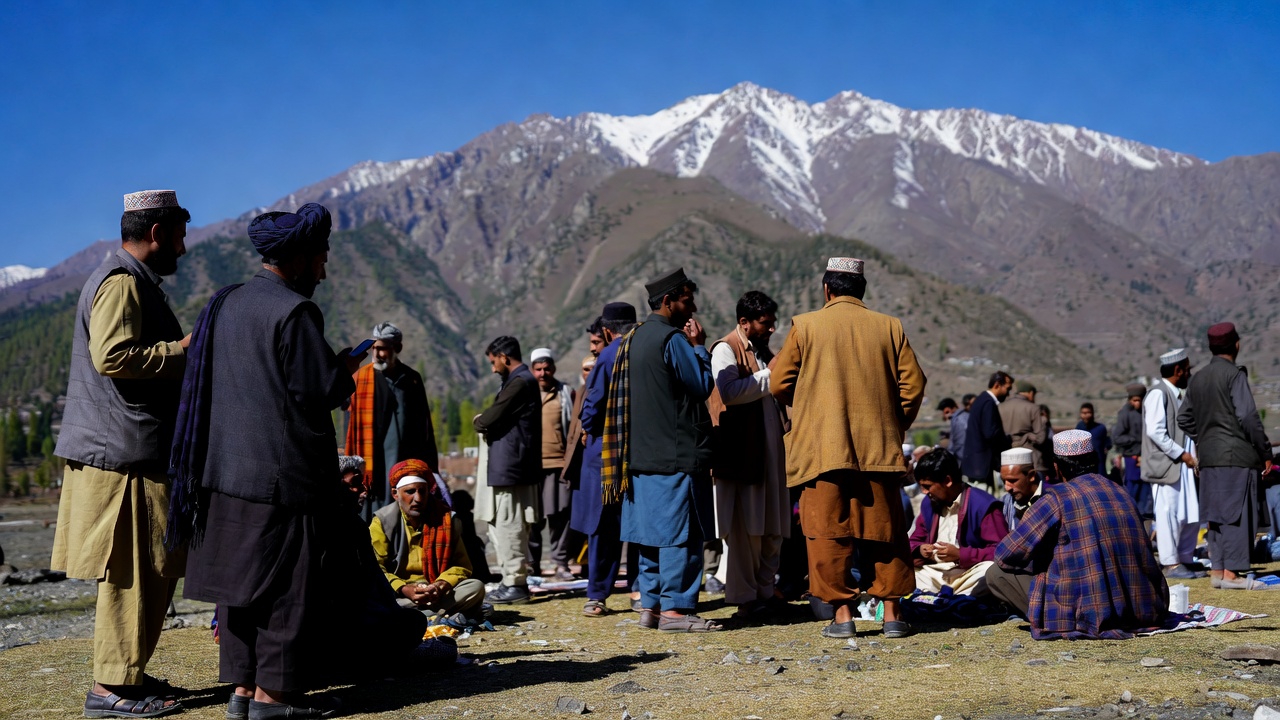
Every year on February 5, millions of people across Pakistan, Azad Jammu and Kashmir, and Kashmiri communities worldwide observe Kashmir Solidarity Day — known locally as Youm-e-Yakjehti-e-Kashmir. This day carries deep emotion. Streets fill with processions. Mosques hold special prayers. Human chains stretch across highways. And, perhaps most powerfully, poetry and shayari rise from hearts and lips to capture the pain, hope, and resilience of the Kashmiri people.
In 2026, the Government of Pakistan has once again declared February 5 as a public holiday. A one-minute silence at 10:00 AM will be observed nationwide to honor Kashmiri martyrs. Seminars, rallies, and prayer gatherings will take place in every major city.
But words — especially poetic words — remain the most enduring tribute. This blog post brings together the most powerful Kashmir Day poetry and shayari in both English and Urdu, explores the literary giants who shaped this tradition, and offers readers a deep cultural understanding of why verse matters so much on this solemn occasion.
Why Kashmir Solidarity Day Poetry Matters in 2026
Poetry has always been the language of resistance in South Asia. Long before social media hashtags or television broadcasts, it was the poet who gave voice to the voiceless. The tradition runs centuries deep. From the Sufi verses of Lal Ded in the 14th century to the revolutionary couplets of Allama Iqbal in the 20th, Kashmir and poetry are inseparable.
On Kashmir Solidarity Day, poetry serves three important purposes.
First, it preserves memory. Every couplet about Kashmir carries within it a historical record — the 1947 war, the decades of conflict, the ongoing human rights concerns. When a grandmother in Lahore recites a verse about the valley, she passes that memory to her grandchildren.
Second, poetry creates solidarity. A shared couplet on WhatsApp or a nazm recited at a school assembly connects people across distances. In 2026, as the federal government has confirmed a nationwide holiday with offices and schools closed, families and communities gather. Poetry gives them a shared emotional vocabulary.
Third, poetry transcends borders. English-language Kashmir poetry reaches global audiences. Urdu shayari resonates across Pakistan, India, and the diaspora. Together, they tell a story that no single news report can fully capture.
The Kashmiri literary tradition is not merely decorative. It is functional. It builds bridges of empathy. And on February 5, it becomes the primary currency of national feeling.
The History and Significance of Kashmir Day: February 5 Explained
Before we explore the poetry itself, understanding the history behind Kashmir Solidarity Day enriches every verse we read.
The holiday traces its origins to 1990. That year, Nawaz Sharif, then the Chief Minister of Punjab and opposition leader, called for a nationwide strike to protest against the situation in Indian-administered Kashmir. The idea was supported by Qazi Hussain Ahmad of the Jamaat-e-Islami party. Benazir Bhutto’s Pakistan People’s Party then officially declared February 5 as a public holiday.
Since that first observance, Kashmir Day has grown into one of Pakistan’s most emotionally charged national occasions. The day is marked by:
- Public processions and rallies in every major city
- Special congregational prayers in mosques for the people of Kashmir
- Human chains on major routes leading to Azad Jammu and Kashmir
- Seminars and conferences organized by political and religious organizations
- A one-minute silence at 10:00 AM to honor Kashmiri martyrs
- Special TV and radio programming focused on the Kashmir issue
The Kashmir valley itself has long been called “Jannat Nazeer” — a paradise on earth. Its snow-capped mountains, crystal rivers, and saffron fields have inspired poets for centuries. Yet the territorial conflict that began with the 1947 partition of British India has overshadowed that beauty for decades.
In 2026, the observance continues with renewed intensity. Punjab Chief Minister Maryam Nawaz has announced a long weekend beginning with Kashmir Day on February 5, followed by Basant celebrations on February 6 and 7. This means families across the province will have extended time for reflection, remembrance, and — importantly — the sharing of poetry.
Best Kashmir Day Poetry in Urdu: Heart-Touching 2 Line Shayari
Urdu is the natural home of Kashmir Day poetry. The language’s melodic structure and rich metaphorical tradition make it perfect for expressing both grief and defiance. Here are some of the most widely shared and emotionally powerful two-line shayari that circulate every February 5.
Couplets on the Beauty and Pain of Kashmir
The most moving Kashmir shayari often contrasts the valley’s breathtaking beauty with the suffering of its people. This tension — between paradise and pain — is the beating heart of the genre.
Wadi-e-Kashmir ka har manzar haseen hai Dhoop mein bhi chhupi hui yeh barf ki zameen hai
(Every scene of the Kashmir valley is beautiful / Even in sunlight, this is a land hidden in snow)
This couplet captures the duality of Kashmir — its outward splendor and its concealed suffering. The “snow” here works as both a literal description of the landscape and a metaphor for the layers of hardship buried beneath the surface.
Kashmir ki jalti wadi mein behte lahu ka shor suno Main wadi hoon shaheedon ki, haan mujhe Kashmir kehte hain
(Hear the roar of flowing blood in Kashmir’s burning valley / I am the valley of martyrs — yes, they call me Kashmir)
This is one of the most frequently recited couplets at Kashmir Day rallies. It personifies the valley itself, giving it a voice. The valley does not merely witness suffering — it embodies it.
Couplets on Resistance and Freedom
Hathon mein patthar liye, shehzadiyan Kashmir ki Dhoondhne nikli hain khud, azadi Kashmir ki
(With stones in their hands, the princesses of Kashmir / Have set out themselves to find Kashmir’s freedom)
This verse has become iconic in Kashmir Day literature. It speaks of defiance with tenderness, honoring the women and young people who participate in resistance.
Abhi tak paon se chimti hain zanjeerain ghulami ki Din aata hai azadi ka, azadi nahin aati
(The chains of slavery still cling to our feet / The day of freedom comes, but freedom does not arrive)
This couplet belongs to the broader tradition of South Asian freedom poetry. Its slow, aching rhythm mirrors the long wait it describes.
Couplets as Prayers and Supplications
Many Kashmir Day verses take the form of prayers — calling upon Allah to bring justice and peace to the valley.
Kashmir hamari rooh hai, is ki azadi hamari shanakht hai
(Kashmir is our soul; its freedom is our identity)
Paanch Favrari ko dil se Kashmir ki azadi ke liye dua karein
(On February 5, pray from the heart for Kashmir’s freedom)
These prayerful couplets reflect the deeply spiritual dimension of Kashmir Solidarity Day. The observance is not only political — it is a matter of faith and conscience for millions.
Famous Kashmir Day Poetry in English: Verses That Move the World
While Urdu remains the dominant language of Kashmir Day poetry, the English-language tradition has produced some of the most internationally recognized literary works about Kashmir. These poems reach audiences who may not read Urdu but feel the pull of Kashmir’s story nonetheless.
Agha Shahid Ali: The Voice of Kashmir in English Poetry
No discussion of Kashmir poetry in English is complete without Agha Shahid Ali (1949–2001). Born in New Delhi to a Kashmiri Muslim family from Srinagar, Ali grew up in the valley before moving to the United States. He identified himself as an American poet writing in English, yet Kashmir remained the emotional center of his work throughout his life.
Ali wrote nine poetry collections and a book of literary criticism. His 1997 collection, The Country Without a Post Office, is widely considered his masterpiece. The title poem was inspired by the 1990 Kashmiri uprising, during which political violence led to the closure of all post offices in the region for seven months. According to the Poetry Foundation, this poem is built on association and repetition rather than straightforward narrative logic, making it a haunting meditation on loss and displacement.
His final collection, Rooms Are Never Finished (2001), was a finalist for the National Book Award. The posthumous The Veiled Suite (2009) brought together selected works from across his career.
Ali’s genius lay in his ability to blend the ghazal form — a traditional Urdu and Persian poetic structure — with English-language modernism. His book Call Me Ishmael Tonight: A Book of Ghazals (2003) introduced the ghazal’s emotional depth to Western readers. The poet Michael Palmer once praised Ali’s ghazals as offering a path toward lyric expansiveness that few poets dare to aspire to.
Scholar Amardeep Singh described Ali’s style as “ghazalesque” — a blending of Indo-Islamic rhythms with a distinctly American approach to storytelling. Ali’s poems are not abstract considerations of longing. They are concrete, vivid, and deeply personal accounts of loss.
Ali died of brain cancer on December 8, 2001, at the age of 52. He was buried in Northampton, Massachusetts, near Amherst — a town sacred to his beloved poet Emily Dickinson. The University of Utah Press awards the Agha Shahid Ali Poetry Prize annually in his memory.
For Kashmir Day 2026, his verses remain essential reading for anyone who wants to understand the Kashmiri experience through the English language.
English Quotes and Verses for Kashmir Day 2026
Beyond Agha Shahid Ali’s literary masterpieces, there is also a tradition of shorter English-language quotes and verses that circulate widely on social media during Kashmir Solidarity Day. These are more accessible, designed for sharing, and carry emotional weight in their simplicity.
Here are some of the most powerful English quotes associated with Kashmir Day:
- “Kashmir is not just a land; it is a living symbol of sacrifice, courage, and resilience.”
- “Freedom cannot be silenced; the spirit of Kashmir will shine through every storm.”
- “The mountains of Kashmir stand tall as witnesses to the courage of its people.”
- “Kashmir Day is a reminder that freedom is a right, not a privilege.”
- “The silence of the world cannot overshadow the cries of Kashmir for justice.”
These lines may not carry the formal complexity of a published poem, but they serve an important cultural function. Shared on WhatsApp statuses, posted on Instagram stories, or printed on banners at rallies, they keep the conversation alive.
Allama Iqbal’s Timeless Poetry on Kashmir: The Poet Who Foresaw the Crisis
Allama Muhammad Iqbal (1877–1938) holds a unique place in Kashmir’s literary history. He is Pakistan’s national poet, the intellectual architect of the country’s founding vision, and — crucially — a man of Kashmiri descent.
Born in Sialkot, Iqbal’s ancestors were originally from Kashmir. His grandfather had migrated from a village near Kulgam in the early 19th century. Iqbal was deeply proud of this heritage. According to Kashmir Life, he used to say openly that his family actually belonged to Kashmir.
Iqbal’s engagement with Kashmir was not merely sentimental. He was appointed General Secretary of the Anjuman-e-Kashmiri Musalmanan-e-Lahore, an organization that advocated for the rights of Kashmiri Muslims. He submitted both signed and anonymous articles to the Kashmir Magazine. He urged Kashmiris to unite, using a famous metaphor — they should come together just as the letters K, Sh, M, and R come together to form the word “Kashmir.”
Iqbal’s Famous Verses on Kashmir
Iqbal’s most cited Kashmir verse comes from his final book, Armughaan-e-Hijaz (The Gift of Hijaz), published posthumously in 1938:
“Aaj woh Kashmir hai mahkoom-o-majboor-o-faqeer Kal jise ahl-e-nazar kehte thay Iran-e-sagheer”
(Today that Kashmir is subjugated, helpless, and destitute / Which the wise once called a “Little Iran”)
These two lines compress centuries of history into a single breath. The comparison to Iran — a civilization synonymous with learning, culture, and refinement — elevates Kashmir beyond a mere geographic territory. It becomes a civilization in mourning.
When Iqbal visited Kashmir in June 1921, he was deeply moved by the condition of the people. He had come to attend to legal matters, but the two weeks he spent in the valley changed him. In the Nishat Garden, he composed his famous poem Saqi Nama, which became a lament for the state of Kashmiris under Dogra rule.
In his magnum opus Javed Nama (The Book of Eternity), Iqbal addressed the League of Nations directly, lamenting the Treaty of Amritsar (March 16, 1846), which had sold Kashmir to Dogra rulers. His Persian verses on this subject are among the most politically charged in all of South Asian literature.
What makes Iqbal’s Kashmir poetry remarkable is its prophetic quality. Writing in the 1920s and 1930s, he seemed to foresee the decades of conflict that would follow. As the South Asia Times has noted, Iqbal’s contributions were not confined to aspiring for a separate land for Muslims. He also worked to ignite a flame of revolution in the people of Kashmir through his poetry.
For Kashmir Day 2026, Iqbal’s verses remain as relevant as the day they were written. They are recited in school assemblies, quoted in political speeches, and shared across social media platforms.
Faiz Ahmed Faiz and the Poetry of Resistance: Kashmir Through a Revolutionary Lens
If Iqbal provided the spiritual vision for Kashmir’s freedom, Faiz Ahmed Faiz (1911–1984) provided its revolutionary fire. Faiz is one of the most celebrated Urdu poets of the modern era. He was a journalist, professor, broadcaster, military officer, and — above all — a poet of the oppressed.
Faiz’s poetry does not address Kashmir directly in the way Iqbal’s does. Instead, it speaks to universal themes of oppression, resistance, and the longing for freedom — themes that resonate deeply with the Kashmiri experience.
Faiz’s Contribution to Freedom Poetry
Faiz joined the Progressive Writers’ Movement in the 1930s, a collective of South Asian writers who believed that literature must serve social justice. His poetry blended the classical Urdu ghazal tradition with a modern political consciousness. The beloved (mahboob) in his poems is not merely a romantic figure — she is freedom itself. The dawn (subh) is not just a time of day — it is the promised morning of liberation.
His most famous poem, “Subh-e-Azadi” (The Dawn of Freedom), written about the 1947 partition, captures the bittersweet reality of incomplete independence. The poem suggests that true freedom has not yet arrived — a sentiment that Kashmir’s people echo to this day.
Another widely recited verse, “Hum Dekhenge” (We Shall See), has become an anthem of resistance movements across South Asia. Its opening lines promise that the day of justice will come, no matter how long the wait. This poem has been sung at protests in Kashmir, in university campuses across India and Pakistan, and at international solidarity events.
Faiz’s poetry was translated into English by several scholars, but the most celebrated translation is Agha Shahid Ali’s The Rebel’s Silhouette (1992). This created a beautiful literary chain — a Kashmiri-American poet translating a revolutionary Pakistani poet, bringing the tradition of resistance poetry to global English-language readers.
According to the Greater Kashmir newspaper, the distinctive feature of Faiz’s work is that he never presents his argument in a direct voice. Instead, he uses the traditional metaphors of Urdu poetry — the beloved, the rival, the garden, the prison cell — to encode political meaning. This subtlety is what makes his poetry so enduring and so endlessly interpretable.
For Kashmir Day 2026, Faiz’s verses are recited at rallies, sung in musical performances, and shared as calligraphic art on social media. His words remind us that the struggle for justice is not only political. It is also deeply, irrevocably poetic.
Kashmir Day Shayari for Social Media: WhatsApp Status, Instagram Captions, and Facebook Posts
In the digital age, Kashmir Day shayari has found a new home on social media. Every February 5, millions of posts flood WhatsApp, Instagram, Facebook, and TikTok. People share two-line couplets as status updates, overlay Urdu verses on images of the Kashmir valley, and create short video compilations of poetry set to emotional nasheeds.
This is not a dilution of the poetic tradition. It is an evolution. The same impulse that once drove poets to compose qasidas for royal courts now drives young Pakistanis and Kashmiris to design Instagram stories. The medium changes; the emotion remains.
Best Kashmir Day WhatsApp Status Ideas in Urdu and English
Here are some concise, shareable lines perfect for WhatsApp status updates on February 5, 2026:
| Language | Shayari / Quote | Translation or Context |
|---|---|---|
| Urdu | خون میں ڈوبی ہوئی تصویر ہوں، ہاں میں کشمیر ہوں | “I am a picture soaked in blood — yes, I am Kashmir” |
| Urdu | ہر پتھر کشمیر کی داستانِ مقاومت بولتا ہے | “Every stone in Kashmir speaks the tale of resistance” |
| English | “The valleys echo with cries of freedom — a dream unfulfilled but not forgotten.” | Solidarity message |
| Urdu | کشمیر بنے گا پاکستان، یہ عہد ہے ہمارا اولین | “Kashmir will be Pakistan — this is our foremost pledge” |
| English | “Injustice may last for a while, but truth and freedom will eventually prevail.” | Hope-centered message |
| Urdu | نم دیدہ ہیں معصوم سی کشمیر کی آنکھیں | “Tearful are the innocent eyes of Kashmir” |
| English | “Every drop of blood spilled in Kashmir tells a story of struggle and hope.” | Remembrance |
Tips for Sharing Kashmir Day Poetry on Social Media
1. Use Urdu calligraphy. The visual beauty of Urdu script adds emotional depth. Many free design tools like Canva offer Urdu fonts suitable for creating poetry images.
2. Add contextual captions. A brief English explanation alongside Urdu shayari helps non-Urdu speakers understand the message.
3. Use relevant hashtags. Popular hashtags include #KashmirDay, #5February, #KashmirSolidarityDay, #StandWithKashmir, #YoumEYakjehtiKashmir, and #KashmirDay2026.
4. Respect the tone. Kashmir Day is a solemn occasion. Poetry shared on this day should reflect empathy, solidarity, and hope — not aggression or hatred.
5. Credit the poet. If you are sharing a verse by Iqbal, Faiz, or Agha Shahid Ali, name the author. This honors the tradition and educates your audience.
Kashmir Day Poetry for Students: Speeches, Essays, and School Assembly Recitations
February 5 is a school holiday in Pakistan, but many educational institutions hold special assemblies or events in the days leading up to Kashmir Day. Students are often asked to prepare speeches, recite poetry, or write essays about the significance of the day.
Here is a guide for students looking for appropriate Kashmir Day poetry for these occasions.
Short Urdu Poems Suitable for School Recitation
For younger students, short and rhythmically simple verses work best. The following couplets are easy to memorize and emotionally appropriate for school settings:
Chinar ke patton par hai khoon ki tehreer Kashmir ki mitti hai zulm ki zanjeer
(On the chinar leaves is written in blood / Kashmir’s soil is chained by oppression)
The chinar tree is one of Kashmir’s most iconic symbols. Its broad, maple-like leaves turn brilliant red in autumn — a natural metaphor for the blood and sacrifice of the valley’s people. This makes the verse both vivid and educational.
Phoolon ke baghaat ab veeraan se hain Kashmir ke khwaab bhi nalaan se hain
(The flower gardens are now desolate / Even Kashmir’s dreams are in mourning)
This couplet uses the image of Kashmir’s famous gardens — the Shalimar, the Nishat, the Mughal gardens that once symbolized paradise — and presents them in ruin. It is a gentle but powerful verse for students to recite.
English-Language Verses for International School Events
For students in English-medium schools or international schools, these original expressions capture the spirit of the day:
- “The heart of every Kashmiri beats with the hope of justice and freedom.”
- “Kashmir’s beauty is a testament to its strength, even in the face of hardship.”
- “On this day, we stand together — not with weapons, but with words, prayers, and solidarity.”
Teachers can also introduce students to Agha Shahid Ali’s shorter poems, such as “Postcard from Kashmir,” which uses simple, nostalgic imagery accessible to younger readers.
The Role of Urdu Ghazal in Kashmir Day Observances
The ghazal is the crown jewel of Urdu poetry. It consists of a series of self-contained couplets (she’r), each of which can stand alone as a complete thought. The form demands a specific rhyme scheme (qaafiya) and a refrain (radeef) that repeats at the end of each couplet. This structure gives the ghazal its musical quality — it is meant to be heard, not just read.
On Kashmir Day, the ghazal tradition comes alive in several ways.
Mushairas (poetry gatherings) are held in cities across Pakistan and Azad Kashmir. Poets — both established and aspiring — recite their work before live audiences. The best verses receive spontaneous shouts of “Wah! Wah!” from the crowd, a traditional expression of admiration.
Television and radio specials broadcast ghazal performances by leading artists. Singers like the legendary Mehdi Hassan, Ghulam Ali, and Nayyara Noor have all performed verses connected to themes of freedom, homeland, and sacrifice. These performances are replayed on Kashmir Day as a cultural ritual.
Digital mushairas have also emerged in recent years. On platforms like YouTube, Facebook Live, and TikTok, poets share their Kashmir Day ghazals with global audiences. This has democratized the tradition, allowing voices from small towns in Azad Kashmir to reach listeners in London, Toronto, and Dubai.
The ghazal form is particularly suited to Kashmir Day because of its emotional range. A single ghazal can move from romantic longing to spiritual devotion to political defiance — all within a few couplets. This mirrors the multifaceted nature of the Kashmir issue itself, which is at once a matter of territory, identity, faith, and human rights.
Kashmiri Sufi Poetry and Its Influence on Kashmir Day Literature
Long before the modern Kashmir conflict, the valley produced some of South Asia’s greatest Sufi poets. These mystic voices laid the literary foundation upon which all subsequent Kashmir poetry was built.
Lal Ded (Lalleshwari): The Mother of Kashmiri Poetry
Lal Ded (c. 1320–1392), also known as Lalleshwari or Lalla Arifa, is regarded as the mother of Kashmiri poetry. Born a Hindu, she became a wandering mystic whose verses transcended religious boundaries. Her poetry — known as vaakh (sayings) — explored themes of divine love, inner liberation, and the futility of outward ritual.
Lal Ded’s influence on Kashmir’s literary culture cannot be overstated. Her verses are recited by both Hindus and Muslims in the valley. She represents a time when Kashmir’s identity was defined not by conflict but by shared spiritual wisdom.
Sheikh Noor-ud-Din Wali (Nund Rishi): The Patron Saint of Kashmir
Sheikh Noor-ud-Din Wali (1378–1440), known as Nund Rishi, is the patron saint of Kashmir. He is said to have been influenced by Lal Ded and is revered by Kashmiri Muslims as the founder of the Rishi order — a distinctly Kashmiri form of Sufism that emphasized asceticism, vegetarianism, and nonviolence.
Nund Rishi’s poetry, composed in the Kashmiri language, speaks of compassion, justice, and the relationship between the human soul and the divine. His verses are still sung in Kashmiri shrines today.
The Sufi Legacy in Modern Kashmir Day Poetry
The influence of these Sufi voices echoes in modern Kashmir Day poetry. When contemporary poets write about the “burning valley” or the “crying mountains,” they draw on a spiritual vocabulary that Lal Ded and Nund Rishi established centuries ago. The Kashmir of poetry is not just a political territory. It is a sacred landscape — a place where the divine and the human intersect.
This Sufi dimension gives Kashmir Day poetry a depth that purely political verse cannot achieve. It elevates the discourse from territory to theology, from borders to the soul.
How to Write Your Own Kashmir Day Shayari: A Guide for Aspiring Poets
Writing your own Kashmir Day poetry is a meaningful way to participate in the February 5 observance. You do not need to be a professional poet. The Urdu shayari tradition values sincerity of emotion above technical perfection.
Here are some practical steps to help you compose your own verse.
Step 1: Choose Your Theme
Kashmir Day poetry typically revolves around these core themes:
| Theme | Description | Example Imagery |
|---|---|---|
| Beauty of Kashmir | The valley’s natural splendor | Mountains, rivers, chinar trees, saffron fields |
| Suffering and sacrifice | The human cost of conflict | Blood, chains, tears, graveyards |
| Resistance and defiance | The courage of the people | Stones, raised fists, unbroken spirit |
| Hope and prayer | Faith in eventual justice | Dawn, light, flowers blooming again |
| Solidarity | Unity with the Kashmiri people | Hands clasped, shared tears, standing together |
Step 2: Select Your Language and Form
For Urdu shayari, the most common form is the two-line couplet (she’r). Each line should have a roughly equal rhythmic weight. If you can incorporate a rhyme at the end of both lines (or at the end of the second line matching a refrain), the verse will feel more polished.
For English verse, free verse works well. Focus on vivid imagery and short, declarative sentences. Avoid abstract language. Instead of saying “Kashmir suffers,” say “blood runs through the saffron fields.”
Step 3: Use Concrete Imagery
The best Kashmir poetry is grounded in specific, sensory details. Here is a comparison:
Weak: “Kashmir is in great pain and people are sad.” Strong: “The chinar stands leafless. Its bark wears the scars of a hundred winters.”
The second version creates a picture in the reader’s mind. It lets the reader feel the emotion rather than being told about it.
Step 4: Read Before You Write
Before composing your own verse, read widely. Study the masters — Iqbal, Faiz, Agha Shahid Ali. Read the two-line shayari that circulate on social media. Notice what moves you and why. This will train your ear and your emotional instincts.
Step 5: Share with Respect
When you share your poetry on February 5, remember that Kashmir Day is a day of solidarity and remembrance. Your verse should honor the people of Kashmir — their courage, their suffering, and their hope. Avoid language that promotes hatred against any community. The strongest poetry speaks for the oppressed without speaking against anyone.
Kashmir Day Poetry in the Digital Age: TikTok, Reels, and Spoken Word
The year 2026 marks a significant moment in how Kashmir Day poetry reaches its audience. While the mushaira tradition continues in physical spaces, digital platforms have become the primary distribution channel for February 5 verses.
TikTok and Instagram Reels
Short-form video has transformed poetry sharing. On TikTok and Instagram, young Pakistanis and Kashmiris create 15-to-60-second videos featuring:
- Spoken word performances of Kashmir shayari over emotional background music
- Text-on-screen couplets overlaid on footage of Kashmir’s landscapes
- Calligraphy videos showing Urdu verses being handwritten in real time
- Duet and stitch formats where users respond to each other’s poetry
The hashtag #KashmirDay regularly trends on these platforms every February. In 2026, with a long weekend in Punjab starting February 5, even more content creation is expected.
Spoken Word and the New Generation
A new generation of spoken word poets has emerged in Pakistan’s major cities. Platforms like Lahore Literary Festival and Karachi Literature Festival regularly feature young performers who blend Urdu verse with English prose, hip-hop rhythms with ghazal structures. Kashmir is a recurring theme in this emerging art form.
These poets bring a raw, personal energy to Kashmir Day literature. They speak not in the formal register of classical Urdu but in the mixed, code-switching language of urban Pakistan — a blend of Urdu, English, and Punjabi that feels authentic to their generation.
A Timeline of Kashmir in Poetry: From 1846 to 2026
To understand Kashmir Day poetry fully, it helps to see how the literary tradition evolved alongside historical events.
| Year | Historical Event | Literary Response |
|---|---|---|
| 1846 | Treaty of Amritsar begins Dogra rule in Kashmir | Allama Iqbal later laments this treaty in Javed Nama |
| 1877 | Birth of Allama Iqbal in Sialkot | Born into a Kashmiri-origin family, he will become the voice of Kashmir’s aspirations |
| 1921 | Iqbal visits Kashmir, writes Saqi Nama | First major Urdu poetic response to Kashmir’s condition |
| 1938 | Iqbal’s posthumous Armughaan-e-Hijaz published | Contains his most famous verse on Kashmir |
| 1947 | Partition of India; Kashmir conflict begins | Faiz Ahmed Faiz writes “Subh-e-Azadi” on incomplete freedom |
| 1949 | Birth of Agha Shahid Ali in New Delhi | The future voice of Kashmir in English poetry |
| 1990 | First Kashmir Solidarity Day observed | Poetry becomes central to the annual observance |
| 1997 | Agha Shahid Ali publishes The Country Without a Post Office | The masterpiece of English-language Kashmir poetry |
| 2001 | Death of Agha Shahid Ali | His legacy continues to grow posthumously |
| 2019 | India revokes Article 370, changing Kashmir’s special status | A surge in new Urdu and English poetry about Kashmir |
| 2026 | Kashmir Solidarity Day observed as a public holiday | Poetry shared across digital and physical spaces worldwide |
Frequently Asked Questions About Kashmir Day Poetry and Shayari
What is Kashmir Day and when is it observed?
Kashmir Solidarity Day is observed every year on February 5 in Pakistan and Azad Jammu and Kashmir. It is a public holiday dedicated to showing support for the people of Indian-administered Kashmir and their right to self-determination. The day has been observed since 1990.
Who are the most famous poets who wrote about Kashmir?
The three most prominent poets associated with Kashmir literature are Allama Iqbal (1877–1938), who wrote about Kashmir in Urdu and Persian; Faiz Ahmed Faiz (1911–1984), whose resistance poetry resonates with the Kashmir cause; and Agha Shahid Ali (1949–2001), who wrote about Kashmir in English. Classical Kashmiri Sufi poets like Lal Ded and Sheikh Noor-ud-Din Wali also form part of this tradition.
Can I write my own Kashmir Day shayari?
Yes. Writing your own verse is a wonderful way to participate in the February 5 observance. Focus on sincere emotion, use concrete imagery related to Kashmir’s landscape and people, and share your work with respect and sensitivity.
What is the best way to share Kashmir Day poetry online?
Use social media platforms like WhatsApp, Instagram, TikTok, and Facebook. Share two-line couplets as status updates, create calligraphy images of Urdu verses, or record short spoken-word videos. Use hashtags like #KashmirDay2026, #KashmirSolidarityDay, and #5February to reach wider audiences.
What is the significance of the one-minute silence at 10:00 AM on Kashmir Day?
The one-minute silence, observed across Pakistan at 10:00 AM on February 5, is a tribute to Kashmiri martyrs — those who have lost their lives in the conflict. It is a moment of collective reflection and solidarity. In 2026, the federal government’s notification confirms that this observance will be strictly followed.
Is Kashmir Day observed only in Pakistan?
While Kashmir Day is a public holiday in Pakistan, it is also observed by Kashmiri communities worldwide. In 2021, the New York State Assembly passed a resolution recognizing the day as Kashmir American Day, acknowledging New York’s Kashmiri community and championing human rights.
The Enduring Power of Words: Why Kashmir Poetry Will Always Matter
Poetry does not change borders. It does not pass resolutions. It does not command armies. But poetry does something that no other human creation can — it makes strangers feel what it is like to live in someone else’s skin.
When a reader in Karachi recites an Iqbal couplet about Kashmir, they feel the weight of a century’s longing. When a student in London reads Agha Shahid Ali’s ghazals, they see the valley through the eyes of a poet who loved it with every atom of his being. When a young woman in Muzaffarabad shares a two-line shayari on her WhatsApp status, she adds her voice to a chorus that stretches back generations.
This is the enduring power of Kashmir Day poetry and shayari. It is not a footnote to history. It is history’s beating heart.
On February 5, 2026, as Pakistan observes its annual Kashmir Solidarity Day, the poetry will flow again — in Urdu and English, in whispered prayers and shouted slogans, in ancient ghazal forms and modern TikTok videos. The medium will change, as it always has. But the message will remain:
Kashmir lives in the words of its poets. And those words will never be silenced.