Every winter, when frost still clings to the rooftops of Yerevan and the scent of incense drifts through ancient stone churches, young Armenians prepare for one of the most romantic and spiritually rich holidays in the Christian calendar. Saint Sarkis Day — known in Armenian as Surb Sarkis (Սուրբ Սարգիս) — is a feast that weaves together prayer, love, dreams, and centuries of folk tradition into a single, unforgettable celebration.
In 2026, Saint Sarkis Day falls on Saturday, January 31, according to the liturgical calendar of the Armenian Apostolic Church. This moveable feast is observed exactly 63 days before Easter, which in 2026 lands on April 5. That means the festivities, the fasting, the salty cookies, and the heartfelt prayers are right around the corner.
Whether you are Armenian by heritage, a traveler drawn to the cultural richness of the South Caucasus, or simply someone fascinated by the intersection of faith and romance, this guide covers everything you need to know. From ancient prayers recited at the altar to the playful custom of eating an impossibly salty biscuit before bed, Saint Sarkis Day is a holiday unlike any other.
Who Is Saint Sarkis the Warrior and Why Do Armenians Celebrate Him?
Before we dive into the prayers and blessings, it helps to understand the man behind the feast. Saint Sarkis (also spelled Sargis) was a 4th-century military general of Greek origin from Cappadocia, a region in central Anatolia that bordered Armenia. His Armenian name — Սուրբ Սարգիս Զորավար (Sourb Sargis Zoravar) — translates to “Holy Sarkis the General.”
During the reign of Emperor Constantine the Great (285–337 AD), Sarkis served as a high-ranking commander in the Roman Army. He was known not only for his courage on the battlefield but also for his deep Christian faith. He used his position to preach the Gospel and encourage spiritual growth among his soldiers.
Everything changed when Emperor Julian the Apostate came to power in 361 AD. Julian reversed the tolerance of Christianity that Constantine had established. He launched violent persecutions against Christians across the empire. According to the account documented in the Haysmavurk, a medieval Armenian book of Christian saints’ lives, Jesus appeared to Sarkis in a vision and told him to leave his homeland, much as the patriarch Abraham had done.
Sarkis heeded the call. He and his only son, Martiros (Մարտիրոս), fled to Armenia. There, King Tiran — a grandson of the famous King Tiridates who had made Armenia the first Christian nation — received them warmly.
As Julian’s armies advanced toward Antioch and slaughtered Christians in their path, King Tiran urged Sarkis and Martiros to seek safety in the Sassanid (Persian) Empire. The Persian emperor Shapur II, impressed by Sarkis’s military reputation, appointed him as a commander in the Sassanid army.
But Sarkis did not hide his faith. He continued to preach Christianity, and many Persian soldiers converted under his influence. When Shapur II discovered this, he ordered Sarkis to renounce his beliefs and worship fire in a Zoroastrian temple.
Sarkis refused. According to the Diocese of the Armenian Apostolic Orthodox Holy Church in Georgia, he declared: “We should worship one God — the Holy Trinity, which has created the earth and the heaven. Whereas fire or idols are not gods and the human being may destroy them.”
The enraged crowd attacked. Martiros was killed in the clash. Sarkis was thrown into prison, where he remained steadfast. Eventually, Shapur ordered his execution. At the moment of his death, an angel is said to have descended and proclaimed: “Be strong.” A divine light appeared over his body. His 14 loyal soldiers also died as martyrs for refusing to abandon the Christian faith.
In the 5th century, Saint Mesrop Mashtots — the inventor of the Armenian alphabet — brought Sarkis’s relics to the village of Ushi in the Aragatsotn province of Armenia. A monastery was built over the relics, and a cult of devotion grew around the warrior-saint. In 1999, the relics were uncovered during an excavation and transferred to the Mother See of Holy Etchmiadzin, the spiritual center of the Armenian Apostolic Church.
Today, Sarkis is not just revered as a martyr. He is celebrated as the patron saint of love and youth — Armenia’s answer to Saint Valentine.
When Is Saint Sarkis Day 2026 and How Is the Date Determined?
One of the most common questions people ask every year is: when is Saint Sarkis Day? Unlike fixed holidays, this feast is a moveable feast, meaning its date changes every year based on the date of Easter.
The rule is simple. The Feast of Saint Sarkis is always celebrated on a Saturday, exactly 63 days before Easter. Since the Armenian Apostolic Church uses the Gregorian calendar for most liturgical calculations (unlike some other Orthodox churches that follow the Julian calendar), the date can fall anywhere between January 11 and February 15.
Here is a quick reference table for recent and upcoming years:
| Year | Saint Sarkis Day | Armenian Easter |
|---|---|---|
| 2024 | January 27 | March 31 |
| 2025 | February 15 | April 20 |
| 2026 | January 31 | April 5 |
| 2027 | February 6 | April 11 |
In 2026, the feast falls on Saturday, January 31. The five-day Fast of Catechumens — commonly called the Fast of Saint Sarkis (Surb Sargsi tsom) — begins on the Monday before the feast. This fast was established by Saint Gregory the Illuminator, the patron saint of the Armenian Apostolic Church and the man who converted Armenia to Christianity in 301 AD.
The Five-Day Fast of Saint Sarkis: Spiritual Preparation Before the Feast
The celebration of Saint Sarkis Day does not begin on the feast day itself. It starts days earlier with a period of fasting and spiritual reflection known as the Fast of Catechumens or the Fast of Saint Sarkis.
This fast traditionally lasts five days, from Monday through Friday in the week leading up to the Saturday feast. During this time, devoted Armenians abstain from meat, dairy, and other rich foods. Some young people — especially young women — take the fast even further, abstaining from all food and water for three consecutive days, according to Wikipedia’s account of the tradition.
The purpose of this fast goes beyond physical discipline. It is a time of prayer, inner cleansing, and spiritual preparation. The faithful ask God to purify their hearts and prepare them to receive the blessings of Saint Sarkis. In Armenian theology, fasting is never about suffering for its own sake. It is about creating space — in the body and in the spirit — for God’s grace to enter.
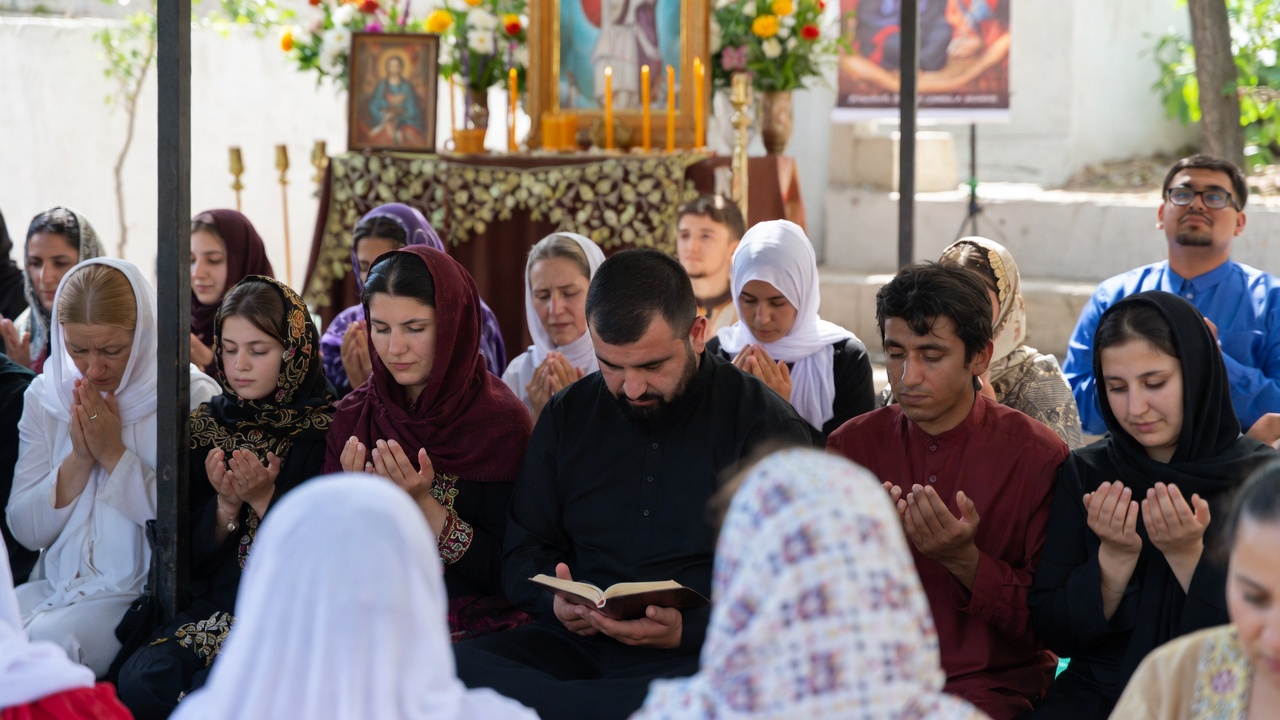
In churches across Armenia and the diaspora, priests offer special prayers during the fast. Congregants attend evening services. Candles are lit. The mood is one of quiet anticipation, much like the stillness before a snowfall — an appropriate image, given the Armenian folk belief that Saint Sarkis rides a white horse through winter storms, his spear stirring up blizzards as he passes.
Traditional Armenian Prayers for Saint Sarkis Day: What to Pray For
On the morning of the feast, a solemn Divine Liturgy (Surb Patarag) is celebrated in Armenian churches around the world. The liturgy follows the ancient rite of the Armenian Apostolic Church, one of the oldest Christian traditions on earth. It is a service rich with hymns, psalms, scripture readings, and prayers that have been recited for more than 1,700 years.
The Blessing of the Youth
By the order of His Holiness Karekin II, Supreme Patriarch and Catholicos of All Armenians, the Feast of Saint Sarkis is officially proclaimed as a “Day of Blessing of the Youth.” This means that at the end of the Divine Liturgy, young people are invited to approach the holy altar. The priest then performs a special blessing service dedicated to them.
This blessing is more than a formality. It is a deeply personal moment. Young Armenians — whether they are teenagers navigating the complexities of growing up or young adults searching for love and purpose — come forward with open hearts. The priest prays over them, asking God and Saint Sarkis to guide them, protect them, and fulfill the deepest longings of their souls.
The St. John Armenian Apostolic Church describes how, following the liturgy, the priest invites all children and young people to the altar, delivers a spiritual message, and conducts the blessing. A special Saint Sarkis Hymn is often sung during this moment, adding a layer of musical beauty to the already powerful ceremony.
Prayers for Love and Marriage
Because Saint Sarkis is the patron saint of love, many of the prayers offered on his feast day focus on romantic love and marriage. Young people pray that the saint will “make their prayers audible to God” and help them find their life partner.
This is not a shallow or casual request. In Armenian culture, marriage is one of the most sacred institutions. It is a union blessed by God, sealed in the church, and supported by the entire community. To pray for love on Saint Sarkis Day is to ask for one of the greatest blessings a human being can receive.
The Diocese of the Armenian Apostolic Orthodox Church in Georgia puts it beautifully: “St. Sarkis the Captain is the patron of youth. Many miracles happen thanks to his intercession. On the day of the feast, young people pray to the saint asking him to make their prayers audible to God. St. Sarkis is the realizer of love longings.”
The Lord’s Prayer in Armenian: Hayr Mer
At the heart of every Armenian liturgical service is the Hayr Mer (Հայር Մեर) — the Armenian version of the Lord’s Prayer. It is recited in Classical Armenian (Grabar), the ancient liturgical language of the church. Every Armenian child learns this prayer, and hearing it recited in a packed church on Saint Sarkis Day is a profoundly moving experience.
The prayer begins:
“Hayr mer, vor hergins yes…” (Our Father, who art in heaven…)
As the Saint Sarkis Armenian Apostolic Church in Dearborn, Michigan explains, the Hayr Mer is more than a recitation. It is a “meditative dialogue” with God, a way of both listening and speaking. During the Saint Sarkis Day liturgy, this prayer takes on a special resonance, because the faithful are not only asking for daily bread and forgiveness. They are also asking for the fulfillment of their deepest hopes — for love, for family, for a blessed future.
Personal Prayers and Intercessions
Beyond the formal liturgy, many Armenians offer personal prayers on Saint Sarkis Day. These prayers might include:
- Gratitude for family and loved ones. Thanking God for the people who make life meaningful.
- Prayers for guidance. Asking Saint Sarkis to intercede with God on behalf of those who feel lost or uncertain about their path.
- Prayers for the sick and the suffering. Asking for healing and comfort for those in need.
- Prayers for the Armenian nation. Given the trials that Armenians have endured throughout history — from the Genocide of 1915 to modern geopolitical challenges — prayers for the peace and security of the nation are always present.
- Prayers for the departed. Remembering loved ones who have passed on and asking God to keep them in eternal peace.
The Saint Sarkis Armenian Apostolic Church shares many such prayers on its website. One reads: “God Almighty, bless my heart for my religion and I will not be torn apart. Protect my family and me on this Holy day. Let our souls and health be here to stay.”
Another beautiful prayer shared by the church reads: “Give me the wisdom to live this life with health, happiness, and strength. Thank you for my blessings and help those who lack the blessing of a home, food, and shelter. Forever and ever, Amen.”
The Blessing of Madagh: A Sacred Armenian Offering on Saint Sarkis Day
After the Divine Liturgy and the Blessing of the Youth, many Armenian parishes hold a special communal meal called Madagh (Մadagh). This is not an ordinary lunch. It is a sacred offering — a meal prepared and shared as an act of thanksgiving and charity.
The word “Madagh” comes from the Armenian tradition of sacrificing an animal (usually a lamb or a rooster) and distributing the cooked meat to the poor and to the community. While the practice has evolved over the centuries, the spirit remains the same. It is an act of giving, sharing, and blessing.
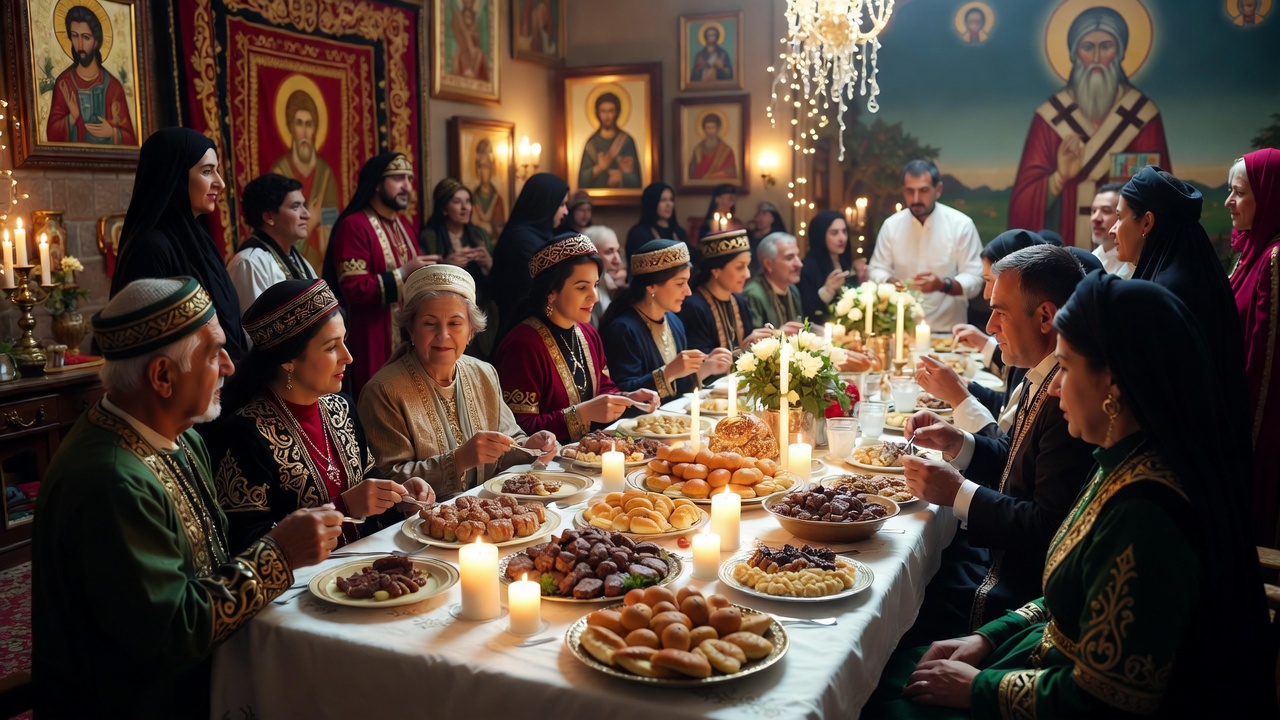
At Saint Sarkis Armenian Apostolic Church in Dearborn, the parish invites congregants to join in the Blessing of Madagh in the church hall following the feast day service. This communal gathering is a time of fellowship, warmth, and joy. Families come together. Elders share stories. Children run between the tables. The food is blessed by the priest before it is served.
The Madagh is a reminder that Saint Sarkis Day is not just about romantic love. It is about love in all its forms — the love of God, the love of community, and the love expressed through generosity to those in need.
The Aghi Blit Tradition: Eating a Salty Cookie to Dream of Your Future Spouse
If you have never heard of the Aghi Blit (also spelled Aghablit), prepare yourself for one of the most charming and amusing folk traditions in the entire Christian world.
On the eve of Saint Sarkis Day, young Armenians — especially unmarried women — eat a small, extremely salty cookie or biscuit called the aghi blit. The name translates roughly to “salty flatbread.” The recipe is almost comically simple: flour, a generous amount of salt, and water. The dough is mixed, rolled flat, cut into small rounds, and baked until golden.
The result? A cookie that is, by all accounts, nearly inedible. As one blogger from Living Hye described it: “If it’s done right, it should taste horrible… and, well, salty. You will want water. You will beg for water. Your tongue will hate you for not giving it water.”
But that is exactly the point. After eating the aghi blit, you must not drink any water. Not a sip. Not even a drop while brushing your teeth. You go to bed thirsty, and you wait.
What the Dream Means
According to Armenian folk tradition, when you fall asleep thirsty after eating the aghi blit, you will have a dream. In this dream, a person will appear and offer you water. That person is your future spouse.
But the tradition goes even further. The details of the dream carry specific meanings:
| Dream Detail | Meaning |
|---|---|
| Water offered in a golden cup | Your future spouse will be wealthy |
| Water offered in a silver cup | Your future spouse will have moderate wealth |
| Water offered in a copper or clay cup | Your future spouse will be of humble means |
| Large volume of water | The marriage will be long and enduring |
| Small volume of water | The union may be shorter |
As the Ecokayan Dilijan Resort Hotel’s travel guide describes: “It is believed that in your dream you will see a stranger, or a friend, who will come to quench your thirst. That person is your future spouse.”
How to Make Aghi Blit at Home
Want to try this tradition yourself? The recipe is straightforward.
Ingredients:
- 1 ¼ cups all-purpose flour
- A few tablespoons of salt (yes, tablespoons — this is meant to be very salty)
- Enough water to form a stiff dough
Instructions:
- Mix the flour and salt together thoroughly.
- Add water gradually until a firm dough forms.
- Roll the dough out on a floured surface.
- Cut into small rounds or use cookie cutters.
- Bake at 350°F (180°C) for 20 to 30 minutes, until golden brown.
- Allow to cool, then eat before bed on the eve of Saint Sarkis Day.
- Do not drink any water afterward. Go to sleep and pay attention to your dreams.
This recipe was shared by Lena Tashjian of The Vegan Armenian Kitchen, as published in The Armenian Mirror-Spectator. Tashjian describes the aghi blit as the cookie that “sets the wheels of love in motion for those people who are not yet married.”
Flour on the Rooftop: How Armenians Look for Saint Sarkis’s Horse
Another enchanting folk custom associated with the feast involves flour and a rooftop. On the night before Saint Sarkis Day, families place a tray of flour — or sometimes porridge — on the roof of their house or on their balcony.
The belief is that Saint Sarkis rides his white horse through the night, visiting the homes of the faithful. If, the next morning, you find the hoofprint of his horse in the flour, it means your prayers will be answered and your dreams will come true.
This tradition is rooted in the Armenian folk image of Saint Sarkis as a powerful, storm-riding warrior. In folk poetry and art, he is depicted as a heroic figure on horseback, his son Martiros sitting behind him. The Victoria and Albert Museum in London holds a large printed curtain from Madras, dated to 1710, that depicts Saint Sarkis and Martiros on horseback — a testament to how widely the devotion to this saint has traveled.
According to Armenian folk tradition, Saint Sarkis was so powerful that “the entire world thundered from the clatters of his horse, and snowstorm and blizzard occurred when he twiddled his spear.” The flour on the rooftop is a way of welcoming this celestial rider into your home and your life.
Saint Sarkis Halva: The Sweet Reward After the Fast
If the aghi blit represents the bitter side of love — the longing, the waiting, the sacrifice — then Saint Sarkis Halva represents the sweet reward.
On the morning of the feast, after the night of salty cookies and thirsty dreams, Armenian families prepare and share a special sweet called Saint Sarkis Halva (St. Sarkis Halva). This is not an ordinary halva. It is a soft, chewy, white confection rolled in sesame seeds and stuffed with nuts. It is made from a combination of sugar, water, marshmallow (or traditionally, boiled soapwort root), rose water, and lemon juice.
The traditional method involves boiling dried soapwort roots (called helvaji armaghan in Armenian) and whipping the liquid into a fluffy, marshmallow-like texture. Modern versions often use store-bought marshmallows as a shortcut. The Sarkis Pastry blog describes the halva as “one of the most famous traditional Armenian desserts that is loved by many.”
If you walk through an Armenian neighborhood during Saint Sarkis week, look for bakeries displaying white rolls covered in sesame seeds. That is the halva. Buy one. It is delicious.
Other Traditional Foods
In addition to halva, some regions of Armenia and the diaspora have their own special dishes for the holiday:
- Khashil: A unique porridge made from roasted and ground wheat. This dish is so closely associated with the holiday that Saint Sarkis Day was historically known as “Khashil Bas” (the holiday of khashil) in some communities.
- Kumba Cake: A traditional cake from the Musa Dagh region of historic Armenia, sometimes called Darehats (“Year Bread”). It is a rich, spiced cake flavored with mahlab (ground cherry seeds) and studded with walnuts.
How the Armenian Apostolic Church Celebrates Saint Sarkis Day in 2026
The church celebration of Saint Sarkis Day follows a structured liturgical format that has been refined over centuries. Here is what to expect if you attend a service in 2026.
The Divine Liturgy (Surb Patarag)
The centerpiece of the celebration is the Divine Liturgy, which is held in all Armenian Apostolic churches on the morning of the feast. The liturgy includes:
- Opening prayers and hymns in Classical Armenian (Grabar)
- Scripture readings from the Old and New Testaments
- The sermon, in which the priest tells the story of Saint Sarkis, his martyrdom, and his significance as the patron of love and youth
- The Eucharist, in which bread and wine are consecrated and shared
- The Blessing of the Youth, in which young people approach the altar for a special prayer of protection and guidance
- The singing of the Saint Sarkis Hymn, a special chant dedicated to the warrior-saint
The Procession of the Relics
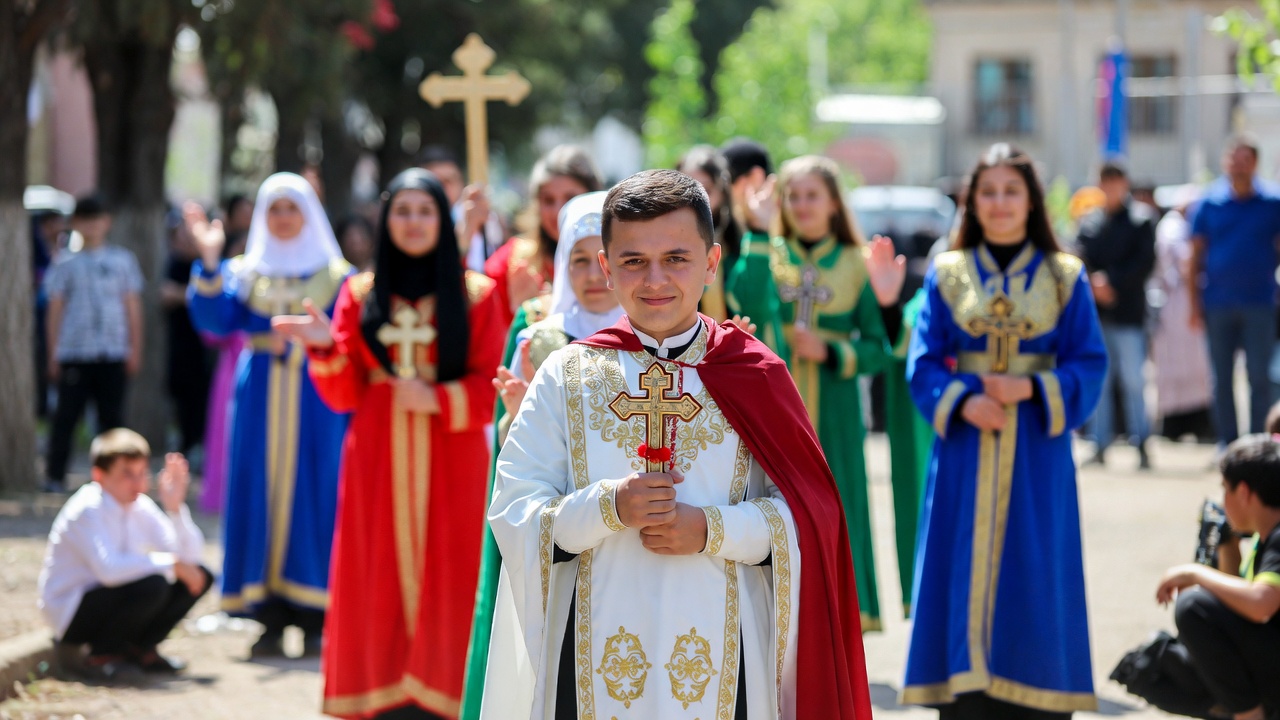
In Yerevan, the feast day includes a special procession in which a relic of Saint Sarkis is carried from the Mother See of Holy Etchmiadzin — the headquarters of the Armenian Apostolic Church — to Saint Sarkis Cathedral in the Kentron district of the city. This cathedral, built in its current form between 1835 and 1842, stands on a dramatic cliff overlooking the Hrazdan River gorge. It is the seat of the Araratian Pontifical Diocese and one of the most beloved churches in the Armenian capital.
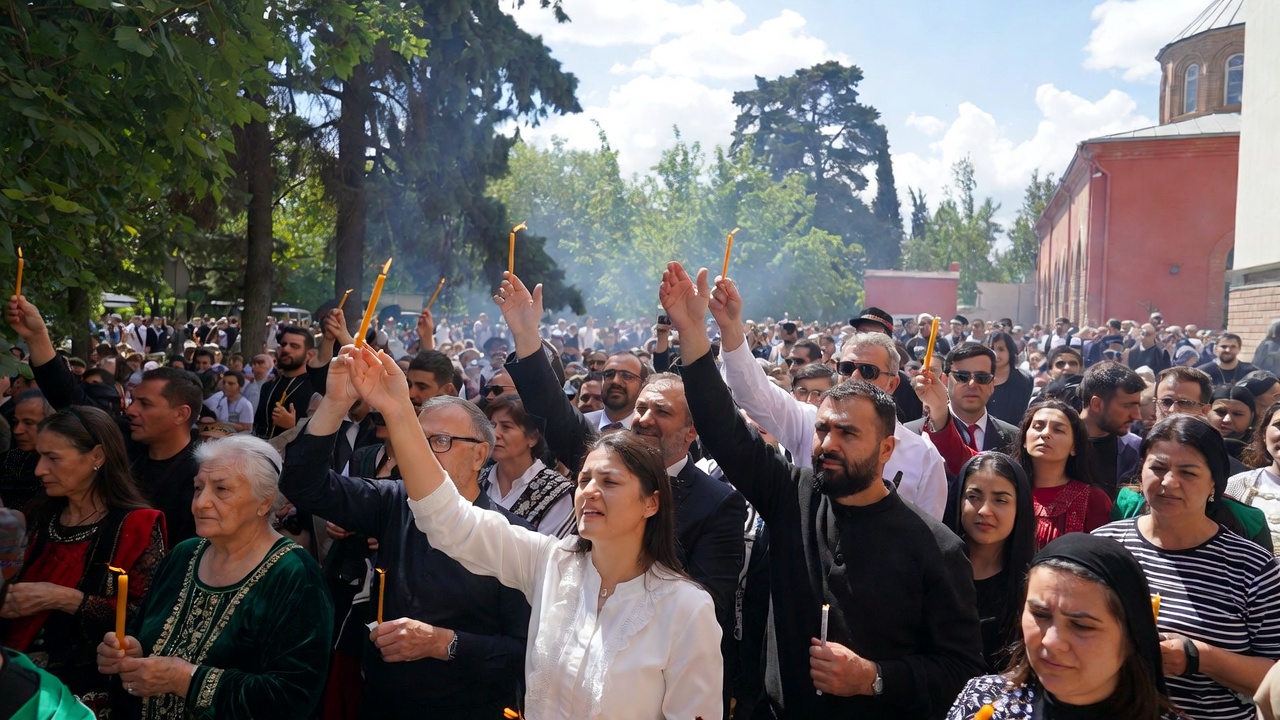
The procession draws large crowds. Families line the streets. The relics, housed in an ornate reliquary, are carried with great reverence by the clergy. It is a public act of faith — a reminder that the bones of a man who died more than 1,600 years ago still inspire devotion and love.
Cultural Activities and Concerts
For over a decade, the celebration of Saint Sarkis Day in Yerevan has included cultural activities beyond the church walls. These may include:
- Art exhibitions
- Concerts and musical performances
- Traditional folk dance events
- Poetry readings
- Film screenings
These events transform the feast from a purely religious observance into a cultural festival that celebrates Armenian identity, creativity, and heritage.
Saint Sarkis Day and Weddings: Why Armenian Couples Rush to Marry
There is a practical and deeply romantic reason why Saint Sarkis Day is so closely associated with weddings. In the Armenian liturgical calendar, the Great Lent begins approximately two weeks after the feast. Once Lent starts, the curtains of the church altars are closed, and no wedding ceremonies can take place for 48 days.
This means that couples who wish to marry must do so in the brief window between Saint Sarkis Day and the start of Lent. In 2026, with the feast on January 31 and the Great Lent beginning on February 15 (according to the 2026 liturgical calendar), couples have roughly two weeks to celebrate their weddings.
As a result, the days following Saint Sarkis Day are among the busiest wedding seasons in Armenia. Churches are booked solid. Restaurants overflow with reception guests. Families gather from across the country and the diaspora. The Ecokayan Resort travel guide notes: “During the two weeks between the feast of Saint Sarkis and the Great Lent, a large number of wedding celebrations is taking place.”
For engaged couples, receiving a blessing on Saint Sarkis Day is considered especially auspicious. The saint who realized the longings of love is thought to bestow a special grace on those who marry under his patronage.
Saint Sarkis Day vs. Valentine’s Day: Armenia’s Answer to the Global Holiday of Love
Every February, much of the Western world celebrates Valentine’s Day on February 14. Armenians, however, have their own holiday of love — and many argue it is richer, older, and more meaningful.
While Valentine’s Day has become heavily commercialized in many countries — driven by greeting card companies, chocolate brands, and flower shops — Saint Sarkis Day retains its spiritual depth. It is rooted in the story of a real historical figure who died for his faith. It includes prayer, fasting, communal meals, and the blessing of the youth. The customs are homegrown — not imported from a global marketing campaign.
That said, the two holidays share a spirit of celebrating love. In modern Yerevan, you will find both traditions coexisting. Shops sell Valentine’s Day cards alongside trays of Saint Sarkis halva. Young couples exchange flowers on both occasions.
As the Harsanik Armenian wedding resource puts it: “It can be said that St. Sarkis Day is the Armenian version of Valentine’s Day.” But it is also much more. It is a day of faith, a day of dreams, and a day when an entire nation pauses to honor the idea that love — in all its forms — is worth fighting and even dying for.
Where to Celebrate Saint Sarkis Day in Armenia: Top Churches and Pilgrimage Sites
If you are planning a trip to Armenia to experience Saint Sarkis Day firsthand, here are the most important places to visit.
Saint Sarkis Cathedral, Yerevan
Address: Israyelyan Street 21, Kentron District, Yerevan
This is the most prominent church dedicated to the saint in the capital city. Perched on the edge of the Hrazdan River gorge, it offers stunning views of the river valley and, on clear days, of Mount Ararat in the distance. The cathedral is the seat of the Araratian Pontifical Diocese and hosts the main feast day liturgy in Yerevan. Its prayer hall covers 328 square meters and features high reliefs of the 12 apostles on its pillars. It was the first church in Armenia to install an under-floor heating system.
Saint Sarkis Monastery, Ushi Village
Location: Aragatsotn Province, Armenia
This is where it all began. The monastery in the village of Ushi was built over the relics of Saint Sarkis, which were brought to Armenia by Saint Mesrop Mashtots in the 5th century. Although the relics were later moved to Holy Etchmiadzin, the site remains a place of deep pilgrimage. On the feast day, many pilgrims still make the journey to Ushi to pay their respects.
Mother See of Holy Etchmiadzin
Location: Vagharshapat, Armavir Province, Armenia
The spiritual center of the Armenian Apostolic Church, Etchmiadzin is the starting point for the relic procession to Yerevan’s Saint Sarkis Cathedral. Attending a service here on the feast day is a once-in-a-lifetime experience. The complex includes the Etchmiadzin Cathedral, which is one of the oldest cathedrals in the world, and the church treasury, which houses sacred relics including those of Saint Sarkis.
How Armenian Communities Around the World Celebrate Saint Sarkis Day
The Armenian diaspora is vast. An estimated 7 million Armenians live outside of Armenia, with large communities in Russia, the United States, France, Lebanon, Iran, and many other countries. Each of these communities celebrates Saint Sarkis Day in its own way, while maintaining the core traditions.
In the United States
Armenian parishes across America hold special liturgies and communal meals. At Saint Sarkis Armenian Apostolic Church in Dearborn, Michigan — one of the oldest Armenian parishes in the country, established in 1932 — the feast is celebrated with a full Divine Liturgy followed by the Blessing of Madagh. The parish also runs Sunday School programs, youth groups, and Bible studies that help younger generations understand the significance of the holiday.
In the United Kingdom
The Diocese of the Armenian Church in the UK celebrates the feast with a solemn Divine Liturgy and special prayers for both the living and the departed benefactors of the church. The Saint Sarkis Armenian Church in Kensington, London — built in the 1920s with funding from philanthropist Calouste Gulbenkian — serves as a focal point for the Armenian community in Britain.
In Lebanon and Syria
Armenian communities in the Middle East have some of the most vibrant food traditions associated with the holiday. It was in Lebanon and Syria that the tradition of purchasing special halva for Saint Sarkis Day became particularly widespread. The diaspora communities in these countries also preserve the Kumba cake tradition from the Musa Dagh region.
In Georgia
The Diocese of the Armenian Apostolic Orthodox Holy Church in Georgia plays an active role in the celebration. The feast is observed with liturgical services and the recounting of Saint Sarkis’s story, keeping the tradition alive among the Armenian communities of Tbilisi and beyond.
Children’s Traditions on Saint Sarkis Day: Socks, Sweets, and Gifts
Saint Sarkis Day is not just for lovers and young adults. Children have their own special customs.
On the day of the feast, children climb to the rooftops or garrets of their homes. They lower socks or small pouches and wait for gifts. The tradition is that these socks are returned to them filled with sweets or small coins. It is a playful, joyful custom that ensures even the youngest members of the family feel included in the celebration.
There is also a tradition of honoring anyone named Sarkis on this day. People with this name receive special gifts, dinner invitations, and congratulations. And babies born on the feast day are often named Sarkis (for boys) or Sarkisyan (as a surname) to honor the saint.
Children also participate in the tradition of feeding birds with bread on Saint Sarkis Day. The direction in which the birds fly after eating is said to indicate the direction from which the child’s future spouse will come — a sweet and innocent version of the adult custom.
Blessings and Wishes You Can Share on Saint Sarkis Day 2026
Whether you are greeting an Armenian friend, posting on social media, or sending a message to a loved one, here are some blessings and wishes appropriate for the occasion.
In Armenian:
- “Surb Sarkisi tonit shnorhavor!” — Happy Saint Sarkis Day!
- “Astvatsin liratsne tsez hamest lav baner.” — May God fill your life with all good things.
- “Sirov yev havasdkatsoutyamp.” — With love and faith.
In English:
- “Wishing you a blessed Saint Sarkis Day. May the patron saint of love and youth fill your heart with hope and your dreams with joy.”
- “On this feast of Saint Sarkis, may your prayers be heard and your love be fulfilled.”
- “Happy Saint Sarkis Day! May the hoofprint of his horse appear on your rooftop and bring blessings to your home.”
- “As Armenians celebrate the feast of love and youth, I wish you a heart full of faith and a life full of love.”
The Spiritual Meaning of Saint Sarkis Day: Faith, Sacrifice, and the Power of Love
Beneath the charming folk traditions — the salty cookies, the flour on the rooftop, the dreaming of future spouses — lies a profound spiritual message. Saint Sarkis Day is ultimately about the relationship between faith and love.
Sarkis was a man who gave up everything — his position, his homeland, his safety — for his faith in Christ. He watched his son die. He refused to compromise his beliefs, even when it meant his own death. His story is one of the most powerful examples of selfless devotion in the Armenian Christian tradition.
The prayers offered on his feast day reflect this depth. They are not just prayers for romance. They are prayers for courage — the courage to love fully, to commit deeply, and to stand firm in one’s convictions. They are prayers for guidance — the wisdom to recognize true love when it appears, and the strength to nurture it through the inevitable storms of life.
In Armenian theology, love is not a feeling. It is an act of will, a choice made daily, sustained by faith. Saint Sarkis embodied this understanding of love. He chose faith over comfort. He chose God over safety. And for this, he became the patron saint not of easy romance, but of true, tested, enduring love.
How to Observe Saint Sarkis Day If You Are Not Armenian
You do not need to be Armenian to observe Saint Sarkis Day. The holiday’s themes — love, faith, sacrifice, community — are universal. Here are some ways anyone can participate:
- Fast for a day. Choose one day during the week before the feast to eat simply. Use the time you would normally spend cooking or eating to pray or meditate.
- Bake aghi blit. Follow the recipe above and try the salty cookie tradition. You might be surprised by what you dream.
- Attend a service. If there is an Armenian church in your city, call ahead and ask if visitors are welcome at the feast day liturgy. Armenian communities are known for their hospitality.
- Share a meal. Invite friends over and prepare Armenian food — halva, choereg (sweet bread), or any dish that brings people together.
- Write a prayer. Sit down and write a personal prayer or blessing for the people you love. Saint Sarkis Day is a reminder that love is worth expressing, not just feeling.
- Learn about Armenian culture. Use the feast as an opportunity to read about the rich history and traditions of one of the world’s oldest Christian nations.
The Legacy of Saint Sarkis in Armenian Art, Literature, and Music
Saint Sarkis’s influence extends far beyond the church. He is a major figure in Armenian art, literature, and music.
In traditional Armenian iconography, Sarkis is depicted as a noble warrior on a white horse, often with his son Martiros seated behind him. This image appears in manuscripts, church murals, and printed textiles spanning centuries.
The Armenian folk tradition is filled with songs and poems about Sarkis. He appears in legends as a hero who protects the innocent, punishes the wicked, and rides through storms. His horse’s hooves are said to shake the earth. His spear stirs up blizzards. He is a figure of both power and tenderness — a warrior who fights for love.
In modern Armenia, the feast day has inspired concerts, art exhibitions, and cultural events that celebrate both the saint and the broader theme of love in Armenian culture. Yerevan’s cafes fill with couples sharing halva. Poets read verses about love and loss. Musicians perform traditional Armenian love songs. The entire city seems to pulse with a warm, gentle energy — a remarkable thing in the dead of winter.
Frequently Asked Questions About Saint Sarkis Day Prayers and Blessings
Q: What is Saint Sarkis Day? A: Saint Sarkis Day is an annual feast of the Armenian Apostolic Church honoring Saint Sarkis the Warrior (Sourb Sargis Zoravar), a 4th-century military general martyred for his Christian faith. He is the patron saint of love and youth.
Q: When is Saint Sarkis Day in 2026? A: In 2026, Saint Sarkis Day falls on Saturday, January 31.
Q: What prayers are said on Saint Sarkis Day? A: A full Divine Liturgy is celebrated, including psalms, hymns, scripture readings, the Eucharist, and a special Blessing of the Youth. Personal prayers for love, guidance, and health are also common.
Q: What is the aghi blit tradition? A: On the eve of the feast, young people eat a very salty cookie and go to sleep without drinking water. They believe the person who offers them water in their dream is their future spouse.
Q: Is Saint Sarkis Day the same as Valentine’s Day? A: Not exactly. While both celebrate love, Saint Sarkis Day is rooted in Armenian Christian tradition and includes fasting, prayer, and church services. It predates the modern commercialization of Valentine’s Day.
Q: Can non-Armenians celebrate Saint Sarkis Day? A: Yes. The themes of love, faith, and community are universal. Non-Armenians are welcome to attend church services, participate in traditions, and learn about Armenian culture.
Q: What is Saint Sarkis Halva? A: A traditional Armenian sweet made from sugar, marshmallow (or soapwort root), rose water, and sesame seeds. It is eaten on the morning of the feast to celebrate the end of fasting.
Q: Why do Armenians put flour on the rooftop on Saint Sarkis Day? A: They believe Saint Sarkis rides his white horse through the night. If his horse leaves a hoofprint in the flour, it means the household’s prayers will be answered.
Final Thoughts: Carrying the Blessings of Saint Sarkis Into the Year Ahead
As January 31, 2026, approaches, millions of Armenians around the world will prepare for the Feast of Saint Sarkis. They will fast. They will pray. They will bake impossibly salty cookies and leave flour on their rooftops. They will attend Divine Liturgy and receive the Blessing of the Youth. They will share halva and exchange flowers and sweets with the people they love.
And in all of this, they will be participating in a tradition that stretches back more than 1,600 years — a tradition that connects the living to the dead, the young to the old, and the earthly to the divine.
Saint Sarkis Day is a reminder that love is not just a feeling. It is a prayer. It is a sacrifice. It is a salty cookie eaten with faith and a dream awaited with hope. It is a warrior on a white horse, riding through the winter storms, leaving blessings in his wake.
Surb Sarkisi tonit shnorhavor. Happy Saint Sarkis Day.
May your dreams be sweet, your prayers be heard, and your love be enduring.