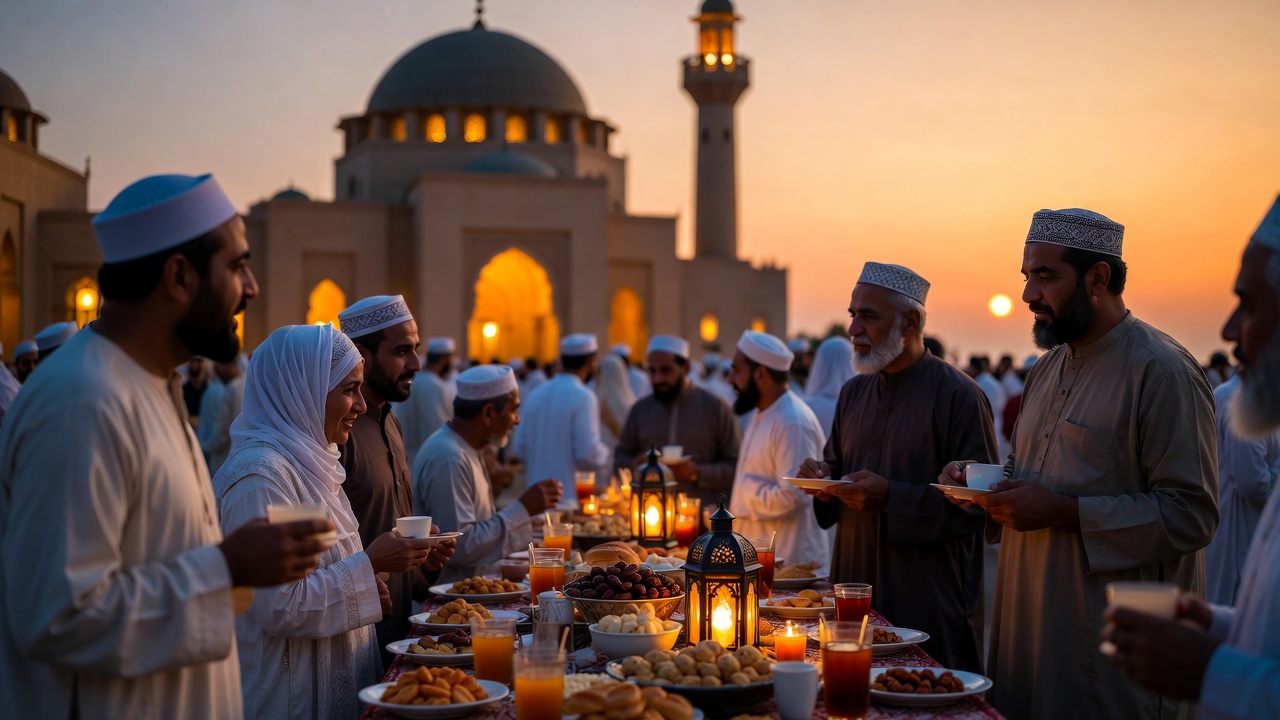
The crescent moon rises over Istanbul, casting its gentle glow upon minarets that have witnessed centuries of faithful observance. In Jakarta, families gather around tables laden with colorful dishes. Across the Arabian Peninsula, the call to prayer echoes through ancient streets. These scenes unfold simultaneously across the Muslim world as Ramadan, the holiest month in the Islamic calendar, begins once again.
For the world’s 1.9 billion Muslims, Ramadan represents far more than abstaining from food and drink. It is a profound spiritual journey that demands preparation, knowledge, and unwavering commitment. Whether you are observing your first Ramadan or your fiftieth, understanding the essential fasting rules at the beginning of this sacred month can transform your experience from mere obligation into genuine spiritual elevation.
In this comprehensive guide, we will explore everything you need to know about Ramadan fasting rules, from the fundamental requirements to the nuanced practices that distinguish a meaningful fast from a superficial one. We will examine what actions break your fast, which behaviors you should embrace, and how to navigate common challenges that arise during the early days of this blessed month.
Understanding the Spiritual Significance of Fasting During Ramadan
Before diving into the rules themselves, it is essential to understand why Muslims fast during Ramadan. This context transforms the regulations from arbitrary restrictions into meaningful practices rooted in divine wisdom.
Ramadan is the ninth month of the Islamic lunar calendar, and Muslims believe it was during this month that the first verses of the Holy Quran were revealed to Prophet Muhammad (peace be upon him) in the Cave of Hira through the angel Jibreel (Gabriel). The Quran itself establishes fasting as a fundamental obligation:
“O you who believe, fasting is prescribed for you as it was prescribed for those who were before you, in order that you may learn taqwa (piety).” — Surah Al-Baqarah, 2:183
The Arabic word for fasting is “Sawm” (صوم), which literally means “to abstain.” In Islamic law, fasting encompasses abstaining from food, drink, marital relations, and other invalidating actions from the break of dawn (Fajr) until sunset (Maghrib) with the sincere intention of worshiping Allah.
Fasting serves multiple spiritual purposes:
- Developing taqwa (God-consciousness and piety)
- Cultivating self-discipline and mastery over physical desires
- Fostering empathy for those who experience hunger involuntarily
- Purifying the soul from worldly attachments
- Strengthening community bonds through shared experience
When understood in this light, the rules of fasting become guideposts on a spiritual journey rather than burdensome restrictions.
When Does Ramadan 2025 Start and End: Key Dates You Need to Know
Ramadan follows the Islamic lunar calendar, which is approximately 10-12 days shorter than the Gregorian solar calendar. This means Ramadan “moves back” each year, eventually cycling through all seasons over a period of roughly 33 years.
Ramadan 2025 Expected Dates
| Event | Expected Date |
|---|---|
| First Night of Ramadan | Friday, February 28, 2025 |
| First Day of Fasting | Saturday, March 1, 2025 |
| Last Day of Ramadan | Sunday, March 30, 2025 |
| Eid al-Fitr | Monday, March 31, 2025 |
Note: Actual dates may vary by one day depending on moon sighting in your region. The Prophet Muhammad (PBUH) instructed: “Fast upon sighting the crescent moon, and end the fast upon its sighting. And should it be obscured, then complete 30 days of Shaban.”
Different Muslim communities follow varying methods for determining the start of Ramadan. Some rely on local moon sighting, while others follow astronomical calculations or defer to religious authorities in Saudi Arabia or their country of origin. It is important to follow the guidance of your local mosque or trusted Islamic authority.
Who Must Fast During Ramadan: Obligatory Requirements and Valid Exemptions
Understanding who is required to fast—and who is exempt—is fundamental knowledge for any Muslim preparing for Ramadan.
Fasting is Obligatory (Fardh) for Muslims Who Meet These Conditions
Fasting during Ramadan is one of the Five Pillars of Islam and is mandatory for every adult Muslim who meets the following criteria:
| Requirement | Explanation |
|---|---|
| Muslim | Non-Muslims are not required to fast |
| Reached puberty | Children are exempt but may be encouraged to practice |
| Mentally sound | Those with mental illness affecting judgment are exempt |
| Physically capable | Must be healthy enough to fast safely |
| Not traveling | Travelers on long journeys have exemption options |
| Resident | Being settled in one’s place of residence |
For women specifically, additional exemptions apply during menstruation, postpartum bleeding (nifas), pregnancy, and breastfeeding.
Categories of People Exempt from Fasting
Islam is a religion of mercy and recognizes that not everyone can fast safely. The following individuals are exempt from fasting:
Temporarily Exempt (Must Make Up Missed Days Later):
- Travelers on long journeys (typically defined as 50+ miles or intended stays of less than 5 days)
- Women during menstruation
- Women experiencing postpartum bleeding
- Those with temporary illness
- Pregnant women (if fasting poses health risks)
- Breastfeeding mothers (if fasting affects milk production)
Permanently Exempt (May Pay Fidya Instead):
- The elderly who cannot fast
- Those with chronic or terminal illness
- Individuals whose health conditions make fasting dangerous
Fidya is a charitable compensation paid to feed a poor person for each missed day of fasting. It allows those who cannot fast to still participate in the spirit of Ramadan through generosity.
What Time Does Fasting Begin and End Each Day: Suhoor and Iftar Times Explained
One of the most practical aspects of Ramadan fasting is understanding precisely when the fast begins and ends each day.
The Daily Fasting Schedule
| Meal | Arabic Term | Timing | Description |
|---|---|---|---|
| Pre-dawn meal | Suhoor (also Sehri/Sahur) | Before Fajr Adhan | Last opportunity to eat before fasting begins |
| Breaking the fast | Iftar | At Maghrib Adhan | First meal after sunset |
The fast begins at the Fajr (dawn) prayer time, which is when the first light of dawn becomes visible on the horizon. This is the moment when Suhoor must end and all eating and drinking must cease.
The fast ends at the Maghrib (sunset) prayer time, when the sun has completely set below the horizon. Traditionally, Muslims break their fast with dates and water, following the example of Prophet Muhammad (PBUH).
How Fasting Hours Vary Around the World
Fasting hours vary dramatically depending on geographical location and the time of year. Since Ramadan can occur in any season, fasting hours can range from as few as 10-12 hours near the equator to 18-20+ hours in far northern or southern latitudes during summer.
| Region | Approximate Fasting Hours (March 2025) |
|---|---|
| Equatorial countries (Indonesia, Kenya) | 12-13 hours |
| Middle East (Dubai, Cairo, Riyadh) | 13-14 hours |
| South Asia (Delhi, Karachi, Dhaka) | 13-14 hours |
| Western Europe (London, Paris) | 14-15 hours |
| North America (New York, Toronto) | 13-14 hours |
| Northern Europe (Oslo, Stockholm) | 15-16 hours |
Muslims living in extreme northern latitudes, where the sun may not set at all during certain seasons, typically follow the fasting times of Makkah, the nearest major city, or a time that allows reasonable fasting hours.
Essential Rules for Valid Fasting: What Every Muslim Must Know at the Beginning of Ramadan
For your fast to be accepted and spiritually rewarding, certain conditions must be met. These rules are derived from the Quran and the authentic Sunnah (traditions) of Prophet Muhammad (PBUH).
The Intention (Niyyah) for Fasting
Making the intention to fast is an absolute requirement. The intention must be made in the heart before the Fajr prayer time for each day’s fast. While it is not necessary to verbalize the intention, many Muslims recite it silently:
“I intend to fast tomorrow for the month of Ramadan, seeking the pleasure of Allah.”
The Hanafi school of thought permits making a single intention at the beginning of Ramadan for all 29 or 30 days, while other schools require renewing the intention each night.
The Three Core Abstentions During Fasting Hours
The Quran specifies three fundamental prohibitions during fasting hours in Surah Al-Baqarah, verse 187:
- Abstaining from food – All food consumption is prohibited from dawn to sunset
- Abstaining from drink – All beverages, including water, are forbidden
- Abstaining from marital relations – Sexual intercourse is prohibited during daylight fasting hours
These three abstentions form the foundation of the physical fast, but Islam teaches that true fasting encompasses far more than these physical restrictions.
What Breaks Your Fast During Ramadan: A Complete List of Invalidating Actions
Understanding what actions break (invalidate) your fast is crucial knowledge for every Muslim. Actions that break the fast are called “Muftiraat” in Arabic.
Actions That Definitely Break the Fast
The following actions, when done intentionally and knowingly during fasting hours, invalidate the fast and require making up the missed day (Qada):
| Action | Explanation | Consequence |
|---|---|---|
| Eating or drinking intentionally | Any food or beverage consumed deliberately | Must make up the fast |
| Smoking, vaping, or inhaling substances | Inhaling smoke or vapor of any kind | Must make up the fast |
| Sexual intercourse | Marital relations during fasting hours | Requires Qada + Kaffarah* |
| Intentional vomiting | Deliberately inducing vomiting | Must make up the fast |
| Menstruation or postpartum bleeding | Natural biological processes | Must stop fasting; make up days later |
| Nutritional injections or IV fluids | Medical treatments that nourish the body | Must make up the fast |
Kaffarah (expiation) for breaking the fast through sexual intercourse without valid excuse requires fasting for 60 consecutive days or feeding 60 poor people.
Important Nuances About What Breaks the Fast
Accidental eating or drinking does NOT break the fast. The Prophet Muhammad (PBUH) said:
“If somebody eats something forgetfully while he is fasting, then he should complete his fast, for Allah has made him eat and drink.” — Sahih al-Bukhari
This merciful provision demonstrates Islam’s understanding of human nature. If you genuinely forget you are fasting and consume food or drink, simply stop as soon as you remember and continue your fast—it remains valid.
Scholarly Differences on Certain Actions
Islamic scholars from different schools of jurisprudence (madhabs) sometimes differ on whether certain actions break the fast. Here are some common questions:
Eye drops: Most scholars agree eye drops do not break the fast unless you taste them in your throat.
Ear and nose drops: The Islamic Fiqh Council issued a ruling that ear and nose drops do not break the fast as long as you avoid swallowing any material that reaches the throat. However, some scholars disagree.
Blood tests and donations: Small blood samples for testing generally do not break the fast. Blood donation is debated—some scholars consider it similar to cupping (hijama), which breaks the fast according to certain hadith, while others permit it.
Asthma inhalers: Most contemporary scholars permit asthma inhalers as they deliver medicine to the lungs rather than the stomach.
Non-nutritional injections: Vaccines, insulin, and similar injections that do not provide nutrition generally do not break the fast.
When in doubt, consult a knowledgeable scholar or your local imam for guidance specific to your situation.
What Does NOT Break Your Fast: Common Misconceptions Clarified
Many Muslims unnecessarily worry about actions that actually do not invalidate the fast. Clarifying these misconceptions can relieve anxiety and allow you to focus on the spiritual aspects of Ramadan.
Actions That Do NOT Break Your Fast
| Action | Why It’s Permitted |
|---|---|
| Accidental eating or drinking | Done out of forgetfulness; fast remains valid |
| Swallowing saliva | Natural bodily function |
| Brushing teeth without swallowing | Personal hygiene is encouraged |
| Showering or bathing | As long as water is not swallowed |
| Applying eye drops (most opinions) | Does not reach the stomach |
| Unintentional vomiting | Beyond one’s control |
| Having wet dreams while sleeping | Involuntary; no sin or broken fast |
| Wearing perfume or scented products | Smell does not invalidate the fast |
| Receiving non-nutritional injections | Does not provide sustenance |
| Bleeding from wounds or nosebleeds | Involuntary blood loss |
| Rinsing the mouth during wudu | Part of ritual purification |
| Tasting food without swallowing | For cooking purposes, though best avoided |
Important: While these actions don’t break the fast, Muslims should still exercise caution and avoid anything that could lead to accidentally swallowing substances.
Spiritual Conduct and Behavioral Rules During Ramadan Fasting
True fasting in Islam extends far beyond abstaining from food and drink. The Prophet Muhammad (PBUH) emphasized that fasting without improving one’s character misses the essential purpose of Ramadan:
“Whoever does not give up false speech and acting upon it and ignorance, Allah has no need of him giving up his food and drink.” — Sahih al-Bukhari
Behaviors to Avoid While Fasting
During Ramadan, Muslims should make special effort to avoid:
- Lying, backbiting, and gossiping (Gheebah)
- Using foul or vulgar language
- Engaging in arguments or fights
- Listening to or spreading rumors
- Looking at forbidden things (lowering the gaze)
- Thinking impure or sinful thoughts
- Showing anger or losing patience
- Being wasteful with food or resources
The hadith teaches that if someone insults or provokes a fasting person, they should respond: “I am fasting, I am fasting.” This reminder serves both to control one’s own response and to inform the other person of the elevated spiritual state the fasting person is trying to maintain.
Behaviors to Embrace While Fasting
Ramadan is an ideal time to cultivate positive habits and increase acts of worship:
- Increasing prayer beyond the five obligatory daily prayers
- Reading and reflecting on the Quran (many Muslims aim to complete the entire Quran during Ramadan)
- Performing Tarawih prayers (special nightly prayers during Ramadan)
- Giving charity (Sadaqah and Zakat)
- Making dhikr (remembrance of Allah)
- Seeking forgiveness through istighfar
- Being kind and patient with family, colleagues, and strangers
- Helping those in need through volunteering and community service
- Maintaining family ties and repairing broken relationships
What to Eat at Suhoor: Pre-Dawn Meal Guidelines for First-Time Fasters
The Suhoor meal is critically important for maintaining energy and hydration throughout the fasting day. The Prophet Muhammad (PBUH) strongly encouraged eating Suhoor:
“Eat Suhoor, for in Suhoor there is blessing.” — Sahih al-Bukhari and Muslim
Nutritional Guidelines for an Effective Suhoor
According to dietary guidance from Singapore General Hospital and the British Nutrition Foundation, an ideal Suhoor should include:
Complex Carbohydrates for Sustained Energy:
- Whole grain bread or toast
- Oatmeal or porridge
- Brown rice
- Whole wheat cereal
Protein for Satiety:
- Eggs (boiled, scrambled, or poached)
- Greek yogurt or labneh
- Cheese (in moderation due to salt content)
- Beans and legumes
Healthy Fats:
- Avocado
- Nuts (almonds, walnuts)
- Olive oil
- Nut butters
Fruits and Vegetables for Hydration:
- Cucumbers (96% water content)
- Watermelon
- Oranges
- Bananas (excellent source of potassium)
- Dates (traditional and nutritious)
Foods to Avoid at Suhoor
Certain foods can make fasting more difficult by increasing thirst or causing energy crashes:
| Avoid | Reason |
|---|---|
| Very salty foods | Increase thirst throughout the day |
| Heavily fried foods | Difficult to digest; cause discomfort |
| Sugary cereals and pastries | Cause energy spikes followed by crashes |
| Caffeinated beverages | May cause dehydration and headaches |
| Spicy foods | Can cause digestive discomfort and thirst |
Sample Suhoor Meal Ideas
Option 1: Traditional Middle Eastern Suhoor
- Whole grain pita bread
- Hummus
- Labneh with olive oil
- Sliced cucumber and tomatoes
- A few dates
- Water and herbal tea
Option 2: Quick and Nutritious Suhoor
- Overnight oats prepared the night before
- Topped with banana, berries, and nuts
- Greek yogurt on the side
- Large glass of water
Option 3: Protein-Rich Suhoor
- Whole wheat toast with avocado
- Two boiled eggs
- Fresh fruit (orange or apple)
- Water
How to Break Your Fast Properly at Iftar: Traditional Practices and Modern Considerations
Iftar, the meal that breaks the daily fast, holds special significance in Ramadan. It is a moment of joy, gratitude, and community.
The Sunnah Method of Breaking the Fast
The Prophet Muhammad (PBUH) demonstrated the proper way to break the fast:
- Break the fast immediately at Maghrib (sunset) — delaying is discouraged
- Start with dates and water — the Prophet typically broke his fast with fresh dates; if unavailable, dried dates; if unavailable, water
- Make dua (supplication) at the moment of breaking fast — this is a time when prayers are particularly accepted
- Perform the Maghrib prayer before eating a full meal
- Eat moderately — avoid overeating after a day of fasting
A traditional dua when breaking the fast:
“Dhahaba al-zama’u wa ibtalat al-‘urooqu wa thabata al-ajru in sha Allah”
Translation: “The thirst has gone, the veins have been moistened, and the reward is assured, if Allah wills.”
Common Iftar Mistakes to Avoid
Overeating: After fasting all day, the temptation to overeat is strong. However, this can cause digestive problems and defeats the purpose of fasting. Eat slowly and listen to your body.
Consuming too much sugar: While sweets are traditional at Iftar, excessive sugar consumption can cause energy crashes and weight gain during Ramadan.
Neglecting water: Focus on rehydrating between Iftar and Suhoor. Aim for 8-10 glasses of water during non-fasting hours.
Skipping prayer: Some people become so focused on food that they delay or rush through Maghrib prayer. Remember that prayer takes precedence.
Managing First-Time Fasting Challenges: Tips for New Muslims and Beginners
If you are fasting for the first time, whether as a new Muslim, a teenager reaching the age of obligation, or someone returning to practice after a break, the first few days can be challenging. Here are evidence-based strategies for success:
Dealing with Hunger Pangs
The first three days are typically the hardest. Your body needs time to adjust to the new eating schedule. After this initial period, most people find fasting becomes significantly easier.
- Stay busy with work, worship, or productive activities
- Avoid food-related content on TV and social media
- Remember the purpose — hunger pangs are reminders of your spiritual journey
- Rest when needed — conserve energy during particularly difficult moments
Preventing Dehydration and Headaches
Dehydration is a common challenge, especially in warmer climates or longer fasting days.
- Hydrate thoroughly between Iftar and Suhoor
- Avoid caffeinated beverages which can cause withdrawal headaches and dehydration
- Eat water-rich foods like cucumbers, watermelon, and soup
- Limit salt intake which increases thirst
Maintaining Energy Levels Throughout the Day
- Never skip Suhoor — this meal is essential for maintaining energy
- Choose slow-releasing carbohydrates over simple sugars
- Take short rest breaks during the day if possible
- Avoid strenuous exercise during the hottest parts of the day
Special Considerations for Fasting with Health Conditions
According to guidance from the World Health Organization for Ramadan, individuals with certain health conditions should take special precautions.
Diabetes and Fasting
Diabetes is highly prevalent among Muslim populations, and fasting presents unique challenges. The WHO Eastern Mediterranean Regional Office notes that more than 9 million people in Egypt alone have diabetes.
Key considerations for diabetic patients:
- Consult your doctor BEFORE Ramadan begins
- Monitor blood glucose levels more frequently
- Adjust medication timing under medical supervision
- Know when to break your fast due to dangerous blood sugar levels
- Have glucose tablets or juice readily available
When to break your fast immediately (diabetic patients):
- Blood glucose below 70 mg/dL (3.9 mmol/L)
- Blood glucose above 300 mg/dL (16.7 mmol/L)
- Symptoms of hypoglycemia or hyperglycemia
Pregnancy and Breastfeeding
Pregnant and breastfeeding women are exempt from fasting if it poses risks to their health or their baby’s health. However, many women wish to fast if possible.
- Consult your healthcare provider before deciding to fast
- Monitor for warning signs like reduced fetal movement or decreased milk production
- Break your fast immediately if you feel unwell
- Know that exemption is permitted — Islam values the preservation of life
Medication Management During Ramadan
Many medications can be adjusted to accommodate fasting. Work with your healthcare provider to explore options:
| Medication Type | Possible Adjustments |
|---|---|
| Once-daily medications | Take at Iftar or Suhoor |
| Twice-daily medications | May be adjusted to pre-dawn and post-sunset |
| Medications requiring food | Schedule around eating times |
| Insulin and diabetes medications | Require medical supervision for adjustment |
Never adjust prescribed medications without consulting your doctor.
The Role of Prayer and Worship in Complementing Your Fast
Fasting without increased worship is incomplete. Ramadan is designed to be a comprehensive spiritual training program, with fasting creating the physical discipline that supports deeper prayer and reflection.
The Five Daily Prayers During Ramadan
While the five daily prayers (Salah) are obligatory year-round, Ramadan is an opportunity to perfect their performance:
| Prayer | Time | Significance During Ramadan |
|---|---|---|
| Fajr | Before dawn | Marks the beginning of the daily fast; made after Suhoor |
| Dhuhr | Midday | Middle of the fasting day; time for extra dhikr |
| Asr | Afternoon | Often the most challenging time for fasters |
| Maghrib | Sunset | Prayer before Iftar; fast-breaking worship |
| Isha | Night | Followed by Tarawih prayers |
Tarawih: The Special Night Prayers of Ramadan
Tarawih prayers are special congregational prayers performed every night during Ramadan after the Isha prayer. While not obligatory, they are highly recommended (Sunnah Muakkadah).
- Typically consists of 8-20 units (rak’ahs)
- Usually includes recitation of the entire Quran over the month
- Creates a powerful sense of community worship
- Best performed in the mosque, though can be prayed at home
Laylat al-Qadr: The Night of Power
The Night of Power (Laylat al-Qadr) falls within the last ten nights of Ramadan, most likely on one of the odd-numbered nights (21st, 23rd, 25th, 27th, or 29th). The Quran describes this night as:
“The Night of Power is better than a thousand months.” — Surah Al-Qadr, 97:3
Muslims intensify their worship during these final nights, often spending entire nights in prayer, Quran recitation, and supplication.
Charity and Generosity: The Zakat and Sadaqah Components of Ramadan
Fasting naturally cultivates empathy for those who go hungry involuntarily. This empathy should translate into action through charity, which is especially meritorious during Ramadan.
Types of Charity in Ramadan
Zakat (Obligatory Charity): Many Muslims choose to pay their annual Zakat during Ramadan to maximize rewards. Zakat is 2.5% of qualifying wealth held for one lunar year.
Zakat al-Fitr (Fitrana): This special charity is obligatory at the end of Ramadan, paid before the Eid prayer. It allows poor Muslims to celebrate Eid and must be paid for every member of the household.
Sadaqah (Voluntary Charity): Any additional charity given during Ramadan earns multiplied rewards. This can include:
- Monetary donations
- Feeding the poor
- Sponsoring Iftar meals
- Helping neighbors
- Volunteering time and skills
Practical Ways to Give During Ramadan
- Sponsor Iftar meals at your local mosque or community center
- Donate to food banks serving Muslim communities
- Support humanitarian organizations providing relief in conflict zones
- Help neighbors especially elderly or those living alone
- Feed the homeless with Iftar packages
- Pay for someone’s groceries anonymously
Common Questions About Ramadan Fasting Rules for Beginners
Can I Brush My Teeth While Fasting?
Yes, you can brush your teeth while fasting. The key is to avoid swallowing any water or toothpaste. Many scholars recommend using a miswak (natural tooth-cleaning stick) as an alternative, which was the Prophetic practice.
Does Swallowing Saliva Break the Fast?
No, swallowing your own saliva does not break the fast. This is a natural bodily function that would be impossible to avoid entirely.
What If I Accidentally Ate or Drank While Fasting?
If you genuinely forgot you were fasting and ate or drank, your fast remains valid. Simply stop eating or drinking as soon as you remember and continue your fast. This is confirmed by authentic hadith.
Can I Use Nasal Spray or Eye Drops?
This is an area of scholarly disagreement. Most contemporary scholars permit eye drops and nasal sprays as long as you don’t taste them in your throat. If uncertain, consult your local imam.
Is My Fast Broken If I Vomit?
Unintentional vomiting does not break the fast. However, if you deliberately induce vomiting, your fast is invalidated and must be made up.
Can I Fast If I’m Traveling?
Travelers have the option to fast or not. If you choose not to fast due to travel hardship, you must make up the missed days later. Many travelers choose to fast if the journey is not too difficult.
What If I Can’t Fast Due to Health Reasons?
If you cannot fast due to illness, consult with both your doctor and an Islamic scholar. Temporary conditions require making up missed fasts later. Permanent conditions may be compensated through Fidya (feeding the poor).
Creating a Ramadan Schedule: Organizing Your Day from Suhoor to Tarawih
A well-planned schedule can help you maximize the spiritual benefits of Ramadan while managing practical responsibilities.
Sample Daily Ramadan Schedule
| Time | Activity |
|---|---|
| 4:00 AM | Wake up for Suhoor |
| 4:30 AM | Eat Suhoor meal slowly and mindfully |
| 5:00 AM | Perform Fajr prayer |
| 5:30 AM | Quran recitation / morning adhkar |
| 6:00 AM | Rest or sleep (if possible) |
| 7:00 AM | Begin work/school day |
| 12:30 PM | Dhuhr prayer + short Quran reading |
| 4:00 PM | Asr prayer |
| 5:30 PM | Prepare for Iftar |
| 6:15 PM | Break fast at Maghrib time |
| 6:20 PM | Maghrib prayer |
| 6:45 PM | Eat Iftar meal |
| 8:00 PM | Isha prayer |
| 8:30 PM | Tarawih prayers (at mosque or home) |
| 10:00 PM | Rest / family time |
| 11:00 PM | Sleep |
Note: Prayer times vary by location. This is a general template that should be adjusted based on your local prayer schedule and personal circumstances.
Maintaining Family Traditions and Creating New Ramadan Memories
Ramadan is not only an individual spiritual journey but also a time for strengthening family bonds and passing traditions to the next generation.
Involving Children in Ramadan
While fasting is not obligatory for children before puberty, many families gradually introduce the practice:
- Young children (5-7): Participate in Suhoor and Iftar without fasting; learn the meaning of Ramadan
- Older children (8-10): May try “half-day fasts” or fasting on weekends
- Pre-teens (11-12): May attempt full fasts on some days with close supervision
Children can also participate by:
- Helping prepare Suhoor and Iftar meals
- Making Ramadan decorations
- Tracking their good deeds on a chart
- Accompanying parents to Tarawih prayers
- Giving charity from their own savings
Building Family Worship Time
- Read Quran together after Iftar
- Pray in congregation as a family at home
- Share stories of the Prophet and companions
- Discuss what you’re grateful for each day
- Plan acts of charity as a family
The Last Ten Days of Ramadan: Intensifying Your Worship
The final ten days of Ramadan are considered the most sacred, containing the Night of Power (Laylat al-Qadr). Muslims traditionally intensify their worship during this period.
I’tikaf: Spiritual Retreat in the Mosque
Many Muslims perform I’tikaf, a spiritual retreat in the mosque during the last ten days. This involves:
- Staying in the mosque continuously (with exceptions for necessities)
- Dedicating time entirely to worship
- Minimizing worldly distractions
- Seeking Laylat al-Qadr through constant prayer
Even if full I’tikaf is not possible, spending extra time at the mosque during these nights is highly recommended.
Maximizing the Night of Power
When seeking Laylat al-Qadr:
- Pray Tarawih and Tahajjud (night prayers)
- Recite and reflect on Quran
- Make abundant dua for yourself and the Ummah
- Seek forgiveness for past sins
- Stay awake in worship as much as possible
The Prophet taught Aisha (RA) a special dua for this night:
“Allahumma innaka ‘afuwwun tuhibbul ‘afwa fa’fu ‘anni”
Translation: “O Allah, You are Forgiving and love forgiveness, so forgive me.”
Preparing for Eid al-Fitr: The Celebration After Ramadan
The conclusion of Ramadan is marked by Eid al-Fitr, the Festival of Breaking the Fast. Proper preparation begins before the final day of Ramadan.
Zakat al-Fitr Requirements
Zakat al-Fitr must be paid before the Eid prayer. It is:
- Obligatory for every Muslim who has food beyond their needs
- Paid per person in the household (including children and dependents)
- Equivalent to approximately 3kg of staple food or its monetary value
- Distributed to the poor so they can celebrate Eid
Eid Day Practices
Morning of Eid:
- Wake up early
- Perform ghusl (full body wash)
- Eat something sweet before the Eid prayer (traditionally dates)
- Wear your best clothes (new if possible)
- Apply fragrance
- Attend the Eid prayer (Salat al-Eid)
After Eid Prayer:
- Exchange Eid greetings (“Eid Mubarak” or “Taqabbal Allahu minna wa minkum”)
- Visit family and friends
- Give gifts (especially to children)
- Enjoy festive meals together
- Spread joy and happiness
Conclusion: Embracing Ramadan with Knowledge and Intention
As we conclude this comprehensive guide to Ramadan fasting rules, remember that the greatest preparation for this blessed month is cultivating the right intention and attitude. The rules and regulations we’ve discussed are not ends in themselves but means to achieve spiritual purification, closeness to Allah, and personal transformation.
The beginning of Ramadan is a sacred threshold — a doorway to immense blessings and opportunities for growth. Whether you are a first-time faster or a lifelong observer of this beautiful tradition, approach each day with renewed commitment and genuine intention.
Key takeaways to remember:
✓ Make your intention sincere — fast for the sake of Allah alone
✓ Know the rules — understand what breaks and doesn’t break your fast
✓ Prioritize Suhoor — never skip the pre-dawn meal
✓ Stay hydrated — drink plenty between Iftar and Suhoor
✓ Fast with your entire being — guard your tongue, eyes, and actions
✓ Increase worship — make Ramadan a month of prayer and Quran
✓ Give generously — charity is multiplied during Ramadan
✓ Maintain community — fast with family and pray with congregation
✓ Seek the Night of Power — intensify worship in the last ten nights
✓ End with gratitude — celebrate Eid with joy and thankfulness
May Allah accept your fasting and prayers, grant you the full blessings of Ramadan, and count you among those who witness many more Ramadans to come.
Ramadan Mubarak — May you have a blessed Ramadan!
This article was written to provide general guidance on Ramadan fasting rules. For specific religious rulings (fatwas) pertaining to your individual circumstances, please consult a qualified Islamic scholar or your local imam.