A journey through five centuries of rhythm, rebellion, and revelation in the world’s greatest street party
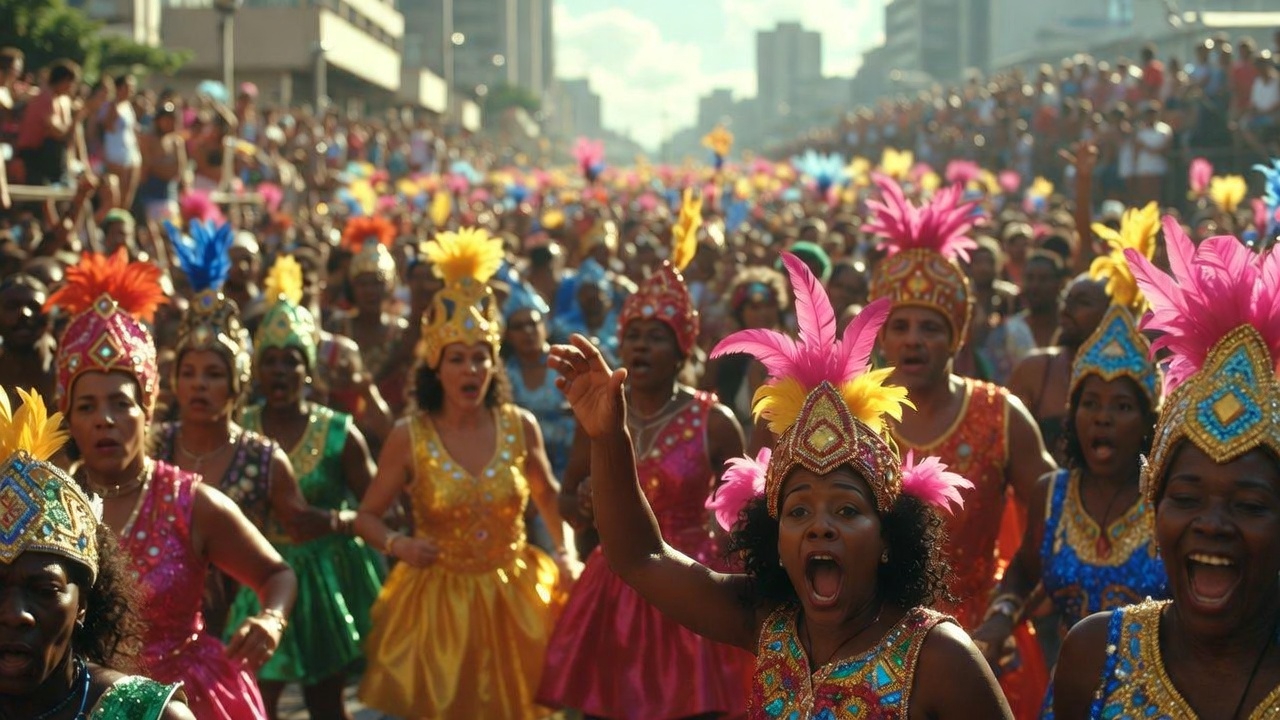
The first time I witnessed the Rio Carnival, standing among two million revelers on the sweltering streets of Centro, I understood why Brazilians call it “o maior espetáculo da Terra”—the greatest show on Earth. The thunderous drums of a passing bloco shook my chest. Sequined dancers moved like liquid gold under the tropical sun. And somewhere in that beautiful chaos, I realized I wasn’t just watching a parade—I was witnessing the living heartbeat of Brazilian identity.
But how did this extraordinary celebration come to be? What forces shaped the Rio Carnival from a rowdy colonial street fight into a UNESCO-recognized cultural phenomenon that draws over 7 million visitors annually and generates billions for the Brazilian economy?
This is the story of Rio Carnival history—a tale of African resilience, European influence, indigenous roots, and the indomitable Brazilian spirit that transformed suffering into celebration, oppression into expression, and chaos into choreography.
What Is the Rio Carnival and Why Does It Matter?
Before diving into history, let’s establish what makes Rio’s Carnival distinct from the hundreds of other carnival celebrations worldwide.
Rio de Janeiro Carnival (Carnaval do Rio de Janeiro in Portuguese) is an annual festival held before Lent, typically occurring in February or March. It officially lasts five days, from Friday to Fat Tuesday (Terça-feira Gorda), though unofficial celebrations extend weeks in either direction.
| Aspect | Details |
|---|---|
| Duration | 5 official days (Friday through Tuesday before Ash Wednesday) |
| Typical Dates | February or early March (varies with Easter calendar) |
| Annual Attendance | 6-7 million participants |
| Economic Impact | Approximately R$4.5 billion (USD $900 million) |
| Number of Street Parties (Blocos) | Over 500 registered blocos |
| Sambódromo Capacity | 72,500 seated spectators |
| UNESCO Recognition | Intangible Cultural Heritage of Humanity (2012) |
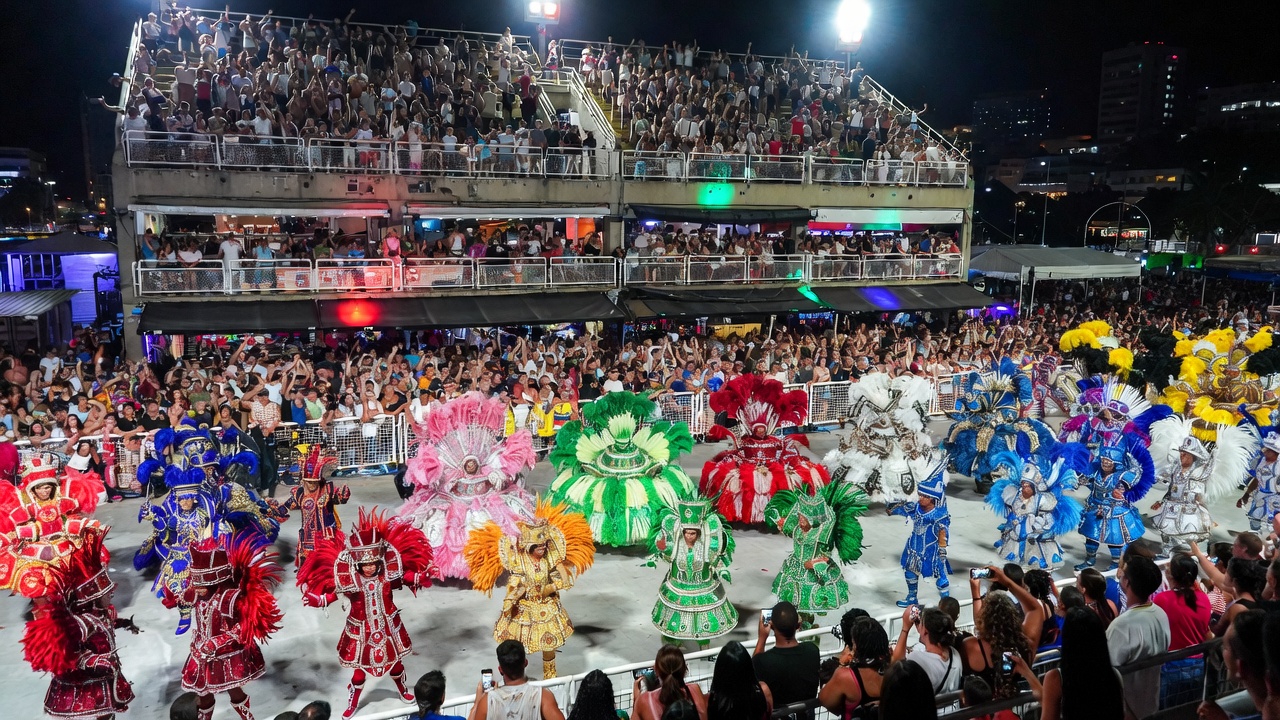
The celebration encompasses two distinct but interconnected traditions: the organized samba school parades at the purpose-built Sambódromo and the spontaneous street parties (blocos) that erupt across all neighborhoods of Rio.
What makes Rio Carnival matter extends far beyond tourism statistics. This festival represents the synthesis of three continents—the collision and eventual fusion of African, European, and Indigenous American cultures under the particular conditions of Brazilian colonial history. Understanding Carnival means understanding Brazil itself.
Ancient Roots: The European Origins of Carnival Tradition
The word “carnival” derives from the Latin “carne levare” or “carnem levare,” meaning “to remove meat”—a reference to the fasting requirements of the Christian Lenten season that follows. Some scholars argue for an alternative etymology from “carrus navalis,” referring to ship-shaped floats used in ancient Roman processions.
Pre-Christian Festivals That Influenced Carnival Celebrations
Long before Christianity, Mediterranean cultures celebrated the transition from winter to spring with festivals characterized by role reversal, social chaos, and temporary suspension of normal rules.
The Roman Saturnalia (December 17-23) allowed slaves temporary freedom, masters served their servants, and social hierarchies dissolved in feasting and gift-giving. Lupercalia (February 13-15) featured purification rituals and fertility celebrations. Greek Dionysian festivals honored the god of wine, ecstasy, and theater through processions, performances, and collective revelry.
When Christianity spread across the Roman Empire, the Church adopted a pragmatic approach to pagan festivals. Rather than suppress deeply rooted cultural practices, ecclesiastical authorities Christianized existing celebrations, giving them new religious meanings while preserving their fundamental character.
The period before Lent—the 40 days of fasting, prayer, and penance leading to Easter—became the designated time for this sanctioned chaos. If Christians must abstain from meat, rich foods, and worldly pleasures for 40 days, why not indulge extravagantly in the days immediately preceding?
Medieval European Carnival Traditions
By the medieval period, carnival celebrations had become established across Catholic Europe, each region developing distinctive traditions:
- Venice developed its famous masked balls and elaborate costumes
- Nice established grand processions with decorated floats
- Cologne and German cities created Karneval with satirical parades
- Portugal celebrated Entrudo, a rough street festival involving water, flour, and eggs thrown between participants
This last tradition—Portuguese Entrudo—would prove particularly significant for understanding how carnival reached Brazil and took its initial form in the colonial streets of Rio de Janeiro.
How Carnival Arrived in Brazil: Portuguese Colonial Influence
When Portuguese colonizers arrived in Brazil in 1500, they brought their customs, their Catholic faith, and their festive traditions—including the chaotic celebration known as Entrudo.
The Entrudo Period: Early Carnival in Colonial Brazil (1641-1840s)
The first documented carnival celebration in Brazil dates to approximately 1641 in the colonial capital. However, the practice likely began even earlier, as Portuguese settlers naturally continued traditions from home.
Entrudo (from the Latin introitus, meaning “entrance” or “beginning”) was a decidedly rough affair. Participants—men and women, free and enslaved, rich and poor—engaged in street battles involving:
- Limões de cheiro (scented lemons): wax balls filled with perfumed water
- Entrudo water and mud thrown from windows and balconies
- Flour, eggs, and various substances hurled at passersby
- Physical roughhousing and practical jokes
This was carnival at its most primal—a true suspension of social order where masters might be drenched by servants and wealthy ladies pelted with flour by street vendors. The chaos served as a social safety valve, releasing accumulated tensions of the rigidly hierarchical colonial society.
“During Entrudo, Rio transforms into a battlefield where all weapons are permitted except those that wound permanently.” — Gilberto Freyre, Casa-Grande & Senzala (1933)
However, Entrudo’s roughness drew increasing criticism. The practice was dangerous—people died from infections after being struck with contaminated water—and the social mixing troubled authorities invested in maintaining racial and class hierarchies.
Between 1604 and 1905, over 30 laws and decrees attempted to ban or regulate Entrudo, with little success. Brazilians simply refused to abandon their beloved—if chaotic—celebration.
The African Soul of Rio Carnival: How Enslaved Peoples Transformed the Festival
No honest telling of Rio Carnival history can minimize the central role of enslaved Africans and their descendants in creating what the celebration became. While the calendar framework came from Europe, the heart, soul, and rhythm of Carnival are fundamentally African.
The Middle Passage and Cultural Survival
Between 1501 and 1866, Brazil received approximately 4.8 million enslaved Africans—more than any other country in the Americas. These millions of people, torn from their homelands across West and Central Africa, brought with them:
- Complex polyrhythmic musical traditions
- Call-and-response vocal patterns
- Circular dance formations
- Sophisticated drumming techniques
- Religious and ceremonial practices
Under the brutal conditions of Brazilian slavery, these traditions served as vital links to identity, community, and spiritual survival. Enslaved people were not permitted to practice their religions openly, so they developed syncretic forms—disguising African orixás (deities) as Catholic saints and embedding religious practices within seemingly secular celebrations.
Coronation of Congo Kings: Early Afro-Brazilian Carnival Traditions
One of the most significant African contributions to Brazilian carnival culture was the tradition of “Coroação dos Reis Congo” (Coronation of Congo Kings).
Dating to at least the 17th century, these ceremonies involved enslaved communities electing and crowning their own kings and queens in elaborate public celebrations featuring:
- Processional parades with African-influenced music
- Hierarchical court structures mirroring (and perhaps satirizing) European royalty
- Elaborate costumes combining African textiles with Portuguese courtly dress
- Dances and songs in African languages and Creole Portuguese
Colonial authorities tolerated these celebrations partly because they occurred on Catholic feast days, partly because they believed such events prevented rebellion by providing sanctioned outlets for expression, and partly because they misunderstood the deep cultural and religious significance of what they witnessed.
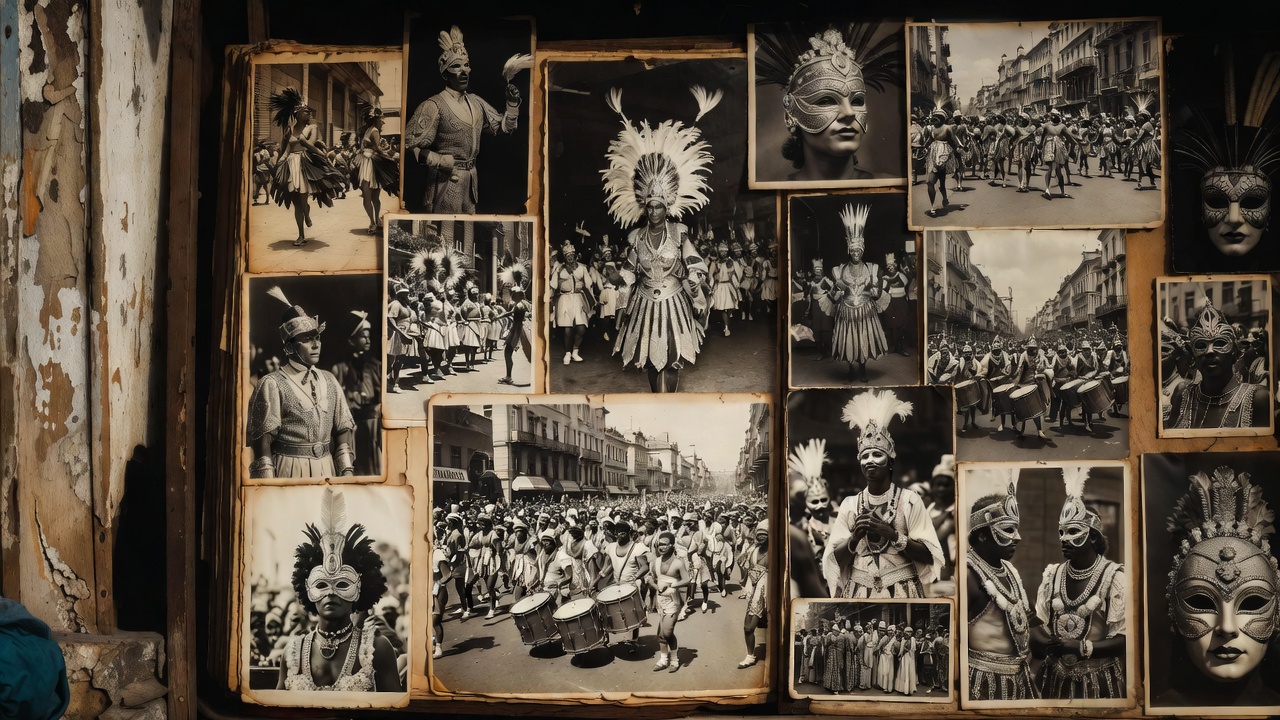
These coronation ceremonies established the template for parade structures that would later evolve into samba school competitions: hierarchical organization, processional movement, competitive display, and the fusion of African and European aesthetic elements.
The Birth of Brazilian Music: From Lundu to Maxixe to Samba
Understanding Rio Carnival history requires tracing the evolution of the musical genres that became its soundtrack. This musical journey spans three centuries and represents one of the most remarkable cultural syntheses in human history.
Lundu: The First African-Brazilian Dance Music (18th Century)
Lundu (or lundum) emerged in the 18th century as the first distinctly African-Brazilian musical genre. Originally an Angolan circle dance called calundu, it evolved in Brazil through contact with Portuguese and indigenous musical traditions.
Characterized by:
- Syncopated rhythms derived from Angolan drumming
- Sensual, hip-centered dance movements (umbigada)
- Call-and-response vocal structure
- Guitar or viola accompaniment
Lundu scandalized white colonial society with its overt sensuality, yet it proved irresistible. By the late 18th century, lundu de salão (parlor lundu) had been sanitized and absorbed into elite social dances, while the street version retained its African character.
Maxixe: Rio’s First Urban Dance Craze (1870s-1920s)
The maxixe (pronounced ma-SHEE-shee) emerged in Rio’s working-class neighborhoods around 1870, fusing:
- Lundu rhythms
- European polka structures
- Cuban habanera influences
- African-Brazilian body movements
Maxixe became the first Brazilian dance to achieve international fame, shocking and delighting audiences from Paris to New York with its intimate embrace and syncopated swagger. It dominated Rio’s carnival celebrations from roughly 1880 to 1920.
The Birth of Samba: Pela Telefone and Beyond (1916-1930s)
The word “samba” appears in Brazilian documents as early as 1838, referring to various African-derived dance and music traditions. However, the genre we now call samba—specifically samba carioca (Rio samba)—crystallized in the early 20th century.
The communities where samba developed were concentrated in Rio’s port zone, particularly the neighborhood known as “Pequena África” (Little Africa) around Praça Onze. Here, migrants from Bahia—many of them descendants of formerly enslaved people—created vibrant cultural communities centered around terreiros (religious gathering places) led by influential women known as “tias baianas” (Bahian aunts).
The most famous of these matriarchs was Tia Ciata (Hilária Batista de Almeida, 1854-1924), whose house on Rua Visconde de Itaúna became the unofficial headquarters of early samba. In her terreiro, musicians, composers, and dancers gathered, shared, and created.
On November 27, 1916, the composition “Pelo Telefone” (By Telephone) was registered at the National Library, becoming the first officially recorded samba. Credited to Donga (Ernesto dos Santos) and journalist Mauro de Almeida, the song’s authorship remains disputed—a common issue when works emerged from collective community creation.
| Year | Milestone | Significance |
|---|---|---|
| 1838 | First documented use of “samba” | Term appears in Brazilian police records |
| 1870s | Emergence of maxixe | Bridge genre between lundu and samba |
| 1890s | Bahian migration to Rio | Creation of “Pequena África” community |
| 1916 | “Pelo Telefone” recorded | First officially registered samba |
| 1917 | “Pelo Telefone” released | First commercial samba recording |
| 1928 | First samba school founded | Deixa Falar in Estácio neighborhood |
The Rise of Samba Schools: How Carnival Became Organized
The transformation of Rio Carnival from chaotic street revelry into organized spectacle centers on one of Brazil’s most distinctive cultural inventions: the escola de samba (samba school).
What Is a Samba School and How Did They Begin?
Despite the name, samba schools are not educational institutions. The term “escola” (school) reportedly originated because the first such organization, Deixa Falar (Let Them Talk), was founded near a teachers’ training school (escola normal) in the Estácio neighborhood.
Founded on August 12, 1928, by sambistas including Ismael Silva, Nilton Bastos, and Bide (Alcebíades Barcelos), Deixa Falar established the template for all future samba schools:
- Community-based organization rooted in specific neighborhoods
- Hierarchical structure with directors, composers, and dance sections
- Competitive orientation focused on annual parade excellence
- Original compositions (sambas-enredo) created each year
- Distinctive visual identity through colors and symbols
The Estácio sambistas also developed the distinctive samba de morro style that would become the foundation for carnival parade music—faster, more percussive, and better suited to processional dancing than the earlier samba de partido alto.
The First Samba School Competitions (1932)
In 1932, Rio newspapers organized the first official competition between samba schools, transforming what had been informal neighborhood pride into structured civic rivalry.
That inaugural competition, held on Praça Onze (the geographic and spiritual heart of Afro-Brazilian Rio), featured 19 participating groups. Estação Primeira de Mangueira (First Station of Mangueira) won the first championship, beginning a rivalry and tradition that continues today.
The early competitions were decidedly modest affairs by current standards. Schools paraded through crowded streets with minimal costumes, improvised percussion, and passionate community participants. No grandstands, no broadcast coverage, no million-dollar floats. Just neighborhoods expressing identity through movement and music.
Criteria for Judging Samba School Parades
As competitions became more formalized, judging criteria evolved. Today, samba schools in the Grupo Especial (Special Group—the top tier) are evaluated on ten specific categories:
| Category | Portuguese Term | Description |
|---|---|---|
| Percussion | Bateria | Musical quality, rhythm, and synchronization |
| Samba-Enredo | Samba-Enredo | Original composition quality and relevance to theme |
| Harmony | Harmonia | Coordination between singing, dancing, and percussion |
| Flow and Spirit | Evolução | Energy, enthusiasm, and movement quality |
| Theme Development | Enredo | Coherence and creativity of narrative |
| Floats and Props | Alegorias e Adereços | Artistic quality and thematic relevance |
| Costumes | Fantasias | Design, execution, and thematic connection |
| Vanguard Commission | Comissão de Frente | Opening group’s choreography and presentation |
| Flag-Bearer Couple | Mestre-Sala e Porta-Bandeira | Traditional dance and flag presentation |
| Overall Impression | Conjunto | Holistic assessment of the entire presentation |
Each category is scored by multiple judges positioned at different points along the parade route. The scores are totaled, with the highest and lowest scores in each category often discarded to minimize individual bias.
Government Recognition and Carnival’s Complicated Politics
The relationship between Rio Carnival and Brazilian political authorities has always been complex—a dance of co-optation, resistance, control, and negotiation.
Getúlio Vargas and the Nationalization of Samba (1930s-1940s)
When Getúlio Vargas rose to power in 1930, beginning a period of authoritarian nationalism that would last until 1945, his government recognized samba’s potential as a tool for national identity construction.
The Vargas regime’s cultural policies simultaneously elevated and controlled samba:
Promotion:
- Radio broadcasts spread samba nationally
- Government-sponsored competitions legitimized the genre
- Samba was promoted internationally as the sound of Brazil
- Carmen Miranda became a global ambassador for Brazilian music
Control:
- Samba schools were required to register with police
- Themes had to be “patriotic, historical, or didactic”
- Political criticism was censored
- African religious elements were suppressed
The 1937 regulation requiring patriotic themes fundamentally shaped samba school parades for decades. Schools that had previously celebrated community stories, African heritage, or contemporary issues were now expected to depict Brazilian history, heroic figures, and national symbols.
This requirement explains why many classic sambas-enredo from the 1940s through 1960s focus on themes like:
- Indigenous peoples (sanitized, romanticized versions)
- Historical events (independence, abolition)
- National geography (Amazon, regional diversity)
- Progress narratives (industrialization, modernization)
Only gradually, particularly after redemocratization in 1985, did samba schools regain freedom to explore controversial themes including Afro-Brazilian religion, social inequality, environmental destruction, and political criticism.
The Construction of the Sambódromo (1984)
For decades, samba school parades processed through Rio’s streets, with spectators crowding sidewalks, climbing buildings, and filling improvised bleachers. This arrangement was democratic but chaotic, and increasingly untenable as schools grew larger and more elaborate.
In 1984, the city of Rio de Janeiro inaugurated the Sambódromo Marquês de Sapucaí—a purpose-built parade venue designed by legendary architect Oscar Niemeyer.
| Sambódromo Statistics | Details |
|---|---|
| Official Name | Passarela Professor Darcy Ribeiro |
| Designer | Oscar Niemeyer |
| Inauguration | March 2, 1984 |
| Length | 700 meters (2,300 feet) |
| Seating Capacity | 72,500 (expanded for 2016 Olympics) |
| Construction Cost | $24 million (1984 dollars) |
| Construction Time | 120 days |
The Sambódromo revolutionized Carnival by:
- Creating permanent infrastructure for parades
- Enabling television broadcast with controlled sight lines
- Generating ticket revenue to fund increasingly elaborate productions
- Professionalizing the spectator experience
- Physically separating participants from observers
Critics argue the Sambódromo also fundamentally changed Carnival’s character, transforming participatory celebration into spectator entertainment. The spontaneity of street parades gave way to choreographed precision. Community celebration became commercial product.
This tension—between Carnival as authentic popular expression and Carnival as marketable spectacle—remains central to contemporary debates about the festival’s meaning and future.
The Structure of Modern Rio Carnival Celebrations
Today’s Rio Carnival encompasses multiple overlapping but distinct celebrations. Understanding this structure helps visitors and cultural observers appreciate the full scope of the festival.
The Samba School Parade System
Samba schools are organized into a hierarchical league system similar to European football leagues, with promotion and relegation between tiers.
Grupo Especial (Special Group)
- 12 schools (as of 2024)
- Parades on Sunday and Monday nights
- Most elaborate productions, highest stakes
- Champion receives prize money and prestige
- Last-place school relegated to Serie Ouro
Serie Ouro (Gold Series)
- Second tier, formerly called Grupo de Acesso (Access Group)
- Schools compete for promotion to Grupo Especial
- Friday and Saturday night parades
Serie Prata, Serie Bronze, and lower tiers
- Community schools with smaller budgets
- Important for maintaining grassroots samba traditions
- Often parade in neighborhood streets rather than Sambódromo
Each Grupo Especial school employs thousands of people year-round:
- Carnavalesco: Creative director responsible for theme, costumes, and floats
- Composers: Write the annual samba-enredo
- Mestre de Bateria: Percussion director leading 250-400 drummers
- Passistas: Professional samba dancers
- Baianas: Older women performing traditional spinning dances
- Mestre-sala and Porta-bandeira: Flag-bearing dance couple
- Destaques: Celebrities and featured performers on floats
Street Carnival: The Blocos of Rio
While samba school parades dominate international media coverage, street carnival—the blocos—represents the true heart of popular celebration.
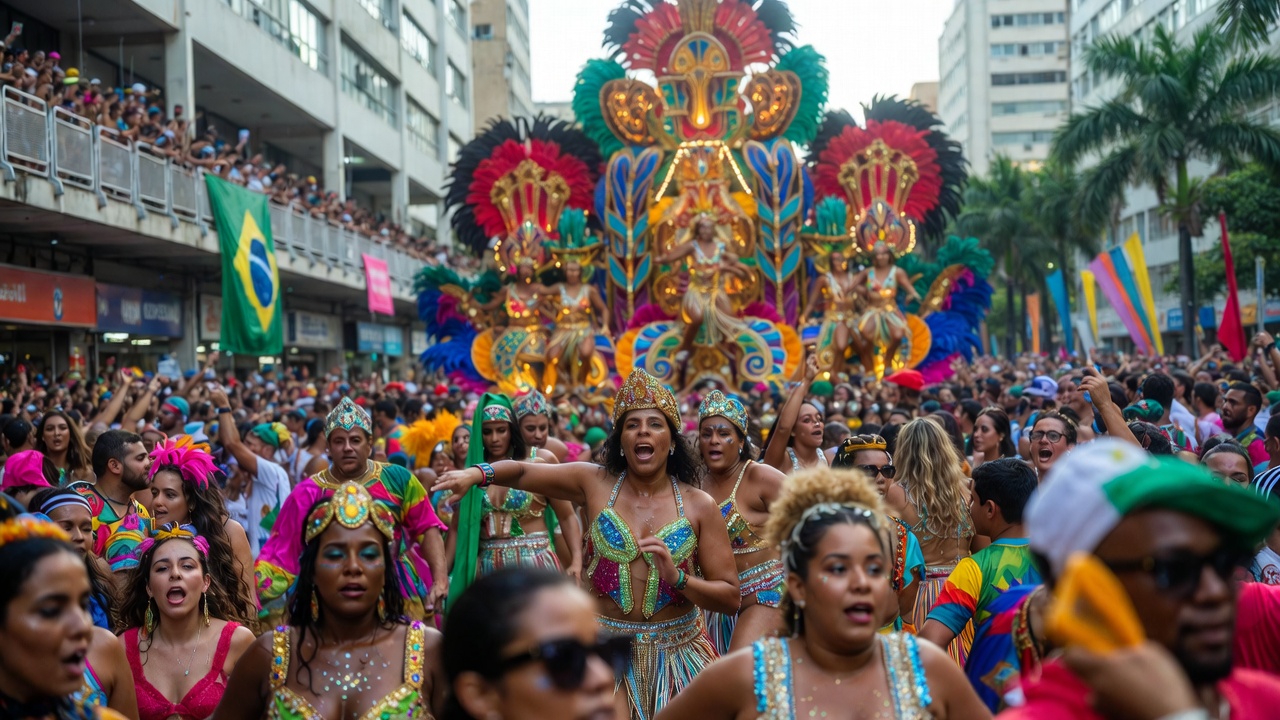
Blocos (pronounced BLOH-kohs) are organized street parties, ranging from intimate neighborhood gatherings to massive mobile celebrations with over a million participants.
Types of blocos include:
- Blocos tradicionais: Historic blocos with decades of tradition
- Blocos de embalo: Follow sound trucks through streets
- Blocos de sujo: “Dirty” blocos with minimal organization
- Blocos temáticos: Theme-based parties (LGBTQ+, children, costume genres)
- Blocos de samba: Focus on traditional samba music
- Blocos de frevo: Feature the energetic Pernambucan music style
Some of Rio’s most famous blocos include:
| Bloco | Founded | Typical Attendance | Character |
|---|---|---|---|
| Cordão da Bola Preta | 1918 | 2+ million | Traditional, black-and-white polka dots |
| Banda de Ipanema | 1965 | 40,000+ | LGBTQ+ friendly, Ipanema beach culture |
| Sargento Pimenta | 2010 | 100,000+ | Beatles tribute, Carnival-ized versions |
| Bloco da Preta | 2009 | 600,000+ | Led by singer Preta Gil |
| Monobloco | 2000 | 500,000+ | Professional percussion, contemporary hits |
Street carnival is free to attend, democratically accessible, and arguably more authentic than the ticketed Sambódromo spectacle. The atmosphere varies dramatically between blocos—from family-friendly daytime parties to wild late-night revelry.
Carnival Balls and Private Events
The third pillar of Rio Carnival consists of bailes (balls)—formal and semi-formal dance events held in clubs, hotels, and cultural centers.
The most famous is the Baile do Copa at the Copacabana Palace Hotel, an exclusive event dating to the 1920s that has attracted celebrities, socialites, and international visitors. Other notable balls occur at:
- Scala nightclub
- Municipal Theater (classical music performances)
- Gay balls at various venues
- Favela balls offering community celebration
These events maintain connections to Carnival’s European masked ball heritage while incorporating distinctly Brazilian musical and cultural elements.
The Economics of Rio Carnival: Money, Tourism, and Controversy
Rio Carnival generates enormous economic activity—but the distribution of this wealth remains controversial.
Carnival Tourism and Economic Impact
According to data from Riotur (Rio de Janeiro’s municipal tourism agency) and the Brazilian tourism ministry, recent carnivals have generated impressive statistics:
| Economic Indicator | 2023 Carnival | Notes |
|---|---|---|
| Total Visitors | 6.8 million | Domestic and international |
| International Visitors | 1.5 million | Primarily from Argentina, Chile, USA |
| Hotel Occupancy | 95%+ | Citywide average |
| Total Economic Impact | R$5.5 billion | ~$1.1 billion USD |
| Jobs Created | 78,000+ | Temporary employment |
| Average Tourist Spending | R$700/day | Domestic visitors |
Tourism dollars flow to hotels, restaurants, transportation, retail, and entertainment venues. The cruise ship industry brings additional visitors, with major ports of call during Carnival week.
Samba School Economics: The Cost of Spectacle
Grupo Especial samba schools operate as major cultural enterprises, with annual budgets ranging from R$10 million to R$40 million (approximately $2-8 million USD).
Revenue sources include:
- Government subsidies (approximately 50-60% of budget)
- Ticket sales for Sambódromo seats
- Corporate sponsorship
- Costume sales to participants
- Merchandise licensing
- Year-round tourist visits to quadras (school headquarters)
Costume costs illustrate the scale of investment. A participant in the main parade sections typically pays R$500-3,000 ($100-600) for their costume—a significant expense that many save for all year. Destaques (featured performers) on floats may wear costumes costing R$50,000 or more.
Critics argue this economic model has several problematic aspects:
- Community displacement: Original participants from poor neighborhoods can’t afford rising costume costs
- Gentrification: Wealthy Brazilians and foreigners buy their way into parades
- Sponsorship influence: Corporate sponsors affect school themes and aesthetics
- Labor exploitation: Many craftspeople work long hours for low pay
- Environmental costs: Elaborate floats generate massive waste
The Informal Economy of Carnival
Beyond official statistics, Carnival sustains a vast informal economy:
- Street vendors selling food, beer, and merchandise
- Unofficial accommodation rentals
- Unlicensed tourist guides
- Costume makers and seamstresses
- Transportation services
- Security and crowd management
For many working-class Brazilians, Carnival represents the most profitable period of the year—an opportunity to earn income through commerce, performance, or service provision.
Cultural Significance: What Rio Carnival Means to Brazilians
Understanding Carnival requires moving beyond economics and logistics to grasp its deep cultural significance for Brazilian society.
Carnival as Social Inversion
Anthropologists and social theorists have long analyzed Carnival through the lens of ritual inversion—temporary reversal of normal social hierarchies and rules.
During Carnival:
- The poor dress as royalty
- Men dress as women (and vice versa)
- Social classes mix in ways normally impossible
- Sexual expression becomes more permissive
- Authority is mocked and satirized
- Work stops; pleasure reigns
The Brazilian anthropologist Roberto DaMatta, in his influential work Carnavais, Malandros e Heróis (1979), argued that Carnival represents one of Brazilian society’s key collective rituals, temporarily dissolving the hierarchies and divisions that normally structure social life.
This inversion has psychological, social, and political dimensions. It provides:
- Catharsis: Release of accumulated frustrations
- Social bonding: Shared experience across divisions
- Creative expression: Outlet for artistic impulses
- Political commentary: Opportunities to critique authority
Carnival and Brazilian Identity
Carnival has become central to how Brazilians understand themselves and present their culture to the world.
The “Carnival nation” image emphasizes:
- Joyfulness and celebration
- Racial and cultural mixing (mestiçagem)
- Musical creativity and bodily expression
- Sensuality without shame
- Community and solidarity
This image contains both truth and mythology. Brazil is indeed a remarkably musical and festive culture. But the Carnival image can also obscure harsh realities: persistent racism, profound inequality, violence, and social exclusion that don’t disappear just because everyone parades together once a year.
Many contemporary Brazilian artists, intellectuals, and activists engage critically with Carnival mythology—celebrating its genuine cultural achievements while questioning its political uses and limitations.
Afro-Brazilian Religion and Carnival Spirituality
For practitioners of Afro-Brazilian religions—Candomblé, Umbanda, and related traditions—Carnival has spiritual dimensions often invisible to casual observers.
The timing of Carnival corresponds to important moments in the African-Brazilian religious calendar. The orixás (deities) honored include:
- Oxum: Goddess of rivers, love, and fertility
- Iemanjá: Goddess of the sea, motherhood
- Ogum: God of iron, war, and labor
- Xangô: God of thunder, justice
Many samba schools incorporate Afro-Brazilian religious imagery, songs, and symbols into their presentations—sometimes openly, sometimes coded to avoid the discrimination that practitioners still face.
The baianas section of every samba school directly references Bahian religious traditions. These women, typically older community members, perform spinning dances derived from Candomblé ritual practices.
Contemporary Issues Facing Rio Carnival
Today’s Carnival exists within a complex web of social, political, and environmental challenges.
Gentrification and Community Displacement
As Carnival became increasingly commercialized and internationally famous, many original participating communities experienced displacement and marginalization.
Rising costume costs, ticketed access to prime locations, and the general gentrification of historically poor neighborhoods have made meaningful participation increasingly difficult for the communities that created these traditions.
Samba schools have responded with varying approaches:
- Some maintain community participation requirements
- Others have embraced wealthy outsiders as financial necessity
- Debates continue about balance between authenticity and sustainability
Security and Public Safety
With millions of people crowding public spaces, security represents a persistent challenge. Concerns include:
- Pickpocketing and street crime
- Sexual harassment and assault
- Crowd crush dangers
- Alcohol-related violence
- Traffic and pedestrian safety
Rio authorities deploy tens of thousands of police, military personnel, and emergency responders during Carnival. In recent years, city government has also implemented smart surveillance systems, mobile medical units, and crowd management technologies.
Critics argue security measures often target marginalized communities disproportionately, with racial profiling and police violence occurring even during celebrations.
Environmental Sustainability and Carnival Waste
The environmental footprint of Carnival has drawn increasing attention:
- Massive waste generation from costumes, floats, decorations
- Plastic pollution from beverage containers
- Energy consumption for sound systems and lighting
- Transportation emissions from tourism
- Water usage for float construction
Some samba schools have begun incorporating sustainability themes into their presentations, using recycled materials and addressing environmental issues in their narratives.
The Grêmio Recreativo Escola de Samba Portela, for example, has built floats using recycled plastics, while Unidos da Tijuca has featured environmental themes in award-winning presentations.
LGBTQ+ Celebration and Challenges
Rio Carnival has long been associated with LGBTQ+ expression and celebration. The tradition of cross-dressing dates back to Entrudo, and Carnival has provided relative safety for gender and sexual expression that faces discrimination in everyday life.
Famous LGBTQ+-friendly blocos like Banda de Ipanema have provided spaces for celebration for decades. Trans and gender-nonconforming performers have achieved fame and recognition within Carnival contexts.
However, challenges remain:
- Violence against LGBTQ+ individuals continues during and after Carnival
- Commercialization has sometimes exploited rather than supported queer communities
- Political backlash against LGBTQ+ rights affects Carnival expression
How to Experience Rio Carnival: A Guide for Visitors
For those planning to experience Rio Carnival firsthand, here’s practical guidance drawn from years of research and personal experience.
When to Visit Rio de Janeiro for Carnival
Carnival dates vary annually based on the Catholic liturgical calendar. The festival always occurs 46 days before Easter Sunday, meaning it falls between early February and early March.
| Year | Carnival Dates | Notes |
|---|---|---|
| 2025 | Feb 28 – Mar 4 | |
| 2026 | Feb 13 – Feb 17 | |
| 2027 | Feb 5 – Feb 9 | |
| 2028 | Feb 25 – Feb 29 |
Book accommodations 6-12 months in advance for reasonable prices. Hotels near parade routes and bloco-heavy neighborhoods command premium rates.
Sambódromo Tickets and Seating Guide
Sambódromo tickets range from R$200 to R$5,000+ depending on sector, seating type, and parade night.
Seating Options:
| Sector | Price Range | Experience |
|---|---|---|
| Arquibancadas (Bleachers) | R$200-500 | Concrete seats, brings cushion |
| Camarotes (Box Seats) | R$1,500-5,000+ | Private boxes, often include food/drinks |
| Frisas (Ground Level) | R$800-2,000 | Close to parade, standing/minimal seating |
| Setores Especiais | R$500-1,500 | Reserved sections, better views |
Tips for Sambódromo:
- Bring water, snacks, and sun protection
- Parades start around 9 PM and run until 5-6 AM
- Sunday and Monday nights feature Grupo Especial (best schools)
- Champion’s Parade (Saturday after results) offers shorter, condensed experience
Joining a Samba School Parade
Yes, foreigners can participate in samba school parades—for a price.
Schools sell spots in various sections (alas) of their parade. Costs typically range from R$500-2,500 for basic sections, with deluxe positions costing significantly more.
What you receive:
- Costume (fantasy) in school’s theme
- Position within specific ala
- Brief rehearsal and instructions
- The experience of parading through Sambódromo
Participating requires:
- Booking months in advance through school or authorized agents
- Attending costume fitting in Rio
- Showing up on time (missing your school’s start time means missing the parade)
- Basic physical fitness (parades last 60-90 minutes of continuous walking/dancing)
Important: Paid participation has changed the character of parades. Many schools now feature large sections composed primarily of tourists and wealthy Brazilians who’ve paid to participate, rather than community members from the school’s home neighborhood.
Navigating Street Carnival and Blocos
Street carnival is free and open to all—but requires preparation.
Essential gear:
- Comfortable, disposable shoes (streets get dirty and wet)
- Costume or festive clothing
- Small bag secured to body
- Sunscreen and hat (for daytime blocos)
- Cash in small bills (many vendors don’t accept cards)
- Charged phone with offline maps
Safety recommendations:
- Go with groups, never alone
- Keep valuables at your hotel
- Stay aware of surroundings
- Know your limits with alcohol
- Have a meeting point if separated from friends
- Download the official Carnival app for bloco schedules
Best blocos for first-time visitors:
- Cordão da Bola Preta: Massive but organized, daytime
- Sargento Pimenta: Fun music, good energy
- Monobloco: Professional sound quality, manageable crowd
- Bloco da Preta: Celebrity-led, popular atmosphere
The Future of Rio Carnival: Tradition Meets Innovation
As Rio Carnival approaches its fifth century, it faces fundamental questions about sustainability, authenticity, and evolution.
Technology and Carnival Innovation
Modern technology is transforming Carnival in multiple ways:
Digital enhancements:
- LED lighting and projection mapping on floats
- Drone footage for broadcast and documentation
- Social media amplifying global reach
- Apps for navigation, scheduling, and safety
Production technology:
- 3D printing for costume elements
- Digital design software for float planning
- Motorized float movements
- Advanced sound systems
Audience engagement:
- Live streaming to global audiences
- Virtual reality experiences
- Interactive social media campaigns
- Digital ticket sales and access management
Climate Change and Carnival Adaptation
Climate change poses existential challenges for outdoor celebrations:
- Increasing temperatures make daytime blocos more dangerous
- Extreme weather events disrupt preparations
- Rising sea levels threaten coastal celebration areas
- Environmental consciousness demands sustainability reforms
Carnival organizations are slowly adapting:
- Shifting some events to cooler hours
- Improving medical response capabilities
- Exploring sustainable materials
- Addressing carbon footprints
Preserving Carnival Traditions for Future Generations
As commercial pressures and social changes transform Carnival, preservation efforts have intensified.
UNESCO recognition (2012) of Rio Carnival as Intangible Cultural Heritage provides some protection and international visibility.
Preservation initiatives include:
- Documentation projects recording oral histories
- Museums dedicated to Carnival heritage
- Educational programs teaching samba traditions
- Support for traditional craftspeople
- Community programs maintaining neighborhood connections
The challenge lies in balancing preservation with evolution—keeping traditions alive while allowing them to grow and change.
Conclusion: Why Rio Carnival Continues to Captivate the World
After five centuries of evolution, Rio Carnival remains the world’s most remarkable celebration—a living testament to human creativity, resilience, and joy.
From the rough street battles of Portuguese Entrudo to the sophisticated spectacle of contemporary samba school parades, Carnival has continuously transformed while maintaining its essential character: a collective assertion of life over death, joy over suffering, community over isolation.
The festival’s African foundations—forged in the crucible of slavery and resistance—gave Carnival its soul: the rhythms, the movement, the spiritual depth that elevates spectacle into something approaching sacred.
Its Brazilian synthesis—blending Indigenous, African, and European elements into something entirely new—made Carnival uniquely capable of expressing the complex, contradictory, beautiful reality of Brazilian identity.
And its global influence—inspiring carnival celebrations worldwide, shaping international perceptions of Brazil, drawing millions of visitors to experience its magic—demonstrates culture’s power to connect human beings across every imaginable boundary.
Rio Carnival history is not merely past. It’s living heritage, created and recreated each year by the millions of Brazilians who prepare costumes, compose songs, rehearse routines, and take to the streets in celebration.
For those fortunate enough to experience it—whether in person amid the thundering drums and glittering costumes, or through the voices and images that carry its spirit worldwide—Rio Carnival offers something increasingly rare in our fragmented age: the experience of genuine collective joy, humanity celebrating itself without apology, the irrepressible human spirit dancing in the face of everything that would suppress it.
Salve o Carnaval. Salve o samba. Salve o Brasil.
Frequently Asked Questions About Rio Carnival History
When did Rio Carnival begin? The first documented carnival celebrations in Rio de Janeiro date to approximately 1641, though informal Entrudo celebrations likely began shortly after Portuguese colonization in the early 1500s.
Who created samba music? Samba emerged from Afro-Brazilian communities in Rio de Janeiro in the late 19th and early 20th centuries. Key figures include Tia Ciata, Donga, Ismael Silva, and numerous other artists from the Pequena África neighborhood.
When was the first samba school founded? Deixa Falar, generally considered the first samba school, was founded on August 12, 1928, in Rio’s Estácio neighborhood.
Who built the Sambódromo? The Sambódromo was designed by renowned Brazilian architect Oscar Niemeyer and inaugurated in 1984.
How many people attend Rio Carnival? Approximately 6-7 million people participate in Rio Carnival annually, including both locals and tourists.
Is Rio Carnival the oldest carnival in Brazil? No. Salvador, Bahia claims the oldest continuous carnival tradition, and Recife/Olinda’s carnival has equally ancient roots. However, Rio’s carnival has become the most internationally famous.
Can anyone join a samba school parade? Yes, though participation typically requires purchasing a costume spot from the school, often costing R$500-2,500 or more depending on the position and school.