Every year, as winter tightens its grip on the Armenian highlands, a holiday filled with warmth, love, and centuries-old folklore arrives. Saint Sarkis Day — known in Armenian as Surb Sarkis — is Armenia’s own celebration of love. Think of it as the Armenian Valentine’s Day, but older, richer in tradition, and steeped in the mysticism of the Armenian Apostolic Church. In 2026, Saint Sarkis Day falls on Saturday, January 31, exactly 63 days before Armenian Easter on April 5.
Whether you are a couple looking for a meaningful way to celebrate your bond, a family wanting to pass down Armenian traditions to your children, or a curious traveler planning a winter trip to Armenia, this guide covers everything you need to know. From baking the famous salty cookies (aghablit) to attending a candlelit liturgy at the Surb Sarkis Church in Yerevan, this article walks you through every activity, recipe, and custom tied to this beloved holiday.
Who Was Saint Sarkis the Warrior and Why Is He the Patron Saint of Love?
Before you light a candle or roll out cookie dough, it helps to know the man behind the feast. Saint Sarkis (Sourb Sargis Zoravar) was a 4th-century military commander from Cappadocia, a region in what is now central Turkey, near the Armenian border. He served as a general under the Roman Emperor Constantine the Great, the first Christian Roman emperor.
Sarkis was not just a soldier. He was a devoted Christian who used his position to spread the Gospel. He tore down pagan shrines, built churches, and baptized many people. His faith defined him.
When Emperor Julian the Apostate rose to power around 361 AD and launched brutal persecutions against Christians, Sarkis and his son Mardiros (Martyros) fled to Armenia. There, King Tiran — a grandson of King Tiridates the Great — welcomed them. Eventually, Sarkis and Mardiros moved on to Persia and joined the army of the Sassanid King Shapur II. Impressed by Sarkis’s military genius, Shapur appointed him a commander.
But trouble followed. Many Persian soldiers converted to Christianity under Sarkis’s influence. When Shapur discovered this, he ordered Sarkis to renounce his faith and worship fire in a Zoroastrian temple. Sarkis refused. According to the Armenian Apostolic Church’s account, Sarkis declared: “We should worship one God — the Holy Trinity, which has created the earth and the heaven.”
Sarkis destroyed items in the pagan temple. His son Mardiros was killed in the ensuing violence. Sarkis himself was imprisoned and later beheaded. Fourteen of his loyal soldiers were also martyred. In the 5th century, Saint Mesrop Mashtots — the creator of the Armenian alphabet — brought Sarkis’s relics to the village of Ushi in the Aragatsotn province of Armenia, where a monastery was built in his honor.
So how did a warrior-martyr become the patron saint of love and youth? Armenian folk legend tells a second, more romantic story. According to this tale, after a great military victory, Sarkis and his soldiers celebrated at a royal palace. While the men slept, the king sent forty women to kill them. Thirty-nine soldiers were slain. But the woman assigned to kill Sarkis fell in love with him and kissed him instead. Sarkis awoke, saw the carnage, took the woman onto his white horse, and rode away as a violent storm raged.
Since that legend, a rider on a white horse has been the Armenian symbol of love. The Harsanik wedding blog notes that “because of this story, people in love symbolized St. Sarkis.”
When Is Saint Sarkis Day 2026 and How Is the Date Calculated?
Saint Sarkis Day is a moveable feast on the Armenian Church calendar. It always falls on a Saturday, exactly 63 days before Armenian Easter. This means the date shifts every year, landing anywhere between January 11 and February 15.
| Year | Saint Sarkis Day | Armenian Easter |
|---|---|---|
| 2024 | January 27 | March 31 |
| 2025 | February 15 | April 19 |
| 2026 | January 31 | April 5 |
| 2027 | February 13 | April 18 |
In 2026, Saint Sarkis Day lands on Saturday, January 31. This date is confirmed by the Armenian Church liturgical calendar, which lists “January 31 – Saint Sarkis” as an official feast.
The five-day Fast of Catechumens — commonly called the Fast of Saint Sarkis — takes place in the days before the feast. This fast was established by Saint Gregory the Illuminator, the founder of the Armenian Apostolic Church. Devout Armenians abstain from certain foods during this period, making the feast-day meal all the more special.
How to Celebrate Saint Sarkis Day as a Couple: Romantic Traditions and Date Ideas
Saint Sarkis Day is, at its heart, a celebration of romantic love. Here are the best ways couples can mark this holiday together.
Share the Salty Cookie Ritual on the Eve of Saint Sarkis Day
The most famous Saint Sarkis tradition is the aghablit (aghi blit), a deliberately over-salted cookie eaten on the eve of the feast. The ritual works like this:
- Bake the salty cookies together. The recipe is simple — flour, a generous amount of salt, and water. (Full recipe below.)
- Eat the cookie before bed. The salt makes you extremely thirsty.
- Do not drink any water. Go to sleep thirsty.
- Dream of your future spouse. According to tradition, the person who brings you water in your dream is destined to be your partner.
The dream carries even more meaning depending on the details. According to the Ecokayan resort’s guide to the feast, if the dream-visitor offers water in a golden cup, your future spouse will be wealthy. A silver cup means moderate wealth. A clay or copper cup points to a more humble life. The amount of water in the cup hints at the longevity of the couple’s union.
For established couples, this is a playful and intimate bedtime tradition. Bake the cookies together in the kitchen, eat them with a sense of humor (they are, by all accounts, nearly inedible), and share your dreams over morning coffee.
Exchange Gifts, Flowers, and Sweets on Saint Sarkis Day Morning
On the day of the feast, Armenian couples exchange gifts, flowers, and sweets — much like Valentine’s Day. The most traditional sweet is the Saint Sarkis Halva (recipe below), a chewy, sesame-covered confection filled with nuts. Many couples visit Armenian bakeries and pastry shops to pick up halva together.
According to Sarkis Pastry, the halva is one of the most famous traditional Armenian desserts associated with this holiday. Its main ingredients are sugar, orange blossom water, sesame seeds, and marshmallow cream, and it is typically stuffed with pistachios, walnuts, or garbanzo beans.
If you are in the Armenian diaspora — in Los Angeles, Beirut, Paris, or anywhere else with an Armenian community — look for Saint Sarkis Halva at local Armenian bakeries in the days leading up to January 31.
Attend the Divine Liturgy and Youth Blessing Together
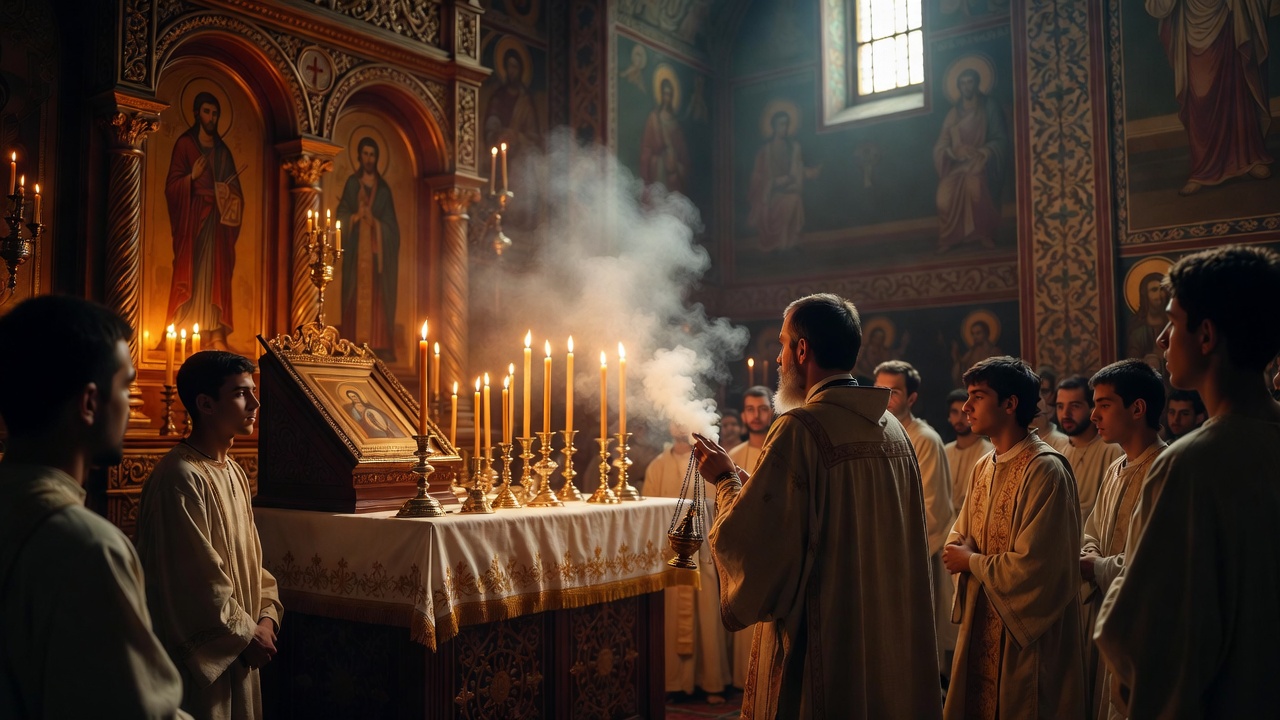
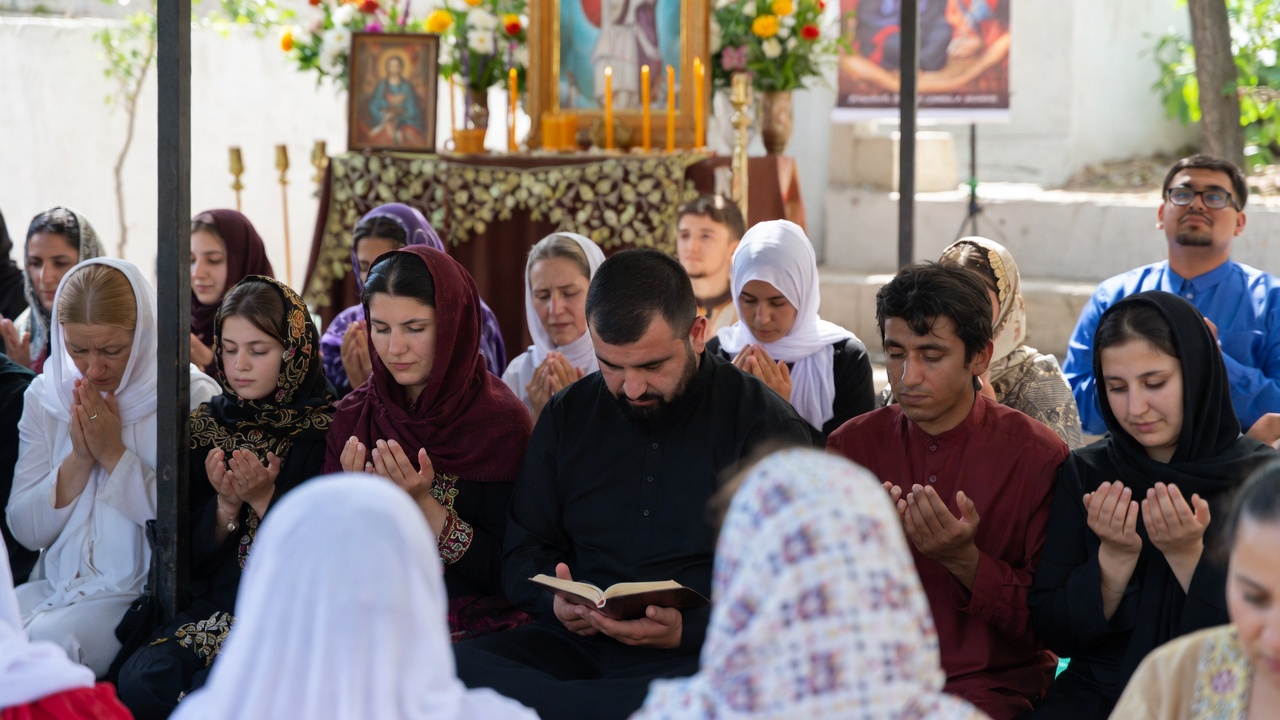
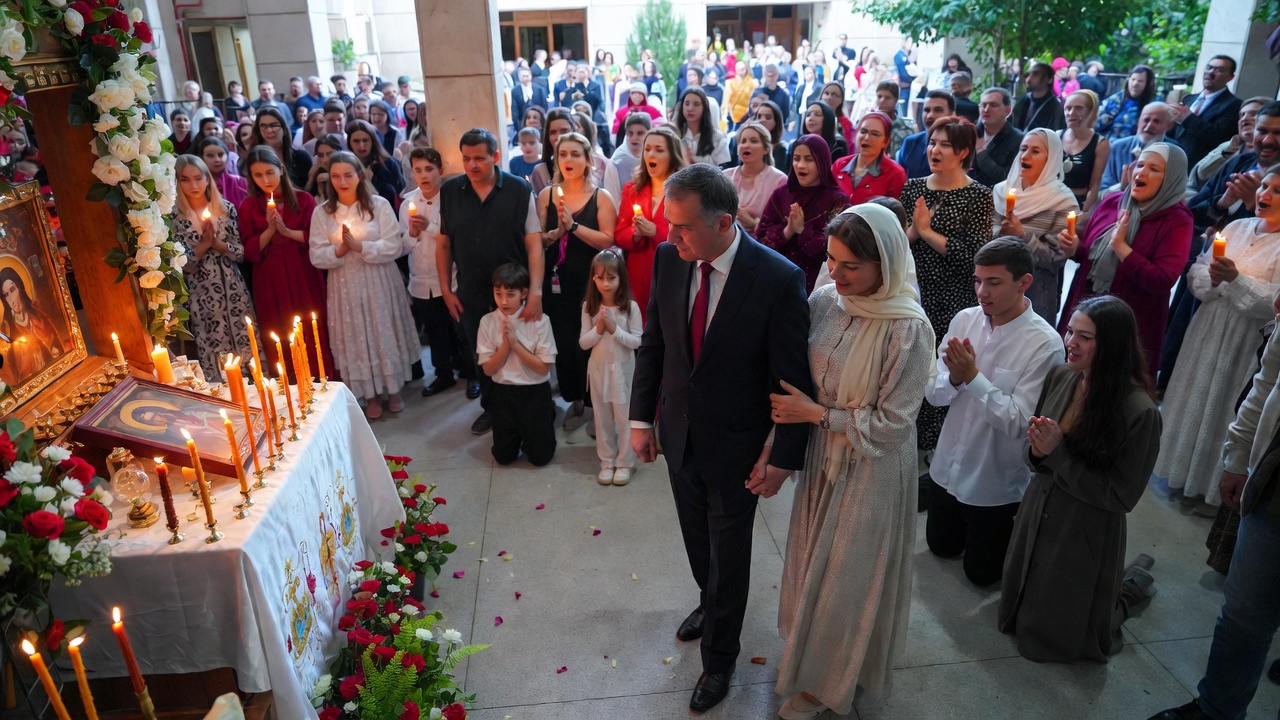
One of the most meaningful things a couple can do on Saint Sarkis Day is attend the special Divine Liturgy held in Armenian churches worldwide. By the order of His Holiness Karekin II, the Supreme Patriarch and Catholicos of All Armenians, the Feast of Saint Sarkis is a proclaimed day of blessing the youth. At the end of the liturgy, young people are invited to approach the altar for a special blessing service.
In Yerevan, the capital of Armenia, the celebration at the Surb Sarkis Church is especially crowded. A festive procession brings a relic of the saint from the Mother See of Holy Etchmiadzin Cathedral to the church. The event includes cultural activities such as concerts, exhibitions, and traditional folk performances.
For couples who are engaged or recently married, receiving the blessing of the youth together can be a deeply spiritual experience. Many Armenian couples time their weddings around this period. As the Ecokayan guide explains, during the two weeks between Saint Sarkis Day and the start of Great Lent, a surge of weddings takes place. Once Lent begins, church altars are closed to wedding ceremonies for 48 days.
Take a Romantic Walk Through Decorated Yerevan Streets
If you happen to be in Yerevan around Saint Sarkis Day (and nearby Valentine’s Day on February 14), the city transforms into a romantic wonderland. According to the Visit Yerevan tourism site, couples can enjoy:
- Heart-shaped decorations and festive lights along Yerevan’s main boulevards
- Romantic dinners at cozy wine bars and restaurants
- Sunset views from the Cascade complex or Victory Park
- Concerts and art exhibitions at venues like the Aram Khachaturian Concert Hall
- Hot air balloon rides over the city with views of Mount Ararat
The period between Saint Sarkis Day on January 31 and Valentine’s Day on February 14 makes for a truly magical two weeks to visit Armenia as a couple.
Visit the Saint Sarkis Monastery in Ushi Village
For a more spiritual and off-the-beaten-path experience, couples can make a pilgrimage to the Saint Sarkis Monastery in the village of Ushi, located in the Aragatsotn province. This is the site where Saint Mesrop Mashtots brought the saint’s relics in the 5th century. On Saint Sarkis Day, many pilgrims visit the monastery to pay their respects and pray for blessings in love.
The relics of Saint Sarkis were uncovered during an excavation of the Ushi church in 1999 and are now held in the collection of the Mother See of Holy Etchmiadzin.
Best Saint Sarkis Day Activities for Families with Children
Saint Sarkis Day is not just for lovers. It is a family holiday, rich in traditions that children adore. Here is how families can celebrate together.
Bake Aghablit (Salty Cookies) as a Family Baking Project
Baking the aghablit is one of the simplest and most memorable kitchen activities you can do with kids. The recipe requires only three ingredients — flour, salt, and water — and the result is a cookie so salty it is practically a dare. Children love the challenge of eating the cookie and then trying not to drink water before bed.
Simple Aghablit Recipe (Saint Sarkis Salty Cookies)
| Ingredient | Amount |
|---|---|
| All-purpose flour | 1 ¼ cups |
| Salt | 2–3 tablespoons |
| Water | Enough to form a stiff dough |
Directions:
- Mix the flour and salt together in a bowl.
- Gradually add water, stirring until a firm dough forms.
- Roll the dough out on a floured surface.
- Cut into shapes using cookie cutters (hearts are a popular choice for the love theme).
- Place on a baking sheet and bake at 350°F (180°C) for 20 to 30 minutes, until the edges turn golden-pink.
- Let cool. Eat one cookie before bedtime — and brace yourself.
This recipe is adapted from instructions shared by ARMENPRESS and the Armenian Mirror-Spectator.
For families, the baking session becomes a chance to talk about who Saint Sarkis was, what the cookie tradition means, and why Armenian culture values love, faith, and family so deeply.
Make Saint Sarkis Halva Together at Home
While the aghablit is the cookie of sacrifice and anticipation, the Saint Sarkis Halva is the reward. This chewy, sweet confection — rolled in sesame seeds and filled with nuts — is the traditional treat of the feast day morning.
Saint Sarkis Halva Recipe (Marshmallow Shortcut Version)
| Ingredient | Amount |
|---|---|
| White granulated sugar | 3 cups |
| Water | 4 tablespoons |
| Fresh lemon juice | 1 tablespoon |
| Orange blossom water | 1 tablespoon |
| Marshmallow crème (one 7 oz. jar) | 1 jar |
| Sesame seeds | 2 lbs (divide into 1/3 and 2/3) |
| Unsalted pistachios or walnuts | As needed for filling |
Directions:
- Refrigerate 2/3 of the sesame seeds ahead of time.
- Spread the chilled sesame seeds into a mound on a rimmed baking sheet.
- In a pot, combine the sugar, water, lemon juice, and orange blossom water. Bring to a boil over high heat.
- Continue boiling until the mixture turns a golden color. Do not let it turn brown.
- Stir in the marshmallow crème until the mixture is completely smooth.
- Remove from heat and carefully pour onto the sesame seed mound.
- While still warm, spread the mixture and sprinkle more sesame seeds on top.
- Add pistachios or walnuts as filling. Shape into rolls or flat pieces.
- Allow to cool and firm up for several hours before cutting and serving.
This recipe comes from Zarmine (Zee) Sahakian, as shared by The Armenian Kitchen. As halva expert Lena Tashjian explains in the Armenian Mirror-Spectator, the traditional method uses boiled soapwort root instead of marshmallow, but the marshmallow shortcut has become popular in both Armenia and the diaspora.
Making halva is a wonderful family activity. Children can help measure the sesame seeds, shape the halva, and press nuts into the warm confection. It is messy, sweet, and fun — exactly the kind of memory that keeps traditions alive.
Place Flour on the Rooftop and Look for the Horse’s Hoofprint
This is one of the most enchanting Saint Sarkis traditions for children. On the eve of the feast, families place a tray of flour (or porridge made from roasted wheat) on their rooftop, balcony, or doorstep. According to folk belief, Saint Sarkis rides his white horse through the sky at dawn, accompanied by angels. If the saint passes over your home, his horse leaves a hoofprint in the flour.
Finding the hoofprint in the morning is a sign that the saint has blessed your household with good fortune in love. For children, waking up and rushing to the rooftop to check the flour tray is pure holiday magic — not unlike checking for Santa’s footprints on Christmas morning.
According to Wikipedia’s article on Sargis the General, “on the night preceding his feast day, faithful people place a tray full of flour or porridge before their door, believing that while passing by their door at dawn, Sarkis will leave the footprint of his horse in the flour symbolizing the fulfilment of their dreams.”
Feed the Birds and Watch Which Direction They Fly
Another charming Saint Sarkis Day custom involves feeding birds with bread. After scattering bread crumbs outdoors, families watch which direction the birds fly away. According to tradition, the direction indicates where a young person’s future spouse will come from.
As noted by Armenia Travel, “feeding birds with bread is another custom, with the flight direction hinting at a future partner’s location.” For children, this combines nature observation with storytelling and imagination. It is a simple outdoor activity that connects kids to their cultural heritage.
Hang Socks or Pouches for Gifts — A Tradition Children Love
In some Armenian communities, children participate in a tradition that closely mirrors Christmas stockings. On Saint Sarkis Day, children climb to rooftops or attics and hang socks or small pouches. When they retrieve them later, the socks are filled with sweets and coins.
The Ecokayan guide notes: “Kids have the most fun on the day of Saint Sarkis. They climb to the roofs or garrets and bring down socks or pouches expecting to receive gifts. Usually, they never get disappointed, as socks and pouches always return to them with sweets or coins.”
This is a beautiful way to involve young children in the celebration. Parents and grandparents can prepare the pouches in advance, filling them with Armenian sweets, chocolates, and small gifts.
How to Cook Traditional Armenian Food for a Saint Sarkis Day Family Feast
Beyond the aghablit and halva, there are other traditional foods tied to the Saint Sarkis celebration that can turn your family dinner into a genuine Armenian feast.
Kumba Cake: The Musa Dagh Saint Sarkis Day Specialty
Kumba cake is a spiced, dense cake that comes from the Musa Dagh region of historic Armenia. It contains no eggs or dairy, making it suitable for Lenten periods. The cake is flavored with mahlab (a spice made from cherry seeds), cinnamon, and ground cloves, and is sweetened with sugar and molasses.
According to Sonia Tashjian, an Armenian culinary researcher featured on The Armenian Kitchen, the kumba cake is a type of “Darehats” (Year Bread) traditionally prepared at New Year’s in various regions of Armenia. Coins or small tokens are sometimes hidden inside the cake, similar to the Western tradition of hiding a coin in a Christmas pudding.
Khashil Don: The Festive Wheat Pudding
Khashil Don is a savory pudding made from roasted and ground wheat, cooked with water until it reaches a creamy consistency. It is traditionally served with matsun (plain yogurt) poured around it and topped with melted butter or fried onions.
This dish connects Saint Sarkis Day to the broader Armenian tradition of wheat-based foods, which carry deep symbolic meaning related to harvest, abundance, and gratitude.
Klontrak: A Simple Halva Made from Toasted Wheat
Klontrak is another halva variety associated with Saint Sarkis Day. It is made by toasting pearled wheat in a dry skillet until golden, grinding it, and then kneading the ground wheat with melted butter and mulberry syrup (or honey). The mixture is formed into small balls.
A complete Saint Sarkis family feast might include all of these dishes, served after attending the morning church service.
Saint Sarkis Day Celebrations in the Armenian Diaspora: Where to Join the Festivities
An estimated 7 to 10 million Armenians live outside Armenia, forming large diaspora communities in the United States, France, Russia, Lebanon, Syria, Iran, and many other countries. Saint Sarkis Day is celebrated in Armenian communities worldwide.
Saint Sarkis Day in Los Angeles and California
Los Angeles is home to one of the largest Armenian communities outside Armenia itself. The city’s numerous Armenian churches hold special liturgies and community events on Saint Sarkis Day. Armenian bakeries in neighborhoods like Glendale, Pasadena, and Hollywood stock up on Saint Sarkis Halva in the days before the feast day.
Saint Sarkis Day in Beirut, Lebanon
The Armenian community in Beirut has maintained vibrant Saint Sarkis Day traditions for over a century. Lebanese-Armenian bakeries are known for their exceptional halva. The community celebrations often include church services followed by communal meals and music.
Saint Sarkis Day in London, United Kingdom
The St. Sarkis Armenian Church in London is one of the most prominent Armenian churches in Europe. The church holds a festive liturgy and community gathering each year on Saint Sarkis Day.
Saint Sarkis Day in Sydney, Australia
The Armenian Apostolic Church of Holy Resurrection in Sydney celebrates Saint Sarkis Day with a special liturgy, youth blessing, and community meal. The church’s website provides a detailed retelling of the Saint Sarkis legend and its traditions.
No matter where you are in the world, if there is an Armenian church nearby, there is likely a Saint Sarkis Day celebration you can attend.
How Saint Sarkis Day Compares to Valentine’s Day: Key Differences and Similarities
Many articles refer to Saint Sarkis Day as the “Armenian Valentine’s Day,” and the comparison is understandable. Both holidays celebrate love. Both involve exchanging gifts and sweets. But there are important differences.
| Feature | Saint Sarkis Day | Valentine’s Day |
|---|---|---|
| Origin | Armenian Apostolic Church, 4th century | Western Christian tradition, 3rd century |
| Date | Moveable (January 11 – February 15) | Fixed (February 14) |
| Religious component | Strong: liturgy, fasting, youth blessing | Mostly secular in modern practice |
| Focus | Youth, love, marriage, faith | Romantic love |
| Key food | Aghablit (salty cookies) and halva | Chocolates and candy |
| Key custom | Dream divination through salty cookies | Greeting cards and flowers |
| Family involvement | High: children, elders, extended family | Primarily couples |
| Cultural reach | Armenian communities worldwide | Global (commercial) |
The biggest difference is that Saint Sarkis Day is deeply family-oriented. While Valentine’s Day tends to focus on romantic couples, Saint Sarkis Day includes children (through the sock and gift tradition), elders (who prepare the halva and pass down stories), and the entire church community (through the liturgy and blessing).
Many Armenian families celebrate both holidays. As one diaspora Armenian explained on Sarkis Pastry’s blog: “If you have Armenian friends and you ask them when Valentine’s Day is, they will most probably talk to you about St. Sarkis Day.”
The Spiritual Meaning of Saint Sarkis Day: Faith, Sacrifice, and Devotion
Saint Sarkis Day is more than a celebration of romantic love. It is a day that honors courage, faith, and sacrifice. Sarkis gave up his military career, his safety, and ultimately his life rather than renounce his Christian beliefs. His son Mardiros and fourteen loyal soldiers did the same.
For Armenian families, telling this story to children is a way of teaching values. Saint Sarkis represents the idea that love is not just a feeling — it is a commitment. He was loyal to his faith, loyal to his soldiers, and loyal to the woman in the folk legend. That loyalty cost him everything, and yet Armenian culture celebrates him not with mourning but with joy, halva, and dreams of love.
The Fast of Catechumens before the feast reminds participants that love often requires patience and sacrifice. The aghablit — the painfully salty cookie — is a small act of endurance, rewarded the next morning with the sweetness of halva. The symbolism is clear: the bitter comes before the sweet.
For couples, this message resonates. Love requires endurance, patience, and sometimes the willingness to go to bed thirsty. For families, it is a lesson in delayed gratification and the rewards of perseverance.
Planning a Trip to Armenia for Saint Sarkis Day 2026: Travel Tips and Advice
If you are considering a winter trip to Armenia to experience Saint Sarkis Day firsthand, here is what you need to know.
Weather in Armenia at the End of January
Armenia in late January is cold. Expect temperatures in Yerevan to range from -5°C to 5°C (23°F to 41°F). Snow is common, especially in the mountainous regions. Pack warm layers, a good coat, and waterproof boots.
The cold weather, however, adds to the holiday atmosphere. There is something magical about stepping out of a warm church into a snowy Yerevan street, clutching a bag of fresh halva.
Where to Stay in Yerevan for the Festivities
Yerevan’s city center puts you within walking distance of the Surb Sarkis Church, the Cascade complex, and the city’s best restaurants and cafes. Hotels in the Republic Square area and along Northern Avenue are popular choices.
For a more immersive experience, consider staying at a guesthouse in the Aragatsotn province, near the Saint Sarkis Monastery in Ushi village.
What to Bring Home as a Souvenir
The best Saint Sarkis Day souvenir is halva — if you can keep it from being eaten on the plane. Armenian bakeries package halva in decorative boxes perfect for gifting. Other options include:
- Armenian coffee and a traditional coffee pot (jazzve)
- Horseshoe-themed jewelry (the horseshoe is a symbol of Saint Sarkis’s blessing)
- Handmade Armenian ceramics with love-themed designs
- Dried fruit and nut mixes from the Yerevan markets
Fun and Creative Ways to Teach Children About Saint Sarkis Day Traditions
Passing traditions to the next generation requires creativity. Here are some ideas for making Saint Sarkis Day educational and fun for children.
Create a Saint Sarkis Day Storybook
Sit down with your children and create a simple illustrated storybook about Saint Sarkis. Include the key elements: the warrior on his white horse, his faith, his son Mardiros, and the romantic legend. Let children draw the illustrations. This becomes a family keepsake you can read every year.
Host a Dream-Sharing Breakfast
After the aghablit tradition on the eve of the feast, gather the family for a dream-sharing breakfast on Saint Sarkis Day morning. Over halva and coffee (or hot chocolate for the kids), everyone shares what they dreamed about. Did anyone see a stranger offering water? Was there a golden cup? This turns the morning into a lively storytelling session.
Make Heart-Shaped Aghablit Cookies
Use heart-shaped cookie cutters when making the aghablit dough. This adds a visual love theme to the tradition and makes the cookies more appealing to children (even if the taste remains, well, very salty).
Build a Miniature Flour Tray
If you do not have a rooftop or balcony, create a small flour tray on a windowsill or porch. Sprinkle a thin layer of flour on a plate or tray and set it outside overnight. In the morning, check for “hoofprints.” You may be surprised what the wind — or a neighborhood cat — leaves behind.
Color and Decorate Saint Sarkis Day Cards
Just as children make Valentine’s Day cards in school, encourage them to make Saint Sarkis Day cards for family members, friends, or classmates. Include images of white horses, churches, hearts, and halva. Write wishes for love, health, and happiness.
Saint Sarkis Day and the Armenian Wedding Season: Why Couples Rush to Marry
There is a practical reason why Saint Sarkis Day is so closely tied to marriage in Armenian culture. The feast falls just two weeks before the start of Great Lent, during which the Armenian Church does not perform wedding ceremonies. Church altars are closed, and no marriages are blessed until Lent ends — a period of 48 days.
This means that couples who want a church wedding face a clear deadline. If they do not marry in the short window between Saint Sarkis Day and the start of Lent, they must wait nearly two months. As a result, the wedding season peaks around the feast of Saint Sarkis.
In 2026, Great Lent begins on February 15 according to the Armenian Church liturgical calendar. That gives couples just two weeks from Saint Sarkis Day (January 31) to Great Lent. Expect a flurry of Armenian weddings in early February 2026.
For couples who are already engaged, getting married during the Saint Sarkis season adds a layer of spiritual significance. The blessing of the youth, the patron saint of love watching over the ceremony, and the community’s collective focus on love and devotion create an atmosphere that many couples find deeply meaningful.
Honoring Those Named Sarkis: A Special Saint Sarkis Day Custom
In Armenian culture, a person’s name day — the feast of the saint they are named after — is a significant occasion. On Saint Sarkis Day, every Armenian man named Sarkis (or its variations: Serge, Sargis, Serg) is treated with special honor. Friends and family congratulate them, give them gifts, and may invite them to a festive dinner.
As Lena Tashjian notes in the Armenian Mirror-Spectator, “every man who has the name Sarkis is congratulated for their name on Saint Sarkis Day.” Children born on this day may also be given the name Sarkis.
If you have a friend, family member, or colleague named Sarkis, this is the day to call them, send a message, or bring them a piece of halva.
A Timeline of Saint Sarkis Day Activities: What to Do and When
To help you plan your celebration, here is a complete timeline of activities for Saint Sarkis Day 2026.
| Date | Time | Activity |
|---|---|---|
| Jan 26–30 | All week | Fast of Catechumens — observe the five-day fast if you choose |
| Jan 30 (Friday evening) | Afternoon | Bake aghablit cookies and prepare halva |
| Jan 30 (Friday evening) | Evening | Place a flour tray on rooftop, balcony, or windowsill |
| Jan 30 (Friday evening) | Before bed | Eat the aghablit cookie. Do not drink water. Go to sleep. |
| Jan 31 (Saturday morning) | Early morning | Check the flour tray for hoofprints. Share dreams over breakfast. |
| Jan 31 (Saturday morning) | 10:00–11:30 AM | Attend Divine Liturgy at your local Armenian church. Receive the youth blessing. |
| Jan 31 (Saturday) | After church | Exchange gifts and sweets. Enjoy Saint Sarkis Halva. |
| Jan 31 (Saturday) | Afternoon | Feed the birds outdoors. Watch which direction they fly. |
| Jan 31 (Saturday) | Afternoon | Children retrieve their socks/pouches filled with sweets. |
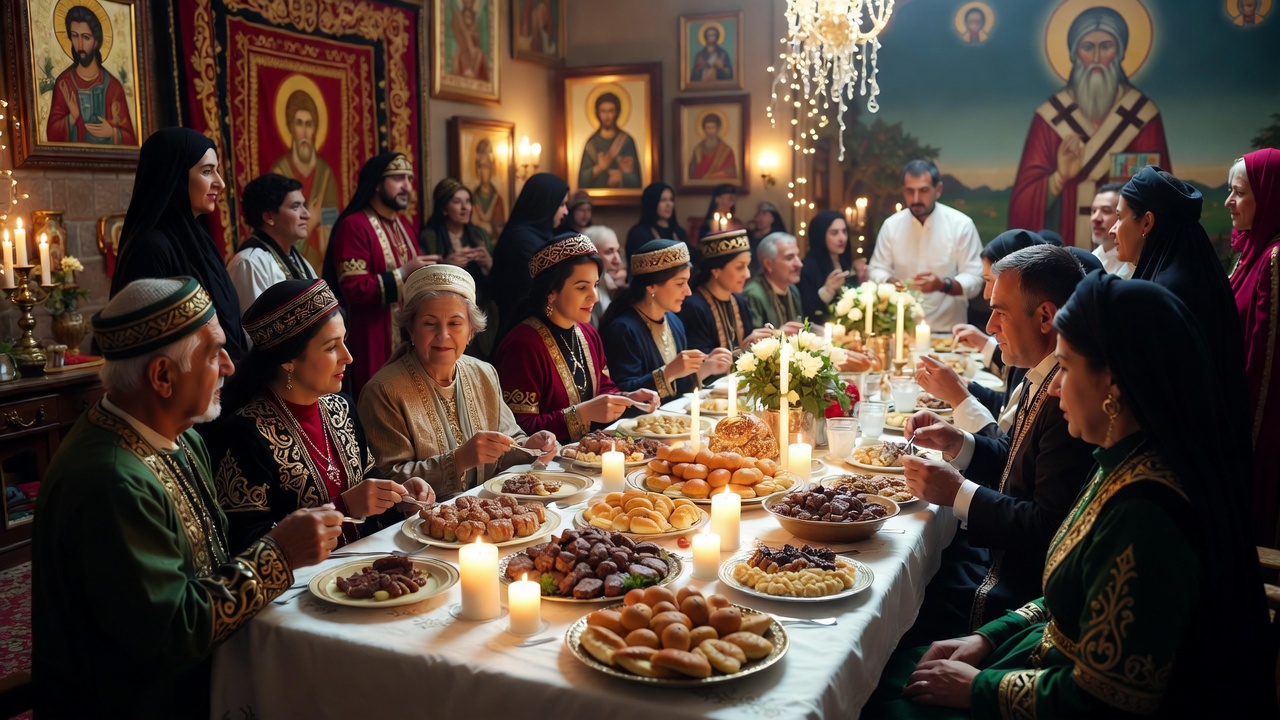
| Jan 31 (Saturday) | Evening | Family feast with halva, kumba cake, and traditional Armenian food. |
| Jan 31 – Feb 14 | Two weeks | Armenian wedding season — attend weddings if invited! |
Frequently Asked Questions About Saint Sarkis Day Celebrations
Is Saint Sarkis Day a public holiday in Armenia? It is not an official government holiday with a day off. However, it is a major feast on the Armenian Apostolic Church calendar and is widely celebrated throughout the country and the diaspora.
Can non-Armenians celebrate Saint Sarkis Day? Absolutely. Armenian culture is warm and welcoming. If you attend a Saint Sarkis Day church service or community event, you will likely be greeted with open arms (and offered halva). Many non-Armenian spouses and friends of Armenian families participate in the traditions.
What do you say to someone on Saint Sarkis Day? You can wish people a happy feast day by saying “Shnorhavor Surb Sarkis” (Shnorhavorh Sourb Sargis), which means “Congratulations on Saint Sarkis.” For those named Sarkis, you congratulate them on their name day.
Is the aghablit really that salty? Yes. Multiple sources, including the Armenian Mirror-Spectator, describe the aghablit as “unbearably salty” and “almost inedible.” That is the point. The extreme saltiness makes you thirsty enough to dream of water — and of the person destined to quench that thirst.
What happens if you do not dream of anyone after eating aghablit? According to folk belief, the absence of a dream was traditionally seen as a sign that marriage prospects were dim. But in modern times, most people treat the ritual with good humor and do not take the results too seriously.
Final Thoughts: Why Saint Sarkis Day Matters for Couples and Families in 2026
In a world where holidays are increasingly commercialized, Saint Sarkis Day stands apart. It is a celebration rooted in faith, history, and genuine human connection. There are no mass-produced greeting cards. No corporate marketing campaigns. Just flour trays on rooftops, salty cookies that test your willpower, and the sweet reward of halva shared with the people you love.
For Armenian couples, Saint Sarkis Day offers a chance to celebrate love in a way that honors their ancestors. For families, it provides a framework for passing down traditions, teaching children about sacrifice and devotion, and creating memories that last a lifetime. For travelers and curious outsiders, it opens a window into one of the oldest and most vibrant Christian cultures on earth.
So this January 31, whether you are in Yerevan or Glendale, Beirut or Sydney, consider baking a tray of aghablit, placing some flour on your windowsill, and going to bed with a thirsty mouth and a hopeful heart. Shnorhavor Surb Sarkis — Happy Saint Sarkis Day.