Every winter, while much of the world prepares for Valentine’s Day, Armenian communities around the globe celebrate a holiday that is centuries older, far more mysterious, and, frankly, much more delicious. Saint Sarkis Day — known in Armenian as Surb Sarkis (Սdelays Սargas) — is a feast day dedicated to the warrior-saint who became the patron of love and youth. And at the heart of this celebration sit two recipes that carry deep spiritual meaning: the painfully salty aghablit biscuit and the irresistibly sweet Saint Sarkis Halva.
In 2026, Saint Sarkis Day falls on January 31, according to the liturgical calendar published by St. John Armenian Church of Milwaukee. This moveable feast is always celebrated on a Saturday, exactly 63 days before Easter. Because Armenian Easter in 2026 is on April 5, the date lands at the end of January — earlier than many recent years.
Whether you are Armenian, married into an Armenian family, or simply fascinated by the world’s most meaningful food traditions, this guide will walk you through the history, the customs, and — most importantly — the step-by-step recipes you need to celebrate Saint Sarkis Day in your own kitchen.
Who Was Saint Sarkis the Warrior and Why Do Armenians Celebrate His Feast Day?
Before we step into the kitchen, it is worth understanding the man behind the holiday. Saint Sarkis (also spelled Sargis) was not Armenian by birth. He was a Greek from the region of Cappadocia in Asia Minor. During the reign of Emperor Constantine the Great in the 4th century AD, Sarkis served as a Roman military officer. His bravery and devotion to Christianity earned him the rank of general.
When Emperor Constantine died, the new ruler — Julian the Apostate — launched a fierce campaign against Christians. Churches were destroyed. Believers were killed. Sarkis gave up his title and fled with his son, Mardiros (also known as Martyros), to Armenia. There, King Diran — a grandson of King Tiridates III, the ruler who first made Armenia a Christian nation in 301 AD — welcomed them warmly.
Eventually, Sarkis and Mardiros traveled to Persia and joined the army of King Shapur II. Sarkis rose to become a military commander. But when the Persian king discovered that Sarkis was a devout Christian who had been baptizing soldiers, he demanded that Sarkis worship fire and offer sacrifice to Zoroastrian gods. Sarkis refused. He destroyed the pagan idols in the temple. In retaliation, the king executed Mardiros before his father’s eyes, then imprisoned Sarkis. Soon after, Sarkis himself was beheaded.
According to The Armenian Church of the Eastern Diocese of America, Sarkis’s loyal Christian soldiers retrieved his body and wrapped it in clean linen. When King Shapur heard of this, he ordered those soldiers killed as well. Eventually, in the 5th century, the great scholar Mesrop Mashtots — creator of the Armenian alphabet — brought Sarkis’s relics to the village of Karbi in the Ashtarak region of Armenia, where a church was built over his grave.
Today, more than 200 monasteries and churches across Armenia bear his name. He is not simply a saint of war. He is the Armenian patron saint of love, youth, and longing.
Why Is Saint Sarkis Day Called the Armenian Valentine’s Day?
There is a beautiful legend that explains the connection between Saint Sarkis and romantic love. According to folk tradition, after a great military victory, Saint Sarkis and 40 of his soldiers celebrated at a royal palace. While they slept, the king ordered 40 women to kill the soldiers. Thirty-nine of the women obeyed. But the fortieth — the woman assigned to kill Sarkis himself — fell in love with him and kissed him instead of striking him.
Sarkis awoke to a terrible scene. He grabbed the woman who had spared him, mounted his white horse, and rode into a raging storm. Since that night, the image of a rider on a white horse has been the Armenian symbol of love.
This is why, on the eve of Saint Sarkis Day, young Armenians perform rituals centered around romantic destiny. It is why couples exchange gifts and sweets. And it is why this holiday is widely called the Armenian Valentine’s Day — a celebration with roots far older than the cards and chocolates of February 14.
As the Harsanik Armenian wedding resource explains, the traditions tied to Saint Sarkis Day go beyond romance. They are about the deep Armenian commitment to family, marriage, and community. The holiday carries a spirit of hope — the hope that love will find you, even in the harshest winter storm.
Traditional Saint Sarkis Day Customs and Folk Beliefs You Should Know
The Feast of Saint Sarkis is not a quiet religious observance. It is full of vivid folk customs that have been practiced for centuries. Here are the most important traditions:
Eating the salty biscuit (aghablit). On the night before Saint Sarkis Day, unmarried young men and women eat a very salty biscuit or wafer called aghablit (Աghablit, also written as “aghi blit” or “aghi plit”). After eating this deliberately over-salted treat, they must not eat or drink anything else before going to bed. The intense thirst is the point.
Dreaming of your future spouse. Because the person falls asleep extremely thirsty, the tradition holds that they will dream of someone offering them water or leading them to a water source. According to Armenian folk belief, that person in the dream will be their future husband or wife. As the USC Digital Folklore Archives document, this practice emphasizes the deep importance of marriage and family in Armenian culture.
Flour on the rooftop. Families leave a tray of flour on the roof or balcony of their home on the eve of the feast. They believe that Saint Sarkis will ride past on his white horse at dawn, and if his horse’s hoofprint appears in the flour, it is a sign of blessings and fulfilled love dreams.
Feeding the birds. Bread is tossed outside for birds. The direction the birds fly after eating is said to indicate where the person’s future spouse will come from.
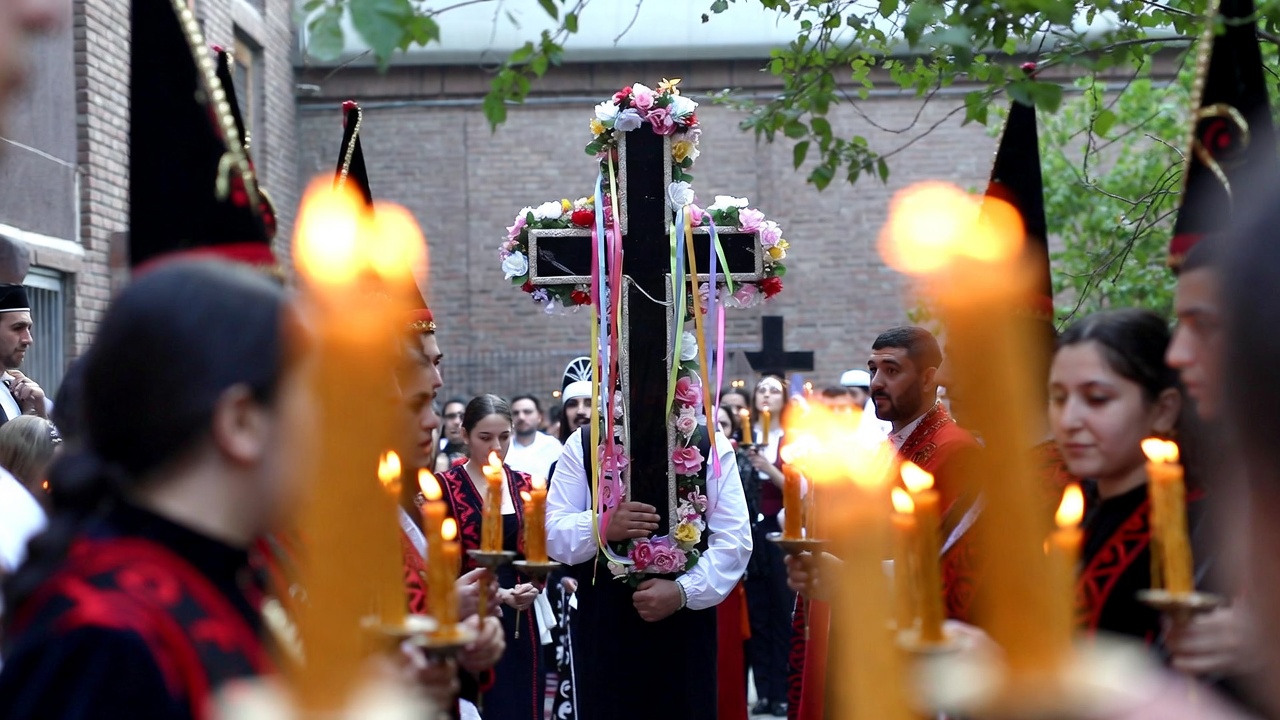
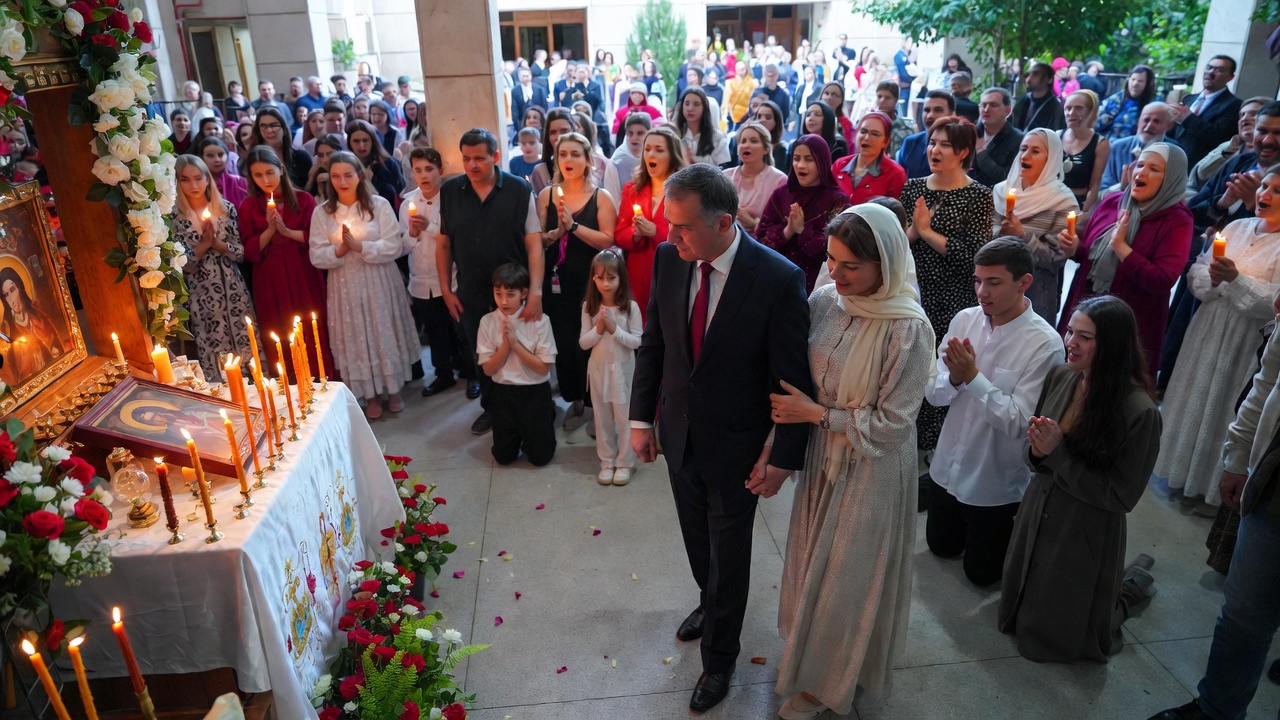
Blessing of youth at church. By decree of His Holiness Karekin II, Supreme Patriarch and Catholicos of All Armenians, the Feast of Saint Sarkis is officially a day of blessing the youth. After the Divine Liturgy, young people are invited to approach the altar for a special blessing service.
Wedding season. The two weeks between Saint Sarkis Day and the start of Great Lent are a popular time for Armenian weddings. Once Lent begins, the church altar curtains close, and no wedding ceremonies take place for 48 days. Couples who want to marry rush to have their ceremonies in this narrow window.
Honoring people named Sarkis. On this day, anyone named Sarkis receives special treatment — gifts, congratulations, and dinner invitations. Children born on the feast day may be given the name Sarkis.
What Is Aghablit? The History Behind Armenia’s Famous Salty Love Cookie
The word aghablit (Աghablit) comes from the Armenian words aghi (salty) and blit (a flat bread or wafer). It is not meant to be a tasty snack. In fact, most Armenians will tell you that aghablit is nearly inedible by normal standards. It is deliberately, painfully salty. That is its entire purpose.
As cookbook author Lena Tashjian explains in The Armenian Mirror-Spectator, aghablit is consumed so that you will go to bed desperately thirsty, setting the stage for the prophetic dream about your future spouse. The logic is beautifully simple: endure something unpleasant now, and something wonderful will follow.
This idea — suffering before sweetness — runs deep in Armenian culture. It mirrors the story of Saint Sarkis himself, who endured persecution and death for his faith. It also connects to the broader rhythm of the Armenian church calendar, where fasting always precedes feasting.
In the diaspora communities of Lebanon, Syria, and the United States, the tradition of aghablit is still very much alive. As Embroidered Recipes puts it: before you can have the good (halva), you have to endure the not-so-good (aghablit).
The recipe itself could not be simpler. It is essentially flour, salt, and water — nothing more. There is no butter, no sugar, no eggs, no yeast. This is not a cookie in any Western sense. It is a ritual object made edible — barely.
How to Make Aghablit: The Traditional Armenian Salty Biscuit Recipe for Saint Sarkis Day
This recipe is adapted from multiple traditional sources, including Sarkis Kolanjian of Sarkis Pastry in Pasadena, California, and the version published by The Armenian Mirror-Spectator.
Aghablit Ingredients
| Ingredient | Amount | Notes |
|---|---|---|
| All-purpose flour | 1 ¼ cups (about 155 g) | Plain white flour works best |
| Salt | 2–3 tablespoons | This is intentionally excessive — that is the point |
| Water | Enough to form a dough | Add gradually, roughly ¼ to ⅓ cup |
Aghablit Step-by-Step Instructions
Step 1 — Mix the dough. In a medium bowl, combine the flour and salt. Stir them together well. Gradually add water, a little at a time, mixing with your hands or a spoon until a firm, smooth dough forms. The dough should not be sticky. It should feel similar to pie crust dough — firm and workable.
Step 2 — Rest the dough. Place the dough on a flat surface and cover it with a clean kitchen cloth. Let it rest for about one hour. This resting period allows the gluten to relax, making the dough easier to roll out.
Step 3 — Preheat your oven. Set your oven to 350°F (180°C).
Step 4 — Roll and cut. Using your hands or a rolling pin, flatten the dough to about ¼-inch (6 mm) thickness. Cut it into small shapes — squares, circles, diamonds, or any shape you like. You can also use cookie cutters. Traditionally, aghablit is modest in size, roughly the size of a small cracker.
Step 5 — Bake. Place the cut pieces on a parchment-lined baking sheet. Bake for 20 to 30 minutes, or until the edges are golden brown and the wafers feel dry and crisp. Watch them carefully in the last few minutes, as they can go from golden to burnt quickly.
Step 6 — Cool and serve. Let the biscuits cool on the sheet. They will become even crispier as they cool.
Tips for Making Aghablit at Home
- Do not reduce the salt. The whole point of aghablit is that it is overwhelmingly salty. If you make it palatable, you are missing the tradition.
- Make it thin. Thinner biscuits will be crispier and more authentic. Thick ones can be chewy and even harder to eat.
- Eat it on the eve of Saint Sarkis Day. Traditionally, aghablit is consumed the night before the feast, and you should not eat or drink anything afterward before going to sleep.
- Share the experience. Making and eating aghablit is most fun as a group activity. Gather friends or family, compare your dreams the next morning, and see who dreamed of the most attractive future spouse.
What Is Saint Sarkis Halva? Understanding This Beloved Armenian Sesame Sweet
If aghablit is the bitter pill, Saint Sarkis Halva is the sweet reward.
This halva is unlike most types of halva you might find in Middle Eastern or Mediterranean stores. It is not the crumbly, tahini-based block halva common in Israeli or Turkish cuisine. Saint Sarkis Halva is a chewy, white, marshmallow-like confection coated in toasted sesame seeds and stuffed with walnuts or pistachios. It is soft, fragrant, and utterly addictive.
According to Sarkis Pastry, the main ingredients are sugar, orange blossom water (or rose water), sesame seeds, and marshmallow cream. The halva is shaped into rolls or flat discs, with a walnut or pistachio tucked inside.
Traditionally, this halva was not made with marshmallow at all. As Lena Tashjian notes in her Vegan Armenian Kitchen Cookbook, the original recipe used the reduced liquid from boiled dried soapwort roots — a plant known in Arabic as erq al halaweh and in Turkish as çöven. Soapwort contains natural compounds called saponins that create a stable, foamy texture. When whipped, the soapwort extract creates a meringue-like base that gives halva its distinctive chewy consistency. Marshmallow cream is the modern shortcut widely used in diaspora communities today.
In Armenian bakeries across Pasadena, Glendale, Beirut, and Aleppo, Saint Sarkis Halva appears on shelves in the days leading up to the feast. It is instantly recognizable: small white rolls dusted with golden sesame seeds, sometimes arranged on trays alongside dried fruit. The sight of Saint Sarkis Halva in a bakery window is the surest sign that the feast is near.
How to Make Saint Sarkis Halva at Home: A Complete Step-by-Step Recipe
This recipe is based on the version published by Lena Tashjian and Siroon Parseghian in The Vegan Armenian Kitchen Cookbook, with additional guidance from traditional sources.
Saint Sarkis Halva Ingredients
| Ingredient | Amount | Notes |
|---|---|---|
| White granulated sugar | 3 cups | Regular table sugar |
| Water | 4 tablespoons | For the sugar syrup |
| Lemon juice | 1 tablespoon | Freshly squeezed is best |
| Rose water or orange blossom water | 1 tablespoon | Orange blossom is more common in Lebanese-Armenian tradition |
| Marshmallow cream (fluff) | 1 jar (7 oz / 200 g) | Use vegan marshmallow cream if preferred — Dandies is a popular brand |
| Sesame seeds | 2–3 cups (about 1 lb / 450 g) | You will need plenty — they coat the outside of each piece |
| Walnut halves or pistachios | 1 cup | For stuffing inside each roll |
Saint Sarkis Halva Step-by-Step Instructions
Step 1 — Chill the sesame seeds. Place the sesame seeds in the refrigerator for at least one hour before you begin. Cold sesame seeds are easier to work with and will adhere better to the hot halva mixture. This is a small step that makes a big difference.
Step 2 — Make the sugar syrup. Combine the sugar and water in a heavy-bottomed pot. Stir to combine. Bring the mixture to a boil over medium-high heat. Once it boils, reduce the heat to medium-low.
Step 3 — Add the lemon juice. Stir in the lemon juice. This prevents the sugar from crystallizing and keeps the syrup smooth. Continue to simmer the syrup.
Step 4 — Add the rose water or orange blossom water. Stir it in gently. The kitchen will fill with an incredible floral scent. Continue to cook.
Step 5 — Watch for the golden color. Keep simmering and stirring occasionally. When the syrup turns a light golden color — similar to honey — it is ready for the next step. Do not let it turn dark brown, or it will taste burnt. This stage usually takes about 10 to 15 minutes after the initial boil.
Step 6 — Add the marshmallow cream. Remove the pot from the heat briefly. Add the entire jar of marshmallow cream. Stir vigorously until the marshmallow is completely melted and the mixture is smooth. It will be thick, sticky, and white with a golden tint.
Step 7 — Prepare the sesame seed tray. Spread the chilled sesame seeds in a thick, even layer on a large rimmed baking sheet or tray.
Step 8 — Form the halva. Work quickly, because the mixture will begin to set as it cools. Using a tablespoon, scoop portions of the hot marshmallow-sugar mixture and drop them onto the sesame seeds. Try to make each scoop as round and flat as possible — roughly the size of a small pancake.
Step 9 — Add the nuts. Place a walnut half or a few pistachios in the center of each flattened scoop.
Step 10 — Roll and shape. Wait about 45 seconds to 1 minute for the scoops to cool slightly. Then, fold one side of the flattened disc over the nuts, followed by the other side, creating a small rolled cylinder. Press gently to seal. Roll the entire piece in more sesame seeds so the outside is completely coated.
Step 11 — Trim the ends (optional). For a clean, professional look, use a sharp knife to slice off the rough ends of each roll, creating neat rectangular or cylindrical shapes.
Step 12 — Cool completely. Let the finished halva sit at room temperature for several hours until firm. Store in an airtight container.
Professional Tips for Perfect Saint Sarkis Halva
- Speed is essential. The sugar-marshmallow mixture hardens quickly. If it becomes too stiff to work with, you can gently reheat it over low heat.
- Use plenty of sesame seeds. You cannot have too many. Coat your hands in sesame seeds before handling the mixture to prevent sticking.
- Do not skip the chilling step. Room-temperature sesame seeds will absorb too much heat from the mixture and become oily rather than crisp.
- Experiment with fillings. At Sarkis Pastry, they make four varieties: pistachio, walnut, garbanzo bean, and plain. The pistachio and walnut versions are rolled, while the garbanzo and plain versions are cut into circles.
- Add a pinch of ground ginger. Several Armenian home cooks on The Armenian Kitchen recommend adding a small amount of ground ginger to the sugar syrup for extra warmth and depth.
The Original Saint Sarkis Halva Recipe with Mastic Gum Instead of Marshmallow
For those who want to go deeper into tradition, there is an older version of this halva that uses mastic gum (called maztaki in Armenian) instead of marshmallow cream. This version was rediscovered by Armenian food researcher Sonia Tashjian and shared through The Armenian Kitchen.
Mastic Gum Halva Ingredients
| Ingredient | Amount |
|---|---|
| White sugar | 1 cup |
| Water | ⅓ cup |
| Lemon juice | ½ teaspoon |
| Crushed mastic gum (mastic powder) | ½ teaspoon |
| Sesame seeds | 1 cup |
| Chopped walnuts | ½ cup |
Mastic Gum Halva Instructions
- Make the syrup. Boil the sugar with the water in a small saucepan, stirring until dissolved.
- Add the lemon juice and mastic. Stir in both ingredients. The mastic gives the halva a distinctive piney, resinous flavor that is prized in Armenian and Middle Eastern sweets.
- Prepare the tray. Spread the sesame seeds and chopped walnuts together on a tray.
- Form the halva. Using a spoon, pour small amounts of the hot syrup onto the sesame-walnut mixture, forming small mounds.
- Let it set. Allow the mounds to cool until lukewarm, then sprinkle extra sesame seeds on top.
- Firm up. After a few hours, the halva will harden into chewy, fragrant pieces.
A note about mastic gum: Mastic is a resin harvested from the mastic tree (Pistacia lentiscus), which grows primarily on the Greek island of Chios. It has been used in Mediterranean and Middle Eastern cooking for centuries. You can find mastic gum at Middle Eastern grocery stores, specialty spice shops, or online retailers. It is also a traditional ingredient in Armenian choreg (Easter bread).
Other Traditional Foods and Desserts Served on Saint Sarkis Day
While aghablit and halva are the two most iconic recipes, they are not the only foods associated with the feast. Armenian families — especially those from specific regions — prepare other traditional dishes as well.
Khashil (Խաշdelays). This is a warm pudding made from roasted and ground wheat. The wheat is toasted until golden (called aghants in Armenian), then ground into a fine powder (called pokhints). This powder is cooked with water into a creamy porridge, seasoned with salt, and served with matsun (Armenian yogurt) and melted butter or fried onions. Khashil is sometimes called the “fasting food” of the feast, and its preparation is described in detail by researcher Sonia Tashjian on The Armenian Kitchen.
Kumba cake. This dense, spiced cake comes from the Musa Dagh region and is a traditional Saint Sarkis Day treat. It contains no eggs or dairy, making it suitable for Lenten fasting. The cake is flavored with mahlab (a spice made from ground cherry pits), cinnamon, and other warm spices. It sometimes contains a hidden coin or small object — the person who finds it is said to have good luck.
Klontrak. Another type of halva, klontrak is made from toasted pearled wheat that is ground, then kneaded with melted butter and mulberry syrup (or honey). The mixture is shaped into small balls. It is a simpler, more rustic sweet than Saint Sarkis Halva.
How Saint Sarkis Day Is Celebrated in Armenia Today in 2026
In modern Yerevan, the capital of Armenia, Saint Sarkis Day has become a major cultural event. It is not just a church holiday — it is a city-wide celebration of love and youth.
According to Armenia Travel, the day typically includes a procession that carries a relic of Saint Sarkis from the Mother See of Holy Etchmiadzin Cathedral to Saint Sarkis Church in Yerevan. Cultural activities fill the streets: art exhibitions, live concerts, traditional folk performances, and, of course, plenty of halva.
Young people dress up and gather in the city center. Couples exchange flowers and small gifts. The atmosphere blends religious devotion with youthful energy and romantic hope. It is, in many ways, the most joyful day on the Armenian winter calendar.
The Ecokayan Dilijan Resort notes that the village of Ushi in Armenia’s Aragatsotn province draws many pilgrims on this day. The Saint Sarkis Monastery there was built on the site where the saint’s relics were originally placed by Mesrop Mashtots. Walking through the snowy mountain landscape to reach this ancient monastery is, for many Armenians, a deeply spiritual experience.
How Armenian Diaspora Communities Celebrate Saint Sarkis Day Around the World
The Armenian diaspora — estimated at roughly 7 to 10 million people worldwide — keeps these traditions alive far from the homeland.
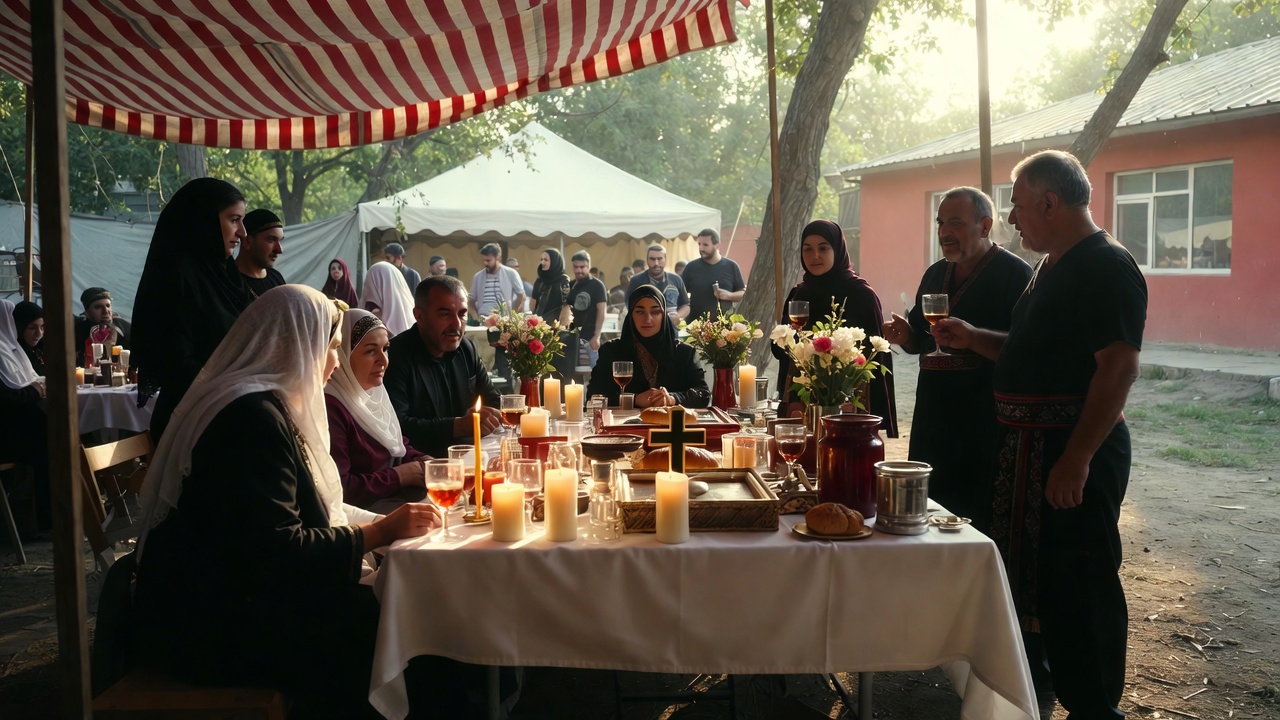
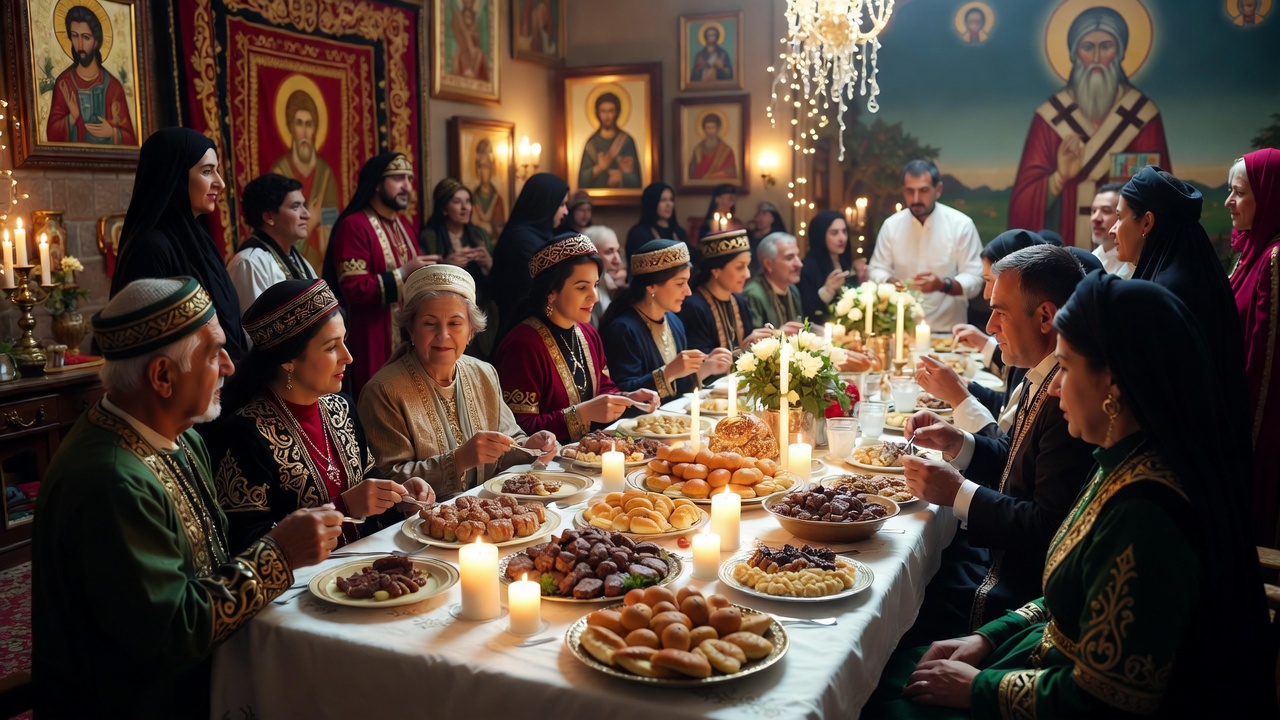
In the United States, cities with large Armenian populations such as Glendale and Pasadena in California, Watertown in Massachusetts, and Detroit in Michigan see Armenian bakeries and churches bustling with activity. Bakeries like Sarkis Pastry in Pasadena produce hundreds of pounds of halva in the days before the feast. Churches hold special liturgies followed by community meals.
In Lebanon and Syria, where some of the oldest Armenian diaspora communities have lived for over a century, the tradition of buying Saint Sarkis Halva from a trusted neighborhood bakery remains strong. The Lebanese-Armenian community, in particular, is known for its devotion to the orange blossom water variety of the halva.
In France, Russia, and throughout Europe, Armenian communities gather in churches and cultural centers. The aghablit tradition is especially popular among younger generations, who treat it as a fun social game — comparing dreams the next morning over coffee and freshly made halva.
No matter where they live, Armenians on this day share a common thread: the salty biscuit at night, the sweet halva in the morning, and the hope that love is always on its way.
Saint Sarkis Day Recipes vs. Valentine’s Day Traditions: Key Differences
Many people describe Saint Sarkis Day as the “Armenian Valentine’s Day,” and there are clear similarities. Both holidays celebrate romantic love. Both involve the exchange of gifts and sweets. Both fall in late January or February.
But the differences are significant, and understanding them helps you appreciate why Saint Sarkis Day carries a unique cultural weight.
| Feature | Saint Sarkis Day | Valentine’s Day |
|---|---|---|
| Origin | 4th-century Christian martyrdom | 3rd-century Roman saint, commercialized in the 20th century |
| Religious connection | Deep — tied to Armenian Apostolic Church liturgy | Minimal in modern practice |
| Key ritual | Eating salty biscuit, prophetic dreaming | Exchanging cards and chocolates |
| Traditional foods | Aghablit (salty), halva (sweet) | Chocolate, candy hearts |
| Focus | Unmarried youth seeking their future spouse | Existing couples celebrating their love |
| Date | Moveable — 63 days before Armenian Easter | Fixed — February 14 |
| Cultural depth | Rooftop flour, bird divination, church blessing | Greeting cards, roses, dinner reservations |
The key difference is that Saint Sarkis Day is fundamentally about faith and hope for the future. It is forward-looking. It asks: Who will I love? Valentine’s Day, by contrast, is largely backward-looking: Who do I already love? Both are beautiful. But they serve different emotional purposes.
Frequently Asked Questions About Saint Sarkis Day Salty Biscuits and Halva
When is Saint Sarkis Day in 2026? Saint Sarkis Day in 2026 falls on Saturday, January 31. The date moves each year because it is always celebrated 63 days before Armenian Easter, which in 2026 is on April 5.
Can I eat aghablit if I am already married? Traditionally, aghablit is eaten by unmarried young people seeking a vision of their future spouse. But there are no strict rules — married people can eat it too, especially if they want to share in the cultural experience. Just be prepared for a very salty night.
Is Saint Sarkis Halva the same as regular halva? No. Regular halva — the kind you find in most Middle Eastern stores — is usually a tahini-based block that is crumbly and dense. Saint Sarkis Halva is a completely different confection. It is chewy, white, marshmallow-based, and coated in sesame seeds. The two share a name but little else.
What can I use instead of marshmallow cream? The traditional ingredient is soapwort root extract, which creates a natural foamy meringue. However, soapwort root can be difficult to find outside of Middle Eastern specialty stores. Marshmallow cream is the widely accepted modern substitute. If you want a vegan option, brands like Dandies make marshmallows without gelatin.
Can I make Saint Sarkis Halva in advance? Yes. The halva keeps well in an airtight container at room temperature for up to one week, or in the refrigerator for up to two weeks. Some people prefer to make it a day or two before the feast so the sesame seeds have time to fully adhere.
Where can I buy Saint Sarkis Halva if I do not want to make it? Armenian bakeries in cities with significant Armenian populations typically sell Saint Sarkis Halva in the weeks leading up to the feast. In the Los Angeles area, Sarkis Pastry is a well-known source that also ships nationwide.
What does aghablit taste like? Aghablit tastes extremely salty — much more so than any normal cracker or biscuit. It is essentially flour and salt baked together. Most people need only a small piece to trigger the desired thirst. As The Armenian Kitchen describes it, these are “not very pleasing” by any standard measure of taste.
How to Host a Saint Sarkis Day Celebration at Home: A Complete Guide
You do not need to be Armenian to host a Saint Sarkis Day gathering. The holiday’s themes — love, hope, community, and good food — are universal. Here is how to organize your own celebration:
The evening before (Friday, January 30, 2026):
- Bake the aghablit in the afternoon. Use the recipe above. Make enough for each guest to have one or two pieces.
- Prepare the halva earlier in the day or the day before, so it has time to firm up.
- Set the scene. Light candles. If you have a balcony or rooftop, place a tray of flour outside — in the tradition of watching for Saint Sarkis’s horse’s hoofprint.
- Serve the aghablit after dinner. Explain the tradition. Make sure your guests understand that they should not drink water after eating it. (You may want to warn them in advance.)
- Go to bed thirsty. The next morning, gather and share your dreams over breakfast.
The morning of Saint Sarkis Day (Saturday, January 31, 2026):
- Serve the halva with Armenian coffee or tea. This is the sweet reward after the salty ordeal of the night before.
- Share dreams. Compare notes — who appeared in each person’s dream? Was there water? This is the most entertaining part of the tradition.
- Exchange small gifts. Flowers, sweets, or handwritten notes in the spirit of the holiday.
- If possible, attend a liturgy. Many Armenian churches hold special services on Saint Sarkis Day, and guests of all backgrounds are welcome.
The Cultural Significance of Food Rituals in Armenian Holiday Celebrations
The recipes of Saint Sarkis Day are more than recipes. They are acts of faith. The aghablit is an act of willingness — willingness to endure discomfort in hope of revelation. The halva is an act of celebration — sweetness earned through patience.
This pattern of suffering followed by joy runs throughout Armenian cuisine and Armenian life. During the 48 days of Great Lent, Armenians fast from meat and dairy. The reward is the extraordinary feast of Easter. During the week before Vartanants Day (which in 2026 falls on February 12), families prepare special foods to honor the Armenian soldiers who died defending their faith in the Battle of Avarayr in 451 AD.
Food, in Armenian culture, is never just fuel. It is memory, identity, and devotion made tangible. Every recipe carries a story. Every meal connects the living to the dead, the present to the past, the diaspora to the homeland.
When you make aghablit and halva for Saint Sarkis Day, you are not simply cooking. You are participating in a tradition that has survived the fall of empires, the devastation of genocide, and the scattering of a people across every continent. You are helping to keep that tradition alive.
Quick Reference: Saint Sarkis Day 2026 Recipe Cheat Sheet
For easy reference, here is everything you need at a glance:
Aghablit (Salty Biscuit) — Quick Recipe
- 1 ¼ cups flour + 2–3 tablespoons salt + water to form dough
- Rest 1 hour → Roll to ¼ inch → Cut shapes → Bake at 350°F for 20–30 minutes
Saint Sarkis Halva — Quick Recipe
- 3 cups sugar + 4 tbsp water → boil
- Add 1 tbsp lemon juice + 1 tbsp orange blossom water → cook to golden
- Stir in 7 oz marshmallow cream until smooth
- Scoop onto chilled sesame seeds → add walnut → roll → coat in more seeds
- Cool several hours until firm
Final Thoughts: Why Saint Sarkis Day Recipes Matter More Than Ever
In a world where holidays are increasingly commercialized, Saint Sarkis Day stands apart. There are no greeting card companies pushing Surb Sarkis cards. There are no chocolate corporations sponsoring the aghablit. The holiday survives because people care enough to keep it going — in their kitchens, in their churches, and in their dreams.
The recipes are simple. The ingredients are humble. But the meaning behind them is vast. A salty biscuit reminds us that longing is part of love. A sesame-coated halva reminds us that sweetness follows patience. And the white horse of Saint Sarkis, galloping through a winter storm, reminds us that love does not wait for perfect conditions. It comes when it comes — fierce, unexpected, and unstoppable.
So this January, whether you are in Yerevan or Los Angeles, Beirut or Paris, Sydney or São Paulo — make the aghablit. Eat it before bed. Go to sleep thirsty. Dream of water. And in the morning, break open that beautiful, golden-sesame halva, share it with the people you love, and know that you are part of something ancient and enduring.