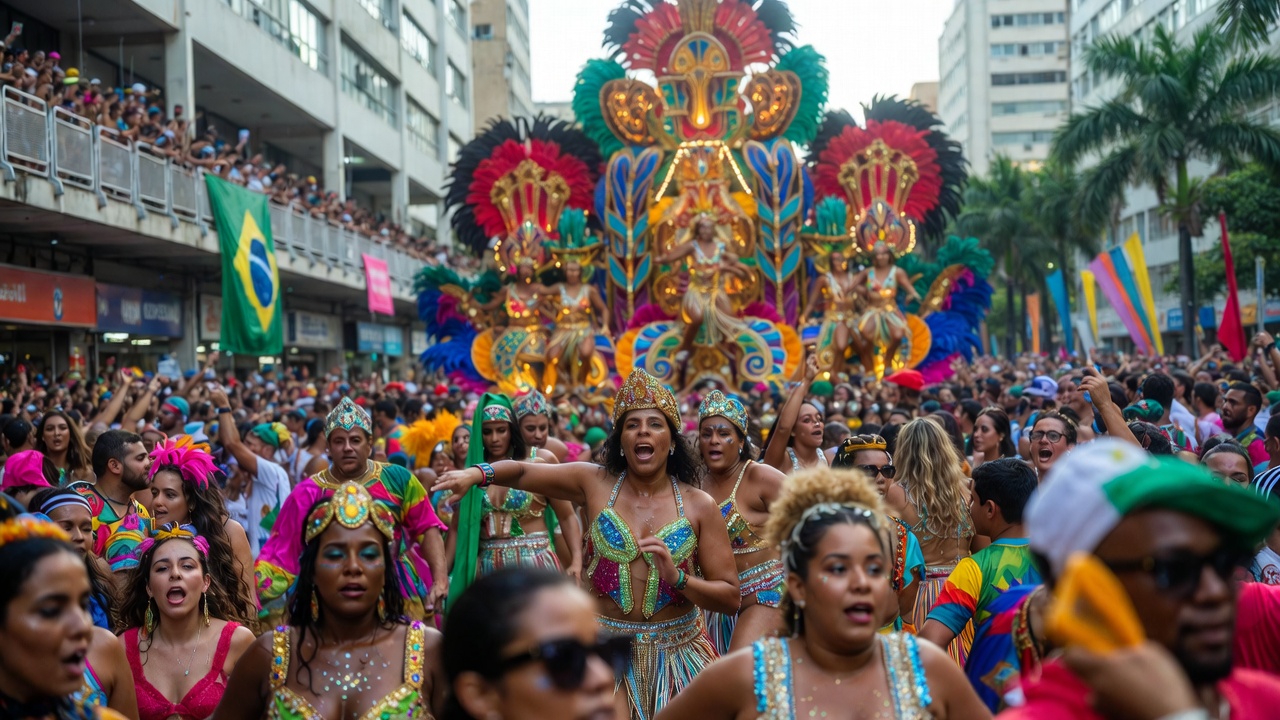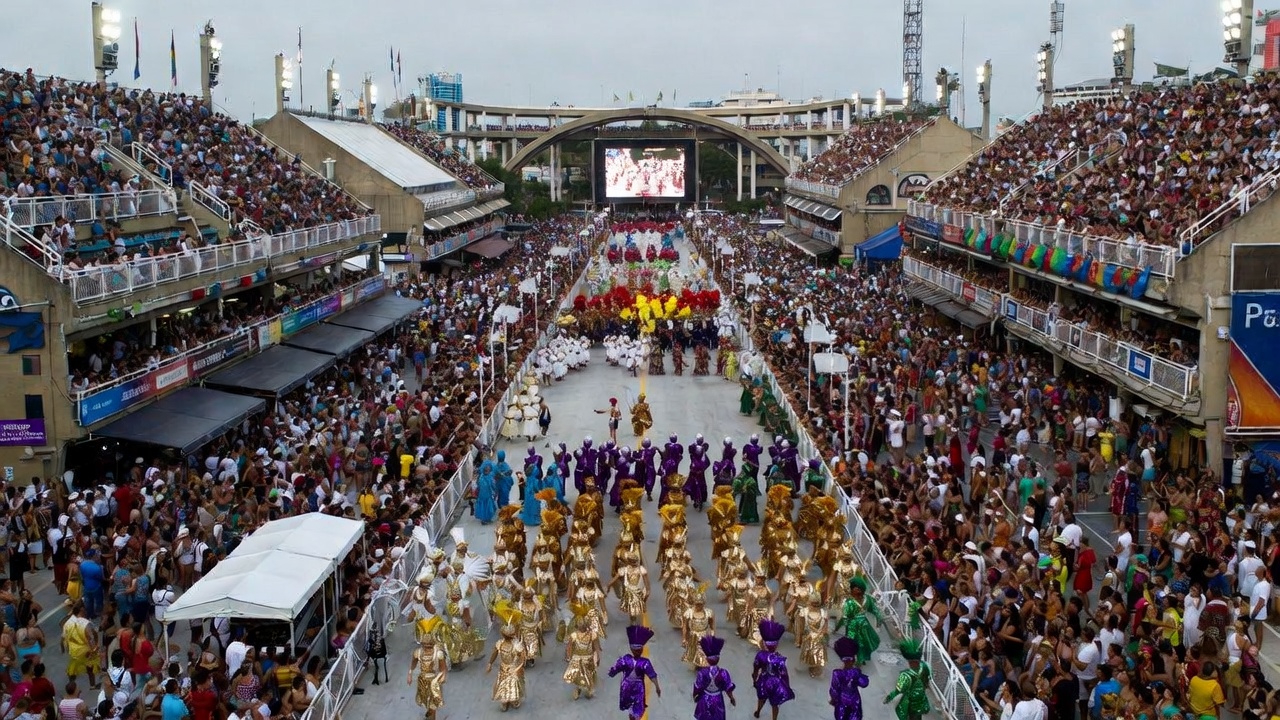
The thunderous drums echo through the night. Sequins catch the stadium lights like a million scattered stars. Thousands of dancers move in hypnotic unison down the 700-meter stretch of concrete known as the Sambadrome. This is Rio de Janeiro’s Carnival — the greatest show on Earth — and the samba schools are its beating heart.
Every February (or early March, depending on the liturgical calendar), Rio transforms into an explosion of rhythm, color, and unbridled joy. At the center of this transformation stand the escolas de samba — the samba schools — organizations that spend an entire year preparing for roughly 75 minutes of pure artistic spectacle. These aren’t schools in the traditional sense. They’re community institutions, cultural powerhouses, and competitive entities that channel the soul of Rio’s neighborhoods into performances that defy imagination.
Whether you’re planning your first trip to Rio Carnival or you’re a seasoned folião (reveler) seeking deeper knowledge, this guide will take you through everything you need to know about samba schools, their parade schedules, the top performers who bring the enredo (theme) to life, and how to experience this UNESCO-recognized Intangible Cultural Heritage of Humanity at its most authentic.
What Are Rio Carnival Samba Schools and Why Do They Matter?
Samba schools are far more than performance groups. They represent the cultural DNA of Rio de Janeiro’s communities, particularly those in working-class neighborhoods and favelas where samba first took root in the early 20th century.
The first samba school, Deixa Falar (Let Them Speak), was founded in 1928 in the Estácio neighborhood. Its founders — including the legendary Ismael Silva — chose the name “escola” (school) partly as a tongue-in-cheek reference to a teachers’ training college nearby. But the name stuck, and within a decade, samba schools had proliferated across Rio.
Today, a samba school functions as:
- A community center — offering social services, music education, and a gathering place for residents
- A cultural institution — preserving and evolving Afro-Brazilian traditions
- A competitive organization — vying for the championship in Rio’s annual Carnival parade
- An economic engine — generating employment and tourism revenue for local neighborhoods
Each school is headquartered in a quadra — a community space where rehearsals, parties, and events happen year-round. Visiting a quadra in the months leading up to Carnival offers an intimate glimpse into the creative process that makes the parade possible.
The Hierarchy of Rio’s Samba School Leagues
Rio’s samba schools compete in a league system similar to European football. The structure includes:
| League | Number of Schools | Venue | Significance |
|---|---|---|---|
| Grupo Especial | 12 schools | Sambadrome (Marquês de Sapucaí) | Top tier — televised nationally and internationally |
| Série Ouro | 16 schools | Sambadrome | Second division — promotion/relegation system |
| Série Prata | Variable | Intendente Magalhães | Third division |
| Série Bronze | Variable | Intendente Magalhães | Fourth division |
| Grupos de Avaliação | Variable | Various | Entry-level groups |
The Grupo Especial is where the magic reaches its zenith. These twelve schools command budgets in the millions of dollars, employ thousands of participants, and attract global media attention. The bottom two schools in the Grupo Especial are relegated to Série Ouro, while the top two from Série Ouro earn promotion — stakes that add genuine competitive tension to every parade.
History of Samba Schools in Rio de Janeiro: From Marginalization to Global Fame
Understanding samba schools requires understanding their origins in resistance, creativity, and community resilience.
The African Roots of Brazilian Samba Music
Samba emerged from the fusion of African rhythms brought to Brazil by enslaved peoples — particularly those from Angola, Congo, and West Africa — with European musical elements and indigenous Brazilian influences. After abolition in 1888, many formerly enslaved people migrated to Rio de Janeiro, settling in hillside communities and downtown neighborhoods like Praça Onze and Cidade Nova.
These communities became incubators for samba. The music was initially criminalized; police arrested people for playing percussion instruments or gathering for rodas de samba (samba circles). The creation of organized samba schools was, in part, a strategy to legitimize and protect these cultural practices.
The First Official Carnival Parade Competition in 1932
In 1932, the Rio newspaper Mundo Sportivo organized the first official samba school competition. The participating schools included:
- Mangueira — Founded 1928
- Portela — Founded 1923 (as Conjunto Carnavalesco de Oswaldo Cruz)
- Deixa Falar — Founded 1928
- Estação Primeira — Founded 1929
Mangueira won that inaugural competition, beginning a legendary rivalry that continues to this day.
How Carnival Parades Evolved Through the Decades
The transformation of samba school parades from street processions to stadium spectacles happened gradually:
- 1930s-1940s: Parades moved to Avenida Presidente Vargas. Schools developed more structured presentations with themed songs (sambas-enredo).
- 1950s-1960s: The “Golden Age” of samba. Schools like Portela and Mangueira dominated, and the parades became major cultural events drawing tourists and government attention.
- 1984: The inauguration of the Sambadrome Marquês de Sapucaí, designed by legendary architect Oscar Niemeyer. This permanent parade venue revolutionized the event, providing seating for approximately 72,500 spectators and enabling better organization, judging, and television coverage.
- 1990s-Present: Budgets exploded. Technology transformed floats into moving works of art with hydraulics, LED screens, and elaborate special effects. Corporate sponsorship became essential. Some traditionalists argue this commercialization threatens samba’s grassroots spirit, while others see it as necessary evolution.
Understanding the Samba School Parade Structure and Judging Criteria
A samba school parade is not freeform expression. It follows a meticulous structure judged by trained officials across multiple categories. Understanding this structure enhances your appreciation of what you’re witnessing.
The Essential Components of Every Samba School Parade
Every Grupo Especial parade must include:
1. Comissão de Frente (Front Commission) The opening act. Approximately 15 performers execute choreographed routines that introduce the enredo. Once purely formal, today’s front commissions often feature theatrical dance numbers, elaborate costumes, and sometimes even acrobatics. The front commission of Salgueiro has won particular acclaim for innovative choreography.
2. Abre-Alas (Opening Float) The first float, typically displaying the school’s name, emblem, and colors. This float sets the visual tone for everything that follows.
3. Mestre-Sala and Porta-Bandeira (Flag-Bearer Couple) A dancing couple carrying the school’s flag — one of the most sacred elements. Their movements follow traditional dance forms dating back decades. The porta-bandeira (flag bearer, traditionally female) must never let the flag touch the ground. Schools typically have two or three flag-bearer couples.
4. Bateria (Percussion Section) The heart — both literally and spiritually — of the parade. Between 250-350 drummers playing surdo drums, tamborins, repiques, cuícas, agogôs, and other percussion create the rhythmic foundation. The mestre de bateria (drum master) conducts this massive ensemble. Each school has a distinctive bateria sound, called a bossa.
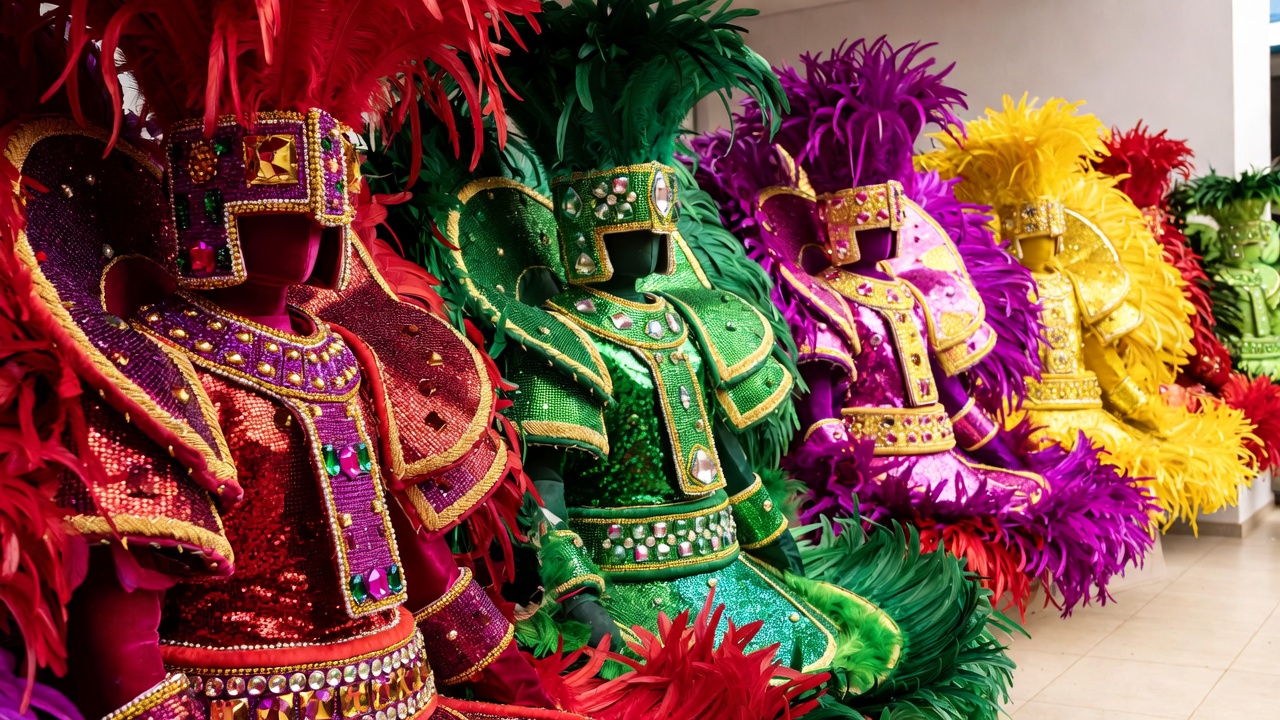
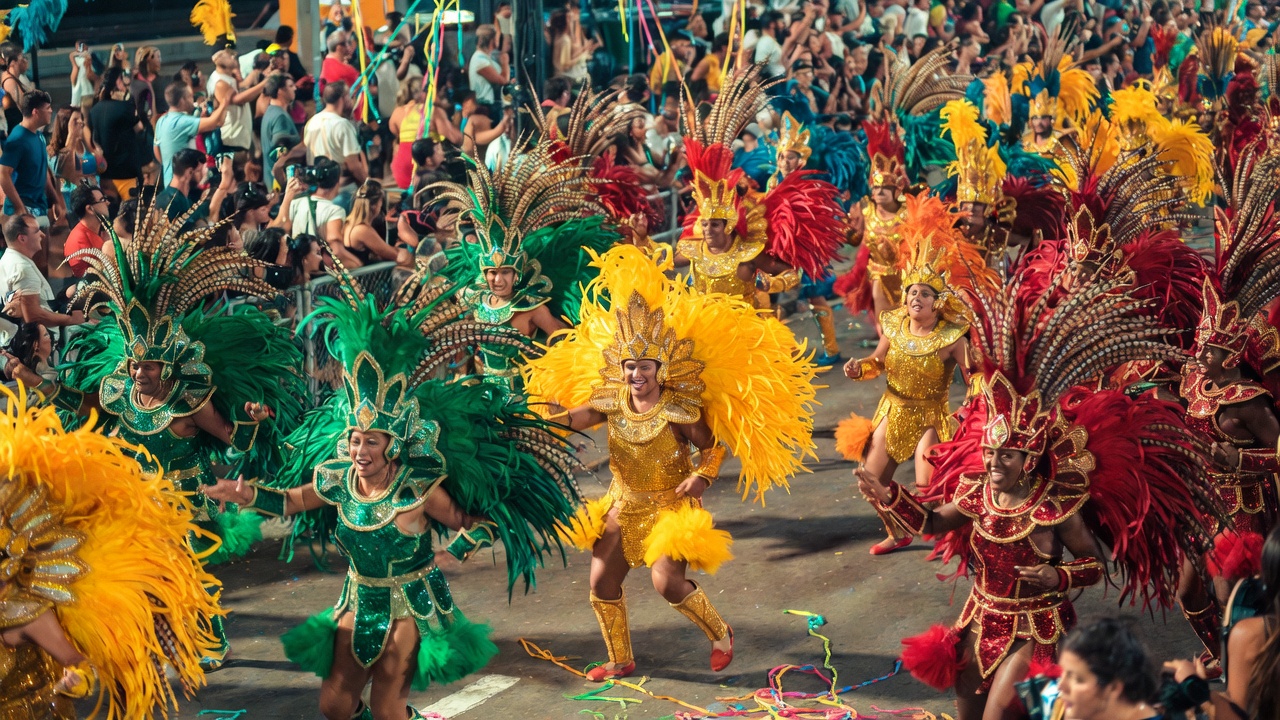
5. Alas (Wings/Sections) Grouped sections of costumed participants, each representing an aspect of the enredo. An average parade includes 25-35 alas with thousands of performers. Some alas are composed of community members who purchase their costumes; others feature dancers from the school’s professional teams.
6. Carros Alegóricos (Allegorical Floats) Massive floats — some reaching 14 meters in height and 60 meters in length — that serve as moving stages for the enredo. Top schools deploy 6-8 floats per parade, each a masterpiece of engineering and artistic design.
7. Baianas (Female Elder Dancers) A mandatory wing of at least 50 women (traditionally older members of the community) wearing full, spinning skirts in the traditional Bahian style. The ala das baianas honors the Afro-Brazilian matriarchs who preserved samba culture through generations of hardship.
8. Passistas (Solo Samba Dancers) The freestyle samba dancers who demonstrate the samba no pé (samba in the feet) with incredible speed and hip movements. Both male and female passistas perform throughout the parade.
9. Rainha de Bateria (Drum Queen) The celebrity position. Often occupied by famous actresses, models, or TV personalities, the drum queen dances in front of the bateria in spectacular (and revealing) costumes. While some criticize this role as commercialization, others see it as an honor that brings visibility to the school.
How Judges Score Samba School Performances
Ten categories determine each school’s fate:
| Judging Category | What Judges Evaluate |
|---|---|
| Bateria | Rhythm consistency, creativity, sound quality, maintenance of tempo |
| Samba-Enredo | Melody, lyrics, theme integration, singability |
| Harmonia | Synchronization between singing, music, and movement |
| Evolução | Flow, energy, continuous movement, crowd engagement |
| Enredo | Coherence and creativity of the parade’s narrative theme |
| Conjunto | Overall visual harmony and unity |
| Alegorias e Adereços | Float design, construction, artistic merit |
| Fantasias | Costume design, execution, theme integration |
| Comissão de Frente | Choreography, costumes, theme introduction |
| Mestre-Sala e Porta-Bandeira | Dance technique, costume quality, flag handling |
Four judges evaluate each category. The highest and lowest scores are discarded, with the remaining two averaged. A single tenth-of-a-point deduction can mean the difference between championship and relegation.
Rio Carnival 2025 Parade Schedule: When to Watch the Samba Schools
The Carnival parade schedule follows a consistent pattern each year, with dates shifting based on when Easter falls.
Complete Sambadrome Parade Schedule for Carnival 2025
For Carnival 2025, the key dates are:
| Date | Day | Event | Time |
|---|---|---|---|
| February 28, 2025 | Friday | Série Ouro (First Half) | 7:00 PM – 3:00 AM |
| March 1, 2025 | Saturday | Série Ouro (Second Half) | 7:00 PM – 3:00 AM |
| March 2, 2025 | Sunday | Grupo Especial Night 1 (6 Schools) | 9:00 PM – 5:00 AM |
| March 3, 2025 | Monday | Grupo Especial Night 2 (6 Schools) | 9:00 PM – 5:00 AM |
| March 4, 2025 | Tuesday | Mirim Schools (Children) | 6:00 PM – 10:00 PM |
| March 8, 2025 | Saturday | Champions Parade | 9:00 PM – 3:00 AM |
Important timing notes:
- Each Grupo Especial school parades for approximately 65-75 minutes
- Brief intervals (15-20 minutes) occur between schools
- The final school typically finishes between 4:30 AM and 5:30 AM
- Results are announced on Ash Wednesday afternoon
Parade Order: Which Samba Schools Perform Each Night
The parade order is determined by lottery several weeks before Carnival. Schools generally prefer later positions — a parade at 2:00 AM reaches peak television viewership and allows judges’ eyes to be “warmed up.”
The exact order for 2025 will be announced by LIESA (Liga Independente das Escolas de Samba) — the independent league organizing the Grupo Especial parades.
Top 12 Samba Schools in Rio’s Grupo Especial: Profiles and Histories
Let’s meet the twelve schools competing at the highest level. Each carries decades of history, distinctive identity, and passionate communities.
1. Estação Primeira de Mangueira — The Green and Pink Giant
Founded: April 28, 1928
Neighborhood: Mangueira (North Zone)
Colors: Green and pink
Symbol: Mangueira tree
Championships: 24 (most in Grupo Especial history)
Mangueira is the most traditional school and the one most foreigners recognize. Its founders include Cartola, one of Brazil’s most beloved composers, whose bust stands in the quadra.
The school’s 2019 championship parade, “História para Ninar Gente Grande” (A Lullaby for Grown-Ups), made international headlines for its bold retelling of Brazilian history from the perspective of indigenous peoples, Afro-Brazilians, and the poor. The parade featured Marielle Franco, the assassinated Rio councilwoman, as a central figure — a politically charged choice that resonated deeply.
Why Mangueira stands out: Unmatched historical significance, strong community roots, willingness to tackle political themes.
2. Portela — The Queen of Carnival
Founded: April 11, 1923
Neighborhood: Madureira (North Zone)
Colors: Blue and white
Symbol: Eagle
Championships: 22
Portela holds the record for most consecutive championships — an incredible seven titles from 1941 to 1947. The school’s eagle mascot is among the most iconic images in Carnival.
Portela’s quadra is a pilgrimage site for samba purists. The school has produced legendary composers like Paulinho da Viola, and its traditional style emphasizes musical excellence over spectacle.
Why Portela stands out: Deepest musical tradition, passionate torcida (fan base), historic dominance.
3. Beija-Flor de Nilópolis — The Innovation Machine
Founded: December 25, 1948
Neighborhood: Nilópolis (Baixada Fluminense)
Colors: Blue, white, and gold
Symbol: Hummingbird
Championships: 14
Beija-Flor revolutionized the modern parade. Under the direction of Joãosinho Trinta (1976-2002), the school introduced cinematic storytelling, massive floats, and unprecedented spectacle. Trinta’s famous quote — “O povo gosta de luxo. Quem gosta de miséria é intelectual” (“The people like luxury. Only intellectuals enjoy misery”) — defined an era.
The school’s controversial 1989 parade, “Ratos e Urubus, Larguem a Minha Fantasia” (Rats and Vultures, Leave My Fantasy Alone), featured a float depicting Christ as a homeless man — censored by authorities who covered it with a black plastic sheet that only amplified its impact.
Why Beija-Flor stands out: Technical excellence, visual innovation, willingness to provoke.
4. Acadêmicos do Salgueiro — The Boldly Beautiful
Founded: March 5, 1953
Neighborhood: Tijuca (North Zone)
Colors: Red and white
Symbol: Drum
Championships: 9
Salgueiro pioneered Afro-centric themes at a time when other schools avoided them. Their 1960 parade honoring Zumbi dos Palmares — leader of a 17th-century community of escaped slaves — was groundbreaking.
The school is known for spectacular front commissions and consistently beautiful costumes. Their quadra parties are among the most accessible and enjoyable for visitors.
Why Salgueiro stands out: Consistent visual beauty, Afro-Brazilian pride, excellent front commission choreography.
5. Mocidade Independente de Padre Miguel — The Bateria Powerhouse
Founded: November 10, 1955
Neighborhood: Padre Miguel (West Zone)
Colors: Green and white
Symbol: Star
Championships: 5
Mocidade’s bateria is considered the most powerful in Rio. When their 300+ drummers hit the Sambadrome, the sound is physically overwhelming — you feel it in your chest before you hear it with your ears.
The school’s paradinhas (brief rhythmic pauses) are legendary. A good paradinha can send the crowd into absolute ecstasy.
Why Mocidade stands out: Unmatched bateria, passionate fans, underdog energy.
6. Imperatriz Leopoldinense — The Rebirth Story
Founded: March 6, 1959
Neighborhood: Ramos (North Zone)
Colors: Green, white, and gold
Symbol: Crown
Championships: 9
Imperatriz dominated the 1990s with five championships but suffered relegation in 2022 — a shocking fall for a major school. Their triumphant return to the Grupo Especial represents one of Carnival’s great comeback stories.
The school is known for literary and intellectual themes, often tackling complex narratives that challenge both participants and viewers.
Why Imperatriz stands out: Intellectual ambition, dramatic recent history, strong comeback narrative.
7. Unidos da Tijuca — The Technological Innovators
Founded: December 31, 1931
Neighborhood: Tijuca (North Zone)
Colors: Blue, white, and gold
Symbol: Falcon
Championships: 4
Under carnavalesco (artistic director) Paulo Barros, Tijuca revolutionized the 2000s with technology-driven spectacles. Their 2010 parade featured floats that transformed in real-time, dancers emerging from unexpected places, and visual illusions that seemed impossible.
Barros’s motto — “It’s not the budget, it’s the idea” — proved that creativity could triumph over mere spending.
Why Tijuca stands out: Technological innovation, creative surprises, “wow factor” moments.
8. Unidos do Viradouro — The Rising Power
Founded: December 24, 1946
Neighborhood: Niterói (across Guanabara Bay)
Colors: Red and white
Symbol: Native Brazilian chief
Championships: 1
Viradouro won their first championship in 1997 and have been consistent contenders since. Their location in Niterói (technically outside Rio) gives them a unique identity.
Recent parades have featured innovative visual concepts and emotional storytelling that resonates deeply with audiences.
Why Viradouro stands out: Underdog appeal, passionate community, strong recent performances.
9. São Clemente — The Satirical Voice
Founded: April 25, 1961
Neighborhood: Botafogo (South Zone)
Colors: Yellow and black
Symbol: Sun
Championships: 0
São Clemente has never won a Grupo Especial championship, but that’s not why people love them. The school specializes in satirical, humorous parades that lampoon politicians, social issues, and contemporary culture.
In a competition often focused on spectacle, São Clemente brings sharp wit and critical commentary.
Why São Clemente stands out: Humor, social criticism, South Zone location (rare among top schools).
10. Grande Rio — The Challenger
Founded: February 22, 1988
Neighborhood: Duque de Caxias (Baixada Fluminense)
Colors: Red, white, and green
Symbol: Crown
Championships: 2
Grande Rio is the youngest school in the Grupo Especial but has emerged as a consistent title contender in recent years. Their 2022 championship parade honoring Exu — an orixá (deity) in Afro-Brazilian religions — was a landmark celebration of religious diversity.
Why Grande Rio stands out: Modern organization, religious tolerance themes, competitive excellence.
11. Paraíso do Tuiuti — The Comeback Kids
Founded: October 1, 1952
Neighborhood: São Cristóvão (North Zone)
Colors: Blue, yellow, and white
Symbol: Eagle
Championships: 0
Tuiuti was a forgotten school until a remarkable turnaround in the late 2010s. Their 2018 parade — a scathing critique of labor exploitation and political corruption — went viral internationally and put them back on the map.
Why Tuiuti stands out: Remarkable revival, political boldness, passionate fan base.
12. Unidos do Porto da Pedra — The Newest Contender
Founded: February 12, 1978
Neighborhood: São Gonçalo (across Guanabara Bay)
Colors: Red and white
Symbol: Ship/Port
Championships: 0
Porto da Pedra has yo-yoed between leagues but recently established themselves in the Grupo Especial. Their presence represents the expanding geography of top-tier samba.
Why Porto da Pedra stands out: Resilience, growing reputation, community dedication.
Famous Samba School Performers: The Stars Who Light Up the Sambadrome
While samba schools are collective efforts, certain individuals transcend their roles to become iconic figures of Carnival.
Legendary Carnavalescos (Artistic Directors)
The carnavalesco is the creative mastermind — the person who conceives the enredo, designs the floats and costumes, and coordinates the entire artistic vision.
Joãosinho Trinta (1933-2011)
The revolutionary genius who transformed Carnival from folk festival to mega-spectacle. At Beija-Flor, Trinta created parades of unprecedented scale and ambition. His 1976 debut, “Sonhar com Rei Dá Leão,” launched the modern era of Carnival artistry.
Rosa Magalhães (1945-2024)
The only woman to achieve top-tier carnavalesca status, Rosa won a record 7 Grupo Especial championships with Imperatriz Leopoldinense. Her parades balanced historical research, visual beauty, and narrative coherence like no one else.
Paulo Barros
The contemporary innovator who proved that creativity beats budget. Barros’s work with Unidos da Tijuca introduced technology, kinetic sculpture, and theatrical surprise to the parade vocabulary.
Leandro Vieira
The current rising star, responsible for Mangueira’s politically charged recent triumphs. Vieira combines intellectual depth with visual poetry, creating parades that prompt tears as often as cheers.
Iconic Rainhas de Bateria (Drum Queens)
The drum queen position is both celebrated and controversial. Critics argue it commercializes the parade; defenders note it brings visibility and sponsorship to schools.
Notable Drum Queens:
- Viviane Araújo (Salgueiro) — The most famous drum queen, Viviane has held the position since 2008 and is considered the gold standard for combining dance skill, beauty, and genuine samba knowledge.
- Sabrina Sato (Gaviões da Fiel, Vila Isabel) — Television personality who brings major media attention to her schools.
- Paolla Oliveira (Grande Rio) — Actress whose athleticism and passion have won over traditionalists skeptical of celebrity queens.
- Raissa de Oliveira (Beija-Flor) — One of the few drum queens who emerged from the community rather than celebrity, Raissa embodies the grassroots spirit.
Mestres de Bateria (Drum Masters)
The mestre de bateria conducts 300+ drummers with whistles, gestures, and sheer charisma. These figures are deeply respected within samba communities.
Mestre Odilon (Beija-Flor) — Decades of excellence have made him a living legend.
Mestre Dudu (Mangueira) — Maintains the distinctive “swaying” bossa that defines Mangueira’s sound.
Mestre Ciça (Mocidade) — Commands the most powerful bateria with precision and passion.
Legendary Porta-Bandeiras (Flag Bearers)
The porta-bandeira role demands years of training in traditional dance forms. These performers carry the school’s soul.
Squel Jorgea (Beija-Flor) — Considered the greatest living porta-bandeira, her technique is flawless, her presence commanding.
Lucinha Nobre (Vila Isabel) — The all-time champion, with countless awards across decades of performance.
How to Experience Samba School Parades: Ticket Options and Seating Guide
Experiencing the Sambadrome requires planning. Here’s your comprehensive guide to tickets and logistics.
Sambadrome Seating Sectors Explained
The Sambadrome is divided into numbered sectors with different price points and experiences:
| Sector | Location | Experience | Price Range (2025 estimates) |
|---|---|---|---|
| Sector 1 | Near concentration (start) | See schools enter; parade not fully developed | $80-150 USD |
| Sectors 2-6 | Odd side | Good middle-of-parade views | $150-300 USD |
| Sectors 3-5 | Even side (opposite) | Good middle-of-parade views | $150-300 USD |
| Sector 9 | In front of the old Brahma brewery | Premium experience; energetic crowd | $300-500 USD |
| Sector 11 | Near Praça da Apoteose (finish) | See finale moments; parade at full energy | $250-400 USD |
| Sector 13 | At Praça da Apoteose | Best for photos; schools finish here | $200-350 USD |
| Camarotes (Box Seats) | Various | VIP experience with food, drinks, bathrooms | $500-3,000+ USD |
| Frisas | Ground level | Closest to parade; intense but crowded | $400-800 USD |
| Arquibancadas | Upper bleachers | Budget option; good views, basic facilities | $60-150 USD |
Best Seats for First-Time Carnival Visitors
For your first Sambadrome experience, I recommend:
- Sector 9 or 11 — Excellent balance of atmosphere and viewing
- Any odd-numbered sector (3, 5, 7) — Good middle-of-parade positions
- Camarote (if budget allows) — Air-conditioned access to bathrooms and food reduces fatigue during the 8+ hour event
Avoid for first-timers:
- Arquibancadas (tiring, hot, limited facilities)
- Sector 1 (parade just starting)
- Standing-only areas
Where to Buy Official Sambadrome Tickets
Purchase tickets only through official channels:
- LIESA Official Website — www.liesa.globo.com (in Portuguese)
- Authorized Resellers — Hotel concierges at major hotels often have partnerships
- Camarote operators — Individual VIP boxes sell directly
Red flags for ticket scams:
- Prices dramatically below market rate
- Sellers without physical presence or clear refund policy
- Tickets sold via informal social media
- Anyone selling “guaranteed” prime seats at last minute
Attending Samba School Rehearsals: The Local’s Secret Experience
The parade is spectacular, but samba school rehearsals offer something the Sambadrome cannot: intimacy, authenticity, and community connection.
What Happens at Quadra Rehearsals
Beginning in August/September and intensifying through February, samba schools hold weekly rehearsals at their quadras. These events feature:
- Full bateria performances — Hear the percussion section up close
- Samba-enredo practice — Learn the year’s theme song alongside the community
- Dance performances — Watch passistas, front commission, and flag bearers train
- Community celebration — Food, drinks, dancing until dawn
How to Visit Samba School Quadras as a Tourist
Most major schools welcome paying visitors to rehearsals. Here’s how to attend:
Best Schools for Tourist-Friendly Rehearsals:
| School | Location | Ease of Access | Typical Entry Fee |
|---|---|---|---|
| Mangueira | Mangueira hill (metro accessible) | Excellent | R$60-100 ($12-20) |
| Salgueiro | Tijuca | Good | R$60-100 |
| Grande Rio | Caxias | Moderate (car/taxi recommended) | R$50-80 |
| Vila Isabel | Vila Isabel | Excellent | R$60-100 |
| Portela | Madureira | Good | R$50-80 |
Safety Tips for Quadra Visits:
- Go with a group or guide (many hostels organize trips)
- Use taxi/Uber rather than walking at night
- Carry minimal valuables
- Learn a few words of Portuguese — locals appreciate the effort
- Dress casually (avoid flashy jewelry/watches)
- Dance! Participation is welcomed and expected
Street Bands (Blocos) vs. Samba School Rehearsals
Visitors often confuse blocos (street parties) with samba schools. Here’s the distinction:
| Blocos | Samba School Rehearsals |
|---|---|
| Street parties during Carnival week | Community events year-round |
| Open to all, usually free | Ticketed entry at quadra |
| Various music styles | Samba-focused |
| Casual participation | More structured, performance-oriented |
| Tourist-heavy | More local community |
Both are wonderful experiences. Blocos are easier to stumble upon; rehearsals require planning but reward with deeper cultural immersion.
The Making of a Samba School Parade: Behind the Scenes
What happens during the eleven months when the Sambadrome sits empty? A remarkable production process.
The Enredo Selection Process
Each school selects an enredo (theme) approximately one year before their parade. This decision involves:
- Brainstorming — Carnavalesco proposes concepts to school leadership
- Research — Extensive investigation into historical, cultural, or social topics
- Approval — School directors evaluate feasibility, budget, and appeal
- Development — Carnavalesco creates visual concepts, float designs, costume sketches
Recent enredo themes have included:
- Mangueira 2024 — Indigenous wisdom and environmental protection
- Grande Rio 2022 — The Afro-Brazilian deity Exu
- Viradouro 2020 — The stories women don’t tell
- Portela 2019 — The art of Clara Nunes
The Samba-Enredo Competition
Once the enredo is set, the school holds a samba-enredo competition. Composers submit songs; over several weeks, finalists perform at the quadra. The community votes, and the winning samba becomes the anthem that school members will sing for the next several months.
A good samba-enredo must:
- Tell the enredo story within approximately 3-4 minutes
- Be singable by thousands of participants
- Create emotional peaks that align with parade moments
- Feature a memorable refrão (chorus) that crowds will remember
Float Construction in the Cidade do Samba
Since 2005, most schools construct floats at the Cidade do Samba (Samba City) — a purpose-built facility near the port. Massive warehouses (barracões) house the year-long construction process.
Float construction involves:
- Structural engineering — Floats must navigate tight turns while supporting tons of decoration and performers
- Sculpting — Giant figures are hand-sculpted in Styrofoam and fiberglass
- Painting — Dozens of artists apply color and detail
- Mechanical systems — Many floats feature moving parts, lighting, and special effects
- Safety testing — Floats undergo stability and fire safety inspections
The average Grupo Especial float budget ranges from R$500,000 to R$2,000,000 ($100,000-$400,000 USD).
Costume Creation: Thousands of Fantasias
A Grupo Especial school needs 3,500-5,000 costumes. These are created by:
- Design — Carnavalesco and team sketch each ala’s fantasy
- Pattern-making — Templates created for mass production
- Materials sourcing — Feathers, sequins, fabrics imported globally
- Assembly — Workshops employ hundreds of workers
- Distribution — Participants collect costumes weeks before Carnival
Community members typically purchase their costumes, with prices ranging from R$600 to R$2,000 ($120-$400). This represents significant sacrifice for many families — and explains the deep emotional investment in every parade.
How to Parade with a Samba School: The Ultimate Carnival Experience
For the truly committed visitor, parading with a samba school offers an unforgettable experience.
Buying a Costume and Joining an Ala
Most Grupo Especial schools sell spaces in certain alas to the public. Here’s how it works:
- Choose a school — Consider your budget, aesthetic preference, and parade timing
- Contact the school — Directly or through authorized agencies
- Select an ala — Some are more expensive (better costumes, prime positions)
- Purchase your fantasia — Pay full price (typically R$1,000-R$3,000 / $200-$600)
- Attend rehearsals — Learn the samba-enredo and basic movements
- Parade night — Arrive at concentration area 4-5 hours early
What to Expect on Parade Night
The experience is exhausting, exhilarating, and transformative:
- Concentration area — Hours of waiting, increasingly loud drums, mounting anticipation
- Entering the Sambadrome — The moment the sound of the crowd hits you is overwhelming
- The parade — Approximately 75 minutes of singing, dancing, and moving forward
- Praça da Apoteose — The finish line, where celebration explodes
- Dispersal area — Chaos, joy, and the search for belongings you stored hours ago
Physical demands:
- You’ll be on your feet for 8+ hours
- Costumes can weigh 10-15 kg and include high heels/platforms
- The temperature inside the Sambadrome can exceed 35°C (95°F)
- You cannot carry bags, phones, or personal items during the parade
Tips for First-Time Paraders
From personal experience and conversations with seasoned participants:
- Stay hydrated — Drink water constantly in the hours before
- Eat lightly — Heavy meals plus physical exertion plus heat equals misery
- Break in your shoes — New platforms + 75 minutes = blisters
- Learn the samba — Your neighbors will carry you musically, but knowing the lyrics enhances everything
- Embrace imperfection — First-timers won’t look like lifelong participants. That’s okay.
- Store belongings wisely — Use the school’s secure storage; don’t expect to retrieve items until dawn
- Arrange transportation — Traffic around the Sambadrome post-parade is absolute chaos
Cultural Significance: Why Rio Carnival Samba Schools Matter Beyond the Spectacle
For all its glitter and celebrity, Carnival remains fundamentally a community institution with deep social significance.
Samba Schools as Agents of Social Change
Throughout their history, samba schools have:
- Provided community infrastructure in neighborhoods abandoned by government
- Created employment for costume makers, musicians, dancers, and administrators
- Preserved cultural traditions that might otherwise fade
- Offered platforms for political expression when other channels were closed
- Celebrated Afro-Brazilian identity in a society marked by structural racism
The Economics of Rio Carnival
Carnival generates enormous economic activity:
- R$4+ billion (approximately $800 million) in direct economic impact
- Hundreds of thousands of jobs — many seasonal, but providing crucial income
- Tourism revenue for hotels, restaurants, transportation
- Global media exposure for Rio de Janeiro and Brazil
But the economics also create tensions. Sponsorship dependency means corporate interests influence artistic choices. Rising costs exclude poorer community members from participation. Some traditionalists argue that Carnival has become more about business than culture.
The Debate Over Commercialization and Authenticity
Is modern Carnival too commercial? The debate continues:
Arguments for commercial development:
- Increased resources enable greater artistic ambition
- Professionalization improves safety and organization
- Global attention celebrates Brazilian culture
- Revenue supports community programs
Arguments against:
- Corporate sponsors influence theme selection
- Celebrity involvement overshadows community members
- Rising costs exclude traditional participants
- Television schedules dictate parade timing
The healthiest perspective acknowledges both truths. Carnival has always evolved — and must continue evolving to survive.
Practical Tips for Attending Rio Carnival 2025
Planning a trip? Here’s essential logistical advice.
When to Book Flights and Hotels for Rio Carnival
Book early. Like, ridiculously early.
- Flights: 6-12 months in advance. Prices double or triple within a few weeks of Carnival.
- Hotels: 8-12 months in advance for premium locations. Budget options disappear 3-4 months out.
- Sambadrome tickets: Available approximately 3-4 months before Carnival. Grupo Especial nights sell out fastest.
Where to Stay During Rio Carnival
Best neighborhoods:
| Neighborhood | Pros | Cons | Price Level |
|---|---|---|---|
| Copacabana | Beach access, tourist infrastructure, major blocos | Crowded, higher crime, expensive | $$$$ |
| Ipanema | Beautiful, safer, upscale | Expensive, less central to Sambadrome | $$$$ |
| Lapa | Nightlife, samba bars, authentic atmosphere | Can be unsafe at night, noisy | $$ |
| Centro | Close to Sambadrome | Empty/unsafe after business hours | $$ |
| Santa Teresa | Charming, bohemian, local feel | Steep hills, limited transit | $$$ |
| Tijuca | Near several quadras, local experience | Far from beaches, fewer tourists | $$ |
Health and Safety During Carnival
Stay safe:
- Keep valuables at your hotel
- Use registered taxis or apps (Uber/99)
- Stay hydrated — seriously, the heat is no joke
- Use sunscreen even on cloudy days
- Avoid isolated areas after dark
- Be aware of your surroundings in crowds
- Keep phone/camera on a wrist strap if used
Health preparation:
- Visit a travel clinic 4-6 weeks before for vaccine recommendations
- Pack medications for common ailments (stomach issues, headaches)
- Carry hand sanitizer
- Consider travel insurance that covers medical evacuation
Frequently Asked Questions About Rio Carnival Samba Schools
What is the difference between samba schools and blocos?
Samba schools are permanent community organizations that compete in the formal Sambadrome parade. They operate year-round and involve structured membership.
Blocos are street parties during Carnival week — some massive (Cordão da Bola Preta draws millions), some tiny neighborhood affairs. Anyone can join most blocos for free.
How much does it cost to parade with a samba school?
Fantasia (costume) prices for Grupo Especial schools typically range from R$1,000 to R$3,500 ($200-$700 USD) depending on the ala and school. Premium positions with elaborate costumes can exceed R$5,000.
Can foreigners parade with samba schools?
Absolutely! Schools welcome international participants. Some alas are specifically designated for tourists. You’ll need to purchase a costume and ideally attend at least one rehearsal to learn the samba-enredo.
Which samba school has won the most championships?
Portela and Mangueira both claim top honors depending on how you count. Portela leads in total titles (22) when including earlier competition formats. Mangueira has the most Grupo Especial era championships (24 since the modern structure began).
When does Rio Carnival 2025 take place?
Carnival 2025 runs from Friday, February 28 through Tuesday, March 4, with the Grupo Especial parades on Sunday, March 2 and Monday, March 3. The Champions Parade occurs on Saturday, March 8.
What should I wear to watch the parade in the Sambadrome?
Dress comfortably and casually. Lightweight, breathable clothing is essential. Avoid:
- High heels (unless you’re parading)
- Valuable jewelry
- Anything you’d be upset to lose
Do wear:
- Comfortable shoes
- Carnival-themed accessories if desired
- Light layers (it cools slightly after midnight)
How long does each samba school parade last?
Each Grupo Especial school parades for approximately 65-75 minutes. The entire evening (6 schools) runs from 9:00 PM until approximately 5:00 AM.
Conclusion: Why Rio Carnival Samba Schools Are Worth the Journey
I’ve spent years traveling to festivals worldwide. I’ve witnessed celebrations across continents, documented rituals ancient and modern, and written about communities preserving their heritage against the pressures of globalization.
Rio Carnival stands apart.
Not because it’s the biggest (though it is). Not because it’s the most elaborate (though it is). But because the samba schools represent something increasingly rare: genuine community institutions that create genuine community art.
Yes, there are celebrities. Yes, there are millions of dollars involved. Yes, the whole thing is broadcast to a global audience. But underneath the spectacle, you’ll find the grandson of a baiana from Mangueira’s hill, sewing sequins onto his own costume at 2:00 AM. You’ll find the drum master who has spent forty years perfecting a bossa that sounds like no other. You’ll find the carnavalesco who quit a lucrative career to tell stories that matter to people who’ve been ignored.
When those drums start rolling, when thousands of voices raise the samba-enredo to the night sky, when the floats emerge like fever dreams into the stadium lights — you’re not watching a performance. You’re witnessing a community claim its space, assert its beauty, and declare its existence to the world.
That’s worth any journey.
Have you experienced Rio Carnival? Planning your first trip? Share your questions and stories in the comments below.
Additional Resources
For deeper exploration of samba school culture and Rio Carnival:
- LIESA Official Website — Parade schedules, results, official information
- Riotur (Rio Tourism Board) — General tourism information
- Cidade do Samba — Float factory tours
- Galeria do Samba — Comprehensive database of samba schools (Portuguese)
This article was written based on extensive personal experience attending Rio Carnival, visiting samba school quadras, and speaking with community members over multiple years. All efforts have been made to ensure accuracy, but schedules and details may change. Please verify specific information through official sources before making travel arrangements.