There is a place in northern Europe where the aurora borealis dances above snow-covered plateaus, where reindeer herds move across a landscape that has remained largely unchanged for thousands of years, and where a proud Indigenous people have shaped their identity through language, song, and ceremony. That place is Sápmi — the homeland of the Sámi people — and every year on February 6, something powerful happens across its vast territory.
On that date, the Sámi communities of Norway, Sweden, Finland, and Russia come together to celebrate Sámi National Day (Sámi álbmotbeaivi in Northern Sámi). It is a day of cultural pride, political remembrance, and deep emotional connection. Flags are raised. The national anthem fills the Arctic air. And everywhere — from the streets of Tromsø to the villages of Finnish Lapland — people share warm greetings in their native Sámi tongues.
If you want to participate in this celebration, even from afar, one of the most respectful and meaningful things you can do is learn the traditional greetings and phrases associated with Sámi National Day. This guide will walk you through exactly that. You will learn how to say “congratulations” in multiple Sámi languages, discover essential everyday phrases in Northern Sámi, understand the deep cultural meaning behind these words, and find out how to use them appropriately in 2026.
What Is Sámi National Day and Why Is It Celebrated on February 6?
Sámi National Day marks the anniversary of the first Sámi congress, which was held on February 6, 1917, in Trondheim (Tråante), Norway. That gathering was groundbreaking. It was the very first time that Norwegian and Swedish Sámi crossed national borders to sit together and discuss their shared concerns — issues like land rights, education, and the preservation of their culture.
The woman who organized that historic meeting was Elsa Laula Renberg, a Southern Sámi activist from Sweden who had already been fighting for Sámi rights for years. She recognized that the Sámi people, divided by the borders of four different nation-states, needed to unite as one people to protect their way of life.
It took decades for February 6 to become an official day of celebration. In 1992, at the 15th Sámi Conference in Helsinki, Finland, a resolution was passed that declared February 6 as the Sámi National Day for all Sámi, no matter which country they lived in. The resolution also stated that on this day, the Sámi flag should be flown and the Sámi national anthem should be sung in the local Sámi language.
The very first celebration took place in 1993 — the same year that the United Nations proclaimed the International Year of Indigenous People — with ceremonies held in Jokkmokk, Sweden. Since then, the day has grown enormously in significance. In Norway, it is now an official flag day, and municipal buildings are required to fly the flag on February 6. In Oslo, the bells in the highest tower of City Hall ring out the Sámi national anthem during the flag-raising ceremony each year.
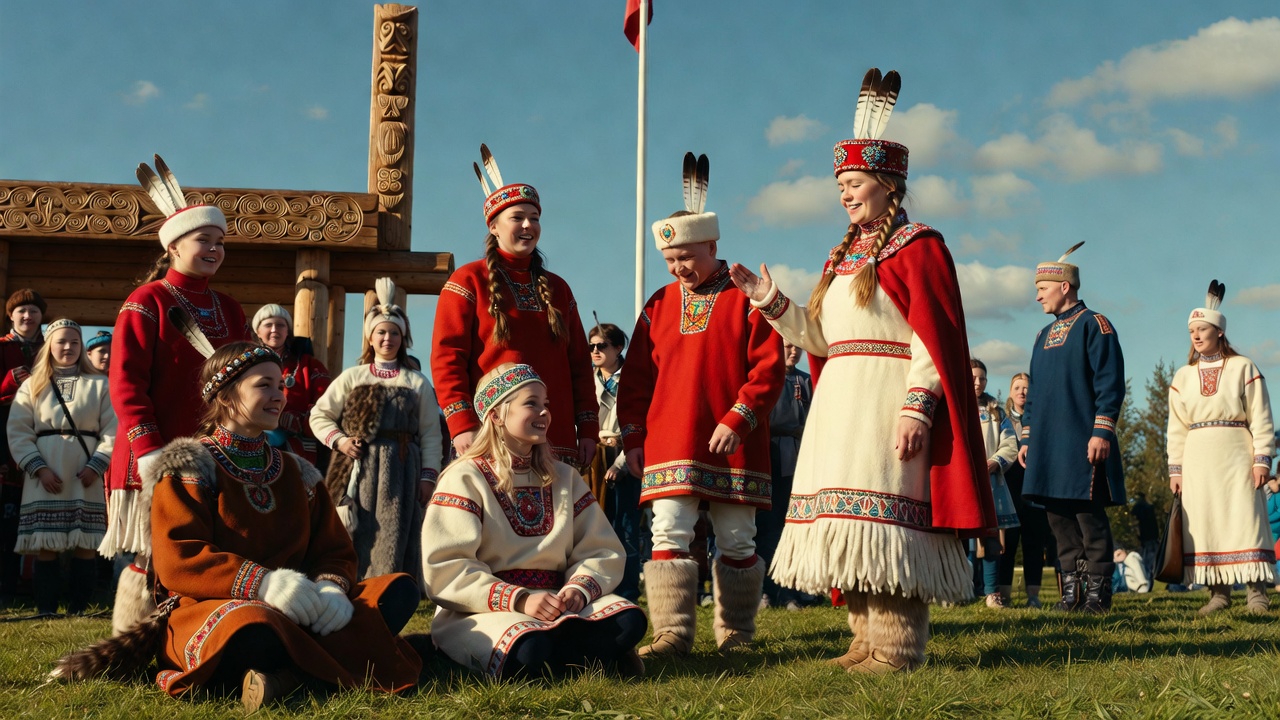
In 2026, Sámi National Day falls on a Friday, February 6, which means celebrations in many communities will extend into the weekend. Schools across the Nordic countries spend the entire week leading up to the day teaching children about Sámi history and culture. For the Sámi community itself, it is a day to wear the traditional gákti (Sámi clothing), share traditional foods like reindeer stew and smoked fish, attend concerts featuring joik (traditional Sámi singing), and above all — to greet one another in their own languages.
How to Say Happy Sámi National Day in Different Sámi Languages
One of the most important things to understand about the Sámi is that there is no single Sámi language. There are, in fact, nine distinct Sámi languages still in use today, and they are not all mutually intelligible. This means a speaker of Northern Sámi may not understand someone speaking Southern Sámi, just as a speaker of Portuguese might struggle with Romanian.
The three most commonly spoken Sámi languages are:
- Northern Sámi (Davvisámegiella) — spoken by approximately 20,000 people across Norway, Sweden, and Finland. It is by far the most widely spoken.
- Lule Sámi (Julevsámegiella) — spoken by approximately 2,000 people in northern Norway and Sweden.
- Southern Sámi (Åarjelsaemien gïele) — spoken by approximately 600 people in central Norway and Sweden.
Other Sámi languages include Inari Sámi, Skolt Sámi, Kildin Sámi, Ume Sámi, Pite Sámi, and Ter Sámi. Sadly, some of these have fewer than 20 native speakers remaining.
Here is how to say “Happy Sámi National Day” in the main Sámi languages, as well as in the Nordic languages of the region:
| Language | “Happy Sámi National Day” |
|---|---|
| Northern Sámi | Buori sámi álbmotbeaivvi buohkaide |
| Inari Sámi | Pyeri säämi aalmugpeivi puohháid |
| Skolt Sámi | Šiõǥǥ saaʹmi meersažpeiʹvv pukid |
| Norwegian | Gratulerer med samenes nasjonaldag |
| Swedish | Grattis på samernas nationaldag |
| Finnish | Hyvää saamelaisten kansallispäivää |
These greetings come directly from the Sámi Parliament of Finland’s official greeting guide, which was created as part of their “Sámás muinna” (Speak Sámi with Me) campaign to encourage people to use Sámi languages in everyday life.
Sámi National Day Congratulations: Three Ways to Say It in Sámi
On Sámi National Day, the most common greeting is simply “Congratulations!” — used much the same way that Norwegians say “Gratulerer med dagen!” on their national day, May 17. The phrase carries warmth, pride, and solidarity.
According to Oslopolitan, here are three key ways to say “Congratulations on the day!” in the main Sámi languages:
| Sámi Language | Congratulations (on the day) | Pronunciation Tip |
|---|---|---|
| Northern Sámi | Lihkku beivviin! | “LIH-koo BAYV-veen” |
| Lule Sámi | Vuorbbe biejvijn! | “VWOR-beh BYAY-vine” |
| Southern Sámi | Læhkoeh biejjine! | “LEH-kweh BYAY-yee-neh” |
The phrase “Lihkku beivviin” is the one you will hear most often, as Northern Sámi is the most widely spoken variety. It roughly translates to “Congratulations on the day” or “Happy day.” In fact, even Crown Prince Haakon of Norway has used this phrase publicly. In a 2021 address celebrating Sámi National Day, he opened with the words “Dear all, Lihkku beivviin!” before speaking about the importance of Sámi culture, identity, and language.
The phrase is also used on birthdays and other national days in Sámi culture, making it one of the most versatile and widely recognized celebratory expressions in Northern Sámi.
Essential Northern Sámi Greetings and Everyday Phrases for Travelers
If you are planning to visit Sápmi — whether to attend the Sámi Week in Tromsø (held February 1–8, 2026), the Jokkmokk Winter Market in Sweden, or a reindeer herding experience in Finnish Lapland — learning a few basic phrases in Northern Sámi will go a long way. The Sámi people deeply value their languages, and even a small effort by a visitor is noticed and appreciated.
Here are the most useful everyday greetings in Northern Sámi:
Basic Hellos and Goodbyes
| English | Northern Sámi |
|---|---|
| Hello | Bures (when shaking hands) / Dearvva |
| Hi (casual) | Hei |
| Good morning | Buorre iđit |
| Good day | Buorre beaivi |
| Good evening | Buorre eahket |
| Good night | Buorre idja |
| Welcome | Bures boahtin |
| Goodbye (said to the one leaving) | Mana dearvan (go in health) |
| Goodbye (said to the one staying) | Báze dearvan (stay in health) |
| See you later | Oaidnaleapmai |
There is a beautiful custom embedded in the Northern Sámi way of saying goodbye. The person who is leaving says “Báze dearvan” (“Stay in health”) to the one staying. The person who is staying says “Mana dearvan” (“Go in health”) to the one leaving. This exchange reflects the deep Sámi value of wishing well-being upon others, whether they are departing on a journey across the tundra or simply heading home after coffee.
According to the Arctic Polyglots language learning project, the traditional response to greetings like “Buorre iđit” (Good morning) is “Ipmel atti” — a phrase that loosely translates to “God forbid,” which in context functions as a way of deflecting any possible bad luck attached to overly optimistic statements. This is a remnant of the old belief system where naming something good could invite misfortune.
Polite Expressions
| English | Northern Sámi |
|---|---|
| Thank you | Giitu |
| Thank you very much | Ollu giitu |
| You’re welcome / Please | Leage buorre |
| Excuse me | Ándagassii |
| I’m sorry | Šállošan |
| No problem | Ii daga maidige |
| How are you? | Mo manná? |
| I’m fine, thanks | Giitu, manná bures |
| Have a nice day | Somás beaivvi! |
How to Say Congratulations and Happy Birthday in Northern Sámi
Beyond Sámi National Day itself, there are several celebratory phrases that are useful to know throughout the year. These expressions show up at festivals, personal milestones, and family gatherings across Sápmi.
| English | Northern Sámi |
|---|---|
| Congratulations! | Ollu lihkku! |
| Happy birthday / Happy (national) day | Lihkku beivviin! |
| Good luck | Lihkku beivviin / Ollu lihkku |
| Merry Christmas | Buorre juovla! |
| Happy New Year | Buorre ođđajagi! |
| Happy Valentine’s Day | Buori ustibabeaivvi! |
| Happy Midsummer | Buriid mihcamáraid! |
Notice how the word “lihkku” appears repeatedly. It is related to the concept of luck and happiness and forms the backbone of many celebratory expressions in Northern Sámi. Similarly, “buorre” (good) is the building block for seasonal greetings, just as “merry” and “happy” are in English.
The Sámi Parliament of Finland provides these greetings in all three Sámi languages spoken in Finland (Northern, Inari, and Skolt Sámi), which is an excellent resource if you want to learn phrases beyond the Northern Sámi variants listed here.
The Sámi National Anthem: “Sámi Soga Lávlla” and Its Meaning
No discussion of Sámi National Day greetings would be complete without mentioning the anthem that echoes across Sápmi every February 6. “Sámi soga lávlla” — meaning “Song of the Sámi Family” or “Song of the Sámi People” — is the Sámi national anthem, and it holds a special place in the hearts of the Sámi.
The anthem began as a poem. It was written by Isak Saba, a Northern Sámi school teacher, folklore researcher, and politician from Unjárga (Nesseby), Norway. In 1906, Saba became the first Sámi person ever elected to the Norwegian Parliament (Stortinget). That same year, his poem was published on the front page of the very first issue of Sagai Muittalægje, a Northern Sámi-language newspaper, on April 1, 1906.
The music was composed later by Norwegian musician Arne Sørli. In August 1986, the poem was officially declared the national anthem of the Sámi at the 13th Sámi Conference in Åre, Sweden — the same conference that adopted the Sámi flag. The melody was formally approved in 1992 at the 15th Sámi Conference in Helsinki.
The anthem speaks of the beauty and vastness of the northern landscape — the mountains, lakes, rivers, and forests of Sápmi. It describes how the Sámi people endure through harsh winters with cold winds and endless snowstorms, yet remain devoted to their homeland with “soul and heart.” The anthem also portrays the golden light of summer, when fishermen work in lakes and seas, and the rivers shimmer with silver. The final verse speaks of the strength and resilience of the Sámi people, who have endured threats to their existence without violence and who continue to live in peace.
On Sámi National Day, the anthem is sung in the local Sámi language of each community. In Oslo, the bells in the highest tower of Oslo City Hall play the melody during the morning flag-raising ceremony — a tradition that has been observed every year since 2003.
The anthem is not just a song. It is a greeting in itself — a collective expression of belonging, resilience, and love for the Arctic homeland.
Understanding the Sámi Flag and What Its Colors Mean
When you share a Sámi National Day greeting, it helps to understand the visual symbol that accompanies it: the Sámi flag. You will see this flag everywhere on February 6 — draped from buildings, worn as pins on gáktis, and shared across social media.
The Sámi flag was designed by Astrid Båhl, a Coast Sámi artist from Ivgobahta (Skibotn) in Troms county, Norway. It was officially adopted on August 15, 1986, at the 13th Nordic Sámi Conference in Åre, Sweden, after winning a design competition that attracted more than 70 entries.
The flag features four horizontal stripes in red, blue, green, and yellow — the traditional Sámi national colors. These colors are commonly found on the gákti, the traditional Sámi garment. At the center of the flag sits a circle divided into two halves: one red (representing the sun) and one blue (representing the moon).
According to the Sámi Council’s official description, Båhl drew inspiration from the Sámi shaman’s drum, where sun and moon symbols were commonly depicted. She also drew on the Southern Sámi epic poem “Paiven Parneh” (“Sons of the Sun”) by Anders Fjellner (1795–1876), which describes the Sámi people as “children of the sun.” Båhl herself named her design with these words: “Sami are children of the sun.”
The flag was deliberately designed to look different from the Nordic cross flags of Norway, Sweden, and Finland. This was intentional. It signals that the Sámi nation is not defined by the borders of the Eurocentric state system but exists as its own cultural and political entity across four countries.
In 2003, the Sámi flag received official status in Norway. Since then, Norwegian municipalities have been required by law to fly it on February 6. Sweden, Finland, and even several cities outside of Sápmi have followed suit with their own flag-raising traditions.
How to Greet Someone in Sámi on Social Media in 2026
Sharing a greeting online has become one of the most common ways that people — both Sámi and non-Sámi — celebrate February 6. If you want to post a message on social media in 2026, here are some options:
Short and simple greetings for social media posts:
- Lihkku beivviin! — Congratulations on the day! (Northern Sámi)
- Vuorbbe biejvijn! — Congratulations on the day! (Lule Sámi)
- Læhkoeh biejjine! — Congratulations on the day! (Southern Sámi)
- Buori sámi álbmotbeaivvi buohkaide! — Happy Sámi National Day to everyone! (Northern Sámi)
- Lihkku sámi álbmotbeivviin! — Congratulations on the Sámi National Day! (Northern Sámi)
Longer greetings you can personalize:
- “Lihkku beivviin! Wishing all my Sámi friends and the entire Sámi community a joyful and proud National Day. May your languages, traditions, and stories continue to thrive.”
- “Buori sámi álbmotbeaivvi! Today we celebrate the culture, resilience, and beauty of the Sámi people across Sápmi. Thank you for sharing your heritage with the world.”
- “Happy Sámi National Day 2026! Læhkoeh biejjine — Vuorbbe biejvijn — Lihkku beivviin! Three languages, one celebration, one people.”
Popular hashtags to use:
- #SámiNationalDay
- #SámiÁlbmotbeaivi
- #LihkkuBeivviin
- #Sápmi
- #February6
- #SamiPride
- #IndigenousPeoples
A word of caution: when sharing Sámi National Day greetings online, keep the focus on the Sámi people and their culture. It is a day for them to tell their story. Non-Sámi allies are welcome to join in the celebration, but the most respectful approach is to amplify Sámi voices rather than center your own.
The Role of Joik in Sámi National Day Celebrations
If you attend a Sámi National Day event in person — or watch a livestream from Kautokeino, Tromsø, or Jokkmokk — you will almost certainly hear joik (sometimes spelled yoik). This is the traditional vocal art of the Sámi people, and it is widely considered to be one of the oldest surviving music traditions in Europe.
Joik is not quite like any other form of singing. It does not follow the conventions of Western music. There is no fixed beginning or end. The rhythm can be irregular. The sounds may include guttural tones, breathy whispers, and wordless syllables. Each joik is meant to evoke — not merely describe — a person, an animal, a place, or an emotion.
The Sámi do not say that they sing about someone. They say they joik someone. The distinction is crucial. A joik of a friend is not a song about that friend. It is that friend — their essence captured in sound. As Ursula Länsman of the Sámi group Angelit once explained, a joik is like a holographic image — multi-dimensional and alive — rather than a flat photograph.
Joik was suppressed for centuries. During the Christianization of Sápmi in the 17th and 18th centuries, missionaries condemned it as witchcraft. Joiking was declared sinful and even punishable by death in some areas. The Laestadian Lutheran movement that swept through Sápmi in the 19th century further suppressed rhythmic music. Despite all this, joik survived — quietly, stubbornly — in homes, on reindeer pastures, and between family members.
The modern revival of joik owes much to Nils-Aslak Valkeapää (known by his Sámi name Áillohaš), who in the 1960s began performing joik publicly and recording it alongside natural sounds. His work inspired a generation of Sámi musicians. Today, artists like Mari Boine, Jon Henrik Fjällgren, Sofia Jannok, Marja Mortensson, and Elle Márjá Eira have brought joik to international audiences, blending it with pop, jazz, electronic, and world music.
On Sámi National Day, joik performances are a central part of the celebrations. They are performed at concerts, school assemblies, parliament openings, and community gatherings. If someone joiks for you, or in your presence, it is a profound honor. The appropriate response is simply to listen — quietly and respectfully.
Sámi National Day Celebrations and Events Across Sápmi in 2026
The 2026 celebrations promise to be especially vibrant. Here is what to expect in the major regions:
Tromsø, Norway — Sámi Week (February 1–8, 2026)
The Midnight Sun Marathon Foundation has organized Sámi Week annually since 2004. The 2026 edition runs from February 1 to February 8 and features lectures, debates, exhibitions, concerts, joik performances, Sámi handicraft displays, and — the grand finale — the Norwegian Championships in Reindeer Racing, which draws thousands of spectators to the city center.
Oslo, Norway — City Hall Ceremony
Every year since 2003, Oslo City Hall has hosted an official Sámi National Day ceremony with speeches, flag raising, and the ringing of the Sámi national anthem from the City Hall tower bells.
Jokkmokk, Sweden — Winter Market
The Jokkmokk Winter Market has been held for over 400 years and typically takes place around the same week as Sámi National Day. It is one of the most important cultural gatherings in Sápmi, featuring traditional handicrafts (duodji), reindeer-related activities, food stalls, and cultural exhibitions.
Stockholm, Sweden — Skansen
The open-air museum Skansen celebrates Sámi National Day in collaboration with the Stockholm Sámi Association (Sameföreningen i Stockholm). The 2026 program runs from February 6–8 and includes food, handicrafts, history presentations, and joik performances.
Finland — Schools and Sámi Parliament
In Finland, the Sámi National Day has been listed in the official almanac since 2004. Schools across the country dedicate time to learning about Sámi culture. The Sámi Parliament of Finland in Inari often hosts special programming.
Kautokeino and Karasjok, Norway
These two municipalities are the cultural heartlands of Northern Sámi culture in Norway. Kautokeino is known as the joik capital of Sápmi, while Karasjok is home to the Norwegian Sámi Parliament, which was opened by King Olav V in 1989. Celebrations in both towns are deeply traditional and community-focused.
Cultural Etiquette: How to Respectfully Share Sámi National Day Greetings
Sharing Sámi National Day greetings is a beautiful way to show solidarity with the Sámi people. But as with any cross-cultural interaction, there are some important guidelines to keep in mind:
Do:
- Learn the correct pronunciation of the greetings before sharing them aloud. Mispronouncing a greeting is understandable, but making an effort shows respect.
- Credit the Sámi languages when sharing phrases. Say “In Northern Sámi, we say Lihkku beivviin” rather than presenting it without context.
- Share content created by Sámi people — their artists, musicians, writers, and cultural organizations — rather than speaking on their behalf.
- Listen more than you speak. If you attend a Sámi National Day event, remember that it is first and foremost a celebration for the Sámi community.
- Support Sámi artists and businesses. Buy duodji (traditional handicrafts), listen to Sámi musicians on streaming platforms, and purchase books by Sámi authors.
Don’t:
- Do not use the word “Lapp” or “Laplander.” These terms are widely considered offensive by the Sámi people. Always use “Sámi” (or “Saami”).
- Do not wear a gákti (traditional Sámi clothing) if you are not Sámi. The gákti carries deep personal and cultural significance — its colors and patterns indicate family lineage, home region, and sometimes marital status. Wearing one as a costume is disrespectful.
- Do not treat Sámi culture as exotic or primitive. The Sámi are a living, modern people with their own parliament, universities, media, and contemporary artists. Avoid romanticizing or “othering” them.
- Do not record or photograph joik performances without asking permission first. Joik can be deeply personal and spiritual.
A Brief Guide to the Nine Sámi Languages and Their Status in 2026
Understanding the Sámi languages is essential if you want to engage meaningfully with Sámi National Day. Here is a brief overview of all nine Sámi languages, their approximate number of speakers, and their current status:
| Sámi Language | Region | Approximate Speakers | Status |
|---|---|---|---|
| Northern Sámi | Norway, Sweden, Finland | ~20,000 | Most widely spoken; actively taught |
| Lule Sámi | Norway, Sweden | ~2,000 | Endangered but revitalizing |
| Southern Sámi | Norway, Sweden | ~600 | Seriously endangered |
| Inari Sámi | Finland | ~300 | Seriously endangered; revival programs active |
| Skolt Sámi | Finland, Russia | ~300 | Seriously endangered |
| Kildin Sámi | Russia | ~300 | Severely endangered |
| Ume Sámi | Sweden | ~20 | Critically endangered |
| Pite Sámi | Sweden, Norway | ~20 | Critically endangered |
| Ter Sámi | Russia | ~2 | Nearly extinct |
Three Sámi languages have already gone extinct: Kainuu Sámi (disappeared around 1800), Kemi Sámi (around 1900), and Akkala Sámi (in 2003).
The Northern Sámi language has an interesting detail worth noting. According to Visit Natives, it contains over 200 words for describing the different conditions of snow — melted, hard, soft, wind-packed, crystallized, and many more. This extraordinary vocabulary reflects the deep connection between the Sámi language and the Arctic environment. Climate change, which is accelerating in the Arctic faster than almost anywhere else on Earth, threatens not only the Sámi way of life but also the survival of this remarkable linguistic heritage.
When you learn even a few Sámi phrases and share them on February 6, you are participating in the revitalization of these endangered languages. Every word spoken, written, and shared matters.
The History Behind the First Sámi Congress in 1917
To fully appreciate what you are celebrating when you share a Sámi National Day greeting, it helps to understand the story behind that first congress in 1917.
In the early 1900s, the Sámi people faced intense assimilation pressure from the governments of Norway, Sweden, Finland, and Russia. In Norway, this period is known as “Norwegianization” (fornorskningspolitikken) — a state-led campaign to erase Sámi language and culture and replace it with Norwegian identity. Similar policies existed in the other countries. Sámi children were sent to boarding schools where they were forbidden from speaking their own languages. Sámi land was appropriated. Traditional livelihoods were disrupted.
In the midst of this, Elsa Laula Renberg (1877–1931) emerged as a tireless advocate for Sámi rights. Born in the Helgeland region of Norway and raised among the Southern Sámi, she published a pamphlet in 1904 titled “Inför lif eller död?” (“A Matter of Life or Death?”), in which she argued passionately for Sámi rights and self-determination. In 1917, she organized the congress in Trondheim that brought together over 100 Sámi delegates from Norway and Sweden.
The congress addressed topics like reindeer herding rights, land ownership, education in Sámi languages, and cross-border cooperation. While it did not produce immediate political change, it planted a seed that would grow over the following century into the modern Sámi rights movement — including the establishment of Sámi Parliaments in Norway (1989), Sweden (1993), and Finland (1996).
When you say “Lihkku beivviin” on February 6, you are honoring the legacy of Elsa Laula Renberg and every Sámi person who has fought to keep their culture alive.
Sámi Phrases for Travel: What to Say When Visiting Northern Norway, Sweden, or Finland
Planning a trip to Sápmi? Whether you are visiting Tromsø, Kautokeino, Kiruna, Jokkmokk, Inari, or Enontekiö, these additional phrases in Northern Sámi will help you connect with local communities:
Introducing Yourself
| English | Northern Sámi |
|---|---|
| My name is… | Mu namma lea… |
| Nice to meet you | Soma oaidnit du |
| Long time no see | Guhkes áigái |
| Where are you from? | Gos don leat eret? |
| I am from… | Mun lean… eret |
Useful Travel Phrases
| English | Northern Sámi |
|---|---|
| What is this? | Mii dát lea? |
| Speak slowly, please | Huma hihtásit |
| I don’t understand | In ipmirde |
| I am happy | Mun lean lihkolaš |
| I am tired | Mun lean váibbas |
| Let’s go | De johtui |
| Help! | Veahket! |
| Have a good trip | Buorre mátkki! |
Greetings to Send to Others
| English | Northern Sámi |
|---|---|
| Tell (them) my greetings | Cealkke dearvvuođaid |
| Greetings to everyone | Dearvvuođat buohkaide |
| Take care | Váldde várrugasat |
The phrase “Cealkke dearvvuođaid” (Tell them my greetings) is especially meaningful in Sámi culture. In the vast, sparsely populated landscapes of northern Scandinavia, sending greetings through an intermediary was historically a practical necessity. Today, it endures as a beautiful cultural custom — a way of saying, “I am thinking of people who are far away.”
How the Sámi Greeting “Bures” Reflects Arctic Values and Community
The most basic greeting in Northern Sámi — “Bures” — is used when meeting someone and shaking hands. The other person responds with “Bures bures.” It is simple, direct, and warm. But there is something deeper at work.
In Sámi culture, greetings are not just polite formalities. They are acknowledgments of shared existence in a challenging environment. For thousands of years, the Sámi lived in one of the harshest climates on Earth. Meeting another person — especially after a long journey across the tundra — was an event of genuine significance. A greeting was an expression of relief, solidarity, and mutual respect.
This is also why the Sámi farewell — “Báze dearvan” (Stay in health) and “Mana dearvan” (Go in health) — focuses on health and well-being. In a land where winter temperatures can plunge below -40°C and darkness lasts for months, wishing someone good health was not a pleasantry. It was a heartfelt hope for survival.
When you use Sámi greetings, you are tapping into this deep tradition of caring for one another across vast distances and harsh conditions. It is a reminder that language is never just words. Language is worldview.
Sámi National Day Greetings for Children and Schools
Across the Nordic countries, schools play a major role in Sámi National Day celebrations. In Norway, Sweden, and Finland, the week of February 6 is often dedicated to learning about Sámi history, culture, and languages. If you are a teacher, parent, or education professional, here are some child-friendly greetings and activities:
Simple greetings for children:
- Bures! — Hello!
- Buorre beaivi! — Good day!
- Giitu! — Thank you!
- Lihkku beivviin! — Happy day!
- Somás beaivvi! — Have a nice day!
Activities for classrooms:
- Practice saying “Bures” and “Giitu” as a group.
- Color or draw the Sámi flag and learn what the sun/moon symbol means.
- Listen to a joik recording online (the Say It in Saami project by Yle is an excellent resource with audio recordings of Sámi phrases).
- Read a picture book by a Sámi author.
- Learn about reindeer herding and its importance to Sámi culture.
- Discuss why it matters to keep languages alive.
Teaching children about Sámi culture on February 6 is not just educational — it is an act of solidarity with Indigenous peoples and a step toward a more inclusive understanding of European history and identity.
Why Learning Sámi Phrases Matters for Language Preservation
The United Nations has declared 2022–2032 the International Decade of Indigenous Languages. This global initiative aims to draw attention to the critical endangerment of Indigenous languages worldwide and to support their preservation and revitalization.
For the Sámi languages, this effort is urgent. Of the nine Sámi languages still spoken, several have fewer than 20 native speakers. The causes of language decline are well-documented: centuries of forced assimilation, boarding schools that punished children for speaking Sámi, economic pressures that pushed families toward majority languages, and social stigma.
But there is also hope. In recent years, Sámi language nests (immersion kindergartens) have been established in Norway, Sweden, and Finland. Online resources like the Sámi Parliament of Finland’s phrasebook and the Say It in Saami project have made Sámi languages more accessible than ever before. Sámi-language media — including television, radio, and social media content — continues to grow.
Every time you learn a Sámi phrase and share it with someone else, you are contributing to this vital work. You do not need to become fluent. You do not need to be Sámi. You just need to care — and to show that care by making the effort.
Frequently Asked Questions About Sámi National Day Greetings
Q: What is the most common Sámi National Day greeting?
A: The most widely used greeting is “Lihkku beivviin!” (Northern Sámi), which means “Congratulations on the day.” It is equivalent to the Norwegian “Gratulerer med dagen.”
Q: Is it appropriate for non-Sámi people to use Sámi greetings?
A: Yes, as long as it is done respectfully and with genuine interest in the culture. The Sámi Parliament of Finland’s “Sámás muinna” (Speak Sámi with Me) campaign actively encourages everyone to learn and use Sámi phrases.
Q: How do you pronounce “Lihkku beivviin”?
A: It is approximately pronounced “LIH-koo BAYV-veen.” The “ih” is short, the “kk” is a longer consonant, and the “vv” in “beivviin” is also slightly elongated.
Q: What language should I use if I don’t know which Sámi language is spoken locally?
A: Northern Sámi is the safest default, as it is the most widely spoken. However, if you are in the Lule Sámi area (around Bodø and Jokkmokk) or Southern Sámi area (around Trøndelag and Jämtland), try the local variant.
Q: When was the first Sámi National Day celebrated?
A: The first official celebration took place on February 6, 1993, coinciding with the United Nations International Year of Indigenous People.
Q: Can I attend Sámi National Day celebrations as a tourist?
A: Yes. Public events such as concerts, lectures, exhibitions, and reindeer racing are open to visitors. The best approach is to attend, listen, learn, and participate respectfully. Try the food. Buy handicrafts from Sámi artisans. Ask questions politely.
Final Thoughts: Carry These Words With You
The Sámi people have survived in the Arctic for thousands of years. They have endured colonization, forced assimilation, and the ongoing pressures of climate change. Yet their culture is not just surviving — it is flourishing. New generations of Sámi artists, musicians, writers, politicians, and activists are carrying their traditions forward into the 21st century with remarkable creativity and determination.
When you learn to say “Lihkku beivviin” and share it on February 6, 2026, you are doing more than repeating a phrase. You are sending a message of respect. You are saying: I see you. I value your culture. I want your languages to live on.
So this year, as the Arctic sky glows with the faint blue light of the polar twilight and the Sámi flag rises above city halls and schools and parliament buildings across Sápmi, raise your voice — even if only in a whisper — and say:
Buori sámi álbmotbeaivvi buohkaide. Lihkku beivviin!
Happy Sámi National Day to everyone. Congratulations on the day!