Seollal 2026, the Korean Lunar New Year, is fast approaching, and millions of travelers and culture enthusiasts are eager to discover when this magnificent celebration takes place and how to experience it authentically. As one of the most important traditional holidays in South Korea, Seollal offers a rare window into the heart of Korean culture, family values, and centuries-old customs that continue to thrive in modern times.
Whether you’re planning a trip to Seoul during the Korean New Year holiday 2026, curious about traditional Seollal customs and food, or simply want to understand the cultural significance of this celebration, this comprehensive guide covers everything you need to know about Seollal 2026 dates, traditions, and travel tips.
When is Seollal 2026? Exact Dates for Korean Lunar New Year
The Korean Lunar New Year 2026 date falls on Tuesday, February 17, 2026. This date marks the first day of the first month in the Korean lunisolar calendar and signals the beginning of the Year of the Fire Horse (also known as the Year of the Red Horse in Korean and Chinese astrology).
Unlike the solar calendar’s fixed January 1st New Year, Seollal’s date shifts annually based on the lunar cycle. It typically occurs between late January and mid-February, following the second new moon after the winter solstice.
Complete Seollal 2026 Holiday Schedule
| Date | Day | Description |
|---|---|---|
| February 16, 2026 | Monday | Day before Seollal (설날 전날) |
| February 17, 2026 | Tuesday | Seollal Day (설날) – Main Celebration |
| February 18, 2026 | Wednesday | Day after Seollal (설날 다음날) |
The official Seollal public holiday in Korea 2026 spans three days from February 16 to February 18, 2026 (Monday through Wednesday). Most South Korean workers receive these days off to travel home and celebrate with family.
Why is Seollal Called the Year of the Fire Horse 2026?
The 2026 Year of the Fire Horse (병오년, Byeong-o year) carries deep significance in East Asian astrology. According to the Chinese zodiac, which Korea shares, each year is represented by one of 12 animals combined with one of five elements (Wood, Fire, Earth, Metal, Water). This creates a 60-year cycle before any combination repeats.
Fire Horse Symbolism and Meaning
| Aspect | Significance |
|---|---|
| Animal | Horse (말, Mal) |
| Element | Fire (화, Hwa) |
| Color | Red/Scarlet (적, Jeok) |
| Korean Name | 적마년 (Jeok-ma-nyeon) – Year of the Red Horse |
| Characteristics | Energy, passion, transformation, ambition |
| Lucky Colors | Red, gold, green |
| Lucky Numbers | 2, 3, 7, 9 |
The Fire element combined with the Horse zodiac amplifies traits of independence, enthusiasm, and bold action. In Korean and Chinese traditions, the Fire Horse year is seen as a period of rapid change, innovation, and dynamic energy.
The horse holds special significance in Korean culture as a symbol of:
- Strength and nobility
- Speed and success (the Korean phrase “마도성공” (ma-do-seong-gong) means achieving swift success)
- Freedom and perseverance
- Vitality and good fortune
Those born in previous Horse years (2014, 2002, 1990, 1978, 1966, 1954) will find 2026 to be their Ben Ming Nian (zodiac year), which according to tradition requires wearing red for good luck.
The Deep Cultural Significance of Seollal in Korean Society
Seollal (설날) is far more than just a calendar change—it represents one of the two most important traditional holidays in Korea (alongside Chuseok, the autumn harvest festival). The word “Seol” (설) in Middle Korean meant “year of age,” reflecting the traditional Korean age system where everyone grows one year older on Seollal.
Historical Origins of Korean Lunar New Year
The earliest records of Seollal celebrations date back to the Three Kingdoms period (57 BCE–668 CE). Historical Chinese texts like the Book of Wei and Book of Sui document festival celebrations with singing and dancing in ancient Korean kingdoms like Buyeo and Silla.
Key historical milestones:
- Silla Period (7th century): National rituals including sun and moon worship
- Goryeo Dynasty (918-1392): Seollal established as one of nine major national holidays
- Joseon Dynasty (1392-1910): Confucian-influenced rituals formalized
- Japanese Colonial Period (1910-1945): Celebration suppressed, solar calendar imposed
- Modern Era (1985-present): Seollal reinstated as a three-day national holiday
The holiday represents a profound connection between generations—honoring ancestors while strengthening bonds with living family members. This cultural significance makes Seollal the largest annual migration event in South Korea, as millions travel to their hometowns.
Essential Seollal Traditions and Customs Explained
Understanding traditional Korean New Year customs enhances any Seollal experience, whether you’re celebrating in Korea or abroad. These time-honored practices have been passed down through countless generations.
Charye (차례) – Ancestral Memorial Rite
Charye is the most solemn and significant Seollal ritual. Families prepare an elaborate table of food offerings to honor deceased ancestors, believing their spirits return during the holiday.
Traditional Charye table arrangement includes:
- Rice and soup (placed in the north)
- Meat dishes (on the left/east)
- Fish dishes (on the right/west)
- Fruits and confections (in the south)
- Jeon (savory pancakes) and various side dishes
The ceremony involves deep bows (jeol, 절) toward the ancestral tablets while offering incense, rice wine, and prayers. Two bows are performed for deceased ancestors, reflecting deep respect for those who came before.
Sebae (세배) – New Year’s Bow to Elders
After the ancestral rites, Sebae follows—the beloved tradition where younger family members perform deep bows to living elders. This practice embodies Korean values of respect, filial piety, and family hierarchy.
The Sebae process:
- Younger person kneels on a mat
- Places both hands on the floor
- Performs a deep bow (forehead nearly touching hands)
- Offers the traditional greeting: “새해 복 많이 받으세요” (Saehae bok mani badeuseyo) — “May you receive many blessings in the New Year”
- Elder responds with words of blessing and sebaetdon (세뱃돈) — New Year’s money
Important note: One bow is given to living elders; two bows are reserved for ancestors. This distinction carries significant cultural meaning.
Wearing Hanbok – Traditional Korean Clothing
Hanbok (한복), Korea’s beautiful traditional clothing, transforms Seollal gatherings into colorful celebrations. Though modern fashion has largely replaced daily hanbok wear, special occasions like Seollal see families donning these elegant garments.
Hanbok characteristics by age and gender:
- Women: Jeogori (jacket) and chima (skirt) in vibrant colors
- Men: Jeogori and baji (pants) in more subdued tones
- Children: Bright, colorful versions often with jeonbokdae (ribbon stripes)
Travel tip: Wearing hanbok in Seoul provides free admission to all royal palaces including Gyeongbokgung, Changdeokgung, and Changgyeonggung during Seollal 2026.
Traditional Seollal Foods: What Koreans Eat During Lunar New Year
Food lies at the heart of every Seollal celebration. Traditional Korean New Year food combines symbolic meaning with delicious flavors, each dish carrying wishes for prosperity, health, and good fortune.
Tteokguk (떡국) – The Must-Have Rice Cake Soup
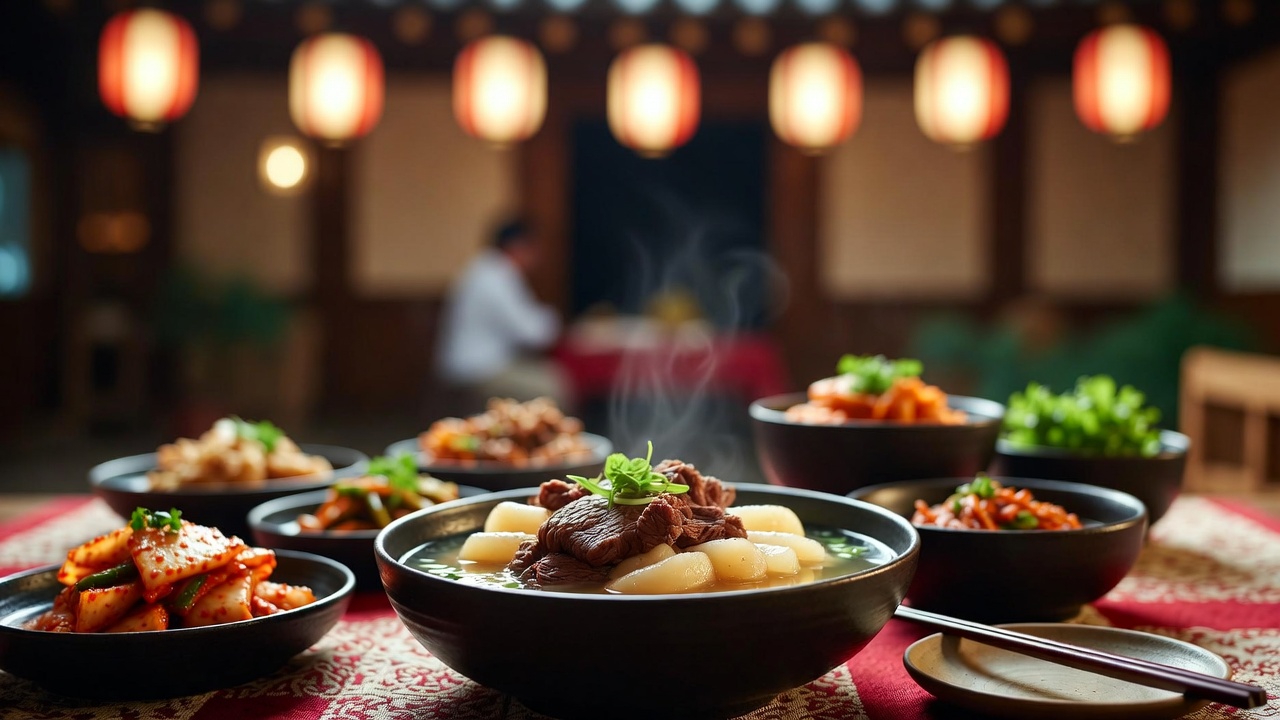
Tteokguk holds the most important place at the Seollal table. This savory soup features thin, oval-shaped rice cakes (tteok) in a clear beef broth, garnished with egg, seaweed, and scallions.
Symbolic meanings of Tteokguk:
- Oval rice cakes: Resemble ancient Korean coins (yeopjeon), symbolizing wealth
- White color: Represents purity and a fresh start
- Long rice cake ropes: Signify longevity and expanding good fortune
- Eating a bowl: Traditionally means aging one year
The tradition dictates that eating Tteokguk on Seollal brings good luck for the coming year. Many Koreans jokingly ask, “How many bowls of Tteokguk have you eaten?” as a playful way to ask someone’s age.
Jeon (전) – Korean Savory Pancakes
Jeon encompasses various pan-fried dishes that grace every Seollal feast. These crispy, golden delicacies require significant preparation time, making them a labor of love.
Popular Seollal Jeon varieties:
| Type | Korean Name | Description |
|---|---|---|
| Green Onion Pancake | Pajeon (파전) | Crispy pancake loaded with scallions |
| Kimchi Pancake | Kimchijeon (김치전) | Tangy, spicy, and satisfying |
| Beef Pancake | Yukjeon (육전) | Tender sliced beef, egg-battered |
| Oyster Pancake | Guljeon (굴전) | Fresh oysters in a light batter |
| Mung Bean Pancake | Bindaetteok (빈대떡) | Savory, protein-rich tradition |
Japchae (잡채) – Sweet Potato Glass Noodles
Japchae features translucent sweet potato noodles stir-fried with colorful vegetables, beef, and a sweet soy-based sauce. Originally a royal court dish, it has become an essential part of Korean celebrations.
Galbijjim (갈비찜) – Braised Short Ribs
Galbijjim showcases tender beef short ribs braised in a sweet and savory sauce with chestnuts, jujubes, and carrots. This rich, hearty dish represents abundance and celebration.
Manduguk (만두국) – Dumpling Soup
In some regions, particularly North Korea and northern areas of South Korea, Manduguk (dumpling soup) replaces or accompanies Tteokguk. Some families enjoy Tteok-manduguk, combining both rice cakes and dumplings.
Traditional Korean Games to Play During Seollal 2026
After the feast comes playtime! Traditional Seollal games bring families together with laughter, friendly competition, and connections to Korea’s folk heritage. These games have gained renewed international interest following their appearance in popular Korean media.
Yutnori (윷놀이) – The Classic Board Game
Yutnori (also spelled Yunnori) stands as Korea’s most beloved traditional game, especially during Seollal. This strategic board game involves throwing four wooden sticks and moving game pieces around a diamond-shaped board.
How Yutnori works:
- Teams: Two teams compete
- Sticks: Four wooden sticks (yut) with flat and curved sides
- Throws: Sticks are tossed, and the landing pattern determines movement
- Moves: Do (pig), Gae (dog), Geol (sheep), Yut (cow), Mo (horse)
- Goal: Move all four game pieces around the board first
Cultural significance: Historically, farmers played Yutnori to predict agricultural fortune for the coming year. The game mirrors the movement of Big Dipper stars and incorporates yin-yang symbolism in the stick design.
Jegichagi (제기차기) – Korean Hacky Sack
Jegichagi challenges players to keep a small shuttlecock (jegi) airborne using only their feet. Made from cloth and coins, the jegi flies through the air as players demonstrate impressive footwork.
Jegichagi variations:
- Individual: Count consecutive kicks without dropping
- Team: Pass the jegi between players
- Competition: Highest count wins
Tuho (투호) – Arrow Throwing Game
Tuho tests accuracy as players toss arrow-shaped sticks into narrow-mouthed jars or pots. This game dates back to Korean royal courts and remains popular for its simple yet addictive gameplay.
Yeonnalligi (연날리기) – Kite Flying
Traditional Korean kite flying during Seollal carries symbolic meaning—writing wishes on kites and releasing them symbolically sends prayers to heaven while discarding the previous year’s misfortunes.
Traditional Korean kite types:
- Bangpaeyeon (방패연): Shield kite with distinctive hole
- Gaoriyeon (가오리연): Stingray-shaped kite
Neolttwigi (널뛰기) – Seesaw Jumping
Neolttwigi features two participants standing on opposite ends of a seesaw board, jumping and propelling each other into the air. Traditionally played by women during holidays, it showcases grace and coordination.
Where to Experience Seollal 2026 in Seoul: Best Places to Visit
Traveling to Seoul during Korean Lunar New Year 2026 offers unique opportunities to witness authentic celebrations. While the city becomes quieter as residents return to hometowns, several locations offer fantastic cultural experiences.
Gyeongbokgung Palace – Free Admission During Seollal
Gyeongbokgung Palace transforms into a hub of Seollal activity, offering free admission during the holiday and special cultural programs.
Gyeongbokgung Seollal highlights:
- Free entry: All visitors enter free during Seollal
- Hanbok wearers: Receive free admission year-round
- Changing of the Guard: Ceremony at 10:00 AM and 2:00 PM (except Tuesdays)
- Cultural programs: Traditional games, performances, and activities
| Information | Details |
|---|---|
| Address | 161 Sajik-ro, Jongno-gu, Seoul |
| Seollal Hours | 9:00 AM – 5:00 PM (February) |
| Regular Admission | Adults 3,000 KRW (free during Seollal) |
| Closed | Tuesdays |
| Metro | Gyeongbokgung Station (Line 3, Exit 5) |
Namsangol Hanok Village – Traditional Folk Experience
Namsangol Hanok Village hosts one of Seoul’s best Seollal celebrations with traditional performances, folk games, and hands-on cultural activities.
2026 Seollal activities (tentative):
- Traditional games: Yutnori, tuho, jegichagi
- Folk performances: Traditional music and dance
- Craft workshops: Hanji mirror making, traditional crafts
- Hanbok experience zones
- Traditional food sampling
Operating hours during Seollal 2026: 10:00 AM – 5:00 PM (February 16-18, 2026)
Other Royal Palaces With Free Seollal Admission
All five grand palaces in Seoul offer free admission during Seollal:
- Changdeokgung Palace – UNESCO World Heritage Site with Secret Garden
- Changgyeonggung Palace – Beautiful botanical garden setting
- Deoksugung Palace – Unique blend of Korean and Western architecture
- Gyeonghuigung Palace – Peaceful western palace
- Jongmyo Shrine – Royal ancestral shrine (UNESCO)
National Folk Museum of Korea
Located within Gyeongbokgung Palace grounds, the National Folk Museum showcases Korean folk culture and hosts special Seollal exhibitions and programs.
Seollal 2026 Travel Tips: What Tourists Need to Know
Planning a trip to Korea during Seollal holiday period 2026 requires advance preparation. This section covers essential travel advice for foreigners visiting during the Korean Lunar New Year.
What to Expect During Seollal in Korea
Before Seollal (February 13-15, 2026):
- Streets bustling with last-minute shoppers
- Gift markets overflowing with holiday sets
- Festive energy in the air
- Traffic beginning to increase
During Seollal (February 16-18, 2026):
- Major cities become notably quieter
- Many small restaurants and shops close
- Public transportation reduced but operating
- Tourist attractions relatively uncrowded
- Unique peaceful atmosphere in Seoul and Busan
After Seollal (February 19-20, 2026):
- Return traffic congestion
- Businesses gradually reopening
- Normal rhythms resuming
What Stays Open During Korean New Year 2026?
| Open | Closed/Limited |
|---|---|
| Major hotel restaurants | Small family-run restaurants |
| Convenience stores (24/7) | Traditional markets |
| Large shopping malls | Small independent shops |
| Tourist attractions | Some museums (check individually) |
| Chain restaurants | Local neighborhood eateries |
| Theme parks (Everland, Lotte World) | Some transportation routes |
Pro tip: The morning of Seollal Day (February 17) is typically the quietest time. Many restaurants remain closed until afternoon, so breakfast at your hotel is recommended.
Hotel Booking Strategies for Seollal 2026
- Book early: Popular hotels fill up 2-3 months in advance
- Consider location: Myeongdong and Hongdae maintain more activity
- Breakfast included: Essential given limited restaurant options
- Check cancellation policies: Plans may change during holiday periods
Complete Guide to KTX Train Travel During Seollal 2026
Train travel during Seollal represents one of Korea’s biggest logistical challenges. KTX tickets during Seollal 2026 require strategic planning, especially for foreign travelers.
Seollal 2026 KTX Travel Period
The official Seollal travel period for KTX/Korail is February 13-18, 2026. During this window, special ticketing rules apply.
KTX Ticket Sales Schedule for Seollal 2026
| Date | Time (KST) | Who Can Purchase |
|---|---|---|
| January 15, 2026 | – | Special needs (elderly, disabled) |
| January 19, 2026 | – | Korean citizens (general public) |
| January 21, 2026 | 3:00 PM | Foreigners and tourists |
Critical information: Korean citizens receive priority for Seollal train tickets. Foreign travelers must wait until January 21, 2026, at 3:00 PM Korean Standard Time to purchase tickets on the Korail website.
Tips for Booking KTX Tickets During Seollal
- Set reminders: Be online exactly at 3:00 PM KST on January 21
- Create Korail account early: Have login credentials ready at www.letskorail.com
- Be flexible: Have backup dates and times ready
- Consider SRT: The private Super Rapid Train (SRT) between Seoul and Busan offers an alternative
- Check cancellations: Monitor for released tickets as payment deadlines pass
- Standing room: Available when seated tickets sell out
KORAIL Pass for Foreign Tourists
The KORAIL Pass offers unlimited train travel for foreigners and may be a solution during Seollal, though seat reservations remain challenging.
| Pass Type | Adult Price | Youth Price | Child Price |
|---|---|---|---|
| 2-Day Flexible | ₩131,000 | ₩105,000 | ₩66,000 |
| 3-Day Consecutive | ₩165,000 | ₩132,000 | ₩83,000 |
| 4-Day Flexible | ₩234,000 | ₩187,000 | ₩117,000 |
| 5-Day Consecutive | ₩244,000 | ₩195,000 | ₩122,000 |
Important: During Seollal, even pass holders may only receive standing tickets due to high demand. Seat reservations open at 3:00 PM KST on January 21, 2026.
Alternative Transportation During Seollal 2026
Express buses:
- Book through Kobus or T-Money GO app
- Fewer services during Seollal but more availability than trains
- Book several weeks in advance
Domestic flights:
- To Jeju Island, Busan, and other destinations
- Higher prices during holiday period
- No booking restrictions for foreigners
- Check Korean Air, Asiana, Jin Air, T’way Air
Highway driving:
- Expressway tolls waived during Seollal
- Expect 2-4x normal travel times
- Rest stops extremely crowded
- GPS essential for alternative routes
Seollal 2026 Beyond Seoul: Destinations Worth Visiting
Busan During Korean New Year 2026
Busan, Korea’s second-largest city, offers a different Seollal experience with coastal scenery and seafood traditions.
Busan Seollal attractions:
- Gamcheon Culture Village: Colorful hillside community
- Haedong Yonggungsa Temple: Seaside temple for New Year prayers
- Jagalchi Fish Market: Fresh seafood (check holiday hours)
- Busan Museum: Special Seollal programs and free admission
Jeju Island Lunar New Year Getaway
Jeju Island provides a perfect Seollal escape for those seeking natural beauty over city celebrations.
Jeju Seollal experiences:
- Seongsan Ilchulbong: Sunrise viewing on New Year’s Day
- Hallasan Mountain: Winter hiking (snow possible)
- Folk village museums: Traditional Seollal programs
- Peaceful beaches: Quiet contemplation
Gyeongju – Korea’s Ancient Capital
Gyeongju, the historic capital of the Silla Kingdom, offers deep cultural immersion during Seollal.
Gyeongju highlights:
- Ancient royal tombs
- Bulguksa Temple
- Seokguram Grotto
- Traditional hanok villages
How to Greet Someone During Seollal 2026
Learning basic Korean Lunar New Year greetings enhances cultural connections during your visit.
Essential Seollal Phrases
| Korean | Pronunciation | Meaning |
|---|---|---|
| 새해 복 많이 받으세요 | Saehae bok mani badeuseyo | May you receive many blessings in the New Year |
| 복 많이 받으세요 | Bok mani badeuseyo | Receive many blessings (shortened) |
| 건강하세요 | Geonganghaseyo | Be healthy |
| 만수무강하세요 | Mansumuganghaseyeo | May you live long in good health (to elders) |
Pro tip: Even imperfect pronunciation brings smiles. Koreans appreciate genuine efforts to engage with their culture.
Seollal 2026 Compared to Chinese New Year and Vietnamese Tet
While Korean Seollal, Chinese Spring Festival, and Vietnamese Tet share lunar calendar origins, each celebration carries distinct cultural elements.
Key Differences Between East Asian Lunar New Year Celebrations
| Aspect | Korean Seollal | Chinese New Year | Vietnamese Tet |
|---|---|---|---|
| 2026 Date | February 17 | February 17 | February 17 |
| Duration | 3 days | 7-15 days | 3-7 days |
| Iconic Food | Tteokguk (rice cake soup) | Jiaozi (dumplings) | Bánh chưng (sticky rice cake) |
| Key Ritual | Charye (ancestral rites) | Temple visits | Ancestor worship |
| Money Gifts | Sebaetdon (white envelope) | Hongbao (red envelope) | Lì xì (red envelope) |
| Greeting | 새해 복 많이 받으세요 | 新年快乐 (Xīnnián kuàilè) | Chúc mừng năm mới |
Unique Korean Elements
- Sebae: The deep bowing ceremony with specific protocols
- Tteokguk: Rice cake soup as the defining holiday dish
- Traditional age system: Everyone becomes one year older (though Korea officially changed to international age in 2023)
- Hanbok wearing: Strong emphasis on traditional dress
Planning Your Seollal 2026 Trip: Complete Checklist
3 Months Before (November 2025)
- [ ] Research and book accommodations
- [ ] Purchase flights to Korea
- [ ] Review visa requirements
- [ ] Create Korail account for train bookings
1 Month Before (January 2026)
- [ ] Book KTX tickets (foreigners: January 21, 3:00 PM KST)
- [ ] Reserve restaurant tables (if desired)
- [ ] Arrange hanbok rental (for palace visits)
- [ ] Download transportation apps (Kakao Metro, Naver Maps)
1 Week Before (February 9-15, 2026)
- [ ] Confirm all reservations
- [ ] Download offline maps
- [ ] Exchange currency (ATMs available but cards preferred)
- [ ] Pack appropriate winter clothing
Seollal Week (February 16-18, 2026)
- [ ] Visit palaces for free admission
- [ ] Experience cultural programs at Namsangol Hanok Village
- [ ] Try Tteokguk at a traditional restaurant
- [ ] Watch for Seollal TV specials at your hotel
- [ ] Say “새해 복 많이 받으세요!” to everyone you meet
Seollal Gift-Giving Traditions: What Koreans Exchange During Lunar New Year
Gift-giving (선물, seonmul) forms an essential part of Seollal celebrations. Koreans exchange carefully selected presents with family members, in-laws, colleagues, and business partners. Understanding these traditions provides insight into Korean social customs.
Popular Seollal Gift Sets
Traditional Seollal gifts come beautifully packaged in elaborate sets, available at department stores and supermarkets throughout January and February.
Top Seollal gift categories:
| Gift Type | Description | Price Range (KRW) |
|---|---|---|
| Hanwoo Beef Sets | Premium Korean beef | 100,000 – 500,000+ |
| Fresh Fruit Sets | Apples, pears, strawberries | 50,000 – 200,000 |
| Spam Gift Sets | Canned meat (surprisingly prestigious) | 30,000 – 80,000 |
| Korean Ginseng | Health-focused gift | 50,000 – 300,000 |
| Traditional Liquor | Soju, makgeolli sets | 30,000 – 150,000 |
| Bath/Cosmetic Sets | Skincare and toiletries | 20,000 – 100,000 |
| Olive Oil Sets | Cooking oils | 30,000 – 80,000 |
| Tuna Sets | Canned premium tuna | 50,000 – 150,000 |
The Significance of Spam Gift Sets
International visitors often find it surprising that Spam (canned meat) gift sets rank among Korea’s most popular Seollal presents. This tradition stems from post-Korean War American aid, when canned meat was a rare luxury. Today, premium Spam sets with olive oil and other accompaniments remain symbols of abundance and thoughtfulness.
Sebaetdon: New Year’s Money for Children
Sebaetdon (세뱃돈) refers to money given to children and young adults after they perform Sebae (New Year’s bow) to elders. Unlike Chinese red envelopes, Korean New Year’s money typically comes in white or plain envelopes.
Typical Sebaetdon amounts (2026):
- Grandparents to grandchildren: ₩50,000 – ₩100,000
- Parents to children: ₩30,000 – ₩100,000
- Aunts/uncles to nieces/nephews: ₩20,000 – ₩50,000
- Adult relatives to young cousins: ₩10,000 – ₩30,000
Note: Amounts vary significantly based on family circumstances and relationships. The gesture matters more than the amount.
What to Wear During Seollal 2026: Fashion and Practical Tips
Traditional Hanbok Rental Options in Seoul
Renting hanbok for Seollal has become increasingly popular among both Koreans and tourists. Numerous rental shops near major palaces offer affordable options.
Popular hanbok rental areas:
- Gyeongbokgung area: Highest concentration of shops
- Insadong: Traditional neighborhood with rental options
- Bukchon Hanok Village: Charming setting for photos
- Myeongdong: Tourist-friendly options
Rental pricing (approximate):
- Basic hanbok: ₩15,000 – ₩20,000 (4 hours)
- Premium hanbok: ₩30,000 – ₩50,000 (4 hours)
- Photography packages: ₩50,000 – ₩150,000
- Hair styling add-on: ₩15,000 – ₩30,000
Winter Weather Preparation
February in Korea brings cold weather, typically ranging from -5°C to 5°C (23°F to 41°F) in Seoul. Proper layering ensures comfortable exploration.
Recommended clothing:
- Thermal base layers
- Warm mid-layers (fleece, wool)
- Waterproof outer jacket
- Warm hat and gloves
- Comfortable walking shoes (waterproof preferred)
- Hand warmers (available at convenience stores)
Korean Seollal Television Specials and Entertainment
Annual TV Programming
Korean television networks broadcast special Seollal programming throughout the holiday period. These shows provide entertainment for families gathered at home.
Popular Seollal TV formats:
- Idol Star Athletics Championships: K-pop stars compete in sports
- Seollal Special Variety Shows: Extended episodes of popular programs
- Traditional Music Performances: Gugak (traditional Korean music) concerts
- Comedy Specials: Stand-up and sketch comedy marathons
- Historical Dramas: Special episode airings
Movie Releases During Seollal 2026
The Seollal period represents a major movie season in Korea, with studios releasing blockbusters for holiday audiences. Korean cinema has gained international recognition, making Seollal movie premieres exciting cultural events.
Seollal and Korean Age: Understanding the Traditional System
The Traditional Korean Age System
Historically, Seollal marked the day when all Koreans became one year older under the traditional age counting system. Babies were considered one year old at birth, and everyone aged together on Lunar New Year.
Example under traditional system:
- Baby born December 2025 = 1 year old at birth
- After Seollal February 2026 = 2 years old
2023 Legal Change
In June 2023, South Korea officially adopted the international age system for legal and administrative purposes. However, the traditional system persists in cultural contexts, and many Koreans still reference both ages in conversation.
Seollal Superstitions and Beliefs
Traditional Beliefs and Customs
Korean Seollal traditions include various superstitions and folk beliefs passed down through generations:
Good luck practices:
- Deep house cleaning before Seollal: Sweeps away bad luck from the previous year
- Wearing new clothes: Fresh start for the new year
- Staying up late on New Year’s Eve: Called “수세” (suse), believed to prevent aging
- First dream of the new year: Dreams of pigs, dragons, or mountains signal good fortune
Practices to avoid:
- Cutting hair on Seollal: Believed to cut away good luck
- Lending money: May lead to financial loss all year
- Crying on Seollal: Sets the tone for a year of sadness
- Sweeping dust out the door: Sweeps away good fortune
Fortune-Telling and Zodiac Readings
Many Koreans visit fortune-tellers or temples around Seollal to receive year forecasts based on their zodiac sign and birth details. Newspapers and websites publish extensive zodiac horoscopes for the coming year.
Seollal in North Korea: A Comparative Look
Celebrations Above the 38th Parallel
While Seollal traditions share roots across the Korean Peninsula, celebrations in North Korea differ due to political and social factors.
North Korean Seollal characteristics:
- Limited travel: Strict movement restrictions prevent large family gatherings
- Government-organized events: State-sponsored celebrations in Pyongyang
- Similar foods: Tteokguk, Manduguk, and Jeon remain traditional
- Yutnori games: Traditional games still played by families
- No Sebae money tradition: Economic conditions limit cash gifts
The inability to freely travel home for reunions represents one of the starkest contrasts with South Korean Seollal celebrations.
Environmental Considerations: Sustainable Seollal 2026
Reducing Waste During the Holiday
Growing environmental awareness has prompted discussions about sustainable Seollal practices:
Eco-friendly approaches:
- Reusable food containers: Instead of disposable packaging
- Digital greeting cards: Reducing paper waste
- Conscious gift-giving: Quality over excessive packaging
- Public transportation: Reducing individual car travel
- Local and seasonal food: Supporting sustainable agriculture
Government Initiatives
The Korean government has promoted various green Seollal campaigns, encouraging citizens to minimize packaging waste and choose environmentally conscious options.
Photography Tips: Capturing Seollal 2026 Memories
Best Photo Locations During Korean New Year
Seoul photography spots during Seollal:
- Gyeongbokgung Palace
- Early morning for fewer crowds
- Golden hour lighting on traditional architecture
- Hanbok-wearing visitors add color
- Bukchon Hanok Village
- Traditional alleyways
- Views of Seoul skyline with hanok rooftops
- Respect residents’ privacy
- Namsangol Hanok Village
- Cultural activities in progress
- Traditional performances
- Folk game participation
- N Seoul Tower
- Panoramic city views
- Romantic atmosphere
- Love lock fences
Photography Etiquette
Respectful photography practices:
- Ask permission before photographing people
- Avoid disrupting ancestral ceremonies
- Be mindful of private family moments
- Share positively on social media
Future Korean Lunar New Year Dates: Planning Ahead
For long-term planning, here are upcoming Seollal dates through 2030:
| Year | Seollal Date | Zodiac Sign | Holiday Period |
|---|---|---|---|
| 2026 | February 17 | Fire Horse | Feb 16-18 |
| 2027 | February 7 | Fire Goat | Feb 6-8 |
| 2028 | January 27 | Earth Monkey | Jan 26-28 |
| 2029 | February 13 | Earth Rooster | Feb 12-14 |
| 2030 | February 3 | Metal Dog | Feb 2-4 |
Final Thoughts: Making the Most of Seollal 2026
Seollal 2026 presents an extraordinary opportunity to experience Korean culture at its most authentic. Whether you witness the solemnity of ancestral rites, join the joyful chaos of Yutnori games, or simply savor a warm bowl of Tteokguk while watching families celebrate, the Korean Lunar New Year offers memories that last a lifetime.
The Year of the Fire Horse promises energy, transformation, and bold new beginnings—perfect themes for travelers embarking on Korean adventures. As families gather across the peninsula to honor traditions stretching back centuries, visitors become part of something timeless and deeply meaningful.
Remember these key takeaways:
- Seollal 2026 falls on Tuesday, February 17, 2026
- The three-day holiday runs February 16-18, 2026
- Book transportation and accommodations early
- Embrace the quieter city atmosphere as an opportunity
- Participate in cultural activities with respect and curiosity
- Learn a few Korean phrases to connect with locals
May the Year of the Fire Horse bring you energy, passion, and countless blessings. 새해 복 많이 받으세요! (Happy Korean New Year!)
Frequently Asked Questions About Seollal 2026
What is the exact date of Seollal 2026?
Seollal 2026 falls on Tuesday, February 17, 2026. The official public holiday spans three days from February 16 to February 18, 2026.
Is Seollal a good time to visit Korea as a tourist?
Yes and no. While some businesses close, tourist attractions remain open with special programs and free admission. The quieter cities offer unique photographic opportunities and shorter lines at popular sites.
What animal year is 2026 in the Korean zodiac?
2026 is the Year of the Fire Horse (Byeong-o year). The Fire element combined with the Horse creates one of the most dynamic pairings in the 60-year zodiac cycle.
Are restaurants open during Seollal in Seoul?
Large chain restaurants, hotel restaurants, and convenience stores remain open. Many small, family-run establishments close for 1-3 days. Myeongdong and tourist areas maintain more options.
Do I need to book trains in advance for Seollal 2026?
Absolutely. KTX tickets sell out quickly. Foreign travelers can purchase tickets starting January 21, 2026, at 3:00 PM KST via the Korail website.
What should I eat during Korean Lunar New Year?
Tteokguk (rice cake soup) is the essential Seollal dish. Other traditional foods include Jeon (savory pancakes), Japchae (glass noodles), Galbijjim (braised short ribs), and Manduguk (dumpling soup).
Can I experience Seollal traditions as a foreigner?
Yes! Cultural centers like Namsangol Hanok Village offer hands-on activities. Royal palaces host traditional games and performances. Many museums have special Seollal programs accessible to all visitors.
Is public transportation available during Seollal?
Yes, though with reduced frequency. Metro systems in Seoul and Busan operate throughout the holiday. Express buses run with limited schedules. Expressway tolls are waived during Seollal.
This guide is updated regularly to ensure accuracy. For the latest information about Seollal 2026, check official tourism websites like Visit Korea and Visit Seoul.
Safe travels and 새해 복 많이 받으세요!