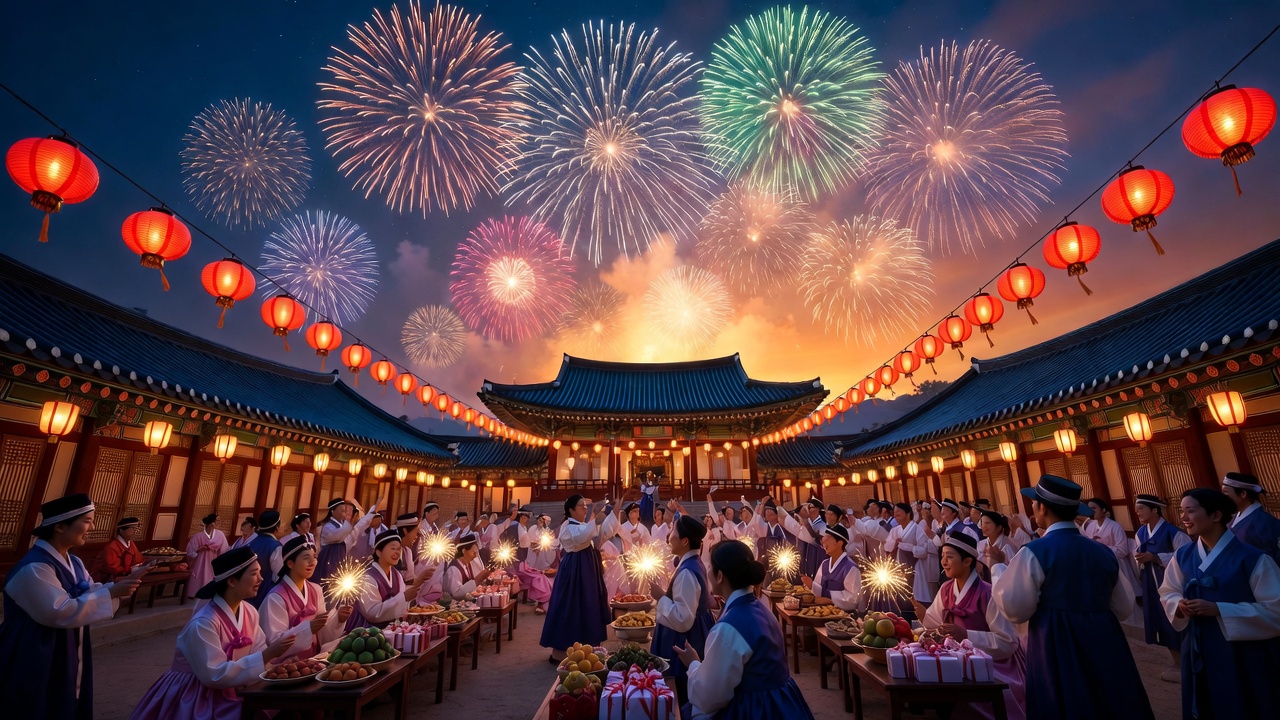
The air turns crisp. Families pack their bags. Highways stretch endlessly with cars heading home. Seollal, the Korean Lunar New Year, is about to begin.
Every year, millions of Koreans participate in one of the world’s largest annual migrations. They travel to their hometowns. They wear traditional clothing. They bow deeply to their elders. And they exchange heartfelt greetings that carry centuries of cultural meaning.
If you’ve ever wanted to wish someone a Happy Korean New Year, you’re in the right place. This comprehensive guide will teach you everything you need to know about Seollal greetings and phrases. You’ll learn the proper pronunciation. You’ll understand the cultural context. And you’ll discover how to use these expressions like a native speaker.
Whether you’re planning to visit Korea during Seollal, have Korean friends or colleagues, or simply want to expand your cultural knowledge, mastering these phrases will open doors to deeper connections and authentic experiences.
Let’s begin this journey into one of Korea’s most cherished traditions.
What Is Seollal and Why Is Korean Lunar New Year So Important?
Seollal (설날) is the Korean Lunar New Year. It marks the first day of the Korean lunisolar calendar. This holiday typically falls between late January and mid-February on the Gregorian calendar.
According to Wikipedia, Seollal is one of the most important traditional holidays for ethnic Koreans. It’s celebrated in both North Korea and South Korea. Korean diaspora communities around the world also observe this holiday with great enthusiasm.
The Meaning Behind the Name
The word “Seol” (설) means “year of age” in Middle Korean. This connects to a unique cultural belief: Seollal is traditionally the day when all Koreans grow one year older. The word “nal” (날) simply means “day.”
This etymology reveals something profound about Korean culture. The New Year isn’t just a date on the calendar. It’s a marker of growth, wisdom, and the passage of time for the entire community.
A Three-Day Celebration
Unlike the single-day celebration of January 1st, Seollal is a three-day national holiday in South Korea. The celebration includes:
- The day before Seollal: Preparation and travel
- Seollal itself: Ancestral rites and family gatherings
- The day after Seollal: Continued celebrations and rest
| Year | Seollal Date | Zodiac Animal |
|---|---|---|
| 2025 | January 29 | Snake |
| 2026 | February 17 | Horse |
| 2027 | February 7 | Goat |
This extended celebration allows families to properly honor their ancestors, share meals, play traditional games, and exchange meaningful greetings.
How to Say Happy New Year in Korean: The Essential Greeting
The most important phrase you’ll need for Korean New Year is:
새해 복 많이 받으세요 (Saehae Bok Mani Badeuseyo)
This is the standard and most widely used Korean New Year greeting. It’s appropriate for virtually any situation during the Seollal celebrations.
Breaking Down the Phrase Word by Word
Understanding each component helps with pronunciation and memorization:
| Korean | Romanization | Meaning |
|---|---|---|
| 새해 | saehae | new year |
| 복 | bok | luck/fortune/blessings |
| 많이 | mani | many/lots of |
| 받으세요 | badeuseyo | please receive (honorific) |
Literal translation: “Please receive many blessings in the New Year.”
This phrase embodies the Korean concept of bok (복), which encompasses fortune, happiness, health, and prosperity. When you say this greeting, you’re wishing someone all these wonderful things combined.
Pronunciation Guide for Non-Korean Speakers
Getting the pronunciation right shows respect and effort. Here’s a simplified guide:
- Saehae: Say “say-hay” with a soft ‘h’
- Bok: Rhymes with “poke” but shorter
- Mani: “Mah-nee” with emphasis on the first syllable
- Badeuseyo: “Bah-deu-say-yo” with equal stress on each syllable
Pro tip: Korean pronunciation emphasizes each syllable equally. Avoid the rising and falling intonation common in English questions.
Different Formality Levels: How to Greet Elders vs Friends in Korean
Korean is a hierarchical language. The same greeting changes based on who you’re speaking to. This is crucial for proper etiquette during Seollal.
Standard Polite Form (Most Common)
새해 복 많이 받으세요 (Saehae bok mani badeuseyo)
Use this with:
- Teachers and professors
- Older colleagues
- Parents and grandparents
- Shopkeepers and service staff
- Anyone you want to show respect to
This is the safest choice for most situations. When in doubt, use this form.
Very Formal/Honorific Form
새해 복 많이 받으십시오 (Saehae bok mani badeusipsio)
Use this with:
- CEOs and high-ranking officials
- Formal speeches and announcements
- Official greeting cards
- Business communications
- Television broadcasts
According to language experts at 90 Day Korean, this form features the extra-formal ending 십시오 (sipsio) instead of 세요 (seyo). You’ll often see this on billboards and in corporate New Year messages.
Casual/Informal Form
새해 복 많이 받아 (Saehae bok mani bada)
Use this with:
- Close friends of the same age
- Younger siblings
- Children
- Very close colleagues of similar age
Warning: Never use this form with elders, teachers, or anyone senior to you. It can come across as disrespectful.
Quick Reference Table: Korean New Year Greetings by Formality
| Formality Level | Korean Phrase | When to Use |
|---|---|---|
| Very Formal | 새해 복 많이 받으십시오 | Business, speeches, officials |
| Standard Polite | 새해 복 많이 받으세요 | Most situations (default choice) |
| Casual | 새해 복 많이 받아 | Close friends, younger people |
Alternative Ways to Wish Someone Happy Korean New Year
While 새해 복 많이 받으세요 is the most common greeting, Korean offers several beautiful alternatives for different situations.
행복한 새해 되세요 (Haengbokan Saehae Doeseyo)
Meaning: “Have a happy New Year”
This greeting focuses specifically on happiness (행복/haengbok) rather than general blessings. It’s a warm alternative that emphasizes emotional well-being.
새해 복 듬뿍 받으세요 (Saehae Bok Deumbbuk Badeuseyo)
Meaning: “May you receive an abundance of blessings in the New Year”
The word 듬뿍 (deumbbuk) means “abundantly” or “plentifully.” This phrase is more emphatic, expressing an even stronger wish for the recipient.
새해 복 많이 받으세요, 건강하세요 (Saehae Bok Mani Badeuseyo, Geonganghaseyo)
Meaning: “Receive many blessings in the New Year, and be healthy”
This combined greeting adds a wish for good health. In Korean culture, 건강 (geongang/health) is highly valued, especially when addressing elderly family members.
행복하고 건강한 새해 되세요 (Haengbokhago Geonganghan Saehae Doeseyo)
Meaning: “Have a happy and healthy New Year”
This well-rounded greeting covers both happiness and health. It’s particularly thoughtful and shows genuine care for the recipient’s well-being.
새해 소망 다 이루세요 (Saehae Somang Da Iruseyo)
Meaning: “May all your New Year’s wishes come true”
This beautiful phrase focuses on hopes and dreams (소망/somang). It’s especially meaningful when speaking to someone with specific goals or aspirations.
Korean New Year Greetings for Specific Situations and Relationships
Different contexts call for slightly different approaches. Here’s how to customize your greetings for maximum impact.
Greetings for Business and Professional Settings
In Korean business culture, New Year greetings are essential for maintaining relationships. Here are professional options:
For colleagues and business partners:
- 새해 복 많이 받으세요 (standard polite)
- 올해도 잘 부탁드립니다 (Olhaedo jal butakdeurimnida) – “I look forward to your continued support this year”
For superiors and executives:
- 새해 복 많이 받으십시오 (very formal)
- 건강하시고 하시는 일 다 잘 되시길 바랍니다 (May you be healthy and may all your endeavors be successful)
Greetings for Family Members During Seollal
Family greetings during Sebae (the traditional bow) are particularly important.
What children say to parents/grandparents:
- 새해 복 많이 받으세요 (standard)
- 건강하세요 (Please be healthy)
- 오래오래 사세요 (Please live a long life)
What elders say in response:
- 너도 새해 복 많이 받아 (You too, receive many blessings)
- 올해도 건강해라 (Be healthy this year too)
- 공부 열심히 해라 (Study hard) – commonly said to students
Greetings for Friends and Peers
With close friends, you can be more casual and creative:
- 새해 복 많이 받아! (Casual New Year greeting)
- 새해에도 우리 우정 변치 말자! (Let our friendship remain unchanged in the new year!)
- 올해는 좋은 일만 가득하길! (May only good things fill this year!)
The Art of Sebae: Korean New Year Bow Tradition and Greetings
Sebae (세배) is perhaps the most distinctive and meaningful Korean New Year tradition. Understanding it is essential for anyone wanting to fully appreciate Seollal greetings.
What Is Sebae and Why Does It Matter?
According to Best of Korea, Sebae is a kind of bowing that dates back thousands of years, even before the Joseon Dynasty. It’s performed as an act of showing respect to elders on New Year’s Day.
Sebae is more than just a bow. It’s a formal expression of:
- Gratitude for the past year
- Respect for elders and their wisdom
- Hope for continued guidance
- Family unity and continuity
How to Perform Sebae Correctly
The Sebae bow differs for men and women, but both versions are deeply respectful.
For men (큰절/keunjeol – big bow):
- Stand with feet together, hands at sides
- Bring hands together at waist level
- Kneel down slowly, placing knees on the ground
- Bend forward until forehead touches the floor
- Hands should touch the ground alongside the head
- Hold briefly, then rise back up
- Bow slightly from the waist while standing
For women (큰절/keunjeol – variation):
- Stand with hands clasped in front
- Kneel down gracefully
- Bend forward with hands placed in front of the forehead
- The forehead approaches but may not touch the ground
- The gesture is more graceful and less deep than the male version
- Rise slowly and bow slightly while standing
What to Say During Sebae
When performing Sebae, the younger person speaks while bowing:
Standard Sebae greeting:
새해 복 많이 받으세요 (Saehae bok mani badeuseyo) “Please receive many blessings in the New Year”
Extended Sebae greetings:
건강하시고 오래오래 사세요 “Please be healthy and live a long, long life”
올해도 건강하시고 하시는 일 다 잘 되세요 “Please be healthy this year too, and may everything you do go well”
Receiving Sebaetdon: New Year’s Money Tradition
After performing Sebae, elders give Sebaetdon (세뱃돈), which is New Year’s money. This tradition is beloved by children and young adults alike.
Key facts about Sebaetdon:
| Aspect | Details |
|---|---|
| Given by | Elders (parents, grandparents, aunts, uncles) |
| Given to | Younger family members (especially children) |
| Amount | Varies by relationship and ability (₩10,000-₩100,000 common) |
| Packaging | Colorful envelopes or traditional Bok Jumoni (복주머니) pouches |
| Meaning | Blessing, good fortune, and encouragement |
The money is traditionally placed in Bok Jumoni, beautiful silk pouches in vibrant colors. Children often hang these pouches on their hanbok belts to collect money throughout the day.
Essential Korean New Year Vocabulary Every Learner Should Know
To fully participate in Seollal celebrations, you’ll need more than just greetings. Here’s essential vocabulary organized by category.
Seollal Traditions Vocabulary
| Korean | Romanization | Meaning |
|---|---|---|
| 설날 | Seollal | Korean New Year |
| 세배 | Sebae | New Year’s bow |
| 세뱃돈 | Sebaetdon | New Year’s money |
| 차례 | Charye | Ancestral memorial rite |
| 한복 | Hanbok | Traditional Korean clothing |
| 설빔 | Seolbim | New clothes for New Year |
| 복주머니 | Bokjumoni | Fortune pouch |
Seollal Food Vocabulary
| Korean | Romanization | Meaning |
|---|---|---|
| 떡국 | Tteokguk | Rice cake soup |
| 떡 | Tteok | Rice cake |
| 전 | Jeon | Korean savory pancakes |
| 만두 | Mandu | Korean dumplings |
| 잡채 | Japchae | Glass noodle stir-fry |
| 갈비찜 | Galbijjim | Braised short ribs |
| 식혜 | Sikhye | Sweet rice punch |
Family Terms for Seollal Greetings
| Korean | Romanization | Meaning |
|---|---|---|
| 할머니 | Halmeoni | Grandmother |
| 할아버지 | Harabeoji | Grandfather |
| 어머니 | Eomeoni | Mother |
| 아버지 | Abeoji | Father |
| 삼촌 | Samchon | Uncle (father’s brother) |
| 이모 | Imo | Aunt (mother’s sister) |
| 조카 | Joka | Niece/Nephew |
Traditional Games Vocabulary
| Korean | Romanization | Meaning |
|---|---|---|
| 윷놀이 | Yutnori | Traditional board game |
| 제기차기 | Jegichagi | Shuttlecock kicking |
| 연날리기 | Yeonnalligi | Kite flying |
| 널뛰기 | Neolttwigi | Seesaw jumping |
| 팽이치기 | Paengichigi | Spinning tops |
Korean New Year Greetings in Written Form: Cards, Messages, and Social Media
In today’s connected world, many Korean New Year greetings are shared digitally. Here’s how to craft perfect written messages.
Formal Written Greetings for Cards and Letters
Opening:
존경하는 [Name]님께 (To the respected [Name])
Body:
새해 복 많이 받으시고 건강하시길 바랍니다. 올 한 해도 좋은 일만 가득하시길 진심으로 기원합니다.
Translation: “I wish you many blessings and good health in the New Year. I sincerely hope this year is filled with only good things.”
Closing:
[Year]년 새해에도 변함없이 (Unchanged in the New Year of [Year])
Casual Text Messages and Social Media Posts
For friends and peers on KakaoTalk, Instagram, or other platforms:
Short and sweet:
- 새해 복 많이 받아! 🎊
- 해피 뉴이어! 올해도 화이팅! 💪
- 새해에도 건강하고 행복하자! ❤️
More elaborate:
2026년 새해가 밝았어! 올해도 좋은 일만 가득하길 바라고 우리 우정도 영원히! 새해 복 많이 받아~ 🎉
Professional Email Greetings
For business correspondence:
Subject line:
[2026년] 새해 인사드립니다
Body:
[Name]님, 안녕하세요.
새해 복 많이 받으십시오. 지난 한 해 동안 보내주신 성원에 감사드리며, 올해도 변함없는 관심과 격려 부탁드립니다.
2026년에도 귀사의 무궁한 발전을 기원합니다.
감사합니다. [Your name] 드림
How to Respond to Korean New Year Greetings
Knowing how to respond is just as important as knowing how to greet. Here are appropriate responses for different situations.
Standard Responses
When someone says 새해 복 많이 받으세요 to you:
Polite response:
네, [Name]님도 새해 복 많이 받으세요 “Yes, you too, please receive many blessings”
Shortened response:
감사합니다, [Name]님도요! “Thank you, you too!”
Responses When Receiving Sebae
When a younger person performs Sebae to you:
Blessing responses:
- 올해도 건강해라 (Be healthy this year too)
- 공부 열심히 해 (Study hard)
- 하는 일 다 잘 되길 바란다 (I hope everything you do goes well)
- 좋은 사람 만나라 (May you meet a good person) – for unmarried adults
- 올해는 취직해라 (Get a job this year) – for job seekers
Giving Sebaetdon:
이건 네 세뱃돈이야. 잘 써라. “This is your New Year’s money. Use it well.”
Responding to Written Messages
For text messages or social media:
Quick responses:
- 고마워! 너도! ❤️
- 새해 복 많이 받아~ 🎊
- 올해도 잘 부탁해!
End-of-Year Korean Phrases to Use Before Seollal
Seollal greetings aren’t limited to New Year’s Day itself. Korean culture has specific phrases for the end of the year leading up to the celebration.
한 해 마무리 잘 하세요 (Han Hae Mamuri Jal Haseyo)
Meaning: “Have a good end to your year”
This warm greeting is perfect for late December or the weeks leading up to Seollal. It acknowledges that the person is wrapping up their year’s activities.
연말 잘 보내세요 (Yeonmal Jal Bonaeseyo)
Meaning: “Have a good end of year” / “Happy holidays”
According to Podo Korean, this is similar to saying “Happy holidays” in English. It’s appropriate from mid-December through the New Year period.
올해도 고생 많았어요 (Olhaedo Gosaeng Manasseoyo)
Meaning: “You worked hard this year too”
This phrase acknowledges the recipient’s efforts throughout the year. It’s particularly meaningful in Korean culture, which values hard work and perseverance.
Year-End Gratitude Expressions
| Korean | Meaning | Context |
|---|---|---|
| 한 해 동안 감사했습니다 | Thank you for this past year | Formal, business |
| 올해도 많이 도와줘서 고마워 | Thanks for helping me a lot this year | Casual, friends |
| 내년에도 잘 부탁드립니다 | I look forward to your continued support next year | Professional |
Regional Variations in Korean New Year Greetings
While Korean New Year greetings are largely standardized, regional differences exist, particularly between North and South Korea and among older generations.
South Korean Standard
The greetings covered in this article represent standard South Korean usage. They’re appropriate throughout the country and understood by all Korean speakers.
North Korean Variations
While North Korea also celebrates the Lunar New Year, celebrations tend to be more state-oriented. The basic greeting 새해 복 많이 받으세요 is still understood, but family rituals have less emphasis compared to South Korea.
Generational Differences
Older generations may use more formal language and perform more elaborate Sebae rituals. They often emphasize traditional elements like:
- Wearing hanbok
- Performing full prostration bows
- Extended ancestral memorial ceremonies
Younger generations sometimes abbreviate greetings in casual settings:
- 새해복! (Shortened form)
- 해피뉴이어! (Konglish: “Happy New Year”)
However, when greeting elders, young Koreans still use full formal greetings.
Common Mistakes to Avoid When Using Korean New Year Greetings
Learning from common mistakes helps you make better impressions. Here are pitfalls to avoid.
Formality Mismatches
Mistake: Using casual form (받아) with elders Consequence: Perceived as extremely rude and disrespectful Solution: When in doubt, always use the polite form (받으세요)
Pronunciation Errors
Common error: Pronouncing 받으세요 as “bah-DEU-say-yo” with strong stress Correct: Equal emphasis on each syllable, softer delivery
Cultural Timing Mistakes
Mistake: Saying New Year greetings too early (before the actual Seollal date) Note: Koreans celebrate both January 1st (Solar New Year) and Seollal (Lunar New Year) separately
Gift-Giving Faux Pas
When visiting Korean families during Seollal:
| Don’t Give | Why |
|---|---|
| Clocks | Associated with death |
| Sharp objects (knives, scissors) | Symbolize cutting ties |
| Sets of 4 items | Number 4 sounds like “death” in Korean |
| Red ink signatures | Used for deceased names |
| Good Gifts | Why |
|---|---|
| Fruit sets | Symbol of health and prosperity |
| Korean beef (한우) | Premium, respectful gift |
| Gift certificates | Practical and appreciated |
| Health supplements | Shows care for wellbeing |
Complete List of Korean New Year Conversation Phrases and Starters
Beyond the main greeting, knowing how to engage in Seollal conversations makes you a more fluent participant in celebrations.
Asking About Someone’s Seollal Plans
고향에 가세요? (Gohyange gaseyo?) “Are you going to your hometown?”
This is perhaps the most common question asked before Seollal. Since millions of Koreans travel home, it’s natural conversation.
Possible responses:
- 네, 부산에 가요 (Yes, I’m going to Busan)
- 아니요, 서울에 있어요 (No, I’m staying in Seoul)
- 올해는 못 가요 (I can’t go this year)
Discussing Family Gatherings
가족들 다 모여요? (Gajokdeul da moyeoyo?) “Is your whole family gathering?”
온 가족이 모여요 (On gajogi moyeoyo) “The whole family is gathering”
Talking About Seollal Food
떡국 드셨어요? (Tteokguk deusyeosseoyo?) “Did you eat tteokguk?”
This question relates to the tradition that eating tteokguk makes you one year older. It’s a playful way to ask if someone has properly celebrated.
재미있는 응답 (Fun responses):
- 네, 두 그릇 먹어서 두 살 먹었어요! (Yes, I ate two bowls so I aged two years!)
- 아직이요, 나이 먹기 싫어서요 (Not yet, I don’t want to get older)
Small Talk During Gatherings
| Korean | Romanization | Meaning |
|---|---|---|
| 잘 지내셨어요? | Jal jinaesyeosseoyo? | How have you been? |
| 오랜만이에요 | Oraenmanieyo | It’s been a while |
| 많이 컸네요! | Mani keonneyo! | You’ve grown so much! (to children) |
| 요즘 뭐 해요? | Yojeum mwo haeyo? | What are you doing these days? |
Cultural note: Questions about marriage, job, and having children are common during Seollal gatherings. While they may feel intrusive by Western standards, they’re considered normal expressions of family interest in Korean culture.
Expressing Gratitude for Sebaetdon
When receiving New Year’s money, children and young adults should express thanks:
공손한 표현 (Polite expressions):
- 감사합니다 (Gamsahamnida) – Thank you
- 잘 쓰겠습니다 (Jal sseugetsseumnida) – I will use it well
- 새해 복 많이 받으세요 (Return the New Year’s greeting)
Complimenting Traditional Attire
If someone is wearing hanbok:
한복이 정말 예쁘네요! (Hanbogi jeongmal yeppeunneyo!) “Your hanbok is really beautiful!”
Historical Origins of Korean New Year Greetings and Customs
Understanding the history adds depth to your use of Seollal greetings.
Ancient Roots in Korean Kingdoms
According to historical records, Seollal traditions date back to the Silla Dynasty (57 BCE – 935 CE). The Samguk Sagi (삼국사기), Korea’s oldest historical text, mentions New Year’s celebrations and greetings exchanged between kings and subjects.
Key historical points:
- 488 CE: Recorded observance of New Year during King Soji’s reign
- Goryeo Dynasty (918-1392): Seollal became a major holiday with elaborate court ceremonies
- Joseon Dynasty (1392-1897): Traditions like Sebae became formalized
Japanese Colonial Suppression (1910-1945)
During Japanese occupation, Korean Lunar New Year celebrations were actively suppressed. The colonial government banned traditional holidays and pushed adoption of the Western calendar.
Despite these restrictions, Koreans continued celebrating Seollal privately, preserving greetings and traditions through family observance.
Modern Revival (1985-Present)
According to Office Holidays, Seollal wasn’t officially recognized as a South Korean national holiday until 1985. The holiday gained full three-day status in 1989 under the Roh Tae-woo administration.
Today’s Seollal greetings thus carry the weight of this historical survival and revival—each 새해 복 많이 받으세요 is a small victory of cultural preservation.
Korean Zodiac Signs and Year-Specific New Year Greetings
Each Korean New Year celebrates a different zodiac animal. Knowing this adds personalization to your greetings.
The Korean Zodiac Cycle
Like Chinese astrology, Korean astrology follows a 12-year cycle of animals:
| Year | Animal (Korean) | Animal (English) |
|---|---|---|
| 2024 | 용띠 (Yongtti) | Dragon |
| 2025 | 뱀띠 (Baemtti) | Snake |
| 2026 | 말띠 (Maltti) | Horse |
| 2027 | 양띠 (Yangtti) | Goat/Sheep |
| 2028 | 원숭이띠 (Wonsungitti) | Monkey |
Zodiac-Themed Greetings
For the Year of the Horse (2026), you might hear:
말처럼 힘차게 달리는 한 해 되세요! “May you run powerfully like a horse this year!”
말의 해, 건강하고 행복한 한 해 되세요! “In the Year of the Horse, may you have a healthy and happy year!”
These creative variations add personality to standard greetings.
Seollal Greetings in Popular Korean Proverbs and Sayings
Korean proverbs (속담/sokdam) add wisdom to New Year wishes.
Proverbs to Incorporate in Greetings
웃으면 복이 온다 (Useumyeon bogi onda) “If you laugh, fortune comes”
This proverb encourages starting the year with positivity and joy.
새 해에는 새 마음으로 (Sae haeneun sae maeumeuro) “In the new year, with a new heart”
This encourages fresh starts and leaving behind old troubles.
복을 빌어 드립니다 (Bogeul bireo deurimnida) “I pray for blessings for you”
A more formal, literary way to express New Year wishes.
Korean New Year Greetings for Different Life Stages
Customizing greetings based on the recipient’s life situation shows thoughtfulness.
For Students
새해에는 공부도 잘 되고 좋은 결과 있길 바랍니다 “I hope your studies go well and you have good results in the New Year”
For Job Seekers
새해에는 좋은 회사에 취직하길 바랍니다 “I hope you get a job at a good company in the New Year”
For Newlyweds
새해에는 예쁜 아기 낳으세요 (Traditional, may be sensitive) “May you have a beautiful baby in the New Year”
For Business Owners
새해에는 사업 번창하시길 바랍니다 “I hope your business prospers in the New Year”
For Elderly Family Members
건강하시고 오래오래 사세요 “Please be healthy and live a long, long life”
This is particularly meaningful during Sebae, showing deep respect for elders.
Korean entertainment provides excellent opportunities to hear authentic New Year greetings in context.
K-Drama Seollal Scenes
Many K-dramas include Seollal episodes where characters:
- Return to family homes
- Perform Sebae in hanbok
- Exchange greetings and Sebaetdon
- Navigate family dynamics
Watch for these scenes to hear natural pronunciation and observe proper etiquette.
K-Pop New Year Messages
K-pop artists regularly share New Year greetings with fans. Their video messages typically include:
Standard opening:
안녕하세요, [그룹명]의 [이름]입니다. 새해 복 많이 받으세요!
Personal wishes:
올해도 건강하시고 행복한 한 해 되세요. 저희 [그룹명] 많이 사랑해주세요!
Following K-pop artists on social media during Seollal provides excellent exposure to contemporary usage of these greetings.
Traditional Korean New Year Songs and Chants
Music plays a role in Seollal celebrations. Traditional songs reinforce New Year greetings and wishes.
The Korean New Year Song (까치 까치 설날)
This beloved children’s song is taught in Korean schools and captures the excitement of Seollal:
The song references many traditions including:
- New clothes (설빔/Seolbim)
- Sebae bowing
- Parents receiving bows with happiness
While we cannot reproduce the full lyrics, the song’s existence highlights how deeply embedded Seollal greetings are in Korean culture from childhood.
Digital and Modern Trends in Korean New Year Greetings
Technology has transformed how Koreans exchange New Year greetings while preserving traditional sentiments.
KakaoTalk New Year Features
Korea’s dominant messaging app, KakaoTalk, offers special features during Seollal:
- Animated New Year stickers
- Digital Sebaetdon (money transfers with special envelopes)
- Voice greeting recordings
- Group chat celebration features
Video Call Sebae
For families separated by distance, video call Sebae has become increasingly common:
- Elders receive bows through screens
- Sebaetdon is transferred digitally
- Multiple households can connect simultaneously
Social Media Greetings
Instagram and Twitter see floods of New Year posts featuring:
- Hanbok selcas (selfies)
- Family gathering photos
- Food spreads
- Creative New Year graphics
Popular hashtags include:
- #새해복많이받으세요
- #설날
- #세배
- #한복
Practicing Korean New Year Greetings: Tips for Language Learners
If you’re learning Korean, Seollal provides perfect motivation for practice. Here’s how to make the most of it.
Pronunciation Practice Techniques
Listen and repeat: Use YouTube videos of native speakers saying Seollal greetings. Repeat until comfortable.
Record yourself: Compare your pronunciation to native speakers. Note differences and adjust.
Shadow speaking: Play Korean New Year content and speak along simultaneously.
Writing Practice
Handwrite cards: Even simple cards in Korean impress native speakers.
Text practice: Send Korean New Year messages to language exchange partners.
Social media posting: Share a New Year greeting in Korean (native speakers often correct helpful errors).
Speaking Practice Opportunities
Language exchange: Find Korean partners who’ll appreciate your Seollal greetings.
Korean restaurants: Staff often appreciate customers’ Korean New Year wishes.
Korean cultural centers: Many host Seollal events where practice is encouraged.
Recommended Resources
| Resource Type | Recommendation |
|---|---|
| Apps | 90 Day Korean, Duolingo, TTMIK |
| YouTube | Korean Unnie, Talk To Me In Korean |
| Podcasts | Korean Class 101, Real Korean Conversations |
| Practice | HelloTalk, Tandem (language exchange apps) |
Seollal Etiquette Guide for Non-Koreans Visiting During Korean New Year
Planning to experience Seollal in Korea? Here’s essential etiquette guidance.
What to Expect
During Seollal, Korea transforms:
- Major cities become quiet as people travel home
- Many businesses close for 3+ days
- Tourist sites may have special hours (some stay open for free!)
- Transportation is extremely crowded
Etiquette When Invited to a Korean Home
Before arriving:
- Bring appropriate gifts (fruit, Korean beef, quality food items)
- Dress neatly (hanbok optional but appreciated if offered)
- Arrive on time or slightly early
During the visit:
- Remove shoes at the entrance
- Accept food and drink graciously
- If invited to participate in Sebae, follow your host’s guidance
- Compliment the food enthusiastically
Key phrases for guests:
| Situation | Korean Phrase | Meaning |
|---|---|---|
| Greeting hosts | 새해 복 많이 받으세요 | Happy New Year |
| Receiving food | 잘 먹겠습니다 | I will eat well |
| Complimenting food | 맛있어요! | It’s delicious! |
| When leaving | 맛있게 먹었습니다. 감사합니다. | I ate well. Thank you. |
Experiencing Public Seollal Events
Folk villages and palaces often host public Seollal events:
Popular locations:
- Namsangol Hanok Village (Seoul)
- Korean Folk Village (Yongin)
- Gyeongbokgung Palace (Seoul)
- Bukchon Hanok Village (Seoul)
These locations offer visitors the chance to:
- Try on hanbok
- Learn Sebae
- Play traditional games
- Sample traditional foods
The Cultural Significance of Korean New Year Blessings
Understanding the deeper meaning behind Seollal greetings enriches your appreciation and helps you use them more authentically.
Why Korean New Year Greetings Matter Beyond Words
In Western cultures, “Happy New Year” is often a quick, casual exchange. In Korea, New Year greetings carry profound cultural weight. They’re not mere social pleasantries—they’re sincere wishes backed by centuries of tradition.
When a Korean person says 새해 복 많이 받으세요, they’re participating in a ritual that connects them to:
- Generations of ancestors who spoke the same words
- Confucian values of respect and hierarchy
- Collective hopes for prosperity and wellbeing
- The rhythm of agricultural seasons that originally shaped the lunar calendar
Understanding this context transforms your use of these greetings from rote memorization to genuine cultural participation.
The Philosophy of Receiving vs. Wishing
Notice something interesting about Korean New Year greetings: they focus on receiving rather than having.
English: “Have a happy New Year” (active) Korean: “Please receive many blessings” (passive/receptive)
This reflects a philosophical difference. In Korean thinking, blessings come from:
- Ancestors and elders
- The universe/heaven
- The accumulated merit of good actions
- The goodwill of community members
By wishing someone to receive blessings, you’re acknowledging that fortune comes from sources beyond individual effort. This humble perspective permeates Korean culture.
The Concept of Bok (복) – Fortune and Blessings
Bok (복) is central to Korean New Year wishes. This character encompasses:
- Material prosperity: Financial success and stability
- Health: Physical and mental wellbeing
- Harmony: Peaceful relationships and family unity
- Longevity: Long life for self and loved ones
- Success: Achievement of goals and aspirations
When Koreans wish 새해 복 많이 받으세요, they’re wishing all these things simultaneously.
Confucian Influences on Seollal Traditions
Korean New Year traditions are deeply influenced by Confucian values:
Filial piety (효도/hyodo): Respect for parents and ancestors shown through:
- Sebae bowing
- Ancestral memorial rites (차례/charye)
- Visiting elders
Hierarchy and respect: Reflected in:
- Different language formality levels
- Proper greeting order (oldest first)
- Gift-giving customs
Family centrality: Expressed through:
- Multi-generational gatherings
- Shared meals
- Collective celebration
Ancestral Connection
The Charye (차례) ceremony connects living family members with deceased ancestors. Food is prepared and offered, linking past, present, and future generations.
This spiritual dimension adds depth to Seollal greetings, as wishes for blessings include both the living and honored ancestors.
Comparison: Korean New Year vs Chinese New Year Greetings
Since both holidays share lunar calendar origins, understanding differences helps avoid confusion.
Key Differences in Greetings
| Aspect | Korean (Seollal) | Chinese (Chūnjié) |
|---|---|---|
| Main greeting | 새해 복 많이 받으세요 | 新年快乐 (Xīnnián kuàilè) |
| Literal meaning | “Receive many blessings” | “Happy New Year” |
| Focus | Receiving fortune | Joy and happiness |
| Money envelopes | Various colors | Traditionally red |
| Zodiac greeting | Less common | Very common |
Shared Elements
Both traditions include:
- Family gatherings
- Honoring ancestors
- Special foods
- Money gifts to children
- New clothes
Important Cultural Note
While respectful curiosity is appreciated, avoid conflating the two holidays. Each has distinct traditions, foods, and customs that reflect unique cultural histories.
Seollal Greetings Throughout the Celebration Period
Different phrases are appropriate at different stages of the Seollal celebration.
Before Seollal (Preparation Period)
설날 잘 보내세요 (Seollal jal bonaeseyo) “Have a good Seollal”
고향 잘 다녀오세요 (Gohyang jal danyeoooseyo) “Have a safe trip to your hometown”
On Seollal Day
새해 복 많이 받으세요 (Standard greeting) “Please receive many blessings in the New Year”
During Sebae, add specific wishes for health, success, or happiness.
After Seollal
설날 잘 보냈어요? (Seollal jal bonaesseoyo?) “Did you have a good Seollal?”
새해 첫 출근이네요! (Saehae cheot chulgeuniineyo!) “It’s the first workday of the New Year!”
Teaching Children Korean New Year Greetings
For Korean heritage families or anyone wanting to pass on traditions, here’s guidance for teaching children.
Age-Appropriate Introduction
Toddlers (2-4 years):
- Focus on basic phrase: 새해 복 많이 받으세요
- Practice the sound through songs and repetition
- Simple bow with hands together
Elementary age (5-10 years):
- Full Sebae bow instruction
- Understanding of phrase meaning
- Practice with grandparents or at cultural events
Preteens and teens (11+):
- Formal vs. casual forms
- Writing greeting cards
- Cultural significance discussions
Making Learning Fun
Activities:
- Hanbok dress-up and Sebae practice
- Cooking tteokguk together
- Playing Yutnori board game
- Creating New Year cards
- Watching K-dramas with Seollal scenes
Resources for Teaching
- Korean cultural centers often offer children’s Seollal programs
- YouTube has pronunciation guides for kids
- Korean heritage language schools include Seollal curriculum
- Picture books about Korean New Year
Conclusion: Embracing Korean New Year Through Language
Learning to say “새해 복 많이 받으세요” is just the beginning. Each phrase you master opens a door to deeper cultural understanding and more meaningful connections.
Korean New Year greetings carry weight. They express respect, convey genuine wishes for wellbeing, and honor centuries of tradition. Whether you’re speaking to Korean friends, visiting Seoul during Seollal, or simply expanding your cultural horizons, these phrases serve as bridges between cultures.
Key Takeaways
✅ 새해 복 많이 받으세요 is the essential Korean New Year greeting ✅ Formality matters—match your language level to your audience ✅ Sebae (세배) combines physical bowing with verbal greetings ✅ Context enriches meaning—understand the traditions behind the words ✅ Practice makes perfect—use resources to improve pronunciation
Your Next Steps
- Memorize the standard greeting: 새해 복 많이 받으세요
- Practice pronunciation using online resources
- Learn the appropriate formality levels
- Understand the cultural context of Sebae
- Share your knowledge with others interested in Korean culture
As the next Seollal approaches on February 17, 2026, you’ll be ready to greet Korean friends, colleagues, and perhaps new acquaintances with confidence and cultural sensitivity.
새해 복 많이 받으세요! May you receive abundant blessings in the New Year.
Frequently Asked Questions About Korean New Year Greetings
What is the most common way to say Happy New Year in Korean?
The most common greeting is 새해 복 많이 받으세요 (Saehae bok mani badeuseyo), meaning “Please receive many blessings in the New Year.” This phrase is appropriate for most situations and people.
When should I use the formal vs. casual Korean New Year greeting?
Use 새해 복 많이 받으십시오 (formal) for business settings, speeches, or very high-status individuals. Use 새해 복 많이 받으세요 (polite) for most situations. Reserve 새해 복 많이 받아 (casual) only for close friends of similar age.
What do Koreans say when performing Sebae?
During Sebae, Koreans bow deeply while saying 새해 복 많이 받으세요. They may add wishes for health (건강하세요) or longevity (오래오래 사세요) depending on the relationship.
Is Korean New Year the same as Chinese New Year?
Both holidays follow the lunar calendar and share some traditions, but they are distinct celebrations with different customs, foods, and greetings. Korean Seollal emphasizes Sebae, tteokguk, and specific Korean traditions.
How do I respond when someone says 새해 복 많이 받으세요 to me?
The appropriate response is [Name]님도 새해 복 많이 받으세요 (“You too, please receive many blessings”) or simply 감사합니다, 님도요 (“Thank you, you too”).
When is Seollal celebrated?
Seollal falls on the first day of the Korean lunar calendar, typically between late January and mid-February. In 2026, Seollal is on February 17.
Did you find this guide helpful? Share it with friends interested in Korean culture and language. 새해 복 많이 받으세요!