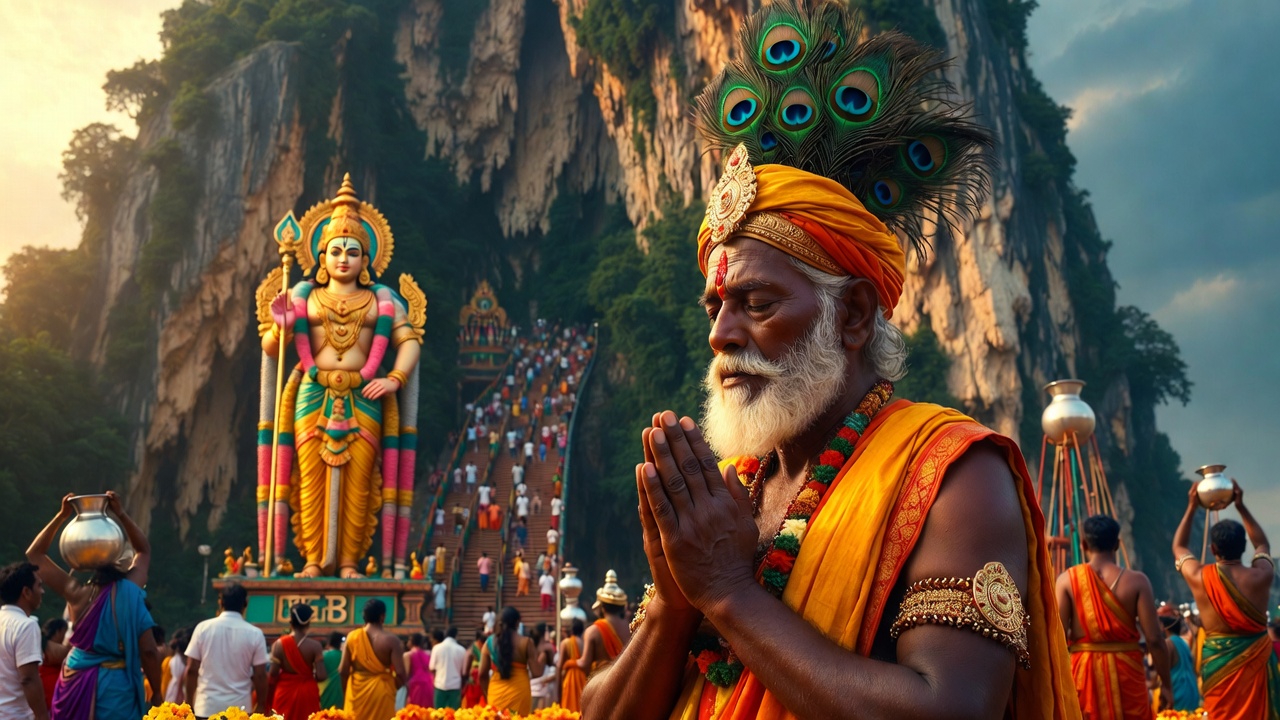
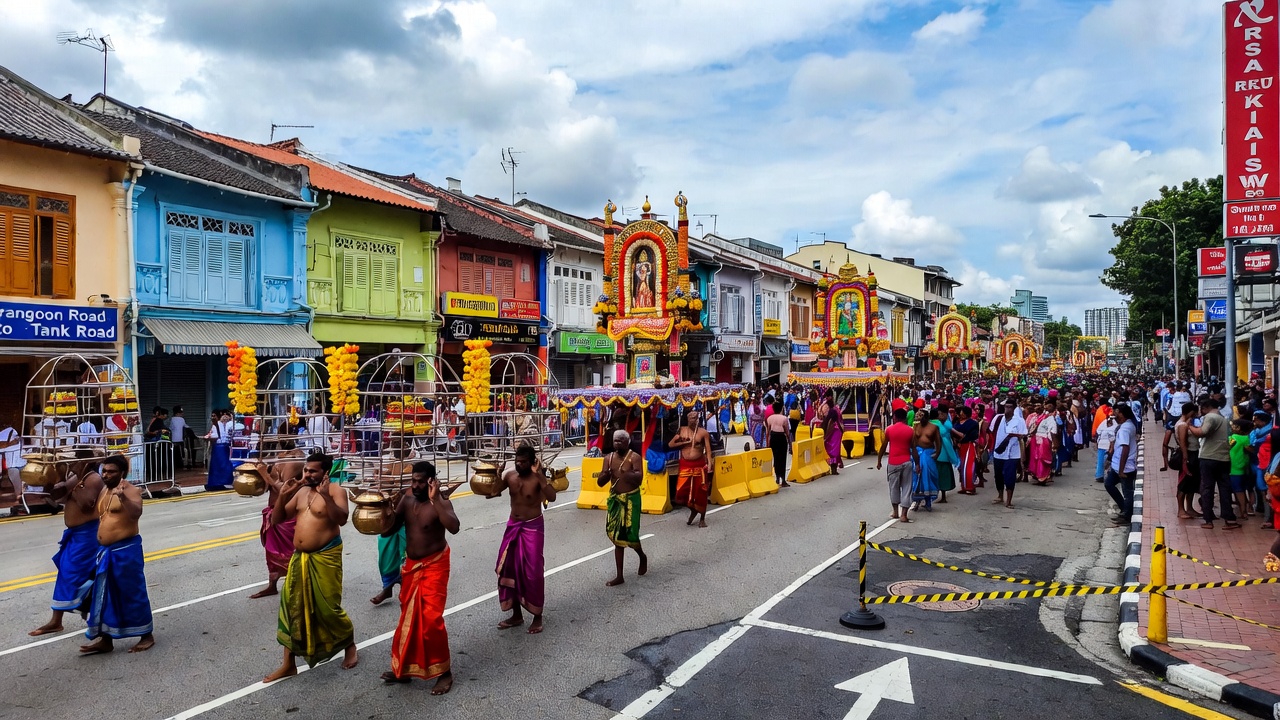
Experience one of Southeast Asia’s most spectacular Hindu festivals along a 4-kilometer sacred pilgrimage through Singapore’s historic streets
Every year during the full moon of the Tamil month of Thai, the streets of Singapore transform into a vibrant corridor of devotion, color, and ancient tradition. Thaipusam stands as one of the most visually striking and spiritually profound Hindu festivals celebrated outside of India. The Singapore Thaipusam procession, stretching approximately 4 kilometers from Serangoon Road to Tank Road, offers visitors an extraordinary opportunity to witness living faith in action.
This comprehensive walking guide will take you through every aspect of the Singapore Thaipusam festival route, from the historic Sri Srinivasa Perumal Temple in Little India to the magnificent Sri Thendayuthapani Temple near Dhoby Ghaut. Whether you’re a cultural enthusiast, photographer, or spiritual seeker, understanding this sacred journey will enrich your experience immeasurably.
What is Thaipusam Festival Singapore: Understanding the Sacred Hindu Celebration
Thaipusam (also spelled Thaipoosam) derives from two Tamil words: “Thai” (the 10th month in the Tamil calendar, typically falling in January or February) and “Pusam” (the name of a star that reaches its highest point during this period). The festival commemorates the occasion when the goddess Parvati presented her son, Lord Murugan, with a divine spear called the vel to vanquish the demon Surapadman.
Lord Murugan—also known as Skanda, Karthikeya, and Subrahmanya—represents:
- Virtue and righteousness
- Youth and vitality
- Power and strength
- The destroyer of evil
The festival originated among Tamil Hindus in South India and was introduced to Singapore by the Nattukottai Chettiars, an influential community of merchant bankers who established the first Thaipusam celebration at Sri Thendayuthapani Temple in 1860. Today, Singapore’s Thaipusam attracts up to 50,000 devotees annually, making it one of the largest celebrations outside India and Malaysia.
| Aspect | Details |
|---|---|
| Festival Name | Thaipusam (Thaipoosam) |
| Deity Honored | Lord Murugan |
| Timing | Full moon in Tamil month of Thai (January/February) |
| Singapore Procession Distance | Approximately 4 kilometers |
| Annual Participants | Up to 50,000 devotees |
| First Singapore Celebration | 1860 |
Singapore Thaipusam 2026 Date and Procession Schedule
For those planning to witness this remarkable festival, here are the key dates and timings:
Thaipusam 2026 falls on Sunday, February 1, 2026
Complete Thaipusam Singapore Schedule
| Date & Time | Event |
|---|---|
| January 31, 2026, 5:00 AM | Silver Chariot Procession begins from Sri Thendayuthapani Temple |
| January 31, 2026, 6:30 AM | Silver Chariot arrives at Sri Mariamman Temple (South Bridge Road) |
| January 31, 2026, 7:30 AM | Silver Chariot arrives at Sri Layan Sithi Vinayagar Temple (Keong Saik Road) |
| January 31, 2026, 11:30 PM | Thaipusam Paal Kudam procession commences from Sri Srinivasa Perumal Temple |
| February 1, 2026, 12:05 AM | Sri Thendayuthapani Temple doors open for devotees |
| February 1, 2026, 12:00 PM | Morning session Spike and Chariot Kavadis must leave starting temple |
| February 1, 2026, 5:00 PM | Afternoon session Kavadis must leave starting temple |
| February 1, 2026, 11:00 PM | All devotees must complete the procession |
Important: The Hindu Endowments Board requires all devotees to complete their journey and arrive at Sri Thendayuthapani Temple by 11:00 PM on Thaipusam Day.
Sri Srinivasa Perumal Temple History: The Starting Point of the Thaipusam Procession
The Sri Srinivasa Perumal Temple stands as one of Singapore’s oldest and most significant Hindu temples, serving as the sacred starting point for the annual Thaipusam procession. Located at 397 Serangoon Road in the heart of Little India, this magnificent temple offers a profound glimpse into South Indian religious architecture and Tamil Hindu heritage.
Historical Background of Sri Srinivasa Perumal Temple
The temple’s origins trace back to 1855, when a group of Tamil settlers purchased land from the English East India Company to establish a place of Hindu worship. Key historical milestones include:
- 1851: Land purchased for 26 rupees and 8 annas (Indian currency was used in Singapore at that time)
- 1855: Original temple constructed and named Narasinga Perumal Kovil
- 1894: Additional land donated by devotee Moona Sithumbram Pillay
- 1912: Third plot acquired from the East India Company
- 1966: Major reconstruction completed with funding from philanthropist P. Govindasamy Pillai
- 1978: Gazetted as a National Monument of Singapore
- 1979: Elaborate gopuram (entrance tower) completed
Architectural Highlights of the Perumal Temple
The temple exemplifies Dravidian architecture from South India, featuring:
| Feature | Description |
|---|---|
| Gopuram (Entrance Tower) | Five-tiered, 20-meter tall structure adorned with hundreds of colorful deity statues |
| Main Deity | Sri Srinivasa Perumal (Lord Vishnu) |
| Consort Deities | Lakshmi (goddess of wealth) and Andal |
| Sacred Mount | Garuda (the divine eagle vehicle of Vishnu) |
| Historical Well | Marks the location of a former stream used for ritual purification |
| Tulasi Plant | Sacred basil bush representing the goddess Lakshmi |
The gopuram depicts the nine incarnations of Vishnu and serves as a spiritual beacon visible from great distances, allowing devotees to offer prayers even when they cannot visit the temple in person.
How to Reach Sri Srinivasa Perumal Temple
By MRT:
- Nearest station: Farrer Park MRT (Exit G)
- Walking time: Approximately 1 minute
By Bus:
- Bus numbers: 21, 23, 64, 65, 66, 67, 125, 130, 139, 141, 147, 857
- Alight at Serangoon Road bus terminal
Temple Hours:
- Morning: 5:00 AM to 11:00 AM (weekdays), 5:00 AM to 11:30 AM (weekends)
- Evening: 6:00 PM to 8:30 PM (weekdays), 5:30 PM to 9:00 PM (Saturday), 6:00 PM to 8:30 PM (Sunday)
Kavadi Bearers Thaipusam: Understanding the Sacred Burden of Devotion
The most visually striking and spiritually profound aspect of Thaipusam is the practice of kavadi bearing—devotees carrying elaborate structures attached to their bodies through ritual piercings as an act of supreme devotion to Lord Murugan.
What Does Kavadi Mean in Thaipusam?
The word “kavadi” translates to “sacrifice at every step” in Tamil. It represents a physical burden that symbolizes the devotee’s acceptance of life’s hardships and their spiritual debt to the divine. The tradition originates from an ancient Puranic legend where the devotee Idumban carried two hills suspended on a pole to honor Lord Murugan.
Types of Kavadi in Singapore Thaipusam
| Kavadi Type | Description | Level of Intensity |
|---|---|---|
| Paal Kavadi | Milk pots carried on the head | Basic |
| Alangara Kavadi | Decorated wooden structures on shoulders | Moderate |
| Pushpa Kavadi | Flower-decorated kavadi | Moderate |
| Karumbu Thodi | Sugarcane-based offerings | Moderate |
| Vel Kavadi | Steel structures with 108 small spears piercing the body | Advanced |
| Chariot Kavadi | Large wheeled structures pulled by hooks in the back | Advanced |
The 48-Day Preparation for Kavadi Bearing
Carrying a kavadi requires intense spiritual and physical preparation. Devotees undertake the following practices for 48 days before the festival:
- Strict vegetarian diet (sattvik diet—basic, unprocessed food only)
- Sexual abstinence and celibacy
- Daily prayers and meditation
- Sleeping on the floor (avoiding comfortable beds)
- Bathing with cold water
- Abstaining from alcohol, smoking, and intoxicants
- Avoiding onion, garlic, red chillies, and strong spices
- Fasting (often eating only once daily)
- Charitable activities and service to others
This period of viratham (fasting and discipline) purifies the body and mind, preparing devotees to enter a trance-like state during which they reportedly feel no pain from the piercings.
The Ritual Piercing Process
On Thaipusam morning, experienced piercers (often family members or temple volunteers with decades of experience) perform the ritual attachments:
- Cheek piercings: Long vel skewers pierce through both cheeks
- Tongue piercings: Prevents speech, requiring immense endurance
- Chest and back piercings: Multiple hooks and spikes support the kavadi structure
- Forehead attachments: Fish hooks with vel-shaped pins
Vibhuti (sacred ash) is applied to all piercing sites. Remarkably, devotees in deep spiritual focus typically show no signs of pain or bleeding—a phenomenon attributed to their purified state and the blessings of Lord Murugan.
Paal Kudam Offering Singapore: The Milk Pot Tradition for First-Time Devotees
For those not ready to carry a kavadi, the paal kudam (milk pot) offering provides a meaningful way to participate in Thaipusam. This practice is particularly popular among women, children, and first-time participants.
What is Paal Kudam?
Paal kudam combines two Tamil words:
- “Paal” = milk
- “Kudam” = pot-like vessel
Devotees carry brass or clay pots filled with fresh cow’s milk balanced on their heads throughout the 4-kilometer procession. Upon reaching Sri Thendayuthapani Temple, the milk is poured over the statue of Lord Murugan as an offering of gratitude and devotion.
Symbolism of the Milk Offering
| Symbol | Meaning |
|---|---|
| Milk | Purity, fertility, and abundance |
| Carrying on the head | Submission and humility before the divine |
| Pouring over deity | Cleansing of the mind and soul |
| Barefoot walking | Connection to the earth and surrender of material comforts |
How to Participate in Paal Kudam
Registration: Devotees must register online through the Hindu Endowments Board Thaipusam website.
Fees: Starting from approximately S$20 per participant
What to wear:
- Saffron or yellow clothing (Lord Murugan’s favorite colors)
- Simple, modest attire
- No footwear during the procession
Singapore Thaipusam Procession Route Map: Complete Walking Guide
The Thaipusam procession follows a 4-kilometer sacred route through some of Singapore’s most historic neighborhoods. Understanding the complete route helps both devotees and spectators plan their experience.
Complete Thaipusam Route Overview
Starting Point: Sri Srinivasa Perumal Temple (397 Serangoon Road)
Ending Point: Sri Thendayuthapani Temple (15 Tank Road)
Total Distance: Approximately 4 to 4.5 kilometers
Walking Time for Devotees: 3 to 4 hours (including stops for rest and prayers)
Key Streets Along the Procession Route
The procession passes through:
- Serangoon Road — Starting point through Little India
- Bukit Timah Road — Major junction crossing
- Selegie Road — Transition from Little India toward downtown
- Short Street — Historic street with live music stations
- Prinsep Street — Approaching the museum district
- Bras Basah Road — Near Singapore Management University
- Handy Road — Final approach to Tank Road
- Tank Road — Destination at Sri Thendayuthapani Temple
Live Music Stations Along the Route
One of Thaipusam’s most beautiful traditions is the live music that accompanies devotees throughout their journey. Music stations are positioned at key locations including:
- Hastings Road
- Short Street
- Selegie Road
- Dhoby Ghaut Green
Musicians perform from approximately 7:00 AM until 10:00 PM, playing traditional temple instruments and devotional hymns (bhajans). The rhythmic drumming helps devotees:
- Maintain spiritual focus
- Enter meditative states
- Reduce awareness of physical discomfort
- Connect with the communal spirit of the procession
Sri Thendayuthapani Temple Tank Road: The Sacred Destination of the Pilgrimage
The Sri Thendayuthapani Temple, commonly known as the Chettiars’ Temple, serves as the culminating destination for all Thaipusam devotees. Located at 15 Tank Road near Dhoby Ghaut, this magnificent temple was gazetted as a National Monument of Singapore on October 20, 2014.
History of Sri Thendayuthapani Temple Singapore
The temple’s founding reflects the entrepreneurial and spiritual legacy of the Nattukottai Chettiars—Tamil merchant bankers who became Singapore’s most influential Indian financial community in the 19th century.
Key Historical Dates:
| Year | Milestone |
|---|---|
| 1859 | Temple established on land purchased from Thomas Oxley (Singapore’s first Surgeon General) |
| 1860 | First Thaipusam celebration held in Singapore |
| 1878 | Sanctums added for Lord Sundareswarar and Sri Meenakshi Amman |
| 1925 | Sri Layan Sithi Vinayagar Temple built on Keong Saik Road |
| 1983 | Major reconstruction completed at cost of S$3.3 million |
| 2009 | Reconsecration ceremony (Kumbabhishegam) |
| 2014 | Gazetted as 67th National Monument (3rd Hindu temple) |
| 2022-2023 | Latest renovation and reconsecration |
Architectural Features of the Chettiars Temple
The temple showcases remarkable Dravidian architecture with distinctive Chettiar elements:
| Feature | Description |
|---|---|
| Rajagopuram | 23-meter (75-foot) five-tiered entrance tower—one of the tallest in Southeast Asia at completion |
| Thinnais | Raised platforms at the entrance, typical of Chettiar households in Tamil Nadu |
| 48 Glass Panels | Etched panels depicting Shiva’s Nataraja dance and various forms of Ganesha |
| Main Deity | Sri Thendayuthapani (Lord Murugan) |
| Secondary Shrines | Lord Sundareswarar, Sri Meenakshi Amman, and Navagrahas |
| Library | Historic collection spanning over 120 years (unique among Hindu temples in Singapore) |
The Temple’s Role in Thaipusam
Sri Thendayuthapani Temple serves multiple functions during Thaipusam:
- Starting point for Silver Chariot Procession (Thaipusam Eve)
- Final destination for kavadi and paal kudam procession
- Site where milk offerings are poured over Lord Murugan
- Location where piercings are removed and devotees receive blessings
- Distribution of annathaanam (free food) to all visitors
How to Reach Sri Thendayuthapani Temple
By MRT:
- Nearest station: Dhoby Ghaut MRT (Exit B)
- Walking time: Approximately 5 minutes
By Bus:
- Bus numbers: 32, 54, 123, 139, 143
- Alight at Tank Road
Temple Hours:
- Morning: 7:00 AM to 12:00 PM
- Evening: 5:30 PM to 8:30 PM
Silver Chariot Procession Thaipusam Eve: The Night Before the Main Celebration
The evening before Thaipusam features a spectacular Silver Chariot Procession that has become an integral part of Singapore’s celebration.
What is the Silver Chariot Procession?
According to Tamil tradition, Lord Murugan leaves his home at Sri Thendayuthapani Temple on Tank Road to spend a day with his brother, Lord Ganesha (also known as Sri Vinayagar), at the Sri Layan Sithi Vinayagar Temple on Keong Saik Road.
Silver Chariot Procession Route and Timings
| Time | Location |
|---|---|
| 5:00 AM | Departs Sri Thendayuthapani Temple (Tank Road) |
| 6:30 AM | Arrives at Sri Mariamman Temple (South Bridge Road) |
| 7:30 AM | Arrives at Sri Layan Sithi Vinayagar Temple (Keong Saik Road) |
| 5:00 PM | Return procession begins from Keong Saik Road |
| Evening stops | Cecil Street, Chin Swee Road, High Street |
| 9:00 PM | Returns to Sri Thendayuthapani Temple |
The Silver Chariot carries a statue of Lord Murugan adorned with flowers, silk, and jewelry. Devotees accompany the chariot singing devotional songs and offering prayers. This procession offers an excellent opportunity for spectators who prefer smaller crowds than Thaipusam Day itself.
Best Places to Watch Thaipusam Singapore: Photography and Viewing Spots
Whether you’re a photographer seeking dramatic images or a visitor wanting to experience the festival’s atmosphere, knowing where to position yourself makes all the difference.
Recommended Viewing Locations
| Location | Best Time | What to Expect |
|---|---|---|
| Sri Srinivasa Perumal Temple | 6:00-9:00 AM | Kavadi preparations, piercings, initial procession |
| Serangoon Road (Little India) | 7:00-11:00 AM | Dense crowds, full procession, Indian food stalls |
| Bukit Timah Junction | 8:00 AM-12:00 PM | Devotees crossing major intersection |
| Short Street/Selegie Road | 9:00 AM-2:00 PM | Live music stations, less crowded than start |
| Dhoby Ghaut Green | 10:00 AM-4:00 PM | Traditional music, approaching finale |
| Sri Thendayuthapani Temple | 11:00 AM-11:00 PM | Arrivals, milk offerings, piercing removals |
Photography Tips for Thaipusam Festival
Equipment Recommendations:
- Long telephoto lens (70-200mm or longer) for capturing details without obstructing devotees
- Wide-angle lens for temple interiors and crowd scenes
- Fast lens (f/2.8 or wider) for low-light morning shots
- Pocket camera for discreet street photography
Photography Etiquette:
- Always maintain respectful distance from devotees in trance
- Never use flash in devotees’ faces
- Avoid obstructing the procession path
- Don’t take intrusive close-ups of piercing moments without consent
- Dress modestly if entering temple compounds
- Best light conditions: Early morning (6:00-8:00 AM) and late afternoon (4:00-6:00 PM)
Thaipusam Etiquette for Tourists: How to Respectfully Experience the Festival
Understanding proper etiquette ensures a meaningful experience for visitors while showing respect for this sacred celebration.
Dress Code for Thaipusam Visitors
| Do’s | Don’ts |
|---|---|
| Wear modest, loose-fitting clothing | Avoid shorts or miniskirts |
| Cover shoulders and knees | No sleeveless or revealing tops |
| Choose neutral or respectful colors | Avoid inflammatory slogans or crude images |
| Bring a bag for footwear (temples) | Don’t wear shoes inside temple compounds |
Behavioral Guidelines
Respectful Conduct:
- Remove shoes before entering temple areas
- Keep your voice low and maintain a reverent attitude
- Don’t touch kavadi structures or devotees
- Avoid smoking, vaping, and alcohol along the route
- Don’t offer food or water to kavadi bearers (they are fasting)
- Step aside when processions pass
- Never interfere with or question devotees’ practices
Engaging with the Community:
The Tamil Hindu community is generally welcoming and proud to share their traditions with respectful visitors. Many families have been known to invite curious observers to join their celebrations, share food, and explain the significance of various rituals. A genuine interest and respectful demeanor opens many doors.
Little India Singapore Thaipusam Walking Tour: Exploring the Neighborhood
The Thaipusam procession passes through Little India, one of Singapore’s most vibrant ethnic quarters. Arriving early allows visitors to explore this fascinating neighborhood.
Nearby Landmarks and Temples
| Attraction | Distance from Sri Srinivasa Perumal Temple | Highlights |
|---|---|---|
| Sri Veeramakaliamman Temple | 200 meters | Dedicated to goddess Kali, elaborate gopuram |
| Abdul Gafoor Mosque | 300 meters | Stunning Islamic architecture, 25 rays representing prophets |
| Indian Heritage Centre | 400 meters | Museum of South Asian diaspora history |
| Tekka Centre | 500 meters | Wet market and hawker center with Indian cuisine |
| Mustafa Centre | 600 meters | 24-hour shopping complex |
Best Indian Food Near Thaipusam Route
The procession passes numerous authentic Indian restaurants and food stalls. Along Serangoon Road, look for:
- Banana leaf rice (rice served on banana leaf with curries)
- Thosai (fermented rice and lentil crepes)
- Puri (fried bread with potato curry)
- Masala tea (spiced milk tea)
- Jalebi and laddu (traditional sweets)
Note: During Thaipusam, many community groups set up free food stalls (pandhal) along the route, offering refreshments to devotees and visitors alike.
Singapore MRT Guide to Thaipusam Temples: Public Transport Made Easy
Singapore’s efficient public transportation makes accessing Thaipusam sites straightforward.
Getting to Sri Srinivasa Perumal Temple (Start)
Farrer Park MRT Station (NE8)
- Exit G leads directly to Serangoon Road
- 1-minute walk to temple
- North East Line (Purple Line)
Little India MRT Station (NE7/DT12)
- Exit E toward Serangoon Road
- 10-minute walk to temple
- North East Line and Downtown Line interchange
Getting to Sri Thendayuthapani Temple (End)
Dhoby Ghaut MRT Station (NS24/NE6/CC1)
- Exit B toward Orchard Road
- 5-minute walk to Tank Road
- Major interchange: North-South, North East, and Circle Lines
Bus Services
To Sri Srinivasa Perumal Temple: Buses 21, 23, 64, 65, 66, 67, 125, 130, 139, 141, 147, 857
To Sri Thendayuthapani Temple: Buses 32, 54, 123, 139, 143
Thaipusam Traffic Restrictions
During Thaipusam, expect:
- Road closures along portions of the route
- Limited parking near both temples
- Increased pedestrian traffic in Little India
- Taxi/ride-share restrictions in certain areas
Recommendation: Use MRT for the most reliable transportation and allow extra time for walking.
What to Bring to Thaipusam Singapore: Essential Packing List
A well-prepared visitor ensures a comfortable experience during this physically demanding day.
Essential Items Checklist
| Item | Purpose |
|---|---|
| Water bottle | Singapore’s humidity makes hydration crucial |
| Umbrella/light raincoat | Sudden tropical showers are common |
| Small towel | Wipe sweat, sit on in temples |
| Comfortable walking shoes | Removable for temple entry |
| Small cash | For food stalls and offerings |
| Reusable bag | Carry items, including shoes when removed |
| Sunscreen and hat | Morning sun can be intense |
| Camera with long lens | For respectful distance photography |
| Portable phone charger | Long day of exploration |
What to Leave Behind
- Valuables (crowded areas increase pickpocket risk)
- Large bags (difficult to maneuver in crowds)
- Inappropriate clothing (will limit temple access)
- Alcohol and tobacco (prohibited along route)
Thaipusam Festival Accommodation Singapore: Where to Stay Near the Route
For visitors wanting to maximize their Thaipusam experience, staying near the procession route offers significant advantages.
Hotels Near Sri Srinivasa Perumal Temple (Little India)
Little India offers accommodation at various price points, from backpacker hostels to boutique hotels:
Budget Options:
- The InnCrowd Backpackers’ Hostel
- Dream Lodge
- A Beary Good Hostel
Mid-Range:
- Hotel 81 Selegie
- Wanderlust Hotel
- Hotel Clover
Upper Mid-Range:
- Park Hotel Farrer Park
- Ibis Singapore Novena
Hotels Near Sri Thendayuthapani Temple (Dhoby Ghaut/Orchard)
The Tank Road area offers primarily upscale options due to its central location:
- Marriott Tang Plaza
- Mandarin Oriental
- Grand Park Orchard
- Rendezvous Hotel Singapore
Tip: Book well in advance as Thaipusam coincides with peak tourist season and rooms fill quickly.
History of Thaipusam in Southeast Asia: How Singapore Became a Major Celebration Site
Understanding how Thaipusam became established in Singapore provides deeper appreciation for its continued significance.
The Chettiar Connection
The Nattukottai Chettiars (also known as Nagarathars) from the Chettinad region of Tamil Nadu were among Singapore’s earliest Indian immigrants, arriving in the 1820s. As traditional worshippers of Lord Murugan, they carried their devotion wherever business took them.
The Chettiar Community’s Contributions:
| Area | Contribution |
|---|---|
| Religious | Introduced Thaipusam to Southeast Asia (1860) |
| Architectural | Built Sri Thendayuthapani Temple (1859) and Sri Layan Sithi Vinayagar Temple (1925) |
| Financial | Established Singapore’s primary merchant-banking network |
| Cultural | Maintained traditions through the Chettiars’ Temple Society |
Evolution of Thaipusam Celebrations
1860-1914: Thaipusam was a public holiday in Singapore, featuring three days of celebrations with elaborate chariot processions and fireworks.
1914: At the community’s request, Deepavali replaced Thaipusam as the official Hindu public holiday, allowing broader Hindu participation.
1973: Regulations prohibited live music during the procession due to noise concerns.
2016: Live traditional music was revived along the procession route, adding a beautiful dimension back to the celebrations.
Present Day: The festival continues under the careful management of the Hindu Endowments Board (HEB), balancing tradition with modern logistics.
Thaipusam Safety Tips Singapore: Health and Security Considerations
While Thaipusam is generally a safe and well-organized event, awareness of potential challenges ensures a smooth experience.
Health Considerations
Staying Healthy:
- Stay hydrated — Singapore’s tropical climate combined with standing in crowds causes rapid dehydration
- Wear sunscreen — Morning sun can burn quickly
- Take breaks — Find shaded areas to rest
- Eat light meals — Heavy food combined with heat can cause discomfort
- Carry basic medications — Antihistamines, pain relievers, and any personal prescriptions
For Those with Health Conditions:
- The procession route offers limited seating
- Medical assistance stations are positioned along the route
- If you feel faint, move to the side and seek help from volunteers
Security and Crowd Safety
General Awareness:
- Keep belongings close to your body
- Be aware of exit routes in crowded areas
- Don’t push or rush when crowds surge
- Follow instructions from police and volunteers
- Report any suspicious activity to authorities
Emergency Contacts:
| Service | Number |
|---|---|
| Police | 999 |
| Ambulance | 995 |
| Non-Emergency Police | 1800-255-0000 |
Thaipusam Compared to Batu Caves Malaysia: How Singapore’s Celebration Differs
Visitors familiar with Malaysia’s famous Thaipusam at Batu Caves may wonder how Singapore’s celebration compares.
Key Differences
| Aspect | Singapore | Batu Caves, Malaysia |
|---|---|---|
| Scale | ~50,000 participants | ~1.5 million participants |
| Route Length | 4 kilometers flat | 272 steps into limestone caves |
| Setting | Urban streets | Natural cave temples |
| Public Holiday | Not a holiday | Public holiday in several states |
| Atmosphere | Intimate, manageable crowds | Massive, festival-like crowds |
| Organization | Highly regulated | More organic and sprawling |
| Photography | Easier access to subjects | Challenging due to massive crowds |
Why Experience Singapore’s Thaipusam?
Singapore offers a more accessible and intimate experience for first-time visitors:
- Smaller crowds allow closer observation
- Urban setting provides easier logistics (MRT access, nearby amenities)
- Highly organized procession with clear timing
- English widely spoken for easier communication
- Safe environment with strong security presence
- Opportunity to explore Little India before/after the procession
Spiritual Significance of Thaipusam: What the Festival Means to Devotees
Beyond the spectacular visuals, Thaipusam carries profound spiritual meaning for those who participate.
Core Spiritual Themes
1. Penance and Purification The physical acts of fasting, piercing, and burden-bearing represent the purification of past sins and the earning of divine grace.
2. Thanksgiving and Vow Fulfillment Devotees often carry kavadi to fulfill promises made to Lord Murugan when their prayers were answered—for health, success, children, or other blessings.
3. Surrender of Ego The public nature of the procession, the shaved heads, and the physical vulnerability represent the complete surrender of ego before the divine.
4. Mind Over Matter The ability to endure piercings without pain demonstrates the power of faith and spiritual preparation to transcend physical limitations.
5. Community and Family Thaipusam is deeply communal—families prepare together, support kavadi bearers throughout the journey, and celebrate completion together.
The Vel Symbolism
The vel (divine spear) appears throughout Thaipusam:
- Cheek piercings often use vel-shaped skewers
- Kavadi structures frequently incorporate vel imagery
- Devotees chant “Vel! Vel!” to invoke Lord Murugan’s protection
- The vel represents spiritual knowledge that destroys ignorance (the demon within)
Planning Your Singapore Thaipusam Visit: Complete Itinerary Suggestions
Itinerary Option 1: Early Morning Temple Experience (6:00 AM – 12:00 PM)
| Time | Activity |
|---|---|
| 6:00 AM | Arrive at Sri Srinivasa Perumal Temple (Farrer Park MRT) |
| 6:00-8:00 AM | Observe kavadi preparations and piercings inside temple |
| 8:00-9:00 AM | Watch first procession groups depart |
| 9:00-10:00 AM | Walk ahead to Selegie Road to catch procession again |
| 10:00-11:00 AM | Explore Little India, breakfast at Indian restaurants |
| 11:00 AM-12:00 PM | Visit Indian Heritage Centre or nearby temples |
Itinerary Option 2: Afternoon Temple Arrival Focus (2:00 PM – 10:00 PM)
| Time | Activity |
|---|---|
| 2:00 PM | Arrive at Dhoby Ghaut MRT |
| 2:00-3:00 PM | Visit Sri Thendayuthapani Temple before crowds peak |
| 3:00-4:00 PM | Explore Fort Canning Park nearby |
| 4:00-6:00 PM | Position along Tank Road for kavadi arrivals |
| 6:00-8:00 PM | Watch devotees complete procession and offer prayers |
| 8:00-10:00 PM | Experience twilight atmosphere as final devotees arrive |
Itinerary Option 3: Full Day Immersion (5:30 AM – 11:00 PM)
| Time | Activity |
|---|---|
| 5:30 AM | Arrive Little India, witness pre-dawn preparations |
| 6:00-9:00 AM | Observe kavadi piercing and early procession |
| 9:00-11:00 AM | Walk parallel to procession toward Selegie Road |
| 11:00 AM-1:00 PM | Lunch break, rest in air-conditioned venue |
| 1:00-3:00 PM | Explore Singapore Art Museum/National Museum |
| 3:00-5:00 PM | Position at Sri Thendayuthapani Temple |
| 5:00-8:00 PM | Watch kavadi arrivals and milk offerings |
| 8:00-11:00 PM | Experience final hours of the procession |
Frequently Asked Questions About Singapore Thaipusam Festival
Is Thaipusam a Public Holiday in Singapore?
No. While Thaipusam was a public holiday from 1879 to 1914, it is no longer an official holiday in Singapore. However, many Hindu businesses may have reduced hours, and the event remains one of Singapore’s most significant cultural celebrations.
Can Non-Hindus Attend Thaipusam?
Absolutely yes. Thaipusam is open to all visitors regardless of faith. The Tamil Hindu community welcomes respectful observers and is often happy to explain the significance of various rituals.
Do I Need to Register to Watch the Procession?
No registration is required for spectators. Only devotees carrying kavadi or paal kudam must register through the Hindu Endowments Board website.
Is It Appropriate to Photograph Devotees?
Yes, with respect. Photography is generally allowed but:
- Maintain distance
- Don’t use flash
- Don’t obstruct the procession
- Avoid intrusive close-ups during piercing moments
- Ask permission when appropriate
How Long Does the Procession Take?
For devotees, the 4-kilometer walk takes approximately 3-4 hours, including rest stops. Spectators can observe from a fixed position or walk portions of the route at their own pace.
What If It Rains?
The procession continues regardless of weather. Bring an umbrella or raincoat. Singapore’s tropical showers are usually brief but can be intense.
Are Children Welcome?
Yes. Families commonly bring children to Thaipusam. The experience can be educational, though parents should prepare children for what they’ll see (piercings may be alarming to some).
Conclusion: Why the Singapore Thaipusam Procession is a Must-See Experience
The Singapore Thaipusam procession represents far more than a colorful cultural spectacle—it is a living testament to the enduring power of faith, the richness of Tamil Hindu traditions, and Singapore’s remarkable multicultural heritage.
From the historic Sri Srinivasa Perumal Temple where the journey begins, through the vibrant streets of Little India, to the magnificent Sri Thendayuthapani Temple where devotees complete their sacred pilgrimage, every step of this 4-kilometer route tells a story of devotion, sacrifice, and spiritual triumph.
Whether you witness:
- The awe-inspiring kavadi bearers carrying elaborate structures attached through ritual piercings
- The gentle paal kudam devotees balancing milk pots on their heads
- The rhythmic drummers providing spiritual accompaniment
- The families supporting their loved ones through every step
You will witness something profound about the human capacity for faith and the beautiful diversity that makes Singapore unique.
Mark your calendar for Thaipusam 2026 on February 1, plan your route using this guide, prepare yourself with the proper etiquette and essential items, and join the thousands who gather each year to experience one of Southeast Asia’s most extraordinary religious celebrations.
The journey awaits. Vel, vel, Vetri vel! (Hail to the victorious spear!)
Have you experienced Thaipusam in Singapore? Share your memories and tips in the comments below. For more guides to Singapore’s festivals and cultural experiences, subscribe to our newsletter.
Disclaimer: Festival dates, timings, and regulations may change. Always verify current information through official sources such as the Hindu Endowments Board and the official Thaipusam website before planning your visit.