A journey through the world’s most vibrant Ramadan traditions, from the minarets of Istanbul to the bustling markets of Jakarta
The call to prayer echoes across continents as the crescent moon appears on the horizon. For nearly two billion Muslims worldwide, this celestial signal marks the beginning of Ramadan, the holiest month in the Islamic calendar. Yet how this sacred period unfolds varies dramatically from one nation to another, shaped by centuries of local traditions, geography, and cultural heritage.
Having spent over fifteen years documenting religious festivals across six continents, I’ve witnessed firsthand how Ramadan transforms cities, villages, and communities in ways both universal and uniquely local. This guide explores the start of Ramadan in different countries, offering travelers and culture enthusiasts an intimate look at how diverse societies welcome this month of fasting, reflection, and communal celebration.
When Does Ramadan Start? Understanding the Islamic Lunar Calendar
Before exploring regional celebrations, understanding when Ramadan begins requires familiarity with the Islamic calendar system. Unlike the Gregorian calendar most of the world follows, the Hijri calendar is lunar-based, consisting of twelve months that follow the moon’s cycles.
Key Facts About Ramadan Timing:
| Aspect | Details |
|---|---|
| Calendar System | Islamic Lunar (Hijri) Calendar |
| Month Position | 9th month of the Islamic year |
| Duration | 29 or 30 days |
| Annual Shift | Moves approximately 10-11 days earlier each Gregorian year |
| Start Determination | Sighting of the crescent moon (hilal) |
The crescent moon sighting remains the traditional method for determining Ramadan’s start, though some countries now rely on astronomical calculations. This distinction creates fascinating variations—Saudi Arabia and Morocco might begin fasting on different days, while Indonesia and Turkey could observe the moon on separate evenings.
This lunar dependency means Ramadan travels through all seasons over a 33-year cycle. Muslims who observed Ramadan during scorching August days in 2010 experienced short winter fasts by 2025. The fasting hours shift dramatically: from roughly 11 hours in winter to potentially 20 hours during summer months in northern regions like Scandinavia.
How Do Muslims Celebrate the First Day of Ramadan? Essential Traditions
The first day of Ramadan carries profound spiritual significance across all Muslim communities. While local customs vary, certain universal practices bind the global ummah (community) together.
The Pre-Dawn Meal: Suhoor Traditions Around the World
Suhoor (also spelled sehri or sahur) is the pre-dawn meal consumed before the Fajr prayer marks the beginning of the daily fast. This meal is not merely practical sustenance—it carries spiritual weight.
The Prophet Muhammad emphasized suhoor’s importance, and communities worldwide have developed elaborate traditions around this early morning gathering:
- In Egypt, the mesaharati (dawn drummer) walks through neighborhoods beating a drum and calling residents to wake for suhoor
- Turkish families gather for extensive spreads including börek, olives, cheese, and eggs
- Indonesian households often prepare bubur ayam (chicken porridge) for sustained energy
- Pakistani communities favor paratha with chai and seasonal fruits
The spiritual intention (niyyah) declared before fasting begins transforms this meal from ordinary eating into an act of worship. Many families use suhoor as quality time together, praying and reading Quran before dawn.
Breaking the Fast: Iftar Celebrations Worldwide
Iftar, the evening meal breaking the fast, represents the day’s spiritual and culinary culmination. The tradition of breaking fast with dates and water—following the Prophet’s practice—remains nearly universal.
However, what follows those initial dates varies enormously:
Common Iftar Elements Across Cultures:
| Country | Traditional Iftar Starter | Main Dishes | Beverages |
|---|---|---|---|
| Morocco | Harira soup, chebakia | Tagine, couscous | Mint tea |
| Pakistan | Pakoras, samosas | Biryani, haleem | Rooh Afza |
| Egypt | Dates, apricot juice | Fatta, mahshi | Qamar al-Din |
| Turkey | Dates, olives, bread | Pide, kebabs | Ayran |
| Indonesia | Kolak, es buah | Opor ayam, ketupat | Es cendol |
| UAE | Dates, luqaimat | Harees, machboos | Jallab |
The communal aspect of iftar distinguishes it from ordinary meals. Mosques, community centers, and even streets become venues for mass iftar gatherings where strangers share food and fellowship.
Ramadan in Saudi Arabia: The Spiritual Heartland of Islam
No discussion of Ramadan celebrations worldwide is complete without examining Saudi Arabia, home to Islam’s two holiest cities: Mecca and Medina.
Mecca During Ramadan: A Pilgrimage Within a Pilgrimage
The Masjid al-Haram (Grand Mosque) in Mecca transforms during Ramadan into the world’s largest gathering of fasting worshippers. Millions descend upon this holy site, performing Umrah (lesser pilgrimage) while observing the fast.
What makes Ramadan in Mecca extraordinary:
- Taraweeh prayers (special nightly prayers) at the Grand Mosque feature renowned reciters whose melodious Quran recitation moves listeners to tears
- Iftar in the Haram sees countless pilgrims breaking fast together on the mosque’s marble floors
- Laylat al-Qadr (Night of Power) draws the largest crowds, with worshippers seeking the blessing of this night “better than a thousand months”
- The Zamzam water flows freely, distributed to fasting pilgrims throughout the day
The Saudi government invests significantly in Ramadan preparations, expanding facilities to accommodate the surge in visitors. King Fahd’s expansion of the Grand Mosque and ongoing projects ensure the sacred precinct can host ever-growing numbers.
Medina’s Tranquil Ramadan Atmosphere
While Mecca buzzes with intensity, Medina offers a more contemplative Ramadan experience. The Prophet’s Mosque (Masjid an-Nabawi) draws millions who wish to pray where the Prophet Muhammad once stood.
The Rawdah, the blessed garden between the Prophet’s tomb and his pulpit, becomes especially coveted during Ramadan. Families arrive hours early to secure spots for Taraweeh prayers, spending the waiting time in quiet devotion.
Medina’s dates hold special significance during Ramadan. The city’s famed Ajwa dates—mentioned in Hadith literature as protective against harm—are particularly sought after for iftar.
How Egypt Celebrates Ramadan: Ancient Traditions in the Modern Age
Ramadan in Egypt represents perhaps the most visually and aurally distinctive celebration in the Muslim world. The country’s unique traditions reflect millennia of civilization layered with Islamic heritage.
The Fanous: Egypt’s Iconic Ramadan Lantern
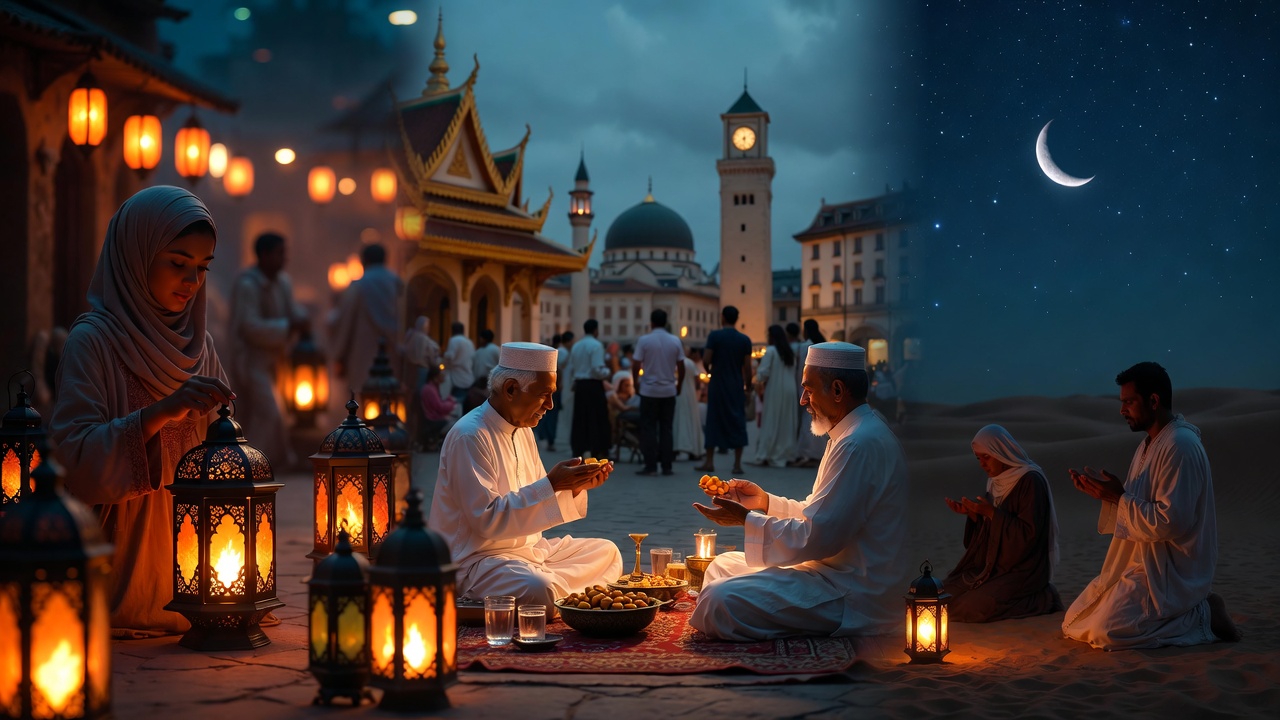
Walk through any Egyptian neighborhood during Ramadan, and you’ll encounter the fanous—colorful tin lanterns that have symbolized Ramadan in Egypt since the Fatimid era. Legend holds that when Caliph al-Mu’izz li-Din Allah entered Cairo in 969 CE, citizens welcomed him carrying lanterns, establishing a tradition that endures over a millennium later.
Modern fanous facts:
- Traditional fanous workshops in Cairo’s old city still produce hand-crafted lanterns using centuries-old techniques
- Electric and LED versions have emerged, though purists prefer candle-lit originals
- Fanous collecting has become a hobby, with rare antique pieces commanding high prices
- Children’s fanous parades through neighborhoods remain a beloved Ramadan sight
The fanous represents more than decoration—it symbolizes light overcoming darkness, a fitting metaphor for Ramadan’s spiritual aspirations.
The Mesaharati: Cairo’s Pre-Dawn Wake-Up Call
Though declining in modern cities, the mesaharati tradition persists in many Egyptian neighborhoods. These drummers walk through streets before dawn, calling out residents’ names and urging them to wake for suhoor.
The mesaharati’s call follows traditional patterns:
“Esha ya nayem, wahed el-dayem…” (Wake up, sleeper, and praise the Eternal One…)
Some families still tip their local mesaharati during Eid, maintaining a centuries-old patron relationship. In rural Upper Egypt, the tradition remains robust, with mesaharatis serving the same neighborhoods for generations.
Egyptian Ramadan Television: A Cultural Phenomenon
No examination of modern Egyptian Ramadan culture would be complete without mentioning television. Ramadan programming in Egypt rivals major sporting events in viewership and cultural impact.
Key features of Egyptian Ramadan TV:
- Mosalsalat (serialized dramas) premiere exclusively during Ramadan, with episodes aired nightly after iftar
- Star actors save their best projects for Ramadan, knowing viewership peaks during this month
- Advertising rates for Ramadan commercial slots reach their annual highs
- Social media buzzes with commentary as millions watch the same programs simultaneously
The programs often tackle social issues, historical narratives, and family dynamics, sparking nationwide conversations that extend well beyond Ramadan.
Ramadan Traditions in Turkey: Where East Meets West
Turkey’s Ramadan celebrations (known locally as Ramazan) blend Ottoman grandeur with Anatolian hospitality. The country’s unique position spanning Europe and Asia creates a Ramadan experience unlike any other.
The Mahya: Istanbul’s Illuminated Mosque Messages
One of Turkey’s most distinctive Ramadan traditions is the mahya—illuminated messages strung between minarets. This Ottoman-era practice transforms Istanbul’s skyline into a canvas of spiritual reminders.
Mahya history and practice:
- First documented in the early 18th century during the reign of Sultan Ahmed III
- Traditional mahya used oil lamps; modern versions employ electric bulbs
- Messages change throughout Ramadan, featuring Quranic verses, Hadith, and greetings
- The Sultanahmet Mosque (Blue Mosque) hosts some of the most elaborate mahya displays
Standing in Sultanahmet Square at night, watching illuminated Arabic script shimmer between the Blue Mosque’s six minarets, remains one of Istanbul’s most magical Ramadan experiences.
Turkish Iftar Culture: From Family Tables to Public Squares
Iftar in Turkey emphasizes abundance and hospitality. The traditional greeting “Allah kabul etsin” (May God accept [your fast]) echoes through homes and restaurants as sunset approaches.
Traditional Turkish iftar spread:
- Dates and water following Prophetic tradition
- Çorba (soup)—lentil or tarhana being most common
- Pide—special Ramadan flatbread baked only during this month
- Zeytinyağlılar—olive oil-based cold dishes
- Main course—often grilled meats or traditional stews
- Güllaç—the quintessential Ramadan dessert made with rose water and starch wafers
Turkish municipalities organize massive public iftars in city squares, providing free meals to thousands nightly. Istanbul’s historic peninsula sees major iftars near the Sultanahmet Mosque, where temporary tents accommodate visitors regardless of their financial situation.
Ottoman Ramadan Traditions Still Observed Today
Modern Turkey maintains several Ottoman-era Ramadan customs:
- Iftar cannon (iftar topu) once fired to signal fast-breaking time; some cities have revived this tradition
- Karagöz shadow puppet shows entertain families during Ramadan evenings
- Teravih prayers at Ottoman-era mosques draw large congregations
- Sadaka (charitable giving) peaks during Ramadan, with organized distributions to those in need
The Eyüp Sultan Mosque, Istanbul’s holiest site, becomes especially crowded during Ramadan, with pilgrims seeking blessings at the tomb of Abu Ayyub al-Ansari, the Prophet’s companion.
Indonesian Ramadan Celebrations: The World’s Largest Muslim Nation
Indonesia, home to over 230 million Muslims, hosts the world’s largest Ramadan observance. The archipelago’s incredible diversity—spanning thousands of islands and hundreds of ethnic groups—creates a tapestry of Ramadan traditions unmatched in their variety.
Padusan: The Javanese Cleansing Ritual Before Ramadan
Before Ramadan begins, many Javanese Muslims participate in padusan—a ritual cleansing in springs, rivers, or pools. This tradition blends Islamic purification concepts with older Javanese spiritual practices.
Padusan significance:
- Spiritual preparation for the holy month ahead
- Physical cleansing symbolizing inner purification
- Community bonding as families and neighbors bathe together
- Ancestral connection maintaining traditions passed through generations
Popular padusan sites like Umbul Ponggok in Central Java draw thousands in the days before Ramadan, with facilities often extended to accommodate the crowds.
Takbiran: Indonesia’s Night of Celebration
The eve of Eid al-Fitr in Indonesia features takbiran—massive parades with participants chanting “Allahu Akbar” (God is Greatest) through streets. While technically marking Ramadan’s end, this tradition reflects the month-long buildup of spiritual energy.
Takbiran characteristics:
- Convoys of vehicles decorated with lights and loudspeakers broadcasting takbir
- Marching groups from mosques walking through neighborhoods
- Fireworks and firecrackers adding to the festive atmosphere (though officially discouraged)
- All-night celebrations continuing until Eid morning prayers
The takbiran represents one of Indonesia’s most distinctive contributions to global Ramadan culture.
Mudik: The Great Indonesian Homecoming
Mudik (returning home) sees one of the world’s largest annual human migrations as Indonesians return to ancestral villages for Eid. While peaking after Ramadan, preparations begin throughout the holy month.
The Indonesian government invests heavily in mudik infrastructure, with temporary one-way traffic flows, additional ferries between islands, and extra trains deployed. The economic impact is enormous, with remittances flowing from urban centers to rural communities.
Ramadan in Morocco: North African Hospitality and Heritage
Moroccan Ramadan unfolds against a backdrop of ancient medinas, Atlantic breezes, and the Atlas Mountains. The country’s unique position—Arab, Berber, African, and Mediterranean—shapes its distinctive observance.
Harira: Morocco’s Quintessential Ramadan Soup
No food symbolizes Moroccan Ramadan more than harira—a hearty tomato-based soup with lentils, chickpeas, and lamb. The aroma of harira simmering in countless pots serves as Ramadan’s olfactory signature across the kingdom.
Harira significance:
- Nutritional balance providing protein, carbohydrates, and hydration after fasting
- Cultural identity marker—Moroccans abroad seek harira ingredients to maintain tradition
- Regional variations exist, with some families adding eggs or different spice blends
- Charitable distribution as mosques and organizations provide harira to those in need
Accompanying harira, Moroccans traditionally enjoy chebakia (honey-sesame cookies), dates, and milk—a combination balancing the soup’s savory richness.
The Medina at Night: Ramadan Transforms Moroccan Cities
Morocco’s ancient medinas undergo dramatic transformation during Ramadan. Fes, Marrakech, and Rabat come alive after sunset in ways unimaginable during ordinary months.
Nighttime medina activities:
- Souks reopen after iftar, with merchants conducting brisk trade until midnight
- Cafés overflow with patrons enjoying mint tea and conversation
- Street performers entertain crowds in public squares
- Families stroll through illuminated lanes, children carrying lanterns
- Taraweeh prayers draw large congregations to neighborhood mosques
The Jemaa el-Fnaa in Marrakech, normally bustling by day, reaches fever pitch during Ramadan nights. Storytellers, musicians, and food vendors create an atmosphere unchanged for centuries.
Laylat al-Qadr in Morocco: Seeking the Night of Power
Moroccans observe Laylat al-Qadr with particular intensity. The “Night of Power”—believed to occur during Ramadan’s final ten nights—sees mosques packed with worshippers seeking blessings.
Moroccan Laylat al-Qadr customs:
- Entire families spend the night in mosques, including young children
- Special prayers and Quran recitation continue until Fajr
- White clothing is worn by many, symbolizing purity
- Charitable acts multiply as spiritual rewards are believed magnified
The Hassan II Mosque in Casablanca, one of the world’s largest, accommodates tens of thousands during Laylat al-Qadr observances.
How Pakistan Observes Ramadan: South Asian Traditions and Spirituality
Ramadan in Pakistan combines Mughal heritage, South Asian customs, and deep religiosity. The country’s 220 million Muslims observe the fast with characteristic intensity and hospitality.
Chand Raat: Pakistan’s Moon Night Festival
The night of crescent moon sighting (Chand Raat) marking Eid’s arrival transforms Pakistani cities into all-night festivals. Women especially celebrate, with mehndi (henna) application continuing until dawn.
Chand Raat activities:
- Henna artists set up stalls in every market and bazaar
- Shopping peaks as last-minute Eid preparations conclude
- Sweet shops operate continuously to meet demand
- Clothing markets remain open all night for final purchases
- Children receive Eidi (monetary gifts) from elders
The atmosphere during Chand Raat rivals major festivals elsewhere, with a unique blend of religious celebration and cultural exuberance.
Pakistani Street Iftar: A Democratic Tradition
One of Pakistan’s most remarkable Ramadan features is street iftar—spontaneous distributions of food to anyone passing by at fast-breaking time.
Street iftar characteristics:
- Wealthy individuals set up stations providing free iftar packages
- Contents typically include fruit, dates, samosas, and drinks
- Recipients need not be Muslim, poor, or known to the benefactor
- Locations range from major intersections to humble neighborhood corners
- Religious intention drives the practice, with donors seeking spiritual reward
This democratic tradition means no one in Pakistani cities need break their fast alone or hungry—a powerful expression of Ramadan’s communal spirit.
The Bazaars of Lahore and Karachi During Ramadan
Pakistan’s great cities transform during Ramadan, with bazaar culture reaching its annual peak.
Lahore’s Food Street in the old city becomes a nightly destination as families gather for elaborate post-iftar meals. Traditional dishes like nihari, haleem, and biryani are prepared in massive quantities.
Karachi’s Burns Garden and similar venues host iftar gatherings numbering in thousands, often sponsored by businesses or political parties as charitable acts.
The economic activity during Ramadan is significant, with retail sales for clothing, food, and household items reaching annual highs in preparation for Eid.
Ramadan in the United Arab Emirates: Modern Celebrations in the Gulf
UAE Ramadan celebrations reflect the nation’s dramatic transformation from desert communities to global metropolises. Abu Dhabi and Dubai offer unique perspectives on how traditional observance meets modern luxury.
Dubai’s Ramadan Tents: Luxury Iftar Experiences
Dubai has pioneered the “Ramadan tent” concept—elaborate temporary venues offering premium iftar and suhoor experiences.
Dubai Ramadan tent features:
| Aspect | Details |
|---|---|
| Venues | Hotels, malls, beach clubs |
| Capacity | Hundreds to thousands per tent |
| Cuisine | International and Arabic options |
| Entertainment | Live music, Quran recitation, cultural performances |
| Price Range | From affordable to ultra-luxury |
These tents have spread throughout the Gulf and beyond, becoming a distinctive modern Ramadan institution. Hotels compete for the most elaborate offerings, with Atlantis The Palm, Burj Al Arab, and Emirates Palace among the most sought-after venues.
Abu Dhabi’s Iftar at Sheikh Zayed Grand Mosque
The Sheikh Zayed Grand Mosque in Abu Dhabi hosts one of the world’s most visually stunning iftar experiences. The mosque provides free iftar to all visitors during Ramadan.
Grand Mosque iftar experience:
- Thousands fed nightly at no charge
- Dates, water, and Arabic coffee distributed before the meal
- Traditional Emirati dishes served alongside international options
- Prayer follows with Taraweeh in the magnificent main hall
- Non-Muslim visitors welcome to observe and participate in the meal
The experience embodies Emirati hospitality—diyafa—offering generosity to strangers as a fundamental cultural value.
UAE Ramadan Regulations: What Visitors Should Know
The UAE maintains specific Ramadan regulations affecting both residents and tourists:
- Public eating and drinking during fasting hours is prohibited, including for non-Muslims
- Many restaurants close during the day or serve only delivery/takeaway
- Alcohol service is restricted to hotel venues during certain hours
- Work hours are legally shortened during Ramadan
- Music and entertainment are more subdued during the holy month
These regulations have relaxed somewhat in recent years, with designated areas for non-fasting individuals, but respectful behavior remains expected throughout the country.
Malaysian Ramadan: Southeast Asian Diversity and Harmony
Malaysia’s Ramadan reflects the nation’s multicultural character. In a country where Muslims form the majority but significant Chinese and Indian minorities thrive, Ramadan becomes an opportunity for interfaith understanding.
Ramadan Bazaars: Malaysia’s Greatest Food Festival
Ramadan bazaars (bazaar Ramadan or pasar Ramadan) represent Malaysia’s most distinctive Ramadan contribution. These open-air markets appear across the country, offering extraordinary food variety.
Ramadan bazaar highlights:
- Ayam percik (grilled chicken with coconut sauce)
- Murtabak (stuffed pancakes)
- Kuih (traditional sweets in endless variety)
- Air katira (rose-flavored milk drink)
- Bubur lambuk (special rice porridge distributed free from mosques)
- Roti John (meat-filled baguette)
- Apam balik (peanut pancakes)
- Tepung pelita (pandan coconut custard)
The Kampung Baru bazaar in Kuala Lumpur is among the largest, stretching for kilometers and attracting visitors of all faiths. Non-Muslims regularly shop at Ramadan bazaars, contributing to their festive, inclusive atmosphere.
Bubur Lambuk: The Mosque Porridge Tradition
Bubur lambuk holds special significance in Malaysian Ramadan. This savory rice porridge is prepared at mosques and distributed free to the community.
Bubur lambuk tradition:
- Mosque committees organize cooking in enormous pots
- Volunteers gather in early morning to begin preparation
- Distribution begins mid-afternoon for iftar consumption
- Non-Muslims often receive porridge, reinforcing community bonds
- Recipes vary by mosque, with some guarding “secret” ingredients
The Masjid India in Kuala Lumpur is famous for its bubur lambuk, with queues forming hours before distribution.
Raya Preparations: Building Toward Eid
Malaysians call Eid “Hari Raya Aidilfitri” or simply “Raya.” Preparations intensify throughout Ramadan, with balik kampung (returning to hometowns) rivaling Indonesia’s mudik in scale.
Raya preparation activities:
- Home decoration and cleaning (spring cleaning equivalent)
- Cookie making (kuih raya) in multiple varieties
- New clothing purchased or tailored
- Green packets (sampul hijau) containing money prepared for distribution
- Ketupat weaving—rice cakes in woven palm leaves
The countdown to Raya builds throughout Ramadan, with shopping malls and traditional markets both experiencing peak activity.
Ramadan in Bangladesh: Devotion in the Delta
Bangladeshi Ramadan combines South Asian traditions with the country’s unique Bengali Islamic identity. The densely populated nation observes Ramadan with characteristic warmth and devotion.
Old Dhaka’s Iftar Culture: A Culinary Journey
Old Dhaka (Puran Dhaka) transforms during Ramadan into Bangladesh’s culinary capital. The narrow lanes of Chawkbazar become the epicenter of iftar food production.
Chawkbazar Ramadan specialties:
| Dish | Description |
|---|---|
| Jilapi | Crispy fried sweet spirals |
| Halim/Haleem | Wheat and meat slow-cooked stew |
| Piyaju | Lentil fritters with onion |
| Beguni | Battered eggplant slices |
| Chola | Spiced chickpeas |
| Muri | Puffed rice mixture |
| Sharbat | Various sweet drinks |
The Chawkbazar iftar market has operated for centuries, with some vendors claiming family businesses stretching back generations. The spectacle of thousands purchasing iftar items daily makes this one of Asia’s most remarkable Ramadan scenes.
Bengali Language and Ramadan: Unique Expressions
Bangladeshi Ramadan features distinctive Bengali linguistic elements:
- “Rojadar” for someone observing the fast (from Arabic sawm via Persian)
- “Iftar-e sharik hoon” as an invitation to share iftar
- “Khuda Hafez” as the traditional parting greeting
- “Ramadan Mubarak” mixed with Bengali “Shuvo Ramadan”
The blend of Arabic religious terminology with Bengali expression creates a linguistically unique Ramadan experience.
European Ramadan: Muslim Communities in the West
Ramadan in Europe presents unique challenges and adaptations for Muslim communities. From London to Berlin, Paris to Amsterdam, millions observe the fast while navigating secular societies.
Ramadan in the United Kingdom: Multicultural Observance
Britain’s approximately 3.9 million Muslims represent diverse origins—South Asian, Middle Eastern, African, and converts—creating a multifaceted Ramadan experience.
UK Ramadan characteristics:
- East London areas like Whitechapel transform with Ramadan markets and extended business hours
- Major mosques like the East London Mosque and London Central Mosque host thousands for Taraweeh
- Interfaith iftars at the Houses of Parliament and corporate offices have become common
- School accommodations for fasting students are increasingly standard
- Media coverage of Ramadan has grown significantly in mainstream outlets
The long summer fasts—potentially 18+ hours in northern England and Scotland—test British Muslims’ endurance, while short winter fasts provide relative ease.
Ramadan in Germany: Turkish Heritage Meets German Society
Germany’s approximately 5.5 million Muslims, many of Turkish descent, have established robust Ramadan traditions within German cities.
German Ramadan features:
- Kreuzberg and Neukölln in Berlin become centers of Ramadan activity
- Turkish bakeries produce special Ramadan breads
- Mosque open houses invite non-Muslim neighbors to experience iftar
- City governments have begun official Ramadan acknowledgments
- Corporate iftar events are increasingly common at German companies
The integration challenges facing German Muslims add complexity to Ramadan observance, with ongoing debates about religious practice in public spaces.
French Ramadan: Laïcité and Religious Practice
France’s approximately 5 million Muslims navigate the country’s strict secularism (laïcité) during Ramadan. The tension between public religious expression and French law creates a unique context.
French Ramadan adaptations:
- Private observance dominates, with public displays more restrained than elsewhere
- Iftar gatherings occur primarily in homes and mosques rather than public spaces
- North African cuisine shapes French Ramadan tables, reflecting Maghrebi heritage
- Generational differences appear in observance styles between immigrant and French-born Muslims
- Commercial interest in Ramadan products has grown in French supermarkets
The annual debate about Ramadan’s place in French society continues, even as millions peacefully observe the fast across the country.
Challenges of Observing Ramadan in Extreme Latitudes
Muslim communities in far northern regions face extraordinary challenges during summer Ramadan when daylight can extend 20+ hours or never fully disappear.
Ramadan in Scandinavia: Endless Summer Days
Norwegian, Swedish, and Finnish Muslims confront perhaps the world’s most demanding fasting conditions during summer months.
Strategies adopted:
- Following Mecca times for a consistent, moderate fasting schedule
- Following nearest Muslim-majority country (often Turkey) for timing
- Using astronomical calculations defining “night” even when the sun barely sets
- Fasting the longest natural day occurring in that location
- Individual scholarly guidance sought from local imams
The Islamic Council of Norway and similar bodies issue annual guidance, though approaches vary between communities.
Ramadan in Alaska and Northern Canada
North American Muslims in Alaska, northern Canada, and remote territories face similar challenges to their Scandinavian counterparts.
Community adaptations:
- Small congregations develop consensus approaches for their localities
- Teleconference consultations with scholars in Muslim-majority countries
- Flexibility in individual practice while maintaining spiritual intention
- Community support networks to assist those struggling with extreme schedules
These challenging circumstances demonstrate Islamic jurisprudence’s (fiqh) capacity for adaptation while maintaining core principles.
Ramadan Food Traditions: A Global Culinary Journey
Ramadan cuisine represents one of the month’s greatest cultural expressions. While dates universally begin iftar, what follows reflects incredible regional diversity.
Middle Eastern Ramadan Dishes
Arabic-speaking countries share certain dishes while maintaining local specialties:
| Country | Signature Ramadan Dish | Description |
|---|---|---|
| Egypt | Fatta | Layered rice, bread, and meat with garlic vinegar |
| Lebanon | Fattoush | Bread salad with sumac dressing |
| Palestine | Maqluba | Upside-down rice with vegetables and meat |
| Syria | Kibbeh | Bulgur and meat croquettes |
| Jordan | Mansaf | Lamb in fermented yogurt with rice |
| Iraq | Tashreeb | Bread soaked in lamb broth |
South Asian Ramadan Specialties
Pakistan, India, and Bangladesh share overlapping iftar traditions with regional variations:
- Haleem: Slow-cooked wheat and meat mixture, considered the quintessential South Asian Ramadan food
- Fruit chaat: Mixed fruit salad with spices
- Dahi baray: Lentil dumplings in yogurt
- Samosas and pakoras: Universal fried snacks
- Sheer khurma: Vermicelli milk pudding for Eid
Southeast Asian Ramadan Foods
Malaysia, Indonesia, and Brunei share many Ramadan dishes with local interpretations:
- Ketupat: Compressed rice in woven palm leaf
- Rendang: Slow-cooked spiced coconut meat
- Sambal: Chili-based condiments in endless variety
- Kuih lapis: Colorful layered steamed cakes
- Kolak: Banana and sweet potato in coconut milk
Ramadan Charity: Zakat and Sadaqah Around the World
Charitable giving reaches its annual peak during Ramadan, with Muslims worldwide fulfilling their obligation of zakat (obligatory alms) and giving voluntary sadaqah.
Zakat Distribution Practices by Region
Zakat collection and distribution varies significantly:
Gulf States:
- Government zakat funds receive and distribute contributions
- Official channels ensure systematic distribution
- International relief receives significant portions
South Asia:
- Direct giving to known individuals predominates
- Mosque collections support local needs
- NGOs increasingly organize systematic distribution
Western Countries:
- Islamic charities collect and distribute zakat
- Online platforms enable directed giving
- Community funds support local Muslim needs
Modern Zakat: Digital Platforms and Global Reach
Technology has transformed zakat collection and distribution:
- Mobile apps calculate zakat obligations and enable instant giving
- Crowdfunding platforms connect donors with specific needs
- Blockchain initiatives track zakat from donor to recipient
- International transfers support communities across borders
Organizations like Islamic Relief, Muslim Aid, and ICNA Relief have sophisticated systems for zakat collection and transparent distribution, publishing annual reports on their charitable activities.
Ramadan and Interfaith Relations: Building Bridges
Interfaith iftar gatherings have become significant Ramadan features in diverse societies, creating opportunities for non-Muslims to experience Islamic hospitality.
Government-Hosted Iftars
Political leaders worldwide host Ramadan iftars:
- White House iftar tradition began under Clinton and continues today
- British Prime Ministers host Downing Street iftars
- European mayors increasingly organize municipal iftars
- Australian Parliament hosts annual iftar gatherings
These events signal official recognition of Muslim communities and provide platforms for interfaith dialogue.
Corporate and Academic Iftars
Businesses and universities have developed iftar traditions:
- Major corporations host employee iftars, recognizing Muslim staff
- Universities provide iftar meals for fasting students
- Interfaith centers organize iftars bringing diverse communities together
- Professional associations hold Ramadan networking events
These gatherings normalize Ramadan observance in professional contexts and build understanding between communities.
Preparing for Your First Ramadan Experience: Practical Advice for Travelers
For travelers wishing to experience Ramadan authentically, certain preparations enhance the journey.
Best Countries to Experience Ramadan as a Visitor
Recommended destinations for Ramadan travelers:
| Country | Why Visit | Considerations |
|---|---|---|
| Morocco | Accessible, visual traditions, excellent food | Limited daytime eating options |
| Turkey | Cultural richness, tourist infrastructure | Manages Ramadan tourism well |
| UAE | Luxury options, organized experiences | Strict public fasting rules |
| Malaysia | Multicultural, bazaars, relatively relaxed | Hot weather, crowded bazaars |
| Egypt | Authentic traditions, historical depth | Economic challenges, summer heat |
| Jordan | Hospitality, manageable size | Limited tourist services during day |
Respectful Behavior During Ramadan
Etiquette for non-Muslim visitors:
- Avoid public eating, drinking, or smoking during fasting hours in Muslim-majority countries
- Dress modestly, especially near mosques and religious sites
- Accept iftar invitations graciously—refusing can offend
- Learn basic greetings: “Ramadan Mubarak” or “Ramadan Kareem”
- Be patient with altered schedules and slower daytime service
- Attend open events at mosques welcoming non-Muslim visitors
- Ask permission before photographing religious activities
- Show appreciation for the opportunity to witness sacred traditions
The Spiritual Dimensions of Ramadan: Beyond Fasting
While food and cultural celebrations attract attention, Ramadan’s essence lies in spiritual transformation.
The Five Pillars and Ramadan’s Place
Ramadan fasting constitutes one of Islam’s Five Pillars:
- Shahada (declaration of faith)
- Salat (prayer five times daily)
- Zakat (obligatory charity)
- Sawm (fasting during Ramadan)
- Hajj (pilgrimage to Mecca)
Fasting thus stands alongside prayer and charity as fundamental to Islamic practice, not merely cultural tradition.
Taqwa: The Ultimate Goal of Fasting
The Quran states that fasting is prescribed “so that you may attain taqwa” (God-consciousness). This spiritual awareness represents Ramadan’s true purpose beyond physical hunger.
Taqwa development through fasting:
- Discipline over bodily desires builds spiritual strength
- Empathy with the hungry develops social consciousness
- Gratitude for blessings becomes tangible through their temporary absence
- Community bonds strengthen through shared experience
- Reflection on mortality and meaning naturally accompanies self-denial
I’tikaf: Spiritual Retreat in the Final Ten Days
I’tikaf—secluding oneself in the mosque during Ramadan’s final ten days—represents the month’s spiritual pinnacle.
I’tikaf practices:
- Complete dedication to worship, Quran recitation, and prayer
- Minimal worldly interaction during the seclusion period
- Seeking Laylat al-Qadr through intensified devotion
- Communal and individual forms of i’tikaf exist
- Modern adaptations allow partial i’tikaf for those with obligations
Major mosques worldwide accommodate thousands of mu’takifeen (those performing i’tikaf) during Ramadan’s conclusion.
Ramadan’s End: Celebrating Eid al-Fitr Worldwide
Eid al-Fitr (Festival of Breaking the Fast) concludes Ramadan with celebration. The transition from Ramadan’s restraint to Eid’s joy creates one of the Muslim calendar’s most dramatic moments.
Universal Eid Traditions
Certain practices unite Muslims globally on Eid:
- Eid prayer in congregation, often outdoors in large gatherings
- Zakat al-Fitr (charity before Eid prayer) ensuring all can celebrate
- New or best clothes worn for the occasion
- Visiting family and friends throughout the day
- Special foods and sweets marking the feast
- Children receiving gifts and money from elders
- Forgiveness sought from those wronged during the year
Regional Eid Celebrations
Local Eid customs vary wonderfully:
In Indonesia, the tradition of sungkem (kneeling before elders seeking forgiveness) carries profound meaning.
In Morocco, families prepare msemen (layered flatbread) and sellou (sweet paste) for Eid morning.
In Turkey, children go door-to-door receiving sweets in a practice resembling Halloween.
In Pakistan, elaborate mehndi designs cover women’s hands, and seviyan (vermicelli pudding) is essential.
In Egypt, the kahk cookies prepared for Eid have been documented since Pharaonic times, representing remarkable cultural continuity.
Conclusion: Ramadan’s Universal Message in Diverse Expression
Traveling across the Muslim world during Ramadan reveals a profound truth: unity within diversity characterizes Islamic civilization. From the minarets of Istanbul to the kampungs of Malaysia, from Cairo’s narrow lanes to Dubai’s gleaming towers, the same spiritual practice takes remarkably different cultural forms.
The crescent moon sighting that begins Ramadan connects communities separated by thousands of miles and vastly different histories. The pre-dawn suhoor feeding families in Karachi echoes the same spiritual intention as breakfast in London’s East End. The iftar breaking daily fasts links the wealthy banker in Abu Dhabi with the farmer in rural Bangladesh.
Yet within this unity, glorious diversity flourishes. The foods change, the decorations shift, the languages differ, and the customs adapt. This diversity enriches rather than divides, demonstrating how universal principles can accommodate local expression.
For travelers seeking meaningful cultural experiences, Ramadan offers unparalleled opportunities to witness sacred traditions, experience legendary hospitality, and understand how faith shapes daily life for nearly two billion people. Whether attending a mosque iftar in Istanbul, shopping at a Malaysian bazaar, or simply observing the gentle rhythm of Ramadan days, visitors gain insights impossible to find at other times.
Ramadan Mubarak—may this blessed month bring peace, understanding, and unity to all who observe it and all who witness its beauty around the world.
About the Author: With fifteen years of documenting religious festivals across six continents, I specialize in capturing the intersection of faith, culture, and travel. My work has appeared in major travel publications, and I continue exploring how communities worldwide celebrate their most sacred times.
Frequently Asked Questions About Ramadan Around the World
What is the best country to visit during Ramadan?
Morocco, Turkey, and the UAE offer the most accessible Ramadan experiences for tourists, with excellent infrastructure and welcoming attitudes toward visitors interested in learning about the holy month.
Can non-Muslims participate in iftar?
Absolutely. Many mosques and families warmly welcome non-Muslims to share iftar. Accepting such invitations respectfully creates meaningful cross-cultural connections.
How do Muslims decide when Ramadan starts?
The sighting of the crescent moon (hilal) traditionally determines Ramadan’s start. Some countries rely on local sightings, others follow Saudi Arabia, and some use astronomical calculations, creating minor variations in start dates.
What should tourists avoid during Ramadan in Muslim countries?
Avoid public eating, drinking, and smoking during daylight hours in conservative countries. Dress modestly, be patient with altered schedules, and show respect for those fasting.
Are restaurants open during Ramadan?
Policies vary by country. In strictly observant nations like Saudi Arabia, most restaurants close during fasting hours. In more tourist-oriented countries like Turkey, UAE, and Morocco, many establishments remain open, sometimes behind screens or in designated areas.
How long does Ramadan last?
Ramadan lasts 29 or 30 days, depending on the lunar cycle. The exact length is determined by the moon sighting at both the month’s beginning and end.
What is Laylat al-Qadr?
Laylat al-Qadr (Night of Power) commemorates the night the Quran was first revealed to Prophet Muhammad. It falls during Ramadan’s final ten nights, with the 27th night particularly observed. Muslims believe worship on this night equals that of a thousand months.