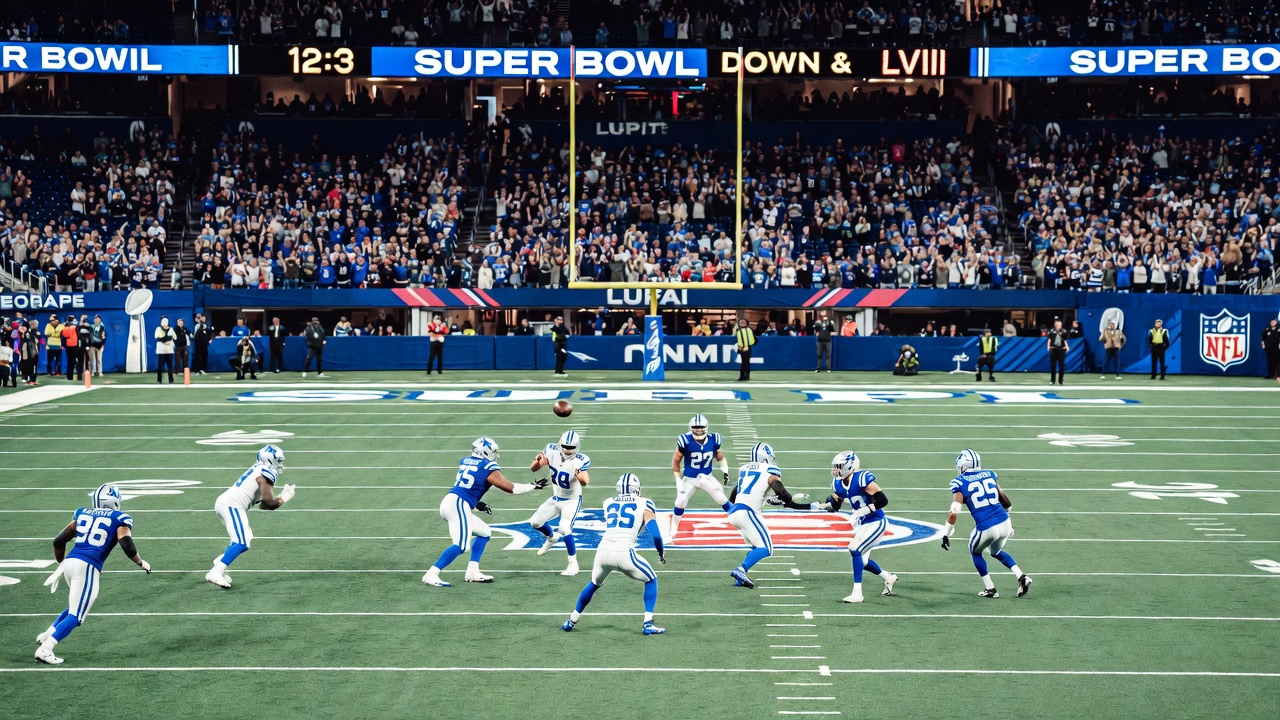
Every February, America stops. Offices empty. Grocery stores sell out of chips and salsa. More than 100 million viewers tune in to watch the Super Bowl — the single biggest sporting event on U.S. soil. But amid the halftime spectacle and the million-dollar commercials, one moment stands above the rest: the crowning of the Super Bowl MVP.
The Super Bowl Most Valuable Player award — officially known as the Pete Rozelle Trophy — recognizes the player who delivers the most impactful performance on football’s grandest stage. It is not just a piece of hardware. It is a ticket to immortality.
From Bart Starr’s pioneering excellence in the 1960s to Jalen Hurts’ revenge tour in Super Bowl LIX, the stories behind each MVP reveal something deeper than statistics. They are tales of redemption, resilience, and raw brilliance. They also reflect the evolution of American football itself.
With Super Bowl LX between the New England Patriots and Seattle Seahawks scheduled for February 8, 2026, at Levi’s Stadium in Santa Clara, California, another name is about to join this elite list. Before that happens, let’s walk through the complete history.
Complete List of Super Bowl MVP Award Winners from 1967 to 2025
Below is the full, verified list of every Super Bowl MVP winner in NFL history. The award has been given in every Super Bowl since the very first game in January 1967. Quarterbacks have dominated the honor, winning it 34 times across 59 games (with 60 total awards, counting the one instance of co-MVPs).
| Super Bowl | Year Played | MVP | Position | Team | Score |
|---|---|---|---|---|---|
| I | 1967 | Bart Starr | QB | Green Bay Packers | 35–10 vs. KC |
| II | 1968 | Bart Starr | QB | Green Bay Packers | 33–14 vs. OAK |
| III | 1969 | Joe Namath | QB | New York Jets | 16–7 vs. BAL |
| IV | 1970 | Len Dawson | QB | Kansas City Chiefs | 23–7 vs. MIN |
| V | 1971 | Chuck Howley | LB | Dallas Cowboys* | 13–16 vs. BAL |
| VI | 1972 | Roger Staubach | QB | Dallas Cowboys | 24–3 vs. MIA |
| VII | 1973 | Jake Scott | S | Miami Dolphins | 14–7 vs. WAS |
| VIII | 1974 | Larry Csonka | RB | Miami Dolphins | 24–7 vs. MIN |
| IX | 1975 | Franco Harris | RB | Pittsburgh Steelers | 16–6 vs. MIN |
| X | 1976 | Lynn Swann | WR | Pittsburgh Steelers | 21–17 vs. DAL |
| XI | 1977 | Fred Biletnikoff | WR | Oakland Raiders | 32–14 vs. MIN |
| XII | 1978 | Harvey Martin / Randy White | DE / DT | Dallas Cowboys | 27–10 vs. DEN |
| XIII | 1979 | Terry Bradshaw | QB | Pittsburgh Steelers | 35–31 vs. DAL |
| XIV | 1980 | Terry Bradshaw | QB | Pittsburgh Steelers | 31–19 vs. LAR |
| XV | 1981 | Jim Plunkett | QB | Oakland Raiders | 27–10 vs. PHI |
| XVI | 1982 | Joe Montana | QB | San Francisco 49ers | 26–21 vs. CIN |
| XVII | 1983 | John Riggins | RB | Washington Redskins | 27–17 vs. MIA |
| XVIII | 1984 | Marcus Allen | RB | Los Angeles Raiders | 38–9 vs. WAS |
| XIX | 1985 | Joe Montana | QB | San Francisco 49ers | 38–16 vs. MIA |
| XX | 1986 | Richard Dent | DE | Chicago Bears | 46–10 vs. NE |
| XXI | 1987 | Phil Simms | QB | New York Giants | 39–20 vs. DEN |
| XXII | 1988 | Doug Williams | QB | Washington Redskins | 42–10 vs. DEN |
| XXIII | 1989 | Jerry Rice | WR | San Francisco 49ers | 20–16 vs. CIN |
| XXIV | 1990 | Joe Montana | QB | San Francisco 49ers | 55–10 vs. DEN |
| XXV | 1991 | Ottis Anderson | RB | New York Giants | 20–19 vs. BUF |
| XXVI | 1992 | Mark Rypien | QB | Washington Redskins | 37–24 vs. BUF |
| XXVII | 1993 | Troy Aikman | QB | Dallas Cowboys | 52–17 vs. BUF |
| XXVIII | 1994 | Emmitt Smith | RB | Dallas Cowboys | 30–13 vs. BUF |
| XXIX | 1995 | Steve Young | QB | San Francisco 49ers | 49–26 vs. SD |
| XXX | 1996 | Larry Brown | CB | Dallas Cowboys | 27–17 vs. PIT |
| XXXI | 1997 | Desmond Howard | KR/PR | Green Bay Packers | 35–21 vs. NE |
| XXXII | 1998 | Terrell Davis | RB | Denver Broncos | 31–24 vs. GB |
| XXXIII | 1999 | John Elway | QB | Denver Broncos | 34–19 vs. ATL |
| XXXIV | 2000 | Kurt Warner | QB | St. Louis Rams | 23–16 vs. TEN |
| XXXV | 2001 | Ray Lewis | LB | Baltimore Ravens | 34–7 vs. NYG |
| XXXVI | 2002 | Tom Brady | QB | New England Patriots | 20–17 vs. STL |
| XXXVII | 2003 | Dexter Jackson | S | Tampa Bay Buccaneers | 48–21 vs. OAK |
| XXXVIII | 2004 | Tom Brady | QB | New England Patriots | 32–29 vs. CAR |
| XXXIX | 2005 | Deion Branch | WR | New England Patriots | 24–21 vs. PHI |
| XL | 2006 | Hines Ward | WR | Pittsburgh Steelers | 21–10 vs. SEA |
| XLI | 2007 | Peyton Manning | QB | Indianapolis Colts | 29–17 vs. CHI |
| XLII | 2008 | Eli Manning | QB | New York Giants | 17–14 vs. NE |
| XLIII | 2009 | Santonio Holmes | WR | Pittsburgh Steelers | 27–23 vs. ARI |
| XLIV | 2010 | Drew Brees | QB | New Orleans Saints | 31–17 vs. IND |
| XLV | 2011 | Aaron Rodgers | QB | Green Bay Packers | 31–25 vs. PIT |
| XLVI | 2012 | Eli Manning | QB | New York Giants | 21–17 vs. NE |
| XLVII | 2013 | Joe Flacco | QB | Baltimore Ravens | 34–31 vs. SF |
| XLVIII | 2014 | Malcolm Smith | LB | Seattle Seahawks | 43–8 vs. DEN |
| XLIX | 2015 | Tom Brady | QB | New England Patriots | 28–24 vs. SEA |
| 50 | 2016 | Von Miller | LB | Denver Broncos | 24–10 vs. CAR |
| LI | 2017 | Tom Brady | QB | New England Patriots | 34–28 vs. ATL |
| LII | 2018 | Nick Foles | QB | Philadelphia Eagles | 41–33 vs. NE |
| LIII | 2019 | Julian Edelman | WR | New England Patriots | 13–3 vs. LAR |
| LIV | 2020 | Patrick Mahomes | QB | Kansas City Chiefs | 31–20 vs. SF |
| LV | 2021 | Tom Brady | QB | Tampa Bay Buccaneers | 31–9 vs. KC |
| LVI | 2022 | Cooper Kupp | WR | Los Angeles Rams | 23–20 vs. CIN |
| LVII | 2023 | Patrick Mahomes | QB | Kansas City Chiefs | 38–35 vs. PHI |
| LVIII | 2024 | Patrick Mahomes | QB | Kansas City Chiefs | 25–22 vs. SF |
| LIX | 2025 | Jalen Hurts | QB | Philadelphia Eagles | 40–22 vs. KC |
*Chuck Howley remains the only Super Bowl MVP from a losing team.
Who Has Won the Most Super Bowl MVP Awards in NFL History?
When the conversation turns to the greatest players in football history, Super Bowl MVP wins often serve as the ultimate measuring stick. And by that measure, one name towers above all others.
Tom Brady holds the all-time record with five Super Bowl MVP awards. He earned four with the New England Patriots (Super Bowls XXXVI, XXXVIII, XLIX, and LI) and one with the Tampa Bay Buccaneers (Super Bowl LV). His fifth MVP came at age 43, when he dismantled the Kansas City Chiefs in a 31–9 rout in Tampa. That night, Brady threw three first-half touchdowns and proved that greatness does not come with an expiration date.
Behind Brady sit two quarterbacks tied with three Super Bowl MVP awards each:
- Joe Montana — San Francisco 49ers (Super Bowls XVI, XIX, XXIV)
- Patrick Mahomes — Kansas City Chiefs (Super Bowls LIV, LVII, LVIII)
Montana’s third MVP came in Super Bowl XXIV. He went 22-of-29 for 297 yards and five touchdowns in a 55–10 demolition of the Denver Broncos. That 45-point margin of victory remains the largest in Super Bowl history to this day.
Mahomes earned his third MVP in Super Bowl LVIII with a gritty overtime victory against the San Francisco 49ers. His three MVPs came across just five seasons, a pace that made many wonder whether he would eventually break Brady’s record. However, the Eagles’ crushing defeat of the Chiefs in Super Bowl LIX ended that dream — at least temporarily.
Three other legends have won the award twice:
- Bart Starr — Green Bay Packers (Super Bowls I and II)
- Terry Bradshaw — Pittsburgh Steelers (Super Bowls XIII and XIV)
- Eli Manning — New York Giants (Super Bowls XLII and XLVI)
Notably, Starr, Bradshaw, and Mahomes are the only three players in history to win back-to-back Super Bowl MVPs. That feat alone speaks to a level of sustained brilliance that very few athletes in any sport ever achieve.
How the Super Bowl MVP Voting Process Works: Fans, Media, and the Pete Rozelle Trophy
Understanding the Super Bowl MVP voting process adds context to why certain players win the award and others do not.
The NFL selects a panel of 16 media members covering the game. This group includes broadcast partner analysts, local media from each team’s city, pool reporters from the Pro Football Writers of America, and at-large members of the national media. Their ballots account for 80 percent of the total vote.
The remaining 20 percent comes from fan voting. Fans can cast their ballots online through NFL.com starting at the beginning of the fourth quarter. This system has been in place since Super Bowl XXXV in 2001.
Media voters are typically asked to submit their ballots with about five minutes remaining in the game. However, they can change their votes once the final whistle blows. This flexibility matters in close games where late heroics can swing the outcome — and the MVP.
The trophy itself — the Pete Rozelle Trophy — has been awarded since Super Bowl XXV in 1991. It is named after the former NFL Commissioner who helped transform the league into a television powerhouse. Ottis Anderson, the New York Giants running back, was the first to receive the Pete Rozelle Trophy after a grinding performance against the Buffalo Bills.
Before 1990, the award was presented by SPORT magazine. Bart Starr was the first-ever recipient in 1967.
The Most Iconic Super Bowl MVP Performances That Defined Football History
Numbers alone cannot capture what makes a Super Bowl MVP performance truly legendary. Context, pressure, narrative — they all play a role. Here are some of the most unforgettable performances in the award’s history.
Joe Namath’s Guarantee: Super Bowl III (1969)
Before there was trash talk as marketing, there was Joe Namath. The brash New York Jets quarterback famously guaranteed victory against the heavily favored Baltimore Colts. The AFL was considered inferior to the NFL at the time. Nobody believed the Jets could win.
Namath made good on his word. The Jets won 16–7 in one of the greatest upsets in American sports history. Namath completed 17 of 28 passes for 206 yards. He did not throw a touchdown, yet his leadership and the sheer audacity of his prediction earned him the MVP. More than that, his performance legitimized the AFL-NFL merger and changed the trajectory of professional football.
Phil Simms’ Perfect Day: Super Bowl XXI (1987)
Phil Simms turned in what many consider the single most efficient quarterback performance in Super Bowl history. He completed 22 of 25 passes — an 88 percent completion rate — for 268 yards and three touchdowns as the New York Giants crushed the Denver Broncos 39–20. His passer rating of 150.9 set a Super Bowl record that stood for decades.
What made Simms’ performance so remarkable was the precision. He did not just manage the game. He controlled it with surgical accuracy from start to finish.
Doug Williams Breaks Barriers: Super Bowl XXII (1988)
Doug Williams was more than a football player on January 31, 1988. He was a symbol.
As the first Black quarterback to start a Super Bowl, Williams faced enormous pressure — both from the Denver Broncos defense and from the weight of history. After appearing in just five regular-season games, head coach Joe Gibbs turned to Williams for the playoffs.
Williams responded with one of the most explosive quarters in Super Bowl history. In the second quarter alone, he threw four touchdown passes as Washington scored 35 unanswered points. He finished the game with 340 passing yards and four touchdowns, earning MVP honors in a 42–10 victory.
His performance shattered a long-standing barrier and opened doors for generations of Black quarterbacks to come.
Tom Brady’s Comeback for the Ages: Super Bowl LI (2017)
Down 28–3 against the Atlanta Falcons with less than three minutes left in the third quarter. In the biggest game of the year. On the sport’s biggest stage.
Tom Brady orchestrated the largest comeback in Super Bowl history. He finished with 466 passing yards — the most ever in a Super Bowl — and two touchdowns. In overtime, he led a 75-yard drive that ended with James White’s game-winning touchdown run. The Patriots won 34–28.
It was Brady’s fourth Super Bowl MVP award, and it may have been his greatest performance. The numbers were staggering. But it was the mental fortitude required to claw back from such a deficit that cemented this game in the American sports canon forever.
Jalen Hurts’ Revenge: Super Bowl LIX (2025)
Two years after a crushing Super Bowl LVII loss to the Kansas City Chiefs, Jalen Hurts returned to the championship stage with a mission.
He completed 17 of 22 passes for 221 yards and two touchdowns. He rushed for 72 yards — a new Super Bowl record for a quarterback — and scored a rushing touchdown using Philadelphia’s signature “Tush Push” play. The Eagles held Mahomes and the Chiefs’ offense to 225 total yards. Philadelphia won 40–22 in one of the most lopsided Super Bowl results in recent memory.
Hurts had lost the starting job in college at Alabama. He was not a first-round draft pick. Even after leading the Eagles to Super Bowl LVII, critics questioned whether he belonged among the NFL’s elite. On that night in New Orleans, he silenced every single doubt.
Defensive Players Who Won Super Bowl MVP: When Defense Truly Won Championships
The Super Bowl MVP award is dominated by quarterbacks, but defensive players have earned the honor 10 times in the game’s history. These performances remind us that football is a two-sided sport — and sometimes, the defense is the real star.
| Super Bowl | Year | Defensive MVP | Position | Team |
|---|---|---|---|---|
| V | 1971 | Chuck Howley | LB | Dallas Cowboys |
| XII | 1978 | Harvey Martin / Randy White | DE / DT | Dallas Cowboys |
| XX | 1986 | Richard Dent | DE | Chicago Bears |
| XXV | 1991 | Ottis Anderson* | RB | New York Giants |
| XXX | 1996 | Larry Brown | CB | Dallas Cowboys |
| XXXV | 2001 | Ray Lewis | LB | Baltimore Ravens |
| XXXVII | 2003 | Dexter Jackson | S | Tampa Bay Buccaneers |
| XLVIII | 2014 | Malcolm Smith | LB | Seattle Seahawks |
| 50 | 2016 | Von Miller | LB | Denver Broncos |
Note: The table above focuses on purely defensive MVP winners. Ottis Anderson was a running back.
Chuck Howley’s case is singular in the history of the award. He recorded two interceptions and a fumble recovery in Super Bowl V — and still lost. The Cowboys fell 16–13 to the Baltimore Colts on a last-second field goal. Despite the loss, Howley’s dominance was so undeniable that voters gave him the MVP anyway. He remains the only player from a losing team to win the Super Bowl MVP.
Ray Lewis anchored a Baltimore Ravens defense that allowed zero offensive touchdowns in the entire 2000 playoff run. His five tackles and four passes defensed in Super Bowl XXXV set the tone for a 34–7 destruction of the New York Giants. That Ravens defense is still considered one of the greatest units in football history.
The most recent defensive Super Bowl MVP is Von Miller, who recorded 2.5 sacks and forced two fumbles in Super Bowl 50 against the Carolina Panthers in 2016. Miller’s relentless pressure turned league MVP Cam Newton into a shell of himself.
Which NFL Teams Have Produced the Most Super Bowl MVP Winners?
The Dallas Cowboys lead all NFL teams with seven Super Bowl MVP awards, though this total includes the co-MVPs from Super Bowl XII and Chuck Howley’s award from a losing effort in Super Bowl V. Behind Dallas, several franchises have built legacies through championship-defining MVP performances.
| Team | Total Super Bowl MVPs | Notable MVPs |
|---|---|---|
| Dallas Cowboys | 7 | Staubach, Aikman, E. Smith, Howley, Brown, Martin/White |
| New England Patriots | 6 | Brady (×4), Edelman, Branch |
| San Francisco 49ers | 5 | Montana (×3), Young, Rice |
| Green Bay Packers | 4 | Starr (×2), Howard, Rodgers |
| Pittsburgh Steelers | 5 | Bradshaw (×2), Harris, Swann, Holmes, Ward |
| Kansas City Chiefs | 4 | Dawson, Mahomes (×3) |
| New York Giants | 4 | Simms, Anderson, E. Manning (×2) |
| Philadelphia Eagles | 3 | Foles, Hurts, (plus Howley as a Cowboy opponent) |
The Patriots’ six MVPs are deeply tied to the Brady dynasty. Four of those six awards went to Brady himself. Even the other two — Deion Branch in Super Bowl XXXIX and Julian Edelman in Super Bowl LIII — came during the Brady era. If Drake Maye leads New England to a victory in Super Bowl LX, the Patriots would add yet another chapter to their remarkable franchise history.
Super Bowl MVP Winners by Position: Why Quarterbacks Dominate the Award
Quarterbacks have won the Super Bowl MVP 34 times across 59 games. That is a staggering 57.6 percent of all awards. No other position comes close.
| Position | Number of MVPs | Percentage |
|---|---|---|
| Quarterback | 34 | 57.6% |
| Wide Receiver | 8 | 13.6% |
| Running Back | 7 | 11.9% |
| Linebacker | 4 | 6.8% |
| Safety | 2 | 3.4% |
| Defensive End | 2 | 3.4% |
| Defensive Tackle | 1 | 1.7% |
| Cornerback | 1 | 1.7% |
| Kick/Punt Returner | 1 | 1.7% |
The quarterback’s dominance makes sense. The position touches the ball on nearly every offensive play. In a passing-driven league, the quarterback’s decisions shape the outcome of the game more than any other player’s. Since the year 2000, quarterbacks have won the award in 19 of 25 Super Bowls — an even higher rate than the historical average.
Wide receivers hold the second spot with eight MVPs. Jerry Rice, Lynn Swann, Santonio Holmes, Hines Ward, Deion Branch, Julian Edelman, and Cooper Kupp all won for their receiving performances. Fred Biletnikoff won in 1977 for the Oakland Raiders.
The most recent non-quarterback, non-receiver to win was Von Miller in 2016. Before him, you have to go back to Malcolm Smith in 2014. Defensive MVPs are becoming increasingly rare as the NFL shifts toward higher-scoring, offense-heavy football.
Multiple Super Bowl MVP Winners: The Exclusive Club of Repeat Champions
Earning a single Super Bowl MVP award puts a player in elite company. Winning it more than once? That puts a player in a class that contains fewer than a dozen names in over half a century of football.
Here is the complete list of multiple Super Bowl MVP winners:
| Player | Number of MVPs | Super Bowls | Team(s) |
|---|---|---|---|
| Tom Brady | 5 | XXXVI, XXXVIII, XLIX, LI, LV | Patriots, Buccaneers |
| Joe Montana | 3 | XVI, XIX, XXIV | 49ers |
| Patrick Mahomes | 3 | LIV, LVII, LVIII | Chiefs |
| Bart Starr | 2 | I, II | Packers |
| Terry Bradshaw | 2 | XIII, XIV | Steelers |
| Eli Manning | 2 | XLII, XLVI | Giants |
Eli Manning’s inclusion on this list often surprises casual fans. Manning was never considered the best quarterback of his era during the regular season. But when the lights were brightest, he delivered two of the most improbable upsets in Super Bowl history — both against the previously unbeatable Tom Brady and the New England Patriots. His fourth-quarter heroics in Super Bowl XLII, combined with David Tyree’s legendary “Helmet Catch,” ended New England’s bid for a perfect season.
Patrick Mahomes reached three MVP awards by the age of 28. His back-to-back MVPs in Super Bowls LVII and LVIII made him just the third player — after Starr and Bradshaw — to accomplish that feat. Mahomes joined Montana in the three-MVP club after the Chiefs’ overtime victory over the 49ers in Super Bowl LVIII in Las Vegas.
The Only Super Bowl MVP from a Losing Team: Chuck Howley’s Incredible Story
It has happened exactly once in 59 Super Bowls. And it will likely never happen again.
In Super Bowl V on January 17, 1971, Chuck Howley of the Dallas Cowboys recorded two interceptions and a fumble recovery against the Baltimore Colts. He was a force on the field. He disrupted drives, created turnovers, and gave Dallas every chance to win.
But the Cowboys lost 16–13 on a 47-yard field goal by Jim O’Brien with five seconds left.
Despite the loss, the voters could not ignore Howley’s dominance. He became the first defensive player — and the only player from a losing team — to win the Super Bowl MVP. The moment was bittersweet. Howley reportedly refused to accept the award initially, not wanting a consolation prize when his team had fallen short.
More than 50 years later, no other player from a losing team has won the honor. The voting structure makes it almost impossible. Media voters are instructed to nominate one player from each team and count their vote for the winning team’s nominee. A losing-team MVP would require a performance so overwhelmingly dominant that voters break convention. Howley’s game was exactly that kind of performance.
Super Bowl LX Preview: Who Could Win the 2026 Super Bowl MVP Award?
As of February 5, 2026, the football world is counting down to Super Bowl LX. The Seattle Seahawks and New England Patriots will meet on February 8 at Levi’s Stadium in Santa Clara, California. Kickoff is set for 6:30 p.m. ET on NBC.
This is a rematch of Super Bowl XLIX from February 2015, when Malcolm Butler’s goal-line interception sealed a 28–24 Patriots victory over the Seahawks.
Both teams finished the 2025 regular season with identical 14–3 records. The Patriots’ turnaround from a 4–13 record in 2024 is one of the most remarkable in NFL history, tying the 1999 Indianapolis Colts and 2008 Miami Dolphins for the best single-season improvement ever.
Here are the key Super Bowl LX MVP candidates:
Drake Maye, QB, New England Patriots — In just his second NFL season, Maye has led the Patriots back to the Super Bowl for the first time since the Brady era. He passed for 4,394 yards with 31 touchdowns and just 8 interceptions in the regular season. During the playoffs, he became the first quarterback in history to win three games against top-five defenses in a single postseason. A strong performance against Seattle’s sixth-ranked defense would make him a leading MVP candidate.
Sam Darnold, QB, Seattle Seahawks — Once considered one of the biggest draft busts in recent NFL history after a rough stint with the New York Jets, Darnold has written one of the greatest redemption stories in the sport. In his first year with the Seahawks, he has guided the team to the NFC’s top seed and a Super Bowl appearance. He threw for 4,048 yards with 25 touchdowns.
Jaxon Smith-Njigba, WR, Seattle Seahawks — The Seahawks’ star receiver led the team with 1,793 receiving yards and 10 touchdowns. A dominant receiving performance in the Super Bowl could earn him MVP consideration.
Cooper Kupp, WR, Seattle Seahawks — Kupp already knows what it feels like to win the Super Bowl MVP. He earned the award with the Los Angeles Rams in Super Bowl LVI after catching the game-winning touchdown. Now with Seattle, he could become just the second player to win the award with two different teams. (Tom Brady is the first, having won with both New England and Tampa Bay.)
How the Super Bowl MVP Award Has Changed Across Different Football Eras
The Super Bowl MVP award reflects the broader evolution of American football. Each era produced its own kind of champion.
The AFL-NFL Merger Era (1967–1977)
The earliest Super Bowls were battles between two rival leagues. The MVP award during this period often went to the quarterback who proved his league’s superiority. Bart Starr of the Green Bay Packers won the first two awards, establishing the NFL’s dominance. Joe Namath then won for the AFL side, proving the two leagues could compete equally.
Running backs and defensive players earned a larger share of MVPs during this era. Larry Csonka, Franco Harris, Jake Scott, and Chuck Howley all won during the 1970s. The game was more physical, more ground-based, and more balanced between offense and defense.
The Dynasty Era (1978–1995)
The Steelers, 49ers, and Cowboys built football empires during this period. Terry Bradshaw won back-to-back MVPs for Pittsburgh. Joe Montana won three for San Francisco. Troy Aikman and Emmitt Smith split awards for Dallas during its 1990s dynasty.
This era also gave us some of the most legendary individual performances. Jerry Rice’s Super Bowl XXIII MVP, earned with 215 receiving yards and a go-ahead touchdown, remains one of the finest receiving displays in championship history. Steve Young’s six-touchdown performance in Super Bowl XXIX set a record that has never been matched.
The Modern Passing Era (1996–2015)
As the NFL adopted rules that favored passing offenses, the Super Bowl MVP became nearly synonymous with the winning quarterback. Tom Brady won four of his five MVPs during this stretch. Peyton Manning, Drew Brees, Aaron Rodgers, Eli Manning, and Joe Flacco all added their names to the list.
The rare exceptions during this period are telling. Desmond Howard won for his special-teams heroics in Super Bowl XXXI. Ray Lewis and Dexter Jackson won for defensive performances that dominated their respective games. Hines Ward, Santonio Holmes, and Deion Branch broke through as wide receivers. But these were the exceptions, not the rule.
The Mahomes-and-Beyond Era (2016–Present)
Since Patrick Mahomes entered the league, the Super Bowl has felt like a stage built specifically for young, mobile quarterbacks. Mahomes won three MVPs in five seasons with the Kansas City Chiefs. His ability to extend plays, improvise, and deliver under pressure redefined what a Super Bowl-winning quarterback looks like.
Jalen Hurts’ MVP performance in Super Bowl LIX continued this trend. At just 26 years old, Hurts combined passing accuracy (77.3 percent completion rate) with rushing ability (72 yards, a quarterback Super Bowl record) in a way that older generations of quarterbacks never could. The modern Super Bowl MVP is increasingly a dual-threat player.
Super Bowl MVP Award Fun Facts and Records You Should Know
Every great sports tradition produces trivia that fans love to debate over game-day snacks. Here are some of the most interesting facts about the Super Bowl MVP:
- Oldest Super Bowl MVP: Tom Brady was 43 years old when he won his fifth MVP in Super Bowl LV. He threw three touchdowns against the Chiefs and earned the award in his first season with the Tampa Bay Buccaneers.
- Youngest Super Bowl MVP: Patrick Mahomes was 24 years and 138 days old when he won Super Bowl LIV against the 49ers.
- Only co-MVPs in Super Bowl history: Harvey Martin and Randy White shared the award in Super Bowl XII (1978) after the Dallas Cowboys crushed the Denver Broncos 27–10.
- Only MVP from a losing team: Chuck Howley, Super Bowl V (1971).
- Most accurate Super Bowl quarterback: Phil Simms completed 88 percent of his passes (22 of 25) in Super Bowl XXI. That single-game record has stood since 1987.
- Most passing yards in a Super Bowl: Tom Brady threw for 466 yards in Super Bowl LI’s historic comeback against the Atlanta Falcons.
- Biggest margin of victory with an MVP performance: Joe Montana’s 49ers won Super Bowl XXIV by a score of 55–10 — a 45-point margin that remains the largest in Super Bowl history.
- The “car curse” ended in 2016: From Super Bowl I through Super Bowl XLIX, the MVP received a new car. After Hyundai became the NFL’s official vehicle partner, the tradition was discontinued after Super Bowl 50.
- Seven Cowboys players have won Super Bowl MVP awards — more than any other franchise, though this total includes the co-MVPs and Chuck Howley’s losing-team award.
Why the Super Bowl MVP Award Matters for a Player’s Legacy and Hall of Fame Case
In the court of public opinion, the Super Bowl MVP is often treated as the ultimate verdict on a player’s career. Fair or not, the award carries extraordinary weight in Hall of Fame discussions and legacy debates.
Consider Eli Manning. His regular-season statistics do not compare favorably to many of his contemporaries. But his two Super Bowl MVPs — both against the New England Patriots’ dynasty — gave him a Hall of Fame case that pure statisticians would never have supported. He was inducted into the Pro Football Hall of Fame in part because of those two February nights when he played the best football of his life.
Conversely, Dan Marino retired as one of the most prolific passers in NFL history. But he never won a Super Bowl, let alone an MVP. That absence weighs on his legacy to this day, despite his obvious talent.
The Super Bowl MVP does not tell the whole story. But in American football culture, where championships define greatness, it tells a very important chapter.
Super Bowl LX Could Add a New Legend to the Super Bowl MVP Winners List
As the NFL’s 60th championship game approaches, both Drake Maye and Sam Darnold have the chance to write their names into football history.
For Maye, a Super Bowl MVP would represent the beginning of a potential dynasty in New England — the franchise that has produced more Super Bowl MVP performances than any other. Four of Tom Brady’s five MVPs came in a Patriots uniform. Deion Branch and Julian Edelman also won the award wearing Patriots blue. A Maye MVP would give New England its seventh MVP and further cement the franchise’s place at the top of the sport.
For Darnold, the storyline is even more compelling. Drafted third overall by the New York Jets in 2018, Darnold struggled through seasons of poor coaching, questionable roster construction, and a bout with mononucleosis that derailed his development. He bounced from the Jets to the Panthers to the Vikings before landing in Seattle. Winning a Super Bowl MVP — after being written off as a bust — would be one of the greatest comeback stories in professional sports.
The Super Bowl MVP award does not just recognize talent. It rewards players who rise to meet the moment. On February 8, 2026, at Levi’s Stadium, someone will rise. And their story will be added to this list.
The only question left is: who?
Frequently Asked Questions About the Super Bowl MVP Award
Who has the most Super Bowl MVP awards? Tom Brady holds the record with five Super Bowl MVP awards. Joe Montana and Patrick Mahomes are tied for second with three each.
Has a player from the losing team ever won Super Bowl MVP? Yes, but only once. Dallas Cowboys linebacker Chuck Howley won the award in Super Bowl V despite a 16–13 loss to the Baltimore Colts in 1971.
What is the Super Bowl MVP trophy called? It is called the Pete Rozelle Trophy, named after the former NFL Commissioner. The trophy has been awarded since Super Bowl XXV in 1991.
Who was the most recent Super Bowl MVP? The most recent Super Bowl MVP is Jalen Hurts of the Philadelphia Eagles, who earned the award in Super Bowl LIX on February 9, 2025, after the Eagles defeated the Kansas City Chiefs 40–22.
Do fans get to vote for the Super Bowl MVP? Yes. Since 2001, fans have been able to vote online during the fourth quarter of the game. Fan votes account for 20 percent of the total, with media votes comprising the other 80 percent.
When is Super Bowl LX? Super Bowl LX takes place on Sunday, February 8, 2026, at Levi’s Stadium in Santa Clara, California. The Seattle Seahawks will face the New England Patriots. Kickoff is at 6:30 p.m. ET on NBC.
This article was researched and written using verified data from Pro Football Reference, ESPN, NFL.com, and additional reporting from accredited sports journalists. All statistics are accurate as of February 5, 2026.