Chinese New Year’s Eve — known as 除夕 (Chúxī) — is the single most important evening on the Chinese calendar. In 2026, it falls on Monday, February 16, the night before the Lunar New Year ushers in the Year of the Fire Horse. Across China, Taiwan, Singapore, Malaysia, and Chinatowns worldwide, hundreds of millions of families will gather around round tables, share a reunion feast, and stay awake until the clock strikes midnight.
But this evening is not just about celebration. It is also about caution. The Chinese have long believed that actions taken at the turning of the year set the tone for the twelve months ahead. Say the wrong word, break a dish, or fall asleep too early, and you risk inviting misfortune into your household. These beliefs have been passed down for thousands of years, and even today — in an age of smartphones and high-speed rail — most Chinese families still observe them, at least in spirit.
This guide covers every major superstition and taboo you should know about for Chinese New Year’s Eve 2026. Whether you are a traveler visiting China during the Spring Festival, a member of the Chinese diaspora, or simply a curious reader, understanding these customs will help you celebrate with confidence and cultural sensitivity.
Why Do Chinese New Year’s Eve Superstitions Still Matter in 2026?
Superstitions during the Spring Festival are not just quaint relics. They reflect core values in Chinese culture: family harmony, respect for elders, and a deep desire for prosperity and health. The logic is simple. If the start of the year goes well, the rest of the year will follow.
This belief system is rooted in the ancient concept of sympathetic magic — the idea that like produces like. Sweeping the floor on New Year’s Eve sweeps away wealth. Breaking a bowl shatters good fortune. Speaking of death invites death. The symbolic connections are direct and intuitive.
In 2026, the Year of the Fire Horse carries its own layer of meaning. The Smithsonian Institution notes that the Horse represents hard work, bravery, and boundless energy. The Fire element amplifies these traits, making this year especially significant for bold action — but also for careful attention to tradition. According to China Highlights, this particular combination of Fire and Horse occurs only once every 60 years, and Chinese tradition holds that actions during the festival period carry even greater weight in such a powerful zodiac year.
Even among younger, urban Chinese who might not consider themselves superstitious, these taboos persist as cultural habits. A 2026 family in Shanghai may not literally believe that sweeping the floor drives away wealth. But they will still avoid it — partly out of respect for grandparents, and partly because, well, why risk it?
Words and Phrases You Should Never Say on Chinese New Year’s Eve
Language carries enormous power in Chinese culture, and nowhere is this more obvious than during the Spring Festival. The Chinese language is full of homophones — words that sound the same but carry entirely different meanings. This feature makes certain words extremely dangerous to say aloud during the New Year period.
Words to avoid at all costs include:
| Forbidden Word (Chinese) | Pinyin | Meaning | Why It’s Taboo |
|---|---|---|---|
| 死 | sǐ | Death | Directly invites mortality |
| 病 | bìng | Illness | Could bring sickness for the year |
| 破 | pò | Broken | Suggests loss and damage |
| 鬼 | guǐ | Ghost | Attracts restless spirits |
| 穷 | qióng | Poor | Invites poverty |
| 输 | shū | Lose | Brings defeat and loss |
| 空 | kōng | Empty | Signals depletion of fortune |
| 杀 | shā | Kill | Suggests violence and blood |
Chinese families replace these words with euphemisms. If someone needs to mention that a relative has passed away, they might say “that person has gone” rather than “that person died.” If a child mentions feeling sick, a parent may gently redirect the conversation and say, “Let’s talk about happy things tonight.”
This verbal caution extends beyond single words. Arguments, raised voices, and complaints are all taboo on New Year’s Eve. The reunion dinner is meant to be a time of warmth and joy. Criticizing the food, scolding a child, or bringing up old family disputes are all seen as behaviors that poison the atmosphere and invite discord for the entire year ahead.
Even crying is discouraged. According to Easy Tour China, shedding tears at the start of the year is believed to set a tone of sadness for the next twelve months.
Practical tip for visitors: If you are celebrating with a Chinese family, keep the conversation light and positive. Offer compliments. Talk about hopes for the future. If someone sneezes at the table, a quick “百事如意” (bǎi shì rú yì, meaning “may everything go as you wish”) smooths things over nicely.
Food Taboos During the Chinese New Year’s Eve Reunion Dinner
The reunion dinner — called 年夜饭 (nián yè fàn) — is the most important meal of the entire year. Families will travel for days across China during the massive Spring Festival travel rush known as 春运 (chūnyùn) just to sit at this table. The food is not merely nourishment. Every single dish is a symbol, and how you eat matters just as much as what you eat.
Never Finish All the Fish
Fish is one of the most important dishes on the table. The Chinese word for fish, 鱼 (yú), sounds exactly the same as the word for surplus (余). Eating fish during the reunion dinner expresses the wish 年年有余 (nián nián yǒu yú) — “may there be abundance every year.”
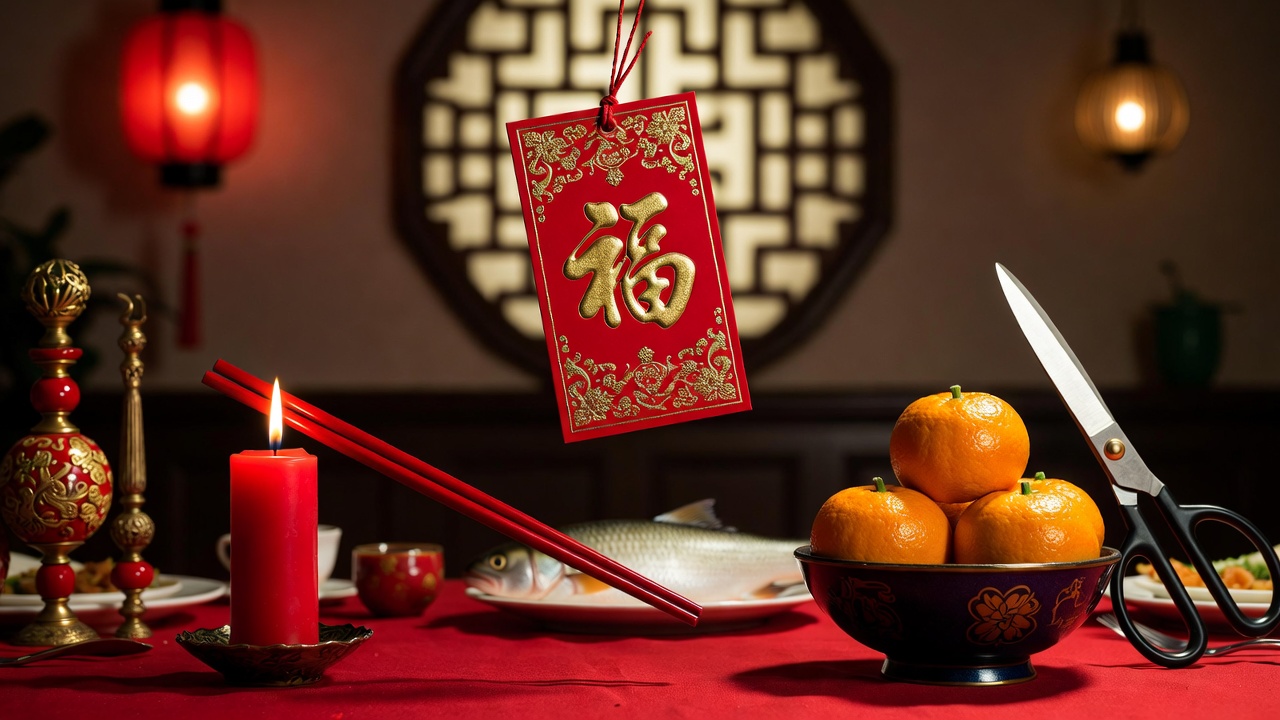
But here is the critical rule: you must not eat all of the fish. A portion must be left on the plate until the next day. Finishing the entire fish on New Year’s Eve symbolically consumes your surplus — your wealth and abundance — before the year even begins. In many regions north of the Yangtze River, the head and tail of the fish are deliberately left untouched to represent a complete and prosperous year from start to finish.
Additionally, the fish must be served whole. Never serve a fish fillet for the reunion dinner. A cut or fragmented fish loses its symbolic power. And once the fish is placed on the table, do not flip it over. Turning a fish is associated with capsizing a boat — a particularly bad omen for fishing communities along the coast.
Do Not Cut Noodles
If longevity noodles (长寿面, cháng shòu miàn) are served, they must remain uncut. The length of the noodle represents the length of one’s life. Cutting them — whether with a knife or by biting them short — symbolizes cutting life short. Slurp them whole, even if it gets messy.
Avoid Serving Porridge or Plain White Rice
Rice porridge, known as 粥 (zhōu) or congee, is traditionally associated with poverty. In ancient times, only families too poor to afford proper meals would eat porridge. Serving it on New Year’s Eve — or the morning of New Year’s Day — is seen as starting the year in a state of want. Serve dumplings, tangyuan (glutinous rice balls), or nian gao (rice cake) instead.
Do Not Break Bowls, Plates, or Glasses
Dropping and breaking tableware during the reunion dinner is one of the most feared accidents of the evening. A broken dish symbolizes broken fortune, broken relationships, and an incomplete year. Families with small children take extra care to use sturdy tableware or plastic cups.
If a bowl or plate does break, there is a well-known remedy. Immediately wrap the pieces in red paper and say the phrase “岁岁平安” (suì suì píng ān), meaning “peace and safety every year.” This works because the word for “broken” (碎, suì) sounds exactly the same as the word for “year” (岁, suì). The phrase cleverly transforms the omen from one of breakage to one of yearly peace.
Be Mindful of Regional Food Taboos
China is vast, and not every region shares the same food customs. A few notable variations worth knowing:
- Cantonese families in Guangdong often avoid lobster at the reunion dinner because its split body symbolizes division rather than wholeness.
- Taiwanese families sometimes skip tofu and eggs on New Year’s Day, as both items are traditionally used in ancestral mourning rituals.
- In the Shanghai dialect, the word for “apple” sounds like “passed away from illness,” so apples may be avoided as gifts (though this does not apply in Mandarin-speaking areas, where “apple” sounds like “peace”).
- Northern Chinese families consider plain noodles without sauce or toppings unacceptable, as they resemble funeral food.
Things You Should Never Do on Chinese New Year’s Eve Night
Beyond food and language, there is a whole set of behavioral taboos that apply specifically to the evening of Chúxī. These rules govern everything from sleeping habits to household chores.
Do Not Go to Bed Early — The Tradition of Shǒu Suì (守岁)
One of the oldest and most widely observed New Year’s Eve customs is 守岁 (shǒu suì), which translates to “guarding the year.” Families are expected to stay awake together until midnight — or even until dawn.
The tradition has two layers of meaning. For older family members, staying up late symbolizes treasuring the passing year. For younger members, it is believed that their wakefulness brings longevity to their parents and grandparents.
The custom also has mythological roots. According to a well-known legend described on the Shanghai government’s cultural portal, a creature called 祟 (suì) would emerge on New Year’s Eve to harm sleeping children. Families began staying up all night with the lights on to protect them. Over time, the similar-sounding character 岁 (suì), meaning “year,” replaced the monster’s name, and the vigil became a positive ritual of welcoming the new year.
In modern China, most families observe this tradition by watching the CCTV Spring Festival Gala (春晚), a televised variety show that regularly draws over 700 million viewers. Families snack on melon seeds, candy, and fruit while chatting, playing cards, and commenting on the performances.
The taboo is clear: falling asleep before midnight on New Year’s Eve is considered disrespectful and unlucky. It signals a lack of vigilance that may leave the family vulnerable to misfortune.
Do Not Sweep the Floor or Take Out the Trash
All major cleaning should be done before New Year’s Eve. The days leading up to the festival include a thorough house-cleaning session meant to sweep away the bad luck of the previous year. But once the evening of Chúxī arrives, the broom must be put away.
Sweeping on New Year’s Eve — or on New Year’s Day — is believed to sweep away wealth and good fortune. Similarly, taking out the garbage symbolizes discarding the family’s luck. In fact, the Chinese word for a person who brings bad luck is 扫把星 (sào bǎ xīng), which literally means “broom star.”
If a spill happens during the reunion dinner, clean it up discreetly with a damp cloth, but avoid reaching for the broom. Trash should remain inside the house and not be taken out until at least the fifth day of the new year.
Do Not Use Knives, Scissors, or Other Sharp Objects
Sharp objects are believed to “cut” your stream of luck, wealth, and personal relationships. This is why all the chopping and slicing for the reunion dinner is done well in advance. Once the meal begins, knives stay in the kitchen.
Scissors carry a similar taboo. Their opening and closing blades resemble the motion of an arguing mouth. Using them on New Year’s Eve is thought to invite quarrels and conflict into the household.
This prohibition extends into the first several days of the new year. Needlework, sewing, and even hair cutting are all avoided. According to Preferred Hotels, many hair salons in China remain closed for the entire first month of the lunar calendar in observance of this tradition.
Do Not Wear White or Black Clothing
Color matters deeply during Chinese New Year. Red is the dominant color of the festival — it symbolizes good fortune, joy, and the power to ward off evil spirits. Gold and yellow also carry positive meanings tied to wealth and prosperity.
White and black, on the other hand, are the colors of mourning and funerals in Chinese culture. Wearing them on New Year’s Eve is seen as inviting death and sorrow into the home. This applies to clothing, accessories, and even nail polish.
For those born in a Horse year (including 1966, 1978, 1990, 2002, 2014, and 2026), this year is their 本命年 (běn mìng nián) — their zodiac birth year. According to China Highlights, tradition holds that your zodiac year is actually an unlucky one due to a clash with 太岁 (Tài Suì), the God of Age. To counter this, people born in Horse years are encouraged to wear red throughout 2026 — especially red underwear, socks, or a red string bracelet, ideally gifted by a loved one rather than purchased by oneself.
Do Not Wake Someone Who Is Sleeping
If someone in the family does fall asleep on New Year’s Eve or on New Year’s morning, do not wake them. According to folk belief documented by Travel China Guide, being roused from sleep on New Year’s Day means you will be rushed and exhausted throughout the entire year. It symbolizes a year of being pushed, hurried, and never at rest.
Similarly, you should not greet someone with New Year wishes while they are still lying in bed. Doing so is interpreted as wishing them a year of illness — stuck in bed, unable to rise.
Do Not Lend or Borrow Money
All debts should be settled before New Year’s Eve. Walking into the new year with outstanding debts — whether owed or owing — is considered deeply unlucky. It suggests a year of financial struggle.
On the flip side, lending money on New Year’s Eve or New Year’s Day is believed to mean you will be losing money all year long. And if someone owes you money, do not go to their home to collect it. Doing so is thought to bring misfortune to both parties.
Gift-Giving Taboos to Watch Out for During the Spring Festival
If you are visiting a Chinese family during the New Year period, gifts are welcome — but choose carefully. Certain items are strictly off-limits because of their unfortunate homophonic associations.
| Gift to Avoid | Chinese Word | Sounds Like | Negative Association |
|---|---|---|---|
| Clocks | 钟 (zhōng) | 终 (zhōng) | “The end” — associated with death |
| Umbrellas | 伞 (sǎn) | 散 (sàn) | “To separate” — breaks relationships |
| Pears | 梨 (lí) | 离 (lí) | “To leave” — suggests departure |
| Shoes | 鞋 (xié) | 邪 (xié) | “Evil” — invites dark forces |
| Sharp objects | — | — | “Cut” relationships and fortune |
As Macao News explains, these gift taboos are not limited to the Spring Festival — they apply year-round in Chinese culture. But violations feel especially serious during the New Year.
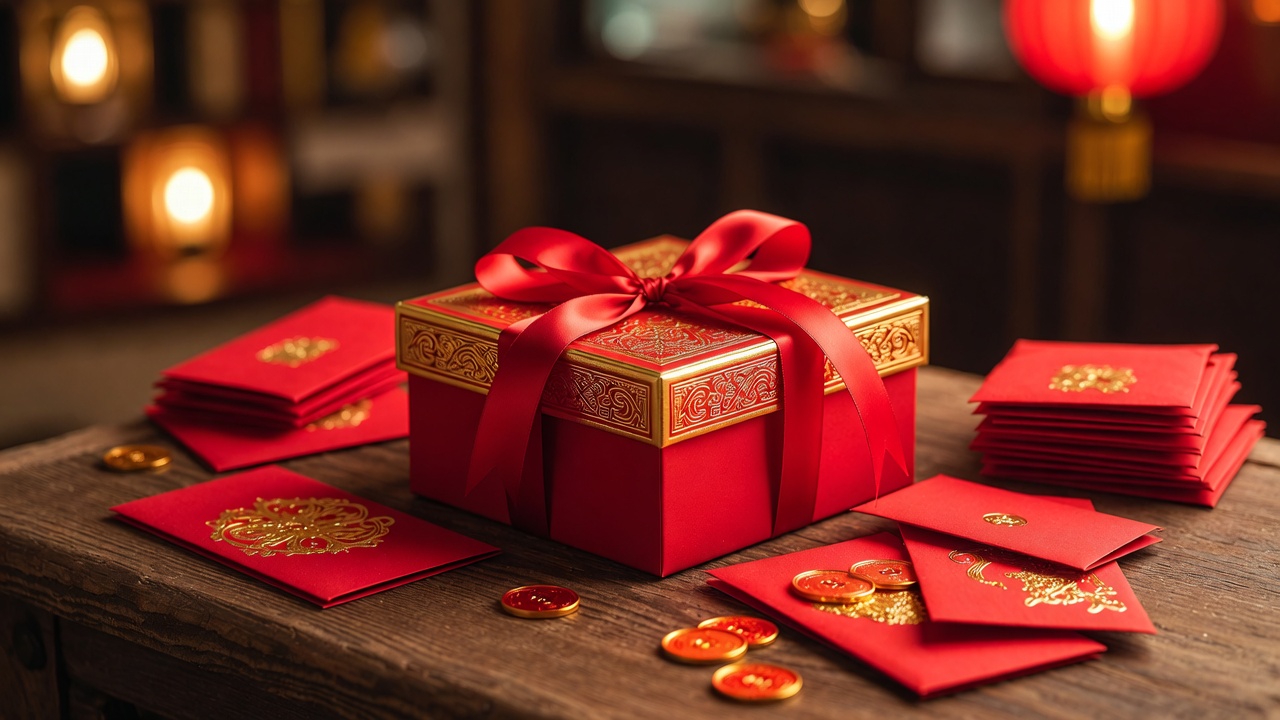
Safe gifts include: oranges and tangerines (symbols of good luck), tea, wine, premium snacks, and of course, 红包 (hóngbāo) — red envelopes filled with money. When giving red envelopes, always include an even number of bills. Avoid amounts containing the number 4, which sounds like the word for “death” (死, sǐ). The numbers 6 and 8, however, are considered extremely lucky.
Special Taboos for Chinese New Year’s Eve 2026: Year of the Fire Horse
Every zodiac year brings its own set of cautions. The Year of the Fire Horse is particularly notable. As mentioned, the Fire Horse combination happens only once in 60 years, making 2026 a year of heightened symbolic energy.
If you were born in a Horse year, you are entering your 本命年 (běn mìng nián). Chinese astrology holds that your own zodiac year tends to bring instability. The most common protective practices include:
- Wearing red undergarments given to you by a family member or close friend
- Carrying a jade pendant or protective amulet associated with zodiac signs compatible with the Horse (Tiger, Dog, and Goat are traditionally considered allies)
- Avoiding major life decisions — such as buying a house, getting married, or changing jobs — during the early part of the year, unless the dates have been vetted by a fortune-teller
For everyone else, the Fire Horse energy of 2026 suggests a year of rapid movement and passionate action. The taboos of New Year’s Eve carry an extra layer of importance: start the year calmly and correctly, because the Horse’s energy will quickly amplify whatever tone you set.
How Modern Chinese Families Balance Tradition and Convenience
It would be misleading to suggest that every Chinese family follows every taboo to the letter. In contemporary urban China, many customs have evolved. Some families order their reunion dinner from a restaurant instead of cooking at home. Some younger people exchange digital red envelopes via WeChat instead of handing over physical ones. In cities where fireworks are banned for safety and pollution reasons, families watch firework displays on television instead.
But the core beliefs endure. The taboos around language, food symbolism, and family togetherness are rarely abandoned entirely, even among the most modern households. A family may laugh about the old superstitions while still making sure the fish is left unfinished and the broom stays in the closet.
This blend of reverence and flexibility is what makes Chinese New Year so resilient. The festival has survived dynasties, revolutions, and the digital age. It adapts without losing its soul.
Quick Reference: Complete List of Chinese New Year’s Eve Taboos
For easy reference, here is a summary of the key taboos covered in this guide:
| Category | Taboo | Reason |
|---|---|---|
| Language | Saying words like “death,” “sick,” “poor,” “ghost” | Invites misfortune through spoken word |
| Language | Arguing, crying, or scolding children | Sets a tone of conflict and sadness |
| Food | Finishing all the fish | Eliminates surplus; invites poverty |
| Food | Cutting noodles | Symbolizes cutting life short |
| Food | Eating porridge | Associated with poverty |
| Food | Breaking dishes or glasses | Shatters good fortune |
| Behavior | Going to bed before midnight | Disrespects the tradition of shǒu suì |
| Behavior | Sweeping the floor | Sweeps away wealth |
| Behavior | Taking out the trash | Discards good luck |
| Behavior | Using knives or scissors | Cuts the flow of fortune |
| Behavior | Waking someone up | Brings a year of exhaustion |
| Clothing | Wearing white or black | Colors of mourning and death |
| Clothing | Wearing damaged or dirty clothes | Signals poverty and bad luck |
| Money | Lending or borrowing money | Invites financial loss |
| Money | Demanding debt repayment | Brings bad luck to both parties |
| Gifts | Giving clocks, umbrellas, pears, or shoes | Homophonic links to death, separation, or evil |
| Red Envelopes | Giving odd amounts or amounts with “4” | Violates lucky-number customs |
Embracing the Spirit of Chúxī: What These Taboos Really Teach Us
At their heart, Chinese New Year’s Eve taboos are not about fear. They are about intentionality. Every rule — from the words you speak to the food you leave on the plate — is a small act of hope. They ask you to be mindful of what you say, generous with what you give, and present with the people you love.
The reunion dinner table, with its steaming whole fish and untouched rice cakes, is one of the most powerful symbols of family life anywhere on Earth. The taboos that surround it are simply the community’s way of saying: This moment is precious. Treat it with care.
As the Fire Horse gallops into 2026, may your table be full, your words be kind, and your fortune be endless.
新年快乐!恭喜发财! (Xīnnián kuàilè! Gōngxǐ fācái!) Happy New Year! Wishing you wealth and prosperity!