Discover India’s grandest cultural celebration held in the shadow of the world’s most iconic monument of love
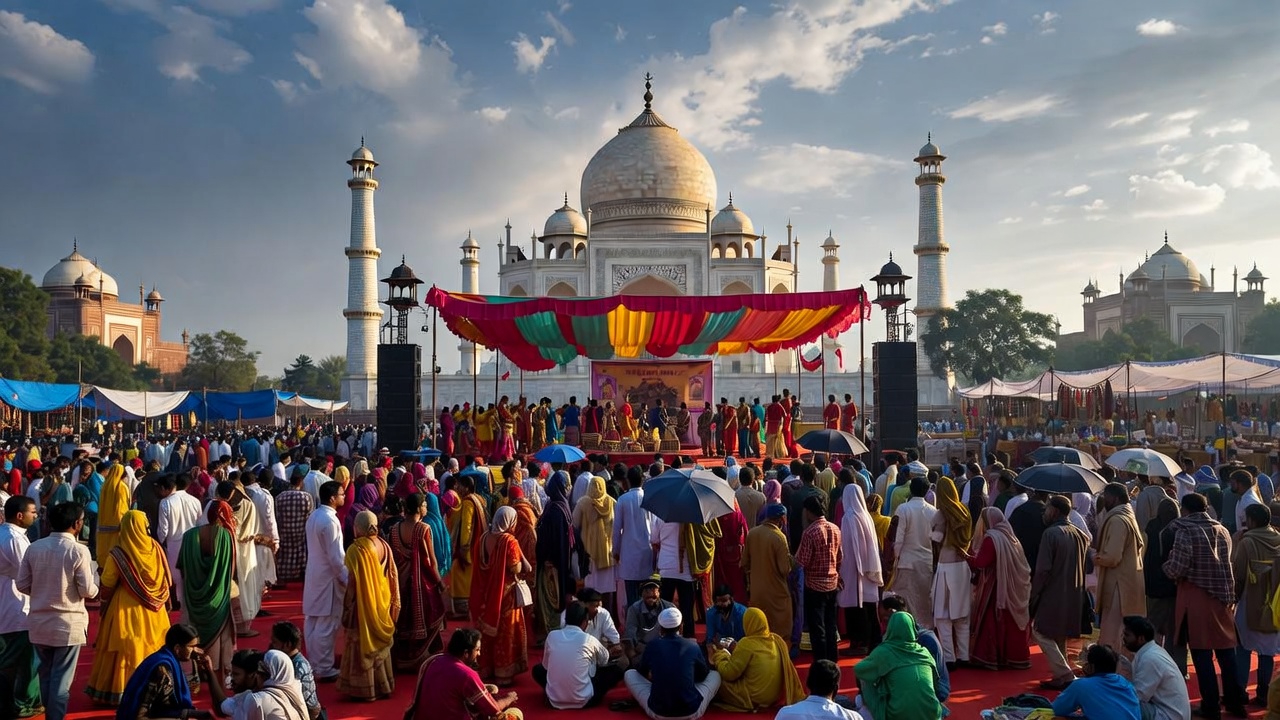
The air carries whispers of ancient melodies. Skilled hands shape clay, marble, and silk into works of art that have captivated civilizations for centuries. The aroma of saffron-infused Mughlai cuisine mingles with the sweet fragrance of jasmine garlands. Against the backdrop of the ivory-white Taj Mahal, one of the New Seven Wonders of the World, over 400 master artisans from every corner of India gather to celebrate a tradition that has endured for more than three decades.
Welcome to Taj Mahotsav 2026—a ten-day extravaganza that transforms the historic city of Agra into a living museum of Indian heritage, craftsmanship, and cultural splendor.
Whether you are a first-time visitor to India seeking an authentic cultural immersion, a seasoned traveler looking for unique festival experiences, or an art collector hunting for rare handicrafts, this ultimate guide will equip you with everything you need to make the most of Taj Mahotsav 2026.
Taj Mahotsav 2026 Festival Dates and Official Schedule
Mark your calendars: Taj Mahotsav 2026 runs from February 18 to February 27, 2026—a full ten days of non-stop celebration.
The festival operates daily from 10:00 AM to 10:00 PM, giving visitors ample time to explore the craft exhibitions during daylight hours and enjoy the spectacular cultural performances that light up the evenings.
| Key Information | Details |
|---|---|
| Official Dates | February 18 – 27, 2026 |
| Duration | 10 Days |
| Daily Timings | 10:00 AM – 10:00 PM |
| Organizer | Taj Mahotsav Samiti & UP Tourism Department |
| Theme 2026 | “India’s Heritage” |
| Venue | Shilpgram, Eastern Gate of Taj Mahal, Agra |
The 2026 edition carries the evocative theme “India’s Heritage”, reflecting Uttar Pradesh Tourism’s commitment to celebrating the country’s diverse cultural legacy in its most authentic form. This theme builds meaningfully on earlier editions where sustainability and artisan empowerment took center stage.
February proves to be the perfect month for this celebration. The harsh winter chill has mellowed into pleasant daytime temperatures ranging from 20°C to 28°C (68°F to 82°F). The skies remain clear, the gardens of the Taj Mahal are in full bloom, and the evenings offer a gentle coolness ideal for wandering through the illuminated fairgrounds.
What Is Taj Mahotsav: History and Cultural Significance
The Birth of a Cultural Institution in 1992
The story of Taj Mahotsav begins in 1992, when the Uttar Pradesh Tourism Department conceptualized an event that would serve multiple purposes: revitalize traditional Indian crafts facing extinction due to industrialization, provide rural artisans with direct market access, and transform Agra from a single-monument destination into a comprehensive cultural experience.
The timing proved prophetic. The early 1990s marked a pivotal moment when globalization threatened to homogenize cultural expressions worldwide. Traditional crafts that had sustained families for generations were losing ground to mass-produced alternatives. Master craftsmen found their skills increasingly irrelevant in a rapidly modernizing economy.
Taj Mahotsav emerged as both a marketplace and a movement. It offered artisans something no traditional market could: dignified recognition and fair compensation for their work, along with an audience genuinely interested in the stories behind each creation.
More Than a Festival: A Living Heritage Museum
What distinguishes Taj Mahotsav from commercial trade fairs is its unwavering focus on preservation over mere promotion. Every stall, every performance, every culinary offering serves as a window into traditions that have shaped Indian civilization for millennia.
The festival essentially functions as a living heritage museum where visitors don’t merely observe artifacts behind glass cases—they interact with living masters, witness ancient techniques in real-time, taste recipes passed down through generations, and listen to folk songs that predate written history.
This approach has transformed Taj Mahotsav into a nationally recognized cultural platform. The festival now figures prominently in the Department of Tourism, Government of India’s official calendar of events, attracting tens of thousands of domestic and international visitors each year.
Taj Mahotsav 2026 Venue Location and How to Find Shilpgram
Shilpgram: The Heart of the Celebration
The primary venue for Taj Mahotsav is Shilpgram, a purpose-built crafts village located near the Eastern Gate of the Taj Mahal. The name itself combines two Hindi words: shilp (craft) and gram (village), perfectly encapsulating the venue’s identity as a traditional village-style complex designed to enhance the rural authenticity and immersive cultural feel of the festival.
Venue Address: Shilpgram, Eastern Gate Road, near Taj Mahal, Agra, Uttar Pradesh 282001, India
The proximity to the Taj Mahal makes the venue exceptionally convenient. Visitors can combine their heritage monument visit with festival exploration in a single day. The walk from the Eastern Gate to Shilpgram takes merely five to ten minutes through a pathway lined with vendors and street performers who serve as an appetizer for the main event.
Important Venue Update for 2026
According to recent reports, due to ongoing renovations at the traditional Shilpgram venue, Taj Mahotsav 2026 may be hosted at an open ground near the “I Love Agra” Selfie Point. This alternate location promises more space, improved crowd management, and better accessibility while maintaining the festival’s proximity to the Taj Mahal and preserving the spirit and continuity that define this celebration.
Visitors are advised to check official sources closer to the festival dates for final venue confirmation. The official Taj Mahotsav website remains the most reliable source for real-time updates.
Taj Mahotsav Entry Fee and Ticket Booking Information 2026
Understanding the Ticketing System
One of Taj Mahotsav’s defining characteristics is its accessibility. Unlike many cultural events that price out ordinary visitors, the festival maintains a deliberately affordable pricing structure.
| Ticket Category | Price (Approximate) |
|---|---|
| Adult (Indian) | ₹50 |
| Children (5-12 years) | ₹10 |
| Children (under 5) | Free |
| Foreign Tourists | Nominal fee / Concessions available |
These entry fees provide access to the general fairgrounds, craft exhibitions, and most cultural performances. Certain premium shows or workshops may require additional tickets, which can be purchased at the venue.
How to Book Tickets in Advance
Tickets for Taj Mahotsav 2026 can be acquired through multiple channels:
- Online Purchase: Through the official website or the Agra Nagar Nigam app
- On-Site Purchase: Ticket counters operate at all venue entrances
- Authorized Travel Agents: Many Agra-based tourism companies offer combined tickets with guided tours
Pro Tip: For weekend visits (especially February 21-22 and February 27-28, 2026), consider purchasing tickets online in advance to avoid potentially lengthy queues. Weekdays typically offer a more relaxed experience with shorter wait times and better opportunities for meaningful interactions with artisans.
Traditional Indian Handicrafts and Artisan Exhibitions at Taj Mahotsav
A Pan-Indian Showcase of Master Craftsmanship
The craft exhibitions form the beating heart of Taj Mahotsav. Over 400 legendary artisans from across India’s diverse geographic and cultural landscape converge here, transforming the fairgrounds into what many describe as “India under one roof.”
This isn’t merely a marketplace—it’s a living exhibition of techniques refined over centuries. Visitors can witness the creation process firsthand, understanding the skill, patience, and cultural significance embedded in each piece.
Featured Crafts from Every Region of India
North India:
- Marble Inlay Work (Parchin-kari) from Agra – The technique that adorns the Taj Mahal itself
- Chikan Embroidery from Lucknow – Delicate white-on-white needlework
- Zardozi Work from Agra – Gold and silver thread embroidery
- Silk and Zari Weaving from Varanasi – Brocade fabrics fit for royalty
- Wood Carving from Saharanpur – Intricate furniture and decorative pieces
- Brass Wares from Moradabad – Engraved metalwork known as “Peetal Nagri”
South India:
- Paper Mâché from Karnataka – Lightweight yet durable decorative items
- Stone Carvings from Tamil Nadu – Temple-inspired sculptures
- Coconut Shell Crafts from Kerala – Eco-friendly artisan products
East and Northeast India:
- Kantha Stitch from West Bengal – Intricate running stitch embroidery
- Bamboo and Cane Work from Assam, Manipur, and other northeastern states
- Madhubani Paintings from Bihar – Vibrant folk art depicting mythology
West India:
- Blue Pottery from Jaipur – Persian-influenced ceramic art
- Bandhani Textiles from Gujarat – Traditional tie-dye techniques
- Shawls and Carpets from Kashmir – Pashmina and hand-knotted rugs
- Leather Work from Rajasthan – Mojari footwear and accessories
Central India:
- Handmade Carpets from Bhadohi – UNESCO-recognized weaving traditions
- Pottery from Khurja – Glazed ceramic ware
- Hand Block Printing from Farrukhabad – Centuries-old textile printing
The Magic of Marble Inlay: Agra’s Signature Craft
No discussion of Taj Mahotsav would be complete without highlighting Parchin-kari, the marble inlay craft that transformed the Taj Mahal into a wonder of the world.
Known locally as Pacchikari, this technique was introduced during the reign of Mughal Emperor Shah Jahan, who brought specialists from Persia to train local artisans. The process involves:
- Selecting semi-precious stones: Lapis lazuli, turquoise, malachite, onyx, mother-of-pearl, and cornelian
- Hand-cutting tiny pieces: Some measuring only a few millimeters
- Chiseling shallow cavities into marble surfaces
- Setting stones with traditional adhesive: A paste of sugar cane, beeswax, honey, lemon juice, and marble dust
The artisan families practicing this craft today are often direct descendants of the original craftsmen who worked on the Taj Mahal itself. Many live in neighborhoods like Taj Ganj, Gokulpura, and Nai Ki Mandi—areas adjacent to the monument where this tradition has been passed down for over 17 generations.
At Taj Mahotsav, visitors can observe live demonstrations and purchase authentic pieces ranging from small coasters and jewelry boxes to elaborate tabletops that command thousands of dollars.
Folk Dance Performances and Live Music at Taj Mahotsav 2026
Evening Cultural Programs That Transport You Through Time
As the sun sets over the Taj Mahal and the marble monument takes on its famous golden-pink hue, the cultural performances begin. The evening hours at Taj Mahotsav transform into a celebration of India’s intangible heritage—the music, dance, and storytelling traditions that exist only in human memory and practice.
Classical Dance Forms to Witness
The festival features performances by some of India’s most accomplished classical dancers:
- Kathak – The storytelling dance form that flourished in the Mughal courts of Agra itself
- Bharatanatyam – Tamil Nadu’s ancient temple dance tradition
- Odissi – Orissa’s sculptural dance form inspired by temple carvings
- Kuchipudi – Andhra Pradesh’s dynamic dance-drama tradition
- Mohiniyattam – Kerala’s graceful “dance of the enchantress”
Folk Dances from Across India
The folk performances represent the living traditions of rural India:
From Rajasthan:
- Ghoomar – Women in swirling skirts performing at weddings and festivals
- Kalbelia – The hypnotic “snake charmer’s dance” recognized by UNESCO
- Bhavai – Balancing acts performed on brass pots
- Chari – Women dancing with flaming pots balanced on their heads
- Terah Taali – Rhythm created using 13 manjiras (cymbals)
From Punjab:
- Bhangra – Energetic harvest celebration dances
- Gidda – Women’s folk dance with clapping and boliyan (folk couplets)
From Local Brij Bhumi Region:
- Raslila – Devotional dance-drama depicting Lord Krishna’s life
- Charkula – Women balancing multi-tiered oil lamp structures
Live Music Traditions
The musical performances range from classical recitals to folk traditions:
- Sufi Qawwali – Devotional music with roots in the nearby dargahs
- Brij Bhasha Folk Songs – Local traditions from the Krishna worship region
- Classical Vocal Recitals – Thumri, Dadra, and Ghazal performances
- Instrumental Ensembles – Featuring sarangi, tabla, harmonium, and shehnai
Famous Food Stalls at Taj Mahotsav: A Culinary Journey Through India
The Festival’s Gastronomic Geography
Taj Mahotsav transforms into a pan-Indian food festival where regional cuisines compete for attention. Expert chefs from Uttar Pradesh’s interiors and beyond prepare dishes using recipes that have remained unchanged for generations.
Must-Try Dishes at Taj Mahotsav 2026
Mughlai Cuisine – The Royal Legacy:
Agra’s Mughlai heritage comes alive through dishes that once graced imperial tables:
- Biryani – Fragrant rice cooked with meat and aromatic spices
- Korma – Rich, creamy curries with yogurt and cream bases
- Navratan Korma – The vegetarian dish inspired by Emperor Akbar’s “nine jewels” (courtiers)
- Galouti Kebab – Melt-in-your-mouth minced meat delicacy
- Mutton Seekh Kebab – Grilled spiced meat on skewers
- Tandoori Preparations – Clay oven-cooked meats and breads
Regional Specialties from Across India:
| Region | Dishes |
|---|---|
| Rajasthan | Dal Baati Churma |
| Hyderabad | Hyderabadi Biryani |
| Amritsar | Amritsari Kulcha |
| Bengal | Bengali Sweets, Fish Curries |
| South India | Dosas, Idlis, Vadas |
Agra’s Famous Sweet: The Legendary Petha
No Taj Mahotsav experience is complete without savoring Petha, Agra’s most celebrated confection. This translucent, soft candy made from ash gourd (winter melon) has been delighting visitors since the Mughal era.
The origin story connects to Shah Jahan’s reign. Legend holds that the same emperor who built the Taj Mahal also patronized the first petha makers. Today, Agra’s petha carries a Geographical Indication (GI) tag, certifying its authentic origin.
Petha Varieties to Sample:
- Dry Petha – The original crystallized version
- Angoori Petha – Small, grape-sized pieces in syrup
- Kesar Petha – Saffron-infused
- Paan Petha – Betel leaf flavored
- Chocolate Petha – Contemporary fusion variety
The best petha comes from establishments like Panchhi Petha, founded in 1950 by the late Shri Pancham Lal Goyal Ji, whose nickname “Panchhi” (bird) became synonymous with quality.
Street Food Treasures
Beyond formal dining, the festival’s lanes burst with street food favorites:
- Bedai-Jalebi – Agra’s signature breakfast combination
- Chaat – Tangy, spicy snacks including pani puri and bhel puri
- Dalmoth – Crunchy spiced snack mix perfect with tea
- Lassi – Creamy yogurt drinks in sweet and salted varieties
- Kulfi Falooda – Traditional ice cream with vermicelli
Best Shopping Guide for Taj Mahotsav 2026
What to Buy: A Curated Shopping List
Taj Mahotsav offers rare opportunities to purchase handcrafted items directly from artisans—without the markup of middlemen or retail establishments. The prices remain authentic and reasonable because the festival’s mission includes providing fair compensation to craftspeople.
High-Value Investment Pieces:
- Marble inlay tabletops and furniture
- Hand-knotted Persian and Kashmiri carpets
- Antique-style brassware
- Commissioned jewelry pieces
Mid-Range Treasures:
- Silk sarees and stoles from Varanasi
- Pashmina shawls
- Blue pottery decorative items
- Wooden carved furniture pieces
- Embroidered home furnishings
Affordable Souvenirs:
- Marble inlay coasters and small boxes
- Mojari footwear (traditional leather shoes)
- Chikan kurtas and fabric
- Brass figurines and lamps
- Madhubani and miniature paintings
- Handmade paper products
- Lac bangles
- Incense and essential oils
Smart Shopping Tips for Visitors
Bargaining Etiquette: While bargaining is expected, remember that these are skilled artisans earning modest livings through their craft. Start at about 70-75% of the quoted price and negotiate respectfully. A fair deal benefits both parties.
Quality Assessment: For marble inlay work, check the precision of stone-to-stone joints—gaps indicate inferior craftsmanship. For textiles, examine the reverse side; authentic handwork shows equally neat finishing on both sides.
Shipping and Logistics: Many established vendors offer international shipping with proper packaging and insurance. Obtain detailed receipts that can serve as export documentation. For large purchases like tabletops, reputable sellers have experience shipping to destinations worldwide.
Payment Methods: Carry cash (preferably smaller denominations) as many artisans prefer direct transactions. Larger establishments accept UPI payments, credit cards, and foreign currency.
Best Agra Attractions to Visit During Taj Mahotsav 2026
UNESCO World Heritage Sites in Agra
Agra holds the distinction of hosting three UNESCO World Heritage Sites within its boundaries—a concentration found in few cities worldwide. These monuments complement the Taj Mahotsav experience by providing historical context for the crafts and traditions on display.
1. Taj Mahal: The Crown Jewel of India
No introduction necessary, yet the experience never disappoints. The ivory-white marble mausoleum commissioned in 1632 by Emperor Shah Jahan to house the tomb of his beloved wife Mumtaz Mahal represents the pinnacle of Mughal architecture.
Visiting Tips:
- Best Time: Sunrise or sunset for optimal photography
- Entry: Separate tickets required (₹50 Indian nationals, ₹1,100 foreign tourists as of 2025)
- Closed: Every Friday (for prayers at the mosque)
- Photography: Allowed in gardens; restricted inside mausoleum
2. Agra Fort: The Red Sandstone Marvel
This 16th-century Mughal fortification served as the main residence of Mughal emperors until 1638. Within its 2.5-kilometer-long enclosure walls lie palaces, halls of audience, mosques, and the poignant Musamman Burj—where Shah Jahan spent his final years gazing at the Taj Mahal.
Highlights:
- Diwan-i-Am (Hall of Public Audience)
- Diwan-i-Khas (Hall of Private Audience)
- Moti Masjid (Pearl Mosque)
- Musamman Burj (the octagonal tower)
- Jahangir’s Palace
Entry Fee: ₹35 Indian nationals, ₹610 foreign tourists
3. Fatehpur Sikri: The City of Victory
Located 39 kilometers from Agra, this red sandstone city served as the Mughal capital from 1571 to 1585. Emperor Akbar built it after the Sufi saint Sheikh Salim Chishti blessed him with a son (the future Emperor Jahangir).
The architecture uniquely blends Hindu, Islamic, and Persian elements—reflecting Akbar’s philosophy of religious tolerance and his experimental Din-i-Ilahi faith.
Must-See Structures:
- Buland Darwaza (Gate of Magnificence) – India’s highest gateway
- Jama Masjid – One of India’s largest mosques
- Tomb of Sheikh Salim Chishti – Exquisite marble lattice work
- Panch Mahal – Five-story palatial structure
- Diwan-i-Khas with its central pillar
Entry Fee: ₹50 Indian nationals, ₹610 foreign tourists Timings: Sunrise to sunset daily
Other Essential Agra Attractions
Itimad-ud-Daulah’s Tomb (Baby Taj): Often called the “precursor to the Taj Mahal,” this exquisite white marble tomb was built between 1622-1628 by Empress Nur Jahan for her father. It represents the transitional phase in Mughal architecture from red sandstone to white marble.
Mehtab Bagh (Moonlight Garden): This charbagh complex lies directly across the Yamuna River from the Taj Mahal, offering spectacular sunset views of the monument’s reflection. Legend holds that Shah Jahan planned a black marble “Black Taj” here.
Akbar’s Tomb at Sikandra: The mausoleum of Mughal Emperor Akbar, located 10 kilometers from Agra, represents a unique architectural experiment combining Hindu, Islamic, and Christian elements.
How to Reach Agra for Taj Mahotsav 2026
Reaching Agra from Major Indian Cities
Agra sits strategically on India’s Golden Triangle tourist circuit (Delhi-Agra-Jaipur), making it exceptionally well-connected.
Distance from Major Cities:
- Delhi: 230 km (143 miles)
- Jaipur: 240 km (149 miles)
- Lucknow: 330 km (205 miles)
By Air: Agra’s Kheria Airport
Agra has its own domestic airport, Pandit Deen Dayal Upadhyaya Airport (Kheria), located approximately 7 kilometers from the city center.
- Flight Duration from Delhi: Under 1 hour
- Airlines: Limited domestic services (check current schedules)
- Transfer to Taj Mahal: 10-15 minutes by taxi
For international travelers, Indira Gandhi International Airport (DEL) in Delhi serves as the primary gateway. From Delhi, Agra is easily accessible by train, car, or domestic flight.
By Train: The Most Popular Option
Indian Railways connects Agra to major cities across the country. The city has five railway stations:
- Agra Cantt (main station) – 9 km from Taj Mahal
- Agra Fort Station – Closest to monuments
- Raja Ki Mandi
- Agra City
- Idgah Railway Station
Popular Trains from Delhi:
| Train Name | Type | Duration | Features |
|---|---|---|---|
| Gatimaan Express | Semi-high speed | 1 hr 40 min | Fastest option |
| Shatabdi Express | Superfast | ~2 hours | Meals included |
| Taj Express | Express | ~3 hours | Economical |
| Rajdhani Express | Premium | ~2 hours | AC only |
Booking: Tickets can be reserved through IRCTC or at railway booking counters.
By Road: Yamuna Expressway and National Highways
Two major roadways connect Agra:
Yamuna Expressway (Delhi-Agra):
- 6-lane access-controlled expressway
- Distance: ~165 km
- Driving time: 2-2.5 hours
- Toll charges apply
NH 2 (Grand Trunk Road):
- Historic route connecting Delhi to Agra
- Distance: ~200 km
- Driving time: 3-4 hours (heavy traffic possible)
Bus Services:
- ISBT Bus Terminal: 12 km from Taj Mahal
- Idgah Bus Stand: 8 km from Taj Mahal (city center)
- Services operate from Delhi’s Sarai Kale Khan, Kashmiri Gate, and other points
- AC Volvo buses: ₹400-600 per person
- Non-AC buses: ₹200-300 per person
Best Hotels Near Taj Mahal for Taj Mahotsav 2026
Accommodation Categories and Recommendations
Agra offers more than 350 hotels catering to every budget, from luxury heritage properties to budget guesthouses. During Taj Mahotsav (February 18-27, 2026), demand peaks significantly—advance booking is essential.
Luxury Hotels (₹15,000+ per night)
The Oberoi Amarvilas: The gold standard of Agra hospitality, every room offers uninterrupted views of the Taj Mahal. Located just 600 meters from the monument.
ITC Mughal: A sprawling property designed to reflect Mughal garden aesthetics. Features the award-winning Kaya Kalp spa.
Taj Hotel & Convention Centre: Formerly Jaypee Palace, this property offers extensive grounds and comprehensive amenities.
Trident Agra: Set amidst beautifully landscaped gardens with Taj Mahal views from select rooms.
Mid-Range Hotels (₹3,000-10,000 per night)
- Courtyard by Marriott Agra
- Crystal Sarovar Premiere
- Radisson Hotel Agra
- DoubleTree by Hilton Agra
- Howard Plaza The Fern
Budget Accommodations (Under ₹3,000 per night)
For budget-conscious travelers, the Taj Ganj area near the Taj Mahal’s South Gate offers numerous guesthouses and hostels. Many feature rooftop restaurants with monument views.
Booking Strategy for Festival Dates
Book 2-3 months in advance for festival dates. Properties near Shilpgram (Eastern Gate area) offer the most convenient access to both the Taj Mahal and the festival venue.
Consider properties offering:
- Complimentary breakfast (festival days involve extensive walking)
- Parking facilities (if traveling by car)
- Proximity to monuments and markets
- Flexible cancellation policies
Complete 3-Day Taj Mahotsav 2026 Itinerary for First-Time Visitors
Day 1: Monument Exploration and Festival Introduction
Morning (6:00 AM – 12:00 PM):
- Sunrise visit to Taj Mahal (arrive before gates open at 6:00 AM)
- Allow 2-3 hours for thorough exploration
- Breakfast at a Taj Ganj rooftop restaurant
Afternoon (12:00 PM – 5:00 PM):
- Visit Agra Fort (UNESCO World Heritage Site)
- Lunch featuring authentic Mughlai cuisine
- Check into hotel and rest
Evening (5:00 PM – 10:00 PM):
- Enter Taj Mahotsav at Shilpgram
- Explore craft stalls and interact with artisans
- Enjoy evening cultural performances
- Dinner at festival food stalls (try local Agra delicacies)
Day 2: Deep Festival Immersion
Morning (10:00 AM – 1:00 PM):
- Return to Taj Mahotsav for craft workshop participation
- Watch live artisan demonstrations
- Purchase early (best selection before weekend crowds)
Afternoon (1:00 PM – 5:00 PM):
- Lunch at festival (explore regional cuisine stalls)
- Visit Itimad-ud-Daulah (Baby Taj)
- Return to Shilpgram for continued exploration
Evening (5:00 PM – 10:00 PM):
- Sunset at Mehtab Bagh (Taj Mahal reflection views)
- Return to festival for evening performances
- Food walk through Sadar Bazaar after festival closes
Day 3: Extended Exploration
Morning (6:00 AM – 11:00 AM):
- Day trip to Fatehpur Sikri (39 km)
- Explore the abandoned Mughal capital
- Visit Sheikh Salim Chishti’s tomb
Afternoon (12:00 PM – 4:00 PM):
- Return to Agra
- Visit Sikandra (Akbar’s Tomb)
- Shopping at local markets (Sadar Bazaar, Kinari Bazaar)
Evening (5:00 PM – 10:00 PM):
- Final evening at Taj Mahotsav
- Complete souvenir purchases
- Farewell dinner featuring Agra specialties
- Stock up on petha for gifts
Essential Travel Tips for Visiting Taj Mahotsav 2026
What to Wear: Dressing for Comfort and Respect
Practical Considerations:
- Comfortable walking shoes (you’ll cover significant distances)
- Layers for temperature variations (warm days, cool evenings)
- Sun protection (hat, sunglasses, sunscreen)
- Light, breathable fabrics
Cultural Sensitivity:
- Modest clothing appropriate for religious sites
- Covered shoulders and knees for mosque visits
- Easily removable footwear (required at many monuments)
Money and Payments
- Carry cash: Many artisan stalls prefer cash transactions
- ATMs: Widely available throughout Agra
- UPI payments: Increasingly accepted (Google Pay, PhonePe, Paytm)
- Credit cards: Accepted at established shops and hotels
- Currency exchange: Available at hotels and authorized dealers
Communication and Connectivity
- Mobile networks: Excellent coverage (Jio, Airtel, Vi)
- Tourist SIM cards: Available at airports and phone shops
- WiFi: Available at most hotels and some restaurants
- Language: Hindi predominates; English widely understood in tourist areas
Health and Safety Precautions
Food and Water:
- Drink only bottled or purified water
- Eat at established stalls with high turnover
- Carry basic medications
General Safety:
- Keep valuables secure
- Be aware of common tourist scams (inflated prices, unauthorized guides)
- Use prepaid taxi services from railway stations
Photography Etiquette:
- Always ask permission before photographing artisans
- No drones allowed near the Taj Mahal
- Respect any photography restrictions at monuments
Taj Mahotsav 2026 for Families with Children
Kid-Friendly Activities and Attractions
Taj Mahotsav thoughtfully incorporates activities that engage younger visitors:
Entertainment Zone:
- Carnival rides and fun fair attractions
- Merry-go-rounds and Ferris wheels
- Train rides through the festival grounds
Interactive Experiences:
- Puppet shows featuring traditional Rajasthani kathputli
- Magic shows
- Face painting and temporary tattoos
- Traditional games and activities
Educational Opportunities:
- Live craft demonstrations accessible to all ages
- Art workshops where children can try pottery and painting
- Storytelling sessions featuring Indian folklore
Family-Friendly Amenities
The festival grounds feature:
- Designated rest areas
- Clean restroom facilities
- First aid stations
- Food options suitable for children
Tips for Visiting with Children
- Visit during weekday mornings (less crowded)
- Carry water bottles and snacks
- Use strollers where ground permits
- Plan for rest breaks during afternoon heat
- Keep festival entry tickets safely stored
Why Taj Mahotsav 2026 Should Be on Your Travel Bucket List
Supporting Living Heritage and Local Communities
When you purchase a marble inlay box, a Varanasi silk stole, or a simple lac bangle at Taj Mahotsav, you participate in something far larger than a commercial transaction. You directly support artisans whose skills represent centuries of accumulated knowledge—techniques that no machine can replicate and no factory can mass-produce.
The festival embodies the principle of sustainable cultural tourism: travel that strengthens rather than diminishes the communities it touches. Your attendance and purchases contribute to:
- Artisan livelihoods and family wellbeing
- Preservation of endangered craft traditions
- Economic development in rural communities
- Intergenerational transmission of skills
A Window Into India’s Soul
For international visitors, Taj Mahotsav offers a rare opportunity to experience India’s diversity concentrated in a single accessible location. Rather than traveling thousands of kilometers across the subcontinent, visitors can encounter the country’s cultural breadth—from Kashmiri shawls to Bengali sweets, from Rajasthani folk dance to Varanasi classical music—within the compact confines of Shilpgram.
This concentrated exposure provides context that enhances all subsequent travel through India. The marble inlay demonstration at Taj Mahotsav transforms your eventual Taj Mahal visit into a deeper appreciation of the skill required to create that monument.
Creating Memories Against an Iconic Backdrop
Few festivals anywhere in the world unfold against a backdrop as magnificent as the Taj Mahal. The ivory dome rising behind the festival tents, the same structure that Shah Jahan built to immortalize his love, lends every moment at Taj Mahotsav a romantic grandeur that photographs cannot fully capture.
As you watch Kathak dancers perform in the evening light, with the illuminated Taj Mahal visible beyond the stage, you experience a continuity of tradition—the same classical art form that entertained Mughal emperors now entertaining you, in the same city, against the same eternal backdrop.
Practical Quick Reference: Taj Mahotsav 2026 at a Glance
| Category | Information |
|---|---|
| Dates | February 18 – 27, 2026 |
| Duration | 10 Days |
| Timings | 10:00 AM – 10:00 PM daily |
| Venue | Shilpgram, Eastern Gate, Taj Mahal, Agra |
| Theme | “India’s Heritage” |
| Organizer | Taj Mahotsav Samiti / UP Tourism |
| Entry Fee | ~₹50 (Adults), ~₹10 (Children) |
| Best For | Culture enthusiasts, photographers, shoppers, families |
| Weather | Pleasant (20-28°C / 68-82°F) |
| Nearest Airport | Kheria Airport (7 km) / Delhi IGI (230 km) |
| Nearest Railway | Agra Cantt (9 km) |
| Official Website | tajmahotsav.org |
Final Thoughts: Experience India’s Heritage at Taj Mahotsav 2026
Taj Mahotsav represents something increasingly rare in our homogenized modern world: an authentic celebration of living heritage that has evolved organically over three decades while maintaining its core purpose of preserving and promoting India’s diverse craft traditions.
In an era when cultural experiences are often staged for tourist consumption, Taj Mahotsav stands apart. The artisans demonstrating marble inlay are the same families whose ancestors decorated the Taj Mahal. The folk musicians performing evening ragas carry traditions passed down through generations of oral transmission. The recipes being cooked over open fires have nourished communities for centuries.
February 2026 offers a ten-day window to witness this living museum of Indian heritage against the world’s most iconic backdrop. The pleasant winter weather, the illuminated monuments, the energy of over 400 artisans gathered from across the subcontinent, and the promise of discovery around every corner make this an unmissable addition to any India itinerary.
Whether you come for the crafts, the cuisine, the performances, or simply the unique atmosphere of celebration, Taj Mahotsav 2026 promises experiences that no other festival can replicate—because no other festival unfolds in the eternal shadow of the Taj Mahal.
See you at Shilpgram. Bring your curiosity, your appetite, and an empty suitcase for the treasures you’ll discover.
Planning Your Visit?
- Official Information: Taj Mahotsav Samiti
- Monument Details: Taj Mahal Official Website
- Train Bookings: Indian Railways (IRCTC)
- Tourism Information: Incredible India
- Agra District Information: Official Agra District Portal
This guide was last updated January 2026. Event details including dates, venues, and entry fees are subject to change. Please verify current information through official sources before planning your visit.