
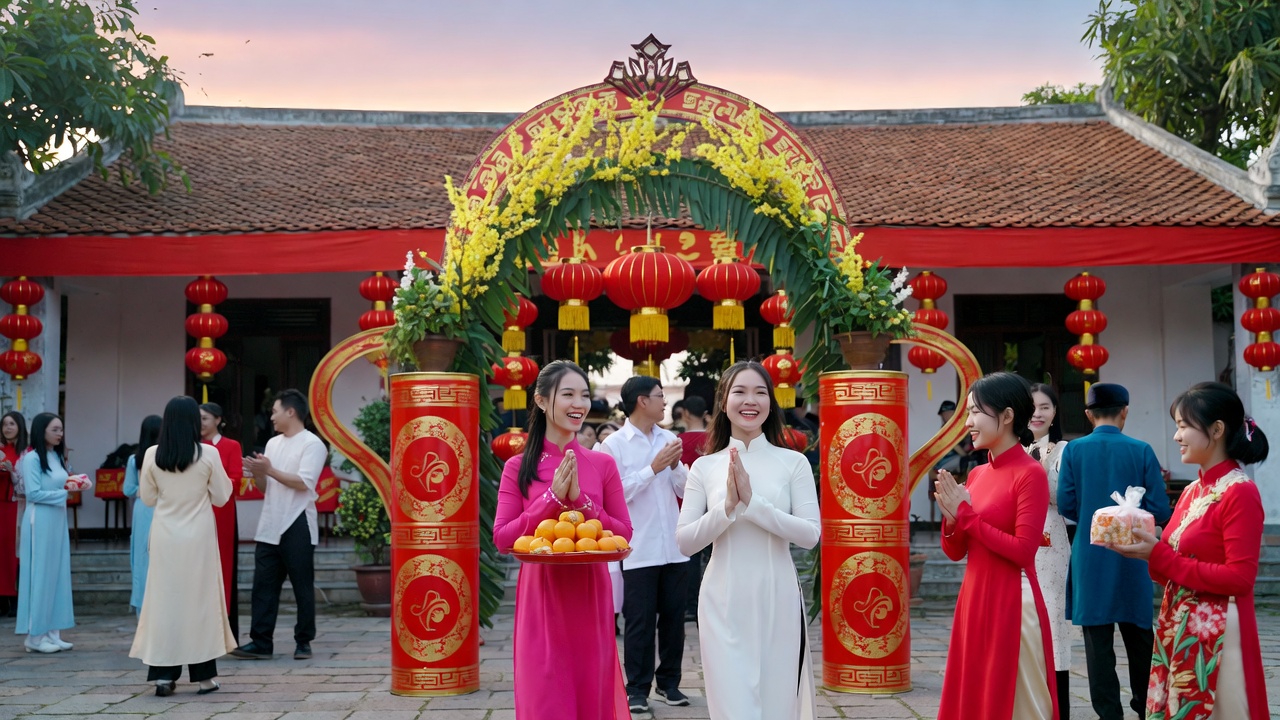
A Complete Guide to Meaningful Vietnamese Lunar New Year Blessings, Lucky Phrases, and Cultural Etiquette
The scent of bánh chưng steaming in the kitchen, the bright crimson of mai blossoms adorning every household, and the joyful chaos of families reuniting after months apart—this is Tết Nguyên Đán, the Vietnamese Lunar New Year, the most sacred and celebrated festival in Vietnam. But beyond the feasts and festivities lies a tradition that touches the very heart of Vietnamese culture: the art of giving and receiving Tết greetings and wishes.
As someone who has spent over two decades documenting festivals across Southeast Asia, I can tell you that no celebration quite captures the essence of familial love, ancestral reverence, and hopeful optimism like Tết. And at the center of this celebration are the carefully chosen words that Vietnamese people exchange—phrases passed down through generations, each syllable carrying the weight of history and the lightness of hope.
Whether you’re planning to visit Vietnam during this magical season, have Vietnamese friends or family members, or simply want to understand one of the world’s most beautiful cultural traditions, this guide will take you deep into the world of traditional Vietnamese New Year phrases. From the universal “Chúc Mừng Năm Mới” to region-specific blessings that reveal the subtle differences between Northern and Southern Vietnam, you’ll discover not just what to say, but why these words matter so profoundly.
Understanding the Significance of Tết Nguyên Đán in Vietnamese Culture
Before we explore the specific phrases and greetings, it’s essential to understand why Tết holds such an irreplaceable position in the Vietnamese heart. Tết Nguyên Đán—literally meaning “Feast of the First Morning of the First Day”—isn’t merely a holiday. It’s the spiritual reset button for an entire nation.
The festival typically falls between late January and mid-February, aligned with the lunar calendar that Vietnam shares with China, Korea, and several other East Asian nations. However, Vietnamese Tết carries distinctive characteristics that set it apart from Chinese New Year or Korean Seollal.
Three core pillars define Tết:
- Ancestral worship and family reunion — Vietnamese families believe that the spirits of ancestors return home during Tết, making it crucial for all family members to gather and pay respects together.
- Welcoming new beginnings — Every action during Tết is believed to influence the entire year ahead, which is why greetings and wishes carry such tremendous weight.
- Community harmony and social bonds — Tết is when debts are settled, conflicts are resolved, and relationships are renewed through meaningful exchanges of words and gifts.
Understanding these pillars helps explain why Vietnamese New Year greetings aren’t casual pleasantries. They’re intentional, heartfelt expressions designed to invoke blessings and strengthen bonds.
How to Say Happy New Year in Vietnamese: The Essential Phrases
Let’s begin with the foundational phrase that every visitor to Vietnam should know. When you want to wish someone a Happy New Year in Vietnamese, the most universal expression is:
“Chúc Mừng Năm Mới” (Chook Muhng Nahm Moy)
This phrase translates directly to “Happy New Year” and works in virtually any context. Breaking it down:
| Vietnamese | Pronunciation | Meaning |
|---|---|---|
| Chúc | Chook | To wish |
| Mừng | Muhng | Happiness/Joy |
| Năm | Nahm | Year |
| Mới | Moy | New |
This greeting is appropriate for strangers, colleagues, acquaintances, and anyone you meet during the Tết season. It’s safe, respectful, and universally understood throughout Vietnam.
However, if you want to specifically reference the Lunar New Year (as opposed to the Western calendar new year celebrated on January 1st), you can say:
“Chúc Mừng Năm Mới Âm Lịch”
Adding “Âm Lịch” (lunar calendar) specifies that you’re celebrating the traditional Vietnamese New Year rather than the Gregorian new year.
For a more traditional and formal greeting that older Vietnamese will particularly appreciate, consider:
“Cung Chúc Tân Xuân” (Koong Chook Tahn Swun)
This Sino-Vietnamese phrase carries a more elegant, classical feel. It roughly translates to “Respectfully wishing you a new spring” and is often seen on Tết decorations, greeting cards, and formal announcements. The phrase evokes the renewal of spring, which is central to Tết’s symbolism.
Traditional Vietnamese New Year Wishes for Elders and Parents
In Vietnamese culture, showing respect to elders isn’t optional—it’s fundamental. The concept of “kính trọng người lớn tuổi” (respecting the elderly) permeates every aspect of social interaction, and Tết is when this respect finds its most elaborate expression.
When greeting parents, grandparents, or any elder, Vietnamese people don’t simply say “Happy New Year.” They offer specific blessings tailored to what matters most to older generations.
Health and Longevity Wishes for Grandparents
The most cherished wish for elderly family members focuses on health and long life:
“Chúc ông/bà sống lâu trăm tuổi” (Wishing grandfather/grandmother to live to 100 years)
This isn’t mere hyperbole—it’s a sincere prayer for continued life and vitality. In a culture that reverences age and wisdom, wishing someone a century of life is the ultimate honor.
“Chúc ông bà mạnh khỏe, sống vui, sống khỏe” (Wishing grandfather and grandmother good health, to live happily, to live healthily)
The repetition of “sống” (to live) emphasizes the wish for not just survival, but a fulfilling, vibrant existence.
Formal Tết Greetings for Parents
When addressing parents specifically, Vietnamese children—regardless of their own age—traditionally kneel or bow deeply while offering wishes:
“Con kính chúc bố mẹ năm mới an khang thịnh vượng” (I respectfully wish father and mother a new year of peace and prosperity)
The word “Con” at the beginning is crucial. It’s the humble pronoun that children use when addressing parents, and beginning a wish with “Con” immediately establishes the proper hierarchical relationship that Vietnamese culture values so deeply.
“Chúc bố mẹ sức khỏe dồi dào, vạn sự như ý” (Wishing father and mother abundant health, may all things go as you wish)
| Phrase | Pronunciation | When to Use |
|---|---|---|
| Con kính chúc | Kohn kihn chook | Beginning of any wish to parents |
| An khang thịnh vượng | Ahn kahng tihn vuhng | Formal, appropriate for all elders |
| Sức khỏe dồi dào | Sook kwe yoy zow | When health is the primary concern |
| Vạn sự như ý | Vahn suh nyuh ee | To wish that everything goes well |
Vietnamese New Year Blessings for Children and Young People
The flow of blessings during Tết moves both up and down the generational ladder. While children offer respectful wishes to elders, adults reciprocate with blessings specifically crafted for young people’s futures.
Academic Success Wishes for Students
In Vietnam, education is viewed as the golden path to a better life. Parents and grandparents place enormous emphasis on academic achievement, and Tết wishes reflect this cultural priority:
“Chúc con học giỏi, thi đỗ” (Wishing you to study well and pass your exams)
For high school students facing the critical national examinations that determine university placement, this wish carries particular weight:
“Chúc cháu năm nay thi đại học đỗ điểm cao” (Wishing you to score high on the university entrance exams this year)
Growth and Character Wishes for Children
Younger children receive wishes focused on their physical development and character:
“Chúc con ngoan, hay ăn chóng lớn” (Wishing you to be well-behaved, eat well, and grow quickly)
“Năm mới chúc con cao lớn, khỏe mạnh” (New year wishes for you to grow tall and healthy)
The Tradition of Lì Xì: Lucky Money and Accompanying Wishes
No discussion of Tết greetings for children is complete without mentioning lì xì (lucky money). These small red envelopes containing crisp new bills are given by elders to children and unmarried young adults, accompanied by specific wishes:
“Mừng tuổi con, chúc con học giỏi” (Happy birthday/new age to you, wishing you academic success)
The phrase “mừng tuổi” deserves special attention. In Vietnamese tradition, everyone becomes one year older at Tết, regardless of their actual birthdate. So giving lì xì is simultaneously a birthday gift and a New Year blessing.
Common amounts in lì xì envelopes follow specific cultural rules:
- Amounts should be even numbers (representing pairs and good fortune)
- The number 8 is particularly lucky (sounding like “prosperity” in Chinese-Vietnamese)
- Amounts ending in 0 are preferred
- The bills should always be new and crisp
Prosperity and Wealth Wishes for Vietnamese New Year
Vietnam’s economic transformation over the past three decades has been nothing short of remarkable. From a war-torn nation struggling with poverty, Vietnam has emerged as one of Southeast Asia’s most dynamic economies. This material progress hasn’t diminished the importance of prosperity wishes during Tết—if anything, it has amplified them.
Classic Prosperity Phrases
“Chúc Mừng Năm Mới – Tiền vô như nước” (Happy New Year – May money flow in like water)
This vivid simile captures the Vietnamese aspiration for abundant, continuous wealth. The image of water—essential for rice cultivation and life itself—flowing without end is powerful and deeply rooted in agricultural Vietnamese culture.
“Năm mới làm ăn phát đạt” (New year of flourishing business)
The phrase “làm ăn phát đạt” is commonly used among merchants and business people. “Làm ăn” literally means “to work and eat” but idiomatically refers to doing business or earning a living.
Modern Business Tết Greetings
Contemporary Vietnamese have adapted traditional wishes for the business context:
“Chúc công ty năm mới phát tài phát lộc” (Wishing the company prosperity and fortune in the new year)
“Kính chúc quý khách hàng năm mới an khang thịnh vượng, vạn sự như ý” (Respectfully wishing our valued customers a new year of peace, prosperity, and may all things go as you wish)
| Business Context | Appropriate Greeting |
|---|---|
| To clients/customers | Kính chúc quý khách hàng… |
| To business partners | Kính chúc quý đối tác… |
| To employees | Chúc toàn thể nhân viên… |
| To superiors | Kính chúc sếp/giám đốc… |
Lucky Phrases and Auspicious Words for Tết Celebrations
Beyond specific wishes, Vietnamese Tết is filled with auspicious words and phrases that are displayed, spoken, and even worn during the holiday. Understanding these lucky words gives deeper insight into Vietnamese values and beliefs.
The Four Key Prosperity Words
Four Sino-Vietnamese characters frequently appear on Tết decorations and in greetings:
- Phúc (福) — Happiness, good fortune, blessings
- Lộc (祿) — Prosperity, career success, official salary
- Thọ (壽) — Longevity, long life
- Khang (康) — Health, peace, well-being
These four concepts form the foundation of what Vietnamese people wish for one another. A complete blessing often incorporates multiple elements:
“Chúc phúc lộc thọ khang” (Wishing happiness, prosperity, longevity, and health)
Spring-Related Lucky Phrases
Since Tết coincides with spring, many lucky phrases incorporate seasonal imagery:
“Xuân về tết đến, vạn sự hanh thông” (As spring returns and Tết arrives, may all things proceed smoothly)
“Tân xuân như ý, vạn sự cát tường” (May the new spring be as you wish, may all things be auspicious)
Zodiac-Specific Greetings
Each Tết is associated with one of the twelve animals in the Vietnamese zodiac. Greetings often incorporate the year’s animal:
| Year of the… | Special Greeting |
|---|---|
| Dragon (Thìn) | “Năm Thìn phát tài” (Year of the Dragon brings wealth) |
| Snake (Tỵ) | “Năm Tỵ bình an” (Year of the Snake brings peace) |
| Horse (Ngọ) | “Mã đáo thành công” (The horse brings success) |
| Goat (Mùi) | “Năm Mùi may mắn” (Year of the Goat brings luck) |
| Monkey (Thân) | “Năm Thân vạn phúc” (Year of the Monkey brings myriad blessings) |
| Rooster (Dậu) | “Năm Dậu thịnh vượng” (Year of the Rooster brings prosperity) |
| Dog (Tuất) | “Năm Tuất an khang” (Year of the Dog brings peace and health) |
| Pig (Hợi) | “Năm Hợi đại cát” (Year of the Pig brings great fortune) |
| Rat (Tý) | “Năm Tý tài lộc” (Year of the Rat brings wealth and prosperity) |
| Buffalo (Sửu) | “Năm Sửu sung túc” (Year of the Buffalo brings abundance) |
| Tiger (Dần) | “Năm Dần thắng lợi” (Year of the Tiger brings victory) |
| Cat (Mão) | “Năm Mão như ý” (Year of the Cat – things go as wished) |
Note: Unlike Chinese astrology which features the Rabbit, Vietnamese zodiac has the Cat—making it unique among East Asian zodiac systems.
Regional Differences: Northern vs Southern Vietnamese Tết Greetings
Vietnam stretches over 1,650 kilometers from north to south, and this geographical diversity has produced notable regional variations in Tết customs—including greetings.
Northern Vietnamese Tết Phrases (Miền Bắc)
Northern Vietnam, with Hanoi as its cultural heart, tends toward more formal, Confucian-influenced expressions:
“Kính chúc” (respectfully wish) is used more frequently in the North, reflecting the region’s stronger adherence to traditional hierarchical structures.
Northern greetings often emphasize:
- Family unity — “Gia đình sum vầy, hạnh phúc”
- Traditional values — “Đạo hiếu, nghĩa tình”
- Harvest prosperity — “Mùa màng bội thu”
The pronunciation in the North is also distinct, with clearer tone differentiation that some consider closer to classical Vietnamese.
Southern Vietnamese Tết Phrases (Miền Nam)
Southern Vietnam, centered around Ho Chi Minh City (formerly Saigon), displays a more relaxed, commercially-oriented approach:
“Chúc” without “kính” is more common in the South, reflecting a generally less formal culture.
Southern greetings often emphasize:
- Business success — “Làm ăn phát đạt”
- Practical prosperity — “Tiền vô như nước”
- Good fortune — “May mắn, hanh thông”
Central Vietnam’s Unique Traditions
The Central region, particularly Huế (the former imperial capital), maintains some of the most archaic and elaborate Tết greeting traditions:
“Cung chúc tân xuân, vạn sự như ý” is delivered with particular formality in Huế, often accompanied by deep bows and formal attire.
Central Vietnamese also use the pronoun system with exceptional precision, with separate address forms for:
- Paternal grandparents vs. maternal grandparents
- Older uncles vs. younger uncles
- Various degrees of cousins
The Art of Giving Tết Wishes: Cultural Etiquette and Timing
Knowing the phrases is only half the equation. How, when, and to whom you deliver Tết greetings matters enormously in Vietnamese culture.
Timing Your Tết Greetings
The Tết season has three distinct phases, each with different greeting customs:
1. Pre-Tết (Tất Niên) — The last days of the old year
During this period, focus on:
- Thanking people for the past year
- Settling any outstanding matters
- Saying goodbye to the old year
Appropriate phrase: “Chúc bạn một ngày tất niên vui vẻ” (Wishing you a happy year-end day)
2. Giao Thừa (New Year’s Eve/Midnight)
This is the most sacred moment, when the old year transitions to the new. Greetings given at this time are believed to carry special power.
Appropriate phrase: “Giao thừa đã điểm, chúc mừng năm mới!” (Midnight has struck, Happy New Year!)
3. The First Days of Tết
The first three days are the most important, with the first day (Mùng Một) being the most auspicious.
Who Should Greet First?
Vietnamese social hierarchy dictates greeting order:
- Younger greets older — Always wait for elders to be greeted first
- Junior greets senior — In professional settings, employees greet bosses first
- Guest greets host — When visiting someone’s home
- Return greetings — Always respond to a greeting with an appropriate blessing
Physical Accompaniments to Greetings
Words alone don’t complete a proper Tết greeting. Traditional physical elements include:
| Action | Meaning | When Used |
|---|---|---|
| Clasped hands + slight bow | Respect | General greeting |
| Deep bow (kneeling for elders) | Deep respect | To parents/grandparents |
| Both hands presenting lì xì | Offering blessings | Elders to children |
| Receiving with both hands | Gratitude | Receiving lì xì or gifts |
First Visitor Customs: Xông Đất and Special Greetings
One of the most fascinating Tết traditions involves xông đất (literally “stepping on the earth”)—the custom surrounding the first person to enter a home in the new year.
The Significance of Xông Đất
Vietnamese families believe that the first visitor after midnight on New Year’s Eve will influence their fortune for the entire year. This isn’t taken lightly—families carefully consider who should xông đất their home.
Ideal characteristics for a xông đất person:
- Good moral character
- Compatible zodiac sign with the head of household
- Recent good fortune or success
- Pleasant demeanor
- Preferably male (in traditional contexts)
Some families even pre-arrange for a specific person to be their first visitor, ensuring the year starts with the best possible energy.
Greetings for the Xông Đất Guest
The first visitor typically says:
“Xin chúc gia chủ năm mới vạn sự như ý, tấn tài tấn lộc” (Wishing the homeowners a new year where all things go as wished, advancing in wealth and prosperity)
The host responds:
“Cảm ơn, chúc bạn/anh/chị năm mới an khang thịnh vượng” (Thank you, wishing you a new year of peace and prosperity)
Words to Avoid as First Visitor
The xông đất guest must be especially careful with their words. Certain words are considered unlucky and should never be spoken on the first day of Tết:
- Chết (death) — absolutely forbidden
- Bệnh (sickness) — avoid at all costs
- Khổ (suffering) — never mention
- Nghèo (poverty) — don’t bring up
- Hết (finished/ended) — suggests depletion
- Mất (lost) — implies loss
Even innocent statements like “hết gạo rồi” (we’re out of rice) become taboo during Tết, as mentioning something being “finished” on the first day might predict shortages all year.
Modern Vietnamese New Year Greetings for Social Media and Text Messages
While traditional face-to-face greetings remain important, contemporary Vietnamese have enthusiastically embraced digital Tết wishes. Understanding how to properly send Tết greetings via text, Facebook, Zalo, and other platforms has become essential for anyone with Vietnamese connections.
Popular Digital Tết Messages
Shorter, punchier versions of traditional wishes work better for digital platforms:
“HNY! Chúc bạn năm mới vui vẻ, may mắn!” (HNY! Wishing you a happy and lucky new year!)
“Tết vui nha! 🧧🏮” (Have a fun Tết!)
“Năm mới phát tài! 💰” (New year prosperity!)
Tết Greeting Images and Graphics
Vietnamese social media explodes with elaborate Tết graphics during the holiday. Popular visual elements include:
- Mai blossoms (yellow apricot flowers, symbolizing South Vietnam)
- Đào blossoms (pink peach flowers, symbolizing North Vietnam)
- Red and gold color schemes
- The zodiac animal of the year
- Traditional calligraphy (thư pháp)
- Bánh chưng and bánh tét (traditional rice cakes)
Video Greetings and Calls
For family members abroad, video calls during Tết have become essential. When making such calls, remember:
- Call at an appropriate hour in Vietnam (morning is ideal)
- Dress nicely — Tết video calls are quasi-formal
- Begin with proper greetings to each family member by seniority
- Show your surroundings if you’ve decorated for Tết abroad
- Have any children greet elders properly via video
Professional and Workplace Tết Greetings in Vietnam
The workplace dynamic during Tết follows specific protocols that blend traditional respect with modern business culture.
From Employees to Bosses
“Kính chúc sếp/giám đốc năm mới sức khỏe, thành công rực rỡ” (Respectfully wishing the boss/director a new year of health and brilliant success)
“Chúc anh/chị năm mới vạn sự hanh thông, công việc thuận lợi” (Wishing you a new year where everything goes smoothly, work proceeds favorably)
From Managers to Team Members
“Chúc toàn thể nhân viên năm mới an khang, thăng tiến” (Wishing all employees a new year of peace and career advancement)
“Cảm ơn sự đóng góp trong năm qua, chúc năm mới tốt lành” (Thank you for your contributions this past year, wishing you a good new year)
Company-Wide Announcements
Vietnamese companies often release formal Tết messages:
“Ban Giám đốc Công ty [Tên] kính chúc Quý khách hàng, Quý đối tác và toàn thể Cán bộ Nhân viên một năm mới An Khang Thịnh Vượng, Vạn Sự Như Ý, Tấn Tài Tấn Lộc!”
(The Board of Directors of [Company Name] respectfully wishes our valued customers, partners, and all staff a new year of Peace and Prosperity, May All Things Go As Wished, Advancing in Wealth and Fortune!)
Vietnamese New Year Wishes for Specific Professions and Life Situations
Different professions and circumstances call for tailored wishes that acknowledge specific aspirations.
For Students and Academics
“Chúc em học hành tấn tới, thi cử đỗ đạt” (Wishing you academic advancement and success in examinations)
“Năm mới học giỏi, đỗ đại học” (New year of good studies, passing university entrance)
For Newlyweds and Couples
“Chúc anh chị năm mới trăm năm hạnh phúc, sớm có tin vui” (Wishing you a new year of a hundred years of happiness, soon to have good news)
The phrase “tin vui” (good news) is a culturally tactful way of wishing for pregnancy—a common blessing for newlyweds that respects privacy while conveying the message clearly.
For Expectant Parents
“Chúc mẹ tròn con vuông” (Wishing mother round, child square)
This seemingly puzzling phrase is actually an ancient blessing meaning “a smooth, safe delivery.” Round and square represent completeness and perfection in Vietnamese symbolism.
For Those Seeking Employment
“Chúc bạn năm mới tìm được công việc như ý” (Wishing you a new year of finding work as you wish)
For Those Facing Health Challenges
“Chúc sức khỏe mau bình phục, năm mới an lành” (Wishing quick health recovery, a peaceful new year)
Tết Greetings Through Vietnamese Poetry and Proverbs
Vietnamese literary tradition has produced numerous Tết-specific verses that are recited, calligraphed, and exchanged during the holiday.
Classic Tết Couplets (Câu Đối)
Traditional houses display paired verses called “câu đối” during Tết. These must balance in meaning, tone, and structure:
“Tân niên hạnh phúc bình an tới / Xuân đến vinh hoa phú quý về” (The new year brings happiness and peace / Spring arrives with glory and wealth)
“Đào nở tươi cho xuân mới đẹp / Mai vàng rực khắp nẻo đường quê” (Peach blossoms brighten the beautiful new spring / Yellow apricot blooms across all countryside paths)
Folk Sayings About Tết
“Mùng một tết cha, mùng hai tết mẹ, mùng ba tết thầy” (First day of Tết for father’s family, second day for mother’s family, third day for teachers)
This proverb outlines the traditional visiting schedule during Tết and reflects the importance placed on teachers in Vietnamese culture.
“Đói cho sạch, rách cho thơm” (Though hungry, stay clean; though poor, stay pure)
Often invoked during Tết to remind people that moral character matters more than material display.
When Things Go Wrong: Responding to Tết Greeting Mistakes
Even with the best intentions, cultural missteps can happen. Here’s how to recover gracefully from common Tết greeting errors.
If You Use the Wrong Pronoun
Vietnamese pronouns change based on age relationships, and using the wrong one can offend. If you realize your mistake:
“Xin lỗi, cháu/con/em xin được chúc lại…” (Sorry, may I offer my wishes again…)
Then repeat your greeting with the correct pronoun.
If You Accidentally Say Something Unlucky
Should an unlucky word slip out, quickly add:
“Giời ơi, quên mất, năm mới đại cát đại lợi!” (Oh my, I forgot, new year of great fortune and benefit!)
The positive phrase helps “cancel out” the negativity.
If You Arrive Empty-Handed
Visiting during Tết without gifts is a faux pas. If you realize too late:
“Em đến thăm anh chị trước, quà em sẽ gửi sau ạ” (I’ve come to visit first, I’ll send gifts later)
Teaching Children Traditional Tết Greetings
For Vietnamese families abroad or mixed-culture families, teaching children proper Tết greetings preserves cultural heritage across generations.
Age-Appropriate Phrases for Toddlers
Simple phrases for very young children:
“Chúc ông bà mạnh khỏe!” (Wishing grandparents good health!)
“Năm mới vui vẻ!” (Happy new year!)
Scripts for Children Receiving Lì Xì
Teach children to say:
“Con/Cháu xin cảm ơn ông/bà/cô/chú. Chúc [appropriate title] năm mới mạnh khỏe!” (Thank you grandfather/grandmother/aunt/uncle. Wishing you health in the new year!)
Making It Fun
Turn learning into a game:
- Create flashcards with Vietnamese phrases
- Role-play greeting scenarios
- Watch Vietnamese Tết videos together
- Practice with Vietnamese-speaking relatives via video chat before Tết
The Deeper Meaning Behind Vietnamese New Year Blessings
After exploring dozens of phrases and their applications, it’s worth stepping back to appreciate the philosophical depth underlying these traditions.
Blessings as Social Contract
Vietnamese Tết greetings function as a form of social contract renewal. When you offer a blessing, you’re not just saying words—you’re:
- Acknowledging the relationship between yourself and the recipient
- Affirming your place in the social hierarchy
- Committing to positive interaction for the coming year
- Invoking collective good will from the community and ancestors
This explains why generic greetings feel inadequate. A tailored blessing demonstrates that you see the person as an individual, understand their circumstances, and care about their specific well-being.
The Reciprocity Principle
Vietnamese culture operates on deep reciprocity. Blessings given are expected to be returned—not necessarily in the same words, but in equivalent sentiment. This creates a web of mutual good wishes that binds communities together.
Blessings as Practical Magic
Many Vietnamese genuinely believe that Tết blessings carry real power. The right words from the right person at the right moment can influence fate. This isn’t mere superstition—it’s a worldview where language and intention shape reality.
Consider the care taken with xông đất. If the first words spoken in your home in the new year can affect your fortune, then those words deserve serious attention. The belief may be traditional, but it reinforces a profound truth: words matter.
Preparing Your Own Tết Greeting List
As a practical exercise, consider preparing a personalized list of greetings for the Vietnamese people in your life:
Template for Organizing Your Tết Greetings
| Recipient | Relationship | Appropriate Greeting | Special Notes |
|---|---|---|---|
| [Name] | [Elder/Peer/Junior] | [Phrase] | [Zodiac/circumstances] |
Sample Completed List
| Recipient | Relationship | Appropriate Greeting | Special Notes |
|---|---|---|---|
| Bà Lan | Grandmother | Chúc bà sống lâu trăm tuổi, sức khỏe dồi dào | Recently recovered from illness |
| Anh Minh | Older brother | Chúc anh năm mới làm ăn phát đạt | Started new business this year |
| Em Thu | Younger sister | Chúc em học giỏi, thi đỗ | Preparing for university exams |
| Colleague Phương | Peer | Chúc bạn năm mới vui vẻ, thăng tiến | Hoping for promotion |
Conclusion: The Heart of Vietnamese New Year Greetings
As I reflect on years of Tết celebrations witnessed across Vietnam—from the frost-touched mornings of Sapa where H’mong families gather in their most colorful traditional dress, to the electric excitement of Ho Chi Minh City where modern skyscrapers blaze with holiday lights—one truth emerges clearly: the words spoken during Tết are not mere formalities.
They are threads that weave families together across distance and time. They are bridges between generations, carrying the values of ancestors to children who will someday pass them on. They are small acts of hope in an uncertain world, collective declarations that despite whatever the past year brought, the new one can be better.
When you learn to say “Chúc Mừng Năm Mới” to a Vietnamese friend, you’re doing more than demonstrating linguistic skill. You’re showing respect for a civilization that has endured millennia of challenges while maintaining its cultural soul. You’re acknowledging that some things—family, health, prosperity, happiness—are universal human aspirations that transcend all borders.
And perhaps, in that moment of shared blessing, you’ll feel what I’ve felt in countless Vietnamese homes during Tết: that sense of belonging to something larger than oneself, that warmth of being welcomed into a family’s most sacred celebration, that profound simplicity of wishing someone well and meaning it completely.
May your journey into Vietnamese culture be blessed. Chúc bạn một năm mới an khang thịnh vượng, vạn sự như ý!
Quick Reference: Essential Vietnamese New Year Phrases
For easy reference, here’s a comprehensive table of the most important Tết greetings covered in this guide:
| English Meaning | Vietnamese Phrase | Pronunciation Guide | Best Used For |
|---|---|---|---|
| Happy New Year | Chúc Mừng Năm Mới | Chook Muhng Nahm Moy | Everyone, general use |
| Wishing prosperity | An khang thịnh vượng | Ahn kahng tihn vuhng | Formal occasions |
| Good health | Sức khỏe dồi dào | Sook kwe yoy zow | Elders, those recovering |
| May all go as wished | Vạn sự như ý | Vahn suh nyuh ee | Universal blessing |
| Live to 100 | Sống lâu trăm tuổi | Shong loh chahm too-ee | Grandparents, elders |
| Success in business | Làm ăn phát đạt | Lahm an faht daht | Business people |
| Money flows like water | Tiền vô như nước | Tee-en voh nyuh nuhk | Friends, informal |
| Study well, pass exams | Học giỏi, thi đỗ | Hawk zoi, tee doh | Students |
| New spring blessings | Cung Chúc Tân Xuân | Koong Chook Tahn Swun | Very formal |
| Peace and happiness | Bình an hạnh phúc | Bihn ahn hanh fook | General blessing |