A deep reckoning with Australia’s Stolen Generations — from the 1997 landmark inquiry to the urgent, unfinished fight for healing in 2026.
Aboriginal and Torres Strait Islander readers are advised that this article discusses the forced removal of children from families and communities. It may contain references to people who have passed away. Support is available through the National Aboriginal and Torres Strait Islander crisis support line on 13 92 76.
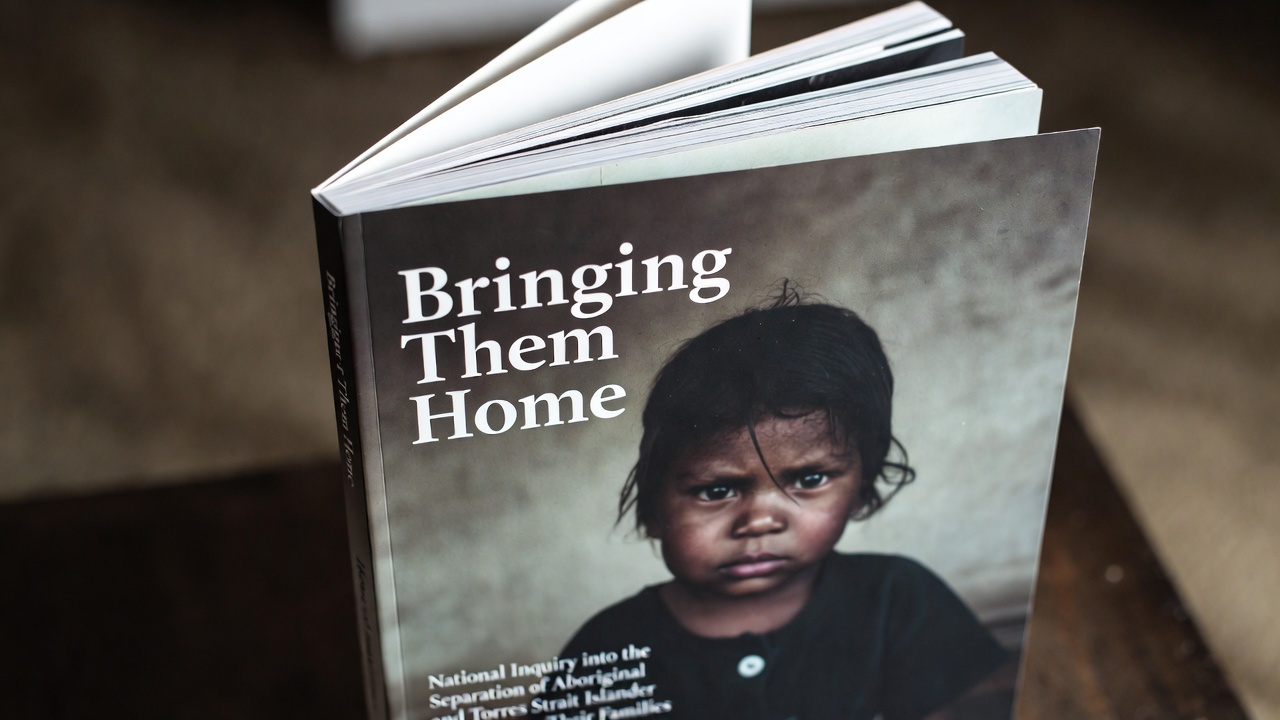
On 26 May 1997, a 689-page document landed on the desks of Australian parliamentarians. Its title was plain. Its contents were devastating. Bringing Them Home: Report of the National Inquiry into the Separation of Aboriginal and Torres Strait Islander Children from Their Families laid bare one of the most painful chapters in Australian history — the systematic, government-sanctioned removal of Aboriginal and Torres Strait Islander children from their families, their communities, and their Country.
The children taken under these policies became known as the Stolen Generations. Their stories — of loss, grief, broken identity, and extraordinary resilience — shook the nation. The report’s 54 recommendations offered a blueprint for healing: a formal apology, reparations, family reunion services, and long-term community support.
Now, nearly three decades later, the question remains: has Australia kept its promises?
The answer, according to the Healing Foundation’s 2025 report ‘Are you waiting for us to die?’, is a resounding and heartbreaking no. Only six per cent of the original recommendations have been clearly implemented. Survivors are ageing. Many have already passed away without seeing justice. And Aboriginal and Torres Strait Islander children continue to be removed from their families at alarming rates.
This is the story of the Bringing Them Home report — what it found, what it demanded, and why its unfinished business is the most urgent human rights issue in Australia today.
What Was the Bringing Them Home Report and Why Does It Still Matter?
To understand the significance of the Bringing Them Home report, you need to understand the scale of what happened to Aboriginal and Torres Strait Islander families across more than a century.
From the mid-1800s through to the 1970s — and in some regions even later — Australian federal and state government agencies, along with church missions, forcibly removed Aboriginal and Torres Strait Islander children from their families. The children targeted were often of mixed descent, labelled “half-caste” under the racial language of the era. The stated aim was assimilation: to breed out Aboriginality and absorb these children into white Australian society.
The removals were not isolated incidents. They were systematic government policy. Official estimates suggest that in certain regions, between one in ten and one in three Indigenous children were taken between 1910 and 1970. The precise number of children removed may never be known, but as the Australian Institute of Aboriginal and Torres Strait Islander Studies (AIATSIS) has noted, “there are very few families who have been left unaffected.”
Children were placed in institutions, missions, and foster homes. Many were forbidden from speaking their languages. Many were given new names. Many were told their parents were dead — when they were not. Many suffered physical, emotional, and sexual abuse.
The Push for a National Inquiry
By the 1980s, Aboriginal organisations and welfare groups were speaking out publicly about the discriminatory nature of government child removal practices. The family tracing and reunion agency Link-Up (NSW) Aboriginal Corporation was established in 1980 to help survivors reconnect with their families.
Aboriginal organisations pushed for a national inquiry as early as 1990. In 1992, the Secretariat of National Aboriginal and Islander Child Care (SNAICC) formally demanded one at its national conference. The catalyst came in 1995, when the federal Attorney-General, Michael Lavarch, established the National Inquiry into the Separation of Aboriginal and Torres Strait Islander Children from Their Families. The inquiry was conducted by the Human Rights and Equal Opportunity Commission (HREOC) — now known as the Australian Human Rights Commission.
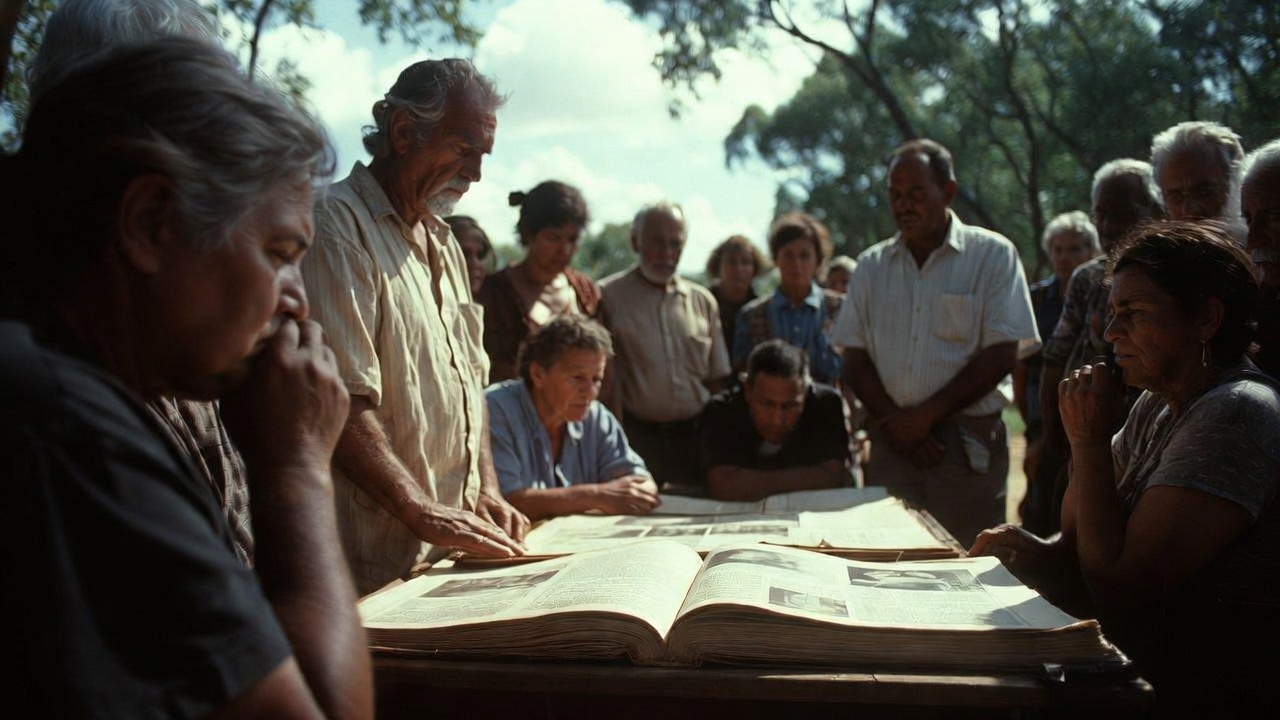
The inquiry was led by the late Sir Ronald Wilson, then president of HREOC, and Professor Mick Dodson, then Aboriginal and Torres Strait Islander Social Justice Commissioner. Over two years, they heard the testimony of more than 500 Aboriginal and Torres Strait Islander people who had been taken from their families. They also received submissions from organisations and institutions across the country.
The result was the Bringing Them Home report, tabled in Federal Parliament on 26 May 1997.
What the Report Found
The report’s findings were stark. It concluded that the forced removal of Aboriginal and Torres Strait Islander children constituted a gross violation of human rights. It went further, describing the Australian practice of Indigenous child removal as involving “both systematic racial discrimination and genocide” under the terms of the United Nations Convention on the Prevention and Punishment of the Crime of Genocide.
The report documented how the policies had devastated individuals, families, and entire communities. Witnesses spoke of lifelong grief, broken identities, substance abuse, mental illness, family violence, and a profound disconnection from culture and Country. One witness told the inquiry:
“I’ve got everything that could be reasonably expected: a good home environment, education, stuff like that, but that’s all material stuff. It’s all the non-material stuff that I didn’t have — the lineage… You know, you’ve just come out of nowhere; there you are.”
The opening dedication of the report itself is among the most powerful passages in Australian public life:
“We remember and lament all the children who will never come home. We dedicate this report with thanks and admiration to those who found the strength to tell their stories to the Inquiry and to the generations of Aboriginal and Torres Strait Islander people separated from their families and communities.”
How the Stolen Generations Shaped Australian History and Identity
The Stolen Generations are not a footnote in Australian history. They are central to it. The policies of forced removal shaped the trajectory of Aboriginal and Torres Strait Islander communities across the continent. They disrupted knowledge systems that had been passed down for tens of thousands of years. They broke kinship ties that formed the foundation of social, spiritual, and economic life.
The Intergenerational Trauma of Forced Child Removal in Australia
The harm did not end when the policies stopped. A 2019 study by the Australian Institute of Health and Welfare (AIHW) found that children living in households with members of the Stolen Generations were more likely to experience a range of poor outcomes. These included worse physical and mental health, higher rates of missing school, and greater levels of poverty.
Intergenerational trauma is now widely recognised as a key driver of disadvantage in Aboriginal and Torres Strait Islander communities. When a child is removed from their family, the damage ripples outward and forward through time. Parents who were never parented themselves struggle to raise their own children. Communities that lost a generation of young people lost the means of passing on language, ceremony, and law. The disconnection from Country — the deep spiritual and physical relationship Aboriginal people have with their ancestral lands — compounded the psychological harm.
As the Healing Foundation explains: “If people don’t have the opportunity to heal from past trauma, they may unknowingly pass it on to others. Their children may experience difficulties with attachment, disconnection from their extended families and culture, and high levels of stress.”
The National Apology and Its Legacy
One of the key recommendations of the Bringing Them Home report was for Australian parliaments to issue formal apologies. Between 1997 and 1999, all state and territory parliaments did so. But for more than a decade, the Australian Government refused.
Prime Minister John Howard rejected calls for a national apology. In 1999, he moved a Motion of Reconciliation that expressed “deep and sincere regret” but deliberately avoided the word “sorry.” Howard argued that an apology would imply that present generations were responsible for the actions of their forebears.
It was not until 13 February 2008 that newly elected Prime Minister Kevin Rudd stood in the House of Representatives and delivered the words that millions of Australians — Indigenous and non-Indigenous — had been waiting to hear:
“We apologise for the laws and policies of successive Parliaments and governments that have inflicted profound grief, suffering and loss on these our fellow Australians. We apologise especially for the removal of Aboriginal and Torres Strait Islander children from their families, their communities and their country. For the pain, suffering, and hurt of these Stolen Generations, their descendants and for their families left behind, we say sorry.”
The Apology was broadcast on large screens in parks and public spaces across the country. Crowds gathered. Tears flowed. For many Stolen Generations survivors, it was the first time their government had acknowledged what had been done to them.
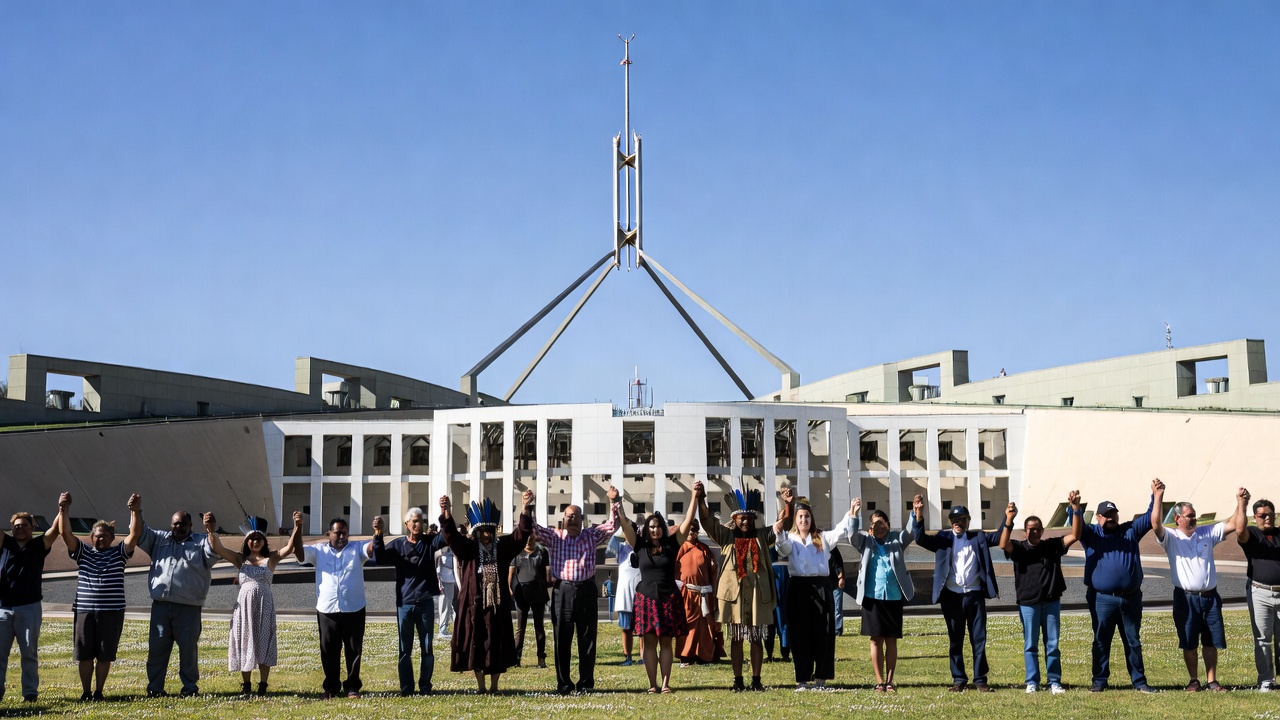
February 13 is now observed as National Apology Day. And every year on 26 May, Australians mark National Sorry Day — the anniversary of the tabling of the Bringing Them Home report — as a day of remembrance, reflection, and recommitment to healing.
What Were the Key Recommendations of the Bringing Them Home Report?
The Bringing Them Home report contained 54 recommendations designed to address the legacy of forced removal and support healing and reconciliation. Later analysis by the University of Canberra, commissioned by the Healing Foundation, expanded the count to 83 recommendations when sub-recommendations were included.
These recommendations spanned several areas:
| Category | Key Recommendations |
|---|---|
| Apologies and Acknowledgment | National apology from Parliament; state and territory apologies; acknowledgment by police forces and churches |
| Reparations | Financial compensation; rehabilitation services; guarantee of non-repetition |
| Family Reunion and Tracing | Funding for family tracing services (Link-Up); access to personal and family records |
| Health and Wellbeing | Culturally appropriate mental health services; community-based healing programs |
| Records Access | Preservation and release of government records related to removal |
| Education and Training | Public education about the history; professional training in culturally safe practice |
| Monitoring and Accountability | Establishment of a body to monitor implementation of recommendations |
The recommendations were broad, practical, and — in the view of their authors — urgent. They were designed to address the past and protect the future.
Why Only 6 Percent of Bringing Them Home Recommendations Have Been Implemented
Nearly three decades after the report was tabled, the failure to act on its recommendations is one of the most significant policy shortcomings in modern Australian history.
In February 2025, the Healing Foundation released its landmark report, ‘Are you waiting for us to die?’ The unfinished business of Bringing Them Home. The report, which drew on commissioned analysis by researchers at the University of Canberra and years of consultation with survivors and Stolen Generations organisations, delivered a damning assessment.
Of the 83 Bringing Them Home recommendations:
- 5 (6%) have been clearly implemented
- 11 received a qualified pass
- 10 were classified as a partial failure
- 45 (54%) have failed to be implemented entirely
- 10 have an unclear status
- 1 is no longer applicable
The title of the report itself — Are you waiting for us to die? — came directly from the voices of survivors. As Shannan Dodson, chief executive of the Healing Foundation and daughter of Professor Mick Dodson who led the original inquiry, said: “We have already lost too many survivors, even in the last few weeks. Immediate and prioritised action is needed.”
The discussion paper’s authors, Professor Alison Gerard and Maureen Bates-McKay from the University of Canberra, put it bluntly: “It is hard to conceive that gross human rights violations, documented and bravely retold by survivors in public forums, can be met with systematic inaction in so many areas. Yet that is the confronting reality that exists in Australia.”
What Went Wrong?
Several factors explain the failure.
Political will has been inconsistent. While the 2008 Apology was a watershed moment, the policy follow-through has been uneven across different governments and jurisdictions. There has been no sustained, coordinated national strategy to implement the Bringing Them Home recommendations.
Funding has been inadequate. Aboriginal and Torres Strait Islander community-controlled organisations — widely acknowledged as the most effective providers of culturally safe services — have been chronically under-resourced.
Bureaucratic complexity has created barriers. With responsibilities split across federal, state, and territory governments, accountability has been diffuse. No single body has been given clear oversight of implementation.
Records access remains a major issue. Survivors seeking their own family records — documents that hold the key to their identity and history — face an inconsistent patchwork of policies across jurisdictions. Some records are held by state archives, some by churches, some by welfare agencies. Many are incomplete, poorly preserved, or inaccessible.
The Stolen Generations Redress Schemes Explained: Who Is Eligible and What Is Available?
Reparations were among the most important recommendations of the Bringing Them Home report. Progress on this front has been slow, uneven, and — for many survivors — too late.
Territories Stolen Generations Redress Scheme
In August 2021, the Australian Government announced a $378.6 million financial and wellbeing redress scheme for Stolen Generations survivors removed from their families in the Northern Territory (before 1 July 1978), the Australian Capital Territory (before 11 May 1989), and the Jervis Bay Territory.
Administered by the National Indigenous Australians Agency (NIAA), the Territories Stolen Generations Redress Scheme offers:
- A redress payment of up to $75,000 to recognise the harm of forced removal
- A healing assistance payment of $7,000
- The option of a Direct Personal Response, where survivors can tell their story to a senior government official and receive an acknowledgment and apology
The scheme opened for applications on 1 March 2022. It was originally set to close for applications on 28 February 2026 and operate until 30 June 2026, though it has since been extended to 31 August 2027.
Western Australian Stolen Generations Redress Scheme
In May 2025, the Western Australian Government announced its own Stolen Generations Redress Scheme, which opened for applications in November 2025. The scheme is available to Aboriginal people removed from their families in Western Australia before 1 July 1972. Eligible applicants receive:
- A redress payment of $85,000
- An optional personal acknowledgment from a state representative
WA Premier Roger Cook said: “No amount of money can ever make up for the experiences of Stolen Generations survivors and their families, or the ongoing effects on people’s lives. This scheme is about acknowledging the injustices and offering a path forward — towards healing, truth-telling, and reconciliation.”
Other Jurisdictional Schemes
Other states have offered their own forms of redress over the years:
| Jurisdiction | Scheme / Action |
|---|---|
| Tasmania | $58,000 payment under its Stolen Generations of Aboriginal Children Act 2006 |
| South Australia | Stolen Generations Reparations Scheme, offering financial payments and support |
| New South Wales | Stolen Generations reparations package announced in 2017, including $75,000 payments |
| Victoria | Stolen Generations redress through the Victorian Stolen Generations Taskforce |
| Queensland | No standalone Stolen Generations redress scheme as of early 2026 |
A national reparation scheme — as recommended by the Bringing Them Home report — has never been established. The patchwork of state and territory schemes means that the amount of compensation a survivor receives depends on where they were removed, not the extent of the harm they suffered. Many survivors have died before redress became available. In most schemes, payments cannot be passed to their families after death.
Aboriginal Children in Out-of-Home Care: Why the Stolen Generations Crisis Is Not Over
Perhaps the most devastating finding in any assessment of the Bringing Them Home legacy is this: Aboriginal and Torres Strait Islander children are still being removed from their families at rates that dwarf those of non-Indigenous children.
When the Bringing Them Home report was published in 1997, approximately 20 per cent of all children in out-of-home care in Australia identified as Aboriginal or Torres Strait Islander. By 2025, that figure had risen to approximately 44 per cent — despite Aboriginal and Torres Strait Islander people making up only about 3.8 per cent of Australia’s total population.
The raw numbers are staggering. According to the Australian Institute of Health and Welfare’s Child Protection Australia 2023-24 report:
- At 30 June 2024, approximately 20,000 Aboriginal and Torres Strait Islander children were in out-of-home care
- The rate was 50 per 1,000 Aboriginal and Torres Strait Islander children, compared to approximately 4.6 per 1,000 for non-Indigenous children
- Aboriginal and Torres Strait Islander children were approximately 9.6 times more likely to be in out-of-home care than non-Indigenous children
The number of Indigenous children in out-of-home care has risen dramatically over the past two decades. In 2008 — the year of the National Apology — approximately 9,070 Indigenous children were in out-of-home care. By 2024, that figure had more than doubled.
A System That Fails Families
In March 2025, Human Rights Watch released a report on the disproportionate removal of Aboriginal children in Western Australia. The findings were alarming.
The report found that authorities in Western Australia were “quick to remove children from Aboriginal mothers fleeing domestic violence and from Aboriginal parents without adequate housing, rather than providing appropriate services.” In WA, Aboriginal children were more than 20 times more likely to be in out-of-home care than non-Indigenous children.
Between 2003 and 2023, the number of Aboriginal children in out-of-home care in Western Australia surged from 570 to 3,068 — rising from 35 per cent to 59 per cent of all children in care. And despite having the highest overrepresentation of Aboriginal children in its care system, WA spent less than 5 per cent of its child protection budget on family support programs. The national average was 15 per cent.
The SNAICC Family Matters Report 2025 — the tenth annual edition of Australia’s only report led by Aboriginal and Torres Strait Islander peoples on child protection — delivered a clear verdict: invest in families, not crisis.
The report found that only 7.3 per cent of Aboriginal and Torres Strait Islander children in out-of-home care were reunified with their families, compared to 10.1 per cent of non-Indigenous children. More troublingly, 37.6 per cent of Aboriginal and Torres Strait Islander children exited out-of-home care to “other circumstances,” including independent living, homelessness, and detention.
The Parallel to the Stolen Generations
Many Aboriginal and Torres Strait Islander leaders, organisations, and advocates have drawn a direct line between the historical Stolen Generations and today’s child protection system. While the explicit racial intent of the earlier policies no longer exists, the practical effect is the same: Aboriginal children are being separated from their families, communities, culture, and Country at rates vastly higher than any other population group.
As the National Commission for Aboriginal and Torres Strait Islander Children and Young People stated on National Sorry Day 2025: “In 2025, as increasing numbers of Aboriginal and Torres Strait Islander children are removed, we must also acknowledge that we are still not where we need to be.”
Amnesty International Australia put it even more directly: “When children are removed, traumatised, and then criminalised, we are repeating the very harms the Bringing Them Home report warned us about.”
Closing the Gap Target 12: Is Australia on Track to Reduce Aboriginal Child Removal?
The National Agreement on Closing the Gap, established in 2020 through a historic partnership between Australian governments and Aboriginal and Torres Strait Islander peak organisations, set 19 national socio-economic targets for improving outcomes for Indigenous Australians.
Target 12 directly addresses the issue at the heart of the Bringing Them Home legacy: By 2031, reduce the rate of over-representation of Aboriginal and Torres Strait Islander children in out-of-home care by 45 per cent.
The baseline year was 2019, when the rate stood at 54.2 per 1,000 Aboriginal and Torres Strait Islander children (using 2016 Census population data). By 2024, using updated 2021 Census data, the rate was 50.3 per 1,000. NSW reported a small improvement to 45.1 per 1,000 by June 2025.
But nationally, the Productivity Commission’s Closing the Gap dashboard assessed the trajectory as worsening. The target is not on track. At the current rate of progress, Australia will not meet its 2031 goal.
The failure is systemic. As the AIHW noted, the continued overrepresentation of Aboriginal and Torres Strait Islander children in the child protection system stems from “intergenerational trauma originating from colonisation, systemic racism, inequality across social determinants of child wellbeing, and the laws, policies and practices that operate to the detriment of Aboriginal and Torres Strait Islander people.”
The National Healing Package: What Stolen Generations Survivors Need Now
The Healing Foundation’s 2025 report did not just catalogue failure. It offered a path forward.
The report made 19 recommendations as part of a proposed National Healing Package for Stolen Generations survivors. These recommendations are organised across six areas:
1. Reparations
The report calls for equitable redress for all Stolen Generations survivors, regardless of the jurisdiction in which they were removed. The current patchwork of state and territory schemes creates inequality. A national approach is needed.
2. Rehabilitation and Research
Stolen Generations survivors have specific and complex ageing needs resulting from their forced removal. They are, as Professor Steve Larkin, chair of the Healing Foundation, described, “the gap within the gap.” Culturally safe, trauma-informed aged care and health services must be provided. More research is needed to understand and respond to the specific health challenges facing survivors.
3. Records, Family Tracing, and Reunions
Access to personal records — the documents that tell survivors who they are, where they came from, and who their families were — remains inconsistent and inequitable, particularly across state and territory borders. The report recommends establishing traineeships and scholarships for Indigenous archivists, genealogists, and historical researchers.
4. Acknowledgments and Apologies
While the 2008 National Apology was significant, many institutions — including churches, police forces, and welfare agencies — have not fully acknowledged their roles. Ongoing, public acknowledgment is essential for healing.
5. Education and Training
All Australians need to understand this history. The report calls for education about the Stolen Generations to be embedded in school curricula and professional training programs. A culturally safe, trauma-informed, and skilled workforce is critical.
6. Monitoring and Accountability
The Bringing Them Home report recommended a body to monitor implementation. Nearly 30 years later, no such body exists. The Healing Foundation calls for a formal, transparent monitoring and accountability framework.
The Healing Foundation’s 2025-26 Pre-Budget Submission called on the federal government to fund and lead this National Healing Package in partnership with Stolen Generations organisations.
National Sorry Day 2026: How Australia Commemorates the Stolen Generations
Every year on 26 May, Australians pause to remember. National Sorry Day — officially the National Day of Healing — marks the anniversary of the tabling of the Bringing Them Home report.
The first National Sorry Day was held on 26 May 1998, one year after the report was released. It grew from a grassroots movement that saw thousands of Australians sign Sorry Books in a campaign described as “the people’s apology.”
In 2025, the theme for National Sorry Day was “We cannot wait another generation.” It was a direct call to action, reflecting the urgency expressed in the Healing Foundation’s report.
National Sorry Day is observed across the country with:
- Flag-raising ceremonies featuring the Aboriginal and Torres Strait Islander flags
- Reconciliation walks and street marches
- Community gatherings, morning teas, and barbecues
- Speeches from community leaders, Elders, educators, and politicians
- School activities, including essay competitions, candlelight memorials, and screenings of films about the Stolen Generations
- Media statements from Australian parliamentarians and community organisations
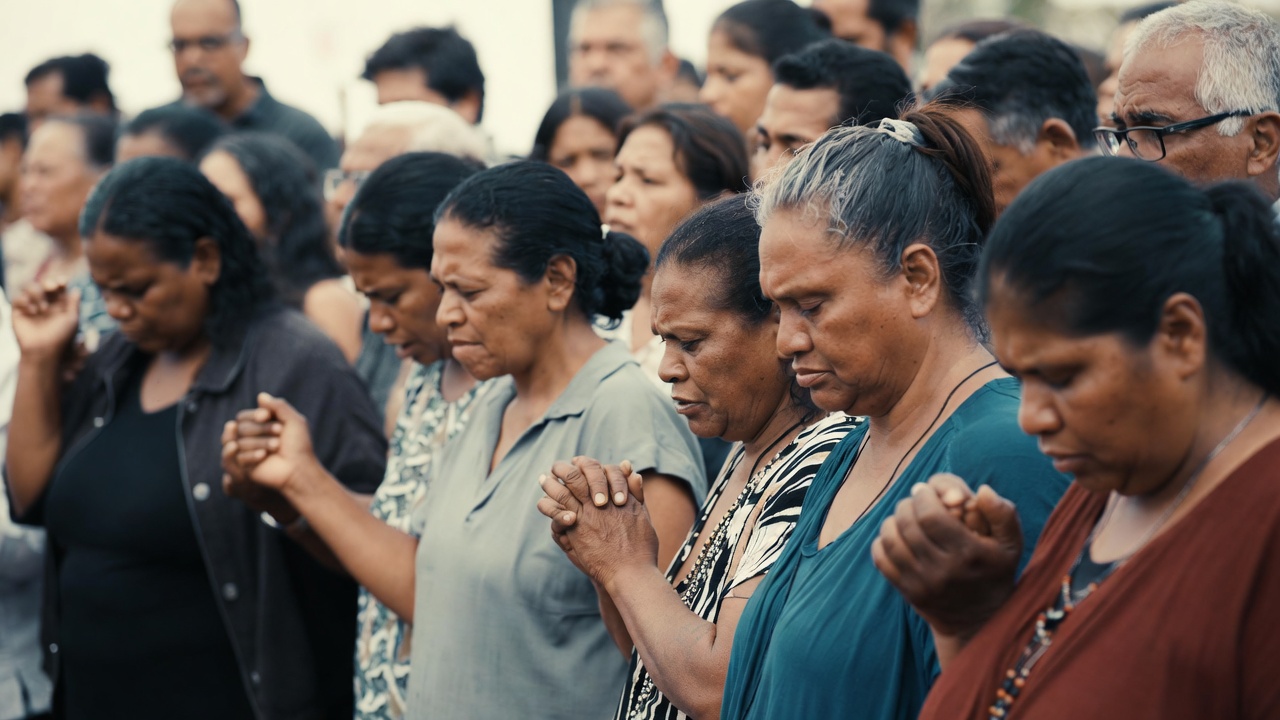
For Stolen Generations survivors and their descendants, Sorry Day is a day of deep personal significance. It is a day to honour those who were taken, mourn those who never came home, and celebrate the extraordinary resilience of those who survived.
National Sorry Day also marks the beginning of National Reconciliation Week (27 May – 3 June), a time for all Australians to learn about shared histories, cultures, and achievements and to explore how each of us can contribute to reconciliation.
How Healing Foundation Programs Support Stolen Generations Survivors and Their Families
The Healing Foundation is a national Aboriginal and Torres Strait Islander organisation that plays a central role in supporting the Stolen Generations and addressing intergenerational trauma.
Founded in 2009 as one of the initiatives flowing from the 2008 Apology, the Healing Foundation works in partnership with Aboriginal and Torres Strait Islander communities to:
- Amplify the voices of Stolen Generations survivors
- Support community-led healing programs that combine Indigenous healing knowledge with Western trauma knowledge
- Conduct research into the ongoing impacts of forced removal
- Advocate for policy change at all levels of government
- Develop resources and training for culturally safe service delivery
The Foundation is guided by a Stolen Generations Reference Group made up of survivors from across Australia. Their lived experience shapes the organisation’s priorities and advocacy.
One of the Foundation’s key principles is that healing is a holistic process. For Aboriginal and Torres Strait Islander people, healing addresses mental, physical, emotional, and spiritual needs. It involves connections to culture, family, and land. It works best when solutions are culturally strong, community-driven, and led by Indigenous peoples themselves.
The 2025 Closing the Gap Independent Aboriginal and Torres Strait Islander Led Review, conducted by the Jumbunna Institute, recommended stronger recognition and visibility for Stolen Generations survivors as part of the National Agreement’s goals — a clear endorsement of the Healing Foundation’s advocacy.
Understanding the Aboriginal and Torres Strait Islander Child Placement Principle
At the centre of efforts to prevent a new generation of Stolen Generations is the Aboriginal and Torres Strait Islander Child Placement Principle (ATSICPP).
The Principle was developed in response to the Stolen Generations experience. It aims to ensure that when Aboriginal and Torres Strait Islander children must be placed in out-of-home care, they remain as connected as possible to their family, community, culture, and Country.
The ATSICPP has five core elements:
- Prevention — Supporting families to stay safely together
- Partnership — Ensuring Aboriginal and Torres Strait Islander people and organisations are involved in decisions about their children
- Placement — Following a hierarchy that prioritises placement with extended family, then community members, then other Aboriginal and Torres Strait Islander carers
- Participation — Enabling children, parents, families, and communities to participate in decision-making
- Connection — Maintaining children’s connections to family, community, culture, and Country
All Australian jurisdictions have committed to implementing the ATSICPP. But implementation remains inconsistent. As the SNAICC Family Matters Report 2025 found, child protection systems continue to prioritise late, punitive interventions rather than the early supports families need to stay together.
At 30 June 2024, of the approximately 20,000 Aboriginal and Torres Strait Islander children in out-of-home care, 55 per cent (around 10,900) were placed with relatives or kin. Another 8.6 per cent (around 1,700) were placed with non-relative Aboriginal and Torres Strait Islander caregivers. But more than 36 per cent of Aboriginal and Torres Strait Islander children in care were not placed in accordance with the ATSICPP hierarchy — meaning they were living with non-Indigenous, non-family carers.
Voices from the Stolen Generations: Personal Stories of Loss, Survival, and Resilience
The Bringing Them Home report was not just a policy document. It was a collection of human voices — over 500 testimonies from people who had lived through forced removal and its aftermath.
These stories are preserved through several important projects:
- The Australian Human Rights Commission’s Bringing Them Home interactive map allows people to explore the stories of those who shared their experiences with the inquiry, and to learn about the places to which stolen children were removed.
- The Stolen Generations’ Testimonies project records on film the personal testimonies of survivors and shares them publicly.
- Link-Up organisations across Australia continue to help members of the Stolen Generations trace their families and reconnect with their communities.
These stories share common threads: the confusion of being taken; the fear of unfamiliar places; the longing for family; the struggle to rebuild identity; and, above all, a refusal to be defined by trauma.
As Aunty Yvonne Mills, a Kokatha/Mirning Stolen Generations survivor and member of the Healing Foundation’s Stolen Generations Reference Group, has shared through her advocacy work — the strength and resilience of survivors is the foundation on which healing must be built.
What You Can Do to Support Stolen Generations Justice and Reconciliation in Australia
Reconciliation is not the responsibility of Aboriginal and Torres Strait Islander people alone. It belongs to all Australians. Here are meaningful ways to engage:
Educate yourself. Read the Bringing Them Home report. Explore the Australian Human Rights Commission’s resources. Watch documentaries like Rabbit-Proof Fence (2002) and The Sapphires (2012). Listen to the stories of Stolen Generations survivors.
Mark National Sorry Day (26 May) and National Reconciliation Week (27 May – 3 June). Attend local events. Organise a morning tea at your workplace. Fly the Aboriginal and Torres Strait Islander flags. Have conversations with your family and friends about what reconciliation means.
Support Aboriginal and Torres Strait Islander organisations. Organisations like the Healing Foundation, SNAICC, Amnesty International Australia, and Link-Up are doing critical work. Your financial support, your voice, and your advocacy make a difference.
Advocate for policy change. Call on your elected representatives to support:
- A national Stolen Generations reparations scheme
- Full implementation of the Bringing Them Home recommendations
- The Healing Foundation’s proposed National Healing Package
- Increased funding for Aboriginal and Torres Strait Islander community-controlled organisations
- Full implementation of the Closing the Gap Target 12
Engage with reconciliation in your community. Sign up as a Reconciliation Australia supporter. Develop a Reconciliation Action Plan (RAP) in your workplace or organisation.
The Ongoing Fight for Stolen Generations Justice: Where Australia Goes from Here
As Australia moves through 2026, the question that hovered over the 1997 Bringing Them Home report has not been answered. It has only grown more urgent.
Stolen Generations survivors are ageing. With every passing year, the window for meaningful reparation narrows. Shannan Dodson of the Healing Foundation has made this point with devastating clarity: survivors are watching their brothers and sisters pass away, waiting for governments to act on promises made decades ago.
At the same time, the child protection system continues to remove Aboriginal and Torres Strait Islander children from their families at rates that are not merely disproportionate — they are deeply alarming. The Closing the Gap Target 12 is going backwards. Human Rights Watch has documented systemic failures in how governments respond to the needs of Aboriginal families. The SNAICC Family Matters Report 2025 warns that “Australia’s child protection systems continue to prioritise late, punitive interventions rather than the early supports that families need.”
But there are also reasons for hope. Aboriginal and Torres Strait Islander communities continue to demonstrate extraordinary resilience. Community-controlled organisations are leading the way in designing and delivering culturally safe services. State governments — including Western Australia with its new redress scheme — are taking steps, however belated, to address the legacy of forced removal. The Healing Foundation’s National Healing Package provides a clear, practical roadmap for action.
The Bringing Them Home report opened with a truth that remains as vital today as it was in 1997:
“The truth is that the past is very much with us today, in the continuing devastation of the lives of Indigenous Australians. That devastation cannot be addressed unless the whole community listens with an open heart and mind to the stories of what has happened in the past and, having listened and understood, commits itself to reconciliation.”
Australia has listened. Some have understood. But the commitment to reconciliation — measured not in words but in action — remains incomplete.
The Stolen Generations cannot wait another generation.
Frequently Asked Questions About the Bringing Them Home Report and Stolen Generations
What is the Bringing Them Home report? The Bringing Them Home report is the 689-page document produced by the National Inquiry into the Separation of Aboriginal and Torres Strait Islander Children from Their Families. It was tabled in the Australian Parliament on 26 May 1997 and documented the forced removal of Aboriginal and Torres Strait Islander children — the Stolen Generations — from their families under government policies.
When were Aboriginal children taken from their families? Forced removals occurred from the mid-1800s through to the 1970s, and in some areas even later. The most intensive period of removals was between approximately 1910 and 1970. Official estimates suggest between one in ten and one in three Indigenous children were taken in certain regions during this period.
How many children were part of the Stolen Generations? The exact number is unknown and may never be determined. AIATSIS notes that “very few” Aboriginal and Torres Strait Islander families were unaffected. The removals affected communities across every state and territory of Australia.
What is National Sorry Day? National Sorry Day is held on 26 May each year to commemorate the Stolen Generations and mark the anniversary of the Bringing Them Home report. It has been observed since 1998 and is a day for remembrance, reflection, and commitment to reconciliation.
Have the Bringing Them Home recommendations been implemented? As of 2025, only 6 per cent (5 out of 83) of the report’s recommendations have been clearly implemented, according to the Healing Foundation’s analysis. Over half (54 per cent) have not been implemented at all.
What is the Territories Stolen Generations Redress Scheme? It is a $378.6 million scheme established by the Australian Government offering financial payments and wellbeing support to Stolen Generations survivors removed from the Northern Territory, ACT, and Jervis Bay Territory. Applications are accepted until 31 August 2027.
Are Aboriginal children still being removed from their families? Yes. At 30 June 2024, approximately 20,000 Aboriginal and Torres Strait Islander children were in out-of-home care, at a rate approximately 9.6 times higher than non-Indigenous children. The Closing the Gap Target to reduce this overrepresentation by 45 per cent by 2031 is assessed as worsening.
How can I support the Stolen Generations? You can educate yourself about the history, attend National Sorry Day events, support Aboriginal and Torres Strait Islander organisations, and advocate for policy change including a national reparations scheme and full implementation of the Bringing Them Home recommendations.
This article was written with deep respect for the Stolen Generations — the survivors, the descendants, and those who never came home. It acknowledges the Traditional Custodians of the lands on which this story unfolded and pays respect to Elders past, present, and emerging. Always was, always will be Aboriginal land.
Support Services:
- 13YARN (13 92 76) — Aboriginal and Torres Strait Islander crisis support
- Healing Foundation — healingfoundation.org.au
- Link-Up — Family tracing and reunion services for Stolen Generations members
- Knowmore — Free legal advice: knowmore.org.au
- Lifeline — 13 11 14