A comprehensive guide to understanding Rwanda’s National Heroes Day, the three categories of national heroes, and the profound significance of February 1st for the Land of a Thousand Hills
Introduction: What is Rwanda National Heroes Day and Why Does It Matter?
Every year on February 1st, the small Central African nation of Rwanda pauses to honor its most courageous sons and daughters. National Heroes Day (known locally as Umunsi w’Intwari z’Igihugu) is far more than a public holiday—it is a profound moment of collective reflection, remembrance, and national identity formation that touches the heart of every Rwandan.
For a country that emerged from the devastating 1994 Genocide against the Tutsi, in which more than one million people lost their lives in approximately 100 days, honoring heroes carries extraordinary weight. These are not distant historical figures from centuries past. Many are individuals whose sacrifices occurred within living memory. Their stories continue to shape the moral fabric of Rwandan society.
Rwanda’s heroes represent different eras, different struggles, and different forms of courage. Some led armies. Others protected neighbors at the cost of their own lives. Some were students who, when ordered to separate by ethnicity, chose unity—and death—over division. Their legacies collectively answer a fundamental question every nation must address: What values define us as a people?
This comprehensive guide explores the three categories of Rwandan national heroes—Imanzi, Imena, and Ingenzi—the individuals honored within each category, and why this day resonates so deeply with every generation of Rwandans.
Understanding the Three Categories of Rwandan National Heroes
Rwanda’s approach to honoring its heroes is remarkably systematic and thoughtful. Unlike many nations that maintain a single, undifferentiated list of national heroes, Rwanda recognizes heroes across three distinct categories, each representing different levels of sacrifice and contribution. This tiered system was established to create clarity and precision in how heroism is recognized and remembered.
The Chancellery for Heroes, National Orders and Decorations of Honour (CHENO), established under Article 139 of the Rwanda Constitution of 2003 (revised in 2015), oversees the identification, research, and recognition of national heroes. According to CHENO, a hero is defined as “a person who pursues objectives resulting in supreme achievement of public interest, and does so with nobility, courage, outstanding sacrifice and resilience.”
The three categories are:
| Category | Kinyarwanda Name | Meaning | Key Characteristics |
|---|---|---|---|
| First (Highest) | Imanzi | Supreme Hero | Supreme sacrifice, often giving one’s life; outstanding importance and example |
| Second | Imena | Distinguished Hero | Extraordinary acts marked by high sacrifice, importance, and example |
| Third | Ingenzi | Meritorious Hero | Notable good ideas or achievements with sacrifice and high example |
Each category carries specific criteria for selection, and the process of identifying and approving heroes involves thorough research and verification by CHENO. The ultimate goal is to inspire Rwandans to excel in all their undertakings and to nurture citizens who are “excellent and results-oriented.”
Imanzi: The Supreme Heroes Who Made the Ultimate Sacrifice
The Imanzi category represents the highest honor Rwanda can bestow upon its citizens. These are individuals who demonstrated supreme sacrifice—typically giving their own lives—while performing acts of outstanding importance that serve as eternal examples for all Rwandans.
A crucial characteristic of the Imanzi category is that it can only be awarded posthumously. This reflects the understanding that the ultimate measure of supreme sacrifice is the willingness to give everything, including one’s life, for the greater good of the nation.
Currently, only two entities hold the Imanzi designation:
Major General Fred Gisa Rwigema: The Father of Rwanda’s Liberation
Born: April 10, 1957, in Mukiranze village, Kamonyi District, Southern Province
Died: October 2, 1990, at Nyabweshongozi Hill, Nyagatare District
Significance: Founder of the Rwandan Patriotic Front (RPF) and first commander of the liberation struggle
Major General Fred Gisa Rwigema stands as one of the most revered figures in modern Rwandan history. His story is one of exile, perseverance, military brilliance, and ultimate sacrifice.
Early Life and Exile
Rwigema was born into a Tutsi family in southern Rwanda. In 1960, when he was just three years old, his family was forced to flee Rwanda following the Hutu Revolution of 1959, which saw widespread violence against Tutsi populations and the overthrow of King Kigeli V. The Rwigema family settled in a refugee camp in Nshungerezi, Ankole, Uganda—beginning what would be decades of exile for hundreds of thousands of Rwandans.
Military Career and the Dream of Return
After completing high school in 1976, Rwigema joined the Front for National Salvation (FRONASA), a rebel group led by Yoweri Museveni. He later traveled to Mozambique to join FRELIMO rebels fighting Portuguese colonial rule, gaining invaluable guerrilla warfare experience.
When Rwigema returned to Uganda in 1979, he joined the Uganda National Liberation Army (UNLA) and participated in the overthrow of Idi Amin. He subsequently joined Museveni’s National Resistance Army (NRA), fighting in the Ugandan Bush War from 1981 to 1986.
Rwigema’s military prowess was exceptional. He earned the Swahili nickname “Mungu wa vita” (God of War) for his battlefield leadership in northern Uganda. Unlike many commanders of his era, he was known for never being implicated in war crimes—maintaining strict discipline and ethics even in brutal conflict conditions.
After the NRA captured power in 1986, Rwigema rose to become Deputy Minister of Defence and Deputy Army Commander of Uganda. Yet despite these achievements, his heart remained fixed on liberating his homeland.
The October 1990 Liberation Struggle
Throughout the 1980s, Rwigema quietly organized Rwandan refugees in Uganda, building the foundation for what would become the Rwandan Patriotic Front. When diplomatic efforts to enable refugee repatriation repeatedly failed, military action became the only remaining option.
On the morning of October 1, 1990, Major General Rwigema led approximately 4,000-6,000 RPF soldiers across the Ugandan-Rwandan border at Kagitumba, launching Rwanda’s liberation struggle. The campaign began successfully, with RPF forces swiftly defeating government troops guarding the border.
In a powerful symbolic gesture, Rwigema removed his Ugandan military insignia and threw them into the Umuvumba River, signifying his complete commitment to the Rwandan cause.
However, tragedy struck the very next day. On October 2, 1990, while coordinating troop movements at Nyabweshongozi Hill—just ten kilometers inside Rwandan territory—Rwigema was killed by enemy fire. He was 33 years old.
Legacy of Major General Fred Rwigema
Rwigema’s death was kept secret for an entire month to prevent demoralization of RPF forces. Leadership eventually passed to Paul Kagame, who had been in the United States for military training and returned immediately upon hearing of the invasion.
The liberation struggle Rwigema initiated continued for four years, ultimately culminating in July 1994 when RPF forces stopped the Genocide against the Tutsi and liberated the country.
Rwigema was laid to rest on October 1, 1995, with full military honors at the National Heroes’ Mausoleum in Remera, Kigali. His tomb, painted in white, occupies a place of supreme honor alongside the Unknown Soldier.
His widow, Jeannette Urujeni Rwigema, and their two children—Junior Gisa and Teta Gisa—carry forward his memory. But his legacy belongs to all Rwandans, symbolizing the courage to dream of a better homeland and the willingness to sacrifice everything to achieve it.
The Unknown Soldier: Honoring All Who Fell in Liberation
Standing beside Major General Rwigema’s tomb at the National Heroes’ Mausoleum is the Tomb of the Unknown Soldier—a profound symbol honoring the collective sacrifice of countless fighters whose names history could not record.
The Unknown Soldier represents:
- All soldiers who died during the 1990-1994 Liberation Struggle
- Fighters whose remains could never be identified
- Future soldiers who may “shed blood in a battlefield to defend country sovereignty”
At the mausoleum, a striking sculptural symbol depicts a figure with outstretched arms pouring the “water of life” into another person’s bowl while facing the opposite direction. According to mausoleum manager Patrick Byishimo, this represents “the supreme sacrifice that one gives, even his or her own life, for the sake of others with no basis of who they are.”
The tomb serves as a place where Rwandans can honor loved ones whose final resting places remain unknown—transforming individual grief into collective remembrance and gratitude.
Imena: The Distinguished Heroes of Rwanda
The Imena category represents the second tier of Rwandan heroism. These individuals are recognized for their extraordinary acts for the country, characterized by supreme sacrifice, high importance, and exemplary conduct. Unlike Imanzi, the Imena category can include both those who have passed away and, theoretically, living individuals.
Currently, the Imena category includes five distinct honorees (or groups):
1. King Mutara III Rudahigwa Charles Léon Pierre: The Reformist Monarch
Born: March 1911, Nyanza, Rwanda
Died: July 25, 1959, Bujumbura, Burundi
Reign: November 16, 1931 – July 25, 1959
Significance: Progressive king who fought for independence and abolished oppressive systems
King Mutara III Rudahigwa occupies a unique place in Rwandan history as a monarch who championed modernization, social justice, and ultimately, independence from Belgian colonial rule—a mission that may have cost him his life.
Rise to Power
Born to King Yuhi V Musinga and Queen Kankazi, Rudahigwa received education at the Colonial School for Chiefs’ Sons in Nyanza. In 1931, when Belgian colonial authorities deposed his father for alleged contact with German agents and resistance to colonial policies, twenty-year-old Rudahigwa was placed on the throne.
Reforms and Achievements
Despite ruling under colonial constraint, Rudahigwa pursued remarkable reforms:
- Abolished forced labor (akazi) that had subjected Rwandans to exploitation for generations
- Eliminated the ubuhake system—a feudal arrangement where servants worked for wealthy families in exchange for cattle
- Established the Mutara Fund to provide scholarships for Rwandans to study abroad
- Founded schools, including an Islamic college in Nyamirambo, Kigali
- Advocated for unity and reconciliation among all Rwandans
In 1943, Rudahigwa became the first Rwandan king to convert to Catholicism, adopting the Christian name Charles Léon Pierre. Three years later, in 1946, he consecrated Rwanda to Christ the King in a ceremony at Nyanza—an event still remembered by surviving witnesses.
Fight for Independence
As independence movements swept across Africa in the 1950s, Rudahigwa increasingly advocated for Rwandan sovereignty. His 1956 demand for independence from Belgium created significant tension with colonial authorities.
Mysterious Death
On July 25, 1959, King Rudahigwa traveled to Bujumbura (then part of the Belgian mandate) to meet with colonial officials about a planned trip to the United Nations in New York, where he intended to advocate for Rwandan independence.
At the Clinique Prince Régent Charles, Rudahigwa went for a yellow fever vaccination—required for international travel. According to multiple accounts, the king lay down on the hospital bed to receive his injection and never woke up.
No autopsy was performed. The official cause of death was attributed to a reaction to penicillin, but many Rwandans believe he was assassinated by Belgian authorities who feared his independence campaign. Witnesses reported a Congolese nurse running through the hospital shouting in Swahili: “They have killed the king of Rwanda!”
The mystery surrounding Rudahigwa’s death remains unresolved to this day. What is certain is that his vision of a unified, independent Rwanda—expressed in his consecration prayer requesting “love, peace, harmony, and unity”—eventually became reality, though not in his lifetime.
2. Michel Rwagasana: The Secretary Who Refused to Divide
Born: 1927, Gitisi, Nyamagana, Ruhango District, Southern Province
Died: 1963
Significance: Personal Secretary to King Mutara III Rudahigwa; advocate for unity who refused ethnic segregation
Michel Rwagasana represents the quiet courage of those who serve with integrity and refuse to compromise their principles, even at the cost of their lives.
After attending the prestigious Groupe Scolaire Astrida and earning a diploma in administration, Rwagasana rose through positions of increasing responsibility due to his exceptional integrity. In 1954, he became the Personal Secretary to King Mutara III Rudahigwa, serving as one of the monarch’s most trusted advisors.
Rwagasana was instrumental in the activities of UNAR (Union Nationale Rwandaise), a political party advocating for immediate independence and national unity. He consistently spoke against ethnic divisions and promoted reconciliation among all Rwandans.
Following independence and the establishment of the Kayibanda regime, Rwagasana was pressured to embrace ethnic segregation policies. He refused. This principled stance cost him his life—he was killed in 1963 for declining to participate in the divisionism that would eventually lead to genocide.
His legacy reminds Rwandans that heroism is not always dramatic. Sometimes it means simply saying “no” to injustice, even when compliance would ensure survival.
3. Agathe Uwilingiyimana: Rwanda’s First Female Prime Minister
Born: May 23, 1953, Nyaruhengeri, Gisagara District, Southern Province
Died: April 7, 1994, Kigali
Significance: First female Prime Minister of Rwanda; opponent of genocide; pioneer for women’s rights
Agathe Uwilingiyimana holds the distinction of being Africa’s second female Prime Minister and remains one of the most powerful symbols of resistance against the 1994 Genocide against the Tutsi.
Early Life and Education
Born to farming parents with no formal education, Uwilingiyimana excelled academically. She attended the Notre Dame de Cîteaux high school in Kigali, then obtained a teaching certificate in mathematics and chemistry. By 1985, she had earned a bachelor’s degree from the National University of Rwanda—making her among the first women to achieve this distinction.
She married her high school classmate, Ignace Barahira, in 1976. The couple eventually had five children.
Political Rise
Uwilingiyimana’s community organizing work caught the attention of national authorities. In 1989, she became a director in the Ministry of Commerce. By 1992, she was appointed Minister of Education, where she championed equal rights for all students and fought against the quota system that discriminated based on ethnicity and region.
Her advocacy for fairness made her enemies among extremists. She was labeled an “accomplice of the Tutsi enemy” despite being Hutu herself.
On July 17, 1993, President Juvénal Habyarimana appointed her Prime Minister—the first woman to hold this position in Rwandan history.
The Night of April 6-7, 1994
President Habyarimana’s plane was shot down at approximately 8:30 PM on April 6, 1994. Under the Rwandan constitution, this made Prime Minister Uwilingiyimana the acting head of state and government—a position she held for approximately 14 hours until her murder.
That night, in her last recorded words during a Radio France interview, Uwilingiyimana said: “There are shots, people are terrified, people are in their homes lying on the ground. We are suffering the consequences of the death of the head of state.”
Genocidal forces, including the Presidential Guard and Reconnaissance Battalion, surrounded her home. Ten Belgian UN peacekeepers were dispatched to protect her but were themselves captured and killed.
On the morning of April 7, 1994, soldiers discovered Uwilingiyimana’s hiding place in a neighboring compound. Rather than risk her children’s lives, she emerged with her husband. Both were murdered. Uwilingiyimana was shot point-blank.
Her five children survived, smuggled to safety with the help of Captain Mbaye Diagne, a Senegalese UN peacekeeper. They eventually found refuge in Switzerland.
Legacy
Colonel Théoneste Bagosora was convicted by the International Criminal Tribunal for Rwanda for his role in Uwilingiyimana’s murder, receiving a life sentence.
Today, the Forum for African Women Educationalists (FAWE) honors her memory through the Agathe Innovative Award Competition. Her story is taught in Rwandan schools as an example of courage, principles, and the ultimate sacrifice for national unity.
4. Félicité Niyitegeka: The Nun Who Chose to Die with Her People
Born: 1934, Southern Rwanda
Died: April 21, 1994, Commune Rouge, Gisenyi
Significance: Hutu woman who rescued Tutsi refugees and chose martyrdom over abandonment
Of all Rwanda’s heroes, Félicité Niyitegeka perhaps best embodies the pure essence of selfless heroism—the willingness to die alongside those one has sworn to protect.
A Life of Service
Born to a Hutu family, Niyitegeka was nicknamed “ikimanuka” by her parents—meaning “honest and friendly.” Rather than marry, she dedicated her life to serving others, joining the Auxiliaries of the Apostolate, a Catholic lay order that included both Hutu and Tutsi members.
After receiving religious training in Lourdes, France, Niyitegeka became director of the Centre Saint-Pierre in Gisenyi—a Catholic retreat center overlooking Lake Kivu, just one kilometer from the border with Zaire (now Democratic Republic of Congo).
The Genocide Reaches Gisenyi
When the genocide began in April 1994, Niyitegeka was hosting a retreat. Tutsi participants could not return home—doing so meant certain death. Other Tutsi from the area began seeking refuge at the center.
Understanding the danger, Niyitegeka devised a plan to help refugees escape across the border. She knew soldiers patrolling the area and arranged bribes to ensure they would look away during crossings.
On April 19, 1994, Niyitegeka successfully organized the escape of the first group of 10-15 refugees, guiding them through the darkness to safety in Zaire.
Encouraged by this success, she organized a second escape on April 21. But this time, the Interahamwe militia arrived.
“I Would Rather Die”
Armed men stormed the Centre Saint-Pierre, demanding that Niyitegeka hand over the “cockroaches” (the dehumanizing term used for Tutsi). She refused, declaring: “They are human beings, your brothers and sisters.”
Niyitegeka’s brother, Colonel Alphonse Nzungize, was a commander in the genocidal government’s army. He arrived and pleaded with his sister to step aside—her life would be spared. All she had to do was abandon the refugees.
In a letter to her brother, Niyitegeka wrote what became her most famous words: “I would rather die than abandon the 43 people I am responsible for.”
The refugees were loaded onto buses. Niyitegeka, singing and praying, climbed aboard with them. The buses drove to the Commune Rouge—a cemetery that had been converted into an execution site.
Everyone was ordered off and shot. Félicité Niyitegeka died alongside those she had protected, refusing to the very end to abandon her people.
Legacy
In September 2025, CHENO transformed Niyitegeka’s former residence into the Heritage of Humanity Mausoleum—an exhibition site preserving her legacy of bravery and compassion.
Genocide survivor Eric Murangwa reflected on her sacrifice: “Félicité had such incredible strength to put herself in a position to say: ‘The best I can offer these people is actually to be with them, whatever is going on.'”
Her story is now part of the Rwandan school curriculum, teaching future generations that heroism transcends ethnicity—it flows from the recognition of our shared humanity.
5. The Students of Nyange Secondary School: “We Are All Rwandans”
Date of Attack: March 18, 1997
Location: Groupe Scolaire Nyange, Ngororero District, Western Province
Significance: 47 students who refused to separate by ethnicity; six martyred
The story of the Nyange students represents heroism of a different kind—not military leadership or political power, but the moral courage of young people who, when faced with death, chose unity.
Background: The Post-Genocide Insurgency
Although the RPF ended the genocide in July 1994, remnants of the defeated regime—including former army forces and Interahamwe militia—regrouped in refugee camps in Zaire and launched a cross-border insurgency against the new government. Between 1996 and 2000, these forces conducted raids into western and northern Rwanda, targeting civilians and infrastructure.
The Attack
On the evening of March 18, 1997, students at Nyange Secondary School had finished dinner and returned to their classrooms for evening study sessions. Around 8 PM, gunfire erupted.
Approximately twelve Interahamwe insurgents from Mukura forest stormed the hilltop school compound, killing a guard at the entrance. They burst into a classroom containing Senior Five and Senior Six students—approximately 47 young people.
The militia commander issued an order: “Hutus on the right, Tutsis on the left.”
What happened next has become one of the most powerful moments in Rwandan history.
“Twese Turi Abanyarwanda”
Without hesitation, a 22-year-old student named Chantal Mujawamahoro, lying under her desk on the front row, looked directly at the armed men and replied: “Twese Turi Abanyarwanda”—”We are all Rwandans.”
The insurgents could not believe what they heard. They repeated the command.
Another student, Hélène Benimana, gave the same response: “There are no Tutsi, no Hutu—just Rwandans.”
Enraged, the attackers began killing. They pointed at Séraphine Mukarutwaza and declared she was Tutsi—her “long legs” supposedly gave her away. They shot her dead. When Hélène Benimana protested, she too was killed.
As gunfire continued, a student named Valens Ndemeye stood and shouted to his classmates: “If we stay here, they will kill all of us. Let’s stand up and run!”
The students fled in all directions. Ndemeye was shot and killed as he ran, but his call to action saved lives. Rwanda Defence Forces soldiers stationed nearby arrived within 10-15 minutes, forcing the attackers to flee.
The Martyrs and Survivors
Six students lost their lives:
- Chantal Mujawamahoro
- Hélène Benimana
- Séraphine Mukarutwaza
- Valens Ndemeye
- Sylvestre Bizimana
- Beatrice Mukambaraga
A seventh student, Ferdinand Niyongira, sustained severe injuries and died three years later.
The 40 surviving students—18 from Senior Six and 22 from Senior Five—all became national heroes. Today, many work as teachers, continuing to shape future generations. Some survivors have married each other, including Phanuel Sindayiheba and Prisca Uwamahoro, who now have three children together.
The survivors formed an association called “Komezubutwari” (Sustain Bravery) to perpetuate the legacy of their fallen classmates.
Significance
The Nyange students’ refusal to divide was remarkable for several reasons:
- They had grown up during a period of intense ethnic propaganda and division
- They had witnessed the 1994 genocide just three years earlier
- They knew exactly what refusing meant—certain death
- Yet they chose unity anyway
As Justice Minister Johnston Busingye observed: “They knew who Tutsi and Hutu were and knew that they would have survived, had they accepted to separate. At such a young age, they resisted and stuck to the answer that they were all Rwandans.”
The phrase “Ndi Umunyarwanda” (I am Rwandan)—a program promoting national unity—is said to originate from Nyange. The students’ memorial on the school grounds includes a “Garden of Peace” where Chantal Mujawamahoro and Valens Ndemeye are buried.
Ingenzi: The Category Awaiting Its Heroes
The Ingenzi category represents the third tier of Rwandan heroism. According to CHENO, an Ingenzi hero is “notorious for his/her good ideas or outstanding achievements characterized by supreme sacrifice, great importance and high example.”
Unlike the Imanzi category, Ingenzi can include living individuals. However, as of 2025, no individuals have been formally inducted into the Ingenzi category. The designation remains open for future nominees who meet the rigorous criteria.
According to CHENO Director General Nicolas Rwaka, a list of proposed names is currently under research and consideration for potential hero status. The criteria for selection include:
- Proven integrity
- Patriotism
- Sacrifice (putting public interest above self)
- Vision
- Proven courage
The fact that Rwanda maintains this open category demonstrates a forward-looking approach—acknowledging that heroism is not confined to the past. Future generations can aspire to this recognition through exemplary service to the nation.
How Rwanda Celebrates National Heroes Day: Traditions and Observances
The annual celebration of National Heroes Day on February 1st is a nationwide event that combines solemn remembrance with community engagement and education.
National Ceremonies
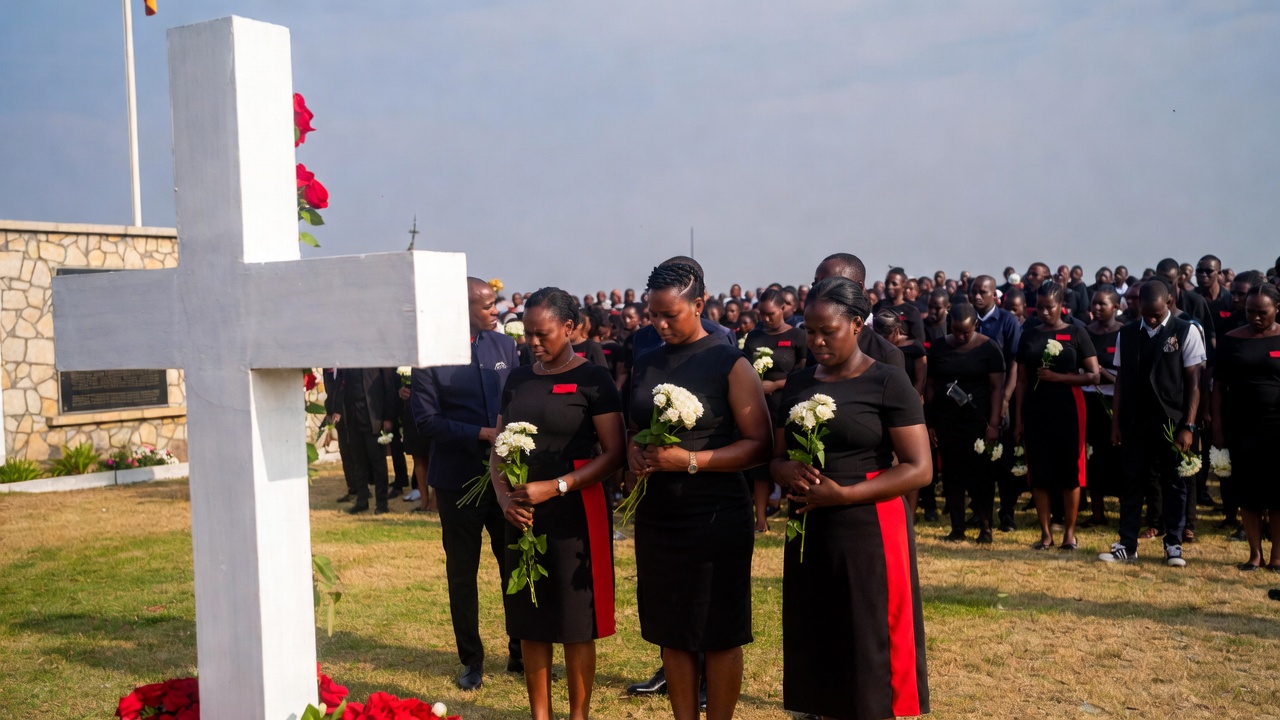
The day begins with formal ceremonies at the National Heroes’ Mausoleum in Remera, Kigali. President Paul Kagame and First Lady Jeannette Kagame typically lead the nation in laying wreaths at the tombs of Major General Fred Rwigema and the Unknown Soldier.
Senior government officials, the diplomatic corps, and family members of fallen heroes attend the ceremony. A moment of silence honors those who sacrificed for the nation.
Grassroots Celebrations
Beyond the national ceremony, celebrations extend to every corner of Rwanda. At the village level, communities gather for:
- Discussions about national heroes and their significance
- Testimonies from survivors and witnesses
- Youth programs focused on instilling heroic values
- Educational presentations about Rwandan history
Evening Events
The eve of Heroes Day typically features cultural events, including concerts and gatherings in Kigali. These events combine celebration with education, as speakers share the stories of heroes and their relevance to contemporary Rwanda.
Themes
Each year’s celebration carries a specific theme. Recent themes have included:
- 2025: “Heroism and Unity for Rwanda’s Development”
- 2022: “Our Heroism, Our Dignity”
These themes connect historical heroism to present-day aspirations, emphasizing that the values heroes embodied—sacrifice, unity, courage—remain essential for national development.
Why Rwandan Heroes Day Matters: Lessons for the Future
Building National Identity
For a nation that experienced genocide within living memory, the question of national identity carries immense weight. Rwanda’s hero recognition system provides a framework for answering the question: “What does it mean to be Rwandan?”
The heroes honored on February 1st represent diverse backgrounds—kings and commoners, soldiers and civilians, men and women. What unites them is their commitment to Rwanda and their willingness to sacrifice for the greater good.
Rejecting Division
Perhaps the most powerful message of Heroes Day is the rejection of ethnic division. Many honored heroes—including Agathe Uwilingiyimana, Félicité Niyitegeka, and the Nyange students—were specifically targeted because they refused to participate in ethnic separation.
Their example teaches that true patriotism transcends ethnicity. As the Nyange students declared: “Twese Turi Abanyarwanda”—we are all Rwandans.
Inspiring Youth
A particular emphasis of Heroes Day falls on Rwandan youth. As Colonel Migambi Désiré noted during 2025 celebrations, values of unity, sovereignty, and Rwandan culture have been “passed down through generations.” Young Rwandans—many born after 1994—are taught that heroism is not a closed chapter of history but an ongoing responsibility.
The youth representative Ruhumuriza Anselme captured this sentiment: “On behalf of the youth, we thank the heroes for giving us a future. We are ready to continue their work.”
Promoting Excellence
CHENO’s mission extends beyond remembrance—it aims to “inspire Rwandans who want to excel in all their undertakings.” The hero recognition system creates a national culture that values excellence, integrity, and service.
By celebrating heroes, Rwanda encourages citizens to ask: “What can I contribute? How can I serve?”
National Orders and Decorations: Recognizing Excellence Beyond Heroism
Beyond the three categories of national heroes, Rwanda also maintains a system of National Orders and Medals of Honour that recognize outstanding contributions by Rwandans and foreigners.
These include:
| Order/Medal | Purpose |
|---|---|
| Uruti (National Liberation Medal) | Awarded to those who contributed to the 1990-1994 liberation struggle |
| Umurinzi (Campaign Against Genocide Medal) | Awarded to those who helped stop the 1994 genocide |
| Agaciro (National Order of Honor) | Highest national order, awarded to heads of state and major figures |
| Igihango (National Order of Outstanding Friendship) | Awarded to those promoting cooperation between Rwanda and other nations |
| Indashyikirwa (National Order of Performance) | Awarded for exceptional achievement |
| Indangamirwa (National Order of Culture) | Awarded for promoting Rwandan culture |
| Indengabaganizi (National Order of Bravery) | Awarded for extraordinary courage |
Notable recipients of these honors have included individuals who played critical roles in Rwanda’s recovery, such as the late Dr. Paul Farmer (founder of Partners in Health and the Butaro Cancer Hospital), Howard G. Buffett (philanthropist supporting Rwandan agriculture), and Ghanaian UN peacekeepers who protected civilians during the genocide.
Visiting the National Heroes’ Mausoleum: A Complete Guide
For travelers interested in understanding Rwanda’s hero tradition, the National Heroes’ Mausoleum in Remera, Kigali, offers a profound and accessible experience.
Location and Access
The mausoleum is located next to Amahoro National Stadium in the Gasabo District of Kigali. The site is:
- Free of charge for all visitors (Rwandans and foreigners)
- Open to the public throughout the year
- Managed by CHENO
What You’ll See
The mausoleum grounds are characterized by a serene, green environment with paths navigating between tombs organized by hero category.
Upper Section (Imanzi):
- Tomb of Major General Fred Rwigema (painted white)
- Tomb of the Unknown Soldier
- Sculptural symbol representing supreme sacrifice
Lower Section (Imena):
- Symbolic tombs for King Mutara III Rudahigwa
- Symbolic tomb for Michel Rwagasana
- Actual tomb of Agathe Uwilingiyimana
- Symbolic tomb for Félicité Niyitegeka
- Symbolic tomb for Nyange students
Future Section:
- Space designated for Ingenzi heroes (currently unoccupied)
Recent Renovations
The mausoleum has undergone recent renovations including a new museum section dedicated to the history of Rwandan heroes, with documentation in both writing and imagery.
Other Hero Sites
Beyond Kigali, visitors can explore:
- Nyange Secondary School (Ngororero District): Site of the 1997 student massacre, with a memorial and “Garden of Peace”
- Félicité Niyitegeka Heritage Mausoleum (Rubavu District): The converted home of the heroic nun
- King’s Palace Museum (Nyanza District): Former residence of King Mutara III Rudahigwa
Conclusion: The Enduring Legacy of Rwanda’s Heroes
On February 1st each year, Rwanda pauses to remember individuals who embodied the highest ideals of patriotism, courage, and sacrifice. From the battlefields of liberation to the classrooms of Nyange, from the royal court to a modest Catholic retreat center, these heroes demonstrated that ordinary people can achieve extraordinary things when guided by principle and love of country.
The three-tiered system of Imanzi, Imena, and Ingenzi ensures that different forms of heroism receive appropriate recognition. The supreme sacrifice of Major General Rwigema and the Unknown Soldier anchors the nation’s memory. The extraordinary acts of King Rudahigwa, Michel Rwagasana, Agathe Uwilingiyimana, Félicité Niyitegeka, and the Nyange students provide diverse models of courage. And the open Ingenzi category reminds Rwandans that heroism remains possible—and expected—in every generation.
As Mireille Batamuliza, Permanent Secretary at the Ministry of Gender and Family Promotion, observed: “The role of Rwandan families in nurturing future heroes” is essential to the nation’s continued development.
National Heroes Day matters to every Rwandan because it answers fundamental questions about identity, values, and aspiration. It teaches that unity is worth dying for. It demonstrates that principle matters more than survival. And it inspires citizens to ask not what Rwanda can do for them, but what they can do for Rwanda.
The heroes honored on February 1st gave everything so that future generations could live in peace, unity, and dignity. The best way to honor their memory is to embody their values—every day, not just on holidays.
“Twese Turi Abanyarwanda.” We are all Rwandans.
This article was researched and written to provide comprehensive information about Rwanda’s National Heroes Day and the categories of Rwandan national heroes. For the most current information about celebrations and hero recognitions, please visit the official CHENO website or the Government of Rwanda portal.
Frequently Asked Questions About Rwanda National Heroes Day
When is National Heroes Day celebrated in Rwanda?
National Heroes Day is celebrated annually on February 1st throughout Rwanda. It is a public holiday.
What are the three categories of Rwandan national heroes?
Rwanda recognizes heroes in three categories: Imanzi (supreme heroes who gave their lives), Imena (distinguished heroes known for extraordinary acts), and Ingenzi (meritorious heroes recognized for good ideas and achievements).
Who is buried at the National Heroes’ Mausoleum in Kigali?
The remains of Major General Fred Rwigema and Agathe Uwilingiyimana are interred at the mausoleum. The other tombs—including those for the Unknown Soldier, King Mutara III Rudahigwa, Michel Rwagasana, Félicité Niyitegeka, and the Nyange students—are symbolic memorials.
What is CHENO in Rwanda?
CHENO stands for the Chancellery for Heroes, National Orders and Decorations of Honour. Established under the Rwandan Constitution, it is responsible for identifying, researching, and recognizing national heroes, as well as administering national orders and medals.
Can foreigners be recognized as Rwandan heroes?
While the formal hero categories (Imanzi, Imena, Ingenzi) typically recognize Rwandans, foreigners can receive National Orders and Medals of Honour for exceptional contributions to Rwanda. Recipients have included international philanthropists, UN peacekeepers, and development partners.
Why did the Nyange students refuse to separate?
On March 18, 1997, when armed militia ordered students to divide by ethnicity, they refused because they believed in Rwandan unity. Having witnessed the devastating 1994 genocide caused by ethnic division just three years earlier, they chose to stand together as Rwandans—knowing it would cost them their lives.
How can tourists visit Rwanda’s hero memorial sites?
The National Heroes’ Mausoleum in Remera, Kigali, is free and open to the public. Other sites like Nyange Secondary School and the Félicité Niyitegeka Heritage Mausoleum can be visited as part of cultural tourism itineraries. Local tour operators can arrange guided visits.