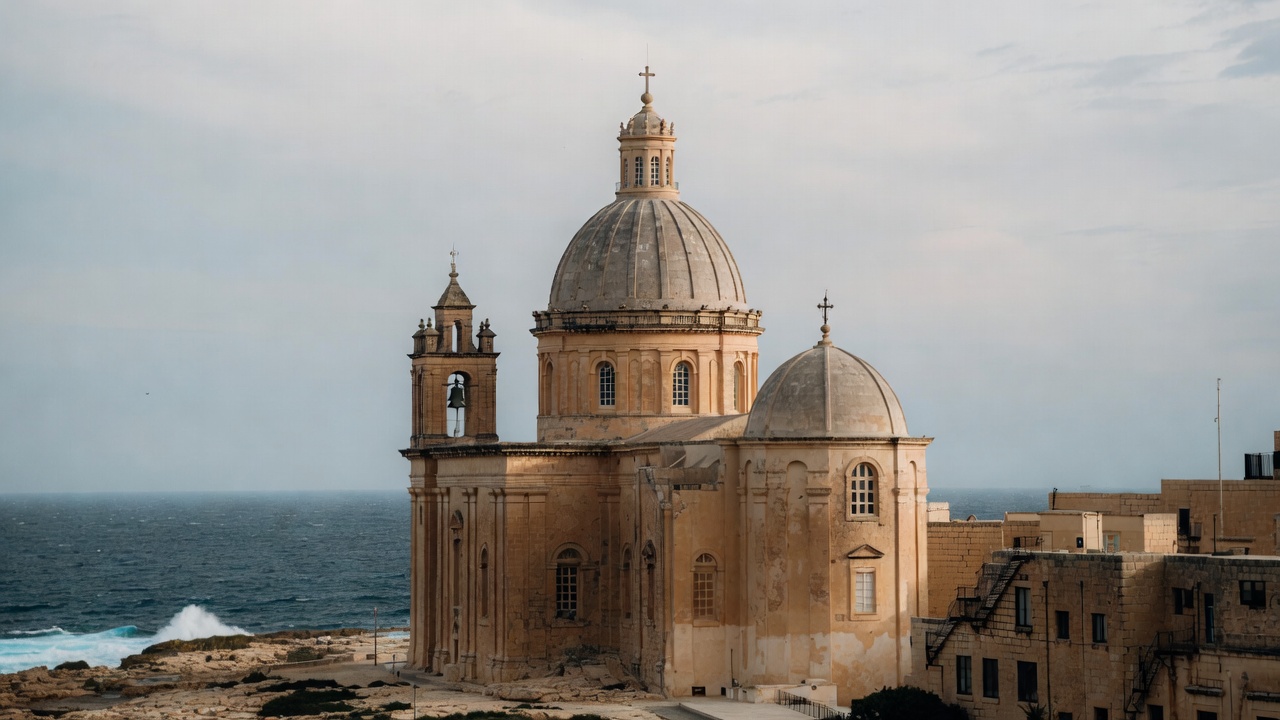
Malta is a country that wears its faith on its sleeve — and on its balconies, street corners, and church facades. Nowhere is this more obvious than in the capital city of Valletta on the 10th of February, when the entire nation pauses to celebrate the Feast of St Paul’s Shipwreck (San Pawl Nawfragu in Maltese). At the heart of this national holiday stands a church that every serious traveller should visit at least once: the Collegiate Parish Church of St Paul’s Shipwreck.
This is not simply a church. It is the spiritual origin story of an entire nation. The building holds sacred relics, world-class Baroque art, and a wooden statue that has been carried through Valletta’s streets every year for more than three centuries. If you plan to be in Malta during the feast — or any time of year, really — this guide will tell you everything you need to know before you step through its doors.
Why the Feast of St Paul’s Shipwreck Is Malta’s Most Important Religious Holiday
Before talking about the church, you need to understand why February 10th matters so much to the Maltese people.
Around AD 60, the Apostle Paul was being transported to Rome as a prisoner to stand trial before Caesar. According to the account in the Acts of the Apostles (chapters 27–28), his ship — carrying roughly 276 people — was caught in a violent Mediterranean storm. The vessel ran aground on the coast of a small island. St Luke, who was aboard the same ship, later wrote the famous words: “we found that the island was called Melita.”
That island was Malta.
Every person on board survived the wreck. After reaching shore, Paul gathered firewood and was bitten by a venomous snake. The Maltese islanders watched, expecting him to collapse. He did not. The locals took this as a sign that he was no ordinary man. Paul then healed the father of Publius, the Roman governor of the island, which led to Publius’s own conversion to Christianity. Publius would go on to become Malta’s first bishop.
Paul remained on Malta for three months — the winter months — before departing for Rome. During that time, he planted the seed of Christianity that still defines the island today. Malta became one of the earliest Roman colonies to embrace the Christian faith. Nearly two thousand years later, the Maltese have never stopped thanking Paul for that stormy landing.
That is why the Feast of St Paul’s Shipwreck is a national public holiday in Malta. It is the first major feast day on the Maltese calendar each year. Schools close. Businesses shut their doors. Families gather. And the streets of Valletta come alive with processions, band marches, cannon salutes, and fireworks.
The History of the Collegiate Parish Church of St Paul’s Shipwreck in Valletta
The church sits on St Paul Street (Triq San Pawl) in the heart of Valletta, Malta’s UNESCO World Heritage capital city. Its origins go back to the very birth of Valletta itself.
How the Church Was Built in the 1570s
After the Knights of St John survived the Great Siege of 1565, Grand Master Jean de Valette founded the new fortified capital that bears his name. The Cathedral Chapter of Mdina — the old capital — wanted a fitting church in the new city. They purchased land and commissioned Girolamo Cassar, the same architect who designed most of Valletta’s major buildings, including St John’s Co-Cathedral.
Cassar completed the church in December 1582. From the very beginning, the church was dedicated to the providential shipwreck of St Paul as described in the Acts of the Apostles. It was not just another parish church. It served as the seat of the Bishop of Malta, since St John’s was then the private Conventual Church of the Knights. This created a healthy competition between the two institutions — and both churches benefited.
The Jesuit Years and Rebuilding
In 1639, the church was ceded to the Jesuit Fathers, and a new phase of construction began. Over the following centuries, the church underwent several expansions and artistic renovations. The most visible change came in 1885, when the facade was rebuilt according to the design of Nicola Zammit, a remarkable figure who was simultaneously a medical doctor, architect, and artistic designer. The result is the 19th-century neoclassical facade visitors see today — elegant and restrained on the outside, but hiding a dazzling Baroque interior.
The church building is listed on the National Inventory of the Cultural Property of the Maltese Islands, recognizing its outstanding historical and artistic value.
What to See Inside St Paul’s Shipwreck Church: Sacred Art and Relics
Step inside and your eyes need a moment to adjust. The interior is a treasure trove of marble, gilt, and sacred art spanning four centuries. Here are the highlights no visitor should miss.
The Altarpiece by Matteo Perez d’Aleccio — A Student of Michelangelo
The main altarpiece is one of the most important paintings in Malta. It was created by Matteo Perez d’Aleccio (1547–1628), an Italian Mannerist painter who had trained under Michelangelo himself, working on the Sistine Chapel in the Vatican. D’Aleccio was brought to Malta primarily to paint the famous fresco cycle of the Great Siege of 1565 in the Grand Master’s Palace. While in Malta, he also painted this powerful depiction of St Paul’s Shipwreck for the church, around 1579–1580.
Professor Keith Sciberras of the University of Malta’s Department of Art and Art History has described this work as one of the most important altar paintings created in Malta during the late 16th century. The painting shows Paul on the rocky shore with the wrecked ship in the background and survivors swimming toward land. It captures the chaos and divine intervention of the Biblical account in vivid detail.
The Wooden Statue of St Paul by Melchiorre Cafà
If the altarpiece is the church’s greatest painting, the wooden titular statue of St Paul is its soul.
The statue was carved around 1659 by Melchiorre Cafà (1636–1667), a Maltese-born Baroque sculptor who became one of the most celebrated artists in 17th-century Rome. Born in Vittoriosa (Birgu), Cafà moved to Rome as a young man and quickly earned commissions for prestigious projects. The great Gian Lorenzo Bernini himself reportedly acknowledged Cafà as a worthy rival — extraordinary praise for an artist barely in his twenties.
Cafà sculpted the statue in his Roman workshop (bottega) in full Baroque style. It shows Paul in the act of preaching, his robes flowing with dramatic energy. The statue was sent back to Malta and became the prototype for all subsequent statues of St Paul on the island.
Tragically, Cafà died at just 31 years of age under circumstances that remain unclear. Some historians have speculated that rival artists may have played a role. Despite his short life, Cafà left behind masterpieces held by the Hermitage Museum in St. Petersburg, the Metropolitan Museum of Art in New York, and the Fogg Museum at Harvard.
Every February 10th, this statue is the star of the feast. It is lifted onto the shoulders of Valletta’s strongest men and carried in procession through the capital’s narrow streets — a tradition that has continued without interruption for over 360 years.
The Ceiling Paintings by Attilio Palombi
Look up. The ceiling of the church was decorated by the Italian artist Attilio Palombi, who painted romanticized episodes from the life of St Paul. The scenes glow with warm colours and dramatic compositions. One of Palombi’s images of the shipwreck was later chosen for the design of Malta’s first pictorial postage stamp — the 10-shilling stamp of 1899, printed by De La Rue.
Works by Giuseppe Calì and Other Maltese Masters
The church also holds paintings by Giuseppe Calì (1846–1930), one of Malta’s most prolific and beloved artists. Additional works are by Giuseppe D’Arena and the 20th-century painter Emvin Cremona, making the church a living gallery of Maltese sacred art across the centuries.
The Sacred Relics of St Paul the Apostle
For many Maltese visitors, the most powerful objects in the church are not the paintings. They are the relics.
The church holds what is believed to be a portion of St Paul’s right wrist bone. This relic is displayed in an ornate reliquary and draws devout pilgrims throughout the year.
There is also a section of the marble column on which Paul was reportedly beheaded at the site known as San Paolo alle Tre Fontane (St Paul at the Three Fountains) in Rome. This relic was donated by Pope Pius VII in 1818 in recognition of the services rendered by the church’s collegiate chapter during a devastating plague outbreak in 1813.
A gilded silver sculpture of St Paul’s severed head sits atop this marble column. According to local tradition, when Maltese envoys went to Rome to collect the relic, the Pope was so moved by their faith that he gave them the entire piece — marble column, silver head, and all.
How the Feast of St Paul’s Shipwreck Is Celebrated on February 10th in Valletta
The feast day, known locally as il-Festa ta’ San Pawl Nawfragu, is one of the most atmospheric public holidays you can experience anywhere in Europe during winter. Here is what a typical feast day looks like.
Schedule of Events on February 10th
| Time | Event | Location |
|---|---|---|
| 7:00 AM | First morning Mass | Church of St Paul’s Shipwreck |
| 8:00 AM | Second Mass (followed by fireworks) | Church of St Paul’s Shipwreck |
| 12:00 PM | Cannon firing from the Saluting Battery | Upper Barrakka Gardens |
| 1:00 PM | Traditional band march begins | Through Valletta streets |
| 3:45 PM | English-language Mass | Church of St Paul’s Shipwreck |
| 5:30 PM | Afternoon procession with the statue of St Paul | Through Valletta streets |
| 9:30 PM | Evening procession and religious celebrations | Through Valletta streets |
The day begins early. The Archbishop of Malta and the President of Malta both attend the morning celebrations, giving you a sense of just how important this feast is to the nation.
The Band March Through Valletta’s Streets
At around 1:00 PM, the traditional band march begins. Led by the Banda tas-Soċjetà Filarmonika Nazzjonali ‘La Valette’, the brass band winds through Valletta’s grid of limestone streets. The route passes through Triq San Pawl, Triq ir-Repubblika (Republic Street), Triq il-Merkanti (Merchants Street), and several other historic roads.
Band marches are central to every Maltese feast. The local band clubs (kazin tal-banda) function as community institutions, offering free music schools and maintaining traditions year-round. During the march, musicians wear traditional uniforms and play lively compositions — many written by local Maltese composers. Crowds gather on balconies and sidewalks, waving flags and singing along.
The Procession of the Statue of St Paul
The undisputed highlight of the feast is the procession of Cafà’s wooden statue through the streets of Valletta. Devotees bid for the honour of carrying the statue out of the church. This is considered a great privilege, and the winning bidders pay significant sums. All money raised goes to charity or to fund the feast itself.
The statue exits the church to deafening cheers and the thunder of fireworks. It is carried shoulder-high through the narrow streets while the crowd claps, prays, and follows behind. For many Maltese families, this is the emotional climax of the year.
As the website Very Valletta notes, the celebrations on February 10th tend to be more solemn than Malta’s summer feasts. The cold February weather adds a certain gravitas. Yet devotees from across the island still show up faithfully, year after year, regardless of rain or wind.
Fireworks Over Grand Harbour
No Maltese celebration is complete without fireworks. After the 8:00 AM Mass, fireworks erupt over Grand Harbour, visible from the Upper Barrakka Gardens and the waterfront. Malta is famous for its pyrotechnic tradition — local fireworks factories on the island produce some of the most spectacular displays in the Mediterranean.
Understanding the Maltese Village Feast Tradition and Its UNESCO Recognition
To fully appreciate the Feast of St Paul’s Shipwreck, you need to understand the wider context of Maltese festa culture.
Malta has over 350 churches for a population of roughly half a million people. Almost every town and village has its own patron saint, its own church, and its own annual feast. In 2023, the Maltese Village Festa was formally inscribed on UNESCO’s Representative List of the Intangible Cultural Heritage of Humanity, recognizing it as a unique community celebration worthy of global protection.
According to UNESCO’s inscription, the festa involves concerts, band marches, firework displays, bell ringing, and traditional food sold from street stalls. The tradition is passed down informally — children learn the stories and songs of their village by attending community events alongside their families.
The Feast of St Paul’s Shipwreck is unusual among Maltese feasts because it falls in February, well outside the main summer festa season (May to September). This makes it the first outdoor feast of the calendar year. Despite the cooler weather, the feast draws large crowds and retains all the core elements of a traditional Maltese celebration: processions, music, fireworks, decorated streets, and communal food.
What Makes the Church of St Paul’s Shipwreck a Hidden Gem in Valletta
Valletta is a tiny city — the smallest capital in the European Union — but it is packed with landmark churches and palaces. Most tourists head straight for St John’s Co-Cathedral, and rightly so. But the Church of St Paul’s Shipwreck deserves just as much attention, and it receives far fewer visitors.
A Quiet Alternative to St John’s Co-Cathedral
St John’s is grand, famous, and often crowded. The Church of St Paul’s Shipwreck is intimate, unhurried, and deeply personal. You can stand in front of the altarpiece by d’Aleccio and take your time. You can study the relics without being pushed along by a tour group. The marble interiors gleam in the soft light filtering through the nave. It is a place where the history of an entire civilization — Malta’s conversion to Christianity — feels close enough to touch.
Easy to Miss but Worth the Detour
The church sits on a narrow and steep side street, making it easy to walk right past. There is no grand piazza in front of it. No souvenir shops flank the entrance. You simply push open the door and step into four centuries of sacred art.
Dress code reminder: As with all Maltese churches, visitors must have their shoulders covered, and shorts are not permitted. This applies to both men and women.
A Living Parish, Not Just a Museum
Unlike many historic churches in Europe that have become museums, St Paul’s Shipwreck is an active parish. Mass is celebrated regularly. The community gathers here for baptisms, weddings, and funerals. The church is not a relic of the past — it is a living center of faith.
Visiting Valletta in February: Weather, Travel Tips, and What to Expect
If you are planning to visit the Church of St Paul’s Shipwreck during the feast, February in Malta offers a unique and rewarding travel experience.
February Weather in Malta: Mild, Green, and Uncrowded
February is one of the coolest months in Malta, but by northern European standards, it is remarkably mild.
| Weather Metric | February Average |
|---|---|
| Daytime high temperature | 15–17°C (59–63°F) |
| Nighttime low temperature | 9–11°C (48–52°F) |
| Sunshine hours per day | 6–7 hours |
| Rainy days per month | 6–12 days |
| Average rainfall | 55–63 mm |
| Sea temperature | 15–16°C (59–61°F) |
The landscape is astonishingly green in February. Wildflowers bloom across the countryside. The honey-coloured limestone of Valletta’s buildings looks particularly warm against blue winter skies. And critically, there are far fewer tourists than during the summer months. You will find shorter queues at museums, easier restaurant reservations, and lower hotel prices.
What to Wear During the Feast in February
Layering is essential. Mornings can be cool and humid. Midday often brings pleasant sunshine. Evenings get cold again, especially if you are standing outside watching the procession. Bring a warm jacket, a compact umbrella, and comfortable closed shoes — the streets of Valletta are steep and often slippery in wet weather.
If you plan to enter any churches, remember the dress code: covered shoulders and no shorts.
Getting to Valletta and the Church of St Paul’s Shipwreck
Valletta is compact and best explored on foot. The main bus terminus is just outside the City Gate, and from there, the Church of St Paul’s Shipwreck is about a 10-minute walk down Republic Street and then onto St Paul Street.
If you are driving, there is metered parking just outside the City Gate. However, on feast day (February 10th), expect heavy traffic and road closures. Public transport is strongly recommended.
Malta’s public bus system, operated by Malta Public Transport, connects the entire island to Valletta. Bus fares are affordable — a single journey costs just €1.50 in winter — and routes run frequently from all major towns.
Other St Paul Heritage Sites to Visit Near Valletta During the Feast
The story of St Paul does not end at the church. Several related heritage sites across Malta offer deeper context.
St Paul’s Grotto in Rabat
Located in Rabat, just outside the ancient walled city of Mdina, St Paul’s Grotto is the traditional site where Paul is said to have lived during his three-month stay on the island. The grotto contains a marble statue of St Paul also created by Melchiorre Cafà (or completed by his associate Ercole Ferrata after Cafà’s death). The site has been a place of Christian pilgrimage for centuries and includes the Wignacourt Museum, which provides additional historical context.
St Paul’s Islands and St Paul’s Bay
The St Paul’s Islands are a pair of small, uninhabited islets off the north coast of Malta, near the town of St Paul’s Bay. A large statue of St Paul stands on the larger island, marking the traditional location of the shipwreck. While the exact site of the wreck has never been confirmed, this bay remains the most widely accepted candidate. In the 1960s, divers even discovered ancient anchors near the islands, which some researchers believe could be from Paul’s ship.
The Cathedral of Mdina
The Cathedral of St Paul in Mdina is said to stand on the site of the villa of Publius, the Roman governor who welcomed Paul and was converted to Christianity. The cathedral contains exquisite frescoes and is a short bus ride from Valletta.
The Best Maltese Food to Try During the Feast of St Paul’s Shipwreck
No Maltese feast is complete without food. While the Feast of St Paul’s Shipwreck is more solemn than the summer festas, street stalls and local restaurants still offer traditional favourites.
Traditional Festa Street Food
- Imqaret — Deep-fried pastries filled with dates. Sweet, crispy, and addictive. This is the iconic Maltese festa snack.
- Nougat (qubbajt) — Sold from traditional dark wooden stalls with antique weighing scales. Maltese nougat is softer and chewier than its Italian cousin.
- Fried doughnuts — Simple, dusted with sugar, and best eaten hot from the fryer.
- Hot dogs and burgers — Yes, fast food has become part of the modern festa experience. Food trucks line the streets alongside the more traditional stalls.
Valletta Restaurant Dining in February
February is an ideal time to explore Valletta’s food scene without the summer crowds. The capital has dozens of excellent restaurants offering both Maltese and Mediterranean cuisine. Look for dishes like fenkata (rabbit stew, Malta’s unofficial national dish), lampuki pie (fish pie), and pastizzi (flaky pastries filled with ricotta or mushy peas, available at every corner café for less than a euro).
Winter is also the season for red wine and warm soups in Valletta’s cosy wine bars. The narrow streets of the capital are dotted with intimate restaurants where you can sit by a window and watch the feast celebrations unfold below.
How to Respectfully Experience the Feast of St Paul’s Shipwreck as a Tourist
The feast is a deeply religious event for the Maltese. While visitors are warmly welcome, respectful behaviour is essential.
Church Etiquette
When entering the Church of St Paul’s Shipwreck — or any Maltese church — during a service or feast day:
- Turn off your phone or switch it to silent mode.
- Do not use flash photography during services.
- Dress modestly: cover shoulders and knees.
- Do not eat or drink inside the church.
- If a Mass is in progress, you may sit quietly at the back. Do not walk around taking photos during the service.
Procession Etiquette
During the procession of the statue:
- The Maltese treat the procession with deep reverence. Many people cross themselves or bow their heads as the statue passes.
- You are welcome to take photos and videos, but do so discreetly. Avoid blocking the path of the procession.
- Applauding and cheering are normal. The crowd often bursts into spontaneous clapping when the statue exits the church.
- Do not touch the statue or the bearers.
General Tips
- Be patient with road closures. Streets will be blocked for processions and band marches. This is part of the experience.
- Talk to locals. The Maltese are famously hospitable and will happily explain the significance of what you are seeing. Many speak excellent English — it is one of Malta’s two official languages.
- Arrive early for a good viewing spot. The procession route passes through several streets, but the best views are near the church itself and along Republic Street.
Why February 10th, 2026 Is the Perfect Time to Visit Malta for the Feast
In 2026, the Feast of St Paul’s Shipwreck falls on a Tuesday, February 10th. This is a confirmed national public holiday, meaning the entire island observes the day.
Here are several reasons why 2026 is an especially good year to plan a trip:
Low-season prices. February is firmly in Malta’s off-season. Flights from most European cities are significantly cheaper than summer fares. Hotels in Valletta can be found at a fraction of their peak-season rates.
Fewer crowds. You will share the feast with locals and a small number of culturally curious travellers — not busloads of cruise ship tourists.
Combine it with Carnival. Malta’s Carnival season typically falls in February or early March, depending on when Ash Wednesday occurs. In some years, the Feast of St Paul and Carnival celebrations fall within days of each other, giving you a double dose of Maltese festivity. Carnival in Valletta features colourful floats, satirical performances, costumes, and street dancing — a completely different mood from the solemn feast, but equally unmissable.
Green and flowering landscapes. If you venture outside Valletta during your trip, you will find the Maltese countryside at its most beautiful — lush, green, and covered in wildflowers. The dramatic coastal cliffs of Dingli and Ta’ Ċenċ in Gozo are spectacular in winter light.
Cultural depth. Visiting during a major national holiday gives you access to a side of Malta that summer tourists rarely see. You will witness an ancient tradition performed with genuine passion — not a staged show for tourists, but a living expression of faith that stretches back nearly two millennia.
The Broader Significance of St Paul’s Shipwreck in Maltese National Identity
To understand why the Maltese celebrate this feast with such intensity, you need to understand what St Paul means to Malta.
Paul is not just a patron saint. He is considered the spiritual father of the Maltese people. His shipwreck on the island brought Christianity to Malta, and Christianity has been the dominant cultural force on the island ever since. Malta has over 350 churches for an area of just 316 square kilometres. Religious feast days are not quaint traditions preserved for tourists — they are living markers of community identity.
The Maltese phrase “San Pawl Nawfragu” is not just the name of a feast. It is shorthand for the foundational myth of the nation. When the statue of Paul is carried through the streets of Valletta every February 10th, it is a collective re-enactment of the moment that made Malta what it is.
This is also why the feast has a more solemn character than Malta’s exuberant summer celebrations. The summer festas are joyful, loud, and competitive — villages try to outdo each other with bigger fireworks and grander decorations. The Feast of St Paul’s Shipwreck, by contrast, carries a weight of gratitude and reverence. It is a national thanksgiving.
Practical Information: Visiting the Church of St Paul’s Shipwreck in Valletta
Here is a quick reference table for planning your visit.
| Detail | Information |
|---|---|
| Full name | Collegiate Parish Church of St Paul’s Shipwreck |
| Maltese name | Il-Knisja Kolleġġjata ta’ San Pawl Nawfragu |
| Location | St Paul Street (Triq San Pawl), Valletta, Malta |
| Architect | Girolamo Cassar (original, 1582); facade by Nicola Zammit (1885) |
| Feast day | February 10th (national public holiday) |
| Key artworks | Altarpiece by Matteo Perez d’Aleccio; statue by Melchiorre Cafà; paintings by Giuseppe Calì, Attilio Palombi, Emvin Cremona |
| Sacred relics | Wrist bone of St Paul; section of the beheading column |
| Dress code | Shoulders covered; no shorts |
| Admission | Free (donations welcome) |
| Nearest bus stop | Valletta Bus Terminus (10-minute walk) |
| Nearby landmarks | St John’s Co-Cathedral, Grand Master’s Palace, Upper Barrakka Gardens |
Where to Stay in Valletta for the Feast of St Paul’s Shipwreck in 2026
Choosing the right accommodation can make or break your feast day experience. Valletta is small enough to walk from end to end in about twenty minutes, so almost any hotel in the city will put you within easy reach of the procession route.
Budget-Friendly Guesthouses in Valletta
Valletta has a growing number of budget guesthouses and bed-and-breakfasts tucked inside converted townhouses. Many of these sit on the very streets where the procession passes. Look for properties along St Paul Street, Merchants Street, or Republic Street for the best views from your balcony — there is nothing quite like watching the band march from your window while sipping morning coffee. Expect to pay between €60 and €100 per night for a clean, centrally located room in February.
Mid-Range and Boutique Hotels
Valletta’s transformation in recent years — accelerated by its stint as the European Capital of Culture in 2018 — has brought a wave of stylish boutique hotels. Many occupy restored 16th- and 17th-century buildings and offer a mix of historic charm and modern comfort. Properties near South Street and St Ursula Street offer quiet retreats just steps from the action.
Luxury Stays with Grand Harbour Views
For those seeking a more indulgent experience, several five-star hotels sit just inside or outside Valletta’s fortified walls. The views from these properties — overlooking the Grand Harbour, the Three Cities, and the open Mediterranean — are among the finest in Europe. A harbour-view room during the feast offers an extraordinary vantage point for the morning fireworks.
Pro tip: Even in February, Valletta’s most popular hotels can sell out during feast week. Book at least four to six weeks in advance to secure your preferred room.
Combining the Feast with a Week-Long Malta Winter Itinerary
If you have more than a day in Malta, the feast can serve as the centrepiece of a rich week-long winter itinerary.
Day Trips from Valletta in February
Mdina and Rabat: Visit the silent walled city of Mdina — Malta’s ancient capital — and then walk to Rabat to see St Paul’s Grotto and the catacombs. In winter, these towns are beautifully quiet and atmospheric.
The Three Cities: Take the traditional dghajsa (water taxi) across Grand Harbour from Valletta to Vittoriosa (Birgu), the birthplace of sculptor Melchiorre Cafà. Wander the narrow streets where the Knights first settled before Valletta was built. Visit Fort St Angelo and the Inquisitor’s Palace.
Gozo Island: Take the ferry from Ċirkewwa to Gozo for a day of hiking, village exploration, and local cuisine. February is an excellent time to visit the Ġgantija Temples — a UNESCO World Heritage Site older than the Egyptian pyramids — without the summer crowds.
South Coast Walks: The dramatic cliffs between Żurrieq and Dingli offer spectacular walking trails in winter. The Blue Grotto sea caverns are best visited on calm mornings when the light creates vivid blue reflections inside the caves.
Evening Activities in Valletta
After the feast celebrations wind down, Valletta’s evening scene comes alive. The Strait Street area — once the notorious entertainment district of the British naval era — has been revitalized into a row of wine bars, jazz clubs, and restaurants. The Teatro Manoel, one of the oldest continuously operating theatres in Europe (built in 1731), regularly hosts concerts and performances during the winter season.
Frequently Asked Questions About Visiting St Paul’s Shipwreck Church and the Feast
Is the Church of St Paul’s Shipwreck free to enter? Yes. There is no admission charge. Donations to support the maintenance of the church are welcome and appreciated.
Can I visit the church outside of the feast day? Absolutely. The church is open to visitors year-round, though hours may vary. Check locally for the current schedule, especially on Sundays and religious holidays.
Is the feast suitable for children? Yes. Maltese feasts are family events by tradition. Children are welcome at all public celebrations. The fireworks can be loud, so consider ear protection for very young children.
Do I need to be Catholic to attend the feast? Not at all. Visitors of all faiths and none are welcome to observe the procession, attend the band march, and enjoy the street celebrations. If you wish to attend Mass, you are welcome to do so respectfully.
Will shops and restaurants be open on February 10th? Most shops in Valletta will be closed for the public holiday. However, restaurants and cafés along the main streets typically remain open and may offer special feast-day menus. Plan accordingly and bring cash and snacks if needed.
Is there wheelchair access to the church? The church is located on a steep, narrow street, and accessibility can be challenging. Contact the parish in advance if you have specific mobility needs.
A Final Word: Why Every Traveller Should Visit St Paul’s Shipwreck Church at Least Once
I have visited hundreds of churches and sacred sites across five continents. I have been to cathedrals that could swallow this little Valletta church whole. But few places on earth combine history, art, living faith, and emotional power quite like the Church of St Paul’s Shipwreck.
It is not the grandest church in Malta. It does not have the Caravaggio paintings of St John’s Co-Cathedral or the towering dome of the Mosta Rotunda. What it has is something rarer: an unbroken thread of devotion stretching from the year AD 60 to this Tuesday morning in February 2026, when the same statue, carved by a Maltese genius in Rome over 360 years ago, will once again be lifted onto the shoulders of the faithful and carried through the streets.
If you are in Malta on February 10th, go to Valletta. Walk down St Paul Street. Step inside the church. Light a candle. And when the statue of Paul emerges into the winter sunlight to the crack of fireworks and the roar of the crowd, you will understand — in your bones, not just your head — why this tiny island in the middle of the Mediterranean has never forgotten the storm that changed everything.
Viva San Pawl.
Planning your visit? Check the latest event schedules and ferry timetables at VisitMalta.com and Malta Public Transport. For accommodation in Valletta during the feast, book early — even in February, rooms near the procession route fill up fast.