Sri Lanka Independence Day stands as one of the most significant national holidays in South Asia. Every year on February 4th, millions of Sri Lankans celebrate their freedom from British colonial rule. This comprehensive guide explores the rich history, vibrant traditions, and cultural significance of this momentous occasion.
Whether you’re planning to visit Sri Lanka during Independence Day celebrations or simply want to understand this beautiful island nation’s heritage, this article covers everything you need to know.
What Is Sri Lanka Independence Day?
Sri Lanka Independence Day commemorates the nation’s freedom from British rule on February 4, 1948. It marks the birth of a sovereign democratic republic. The day is a public holiday across the entire island.
Before independence, Sri Lanka was known as Ceylon. The British controlled the island for nearly 150 years. The peaceful transition to independence makes Sri Lanka’s story unique in colonial history.
Quick Facts About Sri Lanka Independence Day
| Fact | Detail |
|---|---|
| Date Celebrated | February 4th (annually) |
| Year of Independence | 1948 |
| Colonial Power | British Empire |
| Duration of British Rule | 1815-1948 (133 years) |
| First Prime Minister | D.S. Senanayake |
| Official Name Change | Ceylon → Sri Lanka (1972) |
| Type of Holiday | National Public Holiday |
| Main Celebration Venue | Galle Face Green, Colombo |
The Colonial History Before Independence
Understanding Sri Lanka Independence Day requires knowledge of the island’s colonial past. Three European powers ruled Ceylon before freedom came.
Portuguese Period (1505-1658)
The Portuguese arrived in 1505. They controlled coastal areas for over 150 years. They introduced Christianity and Western education to the island.
Dutch Period (1658-1796)
The Dutch East India Company took control in 1658. They established legal systems and developed cinnamon trade. Dutch influence remains visible in Sri Lankan architecture today.
British Period (1796-1948)
The British conquered coastal regions in 1796. They gained control of the entire island by 1815. The Kandyan Kingdom fell after centuries of resistance.
Key Changes Under British Rule:
- English became the official language
- Coffee and tea plantations transformed the economy
- Railway networks connected major cities
- Western-style education spread across the island
- Buddhist and Hindu temples lost state patronage
The Independence Movement: Key Milestones Timeline
The struggle for Sri Lanka independence was largely peaceful. Political activism and constitutional reforms led the way. Here are the crucial milestones in chronological order.
Timeline of Sri Lanka’s Path to Independence
| Year | Milestone | Significance |
|---|---|---|
| 1915 | Sinhala-Muslim Riots | Sparked political awareness |
| 1919 | Ceylon National Congress formed | First unified political movement |
| 1931 | Donoughmore Constitution | Universal adult suffrage granted |
| 1944 | Soulbury Commission arrives | Examined constitutional reform |
| 1946 | Soulbury Constitution adopted | Framework for independence |
| 1947 | Independence negotiations | Final terms agreed upon |
| 1948 | Independence achieved | February 4th – Freedom Day |
Leaders of the Independence Movement
Several visionary leaders shaped Sri Lanka’s freedom struggle. Their contributions deserve recognition.
D.S. Senanayake (1884-1952)
- Known as the “Father of the Nation”
- First Prime Minister of independent Ceylon
- Led negotiations with British authorities
- Championed agricultural development
Sir Ponnambalam Arunachalam (1853-1924)
- Founded the Ceylon National Congress
- Advocated for constitutional reform
- Promoted unity among ethnic groups
E.W. Perera (1874-1953)
- Traveled to London to defend 1915 riot leaders
- Published evidence of British injustice
- Inspired younger independence activists
How Sri Lanka Independence Day Is Celebrated Today
Modern Sri Lanka Independence Day celebrations blend patriotic fervor with cultural traditions. The festivities showcase the island’s rich heritage.
Official Celebrations in Colombo
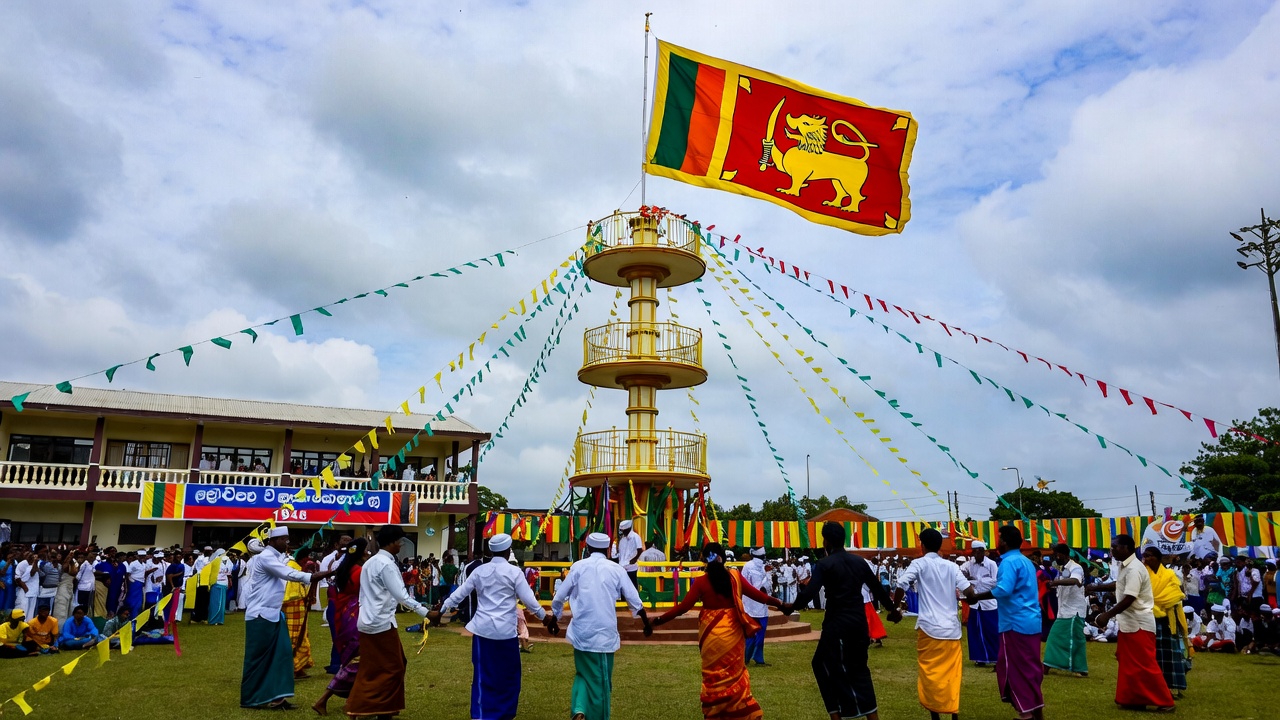
The main national celebration takes place at Galle Face Green. The President presides over the ceremony. Thousands of spectators gather to witness the events.
Elements of the Official Ceremony:
- Flag hoisting at dawn
- National anthem performance
- Presidential address to the nation
- Military parade and march past
- Cultural performances and folk dances
- Aerial displays by the Sri Lanka Air Force
- Naval demonstrations
- Award ceremonies for national heroes
Traditional Customs and Rituals
Sri Lankan Independence Day traditions reflect the island’s multicultural identity. Buddhist, Hindu, Muslim, and Christian communities participate together.
Religious Observances:
- Buddhist temples hold special prayer services
- Alms-giving ceremonies honor ancestors
- Oil lamp lighting symbolizes enlightenment
- Temple offerings seek blessings for the nation
Community Celebrations:
- Village festivals feature traditional music
- Schools organize patriotic programs
- Government buildings display national flags
- Streets decorated with lion flags and bunting
Regional Independence Day Celebrations Across Sri Lanka
Different regions celebrate Sri Lanka Independence Day with unique local flavors. Each province adds its cultural distinctiveness.
Celebrations by Region
| Region | Special Features | Traditional Elements |
|---|---|---|
| Colombo | Main national parade | Military displays, VIP attendance |
| Kandy | Temple of the Tooth ceremonies | Kandyan dancing, drumming |
| Jaffna | Tamil cultural performances | Classical music, kolam art |
| Galle | Colonial heritage displays | Fort illuminations |
| Anuradhapura | Buddhist pilgrimages | Ancient temple ceremonies |
| Trincomalee | Multi-ethnic festivals | Hindu-Buddhist unity events |
| Nuwara Eliya | Hill country celebrations | Tea estate cultural shows |
Kandyan Dance Performances
Kandyan dance is central to Independence Day celebrations. This UNESCO-recognized art form originated in the hill country. Dancers wear elaborate costumes with silver ornaments.
Types of Traditional Dances Performed:
- Ves Dance (most sacred form)
- Naiyandi Dance (gentle, graceful movements)
- Udekki Dance (features small hourglass drum)
- Pantheru Dance (tambourine-based performance)
- Vannam Dance (depicts animal movements)
Sri Lanka Independence Day Food and Cuisine Traditions
Food plays a vital role in Sri Lanka Independence Day celebrations. Families prepare special dishes to mark the occasion.
Traditional Independence Day Foods
| Dish | Description | Significance |
|---|---|---|
| Kiribath | Milk rice | Symbol of prosperity and new beginnings |
| Kavum | Oil cakes | Traditional Sinhalese sweetmeat |
| Kokis | Crispy cookies | Dutch-influenced festive treat |
| Aluwa | Fudge-like sweet | Made with rice flour and treacle |
| Athirasa | Rice flour patties | Ancient Sinhalese delicacy |
| Watalappan | Coconut custard | Malay-influenced dessert |
The Significance of Kiribath
Kiribath holds special meaning on Independence Day. This milk rice dish marks auspicious occasions. Families prepare it at dawn on February 4th.
How Kiribath Is Prepared:
- Rice is soaked overnight
- Coconut milk is extracted fresh
- Rice is cooked slowly with thick coconut milk
- The mixture is shaped into diamond pieces
- Served with lunu miris (onion sambol) or jaggery
The National Flag and Symbols of Sri Lanka
The Sri Lankan national flag is prominently displayed on Independence Day. Understanding its symbolism enriches the celebration experience.
Elements of the Sri Lanka Flag
| Element | Color/Symbol | Meaning |
|---|---|---|
| Lion | Golden | Sinhalese ethnicity, bravery |
| Sword | Golden | Sovereignty, authority |
| Bo Leaves | Green (4 corners) | Buddhism, four noble truths |
| Maroon Background | Dark red | Sinhalese heritage |
| Orange Stripe | Saffron | Tamil minority |
| Green Stripe | Dark green | Muslim minority |
| Yellow Border | Gold | Unity of all communities |
Other National Symbols
National Anthem: “Sri Lanka Matha” (Mother Sri Lanka)
- Written by Ananda Samarakoon
- Adopted in 1951
- Sung in Sinhala and Tamil
National Flower: Blue Water Lily (Nil Manel)
- Symbolizes purity and discipline
- Featured in ancient Sri Lankan art
National Bird: Sri Lanka Junglefowl
- Endemic species to the island
- Represents national pride
Independence Day Tourism: Visiting Sri Lanka in February
February is an excellent time to visit Sri Lanka for Independence Day celebrations. Tourists can experience authentic cultural festivities.
Best Places to Experience Independence Day
Top Destinations for Independence Day Tourism:
- Colombo – Witness the main national parade
- Kandy – Experience traditional Kandyan culture
- Galle – Explore colonial heritage
- Sigiriya – Visit ancient rock fortress
- Anuradhapura – Buddhist pilgrimage sites
Travel Tips for Independence Day Visitors
| Tip | Details |
|---|---|
| Book Early | Hotels fill up quickly in major cities |
| Dress Respectfully | White clothing preferred for official events |
| Arrive Early | Parade viewing spots fill by dawn |
| Respect Customs | Stand for national anthem |
| Try Local Food | Sample traditional Independence Day treats |
| Learn Basic Phrases | “Ayubowan” (greeting), “Isthuti” (thank you) |
Weather in Sri Lanka During February
February offers favorable weather for most regions. The dry season makes travel comfortable.
- Average temperature: 27-30°C (80-86°F)
- Low rainfall in western and southern coasts
- Ideal beach weather
- Clear skies for outdoor celebrations
The Evolution of Independence Day Celebrations
Sri Lanka Independence Day celebrations have evolved significantly since 1948. Each era brought new traditions and meanings.
1948-1972: The Ceylon Era
The early celebrations reflected British ceremonial influence. English remained prominent in official proceedings.
Characteristics of Early Celebrations:
- British-style military parades
- Formal government ceremonies
- Limited public participation
- Colonial architectural backdrops
1972-1978: The Republic Period
Sri Lanka became a republic in 1972. The country changed its name from Ceylon. Celebrations became more indigenized.
Changes During This Period:
- Greater emphasis on local culture
- Sinhala language prominence increased
- Traditional arts featured more prominently
- Anti-colonial rhetoric in speeches
1978-Present: Democratic Socialist Republic
The current constitution established in 1978 shaped modern celebrations. Independence Day became more inclusive.
Modern Celebration Features:
- Multi-ethnic cultural performances
- Television and radio broadcasts nationwide
- Social media engagement
- International diplomatic participation
- Youth involvement programs
Independence Day and Sri Lankan National Identity
Sri Lanka Independence Day plays a crucial role in shaping national identity. It unites diverse communities under one flag.
Ethnic Diversity and Unity
Sri Lanka is home to multiple ethnic groups. Independence Day celebrates their shared citizenship.
| Ethnic Group | Percentage | Primary Religion |
|---|---|---|
| Sinhalese | 74.9% | Buddhism |
| Sri Lankan Tamil | 11.2% | Hinduism |
| Sri Lankan Moor | 9.2% | Islam |
| Indian Tamil | 4.2% | Hinduism |
| Others | 0.5% | Various |
Building National Unity
Independence Day ceremonies emphasize unity. Several elements promote inclusivity:
- National anthem sung in both Sinhala and Tamil
- Multi-faith religious observances
- Diverse cultural performances
- Speeches emphasizing shared heritage
- Joint military services parade
Comparing Sri Lanka Independence Day to Other South Asian Nations
Sri Lanka’s independence story differs from neighboring countries. The peaceful transition sets it apart.
South Asian Independence Comparison
| Country | Independence Date | Colonial Power | Transition Type |
|---|---|---|---|
| Sri Lanka | Feb 4, 1948 | Britain | Peaceful |
| India | Aug 15, 1947 | Britain | Partition-related violence |
| Pakistan | Aug 14, 1947 | Britain | Partition-related violence |
| Bangladesh | Mar 26, 1971 | Pakistan | Liberation war |
| Myanmar | Jan 4, 1948 | Britain | Negotiated |
| Maldives | Jul 26, 1965 | Britain | Peaceful |
Unique Aspects of Sri Lanka’s Independence
What Makes Sri Lanka’s Independence Special:
- No armed struggle required
- Constitutional negotiations succeeded
- Minimal violence during transition
- Immediate democratic government
- Retained Commonwealth membership
Independence Day Education in Sri Lankan Schools
Schools play a vital role in Independence Day celebrations. Education about national history strengthens patriotism.
School Activities on Independence Day
Common School Programs:
- Flag hoisting ceremonies at dawn
- Singing of national anthem
- Patriotic speech competitions
- Essay writing contests
- Traditional dance performances
- Art exhibitions on independence themes
- Drama presentations about freedom fighters
- Distribution of sweets to students
Teaching Independence History
Sri Lankan schools incorporate independence history into curricula. Students learn about:
- Colonial period hardships
- Independence movement leaders
- Constitutional development
- Democratic values
- National symbols and their meanings
The Future of Sri Lanka Independence Day
As Sri Lanka evolves, so do Independence Day celebrations. New generations bring fresh perspectives.
Modern Trends in Celebrations
Emerging Celebration Patterns:
- Digital participation through live streams
- Social media campaigns (#SriLankaIndependence)
- Environmental awareness components
- Youth-led community service projects
- Virtual reality historical experiences
- International diaspora connections
Challenges and Opportunities
| Challenge | Opportunity |
|---|---|
| Ethnic reconciliation needs | Use celebrations for unity building |
| Youth engagement declining | Introduce modern, interactive elements |
| Historical awareness gaps | Enhance educational programs |
| Economic constraints | Promote tourism-linked celebrations |
Frequently Asked Questions About Sri Lanka Independence Day
When is Sri Lanka Independence Day celebrated?
Sri Lanka Independence Day is celebrated annually on February 4th. This date marks the 1948 transfer of power from Britain.
Is Sri Lanka Independence Day a public holiday?
Yes, February 4th is an official public holiday. Government offices, schools, and most businesses close.
Where are the main Independence Day celebrations held?
The main national celebration takes place at Galle Face Green in Colombo. Regional celebrations occur throughout the island.
What should tourists wear to Independence Day celebrations?
White clothing is traditional and respectful. Formal attire is appropriate for official ceremonies.
How long did British rule last in Sri Lanka?
The British controlled Sri Lanka (Ceylon) for 133 years, from 1815 to 1948.
Who was the first Prime Minister of independent Sri Lanka?
D.S. Senanayake became the first Prime Minister on February 4, 1948.
What traditional foods are eaten on Independence Day?
Kiribath (milk rice), kavum, kokis, and other traditional sweets are prepared.
Conclusion: Celebrating Sri Lanka’s Journey to Freedom
Sri Lanka Independence Day represents more than a historical milestone. It celebrates resilience, unity, and hope. The peaceful path to freedom remains an inspiration.
Every February 4th, Sri Lankans honor their ancestors’ sacrifices. They celebrate their diverse cultural heritage. They look forward to a brighter future.
Whether you’re a Sri Lankan citizen or a curious traveler, Independence Day offers profound insights. The celebrations reveal the island’s soul. They showcase traditions spanning millennia.
As Sri Lanka continues to evolve, Independence Day remains a constant. It reminds everyone of the precious gift of freedom. It inspires future generations to build upon their forebears’ achievements.
Plan your visit to Sri Lanka during Independence Day. Experience the parades, taste the traditional foods, and witness cultural performances. You’ll understand why this island nation takes such pride in its freedom.