
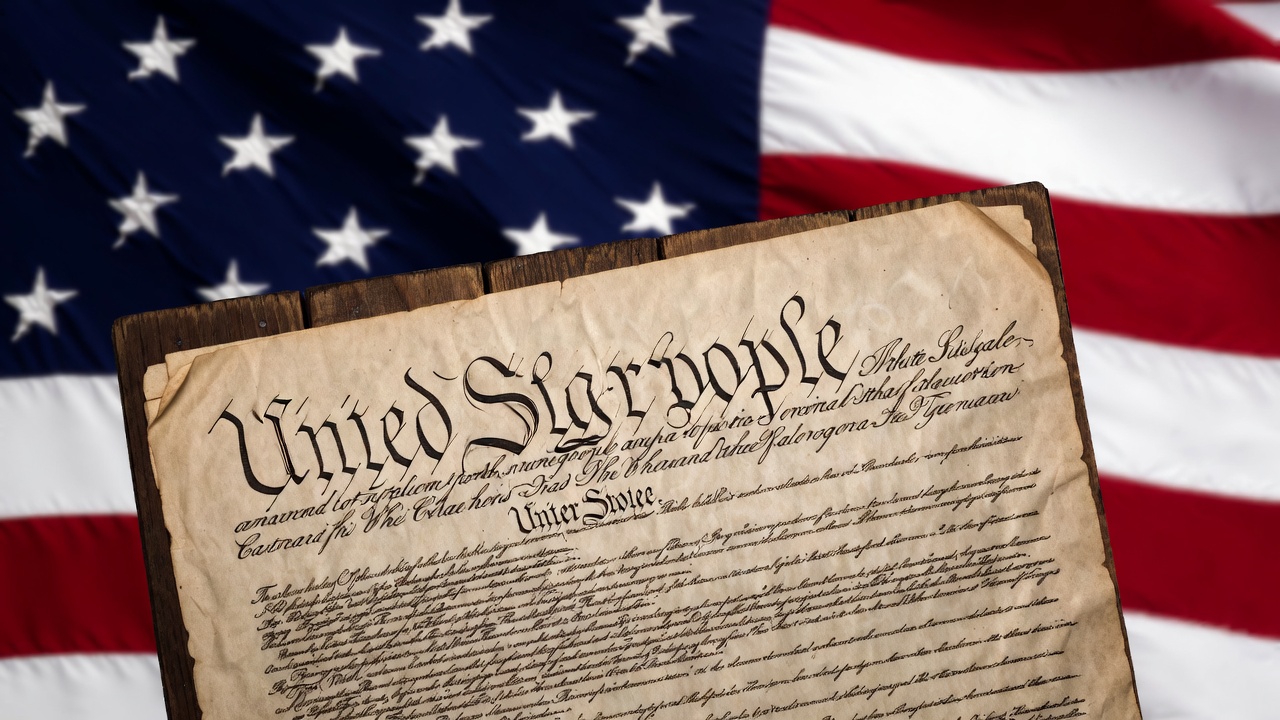
There is no document in modern history quite like the United States Constitution. Drafted over a sweltering Philadelphia summer in 1787, it has guided one nation through civil war, industrial upheaval, two world wars, and the digital revolution. It remains the oldest written national constitution still in active use anywhere on Earth.
Yet for all its fame, most Americans know surprisingly little about how the Constitution came to be — or how it continues to evolve. One survey by the Annenberg Public Policy Center found that only one in four Americans could name all three branches of government. A separate poll noted that 71 percent of respondents mistakenly believed the phrase “all men are created equal” appeared in the Constitution rather than in the Declaration of Independence.
This guide walks through the full story: the political crisis that made a new constitution necessary, the heated debates inside Independence Hall, the long battle over ratification, and the 27 amendments that have reshaped American life from 1791 to the present day. Whether you are a student preparing for a civics exam, a traveler visiting Philadelphia’s historic district, or simply a curious reader, this timeline will give you a firm grasp of every milestone that matters.
Why Was the US Constitution Written? Origins and the Articles of Confederation
To understand why the Constitution exists, you first have to understand the document it replaced.
After the thirteen colonies declared independence from Britain in 1776, they needed a formal agreement for working together. The result was the Articles of Confederation, drafted in 1777 and ratified by all thirteen states by 1781. The Articles created a loose alliance — more like a friendship pact among sovereign nations than a true national government.
Under the Articles, Congress had no power to levy taxes. It could ask states for money, but it could not force them to pay. Congress also lacked the authority to regulate trade between states or with foreign nations. There was no national court system and no executive branch. Every major decision required approval from nine of the thirteen states, and any change to the Articles themselves demanded unanimous consent.
The weaknesses showed quickly. The new nation was drowning in war debt. States printed their own currencies, creating a chaotic patchwork of exchange rates. Trade disputes between states went unresolved. Foreign powers like Britain and Spain exploited American disunity by refusing to honor treaty obligations.
The breaking point came in 1786 with Shays’ Rebellion. Farmers in western Massachusetts, crushed by debts and taxes, took up arms against state courts. The national government had no standing army and no funds to raise one. Massachusetts eventually put down the rebellion with a privately funded militia. But the episode terrified political leaders across the country.
As George Washington wrote in a letter to James Madison: the nation needed to either fix its government or watch the union dissolve.
The Annapolis Convention of 1786: The Meeting That Set the Stage
In September 1786, delegates from five states — Virginia, New Jersey, Delaware, Pennsylvania, and New York — gathered in Annapolis, Maryland to discuss trade problems among the states. The turnout was thin, and the group lacked the authority to accomplish much.
But two delegates saw an opportunity. Alexander Hamilton of New York and James Madison of Virginia used the Annapolis Convention to issue a bold call: they invited all thirteen states to send delegates to a new convention in Philadelphia the following May. The purpose, officially, would be to revise the Articles of Confederation.
On February 21, 1787, the Confederation Congress formally endorsed the idea, though it cautiously limited the scope to the “sole and express purpose of revising the Articles of Confederation.”
That limit would not survive long.
The Constitutional Convention of 1787: How the Founding Fathers Drafted the Constitution
Who Attended the Philadelphia Convention?
The Constitutional Convention opened at the Pennsylvania State House (now known as Independence Hall) on May 25, 1787. The original target date had been May 14, but poor roads and slow travel meant that a quorum of seven state delegations did not arrive until eleven days later.
Over the course of the summer, 55 delegates from 12 states participated. Rhode Island refused to send anyone, deeply suspicious that a stronger central government would threaten its autonomy.
The delegates were a remarkable group. Their average age was about 42. Most were lawyers, planters, or merchants. Benjamin Franklin, at 81, was the oldest. Jonathan Dayton of New Jersey, at 26, was the youngest. Eight delegates had signed the Declaration of Independence.
Here is a quick overview of the most influential figures at the Convention:
| Delegate | State | Key Role |
|---|---|---|
| George Washington | Virginia | Elected Convention president; his prestige lent the proceedings legitimacy |
| James Madison | Virginia | Chief architect of the Virginia Plan; later called the “Father of the Constitution” |
| Benjamin Franklin | Pennsylvania | Elder statesman whose wit and diplomacy smoothed over disputes |
| Alexander Hamilton | New York | Advocate for a strong central government; later co-authored The Federalist Papers |
| Gouverneur Morris | Pennsylvania | Wrote the final draft of the Constitution, including the famous Preamble |
| Roger Sherman | Connecticut | Key broker of the Great Compromise on legislative representation |
| Edmund Randolph | Virginia | Presented the Virginia Plan but ultimately refused to sign the finished Constitution |
The Virginia Plan vs. the New Jersey Plan
The Convention was supposed to tinker with the Articles of Confederation. Instead, James Madison arrived eleven days early and drafted an entirely new blueprint for national government — the Virginia Plan.
Madison’s plan proposed three branches of government: legislative, executive, and judicial. The legislature would have two chambers, and representation in both would be based on a state’s population. Larger states loved this idea. Smaller states did not.
In response, William Paterson of New Jersey introduced the New Jersey Plan on June 15. His proposal kept a single-chamber legislature with equal representation for every state, regardless of population. Essentially, it was a stronger version of the Articles rather than a wholesale replacement.
The Convention voted to reject the New Jersey Plan on June 19, with seven states against and three in favor. But the small-state delegates made it clear they would walk out if their concerns were ignored.
The Great Compromise That Saved the Convention
For weeks, the Convention was deadlocked. Then, on July 16, 1787, a special committee led by Roger Sherman of Connecticut proposed a solution that would become known as the Great Compromise (also called the Connecticut Compromise).
The deal was straightforward:
- The House of Representatives would have representation based on population, satisfying the large states.
- The Senate would give every state two seats, regardless of size, satisfying the small states.
The vote passed by the slimmest of margins. It broke the logjam and allowed the Convention to move forward.
The Three-Fifths Compromise and the Question of Slavery
Slavery was the most painful issue at the Convention. It shaped every discussion about representation, taxation, and trade.
Southern states wanted their enslaved populations counted for the purpose of allocating seats in the House of Representatives. Northern delegates objected — these states denied enslaved people every right of citizenship, yet wanted to use them to gain political power.
The result was the Three-Fifths Compromise: for purposes of representation and direct taxation, an enslaved person would be counted as three-fifths of a free person. This formula had actually been used before, in a 1783 proposal under the Articles of Confederation, but its inclusion in the new Constitution gave it permanent force.
The Convention also agreed that Congress could not ban the importation of enslaved people before the year 1808 — a twenty-year moratorium that protected the slave trade for another generation. A separate clause required states to return escaped enslaved people to their owners.
None of these provisions used the word “slave” or “slavery.” The framers deliberately avoided the term. Madison later explained that it would have been wrong to admit in the Constitution that people could be property.
These compromises allowed the Convention to continue. They also planted the seeds for a civil war that would erupt 74 years later.
What Are the Seven Articles of the US Constitution? Structure Explained
On September 17, 1787, the delegates approved the final text. Gouverneur Morris had polished the language into its now-famous form, beginning with the words “We the People of the United States.” That opening phrase was itself a bold statement: it declared that the government’s authority came from the people, not from the states.
The Constitution’s main body contains seven articles. Here is what each one covers:
| Article | Subject | Key Provisions |
|---|---|---|
| Article I | The Legislative Branch | Creates Congress (House and Senate); defines election rules, powers, and limits; lists enumerated powers such as taxation, commerce, and declaring war |
| Article II | The Executive Branch | Establishes the presidency; describes the Electoral College, presidential powers, the commander-in-chief role, and the impeachment process |
| Article III | The Judicial Branch | Creates the Supreme Court; grants Congress power to establish lower courts; defines the scope of federal judicial authority |
| Article IV | Relations Among States | Requires states to respect each other’s laws and court rulings; describes the process for admitting new states |
| Article V | The Amendment Process | Outlines two ways to propose amendments and two ways to ratify them; sets the three-fourths threshold for ratification |
| Article VI | Supremacy Clause | Declares the Constitution, federal laws, and treaties to be the “supreme law of the land”; requires federal and state officials to swear an oath to the Constitution |
| Article VII | Ratification | Specifies that nine of the thirteen states must ratify the Constitution for it to take effect |
The entire original Constitution is roughly 4,543 words long — shorter than most terms-of-service agreements you scroll past today. Its brevity is part of its genius. The framers wrote broad principles and left room for future generations to fill in the details.
How Was the Constitution Ratified? The Federalist vs. Anti-Federalist Debate
Signing the Constitution was only the beginning. Under Article VII, nine of the thirteen states had to ratify the document before it could take effect. This launched one of the most heated public debates in American history.
The Federalists: Champions of a Stronger Union
Supporters of the new Constitution called themselves Federalists. Their leading voices included Alexander Hamilton, James Madison, and John Jay. Together, these three men wrote 85 essays collectively known as The Federalist Papers, published in New York newspapers between October 1787 and August 1788.
The Federalist Papers remain one of the most important works of political philosophy ever produced in the United States. In Federalist No. 10, Madison argued that a large republic was actually better at protecting minority rights than a small one, because factions would check each other. In Federalist No. 51, he laid out the case for separation of powers and checks and balances.
The Anti-Federalists: Guardians of State Sovereignty
Opponents of the Constitution — known as Anti-Federalists — included prominent figures such as Patrick Henry, George Mason, and Samuel Adams. They worried that the new government was too powerful and too distant from ordinary citizens.
Their most effective argument was the Constitution’s lack of a bill of rights. George Mason, who had drafted Virginia’s Declaration of Rights in 1776, refused to sign the Constitution specifically because it did not include protections for individual liberties.
The Anti-Federalists’ insistence on a bill of rights proved to be their greatest legacy. Several key states, including Massachusetts, Virginia, and New York, ratified the Constitution only after receiving assurances that a bill of rights would be added immediately.
The Ratification Timeline
| Order | State | Date of Ratification |
|---|---|---|
| 1 | Delaware | December 7, 1787 |
| 2 | Pennsylvania | December 12, 1787 |
| 3 | New Jersey | December 18, 1787 |
| 4 | Georgia | January 2, 1788 |
| 5 | Connecticut | January 9, 1788 |
| 6 | Massachusetts | February 6, 1788 |
| 7 | Maryland | April 28, 1788 |
| 8 | South Carolina | May 23, 1788 |
| 9 | New Hampshire | June 21, 1788 (ninth state — Constitution officially ratified) |
| 10 | Virginia | June 25, 1788 |
| 11 | New York | July 26, 1788 |
| 12 | North Carolina | November 21, 1789 |
| 13 | Rhode Island | May 29, 1790 |
New Hampshire’s ratification on June 21, 1788 was the decisive ninth vote. The Constitution was now the law of the land. But without Virginia and New York — the two largest and most influential states — the new government would have struggled to function. Virginia ratified four days after New Hampshire; New York followed a month later, by a razor-thin margin of 30 to 27.
Rhode Island held out the longest. It finally ratified in May 1790 — more than a year after George Washington had already taken office as the first president under the new Constitution on April 30, 1789.
The Bill of Rights: How the First 10 Amendments Were Added to the Constitution
The promise of a bill of rights had been crucial to securing ratification. James Madison, now serving as a representative from Virginia in the new Congress, took the lead in fulfilling that promise.
Madison sifted through roughly 200 proposed amendments submitted by the state ratifying conventions. He distilled them into 17 proposals, which he presented to the House of Representatives on June 8, 1789. Congress debated, revised, and consolidated them into 12 amendments, which were sent to the states on September 25, 1789.
The states ratified 10 of the 12 by December 15, 1791. These became the Bill of Rights.
Here is what each amendment protects:
| Amendment | Protection |
|---|---|
| 1st | Freedom of religion, speech, press, assembly, and petition |
| 2nd | Right to keep and bear arms |
| 3rd | Protection against quartering of soldiers in private homes |
| 4th | Protection against unreasonable searches and seizures |
| 5th | Rights in criminal cases: grand jury, no double jeopardy, no self-incrimination, due process, just compensation for taken property |
| 6th | Right to a speedy and public trial, impartial jury, and legal counsel |
| 7th | Right to a jury trial in federal civil cases |
| 8th | Protection against excessive bail, fines, and cruel and unusual punishment |
| 9th | Rights retained by the people (not all rights are listed in the Constitution) |
| 10th | Powers not delegated to the federal government are reserved to the states or the people |
One of the two amendments that failed to win ratification in 1791 dealt with congressional pay raises. Remarkably, it was finally ratified 203 years later, in 1992, as the 27th Amendment — proof that the constitutional process can move at its own pace.
The Reconstruction Amendments: How the Civil War Changed the Constitution Forever
The first twelve amendments were added over a span of 61 years (1791–1804). Then, for more than sixty years, the Constitution went unchanged. It took the bloodiest conflict in American history to break the silence.
The Civil War (1861–1865) killed an estimated 620,000 to 750,000 soldiers and fundamentally reshaped the nation. In its wake, three transformative amendments were added in rapid succession:
The 13th Amendment (1865) abolished slavery throughout the United States. It was ratified on December 6, 1865, eight months after the war ended and the assassination of President Abraham Lincoln. For the first time, the Constitution explicitly addressed the institution it had so carefully avoided naming in 1787.
The 14th Amendment (1868) granted citizenship to all persons born or naturalized in the United States, including formerly enslaved people. Its Equal Protection Clause — requiring states to provide “equal protection of the laws” to all persons — has become one of the most litigated provisions in American constitutional history. The Supreme Court has used it to decide cases on racial segregation, voting rights, same-sex marriage, and much more.
The 15th Amendment (1870) prohibited denying the right to vote based on “race, color, or previous condition of servitude.” In practice, many states circumvented this amendment for nearly a century through poll taxes, literacy tests, and outright intimidation. Full enforcement did not come until the Voting Rights Act of 1965.
Together, these three amendments are known as the Reconstruction Amendments. They represent the Constitution’s most profound transformation since the original Bill of Rights.
The Progressive Era Amendments: Income Tax, Senate Elections, Prohibition, and Women’s Suffrage
The early twentieth century brought another burst of constitutional change. Between 1913 and 1920, four amendments reshaped the political and economic landscape of the United States.
The 16th Amendment (1913) authorized Congress to levy a federal income tax. Before this amendment, the federal government relied mainly on tariffs and excise taxes. The Supreme Court had struck down an earlier income tax law in 1895 (Pollock v. Farmers’ Loan & Trust Co.), making the amendment necessary.
The 17th Amendment (1913) changed the way United States Senators were chosen. Under the original Constitution, state legislatures selected senators. The 17th Amendment gave that power directly to the voters through popular election. The change was driven by widespread corruption in state legislatures, where Senate seats were sometimes bought and sold.
The 18th Amendment (1919) banned the manufacture, sale, and transportation of alcoholic beverages — ushering in the era of Prohibition. It remains the only amendment that restricted, rather than expanded, individual rights. The social experiment lasted fourteen years and gave rise to organized crime, speakeasies, and widespread defiance of the law.
The 19th Amendment (1920) guaranteed women the right to vote. The women’s suffrage movement had been fighting for this right since the Seneca Falls Convention of 1848. Leaders like Susan B. Anthony, Elizabeth Cady Stanton, and Alice Paul spent decades organizing, marching, and going to jail. The amendment was ratified on August 18, 1920, in time for that year’s presidential election.
Constitutional Amendments from the New Deal to the Civil Rights Era (1933–1971)
The middle decades of the twentieth century saw seven more amendments, reflecting the nation’s evolving views on governance, voting, and presidential power.
The 20th Amendment (1933) — known as the “Lame Duck Amendment” — moved the presidential inauguration from March 4 to January 20 and set new start dates for congressional terms. The change shortened the long gap between elections and the start of new terms.
The 21st Amendment (1933) repealed Prohibition by overturning the 18th Amendment. It is the only amendment that has repealed another amendment. It is also the only amendment ratified through state conventions rather than state legislatures.
The 22nd Amendment (1951) limited presidents to two terms in office. It was a direct response to Franklin D. Roosevelt’s unprecedented four election victories (1932, 1936, 1940, 1944). George Washington had set a two-term precedent voluntarily, but FDR broke it during the crisis of World War II.
The 23rd Amendment (1961) gave residents of Washington, D.C. the right to vote in presidential elections and granted the District three electoral votes.
The 24th Amendment (1964) banned poll taxes in federal elections. Poll taxes had been used primarily in Southern states to prevent Black citizens and poor white citizens from voting.
The 25th Amendment (1967) established procedures for presidential succession and disability. It was prompted by the assassination of President John F. Kennedy in 1963 and clarified what should happen if a president becomes unable to serve. The amendment was invoked multiple times — most notably when President Richard Nixon resigned in 1974 and Vice President Gerald Ford assumed the presidency.
The 26th Amendment (1971) lowered the voting age from 21 to 18. The driving force was the Vietnam War: if young Americans were old enough to fight and die for their country, the argument went, they were old enough to vote. The amendment was ratified in just 107 days — the fastest ratification of any amendment in U.S. history.
The 27th Amendment and the Modern Constitutional Landscape (1992–Present)
The most recent amendment has an unusual backstory. The 27th Amendment states that no law changing congressional compensation can take effect until after the next election of representatives. It prevents sitting members of Congress from voting themselves an immediate pay raise.
What makes the 27th Amendment remarkable is its journey. It was originally proposed by James Madison as part of the original Bill of Rights package in 1789. It failed to win enough state votes at the time. For nearly two centuries, it sat in constitutional limbo.
Then, in 1982, a University of Texas at Austin student named Gregory Watson wrote a college paper arguing that the amendment could still be ratified because Congress had never set a deadline for it. His professor gave him a C. Undeterred, Watson launched a one-man campaign to get state legislatures to ratify the forgotten amendment. State after state signed on. On May 7, 1992, Michigan became the 38th state to ratify, and the amendment joined the Constitution — 203 years after it was first proposed.
Watson’s professor later changed his grade to an A.
Since 1992, no new amendments have been added. This is not for lack of trying. According to the Congressional Research Service, members of Congress have introduced more than 1,400 proposed amendments since the 27th Amendment was ratified. As of early 2025, nearly 12,000 proposed amendments had been introduced since 1789 in total. Not one since 1971 has passed both chambers of Congress with the required two-thirds majority.
The Equal Rights Amendment Debate: Is There a 28th Amendment to the US Constitution?
One proposed amendment has generated more debate than any other in recent decades: the Equal Rights Amendment (ERA).
The ERA’s core language is simple: “Equality of rights under the law shall not be denied or abridged by the United States or by any State on account of sex.”
First introduced in Congress in 1923 by suffragist Alice Paul, the ERA did not gain real traction until the women’s movement of the 1960s and 1970s. Congress finally approved it in March 1972 and sent it to the states with a seven-year deadline for ratification.
By the original 1979 deadline, 35 of the needed 38 states had ratified. Congress extended the deadline to 1982, but no additional states ratified before it expired. Five states also voted to rescind their earlier ratifications, though whether such rescissions are valid under Article V remains hotly debated.
The story took a dramatic turn in the following decades. Nevada ratified the ERA in 2017, Illinois in 2018, and Virginia in January 2020 — bringing the total to 38 states, the number required by Article V.
ERA supporters argue that the amendment has met all constitutional requirements and should be recognized as the 28th Amendment. In August 2024, the American Bar Association passed a resolution declaring the ERA ratified and affirming that ratification deadlines are not consistent with Article V of the Constitution.
On January 17, 2025, just three days before leaving office, President Joe Biden issued a statement declaring that the ERA had, in his view, cleared all necessary hurdles. However, the Archivist of the United States declined to certify and publish the amendment, citing established legal, judicial, and procedural rulings.
The courts have largely sided with the Archivist so far. In July 2025, the Ninth Circuit Court of Appeals rejected a claim that the ERA is already part of the Constitution. Another case, Equal Means Equal v. Trump, was scheduled for a hearing in late 2025. In Congress, Representative Ayanna Pressley introduced a joint resolution in March 2025 to establish the ERA’s ratification, but it faces long odds in the current political environment.
As of early 2026, the Constitution officially contains 27 ratified amendments. The ERA’s status remains one of the most contested constitutional questions of our time.
How Does the Amendment Process Work Under Article V of the Constitution?
Understanding why constitutional change is so difficult requires a close look at Article V.
The framers designed the amendment process to be hard — but not impossible. As the National Conference of State Legislatures has noted, Congress has sent only 33 amendments to the states since 1789, and only 27 were ratified.
There are two ways to propose an amendment:
- Congressional proposal: Two-thirds of both the House and the Senate must approve the amendment’s exact language. This is the only method that has ever been used successfully.
- Constitutional convention: Two-thirds of state legislatures (currently 34 states) can call for a convention to propose amendments. This method has never been used, though there have been several near-misses throughout American history.
There are two ways to ratify a proposed amendment:
- State legislatures: Three-fourths of state legislatures (currently 38 states) must approve. This is the standard method.
- State conventions: Three-fourths of specially convened state ratifying conventions must approve. This method has only been used once — to ratify the 21st Amendment in 1933.
The entire process is summarized below:
| Step | Option A | Option B |
|---|---|---|
| Proposal | Two-thirds vote of both houses of Congress | Constitutional convention called by two-thirds of state legislatures |
| Ratification | Approval by legislatures in three-fourths of states | Approval by conventions in three-fourths of states |
The president plays no formal role in the amendment process. A president can neither sign nor veto a constitutional amendment.
Landmark Supreme Court Cases That Shaped Constitutional Interpretation
The Constitution’s meaning has been shaped not only by its text and amendments but also by the Supreme Court’s interpretations over more than two centuries. Here are some of the most significant decisions:
Marbury v. Madison (1803) established the principle of judicial review — the power of the Supreme Court to strike down laws that violate the Constitution. Chief Justice John Marshall’s opinion made the Court a co-equal branch of government.
McCulloch v. Maryland (1819) upheld the federal government’s power to create a national bank and established the doctrine of implied powers under the Necessary and Proper Clause.
Dred Scott v. Sandford (1857) ruled that enslaved people were not citizens and had no right to sue in federal court. Widely regarded as the worst Supreme Court decision in American history, it inflamed tensions that led to the Civil War.
Plessy v. Ferguson (1896) upheld racial segregation under the “separate but equal” doctrine. This decision sanctioned Jim Crow laws for nearly six decades.
Brown v. Board of Education (1954) overturned Plessy, ruling that racial segregation in public schools violated the 14th Amendment’s Equal Protection Clause. It became a cornerstone of the civil rights movement.
Miranda v. Arizona (1966) required law enforcement to inform suspects of their rights before interrogation — the origin of the famous “Miranda warning.”
Roe v. Wade (1973) recognized a constitutional right to abortion under the right to privacy. It was one of the most debated decisions in the Court’s history.
Dobbs v. Jackson Women’s Health Organization (2022) overturned Roe v. Wade, holding that the Constitution does not confer a right to abortion. The decision returned abortion policy to individual states, triggering a wave of new state laws across the country.
Trump v. United States (2024) addressed the scope of presidential immunity, ruling that former presidents have some degree of immunity for official acts. The decision drew sharp dissents and sparked a national debate about executive accountability.
The Supreme Court in 2025–2026
The 2024–2025 Supreme Court term included several notable constitutional decisions. In Trump v. CASA, the Court held in a 6–3 decision that lower federal courts generally lack the authority to issue universal injunctions blocking executive actions nationwide. The Court also addressed First Amendment questions in Free Speech Coalition, Inc. v. Paxton, upholding a Texas age-verification law for sexually explicit websites under intermediate scrutiny.
The current 2025–2026 term features major cases involving the Voting Rights Act, transgender rights under the Equal Protection Clause, the constitutionality of tariffs under the International Emergency Economic Powers Act, and the scope of presidential power to remove leaders of independent agencies.
Complete Timeline of All 27 Amendments to the US Constitution
For quick reference, here is the full list of every ratified amendment, with the year each was added:
| No. | Year | Summary |
|---|---|---|
| 1 | 1791 | Freedom of religion, speech, press, assembly, petition |
| 2 | 1791 | Right to keep and bear arms |
| 3 | 1791 | No quartering of soldiers |
| 4 | 1791 | Protection against unreasonable search and seizure |
| 5 | 1791 | Rights of the accused: grand jury, no double jeopardy, due process |
| 6 | 1791 | Right to speedy trial and legal counsel |
| 7 | 1791 | Right to jury trial in civil cases |
| 8 | 1791 | No excessive bail or cruel and unusual punishment |
| 9 | 1791 | Unenumerated rights retained by the people |
| 10 | 1791 | Powers reserved to the states and the people |
| 11 | 1795 | Limits on lawsuits against states |
| 12 | 1804 | Revised Electoral College procedures |
| 13 | 1865 | Abolition of slavery |
| 14 | 1868 | Citizenship, due process, and equal protection |
| 15 | 1870 | Voting rights regardless of race |
| 16 | 1913 | Federal income tax |
| 17 | 1913 | Direct election of senators |
| 18 | 1919 | Prohibition of alcohol |
| 19 | 1920 | Women’s right to vote |
| 20 | 1933 | New terms for president and Congress (Lame Duck Amendment) |
| 21 | 1933 | Repeal of Prohibition |
| 22 | 1951 | Presidential term limits (two terms) |
| 23 | 1961 | Electoral votes for Washington, D.C. |
| 24 | 1964 | Ban on poll taxes in federal elections |
| 25 | 1967 | Presidential succession and disability |
| 26 | 1971 | Voting age lowered to 18 |
| 27 | 1992 | Congressional pay raise restrictions |
Where to Visit the US Constitution: Historic Sites and Civic Celebrations
If this history has sparked your interest, nothing compares to visiting the places where it all happened. Here are the top destinations for any constitutional history enthusiast:
The National Archives, Washington, D.C.
The original parchment of the Constitution is on permanent display in the Rotunda for the Charters of Freedom at the National Archives in Washington, D.C. The display also includes the Declaration of Independence and the Bill of Rights. Admission is free, and the building is open daily. The documents are preserved under specially designed glass cases filled with argon gas and kept in carefully controlled light conditions.
Independence Hall, Philadelphia, Pennsylvania
This is where it all began. The Assembly Room of the Pennsylvania State House — now called Independence Hall — is the site where both the Declaration of Independence and the Constitution were debated and signed. It is part of Independence National Historical Park, which is managed by the National Park Service. Guided tours are available year-round, and the Liberty Bell is housed in a nearby pavilion.
Every year on September 17, the nation marks Constitution Day (also called Citizenship Day). Federal law requires all schools and federal agencies receiving federal funding to hold educational programs about the Constitution on this date. Philadelphia typically hosts large public celebrations at Independence Hall.
The National Constitution Center, Philadelphia
Located just steps from Independence Hall, the National Constitution Center is the only museum in the United States dedicated entirely to the Constitution. It features interactive exhibits, rare original documents, and a life-size tableau of the 42 delegates who were present on signing day (including the three who refused to sign). The center also hosts public programs, debates, and educational initiatives throughout the year.
Frequently Asked Questions About the US Constitution
How old is the US Constitution? The Constitution was signed on September 17, 1787, and took effect on March 4, 1789. As of 2026, it is 238 years old since its signing.
How many words does the original Constitution contain? The original text contains approximately 4,543 words. Including all 27 amendments, the total is about 7,591 words.
Who is known as the Father of the Constitution? James Madison of Virginia is widely called the Father of the Constitution for his central role in drafting the document and shepherding the Bill of Rights through Congress.
How many amendments have been added to the Constitution? There are currently 27 ratified amendments. The first 10 (the Bill of Rights) were ratified in 1791. The most recent, the 27th Amendment, was ratified in 1992.
Can the Constitution be changed today? Yes. Article V provides the process. An amendment must be proposed by a two-thirds vote of both houses of Congress (or by a constitutional convention called by two-thirds of state legislatures) and then ratified by three-fourths of the states (currently 38 out of 50).
What is the shortest amendment? The 13th Amendment, which abolished slavery, is among the shortest. Its operative section contains just 43 words.
Has any amendment ever been repealed? Yes. The 21st Amendment (1933) repealed the 18th Amendment (1919), ending Prohibition. It is the only time one amendment has explicitly repealed another.
Why the US Constitution Still Matters in 2026 and Beyond
The Constitution is not a museum piece. It is a working document that shapes daily life in the United States — from the structure of government and the limits of presidential power to the rights of individuals in courtrooms, schools, and public squares.
In 2025 and 2026, the Supreme Court is confronting constitutional questions about presidential authority, voting rights, equal protection, free speech, and the balance of power between federal and state governments. Proposed amendments continue to be introduced in Congress on topics ranging from campaign finance reform to presidential term limits.
The framers knew their work was imperfect. Benjamin Franklin, on the final day of the Convention, admitted he did not entirely approve of the Constitution. But he also doubted that any other convention could produce a better one. He urged his fellow delegates to sign because he believed the document was “near to perfection as any reasonable person could expect.”
More than two centuries later, the system Franklin and his colleagues built continues to be tested, debated, and relied upon. The Constitution endures not because it answers every question, but because it provides a framework for asking them — and a process for the people to shape the answers.